

Thorne Omega Superb Lemon Berry Flavored Review
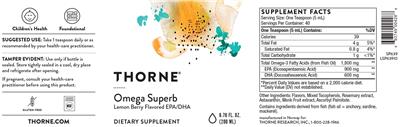
Omega Superb is presented on this Thorne page as a lemon-berry flavored omega-3 fish oil for adults and children aged 4 and up, intended to support heart and brain health. The page describes it as a fruity, lightly sweetened liquid fish oil that provides EPA and DHA, the omega-3 fatty acids the page says promote brain development and heart, skin, and eye health. The product is listed at $50 for a container of 40 servings, with a serving size of 1 teaspoon. The ingredient amounts section lists 600mg of DHA and 900mg of EPA per serving. Other ingredients named on the page are astaxanthin, rosemary extract, mixed tocopherols, ascorbyl palmitate, flavors, and monk fruit extract. The page's key ingredients are shown as DHA and EPA. The warnings section states that the product is contraindicated for anyone with a history of hypersensitivity to any of its ingredients, and that the omega-3 fatty acids are derived from fish. It advises pregnant users to consult a health-care practitioner before use. It also states there are no known adverse interactions or contraindications at the publication date. The page includes recommendations for other Thorne omega-3 products, including Super EPA Pro, Super EPA, Super EPA NSF Certified for Sport, and Omega-3 with CoQ10. No customer reviews or star ratings appear in the scraped text.
We don’t sell supplements. We help you make decisions and get the best price.
Lowest prices
We may earn a commission from some store links. How we choose.
Finding the lowest prices at the stores now. This takes a few seconds.
Study, Trial or Testing Result Summary
Members Only72 human studies · 33 improved
This product gives about 1,325 milligrams of omega-3 fats a day, above the 1,000 milligrams that worked in studies. For blood fats, omega-3 reliably lowers triglycerides but does little for bad cholesterol. A large review of 86 trials lasting at least a year, with over 160,000 adults, found it lowered triglycerides by about 15 percent, more at higher doses, with little or no effect on other blood fats [1]. A review of 90 trials found it lowered triglycerides and non-good cholesterol, most clearly above 2 grams a day [2]. Fish-based omega-3 slightly lowered triglycerides and raised good cholesterol [3]. However, an older review of 21 trials found fish oil also raised bad cholesterol by 6 points [4]. In a 3-year trial of 2,157 adults aged 70 and older, 1 gram a day lowered triglycerides and raised good cholesterol but also raised bad and total cholesterol, with no drop in heart events [5]. The dose here is below the 2 grams a day where the clearest effects were seen [2]. Animal and cell studies are never counted.
See all 72 studies →Hide the studies
- Across 53 placebo-controlled trials of lipid-lowering drugs (171,668 people in all), omega-3 fatty acids lowered the blood inflammation marker CRP by a small amount (0.27 mg/L); this was not a cholesterol result.Effect of lipid-lowering therapies on C-reactive protein levels: a comprehensive meta-analysis of randomized controlled …
- In 86 trials lasting at least a year (162,796 adults), more long-chain omega-3 lowered triglycerides by about 15% in a dose-dependent way, with little or no effect on other blood fats.Omega-3 fatty acids for the primary and secondary prevention of cardiovascular disease.
- In 79 trials lasting at least a year (112,059 adults), fish-based omega-3 slightly lowered triglycerides and raised HDL cholesterol, while plant omega-3 probably lowered HDL.Omega-3 fatty acids for the primary and secondary prevention of cardiovascular disease.
- In 79 trials lasting at least a year (112,059 adults), more long-chain omega-3 lowered triglycerides by about 15% in a dose-dependent way but did not change other blood fats.Omega-3 fatty acids for the primary and secondary prevention of cardiovascular disease.
- In 90 trials (72,598 people), omega-3 intake lowered triglycerides and non-HDL cholesterol in a near-linear way, most clearly above 2 grams a day, with J-shaped curves for LDL and HDL cholesterol.Association Between Omega-3 Fatty Acid Intake and Dyslipidemia: A Continuous Dose-Response Meta-Analysis of Randomized C…
- In 21 trials (about 1,950 adults with metabolic syndrome features), marine omega-3 cut triglycerides substantially, especially above 2,000 mg a day, but LDL cholesterol rose at low doses.Marine-Based Omega-3 Fatty Acids and Metabolic Syndrome: A Systematic Review and Meta-Analysis of Randomized Controlled …
- Across 21 trials, fish oil lowered triglycerides by 27 mg/dL and raised HDL by 1.6 mg/dL, but it also raised LDL cholesterol by 6 mg/dL and did not change total cholesterol.Effects of omega-3 fatty acids on serum markers of cardiovascular disease risk: a systematic review.
- In a review of 12 controlled trials of diet changes led by dietitians in people with kidney disease, a diet high in omega-3 fats improved blood fat levels in kidney transplant recipients.Dietary interventions with dietitian involvement in adults with chronic kidney disease: A systematic review.
- In a review of 21 studies in women with polycystic ovary syndrome, omega-3 supplements lowered total cholesterol and triglycerides and raised HDL cholesterol, with some studies showing lower inflammation at 12 weeks.Omega-3 supplementation in the treatment of polycystic ovary syndrome (PCOS) - a review of clinical trials and cohort.
- An umbrella review of 28 meta-analyses of trials in women with polycystic ovary syndrome found omega-3 lowered triglycerides, with moderate certainty.Effects of nutrition on metabolic and endocrine outcomes in women with polycystic ovary syndrome: an umbrella review of …
- In a review of 14 trials in people with lupus, omega-3 supplements lowered inflammation and oxidative stress and improved blood fat levels and blood vessel function.Diet and Systemic Lupus Erythematosus (SLE): From Supplementation to Intervention.
- In 13,078 a med-treated people at high heart risk, 4 grams a day of omega-3 compared with corn oil did not reduce major heart events (12.0% vs 12.2%) and caused more stomach side effects.Effect of High-Dose Omega-3 Fatty Acids vs Corn Oil on Major Adverse Cardiovascular Events in Patients at High Cardiovas…
- In 2157 adults aged 70 and older, 1 gram a day of omega-3 for 3 years raised HDL and total, LDL and non-HDL cholesterol and lowered triglycerides versus placebo, with no reduction in heart events.Effects of vitamin D, omega-3 and a simple strength exercise programme in cardiovascular disease prevention: The DO-HEAL…
- In 881 elderly heart attack survivors given 1.8 g of EPA and DHA daily for 2 years, higher EPA levels were linked to fewer major cardiovascular events but more atrial fibrillation, and rising levels were linked to lower triglycerides and higher HDL cholesterol.Changes in eicosapentaenoic acid and docosahexaenoic acid and risk of cardiovascular events and atrial fibrillation: A s…
- In 520 people with severe high triglycerides, 4 g daily of krill oil omega-3 for 26 weeks lowered triglycerides versus placebo but did not meaningfully change HDL or LDL cholesterol at 12 weeks, and only a small non-HDL cholesterol drop appeared at 26 weeks.Effectiveness of a Novel ω-3 Krill Oil Agent in Patients With Severe Hypertriglyceridemia: A Randomized Clinical Trial.
- In 309 Chinese adults with type 2 diabetes and high triglycerides, 4 g daily of fish oil for 12 weeks lowered triglycerides more than corn oil placebo, with the response varying by gut microbiome profile.Impact of omega-3 fatty acids on hypertriglyceridemia, lipidomics, and gut microbiome in patients with type 2 diabetes.
- In 259 older adults with memory complaints, a daily DHA-rich fish oil and cocoa supplement for 12 months lowered triglycerides and raised the HDL-to-total cholesterol ratio compared with placebo, though it did not improve memory.A combined DHA-rich fish oil and cocoa flavanols intervention does not improve cognition or brain structure in older adu…
- In 218 people with coronary artery disease on meds, 3.36 g daily of EPA and DHA for 30 months prevented coronary plaque growth in non-diabetic people who reached a blood omega-3 index of at least 4 percent, but not in diabetic people.Read the study on PubMed (31055222) →
- In 214 patients with carotid narrowing taking a multi-ingredient supplement with fish oil (EPA and DHA) for 30 days before surgery, plaques had less cholesterol and lipid content than with placebo, and fewer neurological symptoms occurred.Aterofisiol(®) in carotid plaque evolution.
- In 190 adults at increased heart risk, fish oil for 28 days did not lower LDL cholesterol more than placebo, while a med did.Read the study on PubMed (36351465) →
- In 162 people on dialysis for kidney failure, 1.7 g a day of seafood omega-3 for 3 months, compared with placebo, did not change adiponectin levels, a blood marker linked to heart and metabolic health.n-3 polyunsaturated fatty acids and adiponectin in patients with end-stage renal disease.
- In 153 adults with mildly high triglycerides, six weeks of DHA-enriched eggs lowered triglycerides about as much as ordinary eggs but raised LDL cholesterol more.Lipid responses in mildly hypertriglyceridemic men and women to consumption of docosahexaenoic acid-enriched eggs.
- In 114 normal-cholesterol vegetarians, 940 mg of algae-derived docosahexaenoic acid daily for 8 weeks lowered triglycerides by 23 percent compared with olive oil placebo, but total, low-density and high-density cholesterol all rose.Microalgal docosahexaenoic acid decreases plasma triacylglycerol in normolipidaemic vegetarians: a randomised trial.
- In 83 healthy 9-month-old infants, 5 mL of fish oil daily for 3 months raised total and low-density cholesterol compared with no fish oil, although it also lowered systolic blood pressure.Fish oil affects blood pressure and the plasma lipid profile in healthy Danish infants.
- In 74 healthy adults, 2.3 grams a day of DHA for six weeks raised HDL cholesterol and lowered triglycerides, while total and LDL cholesterol did not change.Dietary alpha-linolenic acid, EPA, and DHA have differential effects on LDL fatty acid composition but similar effects o…
- In 73 adults with abdominal obesity, 2 g a day of DHA-enriched fish oil for 12 weeks lowered fasting insulin and insulin resistance compared with corn oil; the abstract did not report cholesterol results.DHA-enriched fish oil reduces insulin resistance in overweight and obese adults.
- In 55 men with an atherogenic lipid pattern, 3 grams of fish oil daily for 6 weeks cut fasting triglycerides by 35% and a type of small dense low-density cholesterol by 26% versus olive oil placebo, with no change in HDL cholesterol, though total cholesterol rose in carriers of the apoE4 gene variant.ApoE polymorphism and fish oil supplementation in subjects with an atherogenic lipoprotein phenotype.
- In 55 men with mildly high triglycerides, 6 grams of fish oil (3 grams EPA plus DHA) daily for 6 weeks lowered triglycerides and a type of small dense low-density cholesterol, but raised overall low-density cholesterol compared with olive oil placebo.Eicosapentaenoic acid and docosahexaenoic acid from fish oils: differential associations with lipid responses.
- In 48 people, 4 weeks of fish oil at 3.5 to 10.6 grams a day lowered triglycerides in a dose-dependent way versus placebo, but did not lower lipoprotein(a).Fish oil treatment and apolipoprotein(a).
- In 45 healthy men, fish oil ethyl esters at 1.5, 3, or 6 grams daily for 12 weeks lowered blood triglycerides and raised one type of protective cholesterol (HDL2), but did not change total, low-density, or very-low-density cholesterol.Dose-response effects of fish-oil supplementation in healthy volunteers.
- In healthy older adults taking 3.9 grams a day of omega-3 for 6 months, large low-density cholesterol particles fell about 17-18% compared with placebo, while small dense particles rose, and the cholesterol carried in large HDL particles rose 32%.A Randomized Trial of ω-3 Fatty Acid Supplementation and Circulating Lipoprotein Subclasses in Healthy Older Adults.
- In 44 people with high cholesterol on meds, 4 g per day of EPA and DHA for 8 weeks lowered small dense LDL, non-HDL cholesterol, triglycerides and total cholesterol more than olive oil placebo, though LDL cholesterol itself did not differ.Read the study on PubMed (36050695) →
- In 40 women with polycystic ovary syndrome taking 1000 mg of fish oil twice daily for 12 weeks, inflammation-related gene activity fell compared with placebo, but LDL receptor gene activity did not change.The effects of fish oil on gene expression in patients with polycystic ovary syndrome.
- In 34 middle-aged men with high triglycerides, 3 grams of DHA daily for 90 days lowered fasting triglycerides and small dense low-density particles, but raised overall low-density cholesterol compared with olive oil placebo.Docosahexaenoic acid supplementation improves fasting and postprandial lipid profiles in hypertriglyceridemic men.
- In 34 people with inherited high cholesterol taking meds, 4 g of omega-3 daily for 3 months lowered total cholesterol, LDL cholesterol and triglycerides more than olive oil placebo.Effect of N-3 Polyunsaturated Fatty Acids on Lipid Composition in Familial Hypercholesterolemia: A Randomized Crossover …
- In people with leg pain from poor circulation, 3 grams a day of fish oil for 4 months raised HDL cholesterol and lowered triglycerides more than corn oil did, though walking distance did not improve.Fish oil supplementation in patients with stable claudication.
- In women starting chemotherapy for breast cancer, 4 grams a day of fish oil for 60 days kept HDL cholesterol steady while it fell in the untreated group, and lowered blood triglycerides compared with the control group.Fish Oil Supplementation Enhances Pulmonary Strength and Endurance in Women Undergoing Chemotherapy.
- In 31 people with metabolic syndrome, 4 g daily of prescription omega-3 fatty acids for 16 weeks partly corrected abnormal inflammatory fat signaling molecules carried in VLDL, LDL and HDL cholesterol particles.Abnormal lipoprotein oxylipins in metabolic syndrome and partial correction by omega-3 fatty acids.
- In 31 healthy men, seven weeks of fish oil taken as ethyl ester or triglyceride did not change total cholesterol or triglycerides differently between the two forms.Comparative effects of prolonged intake of highly purified fish oils as ethyl ester or triglyceride on lipids, haemostas…
- In 30 South Asians with dyslipidemia, adding 4 g of omega-3 fatty acids to a med for 8 weeks lowered LDL cholesterol from 116 to 88 mg/dl and triglycerides from 139 to 91 mg/dl.Read the study on PubMed (19337557) →
- In 30 non-diabetic patients with coronary artery disease taking 4 g of omega-3 fatty acids daily for 3 weeks, fasting triglycerides fell from 137 to 112 mg/dl and the post-meal triglyceride peak was reduced.Effects of omega-3 fatty acids on postprandial triglycerides and monocyte activation.
- In 30 elderly bedridden people with type 2 diabetes on a liquid diet, an EPA/DHA-rich diet for 3 months lowered fasting blood sugar, HbA1c and apolipoprotein B compared with a diet lacking these fats.Eicosapentaenoic acid improves glycemic control in elderly bedridden patients with type 2 diabetes.
- In 30 pregnant women, aerobic exercise from mid-pregnancy to delivery lowered blood triglycerides late in pregnancy, while blood omega-3 levels had no measurable effect on cholesterol or triglycerides.The Influence of Maternal Aerobic Exercise, Blood DHA and EPA Concentrations on Maternal Lipid Profiles.
- In 30 active young men, 3150 mg a day of omega-3 (EPA and DHA) plus strength training for 8 weeks lowered LDL and triglycerides and raised HDL more than strength training alone.The Effects of Omega-3 Supplementation Combined with Strength Training on Neuro-Biomarkers, Inflammatory and Antioxidant…
- In 29 people with type 1 diabetes and kidney disease, 4.6 grams a day of fish oil for 1 year lowered triglycerides and VLDL cholesterol versus olive oil placebo, but raised total and LDL cholesterol.Fish oil in diabetic nephropathy.
- In men with high blood pressure, 5 grams a day of fish oil for 30 days raised total cholesterol by 8%, low-density cholesterol by 19%, and apolipoprotein B by 18%, an atherogenic pattern not seen in normotensive men.Fish oil produces an atherogenic lipid profile in hypertensive men.
- In 20 healthy adults taking 5 grams of fish oil daily for 3 weeks, triglycerides fell 18% compared with olive oil placebo, while in 6 patients with high triglycerides taking it for 4 weeks, triglycerides fell 35% but low-density cholesterol rose 25%.Influence of n-3 fatty acid supplementation on the endogenous activities of plasma lipases.
- In 25 teenagers with high triglycerides, about 3360 mg a day of prescription omega-3 capsules for 6 months lowered triglycerides, but the drop was not significantly larger than with placebo.Using high-dose omega-3 fatty acid supplements to lower triglyceride levels in 10- to 19-year-olds.
- In 21 older adults with low-grade inflammation, 3 g daily of pure EPA or pure DHA for 10 weeks each lowered triglycerides equally and raised HDL cholesterol relative to apolipoprotein B, but only DHA raised LDL cholesterol.Ethyl EPA and ethyl DHA cause similar and differential changes in plasma lipid concentrations and lipid metabolism in su…
- In 20 children with high cholesterol taking 1.2 g of DHA daily for 6 weeks, total cholesterol and LDL and HDL cholesterol rose compared with the diet alone, while blood vessel function improved.Docosahexaenoic acid restores endothelial function in children with hyperlipidemia: results from the EARLY study.
- In people with mild high blood pressure, 50 grams a day of marine oil for 6 weeks lowered triglycerides by about 30% and diastolic blood pressure, but total and HDL cholesterol did not change.Effects of n-3 fatty acids in essential hypertension.
- In 10 people with type 2 diabetes, 10 grams of fish oil daily for 3 weeks did not significantly change total, HDL, or low-density cholesterol, and triglycerides were not significantly reduced overall.Effects of fish oil supplementation on glucose and lipid metabolism in NIDDM.
- About 4.5 grams of omega-3 fats a day from marine oil capsules lowered triglycerides and very-low-density lipoprotein cholesterol, but LDL cholesterol responses varied from a drop to a rise depending on the type of high lipids.Marine oil capsule therapy for the treatment of hyperlipidemia.
- In people with very high triglycerides, omega-3 carboxylic acids for 12 weeks lowered triglycerides and apoCIII, while raising low-density cholesterol that did not carry apoCIII, a form with weak links to heart disease.The effect of omega-3 carboxylic acids on apolipoprotein CIII-containing lipoproteins in severe hypertriglyceridemia.
- In people with high triglycerides, 4 grams a day of omega-3 for 14 days lowered fasting triglycerides, with the MAT9001 form also lowering triglycerides after a fatty meal; cholesterol was not reported.Effects of n-3 fatty acid treatment on monocyte phenotypes in humans with hypertriglyceridemia.
- In 141 menopausal Japanese women with high cholesterol or triglycerides, 1800 mg of ethyl icosapentate daily added to estriol for 48 weeks lowered triglycerides by 27% and cholesterol more than estriol alone.Eicosapentaenoic acid effect on hyperlipidemia in menopausal Japanese women. The Niigata Epadel Study Group.
- In 80 young adults taking 900 mg eicosapentaenoic acid plus 680 mg docosahexaenoic acid daily for 4 weeks, omega-3 levels in HDL and LDL cholesterol particles did not depend on APOE gene type, though carriers of the E4 variant had a less favorable omega-6 to omega-3 ratio in LDL and docosahexaenoic acid in HDL tracked with HDL cholesterol only in non-carriers.Disrupted fatty acid distribution in HDL and LDL according to apolipoprotein E allele.
- In 60 adults with high triglycerides, 3 g a day of omega-3 fats for 6 weeks lowered triglycerides by 28%, raised HDL cholesterol slightly, lowered small dense LDL cholesterol by 16%, and reduced several markers of oxidative stress compared with placebo.N-3 polyunsaturated fatty acids in the treatment of atherogenic dyslipidemia.
- In adults with high cholesterol, 1 month of fish oil plus garlic powder lowered total cholesterol by 11%, low-density cholesterol by 10%, and triglycerides by 34% compared with placebo.Modulation of lipid profile by fish oil and garlic combination.
- In 8 men with high triglycerides taking 1800 mg of EPA daily for 3 months, triglycerides fell by 31%, and blood vessel function normalized.Eicosapentaenoic acid improves endothelial function in hypertriglyceridemic subjects despite increased lipid oxidizabili…
- In 11 stroke or mini-stroke patients, 6 weeks of fish oil capsules significantly lowered triglycerides but did not change total or HDL cholesterol compared with olive oil.A double-blind, placebo-controlled trial of fish oil concentrate (MaxEpa) in stroke patients.
- In 5 patients with kidney failure and high triglycerides, Max-EPA fish oil significantly lowered triglycerides; the dose and duration were not stated.Dyslipidemia in patients with chronic renal failure and in renal transplant patients.
- In 30 adults with type 2 diabetes, 4 grams a day of fish oil for 28 days lowered certain fat-signaling molecules in the blood and raised omega-3 fat levels in them; cholesterol was not reported.Read the study on PubMed (24373610) →
- In 6 people with high triglycerides, 3 grams a day of fish oil for 2 months lowered VLDL, triglycerides and apoB100 before and after treatment, with no placebo group.Omega 3 Improves Both apoB100-containing Lipoprotein Turnover and their Sphingolipid Profile in Hypertriglyceridemia.
- In over 440,000 UK Biobank participants, fish oil supplement users had reduced genetic tendency toward high total cholesterol, LDL cholesterol and triglycerides, and an increased genetic tendency toward higher HDL cholesterol.Fish oil supplementation modifies the genetic potential for blood lipids.
- In a large group of over 136,000 patients, blood omega-3 levels were not linked to harmful changes in LDL or other blood fats, regardless of APOE gene type.Does APOE genotype modify the relations between serum lipid and erythrocyte omega-3 fatty acid levels?
- In 26,034 healthy women, higher fish intake was linked to lower triglycerides but also to higher total cholesterol and LDL cholesterol, while only higher plant-based omega-3 (ALA) intake was linked to lower LDL cholesterol.Habitual Fish Consumption, n-3 Fatty Acids, and Nuclear Magnetic Resonance Lipoprotein Subfractions in Women.
- In 420 hemodialysis patients followed for about 5 years, LDL cholesterol and non-HDL cholesterol were not linked to death or heart events, while higher HDL cholesterol predicted fewer new heart events; omega-3 was not shown to change these levels.Association between serum lipids, polyunsaturated fatty acids, and prognosis in maintenance hemodialysis patients.
- In a retrospective study of 278 pregnant women, those taking omega-3 supplements for 5 weeks had significantly lower triglycerides, total cholesterol and LDL cholesterol, with no clear harm to pregnancy outcomes.Effects of omega-3 fatty acids supplementation on lipids and pregnancy outcomes in pregnant women.
- In 276 adults aged 65 to 95, higher omega-3 index in red blood cells was linked to lower triglycerides and higher HDL cholesterol, while links to LDL cholesterol differed between men and women.Association between omega-3 index and blood lipids in older Australians.
- In 27 hemodialysis patients with severe itching, 1000 mg of fish oil a day for 3 months lowered total cholesterol, LDL cholesterol and triglycerides, raised HDL cholesterol, reduced the inflammatory marker IL-6, and improved skin hydration, although CRP rose.Omega-3 Fatty Acids Improve Chronic Kidney Disease-Associated Pruritus and Inflammation.
- In 12 hemodialysis patients with high cholesterol and triglycerides, fish oil capsules taken daily for 13 weeks significantly lowered triglycerides, total cholesterol and phospholipids.Effects of fish oil rich in eicosapentaenoic acid on serum lipid in hyperlipidemic hemodialysis patients.
Review Totals and Summary
Members Only1,033 reviews · 83% positive
Thorne Omega Superb Lemon Berry is mostly well liked, and the flavor is what people talk about most. It carries about 290 ratings across the stores, and the written feedback is positive overall with a small group of unhappy buyers. **What buyers say it did for them:** Several reviewers report benefits, though most comments are brief. One says they "can see the benefits after only a few weeks," and another notes "Good taste and great results." One reviewer credits it with better hair texture, less inflammation and improved cholesterol. Another says "the product works great" with no digestion issues. A few reviewers are still waiting on their order or have only tasted it, so effect is unconfirmed for them. One store page says a reviewer hopes it will prove effective, and another reviewer loves "the flavor and effect." **What buyers complain about:** The main complaint is taste. One buyer wrote "Terrible dead fish taste" and said the first bottle was great but a later one was not. Another said "There's no lemon berry anything flavor" and wondered if they had a bad batch. A third reviewer says the fishy taste is still noticeable but "not that bad." On one store page, a reviewer with gallbladder issues gets a fishy taste from any omega-3, not just this one. Other complaints are about service: packaging problems on a first delivery, wait-listed orders, and, on one store, missing items and several calls and emails to fix shipping. Those concern the stores, not the formula. **Taste, smell and form:** This is a liquid, taken off the spoon. Many buyers say it masks fishiness well: "completely masks any fishiness," "light, smooth, and pleasant fruity taste." Others mention no fish burps and no greasy mouthfeel. One says it doesn't leave "your mouth greasy and disgusting." One reviewer notes it contains monk fruit, which they usually react to, but they had no problem here. A reviewer also says to refrigerate after opening. Reviews of other forms were left out. **Value for money:** Nobody comments on price or on how long a bottle lasts, so there is nothing to report on value. **Who it suits and who it did not:** Parents are the clearest fans. One says "Finally an omega oil my child will drink," and another says their boys aged 4 and 5 ask for the "yummy stuff." A store summary also mentions four children who like it. It also suits people who have struggled with fishy omega-3 oils or burps, and people who want a good DHA to EPA ratio from a brand they see as reputable and third-party tested. It suits people who dislike capsules less clearly, since nobody discusses capsules. It did not suit buyers who got a bottle with a strong fish taste, or those who are very sensitive to fishy aftertaste. Because batch experience seems to vary, a first-time buyer may want to try one bottle before committing to more.
Biohacker Summary
Members Only9 of 10 recommend it
Omega-3 fatty acids are the main ingredient here, and the panel leans toward recommending them: six of the ten recommend them and four stay neutral, with none saying they stopped. They take omega-3s for inflammation, heart health, triglycerides, brain function, skin, fertility and slowing biological aging. Several favor food sources like salmon, sardines and other oily fish, while others point to fish oil supplements, and one advises taking them with a fat-containing meal for better absorption. Doses given range from 1 gram a day up to 2 to 4 grams a day of combined EPA and DHA, and one warns that most people underdose because standard capsules hold little EPA and DHA. One panelist cautions that the evidence for preventing hard heart disease outcomes is not strong, and one mentions pairing omega-3s with vitamin D and strength training.
See all 10 biohackers →Hide the biohackers
Dr. Eric Berg · Omega-3 Fatty Acids · recommends
- Recommends wild-caught salmon as a healthy food to eat every day, noting it contains about 2000 mg of omega-3s in just 3 ounces.
- Recommends wild salmon as it is rich in omega-3 fatty acids, which help reduce inflammation and support brain health and cognitive function, especially important as one ages.
- Recommends DHA, an omega-3 fatty acid, as a natural remedy that, along with sweet wormwood, can trigger iron into an explosion to hit cancer.
- Dr. Eric Berg mentions that sardines are packed with omega-3 fatty acids, which support brain health and metabolism.
- Mentions that wild salmon, specifically half a fillet, has 970 mg of potassium, zero carbohydrates, a good amount of magnesium, and is loaded with omega-3 fatty acids.
- Discusses what would happen if one consumed omega-3 fatty acids every day for 30 days, highlighting their benefits for brain health, heart health, and various conditions like dry eyes, dermatitis, and high blood pressure, as well as supporting calcium absorption and promoting better sleep.
- Recommends getting plenty of omega-3 fatty acids to support joint and metabolic health.
- Recommends consuming foods rich in vitamin D, including fatty fish, to boost vitamin D levels.
- Recommends fatty fish as the best type of protein for inflammation.
- Recommends fatty fish, including salmon, mackerel, and sardines, as dietary sources of vitamin D.
Siim Land · Omega-3 Fatty Acids · recommends
- Recommends taking omega-3s, including EPA and DHA, with a fat-containing meal to increase absorption.
- Increased his omega-3 intake to achieve a higher omega-3 index, which is associated with greater insulin sensitivity and better metabolic health markers.
- Increased his omega-3 index to 9.5% and notes that omega-3s have strong evidence for reducing elevated triglycerides.
- Mentions that EPA and DHA Omega-3s support heart and brain function and can lower triglycerides, with a higher omega-3 index associated with lower heart disease, Alzheimer's and mortality risk.
- Recommends Omega-3s for triglycerides and cardiovascular health, based primarily on human research, especially randomized controlled trials showing measurable benefits.
- Recommends choosing an omega-3 supplement from a brand that uses independent third-party testing and publishes a recent certificate of analysis, verifying EPA and DHA amounts, and testing for heavy metals, contaminants, and oxidation markers.
- Lists Omega-3s as one of 15 supplements backed by human studies.
- Explains that omega-3s can alter mitochondrial membranes and have broader cardiometabolic effects, making mitochondria more responsive to cellular signaling and oxidative stress from exercise, but they don't increase maximal mitochondrial respiration.
- Notes that 75% of people aren't meeting the daily recommendation for omega-3s and that Japanese people eat 2-3x more omega-3s per day than Americans or Europeans, which reflects in their higher omega-3 index.
- Thinks omega-3s have some of the strongest evidence and are worth considering.
Andrew Huberman · Omega-3 Fatty Acids · recommends
- AG1 is giving away a free bottle of omega-3 coenzyme Q10 with your first subscription.
- Mentions that AG1 is giving away a free bottle of Omega-3 co-enzyme Q10 with the first subscription to AG1 Pro.
- Discusses Omega-3 Fatty Acids and EPA.
- Mentions that AG1 is offering a free bottle of Omega-3 co-enzyme Q10 with a first subscription to AG1 Pro.
- Recommends a free bottle of Omega-3 co-enzyme Q10 with the first AG1 Pro subscription.
- Mentions Omega-3s in the context of the microbiome and processed foods.
- Recommends Omega-3 co-enzyme Q10, which is offered as a free bottle with the first AG1 Pro subscription.
- States that getting 1 to 3 grams of EPA essential fatty acid per day can improve mood and cognitive function, supporting focus and concentration.
- Discusses Omega-3 Fatty Acids.
- Discusses omega-3s, artificial sweeteners, fructose, and fats.
Thomas DeLauer · Omega-3 Fatty Acids · recommends
- Recommends fish oil supplements as an omega-3 source for gut health, as they help reduce inflammatory signaling while tissue repairs.
- Recommends high-dose omega-3s, specifically 2 to four grams of combined EPA and DHA daily, to lower hepatic fat output and improve chylomicron clearance, which helps with non-fasting triglycerides.
- Recommends omega-3s, specifically 4 grams a day, to boost the muscle building response by making muscle cell membranes work better for the mTor switch to fire, and specifically mentions Pury for their clean, third-party tested omega-3s.
- Recommends consuming more omega-3s to help balance the mitochondrial membrane, as it will absorb more omega-3s instead of omega-6s.
- Recommends consuming more omega-3s to drive down inflammation.
- Recommends omega-3s, stating that a meta-analysis found 1,000 mg significantly reduced liver fat by shutting down inflammatory signals that promote fat storage, and advises looking for a triglycerol form for better absorption and to avoid oxidation.
- Recommends fatty fish like salmon and sardines, aiming for two to three servings per week, especially around a workout, because their omega-3s, particularly DHA, increase BDNF expression.
- Considers omega-3s a fundamental for brain protection, recommending both dietary sources and supplementation for EPA and DHA, as they produce pro-resolving mediators to limit inflammation.
- Recommends timing omega-3 intake around workouts because they directly help build and keep muscle by making muscle more responsive to growth signals and fighting anabolic resistance as one ages.
- Notes that Scandinavians consume fatty fish multiple times a week as part of their diet, contributing to their long lifespan and healthspan.
Dave Asprey · Omega-3 Fatty Acids · recommends
- Suggests that omega-3s may help slow aging and support cellular repair.
- Recommends omega-3s, noting that 1 gram a day slowed epigenetic aging by up to 4 months in a randomized trial of people over 70.
- Dave Asprey recommends Omega-3, citing a randomized trial showing 1g a day slowed epigenetic aging in older adults, but warns that most people underdose due to low EPA and DHA content in standard capsules.
- A review of 41 human studies testing interventions against newer-generation epigenetic clocks found favorable changes for exercise, caloric restriction, omega-3s, plant-rich diets, multivitamins, a med, pitavastatin, and ketamine.
- Recommends getting nutrients like omega-3s from real food or Vision 101 for eyesight.
- Recommends adding omega-3 fats to improve how neurons absorb and use nutrients like vitamin C.
- States that Fatty15 supports cells better than omega-3s or fish oil, but he uses both.
- Notes that Inuit people consumed very high levels of omega-3s, specifically EPA and DHA, which contributed to their health on a whale blubber diet.
- Lists Omega-3s as a nutrient that forms the structure and different parts of the brain.
- Uses both C15 and omega-3s, noting that C15 supports cells better than omega-3s or fish oil with three times more benefits.
Dr. Rhonda Patrick · Omega-3 Fatty Acids · neutral
- Mentions that EPA is an omega-3 examined in mortality analysis and found primarily in seafood.
- States that Omega-3 fatty acids are very important for sperm health.
- Omega-3s may help slow biological aging, with added benefits when combined with vitamin D and strength training. In a 3-year randomized trial of healthy, mostly active older adults, omega-3 alone slowed several DNA-based aging clocks.
- Recommends regular intake of omega-3 rich seafood and supplementation with omega-3 fatty acids if it's appropriate for one's lifestyle, as they are beneficial for the heart by resolving inflammation and preserving membrane fluidity.
- Notes that a 100 mg per day increase in omega-3 fatty acids was associated with lowering the risk of Alzheimer's disease and cognitive decline by 10%, and that it takes about two grams a day to get to a high omega-3 index if one has a low index.
- Practical habits to help keep chronic inflammation in check include getting enough omega-3s.
- States that Omega-3s, specifically EPA and DHA, may be the most potent naturally occurring dietary compounds for reducing inflammation, and that about 2 g/day of combined EPA and DHA can raise a low omega-3 index.
- Recommends fatty fish as a source of healthy fats for muscle gain.
- Mentions that an omega-3 supplement might not be working, and one would not know without taking the Omega-3 index test.
- Recommends considering omega-3s to improve mood.
Dr. Mark Hyman · Omega-3 Fatty Acids · neutral
- Mentions omega-3 fats as existing biomarkers that play a role in mental health, which Function Health includes in their measurements.
- Mentions that omega-3s are anti-inflammatory and helpful.
- Tries to supplement with omega-3s for psoriasis and considers them the one clearly clinically effective skin nutrient for skin, hair, and nails.
- Emphasizes the importance of focusing on omega-3s, noting that a national crisis of omega-3 deficiency exists and that low omega-3 levels are a significant problem, more so than omega-6s.
- Consumes omega-3 fats through salmon at dinner.
- Notes that omega-3s are important nutrients for brain performance and aging, and that many people have gaps in these nutrients.
- Recommends omega-3 fats from wild fish, seafood, and certain nuts and seeds to fight inflammation.
- Mentions omega-3 fats as something that might be helpful for gut repair.
- Used omega-3 fats as part of a protocol to rebuild the gut microbiome and heal the gut of a nine-year-old girl with severe behavioral issues.
- States that omega-3 fats from fatty fish, flax, and walnuts help balance inflammatory pathways, but no supplement can replace daily signals from sleep, nutrition, exercise, stress management, and metabolic health.
Ben Greenfield · Omega-3 Fatty Acids · neutral
- Notes that omega-3s have solid research behind them for fertility.
- Recommends omega-3 fatty acids, specifically EPA and DHA, at 1 to 3 grams per day for better sperm morphology and motility, noting that sperm membranes are rich in polyunsaturated fatty acids.
- Recommends getting Omega-3 from oily fish such as sardines, anchovies, mackerel, herring, and salmon with skin.
- Discusses why fatty fish or fish oil may matter more than plant-based omega-3s if seed oils are in one's diet.
- Says that omega-3 fatty acids are a great way to feed the system and help with stress.
- Recommends testing for and replenishing omega-3 fatty acids if levels are low, as they can affect the ability to maintain or preserve muscle, especially for those on GLP-1s.
- Recommends including EPA from fatty fish or fish oil in one's diet, especially if seed oils are present in the diet.
- Notes that B vitamins and Omega-3s work as a pair to support the brain, but not independently.
- Notes that the DO-Health study showed omega-3 had good effects, and it's a supplement people commonly take.
- Mentions that omega-3, vitamin D, and exercise all had good effects in the DO-Health study.
Peter Attia · Omega-3 Fatty Acids · neutral
- Peter and Michael explore the benefits of omega-3 fatty acids for cardiovascular trials and the challenge of delivering DHA to the brain.
- Mentions that some trials showing a benefit to PUFA were confounded by the inclusion of omega-3s, and argues that the literature on omega-3s is not super strong for decreasing hard cardiovascular disease endpoints.
- Took big doses of omega-3 postpartum to help maintain when she wasn't sitting down to eat full meals.
- Mentions consuming fatty fish, specifically sardines, as part of their diet, noting their high fat and protein content.
- Peter discusses how omega-3s from fish oil impact inflammation, heart health, and brain function, as well as the strengths and limitations of current research.
- Mentions the importance of DHA omega-3 fatty acids for neuronal membranes, which are concentrated in synapses and crucial for communication between neurons.
- Highlights the importance of DHA omega-3 fatty acids for neuronal membranes and communication between neurons, as they are concentrated in synapses.
- Discusses the mfsd2a transporter, which is specific to DHA in phospholipid form, and its role in blood-brain barrier integrity, noting that animal studies show disruption of this transporter causes significant breakdown of the blood-brain barrier and loss of omega-3 in the brain.
- States that there is a very strong clinical impression that high doses of omega-3s help with dry eye, primarily from an anti-inflammatory standpoint.
- Recommends omega-3 fatty acids, specifically DHA and EPA, for brain protection, especially for individuals with the APOE4 gene, stating that they require higher doses.
Bryan Johnson · Omega-3 Fatty Acids · recommends
- Recommends Omega 3 fatty acids as a supplement for skin health, noting they are in the Blueprint stack.
RAL Summary
Members OnlyTier 2 for Cholesterol
More Details
Members OnlyBody systems · Combine with · Possible side effects
Body systems: Cardiovascular system, Metabolic system
Combine with: Omega Superb provides EPA and DHA fish oil, which are well supported for lowering triglycerides and supporting overall cardiovascular health. They have a more modest effect on LDL cholesterol. For a broader lipid-support stack, consider adding soluble fiber such as psyllium or beta-glucan to help lower LDL, plant sterols/stanols (about 2 g daily) to reduce cholesterol absorption, and bergamot extract or red yeast rice (with medical guidance, since it contains monacolin K, which acts like a med). Coenzyme Q10 or ubiquinol is useful for cardiovascular and mitochondrial support, especially if taking a med. Niacin (under supervision), magnesium, and vitamin K2 can further support lipid metabolism and vascular health. Take the omega-3 with a fat-containing meal for better absorption, and talk with a doctor if using meds or other meds.
Possible side effects: Studies found omega-3 can raise bad cholesterol in some people. Reviewers mention a fishy taste in some bottles.
Supplement Facts
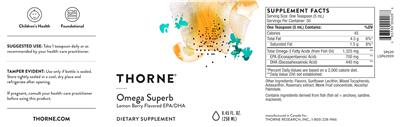
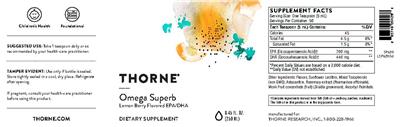
Total Omega-3 Fatty Acids 1325 mg
| Calories | 45 | |
| Total Fat | 4.5 g | |
| Total Omega-3 Fatty Acids | 1,325 mg | † |
Other ingredients: Flavors, Sunflower Lecithin, Mixed Tocopherols, Astaxanthin, Rosemary Extract, Monk Fruit concentrate, Ascorbyl Palmitate.
Directions: Suggested use: Take 1 teaspoon daily or as recommended by your health-care practitioner.
Barcode (UPC) 693749004288 · Label source: NIH label database · Report a label change
Show entire label
More cholesterol products
Members OnlyThe highest ranked for the same goal
Read more
Our articles on this subject
- Best Diet for High Cholesterol: What to Eat, What to Cut, and What the Trials ShowArticle · Sep 13, 2026
- How to Lower LDL Cholesterol: A Practical Plan Based on Your Blood WorkArticle · Oct 27, 2026
Graded November 5, 2026 by the Reverse Age Lab evidence engine, from human studies, real reviews and our biohacker panel. How we grade. Is this medical advice? No. Rala organizes the published evidence; go over any change with your doctor, especially if you take meds.
Privacy policyConsumer health dataAffiliate disclosureTermsDo Not Sell or Share My Personal InformationCookie settings