
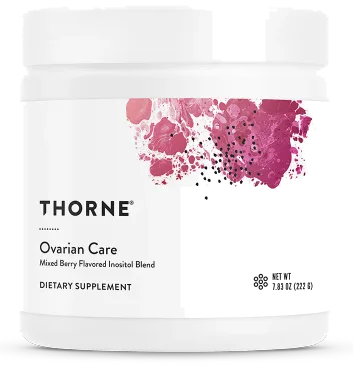
Thorne Ovarian Care Review
Ovarian Care is a Thorne supplement presented as a mixed-berry flavored powder designed to promote healthy ovarian function and support natural fertility, with a focus on hormonal balance and family planning. The product page describes a blend of nutrients and plant extracts intended to help maintain menstrual regularity, support a healthy insulin response, and provide antioxidant protection to help preserve egg quality and reproductive health. The formula is built around clinically studied ratios of myo-inositol and D-chiro-inositol, a CoQ10 phytosome, methylated folate, and polyphenols from wild blueberry, pomegranate and green tea. The label lists 2000 mg of myo-inositol, 50 mg of D-chiro-inositol, 150 mg of CoQ10 phytosome, 667 mcg DFE of folate as 5-MTHF, 50 mg of green tea extract, 25 mg of pomegranate extract and 50 mg of wild blueberry complex per one scoop serving, with 60 servings per container. The recommended use is to mix one scoop with at least eight ounces of water two times daily. Other ingredients are citric acid, flavor, medium chain triglyceride oil and rebaudioside A from stevia. The page states that the product is gluten-free, dairy-free, soy-free, and contains only natural colors and flavors. It is described as third-party tested for purity and potency. Thorne says the formula received the 2024 Women's Health Innovation Award from MedTech Breakthrough. The product is presented as a powder so that buyers do not need to take many capsules, while still providing what the page calls a sufficient amount of each nutrient used in clinical studies. The details section explains the inositol ratio of 40:1 myo-inositol to D-chiro-inositol and says it may enhance insulin sensitivity, support balanced hormone levels to promote ovulation and menstrual regularity, and benefit clear skin and healthy hair growth where wanted. The CoQ10 phytosome is described as supporting mitochondrial energy production, reproductive health, ovarian response during assisted reproduction, and protection of ovarian reserve. The folate is presented as methylfolate for people with challenged folate metabolism, including those with an MTHFR polymorphism. The polyphenols are described as antioxidants that support a healthy inflammatory response. The warnings section says the product is contraindicated for anyone with a history of hypersensitivity to any ingredient. Pregnant users are advised to consult a health-care practitioner before use. It also notes that 5-MTHF is not recommended alongside a med cancer therapy because it can interfere with that treatment's anti-neoplastic activity. The page includes a comparison with Hormone Advantage and Basic Prenatal, and lists a price of $62 for one container, or $55.80 with a subscription. Subscription options and HSA or FSA eligibility are also shown.
We don’t sell supplements. We help you make decisions and get the best price.
Lowest prices
We may earn a commission from some store links. How we choose.
Finding the lowest prices at the stores now. This takes a few seconds.
Products with nearly the same formula (Matched on the main ingredients)
Study, Trial or Testing Result Summary
Members Only65 human studies · 35 improved
The main ingredient is inositol, at a full daily amount. In women with severe premenstrual mood disorder, myo-inositol improved daily symptoms, depression and overall severity more than a dummy pill [1], but a tiny trial using a much higher dose found no benefit [2]. In women going through the menopausal transition, 4 grams a day lowered thyroid-stimulating hormone and insulin, though without a comparison group [3]. A pooled analysis in polycystic ovary syndrome found myo-inositol did not improve insulin resistance [4]. Green tea extract improved insulin, fat burning and waist size in a small trial of overweight women past menopause [5], but a larger trial found no consistent change in estrogen or testosterone [6]. Coenzyme Q10 did not change egg quality or pregnancy rates in a small fertility trial [7]. Folate here is well below the 5 milligram dose studied, and those studies were mixed for hot flushes [8][9]. Pomegranate is present only in a trace amount, far below the studied dose [10]. Wild blueberry has no human studies for this goal. Animal and cell studies are never counted.
See all 65 studies →Hide the studies
- Across 27 long-term studies of over 1.27 million people, the highest folate intake was linked to a 7% lower risk of breast cancer than the lowest, mainly for hormone receptor-negative breast cancer.Association Between One-carbon Metabolism-related Vitamins and Risk of Breast Cancer: A Systematic Review and Meta-analy…
- Across observational studies of over 600,000 people, folate intake and blood levels showed no clear link to breast cancer risk in the better-designed prospective studies, regardless of menopausal or hormone receptor status.Folate intake and the risk of breast cancer: a systematic review and meta-analysis.
- In 54 observational studies of 39,471 women, those with polycystic ovary syndrome had similar dietary folic acid intake to women without it.Comparison of dietary and physical activity behaviors in women with and without polycystic ovary syndrome: a systematic …
- In a network analysis of 16 trials in women with polycystic ovary syndrome, folic acid was only studied alongside inositol and no treatment significantly changed insulin resistance, so folate's own effect cannot be separated.Read the study on PubMed (42490840) →
- A pooled analysis of trials in women during and after menopause found pomegranate reduced hot flash severity, menopause symptoms and follicle-stimulating hormone, and raised good cholesterol, though many results were inconclusive because of small, poorly blinded studies.Pomegranate effects on the health aspects of women during peri- and postmenopause: A systematic review and meta-analysis…
- In a review of 14 trials of supplements for stress and anxiety in women, older women did not get less anxious with folate, although vitamin B6 helped.The impact of essential fatty acid, B vitamins, vitamin C, magnesium and zinc supplementation on stress levels in women:…
- A review of herbal remedies for polycystic ovary syndrome reported that D-chiro inositol, among other herbs, lowered blood sugar and blood fat levels in women with the condition.Polycystic ovaries and herbal remedies: A systematic review.
- A review of trial reviews found too few trials to judge green tea benefits outside metabolic syndrome, and no hormone-related conclusions could be drawn for green tea.Review of the efficacy of green tea, isoflavones and aloe vera supplements based on randomised controlled trials.
- In 164 postmenopausal women with frequent hot flushes, 5 mg of folic acid daily for 12 weeks did not significantly reduce hot flushes more than placebo, though quality of life scores improved at week 8.Folic acid supplementation in postmenopausal women with hot flushes: phase III randomised double-blind placebo-controlle…
- In 157 postmenopausal women, a 500 mg daily herbal blend containing green tea for 12 months slowed artery wall thickening much more than placebo, but cholesterol changes did not differ from placebo.Anti-Atherosclerotic Effects of a Phytoestrogen-Rich Herbal Preparation in Postmenopausal Women.
- In 148 premenopausal women, 12 weeks of a supplement with indole-3-carbinol and green tea catechins raised a urinary estrogen metabolite ratio linked to lower breast cancer risk more than placebo.A randomized, double-blind, placebo-controlled, cross-over trial to evaluate the effect of EstroSense® on 2-hydroxyestro…
- In 103 postmenopausal women, 2 months of green tea extract did not consistently change estradiol, estrone or testosterone, though LDL cholesterol and glucose-related markers improved.Effect of 2-month controlled green tea intervention on lipoprotein cholesterol, glucose, and hormone levels in healthy p…
- In 100 postmenopausal women, 5 mg of folic acid daily for 8 weeks improved sexual desire, arousal, orgasm, satisfaction, pain and total sexual function more than placebo, but not lubrication.Effect of folic acid on the sexual function of postmenopausal women: a triple-blind randomized controlled trial.
- In 86 women before hysteroscopy, 4 mg of folic acid daily for 14 days was the comparison group and did not change endometrial thickness or reproductive hormones, unlike the progestogen nomegestrol acetate.The use of nomegestrol acetate in rapid preparation of endometrium before operative hysteroscopy in pre-menopausal women…
- In 81 postmenopausal women given 60 mg of pomegranate seed oil daily for 12 weeks, hot flashes did not fall significantly more than with placebo, hormone levels did not change, but hot flashes were lower at 24 weeks and sleep-related symptoms improved.Pomegranate seed oil in women with menopausal symptoms: a prospective randomized, placebo-controlled, double-blinded tri…
- In 78 menopausal women, 4 weeks of pomegranate supplement eased menopause symptoms and improved quality of life more than placebo, with benefits lasting after treatment stopped.Effects of pomegranate supplement on menopausal symptoms and quality of life in menopausal women: A double-blind randomi…
- In 78 postmenopausal women taking a mixed plant extract including pomegranate for 8 weeks, quality of life improved meaningfully only in some gut-bacteria subgroups, mainly through fewer hot flashes.Polyphenol-Related Gut Metabotype Signatures Linked to Quality of Life in Postmenopausal Women: A Randomized, Placebo-Co…
- In 60 overweight postmenopausal women taking green tea extract for 11-12 months, leptin, ghrelin, adiponectin and satiety did not differ from placebo, though insulin was higher after a meal in those with high-activity COMT.Green tea extract and catechol-O-methyltransferase genotype modify the post-prandial serum insulin response in a randomi…
- In 60 women with premenstrual syndrome, pomegranate extract for two menstrual cycles reduced symptoms versus no intervention and improved social quality of life.The effect of pomegranate supplementation on symptom severity and quality of life in women with premenstrual syndrome: A…
- In 57 men and women eating a choline-poor diet for up to 6 weeks, 400 mcg of folic acid a day did not change the rate of liver or muscle problems, which was lower in premenopausal women than in men or postmenopausal women.Sex and menopausal status influence human dietary requirements for the nutrient choline.
- In 57 menopausal women, an 8-week daily botanical combination containing 100 mg pomegranate skin extract improved overall quality of life more than placebo, though it was a small pilot study.Influence of a new botanical combination on quality of life in menopausal Spanish women: Results of a randomized, placeb…
- In 51 postmenopausal women with hot flashes, L-methionine did not reduce hot flashes more than placebo over 12 to 20 weeks; everyone also took 1 mg of folate daily, so folate was not tested on its own.Effect of L-methionine on hot flashes in postmenopausal women: a randomized controlled trial.
- In 48 healthy postmenopausal women, folic acid for about 16 weeks lowered blood homocysteine (10.33 vs 13.21 micromol/l with placebo), though hormone symptoms were not measured.Folic acid supplementation reduces plasma homocysteine in postmenopausal women.
- In 40 postmenopausal women on estrogen and progestin hormone therapy, taking 5 mg of folic acid daily for 3 months lowered blood homocysteine compared with placebo, while hormone therapy alone raised it.The effect of postmenopausal hormone therapy with or without folic acid supplementation on serum homocysteine level.
- In 40 women going through the menopausal transition, 4 grams a day of myo-inositol for 6 months lowered thyroid-stimulating hormone and insulin, with no placebo comparison, and adding melatonin also lowered insulin.Myo-inositol and melatonin in the menopausal transition.
- In 28 overweight or obese postmenopausal women, 60 days of green tea extract improved fat burning, insulin, waist size and CRP compared with placebo.A 60-Day Green Tea Extract Supplementation Counteracts the Dysfunction of Adipose Tissue in Overweight Post-Menopausal a…
- In 27 women aged 35-43 having IVF with sperm injection who took 600 mg of coenzyme Q10 or placebo, egg chromosome abnormality rates (46.5% vs 62.8%) and pregnancy rates (33% vs 26.7%) did not differ significantly, but the study ended early and was too small to be conclusive.Coenzyme Q10 Supplementation and Oocyte Aneuploidy in Women Undergoing IVF-ICSI Treatment.
- In an 11-woman crossover trial, 12 g daily of myo-inositol taken in the luteal phase for six menstrual cycles did not improve premenstrual dysphoric disorder compared with placebo.Myo-inositol has no beneficial effect on premenstrual dysphoric disorder.
- In 10 women with regular cycles, green tea extract prevented the drop in fat burning during 30 minutes of cycling seen in the luteal phase with placebo.Effect of Green Tea Extract Ingestion on Fat Oxidation during Exercise in the Menstrual Cycle: A Pilot Study.
- In postmenopausal women on sequential estrogen-progestin therapy, adding folic acid for 6 months did not lower blood homocysteine further beyond the reduction the hormone therapy already produced.Plasma homocysteine levels after hormone therapy with and without folic acid supplementation: a randomized study.
- Folic acid supplements taken for six months significantly lowered homocysteine in postmenopausal women; the abstract does not give the group size or dose.Effect of folic acid supplementation on homocysteine level in postmenopausal women.
- In women with premenstrual dysphoric disorder, myo-inositol in either powder or soft gel form significantly improved daily symptom, depression, and overall severity scores compared with placebo.Myo-inositol in the treatment of premenstrual dysphoric disorder.
- In perimenopausal women, a herbal blend containing green tea for 24 months gave a slight benefit on some menopause symptoms such as nervousness and weakness, but artery thickness did not differ from placebo.Phytoestrogen-Rich Natural Preparation for Treatment of Climacteric Syndrome and Atherosclerosis Prevention in Perimenop…
- In obese girls given green tea catechin capsules for 12 weeks, blood metabolite analysis and computer modeling pointed to estrogen and insulin pathways, but the abstract reports no clear clinical outcome change.The therapeutic role and potential mechanism of EGCG in obesity-related precocious puberty as determined by integrated m…
- In 46 postmenopausal women, 5 mg of folic acid daily for 4 weeks led significantly more women to report fewer hot flushes than placebo, along with a larger drop in a brain norepinephrine marker (24% vs 6%).Folic acid supplementation may cure hot flushes in postmenopausal women: a prospective cohort study.
- This article proposes that folic acid may reduce hot flushes in postmenopausal women, based on a proposed brain-chemical mechanism and preliminary data. The abstract gives no participant numbers, doses, durations or results, so the claim that it cures hot flushes is unconfirmed.Folic acid supplementation cures hot flushes in postmenopausal women.
- Menopausal women taking 1000 mg of pomegranate seed oil daily for 8 weeks had significant reductions in most menopausal symptoms, with no change in estradiol levels.Pomegranate (Punica granatum) Seed Oil for Treating Menopausal Symptoms: An Individually Controlled Cohort Study.
- In 15 healthy postmenopausal women, taking 7.5 mg of folic acid daily for one month improved blood vessel flexibility by 37% compared with before supplementation, though there was no placebo group.Endothelial function in post-menopausal women: effect of folic acid supplementation.
- In a pilot study without a control group, 600 mg daily of D-chiro-inositol for six months reduced endometrial thickness in women with simple endometrial hyperplasia and improved heavy menstrual bleeding.D-Chiro-Inositol in Endometrial Hyperplasia: A Pilot Study.
- Postmenopausal women who ate polyphenol-rich foods, including pomegranate juice, every day for two months showed changes in many genes linked to heart and metabolic health.Chronic consumption of (poly)phenol-rich foods exerts multigenomic modification of genes linked to cardiometabolic healt…
- In 3,040 Korean women aged 40 to 64 after menopause, higher folate intake in the early postmenopausal years was linked to a lower chance of very short sleep.The dietary factors associated with sleep duration in postmenopausal middle-aged women: a cross-sectional study using 20…
- In a case-control study of 1,095 Asian American women in Los Angeles, regular green tea drinkers had a significantly lower risk of breast cancer, with the risk falling as intake increased.Green tea and risk of breast cancer in Asian Americans.
- In 1,041 older Latina women, adjusting for folate and vitamin B12 did not change the link between hormone therapy, homocysteine, and thinking skills.Hormone replacement therapy and cognitive performance: the role of homocysteine.
- A descriptive analysis of 932 postmenopausal women in a green tea trial compared menopause symptoms by age, with no comparison of green tea against placebo.Quality of life among postmenopausal women enrolled in the Minnesota Green Tea Trial.
- In 803 women with breast tumors, usual dietary folate intake was not linked to whether certain cancer-related genes were switched off by methylation, compared with lower intake.Promoter methylation of E-cadherin, p16, and RAR-β(2) genes in breast tumors and dietary intake of nutrients important i…
- In a survey of 496 premenopausal black South African women, dietary folate intake was assessed by food questionnaire; 46.2% to 62.2% of women across the micronutrients iron, selenium, folate and vitamin C consumed two-thirds or less of the recommended amount. The study did not measure hormone outcomes.An analysis of dietary micronutrient intakes in two age groups of black South African women.
- In a study of blood clotting problems and eye blood vessel blockages, 5 mg daily folic acid with vitamins B6 and B12 normalized high homocysteine in 13 of 16 people with that problem, though the study did not test folate against placebo for clot outcomes.Thrombophilia and retinal vascular occlusion.
- In Spanish postmenopausal women, higher folic acid levels were linked to lower homocysteine levels, which are a cardiovascular risk marker.[Influence of menopausal status in homocysteine plasma levels].
- In a retrospective study of 244 women taking a micronutrient product containing green tea catechins for 3 months, blood anti-Mullerian hormone levels and endometrial thickness rose compared with baseline, though there was no control group.The effect of micronutrient supplementation on serum anti-Mullerian hormone levels: a retrospective pilot study.
- In 191 Japanese American women, more frequent green tea intake was linked to lower urinary estrogen levels, with about 20% lower estrone and 40% lower estradiol in postmenopausal women who drank it daily.Green tea intake is associated with urinary estrogen profiles in Japanese-American women.
- In 152 postmenopausal Mexican-American women, higher red blood cell folate was among the factors linked to greater bone density at some skeletal sites.Factors contributing to skeletal health of postmenopausal Mexican-American women.
- In 130 postmenopausal Chinese women in Singapore, regular green tea drinkers had about 13% lower plasma estrone than non-drinkers, a statistically significant difference after adjustment.Tea and circulating estrogen levels in postmenopausal Chinese women in Singapore.
- In 89 healthy postmenopausal women, folate levels were measured alongside estrogen receptor gene variants, but the study did not show a folate effect on homocysteine or nitric oxide.Evidence for associations between common polymorphisms of estrogen receptor beta gene with homocysteine and nitric oxide…
- In a cross-sectional study of 41 young Japanese women, equol producers reported eating more green tea, but the study did not show any effect of green tea on premenstrual symptoms.Urinary Equol Production Capacity, Dietary Habits, and Premenstrual Symptom Severity in Healthy Young Japanese Women.
- In 22 women comparing premenopausal and postmenopausal groups, with and without hormone replacement therapy, neither group met national recommendations for folate intake. Hormone replacement therapy did not change energy or macronutrient intake, and the study did not test folate supplementation.Dietary and metabolic differences in pre- versus postmenopausal women taking or not taking hormone replacement therapy.
- In a small retrospective review of 6 women diagnosed with early ovarian failure who had low adrenal androgen levels, taking coenzyme Q10 about 999 mg a day with DHEA for at least 6 weeks before IVF was followed by an egg-development response in 5 of 6 women, and 2 of 6 conceived spontaneously.A form of secondary ovarian insufficiency (SOI) due to adrenal hypoandrogenism as new infertility diagnosis.
- Women using low-estrogen birth control pills for the first months had lower red blood cell folate levels, a sign of weaker folate status.Effect of oral contraceptive agents on vitamin nutrition status.
- A genome-wide analysis tested whether gene-environment interactions, including dietary folate intake, relate to colorectal cancer risk and found pathways and genes of interest. It did not measure hormone outcomes in women and does not show a health effect of folate.Using gene-environment interactions to explore pathways for colorectal cancer risk.
- In surgically menopausal mice, coenzyme Q10 at 10 mg/kg daily for 4 weeks reversed memory deficits and reduced brain oxidative stress and mitochondrial dysfunction.Coenzyme Q10 treatment ameliorates cognitive deficits by modulating mitochondrial functions in surgically induced menopa…
- In ovariectomized rats, adding coenzyme Q10 at 20 mg/kg daily for 8 weeks to a med did not enhance its bone-protective effect, while L-carnitine did.Read the study on PubMed (26739525) →
- In rats with bone loss after removal of the ovaries, coenzyme Q10 at several doses reduced bone breakdown and increased bone formation, though the study did not report the doses or duration in the abstract.Coenzyme Q10 promotes osteoblast proliferation and differentiation and protects against ovariectomy-induced osteoporosis…
- In menopausal rats with spinal cord injury, coenzyme Q10 at 10 mg/kg daily for 3 weeks lowered the inflammatory signal TNF-alpha and reduced the Bax/Bcl2 cell-death ratio at the injury site.Coenzyme Q10 Influences on the Levels of TNF-α and IL-10 and the Ratio of Bax/Bcl2 in a Menopausal Rat Model Following L…
- In male rats given the antipsychotic chlorpromazine, coenzyme Q10 at 10 mg/kg daily for 56 days, alone or with taurine, prevented and reversed hormone disturbances, low dopamine, and drug-induced catalepsy; the retracted paper's findings are unverified.Taurine and coenzyme Q10 synergistically prevent and reverse chlorpromazine-induced psycho-neuroendocrine changes and ca…
- In mice with chemically induced early ovarian failure, coenzyme Q10 used as a positive control raised cellular energy production and mitochondrial DNA copy numbers in ovarian granulosa cells and improved mitochondrial structure.He's Yangchao recipe improves premature ovarian insufficiency by regulating mitochondrial biogenesis of granulose cells …
- In ovariectomized rats on a high-fat diet, coenzyme Q10 at 20 or 40 mg/kg daily for 12 weeks reduced weight gain, belly fat, blood fats, and glucose intolerance, with the 40 mg/kg dose also lowering inflammatory markers and insulin.Coenzyme Q10 ameliorates obesity by promoting white adipose tissue browning and preserving mitochondrial dynamics in ova…
Review Totals and Summary
Members Only1,937 reviews · 83% positive
Across the stores that sell it, Thorne Ovarian Care powder carries about 820 ratings, and most are positive. Buyers mainly praise cycle regulation and PCOS-related changes, while the taste and how the powder mixes draw the most complaints. Reviews of other forms of the product were left out; this covers the powder only. **What buyers say it did for them:** Cycle changes are the most common story. One buyer whose cycles ran 40-50 days said, "I ovulate on time and my LH levels are higher," and another with PCOS went from 39 days to 28. After a miscarriage, a buyer reported "my last 3 cycles have all been 27 days." Others describe fewer sweet cravings, better sleep, more energy and clearer skin. One said they were "down 15 lbs." One buyer reported mood swings "muted nearly completely." Two buyers reported pregnancies after using it, one after about three months of on-and-off use and one after more than two years of infertility (per a store summary). Some praise is only general, such as "Best supplement ever." **What they complain about:** The main complaint is the flavor and texture. One buyer says "it does not mix," even after five minutes with an electric whisk, and had to take it "like a shot." Another reported that the powder is "supposed to be taken twice daily," yet her wife found it too artificial and didn't finish half the bottle. One reviewer also admitted that the powder "works," despite disliking it. One store's AI summary describes mixed opinions on how well it works for menstrual cycles, but the written reviews shown don't back that up. **Taste, smell, form:** Opinions split. One buyer finds it sweet but manageable: "I do 2 scoops in my 40z Stanley and sip." Another says "I see a lot of reviews about the taste being terrible," yet drinks it with 8oz of water and chases it with something else. Other buyers on one store's page call the taste pleasant and easy to take daily, or delicious. Another finds it quite strong and suggests mixing it with something flavorless like unflavored collagen, and would prefer an unflavored version. Buyers also mention a convenient size and good packaging. **Value for money:** Reviewers don't discuss price directly. One said it is "worth it if you want to see results," and another chose it because it had the most myo-inositol and CoQ10 they could find. Another preferred a competing product that blends better with similar ingredients. **Who it seems to suit and who it didn't:** It seems to suit people with PCOS, irregular or long cycles, or those preparing to conceive. It also appeals to people coming off birth control who want a natural way to regulate their cycle, and to buyers who trust the Thorne brand. It suited people less when they were sensitive to flavor or texture. The wife in the 2-star review switched products, and the 1-star reviewer could not get it to dissolve. A few reviews were only about shipping ("Fast shipping, good packing") and say nothing about results yet.
Biohacker Summary
Members Only9 of 10 recommend it
Green tea, the main ingredient, is used by most of the panel, though only one person gives it a clear recommendation and several simply mention it. Four of them drink it for focus, calm energy, morning routine or visceral fat loss, and two others point to its catechins and EGCG for calorie burning and cell cleanup. Two of them suggest pairing it with lemon so more of the catechins survive digestion, and one rotates it with coffee every couple of days. One panelist warns that very high doses of EGCG or green tea extract could harm the liver, and another says green tea extract did not extend lifespan in animal studies. No one gave a dose in cups or milligrams beyond one person's two cups a day, and no one said they stopped using green tea. Folate, inositol, coenzyme Q10 and pomegranate are smaller ingredients in this product.
See all 10 biohackers →Hide the biohackers
Siim Land · Green Tea · recommends
- States that green tea is very effective for visceral fat loss due to its polyphenol content.
- Personally drinks 2 cups of green tea a day and made it one of the small changes while reducing his visceral fat.
- Mentions that green tea's EGCG has stimulated autophagy in cultured liver cells and mouse experiments by increasing AMPK.
- Consumed more polyphenol-rich foods, including green tea, to reduce visceral fat.
- Mentions that he drank green tea, which targets visceral fat, as one of the things he did to reduce visceral fat.
- Drinks 1-3 cups of green tea a day, noting that there are multiple lines of evidence suggesting it improves various health markers and may have longevity benefits.
- States that green tea is one of the healthiest beverages in the world, improving cardiovascular disease risk factors, heart health, metabolic health markers, targeting all hallmarks of aging, reducing visceral fat, and being associated with lower mortality.
- When dropping his visceral fat, Siim Land drank around one to three cups of green tea per day, usually in the morning and before exercise, and believes it contributed to visceral fat loss.
- States that Inositol has been shown to improve blood sugar and insulin sensitivity.
- States that Inositol has a key role in glucose metabolism and that grapefruit is one of the richest sources of it.
- Drank 2–3 cups of green tea per day to reduce visceral fat.
- Reduced visceral fat by adding 2 cups of green tea per day.
- He takes 900 mg of Inositol before bed for sleep.
- He takes 900 mg of inositol before bed for sleep.
Thomas DeLauer · Green Tea · uses
- Now rotates green tea with coffee, having green tea for two days, then coffee for two days, to maintain energy and benefit from different antioxidant profiles. He previously focused too much on green tea and neglected coffee.
- Combines MCT oil with matcha green tea in a cognitive cocktail, finding that green tea provides more mental benefits than coffee for focus and calm energy.
- Explains that green tea's catechin benefits often diminish in the intestines, with less than 20% surviving digestion, but adding citrus can reclaim these benefits by about 5x.
- Recommends adding citrus, specifically lemon, to green tea to reclaim the benefits of catechins, as it can leave 80% of them intact.
- Recommends consuming pomegranates consistently, even daily, to develop the gut bacteria, specifically Akkermansia, that can extract Urolithin A from them.
- Recommends sipping green tea while walking fasted in the morning to help extend the fat oxidation window.
- Recommends one to three small cups of green tea, ideally in the morning, as consistent consumption over two to three weeks increases BDNF due to EGCG.
- Recommends pomegranate for lung health, noting that ellagitannins provide airway antioxidant defense.
- Recommends switching to a good quality green tea first thing in the morning because it is lower in caffeine and contains theanine, which has a cortisol-blunting effect, balancing out the stimulation.
- Recommends pomegranates to support specific bacteria that produce butyrate.
- Recommends green tea, mentioning its EGCG content.
- Would want green tea for its EGCG, which is a good antioxidant, especially for managing stress.
- Recommends green tea as an alternative to pre-workouts, highlighting caffeine as the key ingredient.
- Rates pomegranate arils as a 9.5, mentioning that punicalagins are converted into urolithin A by the gut, providing a super cool overall benefit.
Dr. Eric Berg · Green Tea · neutral
- Suggests pairing green tea with lemon for better absorption.
- Notes that birth control pills deplete the body of folate, which is needed for the brain to make serotonin.
- Mentions that grass-fed liver has coenzyme Q10.
- Recommends that anyone with a med prescription should also take coenzyme Q10, specifically the ubiquinol form, to support heart and muscle function.
- Recommends pomegranate seeds as a top food to help increase nitric oxide.
- Suggests incorporating anti-cancer foods like green tea to help prevent pancreatic cancer.
- Recommends consuming pomegranate seeds to increase nitric oxide.
- Recommends replacing coffee with green tea.
- Notes that Merck filed a patent for a med combined with coenzyme Q10, but never added it back into the formula, and that major heart organizations do not recommend taking coenzyme Q10 alongside meds.
- Recommends pomegranate seeds as a potent heart healer, especially for decreasing the risk of plaque, supercharging nitric oxide, and helping to reduce blood pressure.
- Mentions green tea as an ingredient that can bring something different to the table for liver health.
- Recommends taking coenzyme Q10, specifically ubiquinol, to prevent the side effects of meds, especially for those experiencing muscle weakness, pain, fatigue, or exercise intolerance. He suggests a dose of 200 to 400 mg, or even up to 1200 mg a day for some individuals.
- Dr. Berg mentions that fermented dairy contains vital nutrients, including folate.
- Recommends replacing coffee with green tea as a step towards improving energy levels and brain functioning.
Dr. Mark Hyman · Green Tea · neutral
- Mentions that EGCG from green tea activates thermogenesis, contributing to calorie burning.
- Lists inositol as a supplement that helps balance neurotransmitters and can help lower anxiety or depression symptoms.
- Notes that taking folate can lower homocysteine levels, which has shown health benefits and physical improvements in brain scans in clinical trials.
- Notes that some people may need a little bit extra folate with a supplement.
- Optimized a child's nutrient status with folate, as the child had low folate levels and was not eating greens.
- States he was using green tea to stimulate the NRF2 pathway and open up detox.
- Notes that a med depletes folate.
- States that folate is a nutritional deficiency that impacts mental health.
- Takes 900 mg of Inositol before bed for sleep.
- Recounts giving a patient with MCI high-dose methylfolate, along with B12 shots and B6, which completely cured her MCI.
- Recommends folate with vitamin B6 and B12 as supplements with strong evidence for PMS.
- Takes 900 mg of Inositol before bed for sleep.
- Explains that folate metabolism is very involved in neurotransmitter function and mood, and that folate can be a treatment for some cases of depression, especially for those with MTHFR genetic variants.
- Mentions that pomegranate juice has been known for a long time to be healthy and confer health benefits, but the mechanism was not clear until ellagitannins and their metabolism into urolithin A by the microbiome were discovered.
Andrew Huberman · Green Tea · uses
- Drinks green tea and believes it has very positive cognitive benefits in terms of focus.
- Discusses Myo-Inositol as a tool for middle-of-the-night waking.
- Discusses Myo-inositol as a supplement that can impact serotonin.
- Has been taking 900 mg of myo-inositol every third night or so to test its ability to improve sleep, finding the depth and quality of sleep to be remarkable.
- Takes 900 mg of Inositol before bed for sleep.
- Mentions inositol as a nutraceutical that can be used for bipolar disorder.
- Personally takes 900 mg of myo-inositol every third night or so to improve sleep and for its anti-anxiety effect during the day, but not for bipolar disorder.
- Uses Athletic Greens AG1 in the morning for gut health.
- Mentions Inositol as a nutraceutical for OCD.
- Highlights myoinositol, stating that 900 milligrams or higher dosages can improve sleep and reduce anxiety, and suggests more systematic exploration of nutraceuticals like inositol for OCD treatment, especially in combination with behavioral therapies.
- Takes 900 mg of Inositol before bed for sleep.
- Personally takes Omega-3 and Coenzyme Q10 every day, noting they are known to support cardiovascular health, cellular health and energy, and brain health.
- Personally takes coenzyme Q10 every day, noting it supports cardiovascular health, cellular health, energy, and brain health.
- Mentions inositol for PCOS, stating it decreases insulin resistance and offers a huge benefit.
Dave Asprey · Green Tea · warns
- Warns that very high doses of EGCG or green tea extract could cause harm to the liver.
- States that folate can affect how the body responds to a supplement.
- Would have to eat a ridiculous pile of pomegranates every day to get enough Urolithin A, and they are not doing that.
- States he takes 300 mg of Coenzyme Q10 every day for 20 years because it is necessary for mitochondria to function and is important for longevity, noting that meds lower it.
- Recommends methylfolate as a better option than folic acid.
- Notes that pomegranates contain compounds that gut bacteria convert into urolithin A, which activates mitophagy through a unique biological pathway.
- Dave Asprey notes that 80% of their clients have a problem absorbing certain forms of folate, and when the exact form of folate or folinic acid is dialed in, clients experience shifts, with the brain waking up as one of the first improvements.
- Dave notes that eating pomegranates or taking cheap pomegranate extract does not work for most people to produce urolithin A.
- Dave Asprey used to eat pomegranates from his backyard tree but would get sore joints because pomegranate seeds have a lot of oxalates and sugar.
- Recommends coenzyme Q10 (CoQ10) to support mitochondria, as it helps generate energy and fights oxidative stress.
- He takes 900 mg of Inositol before bed for sleep.
- Mentions green tea as a source of EGCG but notes it also contains oxalates.
- Discusses the massive problem with trying to get Urolithin A from pomegranates, as only 30% of people have the right gut bacteria to even make it.
- Mentions that one would need six cups of pomegranate juice a day to hit the minimum effective dose of Urolithin A.
Ben Greenfield · Green Tea · uses
- Drinks green tea in the morning as part of her quiet time.
- Questions the efficacy of pomegranate extract for plaque melting, asking how an enzyme can get through stomach acid and if the gut bacteria can utilize its chemical trash to make K.
- Recommends methylfolate as an active form of folate that the body can use directly without conversion.
- Notes that inositol has solid research behind it for fertility.
- Recommends Inositol at 1 to 5 grams per day for women, noting its involvement in FSH signaling and citing trials showing fewer immature oocytes and more high-quality embryos in women undergoing IVF.
- He discusses inositol for female fertility.
- Myo-inositol has the same insulin-sensitivity mechanism as in men and is tied to egg quality.
- Mentions Inositol with a dose of 1-5 grams/day.
- Mentions pomegranates as a food that increases angiogenesis, as outlined in Dr. William Lee's book 'Eat to Beat Disease'.
- Recommends bioavailable folate, not synthetic folic acid, as folate deficiencies seem to impact hearing health in older individuals.
- Notes that 1,000 mg of urolithin A is equivalent to juicing 60 pomegranates, which would also result in a lot of sugar.
- States that Nuchido Time Plus includes green tea extract for its high level of EGCG, which inhibits the methylating enzyme NNMT, ensuring nicotinamide is recycled rather than excreted.
- Recommends introducing methylfolate into the diet to address high homocysteine levels.
- Suggests that one could do a carnivore diet and still have a cup of green tea in the morning to introduce hormetic stressors.
Bryan Johnson · Green Tea · uses
- Takes Athletic Greens AG1 in the morning for gut health.
- Uses pomegranate juice as an ingredient in Nutty Pudding.
- Takes 900 mg of Inositol before bed for sleep.
- Takes 900 mg of Inositol before bed for sleep.
- Takes 900 mg of inositol before bed for sleep.
- Takes 900 mg of Inositol before bed for sleep.
- Takes 900 mg of Inositol before bed for sleep.
- Takes 900 mg of Inositol before bed for sleep.
- Takes 900 mg of Inositol before bed for sleep.
- Uses pomegranate seeds because they have unique polyphenols that protect cholesterol from oxidation, which improves blood flow.
- Finishes his Nutty Pudding with 60 mL of pomegranate juice for antioxidants and heart health.
- Includes pomegranate juice in his Nutty Pudding, which he consumes an hour after his Super Veggie.
- Has pomegranate seeds in his fridge.
- Includes pomegranate juice in his 'Nutty Pudding' as part of his fat profile for the third meal of the day.
Peter Attia · Green Tea · neutral
- Explains that green tea extract was tested due to popular reputation and traditional medicine claims, but it did not extend the lifespan of animals in their studies.
- Highlights folate supplementation as a significant practical progress in nutrition science, which has radically reduced spinabifida.
- Takes Jarrow methylfolate to keep homocysteine levels below nine, taking the lower of two available strengths once a day.
- Takes Jarrow methylfolate, a methylated version, once a day at the lower of two strengths, to keep homocysteine levels below nine.
- Mentions that in a mouse model for obesity, the amount of folate given to the mother mouse during pregnancy affects the epigenetics of her offspring, leading to changes in coat color and obesity.
- Personally takes methylfolate to help get homocysteine into the desired zone and prefers the Jarrow brand.
- Notes there isn't good data that Coenzyme Q10 prevents a med Associated muscle symptoms, but doesn't object if patients want to take it because it makes them feel better about taking a med.
- Takes methyl folate as a supplement.
- Considers 400 micrograms of methylfolate in a typical supplement to be reasonable and more than sufficient, but notes that if it doesn't fix homocysteine, the deficit lies elsewhere.
- Uses and vouches for Jarrow's combined lozenge of methylfolate and methyl B12, stating they choose specific supplements because they know they work and are verified by blood tests.
Dr. Rhonda Patrick · Green Tea · neutral
- Dr. Patrick mentions that catechins and polyphenols are found in things like green tea, dark chocolate, turmeric, blueberries, and other purple pigmented fruits and vegetables, as well as red wine.
- Recommends ensuring adequate methyl folate intake, ideally through a prenatal vitamin, for women preparing for IVF.
- Explains that pomegranate contains polyphenols called ellagitannins, which gut bacteria convert into Urolithin A, but there's significant individual variation in how much Urolithin A people actually produce from eating it.
- Some people produce urolithin A after eating pomegranates and walnuts, but others need to supplement directly.
- Has found myo-inositol helps calm "mental chatter" before bed, although it is not strongly evidenced as a sleep aid.
- Notes that dark leafy greens are a great source of folate.
- Discusses why and how much myo-inositol they took.
- Rhonda's current supplement routine includes Myo-inositol.
- States that for his mother, who is homozygous for MTHFR, methyl folate along with a high dose B supplement is necessary to prevent her homocysteine and blood pressure from going high.
- Dr. Patrick mentions that her smoothie is rich in folate, which is required for producing thymine and prevents DNA strand breaks.
- Has experimented with L-methylfolate in the past to lower homocysteine, as he is a poor methylator.
- Dr. Patrick states that studies have shown supplementing with 5-methyltetrahydrofolate can successfully circumvent some shortcomings of MTHFR gene polymorphisms and lower homocysteine levels.
- Dr. Patrick states that her smoothie, containing spinach, has around 480 micrograms of folate, which is essential for the incorporation of thymine into DNA and is very important in regulating epigenetics.
- Dr. Patrick states that adequate levels of folate have been shown to prevent cancer, and conversely, inadequate levels can damage DNA, which is known to cause cancer.
RAL Summary
Members OnlyTier 3 for Hormone Balance for Women
The tier rests on green tea, but its largest positive trial tested green tea catechins combined with indole-3-carbinol, not green tea alone, and the larger green tea extract trials found no change in sex hormones. So it is graded Tier 3, lower than the rules alone gave.
Where the evidence disagrees: 24 of the 65 human studies found no effect.
More Details
Members OnlyBody systems · Combine with · Possible side effects
Body systems: Reproductive system, Endocrine system, Metabolic system
Combine with: For women using this product for its intended ovarian and hormonal purpose, complementary supplements include vitamin D3, folate (methylfolate), omega-3 fish oil, magnesium, and chromium or berberine for additional insulin and metabolic support. Zinc and selenium can support reproductive and antioxidant pathways, and CoQ10 may support egg and mitochondrial health. If digestive sensitivity is also a concern, consider separately adding a targeted gut-support option such as a multi-strain probiotic, peppermint oil capsules, digestive enzymes, or partially hydrolyzed guar gum, and take NAC/inositol with food to minimize GI discomfort.
Possible side effects: No major side effects reported in the studies; buyers mainly complain about the taste and that the powder does not mix well.
Supplement Facts
Includes 0 g Added Sugars 0 · Folate 667 mcg DFE · 40:1 Inositol Blend 2050 mg
| Calories | 11 | |
| Total Carbohydrate | 2 g | |
| Total Sugars | 1 g | |
| Includes 0 g Added Sugars | ||
| Folate | 667 mcg DFE | |
| 40:1 Inositol Blend | 2,050 mg | † |
| Coenzyme Q10 Phytosome†† | 150 mg | † |
| Wild Blueberry Complex | 50 mg | † |
| Green Tea extract (leaf) | 50 mg | † |
| Pomegranate extract (whole fruit) | 25 mg | † |
Other ingredients: Flavor, Medium Chain Triglyceride Oil, Citric Acid, Rebaudioside A (from stevia).
Directions: Mix 1 scoop with at least 8 ounces of water two times daily or as recommended by your health-care practitioner.
Label source: Reverseagelab · Report a label change
Show entire label
More hormone balance for women products
Members OnlyThe highest ranked for the same goal
Read more
Our articles on this subject
- Steven Gundry's Supplements, Reviewed: The Lectin Claim, the Gundry MD Line, What He Takes, and What the Evidence SupportsArticle · Oct 6, 2026
- Supplements for Focus and Mental ClarityArticle · Jun 16, 2026
Graded November 6, 2026 by the Reverse Age Lab evidence engine, from human studies, real reviews and our biohacker panel. How we grade. Is this medical advice? No. Rala organizes the published evidence; go over any change with your doctor, especially if you take meds.
Privacy policyConsumer health dataAffiliate disclosureTermsDo Not Sell or Share My Personal InformationCookie settings