
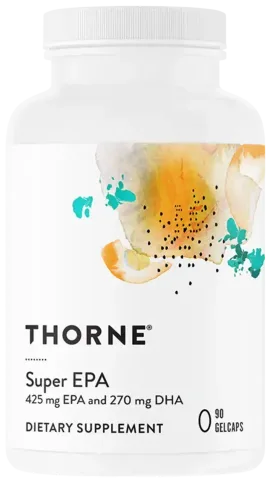
Thorne Super EPA Review
Super EPA contains EPA and DHA, two vital omega-3 fatty acids, important throughout adulthood, as well as during periods of increased brain growth that characterize prenatal and postnatal development. Thorne Super EPA provides the highest quality, purest fish oil available from sustainably sourced cold-water fish. The page lists the benefits of Thorne Super EPA as supporting the health of blood vessels to promote optimal blood flow, helping maintain healthy triglyceride levels, promoting a healthy inflammatory response in joints, muscles, and throughout the body, and modulating immune function by balancing the body's inflammatory response. It also says the product provides nutritional support for healthy fetal brain development, supports a positive mood, benefits cognitive and brain health, promotes healthy skin, and benefits weight management by supporting a healthy insulin response. The features listed include NSF Certified for Sport, a best-selling Thorne formula for more than three decades, and an optimal balance of EPA and DHA at 425 mg EPA and 270 mg DHA per softgel. The page notes sustainable fish harvesting practices to ensure a stable supply, and says molecular distillation removes contaminants, including PCBs and heavy metals. It also describes the ethyl ester molecular form, which provides a more concentrated EPA and DHA content with fewer capsules. The Why Thorne section says Super EPA is formulated with the scientific rigor Thorne is known for, that each ingredient is carefully selected and tested through multiple rounds of quality control to ensure purity, potency, and consistency, and that the product is trusted by health-care practitioners. The page also explains that every batch of an NSF Certified for Sport product is tested for compliance with label claims and to ensure the absence of nearly 300 substances banned by many major athletic organizations. The warnings state that the product is contraindicated in an individual with a history of hypersensitivity to any of its ingredients, and that the omega-3 fatty acids are derived from fish. Pregnant users are advised to consult a health-care practitioner before use. The page reports no known adverse interactions or contraindications at publication date. The FAQ describes Super EPA as designed for adults seeking an omega-3 fish oil supplement to support heart, brain, skin, and joint health, with 425 mg of EPA and 270 mg of DHA from sustainably sourced fish in each softgel. The page also distinguishes it from Super EPA Pro, which provides more EPA and DHA in an approximately 2:1 ratio, and from Omega-3 with CoQ10.
We don’t sell supplements. We help you make decisions and get the best price.
Lowest prices
We may earn a commission from some store links. How we choose.
Finding the lowest prices at the stores now. This takes a few seconds.
Study, Trial or Testing Result Summary
Members Only173 human studies · 70 improved
3 of these 173 human studies gave dha by drip, not by mouth.
This product is sold as a high-EPA fish oil. The store listing gives 425 milligrams of eicosapentaenoic acid and 270 milligrams of docosahexaenoic acid per softgel, but the label record lists only the docosahexaenoic acid, and its amount is marked as unclear. Across 86 trials with about 162,800 adults, fish oil omega-3 fats lowered triglycerides by about 15% but had little or no effect on other blood fats [1]. A review of 79 trials found a slight triglyceride drop and a rise in good cholesterol [2]. In 90 trials, triglycerides and non-good cholesterol fell more as the dose rose [3]. Docosahexaenoic acid taken alone raised good cholesterol but also raised bad cholesterol [4]. Eicosapentaenoic acid alone did not raise bad cholesterol [5]. In a 3-year trial of 2,157 adults aged 70 and older, 1 gram a day of omega-3 raised good cholesterol and lowered triglycerides but also raised total and bad cholesterol [6]. Animal and cell studies are never counted.
See all 173 studies →Hide the studies
- Across 86 trials with about 162,800 adults followed for 1 to 7 years, extra fish-oil omega-3 lowered triglycerides by about 15% but had little or no effect on other blood fats.Omega-3 fatty acids for the primary and secondary prevention of cardiovascular disease.
- In a pooled analysis of 147 trials with 145,314 adults on various lipid-lowering treatments, omega-3 fatty acids did not change lipoprotein(a) levels compared with placebo.Effect of lipid-lowering therapies on lipoprotein(a) levels: a comprehensive meta-analysis of randomized controlled tria…
- Across 79 trials with about 112,000 adults, fish-oil omega-3 slightly lowered triglycerides and raised HDL (good) cholesterol but did not clearly change other blood fats.Omega-3 fatty acids for the primary and secondary prevention of cardiovascular disease.
- In 19 trials with nearly 97,700 people, omega-3 supplements did not clearly reduce deaths, heart attacks or strokes; cholesterol was not the outcome measured.Dose-related meta-analysis for Omega-3 fatty acids supplementation on major adverse cardiovascular events.
- In 90 trials with about 72,600 people, omega-3 intake lowered triglycerides and non-HDL cholesterol in a near-straight dose-related way, while LDL and HDL cholesterol showed J-shaped, non-linear changes.Association Between Omega-3 Fatty Acid Intake and Dyslipidemia: A Continuous Dose-Response Meta-Analysis of Randomized C…
- In 19 trials with about 24,800 people with impaired glucose metabolism, omega-3 lowered triglycerides by about 0.25 mmol/L versus placebo but did not reduce heart deaths or major heart events.The limited effect of omega-3 polyunsaturated fatty acids on cardiovascular risk in patients with impaired glucose metab…
- Across 46 trials of 4991 people with type 2 diabetes, omega-3 fats lowered total cholesterol and triglycerides and slightly raised HDL cholesterol, but did not change LDL cholesterol.The effects of omega-3 fatty acids in type 2 diabetes: A systematic review and meta-analysis.
- Across 21 trials of about 1,950 adults with metabolic syndrome features, marine omega-3 lowered triglycerides most at doses over 2,000 mg a day, but LDL cholesterol rose at low doses and HDL results were insufficient to pool.Marine-Based Omega-3 Fatty Acids and Metabolic Syndrome: A Systematic Review and Meta-Analysis of Randomized Controlled …
- In 30 trials with 1,368 people, diets with a low omega-6 to omega-3 ratio lowered triglycerides and raised HDL cholesterol, with EPA and DHA showing stronger effects on both.Effect of low-ratio n-6/n-3 PUFA on blood lipid level: a meta-analysis.
- In 14 trials with 1,137 people, EPA and DHA lowered triglycerides and raised HDL more than plant omega-3 did, but also raised LDL and total cholesterol more.Effects of eicosapentaenoic acid and docosahexaenoic acid versus α-linolenic acid supplementation on cardiometabolic ris…
- In 18 trials with 1,018 people with rheumatoid arthritis, omega-3 supplements lowered triglycerides, but the abstract reported no cholesterol results.Effects of omega-3 supplementation on lipid metabolism, inflammation, and disease activity in rheumatoid arthritis: a me…
- Across 18 placebo-controlled trials in 823 people with type 2 diabetes taking 3 to 18 grams of fish oil a day for about 12 weeks, triglycerides fell and LDL cholesterol rose, while total and HDL cholesterol did not change significantly.Fish oil supplementation in type 2 diabetes: a quantitative systematic review.
- In nine trials with 626 people, seal oil had no significant effect on LDL or total cholesterol, but slightly lowered triglycerides and slightly raised HDL, with low to very low certainty.Effects of seal oil supplementation on lipid profile biomarkers: A systematic review and meta-analysis of randomized con…
- Across 11 randomized trials of 485 healthy people taking a median of 1.68 grams a day of algal DHA, triglycerides fell and HDL (good) cholesterol rose, but LDL (bad) cholesterol also rose.A meta-analysis shows that docosahexaenoic acid from algal oil reduces serum triglycerides and increases HDL-cholesterol…
- In 8 trials with 483 premature newborns given fish oil lipid emulsions through a vein, blood DHA levels rose but triglycerides and C-reactive protein did not differ from the control emulsions.Safety and efficacy of parenteral fish oil-containing lipid emulsions in premature neonates.
- Across 17 trials of 376 people with inherited high cholesterol, omega-3 fatty acids lowered triglycerides compared with placebo but only showed a borderline, non-significant trend toward lower total and LDL cholesterol.Diet and Cardiovascular Disease Risk Among Individuals with Familial Hypercholesterolemia: Systematic Review and Meta-An…
- Across six trials of 331 women with gestational diabetes, omega-3 lowered triglycerides, VLDL cholesterol and C-reactive protein and raised HDL cholesterol compared with placebo.Effects of omega-3 supplementation on glucose and lipid metabolism in patients with gestational diabetes: A meta-analysi…
- Across 21 lipid trials, fish oil lowered triglycerides by 27 mg/dL and modestly raised HDL, but also raised LDL by 6 mg/dL, with no effect on total cholesterol.Effects of omega-3 fatty acids on serum markers of cardiovascular disease risk: a systematic review.
- Across 47 placebo-controlled trials in people with high blood fats, about 3.25 g a day of fish oil lowered triglycerides but did not change total cholesterol and very slightly raised LDL and HDL.Benefits of fish oil supplementation in hyperlipidemia: a systematic review and meta-analysis.
- In placebo-controlled trials, docosahexaenoic acid alone raised LDL (bad) cholesterol and raised HDL (good) cholesterol, while eicosapentaenoic acid alone did not raise LDL and did not raise HDL.Effects of eicosapentaenoic acid versus docosahexaenoic acid on serum lipids: a systematic review and meta-analysis.
- Across 13 randomized trials in dialysis patients, fish oil lowered triglycerides and total cholesterol and raised HDL cholesterol compared with control, but did not change LDL cholesterol.Effects of fish oil on serum lipid profile in dialysis patients: a systematic review and meta-analysis of randomized con…
- Across six trials of people with abnormal blood fats, adding omega-3 fatty acids to a med lowered the ratio of total to HDL cholesterol more than a med alone, but did not further lower LDL cholesterol and caused more stomach side effects.Read the study on PubMed (30558030) →
- Pooling 16 studies of people with diabetes or heart disease, omega-3 lowered triglycerides in diabetic patients but also slightly lowered HDL and raised LDL in heart disease patients, so cholesterol results were mixed.Omega-3 Fatty Acids Effects on Inflammatory Biomarkers and Lipid Profiles among Diabetic and Cardiovascular Disease Pati…
- Across 64 trials, krill oil lowered triglycerides versus control, and krill oil and fish oil did not differ from each other on triglycerides, LDL, HDL or total cholesterol, with triglyceride reduction depending on dose.Lipid-modifying effects of krill oil vs fish oil: a network meta-analysis.
- In a pooled analysis of trials in postmenopausal women, omega-3 fats lowered triglycerides and raised HDL cholesterol, but also raised LDL cholesterol and did not change total cholesterol.Does Omega-3 Fatty Acid Supplementation Have Favorable Effects on the Lipid Profile in Postmenopausal Women? A Systemati…
- Across 16 trials, fish oil lowered triglycerides by about 25 mg/dl and raised HDL by about 2.5 mg/dl compared with corn oil, with no significant change in total or LDL cholesterol.Comparison of fish oil supplements and corn oil effects on serum lipid profile: a systematic review and meta-analysis of…
- In 26 trials of people with diabetes, fish oil lowered triglycerides by about 30 percent but slightly raised low-density lipoprotein cholesterol, with no significant change in HbA1c.Fish oil and glycemic control in diabetes. A meta-analysis.
- In six unique trials with 527 people, high-dose purified DHA lowered triglycerides and raised HDL cholesterol but also raised LDL cholesterol, with total cholesterol largely unchanged.The Differential Effects of Eicosapentaenoic Acid and Docosahexaenoic Acid on Cardiometabolic Risk Factors: A Systematic…
- Across 61 trials, marine oils lowered triglycerides and raised both HDL and LDL cholesterol by small amounts (2 mg/dL or less), while purified DHA alone had no effect on LDL cholesterol or blood pressure.Omega-3 Fatty Acids and Cardiovascular Disease: An Updated Systematic Review.
- This review of managing very high triglycerides in pregnancy recommends omega-3 fatty acids for women whose fasting triglycerides stay above 500 mg/dL despite diet changes, but the abstract reports no measured results for omega-3 or DHA on cholesterol or heart health.Prevention and Management of Hypertriglyceridemia-Induced Acute Pancreatitis During Pregnancy: A Systematic Review.
- In women with polycystic ovary syndrome, omega-3 supplements in the reviewed trials were linked to lower total cholesterol and triglycerides and higher high-density lipoprotein cholesterol, but the best dose and duration remain unclear.Omega-3 supplementation in the treatment of polycystic ovary syndrome (PCOS) - a review of clinical trials and cohort.
- A review of 28 pooled analyses of trials in women with polycystic ovary syndrome found omega-3 lowered triglycerides with moderate certainty, but it did not report DHA alone or effects on total cholesterol.Effects of nutrition on metabolic and endocrine outcomes in women with polycystic ovary syndrome: an umbrella review of …
- In people with lupus, omega-3 trials reported improved lipid levels along with lower inflammation and oxidative stress, though the trials were small and short.Diet and Systemic Lupus Erythematosus (SLE): From Supplementation to Intervention.
- A review of trials from 2010 to 2025 found omega-3 fats (EPA and DHA) slightly lowered blood pressure and improved blood fat profiles, but results varied between studies and no best dose could be identified.OMEGA-3 POLYUNSATURATED FATTY ACIDS AND HYPERTENSION: A REVIEW OF VASOACTIVE MECHANISMS AND IMPLICATIONS FOR CARDIOVASCU…
- Among 13,078 a med-treated adults at high heart risk, 4 grams daily of omega-3 acids did not reduce heart attacks, strokes, or heart-related deaths compared with corn oil.Effect of High-Dose Omega-3 Fatty Acids vs Corn Oil on Major Adverse Cardiovascular Events in Patients at High Cardiovas…
- In 2157 adults aged 70 and older, 1 g per day of omega-3 for 3 years raised HDL cholesterol and lowered triglycerides, but also raised total, LDL and non-HDL cholesterol compared with control.Effects of vitamin D, omega-3 and a simple strength exercise programme in cardiovascular disease prevention: The DO-HEAL…
- When pregnant women took 400 mg of DHA daily from mid-pregnancy to delivery, their children's cholesterol and blood sugar at age 4 (524 children) did not differ from the placebo group.Prenatal Docosahexaenoic Acid Supplementation Does Not Affect Nonfasting Serum Lipid and Glucose Concentrations of Offsp…
- In 520 adults with severe high triglycerides, 4 grams a day of a krill oil omega-3 product for 26 weeks lowered triglycerides more than placebo, though it did not significantly change LDL or HDL cholesterol at 12 weeks.Effectiveness of a Novel ω-3 Krill Oil Agent in Patients With Severe Hypertriglyceridemia: A Randomized Clinical Trial.
- In 399 adults with very high triglycerides, 12 weeks of omega-3 free fatty acids (2 to 4 g daily) lowered triglycerides by about 26 to 31% and non-HDL cholesterol versus olive oil, but LDL cholesterol rose at the 2 and 4 g doses.Omega-3 free fatty acids for the treatment of severe hypertriglyceridemia: the EpanoVa fOr Lowering Very high triglyceri…
- In adults with very high triglycerides given omega-3 acids for 12 weeks, apoCIII fell compared with placebo and LDL without apoCIII rose, while LDL with apoCIII was not significantly changed.The effect of omega-3 carboxylic acids on apolipoprotein CIII-containing lipoproteins in severe hypertriglyceridemia.
- In 324 overweight young adults on an 8-week weight-loss diet, fish oil capsules did not significantly lower triglycerides versus placebo, while salmon did; HDL cholesterol tended to fall less with fish oil.Inclusion of fish or fish oil in weight-loss diets for young adults: effects on blood lipids.
- In 309 Chinese adults with type 2 diabetes and high triglycerides, 4 g per day of fish oil for 12 weeks lowered triglycerides more than corn oil did.Impact of omega-3 fatty acids on hypertriglyceridemia, lipidomics, and gut microbiome in patients with type 2 diabetes.
- In 303 young women, 14 days of fish oil providing 0.33 to 4.5 grams of EPA plus DHA per day lowered triglycerides by about 16% overall, while flaxseed oil did not raise DHA.Effect of supplementation with flaxseed oil and different doses of fish oil for 2 weeks on plasma phosphatidylcholine fa…
- In 282 adults with high cholesterol, 4 weeks of a plant sterol spread lowered LDL cholesterol, adding fish oil omega-3 (up to 1.8 g/day) did not lower it further but reduced VLDL cholesterol and triglycerides and shifted HDL particle sizes.The effect of plant sterols and different low doses of omega-3 fatty acids from fish oil on lipoprotein subclasses.
- In 260 people with modestly high triglycerides and LDL cholesterol, 4 weeks of a spread containing 1.0 g per day of fish-oil EPA and DHA plus 2.0 g plant sterols lowered triglycerides by about 11% and LDL cholesterol by about 5% compared with placebo spread.A low-fat spread with added plant sterols and fish omega-3 fatty acids lowers serum triglyceride and LDL-cholesterol con…
- In 259 older adults with memory complaints, fish oil with cocoa flavanols for 12 months lowered triglycerides and raised the HDL to total cholesterol ratio compared with control, though it did not improve memory.A combined DHA-rich fish oil and cocoa flavanols intervention does not improve cognition or brain structure in older adu…
- In 201 healthy middle-aged and older Chinese adults, 12 weeks of fish oil providing EPA and DHA lowered triglycerides and fasting glucose in a dose-dependent way, with the 1.24 gram dose giving the most favorable changes and a small HDL rise.Dose-dependent effects of fish oil on cardio-metabolic biomarkers in healthy middle-aged and elderly Chinese people: a d…
- In 239 adults with severe high triglycerides, omega-3 capsules for 12 weeks lowered triglycerides, total cholesterol and non-HDL cholesterol more than placebo, with no difference in side effects.Efficacy and safety of omega-3-acid ethyl acetate 90 capsules in severe hypertriglyceridemia: A randomized, controlled, …
- In 200 adults with high triglycerides on a med, 4,000 mg a day of omega-3 for 8 weeks lowered non-HDL cholesterol by 10.1% versus a 4.9% rise with a med plus placebo.Read the study on PubMed (31237134) →
- Over 28 days in 190 adults at increased heart risk, fish oil did not lower LDL cholesterol more than placebo, while a med 5 mg did.Read the study on PubMed (36351465) →
- In 165 children with beta-thalassemia major, 1000 mg per day of fish oil plus Manuka honey for 10 months, added to standard therapy, lowered an oxidative stress marker and improved LDL and HDL cholesterol compared with standard therapy alone.Comparative effectiveness of adding omega-3 and Manuka honey combination to conventional therapy in preventing and treat…
- In 162 people on hemodialysis, 1.7 g per day of seafood omega-3 fats for 3 months did not change adiponectin levels compared with placebo; the study did not report a cholesterol effect.n-3 polyunsaturated fatty acids and adiponectin in patients with end-stage renal disease.
- In 154 adults with abdominal obesity and low-grade inflammation, 2.7 g a day of DHA for 10 weeks lowered triglycerides and raised HDL cholesterol more than EPA, but it also raised LDL cholesterol by 6.9%.A randomized, crossover, head-to-head comparison of eicosapentaenoic acid and docosahexaenoic acid supplementation to re…
- In 153 men and women with mildly high triglycerides, eating DHA-enriched eggs (10 per week) for 6 weeks lowered triglycerides and raised HDL cholesterol, but no more than ordinary eggs, and LDL cholesterol rose more with the DHA eggs.Lipid responses in mildly hypertriglyceridemic men and women to consumption of docosahexaenoic acid-enriched eggs.
- In 150 adults with high triglycerides, 2 g a day of omega-3 for 2 months lowered triglycerides by 21%, but fenofibrate improved non-HDL and HDL cholesterol more than omega-3 did.Significant differential effects of omega-3 fatty acids and fenofibrate in patients with hypertriglyceridemia.
- In 150 adults with high triglycerides, 2 grams a day of omega-3 fatty acids plus fenofibrate for 2 months cut triglycerides by 41 percent, compared with 7 percent on placebo.Vascular and metabolic effects of omega-3 fatty acids combined with fenofibrate in patients with hypertriglyceridemia.
- In 150 adults with type 2 diabetes over about 6 months, omega-3 supplements had effects on blood fats that depended on genetic variants at CD36, NOS3 and PPARG, with fish oil responses driving the results.Replication of a Gene-Diet Interaction at CD36, NOS3 and PPARG in Response to Omega-3 Fatty Acid Supplements on Blood Li…
- In 150 women with gestational diabetes, vitamin D plus omega-3 for 6 weeks lowered total cholesterol, LDL, triglycerides and VLDL compared with the control group, with no change in HDL.The effect of combined supplementation with vitamin D and omega-3 fatty acids on blood glucose and blood lipid levels in…
- In 130 adults with abdominal obesity, each 4-week diet with DHA-enriched canola oil raised HDL cholesterol and cut triglycerides by about 21% more than other oils, but it also left total and LDL cholesterol highest.DHA-enriched high-oleic acid canola oil improves lipid profile and lowers predicted cardiovascular disease risk in the c…
- In 123 adults with high cholesterol, 1.8 or 3.6 g a day of EPA plus DHA for 12 weeks lowered triglycerides by about 12% and 16% versus control, while plant-based omega-3 (ALA) did not.EPA+DHA, but not ALA, Improved Lipids and Inflammation Status in Hypercholesterolemic Adults: A Randomized, Double-Blind…
- In 121 healthy adults with normal cholesterol, 600 mg per day of DHA for 6 weeks lowered after-meal triglycerides by about 20% compared with placebo but raised LDL cholesterol by about 18%.Effects of eicosapentaenoic acid and docosahexaenoic acid on cardiovascular disease risk factors: a randomized clinical …
- In 110 adults with type 2 diabetes, fish oil capsules for 3 months, compared with corn oil capsules, lowered total cholesterol, triglycerides, LDL cholesterol and non-HDL cholesterol.Improvement in Glycolipid Metabolism Parameters After Supplementing Fish Oil-Derived Omega-3 Fatty Acids Is Associated w…
- In 105 adults with combined dyslipidemia on meds, adding 2.52 grams a day of omega-3 for 3 months lowered triglycerides compared with meds alone.Read the study on PubMed (28541926) →
- In 102 adults with metabolic syndrome, 3 g a day of fish oil omega-3 with olive oil for 90 days lowered total and LDL cholesterol compared with the control group.Effects of extra virgin olive oil and fish oil on lipid profile and oxidative stress in patients with metabolic syndrome…
- In 102 people with raised triglycerides, eight weeks of an omega-3 medical food lowered triglycerides compared with placebo but did not significantly change LDL, HDL or oxidized LDL.Safety and lipid-altering efficacy of a new omega-3 fatty acid and antioxidant-containing medical food in men and women …
- In 102 adults with LDL cholesterol of 70 to 190 mg/dL, 2000 mg of omega-3 per day for 90 days cut LDL cholesterol by 15.4% and triglycerides by 21.3% in people with PPARG gene variants, but had no significant effect on LDL in people without them.Evaluating the Impact of Omega-3 Fatty Acid (SolowaysTM) Supplementation on Lipid Profiles in Adults with PPARG Polymorp…
- In 101 adults given 5.1 g a day of EPA and DHA for 14 days, total and non-HDL cholesterol fell from baseline with all three concentrations, and the more concentrated forms lowered triglycerides and VLDL cholesterol more.The bioavailability and pharmacodynamics of different concentrations of omega-3 acid ethyl esters.
- In 100 adults with type 2 diabetes and abdominal obesity, 4 grams per day of fish oil for 6 months lowered triglycerides and raised HDL cholesterol compared with corn oil placebo, but total and LDL cholesterol did not change significantly.Treatment for 6 months with fish oil-derived n-3 polyunsaturated fatty acids has neutral effects on glycemic control but…
- In 97 older adults with high blood pressure or cholesterol, 12 weeks of a marine omega-3 formulation lowered total and LDL cholesterol and raised HDL, but no better than soybean oil, though it did lower diastolic blood pressure more.Effects of 12-week supplementation of marine Omega-3 PUFA-based formulation Omega3Q10 in older adults with prehypertensi…
- In 93 adults with high triglycerides, 2.4 g a day of algae-derived DHA and EPA oil for 14 weeks lowered triglycerides by about 19% versus a 3.5% rise with placebo oil, but LDL cholesterol rose about 4.6% versus a 0.6% fall.A new, microalgal DHA- and EPA-containing oil lowers triacylglycerols in adults with mild-to-moderate hypertriglyceridem…
- In 88 adults with impaired glucose metabolism, eating fish four times a week for 12 weeks did not change how LDL and HDL particles functioned; only the camelina oil group lowered LDL cholesterol.The effect of intakes of fish and Camelina sativa oil on atherogenic and anti-atherogenic functions of LDL and HDL parti…
- In 84 people at heart disease risk, a 30-day diet with DHA-enriched canola oil gave the highest total and LDL cholesterol of five oils, though it also gave the lowest PCSK9 levels.Dietary high oleic canola oil supplemented with docosahexaenoic acid attenuates plasma proprotein convertase subtilisin …
- In 83 pregnant women with allergic disease, 4 grams a day of fish oil from week 20 of pregnancy until delivery did not change triglycerides, total, LDL or HDL cholesterol compared with olive oil.n -- 3 fatty acid supplementation during pregnancy in women with allergic disease: effects on blood pressure, and matern…
- In 80 premature infants given intravenous nutrition for up to 2 weeks, a fish oil lipid emulsion raised blood DHA but lowered cholesterol esters, and at the higher fat dose raised triglycerides and free cholesterol, showing reduced fat tolerance.Higher docosahexaenoic acid, lower arachidonic acid and reduced lipid tolerance with high doses of a lipid emulsion cont…
- In 80 adults with at least one cardiovascular risk factor, 3 g per day of fish oil for 2 months lowered total cholesterol and LDL cholesterol more than sunflower oil placebo, most clearly in people who started with lower adiponectin levels.The benefits of ω-3 supplementation depend on adiponectin basal level and adiponectin increase after the supplementation…
- In 79 adults with impaired fasting glucose, four fatty or lean fish meals a week for 12 weeks did not improve cholesterol, while camelina oil (a plant omega-3) did lower total and LDL cholesterol compared with the fish groups.Camelina Sativa Oil, but not Fatty Fish or Lean Fish, Improves Serum Lipid Profile in Subjects with Impaired Glucose Met…
- In 74 healthy adults with normal cholesterol, 2.3 grams a day of DHA for 6 weeks lowered triglycerides and raised HDL cholesterol, but did not change total or LDL cholesterol.Dietary alpha-linolenic acid, EPA, and DHA have differential effects on LDL fatty acid composition but similar effects o…
- In 74 menopausal women with high blood fats, fish oil plus vitamin E for 90 days lowered total and LDL cholesterol, while fish oil alone did not and increased an oxidative stress marker.FISH OIL AND VITAMIN E CHANGE LIPID PROFILES AND ANTI-LDL-ANTIBODIES IN TWO DIFFERENT ETHNIC GROUPS OF WOMEN TRANSITIONI…
- In 70 children with type 1 diabetes and kidney involvement, 1 g per day of omega-3 for 6 months, compared with placebo, lowered HbA1c, triglycerides, total cholesterol and LDL cholesterol and raised HDL cholesterol.Omega-3 fatty acids supplementation improves early-stage diabetic nephropathy and subclinical atherosclerosis in pediatr…
- In 70 adults with type 2 diabetes taking glimepiride, 1000 mg per day of fish oil for 12 weeks, compared with corn oil placebo, lowered total cholesterol and triglycerides and HbA1c and raised HDL cholesterol.Effect of coadministration of omega-3 fatty acids with glimepiride on glycemic control, lipid profile, irisin, and sirtu…
- In 70 adults, an AI-guided mix of supplements (including omega-3, plant sterols, red yeast rice and others) for 90 days cut LDL cholesterol by 25.3% versus 15.2% with doctor-chosen supplements, so the effect of DHA alone cannot be separated.Efficacy of AI-Guided (GenAISTM) Dietary Supplement Prescriptions versus Traditional Methods for Lowering LDL Cholestero…
- In 70 Japanese adults with moderately high triglycerides, 1.2 grams a day of scallop oil containing 63 mg of DHA for 12 weeks lowered triglycerides and oxidised LDL cholesterol compared with placebo, mainly in those with higher triglyceride levels.Effects of Daily Consumption of Scallop Oil Prepared from Internal Organs of Japanese Giant Scallop (Patinopecten yessoe…
- In 67 overweight adults with raised triglycerides, 2 to 6 g a day of DHA-rich fish oil for 12 weeks lowered triglycerides by 23% and raised HDL cholesterol by 4.4% but also raised LDL cholesterol by 7.1% for each extra gram of DHA.Dose-dependent effects of docosahexaenoic acid-rich fish oil on erythrocyte docosahexaenoic acid and blood lipid levels.
- In 60 people on hemodialysis, 1.5 g of fish oil daily for 2 months lowered LDL cholesterol and triglycerides and raised HDL cholesterol.Lipid-lowering effect of polyunsaturated fatty acids in hemodialysis patients.
- In 60 people with metabolic syndrome, 16 weeks of 4 g daily prescription omega-3 lowered triglycerides by 13%, and combining it with niacin lowered triglycerides by 34% and raised HDL cholesterol.Effects of prescription niacin and omega-3 fatty acids on lipids and vascular function in metabolic syndrome: a randomiz…
- In 60 women with gestational diabetes, 1000 mg of plant-based omega-3 (flaxseed oil, not DHA) plus vitamin E for 6 weeks improved triglycerides, VLDL and HDL cholesterol but did not change total or LDL cholesterol.A randomized-controlled clinical trial investigating the effect of omega-3 fatty acids and vitamin E co-supplementation …
- In 59 healthy young men, 15 weeks of fish diet, fish oil or DHA-rich oil lowered fasting triglycerides and raised the HDL2/HDL3 ratio by over 50%, but total cholesterol did not change.Fish diet, fish oil and docosahexaenoic acid rich oil lower fasting and postprandial plasma lipid levels.
- In 57 adults with major depression, 600 mg per day of fish oil EPA and DHA for 8 weeks raised HDL cholesterol compared with placebo, and triglycerides fell only in the krill oil group.The effect of fish oil versus krill oil intervention on clinical symptoms and cardiometabolic risk factors in patients w…
- In 55 men with an atherogenic lipid pattern, 3 g daily of fish oil for 6 weeks cut fasting triglycerides by 35% and small dense bad cholesterol by 26% compared with olive oil placebo, with no change in good cholesterol.ApoE polymorphism and fish oil supplementation in subjects with an atherogenic lipoprotein phenotype.
- In 55 men with high triglycerides, 3 grams a day of EPA and DHA from fish oil for 6 weeks lowered triglycerides but raised low-density lipoprotein cholesterol compared with olive oil placebo.Eicosapentaenoic acid and docosahexaenoic acid from fish oils: differential associations with lipid responses.
- In 54 healthy adults, 1.6 grams a day of EPA and DHA from high-quality fish oil for 7 weeks reduced intermediate-density and low-density lipoprotein particles compared with oxidised fish oil or a control oil.High-quality fish oil has a more favourable effect than oxidised fish oil on intermediate-density lipoprotein and LDL su…
- In 53 adults, including 30 with coronary artery disease, 4 g per day of omega-3 fats for 3 weeks lowered fasting triglycerides from about 137 to 112 mg/dl compared with placebo, and also lowered the blood fat rise after a fatty meal. Cholesterol was not reported.Effects of omega-3 fatty acids on postprandial triglycerides and monocyte activation.
- In 53 premenopausal women with mildly high triglycerides, 1 gram per day of DHA-rich tuna oil for 8 weeks lowered triglycerides by 23% compared with placebo, while lower doses did not.Effect of Low Dose Docosahexaenoic Acid-Rich Fish Oil on Plasma Lipids and Lipoproteins in Pre-Menopausal Women: A Dose⁻…
- In 52 older heart patients on meds, 12 weeks of a 7 gram daily omega-3 spread lowered total cholesterol, LDL, and triglycerides, but the olive oil placebo group also had a similar LDL drop, and HDL did not change.[The effect of omega-3 fatty acids on risk factors for cardiovascular diseases].
- In 50 people with fatty liver inflammation, 6 months of flaxseed and fish oil omega-3 capsules lowered triglycerides after 3 months compared with baseline, but liver scores did not clearly improve compared with placebo.Omega-3 polyunsaturated fatty acids in treating non-alcoholic steatohepatitis: A randomized, double-blind, placebo-contr…
- In 50 men with high cholesterol, 12 grams a day of fish oil for 12 weeks lowered triglycerides but raised LDL cholesterol compared with placebo, while garlic lowered total and LDL cholesterol.Effect of garlic and fish-oil supplementation on serum lipid and lipoprotein concentrations in hypercholesterolemic men.
- In 49 children on dialysis, 1 gram a day of omega-3 for 16 weeks significantly lowered total cholesterol and raised antioxidant enzyme levels compared with placebo.Effect of Omega-3 Fatty Acids on Serum Lipid Profile and Oxidative Stress in Pediatric Patients on Regular Hemodialysis:…
- In 49 healthy overweight adults, 8 weeks of salmon lowered triglycerides, VLDL cholesterol and IL-6 compared with yellowstripe scad, while the scad produced no significant changes despite similar EPA+DHA.Short-Term Intake of Yellowstripe Scad versus Salmon Did Not Induce Similar Effects on Lipid Profile and Inflammatory Ma…
- In 47 migraine patients, 2 g per day of fish oil for 12 weeks, compared with soybean oil placebo, reduced total cholesterol, LDL cholesterol and triglycerides and also reduced migraine frequency, duration and pain.Feasibility of Fish Oil Supplementation on Headache Symptoms and Blood Lipids in Migraine Patients.
- In 44 people with high cholesterol taking meds, 8 weeks of 4 g per day of EPA and DHA (including 1000 mg DHA) reduced small dense LDL by about two-thirds, triglycerides by about 22% and non-HDL cholesterol by about 10% compared with placebo.Read the study on PubMed (36050695) →
- In 42 adults with type 2 diabetes, 8 weeks of 4 g daily fish oil lowered triglycerides and raised two subtypes of good cholesterol compared with corn oil, but did not change bad cholesterol or the small dense bad cholesterol particles.Effect of fish oil versus corn oil supplementation on LDL and HDL subclasses in type 2 diabetic patients.
- In 42 people with Chagas heart disease, 8 weeks of omega-3 capsules lowered triglycerides more than corn oil placebo.Omega-3 supplementation on inflammatory markers in patients with chronic Chagas cardiomyopathy: a randomized clinical st…
- In 41 adults with HIV and high triglycerides, omega-3 fatty acids including 1.5 grams of DHA lowered triglycerides by 63 mg/dL, but total cholesterol, LDL cholesterol, and HDL cholesterol did not change significantly.Short communication: effects of omega-3 fatty acids on triglycerides and high-density lipoprotein subprofiles in HIV-inf…
- In 41 people with combined high blood fats already on a med, adding 4 g daily of omega-3 fats for 5 weeks further lowered triglycerides and apolipoprotein E, with total cholesterol lower at borderline significance.Read the study on PubMed (9566646) →
- In 40 adults with type 2 diabetes and high lipids, daily fish oil for 12 weeks lowered very-low-density cholesterol and triglycerides more than corn oil, but raised bad cholesterol temporarily at 6 weeks before it returned to baseline by 12 weeks.A comparison of fish oil or corn oil supplements in hyperlipidemic subjects with NIDDM.
- In 38 middle-aged men and women, 0.7 g of docosahexaenoic acid daily for 3 months raised bad cholesterol by about 7% compared with placebo.LDL cholesterol-raising effect of low-dose docosahexaenoic acid in middle-aged men and women.
- In 38 healthy men, 3.7 g of DHA daily for 4 weeks lowered triglycerides by 19% but raised LDL cholesterol by 10% in men carrying the E4 gene variant.Contribution of apolipoprotein E genotype and docosahexaenoic acid to the LDL-cholesterol response to fish oil.
- In 38 hemodialysis patients with dyslipidemia, adding 1500 mg a day of DHA plus high-dose EPA for 3 months lowered remnant cholesterol more than conventional care alone.Omega-3 Fatty Acids Reduce Remnant-like Lipoprotein Cholesterol and Improve the Ankle-Brachial Index of Hemodialysis Pat…
- Eating 200 g of smoked farmed salmon weekly for 8 weeks lowered LDL cholesterol compared with a control group among 38 young women with excess body weight.Effects of Increasing Farmed Salmon Intake to the Recommended Fish-Intake Amounts on Lipid Profile in Young Women: An 8-…
- In 36 postmenopausal women taking fish oil with 1.6 g DHA and 2.4 g EPA daily for 4 weeks, triglycerides were 26% lower and the triglyceride to HDL cholesterol ratio 28% lower than with placebo.Effect of a fish-oil concentrate on serum lipids in postmenopausal women receiving and not receiving hormone replacement…
- In 36 overweight or obese adults, 2 g of algal DHA daily for 4.5 months lowered triglycerides and shifted LDL and HDL to larger, healthier particle sizes versus placebo, with no change in blood pressure or most inflammation markers.Algal docosahexaenoic acid affects plasma lipoprotein particle size distribution in overweight and obese adults.
- In 35 overweight adults with mildly or moderately high blood pressure, 8 weeks of 4 g krill powder did not change blood lipids compared with placebo, and it was well tolerated.Prospective, randomized, double-blinded, placebo-controlled study on safety and tolerability of the krill powder product…
- In 34 men with high triglycerides, 3 grams of DHA daily lowered triglycerides by 24% and small dense LDL particles after meals, but raised fasting LDL cholesterol by 12.6%.Docosahexaenoic acid supplementation improves fasting and postprandial lipid profiles in hypertriglyceridemic men.
- In 34 hemodialysis patients, 2080 mg of marine omega-3 daily for 10 weeks lowered triglycerides versus placebo but did not change total, LDL or HDL cholesterol.Effects of omega-3 fatty acids on serum lipids, lipoprotein (a), and hematologic factors in hemodialysis patients.
- In 34 people with high blood fats, 12 weeks of fish oil lowered triglycerides and total cholesterol and raised HDL, and adding exercise also lowered LDL cholesterol.Combined effects of aerobic exercise and omega-3 fatty acids in hyperlipidemic persons.
- In 34 people with familial hypercholesterolemia taking meds, 4 g per day of omega-3 for 3 months lowered total cholesterol, LDL cholesterol, and triglycerides compared with olive oil placebo.Effect of N-3 Polyunsaturated Fatty Acids on Lipid Composition in Familial Hypercholesterolemia: A Randomized Crossover …
- In 33 healthy people, 7 weeks of fish oil providing 1.6 g daily of EPA and DHA did not change triglycerides, total, LDL or HDL cholesterol compared with sunflower oil.Fish oil supplementation alters the plasma lipidomic profile and increases long-chain PUFAs of phospholipids and triglyc…
- In mildly high-cholesterol men, a fish oil diet providing about 3.8 g of n-3 fatty acids for 6 weeks lowered triglycerides and VLDL cholesterol but raised LDL cholesterol by about 0.24 mmol/l.Effect of fish oil on lipoproteins, lecithin:cholesterol acyltransferase, and lipid transfer protein activity in humans.
- In 32 postmenopausal women in a crossover trial, 2.8 g DHA daily for 28 days lowered triglycerides by 20%, raised HDL cholesterol by 8% and lowered resting heart rate by 7%.Differential eicosapentaenoic acid elevations and altered cardiovascular disease risk factor responses after supplementa…
- In 32 people with coronary artery disease and abnormal blood fats, 2.4 g and 3.6 g daily of fish oil lowered triglycerides but did not change total or HDL cholesterol.Influence of fish oil on blood lipids in coronary artery disease.
- In 32 overweight adults with high cholesterol, 375 mg per day of EPA plus DHA in milk for 28 days lowered triglycerides and very-low-density cholesterol, but produced a smaller drop in bad cholesterol than a phytosterol milk.Lipidomic changes of LDL in overweight and moderately hypercholesterolemic subjects taking phytosterol- and omega-3-supp…
- In 32 women starting chemotherapy for breast cancer, 4 grams a day of fish oil for 60 days kept good cholesterol steady and led to lower triglycerides than the control group.Fish Oil Supplementation Enhances Pulmonary Strength and Endurance in Women Undergoing Chemotherapy.
- In 32 people with mixed high blood fats, 6 weeks of fish oil (3 g omega-3 daily) cut triglycerides by 30% but did not lower LDL cholesterol, while pravastatin lowered LDL cholesterol by 30%.Effect of pravastatin and omega-3 fatty acids on plasma lipids and lipoproteins in patients with combined hyperlipidemia…
- In 30 South Asians with dyslipidemia, adding 4 g of omega-3 fats to a med for 8 weeks lowered triglycerides from 139 to 91 mg/dl and bad cholesterol from 116 to 88 mg/dl.Read the study on PubMed (19337557) →
- In 30 healthy adults, 2 weeks of tuna oil (about 1 g omega-3 daily, 810 mg DHA) raised platelet DHA but did not change blood fats, whereas seal oil lowered triglycerides and raised HDL cholesterol.Effects of seal oil and tuna-fish oil on platelet parameters and plasma lipid levels in healthy subjects.
- In 30 normal-cholesterol adults, 12 g daily of a docosahexaenoic acid-rich fish oil for 8 weeks lowered triglycerides but did not change cholesterol-related measures.Comparison of Omega-3 Eicosapentaenoic Acid Versus Docosahexaenoic Acid-Rich Fish Oil Supplementation on Plasma Lipids a…
- In 30 active young men, 3150 mg per day of omega-3 for 8 weeks alongside resistance training lowered LDL and triglycerides and raised HDL compared with training alone.The Effects of Omega-3 Supplementation Combined with Strength Training on Neuro-Biomarkers, Inflammatory and Antioxidant…
- In 26 adults with moderately high triglycerides, 8 weeks of 3.4 g daily EPA and DHA lowered triglycerides by 27% versus placebo but did not change total, LDL or HDL cholesterol, and 0.85 g had no effect on lipids.Dose-response effects of omega-3 fatty acids on triglycerides, inflammation, and endothelial function in healthy persons…
- In 26 men, 5 g of fish oil daily for 30 days raised total cholesterol, bad cholesterol, and apolipoprotein B by 8-19% in hypertensive men, while normal-blood-pressure men were unaffected.Fish oil produces an atherogenic lipid profile in hypertensive men.
- In 24 adults at risk of metabolic syndrome, eating two eggs enriched with DHA and other fatty acids daily for 3 months raised both LDL and HDL cholesterol in both the test and control groups, leaving the LDL to HDL ratio unchanged.A Three-Month Consumption of Eggs Enriched with ω-3, ω-5 and ω-7 Polyunsaturated Fatty Acids Significantly Decreases the…
- In 24 healthy young adults, fish oil rich in docosahexaenoic acid (1.5-1.8 g daily for 13 weeks) did not change total cholesterol, good or bad cholesterol, triglycerides, or other blood fats compared with control oil.Docosahexaenoic acid-rich fish oil does not affect serum lipid concentrations of normolipidemic young adults.
- In 22 kidney transplant patients, 6 grams of fish oil a day (720 mg DHA and 1,080 mg EPA) for 6 months led to lower cholesterol than placebo, though it did not improve the oxidative stress marker.Effect of omega-3 fatty acids on plasma level of 8-isoprostane in kidney transplant patients.
- In 21 older adults with signs of metabolic syndrome, 3 grams per day of DHA for 10 weeks lowered triglycerides but raised LDL cholesterol, unlike EPA, which did not raise it.Ethyl EPA and ethyl DHA cause similar and differential changes in plasma lipid concentrations and lipid metabolism in su…
- In 20 children with high cholesterol, 6 weeks of 1.2 grams a day of DHA raised total, LDL, and HDL cholesterol compared with diet alone, although blood vessel function improved.Docosahexaenoic acid restores endothelial function in children with hyperlipidemia: results from the EARLY study.
- In 20 healthy Japanese adults, eating fish oil sausages with about 1010 mg DHA in the morning for 8 weeks lowered serum triglycerides, compared with taking them in the evening, while the placebo group sausages contained only 40 mg DHA.Time-of-day effects of consumption of fish oil-enriched sausages on serum lipid parameters and fatty acid composition in…
- In 14 patients with familial combined hyperlipidemia, 8 weeks of Omacor lowered triglycerides 44% and raised HDL2 cholesterol 40%, but LDL cholesterol was 25% higher than with placebo.An omega-3 polyunsaturated fatty acid concentrate increases plasma high-density lipoprotein 2 cholesterol and paraoxonas…
- In 10 healthy volunteers, 4 grams a day of omega-3 fatty acids for 4 weeks significantly reduced the rise in blood triglycerides after a fatty meal and improved endothelial function, while LDL cholesterol did not change.Omega-3 fatty acids improve postprandial lipemia and associated endothelial dysfunction in healthy individuals - a rando…
- In 9 people with familial combined hyperlipidemia, 3 to 4.5 g per day of fish oil for 4 weeks each lowered VLDL cholesterol, but LDL cholesterol did not change overall and rose substantially in some individuals.Effects of fish oil concentrate on lipoproteins and apolipoproteins in familial combined hyperlipidemia.
- In men with high triglycerides, 3 g of DHA daily for up to 90 days cut remnant cholesterol particles by 36% at 45 days and raised the blood omega-3 index, while placebo olive oil changed nothing.Docosahexaenoic acid supplementation decreases remnant-like particle-cholesterol and increases the (n-3) index in hypert…
- In a strictly controlled diet study, a lean fish diet lowered total cholesterol, VLDL triglycerides and VLDL cholesterol compared with a cholesterol-free diet, but it also raised LDL cholesterol.The effect of lean fish consumption on triglyceride levels.
- A single test meal providing 450 mg of EPA plus DHA from Camelina seed oil raised blood EPA and DHA levels as much as the same amount from fish oil, with no significant differences in cholesterol particle size or concentration over 8 hours.Postprandial incorporation of EPA and DHA from transgenic Camelina sativa oil into blood lipids is equivalent to that fr…
- In overweight postmenopausal women aged 55 to 70, a DHA-rich omega-3 supplement for 16 weeks lowered circulating triglycerides compared with olive oil placebo.Effects of DHA-Rich n-3 Fatty Acid Supplementation and/or Resistance Training on Body Composition and Cardiometabolic Bi…
- Adults with high LDL cholesterol who took 3 grams a day of EPA and DHA fish oil within a heart-healthy meal plan for 20 weeks had larger drops in the CERT2 heart risk score than those on the meal plan alone.Fish oil supplementation reduces the CERT2 risk score in adults with increased cardiometabolic risk: Findings from the M…
- In 80 young adults given 680 mg DHA and 900 mg EPA daily for 4 weeks, the study looked at fatty acids in HDL and LDL particles by gene type and did not report a cholesterol improvement.Disrupted fatty acid distribution in HDL and LDL according to apolipoprotein E allele.
- In 53 people with type 2 diabetes taking meds, 6 weeks of fish oil (1.7 g EPA and DHA combined per day), plant sterol chocolate and green tea lowered LDL cholesterol by about 14% and C-reactive protein by about 36%. In 10 good responders, halving a med dose for 6 weeks while continuing these supplements showed no difference in lipids or inflammation compared with standard a med therapy.Read the study on PubMed (29503145) →
- In 40 people with abnormal blood fats, one month of fish oil with garlic lowered cholesterol by 11%, LDL by 10% and triglycerides by 34%, with no significant placebo effect.Modulation of lipid profile by fish oil and garlic combination.
- In hypertriglyceridemic men, 3 grams per day of DHA for 90 days reduced small, dense LDL particles by 21.7% and nonesterified fatty acids, while placebo showed no change.Docosahexaenoic acid supplementation improved lipocentric but not glucocentric markers of insulin sensitivity in hypertr…
- In 31 people with high cholesterol, 5 g of fish oil daily for 28 days raised total cholesterol by 14% and LDL by 16%, while triglycerides fell non-significantly, and the placebo group did not change.Effects of a fish oil concentrate in patients with hypercholesterolemia.
- In 28 men who ate four enriched eggs a day for 2 weeks, total cholesterol, HDL cholesterol and triglycerides did not change significantly, though DHA in platelet membranes rose.alpha-Linolenic acid- and docosahexaenoic acid-enriched eggs from hens fed flaxseed: influence on blood lipids and plate…
- In 20 overweight adults, 375 mg per day of EPA and DHA in milk for 4 weeks increased EPA and DHA within HDL particles and changed HDL lipid composition, though the study did not measure changes in cholesterol levels.Dietary ω3 Fatty Acids and Phytosterols in the Modulation of the HDL Lipidome: A Longitudinal Crossover Clinical Study.
- In 18 people with high triglycerides, 5 weeks of EPA and DHA (760 mg DHA a day) lowered triglycerides, raised good cholesterol, and improved blood vessel function compared with placebo.Eicosapentaenoic and Docosahexaenoic Acid Supplementation Increases HDL Content in n-3 Fatty Acids and Improves Endothel…
- In 15 healthy young men, five weeks of fish oil lowered triglycerides at the 20 g dose but did not change total or HDL cholesterol.Effects of fish oil on serum lipids in men during a controlled feeding trial.
- In 8 men with high triglycerides, 6.8 grams of omega-3 daily for 6 weeks left total cholesterol unchanged, cut triglycerides by 44%, and raised LDL cholesterol.Omega-3 fatty acids in hypertriglyceridemic patients: triglycerides vs methyl esters.
- In 5 kidney failure patients with high triglycerides, Max-EPA fish oil significantly lowered triglycerides.Dyslipidemia in patients with chronic renal failure and in renal transplant patients.
- In healthy young and older men, three months of fish oil providing 1.0 g DHA and 2.0 g EPA daily lowered blood triglycerides by about 30% in both age groups.Fish oil regulates blood fatty acid composition and oxylipin levels in healthy humans: A comparison of young and older m…
- Over 3 years in cardiac surgery patients with high triglycerides, 2 g per day of EPA plus DHA lowered triglycerides more than EPA alone, and also lowered oxidized LDL and remnant cholesterol, though poor adherence in the EPA group complicated the comparison.Long-Term Comparison of Ethyl Icosapentate vs. Omega-3-Acid Ethyl in Patients With Cardiovascular Disease and Hypertrigl…
- In 103 obese children with insulin resistance, 1.8 g of omega-3 fats daily for 12 weeks significantly lowered triglycerides, though this open-label study was not placebo-controlled.Omega-3 polyunsaturated fatty acids reduce insulin resistance and triglycerides in obese children and adolescents.
- In 106 people with high cholesterol, 8 weeks of 2 g per day omega-3 capsules lowered total cholesterol and triglycerides, but LDL cholesterol rose, while eating about 250 g of trout twice weekly lowered LDL cholesterol instead.Comparison of the effect of omega-3 supplements and fresh fish on lipid profile: a randomized, open-labeled trial.
- Children dependent on intravenous feeding who switched to a fish-oil-based fat emulsion at 1 g per kg of body weight daily for about 18 weeks had total cholesterol fall by 17.4% and low-density (bad) cholesterol fall by 23.7%, with no placebo group for comparison.Parenteral fish-oil-based lipid emulsion improves fatty acid profiles and lipids in parenteral nutrition-dependent child…
- In 28 people taking clozapine, 10 grams of fish oil containing about 1.2 grams DHA per day for 28 days lowered triglycerides by 22% but raised LDL cholesterol by 22% and total cholesterol by 6.6%, in an open-label study without a placebo group.Effect of omega-3 fatty acids on the lipid profile of patients taking clozapine.
- In 24 kidney transplant patients with high cholesterol, adding 1 gram of fish oil daily to low-dose pravastatin and a low-fat diet lowered total cholesterol, triglycerides and bad cholesterol more than pravastatin alone.Combined treatment with low-dose pravastatin and fish oil in post-renal transplantation dislipidemia.
- In 21 young adults, 2.4 grams a day of EPA and DHA from herring roe phospholipids for 14 days lowered blood triglycerides and raised HDL cholesterol, though most changes returned to baseline four weeks after stopping.Phospholipids from herring roe improve plasma lipids and glucose tolerance in healthy, young adults.
- In 19 men with spinal cord injury, 1.5 grams of DHA plus 0.75 grams of EPA daily for 6 months raised their blood levels of these fats but did not change total cholesterol, HDL, LDL, or triglycerides.Continual supplementation with n-3 fatty acids does not modify plasma lipid profile in spinal cord injury patients.
- In 15 dialysis patients taking meds, 8 weeks of omega-3 (2.4 g DHA plus 1 g EPA daily) lowered triglycerides but did not change total, LDL, or HDL cholesterol.Effects of omega-3 on lipid profile and inflammation markers in peritoneal dialysis patients.
- In 6 people with high triglycerides, 3 grams of fish oil daily for 2 months lowered VLDL, triglycerides, and apoB100 lipoprotein levels.Omega 3 Improves Both apoB100-containing Lipoprotein Turnover and their Sphingolipid Profile in Hypertriglyceridemia.
- In 441,985 UK Biobank participants, fish oil users had blunted genetic tendency toward high total cholesterol, low-density lipoprotein cholesterol, and triglycerides, but a stronger genetic tendency toward higher high-density lipoprotein cholesterol.Fish oil supplementation modifies the genetic potential for blood lipids.
- In 3350 obese Chinese adults with high cholesterol and blood pressure, combining omega-3 supplements with the DASH diet was linked to lower LDL cholesterol and triglycerides and higher HDL cholesterol over up to 24 months, but this retrospective study cannot prove cause.Retrospective analysis of omega-3 fatty acids and the DASH diet in hyperlipidemia and hypertension management among obes…
- In 379 pregnant women with prior pregnancy losses, omega-3 capsules significantly lowered triglycerides during pregnancy but did not change total cholesterol, low-density lipoprotein cholesterol, or high-density lipoprotein cholesterol.Impact of omega-3 fatty acids supplementation on lipid levels in pregnant women with previous pregnancy losses: a retros…
- In a 75-person observational study comparing adults with and without obesity, red blood cell DHA was lower in people with obesity, and higher DHA levels were linked with higher triglycerides; no DHA supplement was given, so this does not show whether DHA affects cholesterol or heart health.Altered Red Blood Cell Fatty Acid and Serum Adipokine Profiles in Subjects with Obesity.
- In a China study of about 4,600 people, blood docosahexaenoic acid was linked to heart attack, ischemic stroke and brain bleeding, but the abstract does not state the direction of these links.Lipids, Lipoproteins, and Metabolites and Risk of Myocardial Infarction and Stroke.
- In a real-world cohort of healthy adults taking an EPA-only algae oil for 6 months, total cholesterol fell by 5% and non-good cholesterol fell by 5.5% from baseline, though the study had no control group and contained no DHA.Omega-3 eicosapentaenoic polar-lipid rich extract from microalgae Nannochloropsis decreases plasma triglycerides and cho…
- In 47 patients with mixed high blood fats, adding 2 g a day of omega-3 to a med for 3 months did not significantly change lipoprotein(a), while a med alone and with fenofibrate raised it; this was not a DHA-specific test.Read the study on PubMed (38434941) →
- In haemodialysis patients taking 3.6 grams a day of EPA fish oil for 8 weeks, triglycerides fell about 35% and HDL cholesterol rose about 10%.Fish oil modifies lipids and reduces platelet aggregability in haemodialysis patients.
Review Totals and Summary
Members Only4,787 reviews · 92% positive
Thorne Super EPA softgels get a strongly positive response across the stores that sell them, with about 3,888 ratings in total and most reviewers giving 4 or 5 stars. Buyers mainly praise the quality and the lack of fishy taste. Complaints are few and mostly minor. Reviews of other product forms were left out, and this summary covers the softgels only. **What buyers say it did for them:** The most specific benefits are about cholesterol and triglycerides. One reviewer said their doctor recommended it and that "it helped lower my tryglcerides and my doctor was very pleased." Another wrote, "My cholesterol levels are stable, and this helps me maintain them." One store's page summary adds that customers notice general wellness improvements and link the product to heart, brain, mood, and inflammation support. Some reviewers are still waiting to see results. One said they are "not sure about effectiveness yet." **What they complain about:** Complaints are scarce. One buyer received a bottle that expired within a month, saying "the item's expiration date is November 2021." They got a refund but said they would not buy from that seller again. That is a seller problem rather than a problem with the product. One store's summary notes a few one- and two-star ratings but does not say what they were about. **Taste, smell, and size:** Lack of fishy aftertaste is the clearest point. One reviewer called it "one of the few Omega 3's that doesn't have a fishy smell," and another said the pills "do not leave that fishy taste in your mouth." One dissenter found the capsule "a little large and has a little fishy smell," though they added it was "not difficult to swallow." Store summaries also mention that customers report no fishy burps and find the softgels easy to take. **Value for money:** Price is rarely discussed. One reviewer found "the quality to be very high for the value." Another had been "eyeing these during sales," which suggests some people wait for a discount. One subscriber plans to keep buying through a subscription. **Who it seems to suit:** Buyers who want a trusted brand and a clean, low-odor omega-3 seem happiest. Many came on the recommendation of a physician, naturopath, or family member, and several said they trust the Thorne name. Long-term users say they have used it "for years" and are very happy. One reviewer liked that it had strong amounts of DHA and EPA. People who have avoided fish oil because of the smell appear to be a good fit. **Who it did not suit:** No group clearly rejected it. The one reviewer who found the capsule large and slightly fishy-smelling may be a caution for those sensitive to pill size or odor. The buyer who got a near-expired bottle is a reminder to check the date on delivery.
Biohacker Summary
Members Only7 of 10 recommend it
Our biohacker panel has not discussed this product’s ingredients yet.
RAL Summary
Members OnlyTier 4 for Cholesterol
The tier 5 grade rests only on DHA, which raises bad cholesterol, and ignores the main ingredient EPA (425 mg on the listing), even though the same studies show fish oil omega-3 clearly lowers triglycerides and non-good cholesterol and over 4,700 reviews are 92% positive. So it is graded Tier 4, as the studies disagree.
- Emerging: not enough evidence to rank higher yet.
Where the evidence disagrees: 33 of the 173 human studies found no effect.
More Details
Members OnlyBody systems · Combine with · Possible side effects
Body systems: Cardiovascular system
Combine with: Super EPA is a concentrated EPA/DHA fish oil whose main clinical benefit is lowering triglycerides and supporting overall cardiovascular health. Its effect on LDL cholesterol is neutral or modest. For a broader lipid strategy, pair it with soluble fiber such as psyllium or beta-glucan, which binds bile acids and lowers LDL. Plant sterols and stanols (about 2 g per day) can further reduce LDL absorption. Bergamot extract or red yeast rice (with monitoring) may support LDL and total cholesterol. Berberine can help both LDL and triglycerides. Niacin, used under medical supervision, can raise HDL. CoQ10 is a good addition, especially for anyone on meds, to support mitochondrial and muscle function. Vitamin E in tocotrienol form and magnesium may also support lipid metabolism and vascular health. Take the fish oil with a fat-containing meal for best absorption, and consult a physician if on meds or lipid-lowering medication.
Possible side effects: Docosahexaenoic acid can raise bad cholesterol. One reviewer found the capsule a little large with a slight fishy smell.
Supplement Facts
Total Omega-3 Fatty Acids 813 mg
| Calories | 10 | |
| Total Fat | 1 g | |
| Total Omega-3 Fatty Acids | 813 mg | † |
Other ingredients: Gelatin (bovine), Purified Water and Glycerin (vegetable source) gelcap, Vitamin E (mixed tocopherols).
Directions: Take 1 gelcap two to three times daily or as recommended by your health-care practitioner.
Label source: Reverseagelab · Report a label change
Show entire label

More cholesterol products
Members OnlyThe highest ranked for the same goal
Read more
Our articles on this subject
- Best Diet for High Cholesterol: What to Eat, What to Cut, and What the Trials ShowArticle · Sep 13, 2026
- How to Lower LDL Cholesterol: A Practical Plan Based on Your Blood WorkArticle · Oct 27, 2026
Graded November 6, 2026 by the Reverse Age Lab evidence engine, from human studies, real reviews and our biohacker panel. How we grade. Is this medical advice? No. Rala organizes the published evidence; go over any change with your doctor, especially if you take meds.
Privacy policyConsumer health dataAffiliate disclosureTermsDo Not Sell or Share My Personal InformationCookie settings