
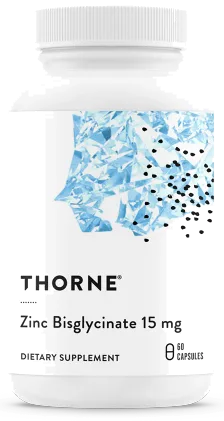
Thorne Zinc Bisglycinate 15 mg Review
Thorne Zinc Bisglycinate 15 mg is presented as a well-absorbed form of zinc that supports general health, from immune function to reproductive health. The page states that Zinc Bisglycinate helps to support optimal wellness, promotes healthy connective tissue and skin repair, and helps maintain eye and reproductive health. Each serving is one capsule, with 60 capsules per container. The key ingredient is Zinc (Bisglycinate Chelate) at 15 mg per capsule. Other ingredients listed are Microcrystalline Cellulose, Hypromellose Capsule, Leucine and Silicon Dioxide. The details section describes zinc as an essential micronutrient that plays a key role in growth and development, immune function, and testosterone metabolism, and as the second most abundant mineral in the body after iron. The page says clinical studies show zinc supplementation can increase general wellness and has a beneficial impact on connective tissue, reproductive, and eye health. It states that zinc bisglycinate is absorbed intact and does not compete with other minerals for absorption in the intestinal tract. A cross-over study is cited as showing 43 percent higher zinc blood levels compared to zinc gluconate. Zinc bisglycinate is zinc bound to two molecules of the amino acid glycine, which the page describes as a calming neurotransmitter that supports relaxation and promotes the body's production of glutathione. Listed benefits include support for cells related to the immune system, help maintaining T-cell activation, antioxidant properties that help mitigate oxidative stress, support for skin and eye health, and support for the body's normal production of testosterone. The page suggests it may suit individuals following a vegetarian or vegan diet, people needing additional immune support, and men seeking support for testosterone production to support muscle mass. Features include availability in both 15 mg and 30 mg doses and zinc provided in a chelated form. The Why Thorne section says the product is formulated with the scientific rigor Thorne is known for, with ingredients selected, clinically studied and tested through quality control. The page states the product has been third-party tested to verify the contents match the label and contain no unsafe levels of contaminants such as heavy metals, pesticides and microorganisms. Warnings state the product is contraindicated in anyone with a history of hypersensitivity to its ingredients, that pregnant people should consult a health-care practitioner before use, and that zinc can inhibit copper absorption, so long-term use should include copper in a 15:1 ratio.
We don’t sell supplements. We help you make decisions and get the best price.
Lowest prices
We may earn a commission from some store links. How we choose.
Finding the lowest prices at the stores now. This takes a few seconds.
Study, Trial or Testing Result Summary
Members Only17 human studies · 6 improved
Large reviews find that zinc does little or nothing to stop people from catching colds or other respiratory infections [1][2][3]. When taken once a cold has started, zinc may shorten it by about 2 to 2.5 days [1][3]. One adult review found symptoms lasted about 47 percent less time [2]. These benefits came with more mild side effects [1]. Not every study agrees. An older review of zinc lozenges found no clear benefit at 7 days [4]. In preschool children, 10 mg daily for 4 months cut infection days by 12 percent, which was not a reliable result, and by 20 percent after vitamin A was added [5]. A zinc nasal gel shortened colds in adults [6], but that is a different form from this capsule. This product gives 15 mg of zinc a day, which is above the 10 mg used in the children's study [5]. Overall, zinc looks more useful for shortening a cold than for preventing one. Animal and cell studies are never counted.
See all 17 studies →Hide the studies
- Across 34 trials with 8526 children and adults, zinc made little or no difference to catching a cold but may have shortened colds by about 2.4 days when used as treatment, with more mild side effects.Zinc for prevention and treatment of the common cold.
- In adults, zinc did not reduce the risk of respiratory infections but shortened symptom duration by about 47 percent.Effect of micronutrient supplements on influenza and other respiratory tract infections among adults: a systematic revie…
- In children with pneumonia, zinc may have slightly shortened hospital stays but did not speed recovery time, and no nutritional supplement could be recommended for routine treatment.A systematic review and meta-analysis on nutritional and dietary interventions for the treatment of acute respiratory in…
- Pooling 6 trials of adults with colds, zinc lozenges did not significantly reduce the chance of having cold symptoms at 7 days.A meta-analysis of zinc salts lozenges and the common cold.
- This review of common cold treatments covered zinc gel and lozenges among other options, but the abstract gives no results for zinc.Common cold.
- This review of common cold treatments covered zinc gel and lozenges among other options, but the abstract gives no results for zinc.Common cold.
- In healthy adults, zinc did not prevent colds but may have shortened colds by about 2.25 days when given alone.Zinc Supplementation Reduces Common Cold Duration among Healthy Adults: A Systematic Review of Randomized Controlled Tri…
- In 826 Indonesian preschool children given 10 mg zinc daily for 4 months, days with upper respiratory infection fell 12 percent (not significant), and 20 percent after vitamin A was given.Zinc combined with vitamin A reduces upper respiratory tract infection morbidity in a randomised trial in preschool chil…
- In 80 healthy adults with a new common cold, zinc gluconate nasal gel used four times daily until symptoms resolved (up to 10 days) shortened cold duration to a median of 4.3 days versus 6 days with placebo.Effect of zincum gluconicum nasal gel on the duration and symptom severity of the common cold in otherwise healthy adult…
- In 40 Air Force Academy cadets taking 15 mg of zinc gluconate daily for seven months, self-reported symptom-free episodes were significantly higher than with placebo, but doctor-diagnosed upper respiratory infections did not differ.Use of zinc supplements to reduce upper respiratory infections in United States Air Force Academy cadets.
- In 8 healthy men, a 10-week low-zinc diet (4.6 mg a day) reduced immune cell proliferation, which stayed reduced after 5 weeks of 9.1 mg zinc a day, while immune cell numbers and several other immune measures did not change.Immune functions are maintained in healthy men with low zinc intake.
- In 37 patients with skin infections called phlegmons, those given zinc tablets after low serum zinc was found had no further lesions for more than 10 months, though the study was uncontrolled.Serum zinc levels in patients with phlegmons as a marker of the severity of infection and the potential of zinc suppleme…
- Young vegetarians and vegans had more zinc deficiency than omnivores, and this deficiency was linked to lower interleukin-2 production and weaker immune function.Reduced interleukin-2 production and increased CREMα protein expression in vegetarians and vegans due to zinc deficiency…
- In 19 hemodialysis patients given influenza vaccine, 4 weeks of zinc acetate (60 mg elemental zinc daily) did not increase antibody responsiveness to the vaccine.Influenza vaccination in chronic hemodialysis patients. The effect of zinc supplementation.
- In 19 healthy older adults, moderate zinc supplementation reduced spontaneous inflammatory cytokine release and improved T cell response to stimulation.Zinc supplementation in the elderly reduces spontaneous inflammatory cytokine release and restores T cell functions.
- In 6 patients with acrodermatitis enteropathica, low zinc levels were linked to weaker T and B cell responses, and these normalized when zinc levels recovered with supplementation.Abnormal immune responses during hypozincaemia in acrodermatitis enteropathica.
- In volunteers with experimentally produced colds, zinc gluconate removed the drop in choice reaction time seen during the cold.Effects of zinc gluconate and nedocromil sodium on performance deficits produced by the common cold.
Review Totals and Summary
Members Only5,496 reviews · 95% positive
Thorne Zinc Bisglycinate 15 mg has about 5,496 ratings across the stores that sell it, and feedback leans positive. Buyers like the lower dose, the absorbable form and the brand's quality. The few complaints are about a lost shipment and not being able to tell if it works. No other forms of the product appeared in this feedback, so nothing had to be left out. **What buyers say it did for them:** Most describe it as part of a daily or year-round immune routine rather than something with a dramatic effect. One says it is "Part of my daily immune support," and another calls it "A staple in our house for year-round immune health." One Vitacost reviewer uses it for hair and nail health and is on a second bottle. The Thorne page's own summary mentions skin repair, connective tissue and a general sense of well-being. Another Vitacost buyer saw little difference after finishing a bottle. **What they complain about:** Complaints are few. One buyer never received the order and says Thorne ignored their request to fix it: "Thorne ignored my request for remediating this issue." Another gave one star only because it is "Too early to tell if at all" whether it works. The main reservation overall is uncertainty about results, not any fault in the product. No side effects are reported. **Taste, smell, pill size and form:** The capsules are called easy to swallow and are easy on the stomach. One reviewer says "Easy to swallow too," and another reports "No nausea." The Walmart page's tags describe small pills. A Vitacost reviewer says the bisglycinate form is often gentler on the stomach. No one mentions taste or smell. **Value for money:** Price is rarely discussed. One Vitacost reviewer likes that the bottle lasts a long time with daily use. One reviewer asks for coupons, but that is about buying more products, not about this one. **Who it seems to suit and who it did not:** It suits people who want a moderate, maintenance-level zinc dose. One buyer says, "Love a lower dose of Zinc for maintenance," and another notes the standard 30 mg option "would be too high for me for daily use." Others like that it fits alongside other supplements, and they trust the brand: "Thorn as always has the best quality." One reviewer calls it "Perfect amount of absorbable zinc," and another points to the chelated form as highly absorbable. It seems less satisfying for anyone expecting a noticeable effect quickly, as two reviewers could not tell whether it was doing anything. Buyers who had a delivery problem were left with a poor impression of the company's customer service. The written feedback is brief and mostly short comments, so the themes are narrow, but they are consistent: gentle, absorbable, easy to swallow and well regarded.
Biohacker Summary
Members Only10 of 10 recommend it
Most of the panel recommends or uses zinc, and the main reasons they give are immune support, testosterone and sperm health, wound healing, and gut health. Several say it helps most when someone is low, and one notes that fixing a deficiency is what raises testosterone. Doses vary: one takes 15 mg every morning, one suggests 30 mg for men preparing for fertility treatment, and one suggests 40 to 60 mg a day for fighting viruses. Another describes a short course before and after surgery for wound healing. For forms, two of them point to zinc carnosine for the gut, and one pairs zinc with vitamin C for fall and winter. Zinc is also paired with magnesium for sleep, and one adds it to a creatine product, while one panelist notes that birth control pills deplete zinc; no one on the panel said they stopped taking it.
See all 10 biohackers →Hide the biohackers
Dr. Eric Berg · Zinc · recommends
- Recommends ensuring sufficient zinc intake because the prostate needs enough zinc for the conversion from testosterone to DHT to be smooth and optimized.
- Recommends taking zinc carnosine for an ulcer or some type of gastric problem.
- Emphasizes the importance of zinc for decreasing viral replication and recommends taking 40 to 60 mg every single day.
- Notes that birth control pills deplete the body of zinc, which is needed for the brain to make serotonin.
- Added zinc to his creatine product because a deficiency in zinc might make creatine not work as well.
- Mentions that grass-fed liver is loaded with zinc.
- Recommends zinc to enhance testosterone.
- Highly recommends taking at least 50 mg of zinc at the first sign of a cold.
- Recommends a new product called black elderberry with added zinc and vitamin D, which combines four essential immune support nutrients, and advises taking three per day with meals.
- Recommends ensuring enough zinc intake because vitamin A, which can help with dry mouth, doesn't work without it.
Andrew Huberman · Zinc · uses
- Zinc carnosine to support and improve the lining of your gut.
- Notes that AG1 Pro contains zinc carnosine to support and improve the lining of the gut.
- States that AG1 Pro contains zinc carnosine to support and improve the lining of the gut.
- Uses AG1 Pro, which contains zinc carnosine to support and improve the lining of the gut.
- States that AG1 Pro contains zinc carnosine to support and improve the lining of the gut, and he was already taking some of these ingredients separately.
- States that AG1 Pro includes zinc carnosine, which he was already taking separately, to support and improve the lining of the gut.
- Personally takes zinc carnosine, which is included in AG1 Pro to support and improve the lining of the gut.
- AG1 Pro has zinc carnosine to support and improve the lining of your gut. Some of these ingredients I personally was already taking separate from the AG1 formula.
- States that AG1 Pro contains zinc carnosine to support and improve the lining of your gut.
- Uses AG1 Pro, which contains zinc carnosine to support and improve the lining of the gut.
Ben Greenfield · Zinc · warns
- Ben Greenfield's formulation includes 30 grams of zinc a day, taken for one week before surgery and two weeks after, as it is an important cofactor for wound healing.
- Emphasizes that zinc sufficiency is crucial for immunity because the thymus-derived peptide thymulin, which trains lymphocytes, requires zinc to be active.
- Recommends adding zinc into one's stack because it is a co-factor for enzymes involved in testosterone synthesis and sperm maturation, and zinc deficiency is a reproducible cause of low sperm count.
- He mentions zinc as a supplement with real human data behind it for male fertility.
- Zinc may support both testosterone and sperm count.
- Warns that he was taking so much zinc without realizing it because it was in five different things he was taking, and he couldn't pinpoint the problem.
- Recommends supplementing with zinc if deficient, as multiple trials show significant symptom reduction of tinnitus in zinc-deficient individuals.
- Notes a new study indicating that zinc is a core dietary antioxidant closely associated with a reduced risk of accelerated biological aging.
- Recommends using hormone building blocks like zinc for hormone optimization.
- Advises taking the GI Repair Formula away from food for best results, unless zinc causes nausea.
Thomas DeLauer · Zinc · uses
- Adds zinc to their immunity duo because it helps them absorb vitamin C, considering the two together a fantastic combination for fall and winter.
- Recommends zinc, noting it is a cofactor for enzymes that build neurotransmitters, and deficiency can affect mood, happiness, and motivation.
- Mentions that more zinc could be beneficial for testosterone, but it's not working on the axis that most people need help with.
- Compares zinc content, noting salmon has under 1mg while oysters have 74mg per 100g, a 70x difference.
- Recommends keeping zinc levels topped off because it is a critical cofactor for over 300 enzymes and is important for immune cells, testosterone, and wound healing.
- Recommends 15 mg of supplemental zinc if oysters are not realistic, but emphasizes that food source zinc is better as it comes with natural cofactors like copper and selenium.
- Recommends getting zinc, along with vitamin D, magnesium, and calcium, from foods like sardines, as they are important for inflammatory pathways in the gut.
- Explains that zinc is a structural cofactor for an enzyme crucial in testosterone production, and a marginal deficiency is a reversible cause of suppressed testosterone. He recommends getting zinc through pumpkin seeds.
- Explains that zinc is a required cofactor for the 5-alpha reductase enzyme, which converts testosterone into its more potent form, DHT, and that zinc deficiency can impair this conversion.
- Recommends ensuring adequate zinc intake for skin healing and immune response, especially for heavy sweaters or those consuming high phytate foods.
Dave Asprey · Zinc · uses
- Developed a nonnano zinc sunscreen over five years, stating her skin is probably better now than it's ever been.
- Emphasizes the importance of having enough zinc before trying advanced longevity strategies like peptides.
- Suggests that zinc has better safety and protective data than meds for reducing cardio respiratory risk.
- Advises that if someone has a goal, they should probably do simple things like getting more zinc if it helps their goal before using peptides.
- Recommends zinc for muscle and bone formation, stating that without it, the body cannot effectively build muscle and bone even with exercise and protein intake.
- Dave Asprey mentions zinc as a supplement and cofactor that supports thyroid activation.
- Recommends zinc as a cofactor that can help thyroid function, especially with conversion issues.
- Argues that if you are lacking zinc, ESS60 will not work as well.
- Recommends adequate zinc for healthy DHT signaling.
- States that he genetically needs a ton of zinc for his mitochondria to work, and if he doesn't take enough, his mitochondria don't work.
Dr. Mark Hyman · Zinc · uses
- Gave a patient with psoriatic arthritis a little zinc, which contributed to significant improvement in her condition.
- Recommends ensuring adequate zinc intake on a regular basis for immune support, noting some data on zinc lozenges for early cold.
- Recommends correcting nutrient deficiencies with zinc.
- Recommends nutrient-dense foods rich in zinc, such as pumpkin seeds and oysters, to reduce inflammation.
- Used zinc as part of a protocol to rebuild the gut microbiome and heal the gut of a nine-year-old girl with severe behavioral issues.
- Notes that zinc supports immune health, helps wounds heal, and plays a key role in growth and tissue repair, and they measure it.
- Mentions zinc is needed for phase one liver functions and inflammation.
- Notes that birth control drains zinc.
- Recommends zinc for immune system support and modulation.
- Relies on Big Bold Health's HTB Immune Energy Chews, which deliver 1000mg of sprouted Himalayan tardy buckwheat, along with vitamin C, D, magnesium, and zinc, to support immune balance, resilience, energy, and focus.
Dr. Rhonda Patrick · Zinc · recommends
- Notes that not getting enough zinc can affect testosterone, as zinc is very important for testosterone synthesis.
- Recommends men take a 30 milligram zinc supplement for sperm health when preparing for IVF.
- Discusses findings from a meta-analysis on zinc supplementation, noting it improved insulin resistance, inflammation, and oxidative stress in people with diabetes or prediabetes, and explains its biological role in the pancreas.
- Recommends nutrients like zinc for men to prioritize sperm mitochondrial health.
- Recommends Zinc, stating it is a critical mineral required for testosterone production and that supplementation corrects deficiency-related low testosterone.
- Recommends correcting deficiencies in zinc to directly increase total testosterone by up to 100+ ng/dL.
- Recommends focusing on zinc to optimize testosterone and hormone health generally, noting that it supports luteinizing hormone production, which stimulates testosterone synthesis and conversion to dihydrotestosterone.
- Recommends zinc as one of the most reliable natural supplements for boosting testosterone if one is deficient, noting it's part of the ZMA combination.
- Recommends increasing intake of zinc if one regularly drinks alcohol.
- States that zinc is crucial for alcohol metabolism and that higher intakes might correlate with less severe hangover symptoms, also noting that alcohol increases zinc excretion, so replenishing zinc stores while consuming alcohol is important.
Siim Land · Zinc · recommends
- States that deficiencies in nutrients such as zinc can impair normal immune regulation.
- Explains that zinc raises testosterone only if zinc status or testosterone levels are low, and can reduce the duration and severity of colds and flu, and lower blood sugar and lipids if zinc status is low.
- States that fixing zinc deficiency can double testosterone if low testosterone is due to zinc deficiency.
- States that zinc has strong evidence for increasing testosterone, but only if one has low zinc status.
- States that zinc deficiency is observed in children with premature graying of hair.
- Warns that supplementing 250 mg of zinc sulfate, which provides 55 to 60 mg of elemental zinc, is above the tolerable upper limit and can cause side effects like reduced copper absorption, anemia, immune dysfunction, GI stress, abdominal pain, diarrhea, and a metallic taste.
- States that zinc helps with immunity, wound healing, and testosterone levels, acknowledging its importance as a mineral and placing it in the 'good tier' despite not personally finding much value from it.
- Used to take zinc in the past but no longer does, as he has already tested most supplements.
- Recommends Zinc, acknowledging its importance as a mineral for immunity, wound healing, and testosterone levels, especially for those with low zinc.
- Discusses Zinc as a supplement.
Bryan Johnson · Zinc · uses
- Takes 15 mg of Zinc in the morning for longevity.
- Takes 15 mg of Zinc in the morning.
- Takes 15 mg of Zinc in the morning for longevity.
- Bryan Johnson's baseline measurements showed low zinc, which was easy to fix by adjusting her protocol and supplements.
- Recommends adequate Zinc for hair health, noting it is in the Blueprint stack.
Peter Attia · Zinc · recommends
- Suggests that zinc and magnesium could potentially help with vasodilation and sleep, particularly for women experiencing severe symptoms in the luteal phase.
- Discusses the AREDS formula, which initially included C and beta-carotene with zinc and copper, and later replaced beta-carotene with lutein and zeaxanthin, showing it could delay or reduce the conversion of mild to severe macular degeneration.
- Explains that for Wilson's syndrome, which can lead to liver failure, the treatment given to children is zinc, which is inexpensive and effective in outcompeting copper to prevent overload.
- Uses a new irrigant called ZinC and Gent because they are very worried about prosthetic infection.
- Discusses the AREDS formula, which includes C, E, beta-carotene, zinc, and copper, and later lutein and zeaxanthin instead of beta-carotene. Studies showed it could delay or reduce the conversion of mild to severe macular degeneration but had no effect on severe disease or preventing it in healthy individuals.
- Mentions that a survey of doctors showed they recommend Zinc for COVID-19, but notes there is no real evidence behind it.
- Mentions zinc pyrithione as a treatment protocol for dandruff, which addresses malassezia yeast overgrowth in the scalp.
RAL Summary
Members OnlyTier 4 for Immune Health
The ineffective tier misreads mixed evidence: large reviews find zinc does not prevent colds but does shorten them by about two days, and with over 5,000 reviews at 95 percent positive this supports tier 3, not tier 5. So it is graded Tier 4, as the studies disagree.
- Emerging: not enough evidence to rank higher yet.
Where the evidence disagrees: 4 of the 17 human studies found no effect.
More Details
Members OnlyBody systems · Combine with · Possible side effects
Body systems: Immune system, Respiratory system
Combine with: For women's hormone support, zinc pairs well with magnesium glycinate (PMS, sleep, stress), vitamin B6 as P5P (progesterone support and PMS), and vitamin D3 with K2 (hormone receptor function and bone health). Selenium and iodine (only if appropriate) support thyroid hormone conversion alongside zinc. DIM or calcium-d-glucarate can support estrogen metabolism, and omega-3 fish oil helps with inflammation and cycle comfort. Adaptogens such as ashwagandha or vitex (chasteberry) may help with stress-related or cycle-related imbalance. Take zinc with food to reduce nausea, and if supplementing long term at higher doses, add copper (about 1 mg per 15 mg zinc) to avoid copper depletion. Separate zinc from iron and calcium supplements, and consult a healthcare provider for hormonal conditions.
Possible side effects: Studies report more mild side effects with zinc taken for colds. The reviews report no side effects and describe the capsules as gentle on the stomach.
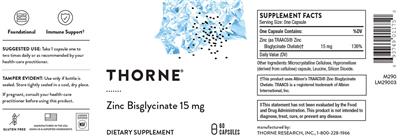
Supplement Facts
Zinc 15 mg
| Zinc | 15 mg |
Other ingredients: Microcrystalline Cellulose, Hypromellose, Leucine, Silicon Dioxide.
Directions: Suggested use: Take 1 capsule one to two times daily or as recommended by your health-care practitioner.
Barcode (UPC) 693749011750 · Label source: NIH label database · Report a label change
Show entire label
More immune health products
Members OnlyThe highest ranked for the same goal
Read more
Our articles on this subject
- How to Improve Gut Health Naturally: Fiber, Foods and the Probiotic Strains With Human TrialsArticle · Sep 15, 2026
- How to Build a Longevity Supplement Stack: An Evidence-First ReviewArticle · Sep 7, 2026
Graded November 5, 2026 by the Reverse Age Lab evidence engine, from human studies, real reviews and our biohacker panel. How we grade. Is this medical advice? No. Rala organizes the published evidence; go over any change with your doctor, especially if you take meds.
Privacy policyConsumer health dataAffiliate disclosureTermsDo Not Sell or Share My Personal InformationCookie settings