
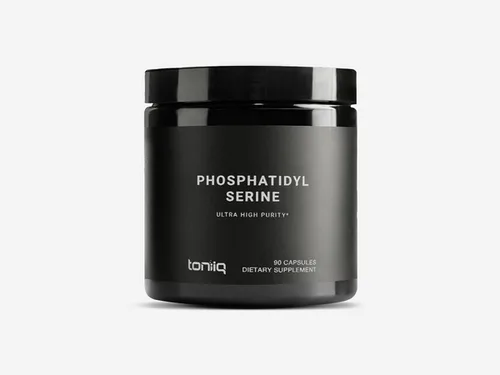
Toniiq Phosphatidyl Serine Review
Toniq Phosphatidyl Serine is a premium dietary supplement formulated to support optimal cognitive function, stress response, and overall brain health. Phosphatidylserine (PS) itself is a vital phospholipid, a fatty substance naturally abundant in the brain's nerve cell membranes, where it plays a critical role in protecting these cells and facilitating their communication. As a fundamental component of cellular membranes, PS is essential for maintaining their fluidity and permeability, which are crucial for efficient cell signaling and function. The natural levels of phosphatidylserine in the body, particularly in the brain, tend to decrease with age, which can contribute to age-related declines in cognitive abilities such as memory and processing speed. Supplementation with Toniq Phosphatidyl Serine aims to replenish these levels, thereby supporting the intricate mechanisms that underpin healthy brain activity. One of its primary mechanisms involves enhancing synaptic plasticity, which is fundamental for the formation and retrieval of memories. It also supports the activity of various enzymes and receptors within the brain, optimizing neural communication pathways. Furthermore, Phosphatidylserine is instrumental in the regulation of key neurotransmitters like dopamine and acetylcholine, which are indispensable for mood regulation, memory, and other executive cognitive functions. Beyond its direct impact on neuronal health, Toniq Phosphatidyl Serine is recognized for its ability to modulate the body's stress response. It achieves this by influencing the hypothalamic-pituitary-adrenal (HPA) axis, thereby helping to regulate cortisol levels, the primary stress hormone. By balancing cortisol, the supplement can contribute to reduced mental and physical effects of stress, promoting a calmer and more balanced physiological state. This can also indirectly support improved sleep quality, as stress and elevated cortisol often interfere with restful sleep. Toniq distinguishes its Phosphatidyl Serine supplement by offering an unprecedented purity level of 50%+, significantly higher than many other brands that typically contain 20% or less active ingredient. This high standardization ensures a more potent and bioavailable form of phosphatidylserine. The product is a 400mg formula, soy-free, and provided in 90 veggie capsules, making it suitable for various dietary preferences. Manufactured in a GMP-certified, state-of-the-art facility in the USA, each batch undergoes rigorous third-party lab testing to verify purity, potency, and the absence of contaminants, ensuring a high-quality and reliable supplement.
We don’t sell supplements. We help you make decisions and get the best price.
Lowest prices
We may earn a commission from some store links. How we choose.
We hold no current store prices for it yet: check the store.
Sold at: iHerb
Study, Trial or Testing Result Summary
Members Only12 human studies · 8 improved
This product gives 400 milligrams a day of a sunflower phospholipid complex labeled as 50 percent phosphatidylserine. That is above the 100 milligram amount that worked in studies. In a 1992 trial of 51 people with probable Alzheimer's disease, 300 milligrams a day for 12 weeks improved several thinking measures compared with placebo, most clearly in milder cases [1]. That trial used phosphatidylserine from cow brain, while this product comes from sunflower. In 36 children with attention problems, 200 milligrams a day for 2 months improved attention and short-term memory [2]. Two larger trials used combination products, so the effect of phosphatidylserine alone is less certain. In one, 190 older adults with mild memory decline improved arithmetic and short-term memory over 12 months [3]. In the other, 109 healthy adults taking a magnesium formula improved their memory scores in 30 days [4]. A pooled analysis of three trials in 216 children found less inattention, but no clear change in overall symptoms, and the evidence was low quality [5]. A larger pooled analysis in children and teens ranked it well for attention, but those studies were also low quality [6]. Animal and cell studies are never counted.
See all 12 studies →Hide the studies
- In a pooled analysis of 48 studies with 3,650 children and teens with attention problems, phosphatidylserine ranked best for parent-rated attention and total score on one scale, but the studies were low quality, so the rankings should be read with caution.Safety and efficacy of antioxidant therapy in children and adolescents with attention deficit hyperactivity disorder: A …
- In a pooled analysis of three placebo-controlled trials with 216 children with attention-deficit disorder, 200-300 mg a day of phosphatidylserine reduced inattention more than placebo, but overall symptoms and hyperactivity did not improve significantly, and the evidence was low quality.Phosphatidylserine for the Treatment of Pediatric Attention-Deficit/Hyperactivity Disorder: A Systematic Review and Meta…
- In 190 older adults with mild cognitive impairment, a combination supplement giving about 63 mg a day of phosphatidylserine plus alpha-linolenic acid and ginkgo flavonoids for 12 months improved arithmetic, similarity and short-term memory scores compared with placebo.Effects of a food supplement containing phosphatidylserine on cognitive function in Chinese older adults with mild cogni…
- In 109 healthy Chinese adults, 2 grams a day of a magnesium L-threonate and phosphatidylserine formula for 30 days improved all memory test categories and overall memory score compared with placebo, with larger gains in older participants.A Magtein®, Magnesium L-Threonate, -Based Formula Improves Brain Cognitive Functions in Healthy Chinese Adults.
- In 51 patients with probable Alzheimer's disease, 300 mg a day of bovine cortex phosphatidylserine for 12 weeks improved several thinking measures compared with placebo, most clearly in those with milder impairment.Effects of phosphatidylserine in Alzheimer's disease.
- In 40 adults with mild to moderate Alzheimer-type dementia, 200 mg a day of phosphatidylserine for three months gave smaller cognitive gains than selegiline, a drug it was compared against, with no placebo group.Selegiline in the treatment of mild to moderate Alzheimer-type dementia.
- In 36 children with attention-deficit hyperactivity disorder, 200 mg a day of soy phosphatidylserine for 2 months improved symptoms, short-term auditory memory and attention compared with placebo.The effect of phosphatidylserine administration on memory and symptoms of attention-deficit hyperactivity disorder: a ra…
- In 28 healthy young adults, a single 120 mg dose of ginkgo extract bound to phosphatidylserine improved memory and memory speed over six hours compared with placebo, while plain ginkgo extract did not improve the main measures.Acute cognitive effects of standardised Ginkgo biloba extract complexed with phosphatidylserine.
- In 122 older adults with memory complaints, 100 mg a day of phosphatidylserine with omega-3 for 15 weeks improved attention and memory recognition in new users and kept thinking skills steady in those who continued.Phosphatidylserine containing omega-3 Fatty acids may improve memory abilities in nondemented elderly individuals with m…
- In 30 older adults with memory complaints, 300 mg a day of soybean phosphatidylserine for 12 weeks improved memory, executive function and mental flexibility, with no control group.The effect of soybean-derived phosphatidylserine on cognitive performance in elderly with subjective memory complaints: …
- In 18 healthy older adults with age-related memory problems (15 finished), 300 mg a day of plant-derived phosphatidylserine for 12 weeks improved most thinking measures by week 6, and the gains held at week 12, with no control group.An open trial of plant-source derived phosphatydilserine for treatment of age-related cognitive decline.
- This summary describes the methods of an Italian trial of bovine phosphatidylserine in Alzheimer's disease and reports no results for people.Phosphatidylserine in the treatment of clinically diagnosed Alzheimer's disease. The SMID Group.
Review Totals and Summary
Members Only102 reviews · 90% positive
Toniq Phosphatidyl Serine has received about 102 ratings across various stores, with a strong majority (90%) of star ratings being 4 or 5, indicating a generally positive customer experience. **What it did for them** Many users report significant benefits from taking this supplement. It is frequently praised for "mitigating cortisol as intended," helping users "return to sleep after waking." Others found it "helps with mental alertness and memory," and "reduced my stress levels and improved my short term memory!" Some consider it an "Absolute LIFESAVER!!" for chronically high cortisol and sleep issues, noting it helps "avoid the 3 pm awakening." **What they complain about** While generally positive, some criticisms emerged. One user noted "garbage fillers they put in the capsules," though acknowledging this is common across brands. A more significant complaint focused on the product's packaging, with one reviewer describing the container as "terribly designed" because its wide opening makes it difficult to dispense a single capsule without spilling. This design led to instances of users managing "to spill them all over" while trying to get just one. **Taste, Smell, Pill Size or Form** There are no specific comments on the taste or smell of the capsules. The product comes in capsule form. The primary feedback related to its physical form concerns the container design, which some found inconvenient and prone to spillage. **Value for Money** Many customers view this product as good value. It is often described as a "Good brand for the money" and offering a "good price for the product." One user, having tried multiple vendors, found this to be the "best of 5 different vendors," suggesting its effectiveness justifies the cost. **Who it seems to suit and who it did not** This supplement appears particularly beneficial for individuals seeking to manage stress, reduce high cortisol levels, and improve sleep patterns, especially those who wake up during the night. It also seems to help those looking to enhance "mental alertness and memory" and short-term memory. There were no specific groups identified for whom the product did not work, with complaints generally focusing on packaging rather than efficacy.
Biohacker Summary
Members Only6 of 10 recommend it
Phosphatidylserine, the main ingredient, gets strong backing from the panel, with most of the ten recommending or using it, mainly to lower cortisol, help sleep and support memory and focus. Doses cluster around 300 to 400 milligrams, with some giving 100 to 300 milligrams for stressful days or at night, and one noting 400 milligrams worked better than 800 in trials. Several take it in the evening or at bedtime, and a few use it only for jet lag or travel, while one advises timing it after learning or in the morning if cortisol peaks then. One panelist cautions it should not be used consistently as a daily brake on cortisol, and none of the group say they stopped taking it. Lecithin, which is also listed as a main ingredient, is mixed: some use sunflower lecithin in food or as a choline source, while three warn against soy lecithin or note it may disrupt the gut.
See all 9 biohackers →Hide the biohackers
Dr. Mark Hyman · Phosphatidylserine · recommends
- Recommends taking phosphatidylserine supplements, which are phospholipids that make up part of cell membranes and regulate cortisol.
- Mentions that phosphatidylserine has good data, though not specifically for sleep, and suggests a dose of 300 to 400 milligrams.
- Mentions that phosphatidylserine also helps the brain.
- Took phosphatidylserine, which has been shown to reduce cortisol.
- Highlights Phosphatidylserine, a phospholipid integral to brain cell membranes, as being shown to improve memory, learning, and cognitive function.
- Uses Cortisol Manager, which contains ashwagandha, magnolia, and phosphatidylserine, to help lower cortisol levels for sleep.
- Mentions phosphatidylserine as a component for mitochondrial support.
- Recommends phosphatidylserine for mitochondrial support in patients with post-COVID syndrome.
Dr. Eric Berg · Phosphatidylserine · recommends
- Recommends phosphatidylserine, stating that 400 to 800 milligrams over several months can greatly help upgrade cortisol receptor sensitivity and support the nervous system.
Thomas DeLauer · Phosphatidylserine · recommends
- Recommends phosphatidylserine as a runner-up for stress and cortisol reduction, explaining it directly blunts the cortisol response, especially post-exercise, and helps regulate the hypothalamic-pituitary-adrenal axis.
- Recommends 400 mg of phosphatidylserine daily, noting that studies show it normalizes the HPA axis and cortisol response in chronically stressed individuals, addressing cortisol resistance.
- Recommends 100 to 300 mg of phosphatidylserine as an 'emergency switch' to blunt cortisol on highly stressful days, noting that it normalizes the cortisol response to stress but should not be used consistently.
- Recommends 100 to 300 milligrams of Phosphatidylserine as a temporary break on cortisol, helping to calm the body and blunt cortisol rhythms during stressful days.
- Recommends taking 3 to 800 milligrams of phosphatidylserine in supplemental form at lunch to calm the brain and have a statistically significant effect on cortisol levels.
- Expresses skepticism about Focus Factor, stating it's mostly a mineral blend with some ingredients like DMAE and phosphatidylserine, but highlights that N-acetyl tyrosine is worthless and suggests a bigger mental benefit would come from straight DHA from fish oil.
Peter Attia · Phosphatidylserine · neutral
- Peter reviews the evidence for select off-label medications and supplements commonly used for sleep, including glycine, magnesium, ashwagandha, and phosphatidylserine.
- Mentions phosphatidylserine as something that can help with sleep in the setting of chronic stress and hypercortisolemia.
- Occasionally takes 400 mg of Jarrow's phosphatidylserine gel caps for travel, particularly on long flights to overcome significant time zone changes.
- Occasionally takes Jarrow's phosphatidylserine gel caps, typically 400 mg, for travel to help overcome significant time zone changes.
- Uses 400 to 600 milligrams of phosphatidylserine in the evening to suppress cortisol production and facilitate sleep, especially when dealing with jet lag or time zone changes.
- Says that slamming yourself with 600 mg of phosphatidylserine really seems to move the needle in terms of both glucose and cortisol response.
- Takes 300 mg of Thorne Phosphatidylserine before bed for sleep.
Dr. Rhonda Patrick · Phosphatidylserine · uses
- Rhonda takes 300 mg of Phosphatidylserine before bed for sleep.
- Uses phosphatidylserine only when jet lagging or time zone hopping.
- Dr. Patrick notes that krill oil is a great source of phosphatidylserine, which accumulates in mitochondrial and cell membranes and has been shown to decrease in concentration with age, playing a role in neurodegenerative diseases like Parkinson's and Alzheimer's.
- He reserves melatonin and phosphatidylserine for jet lag.
- She mentions that Peter Attia takes 400 milligrams of phosphatidylserine from Jarrow when he travels.
Andrew Huberman · Phosphatidylserine · neutral
- Mentions that Phosphatidylserine can enhance learning and memory, and advises taking it late in or immediately after a learning episode for optimal results.
- He highlights specific nutrients, including phosphatidylserine, and discusses their recommended doses and dietary sources for brain structure, function and long-term cognitive health.
- Mentions Phosphatidylserine in the context of attention effects.
- Recommends Phosphatidylserine, stating it has been reliably demonstrated to tamp down the cortisol response, which can be helpful for insomnia patients whose cortisol spikes as they try to fall asleep.
- States that Phosphatidylserine (PS) is super effective at reducing cortisol, with 400 mg being more effective than 800 mg in trials, and recommends taking it in the morning if cortisol peaks high then, or at night if cortisol is high at night.
- Huberman suggests that acetylcholine precursors like phosphatidylserine are better ways to optimize nicotinic receptor activity.
- Mentions that Thesis uses high-quality ingredients like phosphatidylserine, which he has discussed before and uses himself.
- Mentions Phosphatidylserine as an example of a compound that can be researched on examine.com to find information about its effects.
- Used to take phosphatidylserine before sitting down to learn information or a physical skill, but now realizes this is not optimal for enhancing learning and memory.
- Mentions that Thesis uses high-quality ingredients like phosphatidylserine, which he has discussed on the podcast before.
Dave Asprey · Phosphatidylserine · recommends
- Identifies phosphatidylserine as one of the four best ingredients to reverse brain fog, noting that most people don't get enough of it.
- Says that phosphatidylserine or phosphatidylcholine would be life-changing for his mitochondrial lipids.
Ben Greenfield · Phosphatidylserine · recommends
- Recommends phosphatidylserine at 100 to 300 milligrams per day for improved memory, attention, and cognitive performance, especially in older people, and also for controlling cortisol when taken at night if stressed.
- Recommends phosphatidylserine to be taken at night, in doses of 100 to 300 milligrams, to make the pituitary more sensitive to cortisol and lower nighttime cortisol over time.
- Recommends phosphatidylserine as a supplement to use whilst traveling.
- Recommends phosphatidylserine for modulating cortisol.
- Recommends phosphatidylserine for lowering plasma cortisol, noting good research on it and liking Thorne's ISO Phos supplement for this purpose.
- Uses phosphatidylserine in the evening, finding it excellent for lowering cortisol, especially on days with workouts or heavy stress.
- Warns against relying on phosphatidylserine as an exogenous way to control stress and cortisol.
- Implies that relying on phosphatidylserine to lower cortisol is less effective than deep breathing before bed.
- Suggests that 500 to 600 milligrams of phosphatidylserine may help lower elevated cortisol levels that can occur during fasting.
- Warns that if heavy metals are already present in the endothelial vasculature, using phosphatidylserine as an IV could push the heavy metals deeper into the vasculature. He recommends removing heavy metals first before using it.
Siim Land · Phosphatidylserine · recommends
- Mentions that Phosphatidylserine comes up as a recommendation because of its effect on cortisol.
RAL Summary
Members OnlyTier 2 for Focus and Memory
Phosphatidylserine improved thinking or memory in several placebo-controlled trials, including 51 people with Alzheimer's disease and 190 older adults with mild memory decline [1][3]. This product gives more than the studied amount, and 88 percent of 111 reviews are positive.
Where the evidence disagrees: 1 of the 12 human studies found no effect.
More Details
Members OnlyBody systems · Combine with · Possible side effects
Body systems: Nervous system
Combine with: To further enhance cognitive function and stress resilience, consider combining Phosphatidyl Serine with Omega-3 fatty acids, particularly those rich in DHA, which are crucial for brain cell membrane health. Adaptogens like Ashwagandha can synergistically support stress reduction and promote calmness. For additional cognitive benefits, Alpha-GPC or Citicoline can provide choline precursors, while Bacopa Monnieri may further aid memory and learning.
Possible side effects: No major side effects reported.
Supplement Facts
Phosphatidylserine Complex 400 mg
| Phosphatidylserine Complex | 400 mg | † |
Other ingredients: Rice Hulls, Vegetable Capsule (Hydroxypropyl Methylcellulose), Microcrystalline Cellulose, Vegetable Magnesium Stearate & Silicon Dioxide.
Directions: Take 2 capsules daily as a dietary supplement or as recommended by a healthcare professional.
Barcode (UPC) 858111007667 · Label source: Reverseagelab · Report a label change
Show entire label

More focus and memory products
Members OnlyThe highest ranked for the same goal
Read more
Our articles on this subject
- Supplements for Focus and Mental ClarityArticle · Jun 16, 2026
- How to Build a Longevity Supplement Stack: An Evidence-First ReviewArticle · Sep 7, 2026
Graded October 23, 2026 by the Reverse Age Lab evidence engine, from human studies, real reviews and our biohacker panel. How we grade. Is this medical advice? No. Rala organizes the published evidence; go over any change with your doctor, especially if you take meds.
Privacy policyConsumer health dataAffiliate disclosureTermsBrand and legal noticesDo Not Sell or Share My Personal InformationCookie settings