
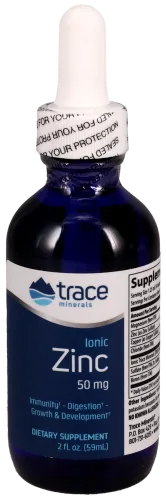
Trace Minerals Ionic Zinc 50 mg Review
Ionic Zinc is a liquid zinc supplement from Trace Minerals, presented on the page as a rich concentrated liquid that provides zinc in ionic form. The company states that ionic form is the form most recognisable by the body, and that the formula also contains a full spectrum of ionic trace minerals to promote body-mineral balance. The product is listed under the benefits of supporting the immune system, helping to maintain healthy skin, supporting normal growth and development, aiding in the formation of connective tissue, and promoting healthy digestion and metabolism. The page highlights that ionic form is the most bioavailable form of zinc, that the liquid form allows for variable dosing, and that the full spectrum of ionic trace minerals supports body-mineral balance. The ingredient list names zinc, which is described as promoting immunity, digestion, and healthy growth and development. It also names chloride, which is described as helping to maintain proper fluid balance, aiding digestion, and supporting nerve and muscle function. The formula additionally includes the ConcenTrace trace mineral complex, described as offering a full spectrum of ionic trace minerals to promote healthy digestion and metabolism and to support body-mineral balance. The suggested use is to shake well and take 1.25 mL, which is about one quarter of a teaspoon, spread throughout the day. People with a sensitive stomach are advised to start with a half serving. The manufacturer recommends adding the liquid to flavoured beverages or food to mask the strong mineral flavour, and says to take it on a full stomach. The product should not be refrigerated and should be kept out of the reach of children. The page lists no known allergens. The brand states that it uses zinc sulfate in this product, according to its frequently asked questions. The page also says that excessive zinc can inhibit copper absorption, so balance and moderation are advised, and that a healthcare provider should be consulted with any concerns. The product carries a 30 day free trial, free return shipping and easy exchanges under the Feel the Difference Guarantee. A subscribe and save option is available with 25 percent off the first order and 20 percent off recurring orders.
We don’t sell supplements. We help you make decisions and get the best price.
Lowest prices
We may earn a commission from some store links. How we choose.
Finding the lowest prices at the stores now. This takes a few seconds.
Products with nearly the same formula (Matched on the main ingredients)
Study, Trial or Testing Result Summary
Members Only42 human studies · 14 improved
1 of these 42 human studies gave the ingredient by drip, not by mouth.
The main ingredient, zinc, is here at a full dose. In large reviews, zinc made little or no difference to catching a cold [1][2]. Taken once a cold started, it shortened colds by about 2.4 days, with more mild side effects [1]. In adults it did not lower respiratory infections but symptoms lasted about 47 percent less time [3]. An older review of lozenges found no clear benefit at 7 days [4]. In preschool children, daily zinc cut infection days by 12 percent, which was not significant [5]. The 50 mg dose is above the daily recommended limit, so members may choose to take less. Copper is also at a full dose. It helped infants recovering from malnutrition [6] and burn patients when given with other minerals [7], but there is no solid proof it helps healthy people [8]. The doses of magnesium, chloride, boron and the trace mineral complex are not known to match studied amounts. Magnesium studies were mixed [9][10]. The only chloride study used inhaled salt mist for lung immunity, not chloride taken by mouth [11]. Boron has only animal studies that did not test a supplement [12]. Animal and cell studies are never counted.
See all 42 studies →Hide the studies
- Across 34 trials with 8526 children and adults, zinc made little or no difference to catching a cold but may have shortened colds by about 2.4 days when used as treatment, with more mild side effects.Zinc for prevention and treatment of the common cold.
- Across 37 trials of 4905 critically ill adults, combinations containing copper ranked best for shorter ICU stay and fewer infections, but the differences were not statistically clear and the evidence was too uncertain to support use.Antioxidant micronutrient supplements for adult critically ill patients: A bayesian multiple treatment comparisons meta-…
- In adults, zinc did not reduce the risk of respiratory infections but shortened symptom duration by about 47 percent.Effect of micronutrient supplements on influenza and other respiratory tract infections among adults: a systematic revie…
- In children with pneumonia, zinc may have slightly shortened hospital stays but did not speed recovery time, and no nutritional supplement could be recommended for routine treatment.A systematic review and meta-analysis on nutritional and dietary interventions for the treatment of acute respiratory in…
- Pooling 6 trials of adults with colds, zinc lozenges did not significantly reduce the chance of having cold symptoms at 7 days.A meta-analysis of zinc salts lozenges and the common cold.
- This review of common cold treatments covered zinc gel and lozenges among other options, but the abstract gives no results for zinc.Common cold.
- This review of common cold treatments covered zinc gel and lozenges among other options, but the abstract gives no results for zinc.Common cold.
- In healthy adults, zinc did not prevent colds but may have shortened colds by about 2.25 days when given alone.Zinc Supplementation Reduces Common Cold Duration among Healthy Adults: A Systematic Review of Randomized Controlled Tri…
- This review of 49 studies on atopic dermatitis found the evidence too limited to say what role copper plays, with benefit shown only for vitamin D and links to selenium and zinc.Micronutrients in Atopic Dermatitis: A Systematic Review.
- This review of 29 articles on leishmaniasis found higher copper levels in patients, and only zinc supplementation was shown to help wound healing, so copper supplementation was not shown to help.Leishmaniasis and Trace Element Alterations: a Systematic Review.
- In 826 Indonesian preschool children given 10 mg zinc daily for 4 months, days with upper respiratory infection fell 12 percent (not significant), and 20 percent after vitamin A was given.Zinc combined with vitamin A reduces upper respiratory tract infection morbidity in a randomised trial in preschool chil…
- In 80 healthy adults with a new common cold, zinc gluconate nasal gel used four times daily until symptoms resolved (up to 10 days) shortened cold duration to a median of 4.3 days versus 6 days with placebo.Effect of zincum gluconicum nasal gel on the duration and symptom severity of the common cold in otherwise healthy adult…
- In 69 adults with obesity, eating 57 g of almonds daily for 6 weeks lowered blood levels of three inflammation-related proteins compared with a cookie, but immune cell counts did not differ; this tested almonds as a whole food, not magnesium alone.Almond Consumption Improves Inflammatory Profiles Independent of Weight Change: A 6-Week Randomized Controlled Trial in …
- In 40 Air Force Academy cadets taking 15 mg of zinc gluconate daily for seven months, self-reported symptom-free episodes were significantly higher than with placebo, but doctor-diagnosed upper respiratory infections did not differ.Use of zinc supplements to reduce upper respiratory infections in United States Air Force Academy cadets.
- In 35 healthy men over 67, a multivitamin/multimineral taken for at least six months did not change blood magnesium levels, though it improved vitamin levels and prevented a decline in the oxygen use of immune cells called monocytes.Multivitamin/Multimineral Supplementation Prevents or Reverses Decline in Vitamin Biomarkers and Cellular Energy Metabol…
- In 21 patients with major burns, 14 to 21 days of intravenous copper, selenium and zinc led to fewer infections (median 2 versus 4) and fewer lung infections than placebo, with better antioxidant status and wound healing.Trace element supplementation after major burns modulates antioxidant status and clinical course by way of increased tis…
- In adults with type 2 diabetes and low magnesium, a daily magnesium supplement (15 mmol) lowered some T-cell inflammatory signals compared with placebo, but did not change immune cell counts or circulating inflammatory proteins significantly.Magnesium Supplementation Modulates T-cell Function in People with Type 2 Diabetes and Low Serum Magnesium Levels.
- In 5 male runners, 6 days of a zinc and copper supplement blocked the exercise-induced rise in neutrophil reactive oxygen species but did not prevent the drop in immune cell growth after a long run.Exercise-induced changes in immune function: effects of zinc supplementation.
- In a small crossover trial of people with XMEN disease, 12 weeks of magnesium L-threonate did not change EBV levels or NKG2D immune receptor status, and the trial was stopped.A Double-Blind, Placebo-Controlled, Crossover Study of Magnesium Supplementation in Patients with XMEN Disease.
- Two months of magnesium supplementation did not prevent the immune changes caused by exhaustive exercise in athletes whose magnesium levels were already normal.Effect of magnesium on granulocyte function and on the exercise induced inflammatory response.
- Giving lidocaine, magnesium and amino acids together around abdominal surgery lowered inflammation markers and pain scores, but the effect of magnesium alone cannot be separated out.Impact of Perioperatively Administered Amino Acids, Lidocaine, and Magnesium on Inflammatory Response and Pain Associate…
- In elderly people living in care institutions, a low-dose zinc and selenium supplement taken for 2 years significantly reduced the average number of respiratory and urinary or genital infections compared with placebo, while vitamins alone did not.Micronutrient supplementation and infection in institutionalized elders.
- In 188 patients with or at risk of respiratory disease given a course of dry sodium chloride aerosol, compared with 49 matched patients given placebo, the treatment reduced airway inflammation, activated lung immune cells and improved local antibody-based immunity; dose and duration were not stated.[Effect of halogen aerosol therapy on resistance parameters of the respiratory tract].
- In 27 infants recovering from severe malnutrition, copper sulphate at 80 mcg per kg daily raised blood copper, and the placebo group had significantly more severe lower respiratory infections.Controlled trial of copper supplementation during the recovery from marasmus.
- In 8 healthy men, a 10-week low-zinc diet (4.6 mg a day) reduced immune cell proliferation, which stayed reduced after 5 weeks of 9.1 mg zinc a day, while immune cell numbers and several other immune measures did not change.Immune functions are maintained in healthy men with low zinc intake.
- In patients with acute intestinal infections caused by gram-negative bacteria, a combination that included magnesium sulfate with unithiol and vitamin E shortened illness and diarrhea, reduced repeat infections, and restored immune function more quickly; magnesium was not tested alone.[The antioxidant treatment of patients with acute intestinal infections due to gram-negative microorganisms].
- In 11 healthy men, a diet with 0.38 mg copper daily for 42 days reduced immune cell growth responses, and 2.49 mg daily for 24 days stopped further decline but did not restore them.Effects of low-copper diets on human immune response.
- In a large Finnish birth cohort, higher maternal dietary magnesium during pregnancy was linked to lower risk of eczema in 5-year-old children, while other antioxidants showed no link to asthma, rhinitis or eczema.Intake of antioxidants during pregnancy and the risk of allergies and asthma in the offspring.
- In a cohort of 1975 middle-aged and older Finnish men followed for about 19 years, higher serum copper was linked to a higher risk of hospitalization for infection.Serum copper-to-zinc-ratio and risk of incident infection in men: the Kuopio Ischaemic Heart Disease Risk Factor Study.
- A survey of 400 people in Bangladesh during COVID-19 found most had good knowledge about immunity-boosting foods, but only 44% had good dietary practices; the study did not test any supplement's effect.Knowledge, attitudes, and practices regarding immunity boosting dietary behavior of mass population amid COVID-19.
- In 92 people with hepatitis C, those who also had fatty liver disease had lower zinc and selenium and higher copper than those without it, along with more oxidative stress and inflammation.Status of essential trace minerals and oxidative stress in viral hepatitis C patients with nonalcoholic fatty liver dise…
- In 25 asthma patients compared with 25 healthy people, zinc and selenium were lower, copper was higher, and oxidative stress and inflammation markers were higher.Role of certain trace minerals in oxidative stress, inflammation, CD4/CD8 lymphocyte ratios and lung function in asthmat…
- In 37 patients with skin infections called phlegmons, those given zinc tablets after low serum zinc was found had no further lesions for more than 10 months, though the study was uncontrolled.Serum zinc levels in patients with phlegmons as a marker of the severity of infection and the potential of zinc suppleme…
- In 20 patients with infection before emergency abdominal surgery, serum iron was lower than in 15 elective surgery controls, and iron, ferritin, and zinc rose after the infection was removed.Effect of sepsis and surgery on trace minerals.
- Young vegetarians and vegans had more zinc deficiency than omnivores, and this deficiency was linked to lower interleukin-2 production and weaker immune function.Reduced interleukin-2 production and increased CREMα protein expression in vegetarians and vegans due to zinc deficiency…
- Before liver surgery, magnesium citrate bowel preparation led to lower C-reactive protein after surgery than polyethylene glycol preparation, with no surgical site infections in either group.[Effect of Preoperative Bowel Preparation on Surgical Site Infection in Liver Surgery].
- In 19 hemodialysis patients given influenza vaccine, 4 weeks of zinc acetate (60 mg elemental zinc daily) did not increase antibody responsiveness to the vaccine.Influenza vaccination in chronic hemodialysis patients. The effect of zinc supplementation.
- In 19 healthy older adults, moderate zinc supplementation reduced spontaneous inflammatory cytokine release and improved T cell response to stimulation.Zinc supplementation in the elderly reduces spontaneous inflammatory cytokine release and restores T cell functions.
- In 6 patients with acrodermatitis enteropathica, low zinc levels were linked to weaker T and B cell responses, and these normalized when zinc levels recovered with supplementation.Abnormal immune responses during hypozincaemia in acrodermatitis enteropathica.
- Magnesium did not restore NKG2D immune receptor levels in lab-engineered cells or in one XMEN patient, as the defect was caused by faulty sugar attachment to the protein.Lack of NKG2D in MAGT1-deficient patients is caused by hypoglycosylation.
- In volunteers with experimentally produced colds, zinc gluconate removed the drop in choice reaction time seen during the cold.Effects of zinc gluconate and nedocromil sodium on performance deficits produced by the common cold.
- In a first-in-human phase I trial in healthy men, sodium copper chlorophyllin was well tolerated up to 3000 mg and reached blood levels above 5 μM, and it caused biphasic immune changes, with no clear immune benefit shown in people.First-in-human clinical trial of high-dose sodium copper chlorophyllin: Pharmacology and efficacy as a dual immunomodula…
Review Totals and Summary
Members Only6,824 reviews · 85% positive
Buyers mostly like this liquid zinc, mainly for immune support, but the strong mineral taste and some oddities in how it looks keep coming up. It carries about 5,646 ratings across the stores, and most written reviews are positive. No gummy, capsule or powder reviews appeared in what I read, so this covers the liquid only. **What buyers say it did for them:** Immune support is the main benefit people name. One says it is "Fantastic immunity," and another says "I don't remember the last time I had a cold." Another buyer calls it a zinc supplement that "works better than any pill I've tried." One reports it helps a zinc deficiency, and one store's summary mentions a buyer who feels it is reducing hair loss, after only two weeks. Not everyone can tell: one buyer takes it for immunity and a thyroid boost and says "I honestly have zero way of checking of its efficiency." **What buyers complain about:** Taste is the main complaint, followed by stomach upset. One review is simply "It tastes GROSS." Several say to take it with food, warning that otherwise "you will feel very ill." Store summaries mention one sensitive-stomach buyer who vomited after a small dose, and one who felt hyper from the preservative potassium benzoate. Appearance worries some buyers. Reviews mention blue bits, black particles in the liquid, and ink on the dropper that "rubbed off easily." One buyer was so put off by this that they asked who would "still ingest this." Another says the liquid turns milky blue after about a month but still works the same for them. **Taste, smell, form:** Buyers describe the flavor as strong, bitter and metallic. The fixes they suggest are: - Tonic water: "you won't taste the strong minerally taste." - Tomato juice, which one buyer says works where other juices don't. - Orange juice with a juice chaser. - A spoonful of almond butter. Some advise holding a dose briefly under the tongue after a meal. It comes in a glass bottle with a plastic dropper. One buyer finds the dropper convenient but says "a very precise dosage is not possible." Blue bits need vigorous shaking to dissolve, and in water the liquid "sinks like a rock," so it needs stirring and drinking right away. **Value for money:** Few buyers comment on price, but those who do are positive. One calls it "a REALLY GOOD value for the money." Store summaries also mention a fair price and reasonable cost. **Who it suits and who it didn't:** It suits people who want a potent, absorbable zinc and are willing to mask the taste in a drink and take it with a meal. One buyer picked it over capsules because it felt "so well balanced," and likes that it contains copper. It suited people with sensitive stomachs less well. One reviewer advises people with gastrointestinal problems to use it carefully. It also suited people bothered by sediment or ink marks less well, and those who can't tolerate strong flavors.
Biohacker Summary
Members Only10 of 10 recommend it
Of the ten panelists, nine spoke about zinc, and the panel leans supportive: three recommend it, three use it, and the rest are neutral or cautious. People take it for immune support, wound and tissue healing, testosterone, and sleep, and one pairs it with vitamin C for fall and winter. One panelist takes 15 mg in the morning for longevity, while another described a short course of 30 grams a day around surgery for wound healing. The one caution is from a panelist who warned that overshooting zinc can lead to a copper deficiency. One panelist also mentioned zinc carnosine for the gut lining, and another mentioned zinc in a sunscreen, so those are different uses than a plain zinc supplement. Magnesium is a smaller ingredient in this product, and most of the panel favors it for sleep, with glycinate and threonate the preferred forms.
See all 10 biohackers →Hide the biohackers
Dr. Eric Berg · Zinc · recommends
- Recommends zinc as a trace mineral, noting that modern farming practices deplete it from the soil, leading to low levels in crops.
- Recommends Magnesium glycinate, noting its high absorption rate compared to magnesium oxide, and its support for energy, sleep, muscle relaxation, and vitamin D function.
- Dr. Berg states that when nutrients like magnesium are too low, fatigue and weakness can follow.
- Notes that white spots on nails point to zinc deficiency, which is usually depleted by eating sugar and refined carbs.
- States that zinc greatly supports natural killer cells.
- Recommends focusing on magnesium to support stronger bones if a neck hump is associated with osteoporosis.
- Explains that leg and calf cramps are most often caused by low magnesium, with leafy greens being a top source.
- States that magnesium is a cofactor that allows B1 to work more efficiently.
- States that magnesium is the most important mineral for energy production, as one cannot make energy without it.
- States that zinc is needed to absorb magnesium.
- Magnesium is involved in 300 to 600 enzyme reactions, acts as a biological brake pedal, is the master controller over calcium, and is involved in making ATP, the energy currency of the body. It takes energy to go to sleep, and magnesium is required for relaxation and good sleep. Magnesium also helps balance cortisol levels and calm you.
- Recommends ensuring sufficient zinc intake because the prostate needs enough zinc for the conversion from testosterone to DHT to be smooth and optimized.
- Dr. Eric Berg states that magnesium supports energy, muscle function, and sleep, and that most of it is stored inside cells, making deficiencies harder to detect with a standard blood test.
- Notes that magnesium could also be a factor in preventing muscle cramps.
Dr. Rhonda Patrick · Zinc · neutral
- Mentions that getting too little zinc may play a role in declining testosterone levels, and that zinc helps the body make testosterone.
- Explains that magnesium helps the body activate and metabolize vitamin D, and that magnesium intake has been associated with lower odds of vitamin D deficiency and insufficiency.
- Mentions that getting too little magnesium may play a role in declining testosterone levels.
- Recommends getting enough magnesium, around 300–400 mg daily from diet and supplements, as it is an essential cofactor for vitamin D metabolism. Magnesium glycinate is a good form.
- Mentions magnesium as one of the micronutrients found in multivitamins that people often don't get enough of from their diets.
- Explains that magnesium helps control blood pressure by boosting the production of substances that relax blood vessels and improve cardiovascular health, citing a meta-analysis that found magnesium supplementation at an average dose of 368 mg per day notably lowers both systolic and diastolic blood pressure.
- Magnesium supplementation has lowered blood pressure in randomized controlled trials. An analysis of 34 trials involving over 2,000 participants found modest reductions in both systolic and diastolic pressure, with a median dose of 368 mg/day.
- Warns that some magnesium supplements make the dose look much larger than it really is and that labels can fool people.
- Notes that not getting enough zinc can affect testosterone, as zinc is very important for testosterone synthesis.
- Mentions magnesium as an important nutrient component for testosterone.
- Recommends men take a 30 milligram zinc supplement for sperm health when preparing for IVF.
- Warns that some supplement companies mislead consumers by listing the total compound weight of magnesium citrate as the elemental magnesium dose, when the actual elemental magnesium content is much lower, potentially around 44-66 milligrams.
- States there is not yet strong, consistent evidence that magnesium supplementation reliably improves sleep, noting that while some meta-analyses suggest it can improve sleep quality scores, sleep efficiency, and sleep duration, individual studies are inconsistent and several have found no meaningful effect.
- Discusses findings from a meta-analysis on zinc supplementation, noting it improved insulin resistance, inflammation, and oxidative stress in people with diabetes or prediabetes, and explains its biological role in the pancreas.
Andrew Huberman · Zinc · neutral
- Notes that AG1 Pro contains zinc carnosine to support and improve the lining of the gut.
- Notes that Les Spellman's team includes 'Magnesium timed right' as part of their game plan to optimize recovery in unfavorable conditions.
- Zinc carnosine to support and improve the lining of your gut.
- Notes that AG1 Pro contains zinc carnosine to support and improve the lining of the gut.
- Discusses Magnesium Threonate as a tool for falling asleep.
- States that AG1 Pro contains zinc carnosine to support and improve the lining of the gut.
- Uses AG1 Pro, which contains zinc carnosine to support and improve the lining of the gut.
- States that AG1 Pro contains zinc carnosine to support and improve the lining of the gut, and he was already taking some of these ingredients separately.
- States that AG1 Pro includes zinc carnosine, which he was already taking separately, to support and improve the lining of the gut.
- Personally takes zinc carnosine, which is included in AG1 Pro to support and improve the lining of the gut.
- AG1 Pro has zinc carnosine to support and improve the lining of your gut. Some of these ingredients I personally was already taking separate from the AG1 formula.
- States that AG1 Pro contains zinc carnosine to support and improve the lining of your gut.
- Takes 400 mg of Magnesium Threonate before bed for sleep.
- Uses Element, an electrolyte drink with sodium, magnesium, and potassium in correct ratios and no sugar, to ensure adequate hydration and electrolytes, especially when starting days fast or during physical exercise.
Ben Greenfield · Zinc · warns
- Ben Greenfield's formulation includes 30 grams of zinc a day, taken for one week before surgery and two weeks after, as it is an important cofactor for wound healing.
- Mentions that overshooting zinc can lead to a copper deficiency, highlighting the interplay between these elements.
- Uses magnesium during surgery because it is neuroprotective.
- Says he is drinking LMNT, which contains sodium, potassium, and magnesium, and states that he actually drinks this stuff.
- Mentions magnesium as part of a bare-minimum protocol.
- Advises getting red blood cell magnesium levels to the high end of the range as a minimum step for overall health and to slow down heart disease.
- Emphasizes that zinc sufficiency is crucial for immunity because the thymus-derived peptide thymulin, which trains lymphocytes, requires zinc to be active.
- Recommends adding zinc into one's stack because it is a co-factor for enzymes involved in testosterone synthesis and sperm maturation, and zinc deficiency is a reproducible cause of low sperm count.
- He mentions zinc as a supplement with real human data behind it for male fertility.
- Zinc may support both testosterone and sperm count.
- Says Formula IQ CopperIQ Serum has stayed in their routine to close out summer strong.
- Recommends supplementing with magnesium threonate if one is low in magnesium, as it crosses the blood-brain barrier and is demonstrated to increase hippocampus plasticity, theoretically making one smarter and improving memories.
- Uses Magnesium Breakthrough from BIOptimizers as part of their daily stack, taking four capsules in the evening to support relaxation, recovery, and a good night of sleep.
- Recommends Celtic Sea Salt's new electrolyte drink "Hydrate" for replacing electrolytes and trace minerals lost through sweat, noting it contains 70 naturally occurring trace minerals, plus magnesium, taurine, and potassium.
Dr. Mark Hyman · Zinc · neutral
- Explains that zinc is important for the body's repair crew, helping to heal damaged tissue, and a deficiency can lead to cuts and wounds taking longer to heal.
- Recommends magnesium breakthrough advanced ten from Biooptimizers, which is their most complete magnesium formula with 10 bioavailable forms and 550 milligrams of elemental magnesium, designed to support restful restorative sleep, muscle recovery, stress resilience, and metabolic health.
- Recommends considering magnesium glycinate before bed for nervous system support, deeper sleep quality, and to help the body transition into rest, and states that they take it every night.
- Explains that a lack of magnesium can cause muscles and nerves to malfunction, resulting in muscle weakness, twitching, and cramps.
- Recommends Magnesium Breakthrough Advanced 10 from Bioptimizers for restful sleep, muscle recovery, stress resilience, and metabolic health, especially during stressful times of the year.
- Recommends magnesium because it is involved in over 600 reactions in the body and up to 80% of people may have low levels that never get flagged on a standard blood test.
- Recommends magnesium as a basic supplement during detoxification to support pathways, help with constipation, and provide electrolytes.
- Gave a patient with psoriatic arthritis a little zinc, which contributed to significant improvement in her condition.
- Recommends Magnesium Breakthrough Advanced 10 from Biooptimizers, which contains 10 bioavailable forms and 550 mg of elemental magnesium, to support restful sleep, restorative sleep, muscle recovery, stress resilience, and metabolic health.
- Recommends ensuring adequate zinc intake on a regular basis for immune support, noting some data on zinc lozenges for early cold.
- Has recommended magnesium breakthrough from bioptimizers for years and now uses Magnesium Breakthrough Advanced 10 as part of his evening routine, especially during periods of travel, training, and higher stress, to support sleep, muscle recovery, and metabolic health.
- Recommends correcting nutrient deficiencies with zinc.
- Recommends correcting nutrient deficiencies with magnesium.
- Recommends Magnesium Breakthrough Advance 10 from BiOptimizers, which has 10 bioavailable forms of magnesium and more elemental magnesium, as part of his evening routine for sleep, muscle recovery, and metabolic health.
Thomas DeLauer · Zinc · uses
- Adds zinc to their immunity duo because it helps them absorb vitamin C, considering the two together a fantastic combination for fall and winter.
- Recommends taking magnesium glycinate and threonate at night to act as a brake on the nervous system, block excitatory signaling, help wind down, and support serotonin and melatonin production for better sleep.
- Mentions that magnesium glycinate also helps a lot with sleep.
- Mentions that restless leg syndrome is often treated with magnesium, but states that the sensation is actually coming from three other issues.
- Uses Element's cans which contain 30 milligram magnesium, finding that electrolytes help his workout performance.
- Uses Element's 30 mg magnesium cans first thing in the morning to prime his day and help with workout performance.
- Recommends magnesium around the time one would normally break a fast to calm the brain and dull feelings of conditioned hunger.
- Recommends zinc, noting it is a cofactor for enzymes that build neurotransmitters, and deficiency can affect mood, happiness, and motivation.
- Recommends magnesium, noting it is a cofactor for enzymes that build neurotransmitters, and deficiency can affect mood, happiness, and motivation.
- Notes that modern agricultural practices have led to soils depleted of trace minerals like magnesium, resulting in widespread magnesium deficiency.
- Mentions that more zinc could be beneficial for testosterone, but it's not working on the axis that most people need help with.
- Recommends taking some magnesium glycinate tonight to help calm down and sleep.
- Mentions that magnesium in pumpkin seeds relaxes bronchial smooth muscle.
- Compares zinc content, noting salmon has under 1mg while oysters have 74mg per 100g, a 70x difference.
Dave Asprey · Zinc · uses
- Developed a nonnano zinc sunscreen over five years, stating her skin is probably better now than it's ever been.
- Looks at magnesium alongside protein to keep muscle for the long run.
- Suggests adding magnesium to help keep potassium in the system longer, as they work hand in hand.
- Mentions magnesium in the context of sleep but states that it doesn't address the core issue of waking up during the night.
- Suggests that magnesium may help slow aging, support cellular repair, and improve sleep.
- States that magnesium can affect how the body responds to a supplement.
- Recommends fixing sleep with 300mg of Magnesium 101 before bed if diet and exercise aren't melting stubborn belly fat.
- Dave Asprey says his daily routine includes magnesium as part of a carefully developed combination for longevity.
- Recommends magnesium glycinate for sleep, stating that trials show it helps people fall asleep about 17 minutes faster and that he finds it incredibly effective.
- Emphasizes the importance of having enough zinc before trying advanced longevity strategies like peptides.
- Mentions magnesium glycinate as one of the five gut-friendly, extensively researched ingredients in Kill Switch that helps with natural sleep.
- Emphasizes the importance of having enough copper before trying advanced longevity strategies like peptides.
- Suggests that zinc has better safety and protective data than meds for reducing cardio respiratory risk.
- Dave Asprey recommends Magnesium Glycinate for sleep, noting human studies show it helps people fall asleep faster, is safe, and works on a fundamental aspect of health, unlike magnesium oxide which acts as a laxative.
Siim Land · Zinc · recommends
- States that deficiencies in nutrients such as zinc can impair normal immune regulation.
- States that Magnesium can be a useful addition for some people for sleep.
- Mentions that copper is a mineral necessary for making collagen.
- Recommends magnesium for sleep, especially deep sleep, and suggests trying better types like Threonate, Biscinate, or Torate, referencing a study where magnesium supplementation improved deep sleep.
- Boron is a mineral that helps with bone density and vitamin D utilization, and also helps to increase free testosterone by reducing SHBG.
- Recommends Magnesium for blood pressure, migraines and deficiency, based primarily on human research, especially randomized controlled trials showing measurable benefits.
- Lists Magnesium as one of 15 supplements backed by human studies.
- States that boron is a superstar when it comes to hormone and bone optimization.
- States that magnesium is a fundamental mineral governing over 600 enzymes and metabolic reactions, and recommends that most people need at least 400-500 mg/d for health, with some needing up to 600 mg/d.
- Lists seafood and pumpkin seeds as sources of Magnesium.
- Thinks magnesium has some of the strongest evidence and is worth considering.
- Notes that prunes are the highest food source of boron.
- Recommends taking magnesium, specifically glycinate and threonate forms, 1 to 2 hours before bed for sleep benefits, noting that glycinate promotes relaxation and threonate crosses the blood-brain barrier for sleep quality and cognitive function.
- Notes that Boron reduces calcium/magnesium loss.
Bryan Johnson · Zinc · uses
- Takes 15 mg of Zinc in the morning for longevity.
- Takes 400 mg of Magnesium Threonate before bed for sleep.
- Takes 400 mg of Magnesium L-Threonate before bed for sleep.
- Takes 400 mg of Magnesium Threonate before bed for sleep.
- Takes 2 mg of Boron in the morning for longevity.
- He takes 400 mg of Double Wood Magnesium L-Threonate before bed for sleep.
- Takes 400 mg of Magnesium L-Threonate before bed for sleep.
- Takes 400 mg of Magnesium Threonate before bed for sleep.
- Takes 15 mg of Zinc in the morning.
- Takes 400 mg of Magnesium L-Threonate before bed for sleep.
- Takes 6 mg of Boron in the morning.
- Takes 400 mg of magnesium L-threonate before bed for sleep.
- He takes 400 mg of Magnesium L-Threonate before bed for sleep.
- Takes 400 mg of magnesium threonate before bed for sleep.
Peter Attia · Zinc · recommends
- Suggests that zinc and magnesium could potentially help with vasodilation and sleep, particularly for women experiencing severe symptoms in the luteal phase.
- Peter reviews the evidence for select off-label medications and supplements commonly used for sleep, including glycine, magnesium, ashwagandha, and phosphatidylserine.
- Suggests that zinc and magnesium could potentially help with vasodilation and sleep, particularly for women experiencing severe symptoms in the luteal phase.
- Peter discusses electrolytes and fiber and the ketogenic diet, specifically preventing magnesium loss.
- Recommends magnesium as one of the 'big three' micronutrients for bone health, suggesting a daily intake of 300 to 500 milligrams as a minimum, and personally aims for about a gram of supplemental magnesium.
- Recommends magnesium for optimizing bone mineral density, suggesting a daily intake of 300 to 500 milligrams as a minimum, but personally aims for about a gram.
- Discusses the AREDS formula, which initially included C and beta-carotene with zinc and copper, and later replaced beta-carotene with lutein and zeaxanthin, showing it could delay or reduce the conversion of mild to severe macular degeneration.
- Discusses the AREDS formula, which initially included C and beta-carotene with zinc and copper, and later replaced beta-carotene with lutein and zeaxanthin, showing it could delay or reduce the conversion of mild to severe macular degeneration.
- Takes a hardline view that most people do not have adequate or optimal levels of magnesium, and suboptimal levels will impede the metabolism of vitamin D because magnesium is a cofactor in its enzymatic conversion.
- Takes a hardline view that most people do not have adequate or optimal levels of magnesium, and suboptimal levels will impede vitamin D metabolism because magnesium is a co-factor in the enzymatic conversion of vitamin D.
- Takes magnesium as a straightforward supplement.
- Mentions that magnesium intake is often super low and impactful on testosterone levels.
- Discusses the important roles of magnesium in the body, how to determine if one might be deficient, the prevalence of magnesium deficiency, and its potential cognitive benefits.
- Explains that for Wilson's syndrome, which can lead to liver failure, the treatment given to children is zinc, which is inexpensive and effective in outcompeting copper to prevent overload.
RAL Summary
Members OnlyTier 3 for Immune Health
The tier rests on chloride, a minor ingredient here, and on one study of inhaled salt mist for lung immunity that did not test chloride taken by mouth; the main ingredient, zinc, did not prevent colds but did shorten them. So it is graded Tier 3, lower than the rules alone gave.
Where the evidence disagrees: 17 of the 42 human studies found no effect.
More Details
Members OnlyBody systems · Combine with · Possible side effects
Body systems: Immune system, Respiratory system, Digestive system
Combine with: If using zinc for general or immune support, pair it with copper (about 1-2 mg) to prevent zinc-induced copper deficiency if taking it long term, and consider lowering the dose to 15-30 mg daily. Vitamin C and vitamin D complement zinc for immune support. For thyroid goals specifically, a formula providing selenium (100-200 mcg), iodine (only if not contraindicated, such as in Hashimoto's or Graves'), iron if ferritin is low, vitamin D, and L-tyrosine may be more suitable, and zinc is best taken at a moderate dose within such a stack. Take zinc with food, separate it from iron and calcium supplements, and have thyroid labs (TSH, free T3, free T4) checked and discuss with a clinician, especially if taking a med, since minerals can reduce its absorption and should be taken at least 4 hours apart.
Possible side effects: Studies found more mild side effects with zinc used for colds. Buyers report a strong bitter metallic taste and stomach upset or nausea when it is taken without food.
Supplement Facts
Magnesium 25 mg · Zinc 50 mg · Copper 2 mg
| Magnesium | 25 mg | |
| Zinc | 50 mg | |
| Copper | 2 mg | |
| Chloride | 55 mg | |
| Ionic Trace Minerals Complex | 350 mg | † |
| Sulfate | 40 mg | † |
| Boron | 100 mcg | † |
Other ingredients: Water, Purified, Citric Acid, Potassium Benzoate.
Directions: Suggested Use: Shake well. Using the metered dropper, take 0.5-1.25 mL daily with juice/food to mask the concentrated mineral flavor. Due to the concentrated nature of this product, we recommend spreading the serving size throughout the day and taking it on a full stomach.
Barcode (UPC) 878941000195 · Label source: NIH label database · Report a label change
Show entire label
More immune health products
Members OnlyThe highest ranked for the same goal
Read more
Our articles on this subject
- How to Improve Gut Health Naturally: Fiber, Foods and the Probiotic Strains With Human TrialsArticle · Sep 15, 2026
- How to Build a Longevity Supplement Stack: An Evidence-First ReviewArticle · Sep 7, 2026
Graded November 10, 2026 by the Reverse Age Lab evidence engine, from human studies, real reviews and our biohacker panel. How we grade. Is this medical advice? No. Rala organizes the published evidence; go over any change with your doctor, especially if you take meds.
Privacy policyConsumer health dataAffiliate disclosureTermsDo Not Sell or Share My Personal InformationCookie settings