
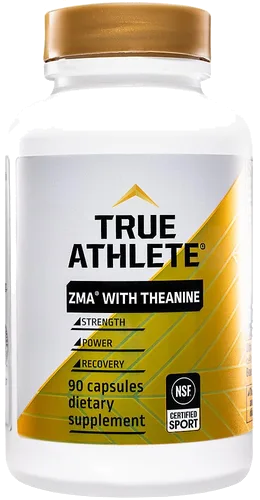
True Athlete ZMA with Theanine Review
True Athlete ZMA with Theanine is a capsule supplement from True Athlete, which the page describes as a tested, trusted member of The Vitamin Shoppe family of brands. The page lists the product as True Athlete ZMA + L-Theanine Capsules, Recovery Support, 90 Capsules, and describes it as a ZMA + theanine formula for evening use. The formula combines zinc, magnesium, vitamin B6, and L-theanine in a capsule format designed to fit into nighttime or evening routines. According to the page, these nutrients are commonly used to support recovery, relaxation, and overall training balance for active individuals. The product description states that the formula is designed to help you gain strength, recover faster, and replenish lost nutrients. It says the ZMA blend promotes power, that vitamin B6 supports enhanced zinc and magnesium absorption, and that theanine supports relaxation and restful sleep. The page notes that the product delivers 50mg of theanine per serving. The listing explains that zinc and magnesium play roles in muscle function and nutrient metabolism, while vitamin B6 supports energy metabolism and nervous system function. L-theanine is described as often included in evening supplements to support a calm, relaxed state, which the page presents as a practical option for post workout routines. The capsules are intended for men and women who train regularly and want a supplement that fits into a structured routine. The page says the capsule format makes the product easy to take without mixing or measuring, and that capsules are convenient for nighttime use, travel, or consistent daily routines. Each bottle contains 90 capsules, which the listing describes as a straightforward supply for ongoing use. The listing states the product is made without artificial flavors or colors and is gluten free, dairy free, and soy free. Brand messaging on the page says True Athlete products are NSF Certified for Sport, free of 270+ banned substances, and undergo rigorous third-party testing. The brand describes its line as crafted for those who push it to the limit. The page also carries a California Proposition 65 warning stating that the product contains a chemical known to the State of California to cause cancer. Product details on the page list the item form as capsule, the container type as bottle, the unit count as 90 count, and the item weight as 0.13 kg. The manufacturer is listed as True Athlete, the manufacturer part number is 1774447, and the ASIN is B07GXX3QDK. The product is currently unavailable, and the page gives no date for when it will return to stock.
We don’t sell supplements. We help you make decisions and get the best price.
Lowest prices
We may earn a commission from some store links. How we choose.
Lowest cost per month first, in stock, at 3 capsules a day. Checked Nov 10.
- The Vitamin ShoppeLowest$34.99 a bottle$34.99/moBuy at The Vitamin Shoppe (opens in a new tab)
- AmazonPrice at AmazonCheck price at Amazon (opens in a new tab)
Also at: iHerb. Some links earn us a commission; price comes first, and a commission only decides the order of prices within 2%. As an Amazon Associate we earn from qualifying purchases.
Study, Trial or Testing Result Summary
Members Only122 human studies · 57 improved
6 of these 122 human studies gave the ingredient by drip, not by mouth.
Magnesium is the only ingredient here at a full studied dose, and its sleep evidence is mixed. A pooled look at three trials in older adults with insomnia found people fell asleep about 17 minutes faster, but total sleep time did not clearly improve and the evidence was low quality [1]. Trials in people with night leg cramps and in older adults with insomnia found better sleep [2][3], while trials in poor sleepers and in older adults found no difference from placebo [4][5]. A recent review called the results inconsistent and low certainty [6]. The other three ingredients are below the doses that worked in studies. Theanine helped people fall asleep faster and improved sleep quality across many trials, usually at 200 mg a day, far more than the 33 mg here [7][8]. Zinc improved sleep in some trials at higher doses [9], but 20 mg a day did not improve sleep in one trial [10]. Vitamin B6 helped sleep at 40 mg in some groups [11][12], but this product has only 7 mg. Animal and cell studies are never counted.
See all 122 studies →Hide the studies
- Across 19 randomised trials with 897 people, L-theanine modestly improved how fast people fell asleep, daytime dysfunction and overall sleep quality scores compared with control.The effects of L-theanine consumption on sleep outcomes: A systematic review and meta-analysis.
- Pooling three placebo-controlled trials in 151 older adults with insomnia, people taking oral magnesium fell asleep about 17 minutes faster than those on placebo, while the 16-minute gain in total sleep time was not statistically significant, and the evidence was low quality.Oral magnesium supplementation for insomnia in older adults: a Systematic Review & Meta-Analysis.
- In a review of 31 trials of sleep supplements, amino acids, melatonin and vitamin D clearly improved sleep quality, but magnesium had too little data to be pooled and was only discussed as possibly helpful.Efficacy of dietary supplements on improving sleep quality: a systematic review and meta-analysis.
- In five randomized trials of young women with premenstrual syndrome, zinc supplements reduced insomnia and other symptoms compared with placebo.A systematic review and meta-analysis examining the role of zinc supplementation in ameliorating physical and psychologi…
- A pooled analysis of 28 randomized trials found dietary supplements improved sleep overall, and the authors suggest zinc among others may help sleep, though zinc-specific results were not given.Dietary Supplement Interventions and Sleep Quality Improvement: A Systematic Review and Meta-Analysis.
- In a review of 50 trials in healthy people, the reported benefits of theanine, alone or with caffeine, were for thinking and mood; no sleep benefit was reported in the abstract.Effects of Tea (Camellia sinensis) or its Bioactive Compounds l-Theanine or l-Theanine plus Caffeine on Cognition, Sleep…
- A review of 9 studies with 7,582 adults found observational links between magnesium status and better sleep, but the randomized trials of magnesium supplements gave contradictory, uncertain results.The Role of Magnesium in Sleep Health: a Systematic Review of Available Literature.
- In a review of Crohn's disease studies, low magnesium levels were linked to longer time to fall asleep and shorter sleep, but the review did not directly test magnesium supplements for sleep.Does Magnesium Provide a Protective Effect in Crohn's Disease Remission? A Systematic Review of the Literature.
- In 13 trials with 550 adults (11 randomised, 2 open-label), L-theanine at 50-900 mg a day was reported to help sleep onset, maintenance, efficiency and feeling refreshed, with 200-450 mg a day seen as effective.Examining the effect of L-theanine on sleep: a systematic review of dietary supplementation trials.
- A review of 10 trials with 482 people with restless legs syndrome found vitamin B6 and magnesium oxide improved sleep quality and symptoms, with magnesium working better, though half of the studies had a high risk of bias.Effects of Dietary Supplementation in Patients with Restless Legs Syndrome: A Systematic Review.
- In a review of treatments for sleep problems in people recovering from alcohol dependence, magnesium showed benefit only in single small, mostly open-label studies.Pharmacological treatment of insomnia in alcohol recovery: a systematic review.
- A review of 12 randomized trials in adults found inconsistent results for oral magnesium on sleep, with possible modest benefits for some self-reported outcomes and low to very low certainty, so it is not supported as a routine insomnia treatment.Magnesium Supplementation for Sleep in Adults: A Systematic Review of Randomized Controlled Trials.
- In children with attention problems, L-theanine gave a poor response for time to fall asleep and total sleep time, but did raise sleep efficiency.To sleep or not to sleep: a systematic review of the literature of pharmacological treatments of insomnia in children an…
- In a review of drugs for children with attention problems, the single L-theanine trial reported better time to fall asleep and total sleep time, but study quality was moderate to low.Safety, Tolerability and Efficacy of Drugs for Treating Behavioural Insomnia in Children with Attention-Deficit/Hyperact…
- This review of over-the-counter sleep aids for children covered theanine but the abstract gives no results for it.The Role of Supplements and Over-the-Counter Products to Improve Sleep in Children: A Systematic Review.
- In a review of drug treatments for children with attention deficit disorder, most drugs including L-theanine were said to affect sleep quality negatively, though the abstract does not separate out theanine.Association between sleep pattern and pharmacological treatment in children with attention deficit disorder with hyperac…
- A review of 11 randomized trials of L-theanine in people with mental disorders found it reduced psychiatric symptoms in schizophrenia, anxiety and ADHD, but did not report a clear sleep result.The effects of L-theanine supplementation on the outcomes of patients with mental disorders: a systematic review.
- In a review of supplements for attention problems, L-theanine improved sleep efficiency but not other sleep measures.Efficiency of Different Supplements in Alleviating Symptoms of ADHD with or Without the Use of Stimulants: A Systematic …
- In 1,444 infants in Nepal and Zanzibar given iron and folic acid with or without zinc for 12 months, zinc supplementation was also linked to longer sleep duration according to mothers.The effects of iron and/or zinc supplementation on maternal reports of sleep in infants from Nepal and Zanzibar.
- In 290 people with diabetes and insomnia who finished the trial, 2 months of magnesium, potassium or both reduced insomnia severity and shifted sleep hormones (melatonin and cortisol) compared with placebo.Effects of magnesium and potassium supplementation on insomnia and sleep hormones in patients with diabetes mellitus.
- In 216 people with nighttime leg cramps (175 finished), 226 mg of magnesium oxide monohydrate at bedtime for 60 days improved sleep quality more than placebo and cut cramps more.A randomized, double-blind, placebo-controlled, multicenter study assessing the efficacy of magnesium oxide monohydrate …
- In 171 adults with mild insomnia, a blend including vitamin B6 taken for 2 weeks did not improve sleep quality more than placebo, as both groups improved.Exploring the Effect of Lactium™ and Zizyphus Complex on Sleep Quality: A Double-Blind, Randomized Placebo-Controlled Tr…
- In 158 adults with major depression, an 8-week combination of nutraceuticals including zinc picolinate did not improve sleep outcomes compared with placebo.Nutraceuticals for major depressive disorder- more is not merrier: An 8-week double-blind, randomised, controlled trial.
- In 128 perimenopausal and postmenopausal women with sleep disturbance, a multi-ingredient supplement containing magnesium for 3 weeks improved sleep scores (90.9% responders vs 45.2% on placebo) and added about 41 minutes of sleep.Nonsedating neurotransmitter-modulating supplement for nonvasomotor sleep disturbance in menopause.
- In 121 older adults with frequent leg cramps, magnesium for 4 weeks did not reduce cramp frequency compared with placebo, and sleep-related benefit was only reported for compression stockings.Secondary prevention of leg cramps using compression stockings or magnesium supplements: a three-arm randomized clinical…
- In 120 patients having laparoscopic gallbladder surgery, intravenous magnesium sulfate was associated with better sleep quality than saline placebo during recovery, alongside lower pain and a med use.Lidocaine vs. magnesium: effect on analgesia after a laparoscopic cholecystectomy.
- In 120 healthy adults over 12 weeks, zinc-rich food shortened time to fall asleep and improved sleep efficiency versus placebo, and zinc yeast with astaxanthin oil also shortened time to fall asleep.Zinc-rich oysters as well as zinc-yeast- and astaxanthin-enriched food improved sleep efficiency and sleep onset in a ra…
- In 120 cancer patients with insomnia, 200 mg of L-theanine taken for 14 days improved insomnia scores more than placebo, though melatonin 3 mg worked better.Comparison Between Efficacy of Oral Melatonin and Oral L-theanine in Improving Sleep in Cancer Patients Suffering From I…
- In a placebo-controlled trial of 103 healthy active adults, an evening blend containing 2 grams of magnesium L-threonate (145 mg elemental magnesium), L-theanine and apigenin for 2 weeks did not show a sleep improvement reported in the abstract; the sleep gains were seen with the morning adaptogen product instead.Modulating stress and sleep through a multi-compound dietary supplement: a randomized, double-blind, placebo-controlled …
- In 100 adults taking 240 mg vitamin B6 before bed for five nights, dream recall increased but dream vividness and other sleep measures did not change compared with placebo.Effects of Vitamin B6 (Pyridoxine) and a B Complex Preparation on Dreaming and Sleep.
- In 100 adults with poor sleep, 320 mg of magnesium citrate daily for 7 weeks did not improve sleep more than placebo, since sleep quality improved in both groups; magnesium lowered inflammation marker CRP only in those with high baseline levels.Magnesium supplementation improves indicators of low magnesium status and inflammatory stress in adults older than 51 ye…
- In 100 chronically stressed adults, a multi-ingredient product containing magnesium improved daytime sleepiness scores over 4 weeks compared with placebo; the magnesium effect alone is unknown.Effect of a Combination of Magnesium, B Vitamins, Rhodiola, and Green Tea (L-Theanine) on Chronically Stressed Healthy I…
- In 100 adults with poor sleep, 2 g daily of magnesium L-threonate for 6 weeks improved self-reported sleep-related impairment more than placebo, but there were no group differences in objectively measured sleep.The effects of magnesium L-threonate (Magtein®) on cognitive performance and sleep quality in adults: a randomised, doub…
- In a 12-month placebo-controlled trial of 99 older adults with cognitive decline, daily matcha did not produce a statistically significant improvement in sleep quality scores, which showed only a non-significant trend.Effect of matcha green tea on cognitive functions and sleep quality in older adults with cognitive decline: A randomized…
- In boys aged 8 to 12 with ADHD, 400 mg of L-theanine daily for six weeks improved objectively measured sleep efficiency and sleep percentage compared with placebo.The effects of L-theanine (Suntheanine®) on objective sleep quality in boys with attention deficit hyperactivity disorde…
- In a placebo-controlled trial of 94 older adults taking magnesium oxide at bedtime for 4 weeks, sleep quality did not differ from placebo.Effect of Magnesium Oxide Supplementation on Nocturnal Leg Cramps: A Randomized Clinical Trial.
- In 89 menopausal women with sleep or mood problems, a daily tablet containing 50 mg of magnesium and Magnolia bark extract reduced insomnia and other symptoms more than calcium plus vitamin D over 24 weeks.Soy isoflavones, lactobacilli, Magnolia bark extract, vitamin D3 and calcium. Controlled clinical study in menopause.
- In a randomized placebo-controlled crossover trial of 89 women and men with fibromyalgia, a supplement combining coenzyme Q10, tryptophan and magnesium over three months improved sleep quality, though the dose of magnesium was not stated and the combination cannot be attributed to magnesium alone.Effects of Coenzyme Q10, Tryptophan, and Magnesium Supplementation on Fatigue in Patients with Fibromyalgia - A Randomiz…
- In 84 adults with irritable bowel syndrome given 20 mg zinc daily for 90 days, with or without a probiotic, oxidative stress measures improved but sleep quality did not differ from placebo.Co-supplementation of zinc and probiotic on oxidative stress markers and sleep quality index in irritable bowel syndrome…
- In 83 nursing students with premenstrual syndrome, a nutrition education session reduced symptoms including sleep disturbances over 4 months and raised dietary zinc slightly, but zinc itself was not tested.The effect of nutrition education on premenstrual syndrome: Randomized controlled study.
- In 80 patients having lumbar spine surgery, intraoperative magnesium sulphate was linked to post-operative insomnia and pain, but the abstract does not state whether it made sleep better or worse.Effect of intra-operative Magnesium sulphate on the occurrence of post-operative delirium and insomnia in patients under…
- Adults aged 35 to 55 with self-reported sleep problems who took 1 gram a day of magnesium L-threonate for 21 days kept better sleep quality and daytime functioning than those on placebo, whose scores declined.Magnesium-L-threonate improves sleep quality and daytime functioning in adults with self-reported sleep problems: A rand…
- In 75 people with restless legs syndrome, 40 mg vitamin B6 daily for two months improved sleep quality and symptom severity compared with placebo.Therapeutic effects of magnesium and vitamin B6 in alleviating the symptoms of restless legs syndrome: a randomized cont…
- In 66 hospitalized people with mania taking lithium, 40 mg vitamin B6 daily for 8 weeks improved sleep quality scores more than placebo.Efficacy of vitamins B1 and B6 as an adjunctive therapy to lithium in bipolar-I disorder: A double-blind, randomized, pl…
- In 65 people with chronic fatigue syndrome, a 36-week supplement including 1.05 mg vitamin B6 improved cognitive fatigue, but the abstract reports no clear sleep benefit.Yeast Beta-Glucan Supplementation with Multivitamins Attenuates Cognitive Impairments in Individuals with Myalgic Enceph…
- In 58 adults with impaired sleep, a blend of L-theanine, lemon balm, valerian, and saffron for 6 weeks did not improve objective or self-reported sleep more than placebo.Effect of a nutraceutical combination on sleep quality among people with impaired sleep: a randomised, placebo-controlle…
- In 60 young women with premenstrual syndrome, 30 mg of zinc daily for 12 weeks only marginally improved sleep quality within the zinc group (not statistically significant), though physical quality of life improved.Effect of zinc supplementation on quality of life and sleep quality in young women with premenstrual syndrome: a randomi…
- In 54 intensive care nurses, 220 mg zinc sulfate every 3 days for 1 month improved overall sleep quality, subjective sleep quality and time to fall asleep compared with placebo.The Effect of Zinc Supplementation on Sleep Quality of ICU Nurses: A Double Blinded Randomized Controlled Trial.
- In 50 people with mania taking lithium, 80 mg vitamin B6 daily for 8 weeks did not significantly change sleep scores compared with placebo.The efficacy of vitamin B6 as an adjunctive therapy to lithium in improving the symptoms of acute mania in patients with…
- In 50 patients having open gallbladder surgery, intravenous magnesium sulfate gave better sleep quality on the first night after surgery than saline, without reducing morphine needs.Effect of intraoperative magnesium infusion on perioperative analgesia in open cholecystectomy.
- In 50 patients having scoliosis surgery, intravenous magnesium given with ketamine improved sleep quality on the first night after surgery compared with ketamine and saline, alongside lower morphine use.Ketamine and magnesium association reduces morphine consumption after scoliosis surgery: prospective randomised double-b…
- In 50 children with eczema, 185.4 mg of zinc sulphate daily for 8 weeks did not improve sleep disturbance or other symptoms compared with placebo.Failure of oral zinc supplementation in atopic eczema.
- In 47 adults given 100 mg vitamin B6 for one month in a crossover design, B6 alone did not significantly change sleep, but B6 combined with 600 mg poly-gamma-glutamic acid improved sleep duration and sleep quality score compared with placebo.Effects of poly-gamma-glutamic acid and vitamin B6 supplements on sleep status: a randomized intervention study.
- In 46 older adults with insomnia, 500 mg of magnesium daily for 8 weeks improved sleep time, sleep efficiency, and time to fall asleep compared with placebo.The effect of magnesium supplementation on primary insomnia in elderly: A double-blind placebo-controlled clinical trial…
- In 46 adults with generalized anxiety disorder taking meds, 450 to 900 mg of L-theanine daily for 8 weeks did not improve overall insomnia severity compared with placebo, but it improved self-rated sleep satisfaction and showed a benefit in people with milder insomnia symptoms.L-theanine in the adjunctive treatment of generalized anxiety disorder: A double-blind, randomised, placebo-controlled t…
- In 43 adults with trouble falling asleep, an evening blend containing 12.6 mg of magnesium plus mulberry leaf and tryptophan shortened time to fall asleep by about 3 to 4 minutes and improved next-morning sleep quality over 14 days compared with a control, though magnesium was a minor part of the blend.Mulberry leaf extract combined with tryptophan improves sleep and post wake mood in adults with sleep complaints - A ran…
- In 42 women with premenstrual syndrome taking a combination supplement containing vitamin B6 for 3 months, there were no differences from placebo between groups, including for sleep quality outcomes.Effects of the PREMEN-CALM® in the Management of the Premenstrual Syndrome: A Randomized, Double-Blind, Placebo-Controll…
- In 42 adults with nocturnal leg cramps, 900 mg of magnesium citrate twice daily for one month did not outperform placebo for cramps or the sleep disruption they caused.Magnesium for the treatment of nocturnal leg cramps: a crossover randomized trial.
- In 42 people having abdominal hysterectomy, intravenous magnesium sulfate before and after surgery led to better sleep quality in the postoperative period than saline, with insomnia rising in the saline group but not the magnesium group.Role of magnesium sulfate in postoperative analgesia.
- In 41 children with atopic dermatitis who finished the trial, 50 mg of pyridoxine daily for 4 weeks did not significantly reduce nighttime sleep disturbance or skin symptoms compared with placebo.Pyridoxine in atopic dermatitis.
- In a placebo-controlled trial of 40 exercise-trained adults, a recovery drink containing 420 mg magnesium citrate along with cannabinoids and amino acids, taken twice daily for 3.5 days, did not change sleep quality compared with placebo.A randomized, double-blind, placebo-controlled, repeated-dose pilot study of the safety, tolerability, and preliminary e…
- In 40 adults with depression, 250 milligrams of daily magnesium added to a med for 6 weeks produced greater improvement than a med alone, with the insomnia domain among the areas that improved most.Read the study on PubMed (41916937) →
- In a small randomized, placebo-controlled trial of 40 people on dialysis with itchy skin, 220 milligrams of zinc sulfate daily for 4 weeks reduced itching scores in both groups, with no statistically significant difference from placebo; sleep disturbance was only part of the itch score and was not reported separately.Comparison of the efficacy and safety of zinc sulfate vs. placebo in the treatment of pruritus of hemodialytic patients:…
- In 40 chronically stressed adults, a 28-day multi-ingredient product containing green tea L-theanine, magnesium, B vitamins and Rhodiola reduced stress scores more than placebo, while the abstract does not report a sleep result.Assessing brain function in stressed healthy individuals following the use of a combination of green tea, Rhodiola, magn…
- In 40 adults with sleep discomfort, 8 weeks of a Lactium and L-theanine supplement did not beat placebo on overall sleep quality scores, though some sleep diary measures improved more than placebo.Dietary supplementation with Lactium and L-theanine alleviates sleep disturbance in adults: a double-blind, randomized, …
- In 39 working adults with poor sleep, 4 weeks of a supplement containing L-theanine improved overall sleep quality scores and lengthened sleep compared with placebo in a crossover trial.Effect of Alpha-S1-Casein Tryptic Hydrolysate and L-Theanine on Poor Sleep Quality: A Double Blind, Randomized Placebo-C…
- In 35 people with sleep problems, a bedtime coffee pod with 200 mg magnesium and 1.9 mg melatonin for 4 weeks improved sleep quality more than placebo, though scores still indicated poor sleep on average.The effects of melatonin and magnesium in a novel supplement delivery system on sleep scores, body composition and metab…
- In 35 post-menopausal women with osteoporosis taking zoledronate, 200 mg of magnesium daily for 3 months did not change sleep quality or other measured outcomes compared with baseline.Quantitative sensory testing of pain in osteoporosis: a pilot randomized clinical trial with magnesium supplementation.
- In 34 children with chronic headache, two months of melatonin with tryptophan and vitamin B6 reduced night awakenings (mean 7.4 to 3.3), but the comparison group took melatonin alone with no placebo, so the effect of vitamin B6 itself is unclear.Use of nutritional supplements based on melatonin, tryptophan and vitamin B6 (Melamil Tripto®) in children with primary …
- In a placebo-controlled crossover trial of 30 healthy adults, 200 mg of L-theanine daily for four weeks reduced sleep latency, sleep disturbance and meds use compared with placebo, and also improved verbal fluency and executive function.Effects of L-Theanine Administration on Stress-Related Symptoms and Cognitive Functions in Healthy Adults: A Randomized …
- In healthy adults with moderate stress, 400 mg of L-theanine daily for 28 days reduced light sleep and time asleep compared with placebo while the authors reported improved sleep quality, and it also improved reaction time on a cognitive test.Safety and Efficacy of AlphaWave® L-Theanine Supplementation for 28 Days in Healthy Adults with Moderate Stress: A Rando…
- In 30 young women with painful periods, a chamomile and theanine drink taken daily for five days around menstruation reduced pain and low mood compared with a chamomile-only drink, but the abstract does not clearly report a sleep quality result.Effects of chamomile and -theanine beverage on menstrual pain, menstrual symptoms, mood, and sleep quality in young wome…
- In 24 people after major lumbar spine surgery, a single intravenous magnesium sulphate infusion at the start of anaesthesia was followed by better sleep on the first night than saline.Effect of intra-operative magnesium sulphate on pain relief and patient comfort after major lumbar orthopaedic surgery.
- In 22 women with fibromyalgia, a Mediterranean diet enriched with 60 milligrams of magnesium and 60 milligrams of tryptophan for 16 weeks did not improve sleep quality compared with the standard diet.Psychological and Sleep Effects of Tryptophan and Magnesium-Enriched Mediterranean Diet in Women with Fibromyalgia.
- In 20 people with nerve pain, a single 3 g intravenous magnesium infusion with ketamine gave no significant improvement in sleep compared with placebo over 5 weeks.Ketamine and Magnesium for Refractory Neuropathic Pain: A Randomized, Double-blind, Crossover Trial.
- In 17 trained men, a nightly pre-sleep drink containing theanine at low or high dose produced no meaningful change in sleep, next-morning performance, or cognition compared with placebo.Minimal Influence of Formulated Nutritional Interventions on Sleep and Next-Morning Physical Performance, Cognitive Func…
- In 16 young adults, a blend that included magnesium with other ingredients taken for 3 days shortened time to fall asleep, lengthened total sleep and improved sleep efficiency compared with placebo, so the effect cannot be attributed to magnesium alone.Nutritional Modulation of Sleep Latency, Duration, and Efficiency: A Randomized, Repeated-Measures, Double-Blind Decepti…
- In 16 trained men given two nights of partial sleep loss, a zinc magnesium aspartate supplement did not improve sleep quality compared with placebo or no pill.Effects of Supplementing Zinc Magnesium Aspartate on Sleep Quality and Submaximal Weightlifting Performance, following T…
- In a single-dose placebo-controlled study of 12 healthy adults, a zinc-bound form of liothyronine was studied mainly for thyroid hormone levels; sleep was explored but the abstract reports no sleep result.Extended Absorption of Liothyronine from Poly-Zinc-Liothyronine: Results from a Phase 1, Double-Blind, Randomized, and C…
- In nine children with autism spectrum conditions, a high L-theanine tea produced some sporadic improvements compared with placebo tea, with sleep among the outcomes measured, but results were inconsistent.A double-blind, placebo-controlled, randomised-designed GABA tea study in children diagnosed with autism spectrum condit…
- In a randomized bowel-prep comparison for colonoscopy, a sodium picosulfate and magnesium oxide mix was tolerated better than a mannitol mix, and sleep problems were reported more often with the mannitol mix; the abstract does not report any sleep benefit from magnesium.Comparative study between manitol and sodium picosulfate with magnesium oxide solutions in the preparation for colonosco…
- In people with fibromyalgia, 100 mg of magnesium chloride daily for 1 month did not produce significant differences from placebo in sleep, though it did reduce stress in a subgroup and pain.Short-Term Magnesium Therapy Alleviates Moderate Stress in Patients with Fibromyalgia: A Randomized Double-Blind Clinica…
- In adults with temporomandibular disorders, a nightly multi-ingredient tablet containing magnesium for 40 days produced greater improvement in pain, headache and sleep or mood problems than controls, though the magnesium amount and participant numbers were not stated in the abstract.The role of nutraceuticals in the management of temporomandibular disorders.
- In a randomized bowel preparation trial, magnesium citrate caused more sleep interruption than Picolax, so it was worse for sleep in that setting.A comparative trial of magnesium citrate (Citramag) and Picolax for barium enema bowel preparation.
- In a placebo-controlled trial, four weeks of 2.7 g daily matcha (containing 50.3 mg theanine) did not change EEG-measured sleep, but it shortened wake-up time and showed a trend toward better self-rated sleep satisfaction.Matcha Does Not Affect Electroencephalography during Sleep but May Enhance Mental Well-Being: A Randomized Placebo-Contr…
- In adults with sleep disturbance (PSQI 7 or higher), an eight-week walnut peptide and theanine combination restored sleep duration and improved subjective sleep quality scores.Walnut peptide and theanine combination ameliorates sleep disorders: a multi-species study including a human trial.
- In 748 young children having a hearing test, a solution of melatonin, tryptophan and vitamin B6 reduced repeat tests and sedative drug use compared with placebo and melatonin alone.Comparative Study between the use of Melatonin and A Solution with Melatonin, Tryptophan, and Vitamin B6 as an Inducer o…
- In 100 people preparing for a colon scan, a prep using diet, magnesium citrate and barium caused less sleep disturbance than a standard prep with polyethylene glycol, though magnesium was only one part of this bowel prep.Dietary fecal tagging as a cleansing method before CT colonography: initial results polyp detection and patient acceptan…
- In 60 patients before heart surgery, 500 mg of magnesium oxide daily for five days improved sleep quality scores compared with routine care alone.Effect of short-term magnesium supplementation on anxiety, depression and sleep quality in patients after open-heart sur…
- In children with atopic dermatitis and low hair zinc, 8 weeks of oral zinc improved eczema severity, skin water loss and itch more than no supplement, but the abstract does not report a sleep disturbance result.Hair zinc levels and the efficacy of oral zinc supplementation in patients with atopic dermatitis.
- In 43 long-term care residents with chronic trouble sleeping, a nightly supplement containing 225 mg magnesium plus melatonin and zinc for 8 weeks improved sleep quality more than placebo, though the magnesium effect cannot be separated from the other ingredients.The effect of melatonin, magnesium, and zinc on primary insomnia in long-term care facility residents in Italy: a double…
- In 19 recreationally trained men taking zinc magnesium aspartate for two nights, sleep did not change compared with placebo or no pill. The dose was not stated in the abstract.Effects of an Acute Dose of Zinc Monomethionine Asparate and Magnesium Asparate (ZMA) on Subsequent Sleep and Next-Day M…
- In 12 college students taking 250 mg of vitamin B6 nightly for five days, morning reports showed more vivid, emotional dreams than with placebo during the first three days, though the authors call this preliminary and needing replication.Effects of pyridoxine on dreaming: a preliminary study.
- In 12 healthy men, a single evening dose of 100 mg pyridoxine did not change melatonin levels, body temperature, or sleep quality compared with placebo.The effect of pyridoxine administration on melatonin secretion in normal men.
- In healthy young women, 50 mg theanine alone did not change sleep compared with placebo, but when taken with caffeine it prevented the caffeine-induced increase in time awake after sleep onset.Theanine maintains sleep quality in healthy young women by suppressing the increase in caffeine-induced wakefulness afte…
- In 160 adults, 200 mg of L-theanine daily significantly improved sleep problems in an open randomized crossover trial without a placebo group.Analysis of the Effects of Known Sleep-Support Supplements in Relation to Life Habits, Sleep Conditions, and Sleep Probl…
- In 106 of 110 newborns undergoing brain MRI, a single-dose melatonin, tryptophan and vitamin B6 solution produced adequate sleep sedation without adverse events, with a median of 25 minutes to fall asleep.A solution based on melatonin, tryptophan, and vitamin B6 (Melamil Tripto©) for sedation in newborns during brain MRI.
- In 40 adults with mild to moderate insomnia, two weeks of a melatonin, vitamin B6 and herbal capsule raised sleep quality from 5.4 to 7.3 out of 10 in an open-label study without a control group.A combination of melatonin, vitamin B6 and medicinal plants in the treatment of mild-to-moderate insomnia: A prospective…
- In 20 adults with major depression taking 250 mg of L-theanine daily for 8 weeks in an open-label study, sleep quality scores improved in patients who were not in remission at baseline, though there was no placebo group.Effects of chronic l-theanine administration in patients with major depressive disorder: an open-label study.
- In 19 adults with sleep problems, 200 mg L-theanine with 700 mg GABA daily for four weeks lowered total Pittsburgh Sleep Quality Index scores from 9.42 to 6.26 in a single-group study without a placebo.Effects of combined GABA and L-theanine supplementation on sleep quality: an exploratory study.
- In an open-label pilot of 12 adults with restless legs syndrome, 200 milligrams of magnesium citrate daily for 8 weeks significantly reduced symptom scores and improved quality of life, though without a placebo group the results are preliminary.Magnesium citrate monotherapy improves restless legs syndrome symptoms and multiple suggested immobilization test scores…
- In 10 adults with restless legs or leg-movement insomnia, an evening magnesium dose of 12.4 mmol for 4 to 6 weeks reduced leg-movement arousals and improved sleep efficiency, with 7 of 10 reporting better sleep, in an open study without a placebo group.Magnesium therapy for periodic leg movements-related insomnia and restless legs syndrome: an open pilot study.
- In a large national survey of U.S. adults, those who slept under 7 hours a night had lower usual magnesium intake from food and supplements than those who slept longer, though this study cannot show that low magnesium causes short sleep.Micronutrient Inadequacy in Short Sleep: Analysis of the NHANES 2005-2016.
- In 8,806 adults aged 65 and older, higher vitamin B6 intake was linked to lower odds of cognitive impairment, but the study did not report a direct effect of vitamin B6 on sleep.Dietary B-complex vitamins and sleep quality in relation to cognitive impairment among older adults: non-linear associat…
- In a large long-term study of young adults, those with the highest magnesium intake were less likely to report short sleep under 7 hours; the link to sleep quality was borderline.Association of magnesium intake with sleep duration and sleep quality: findings from the CARDIA study.
- In 810 children aged 5 to 12 referred for attention problems, 12 weeks of a fatty acid, magnesium and zinc supplement was followed by fewer problems falling asleep, though this uncontrolled cohort cannot separate magnesium's effect from the other ingredients.Supplementation of polyunsaturated fatty acids, magnesium and zinc in children seeking medical advice for attention-defi…
- In a national survey of 667 women after menopause, eating less zinc from food was linked to a higher risk of short sleep; this was an association only.Associations between Diet and Sleep Duration in Different Menopausal Stages.
- In 181 young women, closer adherence to a Nordic diet, which was associated with higher zinc intake among many nutrients, was not reported to relate to sleep; sleep was measured but the abstract does not report a zinc-specific or sleep-specific result.Impact of a Nordic diet on psychological function in young students.
- In 112 young Japanese women, a later preferred midpoint of sleep and an evening-type body clock were linked to lower magnesium intake from the diet, though this study cannot show that magnesium affects sleep timing.Dietary intake is associated with human chronotype as assessed by both morningness-eveningness score and preferred midpo…
- In university students, those who ate at night had worse sleep quality and more daytime sleepiness than those who did not, and most students in both groups had low zinc intake.[Effects of nighttime snacking in students on their physiological parameters].
- In 64 adults with newly diagnosed sleep apnea, vitamin B6 intake was linked to quality of life scores in a cross-sectional analysis, but sleep itself was not measured as an outcome.Quality of life, depression and dietary intake in Obstructive Sleep Apnea patients.
- In 34 younger adults tracking their daily food intake and sleep with a wrist monitor, higher magnesium intake was only linked to a non-significant trend toward less disrupted sleep (P=.09), so no clear sleep benefit was shown.Higher daytime intake of fruits and vegetables predicts less disrupted nighttime sleep in younger adults.
- In 32 elite female footballers tracked for 10 days, each extra milligram of zinc eaten from food was linked to 0.23% better sleep efficiency; this was an association, not a supplement trial.Sleep duration and quality are associated with nutrient intake in elite female athletes.
- In young Japanese children aged 2 to 6, higher vitamin B6 and tryptophan intake at breakfast was linked to a more morning-type sleep schedule, but only in children who got more than 10 minutes of sunlight after breakfast.Can breakfast tryptophan and vitamin B6 intake and morning exposure to sunlight promote morning-typology in young childr…
- In a cross-sectional survey of American adults, higher blood levels of active vitamin B6 were linked to lower odds of daytime sleepiness, an association seen mainly in men, and to lower risk of unusually short or long sleep.Association of Pyridoxal 5'-Phosphate with Sleep-Related Problems in a General Population.
- In 294 children having a hearing-nerve test, a liquid combining melatonin, tryptophan and vitamin B6 helped induce sleep, and the 1.5 ml pre-treatment dose worked faster and gave longer sleep than 0.5 ml, though this study had no placebo group and vitamin B6 was not tested alone.Pre-treatment with Melamil Tripto® induces sleep in children undergoing Auditory Brain Response (ABR) testing.
- In 17 patients with schizophrenia taking 250 mg of L-theanine daily for 8 weeks alongside their usual antipsychotic, sleep quality scores improved in an uncontrolled study.Effect of L-theanine on glutamatergic function in patients with schizophrenia.
- In eight people with nerve pain, weekly intravenous magnesium lowered pain in four; some reported good sleep afterward, but sleep was not formally measured.[Relief of neuropathic pain with intravenous magnesium].
- In 4 infants with severe diaper dermatitis after bowel surgery, a topical zinc ointment with potato-derived protease inhibitors was applied at each diaper change; sleep disorders improved in these infants, though the abstract gives no count for sleep.Effects of potato-derived protease inhibitors on perianal dermatitis after colon resection for long-segment Hirschsprung…
- In two children with Angelman syndrome and non-convulsive status epilepticus, intravenous pyridoxine (vitamin B6) did not stop the seizures, while a ketogenic diet did and sleep improved.Novel UBE3A pathogenic variant in a large Georgian family produces non-convulsive status epilepticus responsive to ketog…
- A genetic Mendelian randomization study found that higher genetically predicted vitamin B6 levels were linked to a preference for eveningness (later sleep timing).Genetically Supported Causality Between Micronutrients and Sleep Behaviors: A Two-Sample Mendelian Randomization Study.
- A genetic Mendelian randomization study found no significant causal link between vitamin B6 levels and insomnia risk.Causal relations of trace elements and nutrients with insomnia: A Mendelian randomization study.
Review Totals and Summary
Members Only280 reviews · 91% positive
Customers across the US, UAE, Hong Kong and other regions mostly talk about sleep. The most common praise is that it helps people fall asleep and stay asleep. Many take it nightly, often after a workout. Several describe deeper and longer sleep without feeling knocked out or groggy. One reviewer with anxiety-driven insomnia and night terrors called it more subtle than other sleep aids, which they saw as a benefit. Another person who can't tolerate melatonin or certain other supplements said it was a good fit. Some buyers say it works so well that their partner or adult son now takes it too. The added theanine gets repeated credit for the calming, wind-down effect. One buyer said they tried cycling off and back on and noticed the difference. Regular ZMA users often prefer it over other brands, with some saying it is on par with Optimum ZMA. They describe it as high quality and potent. The second theme is recovery. Bodybuilders and lifters say it helps them recover faster from intense sessions. One reviewer said it reduced muscle inflammation and soreness after training, and noticed a clear difference between using it and going without. A few mention steadier energy or better mornings and feeling refreshed on waking. Practical comments are positive. Reviewers describe the formula as clean, with little or no smell and no residue, and they like that it is gluten- and sugar-free. Some say the capsules absorb well and are easy to take. A few buyers value the NSF certification, and users like the choice of 90 or 180 counts and the reasonable cost per serving. Complaints are few. One reviewer said the capsules lean toward the large side. Dosing can feel awkward, since the label calls for three capsules for men and two for women. Some reviewers say they dialed down to two after finding three too strong, and others suggest taking them about two hours before bed. A few people mention that the effect is subtle and that results take regular use. The product's rating is high on Amazon, where the review pool is in the hundreds, but several retailers have few or no reviews. Some very vivid dreams are a typical ZMA side effect, though the snippets I found did not raise it. The sample was mostly positive and short, so sparse negative reports could be under-represented.
Biohacker Summary
Members Only10 of 10 recommend it
Most of the panel recommends or uses magnesium, the main ingredient here, and sleep is the top reason: six of them tie it to better sleep, with a few taking it at night. Glycinate is the form named most often, for its absorption and calming effect, while threonate is favored by several for sleep, and one person takes 400 mg of threonate before bed. Others cite muscle cramps, vitamin D function, bones and testosterone, and doses mentioned run from 300 to 500 mg a day from diet and supplements. One panelist says magnesium does not fix waking in the night, and one only reviewed the evidence without taking a side. Theanine is a smaller ingredient in this product, and several take it with caffeine or coffee to smooth out jitters or before bed for sleep, at doses of 100 to 400 mg, while zinc is another smaller ingredient, noted for wound healing, testosterone and gut lining.”}
See all 10 biohackers →Hide the biohackers
Dr. Rhonda Patrick · Magnesium · recommends
- Explains that magnesium helps the body activate and metabolize vitamin D, and that magnesium intake has been associated with lower odds of vitamin D deficiency and insufficiency.
- Mentions that getting too little magnesium may play a role in declining testosterone levels.
- Mentions that getting too little zinc may play a role in declining testosterone levels, and that zinc helps the body make testosterone.
- Recommends getting enough magnesium, around 300–400 mg daily from diet and supplements, as it is an essential cofactor for vitamin D metabolism. Magnesium glycinate is a good form.
- Mentions magnesium as one of the micronutrients found in multivitamins that people often don't get enough of from their diets.
- Explains that magnesium helps control blood pressure by boosting the production of substances that relax blood vessels and improve cardiovascular health, citing a meta-analysis that found magnesium supplementation at an average dose of 368 mg per day notably lowers both systolic and diastolic blood pressure.
- Magnesium supplementation has lowered blood pressure in randomized controlled trials. An analysis of 34 trials involving over 2,000 participants found modest reductions in both systolic and diastolic pressure, with a median dose of 368 mg/day.
- Warns that some magnesium supplements make the dose look much larger than it really is and that labels can fool people.
- Recommends L-theanine, an amino acid found in green tea, to amplify coffee's cognitive benefits and reduce jitteriness, noting it works synergistically with caffeine to improve cognitive performance and reduce anxiety.
- Recommends adding L-theanine to coffee to enhance cognitive performance, citing studies showing improved attention, reaction time, and accuracy.
- Mentions magnesium as an important nutrient component for testosterone.
- Notes that not getting enough zinc can affect testosterone, as zinc is very important for testosterone synthesis.
- Warns that some supplement companies mislead consumers by listing the total compound weight of magnesium citrate as the elemental magnesium dose, when the actual elemental magnesium content is much lower, potentially around 44-66 milligrams.
- Recommends men take a 30 milligram zinc supplement for sperm health when preparing for IVF.
Dr. Eric Berg · Magnesium · recommends
- Recommends Magnesium glycinate, noting its high absorption rate compared to magnesium oxide, and its support for energy, sleep, muscle relaxation, and vitamin D function.
- Dr. Berg states that when nutrients like magnesium are too low, fatigue and weakness can follow.
- Recommends zinc as a trace mineral, noting that modern farming practices deplete it from the soil, leading to low levels in crops.
- Recommends focusing on magnesium to support stronger bones if a neck hump is associated with osteoporosis.
- Explains that leg and calf cramps are most often caused by low magnesium, with leafy greens being a top source.
- States that magnesium is a cofactor that allows B1 to work more efficiently.
- Notes that white spots on nails point to zinc deficiency, which is usually depleted by eating sugar and refined carbs.
- States that zinc greatly supports natural killer cells.
- States that magnesium is the most important mineral for energy production, as one cannot make energy without it.
- Magnesium is involved in 300 to 600 enzyme reactions, acts as a biological brake pedal, is the master controller over calcium, and is involved in making ATP, the energy currency of the body. It takes energy to go to sleep, and magnesium is required for relaxation and good sleep. Magnesium also helps balance cortisol levels and calm you.
- States that zinc is needed to absorb magnesium.
- States that vitamin B6 is needed to absorb magnesium.
- Recommends ensuring sufficient zinc intake because the prostate needs enough zinc for the conversion from testosterone to DHT to be smooth and optimized.
- Dr. Eric Berg states that magnesium supports energy, muscle function, and sleep, and that most of it is stored inside cells, making deficiencies harder to detect with a standard blood test.
Thomas DeLauer · Magnesium · recommends
- Recommends taking magnesium glycinate and threonate at night to act as a brake on the nervous system, block excitatory signaling, help wind down, and support serotonin and melatonin production for better sleep.
- Recommends pairing caffeine with 2 to 400 milligrams of theanine to smooth out the jittery edge of caffeine, prevent cortisol spikes, and achieve clean, calm alertness.
- Mentions that magnesium glycinate also helps a lot with sleep.
- Would take 400 mg of theanine before bed to aid sleep when his adrenaline is pumping due to a caloric deficit.
- Mentions that restless leg syndrome is often treated with magnesium, but states that the sensation is actually coming from three other issues.
- Highlights Theanine, an amino acid in green tea, as the 'secret sauce' for creating a state of relaxed awareness without jitters by increasing alpha brain waves.
- Uses Element's cans which contain 30 milligram magnesium, finding that electrolytes help his workout performance.
- Uses Element's 30 mg magnesium cans first thing in the morning to prime his day and help with workout performance.
- Recommends magnesium around the time one would normally break a fast to calm the brain and dull feelings of conditioned hunger.
- Adds zinc to their immunity duo because it helps them absorb vitamin C, considering the two together a fantastic combination for fall and winter.
- Recommends magnesium, noting it is a cofactor for enzymes that build neurotransmitters, and deficiency can affect mood, happiness, and motivation.
- Recommends zinc, noting it is a cofactor for enzymes that build neurotransmitters, and deficiency can affect mood, happiness, and motivation.
- Notes that modern agricultural practices have led to soils depleted of trace minerals like magnesium, resulting in widespread magnesium deficiency.
- Mentions that more zinc could be beneficial for testosterone, but it's not working on the axis that most people need help with.
Andrew Huberman · Magnesium · recommends
- Notes that Les Spellman's team includes 'Magnesium timed right' as part of their game plan to optimize recovery in unfavorable conditions.
- Notes that AG1 Pro contains zinc carnosine to support and improve the lining of the gut.
- Zinc carnosine to support and improve the lining of your gut.
- Notes that AG1 Pro contains zinc carnosine to support and improve the lining of the gut.
- Discusses Magnesium Threonate as a tool for falling asleep.
- Discusses Theanine and its association with vivid dreams.
- States that AG1 Pro contains zinc carnosine to support and improve the lining of the gut.
- Uses AG1 Pro, which contains zinc carnosine to support and improve the lining of the gut.
- States that AG1 Pro contains zinc carnosine to support and improve the lining of the gut, and he was already taking some of these ingredients separately.
- States that AG1 Pro includes zinc carnosine, which he was already taking separately, to support and improve the lining of the gut.
- Personally takes zinc carnosine, which is included in AG1 Pro to support and improve the lining of the gut.
- AG1 Pro has zinc carnosine to support and improve the lining of your gut. Some of these ingredients I personally was already taking separate from the AG1 formula.
- States that AG1 Pro contains zinc carnosine to support and improve the lining of your gut.
- Takes 400 mg of Magnesium Threonate before bed for sleep.
Dr. Mark Hyman · Magnesium · recommends
- Recommends magnesium breakthrough advanced ten from Biooptimizers, which is their most complete magnesium formula with 10 bioavailable forms and 550 milligrams of elemental magnesium, designed to support restful restorative sleep, muscle recovery, stress resilience, and metabolic health.
- Recommends considering magnesium glycinate before bed for nervous system support, deeper sleep quality, and to help the body transition into rest, and states that they take it every night.
- Explains that a lack of magnesium can cause muscles and nerves to malfunction, resulting in muscle weakness, twitching, and cramps.
- Explains that zinc is important for the body's repair crew, helping to heal damaged tissue, and a deficiency can lead to cuts and wounds taking longer to heal.
- Lists L-theanine as an amino acid in green tea that promotes relaxation and calmness, and can help lower anxiety or depression symptoms.
- Recommends Magnesium Breakthrough Advanced 10 from Bioptimizers for restful sleep, muscle recovery, stress resilience, and metabolic health, especially during stressful times of the year.
- Recommends magnesium because it is involved in over 600 reactions in the body and up to 80% of people may have low levels that never get flagged on a standard blood test.
- Recommends magnesium as a basic supplement during detoxification to support pathways, help with constipation, and provide electrolytes.
- Recommends Magnesium Breakthrough Advanced 10 from Biooptimizers, which contains 10 bioavailable forms and 550 mg of elemental magnesium, to support restful sleep, restorative sleep, muscle recovery, stress resilience, and metabolic health.
- Gave a patient with psoriatic arthritis a little zinc, which contributed to significant improvement in her condition.
- Recommends ensuring adequate zinc intake on a regular basis for immune support, noting some data on zinc lozenges for early cold.
- Has recommended magnesium breakthrough from bioptimizers for years and now uses Magnesium Breakthrough Advanced 10 as part of his evening routine, especially during periods of travel, training, and higher stress, to support sleep, muscle recovery, and metabolic health.
- Recommends correcting nutrient deficiencies with magnesium.
- Recommends correcting nutrient deficiencies with zinc.
Dave Asprey · Magnesium · uses
- Looks at magnesium alongside protein to keep muscle for the long run.
- Suggests adding magnesium to help keep potassium in the system longer, as they work hand in hand.
- Mentions magnesium in the context of sleep but states that it doesn't address the core issue of waking up during the night.
- Suggests that magnesium may help slow aging, support cellular repair, and improve sleep.
- Suggests that L-theanine supports brain health, muscle function, and focus.
- States that magnesium can affect how the body responds to a supplement.
- Dave explains why the 1:2 ratio of caffeine to L-theanine beats coffee alone for working memory, accuracy, and calm, sustained concentration.
- Developed a nonnano zinc sunscreen over five years, stating her skin is probably better now than it's ever been.
- Recommends combining L-Theanine with caffeine to calm the nervous system without making one sleepy, stripping out jitters and flattening the cortisol spike, making it a power combo for focus.
- Recommends fixing sleep with 300mg of Magnesium 101 before bed if diet and exercise aren't melting stubborn belly fat.
- Explains that longer shading before harvest builds more L-theanine into the matcha leaf, which is the compound that provides calm, steady focus.
- Dave Asprey says his daily routine includes magnesium as part of a carefully developed combination for longevity.
- Recommends magnesium glycinate for sleep, stating that trials show it helps people fall asleep about 17 minutes faster and that he finds it incredibly effective.
- Uses L-theanine, taking one a day with his Danger Coffee, because it takes the edge off caffeine's stimulation without removing focus, providing alertness without jitters, and helps lower stress hormones for longevity.
Ben Greenfield · Magnesium · uses
- Uses magnesium during surgery because it is neuroprotective.
- Ben Greenfield's formulation includes 30 grams of zinc a day, taken for one week before surgery and two weeks after, as it is an important cofactor for wound healing.
- Says he is drinking LMNT, which contains sodium, potassium, and magnesium, and states that he actually drinks this stuff.
- Suggests that adding 100 mg of L-theanine to coffee makes the energy last longer with fewer jitters.
- Mentions Andrew Bustamante's recovery tools, including L-theanine.
- States that L-Theanine has become an ever-present supplement in their house, serving as a leveler for any kind of anxiety or stress.
- Mentions magnesium as part of a bare-minimum protocol.
- Advises getting red blood cell magnesium levels to the high end of the range as a minimum step for overall health and to slow down heart disease.
- Emphasizes that zinc sufficiency is crucial for immunity because the thymus-derived peptide thymulin, which trains lymphocytes, requires zinc to be active.
- Recommends adding zinc into one's stack because it is a co-factor for enzymes involved in testosterone synthesis and sperm maturation, and zinc deficiency is a reproducible cause of low sperm count.
- He mentions zinc as a supplement with real human data behind it for male fertility.
- Zinc may support both testosterone and sperm count.
- Recommends supplementing with magnesium threonate if one is low in magnesium, as it crosses the blood-brain barrier and is demonstrated to increase hippocampus plasticity, theoretically making one smarter and improving memories.
- Uses Magnesium Breakthrough from BIOptimizers as part of their daily stack, taking four capsules in the evening to support relaxation, recovery, and a good night of sleep.
Siim Land · Magnesium · recommends
- States that Magnesium can be a useful addition for some people for sleep.
- Recommends magnesium for sleep, especially deep sleep, and suggests trying better types like Threonate, Biscinate, or Torate, referencing a study where magnesium supplementation improved deep sleep.
- Recommends Magnesium for blood pressure, migraines and deficiency, based primarily on human research, especially randomized controlled trials showing measurable benefits.
- Lists Magnesium as one of 15 supplements backed by human studies.
- States that magnesium is a fundamental mineral governing over 600 enzymes and metabolic reactions, and recommends that most people need at least 400-500 mg/d for health, with some needing up to 600 mg/d.
- Lists seafood and pumpkin seeds as sources of Magnesium.
- Thinks magnesium has some of the strongest evidence and is worth considering.
- Recommends taking magnesium, specifically glycinate and threonate forms, 1 to 2 hours before bed for sleep benefits, noting that glycinate promotes relaxation and threonate crosses the blood-brain barrier for sleep quality and cognitive function.
- Recommends L-theanine as a nootropic or to counteract stress and anxiety, stating that it can be taken before bed or in the morning for an anxiolytic effect, and its absorption is not reduced by food or coffee.
- Notes that Boron reduces calcium/magnesium loss.
- Notes that magnesium is important for activating thiamine into its more biologically active form, and a magnesium deficiency can impair blood sugar regulation even with adequate thiamine intake.
- States that deficiencies in nutrients such as zinc can impair normal immune regulation.
- He takes 200 mg of L-Theanine before bed for sleep.
- Takes 200 mg of Double Wood L-Theanine before bed for sleep.
Bryan Johnson · Magnesium · uses
- Takes 400 mg of Magnesium Threonate before bed for sleep.
- Takes 200 mg of L-Theanine before bed for sleep.
- Takes 400 mg of Magnesium L-Threonate before bed for sleep.
- Takes 200 mg of L-Theanine before bed for sleep.
- Takes 400 mg of Magnesium Threonate before bed for sleep.
- Takes 100 mg of L-Theanine before bed for sleep.
- Takes 15 mg of Zinc in the morning for longevity.
- He takes 400 mg of Double Wood Magnesium L-Threonate before bed for sleep.
- He takes 200 mg of L-Theanine before bed for sleep.
- Takes 400 mg of Magnesium L-Threonate before bed for sleep.
- Takes 200 mg of L-Theanine before bed for sleep.
- Takes 400 mg of Magnesium Threonate before bed for sleep.
- Takes 200 mg of L-Theanine before bed for sleep.
- Takes 400 mg of Magnesium L-Threonate before bed for sleep.
Peter Attia · Magnesium · neutral
- Peter reviews the evidence for select off-label medications and supplements commonly used for sleep, including glycine, magnesium, ashwagandha, and phosphatidylserine.
- Suggests that zinc and magnesium could potentially help with vasodilation and sleep, particularly for women experiencing severe symptoms in the luteal phase.
- Suggests that zinc and magnesium could potentially help with vasodilation and sleep, particularly for women experiencing severe symptoms in the luteal phase.
- Uses Theanine, noting its GABAergic effect, in combination with Alpha GPC, MCT, and caffeine for cognitive performance.
- Mentions theanine as an ingredient that works well with Alpha GPC, MCT, and caffeine, noting its GABAergic effect.
- Peter discusses electrolytes and fiber and the ketogenic diet, specifically preventing magnesium loss.
- Recommends magnesium as one of the 'big three' micronutrients for bone health, suggesting a daily intake of 300 to 500 milligrams as a minimum, and personally aims for about a gram of supplemental magnesium.
- Recommends magnesium for optimizing bone mineral density, suggesting a daily intake of 300 to 500 milligrams as a minimum, but personally aims for about a gram.
- Discusses the AREDS formula, which initially included C and beta-carotene with zinc and copper, and later replaced beta-carotene with lutein and zeaxanthin, showing it could delay or reduce the conversion of mild to severe macular degeneration.
- Takes a hardline view that most people do not have adequate or optimal levels of magnesium, and suboptimal levels will impede the metabolism of vitamin D because magnesium is a cofactor in its enzymatic conversion.
- Takes a hardline view that most people do not have adequate or optimal levels of magnesium, and suboptimal levels will impede vitamin D metabolism because magnesium is a co-factor in the enzymatic conversion of vitamin D.
- Takes magnesium as a straightforward supplement.
- Mentions that magnesium intake is often super low and impactful on testosterone levels.
- Discusses the important roles of magnesium in the body, how to determine if one might be deficient, the prevalence of magnesium deficiency, and its potential cognitive benefits.
RAL Summary
Members OnlyTier 3 for Sleep
Most of its 280 reviews are positive (91%), and magnesium at a full dose has some modest, mixed support for falling asleep faster [1], which fits tier 3. The other ingredients are below their studied doses, so study support stays thin.
- Zinc: below the dose that worked in studies
Where the evidence disagrees: 44 of the 122 human studies found no effect.
More Details
Members OnlyBody systems · Combine with · Possible side effects
Body systems: Nervous system, Musculoskeletal system
Combine with: For its intended purpose of sleep and recovery, ZMA pairs well with glycine or magnesium glycinate for deeper sleep, melatonin at a low dose for sleep onset, and ashwagandha or apigenin for stress and relaxation. Vitamin D3 with K2 supports hormonal and bone health, and a protein or creatine supplement supports muscle recovery. Take ZMA on an empty stomach about 30-60 minutes before bed, away from calcium or dairy. For fast heartburn relief, look instead to calcium carbonate or magnesium hydroxide antacids, sodium alginate (such as Gaviscon-type products), or short-term H2 blockers, and consider DGL licorice or zinc-carnosine for longer-term stomach lining support. Consult a healthcare provider if heartburn is frequent.
Possible side effects: No major side effects reported in the studies; some reviewers found three capsules too strong and the capsules large.
Supplement Facts
Vitamin B6 7 mg · Magnesium 300 mg · Zinc 20 mg
| Vitamin B6 | 7 mg | |
| Magnesium | 300 mg | |
| Zinc | 20 mg | |
| Theanine | 33 mg | † |
Other ingredients: Gelatin, Microcrystalline Cellulose, Magnesium Stearate, Silicon Dioxide.
Directions: Directions: Take three (3) capsules daily for men and two (2) capsules daily for women, preferably on an empty stomach 30-60 minutes before bedtime. For best results, avoid taking with food or supplements containing calcium.
Barcode (UPC) 766536060207 · Label source: NIH label database · Report a label change
Other sizes and barcodes: 180 Capsule(s), UPC 7 66536 06021 4 (not checked yet)
Show entire label
More sleep products
Members OnlyThe highest ranked for the same goal
Read more
Our articles on this subject
- Melatonin vs Magnesium for Sleep: What the Studies ShowArticle · Nov 3, 2026
- Best Supplements for Sleep and the Habits That Matter MoreArticle · Jun 15, 2026
Graded November 10, 2026 by the Reverse Age Lab evidence engine, from human studies, real reviews and our biohacker panel. How we grade. Is this medical advice? No. Rala organizes the published evidence; go over any change with your doctor, especially if you take meds.
Privacy policyConsumer health dataAffiliate disclosureTermsDo Not Sell or Share My Personal InformationCookie settings