
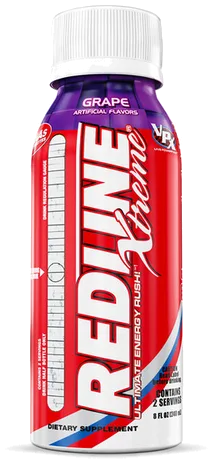
VPX Redline Grape Review
This eBay listing, sold on Sat Oct 24, offers VPX Redline Xtreme Grape Energy Drink Shot, 8 fl oz, 4-pack, described as 0g sugar. Item specifics list Main Purpose as Endurance/Energy, Type as Drink, Formulation as Liquid, Flavor as Grape, Dosage as 158 mg, Supply as 2 Servings, Volume as 8 fl oz, Features as 0g Sugar, and Expiration Date as 01/21. The listed active ingredients are caffeine anhydrous, beta-alanine, L-leucine, L-valine and L-isoleucine. The condition is new. The photos show clear bottles with white labels, red and black design, a purple or metallic cap, and bold red VPX text. The listing is marked Sold, and the page shows a connection error message. Shipping is free via USPS Ground Advantage from Pacific, Missouri, with estimated delivery between Nov 9 and Nov 16. Returns are accepted within 14 days, with the buyer paying return shipping. Payment options include Klarna monthly financing. The seller, verolafr_72, has 100 percent positive feedback from 7 ratings, 11 items sold, and joined in October 2024. The page does not show a product star rating, written product reviews, or a printed UPC barcode. The MPN is L01A4900438903, which is not a GTIN. The full item description is only available through a separate link, so no further claims are made here.
We don’t sell supplements. We help you make decisions and get the best price.
Lowest prices
Finding the lowest prices at the stores now. This takes a few seconds.
Study, Trial or Testing Result Summary
Members Only1 human studies · 1 improved
This product itself was tested in a human study.
One small placebo-controlled trial tested this drink itself. Twelve male strength and power athletes drank a single 120 milliliter serving of the Redline Extreme high energy drink or a placebo drink [1]. After the energy drink, they rated their energy and focus higher and their reaction performance improved [1]. Their short-burst power output during exercise did not change [1]. The study looked only at one serving, so it shows a short-term effect and says nothing about daily or long-term use [1]. It was small and included only young male athletes, so results may differ for women, older adults and people who are not athletes [1]. Every active ingredient, including caffeine, beta-alanine, yohimbe and several other stimulants, sits inside a proprietary blend with no amounts listed, so the dose of each one is hidden and cannot be compared with studied doses. No separate studies of the individual ingredients were provided. Animal and cell studies are never counted.
See all 1 studies →Hide the studies
- In 12 male strength and power athletes, a single 120 ml dose of a high energy drink raised self-rated energy and focus and improved reaction performance compared with placebo, with no change in anaerobic power.Examination of a pre-exercise, high energy supplement on exercise performance.
Review Totals and Summary
Members Only27 reviews
Customers most often praise the taste and the strength of the energy. Reviewers describe the grape flavor as light, smooth and refreshing, especially cold. One trade reviewer compared it to a vitamin-water style flavor and said it had no aftertaste. Many Amazon buyers say it gives long-lasting energy "without the crash", and some with a high caffeine tolerance say they can drink two in a row with no problem. Gym-goers use it as a pre-workout. They say it improves focus and workout productivity, and one lifter said the effect began within about 15 minutes. Several buyers say they use half a bottle for a smaller, steadier lift. Some say it is the only drink that wakes them up, and they compare it favorably with powdered pre-workouts, noting that a case can cost about the same as a tub of powder while giving 48 half-bottle servings. The most common complaint is price. Reviewers on Amazon, eBay and Walmart call it expensive, even when they say they would otherwise give five stars. A smaller group reports side effects from the high caffeine dose. One older Amazon review describes a racing heart and sweating for hours after drinking a whole bottle. Another reviewer says it makes them feel almost hyper. An editorial review says responses vary widely: some people shake, shiver or twitch, while others feel productive. Reviewers who drink a whole bottle without realizing it holds two servings are the ones most likely to have a bad experience. Overall, people who tolerate caffeine are very enthusiastic about the flavor and the strong, clean-feeling energy. Others find it too strong and too costly. Ratings on large retailer pages are very positive, and the few low ratings come from side effects and price. I could not find many reviews of the grape flavor on its own, so some of these themes come from reviews of Redline in general.
Biohacker Summary
Members Only10 of 10 recommend it
The statements list no main ingredient for this product, so the panel's views are on its smaller ingredients, and caffeine and magnesium drew the most comment. Caffeine is a smaller ingredient in this product, and most of the panel uses or recommends it, for focus, fat burning, workouts and getting through jet lag, with doses of 300 to 400 mg for some and 100 to 150 mg suggested alongside L-theanine. Several panelists advise having it earlier in the day so it does not disrupt sleep, one warns it will not fix brain fog on its own, and one stopped caffeine for a year. Magnesium is also a smaller ingredient in this product, and about half the panel takes or recommends it, mostly for sleep, with threonate and glycinate named as preferred forms, 400 mg of threonate before bed from one panelist, and one caution that labels can make a dose look bigger than it is. Potassium, another smaller ingredient in this product, got only brief support, with one panelist saying to get it from foods rather than supplements.
See all 10 biohackers →Hide the biohackers
Dr. Mark Hyman · Magnesium · uses
- Recommends considering magnesium glycinate before bed for nervous system support, deeper sleep quality, and to help the body transition into rest, and states that they take it every night.
- Recommends Magnesium Breakthrough Advanced 10 from Bioptimizers for restful sleep, muscle recovery, stress resilience, and metabolic health, especially during stressful times of the year.
- Warns that potassium bromate, a dough conditioner banned in the EU, UK, and Canada, is still allowed in U.S. bread.
- Recommends magnesium because it is involved in over 600 reactions in the body and up to 80% of people may have low levels that never get flagged on a standard blood test.
- Recommends magnesium as a basic supplement during detoxification to support pathways, help with constipation, and provide electrolytes.
- Recommends Magnesium Breakthrough Advanced 10 from Biooptimizers, which contains 10 bioavailable forms and 550 mg of elemental magnesium, to support restful sleep, restorative sleep, muscle recovery, stress resilience, and metabolic health.
- Discusses with patients their caffeine consumption, suggesting that too much caffeine can artificially increase their stress response.
- Has recommended magnesium breakthrough from bioptimizers for years and now uses Magnesium Breakthrough Advanced 10 as part of his evening routine, especially during periods of travel, training, and higher stress, to support sleep, muscle recovery, and metabolic health.
- Recommends correcting nutrient deficiencies with magnesium.
- Recommends stopping caffeine by noon.
- Recommends Magnesium Breakthrough Advance 10 from BiOptimizers, which has 10 bioavailable forms of magnesium and more elemental magnesium, as part of his evening routine for sleep, muscle recovery, and metabolic health.
- Has recommended Magnesium Breakthrough from Bio Optimizers for years and now uses Magnesium Breakthrough Advanced 10 as part of his evening routine, especially during periods of travel, training, and higher stress, to support sleep, muscle recovery, and metabolic health.
- Recommends Magnesium Breakthrough Advance 10 from Bio Optimizers, which contains 10 bioavailable forms of magnesium, as it plays a critical role in sleep recovery, stress regulation, and muscle function, and has become part of his evening routine, especially during periods of travel, training, and higher stress.
- States that caffeine's effect on ADHD depends on the person, as it can help focus but also activate irritation or stress, and its impact is related to individual caffeine metabolism.
Dave Asprey · Magnesium · neutral
- Mentions magnesium in the context of sleep but states that it doesn't address the core issue of waking up during the night.
- Loves coffee, has the caffeine molecule tattooed on his arm, drinks it every morning, and says it does amazing things for your brain and for how long you can live, but it can't clear most brain fog on its own.
- Suggests that magnesium may help slow aging, support cellular repair, and improve sleep.
- Created Danger Coffee, a mineral-enriched, lab-tested, mold-free coffee that delivers rich flavor and clean caffeine without all the junk, and recommends it to others.
- Dave Asprey's lab proved that caffeine is a flow hack and the only known substance to actually make you flow prone. Coffee will make you more flow prone.
- States that magnesium can affect how the body responds to a supplement.
- Dave explains why the 1:2 ratio of caffeine to L-theanine beats coffee alone for working memory, accuracy, and calm, sustained concentration.
- States that his entire career started on caffeine and he uses it every morning, but notes it's like a loan from your future self, leading to an afternoon crash.
- Dave Asprey's company used caffeine, which is a safe ingredient, but they stopped using it because it doesn't provide the type of results and change in the skin that newer ingredients do.
- Recommends fixing sleep with 300mg of Magnesium 101 before bed if diet and exercise aren't melting stubborn belly fat.
- Dave Asprey says his daily routine includes magnesium as part of a carefully developed combination for longevity.
- Recommends magnesium glycinate for sleep, stating that trials show it helps people fall asleep about 17 minutes faster and that he finds it incredibly effective.
- Mentions magnesium glycinate as one of the five gut-friendly, extensively researched ingredients in Kill Switch that helps with natural sleep.
- States that caffeine is one of his superpowers and increases the rate of ketone formation, which fuels neurons.
Dr. Eric Berg · Magnesium · neutral
- Dr. Eric Berg states that magnesium supports energy, muscle function, and sleep, and that most of it is stored inside cells, making deficiencies harder to detect with a standard blood test.
- States that people need more potassium than any other mineral, yet most people aren’t getting enough.
- Notes that magnesium could also be a factor in preventing muscle cramps.
- Explains that potassium is essential for peristalsis, the pumping action through the colon, and without it, things can sit there, leading to constipation.
- Recommends magnesium, specifically magnesium glycinate, stating it is key for D3 and K2 to work and is probably more important than calcium for building bone.
- Recommends increasing magnesium to restore balance and support healthy blood pressure.
- Explains that the normal requirements for potassium are 4,700 mg every single day, and that very few people get half of that amount. They describe potassium's role in the sodium potassium pump, which is essential for cellular electricity, muscle contraction, and heart function. Deficiency can lead to tiredness, muscle cramps, heart palpitations, or rising blood pressure.
- Recommends increasing potassium to restore balance and support healthy blood pressure.
- Warns that bone loss cannot be fixed with just calcium, as bone is primarily collagen with other essential minerals.
- Dr. Eric Berg suggests that magnesium could help support deeper, more restful sleep.
- Recommends Magnesium Glycinate, noting that the combination of magnesium and glycine is helpful for connective tissue, sleep, and reducing stress.
- Recommends taking magnesium 90 minutes to 2 hours before bedtime to support better sleep.
- Suggests that magnesium glycinate can help support the missing 'break pads' on the nervous system, which contribute to constant pain.
- States that potassium is the most important electrolyte and that most people are not getting enough of it, needing around 4,700 mg daily, or even more, to avoid issues like fatigue, muscle cramps, heart palpitations, high blood pressure, and fluid retention.
Ben Greenfield · Magnesium · uses
- Uses magnesium during surgery because it is neuroprotective.
- Came off caffeine for a year after his separation.
- Quit caffeine in the same year he quit testosterone replacement therapy and alcohol.
- Says he is drinking LMNT, which contains sodium, potassium, and magnesium, and states that he actually drinks this stuff.
- Uses caffeine, such as coffee or green tea, in his morning fasted fat-burning session to slightly increase the oxidation of fats.
- Says he is drinking LMNT, which contains sodium, potassium, and magnesium, and states that he actually drinks this stuff.
- Advises against relying on caffeine for morning energy, suggesting that natural sugar-based stimulants combined with hydration and meditation can provide sufficient wakefulness.
- Mentions magnesium as part of a bare-minimum protocol.
- Advises getting red blood cell magnesium levels to the high end of the range as a minimum step for overall health and to slow down heart disease.
- Recommends Caffeine, noting that it can improve focus, mood, and training, help control appetite, raise calories burned, and reduce fatigue.
- Recommends Beta-alanine, explaining it builds up carnosine in muscles, helping buffer acidity during hard efforts.
- Notes that 3 mg/kg of caffeine increases fat oxidation by 31%, and 5 mg/kg increases it by 51% compared to a placebo.
- Caffeine on its own isn’t particularly impressive as an ergogenic aid, but when combined with taurine, there are significant increases in power production.
- Mentions that caffeine can help mitigate the negative effects of a caloric deficit on lean muscle mass and metabolism.
Dr. Rhonda Patrick · Magnesium · neutral
- Magnesium supplementation has lowered blood pressure in randomized controlled trials. An analysis of 34 trials involving over 2,000 participants found modest reductions in both systolic and diastolic pressure, with a median dose of 368 mg/day.
- Explains that caffeine can activate AMPK, a cellular energy sensor involved in fat burning and glucose regulation, which helps muscle cells take up glucose and promotes using fatty acids for energy.
- Warns that some magnesium supplements make the dose look much larger than it really is and that labels can fool people.
- Recommends pairing caffeine with L-theanine to enhance alertness and focus while mitigating anxiety and jitteriness, suggesting a dose of 100 to 150 mg of caffeine.
- Recommends pairing coffee with L-theanine to enhance cognitive performance, noting that L-theanine can help balance caffeine’s stimulatory effects.
- Mentions magnesium as an important nutrient component for testosterone.
- Warns that some supplement companies mislead consumers by listing the total compound weight of magnesium citrate as the elemental magnesium dose, when the actual elemental magnesium content is much lower, potentially around 44-66 milligrams.
- Recommends cutting out caffeine in the three months before conception for both men and women, as it affects sperm.
- States there is not yet strong, consistent evidence that magnesium supplementation reliably improves sleep, noting that while some meta-analyses suggest it can improve sleep quality scores, sleep efficiency, and sleep duration, individual studies are inconsistent and several have found no meaningful effect.
- Recommends caffeine for alertness and focus, especially when combined with L-theanine to smooth out the response and maintain cognitive benefits, suggesting a practical dose of 100-150 mg.
- States that magnesium may help modestly lower blood pressure by playing an important role in regulating vascular tone and influencing calcium signaling, with studies showing a reduction in systolic and diastolic blood pressure by 2 mmHg at a dose of around 370 mg/day for about 3 months.
- Recommends considering magnesium to improve mood.
- Recommends Magnesium, stating that roughly half of Americans don’t get enough and it is a cofactor for over 300 biological processes, including DNA repair and energy production.
- Mentions that kale delivers magnesium, a micronutrient many diets fall short on.
Thomas DeLauer · Caffeine · neutral
- Explains that caffeine from green tea mobilizes fatty acids, which can be converted into ketones, providing a ketone boost, especially in a fasted or low-carb state.
- Uses Element's cans which contain 30 milligram magnesium, finding that electrolytes help his workout performance.
- Uses Element's cans which contain 100 milligram potassium, finding that electrolytes help his workout performance.
- Warns that treating brain fog with caffeine without addressing underlying inflammation is ineffective and likely to make the situation worse.
- Uses Element's 30 mg magnesium cans first thing in the morning to prime his day and help with workout performance.
- Uses Element's 100 mg potassium cans first thing in the morning to prime his day and help with workout performance.
- Recommends magnesium around the time one would normally break a fast to calm the brain and dull feelings of conditioned hunger.
- Notes that caffeine significantly increased fat metabolism and fat oxidation during exercise, especially at lower intensities, and that adding coffee around an exercise bout led to more calories and fat burned.
- Says that caffeine significantly increased fat metabolism and that at low intensity cardio or exercise caffeine works better at mobilizing and utilizing fat.
- Might have some caffeine before fasted training.
- Recommends magnesium, noting it is a cofactor for enzymes that build neurotransmitters, and deficiency can affect mood, happiness, and motivation.
- Notes that modern agricultural practices have led to soils depleted of trace minerals like magnesium, resulting in widespread magnesium deficiency.
- Recommends taking some magnesium glycinate tonight to help calm down and sleep.
- Recommends caffeine as a must on the fasting day to create a low-grade energy demand that forces the body to favor lipolysis.
Andrew Huberman · Caffeine · uses
- Used caffeine, taking 400 milligrams, to improve his mood and physical vigor during mundane tasks like swimming, noting that it made life not so bad and allowed him to rip through the water.
- Mentions caffeine in a discussion about supplement use.
- Discusses caffeine timing as a tool related to sleep.
- He recommends caffeine, in coffee or tea form, or in tablet or capsule form at lower dosages than found in coffee and tea, as a reasonable way to explore stimulant-based approaches for enhancing cognitive function and focus.
- Discusses Magnesium Threonate as a tool for falling asleep.
- Huberman states that caffeine can improve focus and concentration, with a general useful range of 100 to 400 milligrams, and most people do well with 100 to 200 milligrams prior to focused work.
- Discusses caffeine as a tool for improving attention, noting its impact on focus and sleep.
- Mentions that coffee and tea produce caffeine, which were likely defense chemicals, and that plants learned it was better to alter consciousness than kill predators outright.
- Discusses caffeine and its health benefits.
- Takes 400 mg of Magnesium Threonate before bed for sleep.
- Recommends caffeine as a tool to increase motivation and dopamine.
- Huberman explains that regular ingestion of caffeine at safe levels of about 100 to 250 mg increases the number of D2 and D3 dopamine receptors, making circulating dopamine more potent.
- Uses Element, an electrolyte drink with sodium, magnesium, and potassium in correct ratios and no sugar, to ensure adequate hydration and electrolytes, especially when starting days fast or during physical exercise.
- Uses Element, an electrolyte drink with sodium, magnesium, and potassium in correct ratios and no sugar, to ensure adequate hydration and electrolytes, especially when starting days fast or during physical exercise.
Siim Land · Magnesium · recommends
- States that Magnesium can be a useful addition for some people for sleep.
- Recommends stopping caffeine earlier to improve sleep.
- Notes that polyphenolic compounds in coffee, both decaf and regular caffeinated, can influence cellular stress pathways and have been seen to increase autophagy activity in mice, with regular coffee appearing more potent due to caffeine's additional energetic stress.
- Recommends magnesium for sleep, especially deep sleep, and suggests trying better types like Threonate, Biscinate, or Torate, referencing a study where magnesium supplementation improved deep sleep.
- Recommends moving caffeine intake earlier in the day because having it too late can disrupt sleep, especially for slow metabolizers.
- Recommends not having caffeine after lunch, noting that 400 mg 4 hours before bed reduced deep sleep by approximately 30 minutes in a trial, although he personally has a fast caffeine metabolism.
- Recommends Magnesium for blood pressure, migraines and deficiency, based primarily on human research, especially randomized controlled trials showing measurable benefits.
- Lists Magnesium as one of 15 supplements backed by human studies.
- States that magnesium is a fundamental mineral governing over 600 enzymes and metabolic reactions, and recommends that most people need at least 400-500 mg/d for health, with some needing up to 600 mg/d.
- Lists seafood and pumpkin seeds as sources of Magnesium.
- Lists potatoes and fruit as sources of Potassium.
- Lists dairy and sardines as sources of Calcium.
- Warns that combining a large dose of glycine with caffeine can amplify negative experiences, as caffeine independently increases arousal and can cause restlessness, anxiety, and increased heart rate.
- States that regular coffee promotes visceral fat loss, and going from low or zero intake to moderate intake increases fat loss due to caffeine and polyphenols.
Bryan Johnson · Magnesium · uses
- Takes 400 mg of Magnesium Threonate before bed for sleep.
- Drinks coffee when starting to fade, ensuring the last cup is between 10 and 12 hours before bed so caffeine doesn't affect sleep.
- Takes 400 mg of Magnesium L-Threonate before bed for sleep.
- Used 300 mg of caffeine in the morning as part of their jet lag recovery.
- Uses 300 mg of slow release caffeine in the morning as part of a jet lag recovery protocol.
- Takes 400 mg of Magnesium Threonate before bed for sleep.
- He takes 400 mg of Double Wood Magnesium L-Threonate before bed for sleep.
- Notes that coffee affects the gut, which then affects the brain, and that it is the coffee bean, not the caffeine, doing most of the work.
- Takes 400 mg of Magnesium L-Threonate before bed for sleep.
- Takes 400 mg of Magnesium Threonate before bed for sleep.
- Takes 400 mg of Magnesium L-Threonate before bed for sleep.
- Takes 400 mg of magnesium L-threonate before bed for sleep.
- He takes 400 mg of Magnesium L-Threonate before bed for sleep.
- Takes 400 mg of magnesium threonate before bed for sleep.
Peter Attia · Potassium · recommends
- States there is some evidence that increasing dietary potassium through potassium-rich foods like bananas and potatoes, rather than supplements, can lower blood pressure.
- States that he needs two to three times the normal dose of any medication or drug to feel an effect, including caffeine, and can drink four cups of coffee without feeling anything.
- Peter reviews the evidence for select off-label medications and supplements commonly used for sleep, including glycine, magnesium, ashwagandha, and phosphatidylserine.
- Mentions data suggesting caffeine might be more helpful in the luteal phase to help with fatigue components.
- Suggests that zinc and magnesium could potentially help with vasodilation and sleep, particularly for women experiencing severe symptoms in the luteal phase.
- Peter Attia, who did not believe in dietary supplements as a collegiate athlete, later dove into understanding the impacts of beta-alanine during grad school.
- Uses caffeine in combination with Alpha GPC, MCT, and Theanine, often adding it to coffee for long periods of cognitive work.
- Finds Alpha GPC works well with caffeine, and he puts a product containing Alpha GPC, MCT, and caffeine into his coffee for long periods of cognitive work.
- Peter discusses electrolytes and fiber and the ketogenic diet, specifically preventing magnesium loss.
- Recommends magnesium as one of the 'big three' micronutrients for bone health, suggesting a daily intake of 300 to 500 milligrams as a minimum, and personally aims for about a gram of supplemental magnesium.
- Recommends calcium as one of the 'big three' micronutrients for bone health, suggesting a daily intake of 1,000 to 1,200 milligrams, which can be supplemented with calcium carbonate or calcium citrate.
- Recommends magnesium for optimizing bone mineral density, suggesting a daily intake of 300 to 500 milligrams as a minimum, but personally aims for about a gram.
- Explains that bone is 50 to 70% mineral, predominantly calcium, and that virtually all of the body's calcium is contained within bone, making bone important for calcium homeostasis.
- Mentions that experimenting with the timing of caffeine is a great idea for sleep.
RAL Summary
Members OnlyTier 4 for Energy
A small placebo-controlled trial of this exact drink found better self-rated energy, focus and reaction performance after one serving [1], but no review counts were available to confirm it, so it stays emerging.
This product itself was tested in a human study.
- Emerging: not enough evidence to rank higher yet.
More Details
Members OnlyBody systems · Combine with · Possible side effects
Body systems: Nervous system, Cardiovascular system, Musculoskeletal system
Combine with: For energy and performance use, Redline pairs well with creatine monohydrate for strength and power, L-citrulline or citrulline malate for pump and blood flow, and electrolytes (sodium, potassium, magnesium) for hydration. L-theanine (100-200 mg) can smooth out caffeine jitteriness and improve focus. Taking magnesium glycinate in the evening and avoiding use within 8 hours of bedtime helps protect sleep. If the real goal is cellular and DNA repair, look instead at evidence-based longevity support such as NMN or nicotinamide riboside, resveratrol or pterostilbene, CoQ10 or ubiquinol, alpha-lipoic acid, astaxanthin, omega-3 fish oil, vitamin D3 with K2, and polyphenols like quercetin or fisetin, ideally discussed with a healthcare provider, especially if you have heart conditions or take medications.
Possible side effects: Reviewers describe a racing heart, sweating, feeling hyper, shaking and twitching, mostly after drinking a whole bottle, which holds two servings of a high caffeine dose. The trial reported no side effects.
Supplement Facts
Total Carbohydrates 0 g · Proprietary Blend 0
| Calories | 0 | |
| Total Carbohydrates | 0 g | |
| Total Fat | 0 g | |
| Proprietary Blend | 0 | † |
Other ingredients: Highly purified Water, Citric Acid, Natural and Artificial flavor, Sodium Benzoate, Sucralose, Potassium Phosphate Dibasic, Potassium Sorbate, Disodium EDTA.
Directions: RECOMMENDED USE: Shake well prior to use. Always begin use with one-half can (4oz.) of REDLINE(R) daily to assess tolerance. Never exceed more than one can daily. Do not consume REDLINE(R) on an empty stomach. Consuming REDLINE(R) on an empty stomach may cause nausea.
Barcode (UPC) 610764374509 · Label source: NIH label database · Report a label change
Show entire label

More energy products
Members OnlyThe highest ranked for the same goal
Read more
Our articles on this subject
Graded November 4, 2026 by the Reverse Age Lab evidence engine, from human studies, real reviews and our biohacker panel. How we grade. Is this medical advice? No. Rala organizes the published evidence; go over any change with your doctor, especially if you take meds.
Privacy policyConsumer health dataTermsDo Not Sell or Share My Personal InformationCookie settings