
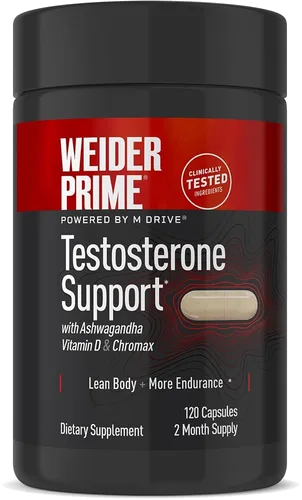
Weider Prime Testosterone Support for Men with KSM-66® Ashwagandha – Capsules Review
We don’t sell supplements. We help you make decisions and get the best price.
Lowest prices
We may earn a commission from some store links. How we choose.
Finding the lowest prices at the stores now. This takes a few seconds.
Products with nearly the same formula (Matched on the main ingredients)
Study, Trial or Testing Result Summary
Members Only29 human studies · 12 improved
This is a testosterone support formula, and none of its ingredients has been shown at this dose to give fast heartburn relief. Calcium carbonate eased meal-related heartburn within minutes in small placebo-controlled trials, but those used about 420 milligrams [1][2]. This product has only 35 milligrams, far below the studied dose. Vitamin B6 was part of a blend with melatonin and other nutrients that cleared reflux symptoms after about 40 days, but its own effect cannot be separated out [3]. Diet studies of vitamin B6 and reflux point in opposite directions [4][5]. Vitamin B12 is below the 1000 micrograms used in a small uncontrolled indigestion study [6]. In a placebo-controlled trial, zinc did not improve reflux symptoms [7]. Vitamin D was not linked to reflux symptoms or indigestion in several studies [8][9]. No human studies were found for chromium, diindolylmethane, ashwagandha, cordyceps or piperine for this goal. Animal and cell studies are never counted.
See all 29 studies →Hide the studies
- A review of studies on zinc in children's digestive diseases said zinc appears helpful for peptic ulcer disease and acid reflux, but it gave no numbers for reflux and no set dose.Zinc Deficiency and Therapeutic Value of Zinc Supplementation in Pediatric Gastrointestinal Diseases.
- In 351 adults with acid reflux disease, a blend containing vitamin B6 plus melatonin and other nutrients led to complete symptom relief in all 176 people after 40 days, versus 65.7% of those taking a med, though the vitamin B6 effect cannot be separated from the other ingredients.Read the study on PubMed (16948779) →
- In 155 adults with frequent heartburn, as-needed calcium carbonate antacid for 12 weeks worked less well than twice-daily effervescent ranitidine, with more rescue antacid use and less healing of the oesophagus (29% vs 55%), though quality of life improved with both.Managing heartburn at the 'base' of the GERD 'iceberg': effervescent ranitidine 150 mg b.d. provides faster and better h…
- In 140 adults with acid reflux taking a stomach-acid-blocking drug, adding 220 mg of zinc daily for 3 months did not improve symptoms more than placebo.The Effect of Zinc Supplementationon the Symptoms of Gastroesophageal Reflux Disease; a Randomized Clinical Trial.
- In 60 infants with persistent regurgitation, an 8-week zinc-L-carnosine supplement improved reflux scores about the same as thickened formula, though it cut regurgitation frequency more and cost less.Zinc-L-Carnosine (Polaprezinc) in managing infant regurgitation: a two-center randomized controlled trial.
- In 49 adults with constipation-type irritable bowel syndrome, a drink with 2 mg vitamin B6, inulin and menthol taken for 2 weeks improved bowel symptoms but caused noticeable heartburn in 10 of 25 people who drank it.[Using a multicomponent functional food in IBS patients with constipation a comparative controlled study].
- In 26 adults with frequent meal-related heartburn, a single 420 mg dose of calcium carbonate lowered acidity in the oesophagus and reduced heartburn severity compared with placebo.Synergy between low-dose ranitidine and antacid in decreasing gastric and oesophageal acidity and relieving meal-induced…
- In 24 adults given a heartburn-provoking meal, single doses of calcium carbonate gum or chewable tablets reduced heartburn and raised oesophageal pH within 15-30 minutes compared with placebo, with the gum lasting longer than the tablets.Clinical effectiveness of a new antacid chewing gum on heartburn and oesophageal pH control.
- In 24 healthy volunteers, a single dose of a calcium and magnesium carbonate antacid raised stomach pH within the first 30 minutes compared with no treatment, but the effect was short-lasting.Comparison of two antacid preparations on intragastric acidity--a two-centre open randomised cross-over placebo-controll…
- In 24 adults with a history of reflux, a chewing gum containing calcium carbonate and other ingredients lowered heartburn and acid reflux scores after a trigger meal compared with placebo gum.Effect of GutsyGum(tm), A Novel Gum, on Subjective Ratings of Gastro Esophageal Reflux Following A Refluxogenic Meal.
- In 16 healthy fasting volunteers, a single 1360 mg dose of calcium-magnesium carbonate antacid raised stomach pH above 3 in a median of 5.8 minutes versus 240 minutes with placebo, acting faster than two acid-reducing drugs but wearing off sooner.Comparison of the effect of the antacid Rennie versus low-dose H2-receptor antagonists (ranitidine, famotidine) on intra…
- In people with nonulcer dyspepsia, calcium carbonate was linked to more reflux symptoms in those with a stomach lining condition (multifocal atrophic gastritis) once their Helicobacter pylori infection was cleared.Increased reflux symptoms after calcium carbonate supplementation and successful anti-Helicobacter pylori treatment.
- A new alginate and calcium carbonate liquid formed a raft and stayed in the stomach about as well as an existing Gaviscon liquid; the study did not measure heartburn relief in people.Alginate-antacid combinations: raft formation and gastric retention studies.
- In 12 healthy volunteers, a single 20 mL dose of an alginate antacid containing calcium carbonate significantly reduced food and acid reflux into the oesophagus after a test meal compared with no treatment.Effect of alginate and alginate-cimetidine combination therapy on stimulated postprandial gastro-oesophageal reflux.
- In a study of 11,690 people who had endoscopy and diet records, higher dietary vitamin B6 intake was linked to lower odds of non-erosive reflux disease, though this does not prove cause.Gender-specific Effect of Micronutrient on Non-erosive Reflux Disease and Erosive Esophagitis.
- In 1,991 children and teens with disabilities, a better Mediterranean diet was linked to fewer reflux and indigestion symptoms, but zinc itself was not tested against these symptoms; zinc intake was above requirements.Mediterranean diet is associated with better gastrointestinal health and quality of life, and less nutrient deficiency i…
- In a case-control study of 919 people, dietary zinc intake was not associated with esophageal adenocarcinoma, Barrett's esophagus, or reflux esophagitis.Dietary antioxidant and mineral intake in humans is associated with reduced risk of esophageal adenocarcinoma but not re…
- In a case-control study of 890 people, higher dietary vitamin D intake was linked to greater esophageal adenocarcinoma risk but was unrelated to reflux esophagitis.Vitamin D, calcium and dairy intake, and risk of oesophageal adenocarcinoma and its precursor conditions.
- In 605 men, low vitamin D levels were not associated with reflux symptoms or erosive esophagitis, though a trend toward an inverse link with Barrett's esophagus was seen.Association of Vitamin D and Parathyroid Hormone With Barrett's Esophagus.
- In a case-control study of 150 women with reflux and 300 controls in Iran, higher dietary vitamin B6 intake was linked to higher odds of reflux disease.Dietary Vitamin B6 Intake and Gastroesophageal Reflux Disease: A Case-Control Study.
- In a questionnaire survey of 382 Romanian adults with anemia, vitamin D3 was reported to help reduce treatment side effects, which included heartburn, but the survey did not give dose, duration, or percentages.Impact of Side Effects on Anemia Therapy Compliance.
- In a cross-sectional study of 328 young adults, lower dietary vitamin B6 intake was linked to higher overall gastrointestinal symptom scores, but vitamin B6 intake was not directly linked to reflux status.Health cooking at home: can cooking skills reduce gastrointestinal symptoms, cross sectional study?
- In a case-control study of 150 functional dyspepsia patients and 150 controls, low vitamin D was more common in patients, but no vitamin D supplement was tested, so the study does not show that vitamin D relieves symptoms.Association of vitamin D and functional dyspepsia: a case-control study.
- Children with reflux or eosinophilic esophagitis had normal vitamin D levels (30 ng/mL in both groups), and the study did not test vitamin D supplements against heartburn.Nutritional State and Feeding Behaviors of Children With Eosinophilic Esophagitis and Gastroesophageal Reflux Disease.
- In patients with reflux, Barrett's esophagus, or esophageal adenocarcinoma, vitamin D gene variants were linked to disease progression, but no supplement effect on heartburn was measured.Polymorphisms of Genes Related to Function and Metabolism of Vitamin D in Esophageal Adenocarcinoma.
- A genetic analysis of about 190,000 people per condition found no causal link between vitamin D and functional dyspepsia, while higher genetically predicted vitamin D was linked to lower irritable bowel syndrome risk.Causal associations of 25-hydroxyvitamin D with functional gastrointestinal disorders: a two-sample Mendelian randomizat…
- In 34 people with Helicobacter pylori infection and low vitamin B12, 1000 mcg daily for 3 months shortened stomach emptying time and reduced dyspepsia scores, with no control group.The impact of B(12) treatment on gastric emptying time in patients with Helicobacter pylori infection.
- In 70 rats with surgically induced acute reflux esophagitis, vitamin D3 at low and high doses lowered inflammatory signals in the esophagus, but it did not help in chronic injury and did not improve visible tissue damage; this was an animal study, not a human trial.Elevated Pro-inflammatory Cytokine Levels in Acute Reflux Esophagitis Are Reduced by 1,25 Dihydroxy Vitamin D3.
- In a rat model of reflux damage to the esophagus, vitamin D3 given at 1250 IU per day reduced inflammation and restored heart rate balance, with earlier (preventive) dosing working better than dosing after injury; this was an animal study, not a human trial.Vitamin D3 ameliorates inflammation and autonomic dysfunction in a rat model of reflux esophagitis via modulation of IL-…
Review Totals and Summary
Members Only2,900 reviews · 93% positive
Extensive customer reviews and qualitative feedback are currently being aggregated for this product. Check back soon for a detailed sentiment analysis.
Biohacker Summary
Members Only0 of 10 recommend it
In the panel's statements, every ingredient is a smaller ingredient in this product, and the ashwagandha in the name was discussed by only three of the ten. Hyman lists it as an herb that can help lower anxiety or depression symptoms, one panelist recommends it for stress, sleep and performance based on human trials, and one finds it a little bit helpful for sleep, though not for everyone. Vitamin D drew the most attention: most of the panel recommend or use it, citing general health, brain and muscle function, and winter months with less sun. They advise taking it with dietary fat, or in the morning, and one panelist takes 5000 IU of D3 each morning. Zinc is a smaller ingredient in this product, used by a few for gut, immune or wound healing support, with one panelist taking 15 mg each morning and another warning about a very large daily amount.
See all 10 biohackers →Hide the biohackers
Dr. Eric Berg · Vitamin D · neutral
- Lists Vitamin D as an ingredient found in sardines.
- Mentions that one can of sardines provides 348% of the daily Vitamin B12.
- States that one can of sardines contains 382 mg of calcium.
- Recommends Vitamin D3 because it's nearly impossible to get enough from food and most people don't get enough sun, advising to aim for blood levels of at least 50 to 80 ng/mL.
- Dr. Berg states that when nutrients like vitamin D are too low, fatigue and weakness can follow.
- Dr. Berg states that when nutrients like vitamin B12 are too low, fatigue and weakness can follow.
- Warns against calcium supplements, citing studies that link them to a higher risk of heart attack, especially in postmenopausal women, and suggests getting calcium from dairy instead.
- Recommends zinc as a trace mineral, noting that modern farming practices deplete it from the soil, leading to low levels in crops.
- Recommends focusing on vitamin D3 to support stronger bones if a neck hump is associated with osteoporosis.
- Recommends a minimum of 10,000 IU of vitamin D per day to support natural killer cells.
- Recommends focusing on calcium to support stronger bones if a neck hump is associated with osteoporosis.
- Notes that white spots on nails point to zinc deficiency, which is usually depleted by eating sugar and refined carbs.
- States that zinc greatly supports natural killer cells.
- Suggests that increasing vitamin D3 may help address the underlying problem of bruxism.
Dr. Rhonda Patrick · Vitamin D · neutral
- Notes that vitamin D from sunlight, food, or supplements needs to undergo conversions in the liver and kidneys to become its active hormone form, calcitriol.
- Mentions that getting too little zinc may play a role in declining testosterone levels, and that zinc helps the body make testosterone.
- States that Vitamin D supplementation has been associated with a 40% lower dementia risk, and low levels are linked to a 50 to 80% higher risk.
- Recommends getting adequate vitamin D, noting that people taking vitamin D supplements have a 40% lower risk of dementia, while those with lower vitamin D have a 50-80% higher risk.
- Vitamin D supplementation was linked to a 40% lower risk of dementia in an observational study of more than 12,000 older adults.
- Mentions that vitamin D also plays a role in maintaining muscle mass.
- Notes that not getting enough zinc can affect testosterone, as zinc is very important for testosterone synthesis.
- Recommends ensuring adequate vitamin D intake for men's sperm health.
- Recommends men take a 30 milligram zinc supplement for sperm health when preparing for IVF.
- Vitamin D and strength training alone did not, but adding them strengthened the effect on one clock, with the full combination slowing that measure by ~3.8 months.
- Lutein and zeaxanthin can also be obtained from certain multivitamins.
- Discusses findings from a meta-analysis on zinc supplementation, noting it improved insulin resistance, inflammation, and oxidative stress in people with diabetes or prediabetes, and explains its biological role in the pancreas.
- Recommends Vitamin D, noting it regulates over 5% of the genome, including genes involved in immune defense, neurotransmitter synthesis, and longevity, and correcting deficiency may slow epigenetic aging.
- Uses Vitamin D3 as an example of a supplement that an AI model could track to see its impact on other metrics like glucose levels.
Andrew Huberman · Zinc · neutral
- Notes that AG1 Pro contains zinc carnosine to support and improve the lining of the gut.
- Zinc carnosine to support and improve the lining of your gut.
- Notes that AG1 Pro contains zinc carnosine to support and improve the lining of the gut.
- States that AG1 Pro contains zinc carnosine to support and improve the lining of the gut.
- Uses AG1 Pro, which contains zinc carnosine to support and improve the lining of the gut.
- States that AG1 Pro contains zinc carnosine to support and improve the lining of the gut, and he was already taking some of these ingredients separately.
- States that AG1 Pro includes zinc carnosine, which he was already taking separately, to support and improve the lining of the gut.
- Notes that most people are probably deficient in vitamin D and benefit from supplementing, but there's no point in doing it unless you're deficient for most things.
- Personally takes zinc carnosine, which is included in AG1 Pro to support and improve the lining of the gut.
- AG1 Pro has zinc carnosine to support and improve the lining of your gut. Some of these ingredients I personally was already taking separate from the AG1 formula.
- States that AG1 Pro contains zinc carnosine to support and improve the lining of your gut.
- Takes 5,000 IU of Vitamin D3 in the morning for longevity.
- Takes 5000 IU of Vitamin D3 in the morning for general health.
- States that Vitamin D is one of the critical nutrients with the best evidence for cognitive function and reducing the risk of dementia.
Thomas DeLauer · Vitamin D · recommends
- Recommends taking Vitamin D3 in the morning, between 6:00 and 10:00 a.m., to align with the body's natural metabolic activation phase and sunlight-triggered vitamin D production.
- Uses vitamin D3 in the fall and winter months when getting less sun, as it's important to supplement it then.
- Adds zinc to their immunity duo because it helps them absorb vitamin C, considering the two together a fantastic combination for fall and winter.
- Recommends taking a massive amount of vitamin D simultaneously with an early morning massive breakfast to help reset circadian rhythms and address hyperphagia.
- Recommends Vitamin B12 for mental health and mood, explaining its role in myelination and neurotransmitter production. They specifically recommend a liposomal and micellar form of methylcobalamin B12 for better absorption and to avoid toxicity.
- Takes Diindolylmethane (DIM) during muscle building phases.
- Recommends Vitamin D, stating that it has receptors throughout the brain and deficiency can quickly impact brain and mood.
- Recommends zinc, noting it is a cofactor for enzymes that build neurotransmitters, and deficiency can affect mood, happiness, and motivation.
- Takes supplemental vitamin D because he is skin sensitive and from northern latitudes, limiting his UV exposure.
- Recommends taking vitamin D on non-liver days to ensure both nutrients get proper receptor access.
- Mentions that more zinc could be beneficial for testosterone, but it's not working on the axis that most people need help with.
- Recommends ashwagandha extract, noting a study where 57 overweight men over 40 saw a 14.7% increase in testosterone and an 18% increase in DHEA over 16 weeks, suggesting it removes the cortisol block suppressing the entire hormonal cascade.
- Takes Purity's liquid vitamin D3 with K2 because she is constantly inside during the day; D3 is for overall wellness and K2 helps the body absorb calcium properly.
- Compares zinc content, noting salmon has under 1mg while oysters have 74mg per 100g, a 70x difference.
Dr. Mark Hyman · Vitamin D · uses
- Consumes Zetopia's Atlantic salmon to get Vitamin D, particularly in the winter months, as it is one of the few foods that provides both Omega-3s and Vitamin D.
- Mentions that the body makes vitamin D from sunlight exposure, and a deficiency can hinder calcium absorption, which is crucial for strong bones.
- Explains that zinc is important for the body's repair crew, helping to heal damaged tissue, and a deficiency can lead to cuts and wounds taking longer to heal.
- Recommends Vitamin D for health, stating that amazing things happen when patients' vitamin D statuses reach optimal levels.
- Lists ashwagandha as an herb that can help lower anxiety or depression symptoms.
- Mentions vitamin D as an existing biomarker that plays a role in mental health, which Function Health includes in their measurements.
- Notes that vitamin D plays a role in immune function.
- Recommends checking vitamin D levels and states that if they had to pick one single intervention for immune health, vitamin D would be it.
- Dr. Hyman discusses vitamin D in relation to sun exposure patterns.
- States that vitamin D supplementation can help with oxidative stress.
- Gave a patient with psoriatic arthritis a little zinc, which contributed to significant improvement in her condition.
- Mentions vitamin D as a key nutrient for supporting immune function.
- States that vitamin D is probably the single most important intervention for immune health, recommending levels of 45 to 70 and emphasizing testing to determine the right dose.
- Recommends ensuring adequate zinc intake on a regular basis for immune support, noting some data on zinc lozenges for early cold.
Dave Asprey · Vitamin D · uses
- Takes Vitamin DAKE from Suppgrade Labs.
- Suggests that vitamin D supports brain health, muscle function, and focus.
- Host Dave Asprey explains why correcting a vitamin D deficiency still makes sense for male fertility, even though supplementation did not improve overall semen parameters in a randomized trial.
- States that currently, he is only taking vitamin C and vitamin D.
- Developed a nonnano zinc sunscreen over five years, stating her skin is probably better now than it's ever been.
- Recommends vitamin D, noting it's actually a hormone and that most people are deficient, even those who take it, because they don't take enough.
- States that most people on the spectrum are low in vitamin D and need more of it, mentioning his own product, Vitam DAKNE, which contains real vitamin A.
- Emphasizes the importance of having enough zinc before trying advanced longevity strategies like peptides.
- Suggests that zinc has better safety and protective data than meds for reducing cardio respiratory risk.
- Dave Asprey recommends Vitamin D3 with K2, explaining D3 is a hormone made from sunlight and K2 directs calcium into bones, not arteries, highlighting its low cost, widespread deficiency, and the ability to test its effectiveness.
- Dave Asprey notes that ashwagandha, when taken as a real standardized extract at a real dose, genuinely lowers cortisol and shows effects on stress and sleep quality in randomized trials, but lacks polysomnography data.
- Recommends Vitamin D as one of the most important supplements for overall health.
- Takes Vitamin DAKE from Suppgrade Labs because D3, A, K2, and E work together.
- Mentions taking vitamin D in the morning, comparing it to the daily dosing of testosterone.
Siim Land · Vitamin D · recommends
- Advises against taking vitamin D in the morning with other supplements because it is fat soluble and requires dietary fat for better absorption.
- Recommends taking Vitamin D with fat for better absorption.
- States that Vitamin D connects biology to light and that UVB reaching the skin enables its production.
- Recommends Ashwagandha for stress, sleep and performance, based primarily on human research, especially randomized controlled trials showing measurable benefits.
- Lists Ashwagandha as one of 15 supplements backed by human studies.
- Lists dairy and sardines as sources of Calcium.
- Thinks vitamin D has some of the strongest evidence and is worth considering.
- Notes that Vitamin K2 pairs well with vitamin D by regulating calcium and bone mineralization.
- Notes that Ashwagandha is one of several supplements with human evidence.
- Recommends taking vitamin D supplements with some fat to maximize its absorption, suggesting with food or a teaspoon of olive oil.
- Notes that taking vitamin D3 with a fat-containing meal resulted in 32% higher peak blood vitamin D levels.
- Recommends taking Vitamin D in the morning or at lunch with fat.
- Notes that Boron improves vitamin D.
- Notes that Boron reduces calcium/magnesium loss.
Ben Greenfield · Zinc · warns
- Ben Greenfield's formulation includes 30 grams of zinc a day, taken for one week before surgery and two weeks after, as it is an important cofactor for wound healing.
- Notes that Vitamin D is actually a hormone and recommends patients aim for levels around 40 to 50, or even 60 for fracture healing, for optimal healing, as opposed to just above 20 which is considered normal.
- Mentions vitamin D as part of a bare-minimum protocol.
- Advises getting vitamin D levels between 60 and 100 nanograms per milliliter as a minimum step for overall health and to slow down heart disease.
- Mentions chromium as a secondary ingredient in blood sugar control products, along with vanadium and bittermelon extract.
- Emphasizes that zinc sufficiency is crucial for immunity because the thymus-derived peptide thymulin, which trains lymphocytes, requires zinc to be active.
- Ashwagandha, taken as 120–1,000 mg for at least 6 weeks, with most studies providing a dose of 400–600 mg/d, can lower cortisol levels, improve sleep quality, and enhance cognitive resilience for athletes during challenging phases consisting of high-volume resistance training.
- Recommends adding zinc into one's stack because it is a co-factor for enzymes involved in testosterone synthesis and sperm maturation, and zinc deficiency is a reproducible cause of low sperm count.
- He mentions zinc as a supplement with real human data behind it for male fertility.
- Zinc may support both testosterone and sperm count.
- Has been taking Vitamin D3 K2 for over a decade.
- Warns that he was taking so much zinc without realizing it because it was in five different things he was taking, and he couldn't pinpoint the problem.
- Notes that sunlight influences more than just vitamin D production.
- Recommends keeping vitamin D levels high, suggesting that a supplement is probably not a bad idea, especially given that many people are deficient due to spending most of their time indoors.
Bryan Johnson · Vitamin D · uses
- Takes 5000 IU of Vitamin D3 in the morning for general health.
- Takes 5000 IU of Vitamin D3 in the morning for general health.
- Mentions that the sunlight assessment claims low vitamin D levels cause the immune system to misfire, and notes that their vitamin D has been measured.
- Takes 5000 IU of Vitamin D3 in the morning for longevity.
- Takes 15 mg of Zinc in the morning for longevity.
- He takes 5000 IU of Vitamin D3 in the morning for general health.
- Takes 5000 IU of Vitamin D3 in the morning for general health.
- Takes 5,000 IU of Vitamin D3 in the morning for longevity.
- Takes 5,000 IU of Vitamin D3 in the morning.
- Takes 15 mg of Zinc in the morning.
- Takes 5,000 IU of Vitamin D3 in the morning.
- He takes 5000 IU of Vitamin D3 in the morning for general health.
- Takes 15 mg of Zinc in the morning for longevity.
- Drinks his Blueprint longevity mix with additional morning supplements, including ashwagandha.
Peter Attia · Ashwagandha · neutral
- Peter reviews the evidence for select off-label medications and supplements commonly used for sleep, including glycine, magnesium, ashwagandha, and phosphatidylserine.
- Lists vitamin D as one of her staple supplements.
- Suggests that zinc and magnesium could potentially help with vasodilation and sleep, particularly for women experiencing severe symptoms in the luteal phase.
- Notes that several studies show patients taking vitamin D can reduce TPO levels and prolong the honeymoon period of Hashimoto's disease.
- Finds ashwagandha a little bit helpful for sleep, though notes it may not be for everyone.
- Finds ashwagandha "a little bit helpful" for sleep, but notes that it may not be for everyone.
- States that in mouse studies, there was a combined effect of alpha ketoglutarate with vitamin D for both sexes.
- Uses vitamin D as an example of how people might dismiss its efficacy due to failed clinical trials that didn't adjust the dose or measure levels.
- In mouse studies, Peter Attia's team found a combined effect of AKG with Vitamin D for both sexes.
- Suggests that supplementing with lots of vitamin D might help overcome the negative effects of phenytoin on bone health by improving calcium absorption, though he is unaware of studies on this.
- Recommends Vitamin D3 as one of the 'big three' micronutrients for bone health, suggesting a daily intake of 800 to 1,000 IU, which can be obtained through sunlight or supplementation.
- Recommends calcium as one of the 'big three' micronutrients for bone health, suggesting a daily intake of 1,000 to 1,200 milligrams, which can be supplemented with calcium carbonate or calcium citrate.
- Suggests that supplementing with lots of vitamin D might overcome the negative effects of phenytoin on bone health by counteracting increased catabolism of vitamin D and subsequent decreased calcium absorption.
- Explains that bone is 50 to 70% mineral, predominantly calcium, and that virtually all of the body's calcium is contained within bone, making bone important for calcium homeostasis.
RAL Summary
Members OnlyTier 4 for Occasional Heartburn: Fast Relief
The tier rests on a vitamin B6 result that came from a blend of melatonin and other nutrients, not vitamin B6 alone, and no ingredient at the dose in this product has been shown to relieve heartburn. So it is graded Tier 4, lower than the rules alone gave.
- Emerging: not enough evidence to rank higher yet.
Where the evidence disagrees: 15 of the 29 human studies found no effect.
More Details
Members OnlyBody systems · Combine with · Possible side effects
Body systems: Digestive system, Endocrine system, Nervous system
Combine with: Combine with a healthy diet and lifestyle.
Possible side effects: In one trial, a drink containing vitamin B6 with other ingredients caused heartburn in 10 of 25 people. No written reviews could be read.
Supplement Facts
Vitamin D3 20 mcg · Vitamin B6 10 mg · Vitamin B12 120 mcg
| Vitamin D3 | 20 mcg | |
| Vitamin B6 | 10 mg | |
| Vitamin B12 | 120 mcg | |
| Calcium | 35 mg | |
| Zinc | 15 mg | |
| Chromium | 200 mcg | |
| Diindolylmethane (DIM) | 50 mg | † |
| Ashwagandha Extract | 675 mg | † |
| Cordyceps Extract | 390 mg | † |
| Piperine | 5 mg | † |
Other ingredients: Gelatin Capsule (Bovice), Silicon Dioxide, Magnesium Stearate. CONTAINS: MILK (used in extraction process).
Directions: Take two capsules once a day with food, morning or afternoon.
Barcode (UPC) 796502504817 · Label source: Reverseagelab · Report a label change
Other sizes and barcodes: 60 Capsules, UPC 7 96502 50540 1 (on market)
Show entire label

More occasional heartburn: fast relief products
Members OnlyThe highest ranked for the same goal
Read more
Our articles on this subject
Graded November 10, 2026 by the Reverse Age Lab evidence engine, from human studies, real reviews and our biohacker panel. How we grade. Is this medical advice? No. Rala organizes the published evidence; go over any change with your doctor, especially if you take meds.
Privacy policyConsumer health dataAffiliate disclosureTermsDo Not Sell or Share My Personal InformationCookie settings