
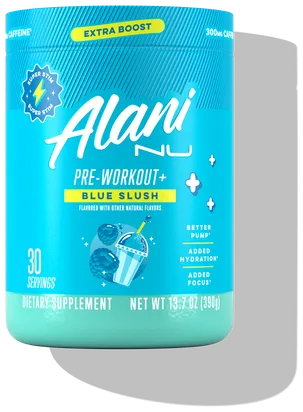
Alani Nu Pre-Workout Blue Slush Review
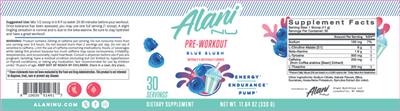
Looking for a bolder boost? This Pre-Workout+ in the blue slush flavor is described by the brand as a fitness supplement that is refreshingly fierce. The product is marketed to support better pump, added hydration and added focus. Each scoop provides 300mg of caffeine and 200mg of L-theanine per serving. The page describes the flavor as tasting like a retro slushie with sweet, icy swirls of blue raspberry flavor. The product is listed as vegan, with 0g sugar and 300mg of caffeine per scoop. The Nutrition Facts panel lists one scoop (13 g) per serving, with about 30 servings per container, 40 calories, under 1g of carbohydrate, 200mg choline, 40mg calcium, 45mg sodium, 8g L-citrulline malate 2:1, 2g beta-alanine, 300mg caffeine from coffee arabica bean extract and dicaffeine malate, 200mg L-theanine, 100mg theobromine, 100mg pink Himalayan salt and 100mcg huperzine-A. The label states the product contains 300mg of caffeine per serving and is not recommended for children, people sensitive to caffeine, or women who are nursing. It advises that daily caffeine from all sources should be limited to about 400mg per day. The page notes that the statements have not been evaluated by the Food and Drug Administration and that the product is not intended to diagnose, treat, cure or prevent any disease. The page also offers a choice of other pre-workout+ flavors, including frozen lemonade, paradise swirl, kiwiberry, cherry slush and rocket pop, and a bundle with an energy drink.
We don’t sell supplements. We help you make decisions and get the best price.
Lowest prices
Finding the lowest prices at the stores now. This takes a few seconds.
Products with nearly the same formula (Matched on the main ingredients)
Study, Trial or Testing Result Summary
Members Only154 human studies · 77 improved
1 of these 154 human studies gave the ingredient by drip, not by mouth.
Caffeine, at 200 milligrams per serving, has the strongest support for energy. Reviews of many trials found that caffeine before exercise improved self-reported energy, mood and attention [1] and lengthened running time to exhaustion [2]. Single doses of 200 to 400 milligrams reduced boredom and fatigue during repetitive tasks [3]. However, taking it daily for six weeks did not reduce fatigue. Beta-alanine, at 1.6 grams, improved hard exercise lasting half a minute to 10 minutes [4]. At this same daily amount for four weeks, it delayed muscle fatigue in untrained men [5], though the clearest effects came at higher doses of 5.6 to 6.4 grams [4]. Citrulline malate, at 6 grams, gave about 6 percent more repetitions in strength training [6] but did not improve endurance [7]. L-theanine alone at 200 milligrams sharpened attention but did not reduce fatigue [8]. Combined with caffeine, it lowered tiredness and raised alertness [9]. The only trial of L-tyrosine found no effect on fatigue or alertness [10], and the dose that study used is unknown. Animal and cell studies are never counted.
See all 154 studies →Hide the studies
- Across 31 randomized trials with 1168 people, L-theanine (a single 200 mg dose) improved attention and choice reaction time but had no significant effect on fatigue compared with placebo.Cognitive and affective effects of L-Theanine: a systematic review and meta-analysis of 31 randomized trials.
- Across 18 placebo-controlled trials in 331 trained young men, beta-alanine improved high-intensity exercise lasting 0.5 to 10 minutes more than placebo, with the clearest effects at 4 weeks and at 5.6 to 6.4 grams a day.Effect of Beta-Alanine Supplementation on Maximal Intensity Exercise in Trained Young Male Individuals: A Systematic Rev…
- In 11 randomized trials in 312 women, beta-alanine lengthened time to exhaustion, but showed no clear effect on peak power, anaerobic performance, oxygen uptake or body fat, and the certainty of the evidence was very low.Effects of beta-alanine supplementation on exercise performance and related physiological outcomes in women: a systemati…
- In a meta-analysis of 21 trials involving 254 recreational and trained runners, acute intake of 3 to 9 milligrams per kilogram of caffeine improved running time to exhaustion and reduced the time needed to complete endurance running time trials compared to placebo.Effects of Caffeine Intake on Endurance Running Performance and Time to Exhaustion: A Systematic Review and Meta-Analysi…
- Across 11 trials with 234 participants, taking caffeine combined with taurine improved time to exhaustion, increased peak anaerobic power, and reduced perceived exertion compared to placebo.Effects of Caffeine-Taurine Co-Supplementation on Exercise Performance: A Systematic Review and Meta-Analysis.
- Across nine trials with 158 young healthy adults, a single dose of citrulline did not improve time to exhaustion or time to finish endurance exercise compared with placebo.Effects of citrulline on endurance performance in young healthy adults: a systematic review and meta-analysis.
- Across eight trials with 137 healthy people, 6-8 g of citrulline malate taken 40-60 minutes before strength training gave about 6% more repetitions than placebo, a small benefit.Acute Effect of Citrulline Malate on Repetition Performance During Strength Training: A Systematic Review and Meta-Analy…
- In a review of 118 trials, the three that tested citrulline-rich foods found no effect on endurance exercise performance.Effect of food sources of nitrate, polyphenols, L-arginine and L-citrulline on endurance exercise performance: a systema…
- Across 19 studies, beta-alanine had small effects on performance in tests between aerobic and anaerobic effort, and the pooled results were not statistically clear.Effects of Beta-Alanine Supplementation on Physical Performance in Aerobic-Anaerobic Transition Zones: A Systematic Revi…
- Pooling individual data from four trials, beta-alanine increased time to exhaustion on a cycling test by about 8 seconds more than placebo, and the variation between people was no larger than with placebo.Individual Participant Data Meta-Analysis Provides No Evidence of Intervention Response Variation in Individuals Supplem…
- A meta-analysis of 40 double-blind studies found that caffeine ingestion improved overall exercise test outcomes by 12.3 percent compared to placebo, especially during endurance and time-to-exhaustion tests.Effects of caffeine ingestion on exercise testing: a meta-analysis.
- A review of 13 crossover studies found that taking a low to moderate dose of caffeine before or during exercise improved attention, accuracy, speed, mood, and self-reported energy compared to placebo.Caffeine and Cognitive Functions in Sports: A Systematic Review and Meta-Analysis.
- In a review of 46 trials in 928 elite athletes, beta-alanine showed benefits that depended on the sport, while results across all supplements varied widely.Efficacy of dietary supplements on sports performance outcomes: a systematic review of evidence in elite athletes.
- In 7 trials with 263 adults, creatine plus beta-alanine improved high-intensity and repeated-bout performance versus either alone, but did not improve maximal strength or aerobic endurance.Effects of Creatine and β-Alanine Co-Supplementation on Exercise Performance and Body Composition: A Systematic Review.
- In nine studies of 221 athletes, five found extra gains in buffering capacity and performance when beta-alanine was combined with sodium bicarbonate, and one found the effect was comparable to the supplements taken individually.Effect of β-alanine and sodium bicarbonate co-supplementation on the body's buffering capacity and sports performance: A…
- A review of one earlier review and 19 randomized trials found beta-alanine may increase power output and working capacity and reduce feelings of fatigue, but safety reporting was limited.The effects of beta-alanine supplementation on performance: a systematic review of the literature.
- In 23 trials averaging 5.2 weeks at about 4.8 grams a day, beta-alanine seemed to lower perceived exertion, but there was no significant difference in total work, performance time, oxygen use or time to exhaustion.Effects of beta-alanine supplementation on performance and muscle fatigue in athletes and non-athletes of different spor…
- In a review of 55 combat sport trials, beta-alanine showed a promising role for high and intermittent effort, but more studies were needed, and only caffeine had strong evidence.Nutritional Ergogenic Aids in Combat Sports: A Systematic Review and Meta-Analysis.
- A systematic review of 23 articles examining beetroot juice for endurance in athletes noted that its positive effects on cardiorespiratory endurance could potentially be undermined when combined with caffeine.Effects of Beetroot Juice Supplementation on Cardiorespiratory Endurance in Athletes. A Systematic Review.
- In a systematic review of 12 randomized controlled studies, consuming energy drinks with alcohol counteracted alcohol-related fatigue, weakness, and simple cognitive deficits, though it increased impulsivity.Acute impact of caffeinated alcoholic beverages on cognition: A systematic review.
- In a systematic review of 17 studies, caffeine consistently improved marksman reaction time and showed some evidence of reducing fatigue-related accuracy declines, though it did not improve overall marksmanship accuracy.The effects of caffeine on marksmanship accuracy and reaction time: a systematic review.
- A review of 16 studies found that shift workers frequently consume caffeine as a fatigue-management strategy, though this practice conflicts with standard sleep hygiene recommendations.Sleep hygiene in shift workers: A systematic literature review.
- In a review of 33 studies on countermeasures against mental fatigue, taking caffeine before a mentally fatiguing task was found to be one of the most promising interventions to combat mental fatigue compared to control or placebo.How to Tackle Mental Fatigue: A Systematic Review of Potential Countermeasures and Their Underlying Mechanisms.
- In a systematic review of 8 studies in basketball players, taking 3 to 6 milligrams per kilogram of caffeine before exercise improved vertical jump height, running time, agility, and simulated game performance, had mixed effects on aerobic capacity, and did not change perceived exertion.Acute Effects of Caffeine on Overall Performance in Basketball Players-A Systematic Review.
- In 162 smokers quitting tobacco and tracked for up to one year, those who continued using caffeine avoided the increased fatigue and decreased stimulation experienced by those who abstained from caffeine during the first 3 days of quitting.The impact of caffeine use on tobacco cessation and withdrawal.
- In 95 healthy young adults, a single oral dose of 200 or 400 mg of caffeine decreased boredom and fatigue during repetitive tasks while 200 mg facilitated performance on difficult math cancellation tasks.Effects of caffeine on mood and memory.
- In 64 moderate caffeine consumers after overnight abstinence, a single 86 mg dose of caffeine increased energetic mood and improved reaction time just as much as two or three spaced doses totaling 172 mg or 258 mg compared to placebo.Mood and psychomotor performance effects of the first, but not of subsequent, cup-of-coffee equivalent doses of caffeine…
- In 60 older adults given a nutritional drink with 800 mg or 1200 mg of beta-alanine twice daily for 12 weeks, physical working capacity rose 17.8% and 13.6%, versus a 6.3% drop with the drink alone.Oral nutritional supplement fortified with beta-alanine improves physical working capacity in older adults: a randomized…
- In 55 men given beta-alanine, creatine, both, or placebo for 4 weeks, there were no significant differences between groups in endurance measures, though the combined group improved over time on 5 of 8 measures.Effects of 28 days of beta-alanine and creatine monohydrate supplementation on aerobic power, ventilatory and lactate th…
- In 54 resistance-trained men, taking a single 300 milligram dose of caffeine from anhydrous caffeine or coffee 30 minutes before exercise prevented drops in sprint power across repeated sprints, but did not improve strength or repetitions to fatigue more than placebo.Effects of coffee and caffeine anhydrous on strength and sprint performance.
- In 54 physically active men, taking 300 milligrams of caffeine daily from anhydrous caffeine or coffee alongside creatine for 5 days did not improve strength, repetitions to fatigue, or sprint power compared to placebo.Effects of Coffee and Caffeine Anhydrous Intake During Creatine Loading.
- In 51 untrained men, 28 days of beta-alanine supplementation increased physical working capacity at the fatigue threshold on a cycling test compared with placebo, suggesting a delay in neuromuscular fatigue.Effects of twenty-eight days of beta-alanine and creatine monohydrate supplementation on the physical working capacity a…
- In 50 recreationally trained adults, 4.8 g per day of beta-alanine for several weeks did not improve critical velocity, anaerobic running capacity or high-intensity running compared with placebo.High-velocity intermittent running: effects of beta-alanine supplementation.
- In 44 sedentary men over 28 days, beta-alanine plus creatine raised mean power during repeated maximal cycling sprints and reduced fatigue, while creatine alone raised peak power.The effects of beta alanine plus creatine administration on performance during repeated bouts of supramaximal exercise i…
- In 44 young women randomized to high-intensity cycling training with beta-alanine, training alone, or control for 6 weeks, the electromyographic fatigue threshold did not change in any group.Evaluation of High-Intensity Interval Training and Beta-Alanine Supplementation on Efficiency of Electrical Activity and…
- In 44 young adults, a single dose of 40 mg of caffeine combined with 97 mg of L-theanine increased alertness, reduced tiredness, and improved task-switching accuracy within 70 minutes compared to placebo.The combination of L-theanine and caffeine improves cognitive performance and increases subjective alertness.
- In 41 men, a single 8 g dose of citrulline malate increased bench press repetitions (up to 53% more in the last set) and reduced muscle soreness by 40% compared with placebo.Citrulline malate enhances athletic anaerobic performance and relieves muscle soreness.
- Forty-one patients with advanced cancer receiving a med therapy were given 200 milligrams of intravenous caffeine or placebo daily for two days, resulting in reduced drowsiness after the first day and slightly lower pain after the second day.Read the study on PubMed (23498965) →
- In 40 people with COPD taking 3.2 g of beta-alanine daily for 12 weeks, muscle carnosine rose compared with placebo, but maximal cycling capacity, time to exhaustion and quadriceps function did not change.Efficacy of 12 weeks oral beta-alanine supplementation in patients with chronic obstructive pulmonary disease: a double-…
- In 38 recreationally active men, 4 weeks of 6.4 grams daily beta-alanine maintained anaerobic working capacity compared with placebo but gave no extra benefit for fatigue or repeated-sprint performance, whether or not training was done in low-oxygen conditions.Distinct Effects of Repeated-Sprint Training in Normobaric Hypoxia and β-Alanine Supplementation.
- In 32 trained triathletes over 9 weeks, 3 g a day of citrulline plus beetroot extract increased Cooper test distance and prevented a cortisol rise versus placebo, but citrulline alone did not improve distance and muscle damage markers did not change.Long-Term Combined Effects of Citrulline and Nitrate-Rich Beetroot Extract Supplementation on Recovery Status in Trained…
- In 30 trained male cyclists, 7 days of a blend with 6 g L-citrulline raised peak power by 11% and time to fatigue by 36% versus placebo, but did not improve 20 km time or average power.Effects of branched chain amino acids, l-citrulline, and alpha-glycerylphosphorylcholine supplementation on exercise per…
- In 30 basketball players, a single pre-workout dose containing 6 g citrulline malate with caffeine, creatine, beta-alanine and amino acids improved jumping, agility and repeated sprint power versus placebo, but not sprinting or aerobic performance.The Effect of Acute Pre-Workout Supplement Ingestion on Basketball-Specific Performance of Well-Trained Athletes.
- In 30 young adults, 28 days of beta-alanine increased physical working capacity at heart rate threshold more than placebo did, while peak oxygen use and time to exhaustion did not differ significantly.The effects of beta-alanine supplementation on physical working capacity at heart rate threshold.
- In 30 trained men and women taking a single preworkout supplement containing beta-alanine and caffeine 30 minutes before exercise, anaerobic power and time to exhaustion improved compared with placebo.Effects of Multi-ingredient Preworkout Supplements on Physical Performance, Cognitive Performance, Mood State, and Hormo…
- In 30 prostate cancer survivors, a single dose of about 6 mg per kilogram of body weight of anhydrous caffeine 1 hour before testing increased exercise capacity by 3% without changing postexercise fatigue or perceived exertion compared with placebo.Effect of caffeine on exercise capacity and function in prostate cancer survivors.
- In 30 chronically sleep-restricted young drivers, 100 mg of caffeinated gum improved driving performance compared with placebo, while subjective sleepiness improved only when caffeine was combined with bright light.Bright light alone or combined with caffeine improves sleepiness in chronically sleep-restricted young drivers.
- In 28 recreationally active young men, a single 8 g dose of citrulline malate did not improve cycling time to exhaustion or sprint power compared with placebo.Acute citrulline-malate supplementation is ineffective during aerobic cycling and subsequent anaerobic performance in re…
- In 28 trained young adults doing resistance training for 6 weeks, taking 3 milligrams of caffeine per kilogram of body weight daily before workouts did not improve strength, endurance, or fatigue compared to placebo.Effects of Creatine and Caffeine Supplementation During Resistance Training on Body Composition, Strength, Endurance, Ra…
- In 27 young adults doing 8 weeks of plyometric training, 4.0 to 5.6 grams daily beta-alanine produced jump gains similar to placebo and only a slight edge in jump height maintained over 45 consecutive jumps.β-Alanine supplementation slightly enhances repeated plyometric performance after high-intensity training in humans.
- In 27 adults aged 60 to 82 taking 3.2 g per day for 12 weeks, beta-alanine did not add any benefit to strength, power or endurance from resistance training compared with placebo.Beta-Alanine Does Not Enhance the Effects of Resistance Training in Older Adults.
- In 27 people doing high-intensity functional training, 4 weeks of beta-alanine improved vertical jump and jumping power compared with sucrose, but fatigue and perceived intensity did not change.Effects of β-Alanine Supplementation on Subjects Performing High-Intensity Functional Training.
- In 27 adolescent middle- and long-distance runners, beta-alanine for 4 weeks increased time to exhaustion by 6.5 percent compared with 1.4 percent with placebo, although maximal oxygen uptake did not meaningfully change.Beta-alanine supplementation improves time to exhaustion, but not aerobic capacity, in competitive middle- and long-dist…
- In 26 men and women, 28 days of 6 g daily beta-alanine raised muscle carnosine and reduced exercise fatigue more than placebo, with similar results in both sexes, but did not lower muscle l-histidine.β-Alanine supplementation elevates intramuscular carnosine content and attenuates fatigue in men and women similarly but…
- In 26 healthy older adults, 4 weeks of a daily blackcurrant drink containing 200 mg L-theanine and pine bark reduced attention-task false alarms, but the reduction in mental fatigue was only a borderline trend compared with placebo.Four-week supplementation with a blackcurrant formulation enhances cognitive performance, reduces mental fatigue and mod…
- In 25 trained young men, eight days of 2 g citrulline plus 200 mg glutathione raised blood flow 30 minutes after hard running and raised blood citrulline and arginine, but the abstract reports no clear gain in run time to exhaustion.The effects of L-Citrulline and Glutathione on Endurance performance in young adult trained males.
- In 25 healthy adults, a single dose of a pre-workout drink containing 3 g beta-alanine raised energy expenditure and feelings of vigor and readiness versus placebo, but did not improve lifting volume or sprint performance.Effects of acute ingestion of a pre-workout dietary supplement with and without p-synephrine on resting energy expenditu…
- In 25 resistance-trained people, a pre-workout drink containing 2.1 g beta-alanine for 7 days improved some leg and bench press strength endurance compared with placebo but did not change 4 km cycling time trial performance.Short-Term Effects of a Ready-to-Drink Pre-Workout Beverage on Exercise Performance and Recovery.
- In 24 healthy adults aged 60-70, one month of 6 g citrulline plus nitrate drink lowered heart rate and oxygen use during easy cycling and raised maximal cycling power by 5.2%, with no change in knee extension performance.Effect of chronic nitrate and citrulline supplementation on vascular function and exercise performance in older individu…
- In 24 healthy young adults doing two months of exercise training, 6 g citrulline plus nitrate drink gave a larger gain in knee muscle strength than placebo but did not improve maximal aerobic performance.Synergetic Effect of NO Precursor Supplementation and Exercise Training.
- In 24 women taking 4.8 grams of beta-alanine daily, supplementation did not change markers of exercise-induced oxidative stress or time to exhaustion compared with placebo.Exercise-induced oxidative stress: the effects of β-alanine supplementation in women.
- In 23 men taking 6.4 g daily beta-alanine for 28 days, muscle relaxation speed improved in both fresh and fatigued knee muscles, while maximal force production did not change.β-alanine supplementation improves in-vivo fresh and fatigued skeletal muscle relaxation speed.
- In 23 rugby league players, 7 days of a blackcurrant drink containing pine bark and L-theanine improved mental performance scores and accuracy compared with placebo, and participants felt less distracted.Improving Mental Performance in an Athletic Population with the Use of Ārepa®, a Blackcurrant Based Nootropic Drink: A R…
- In 22 adults, a single 6 gram dose of l-citrulline taken 1 or 2 hours before exercise did not improve time to exhaustion or endurance compared with a placebo drink.The effect of l-citrulline and watermelon juice supplementation on anaerobic and aerobic exercise performance.
- In 22 trained men, 2.4 g of L-citrulline daily for 7 days, plus a dose before the test, cut the time to complete a 4 km cycling time trial by 1.5% compared with placebo.Oral L-citrulline supplementation enhances cycling time trial performance in healthy trained men: Double-blind randomize…
- In 22 handball players in intense training, 3 g a day of citrulline malate for four weeks lowered blood lactate right after effort by 60.7% compared with placebo, suggesting less fatigue.The Effect of Citrulline/Malate on Blood Lactate Levels in Intensive Exercise.
- In 22 women given beta-alanine or placebo for 28 days, the beta-alanine group improved ventilatory threshold by 13.9%, fatigue-threshold work capacity by 12.6% and time to exhaustion by 2.5%, while maximal oxygen use did not change.Effects of beta-alanine supplementation on the onset of neuromuscular fatigue and ventilatory threshold in women.
- In 22 female masters cyclists, 28 days of beta-alanine (800 mg per dose, 4 doses daily) increased time to exhaustion and total work done more than placebo, with lower blood lactate after recovery.Incremental effects of 28 days of beta-alanine supplementation on high-intensity cycling performance and blood lactate i…
- In 22 national-level water polo players, 4 weeks of beta-alanine (4.8 grams daily for 10 days, then 6.4 grams daily) did not substantially improve swim or jump performance compared with placebo.Effects of 4 Weeks of β-Alanine Supplementation on Swim-Performance Parameters in Water Polo Players.
- In 22 men, a single dose of 5 mg per kilogram of body weight of caffeine 60 minutes before exercise enhanced peak power and lowered perceived exertion during upper body anaerobic exercise compared to placebo.The effect of acute caffeine ingestion on upper and lower body anaerobic exercise performance.
- In 22 elite traditional jiu-jitsu athletes, a single dose of 3 mg of caffeine per kg of body weight taken 60 minutes before testing decreased fatigue perception, increased perceived power and endurance, and improved throwing fitness test performance compared to placebo.Effects of 3 mg/kg Body Mass of Caffeine on the Performance of Jiu-Jitsu Elite Athletes.
- In 21 anaerobically trained men, 5 weeks of beta-alanine (4 grams daily in week one, then 6 grams daily) did not improve time to exhaustion during sprints at supramaximal intensities compared with placebo.Effects of beta-alanine supplementation on sprint endurance.
- In 20 elite rowers, one week of 6 g citrulline plus beetroot extract improved lactate clearance after a sprint test and peak power in one performance test, but other measures did not change compared with placebo.Impact of a short-term nitrate and citrulline co-supplementation on sport performance in elite rowers: a randomized, dou…
- In 20 healthy moderately active adults, 100 mg per kg body weight per day of citrulline for 10 days did not lengthen time to exhaustion on a cycling or running test compared with placebo.Ergogenic effects of a 10-day L-citrulline supplementation on time to exhaustion and cardiorespiratory and metabolic res…
- In 20 recreationally strength-trained young men, 6.4 g per day of beta-alanine for 4 weeks improved isometric endurance time by about 17 percent but did not improve isotonic or isokinetic strength endurance compared with placebo.Beta-alanine supplementation improves isometric, but not isotonic or isokinetic strength endurance in recreationally str…
- In 20 active adults who regularly consume caffeine, a single dose of Turkish coffee providing 3 mg of caffeine per kg of body weight increased subjective feelings of energy and improved reaction time compared to decaffeinated Turkish coffee.The effect of an acute ingestion of Turkish coffee on reaction time and time trial performance.
- In 20 middle-aged adults drinking at least 300 ml per day of green tea for 7 days, standard caffeinated green tea resulted in higher accumulated fatigue, higher stress markers, and lower sleep quality compared to low-caffeine green tea.Reduced Stress and Improved Sleep Quality Caused by Green Tea Are Associated with a Reduced Caffeine Content.
- In 19 physically active college men, 5 weeks of beta-alanine (4 grams daily in week one, then 6 grams daily) did not improve power or fatigue during repeated short treadmill sprints compared with placebo.The effect of beta-alanine supplementation on power performance during repeated sprint activity.
- In 19 men taking 12 g of beta-alanine daily for 14 days before a 24-hour simulated military operation, some physical and mental performance measures held up better than placebo, while jump power, upper-body endurance and inflammation markers showed no group difference.Effects of β-alanine supplementation on physical performance, cognition, endocrine function, and inflammation during a 2…
- In 18 recreationally trained men, citrulline malate taken acutely or after seven days did not change quadriceps peak power, torque, or fatigue rate compared with placebo.Acute and Chronic Citrulline Malate Supplementation on Muscle Contractile Properties and Fatigue Rate of the Quadriceps.
- In 18 elite soccer players, a single 3 g or 6 g dose of citrulline malate did not change performance, fatigue or recovery during a soccer-specific test compared with placebo.The Effect of a Single Dose of Citrulline on the Physical Performance of Soccer-Specific Exercise in Adult Elite Soccer …
- In 18 healthy adults aged 60 to 80, 12 weeks of 3.2 g daily beta-alanine raised muscle carnosine and lengthened time to exhaustion on both constant-load and incremental cycling tests versus placebo.Beta-alanine (Carnosyn™) supplementation in elderly subjects (60-80 years): effects on muscle carnosine content and phys…
- In 18 soldiers, 30 days of beta-alanine raised muscle carnosine and improved a casualty carry time and a stress cognition test compared with placebo, but did not change run, sprint or marksmanship performance.β-Alanine ingestion increases muscle carnosine content and combat specific performance in soldiers.
- In 18 men doing high-intensity interval training, 6.4 g of beta-alanine daily for 6 weeks raised muscle carnosine and cut total and best repeated-sprint times by about 3%, while the dextrose placebo group showed no such gain in sprint times.Effect of β-alanine supplementation during high-intensity interval training on repeated sprint ability performance and n…
- In 18 men taking a single dose of 6 mg per kilogram of body weight of caffeine, jump height improved and those who had better exercise performance reported a lower sense of effort during fatiguing exercise.Effects of caffeine on neuromuscular function in a non-fatigued state and during fatiguing exercise.
- In 17 healthy young adults, L-citrulline taken before a treadmill test shortened time to exhaustion compared with placebo and blunted the normal rise in insulin after exercise.L-citrulline reduces time to exhaustion and insulin response to a graded exercise test.
- In 17 elite kayakers given 80 mg per kg body weight per day for 8 weeks, beta-alanine did not change muscle fatigue during a 2-minute contraction or kayak time-trial and repeated-sprint performance compared with placebo.No Effect of β-alanine on Muscle Function and Kayak Performance.
- In 17 cyclists taking 6.4 g per day of beta-alanine for 28 days, muscle carnosine rose but sprint and 4-km uphill time-trial performance did not improve compared with placebo.Beta-alanine did not improve high-intensity performance throughout simulated road cycling.
- In 16 highly trained cyclists, 65 mg per kg body mass of beta-alanine for 4 weeks improved average power per repetition and reduced fatigue during isokinetic knee contractions compared with placebo, while the 4-minute cycling time trial change was not statistically significant.The effect of beta-alanine supplementation on isokinetic force and cycling performance in highly trained cyclists.
- In 16 untrained college women doing 8 weeks of resistance training, 3.4 g daily beta-alanine raised lower-body repetitions at 65% of maximum more than placebo did, but it had no added effect on body composition or maximal strength.Effects of β-Alanine on Body Composition and Performance Measures in Collegiate Women.
- In 16 physically active adults, a single dose of caffeine at 6 mg per kg of body weight increased peak muscle torque compared to placebo, but had no effect on relative fatigue or muscle soreness after exercise.Effect of Caffeine Supplementation on Quadriceps Performance After Eccentric Exercise.
- In 15 healthy men, a single drink containing 6 g citrulline with beetroot juice increased blood flow after a brief blood-flow blockage but did not change muscle oxygen levels, fatigue, or the number of knee extensions compared with placebo.Effects of acute nitric oxide precursor intake on peripheral and central fatigue during knee extensions in healthy men.
- In 15 male sprint athletes taking 4.8 g of beta-alanine daily for 4 weeks, muscle carnosine rose and fatigue was slightly reduced during repeated knee extensions, but isometric endurance and 400-meter race time did not change.beta-Alanine supplementation augments muscle carnosine content and attenuates fatigue during repeated isokinetic contrac…
- In 15 young water polo players, 6.4 g per day of beta-alanine for 6 weeks improved ball throwing speed during repeated sprints and possibly improved 200 m swimming time compared with placebo.Beta-Alanine Supplementation Improves Throwing Velocities in Repeated Sprint Ability and 200-m Swimming Performance in Y…
- In 15 active men taking 6.4 g per day of beta-alanine for 8 weeks, muscle carnosine rose by about 91% and then fell back to baseline over 12 to 16 weeks, and changes in carnosine tracked changes in high-intensity exercise tolerance.Kinetics of Muscle Carnosine Decay after β-Alanine Supplementation: A 16-wk Washout Study.
- In 14 healthy older men, 6 g of L-citrulline daily for seven days raised exhaled nitric oxide but did not improve breathing muscle performance, fatigue, or oxygenation compared with placebo.Short-Term L-Citrulline Supplementation Does Not Affect Inspiratory Muscle Oxygenation and Respiratory Performance in Ol…
- In 14 trained cyclists, 4 weeks of 6.4 g daily beta-alanine significantly extended time to exhaustion in a supramaximal cycling test and likely improved 4-kilometer time trial performance, while 1- and 10-kilometer time trial times were unchanged.The effect of β-alanine supplementation on cycling time trials of different length.
- In 14 trained cyclists, 28 days of 6.4 g daily beta-alanine followed by 5 weeks of sprint interval training improved time to exhaustion in a supramaximal cycling test more than placebo did (14.9% vs 9.0%), and training intensity rose more with beta-alanine (9.9% vs 4.9%).Additive Benefits of β-Alanine Supplementation and Sprint-Interval Training.
- In 13 competitive swimmers taking 4.8 g per day for 6 weeks, beta-alanine did not change metabolic contribution or performance in a 400-meter swim compared with placebo.Beta alanine supplementation effects on metabolic contribution and swimming performance.
- In 12 taekwondo athletes, a mix of branched-chain amino acids, arginine and citrulline taken after three simulated matches kept reaction times from declining, while placebo did not.Branched-chain amino acids, arginine, citrulline alleviate central fatigue after 3 simulated matches in taekwondo athlet…
- In 12 healthy recreationally trained adults, a single 8 gram dose of citrulline malate before a high-intensity jump and squat session did not improve performance or reduce fatigue compared with placebo.The Effect of Citrulline Malate Supplementation on Muscle Fatigue Among Healthy Participants.
- In 12 recreationally trained men, 8 grams of citrulline malate taken 40 minutes before a bench press workout did not increase the total repetitions or reduce feelings of fatigue compared with placebo.Acute Effect of Citrulline Malate Supplementation on Upper-Body Resistance Exercise Performance in Recreationally Resist…
- In 12 healthy men, a single 6 gram dose of l-citrulline raised exhaled nitric oxide but did not improve breathing muscle performance or breathing muscle oxygen levels compared with placebo.Acute L-Citrulline Supplementation Increases Nitric Oxide Bioavailability but Not Inspiratory Muscle Oxygenation and Res…
- In 12 trained endurance athletes, a sports drink containing arginine and citrulline taken before exercise did not change time to exhaustion or power output compared with placebo water.Effect of different sports drink compositions on endurance performance and substrate oxidation: a randomized, double-bli…
- A single 1.6 g dose of beta-alanine taken before three repeated Wingate cycling sprints did not change power or fatigue measures in 12 trained female cyclists, though it lowered perceived exertion after the first two sprints.Effects of Acute Beta-Alanine Supplementation on Anaerobic Performance in Trained Female Cyclists.
- In 12 middle-aged adults, 2.4 g per day of beta-alanine for 28 days increased time to exhaustion on a cycle test after the intervention and prevented the drop in Stroop executive function test speed seen after exercise in the placebo group.β-Alanine supplementation increased physical performance and improved executive function following endurance exercise in…
- In 12 skilled male golfers playing a 2-day tournament, taking about 1.9 mg of caffeine per kg of body weight before and during rounds increased perceived energy, reduced fatigue, and improved golf scores and drive distance compared to placebo.Effect of Caffeine on Golf Performance and Fatigue during a Competitive Tournament.
- In 12 trained male runners, a single 300 mg dose of caffeinated chewing gum improved running exercise tolerance by 18%.Effects of Caffeine Chewing Gum on Exercise Tolerance and Neuromuscular Responses in Well-Trained Runners.
- In 12 healthy participants, a single dose of 3 mg per kilogram of body weight of caffeine before 1 hour of cycling decreased self-perceived fatigue during exercise and increased feelings of vigor afterward compared with placebo.Caffeine increases whole-body fat oxidation during 1 h of cycling at Fatmax.
- Twelve healthy young adults took a single dose of 5 milligrams of caffeine per kilogram of body weight during exercise in the heat, which lowered perceived exertion and prolonged high-intensity cycling duration compared to placebo.In-Exercise Caffeine Improves Exercise Performance in the Heat without Exacerbating Hyperventilation and Brain Hypoperfu…
- In 11 World Tour cyclists taking 5 g of beta-alanine four times daily for 7 days, uphill time-trial power improved and trial time shortened compared with placebo.Effect of high-dose β-Alanine supplementation on uphill cycling performance in World Tour cyclists: A randomised control…
- In 11 trained male cyclists, a single dose of 5 mg per kilogram of body weight of caffeine improved 4-kilometer cycling performance and blunted the increase in perceived exertion without altering muscle fatigue compared to placebo.Caffeine ingestion increases endurance performance of trained male cyclists when riding against a virtual opponent witho…
- In 10 healthy men taking 6 grams of l-citrulline a day for 7 days, oxygen uptake responded faster during hard cycling and the men completed more total work than on placebo.l-Citrulline supplementation improves O2 uptake kinetics and high-intensity exercise performance in humans.
- In ten well-trained males, a single 12-gram dose of citrulline malate taken one hour before high-intensity cycling did not improve time to exhaustion or other performance measures compared with placebo.Acute Citrulline-Malate Supplementation and High-Intensity Cycling Performance.
- In ten healthy university students, L-citrulline did not speed blood lactate removal during recovery and did not change time to exhaustion or peak oxygen uptake compared with placebo.The Effects of L-Citrulline on Blood-Lactate Removal Kinetics Following Maximal-Effort Exercise.
- In 10 active men, a single dose of 2.5 grams beta-alanine plus 2.5 grams carnosine enlarged the compensated portion of a ramp cycling test compared with placebo, though the ventilatory thresholds themselves did not change.Acute carnosine and β-alanine supplementation increase the compensated part of the ventilation versus work rate relation…
- Ten male volunteers taking a single capsule of 6 milligrams of caffeine per kilogram of body weight 1 hour before exercise increased their time to muscle fatigue by an average of 20.5 percent compared to placebo, with 7 of the 10 participants responding.Caffeine increases time to fatigue by maintaining force and not by altering firing rates during submaximal isometric con…
- In 9 male tennis players, a single dose of citrulline, arginine and branched-chain amino acids before a simulated match kept their ball-direction accuracy higher afterward than placebo and lowered perceived exertion during the match.Prevention of perceptual-motor decline by branched-chain amino acids, arginine, citrulline after tennis match.
- In 9 untrained young men, a single 6 gram dose of citrulline malate before heavy resistance exercise did not speed muscle recovery over 72 hours compared with placebo.Citrulline Malate Does Not Improve Muscle Recovery after Resistance Exercise in Untrained Young Adult Men.
- In nine trained male cyclists, seven days of 6 grams per day of L-citrulline produced a 40-kilometer time trial about 5 percent faster than placebo, a result that trended toward significance but did not prevent fatigue in repeated sprints.One Week of L-Citrulline Supplementation Improves Performance in Trained Cyclists.
- In 9 elite taekwondo athletes, 8 weeks of 5.0 g daily beta-alanine taken with branched-chain amino acids and creatine did not change body composition, maximal aerobic capacity, or blood lactate compared with sodium bicarbonate, although post-exercise blood ammonia fell in both groups.The effect of multi-ingredient intra- versus extra-cellular buffering supplementation combined with branched-chain amino…
- In 9 trained men, a single dose of 6 milligrams of anhydrous caffeine per kilogram of body weight taken 60 minutes before a workout did not change workout performance, muscle power, strength, or perceived exertion compared to placebo.Effect of caffeine supplementation on exercise performance, power, markers of muscle damage, and perceived exertion in t…
- In 9 healthy men taking creatine for 6 days, adding 5 mg of caffeine per kg of body weight daily completely eliminated the muscle torque improvements seen with creatine alone during an exercise fatigue test.Caffeine counteracts the ergogenic action of muscle creatine loading.
- In eight resistance-trained men, a pre-workout energy drink containing beta-alanine and other ingredients, taken 10 minutes before a single workout, increased the number of repetitions completed and power output compared with placebo, but did not change subjective energy, focus or fatigue.Effect of a pre-workout energy supplement on acute multi-joint resistance exercise.
- In 8 healthy men, 6 weeks of beta-alanine (up to 6.4 g daily) raised muscle carnosine and increased time to exhaustion in a high-intensity cycling test by about 14% compared with placebo.The effect of β-alanine and NaHCO3 co-ingestion on buffering capacity and exercise performance with high-intensity exerc…
- In eight men given a single dose of 6 milligrams of caffeine per kilogram of body weight, caffeine increased central excitability before and during a muscle fatigue protocol compared to placebo, but did not enhance maximal voluntary muscle activation during fatigue or recovery.Central excitability does not limit postfatigue voluntary activation of quadriceps femoris.
- In 8 male Olympic-level boxers, a single dose of 6 mg per kilogram of body weight of caffeine improved peak and mean anaerobic power and jump height without altering lower limb fatigue compared to placebo.Caffeine Supplementation Improves Anaerobic Performance and Neuromuscular Efficiency and Fatigue in Olympic-Level Boxers…
- In 7 adult men cycling in low-oxygen conditions, a single dose of 4 mg per kilogram of body weight of caffeine improved time to exhaustion by 12% and reduced subjective fatigue and perceived effort compared to placebo.Effects of caffeine on neuromuscular fatigue and performance during high-intensity cycling exercise in moderate hypoxia.
- In five male rugby athletes, taking caffeine combined with carnitine improved exercise endurance time more than water, caffeine alone, or carnitine alone.Effects of carnitine coingested caffeine on carnitine metabolism and endurance capacity in athletes.
- A placebo-controlled study found citrulline malate increased the body's removal of ammonia and helped protect acid-base balance, which the authors linked to reduced fatigue; the abstract gives no participant numbers or outcome figures.Activity of citrulline malate on acid-base balance and blood ammonia and amino acid levels. Study in the animal and in m…
- In college football players given 4.5 g daily beta-alanine for 30 days, fatigue during a 60-second maximal test showed only a trend toward improvement, while bench press training volume rose and self-reported fatigue was lower than placebo.Short-duration beta-alanine supplementation increases training volume and reduces subjective feelings of fatigue in coll…
- In a crossover trial, a single 150 mg dose of caffeine reduced mental fatigue and improved visual information processing and reaction time, while combining it with 250 mg of L-theanine also increased alertness and reduced tiredness compared to placebo.The effects of L-theanine, caffeine and their combination on cognition and mood.
- In a pilot randomized controlled trial of healthy men, taking caffeine improved sustained attention compared to placebo.Read the study on PubMed (33201262) →
- In 44 anaerobically trained men, a maintenance dose of 1.2 g daily of beta-alanine after loading kept sprint power up, while placebo or stopping supplementation led to lower power and higher fatigue.Reduced Dose of Beta-Alanine Is Sufficient to Maintain Performance in Repeated Sprints.
- In 36 people with anxiety disorders or no disorder, single doses of 250 mg and 500 mg of oral caffeine altered physical tiredness reactivity in panic disorder patients while increasing anxiety and sweating in generalized anxiety patients.Anxiogenic effects of caffeine in patients with anxiety disorders.
- In 24 young men, a single 100 mg dose of caffeine in a beverage significantly decreased lethargy and fatigue and increased vigor.Effects of theobromine and caffeine on mood and vigilance.
- In 21 resistance-trained young men, a single 3 g dose of beta-alanine taken before upper-body training did not meaningfully change strength, effort, or readiness compared with placebo; only the speed of the last repetition was slightly lower.Comparative effects of caffeine, beta-alanine, and their combination on mechanical, physiological, and perceptual respon…
- In 21 sleep-restricted adults with treated sleep apnea, consuming two cans of coffee containing 255 mg of caffeine mitigated driver sleepiness more than a single can containing 127.5 mg of caffeine.Optimising the caffeine nap for counteracting driver sleepiness in CPAP treated obstructive sleep apnoea patients.
- In 20 men, taking 6.4 grams of beta-alanine daily for 4 weeks improved time to exhaustion and total work in a high-intensity cycling test, while adding sodium bicarbonate did not add a statistically significant further gain.Effect of β-alanine plus sodium bicarbonate on high-intensity cycling capacity.
- In a double-blind crossover study of 20 young men, a single oral dose of tyrosine had no effect on fatigue, vigor, alertness, or performance compared with placebo.The effects of dietary neurotransmitter precursors on human behavior.
- In 17 trained cyclists, 4 weeks of beta-alanine at 6.4 g daily increased time to exhaustion in a supramaximal test and reduced 4000-meter time-trial time by about 6 seconds compared with placebo.Metabolic consequences of β-alanine supplementation during exhaustive supramaximal cycling and 4000-m time-trial perform…
- In 16 trained young swimmers, a single dose of 0.05 g per kg body weight of citrulline, taken with branched-chain amino acids and arginine, let them complete an 8 by 50 metre high-intensity swim faster than placebo.The Effect of Branched-Chain Amino Acids, Citrulline, and Arginine on High-Intensity Interval Performance in Young Swimm…
- In 13 men, 4 weeks of beta-alanine at 6.4 g daily increased how long they could hold a 45% knee extension contraction by about 13% compared with placebo.β-alanine supplementation improves isometric endurance of the knee extensor muscles.
- In 13 healthy male military reservists, a single 300 mg dose of caffeine alleviated tiredness and cold stress during a 2.5-hour outdoor shooting session compared to placebo, though it did not affect marksmanship.Effect of caffeine on target detection and rifle marksmanship.
- Thirteen male field hockey players taking a single dose of 5 milligrams of caffeine per kilogram of body weight had lower perceived exhaustion, greater readiness to invest physical and mental effort, and better post-fatigue skill performance than with placebo.The effect of caffeine ingestion on field hockey skill performance following physical fatigue.
- In 11 young swimmers, 4 weeks of beta-alanine (3.2 to 6.4 g daily) with sodium bicarbonate did not reduce muscle fatigue or improve swim times, though blood lactate rose in the combined group.β-Alanine Plus Sodium Bicarbonate Co-Supplementation Does Not Decrease Neuromuscular Fatigue in Swimming.
- In 11 male volunteers, a single dose of 6 mg per kilogram of body weight of caffeine increased time to muscle fatigue by 25.8% and increased maximal voluntary knee activation compared to placebo.Effects of caffeine on neuromuscular function.
- In 6 adults doing a simulated night shift, a single 200 mg dose of caffeine taken immediately before a 30-minute nap improved vigilant attention and subjective fatigue compared to decaffeinated coffee.A pilot study investigating the impact of a caffeine-nap on alertness during a simulated night shift.
- Young adults who consumed caffeine in a beverage perceived preserved mental energy throughout a two-hour testing period, although cognitive performance did not improve.Feeling smart: Effects of caffeine and glucose on cognition, mood and self-judgment.
- In 18 men with fatigue, 6 g of citrulline malate daily for about two weeks reduced the sensation of fatigue and increased the rate of oxidative energy production in the forearm muscle during exercise.Citrulline/malate promotes aerobic energy production in human exercising muscle.
- In a cross-sectional study of 135 adolescents aged 16 to 17 years, consuming caffeinated beverages was correlated with increased fatigue, insomnia, and feelings of a lack of rest.[Energy drink consumption patterns and its adverse effects on adolescent health.].
- Among 32 helicopter pilots studied over 4 to 5 day work trips, daily caffeine consumption increased by 42 percent while subjective fatigue and negative mood still worsened by the end of trip days.Flight crew fatigue III: North Sea helicopter air transport operations.
- In 15 people with low blood pressure and fatigue, a daily dose of 6 g of citrulline malate reduced fatigue and anxiety-related symptoms compared with their starting state; a healthy control group of 14 was also included.[Use of citrulline malate (stimol) in patients with autonomic dystonia associated with arterial hypotension].
- Normal young adults taking 400 milligrams of caffeine three times daily for one week experienced poor sleep, increased anxiety, and increasing fatigue despite heightened physiological activation.Insomnia, metabolic rate and sleep restoration.
Review Totals and Summary
Members Only795 reviews · 87% positive
Alani Nu Pre-Workout Blue Slush gets mostly warm feedback, with buyers praising its taste and its smooth energy. It carries about 795 ratings across the stores, and a small number of buyers had serious problems. This summary covers the powder only; reviews of other forms of the product were left out. **What buyers say it did for them:** Most describe a clear boost for training, with focus and motivation. One says it is "a boost of 'one more rep'," and another feels able to "focus & lift heavy." Store summaries add that the energy is steady and that there is no hard crash. One caregiver who doesn't exercise says it lifted her daily energy, though she takes it in the morning because later doses keep her awake. **What they complain about:** Complaints are few but some are serious. One buyer got sick: "made me sick 30 min after drinking," with vomiting and a hot flash. Others report shipping or condition problems: "item was open and damaged," and powder that arrived "so hard" it couldn't be scooped. One reviewer said it "doesn't really taste like an Alani." A store page notes that opinions on aftertaste vary, though no written review there complains about it directly. Several mention tingling, which one says "passes once you get moving," while another likes that it lacks "that weird itchy feeling." **Taste, smell and form:** Flavor is the most repeated praise. One reviewer says it "tastes just like a slushie," and another calls it "one of the top flavors." A Walmart summary describes a sweet, fruity taste that mixes quickly. One buyer in Canada says they have yet to find the flavor there. **Value for money:** Price comes up mostly as a plus. One buyer needed a cheaper option and calls it "great product for the price," and a store summary also points to an affordable price. **Who it suits and who it did not:** It seems to suit people who want a moderate, focused boost without jitters, including some who rotate between pre-workouts. Caffeine strength is the main caution for newcomers. One reviewer says "its a lot of caffeine in one scoop, so id go half to start!" Another began with half a scoop and is working up to a full one, and a very small buyer (5'4", 86 lbs) takes a little under half. It did not suit the buyer who became ill, and the reports of damaged or hardened product show that condition on arrival can vary, especially with separate shipments.
Biohacker Summary
Members Only10 of 10 recommend it
On caffeine, the main ingredient, the panel is split, with four of ten using it or recommending it, three warning against it, two neutral, and one who stopped. Those in favor take it for focus, mood, training and fat burning, often before fasted workouts, and two of them suggest 100 to 150 mg paired with L-theanine to smooth out jitters, while others use 300 to 400 mg or add it to coffee with Alpha GPC. Cautions are common: several say to stop caffeine by noon or early afternoon to protect sleep, others link too much to stress, restlessness, anxiety and a faster heart rate, one advises cutting it out for three months before conception, and one came off it for a year. Tyrosine is a smaller ingredient in this product, and two panelists mentioned it as a building block for focus and dopamine chemicals.
See all 10 biohackers →Hide the biohackers
Dave Asprey · Caffeine · uses
- Loves coffee, has the caffeine molecule tattooed on his arm, drinks it every morning, and says it does amazing things for your brain and for how long you can live, but it can't clear most brain fog on its own.
- Created Danger Coffee, a mineral-enriched, lab-tested, mold-free coffee that delivers rich flavor and clean caffeine without all the junk, and recommends it to others.
- Dave Asprey's lab proved that caffeine is a flow hack and the only known substance to actually make you flow prone. Coffee will make you more flow prone.
- Dave explains why the 1:2 ratio of caffeine to L-theanine beats coffee alone for working memory, accuracy, and calm, sustained concentration.
- Dave explains how L-tyrosine gives your brain the raw materials to make focus chemicals, and mentions the dose and timing that work.
- States that his entire career started on caffeine and he uses it every morning, but notes it's like a loan from your future self, leading to an afternoon crash.
- Dave Asprey's company used caffeine, which is a safe ingredient, but they stopped using it because it doesn't provide the type of results and change in the skin that newer ingredients do.
- Notes that a 2011 trial found 1.5 g of L-citrulline daily restored normal erectile function in 50% of men with mild ED, and states that it's worth knowing about for mild ED.
- States that caffeine is one of his superpowers and increases the rate of ketone formation, which fuels neurons.
- Once I’ve hydrated and taken my creatine, I reach for Danger Coffee for caffeine and essential minerals in one cup.
- Uses caffeine, noting it blocks adenosine to increase norepinephrine and dopamine signaling, fueling the prefrontal cortex for focus. He mentions it got him through business school and is part of his longevity journey.
- Uses L-Tyrosine, an amino acid, to provide the brain with raw ingredients to make dopamine and norepinephrine, which activate the focus switch. He takes 500 mg every morning and advises starting with that dose and working up if needed, ideally on an empty stomach.
- Does not believe caffeine is a nootropic, considering it just a stimulant.
- Mentions that some drivers might use tyrosine to balance some of the caffeine.
Thomas DeLauer · Caffeine · neutral
- Explains that caffeine from green tea mobilizes fatty acids, which can be converted into ketones, providing a ketone boost, especially in a fasted or low-carb state.
- Warns that treating brain fog with caffeine without addressing underlying inflammation is ineffective and likely to make the situation worse.
- Notes that caffeine significantly increased fat metabolism and fat oxidation during exercise, especially at lower intensities, and that adding coffee around an exercise bout led to more calories and fat burned.
- Says that caffeine significantly increased fat metabolism and that at low intensity cardio or exercise caffeine works better at mobilizing and utilizing fat.
- Might have some caffeine before fasted training.
- Recommends caffeine as a must on the fasting day to create a low-grade energy demand that forces the body to favor lipolysis.
- Recommends drinking 150 to 200 mg of caffeine immediately before a 20-minute nap to enhance alertness and performance, as the caffeine peaks when the nap has cleared adenosine.
- States that caffeine is probably the most studied ergogenic aid with a profound effect on fat mobilization, suggesting that simple is better.
- Mentions that people try cutting out caffeine when dealing with sleep issues, but it's not always the root cause.
- Explains that citrulline, found in watermelon, is converted to arginine, which feeds nitric oxide synthase, amplifying one of the contraction signals that drives glucose into muscle cells, and also helps clear ammonia during exercise, preserving muscle function and accelerating recovery.
- Warns that consuming more than 50-60 mg of caffeine in the first hour after waking stacks a stimulant on top of the body's natural cortisol-driven alertness, leading to a sharp spike and mid-morning crash, and building tolerance faster.
- Highlights L-citrulline, found richly in watermelon, as an amino acid that feeds into nitric oxide, improving performance, recovery, and reducing muscle soreness by clearing metabolic waste and supporting the urea cycle.
- Recommends beta-alanine, stating it is a rate-limiting precursor to carnosine, which acts as an intracellular pH buffer and improves performance in efforts lasting 1 to 4 minutes.
- Recommends L-citrulline as it converts to arginine, a precursor to nitric oxide, is calorie-free, doesn't break a fast, and increases plasma nitrite levels.
Andrew Huberman · Caffeine · uses
- Used caffeine, taking 400 milligrams, to improve his mood and physical vigor during mundane tasks like swimming, noting that it made life not so bad and allowed him to rip through the water.
- Mentions caffeine in a discussion about supplement use.
- Mentions Tyrosine as a precursor to dopamine.
- Discusses caffeine timing as a tool related to sleep.
- He recommends caffeine, in coffee or tea form, or in tablet or capsule form at lower dosages than found in coffee and tea, as a reasonable way to explore stimulant-based approaches for enhancing cognitive function and focus.
- Discusses L-Tyrosine as a neuromodulator for cognitive enhancement and focus.
- He recommends 500 mg to 1,000 mg of L-tyrosine, an amino acid precursor to dopamine, taken alone or in conjunction with alpha GPC, to increase focus without stimulant-based alertness.
- Huberman states that caffeine can improve focus and concentration, with a general useful range of 100 to 400 milligrams, and most people do well with 100 to 200 milligrams prior to focused work.
- Discusses caffeine as a tool for improving attention, noting its impact on focus and sleep.
- Uses 500 milligrams of L-Tyrosine in capsule form, often combined with Alpha-GPC and coffee, early in the day before workouts or concentrated mental work to increase dopamine transmission for concentration and focus.
- Discusses L-Tyrosine and its relation to dopamine, also mentioning combining tools.
- Mentions that coffee and tea produce caffeine, which were likely defense chemicals, and that plants learned it was better to alter consciousness than kill predators outright.
- Discusses caffeine and its health benefits.
- Recommends caffeine as a tool to increase motivation and dopamine.
Dr. Rhonda Patrick · Caffeine · neutral
- Explains that caffeine can activate AMPK, a cellular energy sensor involved in fat burning and glucose regulation, which helps muscle cells take up glucose and promotes using fatty acids for energy.
- Recommends pairing caffeine with L-theanine to enhance alertness and focus while mitigating anxiety and jitteriness, suggesting a dose of 100 to 150 mg of caffeine.
- Recommends pairing coffee with L-theanine to enhance cognitive performance, noting that L-theanine can help balance caffeine’s stimulatory effects.
- Recommends cutting out caffeine in the three months before conception for both men and women, as it affects sperm.
- Recommends caffeine for alertness and focus, especially when combined with L-theanine to smooth out the response and maintain cognitive benefits, suggesting a practical dose of 100-150 mg.
- Recommends cutting down or eliminating caffeine when actively trying to conceive.
- Warns that a very high dose of caffeine, around 350 mg pre-workout, may blunt some of creatine's performance benefit due to opposite effects on muscle relaxation.
- Self-administers 350 mg of caffeine in a bolus right after returning from mass and his workout, and before eating, noting that he likes dark roast Starbucks.
- The newest literature on Caffeine dose and its link to multiple cardiometabolic disease risk reduction shows that even the ≥400 mg group was healthier than 0 mg.
- Explains that caffeine works by blocking adenosine, a molecule that builds up and makes one feel tired, and that timing coffee intake is about leveraging adenosine biology for peak cognitive alertness.
- Recommends beta-alanine for boosting exercise performance, stating it allows one to push harder and longer by buffering muscle burn.
- Supplements like beetroot juice or citrulline can help close that gap, providing both systemic and cerebral benefits through enhanced vascular function.
- Lists beta-alanine as a supplement for enhancing exercise performance and recovery.
- Recommends citrulline as a blood flow enhancer that boosts nitric oxide, opens up blood vessels, and can improve how one feels during endurance or high-rep sessions, also sharpening mental clarity.
Siim Land · Caffeine · recommends
- Recommends stopping caffeine earlier to improve sleep.
- Notes that polyphenolic compounds in coffee, both decaf and regular caffeinated, can influence cellular stress pathways and have been seen to increase autophagy activity in mice, with regular coffee appearing more potent due to caffeine's additional energetic stress.
- Recommends moving caffeine intake earlier in the day because having it too late can disrupt sleep, especially for slow metabolizers.
- Recommends not having caffeine after lunch, noting that 400 mg 4 hours before bed reduced deep sleep by approximately 30 minutes in a trial, although he personally has a fast caffeine metabolism.
- Warns that combining a large dose of glycine with caffeine can amplify negative experiences, as caffeine independently increases arousal and can cause restlessness, anxiety, and increased heart rate.
- States that regular coffee promotes visceral fat loss, and going from low or zero intake to moderate intake increases fat loss due to caffeine and polyphenols.
- States that L-citrulline can raise arginine availability and support the conventional enzymatic pathway for nitric oxide production, which does not depend on mouth bacteria.
- Suggests that higher caffeine intake might be useful for older people because caffeine raises cortisol, and consuming it in the morning contributes to circadian regulation.
- States that caffeine has proven benefits for increasing exercise performance when used correctly and at the right time.
- States that caffeine raises blood pressure, but mostly if one is not used to consuming it, and habitual caffeine consumers develop tolerance to these effects.
- Quotes a tweet suggesting that without caffeine, civilization would be 100 years behind.
- Places beta-alanine in the 'good tier', stating it's potentially useful for sports performance by buffering lactic acid and produces carnosine for skin anti-aging benefits, but notes it can cause skin itching.
- Places Citrulline in the 'good' tier because this amino acid helps with nitric oxide production, thereby improving blood flow.
- Suggests that citrulline, taken before a workout to increase blood flow, might also promote some of the benefits from the sauna.
Ben Greenfield · Caffeine · stopped
- Came off caffeine for a year after his separation.
- Quit caffeine in the same year he quit testosterone replacement therapy and alcohol.
- Uses caffeine, such as coffee or green tea, in his morning fasted fat-burning session to slightly increase the oxidation of fats.
- Advises against relying on caffeine for morning energy, suggesting that natural sugar-based stimulants combined with hydration and meditation can provide sufficient wakefulness.
- Recommends Caffeine, noting that it can improve focus, mood, and training, help control appetite, raise calories burned, and reduce fatigue.
- Recommends Beta-alanine, explaining it builds up carnosine in muscles, helping buffer acidity during hard efforts.
- Notes that 3 mg/kg of caffeine increases fat oxidation by 31%, and 5 mg/kg increases it by 51% compared to a placebo.
- Caffeine on its own isn’t particularly impressive as an ergogenic aid, but when combined with taurine, there are significant increases in power production.
- Mentions that caffeine can help mitigate the negative effects of a caloric deficit on lean muscle mass and metabolism.
- Has talked before about caffeine as a supplement that seems to assist with sleep deprivation.
- Warns that energy drinks can deliver large doses of caffeine quickly, which may overstimulate the heart and cause abnormal heart rhythms and electrocardiogram changes, especially in children.
- Recommends taking citrulline, a pre-workout that vasodilates, about 30 minutes before a sauna session to induce more sweating and aid in detoxification.
- Recommends beta-alanine to enhance muscular endurance and improve buffering capacity during high-intensity efforts.
- Started using the Balance Protocol supplement protocol to replete his tyrosine levels, which were inadequate for turning tyrosine into thyroid hormone, dopamine, norepinephrine, and epinephrine.
Dr. Mark Hyman · Caffeine · warns
- Discusses with patients their caffeine consumption, suggesting that too much caffeine can artificially increase their stress response.
- Recommends stopping caffeine by noon.
- States that caffeine's effect on ADHD depends on the person, as it can help focus but also activate irritation or stress, and its impact is related to individual caffeine metabolism.
- Warns that drinking coffee first thing in the morning before eating layers caffeine on top of already elevated stress hormones, providing unsustainable energy and setting up for an afternoon crash.
- Notes that caffeine is one of the things that drives the hormone imbalance causing PMS.
- States that drinking coffee on an empty stomach, which is how most people do it, is probably not the best thing as it gives a jolt of caffeine and adrenaline before eating.
- Warns that caffeine, alcohol, and spicy foods can be potent triggers for hot flashes, and excess caffeine should be avoided.
- Warns that adding fiber does not cancel out the negative effects of caffeine and other processed additives.
- Warns that high caffeine intake, especially coffee, can contribute to dehydration by increasing fluid loss and masking fatigue, leading to a deficit if not balanced with sufficient water intake.
- Warns that caffeine without adequate protein creates blood sugar chaos, sending a stress signal to the brain and hindering healing.
- Mentions that athletic cocktails include amino acids like citrulline to help with recovery and improve physical performance.
- Mentions looking at tyrosine, which is connected with dopamine, norepinephrine, and epinephrine pathways.
- Recommends tyrosine for dopamine production, which can be obtained from grass-fed and regeneratively raised beef, lamb, fish, chicken, nuts, seeds, eggs, and beans.
- Put a patient on L-Tyrosine, a precursor to dopamine, because he thought the patient had a dopamine deficiency.
Dr. Eric Berg · Caffeine · warns
- Warns that caffeine can keep you awake and advises to watch out for hidden sources of caffeine.
- Stimulating the body with caffeine can actually make fatigue worse.
- Dr. Berg warns that stimulating the body with caffeine can actually make fatigue worse.
- Warns that too much caffeine is a common cause of worry, indecision, fear, and tension, and that it depletes vitamin B1, negatively affecting the nervous system.
- Warns that even a lot of caffeine in the morning can inhibit melatonin at night.
- Warns that coffee does not give you energy; instead, caffeine binds to adenosine receptors, inhibiting sleep signals and merely preventing sleepiness.
- States that caffeine can affect the ability to absorb magnesium and cause a deficiency.
- Warns that drinking caffeinated beverages later in the day can keep you awake because the liver needs to detoxify the caffeine.
- Warns that consuming caffeine can worsen tinnitus, citing a person who noticed this effect.
- Stimulating the body with caffeine can actually make fatigue worse.
- Recommends foods high in L-tyrosine, such as meat, fish, eggs, and cheese, as it is a precursor to dopamine.
- Used to give L-tyrosine to people with ADHD to help with focus and calmness, but now recommends consuming foods high in L-tyrosine instead.
- Recommends getting plenty of tyrosine by consuming high-quality animal protein to help balance dopamine and other neurotransmitters naturally.
- Recommends tyrosine, an amino acid, as a cofactor that helps the production of dopamine, which can be obtained by consuming adequate good protein sources.
Bryan Johnson · Caffeine · uses
- Drinks coffee when starting to fade, ensuring the last cup is between 10 and 12 hours before bed so caffeine doesn't affect sleep.
- Used 300 mg of caffeine in the morning as part of their jet lag recovery.
- Uses 300 mg of slow release caffeine in the morning as part of a jet lag recovery protocol.
- Notes that coffee affects the gut, which then affects the brain, and that it is the coffee bean, not the caffeine, doing most of the work.
- Notes that the culture in DC involves running on caffeine, along with alcohol and sleep deprivation, leading to poor nutrition and an unhealthy environment.
- Warns that caffeine has a 6-hour half-life, so consuming it later in the day will leave a significant amount in the body at bedtime, recommending consumption earlier in the day.
- Recommends consuming no caffeine past noon due to its 6-hour half-life, suggesting that if sleep is nailed, caffeine might not be needed.
- Warns against stimulants like caffeine for sleep, advising to have the last cup of coffee before noon if going to bed at 10:00 p.m.
- Advises that if one is going to drink caffeine, they should try to have it earlier in the day and experiment to find the right time that doesn't disrupt their sleep.
- Has stopped all caffeine, as it has helped him improve his sleep.
Peter Attia · Caffeine · uses
- States that he needs two to three times the normal dose of any medication or drug to feel an effect, including caffeine, and can drink four cups of coffee without feeling anything.
- Mentions data suggesting caffeine might be more helpful in the luteal phase to help with fatigue components.
- Peter Attia, who did not believe in dietary supplements as a collegiate athlete, later dove into understanding the impacts of beta-alanine during grad school.
- Uses caffeine in combination with Alpha GPC, MCT, and Theanine, often adding it to coffee for long periods of cognitive work.
- Finds Alpha GPC works well with caffeine, and he puts a product containing Alpha GPC, MCT, and caffeine into his coffee for long periods of cognitive work.
- Mentions that experimenting with the timing of caffeine is a great idea for sleep.
- Warns that decaffeinated coffee can contain significant amounts of caffeine and advises cutting off all coffee, including decaf, by 11 a.m. for better sleep quality.
- Explains that caffeine is problematic because it blocks adenosine receptors, leading to a 'caffeine crash' when it wears off and adenosine floods the receptors, causing sleepiness.
- States that caffeine does not wake him up, which contributed to his belief that he did not have an addiction gene.
- States that caffeine does not wake him up.
- Warns that constantly consuming caffeine and Red Bull to turn up the sympathetic dial is a sign that the sympathetic system isn't working as it should, possibly due to overstimulation from stress.
- Recommends citrulline malate, stating it increases blood nitrate levels more than arginine due to better bioavailability, and can enhance performance and potentially stimulate mtor for hypertrophy.
- Considers tyrosine an interesting supplement that may be beneficial for improving reaction time, noting they tinkered with it a little bit.
- Recommends citrulline malate or citrulline specifically, noting it increases blood nitrate levels more than arginine and is included in his pre-workout product, with a recommended dose of 6 to 8 grams.
RAL Summary
Members OnlyTier 2 for Energy
More Details
Members OnlyBody systems · Combine with · Possible side effects
Body systems: Nervous system, Muscular system, Cardiovascular system
Combine with: If the goal is sexual function in men, stack ingredients with better evidence instead of relying on a pre-workout. L-citrulline (3-6 g daily) or L-arginine supports nitric oxide production and blood flow. Panax ginseng (Korean red ginseng) has clinical data for erectile function. Other options are Tongkat Ali or Fenugreek for hormonal and libido support, zinc and vitamin D if levels are low, and Maca for desire. Pair these with a heart-healthy lifestyle and consult a clinician about persistent erectile issues, especially if you take medication or have cardiovascular risk. If you keep using the pre-workout for training, keep caffeine moderate, avoid taking it late in the day so it doesn't disrupt sleep, and stay hydrated. Creatine monohydrate is a useful non-stimulant addition for muscle performance.
Possible side effects: In studies, L-theanine taken alone raised headache ratings, and very high daily caffeine doses worsened sleep and increased fatigue. Beta-alanine is known among buyers for a tingling feeling.
Supplement Facts
L-Citrulline Malate 6 g · Beta-Alanine 1.6 g · L-Tyrosine 500 mg
| Sodium | 160 mg | |
| L-Citrulline Malate | 6 g | † |
| Beta-Alanine | 1.6 g | † |
| L-Tyrosine | 500 mg | † |
| Caffeine | 200 mg | † |
| L-Theanine | 200 mg | † |
Other ingredients: Sodium Citrate, Natural Flavors, Silica, Sucralose, Acesulfame Potassium, Spirulina Extract.
Directions: Suggested Use: Mix 1/2 scoop in 6–8 fl oz water 20–30 minutes before your workout. Once tolerance has been assessed, you may take one full serving (1 scoop). A slight tingling sensation is normal and is due to the beta-alanine. Be sure to stay hydrated and have a great workout!
Barcode (UPC) 810030514817 · Label source: NIH label database · Report a label change
Show entire label
More energy products
Members OnlyThe highest ranked for the same goal
Read more
Our articles on this subject
Graded November 4, 2026 by the Reverse Age Lab evidence engine, from human studies, real reviews and our biohacker panel. How we grade. Is this medical advice? No. Rala organizes the published evidence; go over any change with your doctor, especially if you take meds.
Privacy policyConsumer health dataTermsDo Not Sell or Share My Personal InformationCookie settings