
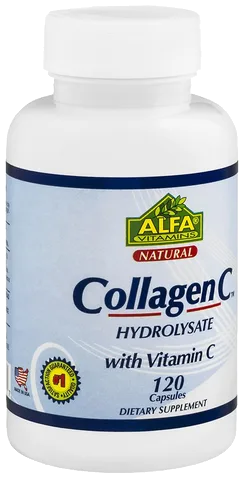
Alfa Vitamins Collagen C Hydrolysate with Vitamin C Review
Collagen C Hydrolysate 3000 mg with Vitamin C 1000 mg - 30 Packets is an Alfa Vitamins product page for a collagen hydrolysate and vitamin C powder sold in individual packets. The page describes the product as collagen hydrolysate paired with vitamin C, which supports the body's normal collagen formation, and says individual powder packets mix with water or juice. The listed features are hydrolyzed collagen powder, vitamin C that supports collagen formation, and vitamin C that provides antioxidant support. The product details section adds that individual packets make the powder easy to carry and mix. The mixing directions say to pour the contents of one sachet into a glass, add 6 to 8 oz of water or juice, and mix until diluted, and to follow the complete directions on the package. The formula and package table lists collagen hydrolysate at 3,000 mg, vitamin C at 1,000 mg, and a package of 30 packets. The page states that the complete Supplement Facts, serving size, ingredients and warnings are on the package and should be checked there. The page presents two benefit topics. The first is immune function, where it says vitamin C supports the normal function of the immune system. The second is collagen formation, where it says vitamin C helps the body form collagen, a structural protein in skin and connective tissue. A learn-more link points to the NIH vitamin C consumer fact sheet. The precautions say to consult a healthcare professional before use if pregnant, breastfeeding, taking medicines or managing a medical condition, and to keep the product out of reach of children. The page lists the product as in stock and shipping in 1 to 2 business days. The one-time purchase price is $24.00, and a subscription option is shown at $20.40 per delivery with 15% savings, with delivery every 2, 4 or 8 weeks, and shipping and taxes calculated at checkout. Returns are accepted within 30 days for unused items. Alfa Vitamins describes itself as manufacturer-owned, based in Miami, Florida, and trusted since 2000, and states its products are made in its own facility in Miami. The page also says the product is made in the USA and has been quality tested.
We don’t sell supplements. We help you make decisions and get the best price.
Lowest prices
We may earn a commission from some store links. How we choose.
Finding the lowest prices at the stores now. This takes a few seconds.
Study, Trial or Testing Result Summary
Members Only45 human studies · 36 improved
Collagen hydrolysate is present at 1000 milligrams a day, a dose that worked in studies. A review pooling 26 trials with 1721 people found hydrolyzed collagen improved skin hydration and elasticity more than placebo [1]. Another review of 19 trials with people aged 20 to 70 found about 90 days of use also reduced wrinkles [2]. In 100 women aged 30 to 60, 1650 milligrams daily for 12 weeks improved hydration, wrinkling and elasticity with no side effects [3]. In 114 women aged 45 to 65, 2.5 grams daily for 8 weeks reduced eye wrinkle volume by 20 percent [4]. A caution: a 2025 review of 23 trials found the benefit disappeared in the higher-quality trials and in trials not funded by industry [5]. Vitamin C is included at 50 milligrams, but most of its skin studies used creams or serums applied directly to the skin, such as a 5 percent cream used for 6 months [6] or a cream used around the eyes for 8 weeks [7]. These do not show what a small dose taken by mouth does for wrinkles. Animal and cell studies are never counted.
See all 45 studies →Hide the studies
- Across 26 randomized trials with 1721 people, hydrolyzed collagen improved skin hydration and elasticity more than placebo.Effects of Oral Collagen for Skin Anti-Aging: A Systematic Review and Meta-Analysis.
- Across 23 randomized trials with 1474 people, collagen improved hydration, elasticity and wrinkles overall, but not in trials without pharmaceutical funding or in high-quality trials.Effects of Collagen Supplements on Skin Aging: A Systematic Review and Meta-Analysis of Randomized Controlled Trials.
- Across 19 randomized trials with 1125 people aged 20 to 70, hydrolyzed collagen taken for about 90 days improved skin hydration and elasticity and reduced wrinkles compared with placebo.Effects of hydrolyzed collagen supplementation on skin aging: a systematic review and meta-analysis.
- Across 10 randomized trials with 646 people, collagen at 1 to 10 grams a day increased skin hydration and elasticity.Effects of collagen-based supplements on skin's hydration and elasticity: A systematic review and meta-analysis.
- In a review of 30 trials for sun-damaged skin, one small study showed benefit from vitamin C applied to skin compared with placebo, while tretinoin had the strongest evidence.Interventions for photodamaged skin.
- A review of 32 studies with 1236 people found vitamin C and retinol products earned the top recommendation grade for anti-aging skin care, with few side effects.Cosmeceuticals for antiaging: a systematic review of safety and efficacy.
- A review of 11 placebo-controlled trials with 805 people found oral collagen (2.5 to 10 grams a day for 8 to 24 weeks) increased skin elasticity, hydration and dermal collagen density.Oral Collagen Supplementation: A Systematic Review of Dermatological Applications.
- A review of seven trials with 139 volunteers found skin treated with vitamin C looked smoother, less wrinkled and lighter, but hydration improved as much with placebo.Efficacy of topical vitamin C in melasma and photoaging: A systematic review.
- A review of seven studies found that all used vitamin C with other ingredients or treatments, so its own effect on wrinkles could not be clearly determined.Clinical Efficacy of Topical Vitamin C on the Appearance of Wrinkles: A Systematic Literature Review.
- A review of 10 publications found almost all reported that oral collagen improved skin health.Collagen supplementation for skin health: A mechanistic systematic review.
- In 120 people taking a collagen blend drink daily for 90 days, skin elasticity rose 40% more than placebo and joint pain fell 43%.Daily oral supplementation with collagen peptides combined with vitamins and other bioactive compounds improves skin ela…
- In 114 women aged 45 to 65, 2.5 grams of collagen peptides daily for 8 weeks reduced eye wrinkle volume by 20% versus placebo and raised skin procollagen and elastin.Oral intake of specific bioactive collagen peptides reduces skin wrinkles and increases dermal matrix synthesis.
- In 100 people with sun-aged, dry facial skin (84 analyzed) taking low-molecular-weight collagen peptides for 12 weeks, wrinkles, elasticity, hydration and water loss through skin improved more than with placebo, with no adverse events.Oral Supplementation of Low-Molecular-Weight Collagen Peptides Reduces Skin Wrinkles and Improves Biophysical Properties…
- In 100 women aged 30 to 60 taking 1650 mg of collagen peptide daily for 12 weeks, skin flaking, hydration, wrinkling and elasticity improved more than with placebo, with no side effects.Oral intake of collagen peptide NS improves hydration, elasticity, desquamation, and wrinkling in human skin: a randomiz…
- In 100 healthy adults taking low-molecular-weight collagen peptides for 12 weeks, wrinkles, elasticity, hydration and skin whitening improved more than with placebo, with no related side effects.Low-molecular-weight collagen peptides supplement promotes a healthy skin: A randomized, double-blinded, placebo-control…
- In 99 Japanese women aged 35 to 50 taking 1 g or 5 g of collagen peptides daily for 12 weeks, skin water content rose and water loss fell, but skin elasticity and thickness did not change.Oral Supplementation of Collagen Peptides Improves Skin Hydration by Increasing the Natural Moisturizing Factor Content …
- In 87 women aged 40-65 taking collagen with 80 mg vitamin C daily for 16 weeks, skin density, texture and wrinkles improved, but elasticity and hydration did not change significantly.The Effects of Dietary Supplementation with Collagen and Vitamin C and Their Combination with Hyaluronic Acid on Skin De…
- In 85 women aged 43 to 65, taking 5 grams of collagen peptides daily for 84 days significantly improved skin density and moisture compared with placebo, and elasticity and wrinkle visibility improved within 28 days.Influence of collagen peptide supplementation on visible signs of skin and nail health and -aging in an East Asian popul…
- In 85 women aged 45 to 60, taking 2.5 grams of collagen oligopeptides daily for 84 days significantly improved skin firmness and elasticity compared with placebo, while improvements in hydration were not statistically significant.Oral Collagen Oligopeptides as a Modulator of Skin Health: A Comprehensive Evaluation of Clinical and Molecular Effects.
- In 77 women, taking 5 grams of bioactive collagen peptides daily for 12 weeks improved skin hydration and dermal density compared with placebo, and these gains were kept during a 4-week stop period.The Sustained Effects of Bioactive Collagen Peptides on Skin Health: A Randomized, Double-Blind, Placebo-Controlled Clin…
- In 72 women aged 35 or older, a daily collagen and vitamin C drink for 12 weeks improved skin hydration, elasticity, roughness and density more than placebo.A Collagen Supplement Improves Skin Hydration, Elasticity, Roughness, and Density: Results of a Randomized, Placebo-Cont…
- In 70 healthy adults taking 1650 mg of collagen peptide daily for 8 weeks, wrinkle depth, elasticity, hydration and skin density improved and pores tightened compared with placebo, with effects lasting through a 2-week break.Skin Anti-Aging and Moisturizing Effects of Low-Molecular-Weight Collagen Peptide Supplementation in Healthy Adults: A R…
- In 69 women using a vitamin C derivative cream twice daily for 8 weeks on one side of the face, wrinkles around the eyes improved compared with placebo cream on the other side.Evaluation of the anti-wrinkle effect of a lipophilic pro-vitamin C derivative, tetra-isopalmitoyl ascorbic acid.
- In a placebo-controlled trial of 69 women aged 35 to 55, 2.5 or 5 grams of collagen peptides daily for 8 weeks significantly improved skin elasticity compared with placebo, while moisture changes were not statistically significant.Oral supplementation of specific collagen peptides has beneficial effects on human skin physiology: a double-blind, plac…
- In 64 patients after laser treatment for acne scars, an antioxidant serum with vitamin C used for 14 days improved healing and skin hydration compared with saline on the other side of the face.Reparative Effects of a Topical Antioxidant Serum Containing Vitamin C, Vitamin E, and Ferulic Acid After Ablative Fract…
- In 64 adults taking 1000 mg of low-molecular-weight collagen peptide daily for 12 weeks, skin hydration, wrinkling and elasticity improved compared with placebo.Oral Intake of Low-Molecular-Weight Collagen Peptide Improves Hydration, Elasticity, and Wrinkling in Human Skin: A Rand…
- In 60 women aged 20-50 with facial melasma, a multi-ingredient serum containing a small amount of vitamin C used for 5 months reduced pigmentation about as much as 4% hydroquinone, with better hydration, skin barrier function and tolerance in the serum group.Evaluation of the Efficacy of a Serum Containing Niacinamide, Tranexamic Acid, Vitamin C, and Hydroxy Acid Compared to 4…
- In 50 women aged 30-65, a serum with vitamin C, vitamin E and raspberry leaf extract applied to one side of the face for 8 weeks improved skin color, elasticity, radiance, smoothness, scaliness and wrinkles compared with the untreated side.Anti-aging and brightening effects of a topical treatment containing vitamin C, vitamin E, and raspberry leaf cell cultu…
- In 50 healthy adults, 12 weeks of green tea catechins plus vitamin C twice daily protected only one skin elastic fiber protein (fibulin-5) from sun-simulating light damage, with no difference from placebo for other collagen and elastic components.Ultraviolet radiation-induced degradation of dermal extracellular matrix and protection by green tea catechins: a random…
- In 32 healthy volunteers, 500 mg daily vitamin C for 12 weeks did not improve skin hydration or elasticity beyond baseline, and adding it to collagen peptides did not enhance the collagen effect.Effects of collagen tripeptide supplement on skin properties: a prospective, randomized, controlled study.
- In 31 adults aged 30 to 65, applying a vitamin C, E and ferulic acid serum daily for 12 weeks after microneedle treatment reduced neck wrinkles more (29.9% vs 18.0%) and improved elasticity (12.9% vs 2.3%) compared with placebo on the other side of the neck.Fractional microneedle radiofrequency with the application of vitamin C, E, and ferulic acid serum for neck skin rejuven…
- In 24 Korean women, a vitamin C microneedle patch applied twice daily for 12 weeks produced significant reductions in crow's feet wrinkle roughness, with no side effects reported.Novel cosmetic patches for wrinkle improvement: retinyl retinoate- and ascorbic acid-loaded dissolving microneedles.
- In a randomized, double-blind study of 19 adults with sun-damaged facial skin, applying a vitamin C serum daily for 3 months improved skin texture and wrinkling more than the vehicle serum on the other side of the face, as shown by skin surface measurements and clinical grading.Use of topical ascorbic acid and its effects on photodamaged skin topography.
- In 15 women aged 19-40 exposed to air pollution particles for 4 days, a vitamin C, ferulic acid and vitamin E serum applied to the back protected collagen and elastin and reduced markers of inflammation and oxidative stress in skin biopsies.Application of Antioxidant Mixture Prevents Cutaneous "Oxinflammaging" in Subjects Exposed to Particulate Matter.
- In a double-blind trial of women with sun-aged skin, a 5% vitamin C cream applied daily for 6 months improved overall skin appearance and surface texture compared with the vehicle cream and was well tolerated.Topical ascorbic acid on photoaged skin. Clinical, topographical and ultrastructural evaluation: double-blind study vs. …
- Daily oral collagen peptides increased skin moisture after 8 weeks and raised dermal collagen density while reducing collagen fragmentation, with both effects lasting to 12 weeks compared with placebo.The effect of oral collagen peptide supplementation on skin moisture and the dermal collagen network: evidence from an e…
- A collagen hydrolysate richer in the peptides Pro-Hyp and Hyp-Gly improved facial skin moisture, elasticity, wrinkles and roughness over 8 weeks more than both placebo and a lower-peptide hydrolysate.Ingestion of bioactive collagen hydrolysates enhance facial skin moisture and elasticity and reduce facial ageing signs …
- In women aged 45 to 60, a hydrolyzed fish-derived collagen supplement taken for 12 weeks reduced wrinkle scores by 35% from baseline and improved skin elasticity and hydration more than placebo, with no safety problems reported.A randomized, triple-blind, placebo-controlled, parallel study to evaluate the efficacy of a freshwater marine collagen …
- In 33 women, a cream with 3% vitamin C applied daily to the forearm for four months increased the density of dermal papillae, the small skin structures that carry capillaries, from 4 weeks onward compared with the cream base alone.Topically applied vitamin C increases the density of dermal papillae in aged human skin.
- In a half-face study of 27 Japanese women with dark sun spots, a vitamin C derivative lotion applied twice daily for 24 weeks gave a weak lightening effect on the spots, but pigmentation scores did not differ from the placebo lotion.Whitening effect of L-ascorbate-2-phosphate trisodium salt on solar lentigos.
- In placebo-controlled tests including 25 volunteers for one month and a 12-week usage study, a face cream with 3% vitamin C lowered skin oxidative stress, increased the number of dermal papillae, and significantly reduced facial wrinkles.Topical activity of ascorbic acid: from in vitro optimization to in vivo efficacy.
- In a split-face trial of 24 adults with sun-damaged skin, using a handheld device to push vitamin C into the skin twice a week for 8 weeks improved pore tightening and skin hydration on the treated side compared with baseline, with no adverse reactions recorded.Efficacy of handheld iontophoresis device in enhancing transdermal vitamin C delivery: A split-face clinical trial.
- A hydrogel carrying ascorbyl palmitate, a vitamin C form, moisturized skin better than a placebo gel in both short-term and long-term tests.Skin moisturizing effect and skin penetration of ascorbyl palmitate entrapped in solid lipid nanoparticles (SLN) and nan…
- Creams containing 1% of a fat-soluble vitamin C derivative increased skin moisture and improved skin smoothness in volunteers over 15 days of use.Application of tetra-isopalmitoyl ascorbic acid in cosmetic formulations: stability studies and in vivo efficacy.
- In 31 women aged 43 to 65 without a control group, a vitamin C, vitamin E and green tea serum applied twice daily for 12 weeks improved wrinkles, smoothness, radiance and skin density.Novel Vitamin C and E and Green Tea Polyphenols Combination Serum Improves Photoaged Facial Skin.
Review Totals and Summary
Members Only721 reviews · 88% positive
The store shows 708 ratings in total, though the only page summarized, Alfavitamins.com, carries just 4 of them, so the themes below come from the four written reviews that could be read on that page. Because so few written reviews were readable, this is a narrow picture and not a broad pattern. What buyers praise: All four reviewers are Verified Buyers, and all four are positive in tone. The reviews are short. Heidi B. says she loves the product and is ready to buy it again. Victoria R. says she loves it and is reordering today. Both point to customers returning for more packets. Sarah M., whose review is titled "Excellent," praises the convenient packets, saying they are easy to take on the go and effective, and she definitely recommends the product. Reyna M. titles her review "Love it!" and writes the same words, which shows general satisfaction without naming a feature, flavour, mixing experience or result. Form and convenience: The packet format is the one specific product attribute mentioned, and portability is the stated benefit. Sarah M.'s comment about taking it on the go is the only concrete detail about how the powder is used. What buyers complain about: Nothing. No reviewer on the page mentions problems with taste, mixing, texture, price, shipping or effectiveness, and there is no negative or mixed written feedback at all. Who it seems to suit: The only hint comes from the packet comment, which suggests people who want a simple, portable way to take collagen while out and about. Beyond that, the reviews don't say who the product suits. Taste and value: Neither is discussed. There is no mention of flavour, how well the powder dissolves, or whether the price feels fair. Results and duration: The reviews give no information on how long people used the product or what results they noticed, apart from Sarah M.'s single word that it is effective. Ratings: The page shows an overall rating of 4.5 based on 4 reviews. It has no star distribution histogram, so the share of positive, neutral and negative ratings can't be worked out from this page. The 708 ratings across the store can't be broken down from what was readable. Scope: Only the powder was considered, and the summary doesn't mention other forms of the product (such as gummies or capsules), so none were included. Any conclusions beyond these four reviews would need more written feedback than the page provides. In short, the readable reviews are enthusiastic, centered on enjoyment, reorder intent, easy on-the-go use and general recommendation, but they offer little detail on taste, texture, price or outcomes.
Biohacker Summary
Members Only9 of 10 recommend it
Collagen gets a mostly favorable reception: three of the ten panelists recommend it, four say they use it, two are neutral, and one has stopped taking it. People take it for skin, joints, connective tissue, muscle and gut care, and the two who cited research on skin elasticity point to 2.5 to 5 grams a day of hydrolyzed collagen peptides for at least eight weeks. Three panelists take about 10 grams in the morning for muscle, and others suggest 15 grams about an hour before a workout, sometimes with vitamin C, or before bed on rest days. One panelist cautions that collagen will not repair a damaged gut wall, one is neutral because collagen has a weaker amino acid makeup than whey for building muscle, and one says lifestyle matters more. Vitamin C is a smaller ingredient in this product, and panelists mostly recommend pairing it with collagen because the body needs it to make collagen.
See all 10 biohackers →Hide the biohackers
Dr. Eric Berg · Collagen · recommends
- Recommends collagen as it is critical for healthy aging, supporting connective tissues, skin health, and cardiovascular health.
- Mentions that lemon is loaded with vitamin C, and when combined with coffee, vitamin C significantly increases the bioavailability of antioxidants in the coffee.
- Dr. Berg states that Vitamin C helps fight biofilms and is essential for making collagen in gums, teeth, and capillaries.
- Recommends Vitamin C as a cofactor, especially for collagen.
- States that high doses of vitamin C, like 2 to 4 grams, can greatly reduce inflammation and support the immune system.
- Recommends collagen powder as an alternative to bone broth, to be put in coffee, for its benefits in building connective tissue and providing glycine for sleep.
- Mentions that grass-fed liver is loaded with collagen.
- Highly recommends taking natural food vitamin C, about 500 mg, at the first sign of a cold.
- States that the body is begging for collagen if one experiences weak ligaments and tendons, joint pain, wrinkles or saggy skin, thin dry fragile hair, brittle slow growing nails, loss of muscle, increased need for longer repair after exercise, and bone loss.
- Recommends increasing collagen intake because a lack of it can make it harder for the body to repair itself.
- Recommends consuming foods high in vitamin C to block the effects of grains.
- Discusses collagen in relation to changes in joints, skin, hair, nails, and recovery, suggesting these could be signs of needing more collagen.
- Uses one scoop of collagen in their coffee every single morning, noting that the average person needs between 10 and 15 grams minimum daily for benefits like improved joints, nails, hair, gut health, and youthful skin.
- Recommends ensuring that collagen supplements come with vitamin C.
Siim Land · Collagen · recommends
- Recommends taking Collagen 1 hour before exercise with vitamin C to support joint collagen synthesis.
- Recommends taking vitamin C with collagen to support joint collagen synthesis.
- States that vitamin C is needed for initiating collagen synthesis and that higher vitamin C intake appears to increase vitamin C content in the skin.
- Recommends Collagen for joints, skin and connective tissue, based primarily on human research, especially randomized controlled trials showing measurable benefits.
- Lists Collagen as one of 15 supplements backed by human studies.
- Lists sauerkraut and fruit as sources of Vitamin C.
- Takes 10 grams of collagen peptides a day, which provides 3 grams of glycine.
- 30% of collagen is glycine, as glycine is every third amino acid in the collagen triple helix.
- Notes that Vitamin C is one of several supplements with human evidence.
- Recommends marine collagen peptides, citing a study where 5g daily for 12 weeks reduced AGE levels and improved insulin sensitivity.
- Mentions that taking 15 grams of collagen before bed has been seen to reduce the number of awakenings during the night.
- Notes that taking 15 grams of collagen before bed has been seen to reduce the number of awakenings during the night.
- Mentions that glycine makes up one-third of collagen.
- Recommends taking Collagen one hour before exercise with a vitamin.
Thomas DeLauer · Collagen · uses
- Says he takes collagen to take care of his gut.
- Recommends collagen as a direct dietary source of glycine, suggesting a 15g serving of pure collagen. He advises taking it an hour before a workout for connective tissue benefits or before bed on rest days to help with sleep.
- Recommends taking vitamin C along with collagen about an hour before a workout for connective tissue benefits.
- Uses vitamin C as part of their immunity duo, stating it is important for boosting the immune system, especially during cold and flu season.
- Recommends taking 15 grams of collagen an hour before working out to target connective tissue, as it has been shown to double a marker of collagen synthesis and help rebuild tendons and ligaments that are loaded harder with age.
- Always eats collagen, considering it one of the most underrated things they do for sustainability and recovery, as it supports connective tissue protein synthesis.
- Mentions that if curling fingers are due to a collagen issue, there's a case for taking collagen peptides to help rebuild connective tissue.
- Recommends consuming vitamin C to aid in NADPH recycling, which is necessary for glutathione to be reused after neutralizing oxidative stress.
- Takes Purity's liquid liposomal vitamin C for immune support and overall wellness, finding it easy to add to water, juice, or take straight up due to its good taste.
- Compares the Vitamin C content of oranges (53mg) to guava (228mg), noting guava has 4x more.
- Recommends taking 15 grams of collagen about 30 minutes before bed, especially on rest days, for its glycine content to aid sleep onset and for connective tissue repair.
- Recommends opting for foods rich in collagen because modern diets lack it compared to traditional nose-to-tail eating.
- Recommends 15 grams of collagen before bed, as it provides 3 grams of glycine and supports connective tissue repair, which peaks during sleep, making it a good way to get glycine for testosterone production.
- States that collagen synthesis is vitamin C dependent, in the context of glowing skin.
Dave Asprey · Collagen · uses
- States he made collagen into a billion-dollar industry because he needed it for his joints due to Ehlers-Danlos syndrome.
- Recommends taking collagen for better skin health.
- Recommends taking vitamin C for better skin health.
- Dave Asprey agrees with taking collagen, but warns that using bone broth and collagen to repair a compromised gut wall is like trying to rebuild a collapsed house using nothing but craft glue, as it doesn't provide the rapid high demand energy gut cells need.
- States that currently, he is only taking vitamin C and vitamin D.
- Mentions Puori CP1 Pure Collagen as a sponsor, offering a discount on a subscription.
- Notes that eating collagen can break down into amino acids and create a signaling molecule that tells the body the skin has been injured, leading to thicker skin.
- Explains that One Skin uses collagen amino acids in their formula because they are hygroscopic and help hold water, acting as natural moisturizing factors.
- Has updated his stance on collagen, now believing there may be some benefit for certain populations in having collagen peptides, especially since they are small and get absorbed.
- Dave and Jenny walk through the biohacking protocol that helped her son recover from autism, including collagen and hypermobility support.
- Recommends increasing collagen intake, specifically about 20 grams of collagen protein, for individuals with hypermobility, but warns against exceeding this amount due to oxalate concerns.
- Dave Asprey warns that collagen supplements have small, short-term effects on skin, mostly from industry-funded studies, and explains that the body breaks it down into amino acids, not directly targeting skin; he suggests taking cheaper protein if protein-deficient.
- Dave Asprey reflects on how new research clarifies the mechanism behind IV vitamin C's anti-cancer effect, vindicating a decades-old idea that was dismissed for the wrong reasons.
- Notes that plain Vitamin C isn't enough and that most people never think to check for a specific ingredient that makes it work.
Ben Greenfield · Collagen · recommends
- Mentions that two separate meta-analyses found real improvement in skin elasticity when people consumed 2.5 to 5 g of collagen peptides a day for eight weeks.
- States that vitamin C is extremely important for collagen turnover and cites orthopedic data showing that 500 mg to 1 g of vitamin C can reduce the rate of complex regional pain in total knee replacements and wrist fractures.
- Recommends 2.5 to 5 grams a day of hydrolyzed collagen peptides for at least 8 weeks to improve skin elasticity and address sagging skin.
- Mentions vitamin C as part of a bare-minimum protocol.
- Recommends 2.5-5 g/day of hydrolyzed collagen for at least 8 weeks, citing a meta-analysis that found real improvement in skin elasticity.
- Recommends starting with collagen for body remodeling.
- Notes that while vitamin C has significant value, the optimal dose is a vexed question, and high doses might not always be beneficial, potentially blunting the hormetic effects of exercise.
- Notes that IV vitamin C has been used for decades for cancer patients with almost no standardization and that he receives many questions about its effectiveness and combination with chemo.
- A new meta-analysis reviewed the existing evidence on collagen supplementation and found that collagen peptides may support several aspects of health, including skin aging, osteoarthritis symptoms, fat-free mass, tendon quality, and markers of metabolic health.
- The latest meta-analysis on collagen backs up collagen benefits for skin aging, osteoarthritis, fat-free mass, tendon quality, and overall metabolic health, with effective doses ranging from 5 to 15g.
- Recommends collagen for skin repair post-tattoo.
- Recommends Vitamin C for skin repair post-tattoo.
- Notes that collagen is not a complete protein, so while it can be added to things, it should not be relied upon as the sole protein source.
- Recommends collagen peptides or essential amino acids to support the dermal matrix that anchors hair follicles, considering them important for hair health.
Bryan Johnson · Collagen · uses
- Takes 10 grams of Collagen in the morning for muscle.
- Consumes collagen peptides at 4:55 am.
- Uses collagen peptides as an ingredient in Nutty Pudding.
- Takes 10 grams of Collagen in the morning for muscle.
- He takes 10 g of Collagen in the morning for muscle.
- Takes 10 grams of Collagen in the morning for skin health.
- Takes 10 grams of Collagen in the morning for muscle.
- Takes 10 grams of Collagen in the morning for muscle.
- Takes 10 grams of collagen in the morning for muscle.
- He takes 10 grams of Collagen in the morning for muscle.
- Uses Vitamin C as an example of how it would be great if people knew that when they took it, it had a measurable amount and wasn't polluted, which is what Brian ensures with his products.
- Applies vitamin C after showering.
- Takes 250 milligrams of Vitamin C.
- Recommends Vitamin C for skin health, noting it's good to pair with collagen peptides and is included in the Blueprint stack.
Dr. Mark Hyman · Collagen · neutral
- Dr. Hyman mentions collagen supplements in the context of skin aging.
- Recommends vitamin C as a basic supplement during detoxification to help with inflammation and detoxification.
- Is on 'team collagen' and believes there's enough data to support collagen consumption, noting that it sends signals to help the body build better collagen, though lifestyle factors are more important.
- Dr. Hyman mentions vitamin C as an advanced therapy for skin repair.
- Mentions topical vitamin C as an antioxidant that can help skin with aging.
- Mentions that what they do when a cold comes on is not just vitamin C.
- Recommends ensuring adequate vitamin C intake on a regular basis for immune support, stating it's important for healthy immune function despite mixed data on its effectiveness for colds.
- Adds Peak's marine collagen to his routine for a powerful longevity ritual, supporting skin elasticity, hydration, hair, nails, and whole body vitality.
- Mentions that vitamin C was the very first vitamin discovered, isolated, and synthesized in 1932, and its deficiency caused scurvy.
- Recommends nutrient-dense foods rich in vitamin C, such as guavas and parsley, to reduce inflammation.
- Used intravenous vitamin C cocktails to help him detoxify and recover from chronic fatigue.
- Adds Peak's Carrera Marine Collagen to their morning ritual for a powerful longevity ritual, supporting skin elasticity, hydration, hair, nails, and whole body vitality.
- States that collagen powder may modestly improve elasticity and hydration of the skin.
- Notes that most people focus on collagen powders for skin aging, but healthy skin is built inside the body.
Andrew Huberman · Collagen · uses
- Takes 10 grams of Collagen in the morning for muscle.
- Takes 10 grams of Collagen in the morning for muscle.
- Takes 10 grams of Collagen in the morning for muscle.
- Takes 10 grams of Collagen in the morning for skin health.
- Takes 10 grams of collagen in the morning for muscle.
- Takes 10-20 grams of Collagen every day for muscle.
- Takes a multivitamin every day for longevity.
- Takes 10 grams of Collagen in the morning for muscle.
- He takes 10 grams of Collagen in the morning for muscle.
- Takes 10 grams of Collagen in the morning for skin health.
- He takes 10 grams of Collagen in the morning for skin health.
- Recommends AG1, a vitamin, mineral, and probiotic drink, and notes that for a limited time, a subscription comes with additional supplements.
- Takes an extra gram of vitamin C a day for its effects on immunity and potential synergy with collagen.
- Found the Met RX Big 100 Bar to be 'magic' on the trail because it's a hunk of calories with protein and fortified with vitamins and minerals, despite being something they would never eat in normal life.
Dr. Rhonda Patrick · Collagen · stopped
- Is no longer taking collagen.
- Lutein and zeaxanthin can also be obtained from certain multivitamins.
- Recommends nutrients like vitamin C for men to prioritize sperm mitochondrial health.
- Dr. Rhonda Patrick's daughter chugs an Emergency fizzy drink in the morning to ensure she gets some vitamin C and micronutrients before school.
- Choosing a multivitamin that includes lutein and zeaxanthin ensures you get meaningful amounts every day.
- Notes that ~35% of Americans are low in vitamin C.
- Recommends increasing vitamin C intake if concerned about skin aging, noting it is an essential cofactor for collagen synthesis.
- Suggests avoiding a multivitamin if it contains biotin before a testosterone blood test to prevent confounding results.
- Multiple randomized controlled trials show older adults taking a standard multivitamin (like Centrum Silver) had measurable improvements in processing speed, cognition, and episodic memory.
- Currently takes the Pure Encapsulations O.N.E Multivitamin.
- Uses Hydrolyzed Collagen Peptides as a source of glycine and proline to support connective tissue and skin health.
- Rhonda's current supplement routine includes Vitamin C.
- Dr. Rhonda Patrick, who was previously unconvinced, now recommends hydrolyzed collagen powder prophylactically for connective tissue and ligaments, especially if someone has a soft tissue injury history, to be taken 30 to 60 minutes pre-exercise with 50 milligrams of vitamin C.
- Discusses whether collagen can actually strengthen tendons.
Peter Attia · Collagen · neutral
- Explains that collagen has a much lower quality amino acid composition than whey and tends to be rich in only a handful of amino acids like glycine and proline, making it less effective for muscle protein synthesis.
- Recommends vitamin C as an important molecule for skin, noting its role as a precursor for collagen synthesis, a powerful antioxidant, and a regulator of complexion for even skin tone.
- Tried a vitamin C serum mixed with ferulic acid but stopped using it because she hated the smell. She notes that topical application of vitamin C far exceeds the levels achievable by ingestion for skin benefits.
- States that vitamin C deficiency is associated with an elevated risk of cataract, but supplementation to supranormal levels has not been shown to protect against cataract formation.
- Mentions the elimination of scurvy through the work of James Lind and the eventual understanding that it was due to vitamin C, initially thought to be just citrus.
- Advises that collagen protein is not a very complete protein and suggests supplementing it with something else if consumed, despite his wife's preference for it.
- Says that based on current data, there is no benefit in myofibrillar or muscle connective tissue protein synthesis using collagen versus whey or casein, especially in exercising individuals. He warns that using collagen as a sole supplemental protein source compromises myofibrillar muscle protein synthesis due to its poor amino acid balance.
- States that as a scientist, he hasn't seen evidence that collagen leads to greater connective tissue protein synthesis rates in muscle, but if he were recovering from a hip or knee injury, he would take a protein supplement with some collagen to ensure enough glycine and proline for ligaments, tendons, bone, and cartilage.
- Notes that while vitamin C deficiency is associated with an elevated risk of cataract, supplementation to supranormal levels has been conclusively shown not to protect against cataract formation.
- Mentions that a survey of doctors showed they recommend Vitamin C for COVID-19, but notes there is no real evidence behind it.
- Recommends collagen supplements, in either pill or powder form, for hair, skin, nails, bones, and for putting on and maintaining healthy muscle, as it's difficult to get enough from diet alone.
- Expresses skepticism about 'panacea treatments' for cancer, specifically mentioning a 'twenty thousand dollars of vitamin C' treatment, implying it's an example of something he's 'squirrely' about due to cost and unproven claims.
- Asks if vitamin C matters for immune function, suggesting a need for a definitive study.
- Warns against the "total nonsense" of taking excessive amounts of vitamin C, especially in specific forms like liposomal vitamin C, for immunity, stating that it is idiotic and potentially dangerous to think it will offer immunity.
RAL Summary
Members OnlyTier 2 for Younger-Looking Skin for Women
Collagen hydrolysate at a full 1000 milligram dose improved skin hydration, elasticity and wrinkles across several pooled reviews, the largest with 1721 people [1], and 88 percent of 721 reviews are positive.
Where the evidence disagrees: 2 of the 45 human studies found no effect.
More Details
Members OnlyBody systems · Combine with · Possible side effects
Body systems: Skin, Connective tissue
Combine with: Hydrolyzed collagen peptides paired with vitamin C is a well-founded skin-support combination, since vitamin C is an essential cofactor for collagen synthesis (prolyl and lysyl hydroxylase) and also acts as an antioxidant. To strengthen skin hydration and elasticity, consider stacking with hyaluronic acid (oral, 120-240 mg daily) for moisture retention, and ceramides or phytoceramides (30-350 mg) to support the skin barrier. Astaxanthin (4-12 mg) and other antioxidants such as vitamin E or polyphenols (grape seed extract, green tea) can help protect against UV and oxidative damage. Biotin, zinc and silica (or horsetail) support skin, hair and nails and connective tissue, while omega-3 fatty acids (EPA/DHA) help reduce inflammation and support skin lipids. For best results, take collagen consistently daily for 8-12 weeks, and pair it with daily broad-spectrum sunscreen and adequate protein intake.
Possible side effects: No major side effects reported; one collagen trial reported no side effects and vitamin C skin products had few side effects.
Supplement Facts
Vitamin C 50 mg · Collagen Hydrolysate 1000 mg
| Vitamin C | 50 mg | |
| Collagen Hydrolysate | 1,000 mg | † |
Other ingredients: Dicalcium Phosphate, Gelatin, Magnesium Stearate.
Directions: Directions: Adults - Take three (3) capsules daily, as a dietary supplement, preferably on a empty stomach 30 minutes before meals.
Barcode (UPC) 676194176427 · Label source: NIH label database · Report a label change
Show entire label
More younger-looking skin for women products
Members OnlyThe highest ranked for the same goal
Graded November 8, 2026 by the Reverse Age Lab evidence engine, from human studies, real reviews and our biohacker panel. How we grade. Is this medical advice? No. Rala organizes the published evidence; go over any change with your doctor, especially if you take meds.
Privacy policyConsumer health dataAffiliate disclosureTermsDo Not Sell or Share My Personal InformationCookie settings