
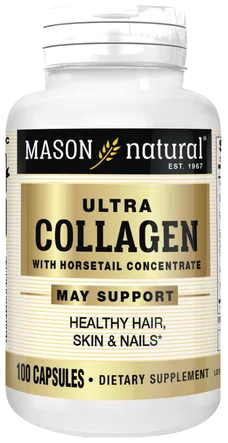
Mason Natural Ultra Collagen with Horsetail Concentrate Review
Mason Natural Ultra Collagen with Horsetail Concentrate, 100 Capsules, is listed on this Vitacost page as a dietary supplement from the Mason Natural brand, which the page describes as established in 1967. The product is labelled as supporting healthy hair, skin and nails. It is listed as gluten free, soy free, and cGMP certified, and it is described as Mason Guarantee laboratory tested. The page explains that collagen is a type of protein that makes up about 25% of the total protein in the body and is often described as the glue that holds the body together. It says collagen also supports other body tissues, including skin, bone, tendons, muscles and cartilage. The description notes that as people age, collagen degradation occurs and can lead to wrinkles, so the product is presented as an option for people looking to address the visible effects of aging. The supplement facts list a serving size of 2 capsules with 50 servings per container, while the key info section lists 100 count total. Each serving provides a collagen complex of 725 mg, horsetail concentrate of 200 mg from a 4:1 concentrate, and fo ti concentrate of 100 mg from a 12:1 concentrate. The formula also includes vitamin C, calcium, vitamin E, D-biotin, zinc, selenium, copper, manganese, choline, L-methionine, N-acetyl L-cysteine, and silicon. The page says the product is guaranteed to contain no added sugar, sodium, yeast, soy, wheat, dairy, gluten, fish, tree nuts, peanuts, egg, fragrance, or artificial colours or flavours. The suggested use is to take two capsules daily, preferably with food. The page includes standard warnings advising pregnant or nursing women, people taking medication, and anyone with a medical condition to consult a physician before use. It also says to keep out of reach of children, not to use the product if the tamper evident seal appears broken, and to store it in a dry place at controlled room temperature. The expiration date is listed as 02/28/2027, and the UPC is listed as 311845149114.
We don’t sell supplements. We help you make decisions and get the best price.
Lowest prices
We may earn a commission from some store links. How we choose.
Finding the lowest prices at the stores now. This takes a few seconds.
Study, Trial or Testing Result Summary
Members Only124 human studies · 88 improved
15 of these 124 human studies gave the ingredient by injection, not by mouth.
The main ingredient, collagen, has the strongest support. At two servings a day it reaches the studied dose. A review of 26 trials with 1721 people found collagen taken by mouth improved skin hydration and elasticity [1]. Another review of 19 trials, mostly in women, found about 90 days improved hydration, elasticity and wrinkles [2]. One trial cut eye wrinkle volume by 20 percent [3]. A 2025 review found the highest-quality and non-company-funded trials showed no clear effect [4]. Silicon is at a full dose; 10 milligrams a day for 20 weeks reduced roughness and improved firmness in women with sun-damaged skin [5]. Vitamin E and selenium are at full doses, but were only tested in mixes, which improved skin density and roughness [6][7]. Vitamin C helped wrinkles mainly as a skin cream, not as a pill [8]. Horsetail was tested only in a cream mixed with soybean, with no placebo group [9]. Fo Ti has only animal studies [10]. The calcium evidence comes from injected fillers, not pills [11]. The copper evidence comes from creams and fabrics [12]. Animal and cell studies are never counted.
See all 124 studies →Hide the studies
- Across 26 randomized trials with 1721 people, hydrolyzed collagen improved skin hydration and elasticity compared with placebo.Effects of Oral Collagen for Skin Anti-Aging: A Systematic Review and Meta-Analysis.
- Across 23 randomized trials with 1474 people, collagen improved hydration, elasticity and wrinkles overall, but studies without pharmaceutical funding and high-quality studies showed no significant effect.Effects of Collagen Supplements on Skin Aging: A Systematic Review and Meta-Analysis of Randomized Controlled Trials.
- Across 19 randomized trials with 1125 people (95% women), hydrolyzed collagen for about 90 days improved skin hydration, elasticity and wrinkles compared with placebo.Effects of hydrolyzed collagen supplementation on skin aging: a systematic review and meta-analysis.
- In a review of 30 trials for sun-damaged skin, one small study showed benefit from vitamin C applied to skin compared with placebo, while tretinoin had the strongest evidence.Interventions for photodamaged skin.
- A review of 32 studies with 1236 people found vitamin C and retinol products earned the top recommendation grade for anti-aging skin care, with few side effects.Cosmeceuticals for antiaging: a systematic review of safety and efficacy.
- Across 11 placebo-controlled trials with 805 people, oral collagen at 2.5 to 10 grams daily for 4 to 24 weeks increased skin elasticity, hydration and dermal collagen density.Oral Collagen Supplementation: A Systematic Review of Dermatological Applications.
- A review of seven trials with 139 volunteers found skin treated with vitamin C looked smoother, less wrinkled and lighter, but hydration improved as much with placebo.Efficacy of topical vitamin C in melasma and photoaging: A systematic review.
- A review of seven studies found that all used vitamin C with other ingredients or treatments, so its own effect on wrinkles could not be clearly determined.Clinical Efficacy of Topical Vitamin C on the Appearance of Wrinkles: A Systematic Literature Review.
- A review found injected calcium hydroxylapatite filler to be safe and effective for cheeks, jawline and nasolabial folds, though no randomized trials existed for diluted forms.A systematic review of Radiesse/calcium hydroxylapatite and carboxymethylcellulose: evidence and recommendations for tre…
- A review found diluted injected calcium hydroxylapatite gave a skin-tightening effect on body areas with a good safety profile, but randomized trials were lacking.A systematic review of Radiesse® (calcium hydroxylapatite): evidence and recommendations for the body.
- A review of 45 articles on injectable skin biostimulators, including calcium hydroxylapatite, found they may mitigate facial aging, but quantifiable data are limited and more controlled studies are needed.The emerging role of biostimulators as an adjunct in facial rejuvenation: A systematic review.
- A review of 29 small, varied studies found injected calcium hydroxylapatite combined with ultrasound, laser or microneedling improved skin texture and elasticity, though side effects occurred in 15-30% of cases.A Systematic Review on the Effectiveness and Safety of Combining Biostimulators with Botulinum Toxin, Dermal Fillers, an…
- A review found combined hyaluronic acid and calcium hydroxylapatite treatments gave high aesthetic effectiveness and satisfaction for facial rejuvenation, with a slight decline after six months.Combined and Hybrid Treatments of Hyaluronic Acid (HA) and Calcium Hydroxylapatite (CaHA): A Systematic Review of Mechan…
- A review of 14 studies found injected calcium hydroxyapatite (and poly-L-lactic acid) improved facial skin elasticity and reduced wrinkles, with results lasting 12 to 18 months for calcium hydroxyapatite.Efficacy, Durability, and Safety of Collagen Biostimulators Based on Poly-L-Lactic Acid (PLLA) and Calcium Hydroxyapatit…
- A review of 10 publications found that almost all reported oral collagen improved skin health.Collagen supplementation for skin health: A mechanistic systematic review.
- In 439 people with nasolabial folds, injected bovine collagen filler gave shorter-lasting correction than hyaluronic acid fillers over up to 24 weeks; this tested an injected filler, not a collagen supplement.Comparison of smooth-gel hyaluronic acid dermal fillers with cross-linked bovine collagen: a multicenter, double-masked,…
- In 149 people with nasolabial folds, an injected porcine collagen filler improved wrinkle scores for 6 months, about the same as a hyaluronic acid filler; this was an injection, not a collagen supplement.A randomized, multicenter study of the safety and efficacy of Dermicol-P35 and non-animal-stabilized hyaluronic acid gel…
- In 149 people given an injected porcine collagen filler for nasolabial wrinkles, 95.3% kept the improvement at 9 months and 76.5% at 12 months; this was an injection, not a collagen supplement.Twelve-month persistency of a novel ribose-cross-linked collagen dermal filler.
- In 124 women aged 40-65, a zinc-copper complex applied to the skin for 8 weeks improved fine lines, under-eye wrinkles, radiance and overall photo-damage more than placebo.Application of a topical biomimetic electrical signaling technology to photo-aging: a randomized, double-blind, placebo-…
- In 120 people, a daily collagen drink combined with vitamins and other ingredients for 90 days raised skin elasticity by 40% versus placebo and improved skin structure and joint pain.Daily oral supplementation with collagen peptides combined with vitamins and other bioactive compounds improves skin ela…
- In 117 people with moderate to deep nasolabial folds, 79% had better improvement on the side injected with calcium hydroxylapatite than the side with human collagen over 6 months.A randomized, bilateral, prospective comparison of calcium hydroxylapatite microspheres versus human-based collagen for …
- In 114 women aged 45-65, 2.5 grams of collagen peptides daily for 8 weeks reduced eye wrinkle volume by 20% versus placebo and raised skin procollagen and elastin.Oral intake of specific bioactive collagen peptides reduces skin wrinkles and increases dermal matrix synthesis.
- In 114 women aged 20-50, 1000 mg of low-molecular-weight collagen peptide daily for 24 weeks improved cellulite, skin roughness and skin elasticity versus placebo.Low-Molecular-Weight Collagen Peptide Supplementation Improves Cellulite Severity, Skin Elasticity, and Hair Shaft Diame…
- In 100 women having radiotherapy for breast cancer, five moisturizing creams (one containing manganese chloride) were each applied twice a day from 15 days before to one month after treatment; the creams reduced skin side effects and were all judged equally effective, with no separate manganese result and no placebo group.Preventing the acute skin side effects in patients treated with radiotherapy for breast cancer: the use of corneometry i…
- In 100 healthy adults taking low-molecular-weight collagen peptides for 12 weeks, wrinkles, elasticity and hydration improved significantly more than with placebo, with no related side effects.Low-molecular-weight collagen peptides supplement promotes a healthy skin: A randomized, double-blinded, placebo-control…
- In 87 women aged 40-65 taking collagen with 80 mg vitamin C daily for 16 weeks, skin density, texture and wrinkles improved, but elasticity and hydration did not change significantly.The Effects of Dietary Supplementation with Collagen and Vitamin C and Their Combination with Hyaluronic Acid on Skin De…
- In 77 healthy women, 5000 mg per day of bioactive collagen peptides for 12 weeks improved skin hydration, water loss, and dermal density compared with placebo, and the gains held through a 4-week washout.The Sustained Effects of Bioactive Collagen Peptides on Skin Health: A Randomized, Double-Blind, Placebo-Controlled Clin…
- In 72 women aged 35 or older, a daily collagen and vitamin C drink for 12 weeks improved skin hydration, elasticity, roughness and density more than placebo.A Collagen Supplement Improves Skin Hydration, Elasticity, Roughness, and Density: Results of a Randomized, Placebo-Cont…
- In 70 people with dermabrasion wounds, a topical a med ointment containing bacitracin zinc used twice daily for up to 14 days reduced scarring and pigment changes compared with a plain gauze dressing.Read the study on PubMed (10879311) →
- In 69 women using a vitamin C derivative cream twice daily for 8 weeks on one side of the face, wrinkles around the eyes improved compared with placebo cream on the other side.Evaluation of the anti-wrinkle effect of a lipophilic pro-vitamin C derivative, tetra-isopalmitoyl ascorbic acid.
- In 69 women aged 35 to 55, 2.5 g or 5 g of collagen peptides daily for 8 weeks significantly improved skin elasticity compared with placebo, with no side effects noted.Oral supplementation of specific collagen peptides has beneficial effects on human skin physiology: a double-blind, plac…
- In 64 patients after laser treatment for acne scars, an antioxidant serum with vitamin C used for 14 days improved healing and skin hydration compared with saline on the other side of the face.Reparative Effects of a Topical Antioxidant Serum Containing Vitamin C, Vitamin E, and Ferulic Acid After Ablative Fract…
- In 64 people, 1000 mg of low-molecular-weight collagen peptide daily for 12 weeks improved skin hydration, wrinkling and elasticity compared with placebo, with no related side effects.Oral Intake of Low-Molecular-Weight Collagen Peptide Improves Hydration, Elasticity, and Wrinkling in Human Skin: A Rand…
- In 62 women aged 45-73, a daily multi-ingredient supplement including zinc raised skin elasticity by 9% after 6 weeks and lowered skin roughness by 6% after 12 weeks compared with placebo.Supplementation with Evelle improves skin smoothness and elasticity in a double-blind, placebo-controlled study with 62 …
- In 61 adults aged 30-60, sleeping on copper oxide pillowcases for 8 weeks reduced crow's feet and skin roughness (about 9% per month) while the control pillowcases showed no change.Reduction of facial wrinkles depth by sleeping on copper oxide-containing pillowcases: a double blind, placebo controlle…
- In 61 Asian adults with nasolabial folds, a porcine collagen filler improved wrinkle scores over 12 months, with results not significantly different from a bovine collagen filler and no serious side effects.Efficacy and safety of porcine collagen filler for nasolabial fold correction in Asians: a prospective multicenter, 12 m…
- In 60 women aged 20-50 with facial melasma, a multi-ingredient serum containing a small amount of vitamin C used for 5 months reduced pigmentation about as much as 4% hydroquinone, with better hydration, skin barrier function and tolerance in the serum group.Evaluation of the Efficacy of a Serum Containing Niacinamide, Tranexamic Acid, Vitamin C, and Hydroxy Acid Compared to 4…
- In 60 adults with atopic dermatitis, 12 weeks of selenium yeast with or without 600 IU vitamin E did not change eczema severity compared with placebo.The effect on atopic dermatitis of supplementation with selenium and vitamin E.
- In 60 healthy women, a daily collagen drink containing vitamin E and other nutrients for 12 weeks improved facial skin collagen structure, while placebo did not.A Dermonutrient Containing Special Collagen Peptides Improves Skin Structure and Function: A Randomized, Placebo-Control…
- In 60 healthy volunteers, wearing copper oxide socks at least 10 hours a day for 4 weeks raised skin elasticity at the ankle by about 31% versus no increase with control socks.Increase in skin surface elasticity in normal volunteer subjects following the use of copper oxide impregnated socks.
- In 57 adults aged 40-60, sleeping on copper oxide pillowcases for 4 weeks reduced wrinkles and crow's feet and improved facial appearance compared with control pillowcases, with effects visible by 2 weeks.Improvement of facial skin characteristics using copper oxide containing pillowcases: a double-blind, placebo-controlled…
- In 54 Chinese adults with photoaging, injected collagen combined with a collagen serum produced better skin satisfaction, fine lines, and firmness than injection alone by 12 weeks, with no related side effects; this was an injection study, not an oral supplement.Effectiveness and Safety of Recombinant Type III Humanized Collagen Solution Injection Combined With Collagen-III Multi-…
- In 50 women aged 30-65, a serum with vitamin C, vitamin E and raspberry leaf extract applied to one side of the face for 8 weeks improved skin color, elasticity, radiance, smoothness, scaliness and wrinkles compared with the untreated side.Anti-aging and brightening effects of a topical treatment containing vitamin C, vitamin E, and raspberry leaf cell cultu…
- In 50 healthy adults, 12 weeks of green tea catechins plus vitamin C twice daily protected only one skin elastic fiber protein (fibulin-5) from sun-simulating light damage, with no difference from placebo for other collagen and elastic components.Ultraviolet radiation-induced degradation of dermal extracellular matrix and protection by green tea catechins: a random…
- In 50 women with sun-damaged facial skin, 10 mg of silicon a day as choline-stabilized orthosilicic acid for 20 weeks reduced skin roughness and improved skin mechanical properties and hair and nail brittleness compared with placebo.Effect of oral intake of choline-stabilized orthosilicic acid on skin, nails and hair in women with photodamaged skin.
- Taking beta-carotene by mouth for about 9 months lowered vitamin E levels in the blood and skin, with a 40% drop from baseline by the last month, so it may reduce vitamin E available to the skin.Reduction in plasma or skin alpha-tocopherol concentration with long-term oral administration of beta-carotene in humans…
- In 45 people with atopic dermatitis, 600 IU vitamin E for 60 days reduced eczema severity score by 35.7%, and by 64.3% when combined with vitamin D, compared with placebo.Randomized controlled trial using vitamins E and D supplementation in atopic dermatitis.
- In 42 women, a copper zinc malonate lotion used with hydroquinone and tretinoin for 24 weeks improved chest and neck photodamage, wrinkles and roughness, and 94% were satisfied; there was no placebo comparison and the copper effect cannot be separated.Treating photodamage of the décolletage area with a novel copper zinc malonate complex plus hydroquinone and tretinoin.
- In a small pilot trial of 40 women receiving breast radiotherapy, a vitamin E nanoparticle cream did not change overall radiation skin reaction grade versus controls, but it delayed the onset of skin reaction in women who did not get a boost dose and reduced mild redness under the breast.Topical application of a cream containing nanoparticles with vitamin E for radiodermatitis prevention in women with brea…
- In 32 healthy volunteers, 500 mg daily vitamin C for 12 weeks did not improve skin hydration or elasticity beyond baseline, and adding it to collagen peptides did not enhance the collagen effect.Effects of collagen tripeptide supplement on skin properties: a prospective, randomized, controlled study.
- In 31 adults aged 30 to 65, applying a vitamin C, E and ferulic acid serum daily for 12 weeks after microneedle treatment reduced neck wrinkles more (29.9% vs 18.0%) and improved elasticity (12.9% vs 2.3%) compared with placebo on the other side of the neck.Fractional microneedle radiofrequency with the application of vitamin C, E, and ferulic acid serum for neck skin rejuven…
- In 30 women, a nanosilicon food supplement plus a topical solution for 40 days improved skin hydration and barrier function in both groups, but skin elasticity improved only in the group taking the active product.Effects of food supplements and a topical solution containing nanosilicon on skin hydration, barrier function, and elast…
- In 24 Korean women, a vitamin C microneedle patch applied twice daily for 12 weeks produced significant reductions in crow's feet wrinkle roughness, with no side effects reported.Novel cosmetic patches for wrinkle improvement: retinyl retinoate- and ascorbic acid-loaded dissolving microneedles.
- In 24 women with radiation-induced skin fibrosis after breast cancer, 6 months of vitamin E 1,000 IU daily plus pentoxifylline shrank fibrosis more than placebo, but vitamin E alone was ineffective.Randomized, placebo-controlled trial of combined pentoxifylline and tocopherol for regression of superficial radiation-i…
- Taking 400 mg of vitamin E daily for 3 weeks raised vitamin E levels in facial sebum by about 87-92% by day 21, but this study did not measure wrinkles, elasticity, or hydration.Oral supplementation with all-Rac- and RRR-alpha-tocopherol increases vitamin E levels in human sebum after a latency pe…
- In 24 women aged 35-45, calcium hydroxylapatite filler injected on one side produced more collagen and elastin than a hyaluronic acid filler on the other side over 9 months, with less inflammation.A randomized, split-face, histomorphologic study comparing a volumetric calcium hydroxylapatite and a hyaluronic acid-ba…
- In 22 people, calcium hydroxyapatite injected into the hands improved skin hydration, thickness and appearance over 90 days, with no difference between dilution types.Calcium Hydroxyapatite and Polymicronutrient Solution on Hand Rejuvenation: A Split-Hand, Randomized, Double-Blind Clini…
- In 22 patients with progressive systemic sclerosis (a skin-hardening disease) given N-acetylcysteine or placebo for one year, most measures, including skin stretchiness, stayed unchanged in both groups.Measurement of clinical change in progressive systemic sclerosis: a 1 year double-blind placebo-controlled trial of N-ac…
- In 22 patients, 600 mg a day of ortho-silicic acid stabilized with hydrolyzed collagen for 90 days improved skin texture, firmness and hydration on clinical evaluation compared with placebo, though photographic measures showed no significant differences.Evaluation of cutaneous rejuvenation associated with the use of ortho-silicic acid stabilized by hydrolyzed marine colla…
- In 21 people given facial injections near the nasolabial fold for 13 weeks, calcium hydroxylapatite showed no evidence of tissue regeneration and turned on more inflammation-related genes than poly-L-lactic acid.Gene Analysis of Biostimulators: Poly-L-Lactic Acid Triggers Regeneration While Calcium Hydroxylapatite Induces Inflamma…
- In 21 women with sun-aged facial skin, a 0.1% copper-zinc malonate cream used twice daily for 6 weeks increased new elastin production and elastic fibre buildup in skin biopsies.Extracellular matrix in cutaneous ageing: the effects of 0.1% copper-zinc malonate-containing cream on elastin biosynthe…
- In 20 healthy young adults under sleep restriction, a protein and multinutrient drink including 24 mg zinc daily restored the skin barrier faster (about 4 days versus 5 days) than placebo, but this was not a test of wrinkles or aging skin.Supplemental Protein and a Multinutrient Beverage Speed Wound Healing after Acute Sleep Restriction in Healthy Adults.
- In 20 adults with acne scars, a porcine collagen filler and a subcision procedure both improved scars over 6 months, and blinded evaluators found no significant difference between them.Subcuticular incision versus naturally sourced porcine collagen filler for acne scars: a randomized split-face compariso…
- In a randomized, double-blind study of 19 adults with sun-damaged facial skin, applying a vitamin C serum daily for 3 months improved skin texture and wrinkling more than the vehicle serum on the other side of the face, as shown by skin surface measurements and clinical grading.Use of topical ascorbic acid and its effects on photodamaged skin topography.
- In 18 men and women with sun- and pollution-related pigmentation, a vitamin C, E and ferulic acid serum applied twice daily for 2 weeks after laser treatment reduced skin pigmentation more than laser alone on the untreated side of the face.Effect of a topical antioxidant serum containing vitamin C, vitamin E, and ferulic acid after Q-switched 1064-nm Nd:YAG …
- In 15 women aged 19-40 exposed to air pollution particles for 4 days, a vitamin C, ferulic acid and vitamin E serum applied to the back protected collagen and elastin and reduced markers of inflammation and oxidative stress in skin biopsies.Application of Antioxidant Mixture Prevents Cutaneous "Oxinflammaging" in Subjects Exposed to Particulate Matter.
- In 15 patients with surgical scars, vitamin E ointment twice daily for 4 weeks did not improve scar appearance, in 90% it had no effect or made it worse, and 33% developed contact dermatitis.The effects of topical vitamin E on the cosmetic appearance of scars.
- In 13 patients after laser skin resurfacing, copper tripeptide products for 12 weeks did not improve wrinkles or skin quality more than regular care by objective measures, though patients using it reported better skin quality.Effects of topical copper tripeptide complex on CO2 laser-resurfaced skin.
- Topical vitamin E acetate applied to the arms for 3 months was absorbed into skin but was not converted to the active free form; skin appearance was not measured as an outcome.Disposition and metabolism of topically administered alpha-tocopherol acetate: a common ingredient of commercially avail…
- In 10 people, taking 1000 IU vitamin E with 2 g vitamin C daily for 8 days raised the UV dose needed to cause sunburn, while the placebo group became more sensitive.Protective effect against sunburn of combined systemic ascorbic acid (vitamin C) and d-alpha-tocopherol (vitamin E).
- In a small pilot study of 10 women, a copper chlorophyllin gel applied twice daily for 8 weeks significantly improved fine lines, wrinkles and sun spots compared with baseline.Assessment of the safety and efficacy of topical copper chlorophyllin in women with photodamaged facial skin.
- In three children with yellow nail syndrome, topical vitamin E solution applied to the nails did not improve nail growth or appearance better than placebo oil.Yellow nail syndrome in three siblings: a randomized double-blind trial of topical vitamin E.
- In a double-blind trial of women with sun-aged skin, a 5% vitamin C cream applied daily for 6 months improved overall skin appearance and surface texture compared with the vehicle cream and was well tolerated.Topical ascorbic acid on photoaged skin. Clinical, topographical and ultrastructural evaluation: double-blind study vs. …
- Vitamin E applied to the skin after ultraviolet exposure, alone or with other antioxidants, did not reduce redness from sun damage.Effect of topical antioxidants on UV-induced erythema formation when administered after exposure.
- In a randomized trial of healthy volunteers, 500 IU of vitamin E daily plus carotenoids for 12 weeks reduced ultraviolet light-induced skin redness more than carotenoids alone.Carotenoids and carotenoids plus vitamin E protect against ultraviolet light-induced erythema in humans.
- Topical vitamin E cream for 6 months raised skin vitamin E levels but did not significantly reduce the number of sun-damage lesions compared with placebo cream.Chemoprevention of human actinic keratoses by topical DL-alpha-tocopherol.
- In a double-blind placebo-controlled trial, postmenopausal women who drank a supplement containing vitamin E with soy isoflavones, lycopene, vitamin C and fish oil for the long term had significantly shallower facial wrinkles, along with more new collagen in the skin.Wrinkle reduction in post-menopausal women consuming a novel oral supplement: a double-blind placebo-controlled randomiz…
- Taking 400 IU of vitamin E by mouth daily for 6 months did not protect healthy adults' skin from sunburn damage compared with placebo.Evaluation of the photoprotective effect of oral vitamin E supplementation.
- In a double-blind study, topical vitamin E applied alone gave a modest protective effect against ultraviolet-induced skin redness, and combining it with vitamin C and topical melatonin protected better than vitamin E alone.Topical melatonin in combination with vitamins E and C protects skin from ultraviolet-induced erythema: a human study in…
- In women with decollete wrinkles treated with diluted calcium hydroxylapatite injections over up to 52 weeks, 73.5% improved by at least one grade on a wrinkle scale 16 weeks after the last treatment, with a favorable safety profile.A Prospective, Multicenter, Evaluator-Blinded, Randomized Study of Diluted Calcium Hydroxylapatite to Treat Decollete Wr…
- In young women, an antioxidant blend with selenium did not significantly change sunburn sensitivity versus placebo, but it lowered the UV-induced skin-collagen-breakdown enzyme MMP-1 compared with placebo.Photoprotection of UV-irradiated human skin: an antioxidative combination of vitamins E and C, carotenoids, selenium and…
- In women aged 45 to 60, a hydrolyzed marine collagen supplement for 12 weeks reduced wrinkle scores by 35% from baseline and gave greater improvements in wrinkles, elasticity, hydration, and firmness than placebo.A randomized, triple-blind, placebo-controlled, parallel study to evaluate the efficacy of a freshwater marine collagen …
- In 69 people with psoriasis, 12 weeks of selenium yeast with or without 600 IU vitamin E did not reduce psoriasis severity compared with placebo.The effect of supplementation with selenium and vitamin E in psoriasis.
- In 20 adults with type 2 diabetes and 24 matched controls, a single methionine dose of 0.1 g/kg body weight raised homocysteine in both groups and blunted skin small-vessel widening more in the diabetic group. Skin wrinkles, elasticity and hydration were not measured.Acute hyperhomocysteinaemia blunts endothelial dependent and endothelial independent vasodilatation in diabetic patients…
- In 41 volunteers, 2 months of fish collagen with plant antioxidants and selenium improved skin elasticity, sebum production and dermal ultrasound markers, with no clear oxidative damage.Skin Antiageing and Systemic Redox Effects of Supplementation with Marine Collagen Peptides and Plant-Derived Antioxidan…
- In 39 healthy volunteers, 12 weeks of a supplement with 10 mg vitamin E, carotenoids and selenium increased skin density and thickness and reduced roughness and scaling, while placebo showed no changes.Antioxidant supplements improve parameters related to skin structure in humans.
- In 33 women, a cream with 3% vitamin C applied daily to the forearm for four months increased the density of dermal papillae, the small skin structures that carry capillaries, from 4 weeks onward compared with the cream base alone.Topically applied vitamin C increases the density of dermal papillae in aged human skin.
- In a half-face study of 27 Japanese women with dark sun spots, a vitamin C derivative lotion applied twice daily for 24 weeks gave a weak lightening effect on the spots, but pigmentation scores did not differ from the placebo lotion.Whitening effect of L-ascorbate-2-phosphate trisodium salt on solar lentigos.
- In placebo-controlled tests including 25 volunteers for one month and a 12-week usage study, a face cream with 3% vitamin C lowered skin oxidative stress, increased the number of dermal papillae, and significantly reduced facial wrinkles.Topical activity of ascorbic acid: from in vitro optimization to in vivo efficacy.
- In a split-face trial of 24 adults with sun-damaged skin, using a handheld device to push vitamin C into the skin twice a week for 8 weeks improved pore tightening and skin hydration on the treated side compared with baseline, with no adverse reactions recorded.Efficacy of handheld iontophoresis device in enhancing transdermal vitamin C delivery: A split-face clinical trial.
- In studies of 20 and 10 healthy volunteers, zinc shake lotion raised skin surface hydration while zinc oil had little effect on hydration.Do shake lotions, zinc oil and polyethylene glycol gels produce dehydration or moisturization?
- In 8 healthy people taking vitamin E 400 IU daily for 8 weeks, skin malondialdehyde (a marker of oxidative damage) fell, but other oxidative stress measures and sensitivity to ultraviolet light did not change.Effects of oral vitamin E and beta-carotene supplementation on ultraviolet radiation-induced oxidative stress in human s…
- In 7 women with photoaged skin, ten weekly injections of 0.1% salicylate silanol into one forearm increased collagen and elastic fiber density in skin biopsies compared with the untreated arm.Remodeling of the human dermis after application of salicylate silanol.
- A hydrogel carrying ascorbyl palmitate, a vitamin C form, moisturized skin better than a placebo gel in both short-term and long-term tests.Skin moisturizing effect and skin penetration of ascorbyl palmitate entrapped in solid lipid nanoparticles (SLN) and nan…
- Creams containing 1% of a fat-soluble vitamin C derivative increased skin moisture and improved skin smoothness in volunteers over 15 days of use.Application of tetra-isopalmitoyl ascorbic acid in cosmetic formulations: stability studies and in vivo efficacy.
- In an open comparison study, a vitamin E cream gave lower skin scores than a retinol preparation on stratum corneum resistance and UV-induced shallow wrinkling tests, and the abstract reports no benefit from vitamin E on its own.Topical retinol and the stratum corneum response to an environmental threat.
- After 3 weeks of oral selenium plus copper with vitamins, skin showed less sun-induced cell damage than placebo at lower UV doses but not higher doses, and sunburn redness was not prevented.Protective effect of oral selenium plus copper associated with vitamin complex on sunburn cell formation in human skin.
- In an open study of 47 women with aged skin, 10 ml of colloidal silicic acid daily for 90 days, plus facial application, improved skin thickness, turgor and wrinkles, with no significant change in epidermal thickness or skin elasticity.Colloidal silicic acid for oral and topical treatment of aged skin, fragile hair and brittle nails in females.
- In an open-label study of 44 women, a facial regimen containing vitamin E (as alpha-tocopheryl acetate) along with retinol and vitamin C improved hyperpigmentation and photodamage scores over 12 weeks, though the vitamin E effect cannot be separated from the other ingredients; dryness rose at weeks 4 and 8.An Open Label Clinical Trial to Evaluate the Efficacy and Tolerance of a Retinol and Vitamin C Facial Regimen in Women W…
- In 31 women aged 43 to 65 without a control group, a vitamin C, vitamin E and green tea serum applied twice daily for 12 weeks improved wrinkles, smoothness, radiance and skin density.Novel Vitamin C and E and Green Tea Polyphenols Combination Serum Improves Photoaged Facial Skin.
- In 29 people with acne scars, four microneedling sessions over about 4 months with a serum containing zinc sulfate and other ingredients improved scar texture, skin hydration and appearance, with no comparison group.Pbserum Specific Acne Scars®: a cutting-edge approach utilizing triple enzymatic synergy combined with microneedling for…
- In 16 healthy Japanese adults, a multi-ingredient antioxidant supplement that also contained vitamin E (dose not stated) raised skin carotenoid levels over 16 weeks, but the study did not measure wrinkles, elasticity, or hydration, and vitamin E was not tested on its own.Effect of an antioxidant supplement containing high dose lutein and zeaxanthin on macular pigment and skin carotenoid le…
- In a small uncontrolled pilot of 15 adults aged 35 to 55, a forehead cream containing horsetail and soybean extracts, applied daily for 8 weeks, reduced forehead wrinkle scores, and 93.4% of participants showed a visible improvement.Preparation and Evaluation of the Effectiveness of an Anti-Wrinkle Cream Containing Equisetum arvense and Soybean Extrac…
- In 11 healthy adults, a single oral dose of methionine raised homocysteine about 5-fold and reduced blood vessel widening in the arm and in skin small vessels, a sign of worse vascular function. Skin wrinkles, elasticity and hydration were not measured.Acute hyperhomocysteinemia induces microvascular and macrovascular endothelial dysfunction.
- In a small pilot of 10 adults with mild to moderate acne and large pores, applying a copper chlorophyllin gel twice daily for 3 weeks produced statistically significant improvements over baseline and was well tolerated, though there was no control group.Pilot Study of Topical Copper Chlorophyllin Complex in Subjects With Facial Acne and Large Pores.
- In 8 people, an injected collagen filler improved nasolabial folds over 12 weeks with no reported side effects, in an open-label pilot without a control group.A Two-Phase Pilot Study to Evaluate the Safety and Tolerability of an In Situ Polymerizing Collagen.
- In people using a manganese peptide facial serum twice daily for up to 12 weeks, signs of sun damage to the face improved overall, mainly dark spots, with no significant skin irritation, though the study had no control group.Topical manganese peptide in the treatment of photodamaged skin.
- In a retrospective study of 129 patients, a hybrid filler containing calcium hydroxylapatite improved facial appearance, firmness, and elasticity at 9 months, with only minor side effects.HArmonyCa™ hybrid filler to restore connective tissue: An Italian real-life retrospective study.
- In a retrospective review of 93 children, oral N-acetylcysteine was used for habit-driven skin, hair, and nail problems, and the authors concluded this use is supported, though the abstract does not report measured improvement.A Retrospective Review of Oral N-Acetylcysteine for Habit-Driven Cutaneous Disorders.
- In 40 patients, injected calcium hydroxylapatite, alone or after a topical exosome treatment, improved skin tone, quality, and texture over 30 days, and the combination worked faster.Combining topical dermal infused exosomes with injected calcium hydroxylapatite for enhanced tissue biostimulation.
- In 32 adults aged 35 to 59, diluted calcium hydroxylapatite injections gave visible improvement in 85% of patients at 120 days, with 75% still reporting benefit at 360 days, and dermal thickness rose 51% on ultrasound in a subset.Clinical Evaluation of an Innovative CaHA Bio-Stimulator in Facial Rejuvenation: 1 Year Follow-Up.
- In a pilot study of 3 people, calcium hydroxylapatite particles persisted for 6 months with new collagen formation, and patients still showed clinical improvement at that time.Clinical, histologic and electron microscopic findings after injection of a calcium hydroxylapatite filler.
- In a case series, priming the skin with a micronutrient diluent before calcium hydroxylapatite improved wrinkles, laxity, and skin thickness in all patients after a single treatment.Optimizing Skin Regenerative Response to Calcium Hydroxylapatite Microspheres Via Poly-Micronutrient Priming.
- In a 1984 questionnaire of people who had collagen injections for wrinkles, many reported benefit, but it lasted under a year, about 6 months; most nonresponders gave no follow-up, and this was an injection study, not a supplement.Collagen injections for aging skin lines (wrinkles).
- In 25 healthy people, 7 weeks of an oral antioxidant complex containing selenium raised the threshold for sunburn by 20% and reduced UV-induced skin damage markers and lipid peroxides.Immediate effects of UV radiation on the skin: modification by an antioxidant complex containing carotenoids.
- This abstract tests vitamin C derivatives for skin hydration on volunteers' forearms and uses a commercial product containing vitamin E only as a comparison; the abstract does not report the number of people, the duration, or the results for vitamin E.Moisturizing potentials of ascorbyl palmitate and calcium ascorbate in various topical formulations.
- Hydrogels containing vitamin E in lipid nanocarriers improved skin hydration in human volunteers in short tests, and the study authors say longer and larger trials are still needed.Evaluation of the biocompatibility and skin hydration potential of vitamin E-loaded lipid nanosystems formulations: In v…
- This review describes an injectable calcium-based filler, Radiesse, approved in 2006 to correct moderate to severe facial wrinkles, with the correction lasting about one year; it reports no numbers of people, trial results, or comparison with a control group.Injectable calcium hydroxylapatite microspheres (Radiesse).
- In a study of eye tissue, not skin, a copper compound injected near the eye raised copper levels in the sclera and improved its elasticity in people with myopia (nearsightedness).[Copper metabolism in scleral tissue and possibilities of its correction in myopia].
- In lab and skin models, a type V collagen peptide increased collagen production and fiber density, and a preliminary clinical trial found improved skin barrier, density, and elastic recovery; the human evidence is preliminary.The Human-Like Collagen Alpha-1 Type V Peptides Strengthen the Dermal Fiber Network and Improve the Regeneration Ability…
- In a study in mice with sun-damaged skin, a tilapia collagen gel containing cerium oxide nanoparticles, injected into the skin, reduced skin oxidative stress, decreased wrinkles and skin thickening, and increased collagen, with effects lasting seven months. This was an animal study, not a human trial, and it tested an injected filler, not a collagen supplement.Autocatalytic Ceria Nanoparticle-Embedded Tilapia Collagen Hydrogels as Enhanced Antioxidative and Long-Lasting Dermal F…
- In a lab test on rats and mice, not people, a cream containing marsh horsetail extract increased skin moisture more than a plain cream and needed more force to tear the skin, the strongest effect of five plant extracts tested.Evaluation of moisturizing effect of methanolic extract of five medicinal plants incorporated into cream bases using imp…
- In mice exposed to cigarette smoke for three months, N-acetylcysteine given in drinking water prevented the bald patches and grey hair that developed in smoke-exposed mice that did not receive it.Induction of alopecia in mice exposed to cigarette smoke.
- In rats with full-thickness skin wounds, a collagen dressing loaded with N-acetyl cysteine healed about 22% faster than the control dressing after 14 days, with better collagen deposition and less scar-related gene activity.N-acetyl cysteine-loaded graphene oxide-collagen hybrid membrane for scarless wound healing.
Review Totals and Summary
Members Only312 reviews · 82% positive
Buyers are generally happy with Mason Natural Ultra Collagen with Horsetail Concentrate capsules. The ratings, about 175 across the stores, lean strongly positive, with mostly five-star and four-star scores and very few low ones. **What buyers say it did for them:** The clearest benefit reported is better skin. One user in their late sixties used it with the same brand's cream and noticed a change after a couple of bottles: "I see the difference/improvement in my skin and I'll be 70." Another says "I get good benefit," though without saying what the benefit was. Several reviews are simply general praise, such as "Excellent product" and "Amazing products good quality." One reviewer wants to use it longer before judging how well it works. **What they complain about:** Complaints are few and mild. The main one is a strong smell, mentioned by one buyer who otherwise liked the product. One review is lukewarm: the brand is usually good, but the supplements are "okay," and that buyer had stopped taking supplements. The store summary also notes that many reviews are very short and say little about long-term results. **Taste, smell, pill size and form:** Smell is the only point in this group with a comment: "the smell was strong." Nobody wrote about taste or capsule size. One buyer praised the packaging, saying "I love the packaging." **Value for money:** Opinions are mixed but mostly relaxed. One buyer calls it "Reasonable priced," and another hopes it "remains at an affordable price." A third finds it "A bit costly for hair/skin/nails vitamins," while also calling the ingredients "Interesting and unique." The store summary treats price as a hope for the future rather than a real complaint. **Who it seems to suit and who it did not:** It seems to suit people looking for a hair, skin and nails supplement with an unusual ingredient mix, especially those who already like the brand or use its cream alongside it. Patient buyers who will take it for a while before judging seem the best fit. It seems less convincing for people who are sensitive to smell, for those who want a very cheap option, and for those who are not convinced supplements do anything for them. No reviews give enough detail to say how it works for hair or nails, or for particular age groups beyond the one user in their late sixties. **Other forms:** Reviews of any other forms of this product, such as gummies or powder, were left out. This summary covers the capsules only.
Biohacker Summary
Members Only8 of 10 recommend it
Collagen gets a mostly positive response from the panel: three of the ten recommend it and four more say they use it, two are neutral, and one has stopped taking it. People take it for skin, joints and connective tissue, muscle, and gut care, and two of them suggest taking it about an hour before exercise, with vitamin C alongside it. Doses came up a few times, with 10 grams in the morning from three panelists, 15 grams suggested by one, and 2.5 to 5 grams of collagen peptides a day for skin elasticity from another. Cautions came from one panelist who warns that collagen will not repair a damaged gut wall, and from another who says it is a weaker choice than whey for building muscle. Vitamin C is a smaller ingredient in this product, and the panel often pairs it with collagen because it is needed to make collagen.
See all 10 biohackers →Hide the biohackers
Dr. Eric Berg · Collagen · recommends
- Recommends collagen as it is critical for healthy aging, supporting connective tissues, skin health, and cardiovascular health.
- Recommends ensuring sufficient zinc intake because the prostate needs enough zinc for the conversion from testosterone to DHT to be smooth and optimized.
- Mentions that lemon is loaded with vitamin C, and when combined with coffee, vitamin C significantly increases the bioavailability of antioxidants in the coffee.
- Dr. Berg states that Vitamin C helps fight biofilms and is essential for making collagen in gums, teeth, and capillaries.
- Warns that bone loss cannot be fixed with just calcium, as bone is primarily collagen with other essential minerals.
- Recommends taking zinc carnosine for an ulcer or some type of gastric problem.
- Recommends Vitamin C as a cofactor, especially for collagen.
- Emphasizes the importance of zinc for decreasing viral replication and recommends taking 40 to 60 mg every single day.
- States that high doses of vitamin C, like 2 to 4 grams, can greatly reduce inflammation and support the immune system.
- Recommends collagen powder as an alternative to bone broth, to be put in coffee, for its benefits in building connective tissue and providing glycine for sleep.
- Notes that birth control pills deplete the body of zinc, which is needed for the brain to make serotonin.
- Mentions that grass-fed liver is loaded with collagen.
- Added zinc to his creatine product because a deficiency in zinc might make creatine not work as well.
- Mentions that grass-fed liver is loaded with zinc.
Siim Land · Collagen · recommends
- Recommends taking Collagen 1 hour before exercise with vitamin C to support joint collagen synthesis.
- Recommends taking vitamin C with collagen to support joint collagen synthesis.
- Recommends keeping methionine intake slightly lower to support autophagy.
- States that vitamin C is needed for initiating collagen synthesis and that higher vitamin C intake appears to increase vitamin C content in the skin.
- Mentions that copper is a mineral necessary for making collagen.
- Lowered his methionine intake as part of an amino acid strategy.
- Recommends Collagen for joints, skin and connective tissue, based primarily on human research, especially randomized controlled trials showing measurable benefits.
- Lists Collagen as one of 15 supplements backed by human studies.
- Lists sauerkraut and fruit as sources of Vitamin C.
- Lists dairy and sardines as sources of Calcium.
- Takes 10 grams of collagen peptides a day, which provides 3 grams of glycine.
- 30% of collagen is glycine, as glycine is every third amino acid in the collagen triple helix.
- Notes that Vitamin C is one of several supplements with human evidence.
- Recommends marine collagen peptides, citing a study where 5g daily for 12 weeks reduced AGE levels and improved insulin sensitivity.
Thomas DeLauer · Collagen · uses
- Says he takes collagen to take care of his gut.
- Recommends collagen as a direct dietary source of glycine, suggesting a 15g serving of pure collagen. He advises taking it an hour before a workout for connective tissue benefits or before bed on rest days to help with sleep.
- Recommends taking vitamin C along with collagen about an hour before a workout for connective tissue benefits.
- Uses vitamin C as part of their immunity duo, stating it is important for boosting the immune system, especially during cold and flu season.
- Adds zinc to their immunity duo because it helps them absorb vitamin C, considering the two together a fantastic combination for fall and winter.
- Recommends taking 15 grams of collagen an hour before working out to target connective tissue, as it has been shown to double a marker of collagen synthesis and help rebuild tendons and ligaments that are loaded harder with age.
- Always eats collagen, considering it one of the most underrated things they do for sustainability and recovery, as it supports connective tissue protein synthesis.
- Mentions that if curling fingers are due to a collagen issue, there's a case for taking collagen peptides to help rebuild connective tissue.
- Recommends zinc, noting it is a cofactor for enzymes that build neurotransmitters, and deficiency can affect mood, happiness, and motivation.
- Recommends consuming vitamin C to aid in NADPH recycling, which is necessary for glutathione to be reused after neutralizing oxidative stress.
- Recommends adding selenium to the diet, found in Brazil nuts (two or three a day), eggs, shellfish, and mushrooms, as the glutathione recycling process is very selenium dependent and it helps protect against feroptosis.
- Mentions that more zinc could be beneficial for testosterone, but it's not working on the axis that most people need help with.
- Takes Purity's liquid liposomal vitamin C for immune support and overall wellness, finding it easy to add to water, juice, or take straight up due to its good taste.
- Mentions that choline from avocado (and eggs) contributes to the liver's ability to tag and process toxins, focusing on phase II detox.
Dave Asprey · Collagen · uses
- States he made collagen into a billion-dollar industry because he needed it for his joints due to Ehlers-Danlos syndrome.
- Recommends taking collagen for better skin health.
- Recommends taking vitamin C for better skin health.
- Dave Asprey agrees with taking collagen, but warns that using bone broth and collagen to repair a compromised gut wall is like trying to rebuild a collapsed house using nothing but craft glue, as it doesn't provide the rapid high demand energy gut cells need.
- States that currently, he is only taking vitamin C and vitamin D.
- Dave Asprey's kids get a little bit of vitamin E every day, which helps to stabilize the bad oils they get when eating at restaurants.
- Developed a nonnano zinc sunscreen over five years, stating her skin is probably better now than it's ever been.
- Recommends increasing choline intake, noting that it is missing in most people's diets and is important for cell membranes and liver function. He switched to a new American-made, plant-based choline called Vitacoline, which has prenatal clinical studies.
- Mentions Puori CP1 Pure Collagen as a sponsor, offering a discount on a subscription.
- Notes that eating collagen can break down into amino acids and create a signaling molecule that tells the body the skin has been injured, leading to thicker skin.
- Explains that One Skin uses collagen amino acids in their formula because they are hygroscopic and help hold water, acting as natural moisturizing factors.
- Dave Asprey recommends eating eggs or taking a supplement that raises acetylcholine when taking racetams, as racetams can burn through choline, which the brain needs for focus.
- Has updated his stance on collagen, now believing there may be some benefit for certain populations in having collagen peptides, especially since they are small and get absorbed.
- Dave and Jenny walk through the biohacking protocol that helped her son recover from autism, including collagen and hypermobility support.
Ben Greenfield · Collagen · recommends
- Mentions that two separate meta-analyses found real improvement in skin elasticity when people consumed 2.5 to 5 g of collagen peptides a day for eight weeks.
- Mentions that overshooting zinc can lead to a copper deficiency, highlighting the interplay between these elements.
- Ben Greenfield's formulation includes 30 grams of zinc a day, taken for one week before surgery and two weeks after, as it is an important cofactor for wound healing.
- Mentions a recent study showing no significant increase in bleeding for patients on Vitamin E supplementation during open heart surgery, which was interesting for him to learn.
- States that vitamin C is extremely important for collagen turnover and cites orthopedic data showing that 500 mg to 1 g of vitamin C can reduce the rate of complex regional pain in total knee replacements and wrist fractures.
- Recommends 2.5 to 5 grams a day of hydrolyzed collagen peptides for at least 8 weeks to improve skin elasticity and address sagging skin.
- Mentions vitamin C as part of a bare-minimum protocol.
- Recommends taking sufficient selenium to ensure free T3 levels are right, which is important for the reverse calcium transport system.
- Emphasizes that zinc sufficiency is crucial for immunity because the thymus-derived peptide thymulin, which trains lymphocytes, requires zinc to be active.
- Recommends 2.5-5 g/day of hydrolyzed collagen for at least 8 weeks, citing a meta-analysis that found real improvement in skin elasticity.
- Recommends starting with collagen for body remodeling.
- Notes that while vitamin C has significant value, the optimal dose is a vexed question, and high doses might not always be beneficial, potentially blunting the hormetic effects of exercise.
- Recommends adding zinc into one's stack because it is a co-factor for enzymes involved in testosterone synthesis and sperm maturation, and zinc deficiency is a reproducible cause of low sperm count.
- He mentions zinc as a supplement with real human data behind it for male fertility.
Bryan Johnson · Collagen · uses
- Takes 10 grams of Collagen in the morning for muscle.
- Consumes collagen peptides at 4:55 am.
- Uses collagen peptides as an ingredient in Nutty Pudding.
- Takes 10 grams of Collagen in the morning for muscle.
- Takes 15 mg of Zinc in the morning for longevity.
- He takes 10 g of Collagen in the morning for muscle.
- Takes 10 grams of Collagen in the morning for skin health.
- Takes 10 grams of Collagen in the morning for muscle.
- Takes 10 grams of Collagen in the morning for muscle.
- Takes 15 mg of Zinc in the morning.
- Takes 10 grams of collagen in the morning for muscle.
- He takes 10 grams of Collagen in the morning for muscle.
- Takes 15 mg of Zinc in the morning for longevity.
- Takes 2 mg of Copper in the morning for longevity.
Dr. Mark Hyman · Collagen · neutral
- Dr. Hyman mentions collagen supplements in the context of skin aging.
- Recommends vitamin C as a basic supplement during detoxification to help with inflammation and detoxification.
- Is on 'team collagen' and believes there's enough data to support collagen consumption, noting that it sends signals to help the body build better collagen, though lifestyle factors are more important.
- Dr. Hyman mentions vitamin C as an advanced therapy for skin repair.
- Mentions topical vitamin C as an antioxidant that can help skin with aging.
- Gave a patient with psoriatic arthritis a little zinc, which contributed to significant improvement in her condition.
- Mentions that what they do when a cold comes on is not just vitamin C.
- Recommends ensuring adequate vitamin C intake on a regular basis for immune support, stating it's important for healthy immune function despite mixed data on its effectiveness for colds.
- Recommends ensuring adequate zinc intake on a regular basis for immune support, noting some data on zinc lozenges for early cold.
- Includes selenium in a formula he uses to support health during the winter season.
- Adds Peak's marine collagen to his routine for a powerful longevity ritual, supporting skin elasticity, hydration, hair, nails, and whole body vitality.
- Mentions that vitamin C was the very first vitamin discovered, isolated, and synthesized in 1932, and its deficiency caused scurvy.
- Recommends correcting nutrient deficiencies with zinc.
- Recommends nutrient-dense foods rich in vitamin C, such as guavas and parsley, to reduce inflammation.
Andrew Huberman · Collagen · uses
- Takes 10 grams of Collagen in the morning for muscle.
- Zinc carnosine to support and improve the lining of your gut.
- Notes that AG1 Pro contains zinc carnosine to support and improve the lining of the gut.
- States that AG1 Pro contains zinc carnosine to support and improve the lining of the gut.
- Uses AG1 Pro, which contains zinc carnosine to support and improve the lining of the gut.
- States that AG1 Pro contains zinc carnosine to support and improve the lining of the gut, and he was already taking some of these ingredients separately.
- States that AG1 Pro includes zinc carnosine, which he was already taking separately, to support and improve the lining of the gut.
- Personally takes zinc carnosine, which is included in AG1 Pro to support and improve the lining of the gut.
- AG1 Pro has zinc carnosine to support and improve the lining of your gut. Some of these ingredients I personally was already taking separate from the AG1 formula.
- States that AG1 Pro contains zinc carnosine to support and improve the lining of your gut.
- Uses AG1 Pro, which contains zinc carnosine to support and improve the lining of the gut.
- Recommends choline-rich foods to enhance focus and acetylcholine.
- Takes 10 grams of Collagen in the morning for muscle.
- Mentions choline as a structural lipid component, obtainable from nuts, seeds, or eggs, that seems related to cognitive function, though with slightly less evidence for brain changes over time and dementia risk.
Dr. Rhonda Patrick · Collagen · stopped
- Is no longer taking collagen.
- Notes that not getting enough zinc can affect testosterone, as zinc is very important for testosterone synthesis.
- Recommends men take a 30 milligram zinc supplement for sperm health when preparing for IVF.
- Lutein and zeaxanthin can also be obtained from certain multivitamins.
- Lutein and zeaxanthin can also be obtained from certain multivitamins.
- Discusses findings from a meta-analysis on zinc supplementation, noting it improved insulin resistance, inflammation, and oxidative stress in people with diabetes or prediabetes, and explains its biological role in the pancreas.
- Mentions that kale delivers calcium, a micronutrient many diets fall short on.
- States that choline helps make acetylcholine for cognition and phosphatidylcholine for cell membranes, and can be converted into betaine to help clear homocysteine.
- Recommends nutrients like zinc for men to prioritize sperm mitochondrial health.
- Recommends nutrients like vitamin C for men to prioritize sperm mitochondrial health.
- Dr. Rhonda Patrick's daughter chugs an Emergency fizzy drink in the morning to ensure she gets some vitamin C and micronutrients before school.
- Choosing a multivitamin that includes lutein and zeaxanthin ensures you get meaningful amounts every day.
- Choosing a multivitamin that includes lutein and zeaxanthin ensures you get meaningful amounts every day.
- Notes that ~60% of Americans are low in vitamin E.
Peter Attia · Collagen · neutral
- Explains that collagen has a much lower quality amino acid composition than whey and tends to be rich in only a handful of amino acids like glycine and proline, making it less effective for muscle protein synthesis.
- Suggests that zinc and magnesium could potentially help with vasodilation and sleep, particularly for women experiencing severe symptoms in the luteal phase.
- Notes that several studies show patients taking selenium can reduce TPO levels and prolong the honeymoon period of Hashimoto's disease.
- Recommends calcium as one of the 'big three' micronutrients for bone health, suggesting a daily intake of 1,000 to 1,200 milligrams, which can be supplemented with calcium carbonate or calcium citrate.
- Explains that bone is 50 to 70% mineral, predominantly calcium, and that virtually all of the body's calcium is contained within bone, making bone important for calcium homeostasis.
- Recommends vitamin C as an important molecule for skin, noting its role as a precursor for collagen synthesis, a powerful antioxidant, and a regulator of complexion for even skin tone.
- Tried a vitamin C serum mixed with ferulic acid but stopped using it because she hated the smell. She notes that topical application of vitamin C far exceeds the levels achievable by ingestion for skin benefits.
- Warns that biotin, found in many supplements, can completely obscure findings and render a non-LCMS test for estradiol and testosterone irrelevant due to interference with ELISA-based assays.
- Recommends calcium for bone health, stating that teenagers probably need about 1000 milligrams a day.
- Discusses bone acting as a reservoir for calcium and how resorption and formation release calcium into the blood when needed.
- Discusses the AREDS formula, which initially included C and beta-carotene with zinc and copper, and later replaced beta-carotene with lutein and zeaxanthin, showing it could delay or reduce the conversion of mild to severe macular degeneration.
- States that vitamin C deficiency is associated with an elevated risk of cataract, but supplementation to supranormal levels has not been shown to protect against cataract formation.
- Discusses the AREDS formula, which initially included C and beta-carotene with zinc and copper, and later replaced beta-carotene with lutein and zeaxanthin, showing it could delay or reduce the conversion of mild to severe macular degeneration.
- Mentions the elimination of scurvy through the work of James Lind and the eventual understanding that it was due to vitamin C, initially thought to be just citrus.
RAL Summary
Members OnlyTier 2 for Younger-Looking Skin for Women
Tier 2: several reviews of placebo-controlled trials show oral collagen, given here at a full dose over two servings, improves skin hydration, elasticity and wrinkles [1][2]. In addition, 82% of 312 reviews are positive.
Take 2 servings a day (4 capsules) to match the dose that worked in the studies.
Where the evidence disagrees: 21 of the 124 human studies found no effect.
More Details
Members OnlyBody systems · Combine with · Possible side effects
Body systems: Skin, Hair and nails, Connective tissue
Combine with: For skin, hair, nail, and joint support, collagen pairs well with vitamin C (needed for collagen synthesis), hyaluronic acid for hydration, biotin for hair and nails, and silica or MSM for connective tissue. Vitamin E and astaxanthin add antioxidant protection for skin. If heartburn is the real concern, use a separate product such as calcium carbonate or magnesium-based antacids, or an alginate, for fast relief. Long-term support may include DGL licorice, zinc-carnosine, or aloe vera, ideally after consulting a healthcare provider if symptoms are frequent. Because horsetail has a med effect, stay hydrated and check with a clinician if you take meds, lithium, or have kidney issues.
Possible side effects: Collagen trials reported no related side effects. One buyer noted a strong smell.
Supplement Facts
Vitamin C 60 mg · Vitamin E 27 mg · D-Biotin 2500 mcg
| Vitamin C | 60 mg | |
| Vitamin E | 27 mg | |
| D-Biotin | 2,500 mcg | † |
| Calcium | 225 mg | |
| Zinc | 15 mg | |
| Selenium | 150 mcg | |
| Copper | 2 mg | |
| Manganese | 4 mg | |
| Choline | 100 mg | |
| Collagen Complex | 725 mg | † |
| Horsetail concentrate | 200 mg | † |
| Fo Ti concentrate | 100 mg | † |
| L-Methionine | 25 mg | † |
| N-Acetyl L-Cysteine | 25 mg | † |
| Silicon | 12 mg | † |
Other ingredients: Gelatin, Maltodextrin, Magnesium Stearate.
Directions: Directions: Adults - Take two capsules daily, preferably with food, as a dietary supplement.
Barcode (UPC) 311845149114 · Label source: NIH label database · Report a label change
Show entire label

More younger-looking skin for women products
Members OnlyThe highest ranked for the same goal
Read more
Our articles on this subject
Graded November 6, 2026 by the Reverse Age Lab evidence engine, from human studies, real reviews and our biohacker panel. How we grade. Is this medical advice? No. Rala organizes the published evidence; go over any change with your doctor, especially if you take meds.
Privacy policyConsumer health dataAffiliate disclosureTermsDo Not Sell or Share My Personal InformationCookie settings