
The natural remedies for joint pain and inflammation with the strongest human evidence are exercise and, for anyone carrying extra weight, losing some of it. Among supplements, curcumin has the most consistent trials, boswellia and undenatured type II collagen look promising, and glucosamine and fish oil have done poorly in the largest trials.
That order surprises people, because the shelf is full of glucosamine. Below: why joint pain and joint inflammation are not the same thing, what movement and weight do, how each supplement did in human trials, what to eat, what to check against your meds, and when joint pain needs a doctor rather than a remedy.
Joint Pain vs Joint Inflammation: Why It Matters
Most long-running joint pain, the stiff knees and sore hips that build up over years, comes from wear on the cartilage and the bone beneath it. There is low-grade inflammation in it, but it is not the main story, and it responds best to strength, movement and less load on the joint.
A joint that is hot, red and swollen is different. That is active inflammation, and it needs a doctor to find the cause before anything from a shop. The remedies below were studied mostly in adults with the first kind: long-running, wear-and-tear pain in the knee or hip.
Start With Movement and Weight
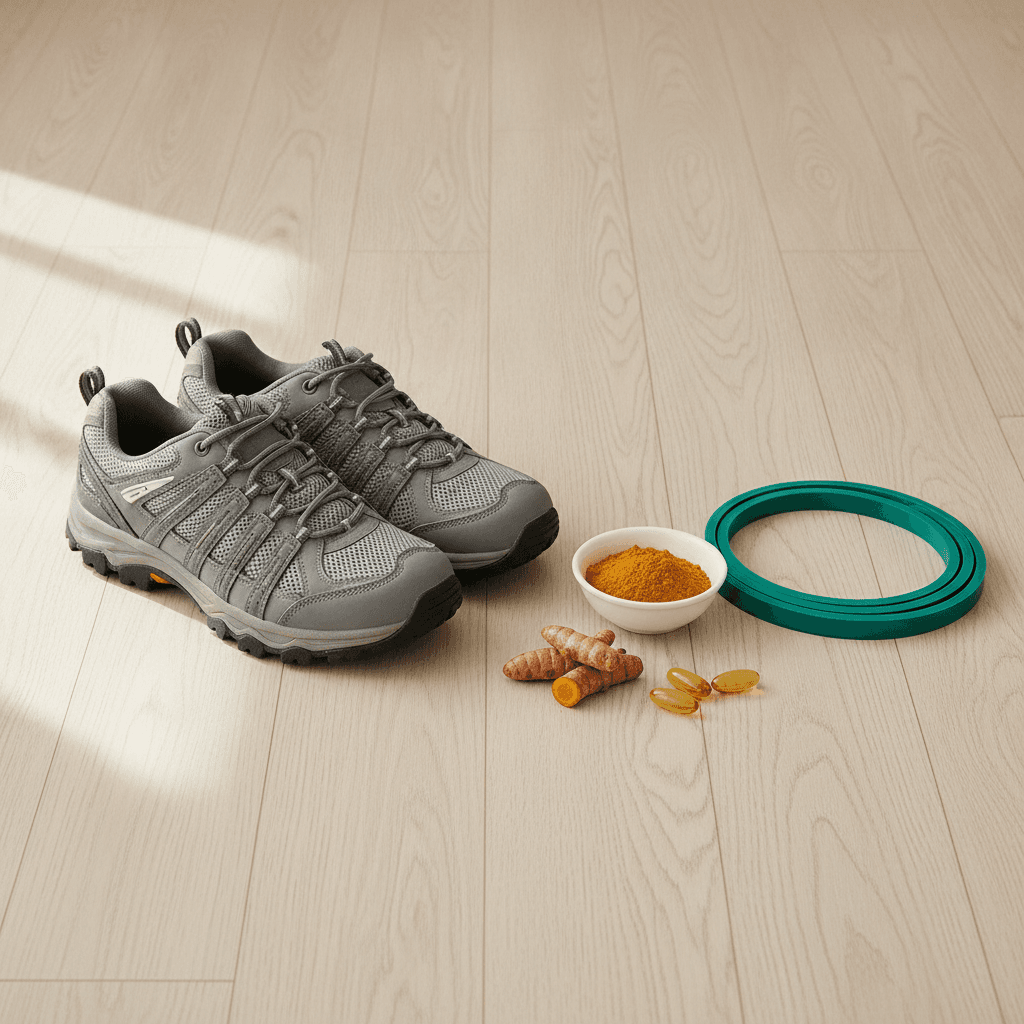
Exercise is the best-studied remedy for joint pain. A Cochrane review pooled 44 trials of land-based exercise for knee pain. Pain fell by about 12 points on a 100-point scale, function improved by about 10, and the benefit was still there two to six months after the programmes ended. Strength work for the thigh and hip muscles takes load off the knee; walking, cycling and swimming keep the joint moving. Start gently and build up. Some soreness that settles within a day is normal.
Losing weight is the next most powerful step, for anyone carrying extra. In the IDEA trial, 454 adults aged 55 and over with knee pain and extra weight spent 18 months on a diet, an exercise programme, or both. Those who did both lost about 11% of their weight and had less pain and better function than either group alone. The diet lowered the force going through the knee and a blood marker of inflammation.
Neither costs anything, and both do more in the trials than any supplement on the list below. A supplement is best seen as something to add to them, not a substitute.
Natural Remedies for Joint Pain and Inflammation: What the Trials Show
We read the human trials and the pooled reviews on PubMed for each remedy sold for joint pain, and graded how strong the evidence is. A 2018 review that pooled 69 trials of 20 supplements is a useful anchor: several showed large effects on pain in the short term, only two held up over the medium term, none over the long term, and the quality of the evidence ranged from very low to high.
| Remedy | Best human evidence | What it showed | How strong |
|---|---|---|---|
| Exercise | 44 trials pooled (Cochrane, 2015) | Less pain and better function, lasting months after the programme ended | Strong |
| Weight loss with exercise | 454 adults, 18 months (2013) | About 11% of weight lost; less pain and better function than diet or exercise alone | Strong |
| Curcumin (turmeric extract) | 11 meta-analyses pooled (2024); 23 trials, 2,175 people (2024) | Less pain and stiffness and better function than placebo | Good, mostly short term |
| Boswellia serrata extract | 7 trials, 545 people (2020) | Less pain and stiffness, better function, after at least 4 weeks | Promising, small trials |
| Undenatured type II collagen (UC-II), 40 mg a day | 191 adults, 180 days (2016) | Better than placebo, and than glucosamine with chondroitin, on pain, stiffness and function | Promising, few trials |
| Collagen powders (collagen hydrolysate) | 2018 review of 69 trials | A large short-term effect on pain, from a small number of trials | Early |
| Fish oil and krill oil | 202 adults, 2 years (2016); 262 adults, 24 weeks (2024) | A high dose did no better than a low one; krill oil did no better than placebo | Weak for joint pain |
| Glucosamine and chondroitin | 1,583 adults, 24 weeks (2006); 10 trials, 3,803 people (2010) | No better than placebo overall; the pair helped a smaller group with moderate to severe pain | Weak |
Already taking a joint supplement? See how it is graded, and whether the dose in the bottle matches the dose in the trials, in our free supplement research tool.
Curcumin, the active part of turmeric, has the most consistent results. A 2024 review that pooled 11 earlier meta-analyses found it lowered pain and stiffness scores and improved function, and a 2024 analysis of 23 trials with 2,175 people found the same against placebo. Plain turmeric is poorly absorbed, so most trials used extracts or forms built for absorption. One of them, curcumin phytosome (sold as Meriva), was studied in 100 people for eight months and improved joint scores and walking distance compared with a control group. Thorne Curcumin Phytosome uses that form; it is in Rala's catalog with 3,288 reviews, 93% of them positive, and the research tool shows its current grade.
Boswellia serrata extract eased pain and stiffness and improved function in a 2020 review of seven trials with 545 people, and the authors suggest at least four weeks to see it. The trials are small, so the grade is promising rather than strong.
Undenatured type II collagen (UC-II) is taken at a tiny dose, 40 mg a day, and is a different product from collagen powders. In a 2016 trial, 191 adults took UC-II, glucosamine with chondroitin, or a placebo for 180 days. UC-II improved pain, stiffness and function more than placebo and more than the glucosamine pair. It is one of only two supplements in the 2018 review with an effect that lasted into the medium term.
Collagen powders (collagen hydrolysate) showed a large short-term effect on pain in the 2018 review, but from a small number of trials. Count them as early evidence.
Fish oil earns its place for other reasons, covered in our 15 best longevity supplements, but for joint pain the trials are disappointing. In a two-year trial of 202 adults, a high dose (4.5 g of omega-3 a day) did no better than a low dose, and in 2024 krill oil at 2 g a day was no better than placebo in 262 adults with painful, swollen knees.
Glucosamine and chondroitin are the best-selling joint supplements and among the weakest on the evidence. In the GAIT trial, 1,583 adults with knee pain took glucosamine (1,500 mg a day), chondroitin (1,200 mg), both, or a placebo for 24 weeks; none beat placebo overall, though the pair did better in the smaller group whose pain was moderate to severe. A 2010 analysis of 10 large trials with 3,803 people found the effects too small to matter, and trials paid for by manufacturers showed bigger effects than independent ones.
How to Try a Joint Supplement
Keep moving first. Exercise and weight did more in the trials than any supplement, so a supplement is an extra on top of them, not a way round them.
Match the form and dose to the trials. UC-II was studied at 40 mg a day; glucosamine at 1,500 mg and chondroitin at 1,200 mg in GAIT; curcumin as an extract or an absorption-friendly form rather than plain turmeric powder. A product that hides its amounts inside a blend cannot be matched to any trial.
Try one at a time. Start two supplements in the same week and you will not know which one helped, or which one upset your stomach.
Give it long enough, and measure. The boswellia trials suggest at least four weeks, and the collagen and glucosamine trials ran for six months. Before you start, write down a number you can track: your pain from 0 to 10 at the end of the day, the minutes you can walk, or how the stairs feel. Check it again after six to eight weeks. If nothing has moved, stop and spend the money elsewhere.
Buy tested products. Look for a third-party seal that checks the label against what is in the bottle, and be wary of joint formulas with ten ingredients at small doses each.
Food and an Anti-Inflammatory Way of Eating
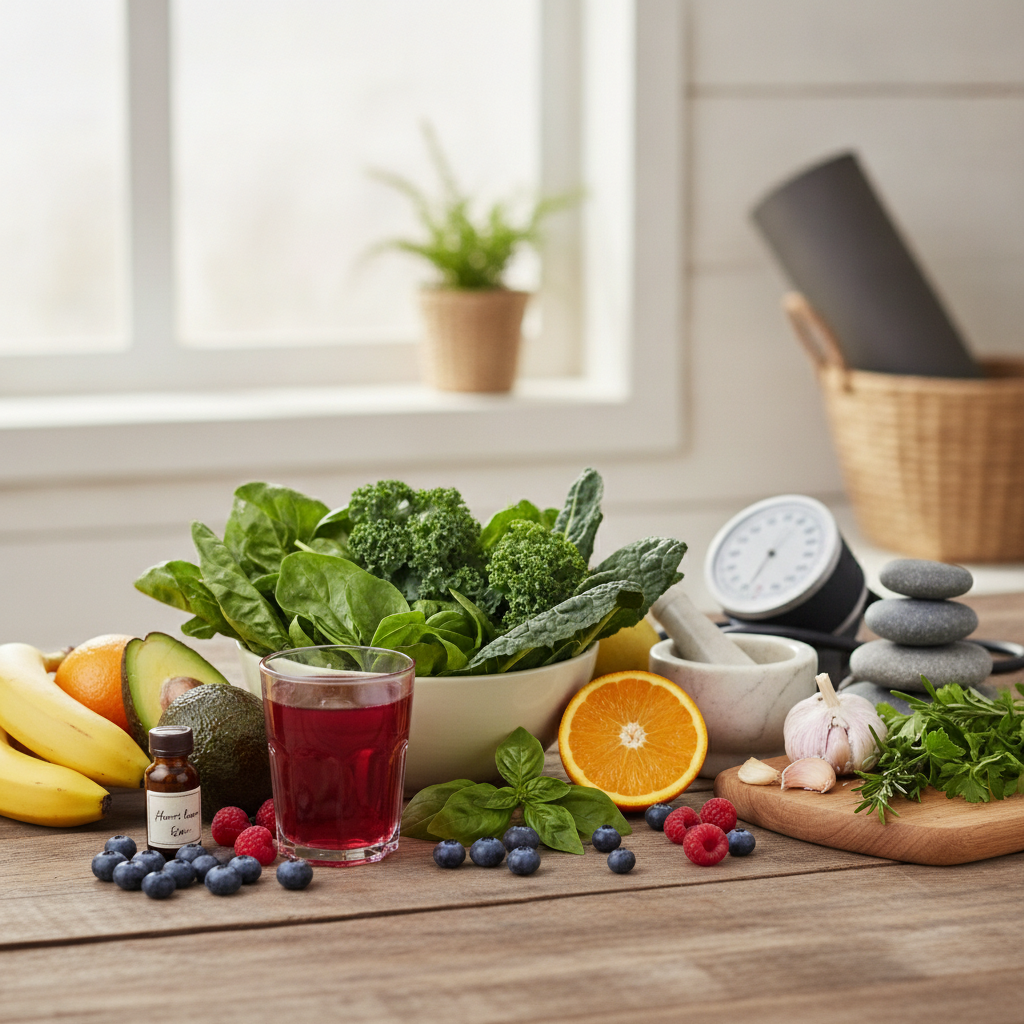
No single food takes joint pain away, but the way you eat matters, mostly through weight. A Mediterranean-style pattern, built on vegetables, fruit, beans, whole grains, olive oil, nuts and fish, with less sugar, refined starch and processed meat, is linked with lower markers of inflammation and makes it easier to lose weight and keep it off. Turmeric and ginger in cooking are fine, but the amounts in food are far below the doses used in the trials. Our healthy aging guide covers the eating pattern in more detail.
Check Them Against Your Meds
Joint supplements are not free of interactions. Curcumin, fish oil and boswellia can add to the effect of some meds, and curcumin can change how the body handles others. Glucosamine is often made from shellfish, which matters if you are allergic. If you take any meds, ask your pharmacist before you start, and tell your surgeon or dentist what you take before a procedure. Our guides to supplement and medication interactions and to supplements that should not be taken together list the pairs that matter most, and the supplement interaction checker checks your whole list against your meds before you start.
When Joint Pain Needs a Doctor
See a doctor before trying remedies if your joint pain comes with any of these:
A joint that is hot, red or swollen.
A fever, or feeling unwell with the joint pain.
Pain after a fall or an injury, or a joint you cannot put weight on.
Stiffness that lasts more than half an hour every morning, especially in several joints.
Pain that wakes you at night or keeps getting worse.
Losing weight without trying.
Joint pain together with a new rash.
These are the signs worth having checked first; a remedy can wait until you know the cause.
Frequently Asked Questions
What is the best natural anti-inflammatory for joints?
Among supplements, curcumin has the most consistent human trials for joint pain and stiffness, usually as an extract or an absorption-friendly form rather than plain turmeric. Boswellia and undenatured type II collagen are promising, with fewer trials. Exercise and, where needed, weight loss did more in the trials than any of them.
Does turmeric help joint pain?
Curcumin, the active part of turmeric, eased pain and stiffness in pooled reviews of more than 20 trials. Turmeric as a spice gives far less curcumin than the trials used, and plain curcumin is poorly absorbed, so the studied products are extracts or forms built for absorption, such as curcumin phytosome.
Does glucosamine actually work?
Not much, on the best evidence. In the GAIT trial of 1,583 adults, glucosamine, chondroitin and the two together did no better than placebo overall, and a 2010 analysis of 10 large trials found the effects too small to matter. The pair did better in people with moderate to severe pain, so if you try it, keep a simple pain diary and stop if nothing changes.
Can I take joint supplements with my meds?
Often, but check first. Curcumin, fish oil and boswellia can add to the effect of some meds, and glucosamine is often made from shellfish. Ask your pharmacist before you start, and use the supplement interaction checker to see your whole list against your meds.
Is this medical advice? No. This guide sets out the published research on joint remedies; it is not a diagnosis, and Rala isn't a medical device or a clinician. Go over any change with your doctor, especially if you take meds.
Sources
Fransen M, McConnell S, Harmer AR et al. Exercise for the knee: a Cochrane systematic review of 54 trials. British Journal of Sports Medicine, 2015. PubMed.
Messier SP, Mihalko SL, Legault C et al. Effects of intensive diet and exercise on knee joint loads, inflammation and clinical outcomes: the IDEA randomized clinical trial. JAMA, 2013. PubMed.
Liu X, Machado GC, Eyles JP et al. Dietary supplements for the joints: a systematic review and meta-analysis of 69 trials. British Journal of Sports Medicine, 2018. PubMed.
Bideshki MV, Jourabchi-Ghadim N, Radkhah N et al. The efficacy of curcumin: a meta-analysis of 11 meta-analyses. Phytotherapy Research, 2024. PubMed.
Zhao J, Liang G, Zhou G et al. Efficacy and safety of curcumin for the knee: a Bayesian network meta-analysis of 23 trials. Journal of Ethnopharmacology, 2024. PubMed.
Belcaro G, Cesarone MR, Dugall M et al. Efficacy and safety of Meriva, a curcumin-phosphatidylcholine complex, during extended administration. Alternative Medicine Review, 2010. PubMed.
Yu G, Xiang W, Zhang T et al. Effectiveness of Boswellia and Boswellia extract: a systematic review and meta-analysis. BMC Complementary Medicine and Therapies, 2020. PubMed.
Lugo JP, Saiyed ZM, Lane NE. Efficacy and tolerability of an undenatured type II collagen supplement for knee symptoms: a multicenter randomized, double-blind, placebo-controlled study. Nutrition Journal, 2016. PubMed.
Hill CL, March LM, Aitken D et al. Fish oil for the knee: a randomised clinical trial of low dose versus high dose. Annals of the Rheumatic Diseases, 2016. PubMed.
Laslett LL, Scheepers LEJM, Antony B et al. Krill oil for the knee: a randomized clinical trial. JAMA, 2024. PubMed.
Clegg DO, Reda DJ, Harris CL et al. Glucosamine, chondroitin sulfate, and the two in combination for painful knees (GAIT). New England Journal of Medicine, 2006. PubMed.
Wandel S, Jüni P, Tendal B et al. Effects of glucosamine, chondroitin, or placebo on the hip or knee: network meta-analysis. BMJ, 2010. PubMed.