
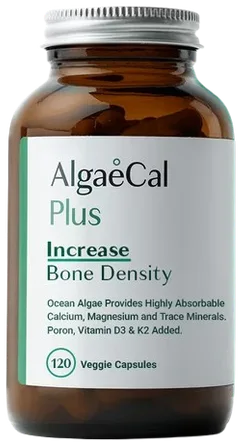
AlgaeCal Plus Review
AlgaeCal Plus is a plant-based calcium supplement designed to support bone health. It is formulated with algae-derived calcium, magnesium, Vitamin D3, and Vitamin K2 to help maintain and build bone density.
We don’t sell supplements. We help you make decisions and get the best price.
Lowest prices
We may earn a commission from some store links. How we choose.
Lowest cost per month first, in stock, at 4 capsules a day. Checked Nov 3.
- AlgaeCalLowest$60.00 a bottle of 90 capsules$80.00/moBuy at AlgaeCal (opens in a new tab)
- AmazonPrice at AmazonCheck price at Amazon (opens in a new tab)
Also at: Fullscript. Some links earn us a commission; price comes first, and a commission only decides the order of prices within 2%. As an Amazon Associate we earn from qualifying purchases.
Products with nearly the same formula (Matched on the main ingredients)
Study, Trial or Testing Result Summary
Members Only115 human studies · 55 improved
Vitamin K2 is given at a full studied dose, and it has the strongest evidence here. Pooled trials in women past menopause with thinning bones found it raised spine and forearm bone density [1], and another pooled analysis also found better spine density [2]. The benefit showed up in women with thinning bones but not in those without [3]. A one-year trial at 90 micrograms a day reduced hip bone loss in women past menopause but not in men [4]. Vitamin D is also at a full dose. In older adults, 700 to 800 international units a day cut hip fractures by 26 percent [5], but another review found no clear drop in fractures [6]. Boron is at a full dose, but its main bone study used a tablet with many ingredients and no placebo, so the gain cannot be credited to boron [7]. For calcium, vitamin C and magnesium, it is unclear whether the amount matches what was studied. Calcium with vitamin D modestly improved pelvic bone density but did not reduce fractures [8]. Vitamin C showed no proven bone benefit in people [9]. The magnesium evidence comes only from implants in animals, not supplements in people [10]. Animal and cell studies are never counted.
See all 115 studies →Hide the studies
- In five observational studies of about 81,000 people, those with the highest dietary vitamin K1 intake had a 22% lower fracture risk than those with the lowest intake; this was diet, not vitamin K2 supplements.Vitamin K intake and the risk of fractures: A meta-analysis.
- In 59 studies of 48,626 children, vegetarian and vegan children ate more vitamin C than meat-eaters but had lower bone mineral content, so the review did not link vitamin C intake to better bone health.Lacto-ovo-vegetarian and vegan diets in children and adolescents: a systematic review and meta-analysis of nutritional a…
- In 11 trials of 43,869 postmenopausal women with osteoporosis, calcium plus vitamin D modestly improved pelvic bone density but not spine, neck of femur or total hip density, and did not reduce fractures.The effects of combined calcium and vitamin D supplementation on bone mineral density and fracture risk in postmenopausa…
- This review of smartphone apps for osteoporosis self-management did not test vitamin D supplements and found no significant effect on vitamin D intake.Digital Health Technologies for Long-term Self-management of Osteoporosis: Systematic Review and Meta-analysis.
- Across six observational studies of 10,807 people, higher dietary vitamin C intake was linked to a 27% lower risk of hip fracture, and each extra 50 mg per day was linked to about 5% lower risk.Dietary vitamin C intake and the risk of hip fracture: a dose-response meta-analysis.
- In trials of older adults, 700 to 800 IU a day of vitamin D cut hip fracture risk by 26% and other nonvertebral fractures by 23%, while 400 IU a day gave no significant benefit.Fracture prevention with vitamin D supplementation: a meta-analysis of randomized controlled trials.
- Across nine trials with 6853 postmenopausal women with osteoporosis, vitamin K2 raised lumbar and forearm bone density more than control, with more mild side effects but no serious ones linked to it.Efficacy and safety of vitamin K2 for postmenopausal women with osteoporosis at a long-term follow-up: meta-analysis and…
- Across 19 trials with 6759 postmenopausal women, vitamin K2 improved spine bone density in women with osteoporosis but not those without, and fracture reduction was only significant after excluding one study.Does vitamin K2 play a role in the prevention and treatment of osteoporosis for postmenopausal women: a meta-analysis of…
- Across 16 trials with 6425 postmenopausal women, vitamin K2 improved lumbar spine bone density, and fractures fell only after excluding one study, with no difference in side effects.Efficacy of vitamin K2 in the prevention and treatment of postmenopausal osteoporosis: A systematic review and meta-anal…
- Across 43 trials in 5,184 postmenopausal women, vitamin K gave the largest rise in a bone-formation marker (bone alkaline phosphatase), and vitamin K combined with vitamin D most effectively raised two other bone-formation markers.Effects of dietary supplements on bone turnover markers in women after menopause: a network meta-analysis.
- Across nine trials with 2570 postmenopausal women with osteoporosis, vitamin K2 improved most bone turnover markers, though bone density and fracture benefits were not measured.The effect of vitamin K2 supplementation on bone turnover biochemical markers in postmenopausal osteoporosis patients: a…
- Across 10 trials with 1346 people, vitamin K plus calcium raised lumbar spine bone density, with a clearer effect for vitamin K2 than for vitamin K1.The combined effect of vitamin K and calcium on bone mineral density in humans: a meta-analysis of randomized controlled…
- Across eight trials with 971 people, vitamin K combined with vitamin D increased total bone density, with a stronger effect when vitamin K2 was used at under 500 micrograms a day.The combination effect of vitamin K and vitamin D on human bone quality: a meta-analysis of randomized controlled trials…
- Across nine studies, vitamin D3 did not significantly reduce nonvertebral or vertebral fractures versus placebo or calcium alone, with only a borderline trend toward fewer falls.The effect of cholecalciferol (vitamin D3) on the risk of fall and fracture: a meta-analysis.
- Across 13 trials, vitamin K reduced bone loss, and seven Japanese trials of menaquinone found far fewer vertebral, hip and other non-spine fractures.Vitamin K and the prevention of fractures: systematic review and meta-analysis of randomized controlled trials.
- A pooled analysis of trials in middle-aged and older adults found vitamin K supplements raised lumbar spine bone density and improved bone protein carboxylation, but did not change other bone turnover markers.Effects of vitamin K supplementation on bone mineral density at different sites and bone metabolism in the middle-aged a…
- A review of 13 trials found small studies showed little or modest bone density benefit, while there was some evidence of fewer vertebral fractures in postmenopausal women, and no evidence for men.Menatetrenone for the treatment of osteoporosis.
- In 23 trials of 1,209 kidney transplant recipients, vitamin D analogues (2 trials, 51 patients) improved lumbar spine and femoral neck bone density versus no treatment, but no trial showed fewer fractures.Interventions for preventing bone disease in kidney transplant recipients: a systematic review of randomized controlled …
- In 18 small trials of 576 children with chronic kidney disease, vitamin D preparations lowered parathyroid hormone levels, but there were few data on growth or bone deformities and no clear differences between preparations.Interventions for metabolic bone disease in children with chronic kidney disease.
- Three small trials in 70 people with cystic fibrosis gave very low-quality evidence, so it is uncertain whether vitamin K changes bone density, though blood vitamin K rose and undercarboxylated osteocalcin fell.Vitamin K supplementation for cystic fibrosis.
- One small trial of 39 people with sickle cell disease found vitamin D3 for six weeks raised blood vitamin D and reduced pain days versus placebo, but no bone outcomes were reported and the evidence was low quality.Vitamin D supplementation for sickle cell disease.
- In a review of 14 studies in adults, vitamin C improved gum bleeding in gingivitis but not in periodontitis, and it did not improve loss of the bone around the teeth.The Relationship between Vitamin C and Periodontal Diseases: A Systematic Review.
- In a review of 141 studies, plant-based eaters had higher vitamin C intake yet lower bone turnover markers and, in vegans, lower bone density, so vitamin C was not shown to help bone health.Nutrient Intake and Status in Adults Consuming Plant-Based Diets Compared to Meat-Eaters: A Systematic Review.
- In a review of 11 mostly animal studies, vitamin C seemed to speed bone formation in animals, but this was not seen in human studies and no dose could be recommended.Clinical effect of vitamin C supplementation on bone healing: A systematic review.
- In a review of nutrient supplements for dental implants, vitamin C helped soft tissue healing but did not directly affect how well the implant joined with bone.Assessing the influence of nutritional supplements on osseointegration outcomes in dental implantology: a systematic rev…
- In nine trials of postmenopausal women without osteoporosis, vitamin D raised blood vitamin D and improved some bone remodeling measures, but only one study found fewer fractures, so a fracture benefit could not be confirmed.Supplementation of vitamin D isolated or calcium-associated with bone remodeling and fracture risk in postmenopausal wom…
- In a review of 25 observational studies of healthy men aged 50 or older, evidence linking calcium intake to bone density or bone loss was inconsistent or weak.Risk factors for low BMD in healthy men age 50 years or older: a systematic review.
- A review of eight studies found that adding boric acid and other medicines to gum-pocket cleaning gave better clinical and X-ray bone defect results in gum furcation defects than cleaning alone.Local drug delivery in the treatment of furcation defects in periodontitis: a systematic review.
- A review of randomized trials in women found vitamin K2 results for bone density and fractures were promising, though study limitations mean confirmation is needed.Natural health products in the prevention and treatment of osteoporosis: systematic review of randomized controlled tria…
- Seven trials in postmenopausal women lasting 2 years or more found high-dose vitamin K1 or K2 lowered undercarboxylated osteocalcin, improved femoral neck bone strength and reduced clinical fractures, though bone density changed little.High-dose vitamin K supplementation reduces fracture incidence in postmenopausal women: a review of the literature.
- In four mostly small open-label trials of 45 mg vitamin K2 in Japanese women with osteoporosis, smaller trials showed fewer spine fractures but the larger trial did not, and non-spine fractures did not differ.Vitamin K to prevent fractures in older women: systematic review and economic evaluation.
- In children on long-term a med treatment, vitamin K2 combined with alfacalcidol preserved bone density, but calcium with alfacalcidol prevented bone loss better than menatetrenone.Treatment of glucocorticoid-induced low bone mineral density in children: a systematic review.
- This review of observational and intervention studies found that the evidence on vitamin K, including vitamin K2 supplements, and bone health, bone density and fractures is conflicting and unclear.Vitamin K and osteoporosis: Myth or reality?
- A review of ten studies on vitamin K for osteoporosis in postmenopausal women reported no outcome results in its abstract.The Anti-osteoporosis Effects of Vitamin K in Postmenopausal Women.
- In 500 elderly women with Alzheimer disease who all took 1000 IU of vitamin D2 plus calcium, adding risedronate for 18 months raised bone density 4.1% and cut hip fracture risk compared with placebo, but vitamin D itself was not tested alone and the paper was retracted.The prevention of hip fracture with risedronate and ergocalciferol plus calcium supplementation in elderly women with Al…
- Children whose mothers took 1000 IU of vitamin D3 daily during pregnancy had higher whole-body bone mineral content and density at ages 6-7 than children whose mothers took placebo.Pregnancy vitamin D supplementation and offspring bone mineral density in childhood follow-up of a randomized controlled…
- In 452 older men and women taking calcium and vitamin D, 500 micrograms a day of vitamin K1 for 3 years did not change bone density at the hip or spine compared with no vitamin K1.Effect of vitamin K supplementation on bone loss in elderly men and women.
- In 441 young Chinese women given milk powder with 1000 mg calcium and 80 mcg vitamin K1 or nothing for 2 years, bone density and bone turnover markers showed little difference between groups.Milk supplementation and bone health in young adult chinese women.
- In 440 postmenopausal women with low bone density, 5 mg a day of vitamin K1 for 2 to 4 years did not change bone density, but fewer women had clinical fractures (9 versus 20 on placebo).Vitamin K supplementation in postmenopausal women with osteopenia (ECKO trial): a randomized controlled trial.
- In 381 healthy postmenopausal women taking calcium and vitamin D, 45 mg a day of vitamin K2 (MK4) or 1 mg of vitamin K1 for 12 months lowered undercarboxylated osteocalcin but did not change bone turnover or bone density compared with placebo.Vitamin K treatment reduces undercarboxylated osteocalcin but does not alter bone turnover, density, or geometry in heal…
- In 379 healthy older adults, 500 mcg per day of phylloquinone for three years did not change inflammation or bone-related cytokine levels compared with no supplement.Vitamin K, circulating cytokines, and bone mineral density in older men and women.
- In 325 postmenopausal women given 45 mg a day of vitamin K2 (MK-4) for three years, bone mineral content and femoral neck width increased and hip bone strength was maintained compared with placebo, though standard bone density did not change.Vitamin K2 supplementation improves hip bone geometry and bone strength indices in postmenopausal women.
- In 311 middle-aged and older adults, 90 micrograms a day of vitamin K2 for one year reduced femoral neck bone loss in postmenopausal women compared with placebo, with no effect in men and no added benefit from calcium and vitamin D3.Effect of Low-Dose Vitamin K2 Supplementation on Bone Mineral Density in Middle-Aged and Elderly Chinese: A Randomized C…
- In 244 healthy postmenopausal women, 180 micrograms a day of vitamin K2 (MK-7) for three years slowed bone density loss at the lumbar spine and femoral neck, but not the total hip, and reduced loss of vertebral height compared with placebo.Three-year low-dose menaquinone-7 supplementation helps decrease bone loss in healthy postmenopausal women.
- In 242 elderly men with Parkinson disease who all took 1000 IU of vitamin D2, adding risedronate for 2 years raised bone density, but vitamin D was not compared against placebo and the paper was retracted.Risedronate and ergocalciferol prevent hip fracture in elderly men with Parkinson disease.
- In 219 healthy young and older adults, 1000 micrograms a day of vitamin K1 (not K2) for two weeks lowered undercarboxylated osteocalcin but did not change other bone turnover markers.Vitamin K supplementation reduces serum concentrations of under-gamma-carboxylated osteocalcin in healthy young and elde…
- In postmenopausal women aged 50 to 60, 1 mg of vitamin K1 daily plus minerals and vitamin D for 3 years reduced femoral neck bone loss compared with placebo, but had no effect on lumbar spine bone density.Vitamin K1 supplementation retards bone loss in postmenopausal women between 50 and 60 years of age.
- In Japanese adults taking 100 micrograms of menaquinone-7 daily for 12 weeks, osteocalcin became more fully activated compared with placebo, and doses of 100 micrograms or more were suggested as effective.Low-Dose Daily Intake of Vitamin K(2) (Menaquinone-7) Improves Osteocalcin γ-Carboxylation: A Double-Blind, Randomized C…
- In 148 postmenopausal women with low bone density taking 375 mcg of vitamin K2 (menaquinone-7) daily for 12 months, the internal structure of tibia bone was preserved compared with placebo, while bone density showed no difference.Vitamin K2 (menaquinone-7) prevents age-related deterioration of trabecular bone microarchitecture at the tibia in postm…
- In 148 postmenopausal women taking 375 mcg of vitamin K2 (menaquinone-7) daily for 12 months, an inactive form of bone protein fell sharply and a blood marker of metabolic health rose compared with placebo, but insulin sensitivity did not change.Vitamin K2 (menaquinone-7) increases plasma adiponectin but does not affect insulin sensitivity in postmenopausal women:…
- In 142 postmenopausal women with osteopenia taking 375 mcg of vitamin K2 (MK-7) or placebo daily for 3 years, bone density and bone structure changes did not differ between the groups, although MK-7 raised carboxylated osteocalcin in the blood.The effect of vitamin MK-7 on bone mineral density and microarchitecture in postmenopausal women with osteopenia, a 3-ye…
- In 122 postmenopausal women eating vitamin D enriched salmon twice weekly for 12 weeks, bone breakdown markers improved compared with a low vitamin D intake, though the amount of vitamin K was not stated.Reduced bone resorption by intake of dietary vitamin D and K from tailor-made Atlantic salmon: A randomized intervention…
- In 110 healthy children and adults, menaquinone-7 supplements helped most those with the greatest vitamin K deficiency, and adults over 40 may benefit most.Vitamin K status in healthy volunteers.
- In 105 women with osteoporosis taking meds, 45 mg a day of menatetrenone for 18 months did not change bone density compared with placebo.Read the study on PubMed (37338608) →
- In 99 women aged 35 to 65 followed for 4 years, higher vitamin C intake was linked to greater ulna bone mineral content in postmenopausal women at the start, but it was not linked to bone loss over time.Relationships between usual nutrient intake and bone-mineral content of women 35-65 years of age: longitudinal and cross…
- In 94 lung and heart transplant recipients taking 180 mcg of vitamin K2 or placebo for 1 year, lumbar spine bone density was higher with vitamin K2 (borderline significant), with benefit seen in lung recipients but not heart recipients.Dietary vitamin K2 supplement improves bone status after lung and heart transplantation.
- In 92 postmenopausal women with osteoporosis, 45 mg a day of menatetrenone for 2 years increased lumbar spine bone density more than calcium alone.Effect of combined administration of vitamin D3 and vitamin K2 on bone mineral density of the lumbar spine in postmenopa…
- In adults with type 2 diabetes and heart disease, 360 mcg of vitamin K2 daily for 6 months did not slow bone mineral density decline or arterial calcification compared with placebo.Six months vitamin K treatment does not affect systemic arterial calcification or bone mineral density in diabetes melli…
- In 63 postmenopausal women with osteoporosis, 45 mg a day of menatetrenone with calcium for 48 weeks increased lumbar spine bone density more than placebo with calcium.Vitamin K2 treatment for postmenopausal osteoporosis in Indonesia.
- In 55 healthy prepubertal children, 45 mcg per day of menaquinone-7 for eight weeks improved osteocalcin carboxylation compared with placebo.The effect of menaquinone-7 (vitamin K2) supplementation on osteocalcin carboxylation in healthy prepubertal children.
- In 50 women with cirrhosis, vitamin K2 (menatetrenone) over 2 years prevented lumbar spine bone loss, with bone density rising 0.1% at 1 year and falling only 0.5% at 2 years while the control group lost 2.2% and 4.6%.Vitamin K2 (menatetrenone) for bone loss in patients with cirrhosis of the liver.
- In 40 healthy postmenopausal Japanese women taking 1.5 mg of menaquinone-4 daily for 4 weeks, osteocalcin activation improved compared with placebo, with the largest change at 2 weeks.Effect of low dose vitamin K2 (MK-4) supplementation on bio-indices in postmenopausal Japanese women.
- In 40 hemodialysis patients with low parathyroid hormone, 45 mg per day of menatetrenone for one year improved bone remodeling markers compared with a control group.Vitamin K₂ alters bone metabolism markers in hemodialysis patients with a low serum parathyroid hormone level.
- In 39 older women with severe osteoporosis, 1200 mg of calcium daily with or without 25-hydroxyvitamin D for two years kept bone mineral content stable in both groups, with improved bone mineralization rate in both groups.Histomorphometric effects of calcium or calcium plus 25-hydroxyvitamin D3 therapy in senile osteoporosis.
- In 39 people with gum disease, boric acid gel placed in gum pockets alongside deep cleaning reduced X-ray bone defect depth by about 37% over 6 months versus about 3% with placebo gel.Clinical efficacy of subgingivally-delivered 0.75% boric acid gel as an adjunct to mechanotherapy in chronic periodontit…
- In 34 early postmenopausal women with low bone density taking 45 mg of vitamin K2 daily for 2 years, a marker of vitamin K status improved, but bone density results were not reported as a clear gain and there was no placebo comparison.Effect of vitamin K2 treatment on carboxylation of osteocalcin in early postmenopausal women.
- In 33 postmenopausal women taking a combination of vitamin K1 (1000 micrograms daily), vitamin D3, hop acids, and berberine for 14 weeks, a bone turnover marker (osteocalcin) fell by about 31% while placebo rose, though the vitamin K1 effect cannot be separated from the other ingredients.Hop rho iso-alpha acids, berberine, vitamin D3 and vitamin K1 favorably impact biomarkers of bone turnover in postmenopa…
- In a small trial of 29 children with leukemia, those given 100 mcg of vitamin K2 (menaquinone-7) with vitamin D3 during chemotherapy showed early bone-protective changes over about 6 months compared with children receiving chemotherapy alone.Effect of vitamin K2 and vitamin D3 on bone mineral density in children with acute lymphoblastic leukemia: a prospective…
- In 28 female college students over one year, athletes had a slight rise in bone density and sedentary students a slight fall, while boron changed blood phosphorus and magnesium and urinary boron; no clear bone benefit from boron itself was reported.Effects of boron supplementation on bone mineral density and dietary, blood, and urinary calcium, phosphorus, magnesium,…
- In 20 patients starting a med treatment, 15 mg per day of menatetrenone for one year was linked to no significant bone density loss, while the group without it lost lumbar spine bone density.Vitamin K2 inhibits glucocorticoid-induced bone loss partly by preventing the reduction of osteoprotegerin (OPG).
- In 20 postmenopausal women with osteoporosis and prior wrist fractures, vitamin K over 2 weeks corrected the carboxylation defect in osteocalcin, with a similar result after vitamin K plus vitamin D, but bone density was not reported as an outcome.Carboxylation of osteocalcin in post-menopausal osteoporotic women following vitamin K and D supplementation.
- In 16 adults on long-term meds for neuromuscular disorders, adding vitamin K2 to risedronate for one year did not produce any extra change in bone turnover markers compared with risedronate alone.Read the study on PubMed (20190467) →
- In 15 young adults on a crossover diet study, a hydrogenated form of vitamin K1 (dihydrophylloquinone) at 200 mcg daily for 10 days was less absorbed and had no measurable effect on bone formation or breakdown markers, unlike regular vitamin K1.Effects of a hydrogenated form of vitamin K on bone formation and resorption.
- In 48 gum furcation defects, boric acid gel with deep cleaning gave about 17% bone fill over 6 months versus about 3% with placebo gel.Boric acid gel as local drug delivery in the treatment of class II furcation defects in chronic periodontitis: a randomi…
- In athletic and sedentary women taking boron supplements, serum phosphorus fell compared with placebo and serum magnesium rose, with modest effects on mineral status; bone density was not reported in this study.Effect of boron supplementation on blood and urinary calcium, magnesium, and phosphorus, and urinary boron in athletic a…
- In young Indian women taking a protein drink fortified with calcium, vitamin D and 55 mcg of vitamin K for 6 months, bone turnover markers moved in a favorable direction compared with a low-protein placebo drink.Randomised Controlled Trial of Nutritional Supplement on Bone Turnover Markers in Indian Premenopausal Women.
- In healthy women given 1 mg of vitamin K daily, bone-related blood markers shifted and urinary calcium fell about 30% in women who lost calcium quickly, while the placebo-controlled trial in postmenopausal women ran for 3 months.Vitamin K-induced changes in markers for osteoblast activity and urinary calcium loss.
- In 82 premenopausal women, adding 80 micrograms of vitamin K1 to calcium-fortified milk for 16 weeks improved vitamin K levels but did not reduce bone turnover more than milk alone.Effect of calcium fortified milk supplementation with or without vitamin K on biochemical markers of bone turnover in pr…
- In 69 patients with osteopenia or osteoporosis having lumbar spine surgery, adding vitamin K2 to vitamin D3 and calcium for 6 months increased complete spinal fusion rates compared with the control group.Concurrent Treatment with Vitamin K2 and D3 on Spine Fusion in Patients with Osteoporosis-Associated Lumbar Degenerative…
- In 60 people with autoimmune diseases taking meds and meds, menatetrenone raised bone formation markers during the first month, but bone density and fracture rates did not differ from those not taking it after about 1.5 years.Efficacy of Vitamin K2 for Glucocorticoid-induced Osteoporosis in Patients with Systemic Autoimmune Diseases.
- In 40 postmenopausal women with wrist fracture, 1 g of calcium daily for one year had no significant effect on femur bone mineral content compared with placebo.Bone mineral content in women with Colles' fracture: effect of calcium supplementation.
- In 21 women with anorexia nervosa followed for about 0.9 years, those taking menatetrenone lost less lumbar bone density (2.8%) than those not taking it (6.9%).Effect of menatetrenone (vitamin K2) treatment on bone loss in patients with anorexia nervosa.
- In 20 people with kidney disease starting prednisolone, adding 45 mg a day of menatetrenone for 10 weeks prevented the spine bone density loss seen with prednisolone alone.Short-term effect of vitamin K administration on prednisolone-induced loss of bone mineral density in patients with chro…
- In 12 healthy young adults, 90 mcg of vitamin K2 (menaquinone-7) added to daily olive oil for 2 weeks increased the active form of bone protein and decreased the inactive form compared with baseline.Olive oil supplemented with menaquinone-7 significantly affects osteocalcin carboxylation.
- In healthy volunteers, MK-7 from natto was absorbed well, stayed in the blood much longer than vitamin K1, and carboxylated osteocalcin more completely; preparations of 50 mcg daily or more may interfere with meds.Vitamin K-containing dietary supplements: comparison of synthetic vitamin K1 and natto-derived menaquinone-7.
- In 334 postmenopausal women with osteopenia, taking the vitrum osteomag tablet (which contains 250 mcg boron per tablet) for 12 months raised bone mineral density by about 1.5% in the lumbar spine, while the control group lost bone, though the trial was open-label and not placebo-controlled.[Vitrum osteomag in prevention of osteoporosis in postmenopausal women: results of the comparative open multicenter tria…
- In an open-label 2-year study of 241 osteoporosis patients, those taking 45 mg of vitamin K2 daily had fewer new fractures and lost less spine bone density than the untreated control group.Vitamin K2 (menatetrenone) effectively prevents fractures and sustains lumbar bone mineral density in osteoporosis.
- In 216 adults who followed an open-label bone health plan with one of two versions of the supplement for six months, bone density rose more than expected in both groups, and the second version showed a significant gain from baseline (2.18% per year) with no control group.Changes in total body bone mineral density following a common bone health plan with two versions of a unique bone health…
- In 109 postmenopausal women with osteoporosis, 45 mg of menatetrenone daily for six months raised the active form of osteocalcin and lowered its inactive form compared with calcium, but urinary bone breakdown markers also rose after six months, and bone density was not measured.Short-term menatetrenone therapy increases gamma-carboxylation of osteocalcin with a moderate increase of bone turnover …
- In 20 children with thalassemia taking 50 mcg of menaquinone-7 plus calcitriol for 1 year, lumbar spine bone density and Z-score improved, though this was an uncontrolled pilot study.The efficacy of vitamin K2 and calcitriol combination on thalassemic osteopathy.
- In 20 severely disabled children and adults with bone thinning, bone density rose after 4 months of oral vitamin K2 and stayed higher through 12 months, though there was no control group and the dose was not stated.[Effects of a vitamin K2 preparation in severely handicapped patients complicated by osteopenia].
- In 15 healthy young men given menaquinone-4 in steps of 300, 600, 900 and 1500 mcg daily over 5 weeks, blood levels of活性 osteocalcin rose at 900 mcg daily or more, and the inactive form fell at 600 mcg daily or more.Low-dose menaquinone-4 improves γ-carboxylation of osteocalcin in young males: a non-placebo-controlled dose-response st…
- In 2904 US adults aged 60 and over, higher dietary calcium was linked with higher lumbar bone density, but this link held in women and not in men.Association between Dietary Calcium Intake and Bone Mineral Density in Older Adults.
- In 1479 elderly Japanese men, greater milk intake was linked with higher hip and femoral neck bone density and lower bone turnover, though this link weakened after accounting for calcium intake.Greater milk intake is associated with lower bone turnover, higher bone density, and higher bone microarchitecture index…
- In a survey of 1351 Korean males aged 10 to 25, those whose diet was highest in milk, cereal and whole grains (a pattern linked to higher vitamin C intake) were less likely to have low bone mineral density than those with the lowest scores.Milk-cereal and whole-grain dietary patterns protect against low bone mineral density among male adolescents and young a…
- In 1098 adults aged 65 and over, higher dietary calcium intake was linked with higher bone density at the hip and spine, while higher urinary sodium was linked with lower bone density.Dietary intake, blood pressure and osteoporosis.
- In a Japanese cohort of 944 women followed for 3 years, eating more natto was linked to less bone loss, especially in postmenopausal women.Intake of fermented soybeans, natto, is associated with reduced bone loss in postmenopausal women: Japanese Population-B…
- In 698 placebo-group women over 65 with osteopenia, averaging 886 mg of dietary calcium a day over 6 years, calcium intake was unrelated to bone loss at any site.Dietary Calcium Intake and Bone Loss Over 6 Years in Osteopenic Postmenopausal Women.
- In a survey of 452 women in Alaska, dietary calcium intake was low (about 306 mg a day on average), but the survey did not test calcium supplements, so it shows no effect of calcium on bone.Risk factors for osteoporosis in Alaska Native women: a cross-sectional survey.
- In a case-control study of 329 white women, recent dietary vitamin C intake was not linked to hip fracture risk, while more teenage recreational activity was linked to lower risk.A case-control study of hip fracture: evaluation of selected dietary variables and teenage physical activity.
- In Tuscany, Italy, most people who broke a hip from 2011 to 2015 were not taking vitamin D supplements, and only 30-35% were on cholecalciferol one year after the fracture; no bone outcome was measured against a comparison group.The use of cholecalciferol in patients with hip fracture.
- In 211 patients with chronic pancreatitis, vitamin K deficiency was the only factor linked to osteoporosis in men, with 32 percent of patients found to be vitamin K deficient.Vitamins D and K as Factors Associated with Osteopathy in Chronic Pancreatitis: A Prospective Multicentre Study (P-BONE …
- Among 173 adults aged 35 to 50, about a quarter had osteopenia; bone density correlated with exercise in women and in the opposite direction in men, and no calcium-specific result was reported.Bone Mineral Density Among Men and Women Aged 35 to 50 Years.
- In 172 women who took AlgaeCal calcium for one to seven years, bone mineral density rose about 1.04% per year, a total of 7.3% over seven years, compared with an expected decline of about 0.4% per year in large databases; blood chemistry showed no safety concerns.A 7-Year Longitudinal Trial of the Safety and Efficacy of a Vitamin/Mineral Enhanced Plant-Sourced Calcium Supplement.
- In a 2-year cross-sectional study of 116 pre- and post-menopausal obese and non-obese women, daily vitamin D and calcium intake was low and osteoporosis was less common in obese women, though blood vitamin D levels were within normal range.Dietary Pattern and Bone Health in Pre and Post-menopausal Obese Women.
- In 113 postmenopausal women, lower vitamin K status was linked to lower bone mass only in women who also had aortic calcification.Vitamin K status and bone mass in women with and without aortic atherosclerosis: a population-based study.
- In 52 Parkinson's patients compared with 52 matched controls, lower bone density was seen, and insufficient calcium intake was among the factors related to low bone density.Prevalence and risk factors of osteoporosis in patients with Parkinson's disease.
- In 80 fairly healthy older adults attending a day hospital, bone mass and vitamin C levels both fell with age, but the two did not track together, so low vitamin C did not appear to cause osteoporosis in old age.Vitamin C and osteoporosis in old age.
- In 70 people taking meds, a dedicated bone clinic found many with bone loss; early results showed bone density rose 3 to 5 percent with drug and lifestyle measures, including calcium and/or vitamin D in 44 people.Read the study on PubMed (10678299) →
- In 42 Iranian adults with hemophilia, low bone density was very common, and only cigarette smoking was significantly linked to it, not calcium intake.Bone mineral density in hemophilia patients.
- In 16 Crohn's disease outpatients with a med-related bone loss, the vitamin K2 group showed no change in bone density after one year, while the alendronate group improved.Read the study on PubMed (19525577) →
- In 8 stable dialysis patients taking 45 mg of menatetrenone (vitamin K2) daily for 12 months, bone mineral density stayed at the same level, though some blood bone markers changed in mixed directions and there was no control group.Pharmacodynamics of menatetrenone and effects on bone metabolism in continuous ambulatory peritoneal dialysis patients.
- In 8 female elite athletes taking 10 mg of vitamin K daily for one month, bone formation markers rose 15 to 20 percent and bone breakdown markers fell 20 to 25 percent in the low-estrogen group, with no control group.Improved bone metabolism in female elite athletes after vitamin K supplementation.
- In children with cystic fibrosis, higher vitamin K intake was suggested to bring bone and health benefits, based on bone markers at different doses.Vitamin K supplementation in cystic fibrosis.
- In Japanese patients with osteoporosis, vitamin K2 combined with EHDP worked better than either alone, while vitamin D3 plus vitamin K2 had little effect on spine bone density.[EHDP + vitamin D3 or vitamin K2].
Review Totals and Summary
Members Only5,654 reviews · 78% positive
Real user reviews for AlgaeCal Plus show a general trend of satisfaction, with many people sharing positive experiences, especially around perceived benefits in bone health and peace of mind. On Amazon and Algaecal's own website, a significant number of users mention that they chose AlgaeCal Plus after searching for a plant-based alternative to conventional calcium supplements, and several reviewers say they appreciate this aspect. Numerous positive comments highlight a sense of quality and that AlgaeCal Plus is gentle on the stomach, with some users specifically noting they didn’t experience the digestive discomfort that other supplements caused them. People also talk about the capsules being easy to swallow, which many appreciate if they regularly struggle with larger pills. Over time, some reviewers say their bone density scans have shown improvement or stabilization, with a few describing their doctors being pleasantly surprised by their progress. However, it’s clear that these results can be variable, and not everyone experiences the same outcome. A proportion of reviews are more neutral, with users saying they have not noticed any distinct changes or effects after taking AlgaeCal Plus for several months. For some, the peace of mind in taking a supplement that seems safer and more natural is enough, even if they aren’t seeing clear clinical results. In negative reviews, prominent themes include frustration with the product’s price, with more than one person stating it is expensive compared to other options on the market. There are also complaints about limited or no effect, particularly from those who monitored their bone density and found no measurable improvement, or even a slight decline. A handful of users report mild digestive issues or difficulty taking the recommended dosage, especially if they already manage a complex supplement routine. On the taste front, AlgaeCal Plus generally receives neutral to positive feedback, as most people do not notice an aftertaste, though a small minority did mention a disagreeable taste or smell. Shipping and customer service experiences run the gamut, with some highlighting fast delivery and helpful staff, while a few express dissatisfaction with slow responses or confusion during returns and refunds. Overall, sentiment is broadly positive, reflected in the majority of favorable reviews, but expectations should be managed—some users see tangible results, others are simply satisfied with the natural profile, and a subset are left disappointed, especially regarding value and measurable outcomes.
Biohacker Summary
Members Only10 of 10 recommend it
The statements give no main ingredient for this product, so the panel's comments are all about smaller ingredients, and magnesium and vitamin D drew the most attention. On magnesium, most of the panel recommend it, mainly for sleep, mood, stress, and as a basic part of a minimum routine. Two of them take 400 mg of magnesium threonate before bed, others point to threonate and similar forms for sleep, and three warn that labels can overstate the real dose or that magnesium oxide absorbs poorly. Vitamin D was the other common topic: two take 5,000 IU of D3 in the morning, several recommend checking levels, and one said it only makes sense if you are deficient. Vitamin K2 was paired with vitamin D for calcium and bone health, and vitamin C was recommended by a few, while boron got a single neutral mention, and nobody said they had stopped.
See all 10 biohackers →Hide the biohackers
Dr. Eric Berg · Vitamin D · neutral
- Lists Vitamin D as an ingredient found in sardines.
- States that one can of sardines contains 382 mg of calcium.
- Recommends Vitamin D3 because it's nearly impossible to get enough from food and most people don't get enough sun, advising to aim for blood levels of at least 50 to 80 ng/mL.
- Dr. Berg states that when nutrients like vitamin D are too low, fatigue and weakness can follow.
- Warns against calcium supplements, citing studies that link them to a higher risk of heart attack, especially in postmenopausal women, and suggests getting calcium from dairy instead.
- Warns against generic multivitamins, stating they are often full of fillers and synthetics.
- Recommends Magnesium glycinate, noting its high absorption rate compared to magnesium oxide, and its support for energy, sleep, muscle relaxation, and vitamin D function.
- Dr. Berg states that when nutrients like magnesium are too low, fatigue and weakness can follow.
- Recommends pairing Vitamin D3 with K2, stating that K2 helps keep calcium out of soft tissues.
- Recommends focusing on vitamin D3 to support stronger bones if a neck hump is associated with osteoporosis.
- Recommends a minimum of 10,000 IU of vitamin D per day to support natural killer cells.
- Recommends focusing on calcium to support stronger bones if a neck hump is associated with osteoporosis.
- Mentions that bleeding or swollen gums point to vitamin C deficiency, and sugar competes with it directly, reducing absorption.
- Recommends focusing on magnesium to support stronger bones if a neck hump is associated with osteoporosis.
Dr. Rhonda Patrick · Vitamin D · neutral
- Notes that vitamin D from sunlight, food, or supplements needs to undergo conversions in the liver and kidneys to become its active hormone form, calcitriol.
- Explains that magnesium helps the body activate and metabolize vitamin D, and that magnesium intake has been associated with lower odds of vitamin D deficiency and insufficiency.
- Mentions that getting too little magnesium may play a role in declining testosterone levels.
- States that Vitamin D supplementation has been associated with a 40% lower dementia risk, and low levels are linked to a 50 to 80% higher risk.
- Recommends getting enough magnesium, around 300–400 mg daily from diet and supplements, as it is an essential cofactor for vitamin D metabolism. Magnesium glycinate is a good form.
- Mentions magnesium as one of the micronutrients found in multivitamins that people often don't get enough of from their diets.
- Mentions vitamin K as one of the micronutrients found in multivitamins that people often don't get enough of from their diets.
- Explains that magnesium helps control blood pressure by boosting the production of substances that relax blood vessels and improve cardiovascular health, citing a meta-analysis that found magnesium supplementation at an average dose of 368 mg per day notably lowers both systolic and diastolic blood pressure.
- Magnesium supplementation has lowered blood pressure in randomized controlled trials. An analysis of 34 trials involving over 2,000 participants found modest reductions in both systolic and diastolic pressure, with a median dose of 368 mg/day.
- Recommends getting adequate vitamin D, noting that people taking vitamin D supplements have a 40% lower risk of dementia, while those with lower vitamin D have a 50-80% higher risk.
- Warns that some magnesium supplements make the dose look much larger than it really is and that labels can fool people.
- Vitamin D supplementation was linked to a 40% lower risk of dementia in an observational study of more than 12,000 older adults.
- Mentions that vitamin D also plays a role in maintaining muscle mass.
- Mentions magnesium as an important nutrient component for testosterone.
Dave Asprey · Vitamin K · recommends
- Explains that Vitamin K2 acts as a traffic cop for calcium, waving it into bones and away from arteries, and that grass-fed butter is one of the only foods with a real amount of K2.
- Looks at magnesium alongside protein to keep muscle for the long run.
- Suggests adding magnesium to help keep potassium in the system longer, as they work hand in hand.
- Recounts a doctor telling him in his 20s that vitamin C would kill him.
- Takes Vitamin DAKE from Suppgrade Labs.
- Mentions magnesium in the context of sleep but states that it doesn't address the core issue of waking up during the night.
- Suggests that magnesium may help slow aging, support cellular repair, and improve sleep.
- Suggests that vitamin D supports brain health, muscle function, and focus.
- Recommends taking vitamin C for better skin health.
- States that magnesium can affect how the body responds to a supplement.
- Host Dave Asprey explains why correcting a vitamin D deficiency still makes sense for male fertility, even though supplementation did not improve overall semen parameters in a randomized trial.
- Recommends taking vitamin K2 with vitamin D to keep calcium in the bones, and suggests kids also take it for stronger bones.
- Recommends Vitamin K2, stating it supports healthy calcium metabolism.
- States that currently, he is only taking vitamin C and vitamin D.
Thomas DeLauer · Vitamin C · recommends
- Recommends whole food vitamin C, found in kiwi fruit, citrus, and bell peppers, to help clear uric acid by competing at kidney transporters, preventing reabsorption.
- Recommends taking magnesium glycinate and threonate at night to act as a brake on the nervous system, block excitatory signaling, help wind down, and support serotonin and melatonin production for better sleep.
- Recommends taking Vitamin K2 with Vitamin D3 in the morning, along with morning fats, to ensure calcium is directed to the bones and not deposited in arteries or soft tissue.
- Recommends taking Vitamin D3 in the morning, between 6:00 and 10:00 a.m., to align with the body's natural metabolic activation phase and sunlight-triggered vitamin D production.
- Mentions that magnesium glycinate also helps a lot with sleep.
- Mentions that restless leg syndrome is often treated with magnesium, but states that the sensation is actually coming from three other issues.
- Uses Element's cans which contain 30 milligram magnesium, finding that electrolytes help his workout performance.
- Recommends taking vitamin C along with collagen about an hour before a workout for connective tissue benefits.
- Uses Element's 30 mg magnesium cans first thing in the morning to prime his day and help with workout performance.
- Uses vitamin C as part of their immunity duo, stating it is important for boosting the immune system, especially during cold and flu season.
- Recommends magnesium around the time one would normally break a fast to calm the brain and dull feelings of conditioned hunger.
- Uses vitamin D3 in the fall and winter months when getting less sun, as it's important to supplement it then.
- Recommends taking a massive amount of vitamin D simultaneously with an early morning massive breakfast to help reset circadian rhythms and address hyperphagia.
- Recommends magnesium, noting it is a cofactor for enzymes that build neurotransmitters, and deficiency can affect mood, happiness, and motivation.
Andrew Huberman · Magnesium · recommends
- Notes that Les Spellman's team includes 'Magnesium timed right' as part of their game plan to optimize recovery in unfavorable conditions.
- Discusses Magnesium Threonate as a tool for falling asleep.
- Notes that most people are probably deficient in vitamin D and benefit from supplementing, but there's no point in doing it unless you're deficient for most things.
- Takes 400 mg of Magnesium Threonate before bed for sleep.
- Takes 5,000 IU of Vitamin D3 in the morning for longevity.
- Takes 90 mcg of Vitamin K2 in the morning for longevity.
- Uses Element, an electrolyte drink with sodium, magnesium, and potassium in correct ratios and no sugar, to ensure adequate hydration and electrolytes, especially when starting days fast or during physical exercise.
- Takes 400 mg of Magnesium L-Threonate before bed for sleep.
- Confirms that magnesium is absolutely important for cognitive function, noting studies show those with lower magnesium intakes tend to perform less well on cognitive function tests, and it's related to brain changes over time and dementia risk.
- Takes 5000 IU of Vitamin D3 in the morning for general health.
- States that Vitamin D is one of the critical nutrients with the best evidence for cognitive function and reducing the risk of dementia.
- Takes 400 mg of Double Wood Magnesium L-Threonate before bed for sleep.
- Takes 5000 IU of Vitamin D3 in the morning.
- Takes 90 mcg of Vitamin K2 in the morning.
Dr. Mark Hyman · Magnesium · recommends
- Recommends magnesium breakthrough advanced ten from Biooptimizers, which is their most complete magnesium formula with 10 bioavailable forms and 550 milligrams of elemental magnesium, designed to support restful restorative sleep, muscle recovery, stress resilience, and metabolic health.
- Consumes Zetopia's Atlantic salmon to get Vitamin D, particularly in the winter months, as it is one of the few foods that provides both Omega-3s and Vitamin D.
- Recommends considering magnesium glycinate before bed for nervous system support, deeper sleep quality, and to help the body transition into rest, and states that they take it every night.
- Explains that a lack of magnesium can cause muscles and nerves to malfunction, resulting in muscle weakness, twitching, and cramps.
- Mentions that the body makes vitamin D from sunlight exposure, and a deficiency can hinder calcium absorption, which is crucial for strong bones.
- Recommends Vitamin D for health, stating that amazing things happen when patients' vitamin D statuses reach optimal levels.
- Recommends Magnesium Breakthrough Advanced 10 from Bioptimizers for restful sleep, muscle recovery, stress resilience, and metabolic health, especially during stressful times of the year.
- Mentions vitamin D as an existing biomarker that plays a role in mental health, which Function Health includes in their measurements.
- Notes that vitamin D plays a role in immune function.
- Recommends magnesium because it is involved in over 600 reactions in the body and up to 80% of people may have low levels that never get flagged on a standard blood test.
- Recommends magnesium as a basic supplement during detoxification to support pathways, help with constipation, and provide electrolytes.
- Recommends vitamin C as a basic supplement during detoxification to help with inflammation and detoxification.
- Recommends checking vitamin D levels and states that if they had to pick one single intervention for immune health, vitamin D would be it.
- Recommends Magnesium Breakthrough Advanced 10 from Biooptimizers, which contains 10 bioavailable forms and 550 mg of elemental magnesium, to support restful sleep, restorative sleep, muscle recovery, stress resilience, and metabolic health.
Siim Land · Vitamin D · recommends
- Advises against taking vitamin D in the morning with other supplements because it is fat soluble and requires dietary fat for better absorption.
- Recommends taking Vitamin D with fat for better absorption.
- Recommends taking vitamin C with collagen to support joint collagen synthesis.
- States that Magnesium can be a useful addition for some people for sleep.
- States that Vitamin D connects biology to light and that UVB reaching the skin enables its production.
- States that vitamin C is needed for initiating collagen synthesis and that higher vitamin C intake appears to increase vitamin C content in the skin.
- Recommends magnesium for sleep, especially deep sleep, and suggests trying better types like Threonate, Biscinate, or Torate, referencing a study where magnesium supplementation improved deep sleep.
- Notes that Vitamin K2 helps activate proteins involved in bone mineralization and calcium regulation.
- Mentions that prunes contain vitamin K, which is a factor in their ability to help with bone density.
- Boron is a mineral that helps with bone density and vitamin D utilization, and also helps to increase free testosterone by reducing SHBG.
- Recommends Magnesium for blood pressure, migraines and deficiency, based primarily on human research, especially randomized controlled trials showing measurable benefits.
- Recommends Vitamin K2 for bone health and calcium metabolism, based primarily on human research, especially randomized controlled trials showing measurable benefits.
- Lists Magnesium as one of 15 supplements backed by human studies.
- Lists Vitamin K2 as one of 15 supplements backed by human studies.
Ben Greenfield · Magnesium · uses
- Uses magnesium during surgery because it is neuroprotective.
- States that vitamin C is extremely important for collagen turnover and cites orthopedic data showing that 500 mg to 1 g of vitamin C can reduce the rate of complex regional pain in total knee replacements and wrist fractures.
- Notes that Vitamin D is actually a hormone and recommends patients aim for levels around 40 to 50, or even 60 for fracture healing, for optimal healing, as opposed to just above 20 which is considered normal.
- Says he is drinking LMNT, which contains sodium, potassium, and magnesium, and states that he actually drinks this stuff.
- Mentions magnesium as part of a bare-minimum protocol.
- Advises getting red blood cell magnesium levels to the high end of the range as a minimum step for overall health and to slow down heart disease.
- Mentions vitamin C as part of a bare-minimum protocol.
- Mentions vitamin D as part of a bare-minimum protocol.
- Advises getting vitamin D levels between 60 and 100 nanograms per milliliter as a minimum step for overall health and to slow down heart disease.
- Discusses vitamin K2, specifically the menaquinone forms, as crucial for arterial health and notes that it breaks down into MK-4 and MK-7.
- Explains that gut bacteria liberate K from the diet or make the K needed, and that poor absorption of vitamin K due to bacterial imbalances is linked to heart disease.
- Notes that while vitamin C has significant value, the optimal dose is a vexed question, and high doses might not always be beneficial, potentially blunting the hormetic effects of exercise.
- Recommends supplementing with magnesium threonate if one is low in magnesium, as it crosses the blood-brain barrier and is demonstrated to increase hippocampus plasticity, theoretically making one smarter and improving memories.
- Uses Magnesium Breakthrough from BIOptimizers as part of their daily stack, taking four capsules in the evening to support relaxation, recovery, and a good night of sleep.
Bryan Johnson · Vitamin K · uses
- Takes 90 mcg of Vitamin K2 in the morning for general health.
- Takes 5000 IU of Vitamin D3 in the morning for general health.
- Takes 400 mg of Magnesium Threonate before bed for sleep.
- Takes 5000 IU of Vitamin D3 in the morning for general health.
- Takes 400 mg of Magnesium L-Threonate before bed for sleep.
- Mentions that the sunlight assessment claims low vitamin D levels cause the immune system to misfire, and notes that their vitamin D has been measured.
- Takes 100 mcg of Vitamin K2 in the morning for longevity.
- Takes 5000 IU of Vitamin D3 in the morning for longevity.
- Takes 400 mg of Magnesium Threonate before bed for sleep.
- Takes 2 mg of Boron in the morning for longevity.
- He takes 100 mcg of Vitamin K2 in the morning for general health.
- He takes 5000 IU of Vitamin D3 in the morning for general health.
- He takes 400 mg of Double Wood Magnesium L-Threonate before bed for sleep.
- Takes 5000 IU of Vitamin D3 in the morning for general health.
Peter Attia · Magnesium · neutral
- Peter reviews the evidence for select off-label medications and supplements commonly used for sleep, including glycine, magnesium, ashwagandha, and phosphatidylserine.
- Suggests that zinc and magnesium could potentially help with vasodilation and sleep, particularly for women experiencing severe symptoms in the luteal phase.
- Lists vitamin D as one of her staple supplements.
- Notes that several studies show patients taking vitamin D can reduce TPO levels and prolong the honeymoon period of Hashimoto's disease.
- Peter discusses electrolytes and fiber and the ketogenic diet, specifically preventing magnesium loss.
- States that in mouse studies, there was a combined effect of alpha ketoglutarate with vitamin D for both sexes.
- Uses vitamin D as an example of how people might dismiss its efficacy due to failed clinical trials that didn't adjust the dose or measure levels.
- In mouse studies, Peter Attia's team found a combined effect of AKG with Vitamin D for both sexes.
- Suggests that supplementing with lots of vitamin D might help overcome the negative effects of phenytoin on bone health by improving calcium absorption, though he is unaware of studies on this.
- Recommends magnesium as one of the 'big three' micronutrients for bone health, suggesting a daily intake of 300 to 500 milligrams as a minimum, and personally aims for about a gram of supplemental magnesium.
- Recommends Vitamin D3 as one of the 'big three' micronutrients for bone health, suggesting a daily intake of 800 to 1,000 IU, which can be obtained through sunlight or supplementation.
- Recommends calcium as one of the 'big three' micronutrients for bone health, suggesting a daily intake of 1,000 to 1,200 milligrams, which can be supplemented with calcium carbonate or calcium citrate.
- Recommends magnesium for optimizing bone mineral density, suggesting a daily intake of 300 to 500 milligrams as a minimum, but personally aims for about a gram.
- Suggests that supplementing with lots of vitamin D might overcome the negative effects of phenytoin on bone health by counteracting increased catabolism of vitamin D and subsequent decreased calcium absorption.
RAL Summary
Members OnlyTier 2 for Bone Health
More Details
Members OnlyBody systems · Combine with · Possible side effects
Body systems: Skeletal system
Combine with: Strontium Boost (as recommended by the brand for bone building).
Possible side effects: Vitamin K2 caused more mild side effects than control in pooled trials, but no serious ones were linked to it.
Supplement Facts
Vitamin C 25 mg · Vitamin D 20 mcg (800 IU) · Calcium 360 mg
Directions: 4 capsules daily (2 capsules twice a day with meals).
Label source: the brand's label · Report a label change
Show entire label

More bone health products
Members OnlyThe highest ranked for the same goal
Read more
Our articles on this subject
- Supplement and Medication Interactions You Should KnowArticle · Oct 20, 2026
- What Supplements and Vitamins Should Not Be Taken TogetherArticle · Sep 7, 2026
Graded October 24, 2026 by the Reverse Age Lab evidence engine, from human studies, real reviews and our biohacker panel. How we grade. Is this medical advice? No. Rala organizes the published evidence; go over any change with your doctor, especially if you take meds.
Privacy policyConsumer health dataAffiliate disclosureTermsDo Not Sell or Share My Personal InformationCookie settings