
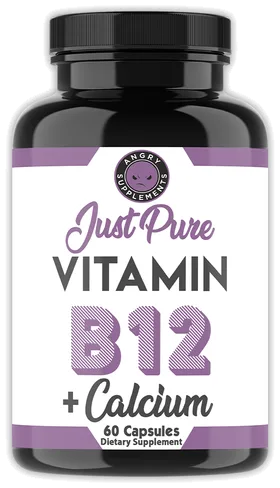
Angry Supplements Vitamin B12 + Calcium Review
Angry Supplements Vitamin B12 + Calcium is listed on SuppCo as a tablet supplement. The product page describes it as a supplement that has not yet been scored with a complete product TrustScore, so its TrustScore section currently reads Unrated and the page explains that insufficient data is available for evaluation. A request option is offered for users who want a priority TrustScore to be requested for this product. The serving size is one tablet, and the container is listed with 60 servings, so the bottle is presented as one tablet taken per serving. The Format field on the page shows tablet, and the Servings field shows 60. No price per serving is displayed, and the From field is left blank, so the page does not show a current retail price in the information provided. The nutrient panel lists two key active ingredients. The first is Calcium at 250mg, linked to the calcium nutrient page on SuppCo. The second is Vitamin B12 at 500mcg, linked to the vitamin B12 nutrient page. The page states that the product is backed by a none inactive ingredient profile, meaning no inactive ingredient profile is recorded for this item on the page. Product-specific testing is also described as not currently verified by SuppCo. The page explains the meaning of the TESTED by SuppCo seal, which indicates that active ingredient label claims have been verified by SuppCo in independent testing. For this product, that seal is not shown as verified, so readers should not assume that independent testing has confirmed the label claims. In the comparison section, the product is placed within the Calcium products category. Its popularity is rated Low, its quality rank is Average, and the page says it has a higher TrustScore than 54% of Calcium products. The page also lists related products in the Calcium category, including Calcium D-Glucarate from Xymogen, Calcium from Momentous, Calcium from Thorne, several Bone Builder products from Metagenics, Calcium Malate from Designs for Health, Calcium Citrate from Pure Encapsulations, and Plant Calcium from New Chapter. These related items are shown with their own scores on the page and are separate products. The page carries the standard disclaimer that the statements have not been evaluated by the Food and Drug Administration, and that the products and informational content are not intended to diagnose, treat, cure, or prevent any disease.
Study, Trial or Testing Result Summary
Members Only30 human studies · 7 improved
4 of these 30 human studies gave the ingredient by injection, not by mouth.
Vitamin B12 is given at 500 mcg, but controlled trials mostly found it does not boost energy in people who are not deficient. A review of 16 randomized trials in people without deficiency found no benefit for thinking or mood, and too few trials measured fatigue to judge [1]. B vitamins including B12 did not improve quality of life in heart patients [2]. Combination products containing B12 did not reduce fatigue in dialysis patients [3] or in trained cyclists [4]. A B12 injection did not ease voice fatigue in singers [5], and injections did no better than placebo in chronic fatigue syndrome [6]. Calcium is 250 mg per serving, reaching the studied 1000 mg only at four servings a day. In young women with premenstrual syndrome, 1000 mg a day of calcium carbonate reduced early tiredness versus placebo [7]. In older men, calcium combined with vitamin D, protein, strength training and testosterone reduced tiredness, but calcium's own part cannot be separated [8]. Other calcium trials found no change in exercise capacity [9][10], mood [11] or quality of life [12]. Animal and cell studies are never counted.
See all 30 studies →Hide the studies
- A review of 32 studies of phone apps for osteoporosis self-management found no clear effect on fatigue or on calcium intake; this was not a test of calcium supplements.Digital Health Technologies for Long-term Self-management of Osteoporosis: Systematic Review and Meta-analysis.
- Across 16 randomized trials with 6276 people without vitamin B12 deficiency, B12 did not improve thinking or depression, and only one trial looked at fatigue so it could not be analyzed.Effects of Vitamin B12 Supplementation on Cognitive Function, Depressive Symptoms, and Fatigue: A Systematic Review, Met…
- In 2029 heart disease survivors, about 3 years of low-dose B vitamins including 0.02 mg B12 did not improve quality of life, and slightly more activity limits from emotional problems were seen.B vitamin and/or n-3 fatty acid supplementation and health-related quality of life: ancillary findings from the SU.FOL.O…
- In 172 dialysis patients who finished, 12 weeks of a multinutrient supplement containing B12 did not change fatigue or quality of life versus placebo, though heart rate variability and a herpes virus measure improved.Effects of nutritional supplementation on fatigue, and autonomic and immune dysfunction in patients with end-stage renal…
- In 148 men aged 70 and older, 20 weeks of calcium, vitamin D and protein with strength training and testosterone reduced tiredness and improved chair-stand performance compared with no intervention, but calcium's own effect cannot be separated.Beneficial effects of exercise, testosterone, vitamin D, calcium and protein in older men-A randomized clinical trial.
- In 94 adults, a 4-week high-calcium diet was compared with a DASH-type diet and the abstract reports mood benefits only for the low-sodium, high-potassium diet, not for the high-calcium diet.Dietary electrolytes are related to mood.
- In 41 trained cyclists, 4 weeks of a combination supplement including 2.5 mcg B12 did not improve aerobic or anaerobic performance or fatigue measures compared with placebo, though blood lactate was lower after hard exercise.l-Carnitine and Alpha-Lipoic Acid Fail to Improve Anaerobic and Aerobic Performance in Trained Cyclists Despite a Reduct…
- In 25 healthy recreationally active adults, a single dose of a pre-workout supplement containing vitamin B12 as methylcobalamin, along with caffeine, raised self-reported vigor and energy compared with a placebo drink, though exercise performance did not change.Effects of acute ingestion of a pre-workout dietary supplement with and without p-synephrine on resting energy expenditu…
- In 25 resistance-trained people, a week of a pre-workout drink containing 45 mcg B12 and other ingredients helped maintain some strength and lifting measures versus placebo but did not change cycling time trial performance.Short-Term Effects of a Ready-to-Drink Pre-Workout Beverage on Exercise Performance and Recovery.
- In 24 adults with low parathyroid function, one month each of calcium citrate and calcium carbonate showed no difference in quality of life scores; the abstract does not report a fatigue difference.Calcium Citrate Versus Calcium Carbonate in the Management of Chronic Hypoparathyroidism: A Randomized, Double-Blind, Cr…
- In 20 singers with mild vocal symptoms, a single 1000 mcg B12 injection did not improve voice fatigue or singing measures more than a placebo injection.Effect of Vitamin B12 Injection on the Vocal Performance of Professional Singers: A Randomized, Double-blind, Placebo-Co…
- In 18 trained adults, three days of hydrogen-rich calcium powder lowered breathing rate and blood pH during exercise but did not change oxygen uptake compared with placebo.Application of Molecular Hydrogen as an Antioxidant in Responses to Ventilatory and Ergogenic Adjustments during Increme…
- In 15 people with chronic fatigue syndrome, injections of liver extract with folic acid and B12 worked no better than placebo, which had a strong response.Liver extract-folic acid-cyanocobalamin vs placebo for chronic fatigue syndrome.
- In eight men doing calf contractions to exhaustion, calcium carbonate used as the control had no effect on time to fatigue, which was similar to the acid and alkaline trials, showing that changing muscle pH did not alter fatigue.The effect of pH on fatigue during submaximal isometric contractions of the human calf muscle.
- In young women with premenstrual syndrome, 500 mg of calcium carbonate twice daily for 3 months reduced early tiredness compared with placebo.Effects of calcium supplement therapy in women with premenstrual syndrome.
- In 11 male runners, 4 days of calcium phosphate loading did not improve maximal aerobic capacity or time to exhaustion compared with placebo.Phosphate supplementation, cardiovascular function, and exercise performance in humans.
- In a chart review of 2142 people with fibromyalgia, 42.4% had vitamin B12 deficiency, and deficiency was linked to higher odds of fatigue (odds ratio 1.39) after adjusting for vitamin D.Association of Vitamin B12, Vitamin D, and Thyroid-Stimulating Hormone With Fatigue and Neurologic Symptoms in Patients …
- In a retrospective study of 689 children without complaints, 23.2% had vitamin B12 deficiency and it was linked to vitamin D deficiency, but no supplement was tested for energy.Is There An Association Between Vitamin B12 Level and Vitamin D Status in Children?
- In 335 older adults, vitamin B12 levels were not associated with frailty, and no supplement was tested.Association between serum vitamin B12 level and frailty in older adults.
- Women with fibromyalgia had lower vitamin B12 levels than 58 healthy women, and lower levels were linked to more tender points, though this study did not test supplements.Could ferritin, vitamin B12, and vitamin D play a role in the etiopathogenesis of fibromyalgia syndrome?
- In 65 adults with self-reported gluten sensitivity on a gluten-free diet, average calcium intake from food was 695 mg a day, below recommendations, and energy was not studied.Dietary and symptom assessment in adults with self-reported non-coeliac gluten sensitivity.
- Vitamin B12 levels were normal in 55 people with primary fibromyalgia, who reported muscle fatigue as one of their most disabling symptoms.Primary fibromyalgia. A clinical and laboratory study of 55 patients.
- In adults with hypophosphatasia, a higher calcium to phosphorus intake ratio was associated with more tiredness and fatigue, and very high or very low calcium intake was linked to more symptoms, based on a 7-day diary.Mineral Intake and Clinical Symptoms in Adult Patients with Hypophosphatasia.
- In a survey of 38 people with chronic fatigue syndrome or fibromyalgia who had weekly or more frequent B12 injections for six months or more, 15 were good responders who rated themselves much or very much improved, and higher doses and longer use were linked to better response.Response to vitamin B12 and folic acid in myalgic encephalomyelitis and fibromyalgia.
- In a retrospective review of 38 children with neurological symptoms of vitamin B12 deficiency, all recovered within one month of B12 supplementation; fatigue was among the symptoms but was not reported separately.Neurological symptoms of vitamin B12 deficiency: analysis of pediatric patients.
- In a study of 37 adults with pulmonary arterial hypertension, 29% had a functional vitamin B12 deficiency, but no supplement was tested, so the study does not show whether B12 improves energy.Nutritional status in pulmonary arterial hypertension.
- In a small case series of 20 infants with vitamin B12 deficiency, who were treated with cyanocobalamin, clinical and lab findings improved overall, though energy was not separately reported and the dose and duration were not stated.Vitamin B12 Deficiency in Infants.
- All 5 people with ALS who received methylcobalamin injections reported more energy and less fatigue, based on interviews; the dose was not stated.Patients' experiences with methylcobalamin injections in amyotrophic lateral sclerosis.
- A survey of U.S. adults found that drinkers had higher energy intake than non-drinkers, but their diets were less nutrient dense, including for calcium; the survey did not test calcium for energy.Alcohol consumption and nutrient density of diets in the Nationwide Food Consumption Survey.
- This survey of hypothetical scenarios found people kept taking B12 for fatigue after a small symptom improvement, showing post hoc bias rather than any real effect of B12 on energy.Post Hoc Bias in Treatment Decisions.
Review Totals and Summary
Members Only6,995 reviews · 90% positive
Customer feedback regarding Vitamin B12 and Calcium supplements, including general observations and some specific mentions, reveals several qualitative themes. Many users of B12 supplements, in general, frequently report noticeable improvements in cognitive functions such as memory and concentration, describing themselves as feeling sharper, more productive, and experiencing reduced brain fog. A significant number of individuals also praise the supplement for boosting their energy levels and alleviating fatigue, contributing to an overall sense of increased vitality. Some users have also noted positive impacts on mood and a reduction in nerve pain, suggesting a broader benefit to neurological well-being. One specific review for a general B12 supplement highlighted an unexpected benefit of rapid belly fat loss when combined with exercise. However, the customer experience is not universally positive, and some recurring concerns emerge. A notable qualitative theme among some B12 users is the paradoxical experience of increased forgetfulness or heightened anger and irritability after initiating supplementation. These individuals express confusion and frustration, as they expected an improvement in cognitive and emotional states. In some cases, users have reported that their pre-existing symptoms did not improve, or even worsened, despite consistent supplementation over extended periods. While not directly attributed to "Angry Supplements Vitamin B12 + Calcium," a review for a different brand's 4-in-1 Calcium supplement (which also contained B12) highlighted significant issues with pill size and shape, describing them as "painful to swallow" and causing "stomach upset" and a "strong laxative" effect. This suggests that for combination supplements, the physical attributes of the tablet and its gastrointestinal impact can be a critical factor in customer satisfaction, even if the specific Angry Supplements product has not received similar complaints in the provided search results.
Biohacker Summary
Members Only8 of 10 recommend it
Calcium is the main ingredient, and the panel is split: four of the ten lean toward recommending it, mostly for bone strength, while the rest mostly stay neutral and one is wary. One panelist suggests 1,000 to 1,200 milligrams a day, which can be supplemented with calcium carbonate or calcium citrate, and another says a little extra is probably fine, especially for women and postmenopausal women. Several panelists point to food sources such as sardines, dairy, kale and leafy greens, and one takes calcium daily in a mix. Two cautions stand out: one panelist warns against calcium carbonate and says calcium alone cannot fix bone loss, and another says calcium without vitamins D, A and K2 can end up in tissues, and suggests two parts calcium to one part magnesium. Vitamin B12 is a smaller ingredient in this product, and most panelists who mentioned it recommend checking your levels and fixing a deficiency, with one preferring methylcobalamin and another warning against taking it too close to bedtime.
See all 10 biohackers →Hide the biohackers
Dr. Eric Berg · Calcium · warns
- Warns that bone loss cannot be fixed with just calcium, as bone is primarily collagen with other essential minerals.
- Dr. Berg includes calcium carbonate among the synthetic supplements to avoid.
- Recommends taking the natural form of vitamin B12, methylcobalamin, to support nerve regeneration, myelin production, and nerve growth factors.
- Notes that Vitamin B12 is intimately involved in the nervous system and may be behind sciatica and carpal tunnel syndrome.
- Warns against calcium carbonate, also known as limestone, stating that while it lowered hip fractures in a study, it also increased kidney stones and is not good for arteries, requiring the body to work hard to use it.
- Notes that tannins in tea bind calcium, blocking its absorption.
- Recommends taking vitamin B12 if on a med.
- Briefly mentions Vitamin B12 in relation to neuropathy.
- Indicates that horizontal thin white lines near the base of the nails are indicative of low calcium.
- States that vertical ridges on nails could mean a vitamin B12 deficiency, and slightly brown or grey nails, especially for vegans, could indicate low B12. Completely white nails with a pink strip across the top could also be low B12.
- Recommends incorporating vitamin B12 foods into the diet, especially for those who don't regularly consume animal products, to prevent irreversible damage to the nervous system.
- Warns that calcium carbonate can build up in the arteries and kidneys and increase the risk of a heart attack.
- Dr. Berg mentions that fermented dairy contains vital nutrients, including calcium.
- States that calcium and magnesium are intrinsically linked and work in combination with vitamin D to support the body's calcium balance.
Siim Land · Calcium · neutral
- Lists dairy and sardines as sources of Calcium.
- Notes that Boron reduces calcium/magnesium loss.
- Created Microvitamin, a supplement that bundled all the supplements he was taking, to help fund his a med trial.
- States that vitamin B12 deficiency is the most common reason for premature graying of hair and recommends fixing B12 status if it is deficient, as it gives a greater likelihood of reversing gray hair.
- Recommends a high calcium intake for bone health.
- Places calcium supplementation in the 'bad tier' due to its association with increased cardiovascular events, recommending dairy or bones as easier ways to get calcium, though it can be useful for postmenopausal women with low bone density.
- Mentions that eating enough calcium matters for bone density, but states that it alone won't transform bone density.
- Warns that calcium is linked to a higher risk of heart disease, though people with low calcium status and intake can take it safely.
- Warns that calcium supplements increase the risk of heart disease by raising blood calcium levels too high, leading to hypercalcemia and more calcium being stored in the arteries, and also increase the risk of arrhythmias.
- Warns against calcium supplementation for most people due to its association with increased cardiovascular events, but notes it can be useful for postmenopausal women with low bone density who don't consume dairy.
- Discusses Calcium as a supplement.
- Recommends consuming calcium from dairy, tofu, leafy greens, and bones, as it is a key nutrient required for ATP synthase in mitochondrial energy production.
- Takes 1 gram of Vitamin B12 from DoNotAge in the morning for longevity.
- Mentions Vitamin B12 as a key nutrient involved in the methylation cycle that helps prevent methionine from raising homocysteine levels.
Thomas DeLauer · Calcium · neutral
- Notes that milk contains 120mg of calcium, while sardines contain 351mg, highlighting a 3x difference.
- Recommends Vitamin B12 for mental health and mood, explaining its role in myelination and neurotransmitter production. They specifically recommend a liposomal and micellar form of methylcobalamin B12 for better absorption and to avoid toxicity.
- Recommends getting calcium, along with vitamin D, zinc, and magnesium, from foods like sardines, as they are important for inflammatory pathways in the gut.
- Explains that eating sardines with their soft bones provides a serious hit of calcium, which is a perfect combination for bones and may contribute to satiety.
- Mentions that a single serving of sardines provides vitamin B12 at something like three to four times the daily needs.
- Recommends taking methylcobalamin as a methylated form of B vitamin for mitochondrial function.
- Mentions that magnesium and calcium should not be taken together as they cancel each other out.
- Tries to get multivitamins without calcium or with a low amount, as he believes supplemental calcium impacts the absorption of other vitamins and minerals and is not as beneficial as hyped. He cautions against it for most people due to the risk of coronary artery calcification.
- Recommends getting calcium from dairy sources like milk, yogurt, kefir, and cheese in the morning to support neurotransmitter synchronization crucial for deep and REM sleep, noting that low dietary calcium is linked to insomnia.
- Warns that calcium competes with magnesium for the same absorption channels, advising to separate magnesium intake from calcium supplements or dairy by at least an hour or two.
- Recommends providing the body with adequate dietary calcium, not a calcium supplement, to ensure a clean, strong spark for efficient insulin release.
- Warns that calcium and magnesium should not be taken together as they cancel each other out, though some products use delayed absorption to mitigate this.
- Warns that most people consume too much calcium relative to magnesium, which can disrupt the balance needed for proper bodily function, comparing it to an electrical circuit.
- Advises against taking vitamin B12 if one's diet already provides enough, suggesting a B complex or liver capsule instead for B vitamins.
Dr. Mark Hyman · Calcium · recommends
- Notes that calcium is in bones but is also essential for nerves, muscles, and the heart, and low levels can affect muscle function and heart rhythm.
- States that vitamin B12 is a nutritional deficiency that impacts mental health.
- Recommends vitamin B12 with vitamin B6 and folate as supplements with strong evidence for PMS.
- States that green leafy vegetables are great sources of calcium.
- Mentions that repletion of vitamin B12 can help safely withdraw someone from meds and that simple vitamin B12 deficiencies are important to address in a depression workup.
- Lists Vitamin B12 as important for nerve health and energy.
- Notes that calcium needs are lower than advertised and that stress, soda, and excess sugar can drive calcium loss.
- Does not prescribe calcium supplements at all, teaching people to get it from whole foods instead, because calcium supplements don't work for building bones or preventing fractures, and it's bone quality, not density, that matters.
- Warns that acid blockers inhibit calcium absorption.
- Lists calcium as another important nutrient that people can be tested for and measured.
- States that high doses of calcium supplementation in the elderly were not really impacting bone density, as osteopenic patients still became osteoporotic.
- Mentions vitamin B12 as a core nutrient required for methylation, noting that deficiencies can lead to various health issues.
- Recommends supplementing with Vitamin B12 for hair follicle health and growth, especially for vegans, as many people are deficient.
- Recommends checking vitamin B12 levels as a first step before taking any supplements.
Dr. Rhonda Patrick · Calcium · neutral
- Mentions that kale delivers calcium, a micronutrient many diets fall short on.
- Notes additional gaps in calcium.
- Warns that Vitamin B12 enhances light's melatonin-suppressing effects and should be avoided too close to bedtime.
- Reports that alcohol use disorder is associated with a 20-50% greater prevalence of Calcium deficiency.
- Notes that a med can cause vitamin B12 deficiency, especially as absorption decreases with age, and suggests a sublingual form or B12 injections for older individuals.
- Discusses the origin of Vitamin B12, suggesting it's a microorganism that propagates in the soil and that animals get it from eating dirt, which is why it's less available in modern, sanitized plant foods.
- Around 38% doesn't meet the requirement for calcium.
- Takes a calcium-magnesium pill because he believes people tend to be short of both and that the body cares about the ratio of these similar molecules.
- Describes a study where female mice fed a diet high in B vitamins, folic acid, and vitamin B12 three weeks before pregnancy had offspring that no longer had yellow fur and were not predisposed to obesity and cancer.
- States that 1,000 milligrams of calcium per day is the recommended intake for bone density, and supplementation is an option if this requirement is not met.
- Takes a calcium, vitamin K2, and vitamin D combination supplement in the morning, providing about 600 mg of calcium and another 1,000 IUs of vitamin D.
- Dr. Rhonda Patrick discusses calcium needs.
- Dr. Rhonda Patrick explores vitamin B12 and autism risk.
- She takes methyl B12 as part of her Thorne multivitamin, which helps keep her homocysteine levels below 9 micromoles per liter.
Dave Asprey · Calcium · neutral
- Notes that when energy intake is too low for training demand, nutrient intake often falls short, especially for calcium, which is associated with reduced bone health.
- States that Vitamin B12 is extremely important for every kind of brain function and recommends ensuring B12 levels are optimal, around 500, not just barely above normal.
- Explains that calcium provides the raw material for bones, but it isn't a standalone input and needs a whole system to be effective.
- Notes that people take calcium for their bones.
- Warns that taking calcium without vitamin D, A, and K2 can lead to calcium going into tissues, causing bone spurs and other issues, and recommends a two-to-one ratio of calcium to magnesium.
- Recommends taking calcium citrate during a high oxalate meal to bind the oxalate in the gut.
- Notes that people often take calcium for bone health.
- Recommends taking vitamin B12 if one has a deficiency.
- Believes calcium supplements are overrated, as most people need more vitamin K2 and vitamin D instead.
- Advises taking iron and calcium separately because they will bind together.
- Takes extra calcium to help deal with the burden when eating chocolate or anything with higher levels of oxalates.
- Dave Asprey notes that it's almost impossible to get vitamin B12 in a vegan diet, and it's primarily found in animal meat.
- Discusses calcium citrate as a counter to oxalate crystals, specifically when consumed through dairy, but questions if it's the primary form of calcium in dairy.
- Clarifies that Vitamin B12 is completely different from Vitamin B3 and is involved in different pathways, so there is no overlap with NAD pathways.
Ben Greenfield · Calcium · neutral
- Is considering whether he needs a calcium supplement because lead can displace calcium in bones, affecting bone strength.
- Recommends getting vitamin B12 tested and supplementing if deficient, as B12 deficiency can cause damage to the myelin coating around nerves, including cochlear nerves, and improve tinnitus severity scores.
- Mentions calcium as a common deficiency.
- Recommends adequate intake of calcium for bone strength.
- Is using calcium chloride mixed with PRP before injecting for the P-shot.
- Advises people to stop taking calcium supplements as part of the Root Cause Protocol.
- Warns that in high doses, calcium without the right cofactors can raise cardiovascular risk by contributing to arterial calcification instead of bone strength, and may increase the risk of osteoporosis.
- Explains that 10X separates calcium and zinc into different micro beads, releasing them at different rates and locations in the digestive tract to prevent competition and optimize absorption.
- Covers calcium as a key supplement for kids.
- He recommends Vitamin B12, especially for kids on a vegan or vegetarian diet, as it is essential for nervous system development.
- Mentions that blood testing for an energy crisis would include nutritional things like a vitamin B12 level.
- Ben Greenfield consumes vitamin B12 as part of the Update Energy Drink.
- Warns of calcium deficiency on a carnivore diet, as there is not an appreciable amount in meat, and recommends eating fish with bones or taking a calcium supplement or bone mineral matrix.
- Lists vitamin B12 as a vitamin that, when combined with others, has a neuroprotective effect on the brain.
Peter Attia · Calcium · recommends
- Recommends calcium as one of the 'big three' micronutrients for bone health, suggesting a daily intake of 1,000 to 1,200 milligrams, which can be supplemented with calcium carbonate or calcium citrate.
- Explains that bone is 50 to 70% mineral, predominantly calcium, and that virtually all of the body's calcium is contained within bone, making bone important for calcium homeostasis.
- Recommends calcium for bone health, stating that teenagers probably need about 1000 milligrams a day.
- Discusses bone acting as a reservoir for calcium and how resorption and formation release calcium into the blood when needed.
- Notes that deficiencies in certain vitamins and minerals, such as B12, can be a cause of hair loss in women.
- Notes that bone is 50 to 70 percent mineral, with calcium being the predominant mineral, and virtually all of the body's calcium is contained within bone.
- Recommends getting about a gram of calcium a day from organic bone meal, which provides calcium hydroxyapatite, the form humans are meant to consume.
- Suggests that calcium is one of the other signals involved in regulating mitochondrial number, beyond AMPK activation.
- States that in postmenopausal women not on estrogen, calcium and vitamin D have no protective effect against hip fracture because the problem is not the shell of the bone, which is fed by calcium and vitamin D, but the internal girder network.
- Explains that when a person is not responding to traditional B vitamins, they will step it up and give them methylcobalamin B12.
- Notes that compelling evidence links calcium to reduced risk of osteoporosis, which can impact mortality from specific causes.
- Notes that Ryan Lochte was suspended for a doping rule violation after a social media post showed him taking vitamin B12 in an illegal way, by IV infusion.
Bryan Johnson · Calcium · recommends
- Recommends calcium as a mineral that, along with phosphorus, magnesium, and boron, is deposited to fortify the bone structure after the collagen scaffold is in place.
- States that Blueprint essential capsules and soft gels are packed with key vitamins and minerals needed for strong bone health.
- Agrees that a little extra calcium is probably okay, especially for women, to really hit home for bone mineral density.
- Recommends prioritizing calcium intake for postmenopausal women to help maintain bone density and reduce the risk of osteoporosis.
- Bryan Johnson takes Calcium daily as part of his Longevity Mix, which supports healthy bones and teeth.
- Recommends continuing with calcium to support bone health during the follicular phase.
Andrew Huberman · Calcium · neutral
- Discusses "hard water" and the role of magnesium and calcium in cardiovascular health.
- States that a deficiency in vitamin B12 can be terrible and lead to chronic fatigue-like syndromes, as many parts of mitochondria require B vitamins.
- Recommends taking methyl B12 as part of methylated B vitamins to lower homocysteine levels and reduce cardiovascular risk.
- Has been taking AG1 for over 10 years, once and often twice every day, to ensure he gets all necessary vitamins, minerals, probiotics, and adaptogens, considering it a nutritional insurance policy.
- Has been taking AG1 since 2012 to ensure he gets enough vitamins, minerals, Prebiotic fiber, and other nutrients typically found in fruits and vegetables, providing nutritional insurance.
- Andrew Huberman started drinking AG1 in 2012 and still drinks it once or twice a day because it provides all his foundational nutritional needs, ensuring proper amounts of vitamins, minerals, probiotics, and fiber for optimal mental health, physical health, and performance.
- Recommends the consumption of B12 and other B vitamins, especially folate, as it has been shown to partially decrease cancer risk in people who ingest alcohol, though it does not completely offset it.
- Started taking AG1 in 2012 and still takes it once or twice a day because it covers foundational vitamin, mineral, and probiotic needs, and supports immune system function and a healthy gut microbiome.
- He has been using Athletic Greens for over a decade to cover his vitamin and mineral bases and support his gut microbiome, immune system, gut-brain axis, and mental functions.
- Adequate intake of calcium is vital for bone health.
- Recommends Methyl B12 as part of methylated B vitamins to lower homocysteine and reduce cardiovascular risk.
RAL Summary
Members OnlyTier 4 for Energy
Tier 2 rests on two calcium trials, but one tested calcium only in women with premenstrual syndrome with an unreported number of participants, and the other bundled calcium with vitamin D, protein, strength training and testosterone, so it cannot show calcium's own effect, while 9 of 11 calcium studies and most vitamin B12 studies found no energy benefit. So it is graded Tier 4, lower than the rules alone gave.
Take 4 servings a day (4 tablets) to match the dose that worked in the studies.
- Emerging: not enough evidence to rank higher yet.
Where the evidence disagrees: 22 of the 30 human studies found no effect.
More Details
Members OnlyBody systems · Combine with · Possible side effects
Body systems: Nervous system, Musculoskeletal system, Metabolic system
Combine with: To enhance the benefits of Vitamin B12 for energy, consider combining it with other B-complex vitamins and CoQ10, which supports cellular energy production. For the calcium component, pairing it with Vitamin D3 and Vitamin K2 is highly recommended, as these vitamins are crucial for optimal calcium absorption and utilization for bone health.
Possible side effects: No major side effects reported; one trial of low-dose B vitamins saw slightly more activity limits from emotional problems.
Supplement Facts
Vitamin B12 500 mcg · Calcium 250 mg
| Vitamin B12 | 500 mcg | |
| Calcium | 250 mg |
Other ingredients: Microcrystalline Cellulose, Dicalcium Phosphate, Stearic Acid, Magnesium Stearate, Solutab, Pharmaceutical Glaze.
Directions: Suggested use: As a dietary supplement take one (1) tablet once daily, preferably with a well balanced meal and water, or as directed by a healthcare professional.
Barcode (UPC) 810069200040 · Label source: NIH label database · Report a label change
Show entire label

Where to Buy
Supp
We sell no supplements. Prices change; check the store.
More energy products
Members OnlyThe highest ranked for the same goal
Read more
Our articles on this subject
- Best Vitamins for Fatigue and the Habits That Matter MoreArticle · Jun 15, 2026
- What Supplements and Vitamins Should Not Be Taken TogetherArticle · Sep 7, 2026
Graded November 3, 2026 by the Reverse Age Lab evidence engine, from human studies, real reviews and our biohacker panel. How we grade. Is this medical advice? No. Rala organizes the published evidence; go over any change with your doctor, especially if you take meds.
Privacy policyConsumer health dataTermsDo Not Sell or Share My Personal InformationCookie settings