
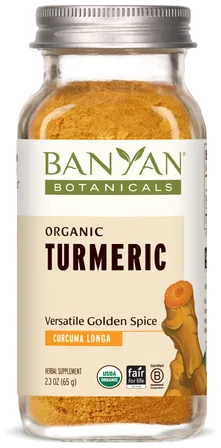
Banyan Botanicals Organic Turmeric Review
We don’t sell supplements. We help you make decisions and get the best price.
Lowest prices
In stock, lowest price first. Checked Nov 19.
- Banyan Botanicals$14.99 a bottleThe store does not state the bottle size, so there is no cost per month.Buy at Banyan Botanicals (opens in a new tab)
- AmazonPrice at AmazonCheck price at Amazon (opens in a new tab)
Also at: iHerb · Walmart · Vitacost
Some store links earn us a commission.
Study, Trial or Testing Result Summary
Members Only19 human studies · 15 improved
Turmeric has fairly good human study support for indigestion after meals. In 132 adults with ongoing indigestion, four weeks of turmeric eased pain and other stomach symptoms more than a dummy pill and about as well as a standard acid-reducing drug [1]. In 206 adults, four weeks of curcumin, the main active part of turmeric, worked about as well as that acid-reducing drug, and taking both together added nothing more [2]. In 78 adults with discomfort after meals, four weeks of turmeric relieved symptoms about as well as an anti-gas medicine, but symptoms came back more often after stopping turmeric, about 45 percent versus 14 percent [3]. In people with stomach ulcers on standard infection treatment, adding curcumin cleared indigestion in 27.6 percent versus 6.7 percent on a dummy pill [4]. Not every trial agreed: adding curcumin to a different acid-reducing drug gave no clear extra benefit [5]. In women with severe obesity, curcumin lowered overall gut symptoms such as belching and constipation [6]. This product is plain turmeric powder at half a teaspoon, and it is unclear whether that matches the doses studied, which were measured in milligrams of turmeric or curcumin extract [3]. Benefits may fade once you stop taking it [3]. Animal and cell studies are never counted.
See all 19 studies →Hide the studies
- A review of 34 Persian clinical trials of 15 herbs and 4 herbal blends, including turmeric, concluded they were effective for functional dyspepsia, without turmeric-specific results.Persian Herbal Medicine in Functional Dyspepsia: A Systematic Review.
- A review of 26 studies found turmeric appeared safe and possibly helpful for bowel diseases, but results for dyspepsia and other conditions were inconsistent and most studies had a high risk of bias.A systematic review of the efficacy and safety of turmeric in the treatment of digestive disorders.
- In 206 adults with functional dyspepsia, curcumin for 28 days improved pain and non-pain symptom scores about as much as a med, and adding both together gave no extra benefit.Read the study on PubMed (37696679) →
- In 132 adults with functional dyspepsia, 4 weeks of turmeric reduced pain and non-pain symptoms more than placebo and about the same as a med.Read the study on PubMed (34652861) →
- In 75 adults with functional dyspepsia, 500 mg curcumin daily plus famotidine for 1 month reduced symptoms, but did not differ significantly from placebo plus famotidine.Effect of Curcumin on Severity of Functional Dyspepsia: a Triple Blinded Clinical Trial.
- In 67 people with irritable bowel syndrome and small bowel dysbiosis, 30 days of curcumin and boswellia extract with a low FODMAP diet reduced bloating and abdominal pain more than diet alone.Beneficial Effects on Abdominal Bloating with an Innovative Food-Grade Formulation of Curcuma longa and Boswellia serrat…
- In 60 healthy adults, 1000 mg of turmeric extract daily for 5 weeks caused no differences in bloating, cramping or other gut tolerance measures compared with placebo and was safe.Safety assessment and gastrointestinal tolerance of a novel highly bioavailable turmeric extract formulation: A randomis…
- In 50 adults with constipation-type irritable bowel syndrome, a jelly drink with 10 mg curcumin, inulin and vitamin B6 for 2 weeks reduced abdominal pain, bloating and incomplete emptying, while the control diet group improved only in pain and bloating.[Dry jelly concentrate with vitamins and dietary fiber in patients with IBS with constipation: a comparative controlled …
- In 49 adults with irritable bowel syndrome and small bowel dysbiosis, 30 days of turmeric and Boswellia extract with a low-FODMAP diet reduced abdominal bloating and pain significantly more than placebo with the diet.Positive Outcomes of Supplementation with Lecithin-Based Delivery Formulation of Curcuma longa and Boswellia serrata in …
- In 31 women with severe obesity, 1500 mg of curcumin daily for 13 weeks lowered total gastrointestinal symptom scores versus placebo, with less belching and constipation.Curcumin Supplementation Improves Gastrointestinal Symptoms in Women with Severe Obesity: A Double-Blind, Randomized, Pl…
- In patients with peptic ulcer on standard H. pylori triple therapy, 500 mg of curcumin daily improved dyspepsia scores more than placebo, and dyspepsia resolved in 27.6% versus 6.7%, without changing H. pylori eradication.Adjunctive Therapy with Curcumin for Peptic Ulcer: a Randomized Controlled Trial.
- In 78 adults with post-meal distress, 4 weeks of turmeric (750 or 1,500 mg daily) relieved symptoms about as well as simethicone, but symptoms returned more often after stopping turmeric (about 45% vs 14%).Efficacy of Curcuma longa in treatment of postprandial distress syndrome: An open-label randomized-controlled trial.
- In 305 people with functional dyspepsia, a multi-herb capsule containing turmeric taken for 60 days cut symptom scores by at least half in 79% of them, with no control group.[Phytotherapy with a mixture of dry extracts with hepato-protective effects containing artichoke leaves in the managemen…
- In 45 people with peptic ulcer symptoms, 3000 mg of turmeric daily for up to 12 weeks eased stomach pain and discomfort within two weeks, and most ulcers that were checked by scope had healed by 12 weeks.Phase II clinical trial on effect of the long turmeric (Curcuma longa Linn) on healing of peptic ulcer.
- In a small pilot with 44 adults with irritable bowel symptoms, 500 mg turmeric extract twice daily with a lecithin base for 30 days, plus a low-FODMAP diet, reduced bloating and abdominal pain within each group; there was no placebo group.Positive Effect of Lecithin-Based Delivery Form of Curcuma and Boswellia Extracts on Irritable Bowel Syndrome After COVI…
- In 43 adults with digestive disorders, taking 10 grams daily of a multi-ingredient herbal formula containing curcumin for 4 weeks after a control phase improved upper and lower digestive symptoms by 60% to 80%, with no placebo group.Herbal formula improves upper and lower gastrointestinal symptoms and gut health in Australian adults with digestive dis…
- In 25 people with functional dyspepsia and stomach bacteria, a 7-day course including 60 mg daily of curcumin with other agents reduced upper stomach symptoms after 2 months, although it did not clear the bacteria.A curcumin-based 1-week triple therapy for eradication of Helicobacter pylori infection: something to learn from failure…
- In 8 people with HIV-associated diarrhea taking about 1,862 mg curcumin daily for an average of 41 weeks, diarrhea resolved in all, and 5 of 6 tracked patients had less bloating and abdominal pain; there was no placebo group.Treatment of HIV-associated diarrhea with curcumin.
- In 146 people with irritable bowel syndrome, two daily tablets containing 49 mg curcumin plus berberine for 2 months reduced abdominal discomfort by about 47%, and 93% of patients reported some improvement, with no control group.The Possible Synergistic Pharmacological Effect of an Oral Berberine (BBR) and Curcumin (CUR) Complementary Therapy Alle…
Review Totals and Summary
Members Only234 reviews · 88% positive
Extensive customer reviews and qualitative feedback are currently being aggregated for this product. Check back soon for a detailed sentiment analysis.
Biohacker Summary
Members Only6 of 10 recommend it
Most of the panel recommends or uses turmeric, and six of the ten latest positions are "uses" or "recommends". The main reason is inflammation, along with joint pain, liver support, detox pathways and antioxidant benefits, and some add it to food such as eggs, bone broth and chicken. Several say to pair it with black pepper, and one prefers liposomal forms or an extract for better absorption and lower oxalate. One panelist takes one gram a day, and none of the others give a dose, though one advises ginger as a partner. Three of them warn: against high doses that can lower a hormone tied to libido and carry a risk of lead contamination so sourcing matters, about high oxalate in large amounts, and to stop it before surgery because it can act like meds-style a med.
See all 10 biohackers →Hide the biohackers
Dr. Eric Berg · Turmeric · neutral
- Poses the question of what would happen if someone consumed turmeric for 14 days, without stating a position or result.
- Dr. Eric Berg recommends pairing turmeric with black pepper to improve curcumin absorption.
- States that one cup of turmeric water could have surprising benefits for health.
- Dr. Eric Berg recommends adding turmeric to eggs to support satiety, antioxidant potential, cardiovascular, and liver health.
- Recommends turmeric for its chelation abilities and its ability to turn up the body's detoxification genes.
- Mentions turmeric as a food that black cumin seed oil outperforms in reducing inflammation.
- Dr. Eric Berg states that turmeric can contribute to supporting liver health.
- Says turmeric is a natural a med because it helps retain neurotransmitters like serotonin, GABA, and dopamine.
- Recommends turmeric, noting it is an exceptionally rich source of curcumin, which delivers powerful antioxidant and anti-inflammatory effects linked to cardiovascular health and mental well-being.
- States that Turmeric may be the most underrated medicinal plant on earth, supporting the brain, liver, and heart, and helping protect healthy cells during chemo or radiation therapy.
Dr. Mark Hyman · Turmeric · uses
- Included turmeric in their chicken dish as an anti-inflammatory power couple with ginger.
- Recommends turmeric as an anti-inflammatory powerhouse.
- Notes that if people have used something like turmeric for several thousand years as a remedy and an anti-inflammatory compound, it can't be wrong.
- States he was using circ turmeric to stimulate the NRF2 pathway and open up detox.
- Mentions using turmeric (curcumin) in certain people, especially those with elevated amyloid levels in the blood.
- Recommends Paleovalley's Turmeric Complex, which uses whole food turmeric with over 200 beneficial compounds, plus organic ginger, rosemary, and cloves, to support overall wellness.
- Recommends turmeric as a simple way to support health against stress and inflammation, noting its key compound curcumin supports the body against conditions like cancer, cardiovascular stress, neurogenic diseases, and helps with inflammation, metabolic balance, joint comfort, mood, immune function, and brain health.
- Recommends turmeric as a simple way to support health, noting its key compound curcumin supports the body against various conditions and helps with inflammation, metabolic balance, joint comfort, and mood. He specifically recommends Paleovalley's Turmeric Complex for its whole food approach and improved absorption.
- Recommends turmeric as a great herb and spice for upregulating the body's own detoxification pathways.
- Uses turmeric in her cooking, takes turmeric supplements with high levels of curcumin, and makes turmeric shots, believing it has been key to her remission.
Ben Greenfield · Turmeric · warns
- Advises patients to stop turmeric before surgery because it can act as a med or antiplatelet agent.
- Recommends root spices like turmeric for use on the AIP diet.
- Suggests using choice herbs like turmeric when preparing meat to weave in small stressors.
- Lists turmeric as one of the ingredients in Organifi Green Juice.
- Mentions turmeric as an herb that has more data than fruit tree leaves.
- Stuffs the trout with herbs like turmeric.
- Recommends anti-inflammatory spices like turmeric, ginger, and garlic, often seen in a Mediterranean approach, to help with inflammation and fat loss.
- Uses turmeric to add flavor to his roast chicken recipe.
- Notes that turmeric, as an anti-inflammatory and antioxidant, would affect the results of chronic inflammatory testing.
- Uses a lot of Indian spices like turmeric in his family meals, and notes that while large amounts could cause oxidative stress, small amounts are beneficial.
Thomas DeLauer · Turmeric · uses
- Recently started taking turmeric for their joints, specifically for knee issues, as it helps support recovery, especially after a workout.
- Mentions that Dose Daily contains turmeric, which contributes to its positive impact on liver enzyme levels.
- Mentions Turmeric as an ingredient in DOSE that has proven literature behind it for liver health.
- Mentions that Dose Daily, which he recommends for liver support, contains turmeric.
- Recommends adding turmeric to food, citing rodent model research that shows it lowers plasma lipids and glucose, and increases insulin sensitivity in a dose-dependent fashion.
- Recommends turmeric with black pepper to shut down inflammatory response, as piperine in black pepper helps curcumin absorb by blocking liver clearance.
- Discusses turmeric as one of the popular natural options for insulin resistance and blood sugar, but notes that apple cider vinegar outperformed it in a meta-analysis for lowering fasting blood glucose and HBA1C.
- Recommends turmeric as a spice that is good for the gut.
- Is a big fan of turmeric and recommends adding it to the mix, citing early in vitro research that shows it can directly reduce leptin levels.
- States that turmeric certainly has an anti-inflammatory effect.
Dr. Rhonda Patrick · Turmeric · uses
- Likes adding turmeric to bone broth for flavor, warmth, and its anti-inflammatory compounds.
- Suggests that if someone is an 'immuno-ager,' they might want to take turmeric to help with their immune system.
- Explains that turmeric, specifically curcuminoids, are slightly toxic to the body, which activates phase II detoxifying enzymes and turns on anti-inflammatory genes. She also notes that aromatic turmerone in turmeric can increase neural stem cell proliferation and affect memory and performance.
- Feels comfortable using turmeric with ginger and black pepper to counteract unnecessary inflammation, noting its long history in Ayurvedic medicine.
- Dr. Patrick mentions that catechins and polyphenols are found in things like green tea, dark chocolate, turmeric, blueberries, and other purple pigmented fruits and vegetables, as well as red wine.
- Says they add turmeric to their coffee with MCT powder or blend it into their smoothie to get aromatic turmerone.
- Mentions turmeric as a beneficial hormetic stressor that activates the body's stress response mechanisms.
- Kevin makes teas with turmeric, indicating he uses it.
Siim Land · Turmeric · recommends
- Mentions that turmeric helps with arthritis and joint pain, with clinical trials showing its effectiveness.
- Places Turmeric or Curcumin in the 'god tier' due to numerous human clinical trials for inflammation, noting that its poor bioavailability means supplements should ideally be liposomal formulations or include piperine (black pepper) to enhance absorption.
- States that turmeric is known for its anti-inflammatory effects, lowering inflammation markers like CRP in clinical trials.
- Places Turmeric (Curcumin) in the 'god tier' due to numerous human clinical trials supporting its anti-inflammatory effects. He advises using liposomal formulations or adding piperine to improve its poor bioavailability.
- Discusses Turmeric as a supplement.
- Mentions that while one-off studies might suggest turmeric helps a little with fatty liver, the evidence is not strong enough to recommend it solely for that purpose.
- Recommends turmeric as a great spice for its anti-inflammatory benefits, ability to inhibit senescent cells, protect against lipid peroxidation, and its positive effects on glycation.
- Mentions turmeric as another Ayurvedic herb that has been implicated in liver damage, similar to Ashwagandha.
- Recommends turmeric, stating it has similar anti-glycative effects to other herbs and spices.
- Recommends adding turmeric to meals as it can have a positive effect in lowering the postprandial glucose response.
Dave Asprey · Turmeric · warns
- Warns that turmeric is exceptionally high in oxalate, which can cause issues if consumed in large amounts.
- Uses turmeric as an example of an unprotected ingredient that, once proven beneficial through studies, allows everyone to take advantage of the knowledge.
- Dave Asprey mentions that turmeric can stimulate orexin, which keeps you awake, alert, and motivated.
- Takes an extract of turmeric, a high oxalate food, that provides the good stuff without the bad.
- States that turmeric has anti-parasite qualities and he takes it nearly constantly.
- States that turmeric has anti-parasite qualities and he takes it nearly constantly.
- Says that turmeric has interesting anti-parasite qualities and he takes it nearly constantly.
- Dave Asprey warns against adding a pound of turmeric to a smoothie every day due to its oxalate content, which can be bad for longevity and kidneys.
- Dave Asprey warns that whole turmeric is very high in oxalic acid, which can clog a dog's kidneys faster than a human's, and also affects humans.
- Warns that if someone has very high bile acid production, they shouldn't take turmeric or curcumin.
Andrew Huberman · Turmeric · warns
- Recommends avoiding bioavailable curcuminoids like bioavailable turmeric if someone's DHT is already low or if they have somewhat insensitive androgen receptors.
- Mentions that turmeric is on a list of colorants and could technically move a food into the ultra-processed category, despite being full of curcumin and having possible health benefits.
- Recommends turmeric to patients for hot flashes, noting some 'okay data' but emphasizes it's not a replacement for estrogen.
- Warns against taking too much turmeric, especially in high doses, due to potential negative effects like limiting dihydrotestosterone production and the risk of lead contamination, advising careful sourcing.
- Warns that high doses of turmeric can strongly inhibit DHT, leading to drops in libido for people who are very DHT sensitive.
- Explains the evidence and mechanisms supporting the use of curcumin (turmeric) for migraine headaches.
- Andrew Huberman avoids turmeric because his previous anecdotal experience showed it crushed his DHT levels and negatively impacted his feelings of vitality.
- Mentions that turmeric inhibits the enzyme 5-alpha-reductase, which converts testosterone to DHT.
- Is very skeptical of turmeric, citing concerns about lead contamination in many products and its antagonistic effect on dihydrotestosterone, which can blunt affect and libido in men. He personally avoids it.
- Andrew Huberman warns that high doses of turmeric can strongly inhibit DHT, leading to drops in libido for many people.
Bryan Johnson · Turmeric · uses
- Uses turmeric for its antioxidant, anti-inflammatory, and metabolic benefits, noting that black pepper boosts its power.
- Takes one gram of turmeric a day for inflammation, joints, and liver.
Peter Attia · Turmeric · uses
- Peter Attia's brand, AVIA Skincare, incorporates Ayurvedic wisdom, including turmeric and other Eastern botanicals, for anti-inflammatory care.
RAL Summary
Members OnlyTier 3 for After-Meal Comfort: Long-Term Relief
Most human trials, including placebo-controlled ones, show turmeric or curcumin eases indigestion after meals, and 87 percent of 244 reviews are positive, which would support tier 2 [1][2]; three biohacker panel warnings drop it one tier to tier 3.
Where the evidence disagrees: 2 of the 19 human studies found no effect.
More Details
Members OnlyBody systems · Combine with · Possible side effects
Body systems: Digestive system
Combine with: Combine with a healthy diet and lifestyle.
Possible side effects: No major side effects reported.
Supplement Facts
Turmeric 0.5 Teaspoon
| Turmeric | 0.5 Teaspoon | † |
Label source: NIH label database · Report a label change
Show entire label
More after-meal comfort: long-term relief products
Members OnlyThe highest ranked for the same goal
Read more
Our articles on this subject
- Turmeric vs Curcumin: Which One Should You Take?Article · Nov 14, 2026
- Natural Remedies for Joint Pain and Inflammation: What the Evidence SupportsArticle · Oct 23, 2026
Graded November 24, 2026 by the Reverse Age Lab evidence engine, from human studies, real reviews and our biohacker panel. How we grade. Is this medical advice? No. Rala organizes the published evidence; go over any change with your doctor, especially if you take meds.
Privacy policyConsumer health dataAffiliate disclosureTermsBrand and legal noticesDo Not Sell or Share My Personal InformationCookie settings