
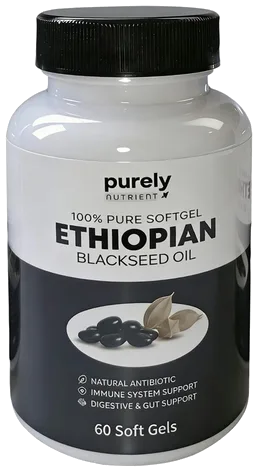
Black Forest Ethiopian Black Seed Oil 1000MG Softgels Review
Black Forest Ethiopian Black Seed Oil 1000MG Softgels is a dietary supplement built on cold-pressed oil from *Nigella sativa*, an annual flowering plant also called black cumin. Ethiopian-origin seed is often marketed as a premium source because of its reputed thymoquinone content. Comparable Ethiopian products list roughly 4.6–5.3% thymoquinone, though I could not confirm a figure for this brand. Each serving is typically 1,000 mg of oil in a gelatin or vegan softgel. The softgel shell masks the strong, peppery taste of the oil, limits oxidation of the unsaturated fats, and gives a pre-measured dose. The oil contains several active components. Thymoquinone (TQ) is the most studied. Others include thymohydroquinone, thymol, carvacrol, nigellone and alpha-hederin. The oil is also rich in unsaturated fatty acids, mainly linoleic acid (omega-6) and oleic acid (omega-9), plus smaller amounts of sterols, tocopherols and other antioxidants. The proposed mechanisms are as follows. 1. Antioxidant activity. TQ scavenges reactive oxygen species and can support endogenous antioxidant enzymes such as superoxide dismutase and catalase. This reduces oxidative stress in cells. 2. Anti-inflammatory signaling. Laboratory and animal studies show TQ can inhibit NF-κB, a transcription factor that drives inflammation. It can also reduce pro-inflammatory mediators such as TNF-α, IL-6 and COX-2/5-LOX products. This is the basis for claims about joint comfort, skin, airway and general inflammatory balance. 3. Immune modulation. Black seed compounds appear to influence T-cell and natural killer cell activity and cytokine balance. Marketing describes this as "immune support", and it is not a treatment claim. 4. Metabolic effects. Small clinical trials suggest modest improvements in fasting glucose, HbA1c and lipid profiles. Proposed pathways include improved insulin sensitivity and AMPK activation. Results are inconsistent and the trials are generally small. 5. Digestive effects. Thymol and TQ show antimicrobial and gastroprotective activity in preclinical work. Together with the oil's fatty acids, this may explain reports of improved digestive comfort. Practical notes: a fat-containing meal likely helps absorption of the fat-soluble compounds. Typical use is one or two softgels daily. Possible side effects are mild stomach upset, belching with an oily aftertaste, and occasional allergic skin reactions. People who are pregnant, take meds, antidiabetic or meds, or have scheduled surgery should talk to a clinician first, because black seed may add to those drugs' effects. The product is a supplement, not a drug. It is not FDA-evaluated to diagnose, treat, cure or prevent disease, and most human evidence is preliminary.
We don’t sell supplements. We help you make decisions and get the best price.
Lowest prices
We may earn a commission from some store links. How we choose.
We hold no current store prices for it yet: check the store.
- AmazonPrice at AmazonCheck price at Amazon (opens in a new tab)
Also at: Black Forest · Walmart. Some links earn us a commission; price comes first, and a commission only decides the order of prices within 2%. As an Amazon Associate we earn from qualifying purchases.
Study, Trial or Testing Result Summary
Members Only19 human studies · 12 improved
Each softgel serving gives 1000 mg of black seed oil, a full dose compared with the studies. For immune support the results are mixed. The largest and strongest trial, in 262 people with mild coronavirus infection, found that ten days of black seed did not change symptoms, immune cells or inflammation markers compared with placebo [1]. An open study in 173 people with mild coronavirus infection found 1000 mg of oil daily led to more recoveries than usual care, but it had no placebo [2]. In 65 adults with seasonal allergy, black seed oil with black pepper extract eased nose and eye symptoms more than placebo, though allergy antibody levels did not differ [3]. A black seed and herb combination eased sore throat faster than placebo [4]. In healthy young adults, only the middle dose of black seed powder raised some immune cell counts [5]. In women with rheumatoid arthritis, the oil lowered disease activity [6]. The thymoquinone amount, 30 mg, is below the 200 mg that improved sleep, stress and some immune measures in one trial [7]. Black pepper extract matches the amount used alongside black seed oil in the allergy trial, but its own effect is unclear [3]. Animal and cell studies are never counted.
See all 19 studies →Hide the studies
- A review of animal and human diabetes studies found Nigella sativa lowered inflammation and oxidative stress and improved immune function, with 2 g daily powder for at least 12 weeks suggested as best for blood sugar and lipids.Therapeutic potentials of Nigella sativa preparations and its constituents in the management of diabetes and its complic…
- A review of clinical trials on Helicobacter pylori found Nigella sativa and other vegetable extracts were not effective alone for clearing the infection but worked better alongside standard drug therapy.Vegetable Extracts and Nutrients Useful in the Recovery from Helicobacter pylori Infection: A Systematic Review on Clini…
- A review of traditional medicinal plants including black cumin found they may help diabetic wound healing by regulating immune signals and reducing inflammation, but it gave no pooled numbers or black cumin oil specific results.Clinical Evidence of Traditional Medicines in Modulating the Immune Response and Diabetic Wound Healing.
- In 262 people with mild COVID-19, ten days of different doses of black cumin seed capsules did not significantly change symptoms, immune cell profile or inflammation markers compared with placebo.The Effect of Short Treatment with Nigella Sativa on Symptoms, the Cluster of Differentiation (CD) Profile, and Inflamma…
- In 186 people with acute tonsil and throat inflammation, 7 days of a Nigella sativa and Phyllanthus niruri extract eased sore throat faster and relieved it completely in more people than placebo.Symptomatic treatment of acute tonsillo-pharyngitis patients with a combination of Nigella sativa and Phyllanthus niruri…
- In 100 adults with type 2 diabetes who completed the trial, 1000 mg curcumin with 10 mg piperine daily for 12 weeks lowered the inflammatory marker TNF-alpha and leptin and raised adiponectin compared with placebo.Curcuminoids Plus Piperine Modulate Adipokines in Type 2 Diabetes Mellitus.
- In 88 adults with stomach discomfort and H. pylori infection, the bacteria cleared in 66.7% with 2 g Nigella sativa seeds plus a med, similar to triple drug therapy (82.6%), but only about 48% with 1 g or 3 g.Comparative study of Nigella Sativa and triple therapy in eradication of Helicobacter Pylori in patients with non-ulcer …
- In 80 young women with premenstrual syndrome and painful periods, a daily curcumin-piperine capsule around menstruation for three cycles lowered allergy-related IgE levels, but IL-10 and IL-12 immune markers did not differ from placebo.Effects of curcumin-piperine supplementation on systemic immunity in young women with premenstrual syndrome and dysmenor…
- In 74 first-time mothers with an episiotomy wound, Nigella sativa gel applied three times daily for 7 days improved wound healing and reduced pain compared with placebo.The effect of Nigella Sativa emulgel on episiotomy wound healing and pain intensity in primiparous women: A triple-blind…
- In 72 healthy adults with poor sleep, 200 mg a day of a thymoquinone-rich black cumin oil extract for 90 days improved sleep and reduced stress compared with placebo, and blood immune measures also showed immune-modulating effects.A proprietary black cumin oil extract (Nigella sativa) (BlaQmax®) modulates stress-sleep-immunity axis safely: Randomize…
- In 70 people with functional dyspepsia, 5 ml daily of Nigella sativa oil in honey for 8 weeks lowered dyspepsia severity scores and the rate of H. pylori infection compared with placebo.Efficacy and safety of honey based formulation of Nigella sativa seed oil in functional dyspepsia: A double blind random…
- In 66 intensive care patients with sepsis, 1000 mg curcuminoids with 10 mg piperine daily for 7 days lowered C-reactive protein and erythrocyte sedimentation rate versus placebo, with some other lab changes, and 10 of 33 died in the treated group versus 12 of 33 on placebo.Therapeutic effects of curcumin and piperine combination in critically ill patients with sepsis: a randomized double-bli…
- In 65 adults with seasonal allergy, 250 mg of black cumin oil twice daily for 15 days reduced nasal and eye symptoms significantly more than placebo, while blood allergy antibody levels did not differ significantly from placebo.A randomized, double-blind, placebo-controlled study to evaluate the benefits of a standardized Nigella sativa oil conta…
- In 52 healthy young adults, 1 g daily of black cumin powder for four weeks raised lymphocyte and helper T cell counts, but the 0.5 g and 2 g doses did not, and other immune measures did not change.Effect of Nigella sativa on general health and immune system in young healthy volunteers; a randomized, placebo-controll…
- In 40 intensive care patients with COVID-19, 1500 mg curcumin with 15 mg piperine daily for 7 days lowered C-reactive protein and liver enzyme AST and raised hemoglobin versus placebo, with no difference in other measures or in 28-day deaths (3 in each group).Evaluation of Curcumin-Piperine Supplementation in COVID-19 Patients Admitted to the Intensive Care: A Double-Blind, Ran…
- In 40 women with rheumatoid arthritis, 500 mg of black cumin oil twice daily for one month lowered disease activity compared with placebo, and 42.5% met a standard improvement threshold.Effectiveness of Nigella sativa oil in the management of rheumatoid arthritis patients: a placebo controlled study.
- In 30 people with hepatitis C who could not take interferon, 1350 mg of black seed powder daily for three months lowered viral load and raised total antioxidant capacity, with better blood protein, platelet and blood sugar levels.Effects of Nigella sativa on outcome of hepatitis C in Egypt.
- In 173 adults with mild COVID-19, taking 500 mg Nigella sativa oil twice daily for 10 days led to recovery in 62% of patients versus 36% with usual care, with faster recovery over an average of 10.7 days versus 12.3 days.Nigella sativa for the treatment of COVID-19: An open-label randomized controlled clinical trial.
- In blood immune cells from 45 breast cancer patients studied in the laboratory, thymoquinone at various concentrations lowered inflammatory markers including IL-1β, calreticulin, and soluble PD-L1, but this was not tested as a supplement in people.Thymoquinone, a Novel Multi-Strike Inhibitor of Pro-Tumorigenic Breast Cancer (BC) Markers: CALR, NLRP3 Pathway and sPD-…
Review Totals and Summary
Members Only77 reviews · 73% positive
Overall, buyers lean positive on these softgels: most are satisfied with how easy they are to take and with the price, though a few complaints concern product quality and order problems. **What buyers say it did for them:** Several reviewers report a benefit, but the claims are personal and fairly general. One said "So far got rid of the pain in my hand!" Another uses it for COPD and wrote "yes I can tell if I miss a few days taking it." Others were vaguer: "Worked pretty good" and "it really good and it works very well." One thinks it is "helping me with my illnesses." One buyer also noted "no negative side effect so far" while taking two softgels daily. **What they complain about:** The criticisms are mostly about the product's quality and the ordering experience, not about harm. One buyer called the thymoquinone content "Very mediocre" and said they will not buy again, recommending a different brand (Resilia). Two others had fulfilment problems: "Never got my order," and another said they received a different product from the one pictured. These are shipping or listing issues, not necessarily problems with the softgels themselves, but they matter if you are buying from the same seller. **Taste, smell, pill size and form:** Reviewers who commented on the form found it easy. One wrote "easy to swollow little tiny softgel." One reviewer said the product "tastes just like fish oils," so a fishy taste may come through for some people even in a softgel. Another said the "Color seems to be right," which suggests they were checking the oil's appearance against earlier purchases. **Value for money:** Price comes up mostly in a positive way. One buyer said it was "Exactly what I was looking for and at a great price." Another wrote "cost less and has more than the last ones I bought," and was glad to have a larger amount at a time. The one reviewer who was unhappy with potency felt they did not get their money's worth, saying "Wish I could get my money back!" **Who it seems to suit and who it did not:** It seems to suit people who want a small, easy-to-swallow softgel at a reasonable price, including those who have bought black seed oil before and are comparing the amount per bottle. Several people taking it for pain, breathing or general health issues say they noticed a difference, though these are individual impressions. It suited less well anyone who is particular about thymoquinone strength, since one buyer found it weak, and anyone sensitive to a fish-oil-like taste. Buyers who had order problems, such as a missing package or the wrong item, were the most unhappy, so it is worth checking the seller and the product you receive. Overall, about three in four star ratings are 4 or 5, and the positives outweigh the negatives. Only softgel reviews are covered here, and no other forms of the product appeared to be mixed in.
Biohacker Summary
Members Only6 of 10 recommend it
This product has two main ingredients, black pepper and black seed oil, and black pepper draws most of the panel's attention. Six of the ten panelists spoke about black pepper, and four of them recommend or use it, mainly paired with turmeric or curcumin because it helps the body absorb more of it; one of them mentioned grinding fresh peppercorns, and another said it keeps curcumin from breaking down in the gut and liver. Two panelists caution against it, one avoiding black pepper extract over its effects on hormones and the liver, the other, who has stopped, citing gut and oxalate concerns, and a third noted it is high in oxalates. Black seed oil came from four panelists: one takes it every morning, preferring an omega-3 version, one recommends about a teaspoon but uses it sparingly with breaks because tolerance builds quickly, one suggests 250 to 1,000 milligrams a day while warning against taking too much at once, and one has never tried it and finds it bitter. Thymoquinone, a smaller ingredient in this product, was described as helpful by one panelist, who said it works best alongside the other compounds in the oil, while another warned that high amounts can harm the gut.
See all 9 biohackers →Hide the biohackers
Dr. Eric Berg · Black Pepper · recommends
- Recommends adding black pepper to turmeric to increase its absorption by 2,000%, suggesting grinding fresh peppercorns into the drink.
- Dr. Eric Berg recommends pairing black pepper with turmeric to improve curcumin absorption.
- Notes that black pepper aids in the absorption of Curcumin.
- Dr. Eric Berg recommends adding black pepper to eggs to support satiety, antioxidant potential, cardiovascular, and liver health.
- Explains that thymoquinone is the special compound in black cumin seed oil responsible for its powerful anti-inflammatory effect, directly impacting anti-inflammatory pathways.
- Dr. Eric Berg states that black seed oil has traditionally been used for centuries and is known for its compound thymoquinone, which is associated with many beneficial properties, including supporting healthy respiratory function and helping with comfortable breathing.
- Dr. Eric Berg mentions that thymoquinone is one of the most well-known compounds in black seed oil and is associated with many of its beneficial properties.
- Explains that thymoquinone is the special compound in black cumin seed oil responsible for its powerful anti-inflammatory effect, directly impacting anti-inflammatory pathways.
- Lists black seed oil as a common remedy for toenail fungus.
- Dr. Eric Berg recommends Black Seed Oil as the number one most anti-inflammatory food, noting it has been used for centuries as a natural remedy and contains thymoquinone, a compound studied for its role in supporting the body’s inflammatory response.
- Dr. Eric Berg mentions that thymoquinone is a compound found in Black Seed Oil and is studied for its role in supporting the body’s inflammatory response.
- Mentions that thymoquinone is the unique compound in black seed oil and has a direct anti-inflammatory effect comparable to over-the-counter meds.
- Recommends Black seed oil, noting it has traditionally been used for immune and respiratory support.
- Recommends Black seed oil, noting its traditional use for immune and respiratory support in chest infections.
Ben Greenfield · Black Seed Oil · neutral
- Mentions that black human seed oil might be used in treating Hashimoto's.
- Mentions black seed oil's eubiotic effect on the gut microbiome, suppressing harmful bacteria while sparing beneficial strains like Akkermansia.
- Recommends Thyocquin black seed oil, standardized for 3% thymoquinone and low in free fatty acids, for its beneficial effects on the gut microbiome, stress management, and overall metabolic health, suggesting a dose of 250 to 1,000 milligrams per day.
- Notes that thymoquinone works best alongside the hundreds of naturally occurring compounds found in black seed oil, rather than as an isolated ingredient.
- Warns that higher concentrations of thymoquinone in black seed oil can be detrimental to health, specifically impacting the microbiome negatively, and advises against taking too much at once.
- Advises watching out for black pepper, as it is eliminated in core AIP and many people are surprisingly sensitive to it.
- Recommends combining black pepper with Triphala and Himalayan pink salt as a powder to brush with, as it is astringent, drives up inflammation and infection in the gums, is refreshing, and prevents plaque.
- Rubbed the beef with black pepper before searing.
- Uses black seed oil as part of his detoxification routine.
- Ben recommends black seed oil, also known as black cumin seed oil (Nigella sativa), stating that it helps with kratom and a med dependencies, and he personally uses about a tablespoon a few times a week in salads or on food.
- Mentions black pepper as something that can help with quelling tobacco/nicotine addiction.
- Recommends black pepper extract, suggesting that smelling or tasting it, or using a Füm pen with a maple black pepper blend, can dissolve tobacco cravings.
- Suggests black pepper extract, or more specifically grains of paradise, as something that can increase metabolism and cause the shift of white fat to metabolically active brown fat.
- He uses a nice black peppercorn, grinding a significant amount over his food because he loves black pepper.
Dr. Mark Hyman · Black Pepper · recommends
- Recommends seasoning turmeric with black pepper to help the body absorb more nutrients.
- Notes that black pepper, along with gentle heat, improves the absorption of curcumin in Paleovalley's turmeric complex.
- Takes a black seed oil every morning, preferring the mega-3 version, and notes its incredible antiviral properties.
- Recommends taking curcumin with black pepper, specifically piperine, because it increases the absorption of curcumin.
- Uses black pepper with turmeric to activate curcumin.
- Recommends having fresh cracked black pepper with curcumin to activate the intestines and absorb more of the curcumin from turmeric.
- Explains that fresh cracked black pepper helps activate the intestines to absorb more curcumin from turmeric.
- Learned to see the effectiveness of adding turmeric to her smoothie with a pinch of black pepper for combating anxiety, and recommends it for lowering anxiety levels, noting that piperine in black pepper activates curcumin in turmeric and increases its absorption.
- Uses black seed oil, which his mother introduced him to 14 years ago. He notes that it tastes horrible but can be mixed with Manuka honey for better taste and to combine their benefits.
- Explains that fresh cracked black pepper helps activate the intestines to absorb more curcumin from turmeric, enhancing its inflammation-fighting properties.
Thomas DeLauer · Black Seed Oil · recommends
- Recommends using a teaspoon of black seed oil, which contains thymoquinone, to activate AMPK and SIRT1 pathways, amplifying the effects of being hungry by driving autophagy, improving insulin sensitivity, promoting fatty acid oxidation, and supporting longevity.
- Highlights thymoquinone as an activator of NRF2, a gene that triggers the body's own antioxidant system, which is crucial for cellular protection.
- Recommends taking black pepper with curcumin to increase its bioavailability, as curcumin gets metabolized before it can do anything without it.
- Recommends mixing curcumin with black pepper (piperine) for general inflammation, as piperine inhibits the breakdown of curcumin, increasing its bioavailability by up to 2,000%.
- Uses black seed oil sparingly as a powerful anti-inflammatory and antioxidant compound, but notes that a tolerance can build quickly, so breaks are needed.
- Recommends black pepper with turmeric because its piperine blocks liver clearance, allowing curcumin to absorb and shut down inflammatory response.
- Black pepper makes curcumin actually absorb.
- Takes black seed oil along with NAC when he is respiratory compromised, fighting something off, or when his immune system is taxed due to his kids being sick.
- Recommends utilizing black pepper in cooking or as a piperine supplement to improve autophagy, which is cellular cleanup and recycling, and can attenuate mTor.
- Recommends black pepper with curcumin towards the end of a fast because it allows curcumin to activate and bind to keep one, changing its structure so NRF2 escapes, leading to a long carryover anti-inflammatory effect.
- Recommends a standardized oil extract of pure thymoquinone for mitochondrial support, suggesting a dose of 200 to 400 milligrams and rotating it with other NRF2 activators.
- Recommends black pepper because its piperine activates curcumin in turmeric by about 2,000%, making it an easy and worthwhile hack.
- Recommends having black pepper along with turmeric, specifically for enhancing the anti-inflammatory response by allowing curcuminoids to become more bioactive.
- Suggests adding a little bit of black pepper to improve the bioavailability of turmeric.
Dave Asprey · Black Pepper · stopped
- Dave Asprey used to research black pepper extract but changed his mind about its use after a discussion with Christian DPO, who highlighted its downsides.
- Dave Asprey states that black pepper is higher in aflatoxin and oxalate, neither of which is good for dogs.
- Dave Asprey warns against curcumin that comes with black pepper extract because studies show it pokes holes in the gut, allowing bacterial toxins to enter and cause inflammation, which is counterproductive to stopping inflammation.
- Recommends skipping black pepper when seasoning meals to avoid oxalates.
Andrew Huberman · Black Pepper · warns
- Recommends avoiding bioavailable curcuminoids like black pepper extract if someone's DHT is already low or if they have somewhat insensitive androgen receptors.
- States that black pepper extract, also known as BioPerine, is a 5-alpha-reductase inhibitor.
- Huberman states he avoids black pepper fruit extract (Bioperine) like the plague because it is a 5-alpha reductase inhibitor and affects liver cytochrome, which he believes caused his negative experience with turmeric.
Bryan Johnson · Black Pepper · uses
- Adds black pepper to turmeric because a compound in pepper called piperine boosts the power of turmeric by slowing the breakdown of curcumin in the gut and liver, making its antioxidant, anti-inflammatory, and metabolic benefits last longer.
Siim Land · Black Seed Oil · neutral
- Mentions black seed oil as having health benefits but notes it is bitter and not tasty, suggesting it's not suitable for salad dressing.
- Has heard a lot about black seed oil but has never tried it himself and hasn't done research about it.
- Mentions topical black seed oil for joint pain, noting it has medium evidence and impact, but states he does not take it.
- Lists black pepper as an herb or spice that is high in oxalates.
- Adds black pepper to his autophagy-boosting cocktail to promote bioavailability and slow down digestion.
Dr. Rhonda Patrick · Black Pepper · recommends
- Adds black pepper to her turmeric tea because the piperine in it stops enzymes in the liver from clearing out polyphenols, thus extending their half-life.
RAL Summary
Members OnlyTier 3 for Immune Health
Tier 3 stands: 71% of 86 reviews are positive, above the two-thirds threshold but under 100 reviews, and most human studies of black seed oil showed some improvement [2][3], even though the largest placebo trial found no effect [1].
Where the evidence disagrees: 1 of the 19 human studies found no effect.
More Details
Members OnlyBody systems · Combine with · Possible side effects
Body systems: Immune system, Respiratory system, Musculoskeletal system
Combine with: For immune and antioxidant support, black seed oil pairs well with vitamin D3 plus K2, vitamin C, and zinc, which support immune function. Quercetin and elderberry can add complementary antioxidant and immune-modulating effects. Omega-3 fish oil (EPA/DHA) and curcumin with piperine may enhance anti-inflammatory support. If the user still wants cellular and DNA repair support, consider adding agents with better human evidence, such as NMN or NR (NAD+ precursors), pterostilbene or resveratrol, CoQ10 or ubiquinol, and alpha-lipoic acid. Take the oil with a fat-containing meal to improve absorption of thymoquinone, and consult a physician if using blood pressure, blood sugar, or meds.
Possible side effects: No major side effects reported.
Supplement Facts
Ethiopian Black Seed Oil 1000 mg · Thymoquinone 30 mg · Black Pepper Extract 5 mg
| Ethiopian Black Seed Oil (Nigella sativa seed oil) | 1,000 mg | † |
| Thymoquinone | 30 mg | † |
| Black Pepper Extract | 5 mg | † |
Other ingredients: Gelatin, glycerin, MCT oil, beeswax, sunflower lecithin, purified water.
Directions: Do not exceed 2 softgels per day.
Barcode (UPC) 860015279460 · Label source: Blackforestsupplements · Report a label change
Show entire label

More immune health products
Members OnlyThe highest ranked for the same goal
Read more
Our articles on this subject
- How to Improve Gut Health Naturally: Fiber, Foods and the Probiotic Strains With Human TrialsArticle · Sep 15, 2026
- How to Build a Longevity Supplement Stack: An Evidence-First ReviewArticle · Sep 7, 2026
Graded November 18, 2026 by the Reverse Age Lab evidence engine, from human studies, real reviews and our biohacker panel. How we grade. Is this medical advice? No. Rala organizes the published evidence; go over any change with your doctor, especially if you take meds.
Privacy policyConsumer health dataAffiliate disclosureTermsBrand and legal noticesDo Not Sell or Share My Personal InformationCookie settings