
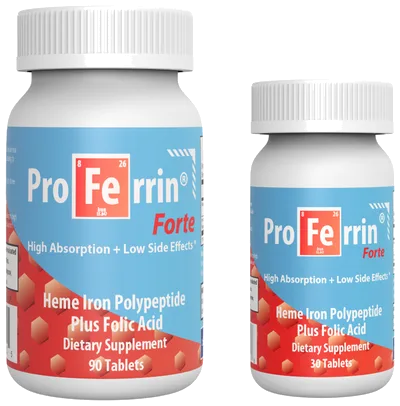
Colorado Biolabs ProFerrin Forte Review
We don’t sell supplements. We help you make decisions and get the best price.
Lowest prices
We may earn a commission from some store links. How we choose.
We found no store selling it right now.
Study, Trial or Testing Result Summary
Members Only66 human studies · 44 improved
11 of these 66 human studies gave the ingredient by drip or injection, not by mouth.
Folic acid has the stronger blood flow evidence, but this product gives 3 milligrams a day, below the 5 milligrams that worked in trials. Pooled trials found folic acid helped arteries widen with blood flow by about 2.6 percentage points [1]. A review of people with heart disease and high blood pressure found a similar gain, though confidence in that evidence was low [2]. Gains appeared at 5 to 10 milligrams a day but not at 400 to 800 micrograms [3]. In adults with heart artery disease, 5 milligrams helped while 400 micrograms did not [4]. In children with type 1 diabetes, 5 milligrams raised vessel widening from 2.6% to 9.7% [5]. In people with kidney failure, it gave no benefit [6]. Most iron studies used intravenous infusions, not an oral pill like this one. Infusions improved vessel reactivity and walking in a stiff-heart type of heart failure [7] and improved small-vessel blood flow in a similar trial [8]. They also eased the rise in lung artery pressure in healthy adults [9][10]. Other trials found no change in artery widening [11], and a single infusion briefly worsened it [12]. Animal and cell studies are never counted.
See all 66 studies →Hide the studies
- Across 21 randomized trials with 2025 adults, folic acid raised flow-mediated dilation of the artery by about 2.6 percentage points compared with controls, though it did not change baseline artery diameter or an adhesion marker.The effects of folic acid supplementation on endothelial function in adults: a systematic review and dose-response meta-…
- Across 14 placebo-controlled trials with 732 people, folic acid improved flow-mediated dilation by about 1.1 percentage points, with gains at 5,000 and 10,000 mcg per day but not at 400 to 800 mcg per day.Folic acid improves vascular reactivity in humans: a meta-analysis of randomized controlled trials.
- In a network meta-analysis of people with heart disease and high blood pressure, folic acid improved flow-mediated dilation by about 3.4 points, though the confidence in this evidence was rated low.Comparative Efficacy of Nutraceuticals on Endothelial Function: A Systematic Review and Network Meta-Analysis.
- In 1078 HIV-positive pregnant women, a multivitamin containing 0.8 mg folic acid cut the risk of high blood pressure in pregnancy by 38% compared with placebo.Multivitamin supplementation of HIV-positive women during pregnancy reduces hypertension.
- In 84 adults with coronary artery disease given folic acid for 6 weeks, 5 mg a day improved blood vessel dilation but 400 mcg a day did not, and the improvement did not track with homocysteine lowering.High- but not low-dose folic acid improves endothelial function in coronary artery disease.
- In 126 patients with high blood pressure and high homocysteine, folic acid for 24 weeks lowered homocysteine and an artery-constricting marker and raised nitric oxide, with blood pressure falling after the genotype-adjusted dose phase.Effects of individualized administration of folic acid on prothrombotic state and vascular endothelial function with H-t…
- In 124 children with type 1 diabetes, 5 mg of folate daily raised flow-mediated dilation from 2.6% to 9.7% over 8 weeks, while the placebo group did not change.Folate and vitamin B6 rapidly normalize endothelial dysfunction in children with type 1 diabetes mellitus.
- In 100 people with kidney failure not yet on dialysis, 5 mg of folic acid daily for 12 weeks lowered homocysteine but did not improve blood vessel dilation compared with placebo.Does folic acid decrease plasma homocysteine and improve endothelial function in patients with predialysis renal failure…
- In 84 iron-replete adults, four blood draws over about six months, with or without intravenous iron replacement, did not change artery widening function compared with sham blood draws.Effects of serial phlebotomy on vascular endothelial function: Results of a prospective double-blind randomized study.
- In obese children, folic acid raised folate levels and lowered homocysteine but did not improve adiponectin, a protein linked to blood vessel function.Adiponectin relates to smooth muscle function and folate in obese children.
- In 81 adults aged 40-65 with mildly to moderately raised blood pressure, 3 months of an arginine plus B vitamin (including folic acid) product improved blood vessel function and lowered blood pressure and homocysteine more than placebo.L-Arginine and B vitamins improve endothelial function in subjects with mild to moderate blood pressure elevation.
- In 75 patients with coronary artery disease, 4 months of folic acid alone significantly improved blood vessel dilation versus placebo, while folic acid with vitamins C and E gave a smaller, non-significant improvement.Effect of folic acid and antioxidant vitamins on endothelial dysfunction in patients with coronary artery disease.
- In 75 obese adults, 4 weeks of 5 mg folic acid daily reduced the over-dependence of eye and kidney blood vessel tone on nitric oxide in those with metabolic syndrome and reduced oxidative stress, with no effect on inflammation markers.Folic acid treatment normalizes NOS-dependence of vascular tone in the metabolic syndrome.
- In 75 adults with type 2 diabetes over about 4 months, a blend containing 1 mg folic acid plus other vitamins and minerals improved nerve symptom scores, but blood flow in the small vessels did not change compared with placebo.Improving neuropathy scores in type 2 diabetic patients using micronutrients supplementation.
- In 64 people with heart failure with preserved ejection fraction, two 500 mg iron infusions four weeks apart improved blood vessel reactivity, heart relaxation, walking test and lowered an oxidative stress marker over 8 weeks compared with placebo.Effect of Ferric Carboxymaltose Supplementation in Patients with Heart Failure with Preserved Ejection Fraction: Role of…
- In 60 adults with metabolic syndrome and type 2 diabetes, 5 mg of folate daily for 12 weeks reduced carotid artery wall thickness and improved blood sugar and insulin resistance compared with placebo.The Effects of Folate Supplementation on Carotid Intima-Media Thickness and Metabolic Status in Patients with Metabolic …
- In 60 adults with cirrhosis and high portal pressure, 5-methyltetrahydrofolate plus propranolol for 90 days lowered portal pressure more than propranolol plus placebo.5-MTHF enhances the portal pressure reduction achieved with propranolol in patients with cirrhosis: A randomized placebo…
- In 54 iron-deficient people with chronic kidney disease, a single iron infusion did not cause lasting oxidative stress or inflammation, though one blood vessel marker (E-selectin) rose modestly at 1 and 3 months versus placebo.Analysis of oxidative stress, inflammation and endothelial function following intravenous iron in chronic kidney disease…
- In 53 obese children and adolescents, 5 mg of folic acid daily for eight weeks did not change artery widening with blood flow compared with placebo, even though folate levels rose and homocysteine fell.Folic acid does not improve endothelial function in obese children and adolescents.
- In 52 patients with coronary artery disease, 5 mg of folic acid daily for 6 weeks improved blood vessel function compared with placebo, though oxidative stress markers did not change.Folate improves endothelial function in coronary artery disease: an effect mediated by reduction of intracellular supero…
- In 50 adults with dyslipidemia, a combination containing 200 mcg folic acid improved cholesterol profiles over 6 weeks, but only a different combination without folic acid improved endothelial function.Effects of a New Combination of Medical Food on Endothelial Function and Lipid Profile in Dyslipidemic Subjects: A Pilot…
- In 45 people with heart failure with preserved ejection fraction and iron deficiency, intravenous iron over four months did not improve exercise blood pressure in the lungs or heart stiffness, but it improved right heart pumping and small-vessel blood flow and modestly improved 6-minute walk distance compared with placebo.Intravenous IRON supplementation in Heart Failure with Preserved Ejection Fraction and iron deficiency (IRON-HFpEF): a c…
- In 44 elderly people with vitamin B12 deficiency, 5 mg of folate plus vitamin B12 daily for 8 weeks improved blood flow reserve in the heart compared with placebo.Folic Acid and vitamin B12 supplementation improves coronary flow reserve in elderly subjects with vitamin B12 deficienc…
- In 40 young men, a vitamin capsule containing 0.6 mg of folic acid for 8 weeks lowered homocysteine but did not improve blood vessel widening compared with placebo.Hyperhomocysteinemia and endothelial function in young subjects: effects of vitamin supplementation.
- In 40 people after a heart attack, 6 weeks of 10 mg daily folic acid improved the widening of the brachial artery in response to blood flow, compared with placebo, regardless of homocysteine level.Effect of folic acid on endothelial function following acute myocardial infarction.
- In 40 healthy adults given methionine, one 100 mg iron sucrose infusion reduced artery flow-mediated widening at 1 hour compared with placebo (1.93% vs 5.61%), but not at 4 hours.Iron sucrose augments homocysteine-induced endothelial dysfunction in normal subjects.
- In 38 peritoneal dialysis patients, a single 300 mg iron sucrose infusion raised resting forearm blood flow but did not change blood vessel responses to drugs compared with placebo.Intravenous iron increases labile serum iron but does not impair forearm blood flow reactivity in dialysis patients.
- In 36 children and teens with type 1 diabetes, 5 mg of folic acid daily for 8 weeks improved blood vessel widening with blood flow compared with placebo, independent of homocysteine.Folic acid improves endothelial function in children and adolescents with type 1 diabetes.
- In 36 kidney transplant recipients with high homocysteine, 5 mg folic acid daily with B6 and B12 for 6 months improved blood vessel widening and lowered homocysteine compared with controls.Treatment of hyperhomocysteinemia and endothelial dysfunction in renal transplant recipients with B vitamins in the Chin…
- In 34 people with high cholesterol taking meds, 4 weeks of 5 mg daily folic acid improved brachial artery widening in response to blood flow, while placebo did not.Read the study on PubMed (15616416) →
- In 33 people with coronary artery disease, 5 mg of folic acid daily for 6 weeks improved how well arteries widened with blood flow compared with placebo, and this happened largely without lowering homocysteine.Folic acid improves endothelial function in coronary artery disease via mechanisms largely independent of homocysteine l…
- In 32 healthy adults aged 50-80, intravenous iron lowered lung artery pressure during exercise by about 3 mmHg versus placebo for 8 weeks, with no change at rest or in maximal exercise capacity.Intravenous iron delivers a sustained (8-week) lowering of pulmonary artery pressure during exercise in healthy older hu…
- In 31 heart transplant recipients, 5 mg of folate daily for 10 weeks did not significantly improve blood vessel function compared with placebo, while pyridoxine did.Pyridoxine improves endothelial function in cardiac transplant recipients.
- In 30 HIV-infected adults on antiretroviral therapy, 5 mg of folinic acid daily for 4 weeks improved blood vessel reactivity compared with placebo.Short-term folinic acid supplementation improves vascular reactivity in HIV-infected individuals: a randomized trial.
- In healthy people with high homocysteine, 5 mg of folic acid daily for 8 weeks lowered homocysteine but did not improve blood vessel widening compared with placebo.Folic acid does not improve endothelial function in healthy hyperhomocysteinaemic subjects.
- In 26 people with type 2 diabetes, 5 mg of folic acid daily for 4 weeks improved blood vessel widening compared with placebo, independent of homocysteine lowering.Short-term oral folic acid supplementation enhances endothelial function in patients with type 2 diabetes.
- In 26 adults with kidney disease and iron deficiency, intravenous iron given as 1000 mg then 500-1000 mg a month later left heart markers and arterial stiffness stable, while quality of life and walking ability improved in both groups.Patient reported outcome measures and cardiovascular outcomes following high dose modern intravenous iron in non-dialysi…
- In 24 young smokers, 5 mg of folic acid daily for 4 weeks improved blood vessel widening with blood flow and lowered blood pressure compared with placebo.Folic acid enhances endothelial function and reduces blood pressure in smokers: a randomized controlled trial.
- In older adults, 5 mg of folic acid daily for 6 weeks improved nitric oxide-dependent widening of small blood vessels in the skin compared with placebo, while young adults showed no change.Folic acid supplementation improves microvascular function in older adults through nitric oxide-dependent mechanisms.
- In 20 healthy young adults, 10 mg of folic acid daily for 2 weeks prevented the drop in blood vessel widening and the rise in a marker of radical damage seen after a fatty meal, compared with placebo.Influence of folic acid on postprandial endothelial dysfunction.
- In 20 healthy young men, 10 mg of folic acid daily for 7 days did not protect the artery lining from damage caused by temporary blood flow interruption compared with placebo.Folic Acid does not limit endothelial dysfunction induced by ischemia and reperfusion: a human study.
- In 20 children with type 1 diabetes, folic acid doses of 0.5, 2, and 5 mg given monthly did not improve blood vessel widening compared with placebo, although folate levels rose.Folate fortification and supplementation do not provide vascular health benefits in type 1 diabetes.
- In 10 people with familial hypercholesterolemia, an infusion of the active folate form 5-methyltetrahydrofolate restored blood vessel widening that was impaired, compared with 10 matched control subjects.5-methyltetrahydrofolate, the active form of folic acid, restores endothelial function in familial hypercholesterolemia.
- In 19 adults with type 2 diabetes, 10 mg of folic acid daily for 2 weeks improved blood vessel widening compared with placebo, independent of homocysteine lowering.Folic acid improves endothelial dysfunction in type 2 diabetes--an effect independent of homocysteine-lowering.
- In 18 healthy adults with mildly high homocysteine, 5 mg of folic acid daily for six weeks improved how well the brachial artery widened with blood flow, compared with placebo.Oral folate enhances endothelial function in hyperhomocysteinaemic subjects.
- In 18 healthy men taking nitroglycerin patches, 10 mg of folic acid daily for 1 week prevented the loss of blood vessel function and reduced nitrate tolerance compared with placebo.Folic acid prevents nitroglycerin-induced nitric oxide synthase dysfunction and nitrate tolerance: a human in vivo study…
- In 17 adults with high homocysteine, 10 mg of folic acid daily for 8 weeks improved blood vessel widening during blood flow compared with placebo.Folic acid improves arterial endothelial function in adults with hyperhomocystinemia.
- In 16 adults with HIV, 5 mg of folinic acid daily for four weeks improved blood vessel reactivity compared with placebo, though the group was very small and the study was short.Short-term folinic acid supplementation and aerobic exercise improve vascular reactivity in HIV-infected individuals.
- In 16 healthy adults, an iron infusion greatly reduced or prevented the rise in lung artery pressure and the stronger lung blood vessel response caused by 8 hours of low oxygen, while an iron-binding drug raised lung artery pressure.The increase in pulmonary arterial pressure caused by hypoxia depends on iron status.
- In 14 people with heart disease, a single 30 mg dose of folic acid increased blood flow to the heart muscle during stress compared with placebo, and it also lowered blood pressure slightly.High-dose folic acid acutely improves coronary vasodilator function in patients with coronary artery disease.
- In 14 older adults, 6 weeks of 5 mg daily folic acid strengthened skin blood vessel dilation during heat stress and in response to a dilating agent, compared with placebo.Folic acid supplementation increases cutaneous vasodilator sensitivity to sympathetic nerve activity in older adults.
- In 10 kidney transplant recipients, 5 mg of folic acid daily for 3 months lowered homocysteine but did not change blood vessel function or artery wall thickness compared with placebo.Folate supplementation fails to affect vascular function and carotid artery intima media thickness in cyclosporin A-trea…
- In 20 young children with iron-deficiency anemia (compared with 20 healthy children), 2 months of oral iron at 5 mg per kg daily brought blood cell flexibility, clumping and blood thickness back to normal values, which may help blood flow.Hemorheological parameters in children with iron-deficiency anemia and the alterations in these parameters in response t…
- In 22 healthy adults, a single 1 g iron infusion cut the rise in lung artery pressure in low oxygen by about half versus saline, and this lasted at least 43 days.Elevation of iron storage in humans attenuates the pulmonary vascular response to hypoxia.
- In 19 adults on peritoneal dialysis, 15 mg of 5-methyltetrahydrofolate daily for 12 weeks improved blood vessel widening, while a control group on dialysis worsened over the same period.Improvement of endothelial function in uraemic patients on peritoneal dialysis: a possible role for 5-MTHF administratio…
- In 9 healthy older adults, 5 mg of folic acid daily for 6 weeks increased blood flow to the arm and leg muscles during exercise compared with the control condition.Folic acid ingestion improves skeletal muscle blood flow during graded handgrip and plantar flexion exercise in aged hum…
- In 15 healthy postmenopausal women, 7.5 mg of folic acid daily for one month improved blood vessel widening, though the study had no placebo group.Endothelial function in post-menopausal women: effect of folic acid supplementation.
- In over 156,000 US women followed for about 8 years, those eating at least 1000 mcg of total folate daily had a lower risk of developing high blood pressure than those eating under 200 mcg, with the effect strongest in younger women.Folate intake and the risk of incident hypertension among US women.
- In 567 older adults, blood levels of B vitamins including folate were not associated with arterial stiffness, and a genetic measure of long-term high homocysteine was not linked to it either.B-vitamin levels and genetics of hyperhomocysteinemia are not associated with arterial stiffness.
- In 244 men with erectile dysfunction and 72 healthy controls, lower blood folic acid levels were linked to lower blood flow in the penile artery, but this study did not give folic acid as a supplement.Serum folic acid: an effective indicator for arteriogenic erectile dysfunction.
- In 124 people with Alzheimer's or small-vessel dementia, brain scans showed blood flow linked to vitamin B12 and folate levels, with the link differing between the two dementia types; this was a correlation study, not a supplement trial.Neurovascular Correlates of Cobalamin, Folate, and Homocysteine in Dementia.
- In 30 men with high blood pressure, a single injection of a nitric oxide-releasing iron complex lowered blood pressure by at least 20% in all patients, lasting up to 8 hours.[Hemodynamic effects of the synthetic analogue of endogenous nitric oxide (II) donors a dinitrosyl iron complex in hyper…
- In 23 heart failure patients, a single intravenous iron dose (ferric carboxymaltose) caused a temporary rise in circulating markers of endothelial injury and inflammation, returning to baseline within two to four weeks, suggesting short-term harm to blood vessel lining.Intravenous iron supplementation in heart failure patients induces temporary endothelial dysfunction with release of end…
- In amenorrheic women runners, 10 mg of folic acid daily for 4 weeks improved brachial artery flow-mediated dilation, a measure of blood vessel function.Folic acid supplementation improves vascular function in amenorrheic runners.
- In 18 young adults with blocked leg arteries and high homocysteine, one year of folic acid (5 mg) plus pyridoxine lowered markers of blood vessel lining injury (von Willebrand factor and thrombomodulin).Hyperhomocysteinaemia and endothelial dysfunction in young patients with peripheral arterial occlusive disease.
- This narrative review says B-vitamins and omega-3 fats may help blood vessel function, but no firm conclusion can be drawn without larger well-designed trials.Evidence for a protective (synergistic?) effect of B-vitamins and omega-3 fatty acids on cardiovascular diseases.
Review Totals and Summary
Members Only38 reviews · 93% positive
Extensive customer reviews and qualitative feedback are currently being aggregated for this product. Check back soon for a detailed sentiment analysis.
Biohacker Summary
Members Only7 of 10 recommend it
The panel is split on iron but leans toward recommending it when levels are actually low: four of the ten lean toward recommending it, two are neutral, one stopped, and three warn about too much. Those in favor take it to support energy, oxygen delivery, muscle and recovery, thyroid function, hair, brain health and pregnancy, and they point to women of reproductive age as the group most in need. Many prefer getting it from red meat or liver, one takes 10 milligrams of heme iron, and one found that supplements and meat never raised his low levels, so he stopped. The warnings are that excess iron is inflammatory and can cause harm, so testing first is advised, and one panelist cautions that low hemoglobin does not always mean low iron. Folic acid is a smaller ingredient in this product, and while a few like it for pregnancy, several warn that the body may not convert it well.
See all 10 biohackers →Hide the biohackers
Dr. Eric Berg · Iron · warns
- Notes that Italian pasta isn't enriched with iron, suggesting that enrichment with iron might be a negative factor.
- Warns against iron supplements, suggesting instead to get iron from red meat or liver.
- Dr. Berg states that when nutrients like iron are too low, fatigue and weakness can follow.
- Does not recommend taking iron supplements or cooking in iron skillets because the body has no mechanism of getting rid of iron unless one donates blood or is a menstruating female.
- Identifies iron as the Achilles' heel of cancer, as it is needed for its DNA to replicate.
- Mentions that grass-fed liver has heme iron, the most bioavailable form of iron that prevents anemia.
- Dr. Berg warns that too much iron can be damaging to the body and advises focusing on food sources to avoid overconsumption.
- Warns that too much iron, especially the ferrous sulfate or fumarate type found in many supplements, is corrosive and oxidizing, can mess with the liver, and create inflammation, noting that males have no natural way to excrete excess iron.
- Notes that tannins in tea bind iron, blocking its absorption.
- Mentions that vertical ridges on nails could indicate an iron deficiency.
- Warns that folic acid can build up in the blood for people with an MTHFR gene alteration, leading to an increased risk of cancer and a suppressed immune system.
- Warns against taking folic acid, recommending folate or methylfolate instead, especially due to common genetic issues that can cause problems with synthetic versions.
- Warns that many people have a genetic issue converting folic acid, a synthetic form of B9, into its active form, which can cause negative side effects in 40% of the population.
- Dr. Berg warns against folic acid, the synthetic version of folate (vitamin B9), as many people have genetic issues converting it to the active form, potentially causing problems.
Dr. Rhonda Patrick · Iron · warns
- Explains that while heme iron is essential at low levels, too much is very pro-inflammatory and pro-oxidant, damaging the pancreas and beta cells that produce insulin, and is linked to type 2 diabetes.
- Recommends a combination of methyl folate and folic acid, as folic acid has been shown to reduce neural tube defects.
- Recently found out he needed to get on an iron supplement and noticed he gets less sore in his training after taking it.
- Advises that menstruating women should ensure they are getting enough iron.
- Warns that iron is not an innocuous supplement and should not be taken aggressively without proper testing, as it can be complicated and has significant downsides if levels are not understood.
- Dr. Patrick explains that breast milk is incredibly low in iron, and by six months, infants can develop iron deficiency anemia, so pediatricians recommend introducing iron-rich complementary foods at that time.
- Rhonda discusses Dr. Lithgow's work on how excess dietary iron affects protein homeostasis in worms, noting that increased iron levels in the diet accelerated aging and the accumulation of insoluble proteins.
- Mentions that a scientist showed that a lack of folic acid in mice and people can cause chromosomes to break, similar to radiation damage. She notes that 10% of the U.S. population and half of the poor have levels below this threshold.
- Describes a study where female mice fed a diet high in B vitamins, folic acid, and vitamin B12 three weeks before pregnancy had offspring that no longer had yellow fur and were not predisposed to obesity and cancer.
- Dr. Patrick warns that giving excessive levels of folic acid to individuals already in an early or late stage of cancer can actually accelerate the cancer.
- Dr. Patrick takes some iron during menstruation.
- Increased iron levels in the brain worsen cognitive test performance by as much as 10% in older adults, a phenomenon linked to brain atrophy and decline in memory and attention.
- Iron plays a central role in health across the lifespan. It forms the core of hemoglobin, the molecule in red blood cells...
- The requirement for iron is 1.8 times higher for vegetarians.
Thomas DeLauer · Iron · recommends
- Recommends giving any iron intervention a couple of months before deciding if it works, and suggests increasing heme iron through red meat or liver intake.
- Warns that synthetic folic acid supplements may not convert effectively in many people due to a gene variant, potentially blocking cellular folate uptake and masking B12 deficiencies.
- Compares iron content in spinach (2.7mg) and beef (2.6mg), but emphasizes that beef's heme iron absorbs at about 25%, while spinach's non-heme iron absorbs at 2-8%.
- Recommends iron from meat, specifically red meat and beef liver, stating that it is a crucial part of the mechanistic triad for thyroid hormone function and is iron-dependent for iodine incorporation into thyroid hormone.
- Notes that iron is essential for delivering oxygen to muscles and the brain, making it an important cofactor for signals to reach their targets.
- Recommends assessing iron along with selenium and iodine for optimal thyroid function, suggesting red meat as a source of iron.
- Recommends getting heme iron from real food sources like organ meats, red meats, or pumpkin seeds, and warns against iron supplements due to potential oxidation and issues with copper levels.
- Warns against overdoing iron supplementation unless truly needed, especially if ferritin levels are high, as ferroptosis is iron-dependent and excess iron can increase ferroptotic risk.
- Recommends good quality heme iron from food sources like liver and beef for preventing insulin resistance and type 2 diabetes, supporting glucose control, and energy regulation, but warns against iron supplements.
- States that iron status is critical for white matter development and maintenance, noting that anemic individuals tend to have a loss of white matter structure, which is common in women during perimenopausal transition.
- Warns that polyphenols in coffee can bind to iron, making it useless. He recommends taking iron supplements upon waking on an empty stomach, potentially with vitamin C, and waiting 30-60 minutes before consuming coffee or tea.
- States that folic acid is essentially useless in the human body until it is converted into methylfolate.
- Warns against folic acid, calling it a man-made chemical added to cereals, which a high percentage of children cannot process.
- Notes that Vitamin B9, or folic acid, is good for the brain, cognitive function, and is found in prenatals for brain development, potentially reducing homocysteine and amyloid beta 42, a risk factor for Alzheimer's.
Dr. Mark Hyman · Iron · neutral
- States that iron helps red blood cells carry oxygen, and a deficiency can make one feel like they are running on low power mode.
- Mentions iron as an existing biomarker that plays a role in mental health, which Function Health includes in their measurements.
- Notes that a woman patient had very low iron.
- States that they get the whole picture when it comes to iron, looking at ferritin, iron reserves, iron in the blood, iron saturation, and iron binding capacity to spot problems before full-blown anemia.
- Mentions iron as an example of a common nutritional deficiency.
- Notes that many Americans are deficient in iron, which affects mood and brain function.
- Recommends testing Iron as a biomarker before training for fitness.
- States that low iron, specifically a ferritin level less than 45, is a big hidden cause of insomnia, affecting up to half the population.
- Discusses the difference between folate and folic acid when choosing prenatal vitamins.
- Mentions that they check iron levels as part of evaluating mental illness biomarkers.
- Recommends carefully looking at iron, thyroid, and cortisol levels as they all play a role in affecting cognitive function and mental health.
- Warns against folic acid, stating that 44% of the population cannot process it, it is not a natural nutrient, and it should be avoided, especially by those with the MTHFR gene.
- Warns against prenatals using folic acid, as 50% of people cannot convert it to the methylated active form, which can have health implications for babies.
- Mentions a patient who researched the amount of folic acid needed from food, highlighting the patient's impressive effort to get nutrients from whole foods instead of supplements.
Siim Land · Iron · neutral
- Mentions that iron is a mineral necessary for making collagen.
- States that excess iron promotes oxidative stress and inflammation, which increases heart disease risk.
- Notes that iron deficiency is found in children with premature graying of hair and that some people get gray hair due to iron deficiency.
- Recommends ensuring sufficient iron intake, especially during pregnancy and early life, to prevent mental developmental and cognitive issues.
- States his iron level is 103 micrograms per deciliter, which he considers a good result, and advises that men should aim for lower iron levels to reduce the risk of heart disease and aging.
- Places iron in the 'junk tier', warning that high iron levels are associated with heart disease, mortality, and liver disease, and advises caution with supplementation, especially for men with high iron.
- Warns that high iron levels are associated with increased risk of mortality and reduced lifespan, and that iron in excess is bad for maximum longevity. He states that iron levels slightly on the lower end, around 60 to 90 micrograms per deciliter, are associated with the lowest mortality risk, and that iron below 45 and above 145 micrograms per deciliter is associated with increased risk of mortality.
- Warns that very high iron levels can cause damage to the endothelium and increase the risk of heart disease, especially in men who accumulate iron more easily.
- Warns that too much iron can damage blood vessels, though people with low iron status are safe.
- Theorizes that Brian's lower iron status and hemoglobin status, possibly due to his plant-based diet and lack of iron supplementation, limits his V2 max.
Andrew Huberman · Iron · recommends
- States that Iron is one of the critical nutrients with the best evidence for cognitive function and reducing the risk of dementia.
- Recommends taking a prenatal vitamin that has folic acid before getting pregnant to optimize nutrients for pregnancy.
- Warns that excess iron will increase the number of senescent cells in the body, which accumulate as people get older and cause inflammation and cancer. He notes that people who are healthy and have a fairly vegetarian diet often have slightly low iron levels but super amounts of energy.
- Notes that about 50% of the population is iron deficient.
- Mentions that the podcast will review the role of iron in treating depression.
- States that B12, folate, and iron are essential to mitochondrial function and if deficient, mitochondria will not function properly, which is consistent with the mitochondrial theory of neuropsychiatric disorders.
- Advises women concerned with low ferritin to take an iron supplement every other day for 10 days, starting on the first day of their bleed, to maximize absorption.
- Agrees with a dermatologist's recommendation for people to get enough folic acid due to its role in DNA synthesis and repair of skin cells.
- States that folic acid is important to prevent neural tube defects and in cell division, and recommends that women and men take a vitamin with folic acid even when not trying to conceive.
- Discusses the role of iron in hair growth.
- Warns that excess iron, especially as a supplement, can accelerate the aging process by increasing senescent cells in the body.
- Agrees with Mark Hyman that iron is a basic supplement, but warns older men against taking too much due to iron toxicity, while menstruating women need more.
- Recommends that women concerned with low ferritin take an iron supplement every other day, starting at the first day of their bleed, for ten days, to allow for better absorption.
Ben Greenfield · Iron · recommends
- Recommends testing for and replenishing iron if levels are low, as it can affect the ability to maintain or preserve muscle, especially for those on GLP-1s.
- Warns that folic acid is an inactive form of folate that the body cannot efficiently convert, meaning one won't get the full benefit.
- Noted that too much folic acid doesn't necessarily help her due to her MTHFR gene.
- Notes that one can eat iron-rich foods or supplement with iron, but still feel exhausted if iron is not the missing piece, emphasizing that focusing on a single mineral in isolation can support a number on a lab test rather than the system itself.
- Mentions iron as a common deficiency.
- Recommends a nutritious diet including iron, as it is critical for brain development.
- Would refine the guidelines to include clearer distinctions between synthetic folic acid and natural folate.
- Notes that the guidelines mention iron supplementation for infancy and early childhood.
- Started thinking about getting more heme-based iron in his diet after a podcast about reasons people feel fatigue.
- Warns that modern society has flipped the narrative on iron intake, leading people to consume excessive amounts (20-50 mg) through an iron-fortified diet, which the body cannot assimilate, leading to storage in tissues and disrupting iron physiology, contributing to aging.
- Warns that folic acid is an entirely man-made chemical that does not occur naturally and is not recognized by the body.
- Notes that some people need to supplement with iron, recommending iron biscinate as a form that doesn't irritate the gut.
- Explains that 10X can pinpoint genetic variations that predispose some people to absorbing too much iron and will adjust the iron content in their supplement, potentially reducing or removing it entirely.
- Covers iron as a key supplement for kids.
Bryan Johnson · Iron · stopped
- Has had low iron for 11 years and despite eating meat and trying all forms of iron supplementation at different times and sequences, none of it worked to raise his iron or ferritin levels.
- Had low iron for 11 years, with ferritin averaging 38 ng/mL, and has finally boosted it back to healthy levels.
- Takes 10 milligrams of heme iron to get his iron levels up, as they are borderline.
- Recommends adequate Iron for hair health, noting it is in the Blueprint stack.
- Recommends supplementing with iron for brain health for both the mother and the baby during pregnancy.
Dave Asprey · Iron · warns
- Warns that if a doctor diagnoses anemia, one should not assume they just need more iron, as low hemoglobin doesn't always mean low iron and the issue can sometimes be how well the body is using iron.
- Warns that folic acid is not the same as folate and that the body processes them differently.
- Notes that when energy intake is too low for training demand, nutrient intake often falls short, especially for iron, which is associated with impaired recovery.
- Warns against folic acid, stating it is synthetic and can cause inflammation, especially for individuals with MTHFR alleles, and that almost everyone on it needs to stop.
- Recommends ensuring iron levels are good as it is a cofactor that can help thyroid function, especially with conversion issues.
- Recommends taking folic acid if consuming green tea during pregnancy, as green tea depletes it.
- Warns that folic acid, an industrial form of B vitamin not found in nature, is toxic to 30-40% of people and not very beneficial for the rest, criticizing its addition to grain in the US.
- States that folinic acid, a different form of folic acid, is being found to make autism symptoms go away in people, as it bypasses methylation issues better than methylfolate.
- Mentions having a problem with folic acid, as predicted in his first book.
- Egg yolks, particularly raw egg yolks, fatty cuts of meat, choline sources like that, making sure there's enough iron and a lot of the micro minerals, trace minerals, things like that. Those would be really important for bone marrow because mineral deficiencies are going to block that at the start.
- Warns that both too much and not enough iron can trash the body, highlighting the complex interactions between iron and copper.
- States that iron really helps in maintaining hair growth.
- States that many vegans don't get enough iron, which slows metabolism and makes it harder to build muscle.
- Warns against taking folic acid, especially if pregnant, stating it is a man-made chemical that does not exist naturally and can be poisonous for individuals with MTHFR deficiencies.
Peter Attia · Iron · recommends
- Recommends iron supplements for women of reproductive age who are iron deficient.
- States that folic acid is important for anyone trying to get pregnant.
- Notes that deficiencies in certain vitamins and minerals, such as iron, can be a cause of hair loss in women.
- Delves into the crucial yet often overlooked topic of iron and iron deficiency.
- Explains that humans consume about 10 to 20 milligrams of iron per day, absorbing roughly 10% of that, which is 1 to 2 milligrams per day, perfectly offsetting the 1 to 2 milligrams lost daily.
- Peter emphasizes the importance of consuming an adequate amount of iron daily to prevent deficiency.
- Speculates that lower iron levels in women due to their menstrual cycle may offer a protective benefit against heart disease, citing data that metabolically deranged men benefit from therapeutic phlebotomy.
RAL Summary
Members OnlyTier 5 for Circulation
Human studies support Iron (6 of 13 human studies showed an improvement), but there are not yet enough reviews to confirm it (48). 3 of our biohacker panel warn against its main ingredient, so it drops one tier. The final check notes: The tier rests on iron studies that almost all gave intravenous iron infusions rather than the oral heme iron in this product, and a tier 5 rating requires evidence that it does not work or mostly negative reviews, neither of which applies here.
- Not endorsed.
Where the evidence disagrees: 18 of the 66 human studies found no effect.
More Details
Members OnlyBody systems · Combine with · Possible side effects
Body systems: Cardiovascular system, Blood
Combine with: Combine with a healthy diet and lifestyle.
Possible side effects: In one study of healthy adults, a single iron infusion briefly reduced artery widening for about an hour. No written reviews could be read, so side effects reported by users are unknown.
Supplement Facts
Folic Acid 1 mg · Iron 12 mg
| Folic Acid | 1 mg | |
| Iron | 12 mg |
Other ingredients: Microcrystalline Cellulose, Croscarmellose Sodium, Povidone, Silicon Dioxide, Calcium Stearate, Polyvinyl Alcohol, Polyethylene Glycol, Talc, FD&C Red #40 Aluminum Lake, FD&C Blue #1 Aluminum Lake, Titanium Dioxide.
Directions: Recommended Use: Take one tablet up to three times daily, with food.
Barcode (UPC) 645130005008 · Label source: NIH label database · Report a label change
Other sizes and barcodes: 90 Tablet(s), UPC 6 45130 00600 5 (not checked yet)
Show entire label
More circulation products
Members OnlyThe highest ranked for the same goal
Read more
Our articles on this subject
- What Supplements and Vitamins Should Not Be Taken TogetherArticle · Sep 7, 2026
- When Is the Best Time to Take Vitamins and Supplements?Article · Jun 15, 2026
Graded November 21, 2026 by the Reverse Age Lab evidence engine, from human studies, real reviews and our biohacker panel. How we grade. Is this medical advice? No. Rala organizes the published evidence; go over any change with your doctor, especially if you take meds.
Privacy policyConsumer health dataAffiliate disclosureTermsBrand and legal noticesDo Not Sell or Share My Personal InformationCookie settings