
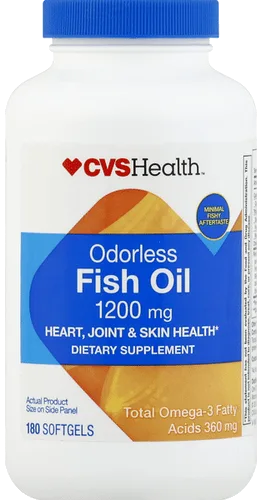
CVS Health Oder-Less Fish Oil 1200 mg Review
CVS Health Odor-Less Fish Oil 1200 mg is a store-brand omega-3 dietary supplement. It comes as softgels in several counts, including 60 and 180. Retailer listings say it supports heart, joint and skin health. Each serving has 1200 mg of fish oil. That supplies about 360 mg of total omega-3 fatty acids, mainly EPA (eicosapentaenoic acid) and DHA (docosahexaenoic acid). The listings don't disclose the separate EPA and DHA amounts, and the SuppCo database notes that the manufacturer withholds them. A serving has roughly 15 calories, about 1 g of total fat and 10 mg of cholesterol. Listings describe it as mercury-free and purified. They also say it contains no yeast, wheat, gluten, milk, lactose, sugar, preservatives, artificial color, artificial flavor or salt. It contains fish. The other ingredients are gelatin, glycerin, methacrylic acid copolymer, hypromellose, polyethylene glycol and mineral oil. How it works comes down to two things: the omega-3 fats themselves, and the delivery system. 1. **Omega-3 fats.** EPA and DHA are long-chain polyunsaturated fatty acids. Cells build them into their membranes. This affects membrane fluidity and cell signaling. They are also precursors to signaling molecules that help resolve inflammation. In the cardiovascular system they are linked to lower circulating triglycerides. Retailer copy says they help maintain cardiovascular health and are important for cellular, heart and metabolic health. DHA is also a structural component of the brain and retina. 2. **Enteric coating.** Retailer descriptions say the softgel is odorless and enteric coated. Methacrylic acid copolymer is a pH-sensitive polymer. It resists the acidic stomach and dissolves in the higher-pH small intestine. Releasing the oil there means less of it floats up in the stomach and refluxes. That reflux causes "fish burps" and aftertaste. The listings say the design protects the nutrients through the stomach so they are digested in the small intestine. In practice this changes the timing and location of release. It doesn't change the oil's composition. **Practical points.** Omega-3s are fat-soluble, so taking the capsule with a meal containing some fat generally helps absorption. The 360 mg of omega-3 per serving is modest compared with therapeutic doses. People who take meds, have fish or shellfish allergies, or have a medical condition should check with a clinician first. SuppCo lists this product as not yet scored by its TrustScore system because it has too little data. It describes the quality percentile as 36.8%. Third-party certification, such as IFOS or USP verification, was not visible in the listings I found. Treat it as a budget omega-3 option and not a high-potency one. This is a dietary supplement, and it is not intended to diagnose, treat, cure or prevent disease.
We don’t sell supplements. We help you make decisions and get the best price.
Lowest prices
We may earn a commission from some store links. How we choose.
Lowest cost per month first, in stock, at 3 softgels a day. Checked Nov 5.
- TargetLowest$16.72 a bottle of 120 softgels$12.54/moBuy at Target (opens in a new tab)
Study, Trial or Testing Result Summary
Members Only66 human studies · 25 improved
The omega-3 amount in this softgel is not stated on the label we have, so we cannot tell whether it reaches the doses studied. A 2022 review of 71 trials with 4973 adults found that 2 to 3 grams a day lowered the top blood pressure number by about 2.6 points and the bottom number by about 1.6 to 1.8 points, with bigger effects in people with high blood pressure and older adults [1]. A 1993 review of 31 placebo trials found an average drop of 3.0 over 1.5 points, mostly at higher doses and in people with high blood pressure, with no effect in healthy people [2]. A 12-month trial in older adults taking about 1.8 grams a day lowered the top number compared with placebo [3]. On the other hand, a very large 2020 review of 86 trials with about 162,800 adults found little or no effect on blood pressure [4]. In a 3-year trial of 2157 adults aged 70 or older, 1 gram a day did not meaningfully change blood pressure [5] and did not prevent new high blood pressure [6]. Overall, any benefit appears small and seems to need higher doses than a typical single softgel. Animal and cell studies are never counted.
See all 66 studies →Hide the studies
- Across 86 trials with about 162,800 adults followed for 12 to 88 months, increasing omega-3 intake had little or no effect on blood pressure, though it lowered triglycerides by about 15%.Omega-3 fatty acids for the primary and secondary prevention of cardiovascular disease.
- In 11 trials with over 5000 pregnant women, fish oil in the second or third trimester did not lower the risk of pregnancy-induced high blood pressure, pre-eclampsia or gestational diabetes.Fish Oil Supplementation does not Reduce Risks of Gestational Diabetes Mellitus, Pregnancy-Induced Hypertension, or Pre-…
- In 71 trials with 4973 adults, omega-3 at 2 to 3 grams a day lowered systolic blood pressure by about 2.6 mm Hg and diastolic by about 1.6 to 1.8 mm Hg, with larger effects in people with high blood pressure, high blood lipids and older adults.Omega-3 Polyunsaturated Fatty Acids Intake and Blood Pressure: A Dose-Response Meta-Analysis of Randomized Controlled Tr…
- In 21 trials with about 1950 adults with metabolic syndrome, there was not enough data to pool blood pressure results, and the authors say blood pressure benefits are not consistent, though triglycerides fell substantially.Marine-Based Omega-3 Fatty Acids and Metabolic Syndrome: A Systematic Review and Meta-Analysis of Randomized Controlled …
- In 15 trials with 1830 people with leg artery blockage pain, omega-3 made no difference to blood pressure compared with placebo.Omega-3 fatty acids for intermittent claudication.
- In 31 placebo-controlled trials with 1356 people, fish oil lowered blood pressure by an average of 3.0 over 1.5 mm Hg, with the biggest effect at higher doses and in people with high blood pressure, but no effect in healthy people.Does fish oil lower blood pressure? A meta-analysis of controlled trials.
- In 12 studies with 759 people with leg artery disease, EPA or EPA plus DHA did not change blood pressure compared with placebo.The effectiveness of intervention with omega-3 fatty acids, eicosapentaenoic and docosahexenoic acid in peripheral arter…
- In 10 trials with 344 people with diabetes, omega-3 lowered systolic blood pressure slightly compared with control, but the difference was not statistically significant.The effects of omega-3 fatty acids on diabetic nephropathy: A meta-analysis of randomized controlled trials.
- In a machine-learning analysis of 25,871 adults without heart disease followed for 5 years, omega-3 lowered heart disease risk by 0.47% on average, with larger benefit in some people (1.21% in the top third) and none in those with a low score; this did not measure blood pressure directly.Identification of individuals who benefit from omega-3 fatty acid supplementation to prevent coronary heart disease: a m…
- In 2,157 adults aged 70 or older given 1 g a day of omega-3 for 3 years, there was no statistically significant change in systolic blood pressure (-0.8 mm Hg) or diastolic blood pressure (-0.5 mm Hg) compared with no omega-3.Effect of Vitamin D Supplementation, Omega-3 Fatty Acid Supplementation, or a Strength-Training Exercise Program on Clin…
- In 2,157 older adults given 1 g a day of omega-3 for 3 years, omega-3 did not reduce new high blood pressure or major cardiovascular events, and it raised HDL, total and LDL cholesterol while lowering triglycerides.Effects of vitamin D, omega-3 and a simple strength exercise programme in cardiovascular disease prevention: The DO-HEAL…
- In 851 pregnant women with a prior preterm birth, omega-3 lowered preterm delivery and low birth weight in smokers, and the abstract reported no significant difference between smokers and nonsmokers in pregnancy-related high blood pressure.The effect of omega-3 supplementation on pregnancy outcomes by smoking status.
- In 152 older overweight adults, 2400 mg per day of fish oil for 16 weeks lowered heart rate but did not clearly change blood pressure compared with placebo.Effects of fish oil and curcumin supplementation on cerebrovascular function in older adults: A randomized controlled tr…
- In 90 kidney transplant recipients, taking 9 g or 18 g of eicosapentaenoic acid daily for 26 weeks lowered diastolic blood pressure by about 9 to 10 mmHg, while the corn oil placebo group rose by about 2 mmHg.Delayed omega-3 fatty acid supplements in renal transplantation. A double-blind, placebo-controlled study.
- In 87 healthy men, 8 weeks of 4 g daily omega-3 fats in bakery products lowered mean arterial blood pressure.Trans, and n-3 polyunsaturated fatty acids and vascular function-a yin yang situation?
- In 84 adults at moderate heart disease risk, 8 weeks of 1.5 g daily long-chain omega-3 fats did not significantly change blood pressure.Fish-oil supplementation alters numbers of circulating endothelial progenitor cells and microparticles independently of …
- In 83 healthy 9-month-old infants given 5 mL of fish oil daily for 3 months, systolic blood pressure was about 6 mmHg lower at 12 months than in infants not given fish oil.Fish oil affects blood pressure and the plasma lipid profile in healthy Danish infants.
- In 80 obese middle-aged adults at high heart failure risk, taking 1.6 grams of omega-3 daily for one year did not improve heart structure, heart function, blood vessel stiffness or body composition beyond exercise or placebo.1 Year HIIT and Omega-3 Fatty Acids to Improve Cardiometabolic Risk in Stage-A Heart Failure.
- Mothers given 4.5 g a day of fish oil for the first 4 months of breastfeeding did not change their children's blood pressure at age 2.5 years compared with olive oil.Diet and blood pressure in 2.5-y-old Danish children.
- In older adults with mild memory impairment, 12 months of a daily fish oil supplement providing about 1,491 mg DHA and 351 mg EPA lowered systolic blood pressure compared with placebo, though it did not improve cognition.The effects of docosahexaenoic acid supplementation on cognition and well-being in mild cognitive impairment: A 12-month…
- In 67 adults without high blood pressure, 8 weeks of fish oil did not change blood pressure reaction to mental stress, although it blunted heart rate reaction to stress.Fish oil and neurovascular reactivity to mental stress in humans.
- In healthy adults aged 50 to 75 taking 2.2 grams of fish oil omega-3 per day for 26 weeks, diastolic blood pressure improved compared with placebo, along with better executive thinking skills.Long-chain omega-3 fatty acids improve brain function and structure in older adults.
- In 65 healthy college students in China, 2.5 g daily fish oil did not show a blood pressure effect, but it gave some benefits on blood inflammation and oxidative stress markers during air pollution exposure.Cardiovascular Benefits of Fish-Oil Supplementation Against Fine Particulate Air Pollution in China.
- In 65 adults with high LDL cholesterol, adding fish oil to a diet plan for 20 weeks lowered diastolic blood pressure about 8%, the same as the diet plan alone, so the fish oil added no extra blood pressure benefit.Reduction of cardiovascular risk factors by the diet - Evaluation of the MoKaRi concept by a parallel-designed randomize…
- In 60 children receiving doxorubicin chemotherapy, taking 1000 mg of omega-3 fatty acids daily for six months lowered a marker of cell damage, raised antioxidant levels and preserved heart pumping function compared with usual care.Omega 3 fatty acids can reduce early doxorubicin-induced cardiotoxicity in children with acute lymphoblastic leukemia.
- In 55 patients recovering from a heart attack, 12 weeks of 5.2 g daily omega-3 fats did not improve heart pumping function compared with placebo.N-3 fatty acids and cardiac function after myocardial infarction in Denmark.
- In 52 overweight adults with high blood pressure, 3 g of fish oil daily for 8 weeks improved large artery stretchiness but did not lower blood pressure compared with placebo.Fish oil supplementation improves large arterial elasticity in overweight hypertensive patients.
- In a 12-week double-blind trial of 45 people with lung disease and weight loss, a drink with 2 g of omega-3 fatty acids lowered systolic blood pressure more than an isocaloric comparator drink.Targeted medical nutrition for cachexia in chronic obstructive pulmonary disease: a randomized, controlled trial.
- In healthy older adults taking 3.9 grams of omega-3 per day for 6 months, blood pressure (systolic) was reduced compared with corn oil placebo, alongside lower triglycerides.A Randomized Trial of ω-3 Fatty Acid Supplementation and Circulating Lipoprotein Subclasses in Healthy Older Adults.
- In 40 adults with diabetes and high cholesterol, fish oil or corn oil taken for 12 weeks produced no significant difference in blood pressure.A comparison of fish oil or corn oil supplements in hyperlipidemic subjects with NIDDM.
- In young healthy adults eating omega-3-enriched eggs providing about 777 mg omega-3 per day for 3 weeks, blood pressure and inflammation marker CRP fell from baseline, while the control egg group showed no change.Omega-3 polyunsaturated fatty acids-enriched hen eggs consumption enhances microvascular reactivity in young healthy ind…
- In 36 normotensive adults with type 1 diabetes and kidney disease, 4.6 grams of fish oil daily for one year did not change 24-hour blood pressure compared with olive oil placebo.Fish oil in diabetic nephropathy.
- In 32 patients with leg claudication taking 3 grams of fish oil per day for 4 months, mean blood pressure fell similarly in the fish oil and corn oil groups, with no meaningful improvement in walking distance.Fish oil supplementation in patients with stable claudication.
- In 32 people with Raynaud's phenomenon, 6.6 g of daily fish oil delayed attacks triggered by cold and raised finger blood pressure in the cold, though these benefits appeared only in primary Raynaud's.Fish-oil dietary supplementation in patients with Raynaud's phenomenon: a double-blind, controlled, prospective study.
- In a 6-month placebo-controlled trial of 28 heart transplant recipients, 4 g of omega-3 fatty acids daily prevented the blood pressure rise seen with corn oil, with systolic pressure falling 2 mm Hg versus rising 17 mm Hg in the placebo group.Hypertension prophylaxis with omega-3 fatty acids in heart transplant recipients.
- In 26 normal and hypertensive men, 30 days of 5 g fish oil did not change blood pressure, but in hypertensive men it raised LDL cholesterol.Fish oil produces an atherogenic lipid profile in hypertensive men.
- In 26 patients with lupus nephritis, a year of 15 g daily fish oil, compared with olive oil placebo, did not change blood pressure or kidney function, though it lowered triglycerides.Fish oil in lupus nephritis: clinical findings and methodological implications.
- In 25 adolescents with high triglycerides, about 3360 mg daily of omega-3 for six months did not change blood pressure compared with placebo, and the triglyceride drop was not significantly different from placebo.Using high-dose omega-3 fatty acid supplements to lower triglyceride levels in 10- to 19-year-olds.
- In 24 healthy older women taking 3 g per day of fish oil for 12 weeks, resting blood pressure was measured, but the abstract reports no blood pressure change; triglycerides fell by 29% compared with placebo.Omega-3 Fatty Acid Supplementation for 12 Weeks Increases Resting and Exercise Metabolic Rate in Healthy Community-Dwell…
- In 21 men, 3 weeks of fish oil increased blood flow speed in nailfold capillaries, while blood pressure was not changed by fish oil.Fish oil increases peripheral capillary blood cell velocity in humans.
- In an 8-week placebo-controlled trial of 21 men with poorly controlled hypertension, 4.5 g a day of fish oil did not lower blood pressure more than placebo, though blood pressure fell within both groups.Fish oil as an adjuvant in the treatment of hypertension.
- In a small trial of 20 normal volunteers over 4 weeks, marine oil capsules did not change blood pressure or forearm blood flow compared with placebo.Read the study on PubMed (2339203) →
- In 20 adults with type 1 diabetes, 3.3 grams of omega-3 daily for 6 months did not change blood pressure compared with corn oil placebo.Omega-3 polyunsaturated fatty acid supplementation versus placebo on vascular health, glycaemic control, and metabolic p…
- In 20 postmenopausal women doing resistance training, fish oil for 8 weeks lowered blood pressure, triglycerides, and inflammation and oxidative stress markers, while the training-plus-placebo group showed no such changes.Fish Oil Supplementation with Resistance Exercise Training Enhances Physical Function and Cardiometabolic Health in Post…
- In 19 healthy men taking 860 mg EPA and DHA per day for 8 weeks, fish oil did not prevent sitting-induced decline in leg blood vessel function, and blood pressure was measured but not reported as improved.Eight weeks of fish oil supplementation does not prevent sitting-induced leg endothelial dysfunction.
- In adults with mild high blood pressure taking 50 grams of marine oil per day for 6 weeks, diastolic blood pressure fell from 96 to 89 mm Hg, while vegetable oil did not change it.Effects of n-3 fatty acids in essential hypertension.
- A randomized trial in people with high normal diastolic blood pressure found that a novel fatty acid supplement did not significantly lower blood pressure.A trial of omega-3 fatty acids for prevention of hypertension.
- In overweight postmenopausal women, a 16-week DHA-rich omega-3 supplement lowered diastolic blood pressure and triglycerides compared with olive oil placebo, while exercise training gave the larger body composition gains.Effects of DHA-Rich n-3 Fatty Acid Supplementation and/or Resistance Training on Body Composition and Cardiometabolic Bi…
- In 67 adults with normal or elevated blood pressure taking 9 g of fish oil daily for 8 weeks, mean blood pressure did not change compared with olive oil placebo.Fish oil and neurovascular control in humans.
- In 60 people with type 2 diabetes, a diet with 8 g per day of fish oil improved essential hypertension and blood fats more than diet alone, without worsening blood sugar.[Effects of diet therapy including eiconol on clinical and metabolic parameters in patients with type 2 diabetes mellitu…
- In 43 healthy young adults taking 3 g of fish oil daily for 4 weeks, lung function loss after ozone exposure was reduced, but fish oil did not change blood pressure, whereas olive oil blunted the blood pressure rise.Fish oil blunts lung function decrements induced by acute exposure to ozone in young healthy adults: A randomized trial.
- In 30 healthy adults, 2.52 grams of omega-3 daily from fish oil for 5 weeks lowered systolic blood pressure compared with placebo, while the lower 1.26 gram dose was not reported as significant for blood pressure.Effects of fish oil capsules in two dosages on blood pressure, platelet functions, haemorheological and clinical chemist…
- In 25 obese teenagers taking 1.2 g of omega-3 daily for 3 months, blood pressure did not change compared with placebo, though inflammation markers fell and blood vessel function improved.Omega-3 fatty acid supplementation improves vascular function and reduces inflammation in obese adolescents.
- In 18 children with dilated cardiomyopathy taking 10 mL of fish oil daily for about 6.6 months, heart pumping function improved, while a comparison group not taking fish oil showed no significant change.Fish oil supplementation improves left ventricular function in children with idiopathic dilated cardiomyopathy.
- In a small 12-week open study of 21 obese men with metabolic syndrome, blood pressure fell in both the calorie-restricted diet group and the group that also took fish oil, with no separate fish oil effect reported.n-3 PUFA and caloric restriction diet alters lipidomic profiles in obese men with metabolic syndrome: a preliminary open…
- Among 427,678 UK adults followed for about 8 years, regular fish oil users had lower risk of cardiovascular death and cardiovascular events, and the link was stronger in people with high blood pressure.Associations of habitual fish oil supplementation with cardiovascular outcomes and all cause mortality: evidence from a …
- In a long-term study of about 38,000 women without prior heart disease, dietary omega-3 fats and fish intake were not linked to the risk of heart attack, stroke or heart-related death.Fish Consumption, Omega-3 Fatty Acids, and Risk of Cardiovascular Disease.
- In over 30,000 UK adults with several heart and metabolic conditions, those who used fish oil had about 17% lower risk of death from any cause and about 19% lower risk of heart-related death over about 12 years of follow-up.Use of fish oil and mortality of patients with cardiometabolic multimorbidity: A prospective study of UK biobank.
- In 6,944 children followed to age 7.5, a weak link between mother's omega-3 intake in late pregnancy and child blood pressure disappeared after adjusting for other factors.Maternal diet in pregnancy and offspring blood pressure.
- In 899 hospitalized heart failure patients, low blood levels of omega-3 fats were linked to some heart measures but did not predict death over three years of follow-up.The omega-3 index in patients with heart failure: A prospective cohort study.
- In a cross-sectional comparison of 596 hypertensive adults, a fishing village with higher blood omega-3 levels had less heart wall thickening and artery thickening than a farming village, though this does not prove cause.Regional differences in hypertensive cardiovascular remodeling between fishing and farming communities in Japan.
- A population-level study of heart disease deaths in 27 European Union countries found that low intake of omega-3 fats was among the largest dietary contributors to higher heart disease death burden, especially in women in Austria, Greece and Malta; this was not a direct supplement trial.Diet and sex inequities in ischemic heart disease mortality across Europe: findings from the global burden of disease st…
- In 55 people with heart disease, high cholesterol and hypertension, a diet with 20 g of fish oil for 55 days lowered lipids and changed clotting-related markers; the abstract does not report blood pressure results.[Effect of atherosclerotic diet containing polyunsaturated omega-3 fatty acids on level of natural antibodies to prostag…
- In 22 people with type 2 diabetes, 8 weeks of fish oil lowered systolic blood pressure from 142 to 128 and diastolic from 88 to 80, but raised apolipoprotein B and temporarily worsened blood sugar control.Effects of omega-3 fish oils on lipid metabolism, glycemic control, and blood pressure in type II diabetic patients.
- Maximal treadmill exercise raised blood pressure in healthy volunteers but did not change omega-3 levels in their red blood cells; no omega-3 supplement was given.Maximal exercise and erythrocyte fatty-acid status: a lipidomics study.
- A diet with 20 g of fish oil for 4 weeks, repeated 2 to 3 times a year, was recommended for people with heart disease, familial high cholesterol and hypertension; the abstract gives no blood pressure numbers.[Clinico-biochemical validation of the use of PUFA omega-3 in patients with ischemic heart disease, familial hyperlipopr…
Review Totals and Summary
Members Only648 reviews
Customer feedback specific to this exact odorless 1200 mg CVS softgel is thin. The few reviews I could find were sparse, and larger review volumes belong to neighboring CVS fish oil products and to Nature Made Burp-Less, a close comparable. Read the themes below with that in mind. For the CVS odorless product itself, buyers mostly talk about value. The two eBay reviewers called it a great value that was "just as good" as pricier brands, and they described it as a good deal and good quality. Shoppers appear to pick it as a cheaper store-brand substitute for name brands. The main selling point in the listings is the lack of fishy aftertaste, which is the benefit people look for in this category. In the wider odorless and burpless category, reviewers praise the absence of burps, smell and aftertaste. Several say they had given up fish oil because of the taste and the repeating burps. One person on a cancer medication takes it for joint pain and says it seems to be helping. Others say they have tried every flavorless option and only one actually delivers on that claim. Some long-term users with heart conditions say a cardiologist recommended it and they've taken it for years. Another buyer gives the pills to a dog, so people are using them for pets too. Reviews of related CVS fish oil lines, such as the half-size and wild Alaskan versions, focus on ease of swallowing. People call the smaller softgels far easier to take than standard ones. That suggests pill size is a common concern. Reviewers of those lines also report feeling more energetic, though that is anecdotal. I found no consistent complaints about this specific product. The likely concerns are the usual ones for fish oil: standard-size softgels can be big, a few people may still notice some aftertaste, and 360 mg of omega-3 per serving means taking several capsules for higher doses. Those are inferences from the category and not confirmed customer statements. Overall, shoppers value the low price, the lack of burps and the reliability of a pharmacy brand. Independent verification of potency and purity is limited.
Biohacker Summary
Members Only7 of 10 recommend it
Most of the panel recommends omega-3s, with six of the ten leaning toward recommending and four staying neutral, and several of them also use omega-3s themselves. People take them for heart health and lower triglycerides, less inflammation, brain function, slower biological aging, fertility, skin, and help with stress. Many prefer getting omega-3s from fatty fish such as salmon and sardines, and fish oil is also suggested, with EPA and DHA as the key forms. Doses mentioned include 1 gram a day, 1 to 3 grams a day, 2 to 4 grams a day, and about 2 grams a day for someone with a low omega-3 level, and one panelist warns that standard capsules are often too low in EPA and DHA so people underdose. One panelist advises taking them with a meal that contains fat for better absorption, and another says the evidence for preventing serious heart disease events is not very strong, though no one said they stopped taking them.
See all 10 biohackers →Hide the biohackers
Dr. Eric Berg · Omega-3 Fatty Acids · recommends
- Recommends wild-caught salmon as a healthy food to eat every day, noting it contains about 2000 mg of omega-3s in just 3 ounces.
- Recommends wild salmon as it is rich in omega-3 fatty acids, which help reduce inflammation and support brain health and cognitive function, especially important as one ages.
- Recommends DHA, an omega-3 fatty acid, as a natural remedy that, along with sweet wormwood, can trigger iron into an explosion to hit cancer.
- Dr. Eric Berg mentions that sardines are packed with omega-3 fatty acids, which support brain health and metabolism.
- Mentions that wild salmon, specifically half a fillet, has 970 mg of potassium, zero carbohydrates, a good amount of magnesium, and is loaded with omega-3 fatty acids.
- Discusses what would happen if one consumed omega-3 fatty acids every day for 30 days, highlighting their benefits for brain health, heart health, and various conditions like dry eyes, dermatitis, and high blood pressure, as well as supporting calcium absorption and promoting better sleep.
- Recommends getting plenty of omega-3 fatty acids to support joint and metabolic health.
- Recommends consuming foods rich in vitamin D, including fatty fish, to boost vitamin D levels.
- Recommends fatty fish as the best type of protein for inflammation.
- Recommends fatty fish, including salmon, mackerel, and sardines, as dietary sources of vitamin D.
Siim Land · Omega-3 Fatty Acids · recommends
- Recommends taking omega-3s, including EPA and DHA, with a fat-containing meal to increase absorption.
- Increased his omega-3 intake to achieve a higher omega-3 index, which is associated with greater insulin sensitivity and better metabolic health markers.
- Increased his omega-3 index to 9.5% and notes that omega-3s have strong evidence for reducing elevated triglycerides.
- Mentions that EPA and DHA Omega-3s support heart and brain function and can lower triglycerides, with a higher omega-3 index associated with lower heart disease, Alzheimer's and mortality risk.
- Recommends Omega-3s for triglycerides and cardiovascular health, based primarily on human research, especially randomized controlled trials showing measurable benefits.
- Recommends choosing an omega-3 supplement from a brand that uses independent third-party testing and publishes a recent certificate of analysis, verifying EPA and DHA amounts, and testing for heavy metals, contaminants, and oxidation markers.
- Lists Omega-3s as one of 15 supplements backed by human studies.
- Explains that omega-3s can alter mitochondrial membranes and have broader cardiometabolic effects, making mitochondria more responsive to cellular signaling and oxidative stress from exercise, but they don't increase maximal mitochondrial respiration.
- Notes that 75% of people aren't meeting the daily recommendation for omega-3s and that Japanese people eat 2-3x more omega-3s per day than Americans or Europeans, which reflects in their higher omega-3 index.
- Thinks omega-3s have some of the strongest evidence and are worth considering.
Andrew Huberman · Omega-3 Fatty Acids · recommends
- AG1 is giving away a free bottle of omega-3 coenzyme Q10 with your first subscription.
- Mentions that AG1 is giving away a free bottle of Omega-3 co-enzyme Q10 with the first subscription to AG1 Pro.
- Discusses Omega-3 Fatty Acids and EPA.
- Mentions that AG1 is offering a free bottle of Omega-3 co-enzyme Q10 with a first subscription to AG1 Pro.
- Recommends a free bottle of Omega-3 co-enzyme Q10 with the first AG1 Pro subscription.
- Mentions Omega-3s in the context of the microbiome and processed foods.
- Recommends Omega-3 co-enzyme Q10, which is offered as a free bottle with the first AG1 Pro subscription.
- States that getting 1 to 3 grams of EPA essential fatty acid per day can improve mood and cognitive function, supporting focus and concentration.
- Discusses Omega-3 Fatty Acids.
- Discusses omega-3s, artificial sweeteners, fructose, and fats.
Thomas DeLauer · Omega-3 Fatty Acids · recommends
- Recommends fish oil supplements as an omega-3 source for gut health, as they help reduce inflammatory signaling while tissue repairs.
- Recommends high-dose omega-3s, specifically 2 to four grams of combined EPA and DHA daily, to lower hepatic fat output and improve chylomicron clearance, which helps with non-fasting triglycerides.
- Recommends omega-3s, specifically 4 grams a day, to boost the muscle building response by making muscle cell membranes work better for the mTor switch to fire, and specifically mentions Pury for their clean, third-party tested omega-3s.
- Recommends consuming more omega-3s to help balance the mitochondrial membrane, as it will absorb more omega-3s instead of omega-6s.
- Recommends consuming more omega-3s to drive down inflammation.
- Recommends omega-3s, stating that a meta-analysis found 1,000 mg significantly reduced liver fat by shutting down inflammatory signals that promote fat storage, and advises looking for a triglycerol form for better absorption and to avoid oxidation.
- Recommends fatty fish like salmon and sardines, aiming for two to three servings per week, especially around a workout, because their omega-3s, particularly DHA, increase BDNF expression.
- Considers omega-3s a fundamental for brain protection, recommending both dietary sources and supplementation for EPA and DHA, as they produce pro-resolving mediators to limit inflammation.
- Recommends timing omega-3 intake around workouts because they directly help build and keep muscle by making muscle more responsive to growth signals and fighting anabolic resistance as one ages.
- Notes that Scandinavians consume fatty fish multiple times a week as part of their diet, contributing to their long lifespan and healthspan.
Dave Asprey · Omega-3 Fatty Acids · recommends
- Suggests that omega-3s may help slow aging and support cellular repair.
- Recommends omega-3s, noting that 1 gram a day slowed epigenetic aging by up to 4 months in a randomized trial of people over 70.
- Dave Asprey recommends Omega-3, citing a randomized trial showing 1g a day slowed epigenetic aging in older adults, but warns that most people underdose due to low EPA and DHA content in standard capsules.
- A review of 41 human studies testing interventions against newer-generation epigenetic clocks found favorable changes for exercise, caloric restriction, omega-3s, plant-rich diets, multivitamins, a med, pitavastatin, and ketamine.
- Recommends getting nutrients like omega-3s from real food or Vision 101 for eyesight.
- Recommends adding omega-3 fats to improve how neurons absorb and use nutrients like vitamin C.
- States that Fatty15 supports cells better than omega-3s or fish oil, but he uses both.
- Notes that Inuit people consumed very high levels of omega-3s, specifically EPA and DHA, which contributed to their health on a whale blubber diet.
- Lists Omega-3s as a nutrient that forms the structure and different parts of the brain.
- Uses both C15 and omega-3s, noting that C15 supports cells better than omega-3s or fish oil with three times more benefits.
Dr. Rhonda Patrick · Omega-3 Fatty Acids · neutral
- Mentions that EPA is an omega-3 examined in mortality analysis and found primarily in seafood.
- States that Omega-3 fatty acids are very important for sperm health.
- Omega-3s may help slow biological aging, with added benefits when combined with vitamin D and strength training. In a 3-year randomized trial of healthy, mostly active older adults, omega-3 alone slowed several DNA-based aging clocks.
- Recommends regular intake of omega-3 rich seafood and supplementation with omega-3 fatty acids if it's appropriate for one's lifestyle, as they are beneficial for the heart by resolving inflammation and preserving membrane fluidity.
- Notes that a 100 mg per day increase in omega-3 fatty acids was associated with lowering the risk of Alzheimer's disease and cognitive decline by 10%, and that it takes about two grams a day to get to a high omega-3 index if one has a low index.
- Practical habits to help keep chronic inflammation in check include getting enough omega-3s.
- States that Omega-3s, specifically EPA and DHA, may be the most potent naturally occurring dietary compounds for reducing inflammation, and that about 2 g/day of combined EPA and DHA can raise a low omega-3 index.
- Recommends fatty fish as a source of healthy fats for muscle gain.
- Mentions that an omega-3 supplement might not be working, and one would not know without taking the Omega-3 index test.
- Recommends considering omega-3s to improve mood.
Dr. Mark Hyman · Omega-3 Fatty Acids · neutral
- Mentions omega-3 fats as existing biomarkers that play a role in mental health, which Function Health includes in their measurements.
- Mentions that omega-3s are anti-inflammatory and helpful.
- Tries to supplement with omega-3s for psoriasis and considers them the one clearly clinically effective skin nutrient for skin, hair, and nails.
- Emphasizes the importance of focusing on omega-3s, noting that a national crisis of omega-3 deficiency exists and that low omega-3 levels are a significant problem, more so than omega-6s.
- Consumes omega-3 fats through salmon at dinner.
- Notes that omega-3s are important nutrients for brain performance and aging, and that many people have gaps in these nutrients.
- Recommends omega-3 fats from wild fish, seafood, and certain nuts and seeds to fight inflammation.
- Mentions omega-3 fats as something that might be helpful for gut repair.
- Used omega-3 fats as part of a protocol to rebuild the gut microbiome and heal the gut of a nine-year-old girl with severe behavioral issues.
- States that omega-3 fats from fatty fish, flax, and walnuts help balance inflammatory pathways, but no supplement can replace daily signals from sleep, nutrition, exercise, stress management, and metabolic health.
Ben Greenfield · Omega-3 Fatty Acids · neutral
- Notes that omega-3s have solid research behind them for fertility.
- Recommends omega-3 fatty acids, specifically EPA and DHA, at 1 to 3 grams per day for better sperm morphology and motility, noting that sperm membranes are rich in polyunsaturated fatty acids.
- Recommends getting Omega-3 from oily fish such as sardines, anchovies, mackerel, herring, and salmon with skin.
- Discusses why fatty fish or fish oil may matter more than plant-based omega-3s if seed oils are in one's diet.
- Says that omega-3 fatty acids are a great way to feed the system and help with stress.
- Recommends testing for and replenishing omega-3 fatty acids if levels are low, as they can affect the ability to maintain or preserve muscle, especially for those on GLP-1s.
- Recommends including EPA from fatty fish or fish oil in one's diet, especially if seed oils are present in the diet.
- Notes that B vitamins and Omega-3s work as a pair to support the brain, but not independently.
- Notes that the DO-Health study showed omega-3 had good effects, and it's a supplement people commonly take.
- Mentions that omega-3, vitamin D, and exercise all had good effects in the DO-Health study.
Peter Attia · Omega-3 Fatty Acids · neutral
- Peter and Michael explore the benefits of omega-3 fatty acids for cardiovascular trials and the challenge of delivering DHA to the brain.
- Mentions that some trials showing a benefit to PUFA were confounded by the inclusion of omega-3s, and argues that the literature on omega-3s is not super strong for decreasing hard cardiovascular disease endpoints.
- Took big doses of omega-3 postpartum to help maintain when she wasn't sitting down to eat full meals.
- Mentions consuming fatty fish, specifically sardines, as part of their diet, noting their high fat and protein content.
- Peter discusses how omega-3s from fish oil impact inflammation, heart health, and brain function, as well as the strengths and limitations of current research.
- Mentions the importance of DHA omega-3 fatty acids for neuronal membranes, which are concentrated in synapses and crucial for communication between neurons.
- Highlights the importance of DHA omega-3 fatty acids for neuronal membranes and communication between neurons, as they are concentrated in synapses.
- Discusses the mfsd2a transporter, which is specific to DHA in phospholipid form, and its role in blood-brain barrier integrity, noting that animal studies show disruption of this transporter causes significant breakdown of the blood-brain barrier and loss of omega-3 in the brain.
- States that there is a very strong clinical impression that high doses of omega-3s help with dry eye, primarily from an anti-inflammatory standpoint.
- Recommends omega-3 fatty acids, specifically DHA and EPA, for brain protection, especially for individuals with the APOE4 gene, stating that they require higher doses.
Bryan Johnson · Omega-3 Fatty Acids · recommends
- Recommends Omega 3 fatty acids as a supplement for skin health, noting they are in the Blueprint stack.
- During menopause, Bryan Johnson recommends ensuring adequate omega-3s for brain health.
RAL Summary
Members OnlyTier 4 for Blood Pressure
The studies disagree rather than show omega-3 fails for blood pressure: two reviews found modest drops at higher doses, especially in people with high blood pressure, while a very large review and a 1 gram a day trial found little or no effect, which fits tier 4, not tier 5. So it is graded Tier 4, as the studies disagree.
- Emerging: not enough evidence to rank higher yet.
Where the evidence disagrees: 39 of the 66 human studies found no effect.
More Details
Members OnlyBody systems · Combine with · Possible side effects
Body systems: Cardiovascular system
Combine with: Fish oil with EPA and DHA has modest blood pressure-lowering effects, mainly at higher doses (about 2-4 g/day of combined EPA+DHA), and a 1200 mg softgel provides only about 360 mg of EPA+DHA, so it works best as part of a broader cardiovascular plan. Magnesium (glycinate or citrate, 200-400 mg) supports vascular relaxation and healthy blood pressure. Potassium from food or a modest supplement helps offset sodium effects. CoQ10 (100-200 mg) supports endothelial and mitochondrial function and has shown small blood pressure benefits. Aged garlic extract (600-1200 mg) has evidence for modest systolic reductions. Vitamin K2 and vitamin D3 support healthy calcium handling in arteries. Hawthorn extract or beetroot/nitrate support can further aid vascular tone. Check with a doctor before combining with meds or meds, since fish oil, garlic, and potassium can interact.
Possible side effects: In a 3-year trial, 1 gram a day raised total and LDL cholesterol along with HDL while lowering triglycerides. Reviews of similar products mention large softgel size and occasional aftertaste.
Supplement Facts
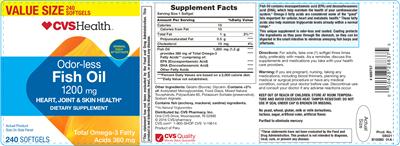
Fish Oil 1200 mg
| Calories | 15 | |
| Total Fat | 1 g | |
| Cholesterol | 10 mg | |
| Fish Oil | 1,200 mg | † |
Other ingredients: Gelatin, Glycerin, Contains Less Than 2% of.
Directions: Directions: For adults, take one (1) softgel three times daily, preferably with meals.
Barcode (UPC) 050428288375 · Label source: NIH label database · Report a label change
Show entire label
More blood pressure products
Members OnlyThe highest ranked for the same goal
Read more
Our articles on this subject
- How to Lower Diastolic Blood Pressure for LongevityArticle · Sep 17, 2026
- DASH Diet for High Blood Pressure: What It Lowers, What to Eat, and How to StartArticle · Sep 19, 2026
Graded November 4, 2026 by the Reverse Age Lab evidence engine, from human studies, real reviews and our biohacker panel. How we grade. Is this medical advice? No. Rala organizes the published evidence; go over any change with your doctor, especially if you take meds.
Privacy policyConsumer health dataAffiliate disclosureTermsDo Not Sell or Share My Personal InformationCookie settings