
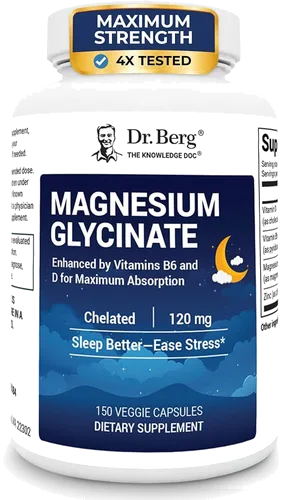
Dr. Berg Magnesium Glycinate 150ct – 4-in-1 Chelated for Muscle, Nerve, Sleep & Stress Support*– w/ D3, B6 & Zinc – 4X Lab-Tested – No Fillers – Formulated in USA, GMP-Certified Review
Dr. Berg Magnesium Glycinate is a 150 count capsule supplement from Dr. Berg Nutritionals, formulated by Dr. Eric Berg, DC. It is presented as a 4-in-1 chelated magnesium glycinate formula combined with vitamin D3 (as cholecalciferol), vitamin B6 (as pyridoxal-5-phosphate) and zinc (as zinc picolinate). It is described as including chelated magnesium glycinate plus D3 and B6, designed to support calm evenings and balanced rest, and magnesium helps maintain normal muscle and nerve function. The capsules are unflavored and are listed as an individual supplement with a stated benefit of sleep and stress support. The product is made with a vegetable capsule and magnesium stearate and is described as free of harsh laxatives and fillers. Each bottle is verified by a third-party lab for purity, identity and safety, with 4X lab testing, and is formulated in the USA under GMP certification. The directions say to take 1 capsule per day to assess tolerance, increasing up to 4 a day if needed. The unit count is 150 capsules, with an item weight of 0.5 kg.
We don’t sell supplements. We help you make decisions and get the best price.
Lowest prices
We hold no current store prices for it yet: check the store.
- AmazonPrice at AmazonCheck price at Amazon (opens in a new tab)
Also at: Dr. Berg · Walmart · PureFormulas
Some store links earn us a commission.
Products with nearly the same formula (Matched on the main ingredients)
Study, Trial or Testing Result Summary
Members Only112 human studies · 49 improved
7 of these 112 human studies gave the ingredient by drip, not by mouth.
At two capsules a day, magnesium reaches about 240 mg, close to the studied amount. In adults with mild to moderate depression, 248 mg daily for 6 weeks lowered anxiety scores more than no treatment [1]. In stressed adults with low magnesium, 300 mg daily cut stress scores by about 42%, but there was no placebo group [2]. Magnesium also lowered the stress hormone cortisol compared with placebo [3]. A pooled analysis found only a small mood benefit [4]. Vitamin D results are mixed: one review found fewer negative emotions [5], but the largest review found a small drop in low mood and no change in anxiety [6], and a two-year trial found no mood benefit [7]. Vitamin B6 lowered anxiety in one trial [8] but not in a newer one [9]. Zinc lowered stress scores in people with irritable bowel syndrome [10] but did not change anxiety in new mothers [11] or in women with overweight [12]. Animal and cell studies are never counted.
See all 112 studies →Hide the studies
- Across 31 trials of 24,189 adults, each extra 1000 IU a day of vitamin D3 slightly reduced depressive symptoms, mostly in trials of 24 weeks or less, but it did not significantly change anxiety symptoms.The effect of vitamin D supplementation on depression: a systematic review and dose-response meta-analysis of randomized…
- Across 25 placebo-controlled trials of 7,534 people, vitamin D reduced negative emotions, especially in people with major depression or low vitamin D, though results varied widely between trials.The effect of vitamin D supplement on negative emotions: A systematic review and meta-analysis.
- Pooling 52 trials with 4049 people, antioxidant supplements including magnesium improved depression scores (small effect for magnesium) and antioxidants overall improved anxiety.Protective role of antioxidant supplementation for depression and anxiety: A meta-analysis of randomized clinical trials…
- In a review of 13 trials with 589 women with endometriosis, vitamin D lowered pelvic pain but not significantly more than placebo, while vitamin E and C did help.Antioxidant vitamins supplementation reduce endometriosis related pelvic pain in humans: a systematic review and meta-an…
- In 32 placebo-controlled trials in women around menopause, nutritional interventions (including vitamin D among many others) reduced depression and anxiety symptoms, but results varied widely and vitamin D was not assessed on its own.Effects of nutritional interventions on the severity of depressive and anxiety symptoms of women in the menopausal trans…
- In a review of randomized trials of diet changes for depression and anxiety around pregnancy, iron, zinc and magnesium together were not better than placebo for depression symptoms.Dietary interventions for perinatal depression and anxiety: a systematic review and meta-analysis of randomized controll…
- In 20 randomized trials with 2,256 people with depression or anxiety, vitamin D and B vitamins lowered depression scores, and extra vitamin D was the only option with anxiety results.Efficacy of B-vitamins and vitamin D therapy in improving depressive and anxiety disorders: a systematic review of rando…
- A review of 39 trials of immune supplements in healthy people under stress, including vitamin D, found some signs of benefit but too many gaps to draw firm conclusions.Select Dietary Supplement Ingredients for Preserving and Protecting the Immune System in Healthy Individuals: A Systemat…
- A review of 14 trials in women found vitamin B6 combined with magnesium reduced premenstrual anxiety and B6 alone reduced anxiety in older women, but neither helped when used in isolation for premenstrual anxiety or when used for stress from painful periods.The impact of essential fatty acid, B vitamins, vitamin C, magnesium and zinc supplementation on stress levels in women:…
- A review of 18 studies in people prone to anxiety found some trials reporting less anxiety with magnesium (about half in anxious and premenstrual groups) but no effect after childbirth, and the evidence was poor in quality.The Effects of Magnesium Supplementation on Subjective Anxiety and Stress-A Systematic Review.
- A review of 32 trials of complementary treatments for generalized anxiety found one 12-week trial of 264 people where a herbal and magnesium combination beat placebo, but evidence for most treatments was limited and magnesium was not tested alone.Complementary and Alternative Medicine Treatments for Generalized Anxiety Disorder: Systematic Review and Meta-analysis …
- A review of 32 articles on magnesium and mental health found mostly positive results for depression but mixed results overall, with a possible benefit in stressed patients and a need for better trials.The Role and the Effect of Magnesium in Mental Disorders: A Systematic Review.
- A review of reviews on postpartum depression listed zinc among factors linked to lower risk, but it did not test zinc for stress or calmness directly.Risk factors for postpartum depression: An evidence-based systematic review of systematic reviews and meta-analyses.
- A review of 60 studies on nutrition in bipolar disorder found zinc, along with omega-3, seafood and folic acid, seemed linked to better symptoms, but it did not look at stress or calmness specifically.Nutrition and bipolar disorder: a systematic review.
- A review of nine studies in adults found people with anxiety had lower blood zinc and that higher zinc intake was linked to less anxiety, though these were associations rather than trial results.A systematic review of the association between zinc and anxiety.
- In 720 older adults given 2,000 IU of vitamin D3 daily for 2 years, vitamin D did not significantly prevent major depression or change mood scores compared with placebo.Effects of Vitamin D3 and Marine Omega-3 Fatty Acids Supplementation on Indicated and Selective Prevention of Depression…
- In 512 young Laotian children given daily zinc, a multi-nutrient powder, therapeutic zinc or placebo for about 36 weeks, none changed hair cortisol, a marker of chronic stress.Impact of Two Forms of Daily Preventive Zinc or Therapeutic Zinc Supplementation for Diarrhea on Hair Cortisol Concentra…
- In 478 young adults given high-dose vitamin B6, B12 or placebo for 1 month, vitamin B6 reduced self-reported anxiety and strengthened visual surround suppression, with only a trend toward less depression.High-dose Vitamin B6 supplementation reduces anxiety and strengthens visual surround suppression.
- In 290 people with diabetes and insomnia, 2 months of magnesium, potassium or both significantly changed cortisol and melatonin levels and lowered insomnia severity compared with placebo.Effects of magnesium and potassium supplementation on insomnia and sleep hormones in patients with diabetes mellitus.
- In 267 adults given 100 mg vitamin B6 daily for 1 month, depression symptoms fell in those with mild or worse depression, but anxiety and stress scores showed no significant effects.High Dose Vitamin B6 Reduces Depression Symptoms.
- In 264 stressed adults with low magnesium, adding 30 mg vitamin B6 to magnesium for 8 weeks was no better than magnesium alone overall, but gave 24% greater stress reduction in those with severe stress.Superiority of magnesium and vitamin B6 over magnesium alone on severe stress in healthy adults with low magnesemia: A r…
- In 264 stressed adults, adding 30 mg vitamin B6 to magnesium for 8 weeks raised blood vitamin B6 but did not raise red blood cell magnesium any more than magnesium alone.Impact of magnesium supplementation, in combination with vitamin B6, on stress and magnesium status: secondary data from…
- In 171 adults with mild insomnia, a multi-ingredient blend including vitamin B6 taken for 2 weeks did not improve sleep, mood, anxiety or stress reactivity more than placebo.Exploring the Effect of Lactium™ and Zizyphus Complex on Sleep Quality: A Double-Blind, Randomized Placebo-Controlled Tr…
- In 158 girls aged 15 to 21 with premenstrual mood symptoms and very low vitamin D, 4 months of vitamin D lowered anxiety, irritability and sadness scores, while the placebo group showed no appreciable change.Vitamin D Supplementation for Premenstrual Syndrome-Related Mood Disorders in Adolescents with Severe Hypovitaminosis D.
- In 158 adults with major depression, an 8-week combination of nutrients including zinc picolinate did no better than placebo, with 40% responding versus 51% on placebo and no differences in anxiety outcomes.Nutraceuticals for major depressive disorder- more is not merrier: An 8-week double-blind, randomised, controlled trial.
- In 157 adults with migraine in the emergency department, intravenous magnesium reduced pain about as much as two standard drugs, with no significant difference; this study did not test stress or calmness.MAGraine: Magnesium compared to conventional therapy for treatment of migraines.
- In 144 long-term a med users, magnesium aspartate compared with placebo did not significantly change the rate of stopping the drug; there were non-significant trends toward milder withdrawal and less rise in anxiety.Read the study on PubMed (9850822) →
- In 130 vitamin D-deficient young women with premenstrual syndrome, 2,000 IU of vitamin D every other day for 12 weeks did not improve symptoms such as nervousness or anxiety more than placebo.The Effect of Vitamin D Supplement Consumption on Premenstrual Syndrome in Vitamin D-Deficient Young Girls: A Randomized…
- In 130 university students with low vitamin D, three months of vitamin D3 plus a probiotic blend on top of diet and exercise improved emotional state, but the effect of vitamin D alone cannot be separated out.Nutrition program, physical activity and gut microbiota modulation: a randomized controlled trial to promote a healthy l…
- In 126 adults with mild-to-moderate depression, 6 weeks of 248 mg magnesium daily improved depression scores by 6.0 points and anxiety scores by 4.5 points more than no treatment, with effects seen within two weeks.Role of magnesium supplementation in the treatment of depression: A randomized clinical trial.
- In 120 spine surgery patients, a single intravenous dose of magnesium combined with lidocaine reduced pain, anxiety and depression for up to three months versus saline, but the benefit was attributed to the combination.Effects of intravenous single-bolus lidocaine infusion versus intravenous single-bolus magnesium sulfate infusion on pos…
- In 120 adults with major depression, a combination of magnesium orotate, probiotics and coenzyme Q10 for 8 weeks reduced self-rated anxiety and stress more than placebo.Probiotics and magnesium orotate for the treatment of major depressive disorder: a randomised double blind controlled tr…
- In 114 patients having gallbladder surgery, a magnesium sulphate injection before anaesthesia improved recovery quality scores by 8 points versus saline on the first day after surgery, mainly through better physical comfort and independence.Intravenously injected lidocaine or magnesium improves the quality of early recovery after laparoscopic cholecystectomy:…
- In 103 healthy active adults, the evening supplement containing magnesium L-threonate for two weeks did not clearly improve stress or sleep, while the morning ashwagandha and rhodiola group did.Modulating stress and sleep through a multi-compound dietary supplement: a randomized, double-blind, placebo-controlled …
- In 100 adults over 51 with poor sleep, 320 mg magnesium daily for seven weeks improved sleep no more than placebo, though it lowered a blood marker of inflammation in those with high levels at the start.Magnesium supplementation improves indicators of low magnesium status and inflammatory stress in adults older than 51 ye…
- In 100 people doing strength-endurance training, 400 mg magnesium daily for 90 days improved heart rate variability measures of stress balance, while the control group showed no positive changes.[Long-term HRV analysis shows stress reduction by magnesium intake].
- In 100 moderately stressed adults, a single dose of magnesium with B vitamins, green tea and rhodiola raised relaxed-alert brain activity and reduced subjective stress, anxiety and mood disturbance during a social stress test versus placebo.A combination of green tea, rhodiola, magnesium and B vitamins modulates brain activity and protects against the effects…
- In 100 chronically stressed healthy adults, a combination of magnesium, B vitamins, rhodiola and L-theanine for 28 days reduced stress scores more than placebo.Effect of a Combination of Magnesium, B Vitamins, Rhodiola, and Green Tea (L-Theanine) on Chronically Stressed Healthy I…
- In 100 adults aged 18 to 45 with unsatisfying sleep, 2 g daily of magnesium L-threonate for 6 weeks improved overall cognition, reaction time, resting heart rate and heart rate variability versus placebo, but not general wellbeing or objective sleep measures.The effects of magnesium L-threonate (Magtein®) on cognitive performance and sleep quality in adults: a randomised, doub…
- In 99 postpartum women (33 per group), 320 mg of magnesium daily for 8 weeks did not reduce depressive symptoms or anxiety compared with placebo.Effects of zinc and magnesium supplements on postpartum depression and anxiety: A randomized controlled clinical trial.
- In 90 older adults with prediabetes, weekly vitamin D3 (25,000 IU) for 12 months lowered anxiety and depression scores more than no supplement.Vitamin D Alleviates Anxiety and Depression in Elderly People with Prediabetes: A Randomized Controlled Study.
- In 90 fibromyalgia patients (60 finished), 80 mg vitamin B6 daily did not improve pain, disease severity, anxiety or depression more than placebo.Effect of vitamin B6 on pain, disease severity, and psychological profile of fibromyalgia patients; a randomized, double…
- In 88 people with drug-resistant epilepsy and low vitamin D, seizures did not fall more than placebo over 3 months, but fatigue and quality of life scores improved over the longer open-label follow-up.Vitamin D deficiency and effect of treatment on seizure frequency and quality of life parameters in patients with drug-r…
- In 86 people taking vitamin D or placebo over winter, the vitamin D group kept normal physical stress responses, while the placebo group showed a sustained stress response; serotonin and cortisol did not change.Vitamin D Supplementation during Winter: Effects on Stress Resilience in a Randomized Control Trial.
- In 84 people with irritable bowel syndrome, 20 mg of zinc daily for 90 days lowered depression and stress scores compared with zinc plus probiotic, and also improved bowel symptoms compared with placebo.Effects of zinc and probiotic co-supplementation on inflammation, gastrointestinal symptoms, quality of life, and mood i…
- In 80 adults with lingering symptoms after COVID-19, 60,000 international units weekly for 8 weeks reduced fatigue and anxiety and improved cognitive test scores compared with placebo, while depression, sleep, and inflammation markers did not change.Effects of an 8-week high-dose vitamin D supplementation on fatigue and neuropsychiatric manifestations in post-COVID sy…
- In 72 adults with migraine, 50,000 IU vitamin D every 2 weeks plus a probiotic for 12 weeks reduced headache frequency and severity more than placebo, but did not change mood scores or inflammation (CRP).Effects of probiotic and vitamin D co-supplementation on clinical symptoms, mental health, and inflammation in adult pat…
- In 70 men on methadone treatment, a multivitamin with zinc taken for 12 weeks did not change anxiety scores compared with placebo, though it did improve depression scores.The effect of multivitamins on anxiety and depression in patients undergoing methadone maintenance treatment: A double-b…
- In 69 female university students with premenstrual syndrome, 220 mg of zinc daily for 24 weeks reduced symptoms including anger, anxiety and depressed mood compared with placebo.The Effect of Zinc Supplementation on the Improvement of Premenstrual Symptoms in Female University Students: a Randomiz…
- In 66 children aged 2 to 5 having eye surgery, magnesium given through a drip during anaesthesia did not reduce confusion and agitation when waking up or pain compared with saline; 84% of the magnesium group and 79% of the control group had emergence delirium.Effect of magnesium supplementation on emergence delirium and postoperative pain in children undergoing strabismus surge…
- In 65 adults with coeliac disease, daily B vitamins including 3 mg pyridoxine for 6 months improved well-being, including anxiety and depressed mood in those with poor well-being, and lowered homocysteine by 34%.Clinical trial: B vitamins improve health in patients with coeliac disease living on a gluten-free diet.
- In 65 people with chronic fatigue syndrome, a daily capsule blend with 1.05 mg vitamin B6 for 36 weeks improved cognitive fatigue versus baseline, but the blend's effect on anxiety was not reported.Yeast Beta-Glucan Supplementation with Multivitamins Attenuates Cognitive Impairments in Individuals with Myalgic Enceph…
- In 61 adults with type 1 diabetes, a supplement containing magnesium plus saffron taken for 6 months did not differ from the same supplement without saffron except for lower triglycerides; the magnesium effect itself was not tested and diabetes distress did not differ between groups.Effect of Crocus sativus Extract Supplementation in the Metabolic Control of People with Diabetes Mellitus Type 1: A Dou…
- Women with polycystic ovary syndrome who took vitamin D with a probiotic for 12 weeks had lower depression, anxiety and stress scores than those given placebo, along with lower inflammation and oxidative stress markers.Vitamin D and probiotic co-supplementation affects mental health, hormonal, inflammatory and oxidative stress parameters…
- In 60 women with polycystic ovary syndrome, a 12-week combination containing 4 mg zinc lowered inflammation and oxidative stress markers versus placebo; mood and stress were not measured, and this paper has been retracted.Magnesium-Zinc-Calcium-Vitamin D Co-supplementation Improves Hormonal Profiles, Biomarkers of Inflammation and Oxidative…
- In a placebo-controlled trial of 60 young women with premenstrual syndrome, 30 mg of zinc daily for 12 weeks reduced physical and psychological symptoms more than placebo and raised antioxidant capacity and brain-derived neurotrophic factor.Effect of Zinc Supplementation on Physical and Psychological Symptoms, Biomarkers of Inflammation, Oxidative Stress, and…
- In 60 people with type 2 diabetes and heart disease, 150 mg zinc sulfate plus 250 mg magnesium oxide daily for 12 weeks lowered anxiety and depression scores, along with inflammation, compared with placebo.The effects of combined magnesium and zinc supplementation on metabolic status in patients with type 2 diabetes mellitus…
- In 59 adults with chronic stress, 12 weeks of an amino acid and micronutrient blend improved perceived stress more than placebo, though magnesium was not tested alone.Impact of a Specific Amino Acid Composition with Micronutrients on Well-Being in Subjects with Chronic Psychological Str…
- In 52 men having robotic prostate surgery, magnesium given through a drip during surgery lowered blood pressure rises, cortisol (a stress hormone) over 24 hours, painkiller needs and later pain compared with saline.Beneficial Effects of Intravenous Magnesium Administration During Robotic Radical Prostatectomy: A Randomized Controlled…
- In 49 overweight middle-aged adults, 350 mg of magnesium daily for 24 weeks lowered the amount of the stress hormone cortisol in 24-hour urine compared with placebo.Long-term magnesium supplementation improves glucocorticoid metabolism: A post-hoc analysis of an intervention trial.
- In 46 people with Parkinson's disease, a probiotic plus vitamin D supplement for 12 weeks lowered inflammation and oxidative stress markers and reduced anxiety scores compared with placebo, though the vitamin D effect cannot be separated from the probiotic.Co-administration of probiotics and vitamin D reduced disease severity and complications in patients with Parkinson's di…
- In 46 older adults with insomnia, 500 mg of magnesium daily for 8 weeks improved insomnia severity, sleep time, sleep efficiency and sleep onset, and lowered cortisol compared with placebo.The effect of magnesium supplementation on primary insomnia in elderly: A double-blind placebo-controlled clinical trial…
- Healthy adults given 400 or 800 IU of vitamin D3 daily for 5 days in late winter reported significantly more positive mood than those given none.Vitamin D3 enhances mood in healthy subjects during winter.
- In 44 women taking 50 mg vitamin B6 plus 200 mg magnesium daily for one cycle, anxiety-related premenstrual symptoms fell modestly versus placebo, though there was no overall difference between treatments.A synergistic effect of a daily supplement for 1 month of 200 mg magnesium plus 50 mg vitamin B6 for the relief of anxie…
- In 44 postmenopausal women with osteoporosis given zoledronate with or without 200 mg of oral magnesium daily for 3 months, magnesium did not significantly change pain, anxiety, depression or sleep quality 1 year later.Quantitative sensory testing of pain in osteoporosis: a pilot randomized clinical trial with magnesium supplementation.
- In 43 stressed adults (35 analysed), a combination herbal supplement with magnesium and chromium for 15 days improved mood, trait anxiety and working memory under stress versus placebo.Effects of a Scutellaria baicalensis/Crataegus laevigata, magnesium and chromium supplement on stressed individuals: A r…
- In 42 women taking a multi-ingredient supplement containing vitamin B6 for 3 months, mood improved within the supplement group but not compared with placebo.Effects of the PREMEN-CALM® in the Management of the Premenstrual Syndrome: A Randomized, Double-Blind, Placebo-Controll…
- In 42 women with overweight or obesity, 30 mg of zinc daily for 12 weeks improved memory and attention test scores compared with placebo, but did not change anxiety or depression scores.Effects of Zinc Supplementation on Inflammatory and Cognitive Parameters in Middle-Aged Women with Overweight or Obesity…
- In 40 people with relapsing multiple sclerosis, 14,000 IU vitamin D3 daily for 48 weeks lowered depression scores within the group but did not beat placebo, and inflammatory markers did not change.Vitamin D3 supplementation in multiple sclerosis: Symptoms and biomarkers of depression.
- In 38 women taking 200 mg magnesium oxide daily for two menstrual cycles, there was no effect in the first month, but in the second month fluid retention symptoms fell more than with placebo; anxiety was not reported as improved.Magnesium supplementation alleviates premenstrual symptoms of fluid retention.
- In 35 people with sleep problems, a magnesium (200 mg) plus melatonin coffee pod for 4 weeks improved sleep measures and anger-hostility scores more than placebo, though average sleep quality stayed poor.The effects of melatonin and magnesium in a novel supplement delivery system on sleep scores, body composition and metab…
- In 33 adults with bipolar depression and low vitamin D, 5,000 IU vitamin D3 daily for 12 weeks did not reduce depression, anxiety or mania scores more than placebo.Vitamin D supplementation in bipolar depression: A double blind placebo controlled trial.
- In 32 healthy adults taking a high-dose B vitamin supplement for 6 months, blood B6 and B12 rose and homocysteine fell, but brain metabolite changes were not significant and stress or calmness was not directly measured.The Effect of a High-Dose Vitamin B Multivitamin Supplement on the Relationship between Brain Metabolism and Blood Bioma…
- In 32 patients having gallbladder keyhole surgery, a single intravenous magnesium dose lowered blood pressure rises and stress hormones (adrenaline, noradrenaline, vasopressin) compared with saline, with no difference in cortisol.Magnesium sulphate attenuates arterial pressure increase during laparoscopic cholecystectomy.
- In 30 healthy female university students, a date bar with 240 mg magnesium plus other ingredients eaten daily for 4 weeks did not significantly lower morning stress hormone or perceived stress compared with a placebo bar, though perceived stress fell within the bar group.The Effect of a Fortified Date Bar on Perceived Stress and Morning Salivary Cortisol in Female Students: A Pilot Randomi…
- In 24 women having hysterectomy, intravenous magnesium around surgery reduced meds needs but postoperative anxiety scores were similar to placebo.Magnesium infusion reduces perioperative pain.
- In 22 women with fibromyalgia, a Mediterranean diet enriched with 60 mg magnesium and 60 mg tryptophan for 16 weeks reduced trait anxiety, mood disturbance, eating disorder scores and body image dissatisfaction versus standard diet, but did not improve sleep.Psychological and Sleep Effects of Tryptophan and Magnesium-Enriched Mediterranean Diet in Women with Fibromyalgia.
- In a small 1981 trial of 20 depressed patients, pyridoxine combined with L-tryptophan worked no better than a med maprotiline over 2 to 4 weeks.The clinical significance of disordered renal excretion of xanthurenic acid in depressive patients.
- In stressed adults with low magnesium taking 30 mg vitamin B6 plus 300 mg magnesium daily for 8 weeks, anxiety and depression scores improved from baseline, similar to magnesium alone.Effect of magnesium and vitamin B6 supplementation on mental health and quality of life in stressed healthy adults: Post…
- In depressed patients, 125 mg pyridoxine taken three times daily with L-tryptophan for 2 or 4 weeks did not change blood tryptophan levels, and blood tryptophan did not correlate with anxiety or depression scores.Kinetics of L-tryptophan in depressive patients: a possible correlation between the plasma concentrations of L-tryptopha…
- In fibromyalgia patients given 100 mg magnesium daily for 1 month, overall stress scores did not differ from placebo, but those with mild or moderate stress improved significantly and pain also decreased.Short-Term Magnesium Therapy Alleviates Moderate Stress in Patients with Fibromyalgia: A Randomized Double-Blind Clinica…
- In 80 patients with alcoholic delirium, adding magnesium sulfate to standard sedation shortened delirium to 3.4 days versus 5.4 days with standard care alone, and combining it with dexmedetomidine (a sedative) shortened it further to 1.1 days; this was not a study of stress or calmness in healthy people.Use of a combination of dexmedetomidine and magnesium sulfate as a multimodal approach to the treatment of alcoholic del…
- In 65 menopausal women, an 8-week course of a multi-ingredient product containing vitamin D3 reduced overall menopause symptoms, including depression and anxiety, compared with a non-treated group.MF Afragil® in the treatment of 34 menopause symptoms: a pilot study.
- In 60 people after open-heart surgery, 500 mg magnesium daily for five days led to lower anxiety and depression and better sleep quality than routine care alone.Effect of short-term magnesium supplementation on anxiety, depression and sleep quality in patients after open-heart sur…
- In 86 pregnant women with moderate morning sickness, pyridoxine 40 mg daily for 3 weeks was given to both groups, and adding 8 mindfulness therapy sessions over 3 weeks improved nausea, vomiting, anxiety, depression and pregnancy distress compared with pyridoxine alone; this open-label trial does not isolate any effect of pyridoxine itself.A RCT of psychotherapy in women with nausea and vomiting of pregnancy.
- In 46 women with mild to moderate anxiety, taking a combined saffron, ashwagandha, tryptophan and vitamin B6 supplement (two tablets daily) for 12 weeks lowered anxiety scores, though the open-label design and COVID-19 lockdown may have affected the result. The vitamin B6 dose was not stated.Effectiveness of a Saffron and Withania Supplement on Mood in Women With Mild-to-Moderate Anxiety During the COVID-19 Lo…
- In 34 children with Tourette syndrome or tic disorder and anxiety, an L-theanine and vitamin B6 supplement reduced tics more than psychoeducation alone, while both groups had lower anxiety.Use of Nutritional Supplements Based on L-Theanine and Vitamin B6 in Children with Tourette Syndrome, with Anxiety Disor…
- In an open-label study of 30 male veterans with mild brain injury, magnesium given alongside ibogaine was followed by better daily functioning and fewer symptoms of stress-related disorder, depression, and anxiety one month later, with no serious side effects, but there was no control group.Magnesium-ibogaine therapy in veterans with traumatic brain injuries.
- In nine healthy men, 14 days of magnesium aspartate led to lower cortisol levels during an hour of exercise and the usual exercise rise in cortisol and aldosterone was not seen.Plasma aldosterone, cortisol and electrolyte concentrations in physical exercise after magnesium supplementation.
- In a large US national survey, adults with higher blood vitamin D levels were less likely to have anxiety.Association of serum vitamin D with anxiety in US adults: a cross-sectional study.
- In a retrospective review of 9,439 insomnia patients at a Chinese medicine hospital in Shenzhen, vitamin B6 was among the commonly prescribed drugs (about 4.76 percent of patients), but the study did not measure whether it improved sleep or calmness.A Cross-Sectional Study on the Drug Use of Insomnia in a Chinese Medicine Hospital in Shenzhen.
- In a cross-sectional study of 3362 Iranian adults, lower vitamin B6 intake from food was linked to higher odds of depression and anxiety in women but not in men. This study cannot show that B6 causes these effects.Higher vitamin B6 intake is associated with lower depression and anxiety risk in women but not in men: A large cross-sec…
- In a large pregnancy cohort, low vitamin D in early pregnancy was linked to more anxiety and some depressive symptoms after birth, mainly in women not taking vitamin D supplements.Associations Between Early-Pregnancy Vitamin D Status and Postpartum Depressive and Anxiety Symptoms.
- In a survey of 1,388 older adults, higher dietary magnesium intake was linked to less cognitive decline, including among those with impaired sense of smell; stress or calmness was not measured.The effect of dietary magnesium intake on cognitive decline related to olfactory impairment in older adults: a cross-sec…
- In people with Parkinson's disease, lower blood vitamin D was linked to higher depression and anxiety scores and poorer sleep quality, but this study did not test supplements.Relationship between 25-Hydroxyvitamin D, bone density, and Parkinson's disease symptoms.
- In 353 healthy young Australian women aged 16 to 25, blood vitamin D levels were not associated with depression, anxiety, distress, or quality-of-life scores.Serum 25-hydroxyvitamin D and mental health in young Australian women: Results from the Safe-D study.
- In a cross-sectional study of 297 adults aged 60 and older, those with the highest blood zinc levels had lower odds of depression, but blood or dietary zinc was not linked to anxiety.Relationship of zinc status with depression and anxiety among elderly population.
- In a study of 222 hospitalized diabetic patients in Turkey, higher vitamin B6 intake was linked to lower anxiety and depression scores, but this observational study cannot show that vitamin B6 causes the change.Relationship between nutritional status, anxiety, and depression in hospitalized diabetic patients in Turkey.
- In people with generalized anxiety disorder, lower blood vitamin D was linked to higher anxiety and poorer sleep quality, though this cross-sectional study cannot show cause and effect.Sleep Disturbances in Generalized Anxiety Disorder: The Role of Calcium Homeostasis Imbalance.
- In 181 female students, a diet pattern that included zinc was linked to lower stress and anxiety, but the link was driven by vegetable intake, not zinc itself.Impact of a Nordic diet on psychological function in young students.
- In 156 Black women, higher vitamin D levels during pregnancy were linked to fewer behavior problems and more positive social behavior in their children aged 2 to 4, but not to emotional problems, and the behavior link weakened after accounting for vitamin D levels before pregnancy.Preconception and prenatal vitamin D associations with positive behavioral health in Black children.
- In 141 middle-aged adults, those with better diets had higher magnesium intake and better attention scores, and higher diet scores went with fewer mood problems and lower perceived stress, but the two diet groups did not differ significantly on mood or stress.Self-Reported Diet Quality Differentiates Nutrient Intake, Blood Nutrient Status, Mood, and Cognition: Implications for …
- In a cross-sectional study of 115 adults with type 2 diabetes, higher dietary vitamin B6 intake was linked to lower anxiety and depression scores, but this study cannot show that vitamin B6 causes the change.Impact of micronutrients on anxiety-depressive disorders in type 2 diabetics.
- In 105 pregnant women at risk for depression, higher vitamin D levels in early pregnancy were linked to lower depression scores in early and late pregnancy; this was an association, not a supplementation test.Vitamin D levels and perinatal depressive symptoms in women at risk: a secondary analysis of the mothers, omega-3, and m…
- In a small pregnancy cohort, low vitamin D was linked to more depressive symptoms later, but this was not statistically significant, while poor sleep and anxiety were clearer risk factors.Sleep, Anxiety, and Vitamin D Status and Risk for Peripartum Depression.
- In a small study of pregnant women, vitamin D levels were only marginally different between women with and without anxiety, and only in the first trimester.Vitamin D levels and anxiety symptomatology in pregnancy and the postpartum.
- Blood vitamin D levels did not differ between adults with major depression and healthy adults, though lower vitamin D was linked to more severe symptoms in winter.Serum 25-Hydroxyvitamin D in Patients with Major Depressive Disorder.
- In a network analysis of 40 people with burning mouth syndrome and 42 controls, vitamin D deficiency was directly associated with the condition, alongside gut symptoms, muscle and joint problems, and cortisol variation, but the study did not test vitamin D supplementation.Burning Mouth Syndrome Underlying Factors: A Roadmap From a Network Perspective.
- In 49 people with low parathyroid hormone after surgery, higher doses of the active vitamin D drug calcitriol were linked to more depression, anxiety, pain and cramps on a questionnaire; this was a cross-sectional association.The Influence of Conventional Treatment on Symptoms and Complaints in Patients With Chronic Postsurgical Hypoparathyroid…
- In pregnant women, vitamin D levels were not associated with cortisol, a stress hormone, in this small cross-sectional pilot study.Association Between Vitamin D and Cortisol Concentrations Among Pregnant Women.
- In professional soccer players, vitamin D levels rose in summer alongside testosterone, but no stress-related cortisol link with vitamin D was found; this study did not test supplements.Testosterone, cortisol, vitamin D and oxidative stress and their relationships in professional soccer players.
- A genetic analysis of about 32 gene variants found that higher blood vitamin D levels were linked to lower risk of depression, but not anxiety, and depression was also weakly linked to lower vitamin D levels.Causal Relationship Between Vitamin D and Anxiety and Depression: A Bidirectional Mendelian Randomization Study.
Review Totals and Summary
Members Only15,963 reviews · 95% positive
Across the stores that sell it, Dr. Berg Magnesium Glycinate carries about 9,475 ratings. Feedback leans positive: most buyers say it helps them sleep and feel calm, while the complaints are mainly about price, a bottle that looked underfilled, and a few missing or unhelpful results. **What buyers say it did for them:** Sleep and relaxation come up most. One buyer says "I sleep better than a baby now," and another reports "I feel the calmer effects. I take before sleep." The Dr. Berg Shop summary adds that several reviewers saw fewer night-time leg and foot cramps, and one long-term user describes it as quieting a busy mind before bed. One Walmart reviewer credits the brand's supplements with clearing a coworker's issue and calls the product potent and effective. **What they complain about:** The sharpest complaint is about the fill level: "the bottle is not even half-full, what a rip-off." One buyer says it "is not helping with sleep," as they had heard from others about magnesium glycinate. Another order never arrived, though that is a delivery problem rather than a product one. On the Dr. Berg Shop page, one buyer was disappointed that the formula has no vitamin K2 (menaquinone-7), which they believed was key to absorbing the added D3 and B6. **Taste, smell, pill size or form:** The store summary says the capsules are easy to swallow and easy to take. One reviewer likes that it is just one tablet a day: "1 tablet per day resonates with me so well." No one mentions taste or smell. Reviews of other forms of this product, if any appeared, were left out; this summary covers the capsules only. **Value for money:** Price is a mixed point. One reviewer calls it a "Great supplement. Very pricy." The underfilled bottle complaint also left one buyer feeling overcharged. Another reviewer calls it "Definitely worth buying." Nobody else comments directly on value. **Who it seems to suit and who it did not:** It seems to suit people who want magnesium, vitamin B and vitamin D in one product, with zinc as a bonus. One reviewer who had never taken zinc was glad to try it: "Bonus points is the inclusion of Zinc." It also suits people who trust Dr. Berg; one says "A person I trusted" after watching his videos, and another says he is "one of the few brands I feel I can trust." Shop reviewers say they are pleased with the wider Dr. Berg range. It suited some less well. The buyer who wanted K2 did not get it, and the same buyer did not want the added zinc. The reviewer who got no sleep benefit found it did not work for them. Anyone who is sensitive to price may also hesitate.
Biohacker Summary
Members Only10 of 10 recommend it
Magnesium and vitamin D are both main ingredients here, and most of the panel recommends or uses them. For magnesium, the main reasons are sleep, recovery, stress and helping vitamin D work, and several name glycinate or threonate forms, with doses such as 400 milligrams of threonate before bed and 550 milligrams of elemental magnesium in one blended formula; one panelist warns against piling it on when blood work shows no deficiency. For vitamin D, people take it for general health and longevity, with one using 5000 international units of D3 in the morning, another pairing D3 with K2, and another advising taking it with dietary fat; two urge testing levels, and one calls it the most common deficiency seen in clients. Magnesium, zinc and K2 come up as helpers that vitamin D needs to work. Zinc is a smaller ingredient in this product, and panelists mention it for immune support, testosterone, wound healing and gut lining, with one taking 15 milligrams daily.
See all 10 biohackers →Hide the biohackers
Dr. Eric Berg · Magnesium · neutral
- Notes that B1 depends on magnesium to work.
- Names magnesium as a cofactor needed for vitamin D to work, abundant in meat.
- Says a vitamin D deficiency may be fixable without taking more vitamin D, since the secret is cofactors rather than more vitamin D, and without cofactors vitamin D floats around the blood rendered useless.
- Says zinc and vitamin C are the two things a person needs most while sick with an infection, so what they reach for matters.
- Names zinc as a cofactor needed for vitamin D to work, abundant in meat.
- Says zinc is one of the two nutrients you need most during a viral or bacterial illness, and that it is depleted by sugar and refined carbs.
- Says magnesium is necessary for vitamin D to be effective and says many people fail to take it, so it should be taken alongside vitamin D.
- Highly recommends taking 10,000 IU of vitamin D3 every single day, sourced from sheep's wool rather than synthetic, and says it should come with K2 and magnesium.
- Lists zinc as something that can help with balding, which is a sign of high DHT.
- Recommends magnesium glycinate as the gold standard for good absorption with few GI problems, since magnesium helps relax arteries and keep blood pressure from rising.
- Says the natural remedy for a heel spur, which reflects a calcium problem, is magnesium glycinate at 400 milligrams.
- Recommends vitamin D3 at 10,000 IU to keep the single-cell endothelial wall in good order and to stimulate nitric oxide, and says not to take it by itself but paired with K2.
- Says the natural remedy for a heel spur, which reflects a calcium problem, includes vitamin D at 20,000 IU.
- Dr. Berg states that Vitamin D helps maintain healthy skin, support cell repair, and protect against oxidative damage.
Dave Asprey · Vitamin D · uses
- Says they take D3 with K2 and test their 25(OH)D, because estimating vitamin D from sun exposure is unreliable; their level stayed low after six weeks in Hawaii.
- Says grass-fed butter has real amounts of vitamin K2, and cites the Rotterdam study linking high K2 intake to lower heart disease death risk.
- Looks at magnesium alongside protein to keep muscle for the long run.
- Suggests adding magnesium to help keep potassium in the system longer, as they work hand in hand.
- Takes Vitamin DAKE from Suppgrade Labs.
- Mentions magnesium in the context of sleep but states that it doesn't address the core issue of waking up during the night.
- Suggests that vitamin D supports brain health, muscle function, and focus.
- Suggests that magnesium may help slow aging, support cellular repair, and improve sleep.
- States that magnesium can affect how the body responds to a supplement.
- Host Dave Asprey explains why correcting a vitamin D deficiency still makes sense for male fertility, even though supplementation did not improve overall semen parameters in a randomized trial.
- States that currently, he is only taking vitamin C and vitamin D.
- Developed a nonnano zinc sunscreen over five years, stating her skin is probably better now than it's ever been.
- Recommends fixing sleep with 300mg of Magnesium 101 before bed if diet and exercise aren't melting stubborn belly fat.
- Dave Asprey says his daily routine includes magnesium as part of a carefully developed combination for longevity.
Thomas DeLauer · Magnesium · recommends
- Speaker would add magnesium glycinate, citing a 2022 meta-analysis of 17 studies showing reduced C-reactive protein and fibrinogen, linked to cardiovascular inflammation.
- Says vitamin D has a huge influence on glucose metabolism and urges viewers not to skimp on it, with sun exposure as a source.
- Says taking boatloads or truckloads of magnesium because you sleep poorly is not how the system works, and that supplements should replace a blood-work-defined deficiency rather than be stacked.
- Says vitamin D is probably the most common deficiency he sees in clients, and that magnesium deficiency is rarely seen, so deficiencies should be tested and fixed.
- Recommends pre-bed magnesium glycinate to lower evening cortisol through GABA-A support and to drop core temperature for sleep onset.
- Recommends taking magnesium glycinate and threonate at night to act as a brake on the nervous system, block excitatory signaling, help wind down, and support serotonin and melatonin production for better sleep.
- Recommends taking Vitamin D3 in the morning, between 6:00 and 10:00 a.m., to align with the body's natural metabolic activation phase and sunlight-triggered vitamin D production.
- Mentions that magnesium glycinate also helps a lot with sleep.
- Mentions that restless leg syndrome is often treated with magnesium, but states that the sensation is actually coming from three other issues.
- Uses Element's cans which contain 30 milligram magnesium, finding that electrolytes help his workout performance.
- Uses Element's 30 mg magnesium cans first thing in the morning to prime his day and help with workout performance.
- Recommends magnesium around the time one would normally break a fast to calm the brain and dull feelings of conditioned hunger.
- Uses vitamin D3 in the fall and winter months when getting less sun, as it's important to supplement it then.
- Adds zinc to their immunity duo because it helps them absorb vitamin C, considering the two together a fantastic combination for fall and winter.
Ben Greenfield · Magnesium · uses
- Often mixes two scoops of Magnesium Breakthrough powder with psyllium husk powder before bed, using about 4 ounces of water, and uses the raspberry lemonade flavor.
- Uses magnesium during surgery because it is neuroprotective.
- Notes that Vitamin D is actually a hormone and recommends patients aim for levels around 40 to 50, or even 60 for fracture healing, for optimal healing, as opposed to just above 20 which is considered normal.
- Ben Greenfield's formulation includes 30 grams of zinc a day, taken for one week before surgery and two weeks after, as it is an important cofactor for wound healing.
- Says he is drinking LMNT, which contains sodium, potassium, and magnesium, and states that he actually drinks this stuff.
- Mentions magnesium as part of a bare-minimum protocol.
- Advises getting red blood cell magnesium levels to the high end of the range as a minimum step for overall health and to slow down heart disease.
- Mentions vitamin D as part of a bare-minimum protocol.
- Advises getting vitamin D levels between 60 and 100 nanograms per milliliter as a minimum step for overall health and to slow down heart disease.
- Emphasizes that zinc sufficiency is crucial for immunity because the thymus-derived peptide thymulin, which trains lymphocytes, requires zinc to be active.
- Recommends adding zinc into one's stack because it is a co-factor for enzymes involved in testosterone synthesis and sperm maturation, and zinc deficiency is a reproducible cause of low sperm count.
- He mentions zinc as a supplement with real human data behind it for male fertility.
- Zinc may support both testosterone and sperm count.
- Recommends supplementing with magnesium threonate if one is low in magnesium, as it crosses the blood-brain barrier and is demonstrated to increase hippocampus plasticity, theoretically making one smarter and improving memories.
Dr. Mark Hyman · Magnesium · recommends
- Recommends Magnesium Breakthrough Advanced 10 from Biooptimizers, stating it has 10 bioavailable forms and 550 milligrams of elemental magnesium, designed to support restful sleep, restorative sleep, muscle recovery, stress resilience, and metabolic health.
- Suggests that if kids' brains are malnourished and they don't have omega-3s, B vitamins, magnesium, or zinc, they won't be able to engage or function properly.
- Recommends magnesium breakthrough advanced ten from Biooptimizers, which is their most complete magnesium formula with 10 bioavailable forms and 550 milligrams of elemental magnesium, designed to support restful restorative sleep, muscle recovery, stress resilience, and metabolic health.
- Consumes Zetopia's Atlantic salmon to get Vitamin D, particularly in the winter months, as it is one of the few foods that provides both Omega-3s and Vitamin D.
- Recommends considering magnesium glycinate before bed for nervous system support, deeper sleep quality, and to help the body transition into rest, and states that they take it every night.
- Explains that a lack of magnesium can cause muscles and nerves to malfunction, resulting in muscle weakness, twitching, and cramps.
- Mentions that the body makes vitamin D from sunlight exposure, and a deficiency can hinder calcium absorption, which is crucial for strong bones.
- Explains that zinc is important for the body's repair crew, helping to heal damaged tissue, and a deficiency can lead to cuts and wounds taking longer to heal.
- Recommends Vitamin D for health, stating that amazing things happen when patients' vitamin D statuses reach optimal levels.
- Recommends Magnesium Breakthrough Advanced 10 from Bioptimizers for restful sleep, muscle recovery, stress resilience, and metabolic health, especially during stressful times of the year.
- Mentions vitamin D as an existing biomarker that plays a role in mental health, which Function Health includes in their measurements.
- Notes that vitamin D plays a role in immune function.
- Recommends magnesium because it is involved in over 600 reactions in the body and up to 80% of people may have low levels that never get flagged on a standard blood test.
- Recommends magnesium as a basic supplement during detoxification to support pathways, help with constipation, and provide electrolytes.
Bryan Johnson · Vitamin D · uses
- Takes 5000 IU of Vitamin D3 in the morning for longevity.
- Takes 400 mg of Magnesium Threonate before bed for sleep.
- Takes 15 mg of Zinc in the morning for longevity.
- Takes 5000 IU of Vitamin D3 in the morning for general health.
- Takes 400 mg of Magnesium Threonate before bed for sleep.
- Takes 5000 IU of Vitamin D3 in the morning for general health.
- Takes 400 mg of Magnesium L-Threonate before bed for sleep.
- Mentions that the sunlight assessment claims low vitamin D levels cause the immune system to misfire, and notes that their vitamin D has been measured.
- Takes 5000 IU of Vitamin D3 in the morning for longevity.
- Takes 400 mg of Magnesium Threonate before bed for sleep.
- Takes 15 mg of Zinc in the morning for longevity.
- He takes 5000 IU of Vitamin D3 in the morning for general health.
- He takes 400 mg of Double Wood Magnesium L-Threonate before bed for sleep.
- Takes 5000 IU of Vitamin D3 in the morning for general health.
Dr. Rhonda Patrick · Vitamin D · neutral
- States that people taking vitamin D supplements have a 40% lower risk of dementia, and those with lower vitamin D levels have a 50 to 80% higher risk of dementia.
- Notes that vitamin D from sunlight, food, or supplements needs to undergo conversions in the liver and kidneys to become its active hormone form, calcitriol.
- Explains that magnesium helps the body activate and metabolize vitamin D, and that magnesium intake has been associated with lower odds of vitamin D deficiency and insufficiency.
- Mentions that getting too little magnesium may play a role in declining testosterone levels.
- Mentions that getting too little zinc may play a role in declining testosterone levels, and that zinc helps the body make testosterone.
- States that Vitamin D supplementation has been associated with a 40% lower dementia risk, and low levels are linked to a 50 to 80% higher risk.
- Recommends getting enough magnesium, around 300–400 mg daily from diet and supplements, as it is an essential cofactor for vitamin D metabolism. Magnesium glycinate is a good form.
- Notes that magnesium is very important for preventing damage to DNA and cancer, and that half the US population doesn't get enough of it.
- Mentions magnesium as one of the micronutrients found in multivitamins that people often don't get enough of from their diets.
- Explains that magnesium helps control blood pressure by boosting the production of substances that relax blood vessels and improve cardiovascular health, citing a meta-analysis that found magnesium supplementation at an average dose of 368 mg per day notably lowers both systolic and diastolic blood pressure.
- Magnesium supplementation has lowered blood pressure in randomized controlled trials. An analysis of 34 trials involving over 2,000 participants found modest reductions in both systolic and diastolic pressure, with a median dose of 368 mg/day.
- Recommends getting adequate vitamin D, noting that people taking vitamin D supplements have a 40% lower risk of dementia, while those with lower vitamin D have a 50-80% higher risk.
- Warns that some magnesium supplements make the dose look much larger than it really is and that labels can fool people.
- Vitamin D supplementation was linked to a 40% lower risk of dementia in an observational study of more than 12,000 older adults.
Andrew Huberman · Magnesium · recommends
- Notes that Les Spellman's team includes 'Magnesium timed right' as part of their game plan to optimize recovery in unfavorable conditions.
- Zinc carnosine to support and improve the lining of your gut.
- States that AG1 Pro contains zinc carnosine to support and improve the lining of the gut.
- Notes that AG1 Pro contains zinc carnosine to support and improve the lining of the gut.
- Zinc carnosine to support and improve the lining of your gut.
- Notes that AG1 Pro contains zinc carnosine to support and improve the lining of the gut.
- Discusses Magnesium Threonate as a tool for falling asleep.
- States that AG1 Pro contains zinc carnosine to support and improve the lining of the gut.
- Uses AG1 Pro, which contains zinc carnosine to support and improve the lining of the gut.
- States that AG1 Pro contains zinc carnosine to support and improve the lining of the gut, and he was already taking some of these ingredients separately.
- Notes that most people are probably deficient in vitamin D and benefit from supplementing, but there's no point in doing it unless you're deficient for most things.
- States that AG1 Pro includes zinc carnosine, which he was already taking separately, to support and improve the lining of the gut.
- Personally takes zinc carnosine, which is included in AG1 Pro to support and improve the lining of the gut.
- Takes 400 mg of Magnesium Threonate before bed for sleep.
Siim Land · Vitamin D · recommends
- Advises against taking vitamin D in the morning with other supplements because it is fat soluble and requires dietary fat for better absorption.
- Recommends taking Vitamin D with fat for better absorption.
- States that Magnesium can be a useful addition for some people for sleep.
- States that Vitamin D connects biology to light and that UVB reaching the skin enables its production.
- Recommends magnesium for sleep, especially deep sleep, and suggests trying better types like Threonate, Biscinate, or Torate, referencing a study where magnesium supplementation improved deep sleep.
- Recommends Magnesium for blood pressure, migraines and deficiency, based primarily on human research, especially randomized controlled trials showing measurable benefits.
- Lists Magnesium as one of 15 supplements backed by human studies.
- States that magnesium is a fundamental mineral governing over 600 enzymes and metabolic reactions, and recommends that most people need at least 400-500 mg/d for health, with some needing up to 600 mg/d.
- Lists seafood and pumpkin seeds as sources of Magnesium.
- Thinks vitamin D has some of the strongest evidence and is worth considering.
- Notes that Vitamin K2 pairs well with vitamin D by regulating calcium and bone mineralization.
- Thinks magnesium has some of the strongest evidence and is worth considering.
- Recommends taking vitamin D supplements with some fat to maximize its absorption, suggesting with food or a teaspoon of olive oil.
- Notes that taking vitamin D3 with a fat-containing meal resulted in 32% higher peak blood vitamin D levels.
Peter Attia · Magnesium · neutral
- Peter reviews the evidence for select off-label medications and supplements commonly used for sleep, including glycine, magnesium, ashwagandha, and phosphatidylserine.
- Suggests that zinc and magnesium could potentially help with vasodilation and sleep, particularly for women experiencing severe symptoms in the luteal phase.
- Lists vitamin D as one of her staple supplements.
- Suggests that zinc and magnesium could potentially help with vasodilation and sleep, particularly for women experiencing severe symptoms in the luteal phase.
- Notes that several studies show patients taking vitamin D can reduce TPO levels and prolong the honeymoon period of Hashimoto's disease.
- Peter discusses electrolytes and fiber and the ketogenic diet, specifically preventing magnesium loss.
- States that in mouse studies, there was a combined effect of alpha ketoglutarate with vitamin D for both sexes.
- Uses vitamin D as an example of how people might dismiss its efficacy due to failed clinical trials that didn't adjust the dose or measure levels.
- In mouse studies, Peter Attia's team found a combined effect of AKG with Vitamin D for both sexes.
- Suggests that supplementing with lots of vitamin D might help overcome the negative effects of phenytoin on bone health by improving calcium absorption, though he is unaware of studies on this.
- Recommends magnesium as one of the 'big three' micronutrients for bone health, suggesting a daily intake of 300 to 500 milligrams as a minimum, and personally aims for about a gram of supplemental magnesium.
- Recommends Vitamin D3 as one of the 'big three' micronutrients for bone health, suggesting a daily intake of 800 to 1,000 IU, which can be obtained through sunlight or supplementation.
- Recommends magnesium for optimizing bone mineral density, suggesting a daily intake of 300 to 500 milligrams as a minimum, but personally aims for about a gram.
- Suggests that supplementing with lots of vitamin D might overcome the negative effects of phenytoin on bone health by counteracting increased catabolism of vitamin D and subsequent decreased calcium absorption.
RAL Summary
Members OnlyTier 3 for Stress and Calm
Study support for stress and calm is only partial: the largest vitamin D review, of 24,189 adults, found no change in anxiety, and trials of magnesium, the main ingredient, are mixed, though buyers rate it very highly. So it is graded Tier 3, lower than the rules alone gave.
Take 2 servings a day (2 capsules) to match the dose that worked in the studies.
Where the evidence disagrees: 38 of the 112 human studies found no effect.
More Details
Members OnlyBody systems · Combine with · Possible side effects
Body systems: Nervous system, Endocrine system
Combine with: For hearing and tinnitus support, pair this with ingredients that have more relevant research: Ginkgo biloba for inner-ear circulation, N-acetylcysteine (NAC) and alpha-lipoic acid for antioxidant protection of cochlear hair cells, methylcobalamin (B12) and folate, which are linked to auditory nerve health and tinnitus when deficient, and omega-3 fatty acids (EPA/DHA) for vascular and anti-inflammatory support. Vitamin C and CoQ10 may add further antioxidant support. For stress-related ringing, L-theanine or ashwagandha can complement the magnesium. Consult a healthcare provider and an audiologist or ENT to rule out underlying causes before starting a regimen.
Possible side effects: No major side effects reported.
Supplement Facts
Vitamin D 6.25 mcg · Vitamin B6 2.125 mg · Magnesium 120 mg
| Vitamin D (as cholecalciferol) | 6.25 mcg | 31% |
| Vitamin B6 (as pyridoxal-5-phosphate) | 2.125 mg | 125% |
| Magnesium (as magnesium glycinate) | 120 mg | 29% |
| Zinc (as zinc picolinate) | 10 mg | 91% |
Other ingredients: Vegetable capsule, magnesium stearate.
Directions: As a dietary supplement, take 1 capsule per day to assess your tolerance. Increase up to 4 a day if needed.
Label source: Drberg · Report a label change
Sizes and barcodes: 150 Veggie Capsule(s), UPC 8 10110 79093 3 (not checked yet)
Show entire label
More stress products
Members OnlyThe highest ranked for the same goal
Read more
Our articles on this subject
- Supplements for Stress and Anxiety Relief: What the Evidence SupportsArticle · Oct 26, 2026
- Vitamin D2 vs D3: Which Form Raises Your Vitamin D More?Article · Oct 31, 2026
Graded November 27, 2026 by the Reverse Age Lab evidence engine, from human studies, real reviews and our biohacker panel. How we grade. Is this medical advice? No. Rala organizes the published evidence; go over any change with your doctor, especially if you take meds.
Privacy policyConsumer health dataAffiliate disclosureTermsBrand and legal noticesDo Not Sell or Share My Personal InformationCookie settings