
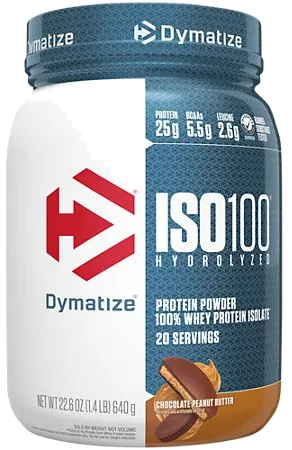
Dymatize ISO100 Hydrolyzed Chocolate Peanut Butter Review
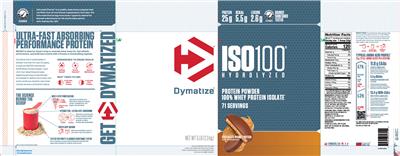
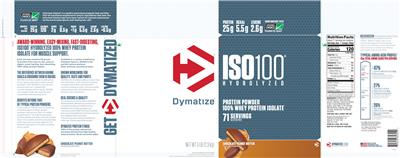
Dymatize ISO100 Chocolate Peanut Butter is presented as a fast absorbing performance protein. The page describes it as made to support muscle recovery after a strenuous workout, with the fast absorbing and digesting power of ISO100. The product is filtered to remove excess lactose, carbs, fat, and sugar, which the page says gives maximum mixability and gains. The marketing copy encourages buyers to go harder and smash past their best, and the flavour is described as a satisfying chocolate peanut butter taste. Per 1 scoop (32g) serving, the Nutrition Facts list 120 calories, 25g protein, 1g total fat, 2g total carbohydrate, 1g total sugars with 0g added sugars, 10mg cholesterol, 180mg sodium, 120mg calcium and 190mg potassium. The page lists 5.5g BCAAs and 2.6g leucine per serving. The ingredients are hydrolyzed whey protein isolate, whey protein isolate, partially defatted peanut flour, and cocoa processed with alkali, with less than 2% of natural and artificial flavors, salt, soy lecithin, sucralose and potassium chloride. The label states it contains milk, peanut and soy. A typical amino acid profile is also shown for each serving, listing alanine, arginine, aspartic acid, cystine, glutamine and glutamic acid, glycine, histidine, isoleucine, leucine, lysine, methionine, phenylalanine, proline, serine, threonine, tryptophan, tyrosine and valine. The benefits section highlights hydrolyzed whey protein for fast absorption, easy mixing in water, milk or milk alternative, tasty flavours, banned substance testing, and easy digestion. The page includes a notice that the product is a food supplement only and should not be used for weight reduction. It is sold in a 20 serving, 5 lb size. Christian McCaffrey is featured in the page imagery and promotional copy, which links the product to his winning formula. Related ISO100 flavours shown on the page include Gourmet Chocolate, Strawberry, Cookies and Cream, and Dunkin Cappuccino.
We don’t sell supplements. We help you make decisions and get the best price.
Lowest prices
Finding the lowest prices at the stores now. This takes a few seconds.
Products with nearly the same formula (Matched on the main ingredients)
Study, Trial or Testing Result Summary
Members Only85 human studies · 33 improved
5 of these 85 human studies gave the ingredient by drip or injection, not by mouth.
The main ingredient here is whey protein, but no whey protein studies were provided, so this summary covers only the small amounts of minerals and vitamins on the label. Calcium is present at 120 mg, well below the roughly 1300 mg a day that did not change body makeup or muscle performance in teenage girls [1]. A review of 45 studies in older adults found no link between calcium and muscle mass or strength [2]. Potassium is present at 190 mg. Potassium bicarbonate did not improve muscle power, performance or mass in older adults [3], nor strength in adults over 50 [4]. The vitamin D amount is not shown. On its own, 2000 units a day for 3 years did not increase lean muscle in adults over 70 [5], and it added nothing to weight training gains [6]. The iron amount is not shown. One small trial in volleyball players found larger strength gains with iron [7], but a larger trial found no muscle or strength benefit [8]. Animal and cell studies are never counted.
See all 85 studies →Hide the studies
- Across 19 studies of 19,528 people, those with muscle loss (sarcopenia) had lower vitamin D blood levels than those without, but this compared blood levels and did not test vitamin D supplements.Does vitamin D affect sarcopenia with insulin resistance in aging?
- In 59 trials of 5543 older adults with sarcopenia, protein combined with vitamin D probably increased handgrip strength by about 2 kg and improved quality of life compared with usual care.Nutritional and Pharmacological Interventions for Sarcopenia in Older Adults: A Systematic Review and Network Meta-Analy…
- In 7 trials of 792 older adults, vitamin D3 added to resistance exercise improved lower-limb strength, but other measures showed small non-significant gains beyond exercise alone.The effect of combined resistance exercise training and vitamin D3 supplementation on musculoskeletal health and functio…
- In 3 trials of 637 people with sarcopenia, whey protein, leucine and vitamin D increased limb muscle mass, and improved grip strength and physical performance only when combined with exercise.Effects of Whey Protein, Leucine, and Vitamin D Supplementation in Patients with Sarcopenia: A Systematic Review and Met…
- Across seven trials of 349 older people with weak bones and low muscle, strength training raised muscle mass, grip strength and protein intake, but calcium intake did not change significantly.Effects of Strength Training on Body Composition, Physical Performance, and Protein or Calcium Intake in Older People wi…
- In nine trials of vitamin D in adults aged 45 and over, vitamin D had no significant effect on blood levels of the growth hormone IGF-1.Effects of Dietary or Supplementary Micronutrients on Sex Hormones and IGF-1 in Middle and Older Age: A Systematic Revie…
- In 7 trials, calcifediol improved gait speed, handgrip strength and leg extension compared with baseline values.Effect of Calcifediol on Physical Performance and Muscle Strength Parameters: A Systematic Review and Meta-Analysis.
- In older adults, whey protein plus vitamin D improved lean mass, muscle strength and physical function, though it did not add to the effect of resistance exercise.Whey Protein Supplementation with or without Vitamin D on Sarcopenia-Related Measures: A Systematic Review and Meta-Anal…
- In a review of nine reviews covering 128 studies, calcium supplements had only modest effects on bone mineral content and no muscle benefit was reported for calcium itself, though cheese and yogurt were linked to better grip strength.Nutrients and food supplements for the prevention of musculoskeletal diseases: an umbrella review.
- In 12 trials of 1337 older adults with sarcopenia or malnutrition, branched-chain amino acids plus vitamin D improved muscle mass, grip strength and physical performance in six of nine trials.The Role of Nutrition in the Treatment of Sarcopenia in Old Patients: From Restoration of Mitochondrial Activity to Impr…
- In 6 trials of healthy athletes aged 18-45 given 600 to 5,000 IU a day for 4 weeks to 6 months, vitamin D3 improved or tended to improve muscle strength (1.37 to 18.75%), while vitamin D2 did not.Effects of Vitamin D Supplementation on Muscle Strength in Athletes: A Systematic Review.
- In 37 trials of exercise with nutrition supplements including vitamin D in adults over 60, supplements added benefit to exercise in only about a quarter of studies for muscle mass and strength.Nutrition and physical activity in the prevention and treatment of sarcopenia: systematic review.
- In a review of 45 mostly cross-sectional studies in older adults, no link was found between calcium and muscle mass, strength, physical performance or sarcopenia.Minerals and Sarcopenia in Older Adults: An Updated Systematic Review.
- A review of 10 mostly observational studies in older adults found one study linking higher iron intake with better physical performance, with no trial evidence for iron on muscle.Minerals and Sarcopenia; The Role of Calcium, Iron, Magnesium, Phosphorus, Potassium, Selenium, Sodium, and Zinc on Musc…
- In 2157 healthy adults aged 70 and older, 2000 IU of vitamin D a day for 3 years did not improve lean muscle mass or lower the chance of developing sarcopenia compared with placebo.Effect of vitamin D, omega-3 supplementation, or a home exercise program on muscle mass and sarcopenia: DO-HEALTH trial.
- In 1434 children aged 6 to 9, two years of an after-school program with 380 mg daily calcium-rich snacks and exercise raised bone stiffness in one group but did not change muscle strength or vertical jump.Beat osteoporosis - nourish and exercise skeletons (BONES): a group randomized controlled trial in children.
- In 1094 adults with prediabetes, active vitamin D (eldecalcitol 0.75 mcg a day) for about 3 years cut new sarcopenia cases to 4.6% from 8.8% with placebo.Active vitamin D treatment in the prevention of sarcopenia in adults with prediabetes (DPVD ancillary study): a randomis…
- Children whose mothers took 1000 units of cholecalciferol daily during pregnancy had slightly higher bone mineral density and lean mass at ages 6 to 7 than children whose mothers took placebo, in an exploratory follow-up analysis.Pregnancy vitamin D supplementation and offspring bone mineral density in childhood follow-up of a randomized controlled…
- In 409 women aged 70 to 80 who had fallen, taking 800 units of vitamin D daily for two years did not reduce falls or improve muscle strength or balance compared with placebo.Exercise and vitamin D in fall prevention among older women: a randomized clinical trial.
- Sarcopenic older adults who drank a vitamin D and leucine whey protein drink twice daily for 13 weeks gained slightly more leg muscle mass and improved chair-stand time more than those given a control drink, though handgrip strength did not differ.Effects of a vitamin D and leucine-enriched whey protein nutritional supplement on measures of sarcopenia in older adult…
- In 324 children and adolescents given 0 to 4000 IU of vitamin D3 daily for 12 weeks, rising vitamin D levels did not improve muscle mass or strength compared with placebo.Serum 25-Hydroxyvitamin D and Intact Parathyroid Hormone Influence Muscle Outcomes in Children and Adolescents.
- In 244 men and women aged 50 and older, 3 months of potassium bicarbonate lowered bone turnover and calcium loss in urine but had no significant effect on muscle strength or function compared with placebo.Potassium Bicarbonate Supplementation Lowers Bone Turnover and Calcium Excretion in Older Men and Women: A Randomized Do…
- In 241 older adults with sarcopenia, a 12-week nutrition supplement with whey protein, fish oil and vitamin D increased appendicular muscle mass and grip strength and reduced fat mass compared with routine care.Effects of nutrition supplementation and physical exercise on muscle mass, muscle strength and fat mass among sarcopenic…
- In 230 postmenopausal women with low vitamin D over 1 year, neither 800 IU daily nor high-dose vitamin D3 changed muscle mass or muscle function compared with placebo.Treatment of Vitamin D Insufficiency in Postmenopausal Women: A Randomized Clinical Trial.
- In 220 people after bariatric surgery over 24 months, vitamin D loading with calcium, protein, and exercise reduced the loss of lean body mass compared with no intervention.The Impact of Vitamin D, Calcium, Protein Supplementation, and Physical Exercise on Bone Metabolism After Bariatric Surg…
- In people with knee osteoarthritis, 1200 units of vitamin D3 daily for 24 weeks did not improve muscle strength compared with placebo, including in the vitamin D deficient subgroup of 50 people, though that subgroup was small.High-intensity versus low-intensity resistance training in patients with knee osteoarthritis: A randomized controlled tr…
- In 158 people with fibromyalgia and chronic fatigue, a diet and lifestyle program raised dietary iron and protein intake and improved muscle mass index, but iron was not given on its own.Effectiveness of the SYNCHRONIZE + Brief Intervention in Improving Mediterranean Diet Adherence, Nutritional Quality and…
- In 156 older women with low muscle mass, 1500 mg daily of calcium-HMB for 12 weeks did not add to the effects of resistance training on muscle quality compared with placebo.β-Hydroxy-β-Methylbutyrate Supplementation May Not Enhance Additional Effects of Exercise on Muscle Quality in Older Wom…
- In 150 patients with Parkinson disease or parkinsonism during a 30-day rehabilitation program, twice-daily whey protein with leucine and vitamin D increased walking distance more than standard diet alone (about 18 meters extra) and preserved muscle mass.Muscle-targeted nutritional support for rehabilitation in patients with parkinsonian syndrome.
- In 148 men aged 70 and over with mobility problems, 20 weeks of resistance training with vitamin D, calcium and protein supplements improved 30-second chair stand performance and muscle strength compared with no intervention.Beneficial effects of exercise, testosterone, vitamin D, calcium and protein in older men-A randomized clinical trial.
- In 148 iron-deficient kidney transplant recipients, four intravenous doses of 500 mg ferric carboxymaltose over 24 weeks did not improve walking distance, muscle mass or strength compared with placebo.Intravenous ferric carboxymaltose and exercise capacity in iron-deficient kidney transplant recipients: a randomised, pl…
- In overweight postmenopausal women on a 6-month calorie-restricted diet, calcium plus vitamin D pills improved bone density compared with placebo but did not improve lean tissue retention, which was better with low-fat dairy.Role of Calcium and Low-Fat Dairy Foods in Weight-Loss Outcomes Revisited: Results from the Randomized Trial of Effects …
- In 130 sarcopenic older adults doing supervised exercise, 12 weeks of whey protein, essential amino acids and 100 IU of vitamin D daily added 1.7 kg of fat-free mass and increased grip strength more than exercise with placebo, and lowered C-reactive protein.Whey protein, amino acids, and vitamin D supplementation with physical activity increases fat-free mass and strength, fu…
- In 128 healthy adults aged 65 and older, 24 weeks of potassium bicarbonate did not improve muscle power, physical performance or muscle mass compared with placebo, though blood levels of a growth hormone marker (IGF-1) were higher.Independent effects of whey protein and alkali supplementation on muscle health in healthy older adults: factorial rando…
- Hospitalized older adults with sarcopenia who took a whey protein formula with leucine and vitamin D during rehabilitation gained more muscle mass and walking speed than those given a control formula, and stayed in hospital for a shorter time.Improving rehabilitation in sarcopenia: a randomized-controlled trial utilizing a muscle-targeted food for special medic…
- In 112 sarcopenic or dynapenic older adults, bodyweight exercise combined with a protein and vitamin D supplement improved knee strength and muscle quality more than either alone or no treatment over 12 weeks.Synergistic effect of bodyweight resistance exercise and protein supplementation on skeletal muscle in sarcopenic or dyn…
- In 110 older adults with sarcopenia, 12 weeks of a muscle-targeted supplement containing 200 IU of vitamin D3 per sachet, taken as two sachets daily with exercise, increased lean tissue, muscle index and grip strength compared with a control group.Effects of combined nutritional supplementation and exercise on proxy measures of muscle mass, strength, and function in…
- In 105 older outpatients at risk of malnutrition, a nutrient-rich drink for 12 weeks raised calcium intake and increased muscle mass in women, but muscle strength and physical performance did not differ from standard care.The effect of 12-weeks Nutritional supplementation on Nutritional Intake and Status among Indonesian Older Outpatients w…
- In 101 children with overweight or obesity over 1 year, a lifestyle program that reduced body fat did not change their vitamin D levels, and the study did not report muscle outcomes.Associations between Body Composition and Vitamin D Status in Children with Overweight and Obesity Participating in a 1-…
- In 95 older adults over 28 weeks, vitamin D3 (2,000 IU daily after an initial higher dose) did not improve muscle gains from resistance training compared with placebo.Vitamin D3 supplementation does not enhance the effects of resistance training in older adults.
- In 92 iron-deficient surgery patients who all received intravenous iron, adding oral phosphate for 30 days made no difference to core muscle strength.Ferric carboxymaltose with or without phosphate substitution in iron deficiency or iron deficiency anemia before electiv…
- In 82 older adults at risk of undernutrition, 12 weeks of a supplement containing vitamin D improved walking distance more than a standard supplement and increased mitochondrial gene activity.A novel oral nutritional supplement improves gait speed and mitochondrial functioning compared to standard care in older…
- In 80 older women at risk of sarcopenia doing 32 weeks of training, lower dietary iron was linked with poorer sit-to-stand performance in the high-speed resistance group only, but iron was not given as a supplement.Nutritional intake as a determinant of high-speed resistance and multicomponent training efficacy on strength in older w…
- In 60 older adults with sarcopenia, a double-blind 6-month supplement of whey protein with vitamin D and vitamin E increased muscle mass and grip strength more than a placebo drink.A high whey protein, vitamin D and E supplement preserves muscle mass, strength, and quality of life in sarcopenic older…
- In 60 women over three months, single high-dose vitamin D3 boluses of 50,000 to 500,000 IU did not change grip strength or physical performance.Effects of High Dose Bolus Cholecalciferol on Free Vitamin D Metabolites, Bone Turnover Markers and Physical Function.
- In 49 healthy older men, twice-daily whey protein blend containing 500 IU vitamin D, creatine and omega-3s for 20 weeks increased strength and lean mass more than a maltodextrin control, though vitamin D's separate effect cannot be isolated.A whey protein-based multi-ingredient nutritional supplement stimulates gains in lean body mass and strength in healthy …
- In 48 older adults with low bone and muscle mass, adding whole-body vibration training to daily calcitriol for 3 months improved muscle mass, strength and physical function more than calcitriol alone.Effects of 12 Weeks of Whole-Body Vibration Training and Vitamin D Supplementation on Bone Density and Muscle Quality in…
- In 43 malnourished people with liver cirrhosis, 3 g a day of calcium HMB for 12 weeks did not change fat-free mass compared with the supplement without it, though handgrip strength trended upward.Randomized Clinical Trial: Effects of β-Hydroxy-β-Methylbutyrate (HMB)-Enriched vs. HMB-Free Oral Nutritional Supplement…
- In 42 elderly Thai women with low vitamin D, 0.5 mg of alfacalcidol daily with calcium for 12 weeks increased quadriceps strength more than calcium with placebo.Combination of alfacalcidol with calcium can improve quadriceps muscle strength in elderly ambulatory Thai women who hav…
- In 40 young men doing 8 weeks of resistance training, calcium HMB did not improve muscle thickness, strength or power more than placebo.Leucine Metabolites Do Not Enhance Training-induced Performance or Muscle Thickness.
- In 40 resistance-trained young men over 8 weeks of training, calcium HMB did not reduce training-related inflammation or change muscle thickness or strength compared with placebo.Leucine metabolites do not attenuate training-induced inflammation in young resistance trained men.
- In 38 patients with heart failure, all of whom took vitamin D, a high-calorie, high-protein oral supplement for 24 weeks increased lean mass more than a Mediterranean diet alone, but muscle thickness tended to fall in that group and fat mass rose in the diet group.Mediterranean Diet, Vitamin D, and Hypercaloric, Hyperproteic Oral Supplements for Treating Sarcopenia in Patients with …
- Older men with excess weight who took a multi-ingredient supplement containing vitamin D3 along with exercise for 12 weeks gained more leg strength than those on a collagen-based product, though vitamin D's own effect could not be separated out.Obesity and Metabolic Disease Impair the Anabolic Response to Protein Supplementation and Resistance Exercise: A Retrosp…
- In 26 healthy young adults doing resistance training for 10 weeks, a supplement containing whey protein, creatine, calcium and 1000 IU of vitamin D gained more lean body mass than a placebo, though vitamin D was only one ingredient.The Effect of a Multi-ingredient Supplement on Resistance Training-induced Adaptations.
- In 26 adults over 10 weeks of resistance training, a multi-ingredient supplement containing vitamin D increased the size of fast-twitch muscle fibers more than a collagen control.The Effect of Multi-Ingredient Protein versus Collagen Supplementation on Satellite Cell Properties in Males and Females…
- In 25 healthy adults with low vitamin D, those with more trunk fat needed higher vitamin D2 injection doses to reach sufficient levels, while dose was not related to lean mass, so this study does not show a muscle-building effect.Impact of body composition on vitamin D requirements in healthy adults with vitamin D deficiency.
- In 24 older adults, a single dose of 3 g calcium beta-hydroxy-beta-methylbutyrate added to 40 g whey boosted muscle protein synthesis in older women and reduced muscle protein breakdown, but the effect was not seen in men.The Effect of β-Hydroxy-β-Methyl Butyrate (HMB) upon Acute Fed-State Muscle Protein Turnover in Older Men and Women: A R…
- In 22 elite female volleyball players, 325 mg of ferrous sulphate daily for 11 weeks prevented a drop in iron levels and gave greater strength gains than no iron (total mean strength +26.2% vs +10.9%).Iron supplementation prevents a decline in iron stores and enhances strength performance in elite female volleyball play…
- In 21 children with kidney disease and mild anemia, 12 weeks of iron sulfate made no significant difference in muscle mass or grip strength compared with no iron.Pilot pragmatic clinical trial of iron therapy in children with anemia of chronic kidney disease (FeTCh-CKD).
- In 18 collegiate basketball players over 12 weeks of strength training, about 517 IU daily of vitamin D3 did not improve lean mass, fat loss or jump power compared with placebo.Vitamin D supplementation and body composition changes in collegiate basketball players: a 12-week randomized control tr…
- In 12 male weight trainers, a single dose of potassium-magnesium aspartate taken before a resistance workout did not lower blood ammonia or improve bench press performance to failure compared with vitamin C.Effect of acute potassium-magnesium aspartate supplementation on ammonia concentrations during and after resistance trai…
- In people with sarcopenia given iron (sodium ferrous citrate, 29 or 57 mg) plus 5-aminolevulinic acid for 12 weeks, muscle mass index did not differ from placebo, but hand grip strength increased or tended to increase, with no consistent changes in other measures.Efficacy and Safety of 5-Aminolevulinic Acid Combined with Iron on Skeletal Muscle Mass Index and Physical Performance o…
- In 66 adolescent girls, about 1300 mg daily calcium from milk for 12 weeks did not change body composition or muscle performance, though resistance training did improve them and milk with training improved bone density.Resistance Training and Milk-Substitution Enhance Body Composition and Bone Health in Adolescent Girls.
- In 27 older women over six months, alphacalcidol (0.5 mcg daily) raised knee leg strength by about 11 to 15% in vitamin D-deficient women compared with women with normal levels.Muscle strength, functional mobility and vitamin D in older women.
- In 107 postmenopausal women with low vitamin D over 6 months, weekly calcifediol or weekly cholecalciferol raised vitamin D levels faster and improved leg muscle function more than monthly or single-dose cholecalciferol.Effects of Different Vitamin D Supplementation Schemes in Post-Menopausal Women: A Monocentric Open-Label Randomized Stu…
- In older adults with muscle loss, a whey protein supplement enriched with leucine and vitamin D for 12 weeks did not change muscle mass or grip strength more than extra protein from diet alone, but it improved walking speed more, especially in those under 75.Effects of adequate dietary protein with whey protein, leucine, and vitamin D supplementation on sarcopenia in older adu…
- In 35 postmenopausal women with type 2 diabetes, 1000 IU of vitamin D daily for 12 months raised vitamin D levels and improved muscle strength and muscle function, in a study without a control group.Effects of 12 Months of Vitamin D Supplementation on Physical Fitness Levels in Postmenopausal Women with Type 2 Diabete…
- In 30 people with rheumatoid arthritis and anemia, treatment with erythropoietin plus intravenous iron sucrose (given weekly when iron was low) raised hemoglobin and muscle strength and lowered fatigue, though there was no control group.Effect of recombinant human erythropoietin and intravenous iron on anemia and disease activity in rheumatoid arthritis.
- In 23 young women with iron deficiency anemia, 8 weeks of 160 mg daily iron as ferrous sulfate improved muscle endurance but not muscle strength or aerobic fitness, in an uncontrolled study without a placebo group.Efficacy of 8-week oral iron supplementation on fatigue and physical capacity in young women with iron deficiency anemia…
- In a genetic analysis of about 295,000 UK adults, blood vitamin D levels below 20 ng/mL were linked to a rapidly rising risk of sarcopenia, though this study did not test supplements directly.Genetic Variants, Serum 25-Hydroxyvitamin D Levels, and Sarcopenia: A Mendelian Randomization Analysis.
- In a large UK Biobank cross-sectional study of about 68,000 adults averaging 64 years old, higher dietary iron intake was linked to stronger handgrip in women, though this study cannot show that iron causes the difference.Associations between diet and handgrip strength: a cross-sectional study from UK Biobank.
- In a survey of 4,500 adults over 50 in western China, lower vitamin D levels were linked to sarcopenia under some diagnostic criteria but not others.The Comparison of Sarcopenia Diagnostic Criteria using AWGS 2019 with the Other Five Criteria in West China.
- In a cross-sectional study of 3713 adults aged 50 and older, vitamin D deficiency was linked to sarcopenia in men but not women, and low physical activity was linked to sarcopenia only in women.Sex differences in the association of physical activity levels and vitamin D with obesity, sarcopenia, and sarcopenic ob…
- In a prevalence survey of 509 adults admitted with a hip fracture, most had low vitamin D levels and about 17 percent had muscle weakness, but no vitamin D supplement was given, so this study does not show whether vitamin D builds muscle.Prevalence of malnutrition in a cohort of 509 patients with acute hip fracture: the importance of a comprehensive assess…
- In a cross-sectional study of 425 adults eating omnivore, lacto-ovo vegetarian or vegan diets, those taking iron supplements had a lower percentage of muscle mass and higher C-reactive protein, an inflammation marker. This is an association and does not prove iron caused the difference.The Relevance of Plant-Based Diets and Micronutrient Supplementation for Body Composition: Data from the VeggieNutri Cro…
- In 392 adults with knee osteoarthritis, higher dietary potassium intake was linked to greater lower limb muscle strength over 24 months.Associations of Dietary Macroelements with Knee Joint Structures, Symptoms, Quality of Life, and Comorbid Conditions in …
- In 188 people with rheumatoid arthritis and 158 controls, sarcopenia and vitamin D deficiency were each linked to a higher rate of spine fractures; the study did not test supplementation.Synergy of sarcopenia and vitamin D deficiency in vertebral osteoporotic fractures in rheumatoid arthritis.
- In 233 Vietnamese women who had immigrated to South Korea, iron intake and skeletal muscle mass both decreased between baseline and follow-up. The study did not isolate iron's effect on muscle.Dietary changes in Vietnamese marriage immigrant women: The KoGES follow-up study.
- In a cross-sectional study of 227 older adults in India, low vitamin D levels were not linked to primary sarcopenia (low muscle mass and strength); the study did not test supplementation.Prevalence and factors contributing to primary sarcopenia in relatively healthy older Indians attending the outpatient d…
- In 170 patients in a study of hip surgery, vitamin D deficiency was more common in people with sarcopenia than in those without; the study did not test supplementation.Vitamin D Deficiency and Sarcopenia in Hip Fracture Patients.
- In 101 postmenopausal women, lower vitamin D levels were linked with higher body fat, metabolic syndrome and weaker grip strength, but no supplement was tested.Cross-talk between muscle and bone in postmenopausal women with hypovitaminosis D.
- In a retrospective study of 100 people after bariatric surgery, vitamin D levels and different cholecalciferol doses did not change handgrip strength or the shuttle walk test, while higher protein intake was linked to better handgrip strength.Assessment of Physical Fitness after Bariatric Surgery and Its Association with Protein Intake and Type of Cholecalcifer…
- In 53 Chinese men and women aged 18 to 35, calcium intake was similar across age and sex groups, and the study found only correlations between bone, body composition, and muscle strength, with no intervention tested.Muscle-Bone Interactions in Chinese Men and Women Aged 18-35 Years.
- Six volunteers training intensely in a hot climate on a daily potassium intake of 100 mEq ended up with a mean potassium deficit of 517 mEq, mostly from sweating, while lean body mass rose.Pathophysiology of intense physical conditioning in a hot climate. I. Mechanisms of potassium depletion.
- In mice with muscle atrophy, a vitamin D analogue restored grip strength in males but not females, and the effect depended on testosterone; human data from a national survey showed vitamin D and testosterone interact to affect grip strength.The Effects of Vitamin D on Muscle Strength Are Influenced by Testosterone Levels.
Review Totals and Summary
Members Only9,363 reviews · 90% positive
Note: the reviews below are for a mix of flavors. Several reviews in the copied set are for Fruity Pebbles and vanilla, not Chocolate Peanut Butter, and no gummy or capsule reviews were included, so only powder is covered. **Overall picture:** Across the stores, this powder carries about 4,800 ratings. Opinion is mixed. Of the reviews that gave stars, 40% gave 4 or 5, and the written comments split between people who like the taste and value and people who object to the ingredients or had stomach trouble. **What buyers say it did for them:** The store summaries list pros such as "goes down easy," no side effects, boosted energy and curbed appetite. One reviewer calls it one of the best proteins they have tried and says it is gentle on the stomach. Beyond that, reviewers mostly talk about taste and ingredients rather than results like muscle or recovery. **What they complain about:** Stomach upset is the most personal complaint. One reviewer wrote "I feel disgusting after drinking it," describing bloating, nausea and aches, though they noted their sister and mother had no problem. Another said it "did upset my stomach, not sure why." Ingredients are the other big complaint: critics object to sucralose, soy, artificial flavors, dyes and "edible glitter." One reviewer said it was "not healthy," and another wouldn't even try it because of the sucralose. One buyer reported that a second order looked, tasted and was formulated differently from the first and called it "a scam product." A listed con on the brand's site is that it is tough to mix. **Taste, smell and texture:** Flavor is generally acceptable to good. Some reviewers say it "tastes great," while others find it "okay" or "decent." For the chocolate peanut butter flavor, one reviewer says it tastes more like peanut butter than chocolate, good in water and exquisite in milk. Another says it hardly tastes like anything and is frothy and chalky. The summaries note a preference for milk over water, and one reviewer found the liquid a little thinner than expected. A vanilla reviewer liked it as "mildly sweet" and clean tasting. **Value for money:** Value is a modest positive. One buyer called it a "Good product for the value," and the brand's page lists good value among the pros. Packaging arrived in excellent condition for one buyer, with an expiry date at least a year away. **Who it seems to suit and who it did not:** It seems to suit people who want a Reese's-style flavor, those who enjoy it blended into smoothies or mixed with milk, and buyers who trust the Dymatize brand. It suited those with no stomach sensitivity. It did not suit people who avoid artificial sweeteners, dyes, soy or flavorings, people whose stomachs react to it, or those who want a strongly flavored shake. The sample of written feedback is small, so individual experiences vary.
Biohacker Summary
Members Only10 of 10 recommend it
Vitamin D is the main ingredient here, and the panel is largely behind it: nine of ten spoke about it, and most recommend it or take it themselves, with several of them taking it as vitamin D3 in the morning, one citing 5000 IU and another 10,000 IU a day in winter. People take it for immune support, brain health and mood, muscle, heart health and general wellbeing, and many urge testing blood levels, with targets ranging from 40 up to 100. A few say to take it with dietary fat for better absorption, and one pairs D3 with K2, which he has taken for over a decade. Two panelists stay neutral, saying most people are likely low but supplementing matters mainly if you are deficient, and one says most people stay deficient because they do not take enough. Potassium and iron are also listed as main ingredients, but only a few mention them: two use electrolyte drinks with potassium, one prefers potassium from foods like bananas and potatoes over supplements, and one gave up on iron supplements after they failed to raise his levels for years.
See all 10 biohackers →Hide the biohackers
Dr. Eric Berg · Vitamin D · warns
- Dr. Berg warns that the recommended daily intake for vitamin D is based on a massive error and that the actual necessary amount is closer to 8,895 IU, with millions remaining deficient.
- Recommends getting vitamin D levels tested to ensure they are between 50 and 70, as vitamin D is intimately involved in regulating prostate size.
- Recommends taking at least 10,000 IUs of vitamin D3 every single day in the winter, stating it is the most important vitamin to lower cancer risk.
- Recommends vitamin D to support the immune system, aiming for blood levels between 80 to 100 ng per ml.
- Identifies iron as the Achilles' heel of cancer, as it is needed for its DNA to replicate.
- States that people need more potassium than any other mineral, yet most people aren’t getting enough.
- Explains that potassium is essential for peristalsis, the pumping action through the colon, and without it, things can sit there, leading to constipation.
- Recommends taking no less than 10,000 IU's of vitamin D3 for osteoporosis, alongside magnesium and K2.
- Recommends increasing vitamin D to restore balance and support healthy blood pressure.
- Explains that the normal requirements for potassium are 4,700 mg every single day, and that very few people get half of that amount. They describe potassium's role in the sodium potassium pump, which is essential for cellular electricity, muscle contraction, and heart function. Deficiency can lead to tiredness, muscle cramps, heart palpitations, or rising blood pressure.
- Recommends increasing potassium to restore balance and support healthy blood pressure.
- Warns that bone loss cannot be fixed with just calcium, as bone is primarily collagen with other essential minerals.
- States that a lack of vitamin D can potentially cause achy bones or crashing mood.
- States that vitamin D is intimately involved in the immune system and recommends taking at least 10,000 IUs each day.
Dave Asprey · Vitamin D · uses
- Takes Vitamin DAKE from Suppgrade Labs.
- Suggests that vitamin D supports brain health, muscle function, and focus.
- Host Dave Asprey explains why correcting a vitamin D deficiency still makes sense for male fertility, even though supplementation did not improve overall semen parameters in a randomized trial.
- States that currently, he is only taking vitamin C and vitamin D.
- Recommends vitamin D, noting it's actually a hormone and that most people are deficient, even those who take it, because they don't take enough.
- States that most people on the spectrum are low in vitamin D and need more of it, mentioning his own product, Vitam DAKNE, which contains real vitamin A.
- Dave Asprey recommends Vitamin D3 with K2, explaining D3 is a hormone made from sunlight and K2 directs calcium into bones, not arteries, highlighting its low cost, widespread deficiency, and the ability to test its effectiveness.
- Recommends Vitamin D as one of the most important supplements for overall health.
- Takes Vitamin DAKE from Suppgrade Labs because D3, A, K2, and E work together.
- Mentions taking vitamin D in the morning, comparing it to the daily dosing of testosterone.
- Warns that if a doctor diagnoses anemia, one should not assume they just need more iron, as low hemoglobin doesn't always mean low iron and the issue can sometimes be how well the body is using iron.
- Notes that when energy intake is too low for training demand, nutrient intake often falls short, especially for iron, which is associated with impaired recovery.
- Notes that when energy intake is too low for training demand, nutrient intake often falls short, especially for calcium, which is associated with reduced bone health.
- Explains that calcium provides the raw material for bones, but it isn't a standalone input and needs a whole system to be effective.
Siim Land · Vitamin D · recommends
- Advises against taking vitamin D in the morning with other supplements because it is fat soluble and requires dietary fat for better absorption.
- Recommends taking Vitamin D with fat for better absorption.
- States that Vitamin D connects biology to light and that UVB reaching the skin enables its production.
- Mentions that iron is a mineral necessary for making collagen.
- Lists potatoes and fruit as sources of Potassium.
- Lists dairy and sardines as sources of Calcium.
- Thinks vitamin D has some of the strongest evidence and is worth considering.
- Notes that Vitamin K2 pairs well with vitamin D by regulating calcium and bone mineralization.
- States that excess iron promotes oxidative stress and inflammation, which increases heart disease risk.
- Recommends taking vitamin D supplements with some fat to maximize its absorption, suggesting with food or a teaspoon of olive oil.
- Notes that taking vitamin D3 with a fat-containing meal resulted in 32% higher peak blood vitamin D levels.
- Recommends taking Vitamin D in the morning or at lunch with fat.
- Notes that Boron improves vitamin D.
- Notes that Boron reduces calcium/magnesium loss.
Ben Greenfield · Vitamin D · recommends
- Notes that Vitamin D is actually a hormone and recommends patients aim for levels around 40 to 50, or even 60 for fracture healing, for optimal healing, as opposed to just above 20 which is considered normal.
- Says he is drinking LMNT, which contains sodium, potassium, and magnesium, and states that he actually drinks this stuff.
- Mentions vitamin D as part of a bare-minimum protocol.
- Advises getting vitamin D levels between 60 and 100 nanograms per milliliter as a minimum step for overall health and to slow down heart disease.
- Has been taking Vitamin D3 K2 for over a decade.
- Recommends Celtic Sea Salt's new electrolyte drink 'Hydrate' for replenishing electrolytes and trace minerals lost through sweat, noting it contains 70 naturally occurring trace minerals, magnesium, taurine, and potassium, with no added sugar, artificial colors, or synthetic ingredients.
- Notes that sunlight influences more than just vitamin D production.
- Recommends keeping vitamin D levels high, suggesting that a supplement is probably not a bad idea, especially given that many people are deficient due to spending most of their time indoors.
- Recommends getting enough vitamin D for blood pressure management.
- Recommends optimizing vitamin D levels to a serum score of around 50 to 80 nanograms per milliliter, as deficiency is linked to tinnitus volume and can assist with it.
- Recommends testing for and replenishing iron if levels are low, as it can affect the ability to maintain or preserve muscle, especially for those on GLP-1s.
- Recommends using hormone building blocks like vitamin D for hormone optimization.
- Notes that one can eat iron-rich foods or supplement with iron, but still feel exhausted if iron is not the missing piece, emphasizing that focusing on a single mineral in isolation can support a number on a lab test rather than the system itself.
- Is considering whether he needs a calcium supplement because lead can displace calcium in bones, affecting bone strength.
Thomas DeLauer · Potassium · uses
- Uses Element's cans which contain 100 milligram potassium, finding that electrolytes help his workout performance.
- Uses Element's 100 mg potassium cans first thing in the morning to prime his day and help with workout performance.
- Uses vitamin D3 in the fall and winter months when getting less sun, as it's important to supplement it then.
- Recommends taking a massive amount of vitamin D simultaneously with an early morning massive breakfast to help reset circadian rhythms and address hyperphagia.
- Recommends Vitamin D, stating that it has receptors throughout the brain and deficiency can quickly impact brain and mood.
- Takes supplemental vitamin D because he is skin sensitive and from northern latitudes, limiting his UV exposure.
- Recommends taking vitamin D on non-liver days to ensure both nutrients get proper receptor access.
- Takes Purity's liquid vitamin D3 with K2 because she is constantly inside during the day; D3 is for overall wellness and K2 helps the body absorb calcium properly.
- Compares iron content in spinach (2.7mg) and beef (2.6mg), but emphasizes that beef's heme iron absorbs at about 25%, while spinach's non-heme iron absorbs at 2-8%.
- Notes that milk contains 120mg of calcium, while sardines contain 351mg, highlighting a 3x difference.
- Recommends getting vitamin D, suggesting it can be obtained while walking.
- States that vitamin D is best obtained from the sun, but getting it from food definitely helps, and notes its role as a hormone influencing many cells.
- Recommends D3, suggesting a dose of 2000-4000 IU, and notes that MK-7 slowed bone loss over three years.
- Recommends Element's ready-to-drink sparkling electrolyte drinks as a low or zero-calorie soda replacement that provides 1,000 milligrams of sodium, 200 milligrams of potassium, and 60 milligrams of magnesium.
Dr. Mark Hyman · Vitamin D · recommends
- Recommends Vitamin D for health, stating that amazing things happen when patients' vitamin D statuses reach optimal levels.
- Mentions vitamin D as an existing biomarker that plays a role in mental health, which Function Health includes in their measurements.
- Mentions iron as an existing biomarker that plays a role in mental health, which Function Health includes in their measurements.
- Notes that vitamin D plays a role in immune function.
- Warns that potassium bromate, a dough conditioner banned in the EU, UK, and Canada, is still allowed in U.S. bread.
- Recommends checking vitamin D levels and states that if they had to pick one single intervention for immune health, vitamin D would be it.
- Dr. Hyman discusses vitamin D in relation to sun exposure patterns.
- States that vitamin D supplementation can help with oxidative stress.
- Mentions vitamin D as a key nutrient for supporting immune function.
- States that vitamin D is probably the single most important intervention for immune health, recommending levels of 45 to 70 and emphasizing testing to determine the right dose.
- Notes that rickets, which causes terrible bone deformities, is caused by vitamin D deficiency.
- Notes that vitamin D is an important nutrient for brain performance and aging, and that many people have gaps in these nutrients.
- Notes that a woman patient had very low iron.
- States that they get the whole picture when it comes to iron, looking at ferritin, iron reserves, iron in the blood, iron saturation, and iron binding capacity to spot problems before full-blown anemia.
Bryan Johnson · Vitamin D · uses
- Takes 5000 IU of Vitamin D3 in the morning for general health.
- Takes 5000 IU of Vitamin D3 in the morning for general health.
- Has had low iron for 11 years and despite eating meat and trying all forms of iron supplementation at different times and sequences, none of it worked to raise his iron or ferritin levels.
- Had low iron for 11 years, with ferritin averaging 38 ng/mL, and has finally boosted it back to healthy levels.
- Mentions that the sunlight assessment claims low vitamin D levels cause the immune system to misfire, and notes that their vitamin D has been measured.
- Takes 5000 IU of Vitamin D3 in the morning for longevity.
- He takes 5000 IU of Vitamin D3 in the morning for general health.
- Takes 5000 IU of Vitamin D3 in the morning for general health.
- Takes 5,000 IU of Vitamin D3 in the morning for longevity.
- Takes 5,000 IU of Vitamin D3 in the morning.
- Takes 5,000 IU of Vitamin D3 in the morning.
- He takes 5000 IU of Vitamin D3 in the morning for general health.
- Recommends calcium as a mineral that, along with phosphorus, magnesium, and boron, is deposited to fortify the bone structure after the collagen scaffold is in place.
- Agrees that a little extra calcium is probably okay, especially for women, to really hit home for bone mineral density.
Dr. Rhonda Patrick · Vitamin D · neutral
- Vitamin D supplementation was linked to a 40% lower risk of dementia in an observational study of more than 12,000 older adults.
- Mentions that vitamin D also plays a role in maintaining muscle mass.
- Recommends ensuring adequate vitamin D intake for men's sperm health.
- Vitamin D and strength training alone did not, but adding them strengthened the effect on one clock, with the full combination slowing that measure by ~3.8 months.
- Lutein and zeaxanthin can also be obtained from certain multivitamins.
- Recommends Vitamin D, noting it regulates over 5% of the genome, including genes involved in immune defense, neurotransmitter synthesis, and longevity, and correcting deficiency may slow epigenetic aging.
- Uses Vitamin D3 as an example of a supplement that an AI model could track to see its impact on other metrics like glucose levels.
- Mentions that kale delivers calcium, a micronutrient many diets fall short on.
- Recommends Vitamin D, explaining that it regulates over 5% of the genome, including genes involved in immune defense, neurotransmitter synthesis, and longevity.
- Recommends getting enough potassium, noting that most people get too much sodium and not enough potassium.
- Combining omega-3s with vitamin D and exercise has an additive effect, translating to ~3 months of slowed biological aging.
- The effect got stronger when omega-3 was combined with vitamin D and resistance training, with the full stack delaying phenotypic aging by about 3.8 months.
- Recently found out he needed to get on an iron supplement and noticed he gets less sore in his training after taking it.
- Advises that menstruating women should ensure they are getting enough iron.
Andrew Huberman · Vitamin D · neutral
- Notes that most people are probably deficient in vitamin D and benefit from supplementing, but there's no point in doing it unless you're deficient for most things.
- Takes 5,000 IU of Vitamin D3 in the morning for longevity.
- Uses Element, an electrolyte drink with sodium, magnesium, and potassium in correct ratios and no sugar, to ensure adequate hydration and electrolytes, especially when starting days fast or during physical exercise.
- Takes 5000 IU of Vitamin D3 in the morning for general health.
- States that Vitamin D is one of the critical nutrients with the best evidence for cognitive function and reducing the risk of dementia.
- States that Iron is one of the critical nutrients with the best evidence for cognitive function and reducing the risk of dementia.
- Takes 5000 IU of Vitamin D3 in the morning.
- He takes 5,000 IU of Vitamin D3 in the morning for overall health.
- Takes 5000 IU of Vitamin D3 in the morning.
- Takes 5,000 IU of Vitamin D3 in the morning for general health.
- Takes 5000 IU of Vitamin D3 every day for longevity.
- Takes 5,000 IU of Vitamin D3 in the morning.
- Uses Element, which contains potassium in the correct ratios, to ensure proper hydration and electrolyte intake for brain and body function.
- Mentions potassium as an electrolyte.
Peter Attia · Potassium · recommends
- States there is some evidence that increasing dietary potassium through potassium-rich foods like bananas and potatoes, rather than supplements, can lower blood pressure.
- Lists vitamin D as one of her staple supplements.
- Notes that several studies show patients taking vitamin D can reduce TPO levels and prolong the honeymoon period of Hashimoto's disease.
- States that in mouse studies, there was a combined effect of alpha ketoglutarate with vitamin D for both sexes.
- Uses vitamin D as an example of how people might dismiss its efficacy due to failed clinical trials that didn't adjust the dose or measure levels.
- In mouse studies, Peter Attia's team found a combined effect of AKG with Vitamin D for both sexes.
- Suggests that supplementing with lots of vitamin D might help overcome the negative effects of phenytoin on bone health by improving calcium absorption, though he is unaware of studies on this.
- Recommends Vitamin D3 as one of the 'big three' micronutrients for bone health, suggesting a daily intake of 800 to 1,000 IU, which can be obtained through sunlight or supplementation.
- Recommends calcium as one of the 'big three' micronutrients for bone health, suggesting a daily intake of 1,000 to 1,200 milligrams, which can be supplemented with calcium carbonate or calcium citrate.
- Suggests that supplementing with lots of vitamin D might overcome the negative effects of phenytoin on bone health by counteracting increased catabolism of vitamin D and subsequent decreased calcium absorption.
- Explains that bone is 50 to 70% mineral, predominantly calcium, and that virtually all of the body's calcium is contained within bone, making bone important for calcium homeostasis.
- Recommends vitamin D for people who tend to be vitamin D deficient, such as those living in Portland, Oregon.
- Recommends iron supplements for women of reproductive age who are iron deficient.
- Discusses evaluating vitamin D, understanding deficiency, and optimal levels.
RAL Summary
Members OnlyTier 4 for Muscle and Strength
The study support behind the grade comes from trace nutrients on the label (vitamin D, calcium, iron, potassium), not from the main ingredient, hydrolyzed whey protein isolate, and those trace nutrients mostly show no muscle benefit. So it is graded Tier 4, lower than the rules alone gave.
- Emerging: not enough evidence to rank higher yet.
- Vitamin D: amount hidden in a blend
Where the evidence disagrees: 38 of the 85 human studies found no effect.
More Details
Members OnlyBody systems · Combine with · Possible side effects
Body systems: Musculoskeletal system
Combine with: To pursue muscle building and recovery, pair this protein with creatine monohydrate (3-5 g daily) for strength and lean mass, and consider vitamin D3 with K2 and magnesium for muscle and bone function. Omega-3 fish oil can help reduce exercise-related inflammation. If the interest in healthy aging and cellular repair remains, add targeted compounds separately: NMN or nicotinamide riboside for NAD+ support, trans-resveratrol, fisetin or quercetin, CoQ10 or ubiquinol for mitochondrial function, and glycine with NAC to support glutathione production. Whey protein can complement these by supplying amino acids that help preserve muscle mass with age, which is relevant to healthy aging. Check with a healthcare provider before combining supplements, especially with medications or kidney concerns.
Possible side effects: No major side effects reported in the studies given, and no written reviews could be read.
Supplement Facts
Total Carbohydrates 2 g · Vitamin D 0 mcg · Calcium 120 mg
| Calories | 120 | |
| Total Fat | 1 g | |
| Cholesterol | 10 mg | |
| Sodium | 180 mg | |
| Total Carbohydrates | 2 g | |
| Protein | 25 g | |
| Vitamin D | 0 mcg | |
| Calcium | 120 mg | |
| Iron | 0 mg | |
| Potassium | 190 mg |
Other ingredients: Whey Protein Isolate, Hydrolyzed, Whey Protein Isolate, partially defatted Peanut Flour, Cocoa, Powder, Natural & Artificial Flavors, Salt, Soy Lecithin, Sucralose, Potassium Chloride.
Directions: Best times to use: 0-30 mins. before training 0-30 mins. after training Directions: Formulated for easy mixing. Add one scoop (included) to 5-6 fl. oz. (150-190ml) of water, milk or your favorite beverage and mix thoroughly. Enjoy prior to workouts, within 30 minutes after workouts or anytime you desire a high-quality, high-protein drink. 1 scoop + 5-6 fl. oz. water/milk = Shake and enjoy
Barcode (UPC) 705016353552 · Label source: NIH label database · Report a label change
Show entire label
More muscle and strength products
Members OnlyThe highest ranked for the same goal
Read more
Our articles on this subject
Graded November 4, 2026 by the Reverse Age Lab evidence engine, from human studies, real reviews and our biohacker panel. How we grade. Is this medical advice? No. Rala organizes the published evidence; go over any change with your doctor, especially if you take meds.
Privacy policyConsumer health dataTermsDo Not Sell or Share My Personal InformationCookie settings