
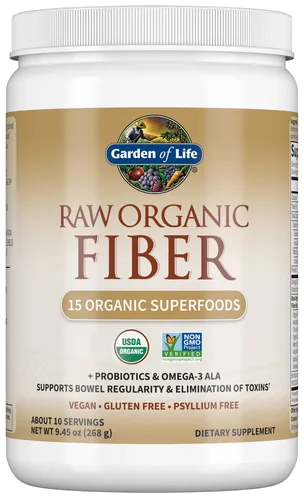
Garden of Life Raw Organic Fiber Review
We don’t sell supplements. We help you make decisions and get the best price.
Lowest prices
In stock, lowest price first. Checked Nov 19.
- The Vitamin Shoppe$22.99 a bottleThe store does not state the bottle size, so there is no cost per month.Buy at The Vitamin Shoppe (opens in a new tab)
- AmazonPrice at AmazonCheck price at Amazon (opens in a new tab)
Also at: Garden of Life · Whole Foods
Some store links earn us a commission.
Study, Trial or Testing Result Summary
Members Only246 human studies · 140 improved
The main support for this product comes from its soluble fiber, 4 grams per serving, above the 3 grams that worked in studies. Across 181 trials with 14,505 adults, soluble fiber supplements lowered harmful cholesterol by about 8 milligrams per deciliter and total cholesterol by about 11 [1]. Psyllium lowered total and harmful cholesterol in 29 trials [2], soluble fiber helped people with type 2 diabetes [3], and at least 3 grams of oat fiber a day lowered harmful cholesterol [4]. One 12-week trial of oat fiber tablets found no benefit [5]. Insoluble fiber reaches a full dose only at two servings a day. Results are mixed: carob fiber lowered cholesterol [6], but a review of 31 trials found insoluble fiber did not [7], and soluble fiber worked better head to head [8][9]. The omega-3 here is the plant form from flax; the studies tested fish oil, which mainly lowers triglycerides [10][11], so they may not apply. The sprout blend has no studies. The probiotic strain in this product was not tested, and newer trials of related strains found no cholesterol change [12][13]. Animal and cell studies are never counted.
See all 246 studies →Hide the studies
- Across 53 placebo-controlled trials of lipid-lowering drugs (171,668 people in all), omega-3 fatty acids lowered the blood inflammation marker CRP by a small amount (0.27 mg/L); this was not a cholesterol result.Effect of lipid-lowering therapies on C-reactive protein levels: a comprehensive meta-analysis of randomized controlled …
- In 86 trials lasting at least a year (162,796 adults), more long-chain omega-3 lowered triglycerides by about 15% in a dose-dependent way, with little or no effect on other blood fats.Omega-3 fatty acids for the primary and secondary prevention of cardiovascular disease.
- In 79 trials lasting at least a year (112,059 adults), fish-based omega-3 slightly lowered triglycerides and raised HDL cholesterol, while plant omega-3 probably lowered HDL.Omega-3 fatty acids for the primary and secondary prevention of cardiovascular disease.
- In 79 trials lasting at least a year (112,059 adults), more long-chain omega-3 lowered triglycerides by about 15% in a dose-dependent way but did not change other blood fats.Omega-3 fatty acids for the primary and secondary prevention of cardiovascular disease.
- In 90 trials (72,598 people), omega-3 intake lowered triglycerides and non-HDL cholesterol in a near-linear way, most clearly above 2 grams a day, with J-shaped curves for LDL and HDL cholesterol.Association Between Omega-3 Fatty Acid Intake and Dyslipidemia: A Continuous Dose-Response Meta-Analysis of Randomized C…
- Across 181 randomized trials with 14,505 adults, soluble fiber supplements lowered LDL cholesterol by about 8 mg/dL and total cholesterol by about 11 mg/dL versus controls, with each extra 5 g per day lowering LDL by about 5.6 mg/dL.Soluble Fiber Supplementation and Serum Lipid Profile: A Systematic Review and Dose-Response Meta-Analysis of Randomized…
- Across 46 trials with 4,991 people with type 2 diabetes, omega-3 lowered total cholesterol and triglycerides and raised HDL cholesterol compared with controls, with no significant effect on LDL cholesterol.The effects of omega-3 fatty acids in type 2 diabetes: A systematic review and meta-analysis.
- In 29 randomized trials with 2769 adults, Plantago lowered total cholesterol by 0.28 mmol/L and LDL cholesterol by 0.35 mmol/L versus controls, with no clear effect on HDL cholesterol or triglycerides.Plantago consumption significantly reduces total cholesterol and low-density lipoprotein cholesterol in adults: A system…
- In 45 randomized trials with 1995 people with type 2 diabetes, higher intake of fermentable fibers and carbohydrates lowered total cholesterol by about 0.29 mmol/L and triglycerides, plus blood sugar, body weight and blood pressure, versus lower intake.Higher intake of microbiota-accessible carbohydrates and improved cardiometabolic risk factors: a meta-analysis and umbr…
- In 21 trials (about 1,950 adults with metabolic syndrome features), marine omega-3 cut triglycerides substantially, especially above 2,000 mg a day, but LDL cholesterol rose at low doses.Marine-Based Omega-3 Fatty Acids and Metabolic Syndrome: A Systematic Review and Meta-Analysis of Randomized Controlled …
- Across 16 trials with 1,852 people with lower extremity arterial disease, omega-3 lowered triglycerides, especially at doses above 2 g per day of EPA, but showed no significant effect on the other outcomes.Omega-3 Polyunsaturated Fatty Acid Supplementation in Patients with Lower Extremity Arterial Disease.
- Across 30 trials with 1,368 people, a low omega-6 to omega-3 ratio lowered triglycerides and raised HDL cholesterol; plant-based omega-3 lowered total and LDL cholesterol.Effect of low-ratio n-6/n-3 PUFA on blood lipid level: a meta-analysis.
- Across 18 trials with 1,018 people with rheumatoid arthritis, omega-3 lowered triglycerides and tender joint count, while inflammation markers and disease activity did not change significantly.Effects of omega-3 supplementation on lipid metabolism, inflammation, and disease activity in rheumatoid arthritis: a me…
- In 17 randomized trials with 916 people with high cholesterol, beta-glucan lowered total cholesterol by 0.26 mmol/L and LDL cholesterol by 0.21 mmol/L, with no change in HDL, triglycerides or glucose.Quantitative assessment of the effects of beta-glucan consumption on serum lipid profile and glucose level in hyperchole…
- In 18 placebo-controlled trials with 823 people with type 2 diabetes taking 3 to 18 g of fish oil daily for about 12 weeks, triglycerides fell but LDL cholesterol rose, with no significant change in total or HDL cholesterol.Fish oil supplementation in type 2 diabetes: a quantitative systematic review.
- In 8 controlled trials with 656 adults with mild-to-moderate high cholesterol on a low-fat diet, 10.2 g of psyllium daily for at least 8 weeks lowered total cholesterol 4% and LDL cholesterol 7% versus placebo.Cholesterol-lowering effects of psyllium intake adjunctive to diet therapy in men and women with hypercholesterolemia: m…
- In 14 randomized trials with 615 people, a median of about 6.5 g of barley beta-glucan daily for a median of 4 weeks lowered LDL cholesterol by 0.25 mmol/L and non-HDL cholesterol by 0.31 mmol/L, with no change in apolipoprotein B.A systematic review and meta-analysis of randomized controlled trials of the effect of barley β-glucan on LDL-C, non-HDL…
- Pooling nine trials of 578 people with HIV, omega-3 fats lowered triglycerides and raised HDL (good) cholesterol, but did not change total, LDL or VLDL cholesterol.Effect of Omega-3 Polyunsaturated Fatty Acids Treatment on Lipid Pattern of HIV Patients: A Meta-Analysis of Randomized …
- Pooling 12 controlled studies of 404 adults with mild-to-moderate high cholesterol on a low-fat diet, psyllium cereal lowered total cholesterol by 5% and LDL cholesterol by 9% versus control cereal, with no change in HDL.Psyllium-enriched cereals lower blood total cholesterol and LDL cholesterol, but not HDL cholesterol, in hypercholestero…
- In 8 randomized trials of 4 to 12 weeks with 391 people, barley lowered total cholesterol by 13 mg/dL, LDL cholesterol by 10 mg/dL and triglycerides by 12 mg/dL, with no clear change in HDL cholesterol.The effects of barley-derived soluble fiber on serum lipids.
- In 12 trials with 370 adults and children, about 3 g a day of konjac glucomannan fiber lowered LDL cholesterol by about 10% and non-HDL cholesterol by about 7%, with no effect on apolipoprotein B.A systematic review and meta-analysis of randomized controlled trials of the effect of konjac glucomannan, a viscous sol…
- Across six trials with 331 women with gestational diabetes, omega-3 lowered triglycerides and very low-density lipoprotein cholesterol and raised HDL (good) cholesterol compared with placebo.Effects of omega-3 supplementation on glucose and lipid metabolism in patients with gestational diabetes: A meta-analysi…
- Across 28 controlled trials, at least 3 grams of oat beta-glucan daily lowered harmful cholesterol by about 0.25 mmol/L and total cholesterol by about 0.30 mmol/L compared with control diets, without changing good cholesterol or triglycerides.Cholesterol-lowering effects of oat β-glucan: a meta-analysis of randomized controlled trials.
- Pooling three trials lasting 4 to 12 weeks, adding psyllium fiber to a med treatment lowered cholesterol more than a med alone, with LDL reductions similar to doubling a med dose.Read the study on PubMed (30078477) →
- In a meta-analysis of 31 randomized trials, eating foods fortified with fiber significantly lowered total cholesterol and low-density lipoprotein cholesterol compared with control foods.Impact of fiber-fortified food consumption on anthropometric measurements and cardiometabolic outcomes: A systematic rev…
- In 8 randomized trials of pregnant women with gestational diabetes, added dietary fiber lowered total cholesterol, triglycerides, and bad cholesterol along with blood sugar.Effects of Additional Dietary Fiber Supplements on Pregnant Women with Gestational Diabetes: A Systematic Review and Met…
- In a pooled analysis of trials in people with type 2 diabetes, viscous soluble fiber lowered total cholesterol and LDL cholesterol, but did not change HDL cholesterol or triglycerides.Effect of viscous soluble dietary fiber on glucose and lipid metabolism in patients with type 2 diabetes mellitus: a sys…
- Across 38 trials in people with type 2 diabetes, soluble fiber lowered LDL cholesterol by about 11 mg/dL, total cholesterol by about 14 mg/dL and triglycerides by about 17 mg/dL, and raised HDL cholesterol by about 1.7 mg/dL.Effect of soluble fiber supplementation on lipid parameters in subjects with type 2 diabetes: A systematic review and me…
- Across 21 trials, fish oil lowered triglycerides by 27 mg/dL and raised HDL by 1.6 mg/dL, but it also raised LDL cholesterol by 6 mg/dL and did not change total cholesterol.Effects of omega-3 fatty acids on serum markers of cardiovascular disease risk: a systematic review.
- Across 47 placebo-controlled trials in people with high blood fats, about 3.25 g a day of fish oil clearly lowered triglycerides but did not change total cholesterol and very slightly raised HDL and LDL cholesterol.Benefits of fish oil supplementation in hyperlipidemia: a systematic review and meta-analysis.
- Across 6 studies in people with dyslipidemia, adding omega-3 to a med lowered the total to HDL cholesterol ratio more than a med alone, with no difference in LDL cholesterol but more digestive side effects.Read the study on PubMed (30558030) →
- Across 16 studies in people with diabetes or heart disease, omega-3 lowered triglycerides but also lowered HDL, raised LDL in heart disease patients, and raised fasting blood sugar in diabetics.Omega-3 Fatty Acids Effects on Inflammatory Biomarkers and Lipid Profiles among Diabetic and Cardiovascular Disease Pati…
- Across 12 trials in people with type 2 diabetes, fish oil lowered triglycerides and raised HDL cholesterol compared with placebo but did not improve blood sugar control.Effects of fish oil supplementation on glucose control and lipid levels among patients with type 2 diabetes mellitus: a …
- Pooled trials in postmenopausal women found omega-3 supplements lowered triglycerides by about 18 mg/dL and raised HDL by about 2 mg/dL, but also raised LDL by about 4 mg/dL and left total cholesterol unchanged.Does Omega-3 Fatty Acid Supplementation Have Favorable Effects on the Lipid Profile in Postmenopausal Women? A Systemati…
- Across 16 trials, fish oil lowered triglycerides by about 25 mg/dL and raised HDL by about 2.5 mg/dL compared with corn oil, with no significant change in total or LDL cholesterol.Comparison of fish oil supplements and corn oil effects on serum lipid profile: a systematic review and meta-analysis of…
- In 15 studies of pregnant women, fish oil had no overall effect on blood sugar or lipid measures compared with placebo, with benefits only for insulin measures in some subgroups.Effect of fish-oil supplementation on the glycemic and lipidemic profiles of pregnant women: a systematic review and met…
- Across 26 trials in people with diabetes, fish oil lowered triglycerides by almost 30% but slightly raised LDL cholesterol, with no adverse effect on HbA1c.Fish oil and glycemic control in diabetes. A meta-analysis.
- In a review of 12 controlled trials of diet changes led by dietitians in people with kidney disease, a diet high in omega-3 fats improved blood fat levels in kidney transplant recipients.Dietary interventions with dietitian involvement in adults with chronic kidney disease: A systematic review.
- Across six trials of 527 adults taking high-dose fish oil components, both EPA and DHA lowered triglycerides, total cholesterol was largely unchanged, and DHA raised high-density lipoprotein cholesterol while also raising low-density lipoprotein cholesterol.The Differential Effects of Eicosapentaenoic Acid and Docosahexaenoic Acid on Cardiometabolic Risk Factors: A Systematic…
- In this review, breakfast cereal containing soluble fiber helped reduce bad cholesterol in men with high cholesterol, though many included studies were observational or industry-funded.Effects of Ready-to-Eat-Cereals on Key Nutritional and Health Outcomes: A Systematic Review.
- A review of systematic reviews and trials found strong evidence that foods high in soluble fiber, such as oats, barley and psyllium, reduce harmful cholesterol by at least a moderate amount.The effects of foods on LDL cholesterol levels: A systematic review of the accumulated evidence from systematic reviews …
- In a review of 17 studies, oat consumption lowered total and bad cholesterol, while effects on triglycerides and good cholesterol were less consistent.Effect of Oat (Avena sativa L.) Consumption on Lipid Profile With Focus on Triglycerides and High-density Lipoprotein Ch…
- Across 61 randomized trials, marine omega-3 oils lowered triglycerides in a dose-dependent way and raised HDL cholesterol, but also raised LDL cholesterol by a similar small amount.Omega-3 Fatty Acids and Cardiovascular Disease: An Updated Systematic Review.
- In a review of 21 studies in women with polycystic ovary syndrome, omega-3 supplements lowered total cholesterol and triglycerides and raised HDL cholesterol, with some studies showing lower inflammation at 12 weeks.Omega-3 supplementation in the treatment of polycystic ovary syndrome (PCOS) - a review of clinical trials and cohort.
- An umbrella review of 28 meta-analyses of trials in women with polycystic ovary syndrome found omega-3 lowered triglycerides, with moderate certainty.Effects of nutrition on metabolic and endocrine outcomes in women with polycystic ovary syndrome: an umbrella review of …
- In a review of 14 trials in people with lupus, omega-3 supplements lowered inflammation and oxidative stress and improved blood fat levels and blood vessel function.Diet and Systemic Lupus Erythematosus (SLE): From Supplementation to Intervention.
- In 13,078 a med-treated people at high heart risk, 4 grams a day of omega-3 compared with corn oil did not reduce major heart events (12.0% vs 12.2%) and caused more stomach side effects.Effect of High-Dose Omega-3 Fatty Acids vs Corn Oil on Major Adverse Cardiovascular Events in Patients at High Cardiovas…
- In 2157 adults aged 70 and older, 1 gram a day of omega-3 for 3 years raised HDL and total, LDL and non-HDL cholesterol and lowered triglycerides versus placebo, with no reduction in heart events.Effects of vitamin D, omega-3 and a simple strength exercise programme in cardiovascular disease prevention: The DO-HEAL…
- In 881 elderly heart attack survivors given 1.8 g of EPA and DHA daily for 2 years, higher EPA levels were linked to fewer major cardiovascular events but more atrial fibrillation, and rising levels were linked to lower triglycerides and higher HDL cholesterol.Changes in eicosapentaenoic acid and docosahexaenoic acid and risk of cardiovascular events and atrial fibrillation: A s…
- In 621 patients, a diet and exercise program higher in fruits, vegetables and soluble fiber lowered total cholesterol by 13.3 percent and harmful cholesterol by 16.9 percent over 24 weeks, more than the control diet.Effects of diet and lifestyle changes on atherosclerotic risk factors after 24 weeks on the Indian Diet Heart Study.
- In 520 people with severe high triglycerides, 4 g daily of krill oil omega-3 for 26 weeks lowered triglycerides versus placebo but did not meaningfully change HDL or LDL cholesterol at 12 weeks, and only a small non-HDL cholesterol drop appeared at 26 weeks.Effectiveness of a Novel ω-3 Krill Oil Agent in Patients With Severe Hypertriglyceridemia: A Randomized Clinical Trial.
- In 406 patients recovering from a heart attack, a diet higher in soluble fiber and unsaturated fats for 6 weeks lowered total and LDL cholesterol more than the comparison diet.An Indian experiment with nutritional modulation in acute myocardial infarction.
- In 309 Chinese adults with type 2 diabetes and high triglycerides, 4 g daily of fish oil for 12 weeks lowered triglycerides more than corn oil placebo, with the response varying by gut microbiome profile.Impact of omega-3 fatty acids on hypertriglyceridemia, lipidomics, and gut microbiome in patients with type 2 diabetes.
- In 263 adults with high LDL cholesterol, beta-glucan tablets at 1.5, 3 or 6 g daily for 12 weeks did not lower cholesterol more than placebo.Supplementation with a β-glucan tablet has no effect on hyperlipidemia: a randomized, placebo-controlled clinical trial.
- In 260 adults with mildly high blood fats, 4 weeks of a spread providing 1.0 g per day of fish oil omega-3s (plus plant sterols) lowered low-density lipoprotein cholesterol by about 5% and triglycerides by about 11% compared with placebo spread.A low-fat spread with added plant sterols and fish omega-3 fatty acids lowers serum triglyceride and LDL-cholesterol con…
- In 259 older adults with memory complaints, a daily DHA-rich fish oil and cocoa supplement for 12 months lowered triglycerides and raised the HDL-to-total cholesterol ratio compared with placebo, though it did not improve memory.A combined DHA-rich fish oil and cocoa flavanols intervention does not improve cognition or brain structure in older adu…
- In 242 adults with high cholesterol, two daily packs of plant sterol and inulin enriched soymilk for 8 weeks lowered low-density lipoprotein cholesterol by a small additional amount compared with plain soymilk.A randomized study comparing plant sterol- and soluble fiber-enriched soymilk with plain soymilk in adults with elevated…
- In 239 people with severe high triglycerides, omega-3-acid ethyl acetate 90 capsules over 12 weeks lowered triglycerides, total cholesterol, non-HDL cholesterol and VLDL cholesterol more than placebo, with no difference in adverse events.Efficacy and safety of omega-3-acid ethyl acetate 90 capsules in severe hypertriglyceridemia: A randomized, controlled, …
- In 218 people with coronary artery disease on meds, 3.36 g daily of EPA and DHA for 30 months prevented coronary plaque growth in non-diabetic people who reached a blood omega-3 index of at least 4 percent, but not in diabetic people.Read the study on PubMed (31055222) →
- In 214 patients with carotid narrowing taking a multi-ingredient supplement with fish oil (EPA and DHA) for 30 days before surgery, plaques had less cholesterol and lipid content than with placebo, and fewer neurological symptoms occurred.Aterofisiol(®) in carotid plaque evolution.
- In 201 adults with high triglycerides despite a med treatment, adding 4 g a day of omega-3 fatty acids to a med for 8 weeks lowered triglycerides by 26.3% versus 11.4% and non-HDL cholesterol by 10.7% versus 2.2% with a med plus placebo.Read the study on PubMed (29223557) →
- In 200 adults on a med with high triglycerides, adding 4,000 mg of omega-3 daily for 8 weeks lowered non-HDL cholesterol by 10.1% versus a 4.9% rise on a med plus placebo, and triglycerides fell 29.8%.Read the study on PubMed (31237134) →
- In 194 adults at risk of type 2 diabetes, 6 g a day of oat beta-glucan in bread for 16 weeks did not change LDL cholesterol or blood sugar control compared with whole-grain wheat bread.Effectiveness of regular oat β-glucan-enriched bread compared with whole-grain wheat bread on long-term glycemic control…
- In 190 adults at increased heart risk, fish oil for 28 days did not lower LDL cholesterol more than placebo, while a med did.Read the study on PubMed (36351465) →
- In 180 adults with type 2 diabetes and dyslipidemia, 6 months of 3 g per day of fish oil lowered triglycerides more than perilla oil, while perilla oil lowered low-density lipoprotein cholesterol and apolipoprotein B more than fish oil.[Effects of ω-3 polyunsaturated fatty acids from different sources on glucolipid metabolism in type 2 diabetic patients …
- In 162 people on dialysis for kidney failure, 1.7 g a day of seafood omega-3 for 3 months, compared with placebo, did not change adiponectin levels, a blood marker linked to heart and metabolic health.n-3 polyunsaturated fatty acids and adiponectin in patients with end-stage renal disease.
- In 153 adults with mildly high triglycerides, six weeks of DHA-enriched eggs lowered triglycerides about as much as ordinary eggs but raised LDL cholesterol more.Lipid responses in mildly hypertriglyceridemic men and women to consumption of docosahexaenoic acid-enriched eggs.
- In 150 patients with high triglycerides, 2 grams of omega-3 fatty acids plus fenofibrate for 2 months cut triglycerides by 41%, versus 30% with fenofibrate alone and 7% with placebo, and also lowered apolipoprotein B, non-HDL cholesterol and CRP.Vascular and metabolic effects of omega-3 fatty acids combined with fenofibrate in patients with hypertriglyceridemia.
- In 150 adults with type 2 diabetes over about 6 months, omega-3 supplements improved blood fat profiles mainly in people with certain genetic variants, and the response depended on genotype; the dose was not stated.Replication of a Gene-Diet Interaction at CD36, NOS3 and PPARG in Response to Omega-3 Fatty Acid Supplements on Blood Li…
- In 150 adults with type 2 diabetes, 6 months of 3 g a day of fish oil, perilla oil, or a linseed and fish oil blend changed cholesterol and triglycerides in different ways; fish oil lowered triglycerides, while perilla oil lowered fasting blood sugar.Effects of marine-derived and plant-derived omega-3 polyunsaturated fatty acids on erythrocyte fatty acid composition in…
- In 144 overweight adults on a weight-loss diet for 12 weeks, eating 3 grams a day of oat beta-glucan through oat cereal lowered LDL cholesterol more than low-fiber foods (8.7% vs 4.3%).Whole-grain ready-to-eat oat cereal, as part of a dietary program for weight loss, reduces low-density lipoprotein chole…
- In 134 adults given diets enriched with linseed oil (about 13 to 16 grams of ALA) for 12 weeks, blood lipids and glucose markers did not clearly change, although blood levels of ALA and EPA rose.Evaluation of Influencing Factors on Metabolism of Land-Based n-3 Poly Unsaturated Fatty Acids-The KoALA Study.
- In 130 adults with borderline to high LDL cholesterol, 4.5 g a day of chitin-glucan for 6 weeks lowered oxidized LDL versus placebo, while LDL cholesterol was significantly lower only in the 1.5 g group and HDL and triglycerides did not change.Chitin-glucan fiber effects on oxidized low-density lipoprotein: a randomized controlled trial.
- In 124 hemodialysis patients, 10 or 20 grams a day of water-soluble fiber for 6 weeks lowered total and LDL cholesterol and reduced inflammation and oxidative stress compared with placebo.Effects of fermentable dietary fiber supplementation on oxidative and inflammatory status in hemodialysis patients.
- In 121 healthy adults with normal cholesterol, 6 weeks of 600 mg docosahexaenoic acid a day lowered after-meal triglycerides but raised LDL cholesterol by about 18% compared with olive oil placebo, while 1,800 mg eicosapentaenoic acid a day did not raise LDL cholesterol.Effects of eicosapentaenoic acid and docosahexaenoic acid on cardiovascular disease risk factors: a randomized clinical …
- In people already on strong meds, adding 25 grams a day of fiber (about 6 grams soluble) for 12 weeks did not change total or low-density lipoprotein cholesterol beyond the drugs alone, though it lowered plant sterols in the blood.The role of soluble fiber intake in patients under highly effective lipid-lowering therapy.
- In 115 people with mild high blood lipids, 20 g a day of insoluble resistant starch for 12 weeks lowered total, LDL and non-HDL cholesterol compared with placebo.Type 3 resistant starch from Canna edulis reduce lipid levels in patients with mild hyperlipidemia through altering gut …
- In 114 normal-cholesterol vegetarians, 940 mg of algae-derived docosahexaenoic acid daily for 8 weeks lowered triglycerides by 23 percent compared with olive oil placebo, but total, low-density and high-density cholesterol all rose.Microalgal docosahexaenoic acid decreases plasma triacylglycerol in normolipidaemic vegetarians: a randomised trial.
- In 113 adults with high blood pressure and high cholesterol, a cream with 20 grams a day of soluble fiber plus other ingredients for 4 weeks lowered LDL cholesterol by 9.2% compared with a cocoa-only control cream, and also reduced inflammation and oxidized LDL.Cocoa, hazelnuts, sterols and soluble fiber cream reduces lipids and inflammation biomarkers in hypertensive patients: a…
- In 110 adults with normal cholesterol, 8 grams a day of oat bran fiber for 3 months did not significantly change total or LDL cholesterol compared with control.A randomized controlled trial of dietary fiber intake on serum lipids.
- In 110 adults with high cholesterol, apple juice with 5, 9 or 15 grams of gum arabic and pectin daily for 12 weeks did not lower cholesterol compared with plain apple juice, and total cholesterol and triglycerides rose in all groups.A low-viscosity soluble-fiber fruit juice supplement fails to lower cholesterol in hypercholesterolemic men and women.
- In 110 adults with type 2 diabetes, taking fish oil capsules daily for 3 months lowered total cholesterol, LDL cholesterol, triglycerides and non-HDL cholesterol compared with corn oil capsules.Improvement in Glycolipid Metabolism Parameters After Supplementing Fish Oil-Derived Omega-3 Fatty Acids Is Associated w…
- In 105 people with combined dyslipidemia, adding 2.52 grams of omega-3 per day to meds for 3 months lowered triglycerides, blood pressure and inflammation markers compared with a med alone, and adding coenzyme Q10 also lowered total and LDL cholesterol.Read the study on PubMed (28541926) →
- In 102 adults with LDL cholesterol 70-190 mg/dL, 2,000 mg daily omega-3 for 90 days cut LDL cholesterol by 15.4% and triglycerides by 21.3% in people with PPARG gene variants, versus a 2.6% LDL drop with placebo; people without the variant saw no significant LDL change.Evaluating the Impact of Omega-3 Fatty Acid (SolowaysTM) Supplementation on Lipid Profiles in Adults with PPARG Polymorp…
- In 100 obese adolescents, 10 g a day of psyllium fiber for 7 weeks lowered small dense LDL cholesterol and the inflammation marker IL-6 more than placebo, with no change in HDL subclasses.Reduction of small dense LDL and Il-6 after intervention with Plantago psyllium in adolescents with obesity: a parallel,…
- In 100 adults with type 2 diabetes and abdominal obesity, 6 months of fish oil providing 2.4 g omega-3s per day lowered triglycerides and raised good cholesterol compared with corn oil placebo, but total and low-density lipoprotein cholesterol did not change significantly.Treatment for 6 months with fish oil-derived n-3 polyunsaturated fatty acids has neutral effects on glycemic control but…
- In 100 adults with type 2 diabetes, 12 weeks of omega-3 capsules with nano-curcumin lowered an inflammation marker compared with placebo and lowered insulin, but cholesterol results were mixed across groups.The effect of curcumin and high-content eicosapentaenoic acid supplementations in type 2 diabetes mellitus patients: a d…
- In 98 adults taking a four-strain Bacillus mix for 45 days, cholesterol and triglycerides did not change compared with placebo.Evaluation of Bacillus clausii CSI08, Bacillus megaterium MIT411 and a Bacillus cocktail on gastrointestinal health: a r…
- In 97 older adults with high blood pressure or cholesterol, 12 weeks of a marine omega-3 formulation lowered total and low-density lipoprotein cholesterol, but soybean oil did the same, so no difference was found for cholesterol.Effects of 12-week supplementation of marine Omega-3 PUFA-based formulation Omega3Q10 in older adults with prehypertensi…
- In children with overweight or obesity, 3 grams of glucomannan daily for 12 weeks lowered total and harmful cholesterol compared with placebo, although it did not reduce body weight.No Effect of Glucomannan on Body Weight Reduction in Children and Adolescents with Overweight and Obesity: A Randomized …
- In 90 overweight or obese adults taking a multi-strain probiotic for 12 weeks, body weight and BMI fell but blood lipid changes were not significant compared with placebo.Effect of multi-strain probiotic (UB0316) in weight management in overweight/obese adults: a 12-week double blind, rando…
- In 88 people with high cholesterol, 8 g a day of insoluble carob fiber for 4 weeks cut total cholesterol by 17.8% and LDL by 22.5% from baseline, with no significant change on placebo.Insoluble carob fiber rich in polyphenols lowers total and LDL cholesterol in hypercholesterolemic sujects.
- In 84 people with and without obesity, 3 g daily of fish oil for 12 weeks reduced fat tissue inflammation markers, mainly in normal weight people; cholesterol was not reported.Modification of subcutaneous white adipose tissue inflammation by omega-3 fatty acids is limited in human obesity-a doub…
- In 83 healthy 9-month-old infants, 5 mL of fish oil daily for 3 months raised total and low-density cholesterol compared with no fish oil, although it also lowered systolic blood pressure.Fish oil affects blood pressure and the plasma lipid profile in healthy Danish infants.
- In 80 adults with heart risk factors, 3 g daily of fish oil for 2 months raised adiponectin, and those with low starting adiponectin had larger drops in total and LDL cholesterol.The benefits of ω-3 supplementation depend on adiponectin basal level and adiponectin increase after the supplementation…
- In 80 people with mildly to moderately high triglycerides, a five-strain Bacillus supplement taken for 12 weeks lowered triglycerides significantly more than placebo.Efficacy of Spore Forming Bacilli Supplementation in Patients with Mild to Moderate Elevation of Triglycerides: A 12 wee…
- In 75 healthy adults, 6 g of alpha-cyclodextrin daily for about 13 weeks lowered small low-density lipoprotein particles by 10 percent compared with placebo, with good tolerance.Randomized double blind clinical trial on the effect of oral α-cyclodextrin on serum lipids.
- In healthy adults who had a big endotoxin rise after meals, 30 days of a spore probiotic blend cut after-meal triglycerides by 24% versus a 5% drop with placebo.Oral spore-based probiotic supplementation was associated with reduced incidence of post-prandial dietary endotoxin, tri…
- In 74 healthy adults, 2.3 grams a day of DHA for six weeks raised HDL cholesterol and lowered triglycerides, while total and LDL cholesterol did not change.Dietary alpha-linolenic acid, EPA, and DHA have differential effects on LDL fatty acid composition but similar effects o…
- In 73 adults with abdominal obesity, 2 g a day of DHA-enriched fish oil for 12 weeks lowered fasting insulin and insulin resistance compared with corn oil; the abstract did not report cholesterol results.DHA-enriched fish oil reduces insulin resistance in overweight and obese adults.
- In 72 women with polycystic ovary syndrome, 12 weeks of a Bacillus coagulans synbiotic lowered C-reactive protein but did not significantly change cholesterol or other blood lipids versus placebo.Effects of Synbiotic-Containing Bacillus coagulans (GBI-30) on the Cardiovascular Status of Patients With Polycystic Ova…
- In 70 children with type 1 diabetes and early kidney disease, 1 g daily omega-3 for 6 months lowered total cholesterol, LDL cholesterol and triglycerides and raised HDL cholesterol compared with placebo.Omega-3 fatty acids supplementation improves early-stage diabetic nephropathy and subclinical atherosclerosis in pediatr…
- In 70 adults with type 2 diabetes taking glimepiride, 1,000 mg daily fish oil for 12 weeks lowered total cholesterol and triglycerides and raised HDL compared with corn oil placebo.Effect of coadministration of omega-3 fatty acids with glimepiride on glycemic control, lipid profile, irisin, and sirtu…
- In mildly high-cholesterol adults in India, eating oats providing 3 grams of soluble fiber a day for 4 weeks lowered total cholesterol and low-density lipoprotein cholesterol more than a usual diet.Effects of 3 g of soluble fiber from oats on lipid levels of Asian Indians - a randomized controlled, parallel arm study…
- In a crossover trial of 68 men and women, 15 grams of psyllium daily for 30 days lowered bad cholesterol by 7 to 9 percent compared with control, without changing good cholesterol.Sex and hormonal status influence plasma lipid responses to psyllium.
- In 68 hyperlipidemic adults over two 1-month crossover periods, a diet adding 8 grams a day of soluble fiber from beta-glucan and psyllium lowered total cholesterol and other heart risk ratios compared with a low-fat control diet.Soluble fiber intake at a dose approved by the US Food and Drug Administration for a claim of health benefits: serum lip…
- In patients having sleeve gastrectomy, 3 months of Bacillus coagulans with galactomannans lowered triglycerides and LDL cholesterol compared with placebo, though only 35 of 60 completed the study.Effect of Bacillius Coagulans and Galactomannans on Obese Patients Undergoing Sleeve Gastrectomy, A Randomized-Controlle…
- In 60 people with diabetic kidney disease, 12 weeks of probiotic honey lowered the ratio of total to HDL cholesterol versus control honey, but other lipids did not change.The Effects of Probiotic Honey Consumption on Metabolic Status in Patients with Diabetic Nephropathy: a Randomized, Doub…
- In 59 healthy adults aged 50 and older, about 2 g a day of fish oil or flaxseed oil for 8 weeks did not change the inflammation-related blood enzyme Lp-PLA2 compared with olive oil.Omega-3 fatty acids and lipoprotein associated phospholipase A(2) in healthy older adult males and females.
- In 58 men with mild to moderate high cholesterol, a psyllium-enriched cereal added to a prudent diet for 6 weeks lowered total cholesterol by about 6 percent, while a pectin-enriched cereal did not reach statistical significance.Cholesterol-lowering effects of soluble-fiber cereals as part of a prudent diet for patients with mild to moderate hyper…
- In 55 men with an atherogenic lipid pattern, 3 grams of fish oil daily for 6 weeks cut fasting triglycerides by 35% and a type of small dense low-density cholesterol by 26% versus olive oil placebo, with no change in HDL cholesterol, though total cholesterol rose in carriers of the apoE4 gene variant.ApoE polymorphism and fish oil supplementation in subjects with an atherogenic lipoprotein phenotype.
- In 55 men with mildly high triglycerides, 6 grams of fish oil (3 grams EPA plus DHA) daily for 6 weeks lowered triglycerides and a type of small dense low-density cholesterol, but raised overall low-density cholesterol compared with olive oil placebo.Eicosapentaenoic acid and docosahexaenoic acid from fish oils: differential associations with lipid responses.
- In 54 healthy adults, 7 weeks of high-quality fish oil (1.6 g EPA and DHA daily) reduced intermediate-density and LDL cholesterol particles more than oxidised fish oil or sunflower oil capsules.High-quality fish oil has a more favourable effect than oxidised fish oil on intermediate-density lipoprotein and LDL su…
- In 54 adults with type 2 diabetes, 520 mg daily DHA and EPA fish oil for 24 weeks lowered triglycerides and the atherogenic index, while the placebo group's total and non-HDL cholesterol rose.Effect of n-3 Polyunsaturated Fatty Acid Supplementation on Metabolic and Inflammatory Biomarkers in Type 2 Diabetes Mel…
- In healthy adults, a diet providing about 4 grams of soluble fiber daily for 3 months lowered low-density lipoprotein cholesterol by 12.8% from the starting level.Effect of soluble fiber intake in lipid and glucose levels in healthy subjects: a randomized clinical trial.
- In 53 overweight adults, glucomannan taken before meals for 8 weeks did not produce more weight loss or lipid changes than placebo, though it was well tolerated.Safety and efficacy of glucomannan for weight loss in overweight and moderately obese adults.
- In 53 pre-menopausal women with mildly high triglycerides, 1 g daily of omega-3 for 8 weeks cut triglycerides by 23% and increased HDL particle size, while lower doses did not.Effect of Low Dose Docosahexaenoic Acid-Rich Fish Oil on Plasma Lipids and Lipoproteins in Pre-Menopausal Women: A Dose⁻…
- In 51 moderately high-cholesterol adults, 15 grams daily of a soluble fiber mixture for 6 months lowered bad cholesterol by about 10 percent compared with a placebo fiber, and the effect held through 24 weeks.Long-term effects of water-soluble dietary fiber in the management of hypercholesterolemia in healthy men and women.
- In 50 adults with fatty liver inflammation, 6 months of about 0.9 g daily omega-3 fats from flaxseed and fish oil reduced triglycerides compared with baseline, though the comparison with placebo was not clearly reported.Omega-3 polyunsaturated fatty acids in treating non-alcoholic steatohepatitis: A randomized, double-blind, placebo-contr…
- In 50 people with type 2 diabetes, 12 weeks of a Bacillus coagulans synbiotic improved blood sugar measures and inflammation, but the abstract reports no significant lipid improvement.Does symbiotic supplementation which contains Bacillus Coagulans Lactobacillus rhamnosus, Lactobacillus acidophilus and …
- In 48 people, 4 weeks of fish oil at 3.5 to 10.6 grams a day lowered triglycerides in a dose-dependent way versus placebo, but did not lower lipoprotein(a).Fish oil treatment and apolipoprotein(a).
- In 47 adults with migraine, taking fish oil (1 g after breakfast and 1 g after dinner) for 12 weeks lowered total cholesterol, LDL cholesterol and triglycerides more than soybean oil placebo.Feasibility of Fish Oil Supplementation on Headache Symptoms and Blood Lipids in Migraine Patients.
- In 46 adults with fatty liver disease, 12 weeks of camelina oil, a plant source of omega-3 fats, lowered total and LDL cholesterol compared with placebo, though HDL cholesterol did not change.Efficacy of omega-3-rich Camelina sativa on the metabolic and clinical markers in nonalcoholic fatty liver disease: a ra…
- In 45 healthy men, fish oil ethyl esters at 1.5, 3, or 6 grams daily for 12 weeks lowered blood triglycerides and raised one type of protective cholesterol (HDL2), but did not change total, low-density, or very-low-density cholesterol.Dose-response effects of fish-oil supplementation in healthy volunteers.
- In 44 adults with mild to moderate high cholesterol, eating 114 grams a day of psyllium-enriched cereal for 6 weeks lowered total and low-density lipoprotein cholesterol more than wheat bran cereal.Cholesterol-lowering effects of psyllium-enriched cereal as an adjunct to a prudent diet in the treatment of mild to mod…
- In healthy older adults taking 3.9 grams a day of omega-3 for 6 months, large low-density cholesterol particles fell about 17-18% compared with placebo, while small dense particles rose, and the cholesterol carried in large HDL particles rose 32%.A Randomized Trial of ω-3 Fatty Acid Supplementation and Circulating Lipoprotein Subclasses in Healthy Older Adults.
- In 44 people with high cholesterol on meds, 4 g per day of EPA and DHA for 8 weeks lowered small dense LDL, non-HDL cholesterol, triglycerides and total cholesterol more than olive oil placebo, though LDL cholesterol itself did not differ.Read the study on PubMed (36050695) →
- In 43 people with high blood lipids in a crossover study, both very high fiber diets lowered lipids, but the soluble fiber diet lowered total and LDL cholesterol about 5% more than the insoluble fiber diet.Effect on blood lipids of very high intakes of fiber in diets low in saturated fat and cholesterol.
- In 42 adults with high cholesterol on a low-fat diet, 6.7 grams a day of psyllium fiber for 2 weeks lowered total and LDL cholesterol compared with wheat bran cereal.Psyllium reduces blood lipids in men and women with hyperlipidemia.
- In 42 patients with Chagas cardiomyopathy, 3 grams of EPA and DHA per day for 8 weeks lowered triglycerides more than placebo and raised IL-10 levels, with no other group differences.Omega-3 supplementation on inflammatory markers in patients with chronic Chagas cardiomyopathy: a randomized clinical st…
- In 41 overweight or obese adults eating one serving a day of synbiotic whole-grain pasta for 12 weeks, cholesterol and other main measures did not change overall, but the LDL/HDL cholesterol ratio and C-reactive protein were lower than in the control group among the obese subgroup.Glucose- and Lipid-Related Biomarkers Are Affected in Healthy Obese or Hyperglycemic Adults Consuming a Whole-Grain Past…
- In 40 women with polycystic ovary syndrome taking 1000 mg of fish oil twice daily for 12 weeks, inflammation-related gene activity fell compared with placebo, but LDL receptor gene activity did not change.The effects of fish oil on gene expression in patients with polycystic ovary syndrome.
- In 40 women with gestational diabetes, fish oil for 6 weeks changed expression of genes related to insulin, cholesterol and inflammation, but blood cholesterol levels were not reported.A Randomized Double-Blinded, Placebo-Controlled Trial Investigating the Effect of Fish Oil Supplementation on Gene Expre…
- In 38 hemodialysis patients with dyslipidemia, adding high-dose EPA plus DHA (EPA 1860 mg and DHA 1500 mg daily) for 3 months lowered remnant-like lipoprotein cholesterol more than conventional therapy alone and improved the ankle-brachial index.Omega-3 Fatty Acids Reduce Remnant-like Lipoprotein Cholesterol and Improve the Ankle-Brachial Index of Hemodialysis Pat…
- In 36 overweight men aged 50 to 75, eating oat cereal providing 14 grams of fiber a day for 12 weeks lowered small dense LDL cholesterol and LDL particle number compared with wheat cereal.High-fiber oat cereal compared with wheat cereal consumption favorably alters LDL-cholesterol subclass and particle numb…
- In 36 healthy young adults, eating three omega-3-enriched eggs daily (about 777 mg omega-3 per day) for 3 weeks lowered triglycerides and blood pressure and reduced an inflammation marker, compared with baseline, while ordinary eggs did not.Omega-3 polyunsaturated fatty acids-enriched hen eggs consumption enhances microvascular reactivity in young healthy ind…
- In 34 pregnant women with obesity, 12 g of soluble fiber plus blueberries daily for 18 weeks did not change cholesterol levels, though it lowered C-reactive protein and weight gain.Dietary Blueberry and Soluble Fiber Supplementation Reduces Risk of Gestational Diabetes in Women with Obesity in a Rand…
- In 34 middle-aged men with high triglycerides, 3 grams of DHA daily for 90 days lowered fasting triglycerides and small dense low-density particles, but raised overall low-density cholesterol compared with olive oil placebo.Docosahexaenoic acid supplementation improves fasting and postprandial lipid profiles in hypertriglyceridemic men.
- In 34 people with inherited high cholesterol taking meds, 4 g of omega-3 daily for 3 months lowered total cholesterol, LDL cholesterol and triglycerides more than olive oil placebo.Effect of N-3 Polyunsaturated Fatty Acids on Lipid Composition in Familial Hypercholesterolemia: A Randomized Crossover …
- In 33 people with abnormal blood fats, four months on a soluble-fiber diet lowered fasting total cholesterol by about 6% compared with an insoluble-fiber diet.Long-term effect of soluble-fiber foods on postprandial fat metabolism in dyslipidemic subjects with apo E3 and apo E4 g…
- In people with leg pain from poor circulation, 3 grams a day of fish oil for 4 months raised HDL cholesterol and lowered triglycerides more than corn oil did, though walking distance did not improve.Fish oil supplementation in patients with stable claudication.
- In women starting chemotherapy for breast cancer, 4 grams a day of fish oil for 60 days kept HDL cholesterol steady while it fell in the untreated group, and lowered blood triglycerides compared with the control group.Fish Oil Supplementation Enhances Pulmonary Strength and Endurance in Women Undergoing Chemotherapy.
- In 31 people with high cholesterol, a diet with 33 grams of soy protein daily plus extra soluble fiber for one month each lowered total cholesterol by 6.2% and low-density lipoprotein cholesterol by 6.7% more than a low-fat control diet.Combined effect of vegetable protein (soy) and soluble fiber added to a standard cholesterol-lowering diet.
- In 31 adults with mildly high cholesterol, a low-fat diet high in fiber (up to 35 g a day) for 4 weeks lowered LDL cholesterol 17.6% from baseline, compared with 9.2% on a low-fat low-fiber diet.Effects of lowering fat and increasing dietary fiber on fasting and postprandial plasma lipids in hypercholesterolemic s…
- In 31 people with metabolic syndrome, 4 g daily of prescription omega-3 fatty acids for 16 weeks partly corrected abnormal inflammatory fat signaling molecules carried in VLDL, LDL and HDL cholesterol particles.Abnormal lipoprotein oxylipins in metabolic syndrome and partial correction by omega-3 fatty acids.
- In 31 healthy men, seven weeks of fish oil taken as ethyl ester or triglyceride did not change total cholesterol or triglycerides differently between the two forms.Comparative effects of prolonged intake of highly purified fish oils as ethyl ester or triglyceride on lipids, haemostas…
- In 30 overweight men on a carbohydrate-restricted diet for 12 weeks, adding 3 grams a day of konjac mannan lowered LDL cholesterol but gave no extra benefit over placebo with the same diet.Effects of a carbohydrate-restricted diet with and without supplemental soluble fiber on plasma low-density lipoprotein …
- In obese adults, eating an inulin-enriched cookie with about 3 grams of inulin daily for one month lowered total cholesterol and low-density lipoprotein cholesterol.[Randomized clinical trial with a inulin enriched cookie on risk cardiovascular factor in obese patients].
- In obese adults, a placebo-controlled cookie providing about 2 grams of inulin daily plus fructooligosaccharides and plant omega-3 for one month lowered total cholesterol and low-density lipoprotein cholesterol in men.Double blind randomized clinical trial controlled by placebo with an alpha linoleic acid and prebiotic enriched cookie o…
- In 30 people with metabolic syndrome, 27 g a day of resistant maltodextrin for 12 weeks reduced waist size, visceral fat, insulin resistance and triglycerides more than placebo; cholesterol itself was not reported as changed.Improvement effect of resistant maltodextrin in humans with metabolic syndrome by continuous administration.
- In 30 adults with mildly high cholesterol, 3 g a day of high-molecular-weight barley beta-glucan for 5 weeks lowered total cholesterol slightly, while low-molecular-weight forms at 3 g or 5 g did not.High-Molecular-Weight β-Glucan Decreases Serum Cholesterol Differentially Based on the CYP7A1 rs3808607 Polymorphism in …
- In 30 South Asians with dyslipidemia, adding 4 g of omega-3 fatty acids to a med for 8 weeks lowered LDL cholesterol from 116 to 88 mg/dl and triglycerides from 139 to 91 mg/dl.Read the study on PubMed (19337557) →
- In 30 non-diabetic patients with coronary artery disease taking 4 g of omega-3 fatty acids daily for 3 weeks, fasting triglycerides fell from 137 to 112 mg/dl and the post-meal triglyceride peak was reduced.Effects of omega-3 fatty acids on postprandial triglycerides and monocyte activation.
- In 30 elderly bedridden people with type 2 diabetes on a liquid diet, an EPA/DHA-rich diet for 3 months lowered fasting blood sugar, HbA1c and apolipoprotein B compared with a diet lacking these fats.Eicosapentaenoic acid improves glycemic control in elderly bedridden patients with type 2 diabetes.
- In 30 pregnant women, aerobic exercise from mid-pregnancy to delivery lowered blood triglycerides late in pregnancy, while blood omega-3 levels had no measurable effect on cholesterol or triglycerides.The Influence of Maternal Aerobic Exercise, Blood DHA and EPA Concentrations on Maternal Lipid Profiles.
- In 30 active young men, 3150 mg a day of omega-3 (EPA and DHA) plus strength training for 8 weeks lowered LDL and triglycerides and raised HDL more than strength training alone.The Effects of Omega-3 Supplementation Combined with Strength Training on Neuro-Biomarkers, Inflammatory and Antioxidant…
- In 29 adults with high cholesterol, 15 grams daily of a soluble fiber mixture for 4 weeks lowered total cholesterol by 10 percent and bad cholesterol by 14 percent, while acacia gum had no effect.The effect of acacia gum and a water-soluble dietary fiber mixture on blood lipids in humans.
- In 29 people with type 1 diabetes and kidney disease, 4.6 grams a day of fish oil for 1 year lowered triglycerides and VLDL cholesterol versus olive oil placebo, but raised total and LDL cholesterol.Fish oil in diabetic nephropathy.
- In 28 men with heart disease, 10.5 g a day of psyllium husk for 8 weeks lowered triglycerides and raised HDL cholesterol by 6.7% compared with insoluble fiber seeds.Effects of soluble fiber (Plantago ovata husk) on plasma lipids, lipoproteins, and apolipoproteins in men with ischemic …
- In men with high blood pressure, 5 grams a day of fish oil for 30 days raised total cholesterol by 8%, low-density cholesterol by 19%, and apolipoprotein B by 18%, an atherogenic pattern not seen in normotensive men.Fish oil produces an atherogenic lipid profile in hypertensive men.
- In 26 healthy adults all taking omega-3 supplements, a diet high in omega-6 fats lowered LDL cholesterol by 8%, while a diet high in saturated fat did not significantly change it.Improvement of the omega 3 index of healthy subjects does not alter the effects of dietary saturated fats or n-6PUFA on …
- In 20 healthy adults taking 5 grams of fish oil daily for 3 weeks, triglycerides fell 18% compared with olive oil placebo, while in 6 patients with high triglycerides taking it for 4 weeks, triglycerides fell 35% but low-density cholesterol rose 25%.Influence of n-3 fatty acid supplementation on the endogenous activities of plasma lipases.
- In 25 teenagers with high triglycerides, about 3360 mg a day of prescription omega-3 capsules for 6 months lowered triglycerides, but the drop was not significantly larger than with placebo.Using high-dose omega-3 fatty acid supplements to lower triglyceride levels in 10- to 19-year-olds.
- In 24 healthy young adults, 102 g a day of oat bran for 2 weeks lowered total cholesterol 14% versus 4% on the control diet, and non-HDL cholesterol 16% versus 3%.A diet rich in oat bran improves blood lipids and hemostatic factors, and reduces apparent energy digestibility in young…
- In 21 men with mildly high cholesterol, eating barley foods for 4 weeks lowered total cholesterol by 6% and low-density lipoprotein cholesterol by 7% more than wheat foods.Barley and wheat foods: influence on plasma cholesterol concentrations in hypercholesterolemic men.
- In 21 people with moderately raised cholesterol, corn flakes containing coconut fiber (both soluble and insoluble) eaten for 2 weeks lowered total and LDL cholesterol and triglycerides, while plain corn flakes did not lower cholesterol.The cholesterol-lowering effect of coconut flakes in humans with moderately raised serum cholesterol.
- In 21 older adults with low-grade inflammation, 3 g daily of pure EPA or pure DHA for 10 weeks each lowered triglycerides equally and raised HDL cholesterol relative to apolipoprotein B, but only DHA raised LDL cholesterol.Ethyl EPA and ethyl DHA cause similar and differential changes in plasma lipid concentrations and lipid metabolism in su…
- In 20 healthy adults, taking 15 or 30 grams of arabinogalactan daily for three weeks per dose did not significantly change blood cholesterol levels.Effects of dietary arabinogalactan on gastrointestinal and blood parameters in healthy human subjects.
- In 20 intensive care patients on tube feeding, a feed enriched with 2 percent guar gum for 4 days reduced diarrhea and showed a trend toward lower cholesterol compared with a fiber-free feed.Control of diarrhea by fiber-enriched diet in ICU patients on enteral nutrition: a prospective randomized controlled tri…
- In 20 men with high cholesterol, oat bran eaten for 21 days lowered total cholesterol by 12.8 percent and harmful cholesterol by 12.1 percent, while wheat bran did not.Lipid responses of hypercholesterolemic men to oat-bran and wheat-bran intake.
- In 20 healthy adults, a single meal with 20 g of carob insoluble fiber lowered after-meal triglycerides and fatty acids and lowered a hunger hormone, but blood cholesterol was not measured.Carob pulp preparation rich in insoluble dietary fiber and polyphenols enhances lipid oxidation and lowers postprandial …
- In 20 children with high cholesterol taking 1.2 g of DHA daily for 6 weeks, total cholesterol and LDL and HDL cholesterol rose compared with the diet alone, while blood vessel function improved.Docosahexaenoic acid restores endothelial function in children with hyperlipidemia: results from the EARLY study.
- In 17 overweight or obese women, 31.2 g a day of insoluble oat fiber for 3 days improved insulin sensitivity but did not significantly change blood fats.Cereal fiber improves whole-body insulin sensitivity in overweight and obese women.
- In people with mild high blood pressure, 50 grams a day of marine oil for 6 weeks lowered triglycerides by about 30% and diastolic blood pressure, but total and HDL cholesterol did not change.Effects of n-3 fatty acids in essential hypertension.
- In 15 people with type 2 diabetes, 2 grams a day of Cassia tora soluble fiber for 2 months moderately lowered total cholesterol compared with placebo, though the change was not clearly statistically significant.Effects of Cassia tora fiber supplement on serum lipids in Korean diabetic patients.
- In 15 people with insulin resistance, 40 g a day of insoluble maize fiber for 8 weeks improved muscle insulin response but had no effect on blood fats.Insulin-sensitizing effects on muscle and adipose tissue after dietary fiber intake in men and women with metabolic synd…
- In 15 adults with inherited high cholesterol, omega-3 supplements improved blood lipids compared with placebo in a crossover trial, but had little effect on gut bacteria.Reduced gut microbial diversity in familial hypercholesterolemia with no effect of omega-3 polyunsaturated fatty acids i…
- In 13 adults with type 2 diabetes, a six-week high-fiber diet with 25 g of soluble fiber a day lowered total cholesterol by 6.7 percent compared with the standard diet.Beneficial effects of high dietary fiber intake in patients with type 2 diabetes mellitus.
- In 12 men with high cholesterol, eating 25 g of oat bran daily in cereal for 2 weeks lowered total cholesterol by 5.4% and low-density lipoprotein cholesterol by 8.5% compared with corn flakes.Oat-bran cereal lowers serum total and LDL cholesterol in hypercholesterolemic men.
- In 11 healthy young adults, adding about 20 g of pea fiber daily for 2 weeks did not change fasting cholesterol, though it lowered triglycerides.Pea fiber lowers fasting and postprandial blood triglyceride concentrations in humans.
- In 10 people with type 2 diabetes, 10 grams of fish oil daily for 3 weeks did not significantly change total, HDL, or low-density cholesterol, and triglycerides were not significantly reduced overall.Effects of fish oil supplementation on glucose and lipid metabolism in NIDDM.
- In 10 people with type 2 diabetes and high cholesterol, 2 weeks of fish oil (4.6 g omega-3 daily) modestly lowered total cholesterol and triglycerides, but less than gemfibrozil, and did not change blood sugar control.Fish oil supplementation versus gemfibrozil treatment in hyperlipidemic NIDDM. A randomized crossover study.
- In 10 healthy adults given a high fat meal in a crossover design, a Snello cookie with Bacillus coagulans improved after-meal blood sugar, insulin and triglycerides compared with control cookies.Relationship between the Peroxidation of Leukocytes Index Ratio and the Improvement of Postprandial Metabolic Stress by …
- In 8 men with type 2 diabetes, oat bran bread providing 9 grams a day of soluble fiber over two 12-week periods lowered total and LDL cholesterol compared with white bread.Oat bran concentrate bread products improve long-term control of diabetes: a pilot study.
- In healthy adults with high cholesterol, 15 grams a day of a mixed water-soluble fiber for 4 weeks lowered total cholesterol by about 8% and low-density lipoprotein cholesterol by about 12% compared with placebo, with the effect rising with dose.Role of water-soluble dietary fiber in the management of elevated plasma cholesterol in healthy subjects.
- In adults with high cholesterol, eating two servings of instant oats a day for 8 weeks in place of other carbohydrates lowered total cholesterol and low-density lipoprotein cholesterol more than a control group.Effects on serum lipids of adding instant oats to usual American diets.
- In mildly high-cholesterol adults, 15 grams of pectin daily for 4 weeks lowered bad cholesterol by 7 to 10 percent compared with cellulose, with citrus and apple pectin with high esterification working best.Cholesterol-lowering properties of different pectin types in mildly hyper-cholesterolemic men and women.
- In patients with fatty liver disease, two portions a day of a specialized food containing soluble fiber for 14 days alongside a calorie-controlled diet lowered cholesterol more than the diet alone.[Modification of dietary patterns in patients with non-alcoholic steatohepatitis].
- About 4.5 grams of omega-3 fats a day from marine oil capsules lowered triglycerides and very-low-density lipoprotein cholesterol, but LDL cholesterol responses varied from a drop to a rise depending on the type of high lipids.Marine oil capsule therapy for the treatment of hyperlipidemia.
- In a controlled diet study, eating lean fish lowered total cholesterol and very-low-density lipoprotein triglycerides compared with a cholesterol-free diet, but raised LDL cholesterol.The effect of lean fish consumption on triglyceride levels.
- In people with very high triglycerides, omega-3 carboxylic acids for 12 weeks lowered triglycerides and apoCIII, while raising low-density cholesterol that did not carry apoCIII, a form with weak links to heart disease.The effect of omega-3 carboxylic acids on apolipoprotein CIII-containing lipoproteins in severe hypertriglyceridemia.
- In people with high triglycerides, 4 grams a day of omega-3 for 14 days lowered fasting triglycerides, with the MAT9001 form also lowering triglycerides after a fatty meal; cholesterol was not reported.Effects of n-3 fatty acid treatment on monocyte phenotypes in humans with hypertriglyceridemia.
- In 165 children with beta-thalassemia major, 1,000 mg daily omega-3 fish oil with Manuka honey for 10 months improved LDL and HDL cholesterol compared with standard therapy alone and reduced oxidative stress.Comparative effectiveness of adding omega-3 and Manuka honey combination to conventional therapy in preventing and treat…
- In 141 menopausal Japanese women with high cholesterol or triglycerides, 1800 mg of ethyl icosapentate daily added to estriol for 48 weeks lowered triglycerides by 27% and cholesterol more than estriol alone.Eicosapentaenoic acid effect on hyperlipidemia in menopausal Japanese women. The Niigata Epadel Study Group.
- In 117 adults with type 2 diabetes, taking 20 grams of soluble fiber daily for one month lowered LDL cholesterol compared with no extra fiber, along with improved blood sugar.Therapeutic effects of soluble dietary fiber consumption on type 2 diabetes mellitus.
- In 80 young adults taking 900 mg eicosapentaenoic acid plus 680 mg docosahexaenoic acid daily for 4 weeks, omega-3 levels in HDL and LDL cholesterol particles did not depend on APOE gene type, though carriers of the E4 variant had a less favorable omega-6 to omega-3 ratio in LDL and docosahexaenoic acid in HDL tracked with HDL cholesterol only in non-carriers.Disrupted fatty acid distribution in HDL and LDL according to apolipoprotein E allele.
- In 60 adults with high triglycerides, 3 g a day of omega-3 fats for 6 weeks lowered triglycerides by 28%, raised HDL cholesterol slightly, lowered small dense LDL cholesterol by 16%, and reduced several markers of oxidative stress compared with placebo.N-3 polyunsaturated fatty acids in the treatment of atherogenic dyslipidemia.
- In 59 adults with high cholesterol, psyllium fiber taken over one month lowered LDL cholesterol compared with wheat bran, with similar LDL reductions at both low and higher monounsaturated fat intakes.Effect of psyllium in hypercholesterolemia at two monounsaturated fatty acid intakes.
- In 43 hyperlipidemic Mexican adults, a low saturated fat diet with 15 grams of soluble fiber and 25 grams of soy protein daily for 3 months significantly lowered total cholesterol and triglycerides, regardless of genetic variants.Reduction of serum lipids by soy protein and soluble fiber is not associated with the ABCG5/G8, apolipoprotein E, and ap…
- In adults with high cholesterol, 1 month of fish oil plus garlic powder lowered total cholesterol by 11%, low-density cholesterol by 10%, and triglycerides by 34% compared with placebo.Modulation of lipid profile by fish oil and garlic combination.
- In 36 newly diagnosed type 2 diabetes patients, taking 10.5 grams of psyllium daily for 8 weeks lowered total cholesterol by about 20 mg/dL compared with a regular diet alone.The Effect of Soluble Fiber Supplementation on Metabolic Syndrome Profile among Newly Diagnosed Type 2 Diabetes Patients…
- In 25 mildly high-cholesterol adults fed controlled diets for about 17 weeks, adding barley with 3 or 6 grams of beta-glucan a day lowered total cholesterol compared with no beta-glucan, with the largest drop in men and postmenopausal women.Diets containing barley significantly reduce lipids in mildly hypercholesterolemic men and women.
- In 24 men with high blood fats, eating 182-227 g of canned beans daily for 3 weeks lowered total cholesterol by 10.4%, and bigger drops were linked to higher total and soluble fiber intake.Serum lipid response of hypercholesterolemic men to single and divided doses of canned beans.
- In 20 overweight adults, 375 mg daily EPA and DHA in milk for 4 weeks increased EPA and DHA within HDL particles, though this study did not measure changes in cholesterol levels.Dietary ω3 Fatty Acids and Phytosterols in the Modulation of the HDL Lipidome: A Longitudinal Crossover Clinical Study.
- In 18 mildly high-cholesterol men, about 8 to 12 grams a day of beta-glucan from enriched barley for 4 weeks, compared with an isoenergetic glucose control, did not significantly change total or low-density lipoprotein cholesterol.Randomized controlled crossover study of the effect of a highly beta-glucan-enriched barley on cardiovascular disease ri…
- In 18 patients with high triglycerides, EPA and DHA taken twice daily for 5 weeks lowered triglycerides, raised HDL cholesterol, and improved blood vessel function compared with placebo.Eicosapentaenoic and Docosahexaenoic Acid Supplementation Increases HDL Content in n-3 Fatty Acids and Improves Endothel…
- In 8 men with high triglycerides taking 1800 mg of EPA daily for 3 months, triglycerides fell by 31%, and blood vessel function normalized.Eicosapentaenoic acid improves endothelial function in hypertriglyceridemic subjects despite increased lipid oxidizabili…
- In 11 stroke or mini-stroke patients, 6 weeks of fish oil capsules significantly lowered triglycerides but did not change total or HDL cholesterol compared with olive oil.A double-blind, placebo-controlled trial of fish oil concentrate (MaxEpa) in stroke patients.
- In 5 patients with kidney failure and high triglycerides, Max-EPA fish oil significantly lowered triglycerides; the dose and duration were not stated.Dyslipidemia in patients with chronic renal failure and in renal transplant patients.
- In an early study, adding 19.5 grams a day of insoluble cellulose for four weeks did not lower plasma cholesterol, while soluble gums did.Effect of soluble fibers on plasma lipids, glucose tolerance and mineral balance.
- In 154 adults on a low-calorie diet, adding 40 grams of oat bran daily for 6 weeks lowered good cholesterol, while the low-calorie diet alone did not, and it did not add benefit to the diet for metabolic syndrome.Addition of oat bran reduces HDL-C and does not potentialize effect of a low-calorie diet on remission of metabolic synd…
- In 106 adults with high cholesterol, 8 weeks of 2 g per day of omega-3 capsules lowered total cholesterol and triglycerides, but low-density lipoprotein cholesterol rose, whereas eating trout twice a week lowered it more.Comparison of the effect of omega-3 supplements and fresh fish on lipid profile: a randomized, open-labeled trial.
- In 53 adults with type 2 diabetes taking meds, 6 weeks of fish oil (1.7 g omega-3 a day) plus plant sterol chocolate and green tea lowered LDL cholesterol by about 14% and lowered an inflammation marker by about 35%. Adding these supplements with a 50% a med dose reduction did not change cholesterol further in a 10-person pilot.Read the study on PubMed (29503145) →
- In 53 adults with dyslipidemia taking meds, 8 weeks of 4 g per day of omega-3 ethyl esters lowered total cholesterol, low-density lipoprotein cholesterol, and non-HDL cholesterol compared with no omega-3, and enlarged low-density lipoprotein particles.Omega-3 fatty acid ethyl esters improve low-density lipoprotein subclasses without increasing low-density lipoprotein-ch…
- In 30 people at risk of type 2 diabetes, 15 g of wheat insoluble fiber daily for 3 months improved blood sugar and body fat, but total cholesterol, HDL and triglycerides did not change; there was no placebo group.Metabolic and Anthropometric Parameters of Persons at Risk of Developing Type 2 Diabetes Mellitus Before and After 3 Mon…
- In 30 adults with type 2 diabetes, 4 grams a day of fish oil for 28 days lowered certain fat-signaling molecules in the blood and raised omega-3 fat levels in them; cholesterol was not reported.Read the study on PubMed (24373610) →
- In 21 obese men with metabolic syndrome, adding fish oil to a calorie-restricted diet for 12 weeks lowered triglycerides only in the fish oil group, and fish oil raised omega-3 containing blood fat species; the amount of fish oil was not stated.n-3 PUFA and caloric restriction diet alters lipidomic profiles in obese men with metabolic syndrome: a preliminary open…
- In 20 people with diabetes, eating soluble fiber rich bread for 4 weeks was followed by lower cholesterol and triglycerides, though the study had no control group.Effect of fiber bread on the management of diabetes mellitus.
- In 14 overweight women with high blood pressure, eight weeks of 12 grams per day of mixed fiber raised good cholesterol and lowered blood pressure, with no control group.Choline Metabolites, Hydroxybutyrate and HDL after Dietary Fiber Supplementation in Overweight/Obese Hypertensive Women:…
- In 6 people with high triglycerides, 3 grams a day of fish oil for 2 months lowered VLDL, triglycerides and apoB100 before and after treatment, with no placebo group.Omega 3 Improves Both apoB100-containing Lipoprotein Turnover and their Sphingolipid Profile in Hypertriglyceridemia.
- In people with high cholesterol, a one-month diet combining plant sterols, soy protein, viscous fiber and almonds lowered low-density lipoprotein cholesterol by about 29%, though it did not clearly change plant sterol levels in the blood.Effects of a diet high in plant sterols, vegetable proteins, and viscous fibers (dietary portfolio) on circulating stero…
- In preschool children, 10 grams a day of wheat bran fiber for four weeks gave a small, non-significant drop in total cholesterol of about 6 mg/dL, a 4 percent reduction.Plant stanol ester and bran fiber in childhood: effects on lipids, stool weight and stool frequency in preschool childre…
- In over 440,000 UK Biobank participants, fish oil supplement users had reduced genetic tendency toward high total cholesterol, LDL cholesterol and triglycerides, and an increased genetic tendency toward higher HDL cholesterol.Fish oil supplementation modifies the genetic potential for blood lipids.
- In three large cohorts followed up to 30 years, people with the highest Portfolio diet score, which includes viscous fiber, had about 14 percent lower risk of heart disease and stroke than those with the lowest score.Portfolio Diet Score and Risk of Cardiovascular Disease: Findings From 3 Prospective Cohort Studies.
- In a large group of over 136,000 patients, blood omega-3 levels were not linked to harmful changes in LDL or other blood fats, regardless of APOE gene type.Does APOE genotype modify the relations between serum lipid and erythrocyte omega-3 fatty acid levels?
- In 26,034 healthy women, higher fish intake was linked to lower triglycerides but also to higher total cholesterol and LDL cholesterol, while only higher plant-based omega-3 (ALA) intake was linked to lower LDL cholesterol.Habitual Fish Consumption, n-3 Fatty Acids, and Nuclear Magnetic Resonance Lipoprotein Subfractions in Women.
- In a cross-sectional study of about 6,000 French adults, higher total fiber intake was linked to lower cholesterol and other heart risk markers, but soluble fiber was less effective than other fiber types.Dietary fiber intake and risk factors for cardiovascular disease in French adults.
- In 3350 obese Chinese adults with high cholesterol and blood pressure, combining omega-3 supplements with the DASH diet was associated with an LDL cholesterol drop of about 32 mg/dL and triglyceride drop of about 45 mg/dL over up to 24 months.Retrospective analysis of omega-3 fatty acids and the DASH diet in hyperlipidemia and hypertension management among obes…
- In 2,295 Iranian adults followed until 2012, the highest insoluble fiber intake was linked to a 69 percent lower rate of cardiovascular disease events compared with the lowest intake.A Prospective Study of Different Types of Dietary Fiber and Risk of Cardiovascular Disease: Tehran Lipid and Glucose Stu…
- In 1,538 pregnant women, higher fiber intake was linked to lower preeclampsia risk, and higher total fiber intake was linked to lower triglycerides and higher HDL cholesterol.Dietary fiber intake in early pregnancy and risk of subsequent preeclampsia.
- In 627 young rural South African adults, lower fiber intake was linked to higher fasting blood sugar and blood pressure, but the link to cholesterol was not statistically significant.Dietary Fiber Intake and Metabolic Syndrome Risk Factors among Young South African Adults.
- In 571 Yup'ik Alaska Native adults, higher habitual intake of marine omega-3 fatty acids, measured in red blood cells, was linked to weaker associations between waist size and cholesterol and triglyceride levels, suggesting a possible protective effect against dyslipidemia.Obesity-Associated Dyslipidemia Is Moderated by Habitual Intake of Marine-Derived n-3 Polyunsaturated Fatty Acids in Yup…
- In 420 hemodialysis patients followed for about 5 years, LDL cholesterol and non-HDL cholesterol were not linked to death or heart events, while higher HDL cholesterol predicted fewer new heart events; omega-3 was not shown to change these levels.Association between serum lipids, polyunsaturated fatty acids, and prognosis in maintenance hemodialysis patients.
- In a retrospective study of 379 pregnant women with prior pregnancy losses, those taking omega-3 capsules had lower triglycerides during pregnancy, with no clear change in total cholesterol, LDL cholesterol, or HDL cholesterol.Impact of omega-3 fatty acids supplementation on lipid levels in pregnant women with previous pregnancy losses: a retros…
- In a retrospective study of 278 pregnant women, those taking omega-3 supplements for 5 weeks had significantly lower triglycerides, total cholesterol and LDL cholesterol, with no clear harm to pregnancy outcomes.Effects of omega-3 fatty acids supplementation on lipids and pregnancy outcomes in pregnant women.
- In 276 adults aged 65 to 95, higher omega-3 index in red blood cells was linked to lower triglycerides and higher HDL cholesterol, while links to LDL cholesterol differed between men and women.Association between omega-3 index and blood lipids in older Australians.
- In 225 young women, lower insoluble fiber intake was linked to more depressive symptoms, and fiber was associated with cholesterol levels, but this pathway was not significant after adjustment.Depressive symptoms and serum lipid levels in young adult women.
- In 213 postmenopausal African American women with obesity, higher fiber intake (including insoluble fiber) was linked to a lower metabolic syndrome score, and higher triglycerides were tied to lower fiber intake.Dietary fiber intake and metabolic syndrome in postmenopausal African American women with obesity.
- In 200 adults, the ability of gut microbes to break down fiber was not linked to cholesterol or blood sugar levels after adjustment for other factors.Experimental Capacity of Human Fecal Microbiota to Degrade Fiber and Produce Short-Chain Fatty Acids Is Associated with …
- In a cross-sectional study of 117 adults with overweight or obesity, higher dietary fiber intake was linked to lower blood triglycerides, but this does not show cause and effect.Dietary Fiber Is Independently Related to Blood Triglycerides Among Adults with Overweight and Obesity.
- In 94 people given placebo in a heart-artery trial, insoluble fiber intake was one of several significant predictors of how fast the carotid artery wall thickened over time, but the abstract does not state the direction of that effect.Influence of lifestyle modification on atherosclerotic progression determined by ultrasonographic change in the common c…
- In 65 adults eating high amounts of barley, those without high cholesterol had more of certain gut bacteria than those with dyslipidemia, suggesting gut bacteria influence how barley affects cholesterol.Classification of the Occurrence of Dyslipidemia Based on Gut Bacteria Related to Barley Intake.
- In 44 adults with metabolic syndrome, more water-insoluble fiber was linked to better liver insulin sensitivity, but no link between fiber and cholesterol was reported.Daily standing time, dietary fiber, and intake of unsaturated fatty acids are beneficially associated with hepatic insul…
- In 27 hemodialysis patients with severe itching, 1000 mg of fish oil a day for 3 months lowered total cholesterol, LDL cholesterol and triglycerides, raised HDL cholesterol, reduced the inflammatory marker IL-6, and improved skin hydration, although CRP rose.Omega-3 Fatty Acids Improve Chronic Kidney Disease-Associated Pruritus and Inflammation.
- In an uncontrolled 6-month study of healthy adults taking 1000-1100 mg a day of an EPA-rich algae oil, triglycerides fell by 14.2% and total cholesterol fell by 5.0%.Omega-3 eicosapentaenoic polar-lipid rich extract from microalgae Nannochloropsis decreases plasma triglycerides and cho…
- In 12 hemodialysis patients with high cholesterol and triglycerides, fish oil capsules taken daily for 13 weeks significantly lowered triglycerides, total cholesterol and phospholipids.Effects of fish oil rich in eicosapentaenoic acid on serum lipid in hyperlipidemic hemodialysis patients.
Review Totals and Summary
Members Only17,626 reviews · 88% positive
Extensive customer reviews and qualitative feedback are currently being aggregated for this product. Check back soon for a detailed sentiment analysis.
Biohacker Summary
Members Only10 of 10 recommend it
Omega-3 fatty acids are the main ingredient, and most of the panel recommends or uses them: seven of ten lean toward recommending, and the rest are neutral or mixed. Panelists take them for recovery and inflammation, brain and mood, heart and metabolic health, skin, tear quality, fertility and healthy aging. Many prefer fatty fish such as sardines and salmon, or fish oil and cod liver oil, and doses mentioned run from 1 gram up to 3 or 4 grams a day of combined EPA and DHA, with one panelist advising taking them with a fat-containing meal for better absorption. One panelist warns that standard capsules are often low in EPA and DHA so people underdose, and another says the evidence for hard heart disease outcomes is not very strong. Dietary fiber is a second main ingredient that three panelists spoke about, with one aiming for 50 to 60 grams a day and another calling its link to heart health and lifespan very consistent in research.
See all 10 biohackers →Hide the biohackers
Thomas DeLauer · Omega-3 Fatty Acids · recommends
- Speaker would include fatty fish, or at least omega-3s, because they significantly ameliorate exercise-induced inflammation over a few days, aiding recovery.
- Recommends eating more omega-3s to turn over cell membranes more quickly.
- Recommends fish oil supplements as an omega-3 source for gut health, as they help reduce inflammatory signaling while tissue repairs.
- Recommends high-dose omega-3s, specifically 2 to four grams of combined EPA and DHA daily, to lower hepatic fat output and improve chylomicron clearance, which helps with non-fasting triglycerides.
- Recommends omega-3s, specifically 4 grams a day, to boost the muscle building response by making muscle cell membranes work better for the mTor switch to fire, and specifically mentions Pury for their clean, third-party tested omega-3s.
- Recommends consuming more omega-3s to help balance the mitochondrial membrane, as it will absorb more omega-3s instead of omega-6s.
- Recommends consuming more omega-3s to drive down inflammation.
- Recommends omega-3s, stating that a meta-analysis found 1,000 mg significantly reduced liver fat by shutting down inflammatory signals that promote fat storage, and advises looking for a triglycerol form for better absorption and to avoid oxidation.
- Recommends fatty fish like salmon and sardines, aiming for two to three servings per week, especially around a workout, because their omega-3s, particularly DHA, increase BDNF expression.
- Considers omega-3s a fundamental for brain protection, recommending both dietary sources and supplementation for EPA and DHA, as they produce pro-resolving mediators to limit inflammation.
- States that dietary fiber, especially a diverse array of fibers, appears to be very important for the gut and helps with the production of short-chain fatty acids, which have numerous metabolic health effects.
- Highlights the inclusion of Bacillus coagulans SNZ 1969 in the Redd Bar, calling it a 'heavily researched blend' of probiotics.
- States that dietary fiber still has an effect on overall carb count and advises counting it as half.
Siim Land · Dietary fiber · recommends
- Aims for 50 to 60 g of fiber per day and says increasing fiber intake was one of the biggest dietary changes that improved biomarkers.
- Aims for around 3 g of omega-3s (DHA and EPA combined) per day and says increasing omega-3 index was one of the biggest dietary changes that improved biomarkers.
- Suggests increasing dietary fiber intake to improve lipids and blood sugar.
- Recommends taking omega-3s, including EPA and DHA, with a fat-containing meal to increase absorption.
- Increased his omega-3 intake to achieve a higher omega-3 index, which is associated with greater insulin sensitivity and better metabolic health markers.
- Increased his omega-3 index to 9.5% and notes that omega-3s have strong evidence for reducing elevated triglycerides.
- Mentions that EPA and DHA Omega-3s support heart and brain function and can lower triglycerides, with a higher omega-3 index associated with lower heart disease, Alzheimer's and mortality risk.
- Recommends Omega-3s for triglycerides and cardiovascular health, based primarily on human research, especially randomized controlled trials showing measurable benefits.
- Recommends choosing an omega-3 supplement from a brand that uses independent third-party testing and publishes a recent certificate of analysis, verifying EPA and DHA amounts, and testing for heavy metals, contaminants, and oxidation markers.
- Lists Omega-3s as one of 15 supplements backed by human studies.
- Explains that omega-3s can alter mitochondrial membranes and have broader cardiometabolic effects, making mitochondria more responsive to cellular signaling and oxidative stress from exercise, but they don't increase maximal mitochondrial respiration.
- Has nearly doubled his fiber intake to 50-60g per day over the last 5 years, which has improved his body composition, digestion, gut health, blood work, and gut microbiome diversity.
- Notes that 75% of people aren't meeting the daily recommendation for omega-3s and that Japanese people eat 2-3x more omega-3s per day than Americans or Europeans, which reflects in their higher omega-3 index.
- Notes that focusing on consuming more dietary fiber tends to reduce total energy intake.
Bryan Johnson · Omega-3 Fatty Acids · uses
- Says high-quality omega-3s are a staple in their protocol to support tear quality.
- Recommends having a lot of dietary fiber as part of a balanced diet to improve heart rate recovery.
- Lists Omega-3 as a customer favorite.
- Recommends Omega 3 fatty acids as a supplement for skin health, noting they are in the Blueprint stack.
- During menopause, Bryan Johnson recommends ensuring adequate omega-3s for brain health.
Dr. Eric Berg · Omega-3 Fatty Acids · recommends
- Recommends fatty fish as one of the best foods for liver health.
- Lists omega-3 fatty acids as a natural cancer remedy.
- Notes that one can of sardines contains 900 mg of omega-3s (EPA and DHA).
- Recommends Omega-3s from fish oil or cod liver oil to improve the omega-6 to omega-3 ratio, which should be around 2:1 or 1:1 but is often 10:1 or 20:1 for most people.
- Notes that the meal is loaded with omega-3 fatty acids, which are super anti-inflammatory.
- Suggests that taking cod liver oil can help with flaky skin around the nose or forehead, which usually means too much omega-6 fat relative to omega-3 fat.
- Recommends fatty fish like salmon, sardines, and mackerel, which are high in omega-3 fatty acids (EPA and DHA) that reduce liver inflammation and prevent scarring.
- Recommends wild-caught salmon as a healthy food to eat every day, noting it contains about 2000 mg of omega-3s in just 3 ounces.
- Recommends wild salmon as it is rich in omega-3 fatty acids, which help reduce inflammation and support brain health and cognitive function, especially important as one ages.
- Recommends DHA, an omega-3 fatty acid, as a natural remedy that, along with sweet wormwood, can trigger iron into an explosion to hit cancer.
- States that while we don't need sugar or carbohydrates from the diet, we do need dietary fiber.
- Recommends consuming plenty of dietary fiber to nourish and support beneficial gut microbes.
- Dr. Berg states that the usual net-carb formula subtracts dietary fiber from the grams of total carbs on the nutrition label, as it is assumed to have little or no effect on blood sugar levels.
- Dr. Berg explains that dietary fiber is a type of carbohydrate that isn’t fully digested and can support digestive regularity and gut health, but high-fiber claims should be checked against the ingredients list.
Dave Asprey · Dietary fiber · neutral
- Dave explains how different types of dietary fiber interact with gut bacteria.
- Suggests that omega-3s may help slow aging and support cellular repair.
- Recommends omega-3s, noting that 1 gram a day slowed epigenetic aging by up to 4 months in a randomized trial of people over 70.
- Dave Asprey recommends Omega-3, citing a randomized trial showing 1g a day slowed epigenetic aging in older adults, but warns that most people underdose due to low EPA and DHA content in standard capsules.
- A review of 41 human studies testing interventions against newer-generation epigenetic clocks found favorable changes for exercise, caloric restriction, omega-3s, plant-rich diets, multivitamins, a med, pitavastatin, and ketamine.
- States that dietary fiber is a carbohydrate and that there is value to complex carbohydrates as a source of dietary fiber.
- Recommends getting nutrients like omega-3s from real food or Vision 101 for eyesight.
- Recommends changing one's food, specifically by consuming non-digestible fiber, to replace the microbiome within 3 to 4 weeks, as it promotes the growth of butyrate-producing bacteria.
- Recommends adding omega-3 fats to improve how neurons absorb and use nutrients like vitamin C.
- States that Fatty15 supports cells better than omega-3s or fish oil, but he uses both.
- Notes that Inuit people consumed very high levels of omega-3s, specifically EPA and DHA, which contributed to their health on a whale blubber diet.
- Lists Omega-3s as a nutrient that forms the structure and different parts of the brain.
- Uses both C15 and omega-3s, noting that C15 supports cells better than omega-3s or fish oil with three times more benefits.
- Agrees that a lack of dietary fiber and too much sugar is bad for gut bacteria.
Dr. Mark Hyman · Omega-3 Fatty Acids · recommends
- Recommends eating fatty fish like salmon or sardines twice a week for brain-building omega-3s.
- Suggests that if kids' brains are malnourished and they don't have omega-3s, B vitamins, magnesium, or zinc, they won't be able to engage or function properly.
- States that 95% of Americans don't have an omega-3 index over 8%, and lower omega-3 index is a very high risk for cardiovascular disease and other issues like dementia, depression, ADHD, and bipolar disease.
- Explains why omega-3s are important for brain, mood, and healthy aging.
- Eats Zetopia's Atlantic salmon for Omega-3s and Vitamin D, especially in winter, noting that one serving provides as much EPA and DHA as two standard fish oil capsules.
- Mentions omega-3 fats as existing biomarkers that play a role in mental health, which Function Health includes in their measurements.
- Mentions that omega-3s are anti-inflammatory and helpful.
- Tries to supplement with omega-3s for psoriasis and considers them the one clearly clinically effective skin nutrient for skin, hair, and nails.
- Emphasizes the importance of focusing on omega-3s, noting that a national crisis of omega-3 deficiency exists and that low omega-3 levels are a significant problem, more so than omega-6s.
- Consumes omega-3 fats through salmon at dinner.
- Highlights the importance of dietary fiber for gut health and mentions a study showing that for every five to six grams of dietary fiber, mortality from melanoma decreases by 30%.
- Notes that kids who had more dietary fiber showed reduced odds of aggressive behavior, suggesting that eating more fiber can reduce this risk.
- Recommends increasing dietary fiber intake, stating that for every five grams per day, the risk of tumor progression and mortality is lowered by 30%, with 20 grams maximizing the response to cancer medicine.
- Recommends ensuring enough fiber, ideally 25 to 50 grams, from vegetables, nuts, and seeds to rebuild a healthy gut.
Dr. Rhonda Patrick · Omega-3 Fatty Acids · recommends
- States that omega-3 polyunsaturated fats, especially longer chain ones from seafood, have the strongest evidence for health benefits, including for heart attacks, and are overwhelmingly beneficial.
- Says EPA, an omega-3 fatty acid, blunts the inflammatory response and prevented the depressive mood seen in people injected with lipopolysaccharide.
- Notes that Omega-3 fatty acids are an important part of cell membranes, neurons, and supporting cells around the brain, and also help regulate and resolve inflammation, which can contribute to memory problems.
- Mentions that if people eat a lot of sugar and saturated fat and then take in omega-3 fatty acids, it blunts the lipopolysaccharide response.
- Notes that Omega-3s (EPA and DHA) are important for neuronal membranes, brain function, and resolving inflammation, and higher levels are associated with lower dementia risk.
- Values salmon for its high content of omega-3 fatty acids.
- Highlights omega-3 fatty acids as important for cell membranes, neurons, supporting brain cells, the blood-brain barrier, and regulating inflammation, which can contribute to memory problems.
- Mentions that EPA is an omega-3 examined in mortality analysis and found primarily in seafood.
- States that Omega-3 fatty acids are very important for sperm health.
- Omega-3s may help slow biological aging, with added benefits when combined with vitamin D and strength training. In a 3-year randomized trial of healthy, mostly active older adults, omega-3 alone slowed several DNA-based aging clocks.
- Rhonda recommends increasing dietary fiber intake as the best defense against microplastics.
- Rhonda states that increasing dietary fiber intake could be one of the simplest and most effective ways to limit microplastic absorption.
- Recommends consuming fiber-rich foods like legumes, fruits, vegetables, and whole grains to bind to lipophilic chemicals like BPA and phthalates in the GI tract, reducing their absorption and promoting their excretion, and potentially aiding in the excretion of larger microplastics.
- Discusses whether dietary fiber can increase microplastic excretion.
Andrew Huberman · Omega-3 Fatty Acids · recommends
- Mentions that AG1 is offering a free bottle of omega-3 co-enzyme Q10 with the first subscription to AG1 Pro.
- Mentions that AG1 is giving away a free bottle of omega-3 co-enzyme Q10 with the first subscription to AG1 Pro.
- AG1 is giving away a free bottle of omega-3 coenzyme Q10 with your first subscription.
- Mentions that AG1 is giving away a free bottle of Omega-3 co-enzyme Q10 with the first subscription to AG1 Pro.
- Discusses Omega-3 Fatty Acids and EPA.
- Mentions that AG1 is offering a free bottle of Omega-3 co-enzyme Q10 with a first subscription to AG1 Pro.
- Recommends a free bottle of Omega-3 co-enzyme Q10 with the first AG1 Pro subscription.
- Mentions Omega-3s in the context of the microbiome and processed foods.
- Recommends Omega-3 co-enzyme Q10, which is offered as a free bottle with the first AG1 Pro subscription.
- States that getting 1 to 3 grams of EPA essential fatty acid per day can improve mood and cognitive function, supporting focus and concentration.
- Notes that dietary fiber seems to have some benefits for cognitive function.
- Notes that if you start with a diverse microbiota, you're more likely to respond positively to dietary fiber, but if your gut microbiome is depleted, you may not be able to respond as well.
- Recommends getting enough dietary fiber to increase the excretion of microplastics, nanoplastics, BPAs, BPSs, phthalates, and PFASs from the body.
- Recommends a diet with good, healthy prebiotic fiber and probiotics, and good sources of dietary fiber, including soluble and insoluble fiber, to prevent prostate infections and other issues.
Ben Greenfield · Omega-3 Fatty Acids · neutral
- Notes that omega-3s have solid research behind them for fertility.
- Recommends omega-3 fatty acids, specifically EPA and DHA, at 1 to 3 grams per day for better sperm morphology and motility, noting that sperm membranes are rich in polyunsaturated fatty acids.
- Recommends getting Omega-3 from oily fish such as sardines, anchovies, mackerel, herring, and salmon with skin.
- Discusses why fatty fish or fish oil may matter more than plant-based omega-3s if seed oils are in one's diet.
- Says that omega-3 fatty acids are a great way to feed the system and help with stress.
- Recommends testing for and replenishing omega-3 fatty acids if levels are low, as they can affect the ability to maintain or preserve muscle, especially for those on GLP-1s.
- Recommends including EPA from fatty fish or fish oil in one's diet, especially if seed oils are present in the diet.
- Notes that B vitamins and Omega-3s work as a pair to support the brain, but not independently.
- Notes that the DO-Health study showed omega-3 had good effects, and it's a supplement people commonly take.
- Mentions that omega-3, vitamin D, and exercise all had good effects in the DO-Health study.
- Ben Greenfield's guest recommends dietary fibers to increase akkermansia levels.
- Recommends consuming a wide diversity of different types of fiber-containing foods on a daily basis to feed probiotic bacteria and support a diverse and healthy gut microbiome.
- Uses B. coagulans as one of the bacterial strains in his homemade SIBO yogurt to help control SIBO.
- Notes that there have been no consistent benefits shown from high dietary fiber intake, and fiber enthusiasts often cherry-pick data.
Peter Attia · Omega-3 Fatty Acids · neutral
- Peter and Michael explore the benefits of omega-3 fatty acids for cardiovascular trials and the challenge of delivering DHA to the brain.
- Mentions that some trials showing a benefit to PUFA were confounded by the inclusion of omega-3s, and argues that the literature on omega-3s is not super strong for decreasing hard cardiovascular disease endpoints.
- States that dietary fiber's effect on cardiovascular disease, cancer, and mortality is very consistent in research, showing a dose response and benefit in almost every study.
- Took big doses of omega-3 postpartum to help maintain when she wasn't sitting down to eat full meals.
- Mentions consuming fatty fish, specifically sardines, as part of their diet, noting their high fat and protein content.
- Peter explains how different types of fiber affect digestion, satiety, weight management, and glycemic control, and compares their impact to other, more potent metabolic tools.
- Peter discusses how omega-3s from fish oil impact inflammation, heart health, and brain function, as well as the strengths and limitations of current research.
- Mentions the importance of DHA omega-3 fatty acids for neuronal membranes, which are concentrated in synapses and crucial for communication between neurons.
- Recommends eating a diet rich in fiber, especially after taking meds, to help recolonize the gut microbiome.
- Highlights the importance of DHA omega-3 fatty acids for neuronal membranes and communication between neurons, as they are concentrated in synapses.
- Discusses the mfsd2a transporter, which is specific to DHA in phospholipid form, and its role in blood-brain barrier integrity, noting that animal studies show disruption of this transporter causes significant breakdown of the blood-brain barrier and loss of omega-3 in the brain.
- States that there is a very strong clinical impression that high doses of omega-3s help with dry eye, primarily from an anti-inflammatory standpoint.
- Recommends omega-3 fatty acids, specifically DHA and EPA, for brain protection, especially for individuals with the APOE4 gene, stating that they require higher doses.
- Peter Attia says combining viscous, quickly fermented, slowly fermented, and insoluble fibers gives the broadest spectrum of benefit, supporting metabolic health, stool regularity, and feeding the gut biome.
RAL Summary
Members OnlyTier 2 for Cholesterol
Human studies of Omega-3 Fatty Acids show a clear improvement in 6 meta-analyses, the largest of 171,668 people (64 of 135 human studies showed an improvement), and 88% of 17636 reviews are positive. The final check notes: The cholesterol benefit rests on the 4 grams of soluble fiber, which large pooled trials show lowers harmful cholesterol; the omega-3 here is the plant form from flax, while the omega-3 studies tested fish oil and the largest of them measured inflammation, not cholesterol.
Take 2 servings a day (2 scoops) to match the dose that worked in the studies.
Where the evidence disagrees: 44 of the 246 human studies found no effect.
More Details
Members OnlyBody systems · Combine with · Possible side effects
Body systems: Cardiovascular system, Digestive system
Combine with: Combine with a healthy diet and lifestyle.
Possible side effects: No major side effects reported.
Supplement Facts
Soluble Fiber 4 g · Insoluble Fiber 5 g · Includes 0g Added Sugars 0 g
| Calories | 120 | |
| Total Fat | 3 g | 4% |
| Total Carbohydrate | 14 g | 5% |
| Dietary Fiber | 9 g | 32% |
| Soluble Fiber | 4 g | |
| Insoluble Fiber | 5 g | |
| Total Sugars | 0 g | |
| Includes 0g Added Sugars | 0 g | 0% |
| Protein | 8 g | 4% |
| Omega-3 Fatty Acids (Alpha Linolenic Acid) | 1 g | † |
| Raw Organic Sprout and Fiber Blend (Organic Flax Seed (Meal and Sprout), Organic Amaranth Sprout, Organic Quinoa Sprout, Organic Chia (Seed and Sprout), Organic Millet Sprout, Organic Buckwheat Sprout, Organic Garbanzo Bean Sprout, Organic Lentil Sprout, Organic Adzuki Bean Sprout, Organic Sunflower Seed Sprout, Organic Pumpkin Seed Sprout, Organic Sesame Seed Sprout, Organic Coconut Flour) | 26.7 g | † |
| Bacillus coagulans MTCC5856 900,000,000 CFU | 60 mg | † |
Other ingredients: Organic stevia extract (leaf).
Directions: Adults mix 1 scoop (scoop included) with 10 to 12 ounces of water one (or more) times per day. Children four and older may take ½ scoop. Children should be supervised while consuming this product. Delicious when mixed in smoothies, vegetable or fruit juice, cereal or yogurt.
Label source: Gardenoflife · Report a label change
Sizes and barcodes: 28.32 Ounce(s); 1.77 Pound(s); 803 Gram(s), UPC 6 58010 11570 4 (found for sale); 9.45 Ounce(s); 268 Gram(s), UPC 6 58010 11571 1 (not checked yet)
Show entire label
More cholesterol products
Members OnlyThe highest ranked for the same goal
Read more
Our articles on this subject
- Best Diet for High Cholesterol: What to Eat, What to Cut, and What the Trials ShowArticle · Sep 13, 2026
- How to Lower LDL Cholesterol: A Practical Plan Based on Your Blood WorkArticle · Oct 27, 2026
Graded November 27, 2026 by the Reverse Age Lab evidence engine, from human studies, real reviews and our biohacker panel. How we grade. Is this medical advice? No. Rala organizes the published evidence; go over any change with your doctor, especially if you take meds.
Privacy policyConsumer health dataAffiliate disclosureTermsBrand and legal noticesDo Not Sell or Share My Personal InformationCookie settings