
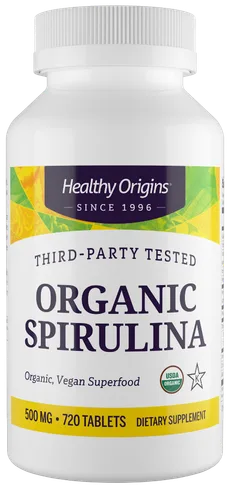
Healthy Origins 100% Natural Organic Spirulina Review
Spirulina is a fresh water blue-green algae that delivers one of the most complete nutrient profiles found in nature. Spirulina has been used by ancient cultures in South America and Africa for its dense nutrient content and healing properties. Healthy Origins Parry Organic Spirulina naturally contains over 60% protein and is a great source of many phytonutrients and minerals such as carotenoids, essential fatty acids, iron, magnesium, calcium and selenium. The page describes it as an organic, vegan superfood and highlights immune health, vegan organic superfood and heart health support. Parry has been a leader in microalgal research and development since 1977, with microalgae raceway cultures and manufacturing facilities spread over 170 acres in a remote, pollution-free location away from industrial and agricultural activity. The page states that Parry's process delivers best-in-class nutrition, potency and bioavailability from cultivation to quality assurance. The Parry advantage section says the spirulina contains 2x to 3x more phycocyanin, carotenoids and chlorophyll than the average spirulina, is certified organic in the US and EU, and is free from PAH, pesticides and other toxins. The recommended dosage is 3 tablets twice a day, or as directed by a physician, taken with a glass of water. An in vitro study compared the digestibility of Parry Organic Spirulina protein with pea protein and whey protein isolates, reporting rapid release of free amino acids and higher release of bioactive smaller peptides, which the page says help digestion, absorption and intestinal lining integrity. The product is listed with cGMP, third-party tested, USA and family owned markers. The page notes that these statements have not been evaluated by the Food and Drug Administration.
We don’t sell supplements. We help you make decisions and get the best price.
Lowest prices
We may earn a commission from some store links. How we choose.
Finding the lowest prices at the stores now. This takes a few seconds.
Products with nearly the same formula (Matched on the main ingredients)
Study, Trial or Testing Result Summary
Members Only109 human studies · 59 improved
25 of these 109 human studies gave the ingredient by drip or injection, not by mouth.
Spirulina, the main ingredient, is taken at 3 grams a day, the dose that worked in studies. A review of 22 trials in healthy and athletic adults found algae supplements, including spirulina, helped people last longer before exhaustion, though timed race results did not improve [1]. Men taking 3 grams a day reported less physical and mental fatigue than with a dummy pill [2], and overweight men taking 4.5 grams lasted longer before fatigue [3]. Not every trial agreed: there was no fatigue change in people with bowel inflammation [4]. Phycocyanin has only one weak, unblinded study [5]. Zeaxanthin is at a studied dose, but its evidence is about tired eyes, not overall energy [6]. Beta-carotene and vitamin B12 did not improve energy in strong trials [7][8]. The carotenoid trials tested fruit and vegetable diets, and the largest found no benefit [9]. Vitamin A, iron and gamma linolenic acid are present only in trace amounts, far below the doses that helped in studies [10][11][12]. Animal and cell studies are never counted.
See all 109 studies →Hide the studies
- Across 16 randomized trials with 6276 people without vitamin B12 deficiency, B12 did not improve thinking or depression, and only one trial looked at fatigue so it could not be analyzed.Effects of Vitamin B12 Supplementation on Cognitive Function, Depressive Symptoms, and Fatigue: A Systematic Review, Met…
- Across 33 trials of 4558 women with anaemia after childbirth, intravenous iron probably reduced fatigue slightly within 8 to 28 days compared with oral iron, though most evidence was low or very low certainty.Treatment for women with postpartum iron deficiency anaemia.
- In 20 trials of 4196 women with anaemia after childbirth, intravenous iron reduced fatigue more than oral iron, and also raised haemoglobin and ferritin, with low to moderate quality evidence.Intravenous iron versus blood transfusion for postpartum anemia: a systematic review and meta-analysis.
- In 18 studies of 1408 children, teens and menstruating adults without anaemia, iron supplementation reduced fatigue and improved anxiety, well-being and memory in placebo-controlled trials, but the effects were absent when people without iron deficiency were included.Psychiatric and cognitive outcomes of iron supplementation in non-anemic children, adolescents, and menstruating adults:…
- In 18 trials of 1170 iron-deficient adults without anaemia, iron reduced self-reported fatigue but did not improve measured physical capacity such as oxygen uptake.Efficacy of iron supplementation on fatigue and physical capacity in non-anaemic iron-deficient adults: a systematic rev…
- In 11 trials of 1074 adults with iron deficiency but no anaemia, intravenous iron slightly raised haemoglobin, but the evidence for fatigue and oxygen uptake was very low quality and too uncertain to show benefit.Intravenous iron therapy for non-anaemic, iron-deficient adults.
- Across 22 randomized trials with 822 healthy and athletic adults, algae supplements (including spirulina) improved time to exhaustion and lowered a muscle damage marker, with a suggestive gain in aerobic fitness and no benefit for time-trial performance.The Effects of Seaweed and Microalgae Supplementation on Exercise Performance and Recovery: A Systematic Review and Meta…
- In four placebo-controlled trials of people with iron deficiency anaemia, intravenous ferumoxytol improved fatigue scores and haemoglobin without raising adverse events.The Efficacy of Ferumoxytol for Iron Deficiency Anemia: A Meta-Analysis of Randomized Controlled Trials.
- A review of 37 trials in people with multiple sclerosis reported that both trials of vitamin A found improvements in clinical or biological outcomes (such as fatigue) compared with control, but trials were small and few.The effect of emerging nutraceutical interventions for clinical and biological outcomes in multiple sclerosis: A systema…
- In a review of 24 studies of supplements in wrestlers, iron supplementation improved recovery and may improve exercise performance, though effects were often small and results mixed across supplements.Evidence-Based Supplementation Strategies for Wrestlers: A Systematic Review.
- A review of nine trials found carotenoids including zeaxanthin modestly improved eye pigment density and reduced visual fatigue, but did not consistently slow myopia progression; energy was not measured.Nutritional Supplementation for Myopia Prevention and Control: A Systematic Review of Randomized Controlled Trials.
- In 8112 healthy French adults taking a daily antioxidant capsule (including 6 mg beta-carotene) for about 6 years, quality of life, including vitality, did not differ from placebo.Long-term antioxidant supplementation has no effect on health-related quality of life: the randomized, double-blind, pla…
- In 2914 breast cancer survivors, a 4-year diet program rich in fruits and vegetables did not improve fatigue or energy on average, though rising blood carotenoids helped explain benefits in some subgroups.Dietary Composition, Meal Timing, and Cancer-Related Fatigue: Insights From the Women's Healthy Eating and Living Study.
- In 2029 heart disease survivors, about 3 years of low-dose B vitamins including 0.02 mg B12 did not improve quality of life, and slightly more activity limits from emotional problems were seen.B vitamin and/or n-3 fatty acid supplementation and health-related quality of life: ancillary findings from the SU.FOL.O…
- In 1078 HIV-positive pregnant women in Tanzania, vitamin A had no effect on depression or quality of life including vitality, while a B-complex, C and E multivitamin did help.Multivitamin supplementation in HIV-positive pregnant women: impact on depression and quality of life in a resource-poor…
- In 812 adults with iron deficiency anaemia who could not use oral iron, intravenous ferumoxytol over 5 weeks improved fatigue scores more than placebo, and 81.1% reached the haemoglobin target versus 5.5% on placebo.Efficacy and safety of IV ferumoxytol for adults with iron deficiency anemia previously unresponsive to or unable to tol…
- In 405 non-anemic blood donors with low iron stores, a single 800 mg iron infusion raised ferritin and hemoglobin but did not change fatigue scores compared with placebo at 6 to 8 weeks.The effects of intravenous iron supplementation on fatigue and general health in non-anemic blood donors with iron defic…
- In 399 anemic patients after a long intensive care stay, hepcidin-guided intravenous iron (1 g) did not shorten later hospital stay and the abstract reports no fatigue result, though 90-day deaths were lower (8% vs 16.6%).Impact of treating iron deficiency, diagnosed according to hepcidin quantification, on outcomes after a prolonged ICU st…
- In an open-label randomized trial of 338 adults with iron deficiency anemia, high-dose intravenous iron raised hemoglobin faster than oral iron and improved fatigue scores more by 4 weeks, with similar side effect rates.[Comparison of the efficacy and safety between high-dose intravenous iron and oral iron in treating iron deficiency anem…
- In 311 people receiving a med agonist therapy, a daily 250 ml fruit smoothie for 16 weeks did not change fatigue symptoms, fitness or blood carotenoids compared with standard treatment.Read the study on PubMed (40877839) →
- In 304 iron-deficient heart failure patients, intravenous iron for 52 weeks improved walking distance by 33 m at 24 weeks and improved fatigue score and quality of life compared with placebo.Beneficial effects of long-term intravenous iron therapy with ferric carboxymaltose in patients with symptomatic heart f…
- In 290 fatigued, iron-deficient women, a single 1000 mg iron infusion reduced fatigue in 65.3% versus 52.7% with placebo at 8 weeks, and improved mental quality of life and cognitive function.Evaluation of a single dose of ferric carboxymaltose in fatigued, iron-deficient women--PREFER a randomized, placebo-con…
- In 251 children aged 7-11, a fruit- and vegetable-enriched breakfast for 12 weeks did not improve thinking, attention or overall mood compared with a standard breakfast, though an exploratory analysis suggested less fatigue in children aged 8 and under.Effects of a Fruit- and Vegetable-Enriched Breakfast on Cognition, Attention, and Mood in Primary School Children: A Ran…
- In 198 nonanemic menstruating women with low ferritin and fatigue, 80 milligrams of elemental iron daily for 12 weeks reduced fatigue more than placebo, though quality of life did not change.Effect of iron supplementation on fatigue in nonanemic menstruating women with low ferritin: a randomized controlled tri…
- In 182 outpatients with COVID-19, 25,000 IU of vitamin A daily for 10 days added to standard treatment reduced symptoms including weakness and fatigue more than standard treatment alone.Evaluation and comparison of vitamin A supplementation with standard therapies in the treatment of patients with COVID-1…
- In 176 iron-deficient blood donors, intravenous or oral iron over 8 to 12 weeks significantly reduced fatigue and improved sleep, with no difference between the two forms.The Effect of Parenteral or Oral Iron Supplementation on Fatigue, Sleep, Quality of Life and Restless Legs Syndrome in I…
- In 172 dialysis patients who finished, 12 weeks of a multinutrient supplement containing B12 did not change fatigue or quality of life versus placebo, though heart rate variability and a herpes virus measure improved.Effects of nutritional supplementation on fatigue, and autonomic and immune dysfunction in patients with end-stage renal…
- In 171 young adults who ate few fruits and vegetables, two extra daily servings for 14 days improved vitality, flourishing and motivation versus other groups, and this was not explained by blood carotenoids.Let them eat fruit! The effect of fruit and vegetable consumption on psychological well-being in young adults: A randomi…
- In a double-blind placebo-controlled trial of 144 non-anemic women with unexplained fatigue, 80 mg daily of oral iron for 4 weeks reduced fatigue more than placebo, with the benefit seen mainly in women with low or borderline ferritin.Iron supplementation for unexplained fatigue in non-anaemic women: double blind randomised placebo controlled trial.
- In 112 women with postpartum anemia taking 600 mg daily of ferrous fumarate for 4 weeks, adding folic acid did not change fatigue scores or health status compared with iron alone.A randomized controlled trial examining the addition of folic acid to iron supplementation in the treatment of postpartu…
- In 110 premenopausal women with iron-deficiency anemia from fibroids, both groups took 325 mg iron three times daily for 12 weeks, and adding a goserelin injection raised blood hemoglobin more than a sham injection did; the abstract does not test iron alone against no iron and reports no energy or fatigue result.Goserelin acetate 10.8 mg plus iron versus iron monotherapy prior to surgery in premenopausal women with iron-deficiency…
- In 101 people with relapsing-remitting multiple sclerosis, 25,000 IU daily of retinyl palmitate for 6 months then 10,000 IU for 6 months reduced fatigue and depression more than placebo.Effect of Vitamin A Supplementation on fatigue and depression in Multiple Sclerosis patients: A Double-Blind Placebo-Con…
- In 100 pregnant women with iron deficiency anemia over 12 weeks, intravenous ferric carboxymaltose gave greater fatigue improvement than iron sucrose and needed fewer visits.Comparison of ferric Carboxymaltose and iron sucrose complex for treatment of iron deficiency anemia in pregnancy- rando…
- In 97 people with inflammatory bowel disease and iron deficiency anemia, fatigue scores improved over 5 weeks after intravenous iron with both products, but improvement was slower and smaller with ferric carboxymaltose.Hypophosphataemia following ferric derisomaltose and ferric carboxymaltose in patients with iron deficiency anaemia due …
- In 97 people with inflammatory bowel disease and iron deficiency anemia, intravenous iron over about 10 weeks improved vitality scores, a measure of energy, with larger gains after ferric derisomaltose than ferric carboxymaltose.Hypophosphatemia attenuates improvements in vitality after intravenous iron treatment in patients with inflammatory bowe…
- In 90 premenopausal women with fatigue and low ferritin, one 800 mg intravenous iron dose cut fatigue more than placebo only in women with ferritin of 15 or lower, where 82% of iron-treated women reported improvement; the overall difference was not significant.Intravenous iron for the treatment of fatigue in nonanemic, premenopausal women with low serum ferritin concentration.
- In 90 people with primary Sjögren's syndrome, 6 months of high-dose gamma-linolenic acid from evening primrose oil did not reduce fatigue any better than corn oil placebo.Gammalinolenic acid treatment of fatigue associated with primary Sjögren's syndrome.
- In 85 female blood donors, one 1000 mg intravenous iron isomaltoside dose raised hemoglobin more than placebo, but fatigue differences were only numerical and the trial was not powered for symptoms.Intravenous iron isomaltoside improves hemoglobin concentration and iron stores in female iron-deficient blood donors: a…
- In 80 people with ulcerative colitis, 1 gram a day of spirulina for 8 weeks did not change fatigue scores compared with placebo, though it improved sleep disturbances, stress and quality of life.The effects of spirulina (Arthrospira platensis) supplementation on anthropometric indices, blood pressure, sleep qualit…
- In 70 heavy screen users given 10 mg lutein and 2 mg zeaxanthin daily for 6 months, tear production, photostress recovery and tear film break-up improved versus placebo, but self-reported eye strain, sleep and attention did not differ.The effects of lutein/ zeaxanthin (Lute-gen®) on eye health, eye strain, sleep quality, and attention in high electronic…
- In 64 healthy children aged 6 to 10, a daily lutein, zeaxanthin and anthocyanin supplement for 6 months improved eye fatigue symptoms and some measures of visual function compared with controls.The effects of lutein, zeaxanthin and anthocyanins supplementation on visual function and vision protection in healthy s…
- In 60 children given 10 mg lutein and 2 mg zeaxanthin daily for 180 days, eye pigment density, attention, memory and processing speed rose and eye strain and fatigue fell versus placebo.Lutein and Zeaxanthin Supplementation Improves Dynamic Visual and Cognitive Performance in Children: A Randomized, Doubl…
- In 59 healthy young adults taking 10 mg lutein plus 2 mg zeaxanthin types or double that for 12 months, eye pigment density, glare tolerance and recovery from bright light improved versus placebo.Macular carotenoid supplementation improves disability glare performance and dynamics of photostress recovery.
- In 53 female athletes with low iron stores, 20 mg iron plus a probiotic raised ferritin more than iron alone but not significantly, and increased vigor at 12 weeks, with no clear effect on physical performance.The Effect of Lactobacillus plantarum 299v on Iron Status and Physical Performance in Female Iron-Deficient Athletes: A …
- In 52 overweight or obese sedentary men, 4.5 grams a day of spirulina for 6 weeks improved time to fatigue, the point where blood lactate starts to build up, and oxygen uptake, especially when combined with exercise.Effect of Arthrospira (Spirulina) maxima Supplementation and a Systematic Physical Exercise Program on the Body Composit…
- In 48 young adults with high screen time, 24 mg daily of macular carotenoids for 6 months improved eye fatigue, eye strain, headaches, sleep quality and visual performance versus placebo.Macular Carotenoid Supplementation Improves Visual Performance, Sleep Quality, and Adverse Physical Symptoms in Those wi…
- In 46 older adults with mild cognitive impairment, a daily omega-3 and omega-6 formula with 0.6 mg vitamin A and vitamin E for 6 months improved fatigue, cognition, walking capacity and sleepiness more than placebo.The Effects of a 6-Month High Dose Omega-3 and Omega-6 Polyunsaturated Fatty Acids and Antioxidant Vitamins Supplementat…
- In 41 trained cyclists, 4 weeks of a combination supplement including 2.5 mcg B12 did not improve aerobic or anaerobic performance or fatigue measures compared with placebo, though blood lactate was lower after hard exercise.l-Carnitine and Alpha-Lipoic Acid Fail to Improve Anaerobic and Aerobic Performance in Trained Cyclists Despite a Reduct…
- In 30 women with gynecological disease and anemia before surgery, 100 mg daily iron for at least 10 days raised hemoglobin but did not significantly reduce fatigue; adding Ninjin'yoeito reduced fatigue.Safety and efficacy of Ninjin'yoeito along with iron supplementation therapy for preoperative anemia, fatigue, and anxie…
- In a small pilot trial of 30 breast cancer survivors, a 3-month diet rich in fruit, vegetables, whole grains, and omega-3 foods improved fatigue and sleep more than a general health control, and raised blood carotenoid levels.Fatigue reduction diet in breast cancer survivors: a pilot randomized clinical trial.
- In 26 recreationally active women with iron deficiency but no anemia, one intravenous iron treatment compared with placebo improved fatigue scores at 4 weeks.Effect of intravenous iron therapy on exercise performance, fatigue scores and mood states in iron-deficient recreationa…
- In 25 healthy recreationally active adults, a single dose of a pre-workout supplement containing vitamin B12 as methylcobalamin, along with caffeine, raised self-reported vigor and energy compared with a placebo drink, though exercise performance did not change.Effects of acute ingestion of a pre-workout dietary supplement with and without p-synephrine on resting energy expenditu…
- In 25 resistance-trained people, a week of a pre-workout drink containing 45 mcg B12 and other ingredients helped maintain some strength and lifting measures versus placebo but did not change cycling time trial performance.Short-Term Effects of a Ready-to-Drink Pre-Workout Beverage on Exercise Performance and Recovery.
- In 20 iron-depleted women without anemia, 6 weeks of iron supplements, compared with placebo, reduced muscle fatigue during repeated knee-extension exercise and raised muscle strength later in the test.Iron supplementation improves progressive fatigue resistance during dynamic knee extensor exercise in iron-depleted, non…
- In 20 active women with low iron stores, 100 mg of daily iron for 8 weeks raised maximal oxygen uptake above the placebo group and lowered blood lactate after exercise, though the rise in endurance time was not statistically significant.Effects of iron repletion on VO2max, endurance, and blood lactate in women.
- In 20 singers with mild vocal symptoms, a single 1000 mcg B12 injection did not improve voice fatigue or singing measures more than a placebo injection.Effect of Vitamin B12 Injection on the Vocal Performance of Professional Singers: A Randomized, Double-blind, Placebo-Co…
- In 18 iron-depleted female runners, 8 weeks of oral iron raised iron stores but did not improve endurance time to exhaustion compared with placebo.Effect of iron supplementation on endurance capacity in iron-depleted female runners.
- In 17 people, 3 weeks of a broad antioxidant mixture including beta-carotene did not protect cycling performance in low oxygen better than placebo, while a different supplement did.Effects of antioxidant supplementation on exercise performance in acute normobaric hypoxia.
- Seventeen recreational cyclists taking 6 grams of spirulina daily for 14 days had higher hemoglobin but no better endurance or exercise performance than on placebo.Fourteen-Days Spirulina Supplementation Increases Hemoglobin, but Does Not Provide Ergogenic Benefit in Recreationally A…
- In a placebo-controlled trial of 16 iron-depleted female athletes, intramuscular iron injections raised serum ferritin but did not improve submaximal or maximal aerobic exercise performance compared with placebo over about 4 weeks.Effect of iron injections on aerobic-exercise performance of iron-depleted female athletes.
- Sixteen students taking spirulina for 3 weeks had lower blood markers of muscle damage after a treadmill test and lasted longer before exhaustion.Preventive effects of Spirulina platensis on skeletal muscle damage under exercise-induced oxidative stress.
- In 15 iron-deficient elite runners, a single 500 milligram intravenous iron injection improved iron levels for 4 weeks but did not improve time to exhaustion compared with placebo.Effect of Intravenous Iron on Aerobic Capacity and Iron Metabolism in Elite Athletes.
- In 15 trained male cyclists, 6 grams of spirulina a day for 21 days lowered heart rate and blood lactate during submaximal cycling and increased power during repeated sprints, but did not change 16.1-kilometer time trial results compared with placebo.Twenty-one days of spirulina supplementation lowers heart rate during submaximal cycling and augments power output durin…
- In 15 people with chronic fatigue syndrome, injections of liver extract with folic acid and B12 worked no better than placebo, which had a strong response.Liver extract-folic acid-cyanocobalamin vs placebo for chronic fatigue syndrome.
- In 14 young men, 30 mg of beta-carotene daily for 1 month did not change exercise-related DNA oxidative damage in urine in a significant way, and energy or exercise performance was not measured.Effect of a single bout of exercise and beta-carotene supplementation on the urinary excretion of 8-hydroxy-deoxyguanosi…
- In a placebo-controlled trial of 14 distance runners without clinical iron deficiency, three 100 mg intravenous iron injections over 4 weeks reduced perceived fatigue and mood disturbance by week 6, without improving running performance.Four weeks of IV iron supplementation reduces perceived fatigue and mood disturbance in distance runners.
- Eleven untrained men taking 6 grams of spirulina daily for 7 days had lower oxygen use during submaximal arm cycling and higher oxygen use at fatigue, but time to fatigue did not change.Spirulina supplementation improves oxygen uptake in arm cycling exercise.
- In 10 healthy adults who ate few fruits and vegetables, 4 weeks of a combined antioxidant supplement (including 15,000 IU beta-carotene, a vitamin A precursor) raised antioxidant status about 21%, improved airflow, and lowered breathing rate and perceived exertion during exercise compared with placebo.The effects of antioxidant vitamin supplementation on expiratory flow rates at rest and during exercise.
- Nine moderately trained men taking 6 grams of spirulina daily for 4 weeks ran longer before exhaustion than on placebo and burned more fat during a 2-hour run.Ergogenic and antioxidant effects of spirulina supplementation in humans.
- Four physicians with chronic fatigue taking 3 grams of spirulina daily for 4-week periods reported no less fatigue than on placebo.Spirulina did not ameliorate idiopathic chronic fatigue in four N-of-1 randomized controlled trials.
- In a randomized trial of pregnant people in their second trimester with iron deficiency anemia, a 27 mg iron tablet over 4 weeks raised hemoglobin as much as 100 mg ferrous ascorbate, improved dizziness, fatigue and palpitations more, and caused no side effects.Efficacy and safety of emulsified microsomal ferric pyrophosphate vs. Ferrous Ascorbate in pregnancy with iron-deficienc…
- In men given 3 grams a day of spirulina, exercise output rose slightly after 1 week, and mental fatigue test results and self-reported physical and mental fatigue improved within 4 hours and again at 8 weeks compared with placebo.A randomized, double blind, placebo controlled study of spirulina supplementation on indices of mental and physical fati…
- In an open-label quasi-randomized trial of 1066 women with postpartum anemia, the herbal formula Ninjin'yoeito reduced fatigue over 4 weeks, while oral iron did not, although both raised hemoglobin by similar amounts.A quasi-randomized controlled trial of Ninjin'yoeito for the treatment of postpartum anemia and the prevention of postpa…
- In 351 Bangladeshi schoolchildren aged 6-11, daily fortified biscuits raised blood levels of retinol and other nutrients, and children and teachers reported less tiredness and better energy, though energy was not measured directly.Impact of fortified biscuits on micronutrient deficiencies among primary school children in Bangladesh.
- In 13 people doing two hours of reading tasks, a 2-week lutein, zeaxanthin and blackcurrant supplement reduced visual fatigue compared with placebo in a crossover trial.The effect of lutein supplementation on visual fatigue: a psychophysiological analysis.
- In 12 healthy volunteers breathing low-oxygen air, one intravenous iron sucrose dose or saline placebo before 8 hours of low oxygen did not change maximal exercise capacity overall.Hypoxic pulmonary vasoconstriction does not limit maximal exercise capacity in healthy volunteers breathing 12% oxygen a…
- In 10 healthy sedentary men, taking 300 mg of retinol daily for 4 weeks did not change blood lactate or most antioxidant measures after exhaustive exercise, though nitric oxide levels fell.Effect of vitamin A administration on free radicals and lactate levels in individuals exercised to exhaustion.
- In a Sri Lankan tea plantation, anemic workers given iron picked significantly more tea over one month than those given placebo, and their daily activity levels also rose.Iron-deficiency anaemia and its effect on worker productivity and activity patterns.
- In 201 pregnant women with persistent iron deficiency, a single 1000 mg intravenous iron dose improved fatigue more than daily oral iron at weeks 3 and 6, and the women stayed non-anemic for longer.Intravenous ferric derisomaltose versus oral iron for persistent iron deficient pregnant women: a randomised controlled …
- In 85 women with severe fatigue after postpartum hemorrhage, a single 1200 milligram intravenous iron isomaltoside dose reduced physical fatigue more than oral iron over 12 weeks.Intravenous iron isomaltoside treatment of women suffering from severe fatigue after postpartum hemorrhage.
- In a single-arm study of 78 pregnant people with iron deficiency anemia, one 1000 mg intravenous dose of ferric derisomaltose raised mean hemoglobin by 1.3 g/dL by delivery and improved self-reported fatigue, with no major infusion reactions.Efficacy of Single-Dose Intravenous Ferric Derisomaltose for Iron Deficiency Anemia in Pregnancy.
- In 39 patients with advanced cancer and weight loss, a 4-month regimen that included 30,000 IU a day of vitamin A along with other antioxidants, supplements, and drugs improved fatigue scores and lowered inflammatory cytokines, but it was an open study with no placebo group and vitamin A's effect could not be separated from the other ingredients.A phase II study with antioxidants, both in the diet and supplemented, pharmaconutritional support, progestagen, and ant…
- In an uncontrolled pilot study of 23 young women with iron deficiency anemia, 160 mg daily of ferrous sulfate for 8 weeks lowered fatigue scores and improved muscle endurance, but did not improve aerobic fitness or muscle strength.Efficacy of 8-week oral iron supplementation on fatigue and physical capacity in young women with iron deficiency anemia…
- In 20 adolescent girls with iron deficiency and fatigue, intravenous iron sucrose led to clinically meaningful fatigue improvement in 19 of 20 at 6 weeks, with no control group.Intravenous iron therapy in non-anemic iron-deficient menstruating adolescent females with fatigue.
- In a small uncontrolled pilot of 10 homeless women taking alternate iron supplements for three months with nurse home visits, fatigue decreased and blood hematocrit rose, with few side effects.Side effects of alternative iron supplementation: a pilot study.
- In a large study of 5307 older adults in Ireland, higher blood lutein and zeaxanthin levels were linked to lower odds of exhaustion-type prefrailty, though this was an association and not a supplement trial.Biomarker Signatures of Two Phenotypical Prefrailty Types in the Irish Longitudinal Study on Ageing.
- In a large US national survey of older adults, frail people had lower blood carotenoid levels than people who were not frail, and frailty includes exhaustion as one criterion.Lower nutritional status and higher food insufficiency in frail older US adults.
- In a survey of 4091 American adults, higher blood levels of two vitamin A forms, retinyl palmitate and retinyl stearate, were linked to less fatigue, but this link was not seen among the 272 people with a cancer history.Serum carotenoids and cancer-related fatigue: An analysis of the 2005-2006 National Health and Nutrition Examination Sur…
- In a cross-sectional survey of 2410 people with multiple sclerosis, higher dietary carotene was linked to better quality-of-life scores, but carotene was not linked to fatigue, which was tied to fish intake instead.A cross sectional assessment of nutrient intake and the association of the inflammatory properties of nutrients and food…
- In a chart review of 2142 people with fibromyalgia, 42.4% had vitamin B12 deficiency, and deficiency was linked to higher odds of fatigue (odds ratio 1.39) after adjusting for vitamin D.Association of Vitamin B12, Vitamin D, and Thyroid-Stimulating Hormone With Fatigue and Neurologic Symptoms in Patients …
- Among 1643 older Spanish adults followed for about 3.5 years, dietary vitamin A intake was not reported as linked to developing frailty, while low intakes of vitamins B6, C, E and folate were.Low vitamin intake is associated with risk of frailty in older adults.
- In a retrospective study of 689 children without complaints, 23.2% had vitamin B12 deficiency and it was linked to vitamin D deficiency, but no supplement was tested for energy.Is There An Association Between Vitamin B12 Level and Vitamin D Status in Children?
- In 335 older adults, vitamin B12 levels were not associated with frailty, and no supplement was tested.Association between serum vitamin B12 level and frailty in older adults.
- In 186 cancer patients with iron deficiency, intravenous iron was followed by better quality of life, fatigue scores, and physical function, though there was no control group.Impact of Iron-Deficiency Management on Quality of Life in Patients with Cancer: A Prospective Cohort Study (CAMARA Stud…
- Women with fibromyalgia had lower vitamin B12 levels than 58 healthy women, and lower levels were linked to more tender points, though this study did not test supplements.Could ferritin, vitamin B12, and vitamin D play a role in the etiopathogenesis of fibromyalgia syndrome?
- Vitamin B12 levels were normal in 55 people with primary fibromyalgia, who reported muscle fatigue as one of their most disabling symptoms.Primary fibromyalgia. A clinical and laboratory study of 55 patients.
- In a survey of 38 people with chronic fatigue syndrome or fibromyalgia who had weekly or more frequent B12 injections for six months or more, 15 were good responders who rated themselves much or very much improved, and higher doses and longer use were linked to better response.Response to vitamin B12 and folic acid in myalgic encephalomyelitis and fibromyalgia.
- In a retrospective review of 38 children with neurological symptoms of vitamin B12 deficiency, all recovered within one month of B12 supplementation; fatigue was among the symptoms but was not reported separately.Neurological symptoms of vitamin B12 deficiency: analysis of pediatric patients.
- In a study of 37 adults with pulmonary arterial hypertension, 29% had a functional vitamin B12 deficiency, but no supplement was tested, so the study does not show whether B12 improves energy.Nutritional status in pulmonary arterial hypertension.
- In a small case series of 20 male water polo players, a twice-daily spirulina liquid supplement with added copper for 8 weeks was linked to better self-rated performance compared with the non-supplement group, though larger randomized trials are still needed.Effects of a Dietary Microalgae (Arthrospira platensis) Supplement on Stress, Well-Being, and Performance in Water Polo …
- In a small case series of 20 infants with vitamin B12 deficiency, who were treated with cyanocobalamin, clinical and lab findings improved overall, though energy was not separately reported and the dose and duration were not stated.Vitamin B12 Deficiency in Infants.
- All 5 people with ALS who received methylcobalamin injections reported more energy and less fatigue, based on interviews; the dose was not stated.Patients' experiences with methylcobalamin injections in amyotrophic lateral sclerosis.
- This survey of hypothetical scenarios found people kept taking B12 for fatigue after a small symptom improvement, showing post hoc bias rather than any real effect of B12 on energy.Post Hoc Bias in Treatment Decisions.
- In 303 people with eye fatigue, a model built from a trial of a lutein, zeaxanthin and berry blend over 45 days predicted that 39 of 58 test subjects would do best on the highest dose.A Machine Learning Based Dose Prediction of Lutein Supplements for Individuals With Eye Fatigue.
- In 40 octogenarians with anemia and resistant heart failure, a combined treatment of erythropoietin and intravenous iron sucrose improved heart function, shortness of breath, and fatigue, though iron was not tested alone.Effect of correction of anemia with erythropoietin and intravenous iron in resistant heart failure in octogenarians.
- In 21 patients with inflammatory bowel disease who finished 8 weeks of oral liposomal iron, fatigue scores fell by an average of 9.2 points in an uncontrolled pilot study.Treatment of iron deficiency anemia with liposomal iron in inflammatory bowel disease: efficacy and impact on quality of…
- In 17 trained athletes, a 2-week low-antioxidant diet raised perceived exertion during exercise, though time to exhaustion was unchanged.Antioxidant-restricted diet reduces plasma nonesterified fatty acids in trained athletes.
- In 17 endurance-trained men, a 2-week low-antioxidant diet lowered beta-carotene levels and raised perceived effort during submaximal exercise, though time to exhaustion did not change.Dietary antioxidant restriction affects the inflammatory response in athletes.
- In a clinical evaluation, a multi-nutrient eye product containing carotenoids reduced eye tiredness symptoms and increased how long people could work visually before eye tiredness began.[Analysis of the clinical effectiveness of vitrum vision in the tired eye syndrome and senile macular degeneration].
Review Totals and Summary
Members Only100 reviews · 90% positive
Overall, buyers rate this spirulina well, with about 40 ratings across the stores. The written feedback is thin and mostly about sourcing, value and delivery. It says little about how the tablets taste or feel. Reviews of other Healthy Origins products on these pages were left out, and so was anything not about the tablets. **What buyers say it did for them:** Few reviewers describe a personal effect. One says liver measures on his annual blood test improved for the first time in five years, a few months after he started taking spirulina: "Liver health measures on my annual blood test improved." Another calls it a "Body rejuvenate" product. These are individual experiences, and the reviews do not show that the spirulina caused them. **What they complain about:** The one substantive complaint is about the label. A reviewer says the seller's product page does not give the full composition. She says the product "is not 100% Spirulina, as it contains silicon," and that the full ingredient list appears only on the jar. The store summaries note that this concerns label accuracy, not taste or effectiveness. No other written review is negative. **Taste, smell, pill size or form:** No written review describes taste, smell or tablet size, so none of those can be judged from the feedback. One Spanish-language reviewer says the "Presentación" is excellent, which likely refers to the packaging or how the product arrives, but it says nothing about the tablets themselves. **Value for money:** Opinions on value are positive. A Spanish-language reviewer calls the price reasonable and the quantity good: "cantidad precio razonable." Another says, "Really appreciate consistency and trying to keep cost down." Together these suggest buyers feel the price is fair and fairly stable. **Sourcing, quality and delivery:** Praise centers on the source. One reviewer notes that the spirulina comes from Parry, which he describes as "the only USP Verified Spirulina in the world," and says "Quality really matters when it comes to Spirulina." On delivery, one buyer says, "Products always sents on time," and another reports that the product matches the description. **Who it seems to suit and who it did not:** It seems to suit buyers who value a known source, a reasonable price and dependable supply, and who want a straightforward spirulina product. It may suit less well anyone who wants exact ingredient disclosure on the online listing. The silicon complaint suggests checking the jar's ingredient list before relying on the web page. Nothing in the reviews says whether it suits people who are sensitive to taste or who have trouble swallowing tablets. In short, the feedback leans positive, mainly on quality, price and service, but the written evidence is limited. The single label concern is worth checking before you buy.
Biohacker Summary
Members Only10 of 10 recommend it
The panel is split on spirulina, the main ingredient: of the nine who spoke about it, three recommend it, one uses it, three are neutral, and one stopped. Those who recommend it point to better sleep, lower stress, better mood, faster recovery and help with rhinitis, and one mentioned that it supplies a fatty acid that is good for skin. One panelist who uses it takes it as part of a light-focused product, and one called it a very dense protein source but advised against eating a large amount. The neutral voices mostly said little, but one cautioned that most spirulina can be contaminated with heavy metals, so careful sourcing matters. The one who stopped used to recommend it for the heart but now advises against it because it lacks essential nutrients like protein and can cause bloating and low energy, and no one gave a dose for spirulina itself. Iron is a smaller ingredient in this product, and several panelists recommend checking and replenishing it when levels are low.
See all 10 biohackers →Hide the biohackers
Thomas DeLauer · Spirulina · recommends
- Recommends spirulina, stating that it improves sleep quality, decreases stress scores, and improves mood by reducing inflammation and providing tryptophan for serotonin production.
- Recommends Vitamin B12 for mental health and mood, explaining its role in myelination and neurotransmitter production. They specifically recommend a liposomal and micellar form of methylcobalamin B12 for better absorption and to avoid toxicity.
- Compares iron content in spinach (2.7mg) and beef (2.6mg), but emphasizes that beef's heme iron absorbs at about 25%, while spinach's non-heme iron absorbs at 2-8%.
- Advises not to eat 6oz of spirulina but notes it is the most dense protein source on earth.
- Highlights zeaxanthin as showing the strongest association with lower sleep disorder risk and recommends a dose of 4 mg, especially for those with high screen exposure, as it filters blue light at the retina level.
- Recommends iron from meat, specifically red meat and beef liver, stating that it is a crucial part of the mechanistic triad for thyroid hormone function and is iron-dependent for iodine incorporation into thyroid hormone.
- Recommends vitamin A, obtainable from eggs, dairy, and liver, as a raw material for goblet cells to produce mucus.
- Recommends using a multivitamin to ensure adequate micronutrient intake, especially when wholesome food is less available.
- Advises checking multivitamins because many contain 100, 200, or 300% of the daily value of selenium, which can contribute to excessive intake.
- Mentions that a single serving of sardines provides vitamin B12 at something like three to four times the daily needs.
- Recommends taking methylcobalamin as a methylated form of B vitamin for mitochondrial function.
- Notes that iron is essential for delivering oxygen to muscles and the brain, making it an important cofactor for signals to reach their targets.
- Recommends taking a multivitamin to ensure adequate intake of important cofactors like B vitamins, magnesium, iron, and zinc, which are essential for the signaling system to be operational.
- Recommends assessing iron along with selenium and iodine for optimal thyroid function, suggesting red meat as a source of iron.
Dave Asprey · Spirulina · uses
- Dave Asprey's LDR product contains Spiruline AP, an algae extract from spirulina, which absorbs two photons and creates one more, effectively increasing the amount of light.
- Tried purified phycocyanin separately and found it felt the same mitochondrially but went bad quickly and was gross, so he does not recommend taking straight phycocyanin.
- Recommends phycocyanin, the blue pigment in spirulina, as a natural alternative to methylene blue for mitochondrial enhancement, noting it has anti-angiogenesis properties and is a less potent MAO inhibitor, making it safer for those who use psychedelics.
- Mentions that longer shading before harvest builds more chlorophyll into the matcha leaf.
- Recommends real vitamin A for people on the spectrum, noting that many cannot convert plant vitamin A and need the good stuff he includes in his Vitam DAKNE product.
- Takes Vitamin DAKE from Suppgrade Labs because D3, A, K2, and E work together.
- Includes vitamin K2 as a critical ingredient in Vitamin DAKE, stating that the body needs the right fat soluble vitamins for thousands of reactions.
- Recommends getting nutrients like zeaxanthin from real food or Vision 101 for eyesight.
- States that Vitamin B12 is extremely important for every kind of brain function and recommends ensuring B12 levels are optimal, around 500, not just barely above normal.
- Warns that if a doctor diagnoses anemia, one should not assume they just need more iron, as low hemoglobin doesn't always mean low iron and the issue can sometimes be how well the body is using iron.
- Notes that when energy intake is too low for training demand, nutrient intake often falls short, especially for iron, which is associated with impaired recovery.
- Mentions Vitamin DAKE from Suppgrade Labs as a product that combines fat-soluble vitamins D, A, K, and E to work together.
- Used to take almost no preformed vitamin A due to fear of retinol toxicity, which they now consider a big mistake.
- Recommends looking at basics like vitamin D, A, K, and minerals 101 after dialing in thyroid and sex hormones, as they are affordable and support everything.
Ben Greenfield · Spirulina · neutral
- Notes that spirulina is an ingredient in MTE.
- Notes that Vitamin A is a fat-soluble vitamin that supports healthy skin cell turnover.
- Recommends testing for and replenishing iron if levels are low, as it can affect the ability to maintain or preserve muscle, especially for those on GLP-1s.
- Recommends getting vitamin B12 tested and supplementing if deficient, as B12 deficiency can cause damage to the myelin coating around nerves, including cochlear nerves, and improve tinnitus severity scores.
- Notes that one can eat iron-rich foods or supplement with iron, but still feel exhausted if iron is not the missing piece, emphasizing that focusing on a single mineral in isolation can support a number on a lab test rather than the system itself.
- Mentions Dr. James Di Nicolantonio's claim that spirulina, at 5 to 6 grams, can help protect cell membranes against damage from oxidized oils, citing rodent studies.
- Mentions iron as a common deficiency.
- Recommends a nutritious diet including iron, as it is critical for brain development.
- Recommends vitamin A derivatives like retinol for targeting wrinkles and laxity, as they work deeper without aggravating the surface.
- Advises people not to miss information about vitamin A or beta carotene, suggesting that the evidence against it was accidental and that these are synthetic analogs to what is in food.
- Gives injecting chlorophyll into the eyeballs for night vision as an example of a medical protocol with scant human research that is not reversible.
- Mentions a spirulina smoothie as a breakfast item following elaborate morning routines common among anti-aging enthusiasts.
- Notes that the guidelines mention iron supplementation for infancy and early childhood.
- Started thinking about getting more heme-based iron in his diet after a podcast about reasons people feel fatigue.
Siim Land · Spirulina · neutral
- Places Spirulina in the 'okay' tier, cautioning that most spirulina can be contaminated with heavy metals, requiring careful sourcing, and notes some limited evidence for stem cell proliferation.
- Mentions that iron is a mineral necessary for making collagen.
- Lists liver and carrots as sources of Vitamin A.
- Carotenoids can protect your eyes against screentime and age-related decline in eye health.
- Supplementing lutein and zeaxanthin 5-20 mg/day improves macular pigment optical density (MPOD), a marker of eye health, in people with healthy eyes.
- States that excess iron promotes oxidative stress and inflammation, which increases heart disease risk.
- Tried 5 milligrams of zeaxanthin during this period to see if it affects eye strain.
- States that the biggest evidence for multivitamin is that it improves cognition and enhances episodic memory in elderly people, who tend to have worse diets and are more likely to be deficient.
- States that carotenoids are powerful antioxidants that accumulate in the eyes and protect against oxidative stress and inflammation, and recommends having high amounts in the eyeballs.
- Decided to try out lutein and zeaxanthin for 30 days to see if he noticed any changes on his eyesight, and he noticed less digital eye strain, slightly less blurry vision, and less dry eyes.
- Created Microvitamin, a supplement that bundled all the supplements he was taking, to help fund his a med trial.
- Created Microvitamin, a supplement that bundled all the supplements he was taking, to help fund his a med trial.
- Notes that iron deficiency is found in children with premature graying of hair and that some people get gray hair due to iron deficiency.
- States that vitamin B12 deficiency is the most common reason for premature graying of hair and recommends fixing B12 status if it is deficient, as it gives a greater likelihood of reversing gray hair.
Dr. Eric Berg · Spirulina · stopped
- Dr. Berg used to recommend spirulina as superfoods for the heart, but now he advises against them because they don't provide essential nutrients like protein and can lead to bloating and low energy.
- Identifies iron as the Achilles' heel of cancer, as it is needed for its DNA to replicate.
- Notes that low vitamin A can lead to dry eyes, dry mouth, and night vision issues.
- Mentions that grass-fed liver has heme iron, the most bioavailable form of iron that prevents anemia.
- Mentions that grass-fed liver has the active form of vitamin A, called retinol, which is important for eyes, thyroid, immune system, and skin.
- Notes that eggs contain zeaxanthin, which can help the retina and improve night vision.
- Dr. Berg warns that too much iron can be damaging to the body and advises focusing on food sources to avoid overconsumption.
- Dr. Berg warns that synthetic vitamin A can cause problems, including competing with vitamin D, increasing the risk of birth defects during pregnancy, and increasing the risk of bone fractures, recommending food sources like egg yolks and cod liver oil instead.
- Recommends taking the natural form of vitamin B12, methylcobalamin, to support nerve regeneration, myelin production, and nerve growth factors.
- Notes that Vitamin B12 is intimately involved in the nervous system and may be behind sciatica and carpal tunnel syndrome.
- Warns that too much iron, especially the ferrous sulfate or fumarate type found in many supplements, is corrosive and oxidizing, can mess with the liver, and create inflammation, noting that males have no natural way to excrete excess iron.
- Mentions vitamin A deficiency as a possibility for dry mouth, but emphasizes that vitamin A doesn't work without zinc.
- Notes that tannins in tea bind iron, blocking its absorption.
- Recommends taking vitamin B12 if on a med.
Andrew Huberman · Spirulina · recommends
- Recommends spirulina as a tool for accelerating recovery, specifically mentioning its use for rhinitis.
- Notes that carotenoids, such as lutein, zeaxanthin, and astaxanthin (from seafood), have pretty good evidence for supporting cognitive function.
- States that Iron is one of the critical nutrients with the best evidence for cognitive function and reducing the risk of dementia.
- Takes a multivitamin every day for longevity.
- States that a deficiency in vitamin B12 can be terrible and lead to chronic fatigue-like syndromes, as many parts of mitochondria require B vitamins.
- Warns that excess iron will increase the number of senescent cells in the body, which accumulate as people get older and cause inflammation and cancer. He notes that people who are healthy and have a fairly vegetarian diet often have slightly low iron levels but super amounts of energy.
- Found the Met RX Big 100 Bar to be 'magic' on the trail because it's a hunk of calories with protein and fortified with vitamins and minerals, despite being something they would never eat in normal life.
- Mentions that the process of converting light into electrical signals in the retina requires vitamin A, a fat-soluble vitamin, and carotenoids, which is why carrots are said to help vision.
- Highlights Vitamin A as essential for vision and recommends it for supporting vision.
- Mentions that the process of converting light into electrical signals in the retina requires vitamin A, a fat-soluble vitamin, and carotenoids, which is why carrots are said to help vision.
- Notes that about 50% of the population is iron deficient.
- Mentions that the podcast will review the role of iron in treating depression.
- States that B12, folate, and iron are essential to mitochondrial function and if deficient, mitochondria will not function properly, which is consistent with the mitochondrial theory of neuropsychiatric disorders.
- Mentions that Vitamin A hits cytochrome 5 in the mitochondrial electron transport chain, contributing to energy production.
Dr. Mark Hyman · Spirulina · recommends
- Mentions that GLA, which is good for skin conditions, can be obtained from spirulina.
- Mentions iron as an existing biomarker that plays a role in mental health, which Function Health includes in their measurements.
- Mentions that vitamin A levels can be looked at to get a deep sense of what's happening with nutrient levels.
- Mentions carotenoids, including astaxanthin and beta-carotene, as helping to reduce oxidative stress.
- Dr. Hyman mentions carotenoids in the context of supporting skin mitochondria.
- Mentions carotenoids, including beta-carotene and astaxanthin, as being important for skin health, found in foods.
- Recommends taking 50,000 units of vitamin A for three to five days right at the onset of symptoms if one feels they might be getting sick.
- Notes that night blindness is caused by vitamin A deficiency.
- Mentions vitamin A as something that might be helpful for gut repair.
- Notes that a woman patient had very low iron.
- States that they get the whole picture when it comes to iron, looking at ferritin, iron reserves, iron in the blood, iron saturation, and iron binding capacity to spot problems before full-blown anemia.
- States that vitamin B12 is a nutritional deficiency that impacts mental health.
- Recommends vitamin B12 with vitamin B6 and folate as supplements with strong evidence for PMS.
- Recommends Vitamin A as a nutrient to help repair a leaky gut.
Dr. Rhonda Patrick · Vitamin A · neutral
- Lutein and zeaxanthin can also be obtained from certain multivitamins.
- Zeaxanthin may be among the most evidence-backed carotenoids for longevity. It accumulates in the brain, where higher levels are associated with greater crystallized intelligence, and supplementation can improve some measures of cognitive function. Evidence also suggests it may slow progression to advanced macular degeneration in high-risk individuals.
- Zeaxanthin may improve cognition, even in younger adults. It accumulates in the retina, where it helps neutralize light-driven oxidative damage linked to macular degeneration risk, and also accumulates in the brain, where higher blood levels are associated with better fluid and crystallized intelligence.
- Notes that blood carotenoids, an objective marker of fruit and vegetable intake, correlated with lower GrimAge.
- Recently found out he needed to get on an iron supplement and noticed he gets less sore in his training after taking it.
- Choosing a multivitamin that includes lutein and zeaxanthin ensures you get meaningful amounts every day.
- Zeaxanthin directly supports both vision and cognition in ways we can measure. Clinical trials show that supplementing it reduces risk of age-related macular degeneration and protects retinal function.
- Advises that menstruating women should ensure they are getting enough iron.
- Warns that Vitamin B12 enhances light's melatonin-suppressing effects and should be avoided too close to bedtime.
- Suggests avoiding a multivitamin if it contains biotin before a testosterone blood test to prevent confounding results.
- Multiple randomized controlled trials show older adults taking a standard multivitamin (like Centrum Silver) had measurable improvements in processing speed, cognition, and episodic memory.
- Currently takes the Pure Encapsulations O.N.E Multivitamin.
- Is no longer taking zeaxanthin.
- Rhonda's current supplement routine includes Lutein & zeaxanthin.
Bryan Johnson · Iron · stopped
- Has had low iron for 11 years and despite eating meat and trying all forms of iron supplementation at different times and sequences, none of it worked to raise his iron or ferritin levels.
- Had low iron for 11 years, with ferritin averaging 38 ng/mL, and has finally boosted it back to healthy levels.
- States that Blueprint essential capsules and soft gels are packed with key vitamins and minerals needed for strong bone health.
- Takes 10 milligrams of heme iron to get his iron levels up, as they are borderline.
- Recommends adequate Iron for hair health, noting it is in the Blueprint stack.
- Recommends supplementing with iron for brain health for both the mother and the baby during pregnancy.
Peter Attia · Vitamin A · neutral
- Notes that in mouse studies, there was a combined effect of alpha ketoglutarate with vitamin A for male mice.
- In mouse studies, Peter Attia's team found a combined effect of AKG with Vitamin A for male mice.
- Recommends iron supplements for women of reproductive age who are iron deficient.
- Mentions that a lot of the profound transformation of a cell into a sperm, specifically the making of a tail, is vitamin A driven.
- Notes that deficiencies in certain vitamins and minerals, such as iron, can be a cause of hair loss in women.
- Notes that deficiencies in certain vitamins and minerals, such as B12, can be a cause of hair loss in women.
- Notes that antioxidants like vitamins A, C, and E have been looked at for cataract formation but have shown no effect.
- Delves into the crucial yet often overlooked topic of iron and iron deficiency.
- Explains that humans consume about 10 to 20 milligrams of iron per day, absorbing roughly 10% of that, which is 1 to 2 milligrams per day, perfectly offsetting the 1 to 2 milligrams lost daily.
- Peter emphasizes the importance of consuming an adequate amount of iron daily to prevent deficiency.
- States that antioxidants like vitamins A, C, and E have been looked at for cataract formation but have had no effect.
- Recommends Vitamin A as a nutrient the body needs to heal the gut.
- Suggests that taking vitamin A would almost assuredly not be required if one eats a balanced diet.
- Speculates that lower iron levels in women due to their menstrual cycle may offer a protective benefit against heart disease, citing data that metabolically deranged men benefit from therapeutic phlebotomy.
RAL Summary
Members OnlyTier 2 for Energy
Human studies of Carotenoids show a clear improvement in 3 controlled trials, the largest of 171 people (6 of 10 human studies showed an improvement), and 89% of 110 reviews are positive. The final check notes: The tier rests on carotenoid studies that tested fruit and vegetable diets rather than this product's carotenoids, and whose largest trials found no effect; the main ingredient, spirulina at the full studied dose, supports the same tier on its own.
Where the evidence disagrees: 39 of the 109 human studies found no effect.
More Details
Members OnlyBody systems · Combine with · Possible side effects
Body systems: Muscular system, Cardiovascular system, Nervous system, Eyes
Combine with: For general energy and nutritional support, spirulina pairs well with vitamin C to enhance absorption of its plant-based iron, and with chlorella for added chlorophyll and a broader green-food nutrient profile. B-complex vitamins (especially B12, which spirulina does not reliably provide in a bioavailable form) can fill nutritional gaps, and CoQ10 or magnesium can complement energy metabolism. For antioxidant support, consider adding vitamin E or astaxanthin. If kidney support is the real goal, speak with a physician or nephrologist before using any supplement; options often discussed include adequate hydration, magnesium (only if kidney function is normal), and cranberry or D-mannose for urinary tract comfort, but these should be used only under medical guidance.
Possible side effects: No major side effects reported.
Supplement Facts
Total Carbohydrates 1 g · Vitamin A 167 mcg RAE · Iron 0.75 mg
| Calories | 6 | |
| Total Carbohydrates | 1 g | |
| Vitamin A | 167 mcg RAE | |
| Iron | 0.75 mg | |
| Protein | 1 g | |
| Parry Organic Spirulina™ (Arthrospira platensis) | 1.5 g | † |
| Phycocyanin | 210 mg | † |
| Total Carotenoids | 5,000 mcg | † |
| Beta-Carotene | 2,000 mcg | † |
| Zeaxanthin | 1,000 mcg | † |
| Vitamin B12 | 5 mcg | |
| Chlorophyll | 16 mg | † |
| Gamma Linolenic Acid (GLA) | 15 mg | † |
Other ingredients: Silica.
Directions: As a dietary supplement for adults, take three (3) tablets twice daily with water, or as directed by a physician.
Barcode (UPC) 603573882396 · Label source: Reverseagelab · Report a label change
Show entire label

More energy products
Members OnlyThe highest ranked for the same goal
Read more
Our articles on this subject
Graded November 7, 2026 by the Reverse Age Lab evidence engine, from human studies, real reviews and our biohacker panel. How we grade. Is this medical advice? No. Rala organizes the published evidence; go over any change with your doctor, especially if you take meds.
Privacy policyConsumer health dataAffiliate disclosureTermsDo Not Sell or Share My Personal InformationCookie settings