
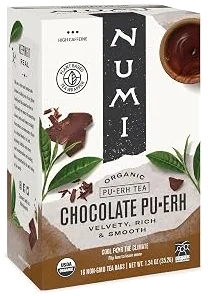
Herb Stop Chocolate Macaroon Pu-Erh Black Tea Review
Herb Stop Chocolate Macaroon Pu-Erh Black Tea is a loose tea sold as a dry blend, measured by the teaspoon. The serving size is 1 teaspoon. The label does not print how many servings a container holds, so check the package for the count. The Supplement Facts panel lists five ingredients: Premium Pu-Erh Black Tea, Cocoa, Carob, Coconut and Natural Flavors. Each one is shown with an amount of 0 per serving, and no other amounts are printed. The flavor name points to a chocolate and coconut dessert style, built on a pu-erh black tea base. The directions printed on the label are simple. Steep 1 teaspoon in 1 cup of freshly boiled water for 3 to 5 minutes. Add milk and sweetener if desired. The label also suggests trying this tea over ice, so it can be made as a cold drink as well as a hot one. If you are comparing teas on the shelf, the points to note are the loose form, the 1 teaspoon serving, the five listed ingredients and the steeping time of 3 to 5 minutes.
We don’t sell supplements. We help you make decisions and get the best price.
Lowest prices
We hold no current store prices for it yet: check the store.
Sold at: Herb Stop
Study, Trial or Testing Result Summary
Members Only52 human studies · 34 improved
This tea blend lists pu-erh tea and cocoa, but the amount of each is hidden in a blend, so we cannot tell whether a cup reaches the doses used in studies. No study tested pu-erh tea itself. Studies of related teas are mixed. Black tea extract lowered blood markers of oxidative damage and inflammation in people with type 2 diabetes [1]. Green tea lowered a urine marker of DNA damage in heavy smokers, but decaffeinated black tea did not [2][3]. Black tea did not lower DNA damage or inflammation markers in people with heart disease [4]. Smokers who drank green tea for a year had less oxidative damage in the blood [5]. For cocoa, a large two-year trial of a concentrated cocoa extract found no effect on five DNA-based biological aging clocks [6], though a blood inflammation marker fell slightly more than with placebo [7]. A review of 33 trials found cocoa lowered one oxidative stress marker but not most others [8]. High-flavanol cocoa drinks improved thinking speed in older adults [9][10]. These studies used concentrated extracts far beyond what a flavored tea is likely to provide. Animal and cell studies are never counted.
See all 52 studies →Hide the studies
- Across 33 controlled trials with 1379 adults, dark chocolate or cocoa lowered an oxidative stress marker (malondialdehyde) and raised nitric oxide, but had no significant effect on the other inflammation and oxidative stress markers.Effect of dark chocolate/ cocoa consumption on oxidative stress and inflammation in adults: A GRADE-assessed systematic …
- In a review of 48 studies (16 pooled), cocoa lowered two oxidative stress markers (malondialdehyde and 8-iso-prostaglandin F2α) but not the other markers measured.The effect of cocoa consumption on markers of oxidative stress: A systematic review and meta-analysis of interventional …
- In a review of 13 studies, cocoa flavanols reduced exercise-induced oxidative stress and improved mitochondrial efficiency in untrained people, but did not improve exercise performance in athletes.Cocoa Flavanol Supplementation and Exercise: A Systematic Review.
- In 958 older adults taking cocoa extract with 500 mg flavanols daily for 2 years, cocoa extract had no effect on any of five DNA methylation biological aging clocks compared with placebo (the multivitamin did slow two clocks slightly).Effects of daily multivitamin-multimineral and cocoa extract supplementation on epigenetic aging clocks in the COSMOS ra…
- In 598 older adults taking cocoa extract with 500 mg flavanols daily for 2 years, the inflammation marker hsCRP fell 8.4% more per year than with placebo, while interferon-γ rose and other markers did not change.Effects of 2-year cocoa extract supplementation on inflammaging biomarkers in older US adults: findings from the COcoa S…
- In about 500 older adults taking cocoa extract daily for 2 years, blood markers of nerve and brain damage (neurofilament light, tau fragment, amyloid-β) did not change differently from placebo.Effect of a multivitamin and cocoa flavanol extract on changes in neurofilament light, N-terminal tau fragment, and olig…
- In 214 people with heart disease risk factors, 6 g of cocoa daily for 2 weeks lowered global DNA methylation in white blood cells compared with controls.Cocoa Consumption Alters the Global DNA Methylation of Peripheral Leukocytes in Humans with Cardiovascular Disease Risk …
- In two trials of 134 middle-aged and older adults, a daily flavonoid-rich cocoa drink for up to 12 weeks improved blood markers of oxidative stress, inflammation, and metabolic health, plus physical performance and quality of life, compared with a no-flavonoid cocoa drink.High Flavonoid Cocoa Supplement Ameliorates Plasma Oxidative Stress and Inflammation Levels While Improving Mobility and…
- In 133 heavy smokers drinking 4 cups a day for 4 months, green tea lowered a urine marker of DNA damage, mainly in those with certain gene types, while decaffeinated black tea had no effect.Effect of a 4-month tea intervention on oxidative DNA damage among heavy smokers: role of glutathione S-transferase geno…
- In 120 healthy men aged 36-55, 200 or 400 mg daily of a pomegranate and cocoa seed extract blend for 8 weeks reduced aging male symptom scores, raised testosterone, and improved grip strength and perceived stress versus placebo.A proprietary blend of standardized Punica granatum fruit rind and Theobroma cocoa seed extracts mitigates aging males' …
- In 100 healthy young men, one week of daily cocoa powder and dark chocolate made blood fats more resistant to oxidation and lowered a harmful breakdown product compared with placebo.Cocoa ingestion protects plasma lipids in healthy males against ex vivo oxidative conditions: A randomized clinical tria…
- In 100 healthy older adults, eight weeks of daily dark chocolate with 410 mg flavanols did not change thinking test results, blood fats or blood sugar compared with chocolate containing 86 mg flavanols.The short-term effect of dark chocolate flavanols on cognition in older adults: A randomized controlled trial (FlaSeCo).
- In 92 people with HIV on treatment, 15 days of 65 g daily dark chocolate raised good cholesterol, but the abstract reports no clear improvement in the other inflammation or oxidative markers.Effect of Chocolate and Yerba Mate Phenolic Compounds on Inflammatory and Oxidative Biomarkers in HIV/AIDS Individuals.
- In 90 older adults with mild cognitive impairment, eight weeks of a cocoa drink with about 990 mg of flavanols daily sped up trail-making tests and improved verbal fluency compared with a low-flavanol drink (about 45 mg).Benefits in cognitive function, blood pressure, and insulin resistance through cocoa flavanol consumption in elderly sub…
- In 90 cognitively healthy elderly people, a daily high-flavanol cocoa drink (993 mg) for 8 weeks improved verbal fluency and trail-making speed, insulin resistance, blood pressure and lipid peroxidation compared with a low-flavanol drink.Cocoa flavanol consumption improves cognitive function, blood pressure control, and metabolic profile in elderly subject…
- In overweight and obese adults on controlled diets for four weeks, adding cocoa powder and dark chocolate, with or without almonds, did not change blood vessel health or oxidative stress markers, although almonds lowered cholesterol.Effects of Dark Chocolate and Almonds on Cardiovascular Risk Factors in Overweight and Obese Individuals: A Randomized C…
- In 46 people with type 2 diabetes, drinking up to 600 ml of black tea extract a day for 4 weeks lowered a blood marker of oxidative damage and a blood inflammation marker, and raised glutathione.Regular daily intake of black tea improves oxidative stress biomarkers and decreases serum C-reactive protein levels in …
- In 46 older palliative cancer patients, eating 55% cocoa chocolate for 4 weeks improved nutritional screening scores and daily functioning compared with a control group.Effect of chocolate on older patients with cancer in palliative care: a randomised controlled study.
- In 44 older adults with peripheral artery disease, a daily cocoa beverage with 75 mg epicatechin for 6 months improved 6-minute walk distance and calf muscle mitochondrial activity compared with placebo.Cocoa to Improve Walking Performance in Older People With Peripheral Artery Disease: The COCOA-PAD Pilot Randomized Clin…
- In 20 smokers, a single 40 gram serving of dark chocolate reduced oxidative stress and improved artery widening within two hours, while milk chocolate had no effect.NOX2-mediated arterial dysfunction in smokers: acute effect of dark chocolate.
- In 40 adults including 20 smokers, a single 40 g dose of dark chocolate reduced platelet oxidative stress and clotting-related markers in smokers only, with no effect in healthy nonsmokers and no effect from milk chocolate.Dark chocolate inhibits platelet isoprostanes via NOX2 down-regulation in smokers.
- In 32 healthy adults aged 60 to 70, four weeks of daily dark chocolate with 7 mg astaxanthin in a lycosomal formulation lowered markers of oxidative stress, more than either ingredient taken alone.Markers of Hypoxia and Oxidative Stress in Aging Volunteers Ingesting Lycosomal Formulation of Dark Chocolate Containing…
- In 24 elite football players, 30 days of dark chocolate increased antioxidant power, lowered oxidative stress, and reduced markers of exercise-related muscle damage compared with a control group.Dark Chocolate Intake Positively Modulates Redox Status and Markers of Muscular Damage in Elite Football Athletes: A Ran…
- In 22 heart transplant recipients, a 40 g dose of flavonoid-rich dark chocolate widened coronary arteries and improved blood vessel responsiveness two hours after eating, compared with control chocolate, along with reduced platelet adhesion and lower oxidative stress.Dark chocolate improves coronary vasomotion and reduces platelet reactivity.
- In 21 young healthy adults, a month of coffee or coffee-containing cocoa products did not change markers of DNA damage or lipid peroxidation compared with the other groups.Effect of Coffee and Cocoa-Based Confectionery Containing Coffee on Markers of DNA Damage and Lipid Peroxidation Product…
- In 20 untrained men, 500 mg a day of green tea extract for 15 days reduced a muscle damage marker after exercise but did not change soreness or oxidative damage markers.Effect of green tea extract supplementation on exercise-induced delayed onset muscle soreness and muscular damage.
- In 20 volunteers, a high-flavanol cocoa drink prevented the rise in a blood marker of fat oxidation (F2-isoprostanes) seen with a low-flavanol drink, and the difference was clearest when combined with exercise.Flavanol-rich cocoa drink lowers plasma F(2)-isoprostane concentrations in humans.
- In 20 obese adults at risk for insulin resistance, five days of cocoa drinks with more flavanols lowered oxidative stress and CRP inflammation markers, but did not change blood sugar or insulin.Effect of cocoa and green tea on biomarkers of glucose regulation, oxidative stress, inflammation and hemostasis in obes…
- In 20 adults with peripheral artery disease, 40 g of dark chocolate improved walking distance and time and lowered blood oxidative stress markers within two hours, while milk chocolate did not.Dark chocolate acutely improves walking autonomy in patients with peripheral artery disease.
- In 20 sedentary adults over three months, 20 grams of daily dark chocolate increased muscle antioxidant glutathione, reduced protein damage, and improved mitochondrial signals and aerobic capacity compared with placebo.Beneficial effects of dark chocolate on exercise capacity in sedentary subjects: underlying mechanisms. A double blind, …
- In 20 healthy nonsmokers, one week of 10 g daily cocoa with 800 mg flavonoids lowered inflammatory and oxidative stress markers compared with flavonoid-free cocoa, with the largest effects at the higher doses.Cocoa Consumption Decreases Oxidative Stress, Proinflammatory Mediators and Lipid Peroxidation in Healthy Subjects: A Ra…
- In 19 adults with fatty liver inflammation, two weeks of 40 g daily dark chocolate lowered blood markers of oxidative stress and liver cell damage compared with baseline, while milk chocolate made no change.Effects of dark chocolate on NOX-2-generated oxidative stress in patients with non-alcoholic steatohepatitis.
- In 19 people with fatty liver–related inflammation (NASH), eating 40 g of dark chocolate daily for 14 days improved blood vessel function and reduced oxidative stress, while milk chocolate did not.Effects of dark chocolate on endothelial function in patients with non-alcoholic steatohepatitis.
- In 14 healthy adults, a single 100 gram serving of polyphenol-rich cocoa ice cream lowered markers of oxidative stress and improved blood vessel function and exercise performance compared with a milk chocolate ice cream, measured within two hours.Natural antioxidant ice cream acutely reduces oxidative stress and improves vascular function and physical performance i…
- In 13 collegiate rugby players, 7 days of cocoa flavanols added to chocolate milk did not change oxidative stress markers or athletic performance after muscle damage.Cocoa flavanol effects on markers of oxidative stress and recovery after muscle damage protocol in elite rugby players.
- In 12 well-trained male cyclists, a single 900 mg dose of cocoa flavanols raised total antioxidant capacity during and after exercise, but did not change exercise-induced lipid damage, inflammation, nitric oxide production, or performance compared with placebo.Acute cocoa Flavanols intake has minimal effects on exercise-induced oxidative stress and nitric oxide production in hea…
- In a small study of healthy adults, a single 300 ml cup of green or black tea raised plasma antioxidant capacity within the hour, and adding milk blocked this effect.In vivo antioxidant effect of green and black tea in man.
- In heavy smokers drinking 4 cups of green tea a day, a urine marker of DNA damage fell significantly, especially in those with a certain gene type.Green tea consumption is associated with decreased DNA damage among GSTM1-positive smokers regardless of their hOGG1 gen…
- In healthy adults aged 50 to 69, a high cocoa flavanol diet for 3 months improved dentate gyrus brain function and memory test performance compared with a low flavanol diet.Enhancing dentate gyrus function with dietary flavanols improves cognition in older adults.
- In moderately photo-aged Korean women, a daily 320 mg cocoa flavanol beverage for 24 weeks reduced facial wrinkle roughness and improved skin elasticity compared with placebo.Cocoa Flavanol Supplementation Influences Skin Conditions of Photo-Aged Women: A 24-Week Double-Blind, Randomized, Contr…
- In people with peripheral artery disease, a cocoa flavanol drink increased the body's own antioxidant defenses in muscle, reduced signs of muscle damage, and raised levels of mitochondrial proteins compared with placebo.Cocoa flavanols, Nrf2 activation, and oxidative stress in peripheral artery disease: mechanistic findings in muscle base…
- In 66 people with heart disease, 900 ml of black tea a day for 4 weeks raised blood tea catechins but did not lower urine markers of DNA damage or fat oxidation, or the blood inflammation marker.Effects of black tea consumption on plasma catechins and markers of oxidative stress and inflammation in patients with c…
- In people on hemodialysis, dark chocolate (70% cocoa) given during sessions for two months lowered the inflammatory marker TNF-alpha compared with controls, but oxidative stress markers did not change.Dark chocolate (70% cocoa) attenuates the inflammatory marker TNF-α in patients on hemodialysis.
- In 39 young and older healthy adults, two weeks of cocoa flavanols at 450 mg twice daily lowered circulating particles released from damaged blood vessel lining cells, compared with a flavanol-free control period.Cocoa Flavanols Improve Endothelial Functional Integrity in Healthy Young and Elderly Subjects.
- In young soccer players, eating 105 g of flavanol-rich milk chocolate (about 168 mg flavanols) daily for 14 days lowered malondialdehyde, a marker of oxidative stress, compared with cocoa butter chocolate.Regular consumption of a flavanol-rich chocolate can improve oxidant stress in young soccer players.
- In 10 people with type 2 diabetes, eating high-polyphenol chocolate before a sugar drink protected blood vessel function and reduced an oxidative stress marker compared with low-polyphenol chocolate during a short blood sugar spike.High-polyphenol chocolate reduces endothelial dysfunction and oxidative stress during acute transient hyperglycaemia in …
- In 17 healthy volunteers, 50 mg of purified epicatechin taken daily for 5 days was safe and raised platelet mitochondrial enzyme activity and blood nitrite levels.Pharmacokinetic, partial pharmacodynamic and initial safety analysis of (-)-epicatechin in healthy volunteers.
- In 8 healthy adults, drinking a flavonoid-rich cocoa beverage made their red blood cells more resistant to free radical damage over the following eight hours.Influence of cocoa flavanols and procyanidins on free radical-induced human erythrocyte hemolysis.
- In about 1,669 people across two European cohorts, higher blood levels of theobromine, a compound from cocoa, were linked to slower epigenetic aging on GrimAge and telomere length estimates.Theobromine is associated with slower epigenetic ageing.
- In 889 premenopausal US women, green tea intake was not linked to urinary oxidative stress markers, and high black tea intake was linked to a higher marker that disappeared after adjusting for caffeine.Tea consumption and oxidative stress: a cross-sectional analysis of 889 premenopausal women from the Sister Study.
- In a retrospective study of 55 adults with mild cognitive impairment followed for one year, those who did not worsen cognitively were more likely to have taken cocoa polyphenols.The Efficacy of Cocoa Polyphenols in the Treatment of Mild Cognitive Impairment: A Retrospective Study.
- Over one year, South Indian smokers who drank 100 ml of green tea three times a day had lower blood lipid peroxidation and protein carbonyls than smokers who did not drink it.Anti-atherogenic role of green tea (Camellia sinensis) in South Indian smokers.
Review Totals and Summary
Members OnlyWhat buyers say
No written reviews read yet.
Biohacker Summary
Members Only9 of 10 recommend it
Black tea gets a mixed but mostly positive hearing from the panel, with seven of the ten speaking about it and none giving a firm dose. Those who recommend it do so for polyphenols and antioxidants, gut and metabolic benefits, lower blood sugar after meals, and DNA repair and stem cell support, and one drinks a strong cup in the morning before meditating. Two of them suggest it can stand in for coffee early in the day, one describing it as a milder version of coffee, and one adds it to meals so its polyphenols bind excess iron. Cautions come from two or three of them: it is high in oxalate, which can bind calcium and iron, it is high in tannins, and adding milk may blunt its helpful compounds; one also dislikes the tannic taste. Pu-erh tea, a fermented tea, came up with only three of them, one recommending it as a coffee alternative, one using it now and then, and one simply mentioning it.
See all 7 biohackers →Hide the biohackers
Dr. Eric Berg · Black Tea · neutral
- Notes that black tea helps decrease the risk of metabolic syndrome.
- Recommends adding black tea to the meal to provide more polyphenols that bind with excess iron, which is at the core of the clotting problem.
- Recommends naturally decaffeinated black tea for kidney health.
- States that black tea is very beneficial for building up antioxidant reserves.
- Advises against consuming black tea due to its high tannin content.
- Lists black tea as a top food high in oxalates, which are involved in kidney stones and gout.
- States that black tea can be high in oxalates, with the amount varying significantly based on steeping time.
- For hereditary hemochromatosis, Dr. Eric Berg recommends consuming black tea because it is higher in tannins, which can help bind iron.
- States that black tea can help reduce fat on the liver.
- Warns that consuming a lot of black tea through the day can lead to a B1 deficiency because it contains tannins that inhibit B1 absorption.
Thomas DeLauer · Pu-erh Tea · recommends
- States that Pu-erh tea, a fermented tea, would be a little bit better than coffee if consumed in the first 30 to 45 minutes after waking.
- States that black tea can be good and would be a little bit better than coffee if consumed in the first 30 to 45 minutes after waking.
- Recommends black tea, noting that oxidation turns catechins into theaflavins and thearubigins, which is beneficial.
- Explains that theaflavins from black tea's oxidation process are beneficial for the gut, and it has more caffeine than green tea but is still moderate.
- Notes that black tea, despite its high caffeine content, operates similarly to a watered-down version of coffee and is not comparable to green tea or yerba mate for fat loss.
- Recommends rotating green tea with black tea, noting that black tea extract almost doubled the lifespan of fruit flies on a high-fat diet and can neutralize free radicals from an oxidative diet.
- Recommends consuming a lot of black tea as a good source of terpenes.
- Recommends black tea during the morning eating period in early time restricted feeding because its tannins can slow carbohydrate digestion, controlling the glycemic impact and reducing the risk of insulin resistance and hyperglycemia.
- Recommends black tea as the third choice for caffeine around 7 AM.
- Suggests that drinking black tea along with carbohydrates could have an impact on slowing down digestion due to its tannin content.
- Is okay with consuming black tea during a fast because the one or two calories it provides have a net positive effect due to caffeine and polyphenols.
Andrew Huberman · Black Tea · uses
- Says he makes himself a cup of strong black tea in the morning, which takes about 15 minutes to drink before he meditates.
Dave Asprey · Black Tea · warns
- States that black tea is by far the highest in oxalate.
- Warns that black tea is high in oxalates, which bind to calcium and iron, causing a net loss of minerals, and advises against it for those trying to absorb iron.
- Dave Asprey states that black tea works well for most people and offers protection against stomach cancer, but warns that adding milk inactivates its anti-inflammatory compounds.
- Mentions Pu-erh Tea.
Siim Land · Black Tea · neutral
- Mentions black tea as a natural agent that can be used as a complementary ingredient in sunscreens, but notes it's insufficient as a primary sunscreen due to its low SPF.
- Siim Land's company looked at a host of supplements for obesity, including black tea extract, which they found to be very effective, especially when synergized with a mitochondrial cocktail.
- Recommends black tea as a food to hit the daily dose of polyphenols for longevity and anti-aging.
- Mentions black tea can be used as a complementary ingredient in sunscreens but is insufficient for a primary sunscreen routine.
- Recommends black tea for lowering postprandial glucose levels in both normal and pre-diabetic individuals.
- States that black tea is great to drink during the fasting window, although it has more caffeine.
- States that black tea is enriched with compounds that benefit heart, digestion, and stress levels.
Ben Greenfield · Black Tea · neutral
- States that healing leaves taste like black tea or green tea.
- Some foods like black tea can mobilize stem cells and help us regenerate. Black tea has more power than green tea.
- Found that Earl Grey black tea, which contains bergamot, was even more powerful in anti-angiogenic activity than green tea.
- Does not care for the tannic flavor of black tea.
- Timo occasionally switches to Pu-erh tea, loving different types and making butter teas out of it.
- Mentions organic fermented pu-erh tea and that he is a member of the olive oil club.
- Personally likes black tea best, not necessarily because it's the most healthy, but because it tastes good, and notes there is enough evidence that it is also healthy.
- Notes that some foods like black tea can mobilize stem cells and help with regeneration, according to the book "Eat To Beat Disease."
Dr. Mark Hyman · Black Tea · recommends
- Notes that a study in China found people with more Ruminococcus and interferon gamma (a natural virus killer) were drinking more black tea, linking it to a stronger antiviral response.
- States that black tea is rich in phytonutrients that can help with DNA repair and stem cell production.
- Notes a study in China found that people with more rheumatococcus and interferon gamma, natural virus killers, were drinking more green and black tea.
- Mentions a study in China that found people with more Ruminococcus and interferon gamma (a natural virus killer) were drinking more black tea.
- Notes that black tea can also double the number of stem cells, changing previous beliefs that it was not as good as green tea.
- States that black tea can also double the number of stem cells.
- States that black tea blocks DAO production, which will increase histamine intolerance.
- Notes that black tea can also double the number of stem cells, changing previous assumptions that only green tea was beneficial.
- Recommends black tea, noting that it can double the number of stem cells, changing previous beliefs about its efficacy compared to green tea.
- Notes that black tea can also double the number of stem cells, changing previous beliefs that only green tea was beneficial.
RAL Summary
Members OnlyTier 4 for Healthy Aging
Tier 4 fits: pu-erh tea itself was never studied, both ingredients are hidden in a blend, the best cocoa trial showed no effect on biological aging clocks [6], and there are no reviews.
- Emerging: not enough evidence to rank higher yet.
- Pu-Erh Tea: amount hidden in a blend
- Cocoa: amount hidden in a blend
Where the evidence disagrees: 8 of the 52 human studies found no effect.
More Details
Members OnlyBody systems · Combine with · Possible side effects
Body systems: Immune system, Cardiovascular system, Nervous system
Combine with: For Reverse Aging and Cellular & DNA Repair, members often pair tea-based polyphenols with nicotinamide riboside, since both feed into the same cellular energy and repair pathway. Quercetin is often paired with them because it works on the same pathway as other plant compounds. Vitamin C is often paired with them because it helps recycle other antioxidants after they are used up. Resveratrol is often paired with them because it acts on the same longevity pathway.
Possible side effects: No major side effects reported.
Supplement Facts
Premium Pu-Erh Black Tea 0 · Cocoa 0 · Carob 0
| Premium Pu-Erh Black Tea | 0 | † |
| Cocoa | 0 | † |
| Carob | 0 | † |
| Coconut | 0 | † |
| Natural Flavors | 0 | † |
Directions: Steep 1 teaspoon in 1 cup of freshly boiled water for 3-5 minutes. Add milk and sweetener if desired. Try this tea over ice.
Barcode (UPC) 000094896961 · Label source: Reverseagelab · Report a label change
Show entire label

More healthy aging products
Members OnlyThe highest ranked for the same goal
Read more
Our articles on this subject
- Healthy Aging Tips: A Science-Backed Guide to Living Better for LongerArticle · Mar 17, 2026
- NAD Anti-Aging Supplements: Benefits, Evidence, and How to ChooseArticle · Jun 15, 2026
Graded November 26, 2026 by the Reverse Age Lab evidence engine, from human studies, real reviews and our biohacker panel. How we grade. Is this medical advice? No. Rala organizes the published evidence; go over any change with your doctor, especially if you take meds.
Privacy policyConsumer health dataAffiliate disclosureTermsBrand and legal noticesDo Not Sell or Share My Personal InformationCookie settings