
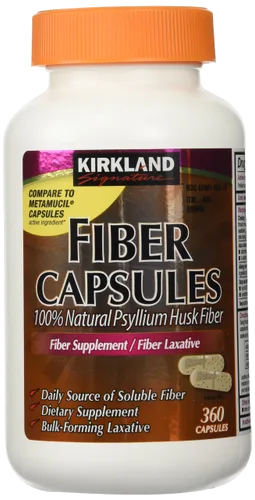
Kirkland Signature Fiber Capsules Review
Kirkland Signature Psyllium Fiber, 720 Capsules is a Costco Kirkland Signature fiber supplement sold under item number 598848. The page describes the product as 100% natural psyllium husk fiber and lists the package as two bottles with 360 capsules each, for 720 capsules in total. Per the page, this item is only available for purchase at a local Costco warehouse and is not available for purchase on Costco.com. The warehouse listed on the page is Norfolk, where the item is shown as in stock, with a warehouse price of $19.99. The page also notes Same-Day Delivery through Instacart with pricing that may vary, and an in-stock notice for the selected warehouse. A price update note is shown alongside the $19.99 price, and the page lists a unit price of $0.03 per capsule. The Specifications section identifies the brand as Kirkland Signature, the form as Capsule, and the type as Fiber. The features section marks the item as FSA Eligible. The page includes an FSA explanation stating that a Flexible Spending Account allows employees to set aside pre-tax funds for medical expenses, that the item is marked as FSA eligible to show it may be purchased with an FSA, and that individual employers determine which expenses their FSA programs cover. It also lists categories of over-the-counter medical supplies that may be reimbursable, including contact lens solution, diagnostic devices such as blood pressure and blood glucose monitors, durable medical equipment and goods, insulin, and meds. The page shows an overall rating of 3.4 from 24 reviews, with a rating snapshot that lists 14 five-star reviews, one two-star review, and nine one-star reviews. The page does not print a full ingredient panel, suggested serving size, or servings per day in the text provided, so those details should be checked on the physical bottle or at the warehouse. The product description on this page is brief and focuses on sourcing, pricing, and FSA eligibility rather than detailed usage instructions.
We don’t sell supplements. We help you make decisions and get the best price.
Lowest prices
We may earn a commission from some store links. How we choose.
Finding the lowest prices at the stores now. This takes a few seconds.
Products with nearly the same formula (Matched on the main ingredients)
Study, Trial or Testing Result Summary
Members Only53 human studies · 14 improved
4 of these 53 human studies gave the ingredient by drip, not by mouth.
This product is a fiber capsule, but no study of its main fiber ingredient was provided, so the research here covers only the small amounts of iron and potassium on the label. Iron does not help regularity and often causes constipation. Large reviews of women after childbirth found iron taken by mouth raised constipation compared with iron given into a vein [1][2]. In adults with kidney disease, ferric citrate caused more constipation than placebo [3][4]. In pregnant women, 80 milligrams of iron daily raised constipation and laxative use, while lower doses did not change digestive complaints [5]. A large study of veterans linked iron pills to more laxative use [6]. This product gives only about 1.2 milligrams of iron a day, far below the doses in these trials, so these findings say little about this capsule either way. For potassium, no study tested it for regularity; one study of a kidney salt-wasting disorder did not report whether constipation improved [7], and another did not give potassium at all [8]. Overall, the studies given neither show this fiber product works nor that it fails. Animal and cell studies are never counted.
See all 53 studies →Hide the studies
- In 33 trials of 4558 women after childbirth, oral iron probably raised the risk of constipation compared with intravenous iron (moderate-certainty evidence from 10 trials, 1798 women).Treatment for women with postpartum iron deficiency anaemia.
- In 15 trials of women with anaemia after childbirth, oral iron caused more constipation than intravenous iron (odds ratio for intravenous iron 0.08).Oral vs intravenous iron therapy for postpartum anemia: a systematic review and meta-analysis.
- In 594 people with iron deficiency anaemia, daily and alternate-day oral iron raised haemoglobin equally, but alternate-day dosing caused fewer side effects such as altered bowel habits.Daily versus alternate day oral iron therapy in iron deficiency anemia: a systematic review.
- In 11 studies of children with iron deficiency anaemia, constipation was a reported side effect of iron, and was significantly less common in groups given lactoferrin.Lactoferrin as treatment for iron-deficiency anemia in children: a systematic review.
- In 1,095 people with iron deficiency, 60 days of iron protein succinylate (120 mg iron daily) caused constipation in 19 people, versus 23 with controlled-release ferrous sulphate (105 mg iron daily); neither treatment was tested as a constipation relief.Iron protein succinylate in the treatment of iron deficiency: controlled, double-blind, multicenter clinical trial on ov…
- In 502 children with iron deficiency given iron for 60 days, the protein-bound iron caused fewer side effects than the comparison iron (6 vs 14 reports of constipation).Controlled, double-blind, multicenter clinical trial of iron protein succinylate in the treatment of iron deficiency in …
- In 493 toddlers followed from 9 to 18 months, iron-fortified formula did not change rates of constipation, diarrhea or infections compared with cow's milk or low-iron formula.Clinical safety of iron-fortified formulas.
- In 482 pregnant women taking low-dose iron from mid-pregnancy to delivery, 20-60 mg of iron as fumarate did not change digestive complaints, 80 mg raised constipation and laxative use, and ferrous bisglycinate caused the fewest complaints.Low-Dose Prophylactic Oral Iron Supplementation (Ferrous Fumarate, Ferrous Bisglycinate, and Ferrous Sulphate) in Pregna…
- In pregnant women taking 20 to 80 mg of ferrous iron (as fumarate) daily from about 18 weeks of pregnancy onward, gastrointestinal symptoms including constipation were no more frequent and did not depend on the dose.Side effects of oral iron prophylaxis in pregnancy--myth or reality?
- In 378 adults with chronic kidney disease taking ferric citrate for up to 16 weeks, constipation was more common than with placebo (18.4% vs 10.1%).Safety and efficacy of ferric citrate in patients with nondialysis-dependent chronic kidney disease.
- In 370 pregnant women, taking iron twice weekly caused significantly less constipation, nausea and vomiting than taking it daily.Impact of twice weekly versus daily iron supplementation during pregnancy on maternal and fetal haematological indices: …
- In 278 one-year-old infants given ferrous sulfate or placebo for 3 months, iron caused no more side effects than placebo, and constipation was reported less often with iron (1%) than placebo (9%).Lack of adverse side effects of oral ferrous sulfate therapy in 1-year-old infants.
- In 232 adults with chronic kidney disease and iron deficiency anemia, 16 weeks of ferric citrate raised hemoglobin, but constipation was reported more often than with placebo (18.8% vs 12.9%).Effects of Ferric Citrate in Patients with Nondialysis-Dependent CKD and Iron Deficiency Anemia.
- In 230 hemodialysis patients over 12 weeks, ferric citrate caused less constipation than sevelamer but more diarrhea.A randomized trial of JTT-751 versus sevelamer hydrochloride in patients on hemodialysis.
- In two studies of 169 healthy infants, the formula without palm olein produced softer stools and more frequent stooling than the palm olein formula, which may ease parents' concerns about constipation with iron-fortified formula.Formula tolerance in postbreastfed and exclusively formula-fed infants.
- In a randomized study of 150 pregnant women with iron deficiency anemia treated for 12 weeks, constipation and abdominal colicky pain were significantly less common with the amino acid chelated iron than with ferrous fumarate.Amino acid chelated iron versus an iron salt in the treatment of iron deficiency anemia with pregnancy: A randomized con…
- In a randomized crossover trial of 135 pregnant women, a 35 mg iron prenatal supplement caused about 30% less constipation than a 60 mg iron supplement.A randomized cross over trial of tolerability and compliance of a micronutrient supplement with low iron separated from …
- In 130 pregnant women with iron deficiency anemia, two iron tablets over 30 days caused similar constipation rates (about 29%) and similar side effects, with no difference between them.Comparison between Iberet Folic® and Zincofer® in treatment of iron deficiency anaemia in pregnancy.
- In 120 pregnant women over 6 months, 24 mg of iron as ferrous bisglycinate with folinic acid caused significantly fewer reports of constipation, nausea and bloating than 66 mg of ferrous fumarate.Efficacy and Safety of Ferrous Bisglycinate and Folinic Acid in the Control of Iron Deficiency in Pregnant Women: A Rand…
- In postpartum women taking 600 mg of ferrous fumarate daily for 4 weeks, about 75% reported at least one side effect, and constipation from the iron was linked to stopping the iron, with adding folic acid making no difference.A randomized controlled trial examining the addition of folic acid to iron supplementation in the treatment of postpartu…
- In a randomized trial of 105 infants from 4 to 12 months, iron gluconate caused constipation and other side effects more often than iron polymaltose, at 47% versus 25%.Iron polymaltose versus ferrous gluconate in the prevention of iron deficiency anemia of infancy.
- In 103 pregnant women, four iron supplements were compared, and constipation and vomiting were more frequent with the lower-dose iron group.A comparative trial of haematinic supplements in pregnancy.
- In 100 pregnant women with iron deficiency anemia, 30 days of bovine lactoferrin (100 mg twice daily) raised iron levels as well as ferrous sulfate and caused significantly less constipation.Efficacy and tolerability of oral bovine lactoferrin compared to ferrous sulfate in pregnant women with iron deficiency …
- In 100 African American dialysis patients followed for 52 weeks, the iron-based binder sucroferric oxyhydroxide caused diarrhea and discolored stools, while sevelamer caused constipation, so bowel regularity was not improved by iron.Long-term efficacy and safety of sucroferric oxyhydroxide in African American dialysis patients.
- In 100 people having hip or knee replacement surgery, oral ferrous sulfate caused nausea, diarrhea or constipation in 52% of people versus 2% with intravenous iron.Preoperative Epoetin-α with Intravenous or Oral Iron for Major Orthopedic Surgery: A Randomized Controlled Trial.
- In 84 peritoneal dialysis patients followed for up to 52 weeks, the iron-based binder sucroferric oxyhydroxide caused diarrhea and discolored stools, while sevelamer caused constipation, so iron did not clearly improve regularity.One-year efficacy and safety of the iron-based phosphate binder sucroferric oxyhydroxide in patients on peritoneal dialy…
- In 75 people with kidney disease and iron deficiency anemia, taking ferrous sulfate 325 mg three times daily for 6 weeks caused more constipation than intravenous iron did.A randomized controlled trial of oral versus intravenous iron in chronic kidney disease.
- In children with cerebral palsy and iron deficiency anemia, constipation was more likely with 4 weeks of iron hydroxide polymaltose complex than with lactoferrin, which also raised blood iron measures more effectively.Lactoferrin versus iron hydroxide polymaltose complex for the treatment of iron deficiency anemia in children with cereb…
- In 64 gynecologic cancer patients on platinum chemotherapy, 200 mg of iron given intravenously after each infusion caused much less constipation than 200 mg three times daily of oral ferrous fumarate (3.1% versus 40.6%).Prevention of blood transfusion with intravenous iron in gynecologic cancer patients receiving platinum-based chemothera…
- In postpartum women, two intravenous iron infusions of 500 mg each caused fewer gastrointestinal side effects, including constipation, than 210 mg of oral ferrous sulfate daily over 4 weeks.Low-dose ferric carboxymaltose vs. oral iron for improving hemoglobin levels in postpartum East Asian women: A randomize…
- In a randomized crossover trial of 38 women, 50 mg chelated iron showed a non-significant trend toward less constipation than ferrous sulfate over two weeks per product.Tolerability of iron: a comparison of bis-glycino iron II and ferrous sulfate.
- In preterm infants given 7.5 mg of elemental iron daily for 14 weeks, a trivalent polysaccharide iron complex and ferrous sulphate were both well tolerated, with constipation slightly more common on ferrous sulphate but not significantly so.Iron supplementation in preterm infants: a study comparing the effect and tolerance of a Fe2+ and a nonionic FeIII compo…
- In a placebo-controlled trial of pregnant women, 60 mg of elemental iron daily did not change the rate of constipation compared with placebo.Prevention of iron deficiency anemia in adolescent and adult pregnancies.
- In a double-blind study of regular blood donors, the heme plus non-heme iron supplement caused significantly less constipation than a 60 mg non-heme iron supplement, while restoring iron status equally well.Side effects of iron supplements in blood donors: superior tolerance of heme iron.
- In pregnant women taking 100 mg of iron as ferrous gluconate daily, 33% reported stool softening, and adding magnesium aspartate raised that figure to 50%, which is useful because pregnancy often brings constipation.Therapeutic availability of iron administered orally as the ferrous gluconate together with magnesium-L-aspartate hydroc…
- In 285 healthy 1-month-old infants fed for about 2 weeks, formulas with 12 mg/L iron produced more green stools than low-iron formulas, and stool frequency and consistency were not shown to improve regularity by iron.Effect of infant formula on stool characteristics of young infants.
- In 43 people with celiac disease and anemia, 30 mg of daily sucrosomial iron for about 90 days caused less constipation and abdominal discomfort than standard iron sulfate.Sucrosomial Iron Supplementation in Anemic Patients with Celiac Disease Not Tolerating Oral Ferrous Sulfate: A Prospecti…
- In 40 pregnant or postpartum women with iron-deficiency anemia treated for 30 days, the liquid ferrous gluconate group reported no side effects, including constipation, while the solid iron groups had gastrointestinal side effects and dropouts.[Effectiveness and tolerability of oral liquid ferrous gluconate in iron-deficiency anemia in pregnancy and in the immed…
- In a 12-week open-label trial of 217 people on dialysis who completed the study, ferric citrate caused constipation in 1.7% of people versus 7.4% taking sevelamer carbonate, though it more often caused diarrhea and dark stools.Efficacy and Safety of Ferric Citrate on Hyperphosphatemia among Chinese Patients with Chronic Kidney Disease Undergoing…
- In 80 children aged one month to 6 years given Actiferol Fe, parents reported constipation in 10% and harder stools in 20%, and most children tolerated it well.[Tolerability of iron preparation Actiferol Fe® in children treated for iron deficiency anemia].
- In 56 peritoneal dialysis patients taking 1.5 to 6 g per day of ferric citrate for 12 weeks, constipation and diarrhea were the most common side effects, though mostly mild.JTT-751 for treatment of patients with hyperphosphatemia on peritoneal dialysis.
- In 55 hemodialysis patients taking about 4.5 to 6 grams a day of ferric citrate as a phosphate binder for 4 weeks, 15% reported constipation, and 69% reported stool discoloration, so this iron compound did not improve regularity.The safety and tolerability of ferric citrate as a phosphate binder in dialysis patients.
- In 50 pregnant women taking the Bio-fer iron supplement for one month, the number reporting constipation fell from 17 to 8, a statistically significant change.[Efficacy and tolerance of a dietary iron supplement (Bio-fer) in pregnancy anemia].
- In 50 people with mild-to-moderate COVID-19 taking a supplement containing sodium ferrous citrate for 14 days, about 23% had gastrointestinal side effects including constipation, decreased appetite, and vomiting.Safety and efficacy of 5-aminolevulinic acid phosphate/iron in mild-to-moderate coronavirus disease 2019: A randomized e…
- In 33 anemic rural patients given 100 mg elemental iron twice daily at home for 90 days, occasional constipation was reported by 3 patients, and one patient stopped because of vomiting.Feasibility of "directly observed home-based twice-daily iron therapy" (DOHBIT) for management of anemia in rural patien…
- In 13 hospitalized heart failure patients with iron deficiency, intravenous iron (about 1269 mg total over 3 to 4 days) was given without a control group, and constipation was reported among a few minor side effects.Effects of an accelerated intravenous iron regimen in hospitalized patients with advanced heart failure and iron deficie…
- In a small single-group pilot of 10 homeless women taking alternate iron supplements for three months, constipation was reported only twice by two women across about 12 visits each, so it was rare.Side effects of alternative iron supplementation: a pilot study.
- In a cohort of over 100,000 US veterans nearing dialysis, taking oral iron supplements was associated with higher laxative use, a sign of constipation burden.Laxative use in patients with advanced chronic kidney disease transitioning to dialysis.
- In a review of 500 children with developmental delay, about 22% had constipation, but the study did not test iron's effect on bowel regularity.Growth and nutritional risk in children with developmental delay.
- Over the second six months of life, infants given whole cow milk or iron-fortified formula had similar rates of constipation, although the cow milk group had lower iron stores.Consequences of starting whole cow milk at 6 months of age.
- In a retrospective audit of 150 pregnant women in regional New South Wales, constipation was a common side effect of oral iron, though dosing and compliance were poorly documented.Retrospective audit compares screening and treatment of pregnancy-related anaemia in regional New South Wales with Austr…
- In 42 Chinese patients with a genetic kidney salt-wasting disorder, constipation was a common symptom, and potassium chloride with indomethacin corrected low blood potassium, but the study does not report whether constipation improved with potassium.Thirteen novel CLCNKB variants and genotype/phenotype association study in 42 Chinese patients with Bartter syndrome typ…
- In a small study of 19 children with alcohol-related prenatal exposure, constipation was common (about 26%), but potassium was not given or tested as a treatment, so this study does not show whether potassium helps regularity.Inappropriate feeding behaviors and dietary intakes in children with fetal alcohol spectrum disorder or probable prenata…
Review Totals and Summary
Members Only7,503 reviews · 93% positive
Across the stores that sell it, Kirkland Signature Fiber Capsules carries about 7,430 ratings, and feedback leans positive, with roughly two in three star ratings at 4 or 5. Buyers like the convenience and price, while a vocal minority object to an ingredient change, and some Walmart-sold listings had a shipping problem. I left out reviews of the powder and other forms and cover the capsules only. **What buyers say it did for them:** Most praise is for simple, reliable fiber. One buyer says it is an "easy way to add fiber," and another reports being "very happy with the results." The eBay page adds that buyers say it works as well as Metamucil or better, and one says it helps with digestion and cholesterol. One recent eBay buyer, a week in, could not yet tell how well it worked. **What they complain about:** The biggest complaint is the ingredient list. One reviewer says it is "No longer pure" and cites emulsifiers, including polysorbate-80. Another asks Costco to "bring back the previous formula." Others dispute this: one says the company "made changes taking it back" to psyllium husk and gelatin only, and another buyer reports seeing only those two ingredients. The reviews conflict, so check the label on the package you receive. One reviewer links the product to a histamine sensitivity with swelling in the hands, and says similar products from other brands caused no trouble. That is a single report. On Walmart, several buyers of a two-pack received only one container: "only one container received instead of 2." One said customer service was helpful, and another got a refund. Availability is a smaller issue, as one Costco reviewer could not find the capsules in store after shelves were reduced. **Taste, smell, pill size or form:** The capsule form is the main draw. Reviewers switched from mixing powder because capsules are "much more convenient" and easier to take daily. The eBay page adds that one buyer dislikes chewing or drinking liquid fiber. One reviewer who bought the powder by mistake called it "very time consuming." The store summaries and reviews offer no detail on capsule size or smell. One Walmart reviewer mentions a sugar-free orange taste, which seems to refer to the powder. A reviewer who takes them notes you "must take with water or you can choke." **Value for money:** Price is a consistent strength. Reviewers call it "such a good deal compared to the name brand" and say Walmart/Kirkland "had the best price" against other store brands. The Costco summary describes the price as good and quality high. On eBay, buyers praise value for the quantity, say the capsules last a long time, and one finds more product in the bottle than Metamucil. **Who it seems to suit and who it did not:** It suits people who want daily fiber without mixing powder, and price-conscious buyers moving off name brands. Some take one capsule three times a day, others two or three before meals, and one takes five daily. It suited people less if they want to avoid additives such as emulsifiers, if they are sensitive to the product (as the histamine reviewer was), or if they order a multipack from the Walmart third-party seller and risk getting one container.
Biohacker Summary
Members Only10 of 10 recommend it
On iron, the main ingredient, the panel leans toward testing first and supplementing only when levels are low. Four of the ten recommend it in their latest position, mainly for women who are deficient, for muscle, brain and hair health, and for thyroid function, while one takes it and finds less soreness in training. One panelist took 10 milligrams of heme iron and eventually stopped after years of low iron that no form of supplement fixed. Several warn against taking it blindly: one says too much iron promotes oxidative stress and inflammation, another says it should not be taken aggressively without proper testing, and another says low hemoglobin does not always mean low iron. Potassium is a smaller ingredient in this product, and the panel mostly talks about it as an electrolyte for blood pressure, muscle and heart function, with several using electrolyte drinks that contain it.
See all 10 biohackers →Hide the biohackers
Dr. Eric Berg · Iron · neutral
- Identifies iron as the Achilles' heel of cancer, as it is needed for its DNA to replicate.
- States that people need more potassium than any other mineral, yet most people aren’t getting enough.
- Explains that potassium is essential for peristalsis, the pumping action through the colon, and without it, things can sit there, leading to constipation.
- Explains that the normal requirements for potassium are 4,700 mg every single day, and that very few people get half of that amount. They describe potassium's role in the sodium potassium pump, which is essential for cellular electricity, muscle contraction, and heart function. Deficiency can lead to tiredness, muscle cramps, heart palpitations, or rising blood pressure.
- Recommends increasing potassium to restore balance and support healthy blood pressure.
- States that potassium is the most important electrolyte and that most people are not getting enough of it, needing around 4,700 mg daily, or even more, to avoid issues like fatigue, muscle cramps, heart palpitations, high blood pressure, and fluid retention.
- Dr. Eric Berg states that potassium is essential for health, supporting healthy muscles, nerves, and heart function, but warns that getting too much, especially from supplements, can be dangerous.
- Dr. Eric Berg states that most people are getting nowhere near enough potassium to balance the amount of sodium they’re already eating, implying a recommendation for increased potassium intake.
- Explains that potassium relaxes blood vessels, keeps elasticity in arteries, lowers adrenaline, supports the sympathetic nervous system, protects the endothelial layer of arteries, increases nitric oxide, and keeps insulin receptors sensitive.
- Was very successful in practice using potassium for hypertension, noting that bodies need 4700 mg of potassium every single day.
- States that low potassium can lead to constipation because potassium controls the smooth muscles of the body, affecting the contraction and relaxation of muscles in the colon.
- Mentions that grass-fed liver has heme iron, the most bioavailable form of iron that prevents anemia.
- Dr. Berg warns that too much iron can be damaging to the body and advises focusing on food sources to avoid overconsumption.
- Warns that too much iron, especially the ferrous sulfate or fumarate type found in many supplements, is corrosive and oxidizing, can mess with the liver, and create inflammation, noting that males have no natural way to excrete excess iron.
Dr. Mark Hyman · Iron · neutral
- Mentions iron as an existing biomarker that plays a role in mental health, which Function Health includes in their measurements.
- Warns that potassium bromate, a dough conditioner banned in the EU, UK, and Canada, is still allowed in U.S. bread.
- Notes that a woman patient had very low iron.
- States that they get the whole picture when it comes to iron, looking at ferritin, iron reserves, iron in the blood, iron saturation, and iron binding capacity to spot problems before full-blown anemia.
- States that potassium plays a critical role in nerve signaling and muscle contraction, especially in the heart, and low levels can lead to dangerous irregular heart rhythms.
- Notes that meds flush out potassium.
- States that with potassium, water can fully cross the cell membrane and get inside where it's needed for intracellular hydration.
- Mentions iron as an example of a common nutritional deficiency.
- Notes that many Americans are deficient in iron, which affects mood and brain function.
- Recommends testing Iron as a biomarker before training for fitness.
- Recommends using targeted electrolyte support, advising to look for products with meaningful amounts of sodium, potassium, and magnesium, low sugar content, and avoidance of artificial colors, flavors, and sweeteners.
- Warns that potassium bromate, a chemical dough conditioner, has been linked to cancer, oxidative stress, DNA damage, and reproductive harm in animal studies.
- States that low iron, specifically a ferritin level less than 45, is a big hidden cause of insomnia, affecting up to half the population.
- Warns that electrolyte drinks, while marketed for hydration, are loaded with high-glycemic sugars, synthetic potassium salts, and artificial dyes that can trigger insulin resistance, blood sugar crashes, and inflammation.
Siim Land · Iron · neutral
- Mentions that iron is a mineral necessary for making collagen.
- Lists potatoes and fruit as sources of Potassium.
- States that excess iron promotes oxidative stress and inflammation, which increases heart disease risk.
- Notes that bananas have potassium but there are at least 8 other foods with more potassium than bananas.
- States that potassium is the most abundant intracellular cation that helps to maintain intracellular fluid volume and that without it, one greatly increases the risk of hypertension, cardiovascular disease, diabetes, and stroke.
- Notes that iron deficiency is found in children with premature graying of hair and that some people get gray hair due to iron deficiency.
- Recommends ensuring sufficient iron intake, especially during pregnancy and early life, to prevent mental developmental and cognitive issues.
- States his iron level is 103 micrograms per deciliter, which he considers a good result, and advises that men should aim for lower iron levels to reduce the risk of heart disease and aging.
- Places iron in the 'junk tier', warning that high iron levels are associated with heart disease, mortality, and liver disease, and advises caution with supplementation, especially for men with high iron.
- Warns that high iron levels are associated with increased risk of mortality and reduced lifespan, and that iron in excess is bad for maximum longevity. He states that iron levels slightly on the lower end, around 60 to 90 micrograms per deciliter, are associated with the lowest mortality risk, and that iron below 45 and above 145 micrograms per deciliter is associated with increased risk of mortality.
- Warns that very high iron levels can cause damage to the endothelium and increase the risk of heart disease, especially in men who accumulate iron more easily.
- Warns that too much iron can damage blood vessels, though people with low iron status are safe.
- States that potassium lowers blood pressure.
- Theorizes that Brian's lower iron status and hemoglobin status, possibly due to his plant-based diet and lack of iron supplementation, limits his V2 max.
Thomas DeLauer · Iron · neutral
- Compares iron content in spinach (2.7mg) and beef (2.6mg), but emphasizes that beef's heme iron absorbs at about 25%, while spinach's non-heme iron absorbs at 2-8%.
- Uses Element's cans which contain 100 milligram potassium, finding that electrolytes help his workout performance.
- Uses Element's 100 mg potassium cans first thing in the morning to prime his day and help with workout performance.
- Recommends Element's ready-to-drink sparkling electrolyte drinks as a low or zero-calorie soda replacement that provides 1,000 milligrams of sodium, 200 milligrams of potassium, and 60 milligrams of magnesium.
- Uses Element Electrolytes for about eight years, noting they contain 1000 mg sodium, 200 mg potassium, and 60 mg magnesium, and help curb appetite without adding many calories.
- Recommends iron from meat, specifically red meat and beef liver, stating that it is a crucial part of the mechanistic triad for thyroid hormone function and is iron-dependent for iodine incorporation into thyroid hormone.
- Personally drinks Element's pink lemonade or sparkling drinks, which contain 1,000 mg sodium, 200 potassium, and 60 magnesium, to hydrate and feel satiated, curbing hunger without stopping the ghrelin response.
- Sometimes pivots to straight potassium supplementation when generally depleted.
- Uses Element ready-to-drinks as a perfect electrolyte blend to start his day, noting that they contain 500 mg of sodium, 100 mg of potassium, and 30 mg of magnesium, and are slightly carbonated.
- Mentions potassium as an important electrolyte but suggests there's another layer to performance beyond just focusing on it.
- States that potassium is important for hydration, skin repair, and fluid balance in the skin, and recommends countering sodium intake with potassium.
- Sips on LMNT Recharge cans throughout the day, especially when fasting, noting they are a new smaller can with 500 mg sodium, 100 mg potassium, and 30 mg magnesium.
- Notes that iron is essential for delivering oxygen to muscles and the brain, making it an important cofactor for signals to reach their targets.
- Recommends assessing iron along with selenium and iodine for optimal thyroid function, suggesting red meat as a source of iron.
Andrew Huberman · Iron · recommends
- States that Iron is one of the critical nutrients with the best evidence for cognitive function and reducing the risk of dementia.
- Uses Element, an electrolyte drink with sodium, magnesium, and potassium in correct ratios and no sugar, to ensure adequate hydration and electrolytes, especially when starting days fast or during physical exercise.
- Uses Element, which contains potassium in the correct ratios, to ensure proper hydration and electrolyte intake for brain and body function.
- Mentions potassium as an electrolyte.
- Uses Element, an electrolyte drink with sodium, magnesium, and potassium in correct ratios and no sugar, to ensure adequate hydration and electrolytes, drinking it first thing in the morning and during physical exercise.
- Uses Element, an electrolyte drink with sodium, magnesium, and potassium in correct ratios and no sugar, to ensure he is hydrated and has sufficient electrolytes. He drinks it first thing in the morning and during physical exercise, especially on hot days.
- Uses Element, an electrolyte drink with sodium, magnesium, and potassium but no sugar, to ensure adequate hydration and electrolytes, especially when waking up and during exercise.
- Warns that excess iron will increase the number of senescent cells in the body, which accumulate as people get older and cause inflammation and cancer. He notes that people who are healthy and have a fairly vegetarian diet often have slightly low iron levels but super amounts of energy.
- Uses LMNT, an electrolyte drink with sodium, magnesium, and potassium in correct ratios and no sugar, to ensure adequate hydration and electrolytes for brain and body function, especially when starting his day fast or during physical exercise.
- Uses Element, which contains potassium, for proper hydration and electrolyte balance.
- Ensures adequate intake of sodium, magnesium, and potassium, which are vital electrolytes for the functioning of all body cells, especially neurons, by drinking Element.
- Uses Element, an electrolyte drink with sodium, magnesium, and potassium, to ensure adequate hydration and electrolytes for optimal brain and body function, especially when waking up and during physical exercise.
- Notes that about 50% of the population is iron deficient.
- Mentions that the podcast will review the role of iron in treating depression.
Ben Greenfield · Iron · recommends
- Recommends testing for and replenishing iron if levels are low, as it can affect the ability to maintain or preserve muscle, especially for those on GLP-1s.
- Says he is drinking LMNT, which contains sodium, potassium, and magnesium, and states that he actually drinks this stuff.
- Recommends Celtic Sea Salt's new electrolyte drink 'Hydrate' for replenishing electrolytes and trace minerals lost through sweat, noting it contains 70 naturally occurring trace minerals, magnesium, taurine, and potassium, with no added sugar, artificial colors, or synthetic ingredients.
- Notes that one can eat iron-rich foods or supplement with iron, but still feel exhausted if iron is not the missing piece, emphasizing that focusing on a single mineral in isolation can support a number on a lab test rather than the system itself.
- Mentions iron as a common deficiency.
- Recommends a nutritious diet including iron, as it is critical for brain development.
- Notes that the guidelines mention iron supplementation for infancy and early childhood.
- Started thinking about getting more heme-based iron in his diet after a podcast about reasons people feel fatigue.
- Warns that modern society has flipped the narrative on iron intake, leading people to consume excessive amounts (20-50 mg) through an iron-fortified diet, which the body cannot assimilate, leading to storage in tissues and disrupting iron physiology, contributing to aging.
- Recommends adding potassium sulfate to a Morasco cold plunge.
- Notes that some people need to supplement with iron, recommending iron biscinate as a form that doesn't irritate the gut.
- Mentions that potassium can be helpful for blood pressure but also risky for people with kidney disease or other conditions prone to elevated potassium levels, advising consultation with a physician.
- Explains that 10X can pinpoint genetic variations that predispose some people to absorbing too much iron and will adjust the iron content in their supplement, potentially reducing or removing it entirely.
- Covers iron as a key supplement for kids.
Bryan Johnson · Iron · stopped
- Has had low iron for 11 years and despite eating meat and trying all forms of iron supplementation at different times and sequences, none of it worked to raise his iron or ferritin levels.
- Had low iron for 11 years, with ferritin averaging 38 ng/mL, and has finally boosted it back to healthy levels.
- Takes 10 milligrams of heme iron to get his iron levels up, as they are borderline.
- Recommends adequate Iron for hair health, noting it is in the Blueprint stack.
- Recommends supplementing with iron for brain health for both the mother and the baby during pregnancy.
- Recommends potassium during the luteal phase to help reduce water retention and bloating.
Dave Asprey · Iron · warns
- Warns that if a doctor diagnoses anemia, one should not assume they just need more iron, as low hemoglobin doesn't always mean low iron and the issue can sometimes be how well the body is using iron.
- Notes that when energy intake is too low for training demand, nutrient intake often falls short, especially for iron, which is associated with impaired recovery.
- Recommends ensuring iron levels are good as it is a cofactor that can help thyroid function, especially with conversion issues.
- Recommends having more potassium during a fast to increase mineral intake.
- States that people who are salt-sensitive hypertensives usually need more potassium.
- Explains why electrolytes, especially sodium, potassium, and magnesium, are foundational for recovery.
- States that potassium is a really important electrolyte for everyone, but the demand is significantly higher for people with nervous system, immune system, and endocrine system dysregulation.
- Recommends using potassium citrate, if tolerated, to raise urinary citrate and block crystal formation.
- Notes that the potassium in the Vineia blood flow hydration product is from coconut water.
- Mentions that atrial fibrillation has to do with mineral status, including potassium.
- Egg yolks, particularly raw egg yolks, fatty cuts of meat, choline sources like that, making sure there's enough iron and a lot of the micro minerals, trace minerals, things like that. Those would be really important for bone marrow because mineral deficiencies are going to block that at the start.
- Takes a lot of potassium.
- Recommends lots of potassium citrate to help remove oxalates from the body.
- Dave Asprey, who is salt-sensitive, balances out sodium intake with potassium, taking potassium citrate capsules from Designs for Health and carrying them all the time.
Dr. Rhonda Patrick · Iron · uses
- Recently found out he needed to get on an iron supplement and noticed he gets less sore in his training after taking it.
- Recommends getting enough potassium, noting that most people get too much sodium and not enough potassium.
- Advises that menstruating women should ensure they are getting enough iron.
- Warns that iron is not an innocuous supplement and should not be taken aggressively without proper testing, as it can be complicated and has significant downsides if levels are not understood.
- States that maintaining a high potassium intake is important for hypertension.
- Dr. Patrick explains that breast milk is incredibly low in iron, and by six months, infants can develop iron deficiency anemia, so pediatricians recommend introducing iron-rich complementary foods at that time.
- Rhonda discusses Dr. Lithgow's work on how excess dietary iron affects protein homeostasis in worms, noting that increased iron levels in the diet accelerated aging and the accumulation of insoluble proteins.
- Recommends getting enough potassium from veggies, bananas, and fruit because the body cares about the sodium-potassium ratio.
- Dr. Patrick states that her smoothie, containing avocado and banana, has around 5,800 milligrams of potassium, which meets the adequate intake requirement for maintaining normal blood pressure and decreasing the risk of kidney stones.
- Dr. Patrick takes some iron during menstruation.
- Increased iron levels in the brain worsen cognitive test performance by as much as 10% in older adults, a phenomenon linked to brain atrophy and decline in memory and attention.
- Iron plays a central role in health across the lifespan. It forms the core of hemoglobin, the molecule in red blood cells...
- The requirement for iron is 1.8 times higher for vegetarians.
- The findings highlight the importance of proper nutrition during development and suggest that iron supplementation may be beneficial, especially during adolescence.
Peter Attia · Iron · recommends
- Recommends iron supplements for women of reproductive age who are iron deficient.
- States there is some evidence that increasing dietary potassium through potassium-rich foods like bananas and potatoes, rather than supplements, can lower blood pressure.
- Notes that deficiencies in certain vitamins and minerals, such as iron, can be a cause of hair loss in women.
- Delves into the crucial yet often overlooked topic of iron and iron deficiency.
- Explains that humans consume about 10 to 20 milligrams of iron per day, absorbing roughly 10% of that, which is 1 to 2 milligrams per day, perfectly offsetting the 1 to 2 milligrams lost daily.
- Peter emphasizes the importance of consuming an adequate amount of iron daily to prevent deficiency.
- Notes that evolutionary ancestors consumed much more potassium than modern humans and suggests adding it back to the diet, ideally through whole foods.
- Speculates that lower iron levels in women due to their menstrual cycle may offer a protective benefit against heart disease, citing data that metabolically deranged men benefit from therapeutic phlebotomy.
- Mentions taking magnesium and potassium in addition to salt for minerals and electrolytes.
RAL Summary
Members OnlyTier 4 for Regularity: Long-Term Relief
The ineffective grade rests on the trace iron in the label rather than on the fiber that makes up the product, and no study of that fiber was given, so the evidence is thin rather than negative. So it is graded Tier 4, as the studies disagree.
- Emerging: not enough evidence to rank higher yet.
Where the evidence disagrees: 29 of the 53 human studies found no effect.
More Details
Members OnlyBody systems · Combine with · Possible side effects
Body systems: Digestive system
Combine with: For regularity, take psyllium with plenty of water (at least 8 oz per dose) and separate it from other supplements and medications by 1-2 hours. Good companions are magnesium citrate for gentle stool softening, probiotics (Lactobacillus and Bifidobacterium strains) for gut flora balance, and adequate daily hydration. If the user still wants muscle support, add separate products such as whey or plant protein, creatine monohydrate (3-5 g daily), vitamin D3, and omega-3 fatty acids, taken at a different time from the fiber to avoid reduced absorption.
Possible side effects: Iron at much higher doses than in this product raised constipation in studies. One reviewer reported swelling in the hands they linked to histamine sensitivity, and another warned the capsules must be taken with water to avoid choking.
Supplement Facts
Total Carbohydrates 3 g · Iron 0.4 mg · Potassium 30 mg
| Calories | 10 | |
| Total Carbohydrates | 3 g | |
| Protein | 1 g | |
| Iron | 0.4 mg | |
| Potassium | 30 mg |
Other ingredients: Psyllium, Gelatin, Polysorbate 80, Caramel color, Acacia, Black Iron Oxide.
Directions: Directions: Adults 12 years & over: 2-6 capsules for increasing daily fiber intake and 6 capsules for cholesterol-lowering program. Take this product with 8 oz of water (swallow 1 capsule at a time) up to 3 times daily. Children under 12 years: Consult a doctor New users: Start with 1 serving per day; gradually increase up to 3 servings per day as necessary. You may initially experience changes in bowel habits or minor bloating as your body adjusts to increased fiber intake. Notice: Take this product with at least 8 oz (a full glass) of liquid. Taking this product without enough liquid may cause choking. Do not take if you have difficulty swallowing.
Label source: NIH label database · Report a label change
Show entire label
More regularity: long-term relief products
Members OnlyThe highest ranked for the same goal
Read more
Our articles on this subject
- Magnesium Glycinate vs Citrate: What the Studies ShowArticle · Oct 30, 2026
- Psyllium vs Metamucil: Same Fiber, Different ExtrasArticle · Nov 1, 2026
Graded November 8, 2026 by the Reverse Age Lab evidence engine, from human studies, real reviews and our biohacker panel. How we grade. Is this medical advice? No. Rala organizes the published evidence; go over any change with your doctor, especially if you take meds.
Privacy policyConsumer health dataAffiliate disclosureTermsDo Not Sell or Share My Personal InformationCookie settings