
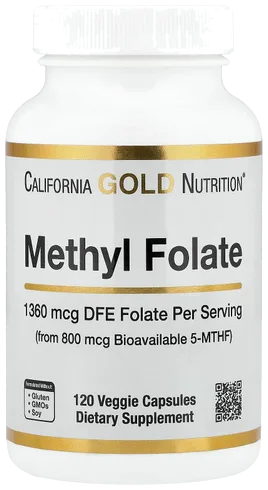
Lake Avenue Nutrition Methyl Folate 800 mcg Review
Methyl Folate 800 mcg by Lake Avenue Nutrition is listed on HelloPharmacist as a supplement in capsule form, with two active ingredients in each serving of 1 capsule. The label, dated November 22, 2024 and filed with the NIH Dietary Supplement Label Database, lists Vitamin C 40 mg (44% Daily Value), Folate 1360 mcg DFE (340% Daily Value), and (6S)-5-Methyltetrahydrofolic Acid Calcium Salt 800 mcg. The label describes the folate as bioavailable 5-MTHF. The container holds 120 servings. Other ingredients are rice flour, modified cellulose and magnesium stearate. The suggested use on the label is to take 1 capsule daily with food, or as recommended by a qualified healthcare professional. The label says to store the product in a cool, dry place and to protect it from heat, light and moisture. The FDA statement says it has not been evaluated by the Food and Drug Administration and that the product is not intended to diagnose, treat, cure or prevent any disease. The brand is a registered trademark of Madre Labs, LLC, based in Irvine, California. The label states the product is formulated without gluten, GMOs or soy, and the page's allergen check finds no major food allergen named in the ingredient names. The page rates ingredient transparency as full because each active ingredient has an exact amount listed. The page compares the vitamin C amount with other products in its database and says it is less than most of them, while noting that this comparison is not a recommended dose. The page reports documented drug interactions for the vitamin C content, with 207 drugs listed and every one rated moderate. Examples include meds such as a med, hormone medicines, certain chemotherapy drugs, aluminum-containing antacids, the antipsychotic fluphenazine and the HIV drug indinavir. The folate ingredient has no interaction records on file. Side effects reported with vitamin C include upset stomach, nausea, stomach cramps, diarrhea, heartburn and headache. Kidney stones are described as a rare but more serious concern with very high or long-term high doses. The page advises people with kidney disease, a history of kidney stones, hemochromatosis or G6PD deficiency to talk with a doctor or pharmacist before starting. For pregnancy and breastfeeding, the page rates vitamin C as likely safe when used orally and appropriately, but possibly unsafe in excessive doses. It holds no such data for the folate ingredients. For the research on vitamin C, the page grades the evidence for its stated use as strong, with vitamin C deficiency rated effective. The page also notes that these grades describe each ingredient in general and not this exact product. Lake Avenue Nutrition has 118 products in the database, all on the market, with labels on file since 2022.
We don’t sell supplements. We help you make decisions and get the best price.
Lowest prices
We may earn a commission from some store links. How we choose.
Finding the lowest prices at the stores now. This takes a few seconds.
Products with nearly the same formula (Matched on the main ingredients)
Study, Trial or Testing Result Summary
Members Only92 human studies · 44 improved
4 of these 92 human studies gave the ingredient by drip or inhaler, not by mouth.
This product gives folate as methylfolate at a full dose, above the amount that worked in studies and above the daily recommended limit, so members may choose to take less. Most evidence shows folate helps mood when added to a med medicine. A large pooled analysis of 192 trials found added folate eased depression more than medicine alone [1]. Another analysis of nine trials agreed and found side effects similar to placebo [2]. Pooled trials of the methylfolate form found a modest gain in symptoms and response [3]. A review of 20 trials found folate with other B vitamins and vitamin D lowered depression scores, alone or with medicine [4]. Not every study agreed. Adding high dose folic acid for 12 weeks did not help 475 adults on meds [5]. Seven years of folic acid with other B vitamins did not prevent depression in older women [6]. The vitamin C here is below the studied dose. At higher doses, vitamin C gave a small mood benefit in people with mild depression [7] and improved well-being in young adults with low vitamin C [8]. It also lowered anxiety in small trials [9][10]. Animal and cell studies are never counted.
See all 92 studies →Hide the studies
- In 25 observational studies of 91,966 people, those with the highest vitamin C intake from food had about 28% lower risk of depression than those with the lowest intake.Associations of Dietary Vitamin C and E Intake With Depression. A Meta-Analysis of Observational Studies.
- In a pooled analysis of 192 trials with 17,437 adults with depression across 44 supplements, adding folate to a med medicine eased depressive symptoms more than a med alone.Comparative efficacy and tolerability of nutraceuticals for depressive disorder: A systematic review and network meta-an…
- In nine trials with 1,061 adults with major depression, adding folate beat placebo for improving depressive symptoms, with similar side effects and dropouts.Adjunctive folate for major mental disorders: A systematic review.
- Across 10 trials with 836 adults, vitamin C did not improve mood overall, but in 5 trials of people with mild depression not taking meds it gave a small mood benefit.The effect of vitamin C supplementation on mood status in adults: a systematic review and meta-analysis of randomized co…
- In pooled trials of about 500 adults with major depression, adding L-methylfolate to meds gave a modest improvement in depressive symptoms and response compared with meds alone.Systematic Review and Meta-Analysis of L-Methylfolate Augmentation in Depressive Disorders.
- In people with schizophrenia, adding folate to antipsychotics did not improve depressive symptoms or total symptoms more than placebo, though negative symptoms improved slightly.Folic acid/methylfolate for the treatment of psychopathology in schizophrenia: a systematic review and meta-analysis.
- In three trials with 247 people with depression, adding folate to other treatment lowered depression scores by about 2.65 more points over 10 weeks, but folate alone was not better than trazodone.Folate for depressive disorders: systematic review and meta-analysis of randomized controlled trials.
- People with depression had lower vitamin C intake and lower blood vitamin C than healthy people, but this compared levels and did not test supplements.The relationship between antioxidant vitamins and mental disorders: a meta-analysis.
- This pooled analysis found people with depression had somewhat lower blood folate and dietary folate than people without depression, but it did not test supplements.The association of folate and depression: A meta-analysis.
- A review of many meta-analyses found folate linked to lower risk of death and many chronic diseases, but also to adverse effects including depression, prostate cancer and asthma.Association Between Folate and Health Outcomes: An Umbrella Review of Meta-Analyses.
- A review of 13 observational studies of 12,742 pregnant and postpartum women found low folate intake, along with low calcium and iron, was associated with maternal depression.Association of Maternal depression with diet: A systematic review.
- Across 20 randomized trials with 2,256 adults, folic acid or L-methylfolate, along with other B vitamins and vitamin D, lowered depression scores, either added to standard medicine or used alone.Efficacy of B-vitamins and vitamin D therapy in improving depressive and anxiety disorders: a systematic review of rando…
- In three trials with 247 people with depression, adding folate to other treatment lowered depression scores by about 2.65 more points at ten weeks, while folate in place of trazodone showed no significant benefit.Folate for depressive disorders.
- In a review of 37 mostly uncontrolled studies in cancer patients, intravenous vitamin C may have eased symptoms including depression, but the evidence was preliminary.Intravenous Vitamin C and Cancer: A Systematic Review.
- A review of add-on nutrient trials for depression found mixed results for vitamin C, while other nutrients like omega-3 and vitamin D had more positive results.Adjunctive Nutraceuticals for Depression: A Systematic Review and Meta-Analyses.
- In a review of 14 studies in women, high-dose sustained-release vitamin C reduced anxiety and blood pressure responses to stress, though evidence was limited.The impact of essential fatty acid, B vitamins, vitamin C, magnesium and zinc supplementation on stress levels in women:…
- A review of nine studies linked vitamin C deficiency to depression and poorer thinking, but no studies tested whether replacing vitamin C helps.The neuropsychiatric effects of vitamin C deficiency: a systematic review.
- A systematic review of nutrient treatments for bipolar disorder found that preliminary randomized trials suggest folate may help reduce manic symptoms, but the evidence is limited and needs larger studies.Nutrient-based therapies for bipolar disorder: a systematic review.
- A review of 23 trials and open-label studies, 9 of them in major depression, found folate supplements, especially 5-methylfolate, were linked to better clinical outcomes in several psychiatric conditions and were well tolerated.The potential use of folate and its derivatives in treating psychiatric disorders: A systematic review.
- Of 58 studies on pregnancy-related depression, 31 found lower folate, vitamin B12, iron, zinc or vitamin D linked to depression, with the evidence for folate considered mixed and inconclusive.A Systematic Review of the Correlation Between Micronutrient Levels and Perinatal Depression.
- In 4331 women aged around 64, daily folic acid 2.5 mg with vitamin B6 and B12 for about 7 years did not reduce the risk of developing depression compared with placebo, even though homocysteine levels fell.Effect of long-term supplementation with folic acid and B vitamins on risk of depression in older women.
- In rural Malawi, pregnant women given a fat-rich nutrient supplement, a multiple-micronutrient capsule, or iron-folate capsules had similar depressive symptoms at 6 months after birth, so the supplement did not reduce postnatal depression.The impact of maternal diet fortification with lipid-based nutrient supplements on postpartum depression in rural Malawi…
- In 475 adults with moderate to severe depression taking meds, adding 5 mg per day of folic acid for 12 weeks did not improve mood or quality of life compared with placebo.Folate Augmentation of Treatment--Evaluation for Depression (FolATED): randomised trial and economic evaluation.
- In 459 Guatemalan women, weekly and daily folic acid combined with iron, zinc and vitamin B-12 for 12 weeks lowered depression scores by 2.3 points on average, with no difference between the weekly and daily groups. Lower red blood cell folate at baseline was linked to more depressive symptoms, though this association was not statistically significant.Micronutrient supplementation may reduce symptoms of depression in Guatemalan women.
- In 225 hospitalised older patients, a daily multi-nutrient drink providing 100% of recommended vitamins and minerals (including folate) for 6 weeks led to fewer depressive symptoms than placebo at 6 months. Folate was not studied alone.Effects of dietary supplements on depressive symptoms in older patients: a randomised double-blind placebo-controlled tr…
- In two trials of 223 adults with depression who had not fully responded to a med meds, adding 15 mg daily of L-methylfolate for 30 days improved depression scores more than placebo in the second trial of 75 people, but the first trial using 7.5 or 15 mg showed no significant difference.Read the study on PubMed (23212058) →
- In 215 working men aged 30 to 55, a high-dose B vitamin, vitamin C and mineral supplement taken for 33 days improved stress, general mental health and vigour ratings compared with placebo.Effects of high-dose B vitamin complex with vitamin C and minerals on subjective mood and performance in healthy males.
- In 213 sepsis survivors given intravenous vitamin C, thiamine and hydrocortisone for up to 4 days, there was no psychological benefit at 6 months and higher odds of posttraumatic stress disorder than with placebo.Read the study on PubMed (36853612) →
- In 211 women of various ages, 750 mcg of folate daily for 35 days did not improve mood compared with placebo, although it slightly improved some memory tests.Short-term folate, vitamin B-12 or vitamin B-6 supplementation slightly affects memory performance but not mood in women…
- In 198 working men aged 30 to 55, a B vitamin, vitamin C and mineral supplement taken for 4 weeks improved self-rated physical stamina, concentration, mental stamina and alertness compared with placebo.Vitamins and psychological functioning: a mobile phone assessment of the effects of a B vitamin complex, vitamin C and m…
- In 171 young adults, two extra daily servings of fresh fruit and vegetables for 2 weeks improved vitality, flourishing and motivation but not depression, anxiety or mood, and the benefit was not explained by blood vitamin C.Let them eat fruit! The effect of fruit and vegetable consumption on psychological well-being in young adults: A randomi…
- In 167 young adults with low vitamin C, a 250 mg vitamin C tablet daily for 4 weeks improved well-being after two weeks, and also improved mood and fatigue in those with consistently low vitamin C, while placebo showed no change; kiwifruit had somewhat stronger effects.KiwiC for Vitality: Results of a Randomized Placebo-Controlled Trial Testing the Effects of Kiwifruit or Vitamin C Table…
- In an 8-week placebo-controlled trial of 158 people with major depression, blood folate levels did not predict or track improvement, while changes in omega-3 fatty acids did.EPA and DHA as markers of nutraceutical treatment response in major depressive disorder.
- In 142 graduate students given a single 1000 mg dose of vitamin C, anxiety and mood scores did not change overall, but the most anxious women had a significant drop in anxiety two hours later.Effects of ascorbic acid on anxiety state and affect in a non-clinical sample.
- In 127 adults with major depression taking a med, adding 500 mcg of folic acid daily for 10 weeks gave greater improvement than placebo, and this benefit was seen in women. 93.9% of women on folic acid had a good response (over 50% reduction in symptom score), compared with 61.1% on placebo.Read the study on PubMed (10967371) →
- In 106 people with Alzheimer's disease, a multi-ingredient nutrient formula containing folate improved thinking test scores compared with placebo over 3 months, but caregiver-reported mood and behavior changes were not statistically significant.A Phase II Randomized Clinical Trial of a Nutritional Formulation for Cognition and Mood in Alzheimer's Disease.
- In 84 patients with vascular depression on meds, vitamin C was used as an inactive comparator and did worse than nimodipine, with 25% reaching full remission versus 45% on nimodipine.Read the study on PubMed (11288158) →
- In an 81-person placebo-controlled trial, 3000 mg per day of sustained-release vitamin C for 2 weeks lowered depression questionnaire scores in the vitamin C group, while the placebo group showed no such drop.High-dose ascorbic acid increases intercourse frequency and improves mood: a randomized controlled clinical trial.
- In anemic new mothers, a placebo containing 25 mg vitamin C did not improve mood or cognition, while iron treatment did; vitamin C was not tested on its own.Maternal iron deficiency anemia affects postpartum emotions and cognition.
- In 75 adults with depression who did not respond fully to a med, 15 mg per day of L-methylfolate for about 60 days improved depression scores more than placebo, especially in people with high BMI or elevated inflammatory markers.Read the study on PubMed (24813065) →
- In 55 adults with metabolic syndrome on a six-month weight loss diet, those who increased their folate intake showed larger improvements in self-reported depression, although both diets improved mood similarly.Longitudinal relationship of diet and oxidative stress with depressive symptoms in patients with metabolic syndrome afte…
- In 55 people with schizophrenia taking stable antipsychotics, 15 mg of L-methylfolate daily for 12 weeks raised blood folate and improved overall symptom scores more than placebo, but mood and cognition scores did not differ from placebo.Biochemical, physiological and clinical effects of l-methylfolate in schizophrenia: a randomized controlled trial.
- In 46 healthy young adults with low vitamin C, 500 mg twice daily for four weeks improved attention and work absorption compared with placebo but did not change mood.Vitamin C supplementation promotes mental vitality in healthy young adults: results from a cross-sectional analysis and …
- In 45 adults with type 2 diabetes, 1000 mg of vitamin C daily for six weeks significantly reduced anxiety compared with placebo, though it did not change stress or depression scores.Efficacy of supplementary vitamins C and E on anxiety, depression and stress in type 2 diabetic patients: a randomized, …
- In 43 adults with major depression, adding vitamin C to citalopram for eight weeks did not improve depression scores more than adding placebo.Vitamin C as an adjuvant for treating major depressive disorder and suicidal behavior, a randomized placebo-controlled c…
- In 42 high school students, 500 mg of vitamin C daily for 14 days reduced anxiety scores compared with placebo.Effects of Oral Vitamin C Supplementation on Anxiety in Students: A Double-Blind, Randomized, Placebo-Controlled Trial.
- In 41 people with depression or schizophrenia who had low red-cell folate, 15 mg of methylfolate daily for 6 months added to usual treatment improved clinical and social recovery more than placebo, with the gap widening over time.Enhancement of recovery from psychiatric illness by methylfolate.
- In 41 people with depression or schizophrenia who had low red-cell folate, 15 mg of methylfolate daily for 6 months added to usual treatment improved clinical and social recovery more than placebo, with the gap widening over time.Enhancement of recovery from psychiatric illness by methylfolate.
- In a 30-woman pilot trial, a date bar with 300 mg vitamin C plus other nutrients eaten daily for 4 weeks lowered perceived stress within the group, but the difference from the placebo bar was not statistically significant.The Effect of a Fortified Date Bar on Perceived Stress and Morning Salivary Cortisol in Female Students: A Pilot Randomi…
- In 30 older adults with mild cognitive decline, 2 months of a combined nutraceutical containing folate improved depression scores, but placebo improved similarly, so the mood benefit was not shown to be greater than placebo.Short-Term Impact of a Combined Nutraceutical on Cognitive Function, Perceived Stress and Depression in Young Elderly wi…
- In 26 adults with mild to moderate mood disturbance, eating two SunGold kiwifruit daily for four weeks significantly reduced mood disturbance compared with their usual diet, in a non-blinded crossover trial.SunGold Kiwifruit and Psychological Health (GoKiPH): A Randomised Controlled Crossover Trial.
- In 24 children with major depression, adding 1000 mg of vitamin C daily to a med for six months reduced depressive symptoms more than a med plus placebo.Read the study on PubMed (23510529) →
- In 20 obese adults on a calorie-restricted diet, 500 mg of vitamin C daily for 4 weeks lowered self-reported fatigue and reduced heart rate and perceived exertion during moderate walking, compared with placebo.Vitamin C status and perception of effort during exercise in obese adults adhering to a calorie-reduced diet.
- In frail nursing home residents, 8 weeks of selenium, vitamin C and folate combined reduced depression scores in a subgroup with higher scores, but depression tracked selenium rather than vitamin C levels, so vitamin C's own effect is unclear.Effect of micronutrient supplementation on mood in nursing home residents.
- In a double-blind trial of acutely hospitalized patients with low vitamin C, 500 mg taken twice daily reduced mood disturbance by 34% compared with the vitamin D comparison group, which showed no mood change.Vitamin C provision improves mood in acutely hospitalized patients.
- In acutely hospitalized patients with low vitamin C, 500 mg twice daily for about 8 days reduced mood disturbance and psychological distress more than high-dose vitamin D did.Effects of vitamin C and vitamin D administration on mood and distress in acutely hospitalized patients.
- In a multicentre trial of older people with Alzheimer's disease, ascorbic acid was used as an inactive comparator for three months of injections; posatirelin improved memory, mood and daily function more than the comparator, so vitamin C showed no benefit.Posatirelin for the treatment of late-onset Alzheimer's disease: a double-blind multicentre study vs citicoline and asco…
- An inhaled vitamin C aerosol helped some people stop smoking over 5 weeks, and among those who quit, the fine-particle version lowered cravings and negative mood more than the coarse-particle version.Clinical trials using ascorbic acid aerosol to aid smoking cessation.
- In adults with depression who did not respond fully to a med, 15 mg per day of L-methylfolate calcium over about 60 days improved depression scores more than placebo, with the greatest benefit in people with high BMI and elevated inflammatory markers.Read the study on PubMed (26613389) →
- In people with bipolar depression taking quetiapine, adding folic acid reduced a med benefit of added lamotrigine over 12 weeks, with no mood benefit from folic acid itself.Biochemical and genetic predictors and correlates of response to lamotrigine and folic acid in bipolar depression: Analy…
- In 155 young adults with low vitamin C, 250 mg vitamin C daily for 4 weeks marginally improved mood until day 12 and effects were weaker than kiwifruit, but mood improved in those with low starting vitamin C.Smartphone survey data reveal the timecourse of changes in mood outcomes following vitamin C or kiwifruit intervention i…
- In 94 elderly long-term inpatients with low vitamin C levels, taking vitamin C for 2 months raised vitamin C levels and gave slight gains in weight and blood proteins, but mood and mobility did not change compared with placebo.The effect of vitamin C supplements on body weight, serum proteins, and general health of an elderly population.
- In 22 adults over 60 with depression who were treated with a med, higher folate levels measured at the start predicted better improvement, especially on the self-rated scale, with a med group showing the stronger link. Folate was measured, not given as a supplement.Read the study on PubMed (12826993) →
- In 20 young men, raising plasma vitamin C through supplementation did not change alertness, memory, or self-rated mood compared with low vitamin C periods.Lack of effect on mental efficiency of extra vitamin C.
- Large double-blind trials of daily vitamin C with extra doses during illness reduced the days of winter illness, but produced little change in infection frequency, sense of well-being, or cholesterol.Large scale studies with vitamin C.
- In a double-blind, placebo-controlled crossover trial, a single 3 gram dose of vitamin C made both manic and depressed patients significantly better than placebo.Vanadium: a possible aetiological factor in manic depressive illness.
- In 68 adults with depression who were already taking a med, 15 mg of L-methylfolate daily for up to 12 months led to full recovery in 38 percent of them, with no recurrences of depression.Long-term efficacy, safety, and tolerability of L-methylfolate calcium 15 mg as adjunctive therapy with selective seroto…
- In an open-label trial of 44 adults with depression, adding 800 micrograms daily of methylfolate to a med for 4 weeks produced a 40.33% improvement in depression symptoms versus 26.43% with a med alone, though remission rates did not differ significantly.Read the study on PubMed (39844190) →
- In an open-label study of 24 people with Alzheimer's disease taking a multi-ingredient formula containing folate for one year, thinking skills and behavior symptoms stayed at their starting level instead of declining, though there was no placebo group in this study.Maintenance of Cognitive Performance and Mood for Individuals with Alzheimer's Disease Following Consumption of a Nutrac…
- In 22 adults with depression that did not fully respond to a med, adding 15 to 30 mg per day of leucovorin (folinic acid) for 8 weeks lowered depression scores, with about 27% of the group reaching response, though there was no placebo group.Read the study on PubMed (12046638) →
- In 20 elderly adults with depression, 50 mg per day of methyltetrahydrofolate for 6 weeks led to marked improvement, with 81% of the 16 who completed at least 4 weeks responding, though there was no placebo group.An open trial of methyltetrahydrofolate in elderly depressed patients.
- In an open-label registry of 10 adults with bipolar depression taking 15 mg daily of L-methylfolate alongside usual treatment for 6 weeks, depression scores fell from 23.4 to 13.9, and 6 of 10 people had at least a 50% drop in symptoms.L-Methylfolate For Bipolar I depressive episodes: An open trial proof-of-concept registry.
- In acutely hospitalized patients with low vitamin C, one week of vitamin C raised blood levels to normal and improved mood disturbance scores by 33%.Metabolic origin of hypovitaminosis C in acutely hospitalized patients.
- In a large Korean survey of young adults, food insecurity was linked to more anxiety and depression and to diets often below the vitamin C requirement, but vitamin C intake itself was not tested against mood.How does young adults' dietary and health-related quality of life vary by food security and household income?
- In a large US survey of 9306 adults, a machine learning model ranked dietary vitamin C among the strongest predictors of depression with suicidal thoughts, but the study does not show whether vitamin C improves mood.Machine learning and SHAP-based interpretation of dietary antioxidants' impact on comorbid MDD and suicidal ideation.
- In a national survey of 2524 US adults, those with the highest blood folate levels had lower odds of elevated depressive symptoms, especially among women (odds ratio 0.37 compared with the lowest tertile).Serum folate, vitamin B-12, and homocysteine and their association with depressive symptoms among U.S. adults.
- In Australian adults, a plant-based dietary pattern rich in vitamin C, fiber, and carotenoids was linked to fewer depressive symptoms, but vitamin C was not studied on its own.Nutrient patterns and depressive symptoms among Australian adults.
- In 988 Iranian adolescent girls, those with the highest vitamin C intake had lower odds of depressive symptoms (odds ratio 0.61) compared with those with the lowest intake, though this was not statistically significant.Dietary antioxidants and fibre intake and depressive symptoms in Iranian adolescent girls.
- In 517 Japanese adults, higher dietary folate intake was linked to fewer depressive symptoms in men but not in women. Men in the highest intake quartile had about half the odds of depressive symptoms compared with the lowest quartile.Dietary intake of folate, other B vitamins, and omega-3 polyunsaturated fatty acids in relation to depressive symptoms i…
- In 332 elderly men followed in the Zutphen Elderly Study, dietary folate and vitamin B6 and B12 intake and blood homocysteine were not related to depressive symptoms.Dietary intake of B(6-9-12) vitamins, serum homocysteine levels and their association with depressive symptoms: the Zutp…
- Among 322 hospitalized older adults, those with low blood vitamin C had more depression symptoms at baseline and at 6 weeks than those with normal levels.Poor vitamin C status is associated with increased depression symptoms following acute illness in older people.
- In 181 female students, sticking more closely to a Nordic diet was linked to higher intakes of many nutrients including folate, and higher vegetable intake was linked to lower stress and anxiety scores. Folate itself was not tested against mood.Impact of a Nordic diet on psychological function in young students.
- Homeless adults in Reading, UK, ate less vitamin C (79 vs 109 mg) than matched housed adults and had higher depression and anxiety symptom scores.Dietary intake, nutritional status and mental wellbeing of homeless adults in Reading, UK.
- In 141 young Japanese women, those eating more than 240 mcg of folate daily from food had lower odds of depressive symptoms (adjusted odds ratio 0.22). This was an observational association and not proof of cause.Impact of dietary folate intake on depressive symptoms in young women of reproductive age.
- In a retrospective German cohort of 125 breast cancer patients, those given intravenous vitamin C (7.5 g, at least 4 weeks) alongside standard treatment reported less depression and other symptoms than untreated controls.Intravenous vitamin C administration improves quality of life in breast cancer patients during chemo-/radiotherapy and a…
- In 116 women treated for major depression, lower blood folic acid was linked to more severe depression, and folic acid was significantly lower in those with treatment-resistant depression.Blood Concentrations of Folic Acid and Homocysteine Are Associated with Treatment-Resistant Depression Among Female Depr…
- In 100 people living with HIV in Iran, higher daily dietary vitamin C intake was linked to lower depression, anxiety, and stress scores, but this food-based correlation does not show that vitamin C itself caused the change.Correlation Between Daily Dietary Micronutrients Intake and Mental Health Outcomes in Iranians Living With HIV Infection…
- In 97 adults with bipolar or major depressive disorder, 64% had folate intake below the estimated average requirement, compared with 27% in a general population survey. This study did not measure mood changes from folate.Vitamin and mineral intakes in adults with mood disorders: comparisons to nutrition standards and associations with soci…
- People with depression had lower folate and vitamin B12 levels and lower folate intake than controls, but no supplement was tested in this study.Evaluation of Nutritional Status of Patients with Depression.
- Blood 5-methyltetrahydrofolate was lower in 26 depressed people than in 21 healthy volunteers, both before and after electroconvulsive therapy. Folate deficiency was related to depression severity but not to treatment response.5-Methyltetrahydrofolate level in the serum of depressed subjects and its relationship to the outcome of ECT.
- In a prospective observational study of pregnant women with iron deficiency anemia taking a liposomal iron and vitamin C product, anxiety and depression scores improved over the course of pregnancy.Liposomal ferric pyrophosphate and ascorbic acid supplementation in pregnant women with iron deficiency anaemia: haemato…
- In people with folate deficiency whose mental symptoms, nerve problems and depression eased with folic acid, a serotonin-related breakdown product in spinal fluid returned to normal after treatment, while it stayed low in people whose symptoms did not respond.Effect of folic acid and vitamin B12 deficiencies on 5-hydroxyindoleacetic acid in human cerebrospinal fluid.
Review Totals and Summary
Members Only4 reviews · 100% positive
Across the stores, Lake Avenue Nutrition Methyl Folate 800 mcg has 3 ratings in total (all on Amazon), and the themes below come from the written reviews that could be read on that page. Only one written review was readable, so this is a very small base and should be read that way. What buyers praise: The single written review comes from a verified purchaser who gave it 5 out of 5 stars under the title "Great Product." The text is brief and positive. The reviewer calls the product great and says they will buy it again, which signals satisfaction and an intention to repurchase. The review gives no detail on why they liked it, such as how it made them feel, how it compares with other folate supplements, or what they were using it for. What buyers complain about: No complaints appear in the written feedback. Nothing is said about taste, capsule size, dosing, or effectiveness, whether good or bad. The absence of complaints here reflects how little was written, not a confirmed record of problem-free experiences. Ratings pattern: The page shows only three global ratings. The star split is shown as 54% five-star and 46% four-star, with no three-, two-, or one-star ratings. Every rating is therefore positive, though with just three ratings the percentages move a lot with each individual score and do not say much about the wider buying public. The four-star ratings have no written explanation, so there is nothing to indicate what held those buyers back from a full five stars. Who it seems to suit: The review does not say who the product is for or what the reviewer's goals were. Nothing can be said about particular groups of users, dietary needs, or use cases from this feedback. Taste, form, and value: The review does not mention taste, the form of the capsules, how many are in a bottle, or price and value for money. No point can be drawn on these from what was readable. Other forms: The summaries did not include reviews of other forms of the product, such as gummies or powder, so nothing had to be set aside. This summary is about the capsules only. Overall, the available feedback is warm but thin in detail: a verified buyer who was happy enough to say they would purchase again, and a rating split that leans fully positive across three ratings. Because there is only one written review and no further reviews to compare it against, the themes above cannot show a consistent customer experience across many buyers. Anyone considering the product would need to look for additional reviews, or for information from the manufacturer, to learn about taste, capsule size, dosing, and effectiveness.
Biohacker Summary
Members Only9 of 10 recommend it
Folate is the main ingredient here, and the panel leans toward recommending it: six of the ten recommend it and four are neutral. Reasons given include lowering homocysteine, supporting mitochondria and brain health, and protecting pregnancy and IVF preparation, with one noting that birth control pills deplete folate. Two of them prefer methylfolate, the active form, over folic acid, and one suggests getting it through a prenatal vitamin. No one gave a folate dose, paired it with another supplement, or said they stopped it. Vitamin C is a smaller ingredient in this product, and the panel mostly recommends it for collagen and skin, though one said high doses might not always be beneficial.
See all 10 biohackers →Hide the biohackers
Dr. Mark Hyman · Folate · neutral
- Notes that taking folate can lower homocysteine levels, which has shown health benefits and physical improvements in brain scans in clinical trials.
- Notes that some people may need a little bit extra folate with a supplement.
- Recommends vitamin C as a basic supplement during detoxification to help with inflammation and detoxification.
- Dr. Hyman mentions vitamin C as an advanced therapy for skin repair.
- Mentions topical vitamin C as an antioxidant that can help skin with aging.
- Mentions that what they do when a cold comes on is not just vitamin C.
- Recommends ensuring adequate vitamin C intake on a regular basis for immune support, stating it's important for healthy immune function despite mixed data on its effectiveness for colds.
- Mentions that vitamin C was the very first vitamin discovered, isolated, and synthesized in 1932, and its deficiency caused scurvy.
- Recommends nutrient-dense foods rich in vitamin C, such as guavas and parsley, to reduce inflammation.
- Used intravenous vitamin C cocktails to help him detoxify and recover from chronic fatigue.
- Optimized a child's nutrient status with folate, as the child had low folate levels and was not eating greens.
- Notes that a med depletes folate.
- Recommends vitamin C for immune system support and modulation.
- States that folate is a nutritional deficiency that impacts mental health.
Dr. Eric Berg · Folate · neutral
- Notes that birth control pills deplete the body of folate, which is needed for the brain to make serotonin.
- Mentions that lemon is loaded with vitamin C, and when combined with coffee, vitamin C significantly increases the bioavailability of antioxidants in the coffee.
- Dr. Berg states that Vitamin C helps fight biofilms and is essential for making collagen in gums, teeth, and capillaries.
- Recommends Vitamin C as a cofactor, especially for collagen.
- States that high doses of vitamin C, like 2 to 4 grams, can greatly reduce inflammation and support the immune system.
- Highly recommends taking natural food vitamin C, about 500 mg, at the first sign of a cold.
- Recommends consuming foods high in vitamin C to block the effects of grains.
- Recommends ensuring that collagen supplements come with vitamin C.
- Vitamin C works as an antioxidant that supports skin and artery health.
- Recommends pairing collagen with vitamin C to support absorption.
- Dr. Berg mentions that fermented dairy contains vital nutrients, including folate.
- Sauerkraut also contains vitamin C and beneficial bacteria that may support digestive health.
- States that folate is a co-factor or nutrient involved in making melatonin.
- States that if one is deficient in folate, cells cannot repair, and recommends dark leafy green vegetables, liver, and avocados as good sources.
Dave Asprey · Folate · neutral
- States that folate can affect how the body responds to a supplement.
- Recommends taking vitamin C for better skin health.
- States that currently, he is only taking vitamin C and vitamin D.
- Dave Asprey reflects on how new research clarifies the mechanism behind IV vitamin C's anti-cancer effect, vindicating a decades-old idea that was dismissed for the wrong reasons.
- Recommends methylfolate as a better option than folic acid.
- Notes that plain Vitamin C isn't enough and that most people never think to check for a specific ingredient that makes it work.
- Dave Asprey recommends taking maybe a gram of vitamin C a day in divided doses, noting that plasma levels peak around 250 milligrams twice a day.
- Recommends Qualia Vitamin C Plus, highlighting its combination of seven forms of vitamin C with 250 mg of citrus bioflavonoids, which helps with absorption and use for building collagen and a strong immune system.
- Warns that taking too much vitamin C can raise oxalate levels, emphasizing that everything has risk and reward.
- Recommends Vitamin C as the real biological fix for deep focus issues, explaining how the brain hoards it at levels 100 times higher than blood and how to bypass the blood-brain barrier.
- Dave Asprey notes that 80% of their clients have a problem absorbing certain forms of folate, and when the exact form of folate or folinic acid is dialed in, clients experience shifts, with the brain waking up as one of the first improvements.
- States that Ensure is like SlimFast but worse, and that its ingredients, including synthetic vitamins, guar gum, maltodextrin, high fructose corn syrup, and seed oils, are disgusting and should not be given to sick or well people.
- Recommends IV Vitamin C, or even oral versions, for helping the body heal and for cells to remain supple and fluid.
- Dave breaks down why a daily stack of taurine, B6, folate, and B12 works for motivation when either ingredient alone doesn't.
Ben Greenfield · Folate · recommends
- Recommends methylfolate as an active form of folate that the body can use directly without conversion.
- States that vitamin C is extremely important for collagen turnover and cites orthopedic data showing that 500 mg to 1 g of vitamin C can reduce the rate of complex regional pain in total knee replacements and wrist fractures.
- Mentions vitamin C as part of a bare-minimum protocol.
- Notes that while vitamin C has significant value, the optimal dose is a vexed question, and high doses might not always be beneficial, potentially blunting the hormetic effects of exercise.
- Notes that IV vitamin C has been used for decades for cancer patients with almost no standardization and that he receives many questions about its effectiveness and combination with chemo.
- Recommends bioavailable folate, not synthetic folic acid, as folate deficiencies seem to impact hearing health in older individuals.
- Recommends Vitamin C for skin repair post-tattoo.
- Recommends introducing methylfolate into the diet to address high homocysteine levels.
- Does not agree that ascorbic acid is vitamin C, comparing it to calling chaff wheat, and notes that it is made from genetically modified cornstarch or corn syrup byproducts using solvents.
- Would refine the guidelines to include clearer distinctions between synthetic folic acid and natural folate.
- Warns against ascorbic acid, stating that it does not cure scurvy and that the world has been led astray by the deception around it versus the whole food vitamin C complex.
- Warns against taking 1,000 mg of vitamin C immediately after a workout for individuals under 50, as it can dull the body's natural adaptation signal.
- Warns that using high-dose antioxidants like vitamin C directly before or after a hyperbaric session is not a great idea, as it could impair some of the effects by reducing reactive oxygen species.
- Notes that some people do better on certain forms of B12, B complexes, SAM E, and methylated folates, specifically five methyl folates, for methylation.
Dr. Rhonda Patrick · Folate · recommends
- Recommends ensuring adequate methyl folate intake, ideally through a prenatal vitamin, for women preparing for IVF.
- Lutein and zeaxanthin can also be obtained from certain multivitamins.
- Recommends nutrients like vitamin C for men to prioritize sperm mitochondrial health.
- Dr. Rhonda Patrick's daughter chugs an Emergency fizzy drink in the morning to ensure she gets some vitamin C and micronutrients before school.
- Choosing a multivitamin that includes lutein and zeaxanthin ensures you get meaningful amounts every day.
- Notes that ~35% of Americans are low in vitamin C.
- Recommends increasing vitamin C intake if concerned about skin aging, noting it is an essential cofactor for collagen synthesis.
- Suggests avoiding a multivitamin if it contains biotin before a testosterone blood test to prevent confounding results.
- Multiple randomized controlled trials show older adults taking a standard multivitamin (like Centrum Silver) had measurable improvements in processing speed, cognition, and episodic memory.
- Notes that dark leafy greens are a great source of folate.
- Currently takes the Pure Encapsulations O.N.E Multivitamin.
- Rhonda's current supplement routine includes Vitamin C.
- States that for his mother, who is homozygous for MTHFR, methyl folate along with a high dose B supplement is necessary to prevent her homocysteine and blood pressure from going high.
- Dr. Patrick mentions that her smoothie is rich in folate, which is required for producing thymine and prevents DNA strand breaks.
Thomas DeLauer · Folate · recommends
- Recommends taking methylfolate as a methylated form of B vitamin for mitochondrial function.
- Recommends taking vitamin C along with collagen about an hour before a workout for connective tissue benefits.
- Uses vitamin C as part of their immunity duo, stating it is important for boosting the immune system, especially during cold and flu season.
- Recommends consuming vitamin C to aid in NADPH recycling, which is necessary for glutathione to be reused after neutralizing oxidative stress.
- Takes Purity's liquid liposomal vitamin C for immune support and overall wellness, finding it easy to add to water, juice, or take straight up due to its good taste.
- Compares the Vitamin C content of oranges (53mg) to guava (228mg), noting guava has 4x more.
- States that collagen synthesis is vitamin C dependent, in the context of glowing skin.
- Recommends Vitamin C for sleep, noting that intake in the range of 125 to 200 mg per day is associated with a lower risk of sleep disorders and sleep apnea, with the benefit plateauing beyond this range.
- Recommends consuming a little bit of vitamin C, such as a couple of berries or kiwi, along with flavanol-rich cocoa to help the delicate flavanols hold up and prevent oxidation in the gut.
- Explains that vitamin C improves the ability of neutrophils to engulf bacterial infections, and that they have a greater ability to engulf larger infections.
- Recommends using a multivitamin to ensure adequate micronutrient intake, especially when wholesome food is less available.
- Recommends methylfolate as a runner-up for insulin resistance, especially for individuals with the MTHFR variant, as it directly enters the methylation cycle without conversion.
- Mentions folate as a critical B vitamin for reducing homocysteine.
- Lists folate as a metal donor found in green leafy vegetables, liver, and legumes, especially sprouted legumes.
Siim Land · Folate · neutral
- States that Homocysteine levels can often be improved through adequate folate intake.
- Recommends taking vitamin C with collagen to support joint collagen synthesis.
- States that vitamin C is needed for initiating collagen synthesis and that higher vitamin C intake appears to increase vitamin C content in the skin.
- Lists sauerkraut and fruit as sources of Vitamin C.
- Notes that Vitamin C is one of several supplements with human evidence.
- Notes that researchers found vitamin C alleviates ferro-aging, a process of iron overload and lipid peroxidation that drives aging, and that it directly inhibited ACSL4, a protein driving ferro-aging.
- States that Vitamin C has a central role in aging and longevity, and that in monkeys, oral vitamin C slowed ovarian aging during a 3.3-year study.
- States that vitamin C is one of the most important vitamins for staying healthy and aging well, and that intakes of 200 to 400 mg a day from food or supplements largely saturates plasma and neutrophils in most healthy adults. He also recommends spreading out the vitamin C across the day to avoid oversaturation.
- Mentions vitamin C in comparison to topical melatonin for oxidative defense, stating that melatonin would compete but is not as broadly validated clinically.
- Was found to be vitamin C deficient by True Health and Mayo Clinic tests, and now addresses this by eating one extra kiwi fruit daily.
- States that the biggest evidence for multivitamin is that it improves cognition and enhances episodic memory in elderly people, who tend to have worse diets and are more likely to be deficient.
- Notes that Brian's folate levels are over 20, which is too high and above the reference range, possibly due to supplementation.
- Warns that many people are overdosing on methyl folate, which can contribute to overstimulation when combined with creatine.
- Notes that folate resulted in negative effects on epigenetic age, meaning it increased epigenetic age.
Andrew Huberman · Folate · recommends
- States that B12, folate, and iron are essential to mitochondrial function and if deficient, mitochondria will not function properly, which is consistent with the mitochondrial theory of neuropsychiatric disorders.
- Takes a multivitamin every day for longevity.
- Recommends AG1, a vitamin, mineral, and probiotic drink, and notes that for a limited time, a subscription comes with additional supplements.
- Takes an extra gram of vitamin C a day for its effects on immunity and potential synergy with collagen.
- Found the Met RX Big 100 Bar to be 'magic' on the trail because it's a hunk of calories with protein and fortified with vitamins and minerals, despite being something they would never eat in normal life.
- Started taking AG1 in 2012 and still takes it every single day to ensure he meets his quota for daily vitamins and minerals and to support gut health, which is critical for proper brain function, immune system, and neurotransmitter production.
- Has been taking AG1 daily since 2012 because it is the highest quality and most complete foundational nutritional supplement, ensuring he gets all necessary vitamins, minerals, and micronutrients for daily health.
- Has been drinking AG1 since 2012, finding it difficult to get enough vitamins, minerals, micronutrients, and adaptogens from diet alone. He finds that taking AG1 daily improves all aspects of his health, including physical and mental health, performance, recovery from exercise, and immune system strength, and also notices more mental clarity and energy.
- Recommends AG1 as the highest quality and most complete foundational nutritional supplement, containing vitamins, minerals, probiotics, prebiotics, and adaptogens to cover dietary gaps and support a demanding life.
- Recommends taking methyl folate as part of methylated B vitamins to lower homocysteine levels and reduce cardiovascular risk.
- States that AG1 is the highest quality and most complete foundational nutritional supplement available, containing vitamins, minerals, probiotics, prebiotics, and adaptogens, and that he has been taking it daily since 2012, often twice a day, to bolster his energy, immune system, and gut microbiome.
- Huberman mentions that vitamin C seems to help with the absorption or utilization of collagen protein.
- Takes methyl folate because elevated levels of homocysteine are associated with negative outcomes, and taking methyl folate is known to lower homocysteine. This might lower ADMA and SDMA and raise nitric oxide synthesis, potentially impacting vascular disease.
- Discusses folate as a potential factor in mitigating cancer risk, particularly in relation to alcohol consumption.
Peter Attia · Folate · recommends
- Highlights folate supplementation as a significant practical progress in nutrition science, which has radically reduced spinabifida.
- Recommends vitamin C as an important molecule for skin, noting its role as a precursor for collagen synthesis, a powerful antioxidant, and a regulator of complexion for even skin tone.
- Tried a vitamin C serum mixed with ferulic acid but stopped using it because she hated the smell. She notes that topical application of vitamin C far exceeds the levels achievable by ingestion for skin benefits.
- States that vitamin C deficiency is associated with an elevated risk of cataract, but supplementation to supranormal levels has not been shown to protect against cataract formation.
- Mentions the elimination of scurvy through the work of James Lind and the eventual understanding that it was due to vitamin C, initially thought to be just citrus.
- Takes Jarrow methylfolate to keep homocysteine levels below nine, taking the lower of two available strengths once a day.
- Takes Jarrow methylfolate, a methylated version, once a day at the lower of two strengths, to keep homocysteine levels below nine.
- Mentions that in a mouse model for obesity, the amount of folate given to the mother mouse during pregnancy affects the epigenetics of her offspring, leading to changes in coat color and obesity.
- Personally takes methylfolate to help get homocysteine into the desired zone and prefers the Jarrow brand.
- Notes that while vitamin C deficiency is associated with an elevated risk of cataract, supplementation to supranormal levels has been conclusively shown not to protect against cataract formation.
- Mentions that a survey of doctors showed they recommend Vitamin C for COVID-19, but notes there is no real evidence behind it.
- Expresses skepticism about 'panacea treatments' for cancer, specifically mentioning a 'twenty thousand dollars of vitamin C' treatment, implying it's an example of something he's 'squirrely' about due to cost and unproven claims.
- Asks if vitamin C matters for immune function, suggesting a need for a definitive study.
- Warns against the "total nonsense" of taking excessive amounts of vitamin C, especially in specific forms like liposomal vitamin C, for immunity, stating that it is idiotic and potentially dangerous to think it will offer immunity.
Bryan Johnson · Folate · recommends
- Recommends supplementing with folate for brain health for both the mother and the baby during pregnancy.
- Uses Vitamin C as an example of how it would be great if people knew that when they took it, it had a measurable amount and wasn't polluted, which is what Brian ensures with his products.
- Applies vitamin C after showering.
- Takes 250 milligrams of Vitamin C.
- Recommends Vitamin C for skin health, noting it's good to pair with collagen peptides and is included in the Blueprint stack.
- Bryan Johnson takes Vitamin C daily as part of his Longevity Mix, which is an antioxidant-rich essential vitamin that supports immune function and metabolic energy.
- He uses Vitamin C, typically in a serum, in the morning for skin health.
RAL Summary
Members OnlyTier 4 for Mood
Human studies, especially of folate added to meds, support a mood benefit, but there are only 4 reviews, too few to confirm it, so the product stays at the emerging tier.
- Emerging: not enough evidence to rank higher yet.
Where the evidence disagrees: 23 of the 92 human studies found no effect.
More Details
Members OnlyBody systems · Combine with · Possible side effects
Body systems: Nervous system
Combine with: For mood and methylation support, pair it with methylcobalamin (B12) and pyridoxal-5-phosphate (B6) to help lower homocysteine, plus magnesium, omega-3 fish oil (EPA/DHA), and vitamin D3. If vision is still the goal, add a dedicated eye formula with lutein (10 mg), zeaxanthin (2 mg), zinc with copper, vitamin C, vitamin E, and DHA-rich omega-3s, and consider astaxanthin or bilberry for added antioxidant support. Consult a healthcare provider, especially with anticonvulsants or a med, or if you have an MTHFR variant.
Possible side effects: In pooled folate trials, side effects and dropouts were similar to placebo. No side effects were mentioned in the reviews.
Supplement Facts
Vitamin C 40 mg · Folate 1360 mcg DFE
| Vitamin C | 40 mg | |
| Folate | 1,360 mcg DFE |
Other ingredients: Rice Flour, Modified Cellulose, Magnesium Stearate.
Directions: Suggested use: Take 1 capsule daily with food, or as recommended by a qualified healthcare professional.
Barcode (UPC) 898220016778 · Label source: NIH label database · Report a label change
Show entire label
More mood products
Members OnlyThe highest ranked for the same goal
Read more
Our articles on this subject
- Folate vs Folic Acid: What the Studies Show About Each FormArticle · Oct 29, 2026
- Supplements for Stress and Anxiety Relief: What the Evidence SupportsArticle · Oct 26, 2026
Graded November 8, 2026 by the Reverse Age Lab evidence engine, from human studies, real reviews and our biohacker panel. How we grade. Is this medical advice? No. Rala organizes the published evidence; go over any change with your doctor, especially if you take meds.
Privacy policyConsumer health dataAffiliate disclosureTermsDo Not Sell or Share My Personal InformationCookie settings