
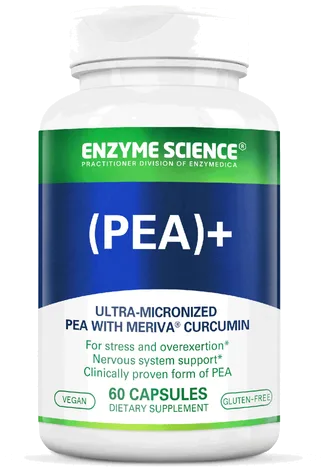
Lake Avenue Nutrition PEA (Palmitoylethanolamide) Review
Lake Avenue Nutrition Palmitoylethanolamide PEA 600 mg is presented on this page as a high-potency formula designed to support nerve health, pain relief, and a balanced inflammatory response. The page describes PEA as a naturally occurring compound that helps promote comfort, improve nerve function, and support overall wellness. The product is described as ideal for people looking for nerve support, anti-inflammatory support, joint comfort, neuropathy relief, and daily health support. The specifications list the brand as Lake Avenue Nutrition, the quantity as 60 capsules, and the item form as capsule. The page notes that the product comes in 60 capsules for convenient daily use. The item is shown as sold by Silver Glow Pharma on Snoonu at a price of 179 QAR. However, the page also states that the item is unavailable at the selected delivery location, that it is out of coverage, and that it cannot be delivered to the shopper's location. The page does not include an ingredients list, a serving size, servings per container, a printed barcode, customer ratings, or written reviews, so those fields are left empty.
We don’t sell supplements. We help you make decisions and get the best price.
Lowest prices
We may earn a commission from some store links. How we choose.
We found no store selling it right now.
Study, Trial or Testing Result Summary
Members Only5 human studies · 2 improved
This product gives 600 milligrams of palmitoylethanolamide a day, which is at or above the doses used in studies. In a placebo-controlled trial of 111 adults with mild to moderate knee osteoarthritis, 300 or 600 milligrams daily for 8 weeks reduced knee pain, stiffness and overall symptoms compared with placebo, and it was well tolerated [1]. In 24 people with jaw joint arthritis or pain, two weeks of it reduced pain and improved mouth opening more than a med [2]. However, a newer 12-week placebo-controlled trial in knee osteoarthritis did not beat placebo on its main symptom score, though the higher dose had more people respond than placebo [3]. Smaller studies were mixed: among 10 older adults with chronic joint, back or limb pain, only two had a small pain reduction and one had better function [4], and in a study of 4 people taking it with probiotics, one clearly had less pain [5]. Overall the evidence for joint pain is promising but not consistent, and there are only a small number of reviews for this product. Animal and cell studies are never counted.
See all 5 studies →Hide the studies
- In 111 adults with mild to moderate knee osteoarthritis, 300 mg or 600 mg of palmitoylethanolamide daily for 8 weeks reduced knee pain, stiffness and overall symptom scores compared with placebo, and was well tolerated.A double-blind randomized placebo controlled study assessing safety, tolerability and efficacy of palmitoylethanolamide …
- In 24 people with jaw joint arthritis or joint pain, palmitoylethanolamide for 2 weeks reduced pain more and improved mouth opening more than a med.Read the study on PubMed (22558609) →
- In randomized N-of-1 trials of 10 adults aged 65 and older with chronic joint, back, or limb pain, 600 mg of ultra-micronized palmitoylethanolamide taken twice daily for 3 weeks gave a small, statistically significant pain reduction in two patients and a functional improvement in one patient compared with placebo.N-of-1 Randomized Trials of Ultra-Micronized Palmitoylethanolamide in Older Patients with Chronic Pain.
- In a small 11-week multiple baseline study of 4 people with knee or joint osteoarthritis, a probiotic plus palmitoylethanolamide regimen clearly reduced pain in one participant and was associated with better function and wellbeing in all, but the dose was not stated and the findings are preliminary.Probiotics and palmitoylethanolamide (PEA) for osteoarthritic pain: individual effects in a multiple baseline design stu…
- In adults with mild to moderate knee osteoarthritis, palmitoylethanolamide for 12 weeks did not significantly beat placebo on the main symptom score, though the high dose had more responders than placebo and it was well tolerated.Temporal effects of Palmitoylethanolamide (PEA) in modulating knee osteoarthritis symptoms: A randomized, double-blind, …
Review Totals and Summary
Members Only12 reviews · 100% positive
Customers most often praise this PEA for easing chronic and musculoskeletal pain. People describe relief in the joints, knees, hips, back and sacroiliac area. Others mention sciatica, fibromyalgia, neuropathy in the knees and sore muscles after athletic activity. Several say it let them cut back on other painkillers. One user reported reducing codeine, and another said they had spent 18 years on meds before adding PEA. Timelines vary. A few people report quick effects within hours or from the first capsules. More commonly, benefit builds over one to three weeks. One diabetic neuropathy user described roughly 70% pain reduction after two weeks, while still stressing that it doesn't remove all pain. Secondary themes include better mood and sleep, mild digestive comfort, and some reported cognitive or day-to-day functional gains. People also describe using it alongside other supplements or therapies, such as magnesium, low-dose a med, alpha-lipoic acid, glutamine or PQQ. Several mention that a regular dose of 2 to 4 capsules a day works for them. Value is a strong positive among international buyers, especially in Australia. They say the price is far lower than what they can find locally, and that the large bottles and the glucosamine combo are good deals. Some praise the clean, allergen-friendly label (no gluten, soy or GMOs), the lack of taste, and the fact that it is easy on the stomach. One reviewer liked the easy-open bottle because they have arthritic hands. Long-term users mention loyalty to the brand, including one who has used it for five years. The complaints are modest. A few customers feel the benefit is only partial, or that it didn't help acute pain. One said joint pain persisted after three weeks and wondered whether they had expected too much. Another said they had seen no big difference compared with a compounding-pharmacy PEA. Some note the capsules are large and unsuitable for small children. One Australian reviewer felt it contains more fillers and binders than other brands. Cost can still be a barrier for people on tight budgets, who sometimes go months without it. Some reviewers dislike the amount of plastic packaging. A few warn buyers to check they are getting the 600 mg strength, because the labelling can confuse people about the per-capsule and per-serving amounts. Overall, users see it as a safe, natural, cumulative option that works well for most of them but isn't a quick fix.
Biohacker Summary
Members Only3 of 10 recommend it
Only three panelists spoke about palmitoylethanolamide, the main ingredient, so this is a small sample. Two of them recommend it and one is now neutral, though that person earlier recommended it. They take it mainly to calm inflammation and ease pain, and one also links it to nerve support and better sleep. One panelist says it should be micronized, meaning ground very fine, because of its large molecular size, and no one gives a specific dose. It is paired with luteolin for nerve support and, by one panelist, with a collagen supporting peptide, and no one reports a caution or says they stopped taking it.
See all 3 biohackers →Hide the biohackers
Dr. Eric Berg · Palmitoylethanolamide · recommends
- Mentions that palmitoylethanolamide has been researched to help calm neuroinflammation and aid sleep.
- States that PEA (Palmitoylethanolamide) + Luteolin can support nerve tissue directly and target inflammation.
- Found research on Palmitoylethanolamide (PEA) and Luteolin, recommending them for trigeminal neuralgia to support nerve tissue and reduce inflammation, noting that they should be micronized due to their large molecular size.
Ben Greenfield · Palmitoylethanolamide · recommends
- Recommends Palmitoylethanolamide (PEA) as a cutting-edge supplement for painkilling and inflammation, describing it as similar to cannabis oil and turmeric without the cannabinoids, and uses it as a functional filler in products.
- Ben Greenfield mentions PEA (palmitoylethanolamide), found in Mimio's biomimetic formula, as a natural endocannabinoid that acts as a calorie restriction mimetic.
- States that he uses Palmitoylethanolamide (PEA) as a filler in his products because he hates useless fillers, and it synergizes with BPC-157's effect on collagen networks.
Dr. Mark Hyman · Palmitoylethanolamide · neutral
- Mentions that there is a type of inflammation that responds to palmitoylethanolamide, which affects about 8% of the population.
- Notes that Palmitoylethanolamide (PEA), derived from soy lecithin, egg yolks, and peanut fats, has been found to be a useful agent for both preventing and treating viral illness. He refers to IFM.org for specific dosage recommendations.
RAL Summary
Members OnlyTier 4 for Joints and Mobility
The review summary describes many detailed written reviews, including a glucosamine combo and large bottles, yet no written reviews of this product could be read and only 12 were counted, so the summary cannot be about this product's reviews and is set aside. Its reviews are set aside, so it is graded on its studies alone. Human studies support Palmitoylethanolamide (2 of 5 human studies showed an improvement), but there are not yet enough reviews to confirm it (0).
- Emerging: not enough evidence to rank higher yet.
More Details
Members OnlyBody systems · Combine with · Possible side effects
Body systems: Musculoskeletal system, Nervous system
Combine with: For comfort and inflammation support, PEA pairs well with curcumin (with piperine or a phytosome form), omega-3 EPA/DHA, and boswellia, which act on complementary inflammatory pathways. Glucosamine, chondroitin, or collagen peptides can add structural joint support, and magnesium and vitamin D support nerve and muscle function. If the real goal is cellular and DNA repair, look at different products such as NMN or NR with TMG, resveratrol or pterostilbene, quercetin and fisetin for senescence support, and CoQ10 or PQQ for mitochondrial support. Check with a healthcare provider if you take medications, are pregnant, or have a medical condition.
Possible side effects: No major side effects reported; studies described it as well tolerated.
Supplement Facts
Palmitoylethanolamide 600 mg
| Palmitoylethanolamide | 600 mg | † |
Other ingredients: Modified Cellulose, modified Vegetable Starch, Rice, Rice Extract, Gum Arabic, Sunflower Oil, Silicon Dioxide.
Directions: Suggested use: Take 2 capsules daily with food, or as recommended by a healthcare practitioner.
Barcode (UPC) 898220015962 · Label source: NIH label database · Report a label change
Other sizes and barcodes: 30 Veggie Capsule(s), UPC 8 98220 01594 8 (not checked yet); 90 Veggie Capsule(s), UPC 8 98220 01595 5 (not checked yet)
Show entire label
More joint health products
Members OnlyThe highest ranked for the same goal
Read more
Our articles on this subject
- Natural Remedies for Joint Pain and Inflammation: What the Evidence SupportsArticle · Oct 23, 2026
- Fish Oil vs Krill Oil: Which Omega-3 Is Worth It?Article · Nov 10, 2026
Graded November 11, 2026 by the Reverse Age Lab evidence engine, from human studies, real reviews and our biohacker panel. How we grade. Is this medical advice? No. Rala organizes the published evidence; go over any change with your doctor, especially if you take meds.
Privacy policyConsumer health dataAffiliate disclosureTermsDo Not Sell or Share My Personal InformationCookie settings