
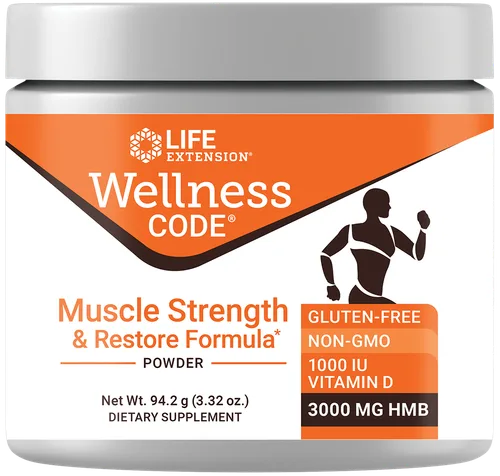
Life Extension - Wellness Code Muscle Strength and Restore Formula Review
Life Extension Wellness Code Muscle Strength and Restore Formula is an unflavored powder that you mix into a drink. A serving is 1 scoop, about 3.14 g, and a container holds about 30 servings. Per serving, the label lists Vitamin D3 at 25 mcg, calcium at 360 mg and HMB at 3000 mg. The calcium and HMB come from MyHMB Calcium β-Hydroxy-β-Methylbutyrate Monohydrate. The other ingredients are sodium citrate, flavor, stevia extract, maltodextrin and starch. The label prints no directions for use in the information provided here, so check the container for how to take it. Buyers most often say they use it for recovery after workouts and to keep muscle tone, with many in their 50s to 70s. Reviews are mostly positive, though some mention an unpleasant taste, a thickening effect in drinks, or stomach upset.
We don’t sell supplements. We help you make decisions and get the best price.
Lowest prices
We hold no current store prices for it yet: check the store.
- AmazonPrice at AmazonCheck price at Amazon (opens in a new tab)
Also at: iHerb · Walmart · Vitacost
Some store links earn us a commission.
Products with nearly the same formula (Matched on the main ingredients)
Study, Trial or Testing Result Summary
Members Only202 human studies · 82 improved
3 of these 202 human studies gave the ingredient by drip or injection, not by mouth.
The main ingredient, HMB, is at a full dose. Pooled trials found it gives a small gain in strength and a borderline gain in muscle mass in people with muscle loss [1]. It also gave small to moderate strength gains in older adults [2] and modest gains in muscle mass and grip strength in people with age-related muscle loss [3]. A review of 11 pooled analyses found more muscle mass and strength [4]. A six-month trial in older adults improved leg strength with a supplement containing HMB [5]. In adults aged 50 to 80 who already exercised, adding HMB gave little extra benefit [6]. Calcium reaches the studied amount only at three servings a day. Large trials found calcium did not change muscle mass [7], and calcium with vitamin D did not improve grip strength [8]. Vitamin D taken alone did not improve lean muscle in older adults over three years [9], nor grip strength or walking speed over two years [10]. It helped grip strength mainly when combined with protein in older adults with muscle loss [11]. Animal and cell studies are never counted.
See all 202 studies →Hide the studies
- Across 19 studies of 19,528 people, those with muscle loss (sarcopenia) had lower vitamin D blood levels than those without, but this compared blood levels and did not test vitamin D supplements.Does vitamin D affect sarcopenia with insulin resistance in aging?
- In 59 trials of 5543 older adults with sarcopenia, protein combined with vitamin D probably increased handgrip strength by about 2 kg and improved quality of life compared with usual care.Nutritional and Pharmacological Interventions for Sarcopenia in Older Adults: A Systematic Review and Network Meta-Analy…
- Across 15 studies of 2,866 adults over 65, vitamin D with or without calcium did not improve grip strength and slightly worsened a walking-mobility test.Vitamin D supplementation and its influence on muscle strength and mobility in community-dwelling older persons: a syste…
- Across 35 trials in 2,331 older adults with sarcopenia, exercise plus nutrition worked best, and resistance training with protein and vitamin D was most effective for muscle mass, though the certainty of evidence was low to very low.Exercise and nutrition strategies for sarcopenia in older adults: evidence from a network meta-analysis based on EWGSOP …
- Across 15 randomized trials of 2137 patients with muscle loss, HMB or HMB-containing supplements gave a small increase in muscle strength and a borderline small increase in muscle mass, but no change in body weight.β-Hydroxy-β-methylbutyrate and its impact on skeletal muscle mass and physical function in clinical practice: a systemat…
- In 27 trials of 1,989 menopausal women, vitamin D improved handgrip strength but not knee extension strength.Effect of non-pharmacological interventions on the prevention of sarcopenia in menopausal women: a systematic review and…
- Across 9 randomized trials of 896 older adults, HMB or products containing it increased muscle strength by a small to moderate amount.Effect of β-hydroxy-β-methylbutyrate (HMB) on the Muscle Strength in the Elderly Population: A Meta-Analysis.
- In 7 trials of 792 older adults, vitamin D3 added to resistance exercise improved lower-limb strength, but other measures showed small non-significant gains beyond exercise alone.The effect of combined resistance exercise training and vitamin D3 supplementation on musculoskeletal health and functio…
- In 3 trials of 637 people with sarcopenia, whey protein, leucine and vitamin D increased limb muscle mass, and improved grip strength and physical performance only when combined with exercise.Effects of Whey Protein, Leucine, and Vitamin D Supplementation in Patients with Sarcopenia: A Systematic Review and Met…
- In 7 trials of 472 older people with sarcopenia, strength training plus supplements increased fat-free mass and some performance tests, but HMB combined with training did not significantly improve handgrip strength, unlike whey protein.Combined effects of strength training, whey protein, and HMB on sarcopenia in older people: A systematic review and meta…
- In pooled data from 411 people in placebo-controlled trials (median follow-up 11 months), active vitamin D did not change lean body mass, fat mass, or body weight compared with placebo.The effect of active vitamin D supplementation on body weight and composition: A meta-analysis of individual participant…
- In 9 studies of 394 young men over about 5 weeks of resistance training, HMB gave small leg strength gains in untrained men, trivial effects in trained men, and no meaningful change in body composition.Effects of beta-hydroxy-beta-methylbutyrate supplementation during resistance training on strength, body composition, an…
- In 10 trials of 384 adults aged 50 to 80, adding HMB to exercise had little or no extra effect on body composition, muscle strength or physical performance compared with exercise alone.Health Benefits of β-Hydroxy-β-Methylbutyrate (HMB) Supplementation in Addition to Physical Exercise in Older Adults: A …
- In 5 trials of patients with sarcopenia, HMB modestly increased skeletal muscle mass index and handgrip strength compared with controls, but did not improve walking speed.The effects of β-hydroxy-β-methylbutyrate supplementation in patients with sarcopenia: A systematic review and meta-anal…
- Across seven trials of 349 older people with weak bones and low muscle, strength training raised muscle mass, grip strength and protein intake, but calcium intake did not change significantly.Effects of Strength Training on Body Composition, Physical Performance, and Protein or Calcium Intake in Older People wi…
- In 11 trials of 302 young adults doing resistance training, HMB slightly increased total body mass but did not significantly improve fat-free mass, fat mass or strength.Supplementation with the Leucine Metabolite β-hydroxy-β-methylbutyrate (HMB) does not Improve Resistance Exercise-Induce…
- In nine trials of vitamin D in adults aged 45 and over, vitamin D had no significant effect on blood levels of the growth hormone IGF-1.Effects of Dietary or Supplementary Micronutrients on Sex Hormones and IGF-1 in Middle and Older Age: A Systematic Revie…
- In 7 trials, calcifediol improved gait speed, handgrip strength and leg extension compared with baseline values.Effect of Calcifediol on Physical Performance and Muscle Strength Parameters: A Systematic Review and Meta-Analysis.
- In older adults, whey protein plus vitamin D improved lean mass, muscle strength and physical function, though it did not add to the effect of resistance exercise.Whey Protein Supplementation with or without Vitamin D on Sarcopenia-Related Measures: A Systematic Review and Meta-Anal…
- In a review of 43 mostly observational studies, higher blood vitamin D was linked to a lower rate of sarcopenia, but no supplement was tested.Systematic review and meta-analysis of biomarkers of sarcopenia and sarcopenic obesity.
- A pooled analysis of six randomized trials in people with sarcopenia found HMB improved hand grip strength but did not significantly change walking speed, fat mass, fat-free mass or skeletal muscle index.The effects of β-hydroxy-β-methylbutyrate or HMB-rich nutritional supplements on sarcopenia patients: a systematic revie…
- A pooled analysis of 11 meta-analyses in adults aged 23 to 79 found HMB significantly increased muscle mass, muscle strength and fat-free mass, with no significant change in fat mass or body weight.Ergogenic Benefits of β-Hydroxy-β-Methyl Butyrate (HMB) Supplementation on Body Composition and Muscle Strength: An Umbr…
- In a review of nine reviews covering 128 studies, calcium supplements had only modest effects on bone mineral content and no muscle benefit was reported for calcium itself, though cheese and yogurt were linked to better grip strength.Nutrients and food supplements for the prevention of musculoskeletal diseases: an umbrella review.
- In 12 trials of 1337 older adults with sarcopenia or malnutrition, branched-chain amino acids plus vitamin D improved muscle mass, grip strength and physical performance in six of nine trials.The Role of Nutrition in the Treatment of Sarcopenia in Old Patients: From Restoration of Mitochondrial Activity to Impr…
- In 3 trials of 203 older people with sarcopenia or frailty, HMB increased lean body mass and preserved muscle strength and function.The Effect of β-hydroxy-β-methylbutyrate (HMB) on Sarcopenia and Functional Frailty in Older Persons: A Systematic Revie…
- In 6 trials of healthy athletes aged 18-45 given 600 to 5,000 IU a day for 4 weeks to 6 months, vitamin D3 improved or tended to improve muscle strength (1.37 to 18.75%), while vitamin D2 did not.Effects of Vitamin D Supplementation on Muscle Strength in Athletes: A Systematic Review.
- In 37 trials of exercise with nutrition supplements including vitamin D in adults over 60, supplements added benefit to exercise in only about a quarter of studies for muscle mass and strength.Nutrition and physical activity in the prevention and treatment of sarcopenia: systematic review.
- A review of seven reviews in older people found vitamin D improved muscle strength and physical performance, especially in women with low starting vitamin D levels.Pharmacological Interventions to Improve Muscle Mass, Muscle Strength and Physical Performance in Older People: An Umbre…
- A review of five studies in dancers found promising but limited evidence that vitamin D may reduce injuries and improve muscle function, due to few and small studies.VITAMIN D AND INJURIES IN DANCERS: A SYSTEMATIC REVIEW.
- In a review of 45 mostly cross-sectional studies in older adults, no link was found between calcium and muscle mass, strength, physical performance or sarcopenia.Minerals and Sarcopenia in Older Adults: An Updated Systematic Review.
- A review of randomized trials in healthy, older and sick people found most studies showed HMB at the usual 3 grams a day helped prevent exercise-related muscle damage and muscle loss in chronic disease.Beta-hydroxy-beta-methylbutyrate supplementation in health and disease: a systematic review of randomized trials.
- This review of sarcopenia in adults 50 and older found that HMB supplements showed some effects on muscle mass and function, but nutrition study results overall were unclear because there were few studies and they differed in design.Prevalence of and interventions for sarcopenia in ageing adults: a systematic review. Report of the International Sarcop…
- In cancer cachexia, an HMB, arginine, and glutamine combination increased lean body mass after 4 weeks in one study of advanced solid tumour patients but showed no benefit after 8 weeks in a larger study of advanced lung and other cancers.A systematic review on the role of vitamins, minerals, proteins, and other supplements for the treatment of cachexia in …
- This review of 15 reviews in adults 65 and older included HMB among several supplements, but its best-supported recommendation was leucine, with low to moderate evidence overall and no clear HMB conclusion in the abstract.Nutritional interventions to improve muscle mass, muscle strength, and physical performance in older people: an umbrella…
- Across 15 studies of adults with cancer (mostly 3 g a day of HMB, often combined with amino acids), the higher-quality studies all showed a benefit for muscle mass (4 of 4) and muscle function (2 of 2), though the evidence was limited.Effects of β-hydroxy β-methylbutyrate (HMB) supplementation on muscle mass, function, and other outcomes in patients wit…
- A review of 15 systematic reviews found only minor, inconsistent support for HMB in preserving lean mass or improving strength in older and clinical populations, and no evidence it improves physical function.An umbrella review of systematic reviews of β-hydroxy-β-methyl butyrate supplementation in ageing and clinical practice.
- In 2157 healthy adults aged 70 and older, 2000 IU of vitamin D a day for 3 years did not improve lean muscle mass or lower the chance of developing sarcopenia compared with placebo.Effect of vitamin D, omega-3 supplementation, or a home exercise program on muscle mass and sarcopenia: DO-HEALTH trial.
- In 1434 children aged 6 to 9, two years of an after-school program with 380 mg daily calcium-rich snacks and exercise raised bone stiffness in one group but did not change muscle strength or vertical jump.Beat osteoporosis - nourish and exercise skeletons (BONES): a group randomized controlled trial in children.
- In 1,368 older women, 1.2 g of calcium carbonate daily for one year did not change lean (muscle) mass or fat mass compared with placebo.Effects of calcium supplementation on circulating osteocalcin and glycated haemoglobin in older women.
- In 1094 adults with prediabetes, active vitamin D (eldecalcitol 0.75 mcg a day) for about 3 years cut new sarcopenia cases to 4.6% from 8.8% with placebo.Active vitamin D treatment in the prevention of sarcopenia in adults with prediabetes (DPVD ancillary study): a randomis…
- In 1,054 healthy adults aged 50 and older, 2,000 IU of vitamin D3 daily for 2 years did not improve grip strength, walking speed, or other physical performance compared with placebo.Effects of Supplemental Vitamin D3, Omega-3 Fatty Acids on Physical Performance Measures in the VITamin D and OmegA-3 Tr…
- In community-dwelling older adults at risk of malnutrition, two daily servings of an HMB-containing supplement for six months with dietary counseling improved weight, nutritional status and leg strength compared with a placebo supplement, and handgrip strength improved in women.Impact of specialized oral nutritional supplement on clinical, nutritional, and functional outcomes: A randomized, place…
- In 652 malnourished older adults after hospital discharge, a high-protein supplement with beta-hydroxy-beta-methylbutyrate lowered 90-day death rates compared with placebo (4.8% vs 9.7%) and improved nutritional status, but it did not change the combined outcome of death or readmission.Readmission and mortality in malnourished, older, hospitalized adults treated with a specialized oral nutritional supple…
- In 614 postmenopausal women, 600 mg daily calcium with vitamin D improved left grip strength at one year in one group but not in the other, while the control group's grip strength declined over two years.Effects of Enhanced Exercise and Combined Vitamin D and Calcium Supplementation on Muscle Strength and Fracture Risk in …
- Children whose mothers took 1000 units of cholecalciferol daily during pregnancy had slightly higher bone mineral density and lean mass at ages 6 to 7 than children whose mothers took placebo, in an exploratory follow-up analysis.Pregnancy vitamin D supplementation and offspring bone mineral density in childhood follow-up of a randomized controlled…
- In 417 adults aged 40-80 with low vitamin D, four months of vitamin D3 (20,000 IU weekly after a loading dose) did not change muscle strength compared with placebo.Four months vitamin D supplementation to vitamin D insufficient individuals does not improve muscular strength: A random…
- In 409 women aged 70 to 80 who had fallen, taking 800 units of vitamin D daily for two years did not reduce falls or improve muscle strength or balance compared with placebo.Exercise and vitamin D in fall prevention among older women: a randomized clinical trial.
- In 387 older adults given calcium plus vitamin D3 or placebo for 3 years, the blood aging marker klotho was not linked to grip strength or lean mass, and the treatment did not change klotho levels.Serum klotho is inversely associated with girth in older women but is not associated with falls or musculoskeletal measu…
- Sarcopenic older adults who drank a vitamin D and leucine whey protein drink twice daily for 13 weeks gained slightly more leg muscle mass and improved chair-stand time more than those given a control drink, though handgrip strength did not differ.Effects of a vitamin D and leucine-enriched whey protein nutritional supplement on measures of sarcopenia in older adult…
- In 324 children and adolescents given 0 to 4000 IU of vitamin D3 daily for 12 weeks, rising vitamin D levels did not improve muscle mass or strength compared with placebo.Serum 25-Hydroxyvitamin D and Intact Parathyroid Hormone Influence Muscle Outcomes in Children and Adolescents.
- In 266 critically ill adults, beta-hydroxy beta-methylbutyrate supplementation given until hospital discharge produced only small gains in phase angle and reduced fatigue, with no effect on physical function or muscle mass.Resistance training and β-hydroxy-β-methylbutyrate for functional recovery in critical illness: a multicenter 2 × 2 fact…
- In 241 older adults with sarcopenia, a 12-week nutrition supplement with whey protein, fish oil and vitamin D increased appendicular muscle mass and grip strength and reduced fat mass compared with routine care.Effects of nutrition supplementation and physical exercise on muscle mass, muscle strength and fat mass among sarcopenic…
- In 230 postmenopausal women with low vitamin D over 1 year, neither 800 IU daily nor high-dose vitamin D3 changed muscle mass or muscle function compared with placebo.Treatment of Vitamin D Insufficiency in Postmenopausal Women: A Randomized Clinical Trial.
- In 226 people with low bone density who all took calcium 600 mg with vitamin D daily, adding acupuncture for 6 months improved balance and sit-to-stand time versus before treatment, but this does not show an effect of calcium itself on muscle.Acupuncture in Treating Osteopenia: A Multicenter, Randomized, Controlled Clinical Trial.
- In 220 people after bariatric surgery over 24 months, vitamin D loading with calcium, protein, and exercise reduced the loss of lean body mass compared with no intervention.The Impact of Vitamin D, Calcium, Protein Supplementation, and Physical Exercise on Bone Metabolism After Bariatric Surg…
- In people with knee osteoarthritis, 1200 units of vitamin D3 daily for 24 weeks did not improve muscle strength compared with placebo, including in the vitamin D deficient subgroup of 50 people, though that subgroup was small.High-intensity versus low-intensity resistance training in patients with knee osteoarthritis: A randomized controlled tr…
- In 159 undernourished Thai children aged 1-6, a calcium-fortified milk-based drink (420 mL a day) plus dietary counselling for 3 months led to greater gains in fat-free mass and soft lean mass than counselling alone, though calcium was only one of many ingredients.Effects of oral nutritional supplement on growth and body composition in malnutrition at risk and malnourished children:…
- In 156 older women with low muscle mass, 1500 mg daily of calcium-HMB for 12 weeks did not add to the effects of resistance training on muscle quality compared with placebo.β-Hydroxy-β-Methylbutyrate Supplementation May Not Enhance Additional Effects of Exercise on Muscle Quality in Older Wom…
- In 156 women aged 65 to 79 with low muscle mass, 1500 mg daily of calcium beta-hydroxy beta-methylbutyrate for 12 weeks slightly improved usual walking speed compared with placebo but did not increase muscle mass, and exercise was the only clearly effective intervention.Effects of exercise and/or β-hydroxy-β-methylbutyrate supplementation on muscle mass, muscle strength, and physical perf…
- In 150 patients with Parkinson disease or parkinsonism during a 30-day rehabilitation program, twice-daily whey protein with leucine and vitamin D increased walking distance more than standard diet alone (about 18 meters extra) and preserved muscle mass.Muscle-targeted nutritional support for rehabilitation in patients with parkinsonian syndrome.
- In 148 men aged 70 and over with mobility problems, 20 weeks of resistance training with vitamin D, calcium and protein supplements improved 30-second chair stand performance and muscle strength compared with no intervention.Beneficial effects of exercise, testosterone, vitamin D, calcium and protein in older men-A randomized clinical trial.
- In 140 older adults with muscle loss, adding vitamin D to heat therapy and resistance exercise improved muscle mass and handgrip strength more than the heat therapy and exercise alone, and lowered inflammation markers.The effects of vitamin D combined with thermotherapy and resistance exercise on inflammatory factors, thyroid hormones a…
- In 136 frail older adults doing exercise, 3 g daily of calcium HMB for 12 weeks improved physical performance and muscle mass more than placebo, but not handgrip strength.[Effects of Exercise Training Combined With β-Hydroxy-β-Methylbutyrate Supplementation on Physical Function in Older Adu…
- In overweight postmenopausal women on a 6-month calorie-restricted diet, calcium plus vitamin D pills improved bone density compared with placebo but did not improve lean tissue retention, which was better with low-fat dairy.Role of Calcium and Low-Fat Dairy Foods in Weight-Loss Outcomes Revisited: Results from the Randomized Trial of Effects …
- In 130 sarcopenic older adults doing supervised exercise, 12 weeks of whey protein, essential amino acids and 100 IU of vitamin D daily added 1.7 kg of fat-free mass and increased grip strength more than exercise with placebo, and lowered C-reactive protein.Whey protein, amino acids, and vitamin D supplementation with physical activity increases fat-free mass and strength, fu…
- In 128 older Lebanese adults with early muscle loss and low vitamin D, 10,000 IU of vitamin D3 three times a week for 6 months increased limb muscle mass compared with placebo but did not improve handgrip strength.Vitamin D supplementation and muscle strength in pre-sarcopenic elderly Lebanese people: a randomized controlled trial.
- Hospitalized older adults with sarcopenia who took a whey protein formula with leucine and vitamin D during rehabilitation gained more muscle mass and walking speed than those given a control formula, and stayed in hospital for a shorter time.Improving rehabilitation in sarcopenia: a randomized-controlled trial utilizing a muscle-targeted food for special medic…
- In 117 adults over 60 with low vitamin D, calcium beta-hydroxy beta-methylbutyrate plus vitamin D3 over 12 months increased leg strength and a composite physical function score in people who did not exercise, compared with controls.Long-term Effects of Calcium β-Hydroxy-β-Methylbutyrate and Vitamin D3 Supplementation on Muscular Function in Older Adu…
- In 112 sarcopenic or dynapenic older adults, bodyweight exercise combined with a protein and vitamin D supplement improved knee strength and muscle quality more than either alone or no treatment over 12 weeks.Synergistic effect of bodyweight resistance exercise and protein supplementation on skeletal muscle in sarcopenic or dyn…
- In 112 medical intensive care patients, 3 grams a day of calcium beta-hydroxy beta-methylbutyrate given from intensive care to discharge did not improve walking distance, physical performance, or muscle strength beyond standard care, while resistance training did.Effects of a multilevel intervention of resistance training with or without beta-hydroxy-beta-methylbutyrate in medical …
- In 110 older adults with sarcopenia, 12 weeks of a muscle-targeted supplement containing 200 IU of vitamin D3 per sachet, taken as two sachets daily with exercise, increased lean tissue, muscle index and grip strength compared with a control group.Effects of combined nutritional supplementation and exercise on proxy measures of muscle mass, strength, and function in…
- In 107 elderly hip fracture patients, those given two bottles a day of beta-hydroxy-beta-methylbutyrate with a standard diet kept their muscle mass stable during rehabilitation, while the standard-diet group lost muscle mass; the study was not blinded and the study length was not stated.Effectiveness of nutritional supplementation on sarcopenia and recovery in hip fracture patients. A multi-centre randomi…
- In 105 older outpatients at risk of malnutrition, a nutrient-rich drink for 12 weeks raised calcium intake and increased muscle mass in women, but muscle strength and physical performance did not differ from standard care.The effect of 12-weeks Nutritional supplementation on Nutritional Intake and Status among Indonesian Older Outpatients w…
- In 102 adults with obesity on a calorie-restricted diet, a supplement with 3 g daily of calcium HMB plus protein for 12 weeks preserved muscle mass versus a loss in controls, and 52.9% gained at least 0.5 kg of muscle.Calcium Beta-Hydroxy-Beta-Methylbutyrate-Enriched Nutritional Supplementation During Dietary Weight Loss in Adults With …
- In 101 children with overweight or obesity over 1 year, a lifestyle program that reduced body fat did not change their vitamin D levels, and the study did not report muscle outcomes.Associations between Body Composition and Vitamin D Status in Children with Overweight and Obesity Participating in a 1-…
- In 101 adults aged 65 or older scheduled for stomach cancer surgery, a multimodal prehabilitation program including resistance training and beta-hydroxy beta-methylbutyrate modestly preserved lean body mass before surgery compared with standard care, but did not improve physical function or after-surgery outcomes.Exercise-nutrition prehabilitation attenuates lean body mass loss before gastrectomy: a randomized controlled trial.
- In 100 adults aged 65 to 85 doing 10 weeks of resistance training, vitamin D3 (800 IU daily or 50,000 IU monthly) over 16 weeks raised vitamin D levels but added no extra benefit to muscle endurance, walking or mobility.Effects of Vitamin D3 Supplementation and Resistance Training on 25-Hydroxyvitamin D Status and Functional Performance o…
- In 98 adults over 50, drinking 1 liter a day of calcium- and magnesium-rich mineral water for 12 months raised muscle mass relative to height versus low-mineral water, but showed no difference in physical performance scores.Efficacy of a Naturally Calcium and Magnesium-Rich Mineral Water on Musculoskeletal Fragility: A Randomized, Double-Blin…
- In 95 older adults over 28 weeks, vitamin D3 (2,000 IU daily after an initial higher dose) did not improve muscle gains from resistance training compared with placebo.Vitamin D3 supplementation does not enhance the effects of resistance training in older adults.
- In 88 early postmenopausal women with low vitamin D, 40,000 IU of vitamin D2 weekly for 12 weeks did not change muscle strength, muscle mass or muscle size differently from placebo.The effect of vitamin D2 supplementation on muscle strength in early postmenopausal women: a randomized, double-blind, p…
- In 84 adults with chronic intestinal failure and low vitamin D, 10 weeks of injected high-dose vitamin D2 improved muscle mass, grip strength, walking speed and quality of life compared with placebo.Effect of vitamin D supplementation on skeletal muscle function and quality of life in patients with chronic intestinal …
- In 83 critically ill patients on mechanical ventilation, 3 g daily of beta-hydroxy beta-methylbutyrate for about 10 days did not increase diaphragm or leg strength or muscle thickness compared with placebo.A randomized controlled trial to determine whether beta-hydroxy-beta-methylbutyrate and/or eicosapentaenoic acid improve…
- In 82 older adults at risk of undernutrition, 12 weeks of a supplement containing vitamin D improved walking distance more than a standard supplement and increased mitochondrial gene activity.A novel oral nutritional supplement improves gait speed and mitochondrial functioning compared to standard care in older…
- In 80 older adults after lumbar surgery, 3 weeks of branched-chain amino acids plus vitamin D improved knee muscle strength at 12 weeks more than a non-amino acid supplement, but did not improve claudication scores, muscle mass, walking speed or timed up-and-go.Branched-chain amino acids plus vitamin D supplementation promote increased muscle strength following lumbar surgery for…
- In 80 older women at risk of sarcopenia doing 32 weeks of strength or multicomponent training, those with higher vitamin D intake had better leg strength on the sit-to-stand test, but the study did not test vitamin D supplements directly.Nutritional intake as a determinant of high-speed resistance and multicomponent training efficacy on strength in older w…
- In 77 elderly men and women taking a beta-hydroxy beta-methylbutyrate, arginine and lysine cocktail for one year, lean mass rose compared with the control group, which did not change.Year-long changes in protein metabolism in elderly men and women supplemented with a nutrition cocktail of beta-hydroxy-…
- In 75 older women recovering from hip fracture surgery, a daily supplement containing 3 g calcium HMB, vitamin D and protein increased muscle strength by day 30 compared with standard nutrition alone.Effect of Calcium β-Hydroxy-β-Methylbutyrate (CaHMB), Vitamin D, and Protein Supplementation on Postoperative Immobiliza…
- In 75 men and women doing resistance training for 4 weeks, 3 grams per day of beta-hydroxy beta-methylbutyrate increased upper body strength more than placebo, while the change in lean mass was not statistically significant.Nutritional supplementation of the leucine metabolite beta-hydroxy-beta-methylbutyrate (hmb) during resistance training.
- In 74 young adult twins, 60 days of cholecalciferol supplementation increased maximal oxygen consumption by 28% and left hand grip strength by 18% compared with those who did not supplement; this paper has since been retracted.Association of Vitamin D Supplementation in Cardiorespiratory Fitness and Muscle Strength in Adult Twins: A Randomized C…
- In 70 pre-frail older adults, 3 grams a day of beta-hydroxy beta-methylbutyrate in a high-protein shake for 12 weeks increased mid-thigh muscle area, improved chair-rise performance, and reduced intramuscular fat compared with nutritional counselling alone.Oral Nutritional Supplement with β-hydroxy-β-methylbutyrate (HMB) Improves Nutrition, Physical Performance and Ameliorat…
- In two experiments with 69 people lifting weights, 3 g daily HMB reduced muscle breakdown and muscle damage markers and led to larger gains in fat-free mass and lifting ability over 3 to 7 weeks.Effect of leucine metabolite beta-hydroxy-beta-methylbutyrate on muscle metabolism during resistance-exercise training.
- In 68 older adults with low muscle strength and muscle mass in hospital rehabilitation, 8 weeks of branched-chain amino acids plus vitamin D with light resistance training improved grip strength, calf size and body mass index more than training alone, but did not improve physical function scores more than the control group.Effects of branched-chain amino acids and vitamin D supplementation on physical function, muscle mass and strength, and …
- In 66 older adults with sarcopenia, 12 weeks of yogurt fortified with 3 g HMB, vitamin D and vitamin C improved handgrip strength and walking speed compared with plain yogurt, and lowered a blood marker of oxidative stress more than the control.A Novel Fortified Dairy Product and Sarcopenia Measures in Sarcopenic Older Adults: A Double-Blind Randomized Controlled…
- In 60 older adults with sarcopenia, a double-blind 6-month supplement of whey protein with vitamin D and vitamin E increased muscle mass and grip strength more than a placebo drink.A high whey protein, vitamin D and E supplement preserves muscle mass, strength, and quality of life in sarcopenic older…
- In 60 women over three months, single high-dose vitamin D3 boluses of 50,000 to 500,000 IU did not change grip strength or physical performance.Effects of High Dose Bolus Cholecalciferol on Free Vitamin D Metabolites, Bone Turnover Markers and Physical Function.
- In 60 women with low-bone-density osteoporosis and low muscle mass, taking one calcium carbonate tablet (1.5 g with vitamin D) daily for 12 weeks was the control arm; adding thunder-fire moxibustion produced larger gains in balance, back pain and muscle and bone markers, while the calcium-only group showed only a small drop in myostatin and no reported gain in balance.[Effects of thunder-fire moxibustion on balance function and musculoskeletal metabolism in female patients of primary os…
- In 60 adults having open abdominal cancer surgery, taking 1.2 grams of beta-hydroxy beta-methylbutyrate with arginine and glutamine for about 10 days around surgery did not reduce wound complications compared with placebo, and muscle mass and grip strength did not differ.Perioperative Nutritional Support With Beta-hydroxy-beta-methylbutyrate, Arginine, and Glutamine in Surgery for Abdomina…
- In 58 frail women after hip replacement, exercise plus protein and vitamin D improved some leg muscle strength more than exercise alone over 12 weeks, but hip strength on the operated side, function, and quality of life did not differ.Effects of perioperative exercise therapy combined with nutritional supplementation on functional recovery after fast-tr…
- In 54 postmenopausal women with low bone density, high-intensity exercise improved leg strength and lean mass over 13 months, but both groups took calcium and vitamin D, so calcium's own effect was not tested.Changes in Menopausal Risk Factors in Early Postmenopausal Osteopenic Women After 13 Months of High-Intensity Exercise: …
- In 53 resistance-trained men over 8 weeks, calcium beta-hydroxy-beta-methylbutyrate did not improve strength or body composition markers beyond placebo.Leucine metabolites do not induce changes in phase angle, bioimpedance vector analysis patterns, and strength in resista…
- In 50 stroke rehabilitation patients, a whey protein and vitamin D jelly (20 µg of vitamin D per jelly, twice daily) for 16 weeks did not change thigh muscle size or strength versus placebo, but it reduced fat infiltration into the thigh muscle.Investigation of the Effect of Nutritional Supplementation with Whey Protein and Vitamin D on Muscle Mass and Muscle Qua…
- In 50 critically injured trauma patients, 28 days of 3 g daily HMB was feasible to give, but its effect on quadriceps muscle thickness was uncertain, with a non-significant trend favoring HMB.Beta-hydroxy-beta-methylbutyrate supplementation and functional outcomes in multitrauma patients: A pilot randomized con…
- In 49 healthy older men, twice-daily whey protein blend containing 500 IU vitamin D, creatine and omega-3s for 20 weeks increased strength and lean mass more than a maltodextrin control, though vitamin D's separate effect cannot be isolated.A whey protein-based multi-ingredient nutritional supplement stimulates gains in lean body mass and strength in healthy …
- In 49 older adults with minor trauma, a beta-hydroxy-beta-methylbutyrate complex with glutamine and arginine did not change thigh muscle size, grip strength, or daily function after about two weeks compared with a glutamine control.Urinary Titin N-Fragment Evaluation in a Randomized Controlled Trial of Beta-Hydroxy-Beta-Methylbutyrate for Acute Mild …
- In 48 older adults with low bone and muscle mass, adding whole-body vibration training to daily calcitriol for 3 months improved muscle mass, strength and physical function more than calcitriol alone.Effects of 12 Weeks of Whole-Body Vibration Training and Vitamin D Supplementation on Bone Density and Muscle Quality in…
- In 48 healthy men aged 66 to 78, combining beta-hydroxy-beta-methylbutyrate with 12 weeks of resistance training reduced abdominal fat more than placebo or either intervention alone; this measure is fat, not muscle.β-Hydroxy-β-methylbutyrate (HMB) supplementation and resistance exercise significantly reduce abdominal adiposity in hea…
- In 47 patients waiting for liver transplant, 3 g daily of beta-hydroxy beta-methylbutyrate with nutrition counseling for 12 weeks improved arm and grip measures, but a maltodextrin control group improved about the same.The effect of β-hydroxy β-methylbutyrate (HMB) with nutritional counselling on anthropometric muscle mass markers, stren…
- In 46 people with chronic kidney disease and low vitamin D, 4000 IU daily of vitamin D3 for 3 months raised bicep strength slightly, and adding physical activity gave a larger gain that was not statistically different from vitamin D alone.Effect of physical activity and vitamin D compared with vitamin D alone on muscle strength, back flexibility and aerobic…
- In 46 older adults with sarcopenia, 12 weeks of exercise improved leg strength, and adding a beta-hydroxy beta-methylbutyrate nutrition supplement changed certain immune cell gene activity linked to strength, but the supplement's separate effect on strength was not reported.Peripheral Blood T Cell Gene Expression Responses to Exercise and HMB in Sarcopenia.
- In 44 postmenopausal women, a 50,000 unit cholecalciferol capsule given every two weeks for 12 weeks did not add any gain in muscle strength or power beyond placebo, although resistance training alone did improve strength.The effects of 12 weeks resistance training and vitamin D administration on neuromuscular joint, muscle strength and pow…
- In 44 resistance-trained men taking 3 grams of calcium beta-hydroxy-beta-methylbutyrate daily for 12 weeks during resistance training, gains in muscle size, strength and lean mass were no greater than with placebo.Negligible Effects of β-Hydroxy-β-Methylbutyrate Free Acid and Calcium Salt on Strength and Hypertrophic Responses to Re…
- In 43 older men with low bone density and muscle loss, one year of high-intensity resistance training increased muscle mass and leg strength, while both groups also took calcium, vitamin D and whey protein, so calcium's own effect was not tested.Effects of High-Intensity Resistance Training on Osteopenia and Sarcopenia Parameters in Older Men with Osteosarcopenia-…
- In 43 malnourished people with liver cirrhosis, 3 g a day of calcium HMB for 12 weeks did not change fat-free mass compared with the supplement without it, though handgrip strength trended upward.Randomized Clinical Trial: Effects of β-Hydroxy-β-Methylbutyrate (HMB)-Enriched vs. HMB-Free Oral Nutritional Supplement…
- In 43 middle-aged women taking 3 grams of calcium beta-hydroxy-beta-methylbutyrate plus vitamin D3 daily for 12 weeks, thigh muscle volume and fat within muscle changed more favorably than with placebo, but muscle function did not change.Small-Scale Randomized Controlled Trial to Explore the Impact of β-Hydroxy-β-Methylbutyrate Plus Vitamin D3 on Skeletal …
- In 42 elderly Thai women with low vitamin D, 0.5 mg of alfacalcidol daily with calcium for 12 weeks increased quadriceps strength more than calcium with placebo.Combination of alfacalcidol with calcium can improve quadriceps muscle strength in elderly ambulatory Thai women who hav…
- In 42 young untrained men doing 6 weeks of resistance training, taking 4000 IU of vitamin D3 with 25 grams of whey protein before bed or after waking increased muscle mass more than a placebo drink did.Muscle-Related Effect of Whey Protein and Vitamin D3 Supplementation Provided before or after Bedtime in Males Undergoin…
- In 40 young men doing 8 weeks of resistance training, calcium HMB did not improve muscle thickness, strength or power more than placebo.Leucine Metabolites Do Not Enhance Training-induced Performance or Muscle Thickness.
- In 40 resistance-trained young men over 8 weeks of weight training, calcium HMB supplementation did not improve body composition more than placebo.No effect of HMB or α-HICA supplementation on training-induced changes in body composition.
- In 40 resistance-trained young men over 8 weeks of training, calcium HMB did not reduce training-related inflammation or change muscle thickness or strength compared with placebo.Leucine metabolites do not attenuate training-induced inflammation in young resistance trained men.
- In 40 experienced resistance-trained men, 4 weeks of 3 or 6 grams per day of calcium beta-hydroxy beta-methylbutyrate did not change muscle breakdown markers, body composition, or one-rep max strength compared with placebo.Effects of calcium beta-hydroxy-beta-methylbutyrate (HMB) supplementation during resistance-training on markers of catab…
- In 40 people doing resistance training for 3 weeks, taking 3 grams per day of beta-hydroxy beta-methylbutyrate led to about 37.5 kilograms more total strength gain than placebo and reduced exercise-related muscle damage, though the lean mass gain was not statistically significant.Creatine and beta-hydroxy-beta-methylbutyrate (HMB) additively increase lean body mass and muscle strength during a weig…
- In 40 people with rheumatoid arthritis and muscle wasting, a beta-hydroxy beta-methylbutyrate, glutamine and arginine mixture over 12 weeks was no better than a placebo amino acid mixture at building lean mass.Dietary treatment of rheumatoid cachexia with beta-hydroxy-beta-methylbutyrate, glutamine and arginine: a randomised con…
- In resistance-trained females over 8 weeks, adding 3 grams per day of HMB during time-restricted feeding did not definitively improve fat-free mass, muscle growth, or performance compared with the other groups.Time-restricted feeding plus resistance training in active females: a randomized trial.
- In 38 patients with heart failure, all of whom took vitamin D, a high-calorie, high-protein oral supplement for 24 weeks increased lean mass more than a Mediterranean diet alone, but muscle thickness tended to fall in that group and fat mass rose in the diet group.Mediterranean Diet, Vitamin D, and Hypercaloric, Hyperproteic Oral Supplements for Treating Sarcopenia in Patients with …
- In 37 untrained college-aged men doing 8 weeks of resistance training, beta-hydroxy beta-methylbutyrate at about 3 grams per day increased fat-free mass and some torque measures, and reduced muscle damage markers, but one-rep max strength did not differ from placebo.Beta-hydroxy-beta-methylbutyrate ingestion, Part I: effects on strength and fat free mass.
- In a 12-week placebo-controlled trial of 34 older adults with sarcopenia doing resistance exercise, HMB improved handgrip strength, gait speed, and chair stand time more than placebo and lowered an inflammatory factor, though muscle mass did not change significantly.Effects of Beta-Hydroxy-Beta-Methylbutyrate Supplementation on Older Adults with Sarcopenia: A Randomized, Double-Blind,…
- In 33 patients recovering from knee replacement, high-intensity resistance training with a supplement containing 366 mg calcium for 12 weeks increased leg strength more than standard rehabilitation, but did not increase muscle mass more than standard rehabilitation.High-Intensity Resistance Training Enhances Strength, But Not Muscle Mass and Physical Functioning Gains during Total Kn…
- In adults on maintenance hemodialysis, six months of daily HMB supplementation did not improve muscle mass, strength, physical function or quality of life compared with placebo, and about a third of the HMB group were found to be non-adherent.Efficacy of beta-hydroxy-beta-methylbutyrate supplementation in maintenance hemodialysis patients.
- Older men with excess weight who took a multi-ingredient supplement containing vitamin D3 along with exercise for 12 weeks gained more leg strength than those on a collagen-based product, though vitamin D's own effect could not be separated out.Obesity and Metabolic Disease Impair the Anabolic Response to Protein Supplementation and Resistance Exercise: A Retrosp…
- In 32 adults over one year, eldecalcitol (an active vitamin D form) increased skeletal muscle mass by 1.9% and muscle strength by 4.1%, while the placebo group lost 3.4% of muscle mass and 0.7% of strength.Anti-sarcopenic effects of active vitamin D through modulation of anabolic and catabolic signaling pathways in human ske…
- In 31 women doing resistance training for 9 weeks, 1000 mg daily of amorphous calcium carbonate increased bench press strength gains more than placebo, though back squat gains did not differ.The Effects of Amorphous Calcium Carbonate (ACC) Supplementation on Resistance Exercise Performance in Women.
- In 31 adults aged about 70 doing an 8-week strength program, 3 grams a day of calcium beta-hydroxy-beta-methylbutyrate tended to increase fat-free mass and significantly reduced body fat percentage compared with placebo.Body composition in 70-year-old adults responds to dietary beta-hydroxy-beta-methylbutyrate similarly to that of young a…
- In 31 healthy adults aged 65 to 89, six months of daily HMB with arginine and glutamine increased total body lean mass and improved a timed stair climb compared with placebo, though quadriceps muscle volume did not change.Oral Supplementation with Beta-Hydroxy-Beta-Methylbutyrate, Arginine, and Glutamine Improves Lean Body Mass in Healthy O…
- In 30 older adults in long-term care, resistance training plus whey protein and vitamin D for 24 weeks increased lean mass more than the control group, but the vitamin D effect cannot be separated from the protein.Whey protein and vitamin D supplementation in institutionalized older adults: A randomized trial.
- In 30 active older adults doing an exercise program, 6 weeks of creatine plus beta-hydroxy beta-methylbutyrate improved leg, back and arm strength and endurance more than placebo, largely without a clear change in muscle mass.Combined creatine and HMB co-supplementation improves functional strength independent of muscle mass in physically activ…
- In 28 vitamin D-low middle-aged men doing resistance training for 12 weeks, taking 8000 IU of vitamin D daily raised blood levels but did not add to gains in muscle strength or lean body mass compared with placebo.Vitamin D Supplementation Does Not Enhance Gains in Muscle Strength and Lean Body Mass or Influence Cardiorespiratory Fi…
- In 26 healthy young adults doing resistance training for 10 weeks, a supplement containing whey protein, creatine, calcium and 1000 IU of vitamin D gained more lean body mass than a placebo, though vitamin D was only one ingredient.The Effect of a Multi-ingredient Supplement on Resistance Training-induced Adaptations.
- In 26 adults over 10 weeks of resistance training, a multi-ingredient supplement containing vitamin D increased the size of fast-twitch muscle fibers more than a collagen control.The Effect of Multi-Ingredient Protein versus Collagen Supplementation on Satellite Cell Properties in Males and Females…
- In 26 resistance-trained young men over 12 weeks of training, adding beta-hydroxy beta-methylbutyrate (1.5 g per dose) to whey protein produced no more muscle growth or strength gain than adding leucine.Equivalent Hypertrophy and Strength Gains in β-Hydroxy-β-Methylbutyrate- or Leucine-supplemented Men.
- In 25 healthy adults with low vitamin D, those with more trunk fat needed higher vitamin D2 injection doses to reach sufficient levels, while dose was not related to lean mass, so this study does not show a muscle-building effect.Impact of body composition on vitamin D requirements in healthy adults with vitamin D deficiency.
- In 24 healthy older adults on 10 days of bed rest, 3 grams daily of HMB calcium salt (a leucine metabolite, not calcium alone) prevented the loss of lean body mass seen with placebo.Effect of β-hydroxy-β-methylbutyrate (HMB) on lean body mass during 10 days of bed rest in older adults.
- In 24 stroke patients in rehabilitation, one daily sachet of a multi-nutrient supplement containing algal calcium for 8 weeks improved fatigue, balance, cognition and lean mass more than rehabilitation alone.The role of nutritional supplement on post-stroke fatigue: a pilot randomized controlled trial.
- In 24 older adults, a single dose of 3 g calcium beta-hydroxy-beta-methylbutyrate added to 40 g whey boosted muscle protein synthesis in older women and reduced muscle protein breakdown, but the effect was not seen in men.The Effect of β-Hydroxy-β-Methyl Butyrate (HMB) upon Acute Fed-State Muscle Protein Turnover in Older Men and Women: A R…
- In 24 people with cirrhosis, 3 g per day of beta-hydroxy beta-methylbutyrate for 12 weeks improved chair stand and six-minute walk performance and increased thigh muscle thickness compared with placebo.The Effects of 12-Week Beta-Hydroxy-Beta-Methylbutyrate Supplementation in Patients with Liver Cirrhosis: Results from a…
- In adults on hemodialysis, 12 weeks of a supplement containing HMB and branched-chain amino acids increased thigh muscle thickness and fat-free mass and reduced inflammation and oxidative stress markers compared with placebo, but did not change physical performance.The Combined Use of Hydroxymethylbutyrate and Branched-Chain Amino Acids to Counteract Uremic Sarcopenia.
- In 23 adults after liver transplant, a formula with calcium beta-hydroxy-beta-methylbutyrate taken for 30 days after surgery increased grip strength and muscle mass at 1 and 2 months compared with controls and shortened hospital stays.Effect of administration of β-hydroxy-β-methyl butyrate-enriched formula after liver transplantation: A pilot randomized…
- In 22 men after liver transplant, 12 weeks of beta-hydroxy beta-methylbutyrate supplementation increased muscle mass and grip strength compared with the control group, with no side effects reported.The Effect of 12 Weeks of β-Hydroxy-β-Methyl-Butyrate Supplementation after Liver Transplantation: A Pilot Randomized Co…
- In 21 people with cirrhosis and sarcopenia, 12 weeks of a supplement with 1.48 g of calcium HMB daily did not increase muscle mass or handgrip strength more than maltodextrin, although some measures improved within the group.The effects of beta-hydroxy-beta-methylbutyrate on sarcopenia in stable decompensated cirrhosis: A pilot randomized cont…
- In 20 resistance-trained men, 3 g daily of free-acid beta-hydroxy beta-methylbutyrate taken before a heavy lifting session reduced muscle damage and improved recovery compared with placebo.β-Hydroxy-β-methylbutyrate free acid reduces markers of exercise-induced muscle damage and improves recovery in resistan…
- In 20 untrained men, 1.5 grams per day of beta-hydroxy beta-methylbutyrate for 2 weeks reduced strength loss and loss of joint flexibility after hard eccentric arm exercise compared with placebo.Low Dose of β-Hydroxy-β-Methylbutyrate (HMB) Alleviates Muscle Strength Loss and Limited Joint Flexibility following Ecc…
- In a 20-person open-label pilot in liver cancer patients taking lenvatinib, a beta-hydroxy beta-methylbutyrate drink with arginine and glutamine plus walking training did not reduce side effects, and muscle mass retention was higher in the intervention group but not statistically significant.An open-label, randomized, controlled trial on the benefit of β-hydroxy-β-methyl butyrate, l-arginine, l-glutamine combi…
- In 20 physically active adults over 6 weeks of resistance training, a post-workout supplement containing beta-hydroxy beta-methylbutyrate, whey, creatine and vitamin D3 increased fat-free mass and reduced fat mass more than carbohydrates alone, but muscle thickness and strength gains were similar.Effect of a Multi-Ingredient Post-Workout Dietary Supplement on Body Composition and Muscle Strength - A Randomized Cont…
- In 18 collegiate basketball players over 12 weeks of strength training, about 517 IU daily of vitamin D3 did not improve lean mass, fat loss or jump power compared with placebo.Vitamin D supplementation and body composition changes in collegiate basketball players: a 12-week randomized control tr…
- In 18 untrained men, 3 grams a day of beta-hydroxy beta-methylbutyrate, alone or with whey protein, did not reduce strength loss, muscle soreness, or muscle damage markers after a single bout of eccentric exercise.Effects of combined β-hydroxy-β-methylbutyrate (HMB) and whey protein ingestion on symptoms of eccentric exercise-induce…
- In 16 untrained men doing 12 weeks of resistance training, 3 g of calcium HMB added to whey protein increased leg fat-free mass more than whey protein plus placebo (+14.2% vs +7.0%), though whole-body gains did not differ.Combined protein and calcium β-hydroxy-β-methylbutyrate induced gains in leg fat free mass: a double-blinded, placebo-co…
- In 15 adults with burns, one year of vitamin D3 injections with daily oral calcium improved quadriceps strength at high speed compared with placebo, but did not change bone density.Effects of cholecalciferol supplementation and optimized calcium intakes on vitamin D status, muscle strength and bone h…
- In soldiers undergoing intense military training, 3 grams per day of HMB for 23 days reduced the rise in tumor necrosis factor-alpha and other inflammatory signals compared with placebo, and may help maintain muscle quality.β-Hydroxy-β-methylbutyrate attenuates cytokine response during sustained military training.
- In 12 male college boxers losing weight before a competition, 3 g per day of beta-hydroxy beta-methylbutyrate over 9 days kept fat-free mass steady, while placebo users lost fat-free mass.Beta-hydroxy-beta-methylbutyrate supplementation preserves fat-free mass in collegiate boxers during acute body mass los…
- In 8 athletes with patellar tendinopathy, 4 weeks of rehabilitation plus beta-hydroxy beta-methylbutyric acid supplementation was associated with greater jump power and load-related power than placebo, though the dose was not stated and the group was very small.Effects of β-Hydroxy β-Methylbutyric Supplementation in Combination with Conservative Non-Invasive Treatments in Athlete…
- In older adults, 10,000 units of cholecalciferol given five days a week for 13 weeks, combined with aerobic training, reduced fat inside leg muscle and increased tissue oxygen use, while vitamin D alone did not produce these changes.Local In Vivo Measures of Muscle Lipid and Oxygen Consumption Change in Response to Combined Vitamin D Repletion and Aer…
- In resistance-trained male athletes, 3 g daily HMB for 6 weeks did not change strength, body composition or muscle damage markers compared with placebo during training.Beta-hydroxy-beta-methylbutyrate (HMB) supplementation does not affect changes in strength or body composition during re…
- In 177 elderly patients with sarcopenia after hip replacement, resistance training with or without beta-hydroxy beta-methylbutyric acid improved body composition and grip strength over 3 months, while beta-hydroxy beta-methylbutyric acid alone mainly prevented losses; no differences were found between the four groups in function or pain scores.Effect of Resistance Training Combined with Beta-Hydroxy-Beta-Methylbutyric Acid Supplements in Elderly Patients with Sa…
- In 66 adolescent girls, about 1300 mg daily calcium from milk for 12 weeks did not change body composition or muscle performance, though resistance training did improve them and milk with training improved bone density.Resistance Training and Milk-Substitution Enhance Body Composition and Bone Health in Adolescent Girls.
- In 49 children followed to 24 months of age, those given 1000 IU per day of vitamin D3 as infants had greater whole body lean mass than those given 400 IU per day, a difference that lasted after the trial ended.Can correction of low vitamin D status in infancy program for a leaner body composition? A posttrial follow-up study of …
- In 48 severely burned children, 12 weeks of 1000 IU daily vitamin D3 plus isokinetic training increased leg strength, lean body mass and gait measures more than standard care alone.Effect of vitamin D supplementation and isokinetic training on muscle strength, explosive strength, lean body mass and g…
- In 27 older women over six months, alphacalcidol (0.5 mcg daily) raised knee leg strength by about 11 to 15% in vitamin D-deficient women compared with women with normal levels.Muscle strength, functional mobility and vitamin D in older women.
- In 16 male collegiate rugby players, adding 5 grams per day of beta-hydroxy beta-methylbutyrate to 5 grams of creatine for 6 weeks gave no greater gains in body composition, strength, or sprinting than creatine alone.The addition of β-Hydroxy β-Methylbutyrate (HMB) to creatine monohydrate supplementation does not improve anthropometric…
- In 143 hemodialysis patients with low vitamin D, 6 months of monthly cholecalciferol raised vitamin D levels but did not change hand grip strength compared with no treatment.Cholecalciferol and muscle strength in hemodialysis patients: results from the randomized VITADIAL trial.
- In 107 postmenopausal women with low vitamin D over 6 months, weekly calcifediol or weekly cholecalciferol raised vitamin D levels faster and improved leg muscle function more than monthly or single-dose cholecalciferol.Effects of Different Vitamin D Supplementation Schemes in Post-Menopausal Women: A Monocentric Open-Label Randomized Stu…
- In 80 healthy women over 65 taking 1.5 grams of calcium beta-hydroxy-beta-methylbutyrate daily for 8 weeks, a balance and walking score did not change compared with controls, but leg strength, handgrip endurance, 6-minute walk distance and muscle density improved more than in controls.Effect of Oral Beta-Hydroxy-Beta-Methylbutyrate (HMB) Supplementation on Physical Performance in Healthy Old Women Over …
- In older adults with muscle loss, a whey protein supplement enriched with leucine and vitamin D for 12 weeks did not change muscle mass or grip strength more than extra protein from diet alone, but it improved walking speed more, especially in those under 75.Effects of adequate dietary protein with whey protein, leucine, and vitamin D supplementation on sarcopenia in older adu…
- In 50 postmenopausal women with osteoporosis, adding eldecalcitol at 0.75 µg daily to alendronate for 6 months increased back and hip muscle strength and improved timed up and go test results, compared with alendronate alone.Eldecalcitol improves muscle strength and dynamic balance in postmenopausal women with osteoporosis: an open-label rando…
- In 50 dialysis patients with sarcopenia and low vitamin D, a daily 0.5 µg dose of alfacalcidol for 48 weeks led to improved muscle mass or function in 48% of patients, compared with 12% of those given no vitamin D drug.Effect of active vitamin D supplementation on muscle mass and function in peritoneal dialysis patients with sarcopenia: …
- In 38 adults with advanced lung cancer, a beta-hydroxy beta-methylbutyrate, arginine and glutamine mix over 12 weeks showed no evidence of benefit for keeping lean body mass, and the trial stopped early due to slow recruitment and partial adherence.Beta-hydroxy beta-methylbutyrate/arginine/glutamine (HMB/Arg/Gln) supplementation to improve the management of cachexia …
- In 35 postmenopausal women with type 2 diabetes, 1000 IU of vitamin D daily for 12 months raised vitamin D levels and improved muscle strength and muscle function, in a study without a control group.Effects of 12 Months of Vitamin D Supplementation on Physical Fitness Levels in Postmenopausal Women with Type 2 Diabete…
- A genetic study of up to 307,281 UK Biobank participants found that genetically higher vitamin D levels were linked to slightly greater grip strength and muscle mass, and lower odds of probable sarcopenia.Muscle Traits, Sarcopenia, and Sarcopenic Obesity: A Vitamin D Mendelian Randomization Study.
- In a genetic analysis of about 295,000 UK adults, blood vitamin D levels below 20 ng/mL were linked to a rapidly rising risk of sarcopenia, though this study did not test supplements directly.Genetic Variants, Serum 25-Hydroxyvitamin D Levels, and Sarcopenia: A Mendelian Randomization Analysis.
- In a large UK survey of about 68,000 adults, dietary calcium was not reported as linked to handgrip strength, while oily fish, magnesium and retinol were linked to higher grip strength.Associations between diet and handgrip strength: a cross-sectional study from UK Biobank.
- In a survey of 4,500 adults over 50 in western China, lower vitamin D levels were linked to sarcopenia under some diagnostic criteria but not others.The Comparison of Sarcopenia Diagnostic Criteria using AWGS 2019 with the Other Five Criteria in West China.
- In a cross-sectional study of 3713 adults aged 50 and older, vitamin D deficiency was linked to sarcopenia in men but not women, and low physical activity was linked to sarcopenia only in women.Sex differences in the association of physical activity levels and vitamin D with obesity, sarcopenia, and sarcopenic ob…
- In 2612 Korean adults, higher blood vitamin D (total and D3 forms) was linked to greater grip strength and lean mass, while higher vitamin D2 was linked to lower muscle strength and more sarcopenia; this cross-sectional study cannot show cause and effect.Differential Associations of Vitamin D Metabolites with Adiposity and Muscle-Related Phenotypes in Korean Adults: Result…
- In 584 community-dwelling older adults, vitamin D intake from the diet did not differ between people with and without sarcopenia (low muscle mass and strength).Dietary intake and its association with sarcopenia in older adults: a cross-sectional analysis.
- In a prevalence survey of 509 adults admitted with a hip fracture, most had low vitamin D levels and about 17 percent had muscle weakness, but no vitamin D supplement was given, so this study does not show whether vitamin D builds muscle.Prevalence of malnutrition in a cohort of 509 patients with acute hip fracture: the importance of a comprehensive assess…
- In 400 older Asian adults, muscle mass and strength were more closely linked to bone density than body fat was; calcium intake was only a statistical adjustment and was not tested as a treatment.Muscle plays a more superior role than fat in bone homeostasis: A cross-sectional study of old Asian people.
- In 188 people with rheumatoid arthritis and 158 controls, sarcopenia and vitamin D deficiency were each linked to a higher rate of spine fractures; the study did not test supplementation.Synergy of sarcopenia and vitamin D deficiency in vertebral osteoporotic fractures in rheumatoid arthritis.
- In 322 vascular surgery inpatients, 56% had low vitamin D, and only 5% were diagnosed with sarcopenia (low muscle mass and strength); this study did not test any vitamin D intervention.Nutritional status of patients admitted to a metropolitan tertiary care vascular surgery unit.
- In 246 older women in long-term care, higher vitamin D levels were linked to better walking speed but not to grip strength, and this was a correlation at baseline rather than a supplement effect.The association of vitamin D with bone microarchitecture, muscle strength, and mobility performance in older women in lo…
- In a cross-sectional study of 227 older adults in India, low vitamin D levels were not linked to primary sarcopenia (low muscle mass and strength); the study did not test supplementation.Prevalence and factors contributing to primary sarcopenia in relatively healthy older Indians attending the outpatient d…
- In 170 patients in a study of hip surgery, vitamin D deficiency was more common in people with sarcopenia than in those without; the study did not test supplementation.Vitamin D Deficiency and Sarcopenia in Hip Fracture Patients.
- Adults with type 2 diabetes had higher rates of sarcopenia and lower calcium intake than matched controls, but this study did not show calcium itself was linked to muscle strength.Sarcopenia: a chronic complication of type 2 diabetes mellitus.
- In 120 older adults with type 2 diabetes, lower serum vitamin D levels were found in patients with reduced hand grip strength, though this was a cross-sectional association and not a supplement test.Association of sarcopenia and pancreatic exocrine insufficiency in older adults type 2 diabetes mellitus patients.
- In 106 young Lebanese adults, daily calcium intake was not reported as linked to bone density, while leg strength in the half-squat was linked to higher bone density.Performance physique et densité minérale osseuse chez de jeunes adultes libanais.
- In 101 postmenopausal women, lower vitamin D levels were linked with higher body fat, metabolic syndrome and weaker grip strength, but no supplement was tested.Cross-talk between muscle and bone in postmenopausal women with hypovitaminosis D.
- In a retrospective study of 100 people after bariatric surgery, vitamin D levels and different cholecalciferol doses did not change handgrip strength or the shuttle walk test, while higher protein intake was linked to better handgrip strength.Assessment of Physical Fitness after Bariatric Surgery and Its Association with Protein Intake and Type of Cholecalcifer…
- In 85 adults with transfusion-dependent thalassemia and matched controls, vitamin D levels did not differ significantly between groups, though probable sarcopenia was more common in patients.Probable sarcopenia and bone health in transfusion-dependent beta thalassemia patients.
- In a cross-sectional study of 82 people with acromegaly and matched controls, higher calcium intake from food was associated with greater lean muscle mass; this is an association from diet records, not a trial result.The relationships among nutrition, body composition, muscle strength and physical performance in patients with acromegal…
- In 68 patients on peritoneal dialysis, using vitamin D was independently associated with higher psoas muscle mass index, though this cross-sectional study cannot prove cause.Factors Affecting Psoas Muscle Mass Index in Patients Undergoing Peritoneal Dialysis.
- In 53 Chinese men and women aged 18 to 35, calcium intake was similar across age and sex groups, and the study found only correlations between bone, body composition, and muscle strength, with no intervention tested.Muscle-Bone Interactions in Chinese Men and Women Aged 18-35 Years.
- In a retrospective study of healthy volunteers, higher blood levels of the active form of vitamin D were linked to better leg strength and lean mass in women, while the storage form was linked to body fat rather than muscle, so no supplement effect was shown.25-hydroxyvitamin D3 and 1,25-dihydroxyvitamin D3 exert distinct effects on human skeletal muscle function and gene expr…
- In long-term care residents, vitamin D intake was low in over 80% of participants, but the study did not link vitamin D specifically to sarcopenia.Dietary Intake and Associated Factors in Long-Term Care Homes in Southeast Spain.
- In a mixed study of old rats, old mice, cells and people, vitamin D supplementation started in older adults improved muscle mass and strength, and vitamin D levels changed energy-producing activity inside muscle cells.Vitamin D status modulates mitochondrial oxidative capacities in skeletal muscle: role in sarcopenia.
- In mice with muscle atrophy, a vitamin D analogue restored grip strength in males but not females, and the effect depended on testosterone; human data from a national survey showed vitamin D and testosterone interact to affect grip strength.The Effects of Vitamin D on Muscle Strength Are Influenced by Testosterone Levels.
Review Totals and Summary
Members Only588 reviews · 85% positive
Across the stores that sell it, this powder carries about 588 ratings, and 82% of the starred reviews below give 4 or 5 stars. Most buyers are gym-goers or older adults who say it fits into their routine, while a smaller group is put off by taste, texture or stomach upset. **What buyers say it did for them:** Many describe better recovery after hard workouts and a feeling of more strength. One wrote, "I can already see my recovery improving." Another said, "I feel more powerful when I workout." Some older users say it helps them keep muscle tone and strength, and one wrote, "Helping me keep my muscle tone." A few have not noticed anything yet. One husband has used it a month with little change, and another buyer, 2 to 3 weeks in, saw no change in their hands. **What they complain about:** The sharpest complaints are about stomach trouble and taste. One reviewer said it was "extremely hard to choke down" and made them sick to their stomach. Another reported cramps, headaches and hot flashes, and said it tasted like petrochemicals. A third found it turned a smoothie and chocolate milk thick, and guessed the starch was the cause. **Taste, smell and form:** Opinions split. Several call it close to tasteless in coffee or protein shakes, with one saying he "doesn't even know it's there." Others say it mixes easily with any drink. One reviewer says it does not dissolve unless put in hot liquid. One buyer liked the packaging and called it stylish. **Value for money:** Few comment on price. One calls it cheap yet higher quality than a typical HMB, and another points to an excellent price for the ingredients. One user says they will keep using it as long as they can afford it. **Who it seems to suit:** Buyers are often over 50, with several in their 60s and 70s, plus bodybuilders, athletes and people who train regularly. One buyer with osteopenia liked that it combines calcium and HMB. Several buy it for elderly relatives. It suited people who want an unflavored powder to stir into coffee, milk or shakes. It did not suit those who are sensitive to taste, thick textures or loose stools. One reviewer is switching to HMB capsules. **Other comments:** Some reviews are about iHerb delivery and packaging rather than the powder itself, and these are positive.
Biohacker Summary
Members Only10 of 10 recommend it
On calcium, the main ingredient, three of the ten panelists recommend it and the other seven are neutral, mostly just naming food sources. Those who recommend it say it matters for bones, nerves, muscles and the heart, and one suggests 1,000 to 1,200 milligrams a day, which can come from calcium carbonate or calcium citrate. Several others point to sardines, dairy, milk and kale as food sources, one says low energy intake can leave calcium short, and one is weighing whether he needs a supplement because lead can displace calcium in bones. Nobody reports a caution about calcium or says they stopped taking it. Vitamin D is a smaller ingredient in this product, and the panel widely recommends it, often paired with K2 and taken with fat.
See all 10 biohackers →Hide the biohackers
Dr. Eric Berg · Calcium · neutral
- States that one can of sardines contains 382 mg of calcium.
- Says a vitamin D deficiency may be fixable without taking more vitamin D, since the secret is cofactors rather than more vitamin D, and without cofactors vitamin D floats around the blood rendered useless.
- Highly recommends taking 10,000 IU of vitamin D3 every single day, sourced from sheep's wool rather than synthetic, and says it should come with K2 and magnesium.
- Recommends vitamin D3 at 10,000 IU to keep the single-cell endothelial wall in good order and to stimulate nitric oxide, and says not to take it by itself but paired with K2.
- Says the natural remedy for a heel spur, which reflects a calcium problem, includes vitamin D at 20,000 IU.
- Dr. Berg states that Vitamin D helps maintain healthy skin, support cell repair, and protect against oxidative damage.
- Takes at least 20,000 IU of vitamin D3 before every flight, saying vitamin D directly strengthens the immune system and helps restore circadian rhythms for jet lag.
- Recommends Vitamin D3, especially, for reducing plaque in arteries.
- Recommends Vitamin D3, noting it's a hormonal precursor involved in a med hormones, and suggests a minimum dose of 10,000 IUs, preferably with K2.
- Discusses Vitamin D in relation to prostate health.
- Lists Vitamin D as a natural cancer remedy.
- Warns against calcium supplements, citing studies that link them to a higher risk of heart attack, especially in postmenopausal women, and suggests getting calcium from dairy instead.
- Recommends focusing on calcium to support stronger bones if a neck hump is associated with osteoporosis.
- Mentions calcium as not being the most important mineral.
Siim Land · Calcium · neutral
- Lists dairy and sardines as sources of Calcium.
- Advises against taking vitamin D in the morning with other supplements because it is fat soluble and requires dietary fat for better absorption.
- Recommends taking Vitamin D with fat for better absorption.
- States that Vitamin D connects biology to light and that UVB reaching the skin enables its production.
- Thinks vitamin D has some of the strongest evidence and is worth considering.
- Notes that Vitamin K2 pairs well with vitamin D by regulating calcium and bone mineralization.
- Recommends taking vitamin D supplements with some fat to maximize its absorption, suggesting with food or a teaspoon of olive oil.
- Notes that taking vitamin D3 with a fat-containing meal resulted in 32% higher peak blood vitamin D levels.
- Recommends taking Vitamin D in the morning or at lunch with fat.
- Notes that Boron reduces calcium/magnesium loss.
- Notes that Boron improves vitamin D.
- Recommends Vitamin D because microglia contain Vitamin D receptors, and Vitamin D helps keep the immune system properly regulated, with low levels associated with greater neuroinflammation and a higher risk of autoimmune conditions.
- Recommends a high calcium intake for bone health.
- Places calcium supplementation in the 'bad tier' due to its association with increased cardiovascular events, recommending dairy or bones as easier ways to get calcium, though it can be useful for postmenopausal women with low bone density.
Thomas DeLauer · Calcium · neutral
- Notes that milk contains 120mg of calcium, while sardines contain 351mg, highlighting a 3x difference.
- Says vitamin D has a huge influence on glucose metabolism and urges viewers not to skimp on it, with sun exposure as a source.
- Says vitamin D is probably the most common deficiency he sees in clients, and that magnesium deficiency is rarely seen, so deficiencies should be tested and fixed.
- Recommends taking Vitamin D3 in the morning, between 6:00 and 10:00 a.m., to align with the body's natural metabolic activation phase and sunlight-triggered vitamin D production.
- Uses vitamin D3 in the fall and winter months when getting less sun, as it's important to supplement it then.
- Recommends taking a massive amount of vitamin D simultaneously with an early morning massive breakfast to help reset circadian rhythms and address hyperphagia.
- Recommends Vitamin D, stating that it has receptors throughout the brain and deficiency can quickly impact brain and mood.
- Takes supplemental vitamin D because he is skin sensitive and from northern latitudes, limiting his UV exposure.
- Recommends taking vitamin D on non-liver days to ensure both nutrients get proper receptor access.
- Takes Purity's liquid vitamin D3 with K2 because she is constantly inside during the day; D3 is for overall wellness and K2 helps the body absorb calcium properly.
- Recommends getting vitamin D, suggesting it can be obtained while walking.
- Recommends getting calcium, along with vitamin D, zinc, and magnesium, from foods like sardines, as they are important for inflammatory pathways in the gut.
- Explains that eating sardines with their soft bones provides a serious hit of calcium, which is a perfect combination for bones and may contribute to satiety.
- Mentions that magnesium and calcium should not be taken together as they cancel each other out.
Dr. Mark Hyman · Calcium · recommends
- Notes that calcium is in bones but is also essential for nerves, muscles, and the heart, and low levels can affect muscle function and heart rhythm.
- Consumes Zetopia's Atlantic salmon to get Vitamin D, particularly in the winter months, as it is one of the few foods that provides both Omega-3s and Vitamin D.
- Mentions that the body makes vitamin D from sunlight exposure, and a deficiency can hinder calcium absorption, which is crucial for strong bones.
- Recommends Vitamin D for health, stating that amazing things happen when patients' vitamin D statuses reach optimal levels.
- Mentions vitamin D as an existing biomarker that plays a role in mental health, which Function Health includes in their measurements.
- Notes that vitamin D plays a role in immune function.
- Recommends checking vitamin D levels and states that if they had to pick one single intervention for immune health, vitamin D would be it.
- Dr. Hyman discusses vitamin D in relation to sun exposure patterns.
- States that vitamin D supplementation can help with oxidative stress.
- Mentions vitamin D as a key nutrient for supporting immune function.
- States that vitamin D is probably the single most important intervention for immune health, recommending levels of 45 to 70 and emphasizing testing to determine the right dose.
- States that green leafy vegetables are great sources of calcium.
- Notes that calcium needs are lower than advertised and that stress, soda, and excess sugar can drive calcium loss.
- Does not prescribe calcium supplements at all, teaching people to get it from whole foods instead, because calcium supplements don't work for building bones or preventing fractures, and it's bone quality, not density, that matters.
Dr. Rhonda Patrick · Calcium · neutral
- Mentions that kale delivers calcium, a micronutrient many diets fall short on.
- States that people taking vitamin D supplements have a 40% lower risk of dementia, and those with lower vitamin D levels have a 50 to 80% higher risk of dementia.
- Notes that vitamin D from sunlight, food, or supplements needs to undergo conversions in the liver and kidneys to become its active hormone form, calcitriol.
- States that Vitamin D supplementation has been associated with a 40% lower dementia risk, and low levels are linked to a 50 to 80% higher risk.
- Recommends getting adequate vitamin D, noting that people taking vitamin D supplements have a 40% lower risk of dementia, while those with lower vitamin D have a 50-80% higher risk.
- Vitamin D supplementation was linked to a 40% lower risk of dementia in an observational study of more than 12,000 older adults.
- Mentions that vitamin D also plays a role in maintaining muscle mass.
- Recommends ensuring adequate vitamin D intake for men's sperm health.
- Vitamin D and strength training alone did not, but adding them strengthened the effect on one clock, with the full combination slowing that measure by ~3.8 months.
- Lutein and zeaxanthin can also be obtained from certain multivitamins.
- Recommends Vitamin D, noting it regulates over 5% of the genome, including genes involved in immune defense, neurotransmitter synthesis, and longevity, and correcting deficiency may slow epigenetic aging.
- Notes additional gaps in calcium.
- Reports that alcohol use disorder is associated with a 20-50% greater prevalence of Calcium deficiency.
- Around 38% doesn't meet the requirement for calcium.
Dave Asprey · Calcium · neutral
- Notes that when energy intake is too low for training demand, nutrient intake often falls short, especially for calcium, which is associated with reduced bone health.
- Says they take D3 with K2 and test their 25(OH)D, because estimating vitamin D from sun exposure is unreliable; their level stayed low after six weeks in Hawaii.
- Says grass-fed butter has real amounts of vitamin K2, and cites the Rotterdam study linking high K2 intake to lower heart disease death risk.
- Takes Vitamin DAKE from Suppgrade Labs.
- Suggests that vitamin D supports brain health, muscle function, and focus.
- Host Dave Asprey explains why correcting a vitamin D deficiency still makes sense for male fertility, even though supplementation did not improve overall semen parameters in a randomized trial.
- States that currently, he is only taking vitamin C and vitamin D.
- Recommends vitamin D, noting it's actually a hormone and that most people are deficient, even those who take it, because they don't take enough.
- States that most people on the spectrum are low in vitamin D and need more of it, mentioning his own product, Vitam DAKNE, which contains real vitamin A.
- Dave Asprey recommends Vitamin D3 with K2, explaining D3 is a hormone made from sunlight and K2 directs calcium into bones, not arteries, highlighting its low cost, widespread deficiency, and the ability to test its effectiveness.
- Recommends Vitamin D as one of the most important supplements for overall health.
- Explains that calcium provides the raw material for bones, but it isn't a standalone input and needs a whole system to be effective.
- Notes that people take calcium for their bones.
- Warns that taking calcium without vitamin D, A, and K2 can lead to calcium going into tissues, causing bone spurs and other issues, and recommends a two-to-one ratio of calcium to magnesium.
Ben Greenfield · Calcium · neutral
- Is considering whether he needs a calcium supplement because lead can displace calcium in bones, affecting bone strength.
- Notes that Vitamin D is actually a hormone and recommends patients aim for levels around 40 to 50, or even 60 for fracture healing, for optimal healing, as opposed to just above 20 which is considered normal.
- Mentions vitamin D as part of a bare-minimum protocol.
- Advises getting vitamin D levels between 60 and 100 nanograms per milliliter as a minimum step for overall health and to slow down heart disease.
- Has been taking Vitamin D3 K2 for over a decade.
- Notes that sunlight influences more than just vitamin D production.
- Recommends keeping vitamin D levels high, suggesting that a supplement is probably not a bad idea, especially given that many people are deficient due to spending most of their time indoors.
- Recommends getting enough vitamin D for blood pressure management.
- Recommends optimizing vitamin D levels to a serum score of around 50 to 80 nanograms per milliliter, as deficiency is linked to tinnitus volume and can assist with it.
- Recommends using hormone building blocks like vitamin D for hormone optimization.
- Mentions calcium as a common deficiency.
- Notes that vitamin D deficiency is the most common deficiency.
- Recommends adequate intake of calcium for bone strength.
- Is using calcium chloride mixed with PRP before injecting for the P-shot.
Peter Attia · Calcium · recommends
- Recommends calcium as one of the 'big three' micronutrients for bone health, suggesting a daily intake of 1,000 to 1,200 milligrams, which can be supplemented with calcium carbonate or calcium citrate.
- Lists vitamin D as one of her staple supplements.
- Notes that several studies show patients taking vitamin D can reduce TPO levels and prolong the honeymoon period of Hashimoto's disease.
- States that in mouse studies, there was a combined effect of alpha ketoglutarate with vitamin D for both sexes.
- Uses vitamin D as an example of how people might dismiss its efficacy due to failed clinical trials that didn't adjust the dose or measure levels.
- In mouse studies, Peter Attia's team found a combined effect of AKG with Vitamin D for both sexes.
- Suggests that supplementing with lots of vitamin D might help overcome the negative effects of phenytoin on bone health by improving calcium absorption, though he is unaware of studies on this.
- Recommends Vitamin D3 as one of the 'big three' micronutrients for bone health, suggesting a daily intake of 800 to 1,000 IU, which can be obtained through sunlight or supplementation.
- Explains that bone is 50 to 70% mineral, predominantly calcium, and that virtually all of the body's calcium is contained within bone, making bone important for calcium homeostasis.
- Suggests that supplementing with lots of vitamin D might overcome the negative effects of phenytoin on bone health by counteracting increased catabolism of vitamin D and subsequent decreased calcium absorption.
- Recommends vitamin D for people who tend to be vitamin D deficient, such as those living in Portland, Oregon.
- Discusses evaluating vitamin D, understanding deficiency, and optimal levels.
- Recommends calcium for bone health, stating that teenagers probably need about 1000 milligrams a day.
- Discusses bone acting as a reservoir for calcium and how resorption and formation release calcium into the blood when needed.
Bryan Johnson · Calcium · recommends
- Recommends calcium as a mineral that, along with phosphorus, magnesium, and boron, is deposited to fortify the bone structure after the collagen scaffold is in place.
- Takes 5000 IU of Vitamin D3 in the morning for longevity.
- Takes 5000 IU of Vitamin D3 in the morning for general health.
- Takes 5000 IU of Vitamin D3 in the morning for general health.
- Mentions that the sunlight assessment claims low vitamin D levels cause the immune system to misfire, and notes that their vitamin D has been measured.
- Takes 5000 IU of Vitamin D3 in the morning for longevity.
- He takes 5000 IU of Vitamin D3 in the morning for general health.
- Takes 5000 IU of Vitamin D3 in the morning for general health.
- Takes 5,000 IU of Vitamin D3 in the morning for longevity.
- Takes 5,000 IU of Vitamin D3 in the morning.
- Takes 5,000 IU of Vitamin D3 in the morning.
- Agrees that a little extra calcium is probably okay, especially for women, to really hit home for bone mineral density.
- Calcium is described as a mineral that deposits into the collagen scaffolding to harden and strengthen bone. Food sources and supplementation are recommended.
- Bryan Johnson uses Calcium, an essential mineral that supports healthy bones and teeth.
Andrew Huberman · Calcium · neutral
- Discusses "hard water" and the role of magnesium and calcium in cardiovascular health.
- Notes that most people are probably deficient in vitamin D and benefit from supplementing, but there's no point in doing it unless you're deficient for most things.
- Takes 5,000 IU of Vitamin D3 in the morning for longevity.
- Takes 5000 IU of Vitamin D3 in the morning for general health.
- States that Vitamin D is one of the critical nutrients with the best evidence for cognitive function and reducing the risk of dementia.
- Takes 5000 IU of Vitamin D3 in the morning.
- He takes 5,000 IU of Vitamin D3 in the morning for overall health.
- Takes 5000 IU of Vitamin D3 in the morning.
- Takes 5,000 IU of Vitamin D3 in the morning for general health.
- Takes 5000 IU of Vitamin D3 every day for longevity.
- Takes 5,000 IU of Vitamin D3 in the morning.
- Adequate intake of calcium is vital for bone health.
RAL Summary
Members OnlyTier 3 for Muscle and Strength
More Details
Members OnlyBody systems · Combine with · Possible side effects
Body systems: Musculoskeletal system, Digestive system
Combine with: Creatine monohydrate is often paired with HMB because both are used by people building muscle, and each acts through a different route in muscle tissue. Vitamin K2 is often paired with calcium and D3 because it works in the same calcium handling pathway. Magnesium is often paired with D3 because the body uses it up when converting D3 to its active form. Whey protein is often paired with HMB as another amino acid source for muscle.
Possible side effects: Some reviewers reported stomach upset, loose stools, cramps, headaches and hot flashes, and some found the taste hard to tolerate. No major side effects were reported in the studies given.
Supplement Facts
Vitamin D3 25 mcg · Calcium 360 mg · HMB 3000 mg
| Vitamin D3 | 25 mcg | |
| Calcium (from MyHMB Calcium β-Hydroxy-β-Methylbutyrate Monohydrate) | 360 mg | |
| HMB (MyHMB Calcium β-Hydroxy-β-Methylbutyrate Monohydrate) | 3,000 mg | † |
Other ingredients: Sodium citrate, flavor, stevia extract, maltodextrin, starch.
Label source: Reverseagelab · Report a label change
Show entire label

More muscle and strength products
Members OnlyThe highest ranked for the same goal
Read more
Our articles on this subject
- Vitamin D2 vs D3: Which Form Raises Your Vitamin D More?Article · Oct 31, 2026
- Peter Attia's Supplement List: What He Takes and What the Trials SayArticle · Sep 20, 2026
Graded November 23, 2026 by the Reverse Age Lab evidence engine, from human studies, real reviews and our biohacker panel. How we grade. Is this medical advice? No. Rala organizes the published evidence; go over any change with your doctor, especially if you take meds.
Privacy policyConsumer health dataAffiliate disclosureTermsBrand and legal noticesDo Not Sell or Share My Personal InformationCookie settings