
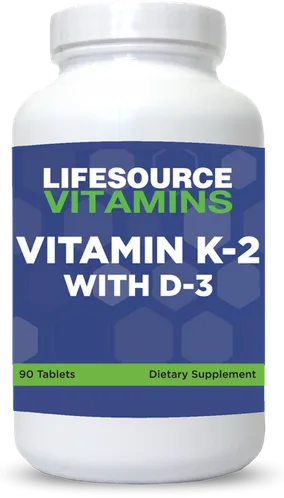
LifeSource Vitamins Vitamin D3 62.5 mcg (2,500 IU) & Vitamin K2 200 mcg - Liquid Review
LifeSource Vitamins Vitamin D3 and Vitamin K2 Liquid is a dietary supplement in liquid form, taken by the drop. The serving size is 5 drops, and one container holds about 240 servings. Each serving lists two ingredients on the Supplement Facts panel: Vitamin D3 at 62.5 mcg, which the label also gives as 2,500 IU, and Vitamin K2 at 200 mcg. The other ingredients printed on the label are Medium Chain Triglycerides and Sunflower Oil, which make up the oil base the drops are carried in. The directions printed on the label say to take 5 drops once daily or as directed by a healthcare professional. The label also says to store the product in a cool, dry place. If you are comparing bottles on the shelf, the points to check are the drop-based serving, the roughly 240 servings per container, and the amounts of D3 and K2 in each serving. Those figures are all printed on the label and can be read directly from the package before you decide how it fits your routine.
We don’t sell supplements. We help you make decisions and get the best price.
Lowest prices
We may earn a commission from some store links. How we choose.
We hold no current store prices for it yet: check the store.
Sold at: LifeSource Vitamins
Products with nearly the same formula (Matched on the main ingredients)
Study, Trial or Testing Result Summary
Members Only163 human studies · 58 improved
1 of these 163 human studies gave the ingredient by drip, not by mouth.
This liquid gives vitamin D3 and vitamin K2 at full studied doses. Vitamin K2 has the stronger support for bone health. Pooled trials in women with thinning bones after menopause found that vitamin K2 raised spine and forearm bone density more than control, with more mild side effects but no serious ones [1]. A second pooled analysis also found better spine density, but fewer fractures showed up only after one study was set aside [2]. The spine benefit was seen in women with thinning bones but not in women without them [3]. In healthy women after menopause, 180 micrograms a day for three years slowed bone loss at the spine and hip neck [4], and 90 micrograms a day for one year reduced hip bone loss in women but not in men [5]. Vitamin D results are mixed. In older adults, 700 to 800 units a day cut hip fractures by 26 percent [6]. Other reviews found no clear drop in fractures [7][8]. Calcium plus vitamin D improved pelvic density only, with no fewer fractures [9]. Animal and cell studies are never counted.
See all 163 studies →Hide the studies
- A pooled analysis of ten observational studies of postmenopausal women found vitamin D supplement use was significantly associated with osteoporotic fracture, among many other factors, but it was not a trial of supplementation.Predictors of osteoporotic fracture in postmenopausal women: a meta-analysis.
- Across 69 trials with about 154,000 adults, vitamin D alone did not change the risk of any fracture (risk ratio 1.00), while combined calcium plus vitamin D lowered it slightly (0.91), and the authors concluded there was little to no meaningful benefit for preventing fractures and falls.Calcium, vitamin D, or combined supplementation to prevent fractures and falls: systematic review and meta-analysis.
- In five observational studies of about 81,000 people, those with the highest dietary vitamin K1 intake had a 22% lower fracture risk than those with the lowest intake; this was diet, not vitamin K2 supplements.Vitamin K intake and the risk of fractures: A meta-analysis.
- Across 33 randomized trials of 51,145 community-dwelling adults over 50, vitamin D, calcium, or both did not lower the risk of hip, vertebral, nonvertebral, or total fractures compared with placebo or no treatment.Association Between Calcium or Vitamin D Supplementation and Fracture Incidence in Community-Dwelling Older Adults: A Sy…
- In 11 trials of 43,869 postmenopausal women with osteoporosis, calcium plus vitamin D modestly improved pelvic bone density but not spine, neck of femur or total hip density, and did not reduce fractures.The effects of combined calcium and vitamin D supplementation on bone mineral density and fracture risk in postmenopausa…
- This review of smartphone apps for osteoporosis self-management did not test vitamin D supplements and found no significant effect on vitamin D intake.Digital Health Technologies for Long-term Self-management of Osteoporosis: Systematic Review and Meta-analysis.
- In seven trials of 12,620 people over 65, daily vitamin D3 plus calcium cut hip fracture odds by 25%, with the biggest effect at 800 IU of vitamin D3 plus 1200 mg of calcium, but it did not improve femoral neck bone density.What is the impact of daily oral supplementation of vitamin D3 (cholecalciferol) plus calcium on the incidence of hip fr…
- In 128 trials of 11,270 adults with chronic kidney disease, vitamin D therapy had uncertain effects on fracture compared with placebo and did not reduce death, though it lowered parathyroid hormone and raised calcium.Vitamin D Therapy in Adults With CKD: A Systematic Review and Meta-analysis.
- In trials of older adults, 700 to 800 IU a day of vitamin D cut hip fracture risk by 26% and other nonvertebral fractures by 23%, while 400 IU a day gave no significant benefit.Fracture prevention with vitamin D supplementation: a meta-analysis of randomized controlled trials.
- Across nine trials with 6853 postmenopausal women with osteoporosis, vitamin K2 raised lumbar and forearm bone density more than control, with more mild side effects but no serious ones linked to it.Efficacy and safety of vitamin K2 for postmenopausal women with osteoporosis at a long-term follow-up: meta-analysis and…
- Across 19 trials with 6759 postmenopausal women, vitamin K2 improved spine bone density in women with osteoporosis but not those without, and fracture reduction was only significant after excluding one study.Does vitamin K2 play a role in the prevention and treatment of osteoporosis for postmenopausal women: a meta-analysis of…
- Across 16 trials with 6425 postmenopausal women, vitamin K2 improved lumbar spine bone density, and fractures fell only after excluding one study, with no difference in side effects.Efficacy of vitamin K2 in the prevention and treatment of postmenopausal osteoporosis: A systematic review and meta-anal…
- Across 43 trials in 5,184 postmenopausal women, vitamin K gave the largest rise in a bone-formation marker (bone alkaline phosphatase), and vitamin K combined with vitamin D most effectively raised two other bone-formation markers.Effects of dietary supplements on bone turnover markers in women after menopause: a network meta-analysis.
- Across nine trials with 2570 postmenopausal women with osteoporosis, vitamin K2 improved most bone turnover markers, though bone density and fracture benefits were not measured.The effect of vitamin K2 supplementation on bone turnover biochemical markers in postmenopausal osteoporosis patients: a…
- Across 10 trials with 1346 people, vitamin K plus calcium raised lumbar spine bone density, with a clearer effect for vitamin K2 than for vitamin K1.The combined effect of vitamin K and calcium on bone mineral density in humans: a meta-analysis of randomized controlled…
- Across eight trials with 971 people, vitamin K combined with vitamin D increased total bone density, with a stronger effect when vitamin K2 was used at under 500 micrograms a day.The combination effect of vitamin K and vitamin D on human bone quality: a meta-analysis of randomized controlled trials…
- Across nine studies, vitamin D3 did not significantly reduce nonvertebral or vertebral fractures versus placebo or calcium alone, with only a borderline trend toward fewer falls.The effect of cholecalciferol (vitamin D3) on the risk of fall and fracture: a meta-analysis.
- Pooling 133 genetic studies, genetically higher vitamin D levels were linked to lower risk of femur and leg fractures but higher risk of forearm (radius/ulna) fractures, so bone results were mixed.Vitamin D and human health: evidence from Mendelian randomization studies.
- Across 13 trials, vitamin K reduced bone loss, and seven Japanese trials of menaquinone found far fewer vertebral, hip and other non-spine fractures.Vitamin K and the prevention of fractures: systematic review and meta-analysis of randomized controlled trials.
- A pooled analysis of trials in middle-aged and older adults found vitamin K supplements raised lumbar spine bone density and improved bone protein carboxylation, but did not change other bone turnover markers.Effects of vitamin K supplementation on bone mineral density at different sites and bone metabolism in the middle-aged a…
- In 37 trials of 43,397 postmenopausal women on osteoporosis drugs, vitamin D dose was not linked to bone density or fractures, only to fewer stomach side effects and lower death.Vitamin D and calcium supplementation in women undergoing pharmacological management for postmenopausal osteoporosis: a …
- A review of 13 trials found small studies showed little or modest bone density benefit, while there was some evidence of fewer vertebral fractures in postmenopausal women, and no evidence for men.Menatetrenone for the treatment of osteoporosis.
- In seven human studies of 1462 people with dental implants, low vitamin D was linked to higher implant loss and one study saw better bone density after up to 12 weeks of vitamin D, but evidence was limited.Impact of Vitamin D on Osseointegration in Dental Implants: A Systematic Review of Human Studies.
- In 23 trials of 1,209 kidney transplant recipients, vitamin D analogues (2 trials, 51 patients) improved lumbar spine and femoral neck bone density versus no treatment, but no trial showed fewer fractures.Interventions for preventing bone disease in kidney transplant recipients: a systematic review of randomized controlled …
- In 18 small trials of 576 children with chronic kidney disease, vitamin D preparations lowered parathyroid hormone levels, but there were few data on growth or bone deformities and no clear differences between preparations.Interventions for metabolic bone disease in children with chronic kidney disease.
- Three small trials in 70 people with cystic fibrosis gave very low-quality evidence, so it is uncertain whether vitamin K changes bone density, though blood vitamin K rose and undercarboxylated osteocalcin fell.Vitamin K supplementation for cystic fibrosis.
- One small trial of 39 people with sickle cell disease found vitamin D3 for six weeks raised blood vitamin D and reduced pain days versus placebo, but no bone outcomes were reported and the evidence was low quality.Vitamin D supplementation for sickle cell disease.
- This review of 19 studies found people with systemic sclerosis often have low bone density, with low vitamin D levels a conflicting possible risk factor, and did not test vitamin D supplements.Low bone density in systemic sclerosis. A systematic review.
- A systematic review of lifestyle factors for peak bone mass in youth found good evidence that vitamin D plays a role in bone development, though calcium and physical activity had stronger evidence.The National Osteoporosis Foundation's position statement on peak bone mass development and lifestyle factors: a systema…
- A review of 141 studies found vitamin D and calcium intake and bone turnover markers were generally lower in plant-based diets, and vegans had lower bone density, without testing vitamin D supplements.Nutrient Intake and Status in Adults Consuming Plant-Based Diets Compared to Meat-Eaters: A Systematic Review.
- In nine trials of postmenopausal women without osteoporosis, vitamin D raised blood vitamin D and improved some bone remodeling measures, but only one study found fewer fractures, so a fracture benefit could not be confirmed.Supplementation of vitamin D isolated or calcium-associated with bone remodeling and fracture risk in postmenopausal wom…
- A review of randomized trials in women found vitamin K2 results for bone density and fractures were promising, though study limitations mean confirmation is needed.Natural health products in the prevention and treatment of osteoporosis: systematic review of randomized controlled tria…
- Seven trials in postmenopausal women lasting 2 years or more found high-dose vitamin K1 or K2 lowered undercarboxylated osteocalcin, improved femoral neck bone strength and reduced clinical fractures, though bone density changed little.High-dose vitamin K supplementation reduces fracture incidence in postmenopausal women: a review of the literature.
- In four mostly small open-label trials of 45 mg vitamin K2 in Japanese women with osteoporosis, smaller trials showed fewer spine fractures but the larger trial did not, and non-spine fractures did not differ.Vitamin K to prevent fractures in older women: systematic review and economic evaluation.
- In children on long-term a med treatment, vitamin K2 combined with alfacalcidol preserved bone density, but calcium with alfacalcidol prevented bone loss better than menatetrenone.Treatment of glucocorticoid-induced low bone mineral density in children: a systematic review.
- This review of observational and intervention studies found that the evidence on vitamin K, including vitamin K2 supplements, and bone health, bone density and fractures is conflicting and unclear.Vitamin K and osteoporosis: Myth or reality?
- A review of ten studies on vitamin K for osteoporosis in postmenopausal women reported no outcome results in its abstract.The Anti-osteoporosis Effects of Vitamin K in Postmenopausal Women.
- In 36,282 postmenopausal women given 400 IU vitamin D3 plus calcium daily for about 7 years, hip bone density was 1.06% higher than with placebo, but hip and total fractures were not significantly reduced and kidney stone risk rose.Calcium plus vitamin D supplementation and the risk of fractures.
- In 25,871 middle-aged and older adults taking 2000 IU vitamin D3 daily for a median of 5.3 years, fracture rates (total, nonvertebral, hip) were no different from placebo.Supplemental Vitamin D and Incident Fractures in Midlife and Older Adults.
- In 7,522 postmenopausal women given calcium and vitamin D, starting vitamin D level did not change how well raloxifene improved bone density, and after 7 months nearly a quarter still had suboptimal vitamin D levels.Vitamin D insufficiency does not affect bone mineral density response to raloxifene.
- In 5,110 adults aged 50-84 given monthly 100,000 IU vitamin D3 for a median of 3.3 years, non-vertebral fractures and falls were not reduced, though bone density improved in people with low vitamin D levels.Overview of results from the Vitamin D Assessment (ViDA) study.
- In 1,620 osteoporotic postmenopausal women on calcium and vitamin D, the bone drug teriparatide worked similarly whether baseline vitamin D was insufficient or sufficient, so this study does not test vitamin D itself.Response to teriparatide in patients with baseline 25-hydroxyvitamin D insufficiency or sufficiency.
- In healthy adults aged 70 and older taking 2000 international units of vitamin D3 daily for 3 years, hip bone density improved slightly, spine and femoral neck bone density showed no overall benefit, and the effects were very small.Effects of vitamin D3, omega-3s, and a simple strength training exercise program on bone health: the DO-HEALTH randomize…
- In 1,488 adults aged 70 and older followed for 3 years, 2,000 IU per day of vitamin D3 did not reduce new or worsening spine fractures compared with control.Effects of vitamin D3, omega-3s, and a simple home exercise program on incident vertebral fractures: the DO-HEALTH rando…
- In 1,000 postmenopausal women with low bone density, most taking calcium and vitamin D, low vitamin D at the start did not reduce the bone density response to alendronate.Vitamin D insufficiency does not affect response of bone mineral density to alendronate.
- In 717 osteoporosis patients who avoided sunlight, a weekly tablet of alendronate with 2800 IU vitamin D3 raised vitamin D levels over 15 weeks, while bone turnover slowing was the same as alendronate alone.Alendronate with and without cholecalciferol for osteoporosis: results of a 15-week randomized controlled trial.
- In 500 elderly women with Alzheimer disease who all took 1000 IU of vitamin D2 plus calcium, adding risedronate for 18 months raised bone density 4.1% and cut hip fracture risk compared with placebo, but vitamin D itself was not tested alone and the paper was retracted.The prevention of hip fracture with risedronate and ergocalciferol plus calcium supplementation in elderly women with Al…
- Children whose mothers took 1000 IU of vitamin D3 daily during pregnancy had higher whole-body bone mineral content and density at ages 6-7 than children whose mothers took placebo.Pregnancy vitamin D supplementation and offspring bone mineral density in childhood follow-up of a randomized controlled…
- In 452 older men and women taking calcium and vitamin D, 500 micrograms a day of vitamin K1 for 3 years did not change bone density at the hip or spine compared with no vitamin K1.Effect of vitamin K supplementation on bone loss in elderly men and women.
- In 441 young Chinese women given milk powder with 1000 mg calcium and 80 mcg vitamin K1 or nothing for 2 years, bone density and bone turnover markers showed little difference between groups.Milk supplementation and bone health in young adult chinese women.
- In 440 postmenopausal women with low bone density, 5 mg a day of vitamin K1 for 2 to 4 years did not change bone density, but fewer women had clinical fractures (9 versus 20 on placebo).Vitamin K supplementation in postmenopausal women with osteopenia (ECKO trial): a randomized controlled trial.
- Mothers given 1000 international units of vitamin D daily during pregnancy had bone density after delivery and about four years later that did not differ from mothers given placebo.Pregnancy vitamin D supplementation and bone mineral density of the mother: a post hoc analysis of the MAVIDOS randomise…
- In 381 healthy postmenopausal women taking calcium and vitamin D, 45 mg a day of vitamin K2 (MK4) or 1 mg of vitamin K1 for 12 months lowered undercarboxylated osteocalcin but did not change bone turnover or bone density compared with placebo.Vitamin K treatment reduces undercarboxylated osteocalcin but does not alter bone turnover, density, or geometry in heal…
- In 379 adults aged 70 or older, monthly vitamin D3 doses of 12,000, 24,000 or 48,000 international units for 12 months produced no difference in hip bone mineral density between dose groups.Randomized controlled trial of vitamin D supplementation in older people to optimize bone health.
- In 379 healthy older adults, 500 mcg per day of phylloquinone for three years did not change inflammation or bone-related cytokine levels compared with no supplement.Vitamin K, circulating cytokines, and bone mineral density in older men and women.
- In 325 postmenopausal women given 45 mg a day of vitamin K2 (MK-4) for three years, bone mineral content and femoral neck width increased and hip bone strength was maintained compared with placebo, though standard bone density did not change.Vitamin K2 supplementation improves hip bone geometry and bone strength indices in postmenopausal women.
- In healthy adults aged 55 to 70 taking vitamin D3 daily for 3 years, doses of 4000 or 10000 international units led to slightly lower bone mineral density in the radius than a 400 international unit dose, and 10000 units also lowered it in the tibia, with no difference in bone strength.Effect of High-Dose Vitamin D Supplementation on Volumetric Bone Density and Bone Strength: A Randomized Clinical Trial.
- In 311 middle-aged and older adults, 90 micrograms a day of vitamin K2 for one year reduced femoral neck bone loss in postmenopausal women compared with placebo, with no effect in men and no added benefit from calcium and vitamin D3.Effect of Low-Dose Vitamin K2 Supplementation on Bone Mineral Density in Middle-Aged and Elderly Chinese: A Randomized C…
- In 301 pregnant women given 400, 2000, or 4000 IU of vitamin D daily, the supplement doses did not change bone density from pregnancy to after birth.Bone mineral density during pregnancy in women participating in a randomized controlled trial of vitamin D supplementati…
- In 260 older African American women followed for 3 years, vitamin D3 averaging 3,490 IU per day, which kept blood levels above 30 ng/mL, did not change femoral neck bone strength compared with placebo.Effect of vitamin D on bone strength in older African Americans: a randomized controlled trial.
- In 244 healthy postmenopausal women, 180 micrograms a day of vitamin K2 (MK-7) for three years slowed bone density loss at the lumbar spine and femoral neck, but not the total hip, and reduced loss of vertebral height compared with placebo.Three-year low-dose menaquinone-7 supplementation helps decrease bone loss in healthy postmenopausal women.
- In 242 elderly men with Parkinson disease who all took 1000 IU of vitamin D2, adding risedronate for 2 years raised bone density, but vitamin D was not compared against placebo and the paper was retracted.Risedronate and ergocalciferol prevent hip fracture in elderly men with Parkinson disease.
- In 230 postmenopausal women with insufficient vitamin D, neither 800 international units daily nor high-dose monthly vitamin D3 changed bone mineral density, muscle mass, or falls over 1 year compared with placebo.Treatment of Vitamin D Insufficiency in Postmenopausal Women: A Randomized Clinical Trial.
- Children whose mothers took 1000 international units of cholecalciferol daily during pregnancy showed no difference in tibia bone structure at age 6 to 7 compared with placebo.Vitamin D supplementation during pregnancy and offspring bone microarchitecture: A post hoc analysis of the MAVIDOS rand…
- In 219 healthy young and older adults, 1000 micrograms a day of vitamin K1 (not K2) for two weeks lowered undercarboxylated osteocalcin but did not change other bone turnover markers.Vitamin K supplementation reduces serum concentrations of under-gamma-carboxylated osteocalcin in healthy young and elde…
- In 197 adults with high blood pressure and low vitamin D, 2800 international units daily for 8 weeks did not change markers of bone turnover compared with placebo.Effects of Vitamin D Supplementation on Bone Turnover Markers: A Randomized Controlled Trial.
- In 187 women past menopause over two years, adding 10,000 IU of vitamin D2 weekly to 1000 mg daily calcium did not improve bone density beyond calcium alone.Vitamin D supplementation and bone mineral density in early postmenopausal women.
- In postmenopausal women aged 50 to 60, 1 mg of vitamin K1 daily plus minerals and vitamin D for 3 years reduced femoral neck bone loss compared with placebo, but had no effect on lumbar spine bone density.Vitamin K1 supplementation retards bone loss in postmenopausal women between 50 and 60 years of age.
- In Japanese adults taking 100 micrograms of menaquinone-7 daily for 12 weeks, osteocalcin became more fully activated compared with placebo, and doses of 100 micrograms or more were suggested as effective.Low-Dose Daily Intake of Vitamin K(2) (Menaquinone-7) Improves Osteocalcin γ-Carboxylation: A Double-Blind, Randomized C…
- In 150 healthy postmenopausal Spanish women, 800 IU daily vitamin D3 with calcium raised vitamin D levels over 12 weeks, but bone remodeling markers changed similarly to placebo, and adding genistein gave no extra benefit.Genistein supplementation has no effects on vitamin D levels in healthy Spanish postmenopausal women.
- In 148 postmenopausal women with low bone density taking 375 mcg of vitamin K2 (menaquinone-7) daily for 12 months, the internal structure of tibia bone was preserved compared with placebo, while bone density showed no difference.Vitamin K2 (menaquinone-7) prevents age-related deterioration of trabecular bone microarchitecture at the tibia in postm…
- In 148 postmenopausal women taking 375 mcg of vitamin K2 (menaquinone-7) daily for 12 months, an inactive form of bone protein fell sharply and a blood marker of metabolic health rose compared with placebo, but insulin sensitivity did not change.Vitamin K2 (menaquinone-7) increases plasma adiponectin but does not affect insulin sensitivity in postmenopausal women:…
- In 142 postmenopausal women with osteopenia taking 375 mcg of vitamin K2 (MK-7) or placebo daily for 3 years, bone density and bone structure changes did not differ between the groups, although MK-7 raised carboxylated osteocalcin in the blood.The effect of vitamin MK-7 on bone mineral density and microarchitecture in postmenopausal women with osteopenia, a 3-ye…
- In 122 postmenopausal women eating vitamin D enriched salmon twice weekly for 12 weeks, bone breakdown markers improved compared with a low vitamin D intake, though the amount of vitamin K was not stated.Reduced bone resorption by intake of dietary vitamin D and K from tailor-made Atlantic salmon: A randomized intervention…
- In 120 women with osteoporosis, 800 IU of vitamin D daily for 16 weeks improved bone density and bone markers more than no supplement, and the greatest benefit came when combined with high-intensity exercise.Concurrent effects of high-intensity interval training and vitamin D supplementation on bone metabolism among women diag…
- In 118 healthy children aged 4 to 11, 10 mcg per day of vitamin D3 spray for 12 weeks raised vitamin D levels compared with placebo but did not change bone turnover markers.The Effect of Vitamin D3 Supplementation on Vitamin D Status and Associated Health Outcomes in Children: A Randomized Co…
- In 112 postmenopausal women with low bone density, taking 800 IU of vitamin D daily alone for 48 weeks did not improve bone density; spine density fell slightly and hip density fell more, while adding a bone drug (raloxifene) to the vitamin D produced the gains.A randomized controlled trial of the effect of raloxifene plus cholecalciferol versus cholecalciferol alone on bone mine…
- In 110 healthy children and adults, menaquinone-7 supplements helped most those with the greatest vitamin K deficiency, and adults over 40 may benefit most.Vitamin K status in healthy volunteers.
- In 108 vitamin D-deficient young Indian women, 400 to 800 IU daily vitamin D3 for 12 weeks raised vitamin D levels in a dose-related way, with 800 IU working best, while parathyroid hormone fell over time and bone turnover markers changed only modestly.The Dose-Response Effects of Vitamin D3 on Serum 25-Hydroxyvitamin D Levels in Vitamin D-Deficient Young Indian Women: A…
- In 105 women with osteoporosis taking meds, 45 mg a day of menatetrenone for 18 months did not change bone density compared with placebo.Read the study on PubMed (37338608) →
- In 104 elderly women with osteoporosis followed for 5 years, an education program (which increased vitamin D supplement use) led to fewer fragility fractures and higher bone density at some sites than the control group, but vitamin D itself was not tested alone.The Effect of Education Intervention on Osteoporotic Fracture and Bone Mineral Density in Elderly Women With Osteoporosi…
- In 95 hip fracture patients with low vitamin D given 1000 IU daily for three months, cholecalciferol raised blood vitamin D 31% more than ergocalciferol, but parathyroid hormone changes did not differ and bone outcomes were not measured.Serum 25-hydroxyvitamin D levels in vitamin D-insufficient hip fracture patients after supplementation with ergocalcifer…
- In 94 lung and heart transplant recipients taking 180 mcg of vitamin K2 or placebo for 1 year, lumbar spine bone density was higher with vitamin K2 (borderline significant), with benefit seen in lung recipients but not heart recipients.Dietary vitamin K2 supplement improves bone status after lung and heart transplantation.
- In postmenopausal women with osteoporosis, 0.75 micrograms of vitamin D3 daily combined with vitamin K2 for two years increased lumbar spine bone density more than calcium alone, and the combination worked better than either vitamin alone.Effect of combined administration of vitamin D3 and vitamin K2 on bone mineral density of the lumbar spine in postmenopa…
- In lung transplant recipients given 100,000 international units of vitamin D once a month for two years, bone mineral density and other secondary outcomes did not differ from placebo, although blood vitamin D levels were higher.High-dose vitamin D after lung transplantation: A randomized trial.
- In 81 postmenopausal women with low vitamin D, 2800 international units daily for 3 months improved tibia bone strength and trabecular thickness and raised density at the hip and femoral neck, but did not change overall bone density by scan.Bone Microstructure in Response to Vitamin D3 Supplementation: A Randomized Placebo-Controlled Trial.
- In adults with type 2 diabetes and heart disease, 360 mcg of vitamin K2 daily for 6 months did not slow bone mineral density decline or arterial calcification compared with placebo.Six months vitamin K treatment does not affect systemic arterial calcification or bone mineral density in diabetes melli…
- In 63 postmenopausal women with osteoporosis, 45 mg a day of menatetrenone with calcium for 48 weeks increased lumbar spine bone density more than placebo with calcium.Vitamin K2 treatment for postmenopausal osteoporosis in Indonesia.
- In 59 men with prostate cancer on hormone-blocking therapy, weekly high-dose vitamin D (50,000 IU per week) for 24 weeks, compared with placebo, reduced hip and thigh-neck bone density loss, with the largest benefit in men with low starting vitamin D levels.High-dose vitamin D to attenuate bone loss in patients with prostate cancer on androgen deprivation therapy: A phase 2 R…
- In 59 older men with or at risk of low bone density, adding 50 g or 100 g of prunes daily for one year to a multivitamin with 800 IU vitamin D3 and calcium did not change total or lumbar spine bone density compared with the multivitamin alone.Prune Consumption and Bone Health in Older Men: A One-Year Randomized Controlled Trial.
- In a placebo-controlled trial of 55 postmenopausal women with osteopenia, doxercalciferol (a vitamin D analog, averaging 4.1 mcg daily) showed no bone density benefit at 12 months but a 1.7% femoral neck gain over placebo at 24 months, with no significant spine benefit.Efficacy and safety of doxercalciferol (1α hydroxyvitamin D2) on spine and femur bone mineral density in postmenopausal …
- In 55 healthy prepubertal children, 45 mcg per day of menaquinone-7 for eight weeks improved osteocalcin carboxylation compared with placebo.The effect of menaquinone-7 (vitamin K2) supplementation on osteocalcin carboxylation in healthy prepubertal children.
- In 50 adults with painful knee osteoarthritis, 800 IU of vitamin D daily for 2 years did not change joint lining swelling or bone marrow lesion volume compared with placebo.Effect of Vitamin D supplementation on synovial tissue volume and subchondral bone marrow lesion volume in symptomatic k…
- In 50 women with cirrhosis, vitamin K2 (menatetrenone) over 2 years prevented lumbar spine bone loss, with bone density rising 0.1% at 1 year and falling only 0.5% at 2 years while the control group lost 2.2% and 4.6%.Vitamin K2 (menatetrenone) for bone loss in patients with cirrhosis of the liver.
- In a randomized trial of 43 children with nephrotic syndrome, vitamin D3 (60,000 IU weekly for 4 weeks) with calcium raised vitamin D levels over 6 months but did not change bone mineral content or bone density compared with controls.Read the study on PubMed (28725977) →
- In 40 healthy postmenopausal Japanese women taking 1.5 mg of menaquinone-4 daily for 4 weeks, osteocalcin activation improved compared with placebo, with the largest change at 2 weeks.Effect of low dose vitamin K2 (MK-4) supplementation on bio-indices in postmenopausal Japanese women.
- In 40 hemodialysis patients with low parathyroid hormone, 45 mg per day of menatetrenone for one year improved bone remodeling markers compared with a control group.Vitamin K₂ alters bone metabolism markers in hemodialysis patients with a low serum parathyroid hormone level.
- In a small study of children with severe burns given vitamin D2, vitamin D3, or placebo, fewer children given vitamin D3 had fractures after discharge (none, versus four in the placebo group), a preliminary sign of benefit that was not formally tested for statistical significance.Investigation of Bone Health Subsequent to Vitamin D Supplementation in Children Following Burn Injury.
- In a small 48-week pilot of HIV-positive African American adults, all of whom took vitamin D and calcium, the efavirenz-based regimen was linked to hip bone density loss and sustained low vitamin D, while the raltegravir-based regimen did not show these losses.Bone Mineral Density and Vitamin D Levels in HIV Treatment-Naïve African American Individuals Randomized to Receive HIV …
- In 34 early postmenopausal women with low bone density taking 45 mg of vitamin K2 daily for 2 years, a marker of vitamin K status improved, but bone density results were not reported as a clear gain and there was no placebo comparison.Effect of vitamin K2 treatment on carboxylation of osteocalcin in early postmenopausal women.
- In vitamin D deficient postmenopausal women given a single high bolus of vitamin D3 over three months, bone turnover markers rose briefly one week after the 500,000 international unit dose, while blood calcium and physical function were unchanged.Effects of High Dose Bolus Cholecalciferol on Free Vitamin D Metabolites, Bone Turnover Markers and Physical Function.
- In 33 postmenopausal women taking a combination of vitamin K1 (1000 micrograms daily), vitamin D3, hop acids, and berberine for 14 weeks, a bone turnover marker (osteocalcin) fell by about 31% while placebo rose, though the vitamin K1 effect cannot be separated from the other ingredients.Hop rho iso-alpha acids, berberine, vitamin D3 and vitamin K1 favorably impact biomarkers of bone turnover in postmenopa…
- In a small trial of 29 children with leukemia, those given 100 mcg of vitamin K2 (menaquinone-7) with vitamin D3 during chemotherapy showed early bone-protective changes over about 6 months compared with children receiving chemotherapy alone.Effect of vitamin K2 and vitamin D3 on bone mineral density in children with acute lymphoblastic leukemia: a prospective…
- In 20 patients starting a med treatment, 15 mg per day of menatetrenone for one year was linked to no significant bone density loss, while the group without it lost lumbar spine bone density.Vitamin K2 inhibits glucocorticoid-induced bone loss partly by preventing the reduction of osteoprotegerin (OPG).
- In 20 postmenopausal women with osteoporosis and prior wrist fractures, vitamin K over 2 weeks corrected the carboxylation defect in osteocalcin, with a similar result after vitamin K plus vitamin D, but bone density was not reported as an outcome.Carboxylation of osteocalcin in post-menopausal osteoporotic women following vitamin K and D supplementation.
- In 16 adults on long-term meds for neuromuscular disorders, adding vitamin K2 to risedronate for one year did not produce any extra change in bone turnover markers compared with risedronate alone.Read the study on PubMed (20190467) →
- In 15 young adults on a crossover diet study, a hydrogenated form of vitamin K1 (dihydrophylloquinone) at 200 mcg daily for 10 days was less absorbed and had no measurable effect on bone formation or breakdown markers, unlike regular vitamin K1.Effects of a hydrogenated form of vitamin K on bone formation and resorption.
- In older Chileans with hip osteoporosis, a year of a multi-nutrient supplement including 400 IU vitamin D raised blood vitamin D and lowered parathyroid hormone, but did not change bone density compared with the usual supplement.Effect of a nutritional supplementation on bone health in Chilean elderly subjects with femoral osteoporosis.
- In teenagers being treated for acute lymphoblastic leukemia, directly observed high-dose vitamin D3 corrected low vitamin D levels, but it did not change bone density compared with standard care.A randomized controlled trial testing an adherence-optimized Vitamin D regimen to mitigate bone change in adolescents be…
- In Indian premenopausal women over six months, a nutrient-fortified protein drink containing 400 IU of vitamin D, calcium and vitamin K lowered bone turnover markers compared with a placebo drink, though bone density was not measured.Randomised Controlled Trial of Nutritional Supplement on Bone Turnover Markers in Indian Premenopausal Women.
- In postpartum women, 6400 international units daily lost less femoral neck bone mineral density over 7 months than 400 units daily, but only among exclusively breastfeeding women.Factors Affecting Postpartum Bone Mineral Density in a Clinical Trial of Vitamin D Supplementation.
- In healthy women given 1 mg of vitamin K daily, bone-related blood markers shifted and urinary calcium fell about 30% in women who lost calcium quickly, while the placebo-controlled trial in postmenopausal women ran for 3 months.Vitamin K-induced changes in markers for osteoblast activity and urinary calcium loss.
- In 82 premenopausal women, adding 80 micrograms of vitamin K1 to calcium-fortified milk for 16 weeks improved vitamin K levels but did not reduce bone turnover more than milk alone.Effect of calcium fortified milk supplementation with or without vitamin K on biochemical markers of bone turnover in pr…
- In 69 patients with osteopenia or osteoporosis having lumbar spine surgery, adding vitamin K2 to vitamin D3 and calcium for 6 months increased complete spinal fusion rates compared with the control group.Concurrent Treatment with Vitamin K2 and D3 on Spine Fusion in Patients with Osteoporosis-Associated Lumbar Degenerative…
- In 60 people with autoimmune diseases taking meds and meds, menatetrenone raised bone formation markers during the first month, but bone density and fracture rates did not differ from those not taking it after about 1.5 years.Efficacy of Vitamin K2 for Glucocorticoid-induced Osteoporosis in Patients with Systemic Autoimmune Diseases.
- In 21 women with anorexia nervosa followed for about 0.9 years, those taking menatetrenone lost less lumbar bone density (2.8%) than those not taking it (6.9%).Effect of menatetrenone (vitamin K2) treatment on bone loss in patients with anorexia nervosa.
- In 20 children with severe cerebral palsy who take seizure medicine, 0.25 mcg per day of an active vitamin D form plus calcium for 9 months increased bone density, while untreated controls continued to lose bone.Effect of vitamin D and calcium on bone mineral density in children with CP and epilepsy in full-time care.
- In 20 people with kidney disease starting prednisolone, adding 45 mg a day of menatetrenone for 10 weeks prevented the spine bone density loss seen with prednisolone alone.Short-term effect of vitamin K administration on prednisolone-induced loss of bone mineral density in patients with chro…
- In 12 healthy young adults, 90 mcg of vitamin K2 (menaquinone-7) added to daily olive oil for 2 weeks increased the active form of bone protein and decreased the inactive form compared with baseline.Olive oil supplemented with menaquinone-7 significantly affects osteocalcin carboxylation.
- In healthy volunteers, MK-7 from natto was absorbed well, stayed in the blood much longer than vitamin K1, and carboxylated osteocalcin more completely; preparations of 50 mcg daily or more may interfere with meds.Vitamin K-containing dietary supplements: comparison of synthetic vitamin K1 and natto-derived menaquinone-7.
- In an open-label 2-year study of 241 osteoporosis patients, those taking 45 mg of vitamin K2 daily had fewer new fractures and lost less spine bone density than the untreated control group.Vitamin K2 (menatetrenone) effectively prevents fractures and sustains lumbar bone mineral density in osteoporosis.
- In 120 women with low vitamin D, adding 0.5 micrograms of calcitriol daily to vitamin D3 and calcium for 6 months raised bone mineral density in the lumbar spine, while vitamin D3 alone did not raise it.Calcitriol treatment in patients with low vitamin D levels.
- In 109 postmenopausal women with osteoporosis, 45 mg of menatetrenone daily for six months raised the active form of osteocalcin and lowered its inactive form compared with calcium, but urinary bone breakdown markers also rose after six months, and bone density was not measured.Short-term menatetrenone therapy increases gamma-carboxylation of osteocalcin with a moderate increase of bone turnover …
- In postmenopausal women with normal-calcium hyperparathyroidism, alendronate with cholecalciferol raised bone mineral density in the spine and hip over one year, while cholecalciferol alone did not, and neither treatment changed blood or urine calcium.Effects of alendronate and vitamin D in patients with normocalcemic primary hyperparathyroidism.
- In 20 children with thalassemia taking 50 mcg of menaquinone-7 plus calcitriol for 1 year, lumbar spine bone density and Z-score improved, though this was an uncontrolled pilot study.The efficacy of vitamin K2 and calcitriol combination on thalassemic osteopathy.
- In 20 severely disabled children and adults with bone thinning, bone density rose after 4 months of oral vitamin K2 and stayed higher through 12 months, though there was no control group and the dose was not stated.[Effects of a vitamin K2 preparation in severely handicapped patients complicated by osteopenia].
- In 15 healthy young men given menaquinone-4 in steps of 300, 600, 900 and 1500 mcg daily over 5 weeks, blood levels of活性 osteocalcin rose at 900 mcg daily or more, and the inactive form fell at 600 mcg daily or more.Low-dose menaquinone-4 improves γ-carboxylation of osteocalcin in young males: a non-placebo-controlled dose-response st…
- In 5 older adults with low vitamin D and high parathyroid hormone, correcting vitamin D levels raised bone density at the spine and hip despite the persistent hormone imbalance.Bone mineral density increases with vitamin D repletion in patients with coexistent vitamin D insufficiency and primary …
- A genetic analysis of about 2,260 people found that naturally higher vitamin D levels were not linked to bone density or vertebral fractures, though they were linked to higher levels of a bone turnover marker; no supplement was tested.Circulating serum 25-hydroxyvitamin D levels and bone mineral density and osteoporotic vertebral fractures: A Mendelian …
- In 2058 postmenopausal women in the US survey, higher blood vitamin D levels (50 nmol/L or more) were linked to lower odds of osteoporosis at the hip and femoral neck, with the strongest link in women 65 and older.The Relationship Between Serum 25-Hydroxyvitamin D Levels and Osteoporosis in Postmenopausal Women.
- In a study of 1,669 postmenopausal women, 58.5% with osteoporosis were not on active bone treatment, and calcium or vitamin D use was not tested as a cause of bone density change.Beyond Bone Mineral Density: Real-World Fracture Risk Profiles and Therapeutic Gaps in Postmenopausal Osteoporosis.
- In a Japanese cohort of 944 women followed for 3 years, eating more natto was linked to less bone loss, especially in postmenopausal women.Intake of fermented soybeans, natto, is associated with reduced bone loss in postmenopausal women: Japanese Population-B…
- In 798 postmenopausal women, higher cortisol and parathyroid hormone were linked to lower bone density, and vitamin D level was measured but its link to bone density is not reported in the abstract.Association of Endogenous Hormones and Bone Mineral Density in Postmenopausal Women.
- In 350 people with liver cirrhosis, most had low blood vitamin D (average 8.75 ng/ml) and 86 percent had low bone density, but this cross-sectional study did not test whether vitamin D changes bone health.Vitamin D status & bone health in patients with liver cirrhosis.
- In 324 hip replacement candidates, about a quarter had osteoporosis, and women with lower bone density also had lower vitamin D levels.High prevalence and underdiagnosis of osteoporosis in total hip arthroplasty candidates: a comprehensive assessment usin…
- In 317 Japanese postmenopausal women with osteoporotic fractures, 78 percent had blood vitamin D below 20 ng/mL, and higher levels were linked to better femoral neck bone density; the study did not test treatment.Serum 25-hydroxyvitamin D concentrations in Japanese postmenopausal women with osteoporotic fractures.
- In 260 people with positional vertigo and matched controls, women with vertigo had lower bone density, and men with vertigo had lower vitamin D levels than male controls.Bone mineral density and serum 25-hydroxyvitamin D in patients with idiopathic benign paroxysmal positional vertigo.
- In Tuscany, Italy, most people who broke a hip from 2011 to 2015 were not taking vitamin D supplements, and only 30-35% were on cholecalciferol one year after the fracture; no bone outcome was measured against a comparison group.The use of cholecalciferol in patients with hip fracture.
- In 228 adults with nontuberculous mycobacterial lung disease, osteoporosis was common, and lower vitamin D levels were linked to osteoporosis.Osteoporosis in nontuberculous mycobacterial pulmonary disease: a cross-sectional study.
- In 211 patients with chronic pancreatitis, vitamin K deficiency was the only factor linked to osteoporosis in men, with 32 percent of patients found to be vitamin K deficient.Vitamins D and K as Factors Associated with Osteopathy in Chronic Pancreatitis: A Prospective Multicentre Study (P-BONE …
- In 186 people with early Parkinson's disease, low vitamin D levels were linked to lower bone density, and their vitamin D levels were lower than in 802 controls.Bone mineral density and vitamin D status in Parkinson's disease patients.
- Vitamin D deficiency was more common in older people having hip fracture surgery (70) than in those having elective hip replacement (100), and it was more common in sarcopenic patients; this study did not test vitamin D treatment.Vitamin D Deficiency and Sarcopenia in Hip Fracture Patients.
- This retrospective study of 144 patients scheduled for spinal surgery found that most had inadequate vitamin D status, but it did not test any vitamin D supplement, so it gives no evidence on bone benefit from taking vitamin D.A retrospective analysis of bone mineral status in patients requiring spinal surgery.
- In 124 postmenopausal women, a dietary pattern rich in vitamin D and other nutrients was linked to lower odds of osteopenia, but vitamin D was not studied alone.Nutrient Patterns and Risk of Osteopenia in Postmenopausal Women.
- In a retrospective study of 122 women with wrist fractures, those with the most severe joint-surface fractures had lower vitamin D levels, but no supplement was tested and bone density did not differ by fracture severity.Relationship between distal radius fracture severity and 25-hydroxyvitamin-D level among perimenopausal and postmenopaus…
- In 117 people with a common inner ear balance disorder, vitamin D levels and bone density did not differ between subtypes of the disorder; no supplement was tested.Bone mineral density and serum 25-hydroxyvitamin D in subtypes of idiopathic benign paroxysmal positional vertigo.
- In a 2-year cross-sectional study of 116 pre- and post-menopausal obese and non-obese women, daily vitamin D and calcium intake was low and osteoporosis was less common in obese women, though blood vitamin D levels were within normal range.Dietary Pattern and Bone Health in Pre and Post-menopausal Obese Women.
- In 113 postmenopausal women, lower vitamin K status was linked to lower bone mass only in women who also had aortic calcification.Vitamin K status and bone mass in women with and without aortic atherosclerosis: a population-based study.
- In 110 postmenopausal women, higher vitamin D levels were linked to better bone density at the spine and hip, but this study did not test supplements.Association of vitamin D levels with bone mineral density in postmenopausal women.
- In a retrospective study of 108 postmenopausal women with osteoporosis taking strontium ranelate for 18 months, women whose vitamin D levels rose more had a significant bone density gain at the femoral neck, with vitamin D given alongside as cholecalciferol 25,000 IU biweekly.Vitamin D and bone mineral density changes in postmenopausal women treated with strontium ranelate.
- In 101 postmenopausal women, lower vitamin D levels were linked to higher body fat, metabolic syndrome, weaker grip strength and osteopenia, but no supplement effect was tested.Cross-talk between muscle and bone in postmenopausal women with hypovitaminosis D.
- In 84 adults, psoriasis patients had lower bone density than healthy controls, mainly in women, and women with psoriasis also had lower vitamin D levels.Bone Mineral Density, 25-OH Vitamin D and Inflammation in Patients with Psoriasis.
- In 80 people with primary mitochondrial disease, 73 percent had at least one risk factor for poor bone health, including vitamin D status, but this record review did not test vitamin D treatment.Risk factors for poor bone health in primary mitochondrial disease.
- In 77 men, those with mild COPD had lower vitamin D levels than healthy controls, and about half had reduced bone density.Bone mineral density and vitamin D levels in patients with group a COPD.
- In 72 adults with multiple sclerosis, about half had low bone density, and lower vitamin D levels were linked to greater disability.Bone metabolism and vitamin D status in patients with multiple sclerosis.
- In 70 children after biliary atresia surgery, about half had low bone density, and those with persistent jaundice had lower vitamin D levels.Low bone mineral density and the severity of cholestasis in biliary atresia.
- In 26 children, bone density and bone mineral content fell and vitamin D levels dropped over the first 100 days after blood stem cell transplant, and half became vitamin D deficient.Bone loss and vitamin D deficiency in children undergoing hematopoietic cell transplantation.
- In 16 Crohn's disease outpatients with a med-related bone loss, the vitamin K2 group showed no change in bone density after one year, while the alendronate group improved.Read the study on PubMed (19525577) →
- In 15 people with mucopolysaccharidosis type III, six had deficient and three had insufficient vitamin D, and older, immobile patients had the highest risk of low bone density and fractures; the study did not test vitamin D treatment.Bone mineral density in patients with mucopolysaccharidosis type III.
- In 8 stable dialysis patients taking 45 mg of menatetrenone (vitamin K2) daily for 12 months, bone mineral density stayed at the same level, though some blood bone markers changed in mixed directions and there was no control group.Pharmacodynamics of menatetrenone and effects on bone metabolism in continuous ambulatory peritoneal dialysis patients.
- In 8 female elite athletes taking 10 mg of vitamin K daily for one month, bone formation markers rose 15 to 20 percent and bone breakdown markers fell 20 to 25 percent in the low-estrogen group, with no control group.Improved bone metabolism in female elite athletes after vitamin K supplementation.
- In children with cystic fibrosis, higher vitamin K intake was suggested to bring bone and health benefits, based on bone markers at different doses.Vitamin K supplementation in cystic fibrosis.
- In Japanese patients with osteoporosis, vitamin K2 combined with EHDP worked better than either alone, while vitamin D3 plus vitamin K2 had little effect on spine bone density.[EHDP + vitamin D3 or vitamin K2].
Review Totals and Summary
Members OnlyWhat buyers say
No written reviews read yet.
Biohacker Summary
Members Only9 of 10 recommend it
Vitamin D and vitamin K are both main ingredients here, and the panel leans toward recommending or using them together. Most of the ten take or advise vitamin D3, with doses of 5,000 units in the morning from two panelists and a minimum of 10,000 units from one, while another says blood levels matter more than guessing from sun exposure. Vitamin K comes up mostly as K2, taken at 90 micrograms in the morning by two of them, and several say it directs calcium to bones and away from arteries, with the forms MK-4 and MK-7 named once. They pair D3 with K2 and with dietary fat or a morning meal for better absorption, though one says not to take it in the morning with other supplements unless fat is present. The one caution is from a panelist who says there is no point in supplementing vitamin D for most purposes unless you are deficient, and no one said they stopped.
See all 10 biohackers →Hide the biohackers
Dave Asprey · Vitamin K · uses
- Now tests their vitamin D levels and takes D3 with K2.
- Warns that guessing one's vitamin D levels from sun exposure is a bad bet, as even after six weeks in Hawaii, their 25(OH)D levels were still low.
- Explains that Vitamin K2 acts as a traffic cop for calcium, waving it into bones and away from arteries, and that grass-fed butter is one of the only foods with a real amount of K2.
- Takes Vitamin DAKE from Suppgrade Labs.
- Suggests that vitamin D supports brain health, muscle function, and focus.
- Host Dave Asprey explains why correcting a vitamin D deficiency still makes sense for male fertility, even though supplementation did not improve overall semen parameters in a randomized trial.
- Recommends taking vitamin K2 with vitamin D to keep calcium in the bones, and suggests kids also take it for stronger bones.
- Recommends Vitamin K2, stating it supports healthy calcium metabolism.
- States that currently, he is only taking vitamin C and vitamin D.
- Recommends adding vitamin K2 to vitamin D supplementation.
- Recommends vitamin D, noting it's actually a hormone and that most people are deficient, even those who take it, because they don't take enough.
- States that most people on the spectrum are low in vitamin D and need more of it, mentioning his own product, Vitam DAKNE, which contains real vitamin A.
- Dave Asprey recommends Vitamin D3 with K2, explaining D3 is a hormone made from sunlight and K2 directs calcium into bones, not arteries, highlighting its low cost, widespread deficiency, and the ability to test its effectiveness.
- Mentions that natto is a good source of vitamin K2, which is probably its primary benefit.
Dr. Eric Berg · Vitamin D · neutral
- Dr. Berg states that Vitamin D helps maintain healthy skin, support cell repair, and protect against oxidative damage.
- Recommends Vitamin D3, especially, for reducing plaque in arteries.
- Mentions recent data suggesting higher doses of vitamin K2 can reduce plaque and calcium, and recommends it for reducing plaque in arteries.
- Recommends Vitamin D3, noting it's a hormonal precursor involved in a med hormones, and suggests a minimum dose of 10,000 IUs, preferably with K2.
- Discusses Vitamin D in relation to prostate health.
- Lists Vitamin D as a natural cancer remedy.
- Lists Vitamin D as an ingredient found in sardines.
- Recommends Vitamin D3 because it's nearly impossible to get enough from food and most people don't get enough sun, advising to aim for blood levels of at least 50 to 80 ng/mL.
- Dr. Berg states that when nutrients like vitamin D are too low, fatigue and weakness can follow.
- Recommends pairing Vitamin D3 with K2, stating that K2 helps keep calcium out of soft tissues.
- Recommends focusing on vitamin D3 to support stronger bones if a neck hump is associated with osteoporosis.
- Recommends a minimum of 10,000 IU of vitamin D per day to support natural killer cells.
- Recommends focusing on vitamin K2 to support stronger bones if a neck hump is associated with osteoporosis.
- Discusses foods that contain Vitamin K2.
Dr. Rhonda Patrick · Vitamin K · neutral
- Notes that fermented dairy creates menquinones (Vitamin K2), which have anti-insulin resistance and other positive benefits.
- States that people taking vitamin D supplements have a 40% lower risk of dementia, and those with lower vitamin D levels have a 50 to 80% higher risk of dementia.
- Notes that vitamin D from sunlight, food, or supplements needs to undergo conversions in the liver and kidneys to become its active hormone form, calcitriol.
- States that Vitamin D supplementation has been associated with a 40% lower dementia risk, and low levels are linked to a 50 to 80% higher risk.
- Mentions vitamin K as one of the micronutrients found in multivitamins that people often don't get enough of from their diets.
- Recommends getting adequate vitamin D, noting that people taking vitamin D supplements have a 40% lower risk of dementia, while those with lower vitamin D have a 50-80% higher risk.
- Vitamin D supplementation was linked to a 40% lower risk of dementia in an observational study of more than 12,000 older adults.
- Mentions that vitamin D also plays a role in maintaining muscle mass.
- Recommends ensuring adequate vitamin D intake for men's sperm health.
- Vitamin D and strength training alone did not, but adding them strengthened the effect on one clock, with the full combination slowing that measure by ~3.8 months.
- Lutein and zeaxanthin can also be obtained from certain multivitamins.
- Lutein and zeaxanthin can also be obtained from certain multivitamins.
- Recommends Vitamin D, noting it regulates over 5% of the genome, including genes involved in immune defense, neurotransmitter synthesis, and longevity, and correcting deficiency may slow epigenetic aging.
- Mentions that kale delivers vitamin K, a micronutrient many diets fall short on.
Bryan Johnson · Vitamin K · uses
- Takes 90 mcg of Vitamin K2 in the morning for longevity.
- Takes 5000 IU of Vitamin D3 in the morning for longevity.
- Takes 90 mcg of Vitamin K2 in the morning for general health.
- Takes 5000 IU of Vitamin D3 in the morning for general health.
- Takes 5000 IU of Vitamin D3 in the morning for general health.
- Mentions that the sunlight assessment claims low vitamin D levels cause the immune system to misfire, and notes that their vitamin D has been measured.
- Takes 100 mcg of Vitamin K2 in the morning for longevity.
- Takes 5000 IU of Vitamin D3 in the morning for longevity.
- He takes 100 mcg of Vitamin K2 in the morning for general health.
- He takes 5000 IU of Vitamin D3 in the morning for general health.
- Takes 5000 IU of Vitamin D3 in the morning for general health.
- Takes 100 mcg of Vitamin K2 in the morning for longevity.
- Takes 5,000 IU of Vitamin D3 in the morning for longevity.
- Takes 90 mcg of Vitamin K2 in the morning.
Thomas DeLauer · Vitamin K · recommends
- Recommends taking Vitamin K2 with Vitamin D3 in the morning, along with morning fats, to ensure calcium is directed to the bones and not deposited in arteries or soft tissue.
- Recommends taking Vitamin D3 in the morning, between 6:00 and 10:00 a.m., to align with the body's natural metabolic activation phase and sunlight-triggered vitamin D production.
- Uses vitamin D3 in the fall and winter months when getting less sun, as it's important to supplement it then.
- Recommends taking a massive amount of vitamin D simultaneously with an early morning massive breakfast to help reset circadian rhythms and address hyperphagia.
- Recommends Vitamin D, stating that it has receptors throughout the brain and deficiency can quickly impact brain and mood.
- Takes supplemental vitamin D because he is skin sensitive and from northern latitudes, limiting his UV exposure.
- Recommends taking vitamin D on non-liver days to ensure both nutrients get proper receptor access.
- Takes Purity's liquid vitamin D3 with K2 because she is constantly inside during the day; D3 is for overall wellness and K2 helps the body absorb calcium properly.
- Recommends getting vitamin D, suggesting it can be obtained while walking.
- States that vitamin D is best obtained from the sun, but getting it from food definitely helps, and notes its role as a hormone influencing many cells.
- Recommends D3, suggesting a dose of 2000-4000 IU, and notes that MK-7 slowed bone loss over three years.
- Recommends using a multivitamin to ensure adequate micronutrient intake, especially when wholesome food is less available.
- Notes that grass-fed butter provides more Vitamin K2, which plays a role in directing calcium towards bones instead of arteries, contributing to bone health.
- Advises checking multivitamins because many contain 100, 200, or 300% of the daily value of selenium, which can contribute to excessive intake.
Dr. Mark Hyman · Vitamin D · uses
- Consumes Zetopia's Atlantic salmon to get Vitamin D, particularly in the winter months, as it is one of the few foods that provides both Omega-3s and Vitamin D.
- Mentions that the body makes vitamin D from sunlight exposure, and a deficiency can hinder calcium absorption, which is crucial for strong bones.
- Recommends Vitamin D for health, stating that amazing things happen when patients' vitamin D statuses reach optimal levels.
- Mentions vitamin D as an existing biomarker that plays a role in mental health, which Function Health includes in their measurements.
- Notes that vitamin D plays a role in immune function.
- Recommends checking vitamin D levels and states that if they had to pick one single intervention for immune health, vitamin D would be it.
- Dr. Hyman discusses vitamin D in relation to sun exposure patterns.
- States that vitamin D supplementation can help with oxidative stress.
- Mentions vitamin D as a key nutrient for supporting immune function.
- States that vitamin D is probably the single most important intervention for immune health, recommending levels of 45 to 70 and emphasizing testing to determine the right dose.
- Takes 100 mcg of Vitamin K2 in the morning for general health.
- Takes 100 mcg of Vitamin K2 in the morning.
- Takes 90 mcg of Vitamin K2 in the morning for overall health.
- States that green leafy vegetables are great sources of vitamin K.
Siim Land · Vitamin D · recommends
- Advises against taking vitamin D in the morning with other supplements because it is fat soluble and requires dietary fat for better absorption.
- Recommends taking Vitamin D with fat for better absorption.
- States that Vitamin D connects biology to light and that UVB reaching the skin enables its production.
- Notes that Vitamin K2 helps activate proteins involved in bone mineralization and calcium regulation.
- Mentions that prunes contain vitamin K, which is a factor in their ability to help with bone density.
- Recommends Vitamin K2 for bone health and calcium metabolism, based primarily on human research, especially randomized controlled trials showing measurable benefits.
- Lists Vitamin K2 as one of 15 supplements backed by human studies.
- Lists leafy greens as a source of Vitamin K1.
- Thinks vitamin D has some of the strongest evidence and is worth considering.
- Notes that Vitamin K2 pairs well with vitamin D by regulating calcium and bone mineralization.
- Thinks vitamin K2 has some of the strongest evidence and is worth considering.
- Notes that Vitamin K2 pairs well with vitamin D by regulating calcium and bone mineralization.
- Recommends taking vitamin D supplements with some fat to maximize its absorption, suggesting with food or a teaspoon of olive oil.
- Notes that taking vitamin D3 with a fat-containing meal resulted in 32% higher peak blood vitamin D levels.
Ben Greenfield · Vitamin D · recommends
- Notes that Vitamin D is actually a hormone and recommends patients aim for levels around 40 to 50, or even 60 for fracture healing, for optimal healing, as opposed to just above 20 which is considered normal.
- Mentions vitamin D as part of a bare-minimum protocol.
- Advises getting vitamin D levels between 60 and 100 nanograms per milliliter as a minimum step for overall health and to slow down heart disease.
- Discusses vitamin K2, specifically the menaquinone forms, as crucial for arterial health and notes that it breaks down into MK-4 and MK-7.
- Explains that gut bacteria liberate K from the diet or make the K needed, and that poor absorption of vitamin K due to bacterial imbalances is linked to heart disease.
- Has been taking Vitamin D3 K2 for over a decade.
- Notes that sunlight influences more than just vitamin D production.
- Recommends keeping vitamin D levels high, suggesting that a supplement is probably not a bad idea, especially given that many people are deficient due to spending most of their time indoors.
- Recommends taking vitamin K complex as a co-factor to increase vitamin D absorption.
- Recommends getting enough vitamin D for blood pressure management.
- Recommends optimizing vitamin D levels to a serum score of around 50 to 80 nanograms per milliliter, as deficiency is linked to tinnitus volume and can assist with it.
- Recommends using hormone building blocks like vitamin D for hormone optimization.
- Notes that vitamin D deficiency is the most common deficiency.
- Lists vitamin D3 and K2 for the immune system as a recommended intervention on the True Age test.
Andrew Huberman · Vitamin D · neutral
- Notes that most people are probably deficient in vitamin D and benefit from supplementing, but there's no point in doing it unless you're deficient for most things.
- Takes 5,000 IU of Vitamin D3 in the morning for longevity.
- Takes 90 mcg of Vitamin K2 in the morning for longevity.
- Takes 5000 IU of Vitamin D3 in the morning for general health.
- States that Vitamin D is one of the critical nutrients with the best evidence for cognitive function and reducing the risk of dementia.
- Takes 5000 IU of Vitamin D3 in the morning.
- Takes 90 mcg of Vitamin K2 in the morning.
- He takes 5,000 IU of Vitamin D3 in the morning for overall health.
- He takes 90 mcg of Vitamin K2 in the morning for overall health.
- Takes 5000 IU of Vitamin D3 in the morning.
- Takes 100 mcg of Vitamin K2 in the morning.
- Takes 5,000 IU of Vitamin D3 in the morning for general health.
- Takes 90 mcg of Vitamin K2 in the morning for general health.
- Takes 5000 IU of Vitamin D3 every day for longevity.
Peter Attia · Vitamin D · uses
- Lists vitamin D as one of her staple supplements.
- Notes that several studies show patients taking vitamin D can reduce TPO levels and prolong the honeymoon period of Hashimoto's disease.
- States that in mouse studies, there was a combined effect of alpha ketoglutarate with vitamin D for both sexes.
- Uses vitamin D as an example of how people might dismiss its efficacy due to failed clinical trials that didn't adjust the dose or measure levels.
- In mouse studies, Peter Attia's team found a combined effect of AKG with Vitamin D for both sexes.
- Suggests that supplementing with lots of vitamin D might help overcome the negative effects of phenytoin on bone health by improving calcium absorption, though he is unaware of studies on this.
- Recommends Vitamin D3 as one of the 'big three' micronutrients for bone health, suggesting a daily intake of 800 to 1,000 IU, which can be obtained through sunlight or supplementation.
- Suggests that supplementing with lots of vitamin D might overcome the negative effects of phenytoin on bone health by counteracting increased catabolism of vitamin D and subsequent decreased calcium absorption.
- Recommends vitamin D for people who tend to be vitamin D deficient, such as those living in Portland, Oregon.
- Discusses evaluating vitamin D, understanding deficiency, and optimal levels.
- Takes 100 mcg of Vitamin K2 in the morning to maintain levels.
RAL Summary
Members OnlyTier 4 for Bone Health
Studies support vitamin K2 for bone density and vitamin D shows mixed results, but there are only 10 reviews with 60 percent positive, too few to rank higher than tier 4.
- Emerging: not enough evidence to rank higher yet.
Where the evidence disagrees: 64 of the 163 human studies found no effect.
More Details
Members OnlyBody systems · Combine with · Possible side effects
Body systems: Skeletal system
Combine with: Calcium is often paired with vitamin D3 and K2 because all three act on the same bone-building pathway, with D3 supporting calcium uptake from food. Magnesium is often paired with them because it helps activate vitamin D and works alongside calcium in bone. Boron is often paired with them because it takes part in how the body handles calcium and magnesium.
Possible side effects: Trials of vitamin K2 reported more mild side effects than control but no serious ones linked to it.
Supplement Facts
Vitamin D3 62.5 mcg · Vitamin K2 200 mcg
| Vitamin D3 | 62.5 mcg | |
| Vitamin K2 | 200 mcg |
Other ingredients: Medium Chain Triglycerides, Sunflower Oil.
Directions: Take 5 drops once daily or as directed by a healthcare professional. Store in a cool, dry place.
Barcode (UPC) 697842018623 · Label source: Reverseagelab · Report a label change
Show entire label

More bone health products
Members OnlyThe highest ranked for the same goal
Read more
Our articles on this subject
- Supplement and Medication Interactions You Should KnowArticle · Oct 20, 2026
- What Supplements and Vitamins Should Not Be Taken TogetherArticle · Sep 7, 2026
Graded November 22, 2026 by the Reverse Age Lab evidence engine, from human studies, real reviews and our biohacker panel. How we grade. Is this medical advice? No. Rala organizes the published evidence; go over any change with your doctor, especially if you take meds.
Privacy policyConsumer health dataAffiliate disclosureTermsBrand and legal noticesDo Not Sell or Share My Personal InformationCookie settings