
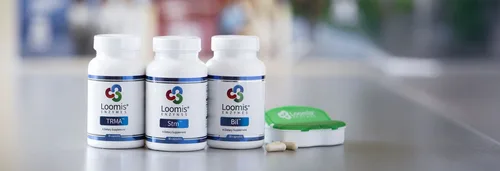
Loomis Enzymes Ultra BDG Review
High-fiber diets generally contribute to improved regularity and reduced discomfort, as they promote bowel movements, enhance gas absorption, and support the fermentation of fiber by gut bacteria. However, some may experience increased gas production when transitioning to a high-fiber diet. Ultra BDG helps support the digestive system during times of high fiber intake. The product is presented under the heading Fiber Digestion. The formula includes alpha-Galactosidase, an enzyme that breaks down complex carbohydrates found in beans, legumes, and cruciferous vegetables, which the page says reduces gas and potential discomfort. It also includes carminative herbs such as fenugreek, turmeric, and black pepper, described as having long traditional use in easing occasional digestive symptoms. Marshmallow is listed for its mucilaginous properties to coat and soothe tissues. The enzyme blend is described as facilitating the breakdown of the encapsulated ingredients, converting them into nutrients that the body can absorb and use. A warning states that this product contains Buckthorn (Rhamnus frangula) and that users should read and follow directions carefully, not use it if they have or develop diarrhea, loose stools, or abdominal pain, and consult a physician if frequent diarrhea occurs. The page advises consulting a physician prior to use if pregnant, nursing, taking medication, or having a medical condition. The page states that these statements have not been evaluated by the Food and Drug Administration and that the product is not intended to diagnose, treat, cure, or prevent disease. The page lists the bottle size as 180 Capsules with SKU Ultra BDG 180. Price is hidden behind a login prompt, so no price or purchase details are shown.
Study, Trial or Testing Result Summary
Members Only23 human studies · 16 improved
No study has tested this exact formula for gallbladder support, fat digestion or comfort after meals. The largest part is a proprietary enzyme blend, so the amount of each enzyme is hidden. Small human studies suggest digestive enzymes can help break down food: in one placebo-controlled trial, an enzyme blend sped up food breakdown in the small intestine [1]. In people with poor fat absorption from pancreas problems, enzymes combined with bile-flow agents reduced fat in the stool [2]. In 15 people with long-term pancreas inflammation, enzymes sped up stomach emptying but did not improve gallbladder squeezing after a meal [3]. Turmeric here is below the curcumin dose studied. In people with fatty liver, curcumin lowered liver fat and shifted bile acids [4], but fat, not curcumin, drove the most gallbladder emptying in healthy adults [5]. Citrus bioflavonoids are below the dose that lowered a liver enzyme in liver disease [6]. Cumin, coriander and black pepper raised bile flow only in animals [7]. Fenugreek is a tiny amount compared with the animal studies that showed fewer gallstones [8]. Marshmallow, buckthorn and valerian have no studies for this goal. Animal and cell studies are never counted.
See all 23 studies →Hide the studies
- In 80 adults with simple fatty liver, 500 mg of curcumin daily for 24 weeks lowered liver fat, weight, blood fats and blood sugar compared with placebo, and shifted gut bacteria and bile acid levels.Curcumin supplementation alleviates hepatic fat content associated with modulation of gut microbiota-dependent bile acid…
- In small crossover studies of healthy adults, fat caused the largest gallbladder emptying among the foods tested, and curcumin was not reported to be the best performer.Effects of various food ingredients on gall bladder emptying.
- In 12 healthy adults, a single turmeric drink before a medium-fat or high-fat breakfast raised several blood bile acids before the medium-fat meal but lowered some conjugated deoxycholic acids before the high-fat meal.Postprandial Responses of Serum Bile Acids in Healthy Humans after Ingestion of Turmeric before Medium/High-Fat Breakfas…
- In healthy people with an ileostomy, a single dose of an enzyme blend taken with food raised sugar levels (glucose and fructose) and one bile salt in small intestine samples after 4 hours compared with placebo, suggesting faster food digestion.Acute physiological effects on macromolecule digestion following oral ingestion of the enzyme blend Elevase® in individu…
- In 15 people with chronic pancreatitis, oral pancreatic enzymes at a single or triple dose sped up stomach emptying but did not improve gallbladder contraction 15 minutes after a meal.Pancreatic enzyme supplement improves dysmotility in chronic pancreatitis patients.
- In 71 people with a chronic liver bile-duct disease taking standard medication, adding glucosyl hesperidin (a citrus bioflavonoid) at 1,000 mg daily for 24 weeks lowered the primary liver enzyme by 6.2% compared with the start, while the 500 mg daily dose did not change it and liver transaminases did not change at either dose. This study tested liver disease rather than gallbladder fat digestion or post-meal comfort.Glucosyl Hesperidin Benefits in Primary Biliary Cholangitis: A Multicenter, Open-Label, Randomized Controlled Study.
- In a case-control study of 153 gallbladder cancer patients and 153 people with gallstones, eating fenugreek leaves less often was linked to higher odds of gallbladder cancer, and the study did not measure any supplement dose or gallbladder function.Correlates between vegetable consumption and gallbladder cancer.
- In adults at risk for Alzheimer's disease on controlled diets, those eating curcumin had fewer gut microbes that break down bile salts and an altered bile acid pool, which may suggest slower gut movement. This was an association within a diet study, not a turmeric trial.Effects of a ketogenic and low-fat diet on the human metabolome, microbiome, and foodome in adults at risk for Alzheimer…
- In people with pancreas-related fat malabsorption, a combination of choleretic agents and digestive enzymes reduced fat in the stool, with the greatest benefit in those with the most severe insufficiency.[Therapeutic effect of a pharmacologic combination of choleretics and digestive enzymes in exocrine pancreatic insuffici…
- In ApoE-deficient mice, four citrus flavanones reduced atherosclerotic plaque by 25 to 56 percent, with naringin strongest; this is an animal study and does not address gallbladder or fat digestion in people.Four Citrus Flavanones Exert Atherosclerosis Alleviation Effects in ApoE-/- Mice via Different Metabolic and Signaling P…
- In mice, long-term hesperetin-7-O-glucoside intake sped up bile acid production and excretion, which aided digestion and lowered liver cholesterol and triglycerides; this is an animal study and no human outcome was measured.Multiomics Analyses Reveal That Long-Term Intake of Hesperetin-7-O-glucoside Modulates the Gut Microbiota and Bile Acid …
- In rats with bile duct blockage, hesperidin at 100 or 200 mg per kg per day for 21 days lowered liver enzymes, bilirubin, and markers of oxidative stress and inflammation while improving liver structure; this is an animal study and does not show effects in people.Efficiency of Hesperidin against Liver Fibrosis Induced by Bile Duct Ligation in Rats.
- In rats with bile duct blockage and liver ischemia-reperfusion injury, naringin given after surgery improved antioxidant status and liver tissue findings; this is an animal study with no human data and no dose stated.Naringin in cholestatic liver ischemia-reperfusion injury.
- In rats fed a high-cholesterol, cholic acid diet, a fiber blend containing fenugreek seed powder lowered cholesterol, increased liver receptors that clear harmful fats from the blood, and increased fecal bile acid loss; the dose was not stated.Increased binding of LDL and VLDL to apo B,E receptors of hepatic plasma membrane of rats treated with Fibernat.
- In mice with existing cholesterol gallstones, a 12% fenugreek seed diet for 10 weeks caused 64% of gallstones to regress, compared with 10% in the control group, and lowered serum and liver cholesterol.Dietary fenugreek seed regresses preestablished cholesterol gallstones in mice.
- In mice fed a 0.5% cholesterol diet for 10 weeks, adding 5%, 10%, or 15% fenugreek seed powder lowered gallstone incidence to 63%, 40%, and 10%, compared with 100% in the control group.Fenugreek seeds reduce atherogenic diet-induced cholesterol gallstone formation in experimental mice.
- In rats fed a high-cholesterol diet for 10 weeks, adding 12% fenugreek seed reduced bile cholesterol by 70%, lowered bile lipid peroxides, lengthened the time before cholesterol crystals formed, and increased bile phospholipids and bile acids.Effect of dietary fenugreek seeds on biliary proteins that influence nucleation of cholesterol crystals in bile.
- In a mouse study, a 12% fenugreek seed diet for 10 weeks reduced cholesterol gallstone formation by 75% compared with the high-cholesterol diet alone, and also lowered gallbladder inflammation and liver lipid peroxides.Dietary fenugreek and onion attenuate cholesterol gallstone formation in lithogenic diet-fed mice.
- In rats fed a high-fat, high-sugar diet, fenugreek mixed into the food at about 2.5% of the diet lowered liver fat and raised fecal excretion of cholesterol and bile acids, with no side effects at that level; glucose tolerance did not change.Dose-dependent effects, safety and tolerability of fenugreek in diet-induced metabolic disorders in rats.
- In hyperlipidemic rats, a fenugreek seed extract at 200 mg per kg of body weight lowered plasma cholesterol and triglycerides and reduced lipid peroxidation; the study length was not stated and gallbladder outcomes were not measured.A mechanism-based pharmacological evaluation of efficacy of Trigonella foenum graecum (fenugreek) seeds in regulation of…
- In a 14-week mouse study, 2% fenugreek in the diet changed gut bacteria and liver metabolism, including bile acid and cholesterol pathways, but the study did not measure gallbladder or gallstone outcomes.Cross-Omics Analysis of Fenugreek Supplementation Reveals Beneficial Effects Are Caused by Gut Microbiome Changes Not Ma…
- In diabetic mice with fatty liver disease, 4 weeks of Trigonella foenum-graecum extract improved blood sugar and fat metabolism, reduced liver oxidative stress, and lowered inflammation; the dose was not stated and gallbladder outcomes were not measured.Trigonella foenum-graecum L. ameliorates metabolism-associated fatty liver disease in type 2 diabetic mice: a multi-omic…
- In cholesterol-fed rats, 4 weeks of a fenugreek seed ethanol extract at 30 or 50 g per kg of diet reduced plasma cholesterol by 18 to 26%, and the extract reduced bile acid absorption in lab tests; gallbladder outcomes were not measured.The effect of an ethanol extract derived from fenugreek (Trigonella foenum-graecum) on bile acid absorption and choleste…
Review Totals and Summary
Members Only720 reviews · 93% positive
3. I can try different searches, such as on Amazon, practitioner dispensaries like Fullscript, or the Loomis site.
Biohacker Summary
Members Only9 of 10 recommend it
Fenugreek, the main ingredient, gets a split verdict from the panel: of the seven who spoke about it, three recommend it, two are neutral and two warn. Those who recommend it point to blood sugar, with one suggesting soaking the seeds overnight and eating them before meals, and one also mentions it for period pain and its long use in traditional medicine. The two who warn say it has been disproven for boosting testosterone, and that it can leave one person feeling revved up and overly wired. The two neutral voices say it may affect testosterone but does not help the area most people need. Turmeric is a smaller ingredient in this product, and many on the panel like it for joints and inflammation, usually paired with black pepper for absorption, though a few caution about oxalate, stopping before surgery, or low hormone sensitivity.
See all 10 biohackers →Hide the biohackers
Thomas DeLauer · Fenugreek · neutral
- Mentions that more fenugreek could be beneficial for testosterone, but it's not working on the axis that most people need help with.
- Recently started taking turmeric for their joints, specifically for knee issues, as it helps support recovery, especially after a workout.
- Mentions that Dose Daily contains turmeric, which contributes to its positive impact on liver enzyme levels.
- Uses marshmallow root as part of a 'number two formula' in their detoxification protocol, combined with activated charcoal.
- Warns that valerian, like other common sleep supplements, does not directly address the physiological issues of body temperature and brain restlessness, instead only sedating the user.
- Recommends taking black pepper with curcumin to increase its bioavailability, as curcumin gets metabolized before it can do anything without it.
- Mentions Turmeric as an ingredient in DOSE that has proven literature behind it for liver health.
- Mentions that Dose Daily, which he recommends for liver support, contains turmeric.
- Recommends mixing curcumin with black pepper (piperine) for general inflammation, as piperine inhibits the breakdown of curcumin, increasing its bioavailability by up to 2,000%.
- Recommends adding turmeric to food, citing rodent model research that shows it lowers plasma lipids and glucose, and increases insulin sensitivity in a dose-dependent fashion.
- Recommends fenugreek, explaining that its galactomannan fiber gel slows emptying while 4-hydroxyisoleucine stabilizes insulin, providing a double whammy on satiety.
- Recommends turmeric with black pepper to shut down inflammatory response, as piperine in black pepper helps curcumin absorb by blocking liver clearance.
- Recommends black pepper with turmeric because its piperine blocks liver clearance, allowing curcumin to absorb and shut down inflammatory response.
- Black pepper makes curcumin actually absorb.
Dave Asprey · Fenugreek · recommends
- Recommends soaking fenugreek seeds overnight and consuming them before meals to reduce fasting glucose and post-meal glucose spikes by 5 to 20 percent, citing multiple small human trials.
- Recommends Qualia Vitamin C Plus, highlighting its combination of seven forms of vitamin C with 250 mg of citrus bioflavonoids, which helps with absorption and use for building collagen and a strong immune system.
- Warns that turmeric is exceptionally high in oxalate, which can cause issues if consumed in large amounts.
- Uses turmeric as an example of an unprotected ingredient that, once proven beneficial through studies, allows everyone to take advantage of the knowledge.
- Dave Asprey used to research black pepper extract but changed his mind about its use after a discussion with Christian DPO, who highlighted its downsides.
- Dave Asprey mentions that turmeric can stimulate orexin, which keeps you awake, alert, and motivated.
- Takes an extract of turmeric, a high oxalate food, that provides the good stuff without the bad.
- States that turmeric has anti-parasite qualities and he takes it nearly constantly.
- States that turmeric has anti-parasite qualities and he takes it nearly constantly.
- Says he takes valerian root in capsule form before bed as one of his four natural sleep aids, noting that it smells bad but works.
- Says that turmeric has interesting anti-parasite qualities and he takes it nearly constantly.
- Dave Asprey warns against adding a pound of turmeric to a smoothie every day due to its oxalate content, which can be bad for longevity and kidneys.
- Dave Asprey warns that whole turmeric is very high in oxalic acid, which can clog a dog's kidneys faster than a human's, and also affects humans.
- Dave Asprey states that black pepper is higher in aflatoxin and oxalate, neither of which is good for dogs.
Dr. Eric Berg · Fenugreek · recommends
- Recommends fenugreek as a natural remedy for period pain.
- Dr. Eric Berg recommends pairing black pepper with turmeric to improve curcumin absorption.
- Dr. Eric Berg recommends pairing turmeric with black pepper to improve curcumin absorption.
- States that one cup of turmeric water could have surprising benefits for health.
- Notes that black pepper aids in the absorption of Curcumin.
- Dr. Eric Berg recommends adding black pepper to eggs to support satiety, antioxidant potential, cardiovascular, and liver health.
- Dr. Eric Berg recommends adding turmeric to eggs to support satiety, antioxidant potential, cardiovascular, and liver health.
- Recommends turmeric for its chelation abilities and its ability to turn up the body's detoxification genes.
- Mentions turmeric as a food that black cumin seed oil outperforms in reducing inflammation.
- Dr. Eric Berg states that turmeric can contribute to supporting liver health.
- Says turmeric is a natural a med because it helps retain neurotransmitters like serotonin, GABA, and dopamine.
- Recommends consuming citrus fruits to increase nitric oxide.
- Recommends turmeric, noting it is an exceptionally rich source of curcumin, which delivers powerful antioxidant and anti-inflammatory effects linked to cardiovascular health and mental well-being.
- States that Turmeric may be the most underrated medicinal plant on earth, supporting the brain, liver, and heart, and helping protect healthy cells during chemo or radiation therapy.
Siim Land · Fenugreek · warns
- Warns that fenugreek, a glucose disposal agent, is an MAO inhibitor and can make him feel 'revved up' or 'overly wired' due to his slow MAO gene.
- Recommends citrus fruits for skin health.
- Mentions that turmeric helps with arthritis and joint pain, with clinical trials showing its effectiveness.
- Notes that there isn't much long-term research on substances like valerian root for sleep and anxiety, and replication is a problem due to varying product formulations. He also points out a lack of follow-up on people after they discontinue supplementation.
- Places Turmeric or Curcumin in the 'god tier' due to numerous human clinical trials for inflammation, noting that its poor bioavailability means supplements should ideally be liposomal formulations or include piperine (black pepper) to enhance absorption.
- States that turmeric is known for its anti-inflammatory effects, lowering inflammation markers like CRP in clinical trials.
- Places Turmeric (Curcumin) in the 'god tier' due to numerous human clinical trials supporting its anti-inflammatory effects. He advises using liposomal formulations or adding piperine to improve its poor bioavailability.
- Discusses Turmeric as a supplement.
- Mentions that while one-off studies might suggest turmeric helps a little with fatty liver, the evidence is not strong enough to recommend it solely for that purpose.
- States he eats watermelon and other citrus fruits quite regularly because they contain citrulline, which increases nitric oxide production.
- Recommends turmeric as a great spice for its anti-inflammatory benefits, ability to inhibit senescent cells, protect against lipid peroxidation, and its positive effects on glycation.
- Mentions that cumin has been found in case studies to increase liver enzymes and cause acute liver injury in certain individuals.
- Mentions turmeric as another Ayurvedic herb that has been implicated in liver damage, similar to Ashwagandha.
- Has never tried coriander oil and hasn't done research about it.
Dr. Rhonda Patrick · Fenugreek · warns
- States that Fenugreek, along with tribulus and D-aspartic acid, has been disproven for its effects on testosterone.
- Likes adding turmeric to bone broth for flavor, warmth, and its anti-inflammatory compounds.
- Recommends valerian as a better option for a sleep-promoting supplement.
- Recommends Valerian as a sleep supplement that promotes relaxation and reduces nighttime awakenings, offering meaningful improvements to sleep quality.
- States that Valerian is sedating and calming, and while it came closest to beating placebo for insomnia, the data still shows it does not.
- Suggests that if someone is an 'immuno-ager,' they might want to take turmeric to help with their immune system.
- Explains that turmeric, specifically curcuminoids, are slightly toxic to the body, which activates phase II detoxifying enzymes and turns on anti-inflammatory genes. She also notes that aromatic turmerone in turmeric can increase neural stem cell proliferation and affect memory and performance.
- Adds black pepper to her turmeric tea because the piperine in it stops enzymes in the liver from clearing out polyphenols, thus extending their half-life.
- Feels comfortable using turmeric with ginger and black pepper to counteract unnecessary inflammation, noting its long history in Ayurvedic medicine.
- Dr. Patrick mentions that catechins and polyphenols are found in things like green tea, dark chocolate, turmeric, blueberries, and other purple pigmented fruits and vegetables, as well as red wine.
- Mentions turmeric as a beneficial hormetic stressor that activates the body's stress response mechanisms.
- Kevin makes teas with turmeric, indicating he uses it.
Ben Greenfield · Fenugreek · neutral
- Mentions Fenugreek as an herb that seems to have an impact on testosterone.
- Advises patients to stop turmeric before surgery because it can act as a med or antiplatelet agent.
- Recommends root spices like turmeric for use on the AIP diet.
- Advises watching out for black pepper, as it is eliminated in core AIP and many people are surprisingly sensitive to it.
- Suggests using choice herbs like turmeric when preparing meat to weave in small stressors.
- Recommends combining black pepper with Triphala and Himalayan pink salt as a powder to brush with, as it is astringent, drives up inflammation and infection in the gums, is refreshing, and prevents plaque.
- Lists turmeric as one of the ingredients in Organifi Green Juice.
- Rubbed the beef with black pepper before searing.
- Mentions turmeric as an herb that has more data than fruit tree leaves.
- Stuffs the trout with herbs like turmeric.
- Mentions marshmallow root extract as a tea that can help with mucin production in the gut, aiding in gut healing.
- Suggests using valerian root as a compound to help shut down hardwired dopamine firing pathways for those with ruminating thoughts at night.
- Recommends anti-inflammatory spices like turmeric, ginger, and garlic, often seen in a Mediterranean approach, to help with inflammation and fat loss.
- Uses turmeric to add flavor to his roast chicken recipe.
Dr. Mark Hyman · Fenugreek · recommends
- States that fenugreek has been used a lot in Ayurvedic medicine and is great for blood sugar.
- Recommends turmeric as an anti-inflammatory powerhouse.
- Notes that if people have used something like turmeric for several thousand years as a remedy and an anti-inflammatory compound, it can't be wrong.
- Recommends seasoning turmeric with black pepper to help the body absorb more nutrients.
- States he was using circ turmeric to stimulate the NRF2 pathway and open up detox.
- Mentions using turmeric (curcumin) in certain people, especially those with elevated amyloid levels in the blood.
- Recommends Paleovalley's Turmeric Complex, which uses whole food turmeric with over 200 beneficial compounds, plus organic ginger, rosemary, and cloves, to support overall wellness.
- Recommends turmeric as a simple way to support health against stress and inflammation, noting its key compound curcumin supports the body against conditions like cancer, cardiovascular stress, neurogenic diseases, and helps with inflammation, metabolic balance, joint comfort, mood, immune function, and brain health.
- Notes that black pepper, along with gentle heat, improves the absorption of curcumin in Paleovalley's turmeric complex.
- Recommends turmeric as a simple way to support health, noting its key compound curcumin supports the body against various conditions and helps with inflammation, metabolic balance, joint comfort, and mood. He specifically recommends Paleovalley's Turmeric Complex for its whole food approach and improved absorption.
- Notes that Valerian binds to separate allosteric sites on the GABA receptor, increasing the amount of GABA to bind.
- Uses a little cumin, along with salt and pepper, to season chicken, noting spices are anti-inflammatory and medicine.
- Included turmeric in their chicken dish as part of an anti-inflammatory power couple with ginger.
- Recommends turmeric as a great herb and spice for upregulating the body's own detoxification pathways.
Andrew Huberman · Black Pepper · warns
- Recommends avoiding bioavailable curcuminoids like black pepper extract if someone's DHT is already low or if they have somewhat insensitive androgen receptors.
- Recommends avoiding bioavailable curcuminoids like bioavailable turmeric if someone's DHT is already low or if they have somewhat insensitive androgen receptors.
- Mentions valerian root as one of the clinically supported ingredients that can help you fall asleep, stay asleep, and wake up feeling more refreshed, and he has worked with AG1 to create a product that includes it.
- Mentions Valerian root as a clinically supported ingredient that can help people fall asleep, stay asleep, and wake up feeling more refreshed.
- States that valerian root is a clinically supported ingredient that can help one fall asleep, stay asleep, and wake up feeling more refreshed.
- Mentions valerian root as one of several clinically supported ingredients that can help people fall asleep, stay asleep, and wake up feeling more refreshed.
- Mentions that turmeric is on a list of colorants and could technically move a food into the ultra-processed category, despite being full of curcumin and having possible health benefits.
- Recommends turmeric to patients for hot flashes, noting some 'okay data' but emphasizes it's not a replacement for estrogen.
- States that Valerian root does not seem to hold up in terms of any sleep benefit whatsoever based on the data.
- Warns against taking too much turmeric, especially in high doses, due to potential negative effects like limiting dihydrotestosterone production and the risk of lead contamination, advising careful sourcing.
- Warns that high doses of turmeric can strongly inhibit DHT, leading to drops in libido for people who are very DHT sensitive.
- Explains the evidence and mechanisms supporting the use of curcumin (turmeric) for migraine headaches.
- Andrew Huberman avoids turmeric because his previous anecdotal experience showed it crushed his DHT levels and negatively impacted his feelings of vitality.
- States that black pepper extract, also known as BioPerine, is a 5-alpha-reductase inhibitor.
Bryan Johnson · Turmeric · uses
- Uses turmeric for its antioxidant, anti-inflammatory, and metabolic benefits, noting that black pepper boosts its power.
- Adds black pepper to turmeric because a compound in pepper called piperine boosts the power of turmeric by slowing the breakdown of curcumin in the gut and liver, making its antioxidant, anti-inflammatory, and metabolic benefits last longer.
- Includes three capsules of Cumin in his Blueprint stack.
- Adds 1 tablespoon of cumin to his Super Veggie for inflammation, liver, and pancreas health.
- Includes cumin in his Super Veggie meal, which he eats at 7 AM.
- Takes one gram of turmeric a day for inflammation, joints, and liver.
- Uses cumin in his Super Veggies.
Peter Attia · Turmeric · uses
- Peter Attia's brand, AVIA Skincare, incorporates Ayurvedic wisdom, including turmeric and other Eastern botanicals, for anti-inflammatory care.
RAL Summary
Members OnlyTier 3 for Gallbladder and Fat Digestion
More Details
Members OnlyBody systems · Combine with · Possible side effects
Body systems: Digestive system, Liver and gallbladder
Combine with: Loomis Enzymes Ultra BDG is a formula designed around bile and gallbladder support, which is generally understood to include ox bile or bile salts, lipase and other digestive enzymes (the exact blend is proprietary, so check the label). It pairs well with a broad-spectrum digestive enzyme or a lipase-rich product taken with meals to improve fat breakdown. Phosphatidylcholine or lecithin, and taurine, support bile composition and bile acid conjugation. Milk thistle (silymarin), artichoke leaf extract and dandelion root can support liver function and bile flow. Betaine HCl or digestive bitters may help the upstream digestive cascade if stomach acid is low. Fat-soluble vitamins (A, D, E, K) or omega-3s may be useful if fat absorption has been poor. Those with gallstones, bile duct obstruction, or on bile-acid binders or meds should consult a clinician first, since bile-stimulating products can cause pain in obstruction.
Possible side effects: No major side effects reported.
Supplement Facts
Marshmallow 158 mg · Citrus Bioflavonoids 130 mg · Turmeric 130 mg
| Marshmallow | 158 mg | † |
| Citrus Bioflavonoids | 130 mg | † |
| Turmeric | 130 mg | † |
| Cumin | 60 mg | † |
| Buckthorn | 40 mg | † |
| Coriander | 20 mg | † |
| Valerian Root Extract | 8 mg | † |
| Fenugreek | 4 mg | † |
| Black Pepper Fruit Extract | 2 mg | † |
| Proprietary Enzyme Blend | 348 mg | † |
Other ingredients: Cellulose, Water, Phytase.
Directions: Directions for use: Take 2 capsules, 3 times daily after meals or as directed.
Barcode (UPC) 697706013207 · Label source: NIH label database · Report a label change
Show entire label

Where to Buy
Loomis Enzymes
We sell no supplements. Prices change; check the store.
More gallbladder and fat digestion products
Members OnlyThe highest ranked for the same goal
Graded November 3, 2026 by the Reverse Age Lab evidence engine, from human studies, real reviews and our biohacker panel. How we grade. Is this medical advice? No. Rala organizes the published evidence; go over any change with your doctor, especially if you take meds.
Privacy policyConsumer health dataTermsDo Not Sell or Share My Personal InformationCookie settings