
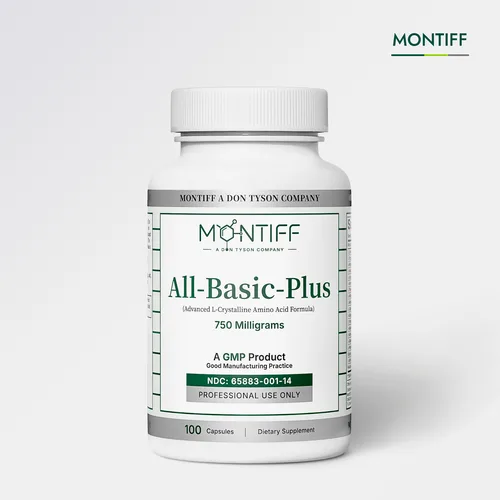
Montiff All-Basic-Plus 745 mg Caps by Montiff Review
All-Basic-Plus 745 mg by Montiff is a dietary supplement designed to support healthy cell and tissue growth and repair. The page says the product supplies the body with a proprietary blend of 19 high quality L-crystalline singular amino acids that fulfill all of the body's basic amino acid requirements. According to the page, the amino acids in this potent supplement are easily assimilated by the body with no further energy or processing required. The page states that this supplement is a favorite of bodybuilders and athletes for the general health maintenance it provides. The page says men and women who take All-Basic-Plus 745 mg by Montiff on a daily basis can realize a range of health benefits. These include support for healthy tissue and cell growth and repair, especially during periods of injury or stress. The listing also says it stimulates improved functioning of the immune system, aids in the reversal of negative nitrogen balance, and helps maintain electrolyte balance during heavy metal detox. The frequently asked questions section repeats these points. It describes the product as a dietary supplement featuring a proprietary blend of 19 high quality L-crystalline amino acids, and says these amino acids are used by bodybuilders and athletes for general health maintenance. It states that the product supports tissue repair and nitrogen balance. The supplement facts list a serving size of 1 capsule with 100 servings per container. A proprietary blend of 750 mg is listed, containing L-Lysine (HCl), L-Tryptophan, L-Arginine Base, L-Isoleucine, L-Leucine, L-Alanine, L-Threonine, L-Histidine, L-Methionine, L-Cystine, L-Glutamine, L-Tyrosine, L-Aspartic Acid, L-Valine, L-Glutamic Acid, L-Phenylalanine, Glycine, L-Serine and N-Acetyl-L-Cysteine. Other ingredients are gelatin, microcrystalline cellulose and magnesium stearate. The page says the product is certified free of starch, corn, milk, wheat, yeast, sugar, eggs, salt, artificial colors, binders, flavors, preservatives and fish derivatives. Directions on the page advise taking one to two capsules daily, 30 minutes before meals, or as recommended by a health care professional, as a dietary supplement in a normal food program. The page lists the UPC as 683268220016, a manufacturer's item number of 22001, and an amount of 100 caps. It shows a current price of $34.45 against an original price of $45.94, a 25% saving, and offers one-time purchase or subscription. The page notes that orders ship the same day if placed before 3:00pm CST and that most orders arrive in 2-4 business days. The page includes a standard disclaimer that these statements have not been evaluated by the Food and Drug Administration and that the product is not intended to diagnose, treat, cure, or prevent any disease. The customer review section shows zero ratings and states that no one has written a review yet, so no review themes are available from this page.
We don’t sell supplements. We help you make decisions and get the best price.
Lowest prices
We may earn a commission from some store links. How we choose.
Finding the lowest prices at the stores now. This takes a few seconds.
Study, Trial or Testing Result Summary
Members Only43 human studies · 14 improved
1 of these 43 human studies gave the ingredient by drip, not by mouth.
Every ingredient in this capsule sits inside a single blend with no amounts listed, so none can be shown to match a studied dose. Two small trials from 1994 found that adding a lysine, arginine and milk sugar mix to the bone medicine calcitonin raised bone density and eased pain more than the medicine alone, but these mixes were not this product [1][2]. When arginine was given alone to women past menopause for six months, bone scans showed no change [3]. A large diet study linked eating more lysine, leucine, alanine and arginine to denser bones, but this cannot prove cause [4]. Leucine helped bone only when mixed with protein, calcium and vitamin D [5], and a separate leucine trial found no change in bone density [6]. Higher tryptophan in food was linked to lower odds of low bone density [7]. Studies of isoleucine disagreed [8][9], and methionine and phenylalanine showed no bone benefit [10]. For N-acetylcysteine, only animal studies exist [11]. Threonine, cystine, tyrosine, aspartic acid and serine have no human bone studies. Animal and cell studies are never counted.
See all 43 studies →Hide the studies
- A review of nine trials of non-surgical treatment of gum and bone inflammation around dental implants found glycine powder air polishing reduced bleeding more than curettes with chlorhexidine, and no progressive bone loss was seen over up to 12 months.Non-surgical therapy for the management of peri-implantitis: a systematic review.
- A review of 16 studies found higher blood glycine levels were consistently linked with lower bone density, so this does not show a benefit from taking glycine.Metabolomics of Osteoporosis in Humans: A Systematic Review.
- In 380 older adults with sarcopenia, a vitamin D, calcium and leucine-enriched whey protein drink taken twice daily for 13 weeks raised vitamin D, lowered a bone breakdown marker and gave a small (about 2%) increase in total body bone density compared with a control drink.A Vitamin D, Calcium and Leucine-Enriched Whey Protein Nutritional Supplement Improves Measures of Bone Health in Sarcop…
- In 200 pre-frail and frail older adults doing resistance training for 16 weeks, leucine, whey, soy or creatine did not improve muscle mass or function beyond exercise alone; bone was measured but no bone benefit was reported.Supplement-based nutritional strategies to tackle frailty: A multifactorial, double-blind, randomized placebo-controlled…
- In community-dwelling older women, 3 months of exercise improved bone mineral content in frail women, while the leucine-rich amino acid supplement (6 g daily) was tested only for muscle in sarcopenic women, so its bone effect was not shown.[Interventions for frailty and sarcopenia in community-dwelling elderly women].
- In 102 healthy men over 6 weeks, replacing part of red and processed meat with legumes raised arginine intake from food but did not change bone turnover or mineral metabolism markers compared with the meat diet.Effects of partial replacement of red and processed meat with non-soya legumes on bone and mineral metabolism and amino …
- In 78 menopausal women at risk of osteoporosis, a daily enriched dairy product containing leucine among other nutrients for 24 weeks maintained bone density and improved bone formation and breakdown markers compared with the unenriched product.A Dairy Product to Reconstitute Enriched with Bioactive Nutrients Stops Bone Loss in High-Risk Menopausal Women without …
- In 65 people with knee osteoarthritis, 12 g daily of leucine-enriched amino acids for 8 weeks improved muscle density and quality of life versus control, but no bone benefit was reported.The efficacy and safety of leucine-enriched essential amino acids in knee osteoarthritis patients: A randomized controll…
- In 61 older men on alternate-day fasting for 4 weeks, added leucine or protein did not change bone mineral density or most other outcomes beyond the control group.Effects of Body-Mass-Scaled Protein and Leucine Supplementation on Body Composition and Cardiometabolic Blood Markers Du…
- In 60 stroke rehabilitation patients, a leucine-enriched amino acid jelly after each session for 3 months led to a smaller loss of bone mineral content than rehabilitation alone.Effects of Nutritional Support with a Leucine-Enriched Essential Amino Acid Supplement on Body Composition, Muscle Stren…
- In 40 people with age-related osteoporosis, adding an arginine-lysine-lactose preparation to calcitonin for six months raised bone density more, eased pain more, and lowered parathyroid hormone and a bone breakdown marker more than calcitonin alone.[The effects of the carbocalcitonin + arginine-lysine-lactose combination in senile involutional osteoporosis].
- In 34 trained young adults doing resistance training for 8 weeks, 60 grams a day of hemp (a source of isoleucine and other amino acids) versus soy was tested, and the abstract reports no bone resorption benefit, with benefits only for muscle thickness and muscle torque in some groups.Effects of hemp supplementation during resistance training in trained young adults.
- In 31 patients with inflamed tissue around dental implants, glycine air polishing worked about as well as smoothing the implant surface over 6 months, with bone loss stable and a slight bone gain of 0.5 mm in the glycine group.Implantoplasty Versus Glycine Air Abrasion for the Surgical Treatment of Peri-implantitis: A Randomized Clinical Trial.
- In 30 healthy postmenopausal women given 14.8 g of free arginine daily for 6 months, bone scans showed no change in bone mass or structure compared with placebo, though one bone formation marker rose.L-arginine, the natural precursor of NO, is not effective for preventing bone loss in postmenopausal women.
- In 30 patients after surgery for implant gum and bone inflammation, adding glycine powder air polishing to ultrasonic cleaning for 12 months reduced pocket depth more than the control, while healthy tissue with no extra bone loss was similar (87% versus 80%).Clinical, microbiological and biochemical impact of a supportive care protocol with an air-polishing device, after surgi…
- In 24 healthy postmenopausal women, a single 60 mg dose of poly-gamma-glutamic acid taken with calcium-fortified orange juice raised calcium absorption to 39.1% from 34.6% without it, with the biggest gains in women whose absorption was naturally low.Acute effect of poly-gamma-glutamic acid on calcium absorption in post-menopausal women.
- In 8 adolescents with Crohn disease, 6 months of growth hormone did not change how the body breaks down or builds protein, including phenylalanine use, and the abstract reports no bone improvement.Effects of recombinant human growth hormone on protein turnover in the fasting and fed state in adolescents with Crohn d…
- In two matched groups of postmenopausal women, adding an arginine-lysine-lactose combination to calcitonin for six months increased bone density and osteocalcin and reduced pain, painkiller use, parathyroid hormone and hydroxyproline compared with calcitonin alone.[Experience regarding the use of arginine-lysine-lactose treatment in menopausal osteoporosis].
- In 56 postmenopausal women given L-glutamine calcium monofluorophosphate (20 mg fluoride plus 600 mg calcium daily) for 12 months and compared with 50 untreated women, forearm bone density rose within 6 months while it fell in the untreated group, though this combined product cannot isolate glutamine's effect and 7 women stopped early due to stomach complaints.A new fluoride preparation for the prevention of postmenopausal osteoporosis: calcium monofluorophosphate.
- In 14 men with idiopathic osteoporosis, a single intravenous arginine infusion (30 g) produced a normal growth hormone response, suggesting no growth hormone deficiency.Normal growth hormone secretory reserve in men with idiopathic osteoporosis and reduced circulating levels of insulin-li…
- Glycine was only the liquid carrier for a single calcitonin injection in 11 healthy adults, so this study does not test glycine itself; the calcitonin doses lowered blood calcium and did not change urinary calcium.Plasma immunoreactive N-terminal parathyroid hormone and cyclic AMP and cyclic GMP urinary levels in man after I. M. adm…
- In 5 people with pyridoxine-non-responsive homocystinuria, 3 g of betaine twice daily over a two-year placebo-controlled crossover did not significantly change vertebral bone density, although it lowered homocystine and caused variable rises in methionine.The effect of oral betaine on vertebral body bone density in pyridoxine-non-responsive homocystinuria.
- In rats with knee osteoarthritis and in people with mild knee osteoarthritis, L-glutamine reduced cartilage damage and joint symptoms, performing about as well as glucosamine sulfate and a med, though the human trial's sample size was not stated.Read the study on PubMed (40089639) →
- In a large UK cohort of about 111,000 adults, higher blood valine was linked to a lower risk of hip fracture, and this was partly confirmed in a Swedish replication study; this is an association, not proof that valine causes stronger bones.Low Circulating Valine Associate With High Risk of Hip Fractures.
- In a survey of 12,003 adults aged 50 and older, higher dietary tryptophan intake from food was linked to lower odds of low bone mineral density; this does not show that tryptophan supplements improve bone health.Association Between Dietary Tryptophan Intake and Bone Health: A Cross-Sectional Study.
- In a study of 3160 women aged 18 to 79, higher intake of lysine from the diet was linked to higher bone mineral density in the spine and forearm, though this observational design cannot prove cause and effect.Amino Acid Intakes Are Associated With Bone Mineral Density and Prevalence of Low Bone Mass in Women: Evidence From Disc…
- In nearly 3,000 older adults, higher blood isoleucine levels were associated with less hip bone density loss over 4 years, with odds of loss about 8 to 17 percent lower per standard deviation increase.Circulating amino acids are associated with bone mineral density decline and ten-year major osteoporotic fracture risk i…
- In about 1,850 older adults followed for 12 years, higher blood isoleucine levels were not significantly linked to hip fractures, and were not linked to hip or spine bone mineral density.Plasma Levels of Branched Chain Amino Acids, Incident Hip Fractures, and Bone Mineral Density of the Hip and Spine.
- In 344 Japanese adults, blood isoleucine was one of several factors significantly correlated with cervical disc degeneration in men, though the direction of the link was not reported and this was not a bone density finding.A study of the factors associated with cervical spinal disc degeneration, with a focus on bone metabolism and amino acid…
- In a retrospective study of 213 people with inherited amino acid metabolism disorders, higher blood isoleucine was linked to taller height, and bone mineral density results were not reported as a finding.Pubertal origin of growth retardation in inborn errors of protein metabolism: A longitudinal cohort study.
- In a cross-sectional study of 135 adults aged 45 and older, higher blood tryptophan levels were linked to lower odds of osteoporosis; this does not show that taking tryptophan improves bone health.Plasma levels of amino acids and osteoporosis: a cross-sectional study.
- In 103 people with spinal cord injury, higher dietary isoleucine intake was linked to lower bone mineral density in the lumbar vertebrae.The Relationship Between Dietary Intakes of Amino Acids and Bone Mineral Density Among Individuals with Spinal Cord Inju…
- In 80 adults with phenylketonuria, low bone density was found in 25%, with male sex and low body weight as risk factors, while phenylalanine levels, age and diet adherence were not linked to it.High prevalence of low bone mineral density in young adults with phenylketonuria.
- In 76 children aged 4 to 9, vegetarians had about 10 to 15 percent lower blood isoleucine than meat-eaters, along with higher levels of a bone breakdown marker, CTX-I, which is an association rather than proof of cause.Dietary Intake and Circulating Amino Acid Concentrations in Relation with Bone Metabolism Markers in Children Following …
- In a cross-sectional study of 36 vegans and 36 omnivores, vegans had lower bone ultrasound readings, and leucine was one of 12 nutrition-related blood and urine markers linked to bone health, though leucine was not given as a supplement.Vegan Diet and Bone Health-Results from the Cross-Sectional RBVD Study.
- In a small cross-sectional study of 36 adolescents with phenylketonuria, blood branched-chain amino acid levels, including valine, tended to be lower in those taking amino acid mixtures with glycomacropeptide, but the study did not show a clear effect on bone quality.Body Composition in Adolescent PKU Patients: Beyond Fat Mass.
- In 30 healthy adolescents, arginine was used as a test to stimulate growth hormone, and higher body fat was strongly linked to a lower growth hormone response.Body fat mass is a strong and negative predictor of peak stimulated growth hormone and bone mineral density in healthy a…
- In a cross-sectional study of 19 children with phenylketonuria, blood phenylalanine levels were not linked to bone density; only alkaline phosphatase showed a link, and only in children under 8.Evaluation of bone mineral density and biochemical markers in pediatric patients with phenylketonuria.
- In 17 patients with hard-to-heal bone fractures treated with bone marrow grafting, higher arginine levels in the marrow were seen in those whose bones healed successfully than in those who did not.Arginine Availability in Reamed Intramedullary Aspirate as Predictor of Outcome in Nonunion Healing.
- In 15 people with phenylketonuria, males had lower total body bone density than females, and femur density was negatively correlated with intake of amino acid medical food, which is a source of phenylalanine.Sex differences in body composition and bone mineral density in phenylketonuria: A cross-sectional study.
- In 9 people with classical homocystinuria, bone mineral density scores were not associated with body composition, though methionine and homocysteine levels were negatively correlated with body mass index; no supplement was tested.Body composition in patients with classical homocystinuria: body mass relates to homocysteine and choline metabolism.
- In nine boys with chronic kidney failure, a strict low-protein diet that included added histidine, combined with growth hormone for 12 months, increased height growth and did not worsen kidney bone disease or advance bone age beyond their actual age.Accelerated growth in short children with chronic renal failure treated with both strict dietary therapy and recombinant…
- Branched-chain amino acids, including isoleucine, were higher in saliva of people with gum disease, and in rats and laboratory cells they increased tissue-breaking enzymes and worsened bone loss around the teeth.Branched-chain amino acids promote gelatinase secretion from human periodontal ligament stem cells through nuclear facto…
Review Totals and Summary
Members Only17 reviews · 100% positive
The store shows 2 ratings in total (Professional Supplement Center), and the themes below come from the two written reviews that could be read on its page. Both reviews are from anonymous customers who gave the capsules 5 out of 5 stars, so this is a very small sample and should be read as a narrow view of customer experience, not a broad consensus. The summary covers the capsules only, and no reviews of other forms of the product were part of what was provided. **What buyers praise.** The first reviewer calls Montiff All-Basic Plus the best on the market and describes it as the best all-around daily immune support. This matches the page's own claim that the amino acid blend is designed to help with immune support during periods of illness, injury, or stress. The second reviewer is more emphatic and titles the review as a "must." After a conversation with the owner of Montiff, Don Tyson, this reviewer came to see the need for taking free form amino acids. They add that the body is roughly 75 percent amino acids by weight once water is removed, and they call amino acids the most important nutrients one can take. **What buyers complain about.** Neither review contains any complaint or criticism. Both are recommendations rather than detailed accounts of use. **Who it seems to suit.** Based on the first review, the product appeals to people who want a daily immune support supplement. The second review suggests it suits people who are persuaded of the value of free form amino acids in general. That reviewer ties their enthusiasm to direct contact with the brand owner, which is worth bearing in mind when weighing the comment. **Taste, form, and value.** The reviews say nothing about capsule size, swallowing, taste, or price. They also do not mention shipping or results over time, so the written feedback gives no detail on those points. Neither review mentions the l-tryptophan component or its link to serotonin, mood, sleep, or appetite. **Overall picture.** The two readable reviews are uniformly positive and centre on two ideas: the capsules as a daily immune support product, and the importance of free form amino acids as a category of nutrient. The page reports a 5.0 average from its two ratings. With so few ratings and such short comments, there is no information here on how the capsules perform in practice, how they are tolerated, or how they compare on cost. Shoppers who want those details would need to look for other sources.
Biohacker Summary
Members Only10 of 10 recommend it
Arginine is the main ingredient, and the panel is split: four of the ten recommend it, while five stay neutral and only mention it, and one panelist did not speak about it at all. Those who recommend it say it boosts nitric oxide, which opens blood vessels, and they link it to better blood flow, workout power, endurance and mental clarity. One of them also suggests taking it with proline and ornithine in the meal that ends a long fast, and another pairs it with citrulline, ginseng and vitamin C. The neutral voices simply note its role in nitric oxide, immune cells and growth hormone products, and no one gave a dose for arginine or said they stopped taking it. Glycine, a smaller ingredient in this product, is mostly taken at 2 grams before bed for sleep, though one panelist warns that very high daily amounts can form harmful crystals.”}</br>Checking format: the response must be a single JSON object only.</br>{
See all 10 biohackers →Hide the biohackers
Ben Greenfield · Arginine · neutral
- Mentions an arginine link to thymus metabolism, noting that immune cells require a lot of arginine.
- Describes leucine as the 'ignition' that turns on the signal for muscle protein synthesis, and that a sufficient dose is needed to hit the dose response and then have other essential amino acids to maintain the signal.
- States that leucine is the primary trigger for muscle protein synthesis and recommends an essential amino acid blend with about 40% leucine for maximum stimulation.
- Mentions Dr. James Di Nicolantonio's claim that glycine, at 5 to 6 grams, can help protect cell membranes against damage from oxidized oils, citing rodent studies.
- Recommends pulsing with compounds like leucine for maintaining and building muscle and maximizing muscle protein synthesis.
- Takes 2 grams of Glycine before bed for sleep.
- Takes 2 grams of Glycine before bed for sleep.
- He takes 2 grams of Glycine before bed for sleep.
- A new study found that lowering methionine in the diet of mice significantly increased calorie burning and weight loss, matching the metabolic effects of cold exposure.
- Takes 2 grams of Glycine before bed for sleep.
- Takes 2 grams of Glycine before bed for sleep.
- He takes 2 grams of Glycine before bed for sleep.
- He takes 2 grams of Glycine before bed for sleep.
- Includes Glycine in his Liver Complex Formula for bile production.
Siim Land · Arginine · neutral
- Explains that blood vessels normally make nitric oxide from the amino acid L-arginine through an enzyme called eNOS.
- Suggests that a higher glycine to methionine ratio appears to preferentially target visceral fat and improve insulin sensitivity.
- Recommends pairing NAC with glycine to support antioxidant activity in your sleep.
- Believes glycine is the best longevity supplement and encourages viewers to learn more about its longevity benefits.
- States that Glycine can be a useful addition for some people for sleep.
- Increased his glycine supplementation to 10g a day, noting that it balances methionine and improves blood sugar and glycation.
- Personally uses glycine for its health benefits, including glutathione, blood sugar glycation, and potentially sleep, and notes that it appears to have some autophagy benefits by increasing autophagy through its role in methionine metabolism.
- Recommends keeping methionine intake slightly lower to support autophagy.
- Notes that glycine is one of the most important building blocks for collagen synthesis, making up 30% of collagen, and that 12g of glycine a day is needed for collagen turnover.
- Increased his glycine intake as part of an experimental amino acid strategy.
- Retweeted a study stating that 3 g of glycine before bed helped people fall asleep faster and reach deep sleep sooner.
- Lowered his methionine intake as part of an amino acid strategy.
- Takes around 3 to 5 grams of glycine before bed, often mixed with chamomile tea, as human trials have found it can improve subjective sleep quality and shorten the time to fall asleep and enter deep sleep.
- States that methionine in excess may accelerate aging.
Dr. Eric Berg · Arginine · recommends
- Recommends consuming arginine, along with proline and ornithine, in the meal that breaks a prolonged fast to get the benefits of stimulating stem cells.
- Recommends Glycine as a cofactor, especially for collagen.
- Recommends L-lysine because it competes with L-arginine, which the virus needs to reproduce, thus blocking the virus from getting arginine and starving it off.
- The amino acid leucine is important for muscle growth, but getting sufficient protein is just as essential for maintaining muscle mass.
- Mentions that animal protein provides leucine, an amino acid beneficial for muscle building.
- Recommends getting enough leucine, a key amino acid for muscle growth, to help prevent and correct muscle loss.
- Glycine is classified as a non-essential amino acid because the body can make it, but many people are still deficient. It plays a critical role in red blood cell health, DNA and RNA production, bile salts, and glutathione, and is vital for the immune system and quality sleep.
- States that glycine is a powerful anti-aging secret that most people don't know about, and that many people are deficient despite it being a non-essential amino acid.
- Explains that glycine is essential for bile production, glutathione production, and immune function, and that consuming high-quality collagen can help increase glycine intake rather than taking a separate supplement.
- Mentions that certain foods contain tryptophan, which is in many different proteins, walnuts, milk, wine, and coffee, but warns that wine and coffee may still keep one awake.
- Dr. Berg states that a chronic deficiency in glycine could be the cause of joint aches, difficulty sleeping, and gut health issues, as it is essential for building collagen.
- Dr. Berg states that most glycine in the diet comes from collagen.
- Explains that leucine is an essential amino acid that signals muscles to grow, and its requirements increase with age, making it important for maintaining muscle after menopause.
- Used to take 3 grams of glycine before bed as a remedy to help with sleep, but now prefers magnesium glycinate to get both benefits.
Dave Asprey · Arginine · recommends
- Dave Asprey recommends Joy Mode, an electrolyte packet for sexual performance, to be taken one packet about 45 minutes before sex, as it contains clinical doses of L-citrulline, arginine nitrate, ginseng, and vitamin C to increase nitric oxide levels.
- Recommends GlyNAC (glycine and NAC together) as very affordable amino acids that he would bet his coffee on if he had to choose just one thing for longevity, as they help the body make glutathione, the master antioxidant.
- Recommends tryptophan, an amino acid from high-quality complete animal protein sources like turkey, as a raw material for NAD+ production.
- Dave discusses safe upper limits for glycine before it starts working against you, mentioning oxalate crystal and Parkinson's-like risks of overdoing it.
- Dave Asprey warns that taking too much glycine, such as 10-30 grams a day, can lead to the formation of razor-sharp calcium oxalate crystals, similar to eating high-oxalate foods, and can contribute to diseases of aging.
- Recalls when tryptophan was taken out of health food stores due to a contaminated baby formula study, not because of tryptophan itself.
- Recommends taking 2 grams of glycine to level out blood sugar.
- Dave Asprey recommends tryptophan, an amino acid, as one of the two most important raw materials for NAD+ production, found in high-quality complete protein sources.
- He takes 2 grams of Glycine before bed for sleep.
- Warns that glycine can convert into oxalate via the glyioxilate pathway, contributing to kidney stones, and suggests cutting down to three grams a day or increasing lemon juice intake.
- Recommends pairing L-theanine with the amino acid glycine to strengthen the calming effect with no sedation.
- States that very low levels of leucine are probably promoting high levels of protection against aging and diseases, but also promoting frailty, and high levels of this amino acid could be a risk for developing a number of diseases.
- States that if he had to pick three raw materials that matter most for aging, glycine would be one of them, as it helps make glutathione.
- Warns that mega-dosing glycine could actually be causing more problems than it's solving due to its breakdown into oxalate.
Dr. Rhonda Patrick · Arginine · recommends
- Recommends arginine as a blood flow enhancer that boosts nitric oxide, opens up blood vessels, and can improve how one feels during endurance or high-rep sessions, also sharpening mental clarity.
- Notes that foods high in leucine are going to really support muscle protein synthesis.
- Rhonda takes 2 grams of Glycine before bed for sleep.
- Recommends glycine as a better option for a sleep-promoting supplement.
- Recommends Glycine as a sleep supplement that promotes relaxation and reduces nighttime awakenings, offering meaningful improvements to sleep quality.
- Notes that glycine seems to promote inhibitory effects and suggests that if someone is taking amino acids at night for recovery, one with extra glycine would be better.
- Uses glycine, taken about 30-60 minutes before bed, as it may improve subjective sleep quality due to its nervous system effects.
- Notes that arginine has fallen out of favor as a performance enhancer due to bioavailability issues and concerns about cold sores, with citrulline now being the preferred approach.
- Discusses whether nitric oxide boosters like beetroot, citrulline, and arginine work.
- Explains that Leucine is the critical signal driving robust activation of mTOR, which plays key roles in skeletal muscle growth by driving muscle protein synthesis and recovery, but also notes a study suggesting Leucine might activate mTOR in the vascular system, promoting plaque buildup.
- Highlights that leucine is an amino acid with strong signaling properties, stimulating the mTOR pathway and setting off the anabolic cascade for muscle protein synthesis.
- Uses glycine as a supplement to help with sleep.
- Mentions that leucine, a branched-chain amino acid, and other essential amino acids may be partially protective against declines in muscle mass, but not entirely effective against strength declines.
- Discusses leucine as an amino acid that kick-starts the muscle-growth process, noting that 2 to 3 grams may be important for older individuals to kick-start that process, but does not recommend it as a supplement if consuming high-quality animal-based protein sources.
Andrew Huberman · Arginine · neutral
- Mentions Arginine in the context of growth hormone supplements.
- Takes 2 grams of Glycine before bed for sleep.
- Recommends tryptophan-rich foods to improve serotonin and mood.
- Notes that tryptophan is an amino acid precursor to serotonin synthesis and that many foods enriched in tryptophan can lead to net increases in serotonin, impacting feelings of well-being.
- Takes 2 grams of Glycine before bed for sleep.
- Takes 2 grams of Double Wood Glycine before bed for sleep.
- He takes 2 grams of Glycine before bed for sleep.
- Takes 2 grams of Glycine before bed for sleep.
- Suggests that adding free leucine, perhaps one gram in a capsule with a normal meal, can significantly boost protein synthetic response, especially for plant-based individuals.
- Takes 2 grams of glycine before bed for sleep.
- Takes 2 grams of Glycine before bed for sleep.
- Takes 2 grams of Glycine before bed for sleep.
- He takes 2 grams of Glycine before bed for sleep.
- Takes 2 grams of Glycine before bed for sleep.
Thomas DeLauer · Arginine · recommends
- Recommends Arginine Nitrate and other arginines to improve tissue quality and enhance power output during workouts.
- Explains that glycine is critical for collagen synthesis, which supports the intestinal wall, and deficiency can slow down the repair process.
- Explains that the body needs roughly 10g more of glycine per day than a typical modern diet provides, and that this deficit can lead to issues with creatine production, connective tissue repair, and sleep. He recommends increasing glycine intake.
- Identifies leucine as the primary trigger for the mtorc1 pathway, which is the master switch for muscle protein synthesis, and recommends 2 to 3 grams per meal for those under 40, and 3 to 4 grams for those over 40.
- Shifts towards glycine when cutting to keep their nervous system calm through the deficit.
- Explains that glycine is a critical amino acid for glutathione production, and the body often has a significant shortage of it, with creatine synthesis consuming a large amount of available glycine.
- Recommends glycine, either from supplements or food sources like bone broth, collagen peptides, and chicken skin, to help build up glutathione.
- Recommends taking 2 to 3 grams of glycine tonight to help fall asleep.
- Explains that leucine is important for muscle, with beef, whey, milk, and sardines clearing the 2-3g leucine threshold per meal, and that the threshold increases with age.
- States that leucine is what flips the switch for muscle protein synthesis, and that adding leucine and essential amino acids to a small dose of whey can match the effect of a full 25-gram dose of protein.
- Recommends taking 3 grams of glycine before bed to measurably protect brain function the next day, even when chronically underslept, and to accelerate sleep onset without sedation.
- Recommends 3 grams of glycine before bed to get into the specific sleep stage faster by dropping core body temperature, which is a trigger for testosterone production.
- Recommends taking three grams of glycine before bed to help calm the brain and improve sleep, noting its neurotransmitter and GABAergic-like effects.
- Recommends glycine, found in bone broth, to directly feed goblet cells and enterocytes.
Dr. Mark Hyman · Arginine · neutral
- Notes that arginine is important for nitric oxide production, which dilates blood vessels and helps with inflammation.
- Dr. Mark Hyman, agreeing with the guest, highlights leucine as a primary amino acid important for muscle protein synthesis.
- Takes 2 grams of Glycine before bed for sleep.
- Takes 2 grams of Glycine before bed for sleep.
- Takes 2 grams of Glycine before bed for sleep.
- Takes 2 grams of Glycine before bed for sleep.
- Recommends glycine, an amino acid often lacking in modern diets, for its potential role in overall health.
- Recommends supplementing with glycine, an amino acid often not obtained enough, which may have a role in overall health.
- Takes 2 grams of glycine before bed for sleep.
- Takes 2 grams of glycine before bed for sleep.
- Notes that Paleo Valley's bone broth protein is rich in glycine, an amino acid we often don't get enough of, and that glycine may have a role in overall health.
- Recommends glycine, an amino acid, for supporting sleep quality by helping to lower core body temperature and promote deeper, more restorative sleep.
- States that leucine is important for muscle health and is the rate-limiting amino acid for turning on the switch that starts muscle building.
- Notes that as people age, glutathione production goes down, and they might need three times more protein in methionine.
Peter Attia · Arginine · neutral
- Notes that nitrogen from arginine goes to nitric oxide, which is involved in vasodilation.
- Peter reviews the evidence for select off-label medications and supplements commonly used for sleep, including glycine, magnesium, ashwagandha, and phosphatidylserine.
- Mentions that threonine is important for mucin production in the gut.
- States that leucine is critical for muscle protein synthesis and recommends around 8 or 9 grams a day for optimal muscle health.
- Recommends two to three grams of leucine a day for muscle health, with optimal health probably around eight or nine grams.
- Mentions that they also see positive effects of glycine, among other things.
- Recounts a story where a vegan doctor chastised him for suggesting ingesting five grams of leucine during a workout due to its negative effect on mTOR and potential link to cancer, which Peter Attia found amusing.
- Mentions that collagen tends to be rich in glycine, among other amino acids.
- Warns that there is no benefit to supplementing leucine specifically if one is already consuming enough high-quality protein, and notes that leucine tastes horrible.
- Notes that many plant-derived proteins are low in methionine, and some meat alternatives are fortified with it.
- Mentions that estimations suggest two to three grams of Leucine in a meal will induce a rapid increase in circulating Leucine, stimulating muscle protein synthesis.
- Highlights that leucine content is an important factor in the anabolic response, and adding free leucine to casein can increase its anabolic effect.
- Recommends focusing on getting enough methionine, especially for plant-based patients, to ensure adequate amino acid intake for muscle protein synthesis.
- Recommends tracking amino acids and ensuring 2 to 4 grams per serving of leucine for muscle mass.
Bryan Johnson · Glycine · uses
- Takes 2 grams of Glycine before bed for sleep.
- Takes 2 grams of Glycine before bed for sleep.
- Takes 2 grams of Glycine before bed for sleep.
- He takes 2 g of Glycine before bed for sleep.
- Takes 2 grams of Glycine before bed for sleep.
- Takes 2 grams of Glycine before bed for sleep.
- Takes 2 grams of Glycine before bed for sleep.
- Takes 2 grams of glycine before bed for sleep.
- He takes 2 grams of Glycine before bed for sleep.
- Takes 2 grams of Glycine before bed for sleep.
RAL Summary
Members OnlyTier 4 for Bone Health
The amino acids are all hidden in one blend and the human evidence is mostly diet observations or combination trials, with arginine alone showing no bone change. With only 17 ratings, the reviews cannot lift it above emerging.
- Emerging: not enough evidence to rank higher yet.
- Lysine: amount hidden in a blend
- L-Tryptophan: amount hidden in a blend
- L-Leucine: amount hidden in a blend
- L-Alanine: amount hidden in a blend
- L-Glutamine: amount hidden in a blend
- L-Valine: amount hidden in a blend
- L-Glutamic Acid: amount hidden in a blend
- N-Acetylcysteine: amount hidden in a blend
Where the evidence disagrees: 23 of the 43 human studies found no effect.
More Details
Members OnlyBody systems · Combine with · Possible side effects
Body systems: Skeletal system, Musculoskeletal system
Combine with: For tooth support, pair a verified calcium source (such as calcium citrate or hydroxyapatite) with vitamin D3 for absorption and vitamin K2 (MK-7) to direct calcium into bone and teeth rather than soft tissues. Magnesium and phosphorus support enamel and dentin mineralization, while vitamin C and CoQ10 help gum tissue integrity. Xylitol lozenges or mints can reduce cavity-causing bacteria, and oral probiotics like Streptococcus salivarius K12 may support a healthy oral microbiome. Always check the actual label of this product first to avoid duplicating minerals, and consult a dentist or healthcare provider.
Possible side effects: No major side effects reported in the reviews; in one related trial of a glutamine-containing fluoride and calcium product, some women stopped early because of stomach complaints.
Supplement Facts
L-Lysine 0 · L-Tryptophan 0 · L-Arginine Base 0
| L-Lysine (HCl) | 0 | † |
| L-Tryptophan | 0 | † |
| L-Arginine Base | 0 | † |
| L-Isoleucine | 0 | † |
| L-Leucine | 0 | † |
| L-Alanine | 0 | † |
| L-Threonine | 0 | † |
| L-Histidine | 0 | † |
| L-Methionine | 0 | † |
| L-Cystine | 0 | † |
| L-Glutamine | 0 | † |
| L-Tyrosine | 0 | † |
| L-Aspartic Acid | 0 | † |
| L-Valine | 0 | † |
| L-Glutamic Acid | 0 | † |
| L-Phenylalanine | 0 | † |
| Glycine | 0 | † |
| L-Serine | 0 | † |
| N-Acetyl-L-Cysteine | 0 | † |
Other ingredients: Gelatin, microcrystalline cellulose, magnesium stearate.
Barcode (UPC) 683268220016 · Label source: Reverseagelab · Report a label change
Show entire label

More bone health products
Members OnlyThe highest ranked for the same goal
Read more
Our articles on this subject
- Peter Attia's Supplement List: What He Takes and What the Trials SayArticle · Sep 20, 2026
Graded November 7, 2026 by the Reverse Age Lab evidence engine, from human studies, real reviews and our biohacker panel. How we grade. Is this medical advice? No. Rala organizes the published evidence; go over any change with your doctor, especially if you take meds.
Privacy policyConsumer health dataAffiliate disclosureTermsDo Not Sell or Share My Personal InformationCookie settings