
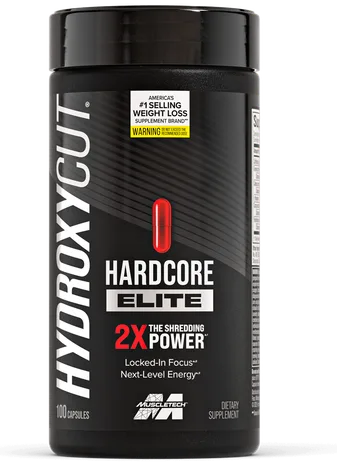
MuscleTech Hydroxycut SX-7 Review
MuscleTech Hydroxycut SX-7 is a dietary supplement sold as capsules. One capsule is a serving, and each container holds 140 servings. Each serving lists a Super Xtreme Thermogenic Complex at 804.5 mg. The other amounts per serving are Green Coffee Blend 400 mg, Caffeine Anhydrous 135 mg, Myristica fragrans seed extract 100 mg, Sage leaf powder 75 mg, Raspberry Ketone 50 mg, Ecklonia cava stem and leaf extract 36 mg, and Yohimbe bark extract 8.5 mg. Other ingredients are the capsule, magnesium stearate and silicon dioxide. The printed directions start with a tolerance chart: 1 capsule once daily on Day 1 and Day 2, then 1 capsule twice daily from Day 3 onward. After that, the label says to take 1 capsule with 8 oz. of water twice daily, 30 to 60 minutes before the two largest meals, such as breakfast and lunch. For an additional boost of energy, it allows one more capsule with the first serving of the day. It says not to exceed 3 capsules in 24 hours, and to use for 60 days in combination with diet and training.
We don’t sell supplements. We help you make decisions and get the best price.
Lowest prices
We may earn a commission from some store links. How we choose.
Finding the lowest prices at the stores now. This takes a few seconds.
Study, Trial or Testing Result Summary
Members Only72 human studies · 42 improved
The two main ingredients are at full doses. Green coffee extract, at 800 milligrams a day, modestly lowered body weight by about 1.2 kilograms and trimmed waist size in pooled trials, though body fat percentage did not change [1][2]. A 12-week placebo trial in overweight men and women found 500 milligrams daily reduced weight [3]. Caffeine, at 270 milligrams a day, was linked to greater drops in weight and body fat as intake rose [4], but some trials found no change in body fat [5]. Ecklonia cava at 72 milligrams matched a trial that lowered body fat and waist size [6]. Yohimbe results in men are mixed: one short trial lowered body fat [7], while a six-month trial found no effect [8]. Sage is at 150 milligrams a day, while the supporting trial used 330 milligrams [9]. Raspberry ketone was only tested inside blends, so its own effect is unknown [10]. Nutmeg has only animal studies [11]. Overall, the expected effect is small. Animal and cell studies are never counted.
See all 72 studies →Hide the studies
- Across 20 trials with 2,445 adults with metabolic syndrome or related conditions, mint-family plants (including sage) modestly reduced weight, BMI, waist size and waist-to-hip ratio compared with placebo, but did not significantly change body fat mass; sage showed a signal for lowering BMI and waist size.Impact of lamiaceae plants on anthropometric indices in patients with metabolic syndrome: A systematic review and meta-a…
- Across 15 trials with 1243 people, green tea catechins taken with caffeine lowered body weight by about 1.4 kg and waist size by about 1.9 cm compared with caffeine alone, though the benefit was modest.Effect of green tea catechins with or without caffeine on anthropometric measures: a systematic review and meta-analysis…
- Across 15 randomized trials with 897 adults, green coffee extract lowered body weight by about 1.2 kg, BMI by 0.5 and waist size by 1 cm compared with controls, with no effect on body fat percentage or waist-to-hip ratio.The effect of green coffee extract supplementation on anthropometric measures in adults: A comprehensive systematic revi…
- Across 15 studies with 637 people, green coffee bean extract lowered body weight by about 1.2 kg and BMI by 0.55, along with small improvements in cholesterol, blood sugar and blood pressure.The Effect of Green Coffee Bean Extract on Cardiovascular Risk Factors: A Systematic Review and Meta-analysis.
- Across 13 trials with 606 people, higher caffeine intake was linked to greater reductions in weight, body mass index and fat mass, with each doubling of intake raising the reduction by roughly 17 to 28 percent.The effects of caffeine intake on weight loss: a systematic review and dos-response meta-analysis of randomized controll…
- Pooling three randomized trials with 103 people, green bean coffee extract with at least 500 mg a day of chlorogenic acid lowered body weight by about 1.3 kg compared with controls.Chlorogenic acid in green bean coffee on body weight: a systematic review and meta-analysis of randomized controlled tri…
- In a pooled analysis of randomized trials, green coffee extract capsules with 180 to 376 mg of chlorogenic acid slightly reduced waist size, triglycerides and blood pressure and raised HDL cholesterol.Effects of Caffeinated and Decaffeinated Coffee Consumption on Metabolic Syndrome Parameters: A Systematic Review and Me…
- A review of 94 animal and human studies suggested chlorogenic acid may help with glucose and fat metabolism and obesity, but gave no specific weight results.The potential effects of chlorogenic acid, the main phenolic components in coffee, on health: a comprehensive review of …
- A review of randomized trials of weight-loss supplements, including yohimbe, found no convincing evidence that any specific supplement works for reducing body weight, and none could be recommended.Dietary supplements for body-weight reduction: a systematic review.
- In 160 women given a single dose of caffeine or placebo, caffeine caused more side effects such as headache and urination, especially in obese women; weight was not studied as an outcome.Obesity as an influencing factor for the occurrence of caffeine-induced effects in women.
- In 151 obese premenopausal women (no men) taking a brown seaweed fucoxanthin plus pomegranate seed oil product for 16 weeks, body weight, waist, body fat, liver fat, triglycerides and inflammation marker C-reactive protein fell more than with placebo.The effects of Xanthigen in the weight management of obese premenopausal women with non-alcoholic fatty liver disease an…
- In 105 overweight or obese adults given a herbal blend containing red sage plus gallic acid or placebo, there was no weight loss or reduced food intake at 8 weeks and the trial was stopped early.The safety and efficacy of a dietary herbal supplement and gallic acid for weight loss.
- In 100 people with metabolic syndrome, 6 months of a chlorogenic acid and luteolin supplement lowered body weight by 2.4% and waist size by 2.8% more than placebo, and improved liver and heart health markers.Altilix® Supplement Containing Chlorogenic Acid and Luteolin Improved Hepatic and Cardiometabolic Parameters in Subjects…
- In 97 overweight men and women, 72 or 144 mg a day of Ecklonia cava polyphenols for 12 weeks lowered body mass index, body fat, waist size and cholesterol compared with placebo, with larger effects at the higher dose.Effects of 12-week oral supplementation of Ecklonia cava polyphenols on anthropometric and blood lipid parameters in ove…
- In 91 overweight adults on a reduced-calorie diet, 12 weeks of the herbal blend led to 2.26 kg weight loss versus 0.56 kg with placebo, with more fat mass and waist reduction.IQP-GC-101 reduces body weight and body fat mass: a randomized, double-blind, placebo-controlled study.
- In 90 overweight people with abnormal blood fats, 8 weeks of a combined supplement improved triglycerides, LDL cholesterol, blood sugar control and inflammation compared with placebo; body weight was not reported.Three-arm, placebo-controlled, randomized clinical trial evaluating the metabolic effect of a combined nutraceutical con…
- In 79 obese adults with high cholesterol, a coffee pulp extract taken twice daily for 24 weeks lowered LDL cholesterol and total cholesterol and raised HDL cholesterol more than placebo, while the triglyceride difference was not significant; the abstract reports no clear weight result.Potential lipid-lowering effects of Coffea arabica pulp extract product in hyperlipidemia-obese subjects: a randomized d…
- In 71 healthy overweight men and women, 500 mg daily of green coffee bean extract for 12 weeks reduced body weight and body mass index more than placebo and improved body composition and blood lipids.Supplementation of green coffee bean extract in healthy overweight subjects increases lean mass/fat mass ratio: A random…
- In 70 obese men and women (45 finished) on a diet and exercise plan for 8 weeks, a multi-ingredient product with raspberry ketone led to greater loss of weight, fat mass and waist and hip size than placebo.Eight weeks of supplementation with a multi-ingredient weight loss product enhances body composition, reduces hip and wa…
- In 64 obese women on a calorie-restricted diet, 400 mg daily of green coffee bean extract for 8 weeks led to greater reductions in body weight, fat mass and waist-to-hip ratio than placebo (women only, no men).Energy restriction combined with green coffee bean extract affects serum adipocytokines and the body composition in obes…
- In 60 overweight or obese adults, a green coffee extract with oat beta-glucans for 6 weeks improved body fat percentage, waist size and cholesterol, with the 5 g dose of 70% beta-glucan lowering body fat the most; there was no placebo group.Evaluation of novel nutraceuticals based on the combination of oat beta-glucans and a green coffee phenolic extract to c…
- In 60 women with polycystic ovary syndrome, 330 mg daily of sage extract for 8 weeks lowered body mass index compared with placebo, though waist-to-hip ratio did not differ.Efficacy of Salvia officinalis extract on the prevention of insulin resistance in euglycemic patients with polycystic ov…
- In 56 overweight or obese prediabetic men and women on a moderate weight-loss diet, 500 mg a day of brown seaweed extract for 12 weeks did not change body weight or blood glucose, though it blunted a rise in interleukin-6 and slightly lowered heart rate.Marginal Impact of Brown Seaweed Ascophyllum nodosum and Fucus vesiculosus Extract on Metabolic and Inflammatory Respons…
- In a 12-week placebo-controlled trial of 55 overweight adults, a multi-ingredient supplement containing 500 mg green coffee bean extract lowered body weight and fat mass more than placebo.Novel Multi-Ingredient Supplement Facilitates Weight Loss and Improves Body Composition in Overweight and Obese Individu…
- In 52 healthy and moderately high-cholesterol adults, 6 grams per day of a soluble green and roasted coffee blend for 8 weeks lowered cholesterol and triglycerides in the high-cholesterol group, reduced blood pressure and body weight in both groups, and reduced markers of oxidative damage compared with a control drink.Moderate consumption of a soluble green/roasted coffee rich in caffeoylquinic acids reduces cardiovascular risk markers:…
- In 52 men and women, drinking three servings a day of a green and roasted coffee blend (121 mg caffeine) for 8 weeks lowered body fat percentage, leptin, blood pressure, glucose and triglycerides.Regularly consuming a green/roasted coffee blend reduces the risk of metabolic syndrome.
- In 52 exercising adults, four weeks of a thermogenic supplement plus protein helped maintain resting energy burn compared with no supplement, but body composition and measurements did not differ.Chronic Thermogenic Dietary Supplement Consumption: Effects on Body Composition, Anthropometrics, and Metabolism.
- In a 6-month placebo-controlled trial of 50 adults with pre-obesity, 150 mg per day of a chlorogenic acid and luteolin supplement significantly reduced body weight compared with placebo.A Nutraceutical Containing Chlorogenic Acid and Luteolin Improves Cardiometabolic Parameters in Subjects with Pre-Obesit…
- In 48 adolescents with obesity, drinking 2 cups of coffee daily (160 mg caffeine) for 6 months with diet counseling cut body mass index by 9.2%, versus 2.3% with green tea and a 0.76% rise with placebo tea.Effect of Coffee and Tea Consumption on Adolescent Weight Control: An Interventional Pilot Study.
- In 47 men given high-dose yohimbine (up to 43 mg a day) or placebo for six months, yohimbine had no effect on body weight, body fat, or fat distribution.Yohimbine does not affect fat distribution in men.
- In 43 middle-aged adults doing resistance training for 6 weeks, a caffeinated pre-workout supplement reduced waist size but gave no significant fat loss or muscle benefits beyond carbohydrate alone.Pre-workout multi-ingredients or carbohydrate alone promote similar resistance training outcomes in middle-aged adults: …
- In 40 overweight adults with mixed high cholesterol, 8 weeks of a berberine, chlorogenic acid and tocotrienol pill improved cholesterol, triglycerides, fasting insulin and insulin resistance more than placebo, while both groups lost some body measurements versus baseline; the abstract does not report a weight difference versus placebo.Short-term effects of a combined nutraceutical of insulin-sensitivity, lipid level and indexes of liver steatosis: a dou…
- In 40 young women, four weeks of three cups daily of Turkish coffee raised blood pressure, heart rate and insomnia scores and lowered leptin, but body mass index and body fat did not change.Short-Term Turkish Coffee Consumption Elevates Cardiovascular Risk Markers, Decreases Leptin Levels, and Impairs Sleep Q…
- In a 12-week randomized crossover trial of 38 adults with overweight or obesity, three cups a day of lightly roasted coffee reduced body fat percentage and slightly increased muscle mass, but body weight did not change.Consumption of a Coffee Rich in Phenolic Compounds May Improve the Body Composition of People with Overweight or Obesity…
- In 36 overweight men and women on diet and exercise for 8 weeks, both groups lost weight and fat; only men taking the raspberry ketone blend gained lean mass, and the supplement group had better leptin and adiponectin levels.The Combined Effects of Exercise, Diet, and a Multi-Ingredient Dietary Supplement on Body Composition and Adipokine Chan…
- In 30 overweight people, drinking chlorogenic acid enriched instant coffee for 12 weeks led to an average weight loss of 5.4 kg, compared with 1.7 kg with normal instant coffee.The effect of chlorogenic acid enriched coffee on glucose absorption in healthy volunteers and its effect on body mass w…
- In 30 adults with impaired glucose tolerance, 400 mg of chlorogenic acid three times daily for 12 weeks lowered fasting blood sugar and insulin secretion, improved insulin sensitivity, and reduced body weight and cholesterol, while the placebo group showed no significant change.Effect of Chlorogenic Acid Administration on Glycemic Control, Insulin Secretion, and Insulin Sensitivity in Patients wi…
- In 30 obese men, caffeine (6 mg per kg body mass) taken before sprint interval training three times a week for 8 weeks led to greater fat mass loss, strength and fitness gains, and better blood sugar and cholesterol than placebo plus the same training.Eight Weeks of Sprint Interval Training With Adding Caffeine Ingestion Leads to Greater Improvements in Health-Related P…
- In 28 adults, a single ready-to-drink thermogenic beverage raised resting energy burn by about 5% for at least 100 minutes compared with placebo, and raised blood pressure slightly.Effects of a ready-to-drink thermogenic beverage on resting energy expenditure, hemodynamic function, and subjective out…
- In 26 triathletes, a single 6 mg per kg caffeine dose taken 60 minutes before the race shortened total race time by about 1.3% compared with placebo, but body weight was not studied.Caffeine Improves Triathlon Performance: A Field Study in Males and Females.
- In 24 women with obesity doing 8 weeks of interval training, caffeine did not add to fat loss (both groups lost body fat) but prevented the rise in blood sugar, insulin and endotoxin seen with training plus placebo.Caffeine Optimizes HIIT Benefits on Obesity-associated Metabolic Adversity in Women.
- In 24 women with obesity on a low-calorie diet, an herbal blend containing red sage for 8 weeks did not produce more weight loss than placebo, and the higher dose caused loose stools.Safety and efficacy of NT, an herbal supplement, in treating human obesity.
- In 20 professional male soccer players, 20 mg a day of yohimbine for 21 days lowered body fat percentage compared with placebo, though body mass, muscle mass and exercise performance did not change.Yohimbine: the effects on body composition and exercise performance in soccer players.
- In 20 obese women on a 1,000-calorie diet, 20 mg a day of yohimbine for three weeks led to more weight loss than placebo (3.55 kg vs 2.21 kg).Does yohimbine act as a slimming drug?
- In 19 premenopausal women, a single day of a flavonoid and caffeine supplement (214 mg caffeine) raised 22-hour energy burn by about 46 kcal compared with placebo, with fat burning trending higher but not significantly.Acute Ingestion of a Mixed Flavonoid and Caffeine Supplement Increases Energy Expenditure and Fat Oxidation in Adult Wom…
- In 19 obese volunteers on a 1,000-calorie diet, 18 mg a day of yohimbine for eight weeks did not change body weight or blood fat measures compared with placebo.[Lack of efficacy of yohimbine in the treatment of obesity].
- In 15 healthy men, 4 weeks of chlorogenic acid-enriched coffee with less hydroxyhydroquinone increased fat burning after meals and improved the antioxidant-to-oxidant balance compared with the version containing more hydroxyhydroquinone.Effects of Chlorogenic Acid-Enriched and Hydroxyhydroquinone-Reduced Coffee on Postprandial Fat Oxidation and Antioxidat…
- In 15 healthy adults, a single 3 mg per kg caffeine dose before one hour of self-paced cycling increased exercise intensity and total energy burned, but did not change fat burned.Caffeine increases exercise intensity and energy expenditure but does not modify substrate oxidation during 1 h of self-…
- In 13 women, matcha green tea drinks taken over two days and before a 30-minute brisk walk increased fat burning during exercise compared with a control drink, though the effect on weight loss is likely small.Matcha Green Tea Drinks Enhance Fat Oxidation During Brisk Walking in Females.
- In 13 healthy adults, a single 3 mg per kg caffeine dose increased the maximum rate of fat burning during cycling compared with placebo, without changing total energy burned.Effects of p-Synephrine and Caffeine Ingestion on Substrate Oxidation during Exercise.
- In 12 healthy adults, a single 3 mg/kg dose of caffeine taken before 1 hour of cycling increased the amount of fat burned compared with placebo.Caffeine increases whole-body fat oxidation during 1 h of cycling at Fatmax.
- In 11 healthy men, caffeine in water did not change hunger or the satiety hormone peptide YY compared with placebo, while decaffeinated coffee reduced hunger.Coffee, hunger, and peptide YY.
- In 7 sedentary women using a diet and walking program for 28 days, a topical lotion containing yohimbe reduced thigh circumference, skinfold thickness and thigh fat mass more than placebo on the other thigh.Effects of a topical lotion containing aminophylline, caffeine, yohimbe, l-carnitine, and gotu kola on thigh circumferen…
- In adults with metabolic syndrome, 800 mg per day of decaffeinated green coffee extract for 8 weeks reduced blood pressure, fasting blood sugar, waist size and appetite more than placebo, while weight loss was only marginally greater.Effects of green coffee extract supplementation on anthropometric indices, glycaemic control, blood pressure, lipid prof…
- In a crossover study of soft drinks, adding caffeine to sugary drinks produced the strongest blood metabolite changes, suggesting a combined effect on insulin-related metabolism, but body weight was not measured.Synergic effects of sugar and caffeine on insulin-mediated metabolomic alterations after an acute consumption of soft dr…
- In a small crossover trial in women with overweight or obesity, coffee with 6 mg caffeine per kg increased desire for sweet foods, fructose intake and triglycerides compared with water, with no change in the hunger hormones measured.Effect of coffee intake on appetite parameters in woman with overweight or obesity: A pilot crossover randomized trial.
- In a randomized trial of adults with overweight (BMI 25 to 30), taking seapolynol from the seaweed Ecklonia cava raised urine levels of riboflavin and other metabolites versus placebo, and the authors suggest this relates to lower body fat, though the dose, group size and duration are not stated in the abstract.Urinary Metabolomic Profiling Analysis and Evaluation of the Effect of Ecklonia cava Extract Intake.
- In 60 obese women, 8 weeks of 500 mg green coffee extract capsules combined with elastic band training lowered several cardiometabolic risk scores, but the supplement alone was not shown to beat placebo on these scores.The effects of elastic resistance band training and green coffee bean extract supplement on novel combined indices of ca…
- In 28 obese women on a reduced-calorie diet, creams containing yohimbine (alone or combined with other agents) applied to one thigh for four weeks reduced thigh girth more than placebo on the other thigh; this study was in women, not men.Regional fat loss from the thigh in obese women after adrenergic modulation.
- In 18 overweight women, a yohimbine ointment applied to one thigh for 4 weeks did not produce significant thigh girth loss compared with placebo, while other topical agents in the same series did.Topical fat reduction.
- In 12 healthy active adults, a single dose of a multi-ingredient product containing yohimbine raised fat burning before exercise and lowered perceived exertion during exercise, but fat burning did not differ from placebo during exercise and hunger and mood did not differ.Acute effectiveness of a "fat-loss" product on substrate utilization, perception of hunger, mood state and rate of perce…
- In a small crossover pilot in healthy adults, 2 weeks of green coffee reduced BMI, abdominal fat, blood pressure and cortisol-to-cortisone ratio, though black coffee also reduced BMI and abdominal fat.Consumption of green coffee reduces blood pressure and body composition by influencing 11β-HSD1 enzyme activity in healt…
- In 105 overweight adults taking 500 mg of GCB70 green coffee bean extract twice daily for 12 weeks, body weight fell by about 6 percent in roughly 97 percent of participants, with lower waist size, blood sugar, and blood sugar control markers, and no safety concerns; there was no placebo group.Clinical Evaluation of a Novel, Patented Green Coffee Bean Extract (GCB70®), Enriched in 70% Chlorogenic Acid, in Overwe…
- In an uncontrolled 4-month study of 78 patients with metabolic syndrome (45 men), adding a supplement containing chlorogenic acid lowered body weight by about 1.7 kg and waist circumference compared with their starting values.Effect of a Natural Supplement Containing Curcuma Longa, Guggul, and Chlorogenic Acid in Patients With Metabolic Syndrom…
- In 10 healthy adults taking 400 mg per day of green coffee bean extract for 30 days, urine tests showed changes in fat-burning related metabolites, but oxidative stress markers did not change and weight was not measured.Urine metabolomics shows an induction of fatty acids metabolism in healthy adult volunteers after supplementation with g…
- In 153 adults with rare bone diseases, osteoporosis, or no disease, caffeine intake differed between groups, but the study did not measure caffeine's effect on body weight.Nutritional Behavior of Patients with Bone Diseases: A Cross-Sectional Study from Austria.
- In 106 young children followed for 24 to 36 months, days with caffeine intake showed more calories and less protein, and caffeine was linked to poorer nutrient intake; 42 percent became overweight or obese.Calories, Caffeine and the Onset of Obesity in Young Children.
- In 90 adults with and without heart disease, daily caffeine intake averaged about 210 mg in both groups, and the study did not measure caffeine's effect on body weight.Caffeine intake in adults with cardiovascular diseases; A cross-sectional study.
- In two large pregnancy cohorts, higher caffeine levels during pregnancy were linked to shorter height and slightly lower weight in children aged 4 to 8 years.Association of Maternal Caffeine Consumption During Pregnancy With Child Growth.
- In 13 obese women on a very low-calorie diet, 10 days of ephedrine and caffeine with or without yohimbine did not change blood levels of a hunger-related hormone or heart responses to exercise; weight loss outcomes were not reported.Neuropeptide Y in obese women during treatment with adrenergic modulation drugs.
- A single oral dose of yohimbine raised fat release into the blood in fasting women, lean and obese alike, over four hours, but body weight was not measured and the study did not involve men.Plasma catecholamine levels and lipid mobilization induced by yohimbine in obese and non-obese women.
- In a small study of obese and lean women, blocking one type of adrenaline receptor with yohimbine increased fat breakdown and exercise energy use, and yohimbine given during a slimming program increased weight loss without side effects.Adrenergic control of lipolysis and metabolic responses in obesity.
Review Totals and Summary
Members OnlyWhat buyers say
No written reviews read yet.
Biohacker Summary
Members Only9 of 10 recommend it
The panel is split on caffeine, the main ingredient, but most of them use it or recommend it for alertness, focus, and training, and some also for fat burning. Doses come up often: 100 to 150 milligrams paired with L-theanine, 100 to 200 milligrams before focused work, a general range of 100 to 400 milligrams, and 300 milligrams of slow release caffeine in the morning for jet lag. Forms named are coffee, green tea, tablets and capsules, and several pair it with L-theanine, with one also adding Alpha GPC and MCT to coffee. Timing is the biggest caution: many say to stop by noon or after lunch to protect sleep, one suggests waiting until later in the morning, and another warns against coffee on an empty stomach. Three of them warn that too much can raise stress, anxiety, and fatigue, one avoids it in the three months before conception, and one stopped for a year; a smaller ingredient in this product, nutmeg, got one mention as a flavor in coffee.
See all 10 biohackers →Hide the biohackers
Dave Asprey · Caffeine · neutral
- Host Dave Asprey explores caffeine's effects on cardiovascular function, adenosine signaling, and inflammation, explaining why individualized responses matter more than blanket dietary restrictions.
- Loves coffee, has the caffeine molecule tattooed on his arm, drinks it every morning, and says it does amazing things for your brain and for how long you can live, but it can't clear most brain fog on its own.
- Created Danger Coffee, a mineral-enriched, lab-tested, mold-free coffee that delivers rich flavor and clean caffeine without all the junk, and recommends it to others.
- Dave Asprey's lab proved that caffeine is a flow hack and the only known substance to actually make you flow prone. Coffee will make you more flow prone.
- Dave explains why the 1:2 ratio of caffeine to L-theanine beats coffee alone for working memory, accuracy, and calm, sustained concentration.
- States that his entire career started on caffeine and he uses it every morning, but notes it's like a loan from your future self, leading to an afternoon crash.
- Dave Asprey's company used caffeine, which is a safe ingredient, but they stopped using it because it doesn't provide the type of results and change in the skin that newer ingredients do.
- States that caffeine is one of his superpowers and increases the rate of ketone formation, which fuels neurons.
- Once I’ve hydrated and taken my creatine, I reach for Danger Coffee for caffeine and essential minerals in one cup.
- Uses caffeine, noting it blocks adenosine to increase norepinephrine and dopamine signaling, fueling the prefrontal cortex for focus. He mentions it got him through business school and is part of his longevity journey.
- States that Ecklonia Cava, a brown algae, is his most favorite natural compound for deep sleep and he takes it every night, noting it's better for general sleep with no habituation or side effects, and it's an antioxidant.
- Has been taking Aclonia Cava for 10 years for longevity, noting that a specific molecule from a type of Aclonia Cava from Jeju Island, South Korea, increases neurotransmission and provides immediate mental clarity.
- Took Yohimbe one time before skating and felt it amplified his fear and heart rate, so he never took it again.
- Recommends sage, noting it decreases IL-6 and can be soothing as a tea for coughs or sore throats.
Thomas DeLauer · Caffeine · recommends
- Recommends taking a low dose of caffeine later in the morning, around 7 or 8 a.m., after cortisol has settled and adenosine has started to build, to maximize its effect on blocking fatigue.
- Would consume more caffeine throughout the day to mobilize fat, emphasizing the importance of combining it with activity to oxidize the mobilized fat.
- If you can wait for your cortisol levels to play out, call it 30-60 minutes, then the caffeine is actually going to land when adenosine is reasserting and cortisol is falling, and you're going to get so much more out of your caffeine.
- Explains that caffeine from green tea mobilizes fatty acids, which can be converted into ketones, providing a ketone boost, especially in a fasted or low-carb state.
- Warns that treating brain fog with caffeine without addressing underlying inflammation is ineffective and likely to make the situation worse.
- Notes that caffeine significantly increased fat metabolism and fat oxidation during exercise, especially at lower intensities, and that adding coffee around an exercise bout led to more calories and fat burned.
- Says that caffeine significantly increased fat metabolism and that at low intensity cardio or exercise caffeine works better at mobilizing and utilizing fat.
- Might have some caffeine before fasted training.
- Recommends caffeine as a must on the fasting day to create a low-grade energy demand that forces the body to favor lipolysis.
- Recommends drinking 150 to 200 mg of caffeine immediately before a 20-minute nap to enhance alertness and performance, as the caffeine peaks when the nap has cleared adenosine.
- Recommends marjoram, rosemary, thyme, and sage, noting evidence that they increase PPAR alpha, programming cells to be better at using fats and reducing inflammatory cytokines.
- Recommends sage as a good Mediterranean spice that can influence cells to utilize more fat by affecting PP alpha.
- Is a huge fan of low-dose yohimbe personally, noting its science and how it blocks alpha adrenergic receptors, and he used yohimbe cream on his abdomen for stubborn fat.
- Recommends adding Rosemary or Sage to a Mediterranean-style burger.
Andrew Huberman · Caffeine · uses
- Used caffeine, taking 400 milligrams, to improve his mood and physical vigor during mundane tasks like swimming, noting that it made life not so bad and allowed him to rip through the water.
- Mentions caffeine in a discussion about supplement use.
- Discusses caffeine timing as a tool related to sleep.
- He recommends caffeine, in coffee or tea form, or in tablet or capsule form at lower dosages than found in coffee and tea, as a reasonable way to explore stimulant-based approaches for enhancing cognitive function and focus.
- Huberman states that caffeine can improve focus and concentration, with a general useful range of 100 to 400 milligrams, and most people do well with 100 to 200 milligrams prior to focused work.
- Discusses caffeine as a tool for improving attention, noting its impact on focus and sleep.
- Mentions that coffee and tea produce caffeine, which were likely defense chemicals, and that plants learned it was better to alter consciousness than kill predators outright.
- Discusses caffeine and its health benefits.
- Recommends caffeine as a tool to increase motivation and dopamine.
- Huberman explains that regular ingestion of caffeine at safe levels of about 100 to 250 mg increases the number of D2 and D3 dopamine receptors, making circulating dopamine more potent.
Dr. Rhonda Patrick · Caffeine · neutral
- Explains that caffeine can activate AMPK, a cellular energy sensor involved in fat burning and glucose regulation, which helps muscle cells take up glucose and promotes using fatty acids for energy.
- Recommends pairing caffeine with L-theanine to enhance alertness and focus while mitigating anxiety and jitteriness, suggesting a dose of 100 to 150 mg of caffeine.
- Recommends pairing coffee with L-theanine to enhance cognitive performance, noting that L-theanine can help balance caffeine’s stimulatory effects.
- Recommends cutting out caffeine in the three months before conception for both men and women, as it affects sperm.
- Recommends caffeine for alertness and focus, especially when combined with L-theanine to smooth out the response and maintain cognitive benefits, suggesting a practical dose of 100-150 mg.
- Recommends cutting down or eliminating caffeine when actively trying to conceive.
- Warns that a very high dose of caffeine, around 350 mg pre-workout, may blunt some of creatine's performance benefit due to opposite effects on muscle relaxation.
- Self-administers 350 mg of caffeine in a bolus right after returning from mass and his workout, and before eating, noting that he likes dark roast Starbucks.
- The newest literature on Caffeine dose and its link to multiple cardiometabolic disease risk reduction shows that even the ≥400 mg group was healthier than 0 mg.
- Explains that caffeine works by blocking adenosine, a molecule that builds up and makes one feel tired, and that timing coffee intake is about leveraging adenosine biology for peak cognitive alertness.
Siim Land · Caffeine · recommends
- Recommends stopping caffeine earlier to improve sleep.
- Notes that polyphenolic compounds in coffee, both decaf and regular caffeinated, can influence cellular stress pathways and have been seen to increase autophagy activity in mice, with regular coffee appearing more potent due to caffeine's additional energetic stress.
- Recommends moving caffeine intake earlier in the day because having it too late can disrupt sleep, especially for slow metabolizers.
- Recommends not having caffeine after lunch, noting that 400 mg 4 hours before bed reduced deep sleep by approximately 30 minutes in a trial, although he personally has a fast caffeine metabolism.
- Warns that combining a large dose of glycine with caffeine can amplify negative experiences, as caffeine independently increases arousal and can cause restlessness, anxiety, and increased heart rate.
- States that regular coffee promotes visceral fat loss, and going from low or zero intake to moderate intake increases fat loss due to caffeine and polyphenols.
- Suggests that higher caffeine intake might be useful for older people because caffeine raises cortisol, and consuming it in the morning contributes to circadian regulation.
- States that caffeine has proven benefits for increasing exercise performance when used correctly and at the right time.
- States that caffeine raises blood pressure, but mostly if one is not used to consuming it, and habitual caffeine consumers develop tolerance to these effects.
- Quotes a tweet suggesting that without caffeine, civilization would be 100 years behind.
- Warns that Yohimbe mimics adrenaline, which can lead to overstimulation.
- Uses a brown seaweed called Ecklonia Cava, finding it effective for sleep by increasing alpha waves, helping with GABA response, and dramatically lowering cortisol.
Ben Greenfield · Caffeine · stopped
- Came off caffeine for a year after his separation.
- Quit caffeine in the same year he quit testosterone replacement therapy and alcohol.
- Uses caffeine, such as coffee or green tea, in his morning fasted fat-burning session to slightly increase the oxidation of fats.
- Advises against relying on caffeine for morning energy, suggesting that natural sugar-based stimulants combined with hydration and meditation can provide sufficient wakefulness.
- Recommends Caffeine, noting that it can improve focus, mood, and training, help control appetite, raise calories burned, and reduce fatigue.
- Notes that 3 mg/kg of caffeine increases fat oxidation by 31%, and 5 mg/kg increases it by 51% compared to a placebo.
- Caffeine on its own isn’t particularly impressive as an ergogenic aid, but when combined with taurine, there are significant increases in power production.
- Mentions that caffeine can help mitigate the negative effects of a caloric deficit on lean muscle mass and metabolism.
- Has talked before about caffeine as a supplement that seems to assist with sleep deprivation.
- Warns that energy drinks can deliver large doses of caffeine quickly, which may overstimulate the heart and cause abnormal heart rhythms and electrocardiogram changes, especially in children.
- Recommends Aclonia Cava as a glucose disposal agent to take glucose out of the bloodstream and shove it into the muscle more quickly, especially before meals that would increase blood glucose.
- Includes nutmeg as a secret ingredient in his chicken liver pate recipe.
- Ben discusses the idea of putting ground sage in coffee, suggesting it would be a good idea.
- Recommends mixing a little nutmeg with clove and allspice for a nice fall-like pumpkin spicy flavor on meat.
Dr. Mark Hyman · Caffeine · warns
- Discusses with patients their caffeine consumption, suggesting that too much caffeine can artificially increase their stress response.
- Recommends adding nutmeg to coffee as a way to enjoy fall flavors without the high sugar content.
- Recommends stopping caffeine by noon.
- States that caffeine's effect on ADHD depends on the person, as it can help focus but also activate irritation or stress, and its impact is related to individual caffeine metabolism.
- Warns that drinking coffee first thing in the morning before eating layers caffeine on top of already elevated stress hormones, providing unsustainable energy and setting up for an afternoon crash.
- Notes that caffeine is one of the things that drives the hormone imbalance causing PMS.
- States that drinking coffee on an empty stomach, which is how most people do it, is probably not the best thing as it gives a jolt of caffeine and adrenaline before eating.
- Warns that caffeine, alcohol, and spicy foods can be potent triggers for hot flashes, and excess caffeine should be avoided.
- Warns that adding fiber does not cancel out the negative effects of caffeine and other processed additives.
- Warns that high caffeine intake, especially coffee, can contribute to dehydration by increasing fluid loss and masking fatigue, leading to a deficit if not balanced with sufficient water intake.
- Warns that caffeine without adequate protein creates blood sugar chaos, sending a stress signal to the brain and hindering healing.
- Suggests that the plant sage, which has high levels of phytochemicals that inhibit enzymes in the tryptophan pathway, might be a natural cure for long COVID, though it has not yet been proven.
- Recounts discovering a wild sage bush in Icaria that has higher levels of catechins than green tea, which are considered longevity molecules.
- Describes drinking Wild Sage Tea, noting it has as many powerful phytochemicals as green tea, which are known to increase longevity.
Dr. Eric Berg · Caffeine · warns
- Warns that caffeine can keep you awake and advises to watch out for hidden sources of caffeine.
- Does not recommend yohimbe or yohimbine, extracted from tree bark, because it tends to increase adrenaline and help with weight loss and libido, but has side effects.
- Stimulating the body with caffeine can actually make fatigue worse.
- Dr. Berg warns that stimulating the body with caffeine can actually make fatigue worse.
- Warns that too much caffeine is a common cause of worry, indecision, fear, and tension, and that it depletes vitamin B1, negatively affecting the nervous system.
- Recommends adding sage to meat when cooking on the grill.
- Warns that even a lot of caffeine in the morning can inhibit melatonin at night.
- Warns that coffee does not give you energy; instead, caffeine binds to adenosine receptors, inhibiting sleep signals and merely preventing sleepiness.
- States that caffeine can affect the ability to absorb magnesium and cause a deficiency.
- Warns that drinking caffeinated beverages later in the day can keep you awake because the liver needs to detoxify the caffeine.
- Warns that consuming caffeine can worsen tinnitus, citing a person who noticed this effect.
- Stimulating the body with caffeine can actually make fatigue worse.
- Lists nutmeg oil as a natural remedy historically used for psychotic problems.
- Recommends adding sage to meals for its anti-cancer properties to potentially avoid colon cancer.
Bryan Johnson · Caffeine · uses
- Drinks coffee when starting to fade, ensuring the last cup is between 10 and 12 hours before bed so caffeine doesn't affect sleep.
- Used 300 mg of caffeine in the morning as part of their jet lag recovery.
- Uses 300 mg of slow release caffeine in the morning as part of a jet lag recovery protocol.
- Notes that coffee affects the gut, which then affects the brain, and that it is the coffee bean, not the caffeine, doing most of the work.
- Notes that the culture in DC involves running on caffeine, along with alcohol and sleep deprivation, leading to poor nutrition and an unhealthy environment.
- Warns that caffeine has a 6-hour half-life, so consuming it later in the day will leave a significant amount in the body at bedtime, recommending consumption earlier in the day.
- Recommends consuming no caffeine past noon due to its 6-hour half-life, suggesting that if sleep is nailed, caffeine might not be needed.
- Warns against stimulants like caffeine for sleep, advising to have the last cup of coffee before noon if going to bed at 10:00 p.m.
- Advises that if one is going to drink caffeine, they should try to have it earlier in the day and experiment to find the right time that doesn't disrupt their sleep.
- Has stopped all caffeine, as it has helped him improve his sleep.
Peter Attia · Caffeine · uses
- States that he needs two to three times the normal dose of any medication or drug to feel an effect, including caffeine, and can drink four cups of coffee without feeling anything.
- Mentions data suggesting caffeine might be more helpful in the luteal phase to help with fatigue components.
- Uses caffeine in combination with Alpha GPC, MCT, and Theanine, often adding it to coffee for long periods of cognitive work.
- Finds Alpha GPC works well with caffeine, and he puts a product containing Alpha GPC, MCT, and caffeine into his coffee for long periods of cognitive work.
- Mentions that experimenting with the timing of caffeine is a great idea for sleep.
- Warns that decaffeinated coffee can contain significant amounts of caffeine and advises cutting off all coffee, including decaf, by 11 a.m. for better sleep quality.
- Explains that caffeine is problematic because it blocks adenosine receptors, leading to a 'caffeine crash' when it wears off and adenosine floods the receptors, causing sleepiness.
- States that caffeine does not wake him up, which contributed to his belief that he did not have an addiction gene.
- States that caffeine does not wake him up.
- Warns that constantly consuming caffeine and Red Bull to turn up the sympathetic dial is a sign that the sympathetic system isn't working as it should, possibly due to overstimulation from stress.
RAL Summary
Members OnlyTier 5 for Weight and Metabolism for Men
Human studies support Caffeine (10 of 24 human studies showed an improvement), but there are not yet enough reviews to confirm it (10). 3 of our biohacker panel warn against its main ingredient, so it drops one tier. The final check notes: Tier 5 requires good human studies showing no effect or mostly negative reviews, but the human studies for green coffee and caffeine show modest weight loss and the 10 reviews are 70 percent positive, so thin reviews support tier 4, and a 3 of 10 biohacker minority does not justify dropping it further.
Take 2 servings a day (2 capsules) to match the dose that worked in the studies.
- Not endorsed.
Where the evidence disagrees: 22 of the 72 human studies found no effect.
More Details
Members OnlyBody systems · Combine with · Possible side effects
Body systems: Metabolic system, Nervous system, Cardiovascular system, Digestive system
Combine with: For weight management in men, caffeine and green coffee are often paired with green tea catechins (EGCG), because both groups act on the same energy and norepinephrine pathway. Caffeine is also often paired with L-theanine, since the two work on the same alertness pathway. Catechins are often paired with piperine from black pepper, which is used to help their absorption.
Possible side effects: Regular coffee intake raised blood pressure, heart rate and insomnia scores in one trial, and a higher dose of a red sage blend caused loose stools.
Supplement Facts
Super Xtreme Thermogenic Complex 804.5 mg · Green Coffee Blend 400 mg · Caffeine Anhydrous 135 mg
| Super Xtreme Thermogenic Complex | 804.5 mg | † |
| Green Coffee Blend | 400 mg | † |
| Caffeine Anhydrous | 135 mg | † |
| Myristica fragrans seed extract | 100 mg | † |
| Sage leaf powder | 75 mg | † |
| Raspberry Ketone | 50 mg | † |
| Ecklonia cava stem and leaf extract | 36 mg | † |
| Yohimbe bark extract | 8.5 mg | † |
Other ingredients: Capsule, Magnesium Stearate, Silicon Dioxide.
Directions: DIRECTIONS: To assess your tolerance, follow the chart provided. Once your tolerance has been assessed, take 1 capsule with 8 oz. of water 2 times daily 30 to 60 minutes before your two largest meals of the day (e.g. breakfast and lunch). Once tolerance has been assessed and you are looking for an additional boost of energy, take an additional capsule with the first serving of the day. Do not exceed 3 capsules in a 24-hour period. For best results, use for 60 days in combination with diet and training. Day 1 & Day 2 – 1 capsule, 1x daily Day 3 & Beyond – 1 capsule, 2x daily
Barcode (UPC) 631656604313 · Label source: NIH label database · Report a label change
Other sizes and barcodes: 70 Capsule(s), UPC 6 31656 66019 7 (not checked yet); 70 Capsule(s), UPC 6 31656 60508 2 (not checked yet); 70 Capsule(s), UPC 6 31656 60430 6 (not checked yet)
Show entire label
More weight and metabolism for men products
Members OnlyThe highest ranked for the same goal
Read more
Our articles on this subject
Graded November 15, 2026 by the Reverse Age Lab evidence engine, from human studies, real reviews and our biohacker panel. How we grade. Is this medical advice? No. Rala organizes the published evidence; go over any change with your doctor, especially if you take meds.
Privacy policyConsumer health dataAffiliate disclosureTermsDo Not Sell or Share My Personal InformationCookie settings