
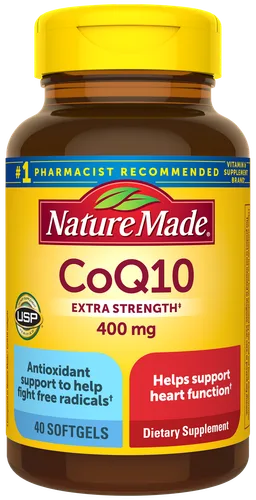
Nature Made CoQ10 200 mg Review
We don’t sell supplements. We help you make decisions and get the best price.
Lowest prices
We may earn a commission from some store links. How we choose.
Finding the lowest prices at the stores now. This takes a few seconds.
Study, Trial or Testing Result Summary
Members Only25 human studies · 19 improved
This product gives 200 mg of coenzyme Q10 a day, a full dose compared with the studies. In 403 older adults low in selenium, four years of 200 mg a day with selenium raised a selenium protein linked to longer telomeres, less inflammation, better quality of life and fewer deaths, though selenium was given too [1]. In 100 healthy trained adults, two weeks of 200 mg a day of ubiquinol, a form of coenzyme Q10, lowered oxidative damage and damage to genetic material after exercise compared with placebo [2]. In 40 patients with early sepsis, 200 mg a day for a week lowered markers of inflammation and oxidative damage [3]. In 33 healthy adults, 50 or 150 mg a day for 12 weeks reduced wrinkles and fine lines but did not change skin hydration [4]. A review of 20 trials in 2,617 women with ovarian aging found coenzyme Q10 worked best among antioxidants for egg retrieval and pregnancy rates [5]. However, in 40 healthy older adults, 400 mg a day for 12 weeks raised blood levels but did not improve muscle energy, blood sugar control, fitness or body makeup [6]. No study measured biological age reversal. Animal and cell studies are never counted.
See all 25 studies →Hide the studies
- Across 20 trials of 2617 women with ovarian aging, antioxidants raised egg retrieval and pregnancy rates, and coenzyme Q10 worked best, at about 30 mg a day for 3 months before ovarian stimulation.Antioxidants and Fertility in Women with Ovarian Aging: A Systematic Review and Meta-Analysis.
- In 403 older adults low in selenium, four years of coenzyme Q10 (200 mg a day) plus selenium raised selenoprotein P, which was linked to longer telomeres, less inflammation, better quality of life and lower death rates.Selenoprotein P increases upon selenium and coenzyme Q10 supplementation and is associated with telomere length, quality…
- In 124 patients with acute viral heart inflammation, coenzyme Q10 lowered inflammation and oxidative stress markers, and combining it with trimetazidine worked better than either alone.Combination Therapy With Coenzyme Q10 and Trimetazidine in Patients With Acute Viral Myocarditis.
- In 100 healthy trained adults, two weeks of ubiquinol (200 mg a day) lowered exercise-induced oxidative damage markers, including DNA damage (8-OHdG), compared with placebo.Short-term ubiquinol supplementation reduces oxidative stress associated with strenuous exercise in healthy adults: A ra…
- In 73 people with chronic fatigue syndrome, 8 weeks of coenzyme Q10 (200 mg a day) plus NADH reduced fatigue versus placebo, raised cellular energy (ATP) and NAD+/NADH, and lowered lipid peroxides.Does oral coenzyme Q10 plus NADH supplementation improve fatigue and biochemical parameters in chronic fatigue syndrome?
- In 50 elderly patients having aortic valve surgery, ubiquinol (400 mg a day) from a week before to 5 days after surgery blunted the drop in blood coenzyme Q10 and the rise in a heart injury marker (troponin I) versus placebo.Ubiquinol supplementation in elderly patients undergoing aortic valve replacement: biochemical and clinical aspects.
- In 49 adults with diabetic nerve damage, 12 weeks of ubiquinone (400 mg a day) improved symptoms and nerve conduction and lowered lipid peroxidation versus placebo.The effect of ubiquinone in diabetic polyneuropathy: a randomized double-blind placebo-controlled study.
- In 40 patients with early sepsis, 200 mg of coenzyme Q10 daily for 7 days lowered levels of an inflammation marker (TNF-alpha) and an oxidative damage marker (MDA) and was linked to lower in-hospital deaths than the control group.Coenzyme Q10 improves the survival and reduces inflammatory markers in septic patients.
- In 40 healthy older adults (about 74 years old), 400 mg of coenzyme Q10 daily for 12 weeks raised blood levels but did not change muscle mitochondrial function, blood sugar control, fitness or body composition compared with placebo.Coenzyme Q10 supplementation raises plasma levels without improving mitochondrial function in older adults.
- In 36 patients with antiphospholipid syndrome, 200 mg of ubiquinol daily for 1 month improved blood vessel function and lowered markers of inflammation, clotting risk and oxidative stress compared with placebo.Ubiquinol Effects on Antiphospholipid Syndrome Prothrombotic Profile: A Randomized, Placebo-Controlled Trial.
- In 33 healthy adults, 12 weeks of daily water-soluble coenzyme Q10 (50 or 150 mg) reduced wrinkles and fine lines and improved skin smoothness compared with placebo, but did not change skin hydration.The effect of dietary intake of coenzyme Q10 on skin parameters and condition: Results of a randomised, placebo-controll…
- In 23 a med-treated adults with type 2 diabetes and poor artery function, 200 mg of coenzyme Q10 daily for 12 weeks improved blood vessel widening compared with placebo, while oxidative stress markers did not change.Read the study on PubMed (19228872) →
- In 23 moderately trained healthy men, 90 mg of coenzyme Q10 daily for 8 weeks did not improve maximal oxygen uptake, exercise workload, or exercise-related oxidative stress compared with placebo.Coenzyme Q10 supplementation and exercise-induced oxidative stress in humans.
- In 21 sedentary young men, 200 mg of coenzyme Q10 daily for 4 weeks raised blood levels but did not reduce muscle damage or oxidative stress after hard exercise compared with placebo.Coenzyme Q10 does not prevent exercise-induced muscle damage and oxidative stress in sedentary men.
- In 10 people with juvenile fibromyalgia, 100 mg of ubiquinol daily for 12 weeks improved fatigue scores and blood cholesterol levels.Increased oxidative stress and coenzyme Q10 deficiency in juvenile fibromyalgia: amelioration of hypercholesterolemia an…
- In 10 older men taking 200 mg of ubiquinol daily with a meal for 2 weeks, blood levels of Coenzyme Q10 rose, but markers of oxidative stress and cell energy did not change.Ubiquinol is superior to ubiquinone to enhance Coenzyme Q10 status in older men.
- In gas and oil industry workers with oxidative stress and impaired heart and nerve function, a short course of a coenzyme Q10-based supplement improved cardiovascular and psycho-emotional measures and normalized markers of oxidative stress in white blood cells.Coenzyme Q10-containing composition (Immugen) protects against occupational and environmental stress in workers of the g…
- In 41 volunteers, 2 months of a marine collagen and antioxidant blend including coenzyme Q10 improved skin elasticity, sebum production and dermal ultrasound markers, with no change in glutathione or coenzyme Q10 levels.Skin Antiageing and Systemic Redox Effects of Supplementation with Marine Collagen Peptides and Plant-Derived Antioxidan…
- In 36 hemodialysis patients, coenzyme Q10 for 6 months lowered some oxidative stress markers (protein oxidation products and the oxidized form of CoQ10) and also lowered antioxidant capacity, and the effects reversed after stopping.Coenzyme Q10 administration suppresses both oxidative and antioxidative markers in hemodialysis patients.
- In 30 young adults with type 1 diabetes and kidney complications, adding coenzyme Q10 to standard treatment lowered oxidative damage, improved antioxidant activity and reduced blood sugar markers.Effect of combination therapy with coenzyme Q10 on functional and metabolic parameters in patients with type 1 diabetes …
- In 10 children with trisomy 21 given 10 mg of ubiquinol-10 per kg of body weight daily for 3 months, the blood ratio of active to total coenzyme Q10 rose into the normal range, correcting a pro-oxidant imbalance; there was no placebo group.Coenzyme Q10 (ubiquinol-10) supplementation improves oxidative imbalance in children with trisomy 21.
- In 53 healthy men, 150 mg of ubiquinol daily for 14 days significantly lowered a blood enzyme linked to oxidative stress and inflammation, while liver enzyme AST was unaffected.Ubiquinol reduces gamma glutamyltransferase as a marker of oxidative stress in humans.
- In aged rat hearts and human atrial tissue, coenzyme Q10 pretreatment restored recovery of contractile function after stress that was reduced with age.Coenzyme Q10 improves the tolerance of the senescent myocardium to aerobic and ischemic stress: studies in rats and in h…
- Skin cells from older donors showed weaker mitochondrial energy function than those from younger donors, and topically applied coenzyme Q10 improved mitochondrial function in skin.Aging skin is functionally anaerobic: importance of coenzyme Q10 for anti aging skin care.
- In people with Down syndrome, prolonged coenzyme Q10 treatment reduced the share of cells with the highest levels of oxidized DNA bases in an age-specific way, though overall DNA oxidation was not clearly changed.Prolonged coenzyme Q10 treatment in Down syndrome patients: effect on DNA oxidation.
Review Totals and Summary
Members OnlyWhat buyers say
No written reviews read yet.
Biohacker Summary
Members Only0 of 10 recommend it
Coenzyme Q10 is the main ingredient here, and eight of the nine panelists who spoke about it were positive or neutral, with a clear lean toward recommending it; three say they take it daily and others recommend it. The most common reason is mitochondrial support for energy and fighting oxidative stress, with heart health, fatigue, brain health, migraines and sperm quality also mentioned. Doses given run from 100 to 400 mg a day, with one panelist taking 300 mg daily and another suggesting up to 1200 mg for some people, and one advises taking it with a fat-containing meal, ideally dinner. Several link it to meds that lower the body's own levels, and some prefer the ubiquinol form or a crystal-free form for better absorption, while others pair it with omega-3 or PQQ. Cautions: one panelist says there is no real lifespan evidence, another says there is no good data that it prevents med-related muscle symptoms, and one panelist tried it and then moved on to an easier approach.
See all 9 biohackers →Hide the biohackers
Dr. Eric Berg · Coenzyme Q10 · neutral
- Mentions that grass-fed liver has coenzyme Q10.
- Recommends that anyone with a med prescription should also take coenzyme Q10, specifically the ubiquinol form, to support heart and muscle function.
- Notes that Merck filed a patent for a med combined with coenzyme Q10, but never added it back into the formula, and that major heart organizations do not recommend taking coenzyme Q10 alongside meds.
- Recommends taking coenzyme Q10, specifically ubiquinol, to prevent the side effects of meds, especially for those experiencing muscle weakness, pain, fatigue, or exercise intolerance. He suggests a dose of 200 to 400 mg, or even up to 1200 mg a day for some individuals.
- Mentions that coenzyme Q10 supports the heart and mitochondria as a powerful antioxidant, and meds deplete its production.
- States that coenzyme Q10 has been known to help people with fibromyalgia feel better.
- Recommends Coenzyme Q10, especially for those on meds, as it's a key nutrient for energy in the mitochondria and works with vitamin E and selenium, and suggests taking it at lunch with a meal.
- Recommends coenzyme Q10 as a remedy for long COVID.
- Mentions that meds block coenzyme Q10 and refers to another video where he discusses it.
- Dr. Berg highlights coenzyme Q10 as a key essential nutrient for mitochondria in the heart, and recommends taking it if on meds, as meds deplete this nutrient.
Dave Asprey · Coenzyme Q10 · uses
- States he takes 300 mg of Coenzyme Q10 every day for 20 years because it is necessary for mitochondria to function and is important for longevity, noting that meds lower it.
- Recommends coenzyme Q10 (CoQ10) to support mitochondria, as it helps generate energy and fights oxidative stress.
- Mentions that there are methylation genes for Coenzyme Q10 that convert it to ubiquinol.
- Suggests taking Coenzyme Q10 to optimize mitochondria.
- Mentions Coenzyme Q10 as something that can change blood viscosity, alongside sunlight and earthing.
- Includes Coenzyme Q10 as a helpful addition to a med protocol.
- Used to give his dog coenzyme Q10 for mitochondrial function.
- Dave Asprey mentions Coenzyme Q10 as something one might take to boost ATP production.
- Dave Asprey mentions that Coenzyme Q10 is a big deal for a lot of people regarding energy.
- Mentions Coenzyme Q10 as one of the micronutrients that can help protect the glycocalyx.
Andrew Huberman · Coenzyme Q10 · uses
- Personally takes Omega-3 and Coenzyme Q10 every day, noting they are known to support cardiovascular health, cellular health and energy, and brain health.
- Personally takes coenzyme Q10 every day, noting it supports cardiovascular health, cellular health, energy, and brain health.
- Discusses a study where probiotics, magnesium orotate, and coenzyme Q10 showed a short-term improvement in symptoms of major depression.
- Discusses Coenzyme Q10 as a fertility supplement.
- Recommends Coenzyme Q10 at 100 to 400 milligrams per day, taken with a meal containing fat, ideally dinner, to improve sperm quality by supporting mitochondrial health, which is vital for sperm formation and fertilization.
- States that coenzyme Q10 should be taken with food.
- Mentions Coenzyme Q10 as a tool for fertility.
- Andrew Huberman says he personally takes AG1's new Omega-3 Coenzyme Q10 product every day, noting that Omega-3 and Coenzyme Q10 are known to support cardiovascular health, cellular health, energy, and brain health.
- Andrew Huberman notes that some papers suggest coenzyme Q10 might be beneficial for egg quality.
Thomas DeLauer · Coenzyme Q10 · uses
- States that coenzyme Q10 is one of his favorite compounds for the mitochondria, and it is found in sardines.
- Recommends getting coenzyme Q10 from good quality red meat and organ meat, or through supplementation, to act as an electron catcher in the mitochondria, optimizing energy production and reducing oxidative stress.
- Recommends utilizing coenzyme Q10 to support mitochondrial function and the electron transport chain, making hydration more effective.
- Recommends coenzyme Q10 as a runner-up for energy and mitochondrial function, explaining it's an electron carrier in the mitochondrial chain that focuses on the last complex, creating a bigger net to catch electrons and reduce oxidative stress.
- Recommends Coenzyme Q10 for fatigue, stating it's essential for electron transport, ATP regeneration, and reducing oxidative stress, and can be found in organ meats, fatty fish, pistachios, and sesame seeds.
- Mentions Coenzyme Q10 as a micronutrient essential for the complex biological workings of metabolism in the mitochondria.
- Recommends 300-600mg of Coenzyme Q10 for those intermittent fasting or on low carb, to help utilize fuel better, support heart health, and strengthen mitochondrial function by improving the proton gradient.
- Recommends Coenzyme Q10 for people who are fasting or on a ketogenic diet, explaining that it helps fuel the electron transport chain, leading to more efficient energy processing and increased energy during OMAD and the eating period.
- Recommends 300 to 600 milligrams of Coenzyme Q10 during the eating period to help the electron transport chain and utilize food for energy.
- Notes that Coenzyme Q10 is good for mitochondrial health and energy, and there's growing evidence linking it to nitric oxide production, suggesting a supplement if one doesn't get enough from meat.
Dr. Mark Hyman · Coenzyme Q10 · recommends
- Mentions that coenzyme Q10 is important in mitochondrial function and can be a factor in migraines.
- Tried coenzyme Q10 as part of a meticulous effort to address energy and metabolism issues, but implies they no longer use it as they were looking for an easier solution.
- Included coenzyme Q10 in a mitochondrial rejuvenation program to support mitochondrial function.
- States that mitochondria need coenzyme Q10 and that PQQ has been shown to work very well with it.
- States that coenzyme Q10 can be very helpful if fatigue is a significant problem, and is a mitochondrial support for energy recovery.
- Recommends Coenzyme Q10 for better mitochondrial function, lower inflammation, improved insulin sensitivity, and blood sugar, especially for those taking meds or experiencing age-related decline in CoQ10 production.
- Takes Coenzyme Q10, believing it affects the mitochondria and the aging process, even without full scientific confirmation.
- Mentions that coenzyme Q10 was part of the mitochondrial therapy that helped a child with autism improve, and later states it is a key component of mitochondrial supplementation.
- Recommends coenzyme Q10 for mitochondrial repair, stating that high doses of 200 to 400 milligrams a day are needed, spread out with food.
- Recommends Coenzyme Q10 for mitochondrial function, especially for fatigue and heart problems, at doses of 200 to 400 milligrams a day, spread out as 100 milligrams three or four times a day with food, noting its safety and effectiveness for conditions like migraine headaches.
Ben Greenfield · Coenzyme Q10 · neutral
- Discusses Coenzyme Q10 as an ingredient that MitoQ uses in a mitochondria-directed form, noting that standard CoQ10 rarely achieves movement past the cell membrane and into mitochondria.
- Discusses Coenzyme Q10 (CoQ10) in the context of MitoQ Pure being an upgraded form of it.
- Is currently using CoQ10 because any type of a med, including natural ones like red yeast rice extract, can deplete the body's coenzyme Q10 levels, affecting mitochondrial health.
- Is a big proponent of crystal-free coenzyme Q10, explaining that most CoQ10 products have poor absorption due to crystallization, and recommends Pharma Nord's patented process for keeping CoQ10 in solution, which achieves three to ten times higher plasma levels.
- Recommends coenzyme Q10 for lung repair, highlighting its importance for mitochondrial and cardiopulmonary function, especially for those exposed to pollution or who have smoked.
- Takes coenzyme Q10 in the morning for heart disease.
- Is currently using CoQ10 because meds, whether prescription or natural like red yeast rice extract, can strip the body of coenzyme Q10 levels.
- Suggests it is smart to include Coenzyme Q10 for reducing fatigue, referencing a systematic review and meta-analysis.
- Believes Coenzyme Q10 is probably beneficial for 80-year-olds with cardiac issues, but not great for most people, as they are not deficient in it when aging starts around 30-35.
- Recommends a stack of Coenzyme Q10, MitoQ, and PQQ for mitochondrial support, noting that supplements stacking all three are available on Amazon.
Siim Land · Coenzyme Q10 · neutral
- Describes Coenzyme Q10 as a mitochondrial supportive supplement that may increase energy production, but notes there isn't actual lifespan or longevity evidence for it.
- Takes 300 milligrams of Coenzyme Q10 daily as a supplement, noting it helps with energy production, fat oxidization, heart health, and longevity.
Peter Attia · Coenzyme Q10 · neutral
- Notes there isn't good data that Coenzyme Q10 prevents a med Associated muscle symptoms, but doesn't object if patients want to take it because it makes them feel better about taking a med.
Dr. Rhonda Patrick · Coenzyme Q10 · neutral
- A daily dose of coenzyme Q10 reduces blood pressure by about 4mmHg systolic and 3mmHg diastolic in people with type 2 diabetes, potentially lowering cardiovascular risk.
RAL Summary
Members OnlyTier 4 for Healthy Aging
Tier 2 requires over 100 reviews with two thirds positive, but no reviews were counted, so with mixed human studies the evidence supports only tier 4. So it is graded Tier 4, lower than the rules alone gave.
- Emerging: not enough evidence to rank higher yet.
Where the evidence disagrees: 4 of the 25 human studies found no effect.
More Details
Members OnlyBody systems · Combine with · Possible side effects
Body systems: Cardiovascular system, Muscular system, Immune system, Reproductive system, Skin
Possible side effects: No major side effects reported.
Supplement Facts
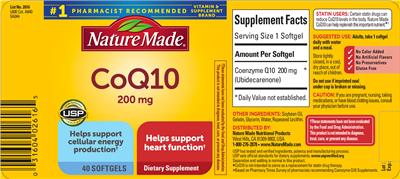
Coenzyme Q10 200 mg
| Coenzyme Q10 | 200 mg | † |
Other ingredients: Soybean Oil, Gelatin, Glycerin, Water, Soy Lecithin.
Directions: Suggested use: Take one softgel daily with a meal. For easier swallowing, take with water before and during ingestion.
Barcode (UPC) 031604026165 · Label source: NIH label database · Report a label change
Show entire label
More healthy aging products
Members OnlyThe highest ranked for the same goal
Read more
Our articles on this subject
- Healthy Aging Tips: A Science-Backed Guide to Living Better for LongerArticle · Mar 17, 2026
- NAD Anti-Aging Supplements: Benefits, Evidence, and How to ChooseArticle · Jun 15, 2026
Graded November 6, 2026 by the Reverse Age Lab evidence engine, from human studies, real reviews and our biohacker panel. How we grade. Is this medical advice? No. Rala organizes the published evidence; go over any change with your doctor, especially if you take meds.
Privacy policyConsumer health dataAffiliate disclosureTermsDo Not Sell or Share My Personal InformationCookie settings