
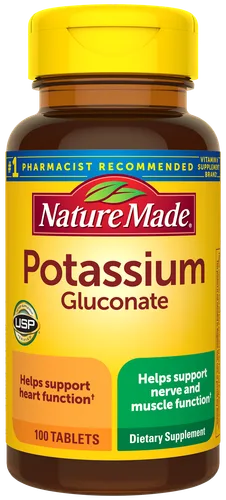
Nature Made Potassium Gluconate Review
We don’t sell supplements. We help you make decisions and get the best price.
Lowest prices
We may earn a commission from some store links. How we choose.
Finding the lowest prices at the stores now. This takes a few seconds.
Study, Trial or Testing Result Summary
Members Only43 human studies · 17 improved
Potassium has fairly strong human support for lowering blood pressure, but this product gives only 90 milligrams a day, far below the 30 millimoles a day that worked in trials, so these results may not apply at this dose. Most of the evidence also comes from potassium-enriched salt substitutes rather than potassium gluconate pills. In 26 trials with about 35,000 adults, swapping regular salt for low-sodium, potassium-enriched salt lowered the top blood pressure number by about 4.8 points and the bottom number by about 2.4 points [1]. In 22 trials with 1,606 adults, eating more potassium lowered the top number by about 3.5 points, mainly in people who already had high blood pressure [2]. A review of 32 trials found the benefit was largest in people with high blood pressure and high salt intake, but weakened at higher doses [3]. A pooled analysis of 120 trials found potassium-enriched salt beat usual care, though a healthy eating plan worked best [4]. In 2,376 villagers in Peru, a potassium salt substitute cut the risk of new high blood pressure by 51% [5]. In 608 people, potassium-enriched salt lowered the top number by 2.2 to 7.2 points over a year [6]. Many smaller studies found no effect. Animal and cell studies are never counted.
See all 43 studies →Hide the studies
- In 26 trials with about 35,000 adults, replacing regular salt with low-sodium, potassium-enriched salt lowered systolic blood pressure by about 4.8 mmHg and diastolic by about 2.4 mmHg, with little change in high blood potassium.Replacing salt with low-sodium salt substitutes (LSSS) for cardiovascular health in adults, children and pregnant women.
- In a pooled analysis of 120 trials with about 14,900 adults with raised blood pressure, low-sodium high-potassium salt lowered blood pressure compared with usual care, though the DASH diet worked best.Nonpharmacologic Interventions for Reducing Blood Pressure in Adults With Prehypertension to Established Hypertension.
- In 22 trials with 1,606 adults, higher potassium intake lowered systolic blood pressure by about 3.5 mmHg and diastolic by about 2 mmHg, an effect seen in people with hypertension but not those without.Effect of increased potassium intake on cardiovascular risk factors and disease: systematic review and meta-analyses.
- In 32 trials lasting at least 4 weeks, potassium lowered blood pressure most in people with hypertension and high salt intake, but the benefit weakened at higher doses and blood pressure rose at very high intakes.Potassium Intake and Blood Pressure: A Dose-Response Meta-Analysis of Randomized Controlled Trials.
- In 2,376 villagers in Peru, a salt substitute with 25% potassium chloride lowered systolic blood pressure by 1.3 mmHg and cut the risk of new hypertension by 51% in those without it.Effect of salt substitution on community-wide blood pressure and hypertension incidence.
- In 608 people, potassium-enriched salt lowered systolic blood pressure by 2.2 to 7.2 mmHg over 12 months versus regular salt, and those who responded early did not differ from others in later response.Consistency of Blood Pressure Response to Potassium-Enriched Salt in the China Salt Substitute Study.
- In 252 hypertensive patients with low potassium from a water pill, adding potassium (20 or 40 mmol a day) restored potassium levels and blood pressure stayed controlled, but there was no placebo group to show a blood pressure benefit.Potassium restoration in hypertensive patients made hypokalemic by hydrochlorothiazide.
- In 231 people with raised blood pressure, 5 weeks of 300 mg daily potassium nitrate raised blood nitrate but left blood pressure unchanged.Renal handling of nitrate in women and men with elevated blood pressure.
- In 125 people with mild or borderline hypertension, 6 months of 60 mmol daily potassium combined with calcium or magnesium did not lower blood pressure versus placebo.Combinations of potassium, calcium, and magnesium supplements in hypertension.
- In 85 mostly young healthy adults with normal blood pressure, 6 weeks of 30 mmol a day of potassium citrate or potassium chloride lowered average blood pressure by about 5 mmHg compared with placebo.The effect of a dietary supplement of potassium chloride or potassium citrate on blood pressure in predominantly normote…
- In 84 Kenyan adults with mild to moderate high blood pressure, 64 mmol a day of potassium for 28 weeks lowered diastolic pressure from 108 to 88 mmHg, similar to the water pill bendrofluazide, with no placebo group.Potassium supplementation versus bendrofluazide in mildly to moderately hypertensive Kenyans.
- In 61 adults with type 2 diabetes and high blood pressure, a low-sodium diet based on the DASH diet lowered blood pressure about as much as a regular-salt diet over 8 weeks, with no significant difference between the groups; potassium intake rose in the low-sodium group.Effect of sodium reduction based on the DASH diet on blood pressure in hypertensive patients with type 2 diabetes.
- In 58 black teenagers with normal blood pressure, 3 weeks of a high potassium diet (80 mmol a day) left daytime blood pressure unchanged but lowered nighttime diastolic pressure in the salt-sensitive teens, so all of them regained the normal nighttime dip.Effects of potassium on blood pressure in salt-sensitive and salt-resistant black adolescents.
- In 39 children aged 7 to 15, one week of potassium citrate supplementation did not reduce blood pressure reactivity to stress compared with placebo.Potassium intake and cardiovascular reactivity in children with risk factors for essential hypertension.
- In 38 healthy adults over 40, drinking potassium-enriched high-calcium skim milk twice daily for 4 weeks lowered systolic blood pressure more than plain skim milk, with a small effect on daytime blood pressure.Blood pressure responses to high-calcium skim milk and potassium-enriched high-calcium skim milk.
- In 24 normotensive men given 75 mmol per day of potassium chloride (about 2933 mg) or potassium citrate, neither salt changed blood pressure compared with placebo, even though urine tests confirmed the potassium was taken.Potassium effects on blood pressure: is the conjugate anion important?
- In 24 hypertensive adults with low blood potassium from a water pill, amiloride with hydrochlorothiazide and hydrochlorothiazide alone controlled blood pressure about equally over 14 weeks, while potassium chloride was given first to restore potassium levels.Potassium conservation with amiloride/hydrochlorothiazide ("Moduret') in thiazide-induced hypokalaemia in hypertension.
- In 23 adults with mild to moderate high blood pressure, 4 weeks of slow release potassium tablets (about 2502 mg per day) lowered supine blood pressure by about 4% compared with placebo, without changing diet.Does increasing potassium intake lower blood pressure in essential hypertension?
- In 16 hypertensive patients with low potassium from meds, taking 60 mmol of potassium chloride daily for six weeks lowered mean blood pressure by about 5.5 mm Hg compared with placebo.Read the study on PubMed (3883170) →
- In 12 adults with high blood pressure, 120 mmol of potassium citrate and bicarbonate daily for 8 weeks did not lower blood pressure compared with placebo.The influence of oral potassium citrate/bicarbonate on blood pressure in essential hypertension during unrestricted salt…
- In 10 healthy normotensive men, a nine-day low-potassium diet raised mean arterial blood pressure from 90.9 to 95.0 mm Hg, while a normal-potassium diet did not change it significantly.Increased blood pressure during potassium depletion in normotensive men.
- In a placebo-controlled crossover study of prehypertensive and hypertensive adults, 4 weeks of potassium chloride lowered night-time systolic blood pressure, while potassium magnesium citrate lowered a urine marker of oxidative stress but did not lower blood pressure.Effects of Potassium Magnesium Citrate Supplementation on 24-Hour Ambulatory Blood Pressure and Oxidative Stress Marker …
- In hypertensive African patients already taking furosemide, potassium chloride tablets (600 mg three times daily) raised plasma potassium slightly but did not lower blood pressure more than a med alone.Plasma potassium in hypertensive Africans on frusemide.
- In people with mild hypertension, bendrofluazide with potassium chloride lowered blood pressure over eight weeks, but the study did not isolate the effect of potassium chloride alone.Mild hypertension: a clinical trial conducted in hospital general practice.
- In 32 Black women with mild to moderate high blood pressure, 65 mmol of potassium chloride daily for 6 weeks lowered blood pressure more than placebo, from 153/104 to 146/101 mmHg.Potassium supplementation in blacks with mild to moderate essential hypertension.
- In 19 hypertensive postmenopausal women, a single 35 mmol potassium chloride dose increased sodium loss only when salt intake was high, and blood pressure effects were not reported.Characterization of Potassium-Induced Natriuresis in Hypertensive Postmenopausal Women During Both Low and High Sodium I…
- In 11 hypertensive patients, 10 days on a low-potassium diet raised systolic blood pressure by about 5 mm Hg and lowered serum potassium, compared with a higher-potassium diet.Potassium depletion and salt sensitivity in essential hypertension.
- In 9,501 Chinese adults with hypertension, a higher sodium to potassium ratio in urine went with higher blood pressure.Survey on sodium and potassium intake in patients with hypertension in China.
- In 4,716 US adolescents, potassium intake below 700 mg a day was linked to higher odds of high systolic blood pressure.Dietary sodium, dietary potassium, and systolic blood pressure in US adolescents.
- In 2740 Scunthorpe adolescents, urinary potassium showed no meaningful link to blood pressure, and blood pressure did not differ by drinking water sodium content.Water sodium, urinary electrolytes, and blood pressure of adolescents.
- In 2,653 Korean adults eating a high-salt diet, a higher sodium-to-potassium ratio in urine was linked to higher blood pressure, though the abstract reports the sodium measure rather than potassium alone.Urinary Sodium and Potassium Levels and Blood Pressure in Population with High Sodium Intake.
- In 1,513 Chinese adults, a higher urinary potassium-to-creatinine ratio was linked to lower blood pressure, and men with lower potassium excretion had higher pressure.Blood pressure and urinary cations in a Chinese population.
- In a random sample of 976 people in the Cape Peninsula, those with hypertension had significantly lower potassium intakes than those with normal blood pressure.Hypertension in the coloured population of the Cape Peninsula.
- In a sample of 666 urban adults and youths in Zaire, higher 24-hour urinary potassium was linked to lower systolic blood pressure, after adjusting for age, sex, and body weight.Blood pressure and urinary cations in urban Bantu of Zaire.
- In 662 children with high cholesterol followed for three years, higher dietary potassium was linked to lower systolic and diastolic blood pressure when each nutrient was analyzed alone, but this link disappeared when all nutrients were analyzed together.Nutrient intake and blood pressure in the Dietary Intervention Study in Children.
- In a survey of school children, those with high blood pressure had lower potassium inside their red blood cells and lower night-time urinary potassium than children with normal blood pressure, and higher red-cell potassium went with lower diastolic pressure.Sodium and potassium levels in hypertensive children.
- Over about seven years in 233 Dutch children, those with higher potassium intake had a slower rise in systolic blood pressure, about 1 mm Hg lower across the intake range.Sodium and potassium intake and blood pressure change in childhood.
- In 199 adults, hypertensive patients had a higher urinary sodium-to-potassium ratio than people with normal pressure, but the study's main focus was salt taste and potassium alone was not reported as a separate result.The salt-taste threshold in untreated hypertensive patients.
- In 167 elderly people in Anogia, Crete, potassium intake was above recommended levels in men and below in women, and the study did not link this to blood pressure.Nutrition status of the elderly in Anogia, Crete, Greece.
- In 121 low-risk adults with elevated blood pressure, magnesium taurate-potassium citrate (180 mg elemental potassium daily) plus lifestyle advice lowered blood pressure over three months in a single-arm study without a control group.Effects of magnesium taurate-potassium citrate on blood pressure and vascular stiffness in low-risk adults with elevated…
- In 44 youths referred for high blood pressure, higher aldosterone was linked to lower urinary sodium and sodium-to-potassium ratios, but the study did not measure blood pressure changes from potassium intake.Correlation between kidney sodium and potassium handling and the renin-angiotensin-aldosterone system in children with h…
- In a Belgian village sample, men who excreted more potassium in their 24-hour urine had lower systolic blood pressure after accounting for age, body weight and pulse rate.Salt and blood pressure in Belgium.
- In 666 adults from two studies, a potassium-rich diet alone did not change short-term blood pressure variability, while a higher sodium-to-potassium ratio in urine was linked to greater diastolic variability.Impact of dietary intake of sodium and potassium on short-term blood pressure variability.
Review Totals and Summary
Members OnlyWhat buyers say
No written reviews read yet.
Biohacker Summary
Members Only0 of 10 recommend it
Potassium is the main ingredient here, and most of the panel recommends or uses it, with four of the ten recommending it outright and three more using it through electrolyte drinks or mineral blends. Their reasons include healthy blood pressure, muscle and heart function, hydration, fewer cramps, recovery, and less water retention. One panelist gives a daily need of 4,700 mg, and another says a smoothie of avocado and banana reaches about 5,800 mg. Several prefer getting potassium from foods like bananas and potatoes, while others take it in electrolyte drinks, potassium citrate, or in combination with sodium and magnesium, often first thing in the morning, during exercise, or during a fast. For caution, one panelist says potassium can be risky for people with kidney disease or other conditions that raise potassium levels and advises seeing a physician, and another notes that meds can flush potassium out; none of the panel reported stopping it.
See all 10 biohackers →Hide the biohackers
Dr. Eric Berg · Potassium · recommends
- States that people need more potassium than any other mineral, yet most people aren’t getting enough.
- Explains that potassium is essential for peristalsis, the pumping action through the colon, and without it, things can sit there, leading to constipation.
- Explains that the normal requirements for potassium are 4,700 mg every single day, and that very few people get half of that amount. They describe potassium's role in the sodium potassium pump, which is essential for cellular electricity, muscle contraction, and heart function. Deficiency can lead to tiredness, muscle cramps, heart palpitations, or rising blood pressure.
- Recommends increasing potassium to restore balance and support healthy blood pressure.
- States that potassium is the most important electrolyte and that most people are not getting enough of it, needing around 4,700 mg daily, or even more, to avoid issues like fatigue, muscle cramps, heart palpitations, high blood pressure, and fluid retention.
- Dr. Eric Berg states that potassium is essential for health, supporting healthy muscles, nerves, and heart function, but warns that getting too much, especially from supplements, can be dangerous.
- Dr. Eric Berg states that most people are getting nowhere near enough potassium to balance the amount of sodium they’re already eating, implying a recommendation for increased potassium intake.
- Explains that potassium relaxes blood vessels, keeps elasticity in arteries, lowers adrenaline, supports the sympathetic nervous system, protects the endothelial layer of arteries, increases nitric oxide, and keeps insulin receptors sensitive.
- Was very successful in practice using potassium for hypertension, noting that bodies need 4700 mg of potassium every single day.
- States that low potassium can lead to constipation because potassium controls the smooth muscles of the body, affecting the contraction and relaxation of muscles in the colon.
Thomas DeLauer · Potassium · uses
- Uses Element's cans which contain 100 milligram potassium, finding that electrolytes help his workout performance.
- Uses Element's 100 mg potassium cans first thing in the morning to prime his day and help with workout performance.
- Recommends Element's ready-to-drink sparkling electrolyte drinks as a low or zero-calorie soda replacement that provides 1,000 milligrams of sodium, 200 milligrams of potassium, and 60 milligrams of magnesium.
- Uses Element Electrolytes for about eight years, noting they contain 1000 mg sodium, 200 mg potassium, and 60 mg magnesium, and help curb appetite without adding many calories.
- Personally drinks Element's pink lemonade or sparkling drinks, which contain 1,000 mg sodium, 200 potassium, and 60 magnesium, to hydrate and feel satiated, curbing hunger without stopping the ghrelin response.
- Sometimes pivots to straight potassium supplementation when generally depleted.
- Uses Element ready-to-drinks as a perfect electrolyte blend to start his day, noting that they contain 500 mg of sodium, 100 mg of potassium, and 30 mg of magnesium, and are slightly carbonated.
- Mentions potassium as an important electrolyte but suggests there's another layer to performance beyond just focusing on it.
- States that potassium is important for hydration, skin repair, and fluid balance in the skin, and recommends countering sodium intake with potassium.
- Sips on LMNT Recharge cans throughout the day, especially when fasting, noting they are a new smaller can with 500 mg sodium, 100 mg potassium, and 30 mg magnesium.
Ben Greenfield · Potassium · uses
- Says he is drinking LMNT, which contains sodium, potassium, and magnesium, and states that he actually drinks this stuff.
- Recommends Celtic Sea Salt's new electrolyte drink 'Hydrate' for replenishing electrolytes and trace minerals lost through sweat, noting it contains 70 naturally occurring trace minerals, magnesium, taurine, and potassium, with no added sugar, artificial colors, or synthetic ingredients.
- Recommends adding potassium sulfate to a Morasco cold plunge.
- Mentions that potassium can be helpful for blood pressure but also risky for people with kidney disease or other conditions prone to elevated potassium levels, advising consultation with a physician.
- Warns of potassium deficiency on a carnivore diet if a lot of octopus and salmon are not consumed.
- Highlights the importance of potassium for numerous body benefits, noting that Vascanox is a good source of potassium nitrite.
- Anthony plans to do half sodium citrate and half potassium citrate to get the citrate for pH balancing and add more potassium.
- Recommends ensuring sufficient potassium intake, along with calcium and magnesium, to balance the acid load from protein on a carnivore diet and normalize urinary pH.
- Mentions Kali Phos (potassium phosphate) as another example of a tissue salt.
- Suggests using potassium as a supplement for fasted workouts.
Dr. Mark Hyman · Potassium · warns
- Warns that potassium bromate, a dough conditioner banned in the EU, UK, and Canada, is still allowed in U.S. bread.
- States that potassium plays a critical role in nerve signaling and muscle contraction, especially in the heart, and low levels can lead to dangerous irregular heart rhythms.
- Notes that meds flush out potassium.
- States that with potassium, water can fully cross the cell membrane and get inside where it's needed for intracellular hydration.
- Recommends using targeted electrolyte support, advising to look for products with meaningful amounts of sodium, potassium, and magnesium, low sugar content, and avoidance of artificial colors, flavors, and sweeteners.
- Warns that potassium bromate, a chemical dough conditioner, has been linked to cancer, oxidative stress, DNA damage, and reproductive harm in animal studies.
- Warns that electrolyte drinks, while marketed for hydration, are loaded with high-glycemic sugars, synthetic potassium salts, and artificial dyes that can trigger insulin resistance, blood sugar crashes, and inflammation.
- Recommends promoting potassium enriched low sodium salts as a great life hack, stating that changing the brand of salt used at home can reduce the risk of heart attack, stroke, or early death.
- Warns that if potassium is trailing high, it's not necessarily about needing a banana, but rather a systematic marker indicating acute or chronic fatigue, overtraining, or sympathetic overdrive.
- Notes that 96% of the US population does not meet the adequate intake for potassium, and that the ideal ratio of potassium to sodium should be 10 to 1, but it's currently the other way around. They explain that potassium plays an important role in regulating blood pressure.
Siim Land · Potassium · neutral
- Lists potatoes and fruit as sources of Potassium.
- Notes that bananas have potassium but there are at least 8 other foods with more potassium than bananas.
- States that potassium is the most abundant intracellular cation that helps to maintain intracellular fluid volume and that without it, one greatly increases the risk of hypertension, cardiovascular disease, diabetes, and stroke.
- States that potassium lowers blood pressure.
- Travels with Upgraded Formulas' potassium, manganese, boron, and zinc, considering them fundamental minerals he is usually deficient in.
- Notes that potassium bromate is banned in the EU due to being a possible carcinogen, while it is allowed in the US as a whitening and raising agent in bread products.
- Found that adding 198 MGS of potassium to his diet within 24 hours stopped his frequent urination, which had been occurring 30 to 50 times a day.
- Recommends potassium for muscle cramps, noting that a Carnivore diet may lack it, and suggests adding fruit or mineral waters.
- Mentions potassium as an electrolyte needed to help with insulin sensitivity, alongside magnesium and sodium.
- Notes Bryan Johnson uses New Salt, a low sodium, high potassium salt, but questions its necessity given Johnson's diet and low blood pressure, suggesting it may not have longevity effects unless one has actual high blood pressure.
Peter Attia · Potassium · recommends
- States there is some evidence that increasing dietary potassium through potassium-rich foods like bananas and potatoes, rather than supplements, can lower blood pressure.
- Notes that evolutionary ancestors consumed much more potassium than modern humans and suggests adding it back to the diet, ideally through whole foods.
- Mentions taking magnesium and potassium in addition to salt for minerals and electrolytes.
Andrew Huberman · Potassium · uses
- Uses Element, an electrolyte drink with sodium, magnesium, and potassium in correct ratios and no sugar, to ensure adequate hydration and electrolytes, especially when starting days fast or during physical exercise.
- Uses Element, which contains potassium in the correct ratios, to ensure proper hydration and electrolyte intake for brain and body function.
- Mentions potassium as an electrolyte.
- Uses Element, an electrolyte drink with sodium, magnesium, and potassium in correct ratios and no sugar, to ensure adequate hydration and electrolytes, drinking it first thing in the morning and during physical exercise.
- Uses Element, an electrolyte drink with sodium, magnesium, and potassium in correct ratios and no sugar, to ensure he is hydrated and has sufficient electrolytes. He drinks it first thing in the morning and during physical exercise, especially on hot days.
- Uses Element, an electrolyte drink with sodium, magnesium, and potassium but no sugar, to ensure adequate hydration and electrolytes, especially when waking up and during exercise.
- Uses LMNT, an electrolyte drink with sodium, magnesium, and potassium in correct ratios and no sugar, to ensure adequate hydration and electrolytes for brain and body function, especially when starting his day fast or during physical exercise.
- Uses Element, which contains potassium, for proper hydration and electrolyte balance.
- Ensures adequate intake of sodium, magnesium, and potassium, which are vital electrolytes for the functioning of all body cells, especially neurons, by drinking Element.
- Uses Element, an electrolyte drink with sodium, magnesium, and potassium, to ensure adequate hydration and electrolytes for optimal brain and body function, especially when waking up and during physical exercise.
Dr. Rhonda Patrick · Potassium · recommends
- Recommends getting enough potassium, noting that most people get too much sodium and not enough potassium.
- States that maintaining a high potassium intake is important for hypertension.
- Recommends getting enough potassium from veggies, bananas, and fruit because the body cares about the sodium-potassium ratio.
- Dr. Patrick states that her smoothie, containing avocado and banana, has around 5,800 milligrams of potassium, which meets the adequate intake requirement for maintaining normal blood pressure and decreasing the risk of kidney stones.
- Dr. Rhonda Patrick states that eating more potassium, not less sodium, is the key to healthy blood pressure.
Dave Asprey · Potassium · recommends
- Recommends having more potassium during a fast to increase mineral intake.
- States that people who are salt-sensitive hypertensives usually need more potassium.
- Explains why electrolytes, especially sodium, potassium, and magnesium, are foundational for recovery.
- States that potassium is a really important electrolyte for everyone, but the demand is significantly higher for people with nervous system, immune system, and endocrine system dysregulation.
- Recommends using potassium citrate, if tolerated, to raise urinary citrate and block crystal formation.
- Notes that the potassium in the Vineia blood flow hydration product is from coconut water.
- Mentions that atrial fibrillation has to do with mineral status, including potassium.
- Takes a lot of potassium.
- Recommends lots of potassium citrate to help remove oxalates from the body.
- Dave Asprey, who is salt-sensitive, balances out sodium intake with potassium, taking potassium citrate capsules from Designs for Health and carrying them all the time.
Bryan Johnson · Potassium · recommends
- Recommends potassium during the luteal phase to help reduce water retention and bloating.
RAL Summary
Members OnlyTier 4 for Blood Pressure
Potassium lowers blood pressure in several large reviews of trials, mostly through salt substitutes at much higher amounts than this 90 milligram product, and with no reviews counted the evidence for this product stays emerging.
- Emerging: not enough evidence to rank higher yet.
Where the evidence disagrees: 18 of the 43 human studies found no effect.
More Details
Members OnlyBody systems · Combine with · Possible side effects
Body systems: Cardiovascular system
Possible side effects: No major side effects reported; salt substitute trials found little change in high blood potassium.
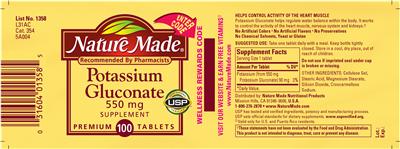
Supplement Facts
Potassium 90 mg
| Potassium | 90 mg |
Other ingredients: Cellulose Gel, Stearic Acid, Croscarmellose Sodium, Magnesium Stearate, Silicon Dioxide.
Directions: Suggested use: Adults, take 1 tablet daily with water and a meal.
Barcode (UPC) 031604013585 · Label source: NIH label database · Report a label change
Show entire label

More blood pressure products
Members OnlyThe highest ranked for the same goal
Read more
Our articles on this subject
- How to Lower Diastolic Blood Pressure for LongevityArticle · Sep 17, 2026
- DASH Diet for High Blood Pressure: What It Lowers, What to Eat, and How to StartArticle · Sep 19, 2026
Graded November 6, 2026 by the Reverse Age Lab evidence engine, from human studies, real reviews and our biohacker panel. How we grade. Is this medical advice? No. Rala organizes the published evidence; go over any change with your doctor, especially if you take meds.
Privacy policyConsumer health dataAffiliate disclosureTermsDo Not Sell or Share My Personal InformationCookie settings