Nature Made WellBlends Energy Max Mocha Review
We don’t sell supplements. We help you make decisions and get the best price.
Lowest prices
We may earn a commission from some store links. How we choose.
Finding the lowest prices at the stores now. This takes a few seconds.
Study, Trial or Testing Result Summary
Members Only31 human studies · 10 improved
This is an energy drink mix, not a heartburn remedy. No study tested vitamin B12 alone for fast heartburn relief. In a trial of people with acid reflux, a combination supplement that included vitamin B12 cleared symptoms better than an acid-reducing drug, but the result cannot be credited to vitamin B12 [1]. In a small study without a comparison group, 1000 micrograms of vitamin B12 daily for 3 months eased indigestion in people with a stomach infection and low vitamin B12 [2]. Caffeine, at 100 milligrams here, does not relieve heartburn. Adding caffeine to a sports drink did not change reflux in runners [3]. Caffeinated coffee and tea weakened the valve between the stomach and food pipe and caused more reflux [4], and large population studies linked more caffeine or coffee with higher reflux risk [5][6]. Calcium carbonate can ease heartburn quickly at about 420 milligrams [7][8], but this product has only 26 milligrams, far below the studied dose. Coenzyme Q10 has no human studies for this goal. Animal and cell studies are never counted.
See all 31 studies →Hide the studies
- Across nine placebo-controlled trials of 2,746 preterm infants, caffeine at usual doses did not change gut side effects; one trial found fewer reflux symptoms at 2 weeks but not at term.Gastrointestinal effects of caffeine in preterm infants: a systematic review and Bayesian meta-analysis.
- A review of 16 studies of adults with functional dyspepsia found caffeine was associated with dyspepsia symptoms in four studies, so it did not relieve them.Food and functional dyspepsia: a systematic review.
- In 351 people with acid reflux, a combination supplement that included vitamin B12 led all 176 users to report complete symptom regression after 40 days, compared with 65.7% of those taking 20 mg a med (a standard acid-reducing drug), but B12 was not tested on its own.Read the study on PubMed (16948779) →
- In 167 adults with obesity taking a herbal ephedra and caffeine product for 6 months, heartburn was reported more often than with placebo.Herbal ephedra/caffeine for weight loss: a 6-month randomized safety and efficacy trial.
- In 155 adults with frequent heartburn, as-needed calcium carbonate antacid for 12 weeks worked less well than twice-daily effervescent ranitidine, with more rescue antacid use and less healing of the oesophagus (29% vs 55%), though quality of life improved with both.Managing heartburn at the 'base' of the GERD 'iceberg': effervescent ranitidine 150 mg b.d. provides faster and better h…
- In a small pilot of 40 people with reflux disease, drinking dewaxed coffee reduced heartburn and regurgitation days and antacid use compared with standard coffee.Effect of Dewaxed Coffee on Gastroesophageal Symptoms in Patients with GERD: A Randomized Pilot Study.
- In 26 adults with frequent meal-related heartburn, a single 420 mg dose of calcium carbonate lowered acidity in the oesophagus and reduced heartburn severity compared with placebo.Synergy between low-dose ranitidine and antacid in decreasing gastric and oesophageal acidity and relieving meal-induced…
- In 24 adults given a heartburn-provoking meal, single doses of calcium carbonate gum or chewable tablets reduced heartburn and raised oesophageal pH within 15-30 minutes compared with placebo, with the gum lasting longer than the tablets.Clinical effectiveness of a new antacid chewing gum on heartburn and oesophageal pH control.
- In 24 healthy volunteers, a single dose of a calcium and magnesium carbonate antacid raised stomach pH within the first 30 minutes compared with no treatment, but the effect was short-lasting.Comparison of two antacid preparations on intragastric acidity--a two-centre open randomised cross-over placebo-controll…
- In 24 adults with a history of reflux, a chewing gum containing calcium carbonate and other ingredients lowered heartburn and acid reflux scores after a trigger meal compared with placebo gum.Effect of GutsyGum(tm), A Novel Gum, on Subjective Ratings of Gastro Esophageal Reflux Following A Refluxogenic Meal.
- In 16 healthy fasting volunteers, a single 1360 mg dose of calcium-magnesium carbonate antacid raised stomach pH above 3 in a median of 5.8 minutes versus 240 minutes with placebo, acting faster than two acid-reducing drugs but wearing off sooner.Comparison of the effect of the antacid Rennie versus low-dose H2-receptor antagonists (ranitidine, famotidine) on intra…
- In people with nonulcer dyspepsia, calcium carbonate was linked to more reflux symptoms in those with a stomach lining condition (multifocal atrophic gastritis) once their Helicobacter pylori infection was cleared.Increased reflux symptoms after calcium carbonate supplementation and successful anti-Helicobacter pylori treatment.
- A new alginate and calcium carbonate liquid formed a raft and stayed in the stomach about as well as an existing Gaviscon liquid; the study did not measure heartburn relief in people.Alginate-antacid combinations: raft formation and gastric retention studies.
- In a survey of 467 university students in the UAE, average daily caffeine intake was 264 mg, and 42.8% believed drinking it with meals helped avoid acid reflux, though this was a self-report survey and not a test of effect.Caffeine Consumption among Various University Students in the UAE, Exploring the Frequencies, Different Sources and Repo…
- In 98 runners on an 18-km run, adding caffeine to a sports drink did not change reflux or other stomach complaints compared with the sports drink alone (reflux 72.5% vs 78.6%).The effect of two sports drinks and water on GI complaints and performance during an 18-km run.
- In 12 healthy volunteers, a single 20 mL dose of an alginate antacid containing calcium carbonate significantly reduced food and acid reflux into the oesophagus after a test meal compared with no treatment.Effect of alginate and alginate-cimetidine combination therapy on stimulated postprandial gastro-oesophageal reflux.
- In 12 healthy adults, coffee and tea with 160 mg caffeine lowered the pressure of the valve between the stomach and gullet and led to more reflux episodes, while decaffeinated coffee did not.[The effect of coffee and tea upon lower esophageal sphincteric function.].
- Adults who followed a six-week at-home plan to cut back caffeine from about 565 mg to 233 mg a day reported less reflux, along with better sleep and less anxiety.Randomized controlled trial of a remote-guided caffeine reduction intervention.
- In 38 people with reflux disease who were stopping acid-blocking drugs, caffeine use was not linked to failing to stop the medication.Read the study on PubMed (34150379) →
- A genetic study of over 330,000 people suggested that higher genetically predicted caffeine consumption is linked to a somewhat higher risk of reflux disease.Adiposity, diabetes, lifestyle factors and risk of gastroesophageal reflux disease: a Mendelian randomization study.
- In 48,308 women followed in the Nurses' Health Study II, the highest coffee intake (more than 6 servings a day) was linked to a 34% higher risk of frequent reflux symptoms than no coffee, and the link held when comparing caffeine status.Association Between Beverage Intake and Incidence of Gastroesophageal Reflux Symptoms.
- In a cross-sectional study of 3362 Iranian adults, coffee and caffeine intake were not significantly linked to functional dyspepsia or its symptoms, including epigastric pain.Association between coffee and caffeine intake and functional dyspepsia.
- In 960 adults in Saudi Arabia, caffeine intake was associated with reflux (GERD) symptoms in a cross-sectional survey.Prevalence and Lifestyle Factors Associated With Gastroesophageal Reflux Disease Symptoms Among Adults in Saudi Arabia: …
- In a survey of 490 people in Saudi Arabia, more frequent caffeine consumption was linked to a higher rate of reflux disease (GERD).Prevalence and Risk Factors for Gastroesophageal Reflux Disease (GERD) Among Visitors to the Health Center of Imam Moham…
- In 250 adults with stomach complaints, a breakfast containing 100 mg of caffeine was used as a test to measure stomach acid levels; it was a diagnostic test and did not show caffeine relieving heartburn.Assessment of gastric acidity by short-duration intragastric pH-monitoring with standardised breakfast in functional and…
- Caffeine was only part of a standard 100 mg test breakfast used to measure reflux in people with dyspepsia, so this study does not show whether caffeine itself affects reflux.Prevalence of acidic and non-acidic refluxes in patients with functional dyspepsia and its risk factors investigated by …
- In a case-control study of 174 preterm infants, use of caffeine was not linked to abnormal acid reflux, while vomiting, regurgitation, apnea and female sex were linked to it.Clinical predictors of abnormal esophageal pH monitoring in preterm infants.
- In 105 people with reflux who switched from a med to lansoprazole, heartburn became more frequent and more severe, and satisfaction dropped; caffeine intake fell during the switch, but caffeine was not tested as a treatment.Read the study on PubMed (10979061) →
- In 51 adults with voice disorders, higher caffeine intake was linked to more reflux symptoms.Reflux symptoms and vocal characteristics in adults with non-organic voice disorders.
- In a genetic study of 451,097 UK adults, coffee drinking was linked to lower odds of reflux disease overall, but among coffee drinkers, more caffeinated coffee was linked to higher odds.Genetic evidence that higher central adiposity causes gastro-oesophageal reflux disease: a Mendelian randomization study…
- In 34 people with Helicobacter pylori infection and low vitamin B12, 1000 mcg daily for 3 months shortened stomach emptying time and reduced dyspepsia scores, with no control group.The impact of B(12) treatment on gastric emptying time in patients with Helicobacter pylori infection.
Review Totals and Summary
Members OnlyWhat buyers say
No written reviews read yet.
Biohacker Summary
Members Only0 of 10 recommend it
Vitamin B12 is the main ingredient, and five of the ten panelists recommend it, mostly for nerve health, brain function and mood. Two of them favor methylcobalamin, the natural form, with one preferring a liposomal and micellar version for better absorption, and one advises testing levels first and supplementing only if low, with another aiming for a level around 500. Two more say they use it, two are neutral and only note that a shortage can cause fatigue or hair loss, and one warns against taking it too close to bedtime because it boosts light's effect on melatonin. No one gave a B12 dose, and no one said they stopped it. Caffeine is a smaller ingredient in this product, and the panel's view on it is mixed, with many suggesting earlier timing for better sleep and some pairing it with L-theanine.
See all 10 biohackers →Hide the biohackers
Thomas DeLauer · Vitamin B12 · recommends
- Recommends Vitamin B12 for mental health and mood, explaining its role in myelination and neurotransmitter production. They specifically recommend a liposomal and micellar form of methylcobalamin B12 for better absorption and to avoid toxicity.
- Explains that caffeine from green tea mobilizes fatty acids, which can be converted into ketones, providing a ketone boost, especially in a fasted or low-carb state.
- Warns that treating brain fog with caffeine without addressing underlying inflammation is ineffective and likely to make the situation worse.
- Notes that caffeine significantly increased fat metabolism and fat oxidation during exercise, especially at lower intensities, and that adding coffee around an exercise bout led to more calories and fat burned.
- Says that caffeine significantly increased fat metabolism and that at low intensity cardio or exercise caffeine works better at mobilizing and utilizing fat.
- Might have some caffeine before fasted training.
- Recommends caffeine as a must on the fasting day to create a low-grade energy demand that forces the body to favor lipolysis.
- Notes that milk contains 120mg of calcium, while sardines contain 351mg, highlighting a 3x difference.
- Recommends drinking 150 to 200 mg of caffeine immediately before a 20-minute nap to enhance alertness and performance, as the caffeine peaks when the nap has cleared adenosine.
- States that caffeine is probably the most studied ergogenic aid with a profound effect on fat mobilization, suggesting that simple is better.
- Mentions that people try cutting out caffeine when dealing with sleep issues, but it's not always the root cause.
- Warns that consuming more than 50-60 mg of caffeine in the first hour after waking stacks a stimulant on top of the body's natural cortisol-driven alertness, leading to a sharp spike and mid-morning crash, and building tolerance faster.
- Recommends getting calcium, along with vitamin D, zinc, and magnesium, from foods like sardines, as they are important for inflammatory pathways in the gut.
- Mentions that a single serving of sardines provides vitamin B12 at something like three to four times the daily needs.
Dr. Eric Berg · Vitamin B12 · recommends
- Recommends taking the natural form of vitamin B12, methylcobalamin, to support nerve regeneration, myelin production, and nerve growth factors.
- Warns that bone loss cannot be fixed with just calcium, as bone is primarily collagen with other essential minerals.
- Mentions that grass-fed liver has coenzyme Q10.
- Dr. Berg includes calcium carbonate among the synthetic supplements to avoid.
- Notes that Vitamin B12 is intimately involved in the nervous system and may be behind sciatica and carpal tunnel syndrome.
- Warns against calcium carbonate, also known as limestone, stating that while it lowered hip fractures in a study, it also increased kidney stones and is not good for arteries, requiring the body to work hard to use it.
- Recommends that anyone with a med prescription should also take coenzyme Q10, specifically the ubiquinol form, to support heart and muscle function.
- Notes that tannins in tea bind calcium, blocking its absorption.
- Warns that caffeine can keep you awake and advises to watch out for hidden sources of caffeine.
- Recommends taking vitamin B12 if on a med.
- Briefly mentions Vitamin B12 in relation to neuropathy.
- Stimulating the body with caffeine can actually make fatigue worse.
- States that vertical ridges on nails could mean a vitamin B12 deficiency, and slightly brown or grey nails, especially for vegans, could indicate low B12. Completely white nails with a pink strip across the top could also be low B12.
- Indicates that horizontal thin white lines near the base of the nails are indicative of low calcium.
Dr. Mark Hyman · Vitamin B12 · recommends
- States that vitamin B12 is a nutritional deficiency that impacts mental health.
- Discusses with patients their caffeine consumption, suggesting that too much caffeine can artificially increase their stress response.
- Recommends stopping caffeine by noon.
- States that caffeine's effect on ADHD depends on the person, as it can help focus but also activate irritation or stress, and its impact is related to individual caffeine metabolism.
- Notes that calcium is in bones but is also essential for nerves, muscles, and the heart, and low levels can affect muscle function and heart rhythm.
- Warns that drinking coffee first thing in the morning before eating layers caffeine on top of already elevated stress hormones, providing unsustainable energy and setting up for an afternoon crash.
- Recommends vitamin B12 with vitamin B6 and folate as supplements with strong evidence for PMS.
- Notes that caffeine is one of the things that drives the hormone imbalance causing PMS.
- States that green leafy vegetables are great sources of calcium.
- Mentions that repletion of vitamin B12 can help safely withdraw someone from meds and that simple vitamin B12 deficiencies are important to address in a depression workup.
- States that drinking coffee on an empty stomach, which is how most people do it, is probably not the best thing as it gives a jolt of caffeine and adrenaline before eating.
- Warns that caffeine, alcohol, and spicy foods can be potent triggers for hot flashes, and excess caffeine should be avoided.
- Warns that adding fiber does not cancel out the negative effects of caffeine and other processed additives.
- Warns that high caffeine intake, especially coffee, can contribute to dehydration by increasing fluid loss and masking fatigue, leading to a deficit if not balanced with sufficient water intake.
Ben Greenfield · Vitamin B12 · recommends
- Recommends getting vitamin B12 tested and supplementing if deficient, as B12 deficiency can cause damage to the myelin coating around nerves, including cochlear nerves, and improve tinnitus severity scores.
- Came off caffeine for a year after his separation.
- Quit caffeine in the same year he quit testosterone replacement therapy and alcohol.
- Uses caffeine, such as coffee or green tea, in his morning fasted fat-burning session to slightly increase the oxidation of fats.
- Advises against relying on caffeine for morning energy, suggesting that natural sugar-based stimulants combined with hydration and meditation can provide sufficient wakefulness.
- Recommends Caffeine, noting that it can improve focus, mood, and training, help control appetite, raise calories burned, and reduce fatigue.
- Notes that 3 mg/kg of caffeine increases fat oxidation by 31%, and 5 mg/kg increases it by 51% compared to a placebo.
- Caffeine on its own isn’t particularly impressive as an ergogenic aid, but when combined with taurine, there are significant increases in power production.
- Mentions that caffeine can help mitigate the negative effects of a caloric deficit on lean muscle mass and metabolism.
- Has talked before about caffeine as a supplement that seems to assist with sleep deprivation.
- Warns that energy drinks can deliver large doses of caffeine quickly, which may overstimulate the heart and cause abnormal heart rhythms and electrocardiogram changes, especially in children.
- Is considering whether he needs a calcium supplement because lead can displace calcium in bones, affecting bone strength.
- Mentions calcium as a common deficiency.
- Recommends adequate intake of calcium for bone strength.
Dave Asprey · Vitamin B12 · recommends
- States that Vitamin B12 is extremely important for every kind of brain function and recommends ensuring B12 levels are optimal, around 500, not just barely above normal.
- Loves coffee, has the caffeine molecule tattooed on his arm, drinks it every morning, and says it does amazing things for your brain and for how long you can live, but it can't clear most brain fog on its own.
- Created Danger Coffee, a mineral-enriched, lab-tested, mold-free coffee that delivers rich flavor and clean caffeine without all the junk, and recommends it to others.
- Dave Asprey's lab proved that caffeine is a flow hack and the only known substance to actually make you flow prone. Coffee will make you more flow prone.
- Dave explains why the 1:2 ratio of caffeine to L-theanine beats coffee alone for working memory, accuracy, and calm, sustained concentration.
- States that his entire career started on caffeine and he uses it every morning, but notes it's like a loan from your future self, leading to an afternoon crash.
- Dave Asprey's company used caffeine, which is a safe ingredient, but they stopped using it because it doesn't provide the type of results and change in the skin that newer ingredients do.
- States that caffeine is one of his superpowers and increases the rate of ketone formation, which fuels neurons.
- States he takes 300 mg of Coenzyme Q10 every day for 20 years because it is necessary for mitochondria to function and is important for longevity, noting that meds lower it.
- Once I’ve hydrated and taken my creatine, I reach for Danger Coffee for caffeine and essential minerals in one cup.
- Uses caffeine, noting it blocks adenosine to increase norepinephrine and dopamine signaling, fueling the prefrontal cortex for focus. He mentions it got him through business school and is part of his longevity journey.
- Does not believe caffeine is a nootropic, considering it just a stimulant.
- Notes that when energy intake is too low for training demand, nutrient intake often falls short, especially for calcium, which is associated with reduced bone health.
- Explains that calcium provides the raw material for bones, but it isn't a standalone input and needs a whole system to be effective.
Siim Land · Vitamin B12 · uses
- Created Microvitamin, a supplement that bundled all the supplements he was taking, to help fund his a med trial.
- Recommends stopping caffeine earlier to improve sleep.
- Notes that polyphenolic compounds in coffee, both decaf and regular caffeinated, can influence cellular stress pathways and have been seen to increase autophagy activity in mice, with regular coffee appearing more potent due to caffeine's additional energetic stress.
- Recommends moving caffeine intake earlier in the day because having it too late can disrupt sleep, especially for slow metabolizers.
- Recommends not having caffeine after lunch, noting that 400 mg 4 hours before bed reduced deep sleep by approximately 30 minutes in a trial, although he personally has a fast caffeine metabolism.
- Lists dairy and sardines as sources of Calcium.
- Warns that combining a large dose of glycine with caffeine can amplify negative experiences, as caffeine independently increases arousal and can cause restlessness, anxiety, and increased heart rate.
- States that regular coffee promotes visceral fat loss, and going from low or zero intake to moderate intake increases fat loss due to caffeine and polyphenols.
- Notes that Boron reduces calcium/magnesium loss.
- Suggests that higher caffeine intake might be useful for older people because caffeine raises cortisol, and consuming it in the morning contributes to circadian regulation.
- States that caffeine has proven benefits for increasing exercise performance when used correctly and at the right time.
- States that caffeine raises blood pressure, but mostly if one is not used to consuming it, and habitual caffeine consumers develop tolerance to these effects.
- Quotes a tweet suggesting that without caffeine, civilization would be 100 years behind.
- States that vitamin B12 deficiency is the most common reason for premature graying of hair and recommends fixing B12 status if it is deficient, as it gives a greater likelihood of reversing gray hair.
Andrew Huberman · Vitamin B12 · neutral
- States that a deficiency in vitamin B12 can be terrible and lead to chronic fatigue-like syndromes, as many parts of mitochondria require B vitamins.
- Used caffeine, taking 400 milligrams, to improve his mood and physical vigor during mundane tasks like swimming, noting that it made life not so bad and allowed him to rip through the water.
- Mentions caffeine in a discussion about supplement use.
- Discusses caffeine timing as a tool related to sleep.
- He recommends caffeine, in coffee or tea form, or in tablet or capsule form at lower dosages than found in coffee and tea, as a reasonable way to explore stimulant-based approaches for enhancing cognitive function and focus.
- Huberman states that caffeine can improve focus and concentration, with a general useful range of 100 to 400 milligrams, and most people do well with 100 to 200 milligrams prior to focused work.
- Discusses caffeine as a tool for improving attention, noting its impact on focus and sleep.
- Mentions that coffee and tea produce caffeine, which were likely defense chemicals, and that plants learned it was better to alter consciousness than kill predators outright.
- Discusses caffeine and its health benefits.
- Recommends caffeine as a tool to increase motivation and dopamine.
- Huberman explains that regular ingestion of caffeine at safe levels of about 100 to 250 mg increases the number of D2 and D3 dopamine receptors, making circulating dopamine more potent.
- Personally takes Omega-3 and Coenzyme Q10 every day, noting they are known to support cardiovascular health, cellular health and energy, and brain health.
- Personally takes coenzyme Q10 every day, noting it supports cardiovascular health, cellular health, energy, and brain health.
- Discusses a study where probiotics, magnesium orotate, and coenzyme Q10 showed a short-term improvement in symptoms of major depression.
Dr. Rhonda Patrick · Vitamin B12 · warns
- Warns that Vitamin B12 enhances light's melatonin-suppressing effects and should be avoided too close to bedtime.
- Explains that caffeine can activate AMPK, a cellular energy sensor involved in fat burning and glucose regulation, which helps muscle cells take up glucose and promotes using fatty acids for energy.
- Recommends pairing caffeine with L-theanine to enhance alertness and focus while mitigating anxiety and jitteriness, suggesting a dose of 100 to 150 mg of caffeine.
- Recommends pairing coffee with L-theanine to enhance cognitive performance, noting that L-theanine can help balance caffeine’s stimulatory effects.
- Recommends cutting out caffeine in the three months before conception for both men and women, as it affects sperm.
- Recommends caffeine for alertness and focus, especially when combined with L-theanine to smooth out the response and maintain cognitive benefits, suggesting a practical dose of 100-150 mg.
- Mentions that kale delivers calcium, a micronutrient many diets fall short on.
- Recommends cutting down or eliminating caffeine when actively trying to conceive.
- Warns that a very high dose of caffeine, around 350 mg pre-workout, may blunt some of creatine's performance benefit due to opposite effects on muscle relaxation.
- Self-administers 350 mg of caffeine in a bolus right after returning from mass and his workout, and before eating, noting that he likes dark roast Starbucks.
- The newest literature on Caffeine dose and its link to multiple cardiometabolic disease risk reduction shows that even the ≥400 mg group was healthier than 0 mg.
- Notes additional gaps in calcium.
- Explains that caffeine works by blocking adenosine, a molecule that builds up and makes one feel tired, and that timing coffee intake is about leveraging adenosine biology for peak cognitive alertness.
- Reports that alcohol use disorder is associated with a 20-50% greater prevalence of Calcium deficiency.
Bryan Johnson · Vitamin B12 · uses
- States that Blueprint essential capsules and soft gels are packed with key vitamins and minerals needed for strong bone health.
- Drinks coffee when starting to fade, ensuring the last cup is between 10 and 12 hours before bed so caffeine doesn't affect sleep.
- Used 300 mg of caffeine in the morning as part of their jet lag recovery.
- Uses 300 mg of slow release caffeine in the morning as part of a jet lag recovery protocol.
- Notes that coffee affects the gut, which then affects the brain, and that it is the coffee bean, not the caffeine, doing most of the work.
- Notes that the culture in DC involves running on caffeine, along with alcohol and sleep deprivation, leading to poor nutrition and an unhealthy environment.
- Warns that caffeine has a 6-hour half-life, so consuming it later in the day will leave a significant amount in the body at bedtime, recommending consumption earlier in the day.
- Recommends calcium as a mineral that, along with phosphorus, magnesium, and boron, is deposited to fortify the bone structure after the collagen scaffold is in place.
- Agrees that a little extra calcium is probably okay, especially for women, to really hit home for bone mineral density.
- Recommends consuming no caffeine past noon due to its 6-hour half-life, suggesting that if sleep is nailed, caffeine might not be needed.
- Warns against stimulants like caffeine for sleep, advising to have the last cup of coffee before noon if going to bed at 10:00 p.m.
- Advises that if one is going to drink caffeine, they should try to have it earlier in the day and experiment to find the right time that doesn't disrupt their sleep.
- Has stopped all caffeine, as it has helped him improve his sleep.
Peter Attia · Vitamin B12 · neutral
- Notes that deficiencies in certain vitamins and minerals, such as B12, can be a cause of hair loss in women.
- States that he needs two to three times the normal dose of any medication or drug to feel an effect, including caffeine, and can drink four cups of coffee without feeling anything.
- Mentions data suggesting caffeine might be more helpful in the luteal phase to help with fatigue components.
- Uses caffeine in combination with Alpha GPC, MCT, and Theanine, often adding it to coffee for long periods of cognitive work.
- Finds Alpha GPC works well with caffeine, and he puts a product containing Alpha GPC, MCT, and caffeine into his coffee for long periods of cognitive work.
- Recommends calcium as one of the 'big three' micronutrients for bone health, suggesting a daily intake of 1,000 to 1,200 milligrams, which can be supplemented with calcium carbonate or calcium citrate.
- Explains that bone is 50 to 70% mineral, predominantly calcium, and that virtually all of the body's calcium is contained within bone, making bone important for calcium homeostasis.
- Mentions that experimenting with the timing of caffeine is a great idea for sleep.
- Warns that decaffeinated coffee can contain significant amounts of caffeine and advises cutting off all coffee, including decaf, by 11 a.m. for better sleep quality.
- Explains that caffeine is problematic because it blocks adenosine receptors, leading to a 'caffeine crash' when it wears off and adenosine floods the receptors, causing sleepiness.
- States that caffeine does not wake him up, which contributed to his belief that he did not have an addiction gene.
- Recommends calcium for bone health, stating that teenagers probably need about 1000 milligrams a day.
- Discusses bone acting as a reservoir for calcium and how resorption and formation release calcium into the blood when needed.
- States that caffeine does not wake him up.
RAL Summary
Members OnlyTier 5 for Occasional Heartburn: Fast Relief
The emerging grade rests on vitamin B12, but one of its two studies tested a multi-ingredient blend and the other was an uncontrolled indigestion study, while the caffeine studies show caffeine does not relieve heartburn and may worsen reflux. So it is graded Tier 5, lower than the rules alone gave.
- Not endorsed.
Where the evidence disagrees: 19 of the 31 human studies found no effect.
More Details
Members OnlyBody systems · Combine with · Possible side effects
Body systems: Digestive system, Nervous system
Possible side effects: Caffeine was linked to more heartburn and reflux in some studies. No reviews were available.
Supplement Facts
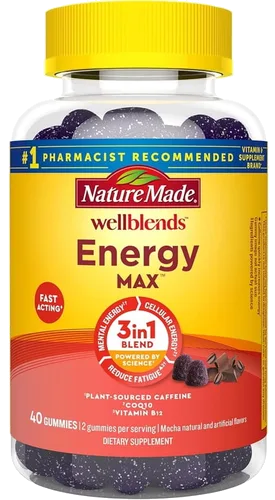
Total Carbohydrates 6 g · Vitamin B12 1000 mcg · Calcium 26 mg
| Calories | 30 | |
| Total Carbohydrates | 6 g | |
| Protein | 1 g | |
| Vitamin B12 | 1,000 mcg | |
| Calcium | 26 mg | |
| Sodium | 25 mg | |
| Caffeine | 100 mg | † |
| Coenzyme Q-10 | 10 mg | † |
Other ingredients: Sugar, Glucose Syrup, Water, Natural Flavors, Gelatin, Citric Acid, Cocoa Butter, Cocoa, Monk Fruit Extract, Pectin, Salt, Sodium Citrate.
Directions: Suggested use: Adults, chew 2 gummies daily.
Label source: NIH label database · Report a label change
Show entire label

More occasional heartburn: fast relief products
Members OnlyThe highest ranked for the same goal
Read more
Our articles on this subject
- Best Vitamins for Fatigue and the Habits That Matter MoreArticle · Jun 15, 2026
Graded November 6, 2026 by the Reverse Age Lab evidence engine, from human studies, real reviews and our biohacker panel. How we grade. Is this medical advice? No. Rala organizes the published evidence; go over any change with your doctor, especially if you take meds.
Privacy policyConsumer health dataAffiliate disclosureTermsDo Not Sell or Share My Personal InformationCookie settings