
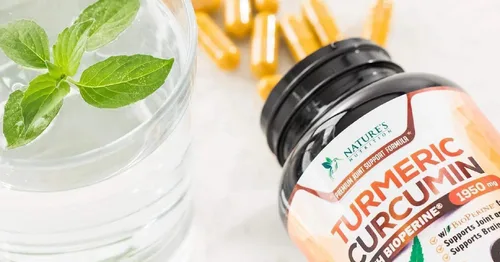
Nature's Nutrition Turmeric Curcumin with BioPerine Review
A high-potency turmeric curcumin supplement featuring BioPerine (black pepper extract) to enhance absorption, designed to support joint health and reduce inflammation.
We don’t sell supplements. We help you make decisions and get the best price.
Lowest prices
We may earn a commission from some store links. How we choose.
Lowest cost per month first, in stock, at 4 capsules a day. Checked Nov 9.
- TargetLowest$13.92 a bottle$6.96/moBuy at Target (opens in a new tab)
- iHerb$14.38 a bottle$7.19/moBuy at iHerb (opens in a new tab)
- Vitacost$27.95 a bottle$13.98/moBuy at Vitacost (opens in a new tab)
Also at: Walmart
Study, Trial or Testing Result Summary
Members Only16 human studies · 13 improved
This product gives 200 milligrams of a concentrated turmeric extract, above the 80 milligram dose of a specially absorbed curcumin that helped in studies, plus 2400 milligrams of plain turmeric root, where the studied dose is unclear. It also has 13 milligrams of black pepper extract, above the 10 milligram studied dose. A pooled analysis of trials in 894 people with chronic lung disease found curcumin improved how much air people could blow out in one second, though some other lung measures did not change [1]. In 60 people with severe chronic lung disease, 3 months of curcumin improved lung function and lowered an inflammation marker [2]. In 241 people with year-round nasal allergies, 2 months of curcumin eased sneezing, runny nose and congestion [3]. A review of eight trials in 569 people with coronavirus infection found curcumin raised blood oxygen, eased cough and breathlessness and shortened hospital stays [4]. In people with lung damage from mustard gas, 1500 milligrams of curcuminoids a day, much more than this product's extract, improved airflow, symptoms and quality of life, including when taken with black pepper extract [5][6]. Children with asthma had better control, but not fewer overall symptoms. Results in cystic fibrosis were unclear. Animal and cell studies are never counted.
See all 16 studies →Hide the studies
- Pooling trials of 894 people with chronic obstructive pulmonary disease across eight polyphenols, curcumin improved lung function (FEV1) compared with placebo, though some overall lung measures were not significant.Efficacy and safety of dietary polyphenol supplements for COPD: a systematic review and meta-analysis.
- In eight trials of 569 people with COVID-19, nano-curcumin improved oxygen saturation, cough, sputum, wheeze and breathlessness and shortened hospital stays compared with placebo or control, with no major side effects.The effectiveness of nano-curcumin on patients with COVID-19: A systematic review of clinical trials.
- A review of 16 studies in children, including some with asthma and cystic fibrosis, found curcumin (45 to 4,000 mg daily for 2 to 48 weeks) was well tolerated and eased inflammatory conditions, but evidence for cystic fibrosis was unclear and no pooled analysis was done.Curcumin supplementation in pediatric patients: A systematic review of current clinical evidence.
- In 241 people with year-round allergic rhinitis, two months of oral curcumin reduced sneezing, runny nose and congestion and improved nasal airflow compared with placebo.Effect of curcumin on nasal symptoms and airflow in patients with perennial allergic rhinitis.
- In 216 adults with newly diagnosed lung tuberculosis, a regimen containing piperine 10 mg per dose-boosted low-dose rifampicin for 24 weeks gave a 92% cure rate versus 82% with standard treatment, with fewer liver enzyme rises.A Randomized, Controlled, Phase III Clinical Trial to Evaluate the Efficacy and Tolerability of Risorine with Convention…
- In 89 people with long-term lung problems from sulfur mustard, 4 weeks of curcuminoids with piperine raised glutathione, lowered a marker of oxidative damage and improved respiratory symptom and quality-of-life scores more than placebo.Effects of Curcuminoids-Piperine Combination on Systemic Oxidative Stress, Clinical Symptoms and Quality of Life in Subj…
- In 89 men with long-term lung problems from sulfur mustard exposure, 4 weeks of curcuminoids improved the airflow ratio (FEV1/FVC) and lowered inflammation markers more than placebo, while FEV1 and FVC alone did not differ.Short-term Curcuminoid Supplementation for Chronic Pulmonary Complications due to Sulfur Mustard Intoxication: Positive …
- In 40 COVID-19 patients (20 on nano-curcumin, 20 on placebo) plus 40 healthy controls, nano-curcumin lowered IL-6 and IL-1β but did not change IL-18 or TNF-α.Nano-curcumin therapy, a promising method in modulating inflammatory cytokines in COVID-19 patients.
- In 76 hospitalized COVID-19 patients (68 completed), two weeks of nanocurcumin reduced cough, breathing rate and oxygen need and raised blood oxygen more than placebo.Efficacy of Nanocurcumin as an Add-On Treatment for Patients Hospitalized with COVID-19: A Double-Blind, Randomized Clin…
- In 60 hospitalized COVID-19 patients, 240 mg daily of nano-curcumin for 7 days lowered several inflammatory markers and improved clinical manifestations compared with control.Antiinflammatory potential of nano-curcumin as an alternative therapeutic agent for the treatment of mild-to-moderate ho…
- In 60 people with severe COPD, 3 months of 80 mg nano-curcumin improved lung function (FEV1, FVC, FEV1/FVC) and lowered IL-6 compared with placebo.Nanocurcumin supplementation improves pulmonary function in severe COPD patients: A randomized, double blind, and placeb…
- In 48 COVID-19 patients, 160 mg daily of nanocurcumin for 6 days raised blood oxygen and lowered respiratory symptom scores versus placebo; hospital stay was shorter but not significantly.Effect of nanocurcumin supplementation on the severity of symptoms and length of hospital stay in patients with COVID-19…
- In 40 people with swallowing difficulty, adding piperine to a drink bolus made swallowing safer, reducing unsafe swallows by 34% at the lower dose and 57% at the higher dose, which lowers the risk of food or liquid entering the airway.Effect of oral piperine on the swallow response of patients with oropharyngeal dysphagia.
- Children and adolescents with persistent asthma took powdered turmeric root (30 mg per kg of body weight daily) for 6 months on top of standard treatment; both groups improved in symptoms, but the turmeric group had fewer night waking episodes, less rescue inhaler use, and better asthma control than placebo.Curcuma longa L. ameliorates asthma control in children and adolescents: A randomized, double-blind, controlled trial.
- In a pilot of 33 adults with drug-susceptible lung tuberculosis, 10 mg piperine given with rifampicin and isoniazid for 6 months was well tolerated, and 24 of 27 sputum-positive patients became sputum-negative within 2 months.Role of Risorine in the Treatment of Drug - Susceptible Pulmonary Tuberculosis: A Pilot Study.
- In multicenter trials of people with cystic fibrosis carrying the S1251N mutation, 8 weeks of curcumin with or without genistein showed no clear clinical benefit, apart from a small drop in sweat chloride and airway resistance, while ivacaftor clearly improved outcomes.Clinical effects of the three CFTR potentiator treatments curcumin, genistein and ivacaftor in patients with the CFTR-S1…
Review Totals and Summary
Members Only25,312 reviews · 93% positive
Nature's Nutrition Turmeric Curcumin with BioPerine receives a strong response from users across various platforms, with an overwhelming majority reflecting positive experiences. Many reviewers on Amazon, Walmart, and direct from the Naturesnutrition site describe noticeable benefits after adding this supplement to their routines, most commonly citing reduced joint pain, increased mobility, and a decrease in inflammation-related discomfort. A significant number of users mention that they were skeptical at first but found that consistent use over a few weeks led to improvements in stiffness and everyday aches, which seems to be a recurring theme in the feedback. Quality also comes up frequently; several reviewers note that the capsules arrive well-packaged and fresh, with many appreciating the lack of strong aftertaste or unpleasant smell, which can sometimes be an issue with turmeric products. Ease of use is another commonly cited benefit, with users finding the capsules easy to swallow and convenient as part of their daily regimen. On the downside, a smaller segment of reviewers express more neutral or mixed impressions. Some mention that they did not notice dramatic changes, even after using the product for a full bottle, indicating that results might be subtle or varied depending on individual health and expectations. A few others state that while the product seems to offer mild relief, it was not as effective as anticipated compared to other joint supplements they have tried. Negative feedback is relatively rare, but it does exist. The most common critical comments include reports of mild stomach upset and, in rare cases, an unpleasant aftertaste. A handful of users question whether the results are due to the supplement itself or simply a placebo effect, and a few express dissatisfaction with the lack of immediate results or uncertainty about the product’s efficacy based on their personal experience. Overall, Nature's Nutrition Turmeric Curcumin with BioPerine is regarded positively, particularly for those seeking support for joint and mobility-related issues. While the majority find it a worthwhile addition to their wellness routine and speak highly of both the product quality and effectiveness, a smaller portion of users remain neutral or unconvinced, underscoring that individual results can vary. The consistently high number of reviews and strong sentiment lean clearly toward satisfaction, but the occasional critiques highlight that it may not deliver the same benefits for everyone.
Biohacker Summary
Members Only6 of 10 recommend it
Curcumin, the main ingredient, gets broad but mixed backing from the panel: all ten spoke about it or turmeric, and most recommend or use it, mainly to calm inflammation, with some also citing joint, liver, brain and detox support. Several stress absorption, with one noting it barely absorbs without black pepper, another preferring the phytosomal form and taking it daily, and another using a nanoparticle form, while one takes about one gram of turmeric a day and another takes curcumin instead of turmeric to avoid its oxalate. Doses came up rarely: one panelist cited 500 to 1000 milligrams in trials, and pairings mentioned were black pepper, high-dose omega-3, sulforaphane, and turmeric added to food. Cautions came from several: one warned against high-dose use outside a doctor's guidance, one advised avoiding it in pregnancy, one said to skip bioavailable forms if testosterone-related hormone levels are low, and one warned that turmeric is very high in oxalate; one panelist stopped taking it for lack of enough evidence.
See all 10 biohackers →Hide the biohackers
Dr. Mark Hyman · Turmeric · uses
- Included turmeric in their chicken dish as an anti-inflammatory power couple with ginger.
- States that curcumin is great for immune support and is anti-inflammatory, suggesting making curries.
- Recommends turmeric as an anti-inflammatory powerhouse.
- Notes that if people have used something like turmeric for several thousand years as a remedy and an anti-inflammatory compound, it can't be wrong.
- Mentions that curcumin has been studied for its anti-inflammatory effects, but emphasizes that no supplement can replace the daily signals created by sleep, nutrition, exercise, stress management, and metabolic health.
- States he was using circ turmeric to stimulate the NRF2 pathway and open up detox.
- Recommends curcumin as an anti-inflammatory supplement that can be helpful.
- States that curcumin helps to lower broader inflammatory levels in the body.
- Mentions using turmeric (curcumin) in certain people, especially those with elevated amyloid levels in the blood.
- Recommends Paleovalley's Turmeric Complex, which uses whole food turmeric with over 200 beneficial compounds, plus organic ginger, rosemary, and cloves, to support overall wellness.
- Recommends turmeric as a simple way to support health against stress and inflammation, noting its key compound curcumin supports the body against conditions like cancer, cardiovascular stress, neurogenic diseases, and helps with inflammation, metabolic balance, joint comfort, mood, immune function, and brain health.
- Explains that curcumin is the key compound in turmeric, a polyphenol that research shows supports the body against conditions like cancer, cardiovascular stress, and neurogenic diseases like dementia, and can also help with inflammation, metabolic balance, joint comfort, and mood.
- Recommends turmeric as a simple way to support health, noting its key compound curcumin supports the body against various conditions and helps with inflammation, metabolic balance, joint comfort, and mood. He specifically recommends Paleovalley's Turmeric Complex for its whole food approach and improved absorption.
- Recommends turmeric as a great herb and spice for upregulating the body's own detoxification pathways.
Dr. Eric Berg · Turmeric · recommends
- Dr. Eric Berg recommends pairing turmeric with black pepper to improve curcumin absorption.
- States that one cup of turmeric water could have surprising benefits for health.
- Mentions that turmeric contains curcumin, which has been studied for its effects on inflammation, joint discomfort, mood, and blood sugar.
- Notes that Curcumin barely absorbs without black pepper.
- Dr. Eric Berg recommends adding turmeric to eggs to support satiety, antioxidant potential, cardiovascular, and liver health.
- Recommends turmeric for its chelation abilities and its ability to turn up the body's detoxification genes.
- Mentions turmeric as a food that black cumin seed oil outperforms in reducing inflammation.
- Dr. Eric Berg states that turmeric can contribute to supporting liver health.
- Says turmeric is a natural a med because it helps retain neurotransmitters like serotonin, GABA, and dopamine.
- Recommends turmeric, noting it is an exceptionally rich source of curcumin, which delivers powerful antioxidant and anti-inflammatory effects linked to cardiovascular health and mental well-being.
- States that Turmeric may be the most underrated medicinal plant on earth, supporting the brain, liver, and heart, and helping protect healthy cells during chemo or radiation therapy.
- Recommends curcumin, stating it delivers powerful antioxidant and anti-inflammatory effects linked to cardiovascular health and mental well-being.
- Dr. Berg recommends pairing turmeric with pepper and healthy fats to amplify its impact and increase its absorption. He also notes that the phytonutrients in turmeric are heat-sensitive, so high heat could make them less potent.
- Dr. Eric Berg states that curcumin may support blood sugar, but it should not be treated as an equivalent substitute for other treatments.
Ben Greenfield · Turmeric · warns
- Advises patients to stop turmeric before surgery because it can act as a med or antiplatelet agent.
- Mentions curcumin as another Nrf2 activator, but notes that sulforaphane outperforms it.
- States that their curcumin product affects the Nrf2 pathway by activating PKC delta, which phosphorylates Nrf2, allowing it to go into the nucleus, and works synergistically with sulforaphane.
- Recommends root spices like turmeric for use on the AIP diet.
- Ben Greenfield's clinic photoactivates curcumin before use, finding it to be very anti-cancer when photoactivated.
- Suggests using choice herbs like turmeric when preparing meat to weave in small stressors.
- Says curcumin at low doses, such as sprinkled turmeric onto food, acts as a hormetic stressor, increasing internal defense systems, antioxidants, and repair pathways, leading to overall reductions in inflammation.
- Recommends MitoQ +Curcumin, a Mitoquinol-enhanced blend with Longvida Curcumin for antioxidant and joint health synergy.
- Lists turmeric as one of the ingredients in Organifi Green Juice.
- Gets nerdy about curcumin and explains which longevity supplements actually work, according to the science in mammals.
- Uses curcumin, taking Keon Flex at night on an empty stomach and a heaping tablespoon of Row Nutrition's liposomal curcumin at some point during the day, but not right after a workout due to its mTor signaling inhibition.
- Mentions turmeric as an herb that has more data than fruit tree leaves.
- Stuffs the trout with herbs like turmeric.
- Mentions curcumin as a polyphenol that can confer benefits when consumed.
Dave Asprey · Curcumin · uses
- Says CallaCurcumin is like "mommy's little helper" and he takes it when he knows he's going to eat late at night, around 5:00 or 6:00, to avoid overeating.
- Recommends Tetrahydro Curcuminoids, stating they lower inflammation.
- Recommends CurcuLite, a curcumin product, for turning up AMPK, which is foundational to energy, longevity, and detox.
- Takes curcumin, an extract of turmeric, to bypass the oxalate content while still getting the benefits.
- Warns that turmeric is exceptionally high in oxalate, which can cause issues if consumed in large amounts.
- Uses turmeric as an example of an unprotected ingredient that, once proven beneficial through studies, allows everyone to take advantage of the knowledge.
- Dave Asprey mentions that supplements like curcumin support pain relief and mood.
- Notes that adding curcumins to a med can make it work significantly better, and it is included in their "happy saffron" product. They also recommend a combination of curcumins and omega-3 fatty acids for pain.
- Notes that turmeric curcumin is also an NRF2 activator, though less bioavailable than sulforaphane.
- Dave Asprey mentions that turmeric can stimulate orexin, which keeps you awake, alert, and motivated.
- Dave Asprey and his guests reveal how curcumin can rival meds, delivering natural ways to improve metabolism and regulate dopamine.
- Takes an extract of turmeric, a high oxalate food, that provides the good stuff without the bad.
- Mentions that curcumin also has anti-parasitic properties and is useful.
- States that turmeric has anti-parasite qualities and he takes it nearly constantly.
Thomas DeLauer · Turmeric · uses
- Recently started taking turmeric for their joints, specifically for knee issues, as it helps support recovery, especially after a workout.
- Mentions that Dose Daily contains turmeric, which contributes to its positive impact on liver enzyme levels.
- Notes that PET scans showed a significant reduction in amyloid plaque build-up in the group taking curcumin, suggesting fewer instances of Alzheimer's and dementia.
- Discusses a UCLA study where curcumin led to a 28% increase in cognitive function and a significant reduction in amyloid plaque buildup, suggesting less instance of Alzheimer's and dementia. He also mentions a study where curcumin helped mood as much as a med.
- Uses Curcumin Gold in their recipe, stating it is amazing because it contains ginger oil, DHA, and curcumin, which work in harmony for the body to operate at its best, helping with inflammation and brain energy.
- Discusses a UCLA study where participants taking 90 milligrams of curcumin daily for 18 months showed a 28% increase in cognitive function and a significant reduction in amyloid plaque buildup.
- Recommends Curcumin, stating that 500-1000mg lowers CRP and IL-6 in trials and has over 2000 studies.
- States that curcumin plus vitamin D is probably the most powerful brain booster and brain protector, explaining that curcumin helps macrophages enlarge to gobble up more amyloid beta.
- Recommends curcumin, especially when stacked with ginger, noting its anti-inflammatory efficacy and its ability to increase antioxidant defense systems and reduce oxidative stress. He emphasizes taking it with black pepper or piperine, or in a liposomal form, for bioavailability.
- Mentions Turmeric as an ingredient in DOSE that has proven literature behind it for liver health.
- Mentions that Dose Daily, which he recommends for liver support, contains turmeric.
- Recommends curcumin with black pepper for general inflammation, explaining it blocks the primary transcription factor nuclear factor kappa B, shutting down the master regulatory at a genetic level for inflammation genes.
- Recommends adding turmeric to food, citing rodent model research that shows it lowers plasma lipids and glucose, and increases insulin sensitivity in a dose-dependent fashion.
- Recommends turmeric with black pepper to shut down inflammatory response, as piperine in black pepper helps curcumin absorb by blocking liver clearance.
Siim Land · Curcumin · recommends
- Recommends Curcumin for joint pain and inflammation, based primarily on human research, especially randomized controlled trials showing measurable benefits.
- Lists Curcumin as one of 15 supplements backed by human studies.
- Thinks curcumin has some of the strongest evidence and is worth considering.
- Mentions curcumin as a compound that can increase autophagy, but notes it doesn't come close to exercise in effectiveness.
- States that curcumin, unless contaminated, is not going to raise liver enzymes.
- Mentions that turmeric helps with arthritis and joint pain, with clinical trials showing its effectiveness.
- Did not see a big extension from curcumin in their tests.
- Mentions that it is infeasible to obtain sufficient curcumin from food.
- Mentions curcumin as a supplement that has been shown to lower CRP and improve metabolic health.
- Places Turmeric or Curcumin in the 'god tier' due to numerous human clinical trials for inflammation, noting that its poor bioavailability means supplements should ideally be liposomal formulations or include piperine (black pepper) to enhance absorption.
- Recommends curcumin for metabolic health, especially for insulin resistance and dyslipidemia.
- States that turmeric is known for its anti-inflammatory effects, lowering inflammation markers like CRP in clinical trials.
- Places Curcumin in the 'god tier' for longevity, based on its ability to extend lifespan in a few animal models and consistent human study findings of lower inflammation, better lipid profiles, and improved metabolic health.
- Places Turmeric (Curcumin) in the 'god tier' due to numerous human clinical trials supporting its anti-inflammatory effects. He advises using liposomal formulations or adding piperine to improve its poor bioavailability.
Dr. Rhonda Patrick · Curcumin · neutral
- Curcumin may be one of the most powerful naturally occurring dietary compounds for lowering age-related inflammation. The phytosomal form is preferred because standard curcumin is rapidly broken down by the liver, while phytosomal delivery makes it far more bioavailable.
- Asks if curcumin can slow aging.
- Likes adding turmeric to bone broth for flavor, warmth, and its anti-inflammatory compounds.
- Curcumin may be one of the most effective natural compounds for lowering age-related inflammation. The phytosomal form matters because standard curcumin is poorly absorbed and rapidly metabolized, while phytosomal delivery makes it much more bioavailable.
- Takes phytosomal curcumin daily because it is much more bioavailable than standard curcumin and human evidence suggests it is potent for lowering TNF-α, a major inflammatory cytokine linked to biological aging.
- Rhonda takes 500 mg of liposomal Curcumin daily for inflammation.
- Uses Phytosomal curcumin, stating it is one of the only naturally occurring compounds shown to meaningfully lower TNF-alpha, a master inflammatory cytokine that accelerates aging.
- Took Meriva, a phytosomal curcumin, which has been shown to help with DOMS in some small studies.
- States that curcumin, found in turmeric root, also activates antioxidant defenses.
- Suggests that if someone is an 'immuno-ager,' they might want to take curcumin to help with their immune system.
- Suggests that if someone is an 'immuno-ager,' they might want to take turmeric to help with their immune system.
- Rhonda mentions curcumin as a xenohormetic compound that, in a small dose, is slightly toxic and activates cellular stress response pathways, helping the body deal with stress better.
- Explains that turmeric, specifically curcuminoids, are slightly toxic to the body, which activates phase II detoxifying enzymes and turns on anti-inflammatory genes. She also notes that aromatic turmerone in turmeric can increase neural stem cell proliferation and affect memory and performance.
- Feels comfortable using turmeric with ginger and black pepper to counteract unnecessary inflammation, noting its long history in Ayurvedic medicine.
Andrew Huberman · Curcumin · neutral
- Discusses curcumin as a supplement for prenatal care and sperm health.
- Does not recommend high-dose curcumin supplements for general use, suggesting it's only for specific purposes under a doctor's guidance to target excess inflammation.
- Recommends avoiding bioavailable curcuminoids like bioavailable turmeric if someone's DHT is already low or if they have somewhat insensitive androgen receptors.
- Notes that people are excited about the possible health benefits of curcumin, which is found in turmeric.
- Mentions that turmeric is on a list of colorants and could technically move a food into the ultra-processed category, despite being full of curcumin and having possible health benefits.
- Recommends turmeric to patients for hot flashes, noting some 'okay data' but emphasizes it's not a replacement for estrogen.
- Includes curcumin in his diet because it has been shown to stimulate GLP-1.
- Warns against taking high doses of curcumin, noting potential negative effects like limiting dihydrotestosterone production, and advises checking sourcing carefully due to lead contamination concerns.
- Warns against taking too much turmeric, especially in high doses, due to potential negative effects like limiting dihydrotestosterone production and the risk of lead contamination, advising careful sourcing.
- Mentions curcumin in the context of 5-alpha reductase.
- States he once took curcumin in high dosages (1-2 gram capsules) and felt terrible, vowing never to take it again due to his sensitivity to its effects on the DHT pathway.
- Warns that some people, including himself, are very sensitive to curcumin because it can potently reduce DHT, leading to decreased libido and drive, though these effects reverse quickly after stopping.
- Warns that high doses of turmeric can strongly inhibit DHT, leading to drops in libido for people who are very DHT sensitive.
- Warns against taking high dosages of curcumin, such as 8000 milligrams per day, because it can alter hormonal pathways, specifically inhibiting dihydrotestosterone (DHT) synthesis, which can lead to undesirable effects like reduced libido.
Bryan Johnson · Turmeric · uses
- Uses turmeric for its antioxidant, anti-inflammatory, and metabolic benefits, noting that black pepper boosts its power.
- Takes one gram of turmeric a day for inflammation, joints, and liver.
- Advises avoiding Curcumin during pregnancy.
Peter Attia · Turmeric · uses
- Peter Attia's brand, AVIA Skincare, incorporates Ayurvedic wisdom, including turmeric and other Eastern botanicals, for anti-inflammatory care.
- Uses a specific nanoparticle version of curcumin at a reasonable dose, which may have anti-TNF alpha effects and help with inflammation.
- States that a well-absorbed curcumin with high-dose omega-3 is as good as or better than any a med and helps improve brain function, mood, cognition, and may reduce dementia.
- Says that for a 27-year-old woman with an early-onset Alzheimer's gene, they would be "loading her up with curcumin" to prevent symptoms for 25 years.
- Used to take Curcumin for longevity but stopped because he didn't see enough evidence.
- Mentions curcumin as another example of a niche compound with numerous RCTs, reinforcing the point that research can be done without pharma sponsorship.
RAL Summary
Members OnlyTier 2 for Lungs and Breathing
More Details
Members OnlyBody systems · Combine with · Possible side effects
Body systems: Respiratory system, Immune system
Combine with: Not compulsory.
Possible side effects: Studies found curcumin well tolerated with no major side effects reported. Some users mention mild stomach upset or an unpleasant aftertaste.
Supplement Facts
Turmeric Curcumin Complex 2600 mg · Organic Turmeric 2400 mg · Turmeric Extract 200 mg
Directions: As a dietary supplement, take four (4) capsules once a day. For best results, take 20-30 min before a meal or as directed by your healthcare professional.
Label source: Amazon · Report a label change
Show entire label
More lungs and breathing products
Members OnlyThe highest ranked for the same goal
Read more
Our articles on this subject
Graded October 24, 2026 by the Reverse Age Lab evidence engine, from human studies, real reviews and our biohacker panel. How we grade. Is this medical advice? No. Rala organizes the published evidence; go over any change with your doctor, especially if you take meds.
Privacy policyConsumer health dataAffiliate disclosureTermsDo Not Sell or Share My Personal InformationCookie settings