
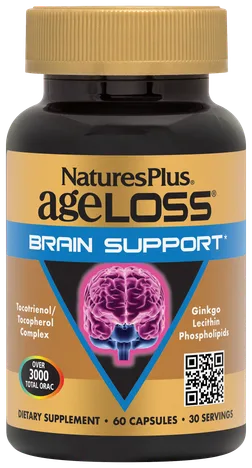
NaturesPlus AgeLoss Brain Support Review
AgeLoss Brain Support is presented as a formula for maintaining mental clarity and cognitive vitality as you age. The product is described as combining herbal extracts and cognitive nutrients to help protect brain cells and support mental clarity. The page calls it a go-to formula that delivers a blend of free radical fighters, botanicals and brain-boosting nutrients to help protect the mind and support long-term brain health. The listed benefits include Brain Defense, which the page says supplies key vitamins and nutrients to help neutralize free radicals. A second benefit, the Immunity-Adjusting Botanical Blend, features the FIRST DAY Healthy Immune Response Blend with green tea, turmeric, açai and more. Cellular Health Support is described as helping to maintain healthy brain cell membranes for optimal function. The Cognitive Powerhouse Formula uses CogniPlex, which the page says delivers ginkgo biloba, R-lipoic acid and huperzine-A for memory and focus support. The product is labeled gluten-free and vegetarian. Directions state that, as a dietary supplement for adults, the user should take 2 capsules once daily. The page advises keeping the bottle tightly closed in a cool, dry place. A warning says to keep out of reach of children, and that pregnant or nursing people, or anyone taking medications, should consult a healthcare practitioner before using any herbal product. The bottle shown is 60 count and the page lists 30 servings. The page offers a one-time purchase at $51.95 or a subscribe and save option at $46.76 with a 10 percent saving. Shipping notes mention free ground shipping on orders over $50 and a 30-day satisfaction guarantee. The page also links to a Supplement Facts label and related articles on boosting memory and staying sharp as you age. The supplement facts are not reproduced in the text on this page, so the full ingredient list is not given here. Customers are not shown any written reviews or star ratings on this page.
We don’t sell supplements. We help you make decisions and get the best price.
Lowest prices
We may earn a commission from some store links. How we choose.
Finding the lowest prices at the stores now. This takes a few seconds.
Study, Trial or Testing Result Summary
Members Only308 human studies · 114 improved
12 of these 308 human studies gave the ingredient by drip or injection, not by mouth.
Most of this formula's vitamins and minerals are below the doses used in studies. Zinc reaches a studied dose at two servings a day, but its results for thinking are mixed. A long trial in French adults found better memory with zinc plus other antioxidants [1], while a seven year trial in older adults found no change [2]. Healthy older adults improved on only one of eight memory and attention measures [3]. The 400 mg phospholipid complex has an undisclosed recipe. Some trials of other phospholipid products improved memory [4][5], but soy phosphatidylserine [6] and milk fat phospholipids [7] did not help. Two small studies of a complex antioxidant blend found memory gains [8][9]. It is not clear they tested this exact blend, and this one is only 75 mg. Vitamin C, thiamin, folate and iron are present at low or trace amounts compared with studied doses. Large trials found vitamin E [10] and vitamin B12 [11] did not improve thinking in most people. The inflammation response blend and the ginkgo-based Cogniplex blend have no human studies here. Animal and cell studies are never counted.
See all 308 studies →Hide the studies
- Across 95 studies with 46,175 people, B vitamin supplements slightly slowed cognitive decline, mainly in people without dementia and with over 12 months of use, and higher dietary folate was linked to lower dementia risk.B vitamins and prevention of cognitive decline and incident dementia: a systematic review and meta-analysis.
- In older adults across 51 articles, folate-based B vitamins improved cognition overall, but only where food was not fortified with folic acid; no benefit was seen where fortification was mandatory.A Comparative Study Evaluating the Effectiveness of Folate-Based B Vitamin Intervention on Cognitive Function of Older A…
- In a pooled analysis of 73 long-term cohort studies with over 28,000 people, higher vitamin C intake from food plus supplements was linked to a 30% lower risk of Alzheimer's disease, but not to lower risk of all-cause dementia or mild cognitive impairment.Effect of antioxidant intake patterns on risks of dementia and cognitive decline.
- In 67 trials of 8506 menstruating women, daily iron raised haemoglobin, cut anaemia and reduced tiredness, but its effect on thinking performance was uncertain because individual studies gave conflicting results.Daily iron supplementation for improving anaemia, iron status and health in menstruating women.
- In 16 trials with 6,276 people without severe deficiency or advanced neurological disease, B12 alone or B complex including folic acid did not improve cognitive function or depression.Effects of Vitamin B12 Supplementation on Cognitive Function, Depressive Symptoms, and Fatigue: A Systematic Review, Met…
- In 16 trials of 4083 children under 12, with doses from 0.9 to 150 micrograms a day, B12 raised B12 levels and lowered deficiency but made little to no difference to thinking skills, development or growth.Vitamin B12 supplementation for growth, development, and cognition in children.
- In 48 studies of 3,650 children with attention problems, phosphatidylserine ranked best for parent-rated attention and total score on one scale, but study quality was low and results need caution.Safety and efficacy of antioxidant therapy in children and adolescents with attention deficit hyperactivity disorder: A …
- In 22 trials with 3,604 people with cognitive impairment, folic acid improved cognition in mild cognitive impairment and in Alzheimer's at 3 mg or more, but not in vascular cognitive impairment, while lowering homocysteine.Effects of folic acid supplementation on cognitive impairment: A meta-analysis of randomized controlled trials.
- In 18 studies of 1408 non-anaemic children, teens and menstruating adults, iron improved intelligence scores and short-term memory but not attention, and the benefit was absent when people without iron deficiency were excluded from the analysis.Psychiatric and cognitive outcomes of iron supplementation in non-anemic children, adolescents, and menstruating adults:…
- In two placebo-controlled trials of 304 people with Alzheimer's disease and 516 with mild cognitive impairment, vitamin E did not improve thinking or prevent progression to dementia, though it may have slowed decline in daily activities in Alzheimer's.Vitamin E for Alzheimer's dementia and mild cognitive impairment.
- Twelve randomized trials of lecithin in 376 people with dementia or memory complaints showed no clear benefit for dementia, though one trial in people with subjective memory problems showed a large benefit.Lecithin for dementia and cognitive impairment.
- In nine small, poor-quality trials of 331 people with epilepsy, folic acid had no effect on seizures, intelligence, behavior or mental health.Vitamins for epilepsy.
- In three placebo-controlled trials of 216 children with attention deficit disorder, 200-300 mg a day of phosphatidylserine reduced inattention versus placebo, but overall symptoms and hyperactivity did not significantly improve.Phosphatidylserine for the Treatment of Pediatric Attention-Deficit/Hyperactivity Disorder: A Systematic Review and Meta…
- A large review of observational studies and randomised trials listed vitamin C among factors with weaker (Level B) evidence for preventing Alzheimer's disease.Evidence-based prevention of Alzheimer's disease: systematic review and meta-analysis of 243 observational prospective s…
- A pooled analysis found people with depression or schizophrenia had lower blood vitamin C than healthy people, but it did not test thinking or clarity and did not test supplementation.The relationship between antioxidant vitamins and mental disorders: a meta-analysis.
- In 4 trials of older adults with Alzheimer's or dementia, B vitamins including folic acid lowered homocysteine but did not change Mini-Mental State Examination scores compared with placebo.Efficacy of Vitamin B Supplementation on Cognition in Elderly Patients With Cognitive-Related Diseases.
- In stroke survivors, pooled trials showed B vitamin supplements (folic acid, B6, B12) had a negative effect on global cognition, and the authors concluded they had no benefit.Associations between Diet and Cognitive Function in Stroke Survivors: A Systematic Review and Meta-analysis.
- In 13 trials of school-age children, iron improved intelligence, attention and concentration, and memory, but did not change school achievement.Effects of iron supplementation on cognitive development in school-age children: Systematic review and meta-analysis.
- Two trials were reviewed, and vitamin E did not prevent progression from mild cognitive impairment to Alzheimer's; the Alzheimer's trial results were hard to interpret and more people on vitamin E had falls.Vitamin E for Alzheimer's disease and mild cognitive impairment.
- Three placebo-controlled trials of vitamin E (800 to 2000 IU per day) found no convincing benefit for Alzheimer's or mild cognitive impairment, with no reduced progression to dementia.Vitamin E for Alzheimer's dementia and mild cognitive impairment.
- In a review of 17 trials in older adults with mild cognitive impairment, one vitamin E study showed no difference in cognition from control.Treatment for mild cognitive impairment: a systematic review and meta-analysis.
- Across 31 studies, people with Alzheimer's or mild cognitive impairment had lower blood alpha-tocopherol than healthy people, while other tocopherol forms did not differ; this is not a supplement trial.A meta-analysis of peripheral tocopherol levels in age-related cognitive decline and Alzheimer's disease.
- A review of 43 clinical studies found vitamin E from food or multivitamins was linked to protection against cognitive impairment, but studies of tocotrienols were limited.Vitamin E and cognitive function: A systematic review of clinical evidence.
- In 17 trials with 2,478 older adults with Alzheimer's, eight reported some cognitive benefit from vitamins including folic acid and nine found none, so evidence is inconclusive.Effects and reporting quality of the vitamin supplementation on cognitive function in older adults with Alzheimer's dise…
- Across two placebo-controlled trials in people with Alzheimer's disease (304) or mild cognitive impairment (516), vitamin E did not improve thinking or prevent progression to dementia, though it slowed decline in daily activities in Alzheimer's disease.Vitamin E for Alzheimer's dementia and mild cognitive impairment.
- Twelve small trials of lecithin in people with Alzheimer's, Parkinsonian dementia or memory complaints found no clear benefit for dementia, though one trial in people with memory complaints showed a large benefit.Lecithin for dementia and cognitive impairment.
- Eleven randomized trials of lecithin in 286 people with Alzheimer's or Parkinsonian dementia found no clear clinical benefit.Lecithin for dementia and cognitive impairment.
- In 50 studies, people with intact thinking had higher vitamin C levels than people with impaired thinking, but there was no link between vitamin C level and test scores in impaired people, and healthy adults were hard to assess.Vitamin C Status and Cognitive Function: A Systematic Review.
- Nine studies linked vitamin C deficiency to depression and thinking problems, but no studies tested whether giving vitamin C improved them.The neuropsychiatric effects of vitamin C deficiency: a systematic review.
- This review found low-dose vitamin C plus vitamin E did not improve thinking, while vitamin C alone showed some positive effects, but evidence was not sufficient to support its use.Vitamin Supplementation and Dementia: A Systematic Review.
- In a review of 27 mostly case-report studies of people with Wernicke's encephalopathy, intravenous thiamine of 100 mg or more eased brain symptoms and thinking problems, with 90% of case reports showing partial or full recovery, but the evidence was limited.Diagnosis and treatment of Wernicke's encephalopathy: A systematic literature review.
- A review of nutrition and Alzheimer disease found B-vitamin supplements mostly disappointing and inconsistent, except in countries where bread is not fortified with folate.The role of nutrition and diet in Alzheimer disease: a systematic review.
- A review of 23 studies in psychiatric conditions found folate supplements, especially 5-methylfolate, were linked to better clinical outcomes, but it did not address cognitive function specifically.The potential use of folate and its derivatives in treating psychiatric disorders: A systematic review.
- In a review of mostly low-quality studies in children up to 4 years old, iron status or iron supplementation showed no clear link to development.The Role of Iron in Brain Development: A Systematic Review.
- In a review of 24 iron trials in teenagers, iron may have improved school performance, attention and concentration, but it did not improve memory or intelligence, and most trials had a moderate or high risk of bias.Iron Status, Anemia, and Iron Interventions and Their Associations with Cognitive and Academic Performance in Adolescent…
- In a review of 12 trials of children aged 2 to 6, iron and multiple-nutrient supplements improved thinking abilities in undernourished preschoolers.The Effects of Nutritional Interventions on the Cognitive Development of Preschool-Age Children: A Systematic Review.
- A review of observational studies in postmenopausal women linked deficiencies of nutrients including iron to higher risk of conditions such as cognitive decline, but it did not test iron supplements directly.A systematic review on the impact of nutrition and possible supplementation on the deficiency of vitamin complexes, iron…
- In a review of 30 brain-wave studies, iron supplementation improved several brain-wave measures in people with iron deficiency, but recovery varied and some abnormalities persisted.Iron Deficiency and Human Brain Electrophysiology Across the Lifespan: A Systematic and Mechanistic Review of Resting EE…
- A review of 11 controlled trials in pre-menopausal women found iron improved memory and mood, while zinc evidence was limited to three studies suggesting help for depressive symptoms, with more trials needed.Increasing iron and zinc in pre-menopausal women and its effects on mood and cognition: a systematic review.
- A review of nine randomized trials in children and teens with attention problems found evidence that iron and zinc supplementation helped treat ADHD, though more research is needed.The Role of Iron and Zinc in the Treatment of ADHD among Children and Adolescents: A Systematic Review of Randomized Cli…
- A review of nine studies in adults found people with anxiety had lower blood zinc and that higher zinc intake was linked to less anxiety, but these were associations rather than supplement trials.A systematic review of the association between zinc and anxiety.
- A review of 40 mostly animal and some human studies in type 2 diabetes found that micronutrients including zinc combined with a med mostly showed synergistic benefits for blood sugar and brain function, though zinc was not assessed separately.Read the study on PubMed (41782745) →
- A review of 31 studies of school-aged children in sub-Saharan Africa found zinc and other micronutrients were positively associated with cognition, though results for multi-nutrient supplements were inconclusive.Systematic Review of Nutrients' Impact on Cognition and School Performance in School-Aged Children in Sub-Saharan Africa…
- A review of prenatal supplements found that phosphatidylcholine taken in pregnancy showed evidence of improving childhood emotional development linked to later mental illness.Prenatal Primary Prevention of Mental Illness by Micronutrient Supplements in Pregnancy.
- A review of randomized trials in Alzheimer's disease found that several natural remedies, including soy lecithin, showed significant positive effects, but the number of people and the results for lecithin alone were not given.Natural remedies for Alzheimer's disease: A systematic review of randomized controlled trials.
- A review of nine studies found choline supplements, including phosphatidylcholine, taken by pregnant women appeared to improve their children's cognition.[Importance of choline during pregnancy and lactation: A systematic review].
- A review of drug treatments for attention problems after brain injury found that physostigmine combined with lecithin had mixed effects on attention.A systematic review on pharmacotherapy of post-traumatic attention impairments.
- A review of mostly population studies found vitamins E and C were linked to lower risk of vascular dementia, but the evidence came from studies with small samples and was not from supplement trials.Nutrition and vascular dementia.
- In a review of diet trials in people with mild cognitive impairment, vitamin E (one study of 516 people) did not significantly change progression to dementia, while B vitamins and omega-3 fats showed more consistent memory benefits.Effect of dietary interventions in mild cognitive impairment: a systematic review.
- In 7,540 men aged 60 or older randomly given vitamin E, selenium, both or placebo, dementia rates were not different between groups, so neither supplement prevented dementia.Association of Antioxidant Supplement Use and Dementia in the Prevention of Alzheimer's Disease by Vitamin E and Seleniu…
- In 6377 women aged 65 or older taking 600 IU of vitamin E every other day for about 10 years, cognitive scores did not differ from placebo.A randomized trial of vitamin E supplementation and cognitive function in women.
- In 4,447 French adults aged 45-60 who took a daily antioxidant combination including 120 mg vitamin C for about 8 years, episodic memory scores were better than placebo when tested 6 years later, mainly in non-smokers or those with low vitamin C.French adults' cognitive performance after daily supplementation with antioxidant vitamins and minerals at nutritional d…
- In 3300 8-month-old infants in rural Bangladesh, 3 months of daily iron syrup or iron-containing micronutrient powders did not change thinking and learning scores compared with placebo, immediately or 9 months later.Benefits and Risks of Iron Interventions in Infants in Rural Bangladesh.
- In 2,919 older adults with high homocysteine, two years of daily folic acid (400 mcg) plus vitamin B12 did not improve four areas of cognitive performance compared with placebo, and any slower decline in global cognition may be due to chance.Results of 2-year vitamin B treatment on cognitive performance: secondary data from an RCT.
- In 2,824 women aged 65 or older at cardiovascular risk taking 500 mg vitamin C daily for about 5.4 years, scores were better at the last test than placebo but cognitive change over time did not differ.Vitamin E, vitamin C, beta carotene, and cognitive function among women with or at risk of cardiovascular disease: The W…
- In 2168 six-month-old infants in rural Malawi, 6 months of iron syrup or iron-containing micronutrient powders with malaria prevention did not improve thinking and learning scores compared with malaria prevention alone.Iron or Multiple Micronutrient Powder Supplements With Malaria Chemoprevention in Rural Malawian Children: The IRMA Rand…
- In 2,166 older adults given 500 mg vitamin C with vitamin E and beta carotene for about 6.9 years, thinking test scores did not differ from placebo.Impact of antioxidants, zinc, and copper on cognition in the elderly: a randomized, controlled trial.
- In rural Niger, prenatal multiple micronutrients had no effect on children's development to age 2, while lipid-based nutrients gave a modest early boost in cognitive scores at 18 and 21 months and earlier sitting and walking.Evaluation of multiple micronutrient supplementation and medium-quantity lipid-based nutrient supplementation in pregnan…
- In rural Nepal, children whose mothers took iron-folic acid during pregnancy had fewer hyperactivity and inattention behaviors at ages 7 to 9 by parent ratings, though adding zinc reduced that benefit.Prenatal and preschool micronutrient supplementation and behavioral outcomes in school-aged children in Nepal-a cohort s…
- In 869 pregnant women in Malawi, multiple micronutrient or lipid-based nutrient supplements during pregnancy and after birth did not improve mothers' thinking skills or caregiving compared with an iron and folic acid tablet.Associations of maternal nutrition during pregnancy and post-partum with maternal cognition and caregiving.
- In a Tanzanian follow-up of 811 children, infant zinc or multiple micronutrient supplementation did not improve intelligence, executive function or mental health scores at ages 6 to 14.Effect of antenatal and infant micronutrient supplementation on middle childhood and early adolescent development outcom…
- Children given folic acid for six months in early toddlerhood did not differ in thinking and intelligence scores at ages 6 to 9 compared with placebo.Vitamin B12, Folate, and Cognition in 6- to 9-Year-Olds: A Randomized Controlled Trial.
- In people with mild cognitive impairment, 2000 units of vitamin E daily for 3 years did not reduce progression to Alzheimer's disease compared with placebo.Vitamin E and donepezil for the treatment of mild cognitive impairment.
- In a 3-year placebo-controlled trial of 756 adults with amnestic mild cognitive impairment, the vitamin E arm was not reported to slow progression to Alzheimer's disease, while donepezil slowed it only among participants with depressive symptoms.Donepezil delays progression to AD in MCI subjects with depressive symptoms.
- In 734 Nepalese children given zinc 10 mg daily from age 12 to 35 months, tests of intellect, motor and executive function at age 7 to 9 showed no lasting benefit after adjustment.Preschool micronutrient supplementation effects on intellectual and motor function in school-aged Nepalese children.
- In 676 Nepali children aged 7 to 9 whose mothers took iron, folic acid and zinc during pregnancy, thinking and motor scores were not significantly different from the vitamin A only control group (only the iron/folic acid group without zinc did better).Prenatal micronutrient supplementation and intellectual and motor function in early school-aged children in Nepal.
- In 674 Guatemalan schoolchildren given 10 mg zinc oxide 5 days a week for 6 months, mental health and behavior scores did not differ from placebo, though rises in blood zinc were linked to fewer depression and anxiety symptoms.Randomized trial of the effect of zinc supplementation on the mental health of school-age children in Guatemala.
- In 613 people with mild to moderate Alzheimer disease followed for about 2.3 years, 2000 IU a day of alpha tocopherol slowed the decline in daily living abilities compared with placebo, while memantine alone did not show a significant benefit.Effect of vitamin E and memantine on functional decline in Alzheimer disease: the TEAM-AD VA cooperative randomized tria…
- In 602 lead-exposed Mexican first-graders given 30 mg zinc oxide daily (alone or with iron) for 6 months, parent and teacher behavior and attention ratings showed no consistent improvement versus placebo.Iron and zinc supplementation does not improve parent or teacher ratings of behavior in first grade Mexican children exp…
- In 600 Nepalese infants given 2 micrograms of B12 daily for 12 months, brain development, growth and hemoglobin did not differ from placebo, although blood markers of B12 status improved.Effects of vitamin B12 supplementation on neurodevelopment and growth in Nepalese Infants: A randomized controlled trial…
- In 545 older adults with mild memory decline, two years of folic acid-containing B vitamins helped thinking and daily function only in people with a specific gene variant, and showed no benefit in others.The dihydrofolate reductase 19-bp deletion modifies the beneficial effect of B-vitamin therapy in mild cognitive impairm…
- In 393 at-risk and 127 symptomatic alcohol misuse patients given injected thiamine at three dose levels for 3 to 5 days, higher doses gave no better thinking or nerve function than lower doses.What is the optimum thiamine dose to treat or prevent Wernicke's encephalopathy or Wernicke-Korsakoff syndrome? Results …
- Among 487 children in Indonesia, mothers taking multiple micronutrients rather than iron and folic acid had children with better motor and visual attention scores at age 42 months only when the mothers were undernourished or anemic, with no overall benefit across all children.Maternal multiple micronutrient supplements and child cognition: a randomized trial in Indonesia.
- In 405 Chilean teenagers who had received iron-fortified formula from 6 to 12 months of age, scores for visual memory, arithmetic and reading comprehension were lower than for those given low-iron formula.Randomized Controlled Trial of Iron-Fortified versus Low-Iron Infant Formula: Developmental Outcomes at 16 Years.
- In 402 people with mild cognitive impairment and low vitamin D, six months of folic acid plus vitamin D3 did not significantly improve overall cognitive test scores compared with placebo.Effects of Vitamin D3 Combined with Folic Acid on Domain and Specific Cognitive Function among Patients with Mild Cognit…
- In 400 children with attention deficit hyperactivity disorder given 150 mg zinc sulfate daily for 12 weeks, hyperactivity, impulsivity and social symptoms improved more than with placebo but attention symptoms did not; full response was 28.7% on zinc versus 20% on placebo.Double-blind, placebo-controlled study of zinc sulfate in the treatment of attention deficit hyperactivity disorder.
- Adding guava to a preschool meal raised iron status and lowered iron deficiency over about 20 weeks, but it did not change children's cognitive development compared with control groups.Guava with an institutional supplementary meal improves iron status of preschoolers: a cluster-randomized controlled tri…
- In 387 healthy adults aged 55 to 87, 15 or 30 mg of zinc daily for 6 months improved one of eight memory and attention measures at 3 months only, while 15 mg worsened one attention measure.Effects of zinc supplementation on cognitive function in healthy middle-aged and older adults: the ZENITH study.
- In Russian stroke patients, ascorbic acid given as the control treatment for 21 days showed no significant change in brain lesion size, while the tested drug cytoflavin shrank lesions; this does not show a benefit of vitamin C itself.[Clinical and morphologic efficacy of a complex antioxidant and energy correction therapy of different duration in brain…
- In 367 Nepali infants given 5 mg zinc daily, with or without iron and folic acid, for up to 52 weeks, cognitive test scores did not improve compared with placebo.Inconsistent effects of iron-folic acid and/or zinc supplementation on the cognitive development of infants.
- In 366 pregnant women given 50 micrograms of B12 daily from early pregnancy to 6 weeks after birth, their infants' development scores at 9 months did not differ from placebo.Effects of maternal vitamin B12 supplementation on early infant neurocognitive outcomes: a randomized controlled clinica…
- In Chinese middle school students, six months of micronutrient-fortified milk improved some school test scores and learning habits compared with unfortified milk, but vitamin B12 deficiency rates did not differ between groups.Micronutrient-Fortified Milk and Academic Performance among Chinese Middle School Students: A Cluster-Randomized Control…
- In older adults with Down syndrome, 1,000 units of vitamin E twice daily for 3 years did not slow cognitive decline or dementia compared with placebo.Vitamin E in aging persons with Down syndrome: A randomized, placebo-controlled clinical trial.
- Three months of daily iron syrup (12.5 mg) did not change brain-wave measures of habituation in young Bangladeshi children compared with placebo, although their blood iron levels improved.Effects of iron supplementation on neural indices of habituation in Bangladeshi children.
- In 300 people with stroke and high homocysteine, two years of high-dose vitamins lowered homocysteine but did not change plasma amyloid beta levels, and amyloid beta was not linked to cognitive change.Plasma Abeta, homocysteine, and cognition: the Vitamin Intervention for Stroke Prevention (VISP) trial.
- Among 299 hypertensive men aged 75 and older, two years of daily folic acid with vitamin B12 and vitamin B6 did not change cognitive test scores compared with placebo, and did not significantly lower the risk of cognitive impairment or dementia over eight years.Vitamins B(12), B(6), and folic acid for cognition in older men.
- In a randomized trial of 285 low-birth-weight infants given iron from 6 weeks to 6 months of age, cognitive scores at age 7 did not differ between groups, but parents reported fewer externalizing behavior problems in the iron-supplemented children.Effects of iron supplementation of low-birth-weight infants on cognition and behavior at 7 years: a randomized controlle…
- In 279 people with mild cognitive impairment, two years of daily B vitamins had no overall effect on cognition, but those with more frontal lobe shrinkage in the left side showed better cognitive scores.B Vitamin Supplementation Slows Cognitive Decline in Mild Cognitive Impairment Patients with Frontal Lobe Atrophy.
- In 279 older adults with mild cognitive impairment and high homocysteine, 500 mcg methylcobalamin plus folic acid daily for 24 months did not reduce cognitive decline versus placebo, though depression scores improved at 12 months and not at 24.A randomized placebo-controlled trial of using B vitamins to prevent cognitive decline in older mild cognitive impairmen…
- In 276 healthy adults aged 65 and older, two years of daily folate, vitamin B12 and B6 lowered homocysteine but did not improve thinking test scores compared with placebo.A controlled trial of homocysteine lowering and cognitive performance.
- In 271 people over 70 with mild cognitive impairment, two years of daily folic acid with vitamin B12 and vitamin B6 slowed brain shrinkage compared with placebo, with the largest benefit in those with high homocysteine.Homocysteine-lowering by B vitamins slows the rate of accelerated brain atrophy in mild cognitive impairment: a randomiz…
- In 271 older diabetic adults with borderline low vitamin B12, 1000 mcg methylcobalamin daily for 27 months lowered blood markers of B12 deficiency but did not prevent cognitive decline compared with placebo.A randomized placebo controlled trial of vitamin B12 supplementation to prevent cognitive decline in older diabetic peop…
- In 263 older adults with memory complaints, 16 weeks of milk fat globule membrane phospholipids (1.7 or 4.0 g a day) did not improve memory and thinking test scores compared with placebo, though alertness during testing was better maintained and the inflammation marker TNF-alpha dropped with the high dose.The effect of milk fat globule membrane phospholipid supplementation on cognitive function in older adults with subjecti…
- In 256 older adults with mild memory and thinking problems, 400 mg vitamin C plus 300 mg vitamin E daily for 1 year improved blood markers of oxidative stress but did not improve cognitive test scores compared with placebo.The effect of antioxidant vitamins E and C on cognitive performance of the elderly with mild cognitive impairment in Isf…
- In a subset of 247 Tanzanian children at about 15 months, daily zinc or multivitamin supplements did not improve cognitive, language or motor development scores compared with placebo.The effect of daily zinc and/or multivitamin supplements on early childhood development in Tanzania: results from a rand…
- In 240 older adults with mild memory decline, six months of folic acid plus vitamin B12 improved full-scale IQ and several thinking tests and lowered blood inflammation markers more than no treatment; the combination beat either vitamin alone.Effects of Folic Acid and Vitamin B12, Alone and in Combination on Cognitive Function and Inflammatory Factors in the El…
- Young Ugandan children with severe malaria and low iron who started iron 28 days later had thinking and behavior scores at 12 months similar to those who started iron immediately.Delayed iron does not alter cognition or behavior among children with severe malaria and iron deficiency.
- In 237 preschool children with low folate status, a daily sachet with 1.2 mcg vitamin B12 plus folic acid and other B vitamins for 3 months improved folate and homocysteine levels but did not change verbal IQ, memory or processing speed.Three-month B vitamin supplementation in pre-school children affects folate status and homocysteine, but not cognitive p…
- Prenatal iron doses of 20 to 80 mg daily, adjusted to mothers' iron stores, improved behaviour in some child groups but worsened it in others, so results were mixed.Prenatal iron supplementation adjusted to maternal iron stores reduces behavioural problems in 4-year-old children.
- In 225 hospitalised older patients, six weeks of a nutrient-rich supplement raised vitamin B12 and folate levels and reduced depressive symptoms versus placebo, but did not change cognitive scores.Effects of dietary supplements on depressive symptoms in older patients: a randomised double-blind placebo-controlled tr…
- In 220 healthy older women, 6 months of a multivitamin with antioxidants and B vitamins did not change thinking performance compared with placebo.Cognitive performance in relation to vitamin status in healthy elderly German women-the effect of 6-month multivitamin s…
- In 218 children whose mothers took vitamin B12 during pregnancy and early breastfeeding, expressive language scores at 30 months were higher than in children whose mothers took placebo.Effect of Maternal Vitamin B12 Supplementation on Cognitive Outcomes in South Indian Children: A Randomized Controlled C…
- In a placebo-controlled trial of 218 Turkish primary school children, 15 mg of daily zinc for 10 weeks reduced the share of children with clinically significant parent-rated attention and hyperactivity problems, though placebo also showed some score decreases.Effects of zinc supplementation on parent and teacher behaviour rating scores in low socioeconomic level Turkish primary…
- In 215 working men aged 30 to 55, 33 days of a B-complex, vitamin C and mineral supplement improved stress, mood, vigour and performance on a mental arithmetic task compared with placebo.Effects of high-dose B vitamin complex with vitamin C and minerals on subjective mood and performance in healthy males.
- In 215 hemodialysis patients with cognitive impairment, 90 mg a day of thiamin plus folic acid for 96 weeks improved cognitive test scores compared with placebo, with fewer adverse events.A prospective, randomized, double-blind, placebo-controlled, multicenter study of thiamin plus folic acid in the treatme…
- In a placebo-controlled trial of 213 sepsis survivors, IV vitamin C given for 96 hours did not improve thinking, mood, or daily function at 6 months, and the vitamin group had lower immediate memory scores and higher odds of post-traumatic stress disorder.Read the study on PubMed (36853612) →
- In 213 Brazilian shantytown children given 40 mg zinc twice weekly for one year, zinc alone was not clearly linked to better cognition, and any cognitive benefit depended on apolipoprotein E4 carriage and glutamine use, with results only reported as correlations.Apolipoprotein E4 influences growth and cognitive responses to micronutrient supplementation in shantytown children from…
- In 205 low birth weight newborns in Brazil, 1 mg or 5 mg of zinc daily for 8 weeks did not change mental or movement development scores, though behaviour ratings were highest with 5 mg.Zinc supplementation, mental development and behaviour in low birth weight term infants in northeast Brazil.
- In 200 breastfed infants given iron or placebo from 4 to 9 months, iron did not improve psychomotor development at 12 months or lower iron deficiency risk.Effect of Low-Dose Iron Supplementation on Early Development in Breastfed Infants: A Randomized Clinical Trial.
- In a randomized trial of 200 small-for-gestational-age infants in India, 5 mg of daily zinc for 9 months did not improve mental or motor development or behavior at 6 or 10 months compared with a control supplement.Cognitive and motor development among small-for-gestational-age infants: impact of zinc supplementation, birth weight, a…
- In 198 working men, a daily B vitamin, vitamin C and mineral supplement for 4 weeks was reported to improve concentration, mental stamina and alertness compared with placebo, though the amount of vitamin C was not stated.Vitamins and psychological functioning: a mobile phone assessment of the effects of a B vitamin complex, vitamin C and m…
- In 196 people with mild cognitive impairment, two years of folic acid, vitamin B12 and vitamin B6 mainly changed how a blood enzyme (PON1) related to cognition rather than directly improving thinking scores compared with placebo.Paraoxonase 1, B Vitamins Supplementation, and Mild Cognitive Impairment.
- In adults 70 and older with mild vitamin B-12 deficiency, 24 weeks of vitamin B-12 with or without 400 mcg folic acid daily did not improve cognitive function compared with placebo.Effect of oral vitamin B-12 with or without folic acid on cognitive function in older people with mild vitamin B-12 defi…
- In a 24-week placebo-controlled trial of 195 older adults, 1000 mcg daily of B12 lowered homocysteine but did not improve cognitive performance, with only a borderline trend in memory.The association of betaine, homocysteine and related metabolites with cognitive function in Dutch elderly people.
- In adults aged 65 and older with high homocysteine, folic acid with vitamin B12 for two years slowed cognitive decline more in those with higher blood DHA levels, and overall there was no significant interaction with omega-3 levels.DHA status influences effects of B-vitamin supplementation on cognitive ageing: a post-hoc analysis of the B-proof trial…
- In 190 older adults with mild cognitive impairment, a combined supplement containing a small amount of thiamine taken for 12 months improved arithmetic, similarity and short-term memory tests compared with placebo, but thiamine's own effect cannot be separated.Effects of a food supplement containing phosphatidylserine on cognitive function in Chinese older adults with mild cogni…
- In 185 adults aged 65 and older with vascular disease, 2.5 mg folic acid plus vitamin B12 for one year lowered homocysteine but did not improve memory or cognitive test scores compared with other treatments.Randomized controlled trial of homocysteine-lowering vitamin treatment in elderly patients with vascular disease.
- Mothers taking 25 mg zinc daily during pregnancy alongside iron and folic acid did not produce better intelligence, language, social or behavior scores in their children at 4.5 years than mothers taking iron and folic acid alone.Maternal gestational zinc supplementation does not influence multiple aspects of child development at 54 mo of age in Pe…
- In a six-month trial of 180 postmenopausal women with mild memory and thinking problems, 100 mg of ascorbic acid daily improved cognitive test scores compared with baseline, though the control group received no pill.A randomized, controlled trial to evaluate the efficacy of pyridoxine and ascorbic acid on cognitive function and qualit…
- In toddlers in poor rural China fed for one year, children given daily pork had higher cognitive scores than children given local cereal, and fortified cereal raised vitamin B12 levels the most.Effects of dietary intervention on vitamin B12 status and cognitive level of 18-month-old toddlers in high-poverty areas…
- In 180 Indian schoolgirls aged about 12, 10 weeks of an ayurvedic zinc tablet or zinc-rich snacks improved memory, reasoning and reaction time more than a control group that received neither.Zinc supplementation improved cognitive performance and taste acuity in Indian adolescent girls.
- In 167 Brazilian shantytown children, only girls given zinc with vitamin A and glutamine scored higher on verbal learning than placebo, and no differences were seen in boys or with zinc alone.Zinc, vitamin A, and glutamine supplementation in Brazilian shantytown children at risk for diarrhea results in sex-spec…
- In a placebo-controlled trial of 149 young women, 16 weeks of iron treatment that raised serum ferritin was associated with clear improvements in cognitive test performance, including speed of completing tasks.Iron treatment normalizes cognitive functioning in young women.
- In 148 active-duty Air Force members over 12 weeks, a multi-ingredient supplement containing phospholipids plus exercise training improved working memory and some reaction-time measures more than exercise with a placebo drink.Enhanced physical and cognitive performance in active duty Airmen: evidence from a randomized multimodal physical fitnes…
- In 140 people with Alzheimer disease or vascular dementia, two years of 1 mg methylcobalamin with folic acid did not slow overall cognitive decline compared with placebo, though people with high homocysteine had less decline in one construction test.A randomized placebo controlled trial of homocysteine lowering to reduce cognitive decline in older demented people.
- In 140 pregnant women with moderate choline intake, 750 mg daily phosphatidylcholine from 18 weeks gestation through 90 days postpartum did not improve memory, language, or global development in their 10- to 12-month-old infants compared with placebo.Phosphatidylcholine supplementation in pregnant women consuming moderate-choline diets does not enhance infant cognitive…
- In a 16-week placebo-controlled trial of 138 adults aged 20 to 50, a multivitamin with minerals and herbs did not clearly improve thinking tests, though it raised blood B6, B12 and folate levels.Effects of multivitamin, mineral and herbal supplement on cognition in younger adults and the contribution of B group vi…
- In 131 adults with mild memory impairment who finished the brain scan substudy, vitamin E with or without donepezil did not slow brain shrinkage measured by MRI in either treatment group.Longitudinal MRI findings from the vitamin E and donepezil treatment study for MCI.
- In malnourished older adults, 6 months of intensive diet counselling improved cognitive scores and raised vitamin B1 intake by 22%, but the benefit cannot be attributed to thiamin alone.Intensive dietary intervention by a dietitian as a case manager among community dwelling older adults: the EDIT study.
- In 127 healthy young adults taking a high-dose nine-vitamin supplement for a year, women did better on two attention tests and better thiamin status was linked to better thinking in women but not men.The impact of long-term vitamin supplementation on cognitive functioning.
- In 123 Indian schoolchildren aged 7 to 11, one year of school meals fortified with a multiple micronutrient mix that included vitamin C improved memory test scores and attention compared with a control group, though overall intelligence scores did not change.Trial using multiple micronutrient food supplement and its effect on cognition.
- In 121 people with newly diagnosed Alzheimer's disease taking donepezil, 1.25 mg of folic acid daily for 6 months gave a slight improvement in memory test scores and lower inflammatory markers compared with the control group.Folic Acid Supplementation Mitigates Alzheimer's Disease by Reducing Inflammation: A Randomized Controlled Trial.
- In 120 people with Alzheimer's disease, 6 months of 1.2 mg daily folic acid plus vitamin B12 improved memory-related scores and lowered blood inflammation compared with placebo.Effects of Folic Acid and Vitamin B12 Supplementation on Cognitive Impairment and Inflammation in Patients with Alzheime…
- In 120 older adults with memory complaints, soy-derived phosphatidylserine at 300 or 600 mg daily for 12 weeks did not change memory or other cognitive functions compared with placebo.The influence of soy-derived phosphatidylserine on cognition in age-associated memory impairment.
- In 115 middle-aged and older adults with cognitive impairment, vitamin B12 treatment for six months improved attention, calculation and visual-construction test scores compared with the control group.Vitamin B12 supplementation improves cognitive function in middle aged and elderly patients with cognitive impairment.
- In 113 adults aged 50 to 75 without dementia, four months of a complex antioxidant blend improved scores on two memory tests more than placebo and lowered blood homocysteine.Complex antioxidant blend improves memory in community-dwelling seniors.
- In 109 healthy Chinese adults taking 2 grams per day of a magnesium and phosphatidylserine formula for 30 days, memory test scores improved more than with placebo across all five subcategories.A Magtein®, Magnesium L-Threonate, -Based Formula Improves Brain Cognitive Functions in Healthy Chinese Adults.
- In 107 alcohol-dependent people detoxifying from alcohol, those given the highest dose of thiamin by injection for two days did better on a working memory test than the four lower-dose groups.Thiamin treatment and working memory function of alcohol-dependent people: preliminary findings.
- In 106 people with Alzheimer's disease, a multi-nutrient formula containing folate and vitamin B12 improved cognitive test scores compared with placebo after 3 months, while daily living activities did not change.A Phase II Randomized Clinical Trial of a Nutritional Formulation for Cognition and Mood in Alzheimer's Disease.
- Over 6 months, frail adults aged 65 and older who drank a micronutrient-enriched drink improved on some word learning and category fluency tests compared with a placebo drink, though not all tests improved.Effect of an enriched drink on cognitive function in frail elderly persons.
- In 100 preterm infants, oral zinc given until 3 months corrected age improved alertness and attention patterns and reduced signs of hyperexcitability compared with controls who did not receive zinc.Zinc Supplementation in Preterm Neonates and Neurological Development, A Randomized Controlled Trial.
- Pregnant women given extra choline in the second trimester through the third postnatal month had infants whose brain inhibition response was suppressed in 76% of cases at five weeks, versus 43% with placebo; the difference had disappeared by week 13.Perinatal choline effects on neonatal pathophysiology related to later schizophrenia risk.
- In professional footballers taking taurine, caffeine and phosphatidylserine for 14 days, reaction time, Stroop task performance, sprint time and reported mental fatigue improved versus placebo, but the combined supplement was not tested alone and fatigue resistance was not shown to improve.Football-Specific Performance and Cognitive Fatigue Resistance Following Supplementation with Two Phosphatidylserine Dos…
- In Alzheimer's disease patients taking up to 150 mg tacrine plus 10.8 g lecithin daily for 13 weeks, 45% of the 65 completers improved by three or more points on the memory test versus 11% on placebo, though the lecithin effect was not separated from tacrine.Tacrine in Alzheimer's disease.
- In 85 men with alcohol use disorder given 600 mg benfotiamine or placebo for 6 months, psychiatric distress scores fell only in men with severe lifetime alcoholism, and impulsivity was not reported to change; cognition was not directly tested.Change in psychiatric symptomatology after benfotiamine treatment in males is related to lifetime alcoholism severity.
- In a randomized trial of 81 postpartum mothers in South Africa, vitamin C was only a small add-on (25 mg) to both the placebo and iron pills, and the placebo group with vitamin C did not improve on mood or thinking tests; the gains came from iron, not vitamin C.Maternal iron deficiency anemia affects postpartum emotions and cognition.
- In 80 resistance-trained men, a pre-workout blend containing 500 mg vitamin C improved Stroop test performance at 4 weeks compared with placebo but not at 8 weeks, and the vitamin C effect could not be separated from the other ingredients.Effects of ingesting a pre-workout dietary supplement with and without synephrine for 8 weeks on training adaptations in…
- In 80 healthy adults aged 60 or older, eight weeks of a daily mix of bacopa, lycopene, astaxanthin and vitamin B12 sped up trail-making test times and improved word fluency more than placebo.Improvement of Executive Function after Short-Term Administration of an Antioxidants Mix Containing Bacopa, Lycopene, As…
- A single intravenous iron dose in iron-deficient blood donors did not change their thinking skills or well-being compared with placebo over about five months.A randomized trial of blood donor iron repletion on red cell quality for transfusion and donor cognition and well-being.
- In 78 adults with mild to moderate Alzheimer disease, 16 weeks of 500 mg vitamin C with vitamin E and alpha-lipoic acid lowered a brain oxidative stress marker but was linked to faster decline in memory test scores than placebo.Antioxidants for Alzheimer disease: a randomized clinical trial with cerebrospinal fluid biomarker measures.
- In 77 people with mild to moderate Alzheimer's disease taking 15 mg vitamin E with carotenoids and fish oil daily for 12 months, memory measured by a family questionnaire improved compared with placebo.Supplementation With Carotenoids, Omega-3 Fatty Acids, and Vitamin E Has a Positive Effect on the Symptoms and Progressi…
- In 74 children with epilepsy and attention-deficit hyperactivity disorder, a phosphatidylserine-bound omega-3 supplement for 12 weeks did not improve attention symptoms more than placebo, though the trial was underpowered.Phosphatidylserine enriched with polyunsaturated n-3 fatty acid supplementation for attention-deficit hyperactivity diso…
- In 69 cirrhosis patients with minimal hepatic encephalopathy, 45 mg elemental zinc daily for 12 weeks improved psychomotor test performance and quality of life compared with placebo.Efficacy of Zinc Supplement in Minimal hepatic Encephalopathy: A prospective, Randomized Controlled Study (Zinc-MHE Tria…
- Children whose mothers took 400 mcg daily folic acid in the second and third trimesters scored higher on processing speed and some verbal tests at age 11 than children whose mothers took placebo.Effects of maternal folic acid supplementation during the second and third trimesters of pregnancy on neurocognitive dev…
- In iron-deficient blood donors, a single intravenous iron dose over about 4 months raised brain iron and myelination trends and improved brain network activation, but overall cognitive scores did not differ from placebo.Effects of iron repletion on brain iron content, myelination, neural network activation, and cognition.
- In 66 hospitalized people with mania taking lithium, 100 mg of vitamin B1 daily for 8 weeks did not significantly improve mood compared with placebo, though sleep quality improved; cognitive results for B1 were not reported as improved.Efficacy of vitamins B1 and B6 as an adjunctive therapy to lithium in bipolar-I disorder: A double-blind, randomized, pl…
- In 66 cognitively healthy adults over 40 with weak verbal memory, 1 mg per day of scallop-derived plasmalogens for 12 weeks improved verbal memory more than placebo.Orally administered scallop-derived plasmalogens improve cognitive function in healthy middle-aged and older adults: a r…
- In a placebo-controlled trial of 61 stem cell transplant patients, 600 mg a day of intravenous thiamine for 7 days did not reduce the rate of delirium compared with placebo, although blood thiamine levels rose.A randomized double-blind placebo-controlled trial of intravenous thiamine for prevention of delirium following allogene…
- In 60 children with ADHD taking methylphenidate, adding zinc for six weeks did not change total, hyperactivity or impulsivity scores but significantly improved inattention scores compared with the control group.The efficacy of zinc augmentation in children with attention deficit hyperactivity disorder under treatment with methylp…
- In 60 healthy middle-aged and older adults, eating 3 ounces of almonds a day for six months improved some memory and planning tests, but overall cognition did not differ from the snack control group.Effects of daily almond consumption for six months on cognitive measures in healthy middle-aged to older adults: a rando…
- In cognitively healthy adults aged 65 and older, 24 months of daily fish oil, carotenoids and vitamin E made fewer working memory errors than placebo, and the benefit grew as task difficulty increased.Omega-3 fatty acid, carotenoid and vitamin E supplementation improves working memory in older adults: A randomised clini…
- In adults aged 60 to 85, 900 units of vitamin E daily for 6 months did not change brain-wave measures of cognitive speed compared with control, although exercise did improve them.Effect of vitamin E supplementation with exercise on cognitive functions and total antioxidant capacity in older people.
- In elderly women with memory complaints, 16 weeks of a multivitamin improved speed on a spatial working memory test, but other cognitive measures did not change.Memory improvements in elderly women following 16 weeks treatment with a combined multivitamin, mineral and herbal suppl…
- In 55 people with schizophrenia, 15 mg of l-methylfolate daily for 12 weeks improved some symptom scores compared with placebo but did not improve thinking test scores.Biochemical, physiological and clinical effects of l-methylfolate in schizophrenia: a randomized controlled trial.
- In high-perfectionist men taking 2.7 g daily of milk phospholipids for six weeks, reaction time on an attention-switching task improved after a stressor, but cortisol response was not reduced and blood pressure rose versus placebo.Effects of milk-based phospholipids on cognitive performance and subjective responses to psychosocial stress: A randomiz…
- In a 2-year placebo-controlled trial of 53 adults with Down syndrome and dementia, a daily antioxidant mix containing 200 mg vitamin C did not improve or stabilize cognitive decline compared with placebo.Down syndrome and dementia: a randomized, controlled trial of antioxidant supplementation.
- In children with attention problems and low iron who also took methylphenidate, 12 weeks of iron improved parent-rated symptoms compared with placebo, but teacher ratings showed no difference.Effect of Iron Supplementation in Children with Attention-Deficit/Hyperactivity Disorder and Iron Deficiency: A Randomiz…
- In 52 children with attention problems, 15 to 30 mg of zinc daily for 13 weeks gave equivocal clinical results, though objective brain-task measures mostly favored 30 mg and the amphetamine dose needed was 37% lower.Zinc for attention-deficit/hyperactivity disorder: placebo-controlled double-blind pilot trial alone and combined with a…
- In 51 people with epilepsy and low folate, taking 15 mg of folic acid daily for at least six months did not significantly change seizure frequency, behavior, personality or cognitive functions compared with placebo.Folic acid in folate-deficient patients with epilepsy.
- In 51 people with probable Alzheimer's disease, 300 mg per day of bovine cortex phosphatidylserine for 12 weeks improved several cognitive measures compared with placebo, most clearly in those with milder impairment.Effects of phosphatidylserine in Alzheimer's disease.
- In 51 people with a genetic inherited small blood vessel brain disease, a tocotrienol-rich vitamin E complex taken for 24 months did not slow stroke, disability, or cognitive decline compared with placebo.Tocotrienol-rich vitamin E complex in CADASIL (T3CAD): a randomised, double-blind, placebo-controlled trial.
- Hemodialysis patients with cognitive impairment who took 90 mg thiamin daily with folic acid for 96 weeks improved their MoCA scores, while the control group declined.A pilot study of thiamin and folic acid in hemodialysis patients with cognitive impairment.
- In 50 older adults with low vitamin B12 levels, B12 injections gave no greater cognitive gain than no treatment over about 4 months, and the treated group scored worse on some motor tests.Randomized trial of the effect of supplementation on the cognitive function of older people with subnormal cobalamin lev…
- In 49 Japanese adults with mild forgetfulness, 1 mg per day of ascidian-derived plasmalogen for 12 weeks increased composite memory scores more than placebo.The Impact of Ascidian (Halocynthia roretzi)-derived Plasmalogen on Cognitive Function in Healthy Humans: A Randomized, …
- In 48 people with mild cognitive impairment given zinc for 24 weeks, there was no significant cognitive difference from placebo overall, though the 31% whose copper-carrying protein fell by 20% or more stayed stable in an exploratory analysis.Zinc Therapy in Mild Cognitive Impairment: Cognitive Stabilization in Pharmacodynamically Responsive Patients in the ZIN…
- In a four-week placebo-controlled trial of 46 healthy young adults with low vitamin C, 500 mg taken twice daily improved attention and performance on a sustained-attention test compared with placebo, but did not change mood or BDNF levels.Vitamin C supplementation promotes mental vitality in healthy young adults: results from a cross-sectional analysis and …
- In 46 older adults with mild cognitive impairment, a daily formula with omega-3, omega-6 and 760 mg of gamma-tocopherol for six months improved cognitive test scores compared with an olive oil placebo; 36 people completed the study.The Effects of a 6-Month High Dose Omega-3 and Omega-6 Polyunsaturated Fatty Acids and Antioxidant Vitamins Supplementat…
- In 44 adults with attention-deficit hyperactivity disorder taking methylphenidate, 15 mg of L-methylfolate daily for 12 weeks produced no meaningful benefit over placebo, and people taking it needed higher methylphenidate doses.Does L-Methylfolate Supplement Methylphenidate Pharmacotherapy in Attention-Deficit/Hyperactivity Disorder?: Evidence of…
- In 42 men aged 50 to 65, vitamin C alone for 5 weeks did not improve thinking speed or memory tests, while the pine bark extract added to vitamin C did.Improved cognitive performance after dietary supplementation with a Pinus radiata bark extract formulation.
- In 42 adults with sleep complaints, a blend containing 1.35 mg zinc with mulberry leaf and tryptophan improved sleep and morning mood over 14 days, but showed no effect on cognitive performance.Mulberry leaf extract combined with tryptophan improves sleep and post wake mood in adults with sleep complaints - A ran…
- In children with attention deficit disorders, a high-dose vitamin mix that included vitamin C did not improve behavior versus placebo, and children showed more disruptive classroom behavior on the vitamins.Effects of megavitamin therapy on children with attention deficit disorders.
- In 41 middle-aged and older Japanese adults, 300 mg per day of egg yolk choline for 12 weeks improved verbal memory compared with placebo, but processing speed and physical quality of life scores were lower in the choline group at 6 weeks.Effects of egg yolk choline intake on cognitive functions and plasma choline levels in healthy middle-aged and older Jap…
- In 41 adults aged 70 and older, 400 IU of vitamin E daily for one year did not change quality of life, including cognitive function, and was well tolerated.Health-related quality of life and long-term therapy with pravastatin and tocopherol (vitamin E) in older adults.
- In 40 healthy young adults with low vitamin C, 500 mg twice daily for 4 weeks improved Stroop test performance and lowered inflammatory markers compared with placebo.Gut microbiota links vitamin C supplementation to enhanced mental vitality in healthy young adults with suboptimal vitam…
- In 40 people with probable Alzheimer's disease over 6 months, adding phosphatidylserine to cognitive training improved cognitive functioning and brain glucose response more than cognitive training alone or social support.Activation PET as an instrument to determine therapeutic efficacy in Alzheimer's disease.
- In people with mild to moderately severe Alzheimer's disease, 2,000 IU of vitamin E daily for six months was linked to slower brain response times and worse memory test scores, while donepezil and rivastigmine improved them.Donepezil, rivastigmine, and vitamin E in Alzheimer disease: a combined P300 event-related potentials/neuropsychologic e…
- In 36 children aged 4 to 14 with attention-deficit hyperactivity disorder, 200 mg per day of phosphatidylserine for 2 months improved short-term auditory memory and attention symptoms compared with placebo.The effect of phosphatidylserine administration on memory and symptoms of attention-deficit hyperactivity disorder: a ra…
- In 34 people with mild cognitive impairment, 6 months of a multi-nutrient formula containing folate improved dementia rating scores compared with placebo, and the placebo group improved after switching to the formula.A Nutritional Formulation for Cognitive Performance in Mild Cognitive Impairment: A Placebo-Controlled Trial with an Ope…
- In 33 people with Alzheimer's disease who finished six months of 800 IU vitamin E daily, those whose oxidative stress fell kept their cognitive scores, while those whose oxidative stress did not fall declined more than placebo users.Vitamin E paradox in Alzheimer's disease: it does not prevent loss of cognition and may even be detrimental.
- Over 6 months, 27 older women taking a multinutrient containing 20 mcg vitamin B12 along with omega-3 fats improved on some memory and reaction tests and walking speed compared with placebo, so the benefit cannot be attributed to B12 alone.A High Omega-3 Fatty Acid Multinutrient Supplement Benefits Cognition and Mobility in Older Women: A Randomized, Double-…
- In 27 people with myotonic dystrophy, up to 800 mg daily of vitamin E with selenium over 2 years did not show clear benefit on muscle strength, walking speed or daily function compared with placebo.Functional deterioration and selenium-vitamin E treatment in myotonic dystrophy. A placebo-controlled study.
- In a single-dose placebo-controlled trial of 25 healthy young adults, a pre-workout drink containing 500 mg vitamin C improved cognitive test scores over placebo at 1 and 2 hours after taking it.Effects of acute ingestion of a pre-workout dietary supplement with and without p-synephrine on resting energy expenditu…
- In a placebo-controlled trial of 23 non-anemic children with low ferritin and ADHD, 80 mg of ferrous sulfate daily for 12 weeks significantly reduced ADHD symptom ratings compared with placebo.Effects of iron supplementation on attention deficit hyperactivity disorder in children.
- In people with Parkinson's disease, adding opicapone for 12 months improved movement symptoms, but B12 rose only as a side outcome and no vitamin B12 supplement was given, so this does not show a B12 effect on thinking.Opicapone in Parkinson's Disease on Levodopa-Carbidopa Intestinal Gel Treatment: A Pilot, Randomized Study.
- In 20 men going to high altitude, a vitamin C, phosphate and bicarbonate mix improved dark adaptation and symptoms but did not change other cognitive tests compared with placebo.Beneficial effect of rightward hemoglobin-oxygen dissociation curve shift for short-term high-altitude adaptation.
- In 20 healthy young men on 60 days of bed rest, an antioxidant supplement containing vitamin E did not prevent the drop in attention and brain-signal measures seen in both groups, and these had not returned to baseline after 8 days of recovery.Effects of two months of bed rest and antioxidant supplementation on attentional processing.
- In 16 healthy adults, 42 days of phosphatidylserine lowered frontal beta brain wave power after mental stress compared with placebo, a pattern linked to a more relaxed state, without a reported cognitive performance gain.Influence of phosphatidylserine on cognitive performance and cortical activity after induced stress.
- In a 12-month double-blind trial of 15 people with Alzheimer's-type dementia, 3 grams a day of thiamine did not slow cognitive decline compared with placebo, as test scores fell in both groups.A trial of thiamine in Alzheimer's disease.
- In 14 depressed older inpatients taking a tricyclic a med, 10 mg each of vitamins B1, B2 and B6 for 4 weeks improved B2 and B6 status and showed only non-significant trends toward better depression and thinking scores compared with placebo.Read the study on PubMed (1578091) →
- In a tiny 12-week placebo-controlled trial in 12 people with Alzheimer's disease, 10 g per day of lecithin combined with tetrahydroaminoacridine produced no difference from placebo in cognition or daily functioning.Tetrahydroaminoacridine and lecithin in the treatment of Alzheimer's disease. Effect on cognition, functioning in daily …
- In an 11-person double-blind crossover pilot of people with probable Alzheimer's disease, 3 grams a day of thiamine for three months gave a higher overall score on the Mini-Mental State Examination than a placebo, but behavior ratings and subjective clinical state did not differ.Thiamine and Alzheimer's disease. A pilot study.
- In a small placebo-controlled trial, only 9 small cell lung cancer patients enrolled, and vitamin E at 1,000 IU daily with donepezil showed no cognitive benefit over placebo, so no firm conclusions could be drawn.Donepezil and vitamin E for preventing cognitive dysfunction in small cell lung cancer patients: preliminary results and…
- In eight abstinent cocaine-dependent patients, a single 5 gram dose of thiamine compared with placebo improved memory recognition accuracy and brain wave response during memory tasks.Beneficial effects of thiamine on recognition memory and P300 in abstinent cocaine-dependent patients.
- In a double-blind trial of lecithin with tetrahydroaminoacridine in Alzheimer patients, brain wave measures changed in some patients, and three of six who continued long term improved on cognitive tests.Quantitative EEG during a double-blind trial of THA and lecithin in patients with Alzheimer's disease.
- In acutely hospitalized patients, about eight days of 500 mg vitamin C twice daily improved mood disturbance and reduced psychological distress more than high-dose vitamin D did.Effects of vitamin C and vitamin D administration on mood and distress in acutely hospitalized patients.
- In a double-blind, placebo-controlled crossover study of healthy young adults, a single 5 gram dose of thiamine reduced the memory and brain-wave effects caused by the drug scopolamine.Evidence for a central cholinergic effect of high-dose thiamine.
- In a review of vitamin supplementation, people with insufficient thiamin and other B vitamins showed some improvement in behavior and thinking skills after supplementation, while supplements at ordinary doses did not improve mental performance in people already getting enough vitamins.Interaction of vitamins with mental performance.
- Preliminary data from a double-blind trial of injected thiamin in alcohol-dependent people without overt Wernicke-Korsakoff signs was reported, but the abstract gives no outcome results.Alcohol, thiamin deficiency, and neuropsychological disorders.
- Adults without dementia who took a multi-ingredient formulation containing folic acid improved on memory and thinking tests compared with placebo, and performance fell back when the formulation was stopped and recovered when it was restarted.A vitamin/nutriceutical formulation improves memory and cognitive performance in community-dwelling adults without demen…
- In healthy 7 to 10 year old children, a multi-nutrient fortified milk drink taken 6 days a week for 5 months raised vitamin B12 levels compared with an unfortified drink, but did not change cognitive performance between the groups.The effects of regular consumption of a multiple micronutrient fortified milk beverage on the micronutrient status of sc…
- Over six months, Indian adolescents eating meals made with iron-enriched pearl millet improved on 10 of 21 cognitive measures more than those eating standard pearl millet, along with better iron status.Modeling relationships between iron status, behavior, and brain electrophysiology: evidence from a randomized study invo…
- In a double-blind trial of Peruvian infants given 10 mg daily zinc sulfate from 6 to 18 months, zinc kept normal attention and information-processing development, while the control group with iron and copper alone did not show these patterns.Zinc supplementation sustained normative neurodevelopment in a randomized, controlled trial of Peruvian infants aged 6-1…
- In recreationally trained adults, two weeks of a supplement with 400 mg phosphatidylserine and 100 mg caffeine reduced feelings of fatigue after exercise but did not change thinking speed or reaction time.Phosphatidylserine and caffeine attenuate postexercise mood disturbance and perception of fatigue in humans.
- A 24-week nutritional intervention in people with very mild to mild Alzheimer's disease significantly raised 5 of 7 measured blood phosphatidylcholine species, though the abstract does not report a clinical cognitive outcome.A nutritional approach to ameliorate altered phospholipid metabolism in Alzheimer's disease.
- In elderly people with memory problems, 300 mg phosphatidylserine plus 240 mg phosphatidic acid daily for 3 months significantly improved memory compared with placebo in a pre-post comparison, and daily functioning in Alzheimer's patients was stabilized over 2 months.Positive effects of soy lecithin-derived phosphatidylserine plus phosphatidic acid on memory, cognition, daily functioni…
- Across three randomized trials in Alzheimer's patients, a multi-nutrient drink containing phospholipids gave small memory benefits in mild disease but no cognitive effect in mild-to-moderate disease.Effect Size Analyses of Souvenaid in Patients with Alzheimer's Disease.
- In people with early memory-loss prodrome of Alzheimer's disease, two years of a daily multinutrient drink did not significantly change the main cognitive score versus control, but it showed benefits on attention, memory, executive function and hippocampal shrinkage.The LipiDiDiet trial: what does it add to the current evidence for Fortasyn Connect in early Alzheimer's disease?
- In a cohort of Chinese older adults and in aged mice, lecithin was linked to better memory and less muscle loss, with muscle-released irisin proposed as a link between muscle and brain.Lecithin Alleviates Memory Deficits and Muscle Attenuation in Chinese Older Adults and SAMP8 Mice.
- In healthy children aged 8 to 12, 100 mg daily of sunflower phosphatidylserine for 12 weeks showed no overall cognitive benefit versus placebo, but children with below-median baseline performance improved on a visuospatial memory task.The cognitive effects of supplementation with sunflower phosphatidyl serine in healthy children aged 8 to 12 years: a ra…
- Five weeks of lecithin in healthy older adults in a double-blind crossover trial did not change memory or learning test scores, with or without a single physostigmine infusion.Memory decline in the aged: treatment with lecithin and physostigmine.
- In adults aged 40 to 70 with memory complaints, 12 weeks of a supplement with vitamin E, astaxanthin and grape juice extract improved episodic memory and lowered a blood marker of oxidative damage compared with placebo, but not working memory or verbal learning.An Examination into the Effects of a Nutraceutical Supplement on Cognition, Stress, Eye Health, and Skin Satisfaction in…
- In a nonrandomized study of 387 six-year-old children, those whose mothers took folate supplements early in pregnancy, including higher doses, had better cognitive and behavioral outcomes, with no added risk seen at higher doses.Neuropsychological Outcomes in 6-Year-Old Children of Women With Epilepsy: A Prospective Nonrandomized Clinical Trial.
- In Indian infants given 3.75 mg iron daily through fortified cereal for 6 months, hemoglobin and iron status improved and language and motor scores were higher, but cognitive scores did not differ from controls.Micronutrient-fortified infant cereal improves Hb status and reduces iron-deficiency anaemia in Indian infants: an effec…
- In 129 school children aged 7-11, a year of eating food cooked with salt fortified with several vitamins and minerals (including pantothenic acid) improved 4 of 7 memory tests and an attention test compared with children who did not eat at the school, with no change in intelligence scores.Multiple micronutrient fortification of salt and its effect on cognition in Chennai school children.
- In 120 young women taking 50 mg of thiamine daily for 2 months, reaction times were faster and people felt more clearheaded, composed and energetic, but memory did not change.Thiamine supplementation mood and cognitive functioning.
- In 104 middle-aged and older adults in China with high homocysteine, 800 mcg daily of folic acid with vitamin B6 and vitamin B12 for 14 weeks improved overall cognitive test scores compared with placebo, and lowered homocysteine.B vitamin supplementation improves cognitive function in the middle aged and elderly with hyperhomocysteinemia.
- In children with autism who had folate receptor antibodies, about 4 months of leucovorin calcium (folinic acid) improved language, attention and repetitive behavior more than a waitlist control, with about one-third showing moderate or greater improvement.Cerebral folate receptor autoantibodies in autism spectrum disorder.
- In 63 healthy seniors, six months of a complex antioxidant blend significantly improved memory test scores, while a standard daily multivitamin group showed no significant change.Complex antioxidants in a randomized single-blinded study of memory in seniors.
- Taking 10 mg zinc daily for a year did not change attention span in boys aged 5 to 7, although it improved height in boys with low hair zinc.A growth-limiting, mild zinc-deficiency syndrome in some southern Ontario boys with low height percentiles.
- In 56 nursing home residents with dementia and low B12, injected B12 improved blood markers over 16 weeks but did not improve cognition or psychiatric symptoms compared with a matched group with normal B12.Cognitive and psychiatric effects of vitamin B12 replacement in dementia with low serum B12 levels: a nursing home study…
- In 48 older adults with memory impairment or Alzheimer's disease, a 3-month course of B vitamins including B1 lowered levels of carbonyl proteins, a marker of oxidative damage, though memory test scores did not reach significance.Lowered Levels of Carbonyl Proteins after Vitamin B Supplementation in Patients with Mild Cognitive Impairment and Alzhe…
- In 29 people with brain damage from radiation treatment, 2000 IU a day of vitamin E for one year improved overall thinking ability, memory and executive function compared with a control group that did not take it.Phase II study of alpha-tocopherol in improving the cognitive function of patients with temporal lobe radionecrosis.
- In 28 people with Alzheimer-type dementia, adding vitamin B12 to bright light therapy for the last 4 weeks of an 8-week program improved daytime alertness, though the abstract reports no added effect on sleep-wake rhythm.Effects of vitamin B12 on bright light on cognitive and sleep-wake rhythm in Alzheimer-type dementia.
- Three months of iron supplementation improved thinking and memory test scores in 28 young adults with iron deficiency anemia, though scores were still lower than in controls.Iron states and cognitive abilities in young adults: neuropsychological and neurophysiological assessment.
- In 23 healthy men, 8 weeks of restricted thiamin, riboflavin, vitamin B6 and vitamin C intake lowered blood vitamin levels and aerobic fitness but had no effect on mental performance.Thiamin, riboflavin, and vitamins B-6 and C: impact of combined restricted intake on functional performance in man.
- In a double-blind crossover trial of 20 young men, raising blood vitamin C levels with supplements did not improve alertness, short-term memory or immediate memory compared with low levels.Lack of effect on mental efficiency of extra vitamin C.
- In 18 people with Alzheimer's disease, phosphatidylcholine at 18 grams per day alongside piracetam did not significantly change cognition as a group or in any single patient, although plasma choline rose.Piracetam combined with lecithin in the treatment of Alzheimer's disease.
- Older adults with low vitamin B12 and no cognitive impairment who received B12 injections for 5 months showed better verbal word learning, verbal fluency and similarities scores than during the placebo month.Cobalamin supplementation improves cognitive and cerebral function in older, cobalamin-deficient persons.
- In 16 people with closed head injury and memory deficits, the physostigmine and lecithin combination did not differ from lecithin alone on memory, although sustained attention improved under physostigmine when it was given first.Effects of oral physostigmine and lecithin on memory and attention in closed head-injured patients.
- In 13 people with vitamin B12 deficiency, brain networks linked to thinking were weaker than in healthy controls, and after 6 weeks of replacement the 6 patients retested showed partial recovery in these networks.Assessment of brain cognitive functions in patients with vitamin B12 deficiency using resting state functional MRI: A lo…
- In 11 people with dementia and low-normal folic acid levels, 10 mg daily of folic acid did not produce a significant change compared with placebo, though the folic acid group showed a trend toward worse scores on two cognitive tests.Folic acid supplementation in dementia: a preliminary report.
- In 10 elderly women with depressive disorders, 300 mg per day of phosphatidylserine for 30 days after a placebo period improved depressive symptoms, memory and behaviour.Effects of phosphatidylserine therapy in geriatric patients with depressive disorders.
- In ten people with Alzheimer disease, lecithin with tetrahydroaminoacridine showed no clear effect after three weeks, but three of six who continued long term showed measurable cognitive improvement.Treatment of Alzheimer's disease with short- and long-term oral THA and lecithin: a double-blind study.
- In eight people with early Alzheimer's disease, six improved in total recall and long-term memory retrieval with lecithin plus low-dose oral physostigmine, and this improvement was confirmed against placebo in a crossover trial of physostigmine.Oral physostigmine and lecithin improve memory in Alzheimer disease.
- In five people with Alzheimer disease, lecithin combined with physostigmine improved memory compared with lecithin alone, while physostigmine alone gave no memory benefit.Effects of physostigmine and lecithin on memory in Alzheimer disease.
- In a small pilot study of children with attention difficulties, a flax oil supplement combined with an antioxidant emulsion containing vitamin C was followed by lower hyperactivity scores compared with before treatment.Supplementation with flax oil and vitamin C improves the outcome of Attention Deficit Hyperactivity Disorder (ADHD).
- In iron-deficient school children aged 8 to 10, iron supplementation restored working memory test performance and brain response measures to match healthy controls.Working memory impairment and recovery in iron deficient children.
- Iron therapy corrected anemia in iron-deficient children over 6 months, but their mental development scores did not improve more than controls.Cognitive deficits in iron-deficient and iron-deficient anemic children.
- In 169 school children aged 6 to 11, 12 weeks of iron sulfate improved scores and speed on a visual attention test, with one WISC subtest also improving.[Effect of iron deficiency on attention capacity among school children].
- In 122 older people with memory complaints, 100 mg per day of phosphatidylserine with omega-3 fat for 15 weeks was linked to better attention and memory recognition in those newly starting it.Phosphatidylserine containing omega-3 Fatty acids may improve memory abilities in nondemented elderly individuals with m…
- In children with attention deficit hyperactivity disorder, three months of phosphatidylserine did not improve core attention or hyperactivity symptoms, but it reduced internalizing, externalizing and aggressive behavior problems, with atomoxetine as comparator.The effect of phosphatidylserine on behavioral problems in children with attention deficit hyperactivity disorder.
- In 36 schoolchildren aged 6 to 9, 5 mg of oral zinc daily for 3 months improved some specific IQ subtests, such as picture completion and block design, though overall full-scale IQ did not change.Oral zinc supplementation may improve cognitive function in schoolchildren.
- In 33 people with mild to moderate dementia and high blood homocysteine, cobalamin and folate supplements improved memory test scores, while severely affected people and those with normal homocysteine did not improve.Improvement of cognitive functions after cobalamin/folate supplementation in elderly patients with dementia and elevated…
- In 32 children aged 4 to 12 with newly diagnosed ADHD, six weeks of oral iron improved inattention and hyperactivity ratings and attention test scores, but there was no placebo group.Iron Supplementation in Children with Attention Deficit Hyperactivity Disorder: A Single Centre Study.
- In 24 people with Alzheimer's disease taking a multi-ingredient formulation containing folate for one year without a placebo group, thinking skills and behavior symptoms were maintained at baseline levels, whereas placebo groups in other studies typically declined.Maintenance of Cognitive Performance and Mood for Individuals with Alzheimer's Disease Following Consumption of a Nutrac…
- In 14 non-anemic boys with ADHD, 30 days of iron at 5 mg per kg of body weight daily lowered parent-rated symptom scores, but teacher ratings did not change and there was no placebo group.Iron treatment in children with attention deficit hyperactivity disorder. A preliminary report.
- In a small uncontrolled pilot of 8 older adults with memory complaints, taking a phosphatidylserine omega-3 supplement daily for 6 weeks increased delayed word recall by 42%.The effect of phosphatidylserine-containing omega-3 fatty acids on memory abilities in subjects with subjective memory c…
- Patients with Alzheimer's disease taking 100 mg per day of fursultiamine for 12 weeks in an open trial showed mild improvement in mood and thinking, mainly those with mild impairment.Thiamine therapy in Alzheimer's disease.
- In 4571 adults aged 35 to 74 in Sao Paulo, Brazil, blood folate levels were not associated with any cognitive test score, including in subgroups by age, sex, or vitamin supplement use.Serum folate levels and cognitive performance in the ELSA-Brasil baseline assessment.
- In a survey of 2,713 adults aged 60 and older, moderate fiber intake was linked to better thinking scores, with vitamin E intake accounting for most of that link, but this cross-sectional design cannot show cause.Non-linear association between dietary fiber intake and cognitive function mediated by vitamin E: a cross-sectional stud…
- In 2533 French adults followed for 13 years, higher vitamin C intake from diet was linked to better verbal memory scores, though fruit and vegetable intake was linked to worse scores on some thinking-and-planning tests.Fruit and vegetable intake and cognitive function in the SU.VI.MAX 2 prospective study.
- In a cohort of 2533 adults followed for about two years, adequate dietary vitamin B12, folate and vitamin B6 were linked to better cognitive reserve, while low vitamin B12 intake was linked to faster cognitive decline.Dietary intakes and biomarker patterns of folate, vitamin B6, and vitamin B12 can be associated with cognitive impairmen…
- In a large Finnish study of middle-aged and older men followed for about 22 years, those with the highest dietary phosphatidylcholine intake had 28% lower risk of dementia than those with the lowest intake.Associations of dietary choline intake with risk of incident dementia and with cognitive performance: the Kuopio Ischaem…
- In a survey of 2,422 adults aged 60 and older, those with the highest dietary vitamin B1 intake scored better on thinking and memory tests than those with the lowest intake.Association between dietary vitamin B1 intake and cognitive function among older adults: a cross-sectional study.
- In 1499 older adults, a diet high in plant polyunsaturated fats and vitamin E was linked to better baseline thinking scores, but diet patterns were not linked to cognitive decline over time.Dietary Patterns and Cognitive Function among Older Community-Dwelling Adults.
- In 1343 American adults aged 60 and older, higher folate was linked to better cognitive processing speed through lower homocysteine, a blood marker, with no separate effect on downstream pathology.Accelerated epigenetic aging as a modifier of homocysteine-associated cognitive decline: Findings from NHANES.
- Adolescents who were iron deficient in infancy had more anxiety, social and behavior problems than those with sufficient iron, while infant iron supplementation gave mixed behavior results.Infant Iron Deficiency and Iron Supplementation Predict Adolescent Internalizing, Externalizing, and Social Problems.
- In 924 healthy young adults, higher hair zinc was linked with lower brain activity during a working memory task and greater white matter integrity near the hippocampus, but the study did not show whether these brain differences change cognitive performance.Succeeding in deactivating: associations of hair zinc levels with functional and structural neural mechanisms.
- In a population study of 808 adults aged 30 to 70 in North India, high homocysteine was linked to moderate or severe cognitive impairment, but this study did not test a vitamin B12 supplement.Association of vitamin B12 mediated hyperhomocysteinemia and methylenetetrafolate reductase (C677T) gene polymorphism wi…
- Iron deficiency during pregnancy was not linked to infant cognitive or motor scores at age 1 year, though iron deficiency anemia at delivery was linked to lower cord blood ferritin.Prenatal Iron Deficiency, Neonatal Ferritin, and Infant Cognitive Function.
- In 616 older adults followed for about 14 years, using vitamin C and/or E did not delay the onset of dementia or Alzheimer's disease.Dementia and Alzheimer's disease in community-dwelling elders taking vitamin C and/or vitamin E.
- In 591 community-dwelling older adults in Brazil, zinc deficiency was associated with about 3.8 times higher odds of cognitive decline after adjustment, and affected participants scored lower on memory tests.Association between zinc deficiency and cognitive decline in community-dwelling older adults.
- In a survey of 449 free-living Korean adults aged 60 and over, men with poor thinking test scores had lower intake of fruit, fiber and vitamin C than men with normal scores, while women showed a different pattern across many nutrients.Relationships between dietary intake and cognitive function level in Korean elderly people.
- In 425 older adults in Mexico City, those with a lower risk of cognitive impairment ate more vitamin E and alpha-tocopherol from their diets.Diet and cognition in older people in Mexico City.
- In this study of lead exposure, higher blood lead was linked to lower 4-year cognitive scores, and the abstract reports no iron-supplementation effect on cognition.Consequences of lead exposure and iron supplementation on childhood development at age 4 years.
- In a study of 328 pregnant women in Bangkok, about 18% had subclinical thiamine deficiency despite routine prenatal supplements, and those with deficiency more often reported poor concentration or memory.Subclinical thiamine deficiency in third-trimester pregnancy despite routine antenatal supplementation: a cross-sectiona…
- Over 6 years in 237 older adults with diabetes, low dietary pantothenate intake predicted cognitive decline in men but not in women.Low intakes of carotene, vitamin B2 , pantothenate and calcium predict cognitive decline among elderly patients with dia…
- In a cross-sectional study of 232 older adults in South Germany, people with mild dementia had lower blood vitamin C and beta-carotene levels than matched controls, though this study cannot show cause and effect.Dietary antioxidants and dementia in a population-based case-control study among older people in South Germany.
- In people who later received an Alzheimer's diagnosis, folic acid and vitamin B12 levels did not predict how quickly thinking declined in the three years before diagnosis.Predictors of cognitive change from preclinical to clinical Alzheimer's disease.
- In 215 healthy adults aged 50 to 70, the level of methylation in blood cells was not linked to performance on any of the memory, attention, or language tests measured.DNA methylation and cognitive functioning in healthy older adults.
- Children who were iron-deficient and anemic in infancy still showed altered memory-related brain signals at age 10 despite later iron treatment, although their test accuracy matched controls.Iron deficiency in infancy is associated with altered neural correlates of recognition memory at 10 years.
- In a cross-sectional study of 206 people with Alzheimer's disease, lower blood levels of active thiamine were linked to poorer nutrition and thyroid hormone levels, which were in turn tied to cognitive decline.Association Between Blood Biochemical Factors Contributing to Cognitive Decline and B Vitamins in Patients With Alzheime…
- In a cohort of 198 children in Tanzania whose mothers had taken part in a placebo-controlled trial, prenatal zinc supplementation was not linked to any difference in motor, language, thinking, or social-emotional development at 20 to 39 months.Prenatal nutrition, stimulation, and exposure to punishment are associated with early child motor, cognitive, language, …
- In 125 patients with Alzheimer's disease and 40 healthy controls, serum zinc was lower in patients, and zinc levels were correlated with disease severity in a direction the study reports without clear interpretation, so the link to cognition is unclear.Oxidative Stress Markers and Metal Ions are Correlated With Cognitive Function in Alzheimer's Disease.
- In a retrospective review of 130 people with Alzheimer disease taking at least 1000 IU of vitamin E daily with donepezil for at least one year, patients declined more slowly than a historical registry comparison group.Combination therapy of donepezil and vitamin E in Alzheimer disease.
- In 111 Parkinson's patients taking levodopa, lower blood folate was linked to depression, but folate levels were not tied to cognitive impairment; no supplement was tested.Folate and vitamin B12 levels in levodopa-treated Parkinson's disease patients: their relationship to clinical manifesta…
- In 111 Thai children aged 3 to 7, higher hair zinc levels were correlated with more inattention, hyperactivity and total symptoms of attention-deficit hyperactivity disorder, though the study cannot show cause and effect.Hair Zinc and Severity of Symptoms Are Increased in Children with Attention Deficit and Hyperactivity Disorder: a Hair M…
- In 100 Iranian adolescent girls, higher serum zinc levels were linked to lower depression and anxiety scores in a cross-sectional study, which cannot show that zinc caused the difference.Association of Mood Disorders with Serum Zinc Concentrations in Adolescent Female Students.
- In 94 Malaysian children of fishermen, vitamin E intake was not among the factors linked to cognitive performance, which was tied instead to body mass index and protein intake.Risk assessment of low cognitive performance among fishermen's children in Malaysia.
- In 89 children with cystic fibrosis aged 7 to 17, lower blood vitamin E levels at diagnosis were linked with lower thinking test scores, and children who were vitamin E deficient at diagnosis scored lowest among the control group.Cognitive function of children with cystic fibrosis: deleterious effect of early malnutrition.
- In a study of 85 people, those with Alzheimer's disease had lower blood zinc than healthy controls.Serum zinc is decreased in Alzheimer's disease and serum arsenic correlates positively with cognitive ability.
- In a small UK group of 57 children and adults with neurodivergent conditions, many had low zinc levels, but the abstract reports no link between zinc levels and symptom scores.A closer look at the role of nutrition in children and adults with ADHD and neurodivergence.
- In 49 adults with cognitive impairment, higher dietary intake of pantothenic acid was linked to a greater brain amyloid burden, a marker linked to Alzheimer's disease.Dietary intake of pantothenic acid is associated with cerebral amyloid burden in patients with cognitive impairment.
- In a cross-sectional study of 38 independently living adults aged 65 or older who took a twice-daily vitamin C regimen for 5 weeks, those with lower cognitive function took their pills less consistently (about 64% versus 87%), and the study did not test any effect of vitamin C on brain function.Medication adherence in healthy elders: small cognitive changes make a big difference.
- In 36 very old adults with dementia followed for about 2.5 years, cognitive decline was not linked to blood levels of folic acid or vitamin B12 at the start.Cognitive changes in very old persons with dementia: the influence of demographic, psychometric, and biological variable…
- In a longitudinal study of infants, those exclusively breastfed for at least 3 months had better brain myelination and cognitive scores than formula-fed infants, and folic acid in formula was among the nutrients associated with early myelination trajectories.Early nutrition influences developmental myelination and cognition in infants and young children.
- In a prospective cohort of adults along the Yangtze River in China, higher folic acid intake was linked to higher odds of developing mild cognitive impairment (odds ratio 1.52), and metal exposure combined with high folic acid intake raised that risk further.Modifying effects of Folate, Vitamin B12 Status on associations between metals exposure and mild cognitive impairment in…
- In a two-year feeding study of Kenyan primary schoolchildren, higher dietary vitamin B12 intake was linked to bigger gains in digit span memory scores, though this analysis observed intake rather than testing a supplement.Dietary micronutrients are associated with higher cognitive function gains among primary school children in rural Kenya.
- In North Indian toddlers aged 12 to 18 months, higher blood vitamin B12 levels were linked to higher mental development scores, while higher homocysteine and methylmalonic acid levels were linked to lower scores.Cobalamin and folate status predicts mental development scores in North Indian children 12-18 mo of age.
- In people with early Parkinson's disease, low vitamin B12 status at baseline was linked to faster worsening of walking ability, and high homocysteine was linked to faster memory and thinking decline; this was an observational analysis of blood samples, not a supplement trial.Vitamin B12 and Homocysteine Levels Predict Different Outcomes in Early Parkinson's Disease.
- In people with early Parkinson's disease from three recent trials, B12 levels were higher than in an older study, mainly due to supplement use, and baseline homocysteine levels were not linked to changes in cognitive test scores.Relationships of B12 and Homocysteine with Outcomes in the SURE-PD, SURE-PD3, and STEADY-PDIII Trials.
- In a large national US survey of adults aged 50 and older with diabetes, higher dietary zinc was linked with lower risk of cognitive impairment, but this association does not show that zinc itself protects memory.Interpretable machine learning models predict cognitive impairment in adults aged 50 and over with diabetes: influence o…
- In a national survey of older adults, higher dietary vitamin E intake was linked to a lower risk of cognitive impairment, with the link seen mainly in women.Non-linear relationship between dietary vitamin E intake and cognitive performance in older adults.
- This was a design and early-feasibility report from a randomized trial of 7,547 men aged 62 or older given 400 IU of vitamin E daily, and it did not report any cognitive benefit of vitamin E for memory or Alzheimer's prevention.A randomized controlled Alzheimer's disease prevention trial's evolution into an exposure trial: the PREADViSE Trial.
- In eight patients with Wernicke-Korsakoff syndrome caused by gut disease, treatment with thiamine and vitamin B complex had a positive effect and was considered key to preventing lasting memory and thinking deficits.[Wernicke-Korsakoff syndrome].
- In one patient with an immune attack on vitamin B12 transport, high-dose vitamin B12 with immunosuppression raised brain vitamin B12 levels and was followed by clinical improvement, but this single case cannot show whether supplements help others.Transcobalamin receptor antibodies in autoimmune vitamin B12 central deficiency.
- In a pooled analysis of five tacrine trials in Alzheimer's disease, a lecithin subgroup showed a small additional cognitive benefit on top of tacrine, with lecithin's potency estimated as roughly equal to 40 mg per day of tacrine.The effect of tacrine and lecithin in Alzheimer's disease. A population pharmacodynamic analysis of five clinical trials…
- In a rat study, folate given alongside homocysteine injections prevented memory deficits and brain enzyme changes caused by high homocysteine during early development; this was an animal study, not a human one.Concurrent folate treatment prevents Na+,K+-ATPase activity inhibition and memory impairments caused by chronic hyperhom…
Review Totals and Summary
Members Only3 reviews · 100% positive
Across the two stores there are 3 ratings in total (2 on Vitacost and 1 on eBay), and the themes below come from the written reviews that could be read on their pages. Only three written reviews were readable in all, so everything here rests on a very small sample and should be treated that way. What buyers praise: All of the written feedback is positive. On Vitacost, a reviewer named Debbie says she and her husband feel AgeLoss Brain Support helps them think more clearly, and that this is why they appreciate it. Another Vitacost reviewer, Sunny29, has used the product for about a year and says the capsules seem to help with overall brain health and to support the immune system. On eBay, a buyer called litman55 left a short message on Apr 22, 2024: "Great item, thank you!" That review is a verified purchase of a new item sold by pricedropper2024, and the only rating on the page is a single 5-star rating. The eBay message praises the item in general terms and says nothing about the capsules' effect, taste, size or packaging. What buyers complain about: No complaints or negative experiences appear in any of the written reviews that could be read. That says little about how common problems might be, given how few reviews there are. Who it seems to suit: The Vitacost reviewers suggest it appeals to people looking for help with mental clarity and general brain health, including a couple who both take it. Sunny29 also mentions immune support as a perceived benefit. Sunny29 has been taking it long term, about a year, and plans to keep buying it through Vitacost, so there is at least one case of repeat purchase. Beyond that, the written feedback gives no detail on who else it might suit. Taste, form and ease of use: Sunny29 describes the capsules as easy to swallow with no aftertaste. This is the only comment on taste or form in the reviews. The eBay review does not mention these points. Value and seller experience: Nothing in the written reviews speaks to price or value. The eBay page also shows seller ratings and buyer comments about the store, but these relate to the seller and shipping rather than to the supplement's quality or effects, so they are not counted as product feedback here. Scope: The reviews read were about the capsules, and no reviews of other forms such as gummies or powder were included in the material, so none had to be left out. In short, the few readable reviews are warm about clearer thinking, easy swallowing, no aftertaste and continued repeat buying, but they are too few to show how customers experience the product more broadly or over time.
Biohacker Summary
Members Only10 of 10 recommend it
Zinc is the main ingredient, and all ten panelists spoke about it, with every one either recommending it or using it. Five take or back it for immune function, mood and neurotransmitters, testosterone, wound healing, gut lining and stomach problems, and a few give doses: 15 mg each morning for longevity, and 30 mg for sperm health. One panelist's pre-surgery plan (a week before and two weeks after) is flagged as a caution, and zinc carnosine is the form named for gut and ulcer support. Panelists pair zinc with vitamin C for immunity, and one says to have enough zinc before trying advanced longevity strategies. Vitamin C was the most discussed of the smaller ingredients in this product, and most who mentioned it back it for collagen and skin, though one panelist stopped their vitamin C serum over its smell.
See all 10 biohackers →Hide the biohackers
Dr. Eric Berg · Zinc · recommends
- Recommends ensuring sufficient zinc intake because the prostate needs enough zinc for the conversion from testosterone to DHT to be smooth and optimized.
- Identifies iron as the Achilles' heel of cancer, as it is needed for its DNA to replicate.
- Mentions that lemon is loaded with vitamin C, and when combined with coffee, vitamin C significantly increases the bioavailability of antioxidants in the coffee.
- Dr. Berg states that Vitamin C helps fight biofilms and is essential for making collagen in gums, teeth, and capillaries.
- Recommends taking zinc carnosine for an ulcer or some type of gastric problem.
- Recommends Vitamin C as a cofactor, especially for collagen.
- Emphasizes the importance of zinc for decreasing viral replication and recommends taking 40 to 60 mg every single day.
- States that high doses of vitamin C, like 2 to 4 grams, can greatly reduce inflammation and support the immune system.
- States that taking Vitamin B1 might help with swollen legs and ankles.
- Notes that birth control pills deplete the body of zinc, which is needed for the brain to make serotonin.
- Notes that birth control pills deplete the body of folate, which is needed for the brain to make serotonin.
- States that expensive NAD+ supplements only turn into $5 niacin in the body and that research has shown niacin can actually raise NAD levels in the blood 5 to 8 times their baseline levels.
- Added zinc to his creatine product because a deficiency in zinc might make creatine not work as well.
- Mentions that grass-fed liver is loaded with zinc.
Andrew Huberman · Zinc · uses
- Zinc carnosine to support and improve the lining of your gut.
- Notes that AG1 Pro contains zinc carnosine to support and improve the lining of the gut.
- States that AG1 Pro contains zinc carnosine to support and improve the lining of the gut.
- Uses AG1 Pro, which contains zinc carnosine to support and improve the lining of the gut.
- States that AG1 Pro contains zinc carnosine to support and improve the lining of the gut, and he was already taking some of these ingredients separately.
- States that AG1 Pro includes zinc carnosine, which he was already taking separately, to support and improve the lining of the gut.
- Personally takes zinc carnosine, which is included in AG1 Pro to support and improve the lining of the gut.
- AG1 Pro has zinc carnosine to support and improve the lining of your gut. Some of these ingredients I personally was already taking separate from the AG1 formula.
- States that AG1 Pro contains zinc carnosine to support and improve the lining of your gut.
- Uses AG1 Pro, which contains zinc carnosine to support and improve the lining of the gut.
- States that Iron is one of the critical nutrients with the best evidence for cognitive function and reducing the risk of dementia.
- Takes a multivitamin every day for longevity.
- Recommends AG1, a vitamin, mineral, and probiotic drink, and notes that for a limited time, a subscription comes with additional supplements.
- States that a deficiency in vitamin B12 can be terrible and lead to chronic fatigue-like syndromes, as many parts of mitochondria require B vitamins.
Ben Greenfield · Zinc · warns
- Ben Greenfield's formulation includes 30 grams of zinc a day, taken for one week before surgery and two weeks after, as it is an important cofactor for wound healing.
- States that vitamin C is extremely important for collagen turnover and cites orthopedic data showing that 500 mg to 1 g of vitamin C can reduce the rate of complex regional pain in total knee replacements and wrist fractures.
- Mentions vitamin C as part of a bare-minimum protocol.
- Recommends methylfolate as an active form of folate that the body can use directly without conversion.
- Emphasizes that zinc sufficiency is crucial for immunity because the thymus-derived peptide thymulin, which trains lymphocytes, requires zinc to be active.
- Notes that while vitamin C has significant value, the optimal dose is a vexed question, and high doses might not always be beneficial, potentially blunting the hormetic effects of exercise.
- Recommends adding zinc into one's stack because it is a co-factor for enzymes involved in testosterone synthesis and sperm maturation, and zinc deficiency is a reproducible cause of low sperm count.
- He mentions zinc as a supplement with real human data behind it for male fertility.
- Zinc may support both testosterone and sperm count.
- States that Nrf2 activators, when combined with something like niacin, may have a good effect on plaque progression.
- Notes that IV vitamin C has been used for decades for cancer patients with almost no standardization and that he receives many questions about its effectiveness and combination with chemo.
- Warns that he was taking so much zinc without realizing it because it was in five different things he was taking, and he couldn't pinpoint the problem.
- Recommends supplementing with zinc if deficient, as multiple trials show significant symptom reduction of tinnitus in zinc-deficient individuals.
- Recommends Vitamin C for skin repair post-tattoo.
Thomas DeLauer · Zinc · uses
- Adds zinc to their immunity duo because it helps them absorb vitamin C, considering the two together a fantastic combination for fall and winter.
- Recommends taking vitamin C along with collagen about an hour before a workout for connective tissue benefits.
- Uses vitamin C as part of their immunity duo, stating it is important for boosting the immune system, especially during cold and flu season.
- Recommends Vitamin B12 for mental health and mood, explaining its role in myelination and neurotransmitter production. They specifically recommend a liposomal and micellar form of methylcobalamin B12 for better absorption and to avoid toxicity.
- Recommends zinc, noting it is a cofactor for enzymes that build neurotransmitters, and deficiency can affect mood, happiness, and motivation.
- Recommends consuming vitamin C to aid in NADPH recycling, which is necessary for glutathione to be reused after neutralizing oxidative stress.
- Mentions that more zinc could be beneficial for testosterone, but it's not working on the axis that most people need help with.
- Takes Purity's liquid liposomal vitamin C for immune support and overall wellness, finding it easy to add to water, juice, or take straight up due to its good taste.
- Compares zinc content, noting salmon has under 1mg while oysters have 74mg per 100g, a 70x difference.
- Compares the Vitamin C content of oranges (53mg) to guava (228mg), noting guava has 4x more.
- Compares iron content in spinach (2.7mg) and beef (2.6mg), but emphasizes that beef's heme iron absorbs at about 25%, while spinach's non-heme iron absorbs at 2-8%.
- Recommends keeping zinc levels topped off because it is a critical cofactor for over 300 enzymes and is important for immune cells, testosterone, and wound healing.
- Uses niacin as part of their detoxification protocol, taking enough to flush about half an hour before a sauna session.
- Recommends 15 mg of supplemental zinc if oysters are not realistic, but emphasizes that food source zinc is better as it comes with natural cofactors like copper and selenium.
Dave Asprey · Zinc · uses
- Developed a nonnano zinc sunscreen over five years, stating her skin is probably better now than it's ever been.
- Recommends taking vitamin C for better skin health.
- States that folate can affect how the body responds to a supplement.
- States that currently, he is only taking vitamin C and vitamin D.
- Emphasizes the importance of having enough zinc before trying advanced longevity strategies like peptides.
- Suggests that zinc has better safety and protective data than meds for reducing cardio respiratory risk.
- Dave Asprey reflects on how new research clarifies the mechanism behind IV vitamin C's anti-cancer effect, vindicating a decades-old idea that was dismissed for the wrong reasons.
- Recommends methylfolate as a better option than folic acid.
- Notes that plain Vitamin C isn't enough and that most people never think to check for a specific ingredient that makes it work.
- Recommends niacin, a form of vitamin B3, as one of the two most important raw materials for NAD+ production, found in foods like beef liver, chicken, turkey, and fish, or from supplements.
- Dave Asprey recommends taking maybe a gram of vitamin C a day in divided doses, noting that plasma levels peak around 250 milligrams twice a day.
- Recommends Qualia Vitamin C Plus, highlighting its combination of seven forms of vitamin C with 250 mg of citrus bioflavonoids, which helps with absorption and use for building collagen and a strong immune system.
- Warns that taking too much vitamin C can raise oxalate levels, emphasizing that everything has risk and reward.
- States that Vitamin B12 is extremely important for every kind of brain function and recommends ensuring B12 levels are optimal, around 500, not just barely above normal.
Dr. Mark Hyman · Zinc · uses
- Gave a patient with psoriatic arthritis a little zinc, which contributed to significant improvement in her condition.
- Mentions iron as an existing biomarker that plays a role in mental health, which Function Health includes in their measurements.
- Notes that taking folate can lower homocysteine levels, which has shown health benefits and physical improvements in brain scans in clinical trials.
- Notes that some people may need a little bit extra folate with a supplement.
- Recommends vitamin C as a basic supplement during detoxification to help with inflammation and detoxification.
- Dr. Hyman mentions vitamin C as an advanced therapy for skin repair.
- Mentions topical vitamin C as an antioxidant that can help skin with aging.
- Mentions that what they do when a cold comes on is not just vitamin C.
- Recommends ensuring adequate zinc intake on a regular basis for immune support, noting some data on zinc lozenges for early cold.
- Recommends ensuring adequate vitamin C intake on a regular basis for immune support, stating it's important for healthy immune function despite mixed data on its effectiveness for colds.
- Mentions that vitamin C was the very first vitamin discovered, isolated, and synthesized in 1932, and its deficiency caused scurvy.
- Explains that pellagra, which killed 100,000 Americans, was a niacin deficiency, a B vitamin.
- Recommends correcting nutrient deficiencies with zinc.
- Recommends nutrient-dense foods rich in zinc, such as pumpkin seeds and oysters, to reduce inflammation.
Dr. Rhonda Patrick · Zinc · recommends
- Notes that not getting enough zinc can affect testosterone, as zinc is very important for testosterone synthesis.
- Recommends men take a 30 milligram zinc supplement for sperm health when preparing for IVF.
- Recommends ensuring adequate methyl folate intake, ideally through a prenatal vitamin, for women preparing for IVF.
- Lutein and zeaxanthin can also be obtained from certain multivitamins.
- Discusses findings from a meta-analysis on zinc supplementation, noting it improved insulin resistance, inflammation, and oxidative stress in people with diabetes or prediabetes, and explains its biological role in the pancreas.
- Recommends nutrients like zinc for men to prioritize sperm mitochondrial health.
- Recommends nutrients like vitamin C for men to prioritize sperm mitochondrial health.
- Dr. Rhonda Patrick's daughter chugs an Emergency fizzy drink in the morning to ensure she gets some vitamin C and micronutrients before school.
- Recently found out he needed to get on an iron supplement and noticed he gets less sore in his training after taking it.
- Choosing a multivitamin that includes lutein and zeaxanthin ensures you get meaningful amounts every day.
- Advises that menstruating women should ensure they are getting enough iron.
- Notes that ~35% of Americans are low in vitamin C.
- Recommends increasing vitamin C intake if concerned about skin aging, noting it is an essential cofactor for collagen synthesis.
- Recommends Zinc, stating it is a critical mineral required for testosterone production and that supplementation corrects deficiency-related low testosterone.
Siim Land · Zinc · recommends
- States that deficiencies in nutrients such as zinc can impair normal immune regulation.
- Recommends taking vitamin C with collagen to support joint collagen synthesis.
- States that vitamin C is needed for initiating collagen synthesis and that higher vitamin C intake appears to increase vitamin C content in the skin.
- Mentions that iron is a mineral necessary for making collagen.
- Lists sauerkraut and fruit as sources of Vitamin C.
- Notes that Vitamin C is one of several supplements with human evidence.
- States that excess iron promotes oxidative stress and inflammation, which increases heart disease risk.
- Notes that researchers found vitamin C alleviates ferro-aging, a process of iron overload and lipid peroxidation that drives aging, and that it directly inhibited ACSL4, a protein driving ferro-aging.
- States that Vitamin C has a central role in aging and longevity, and that in monkeys, oral vitamin C slowed ovarian aging during a 3.3-year study.
- States that vitamin C is one of the most important vitamins for staying healthy and aging well, and that intakes of 200 to 400 mg a day from food or supplements largely saturates plasma and neutrophils in most healthy adults. He also recommends spreading out the vitamin C across the day to avoid oversaturation.
- Mentions vitamin C in comparison to topical melatonin for oxidative defense, stating that melatonin would compete but is not as broadly validated clinically.
- Was found to be vitamin C deficient by True Health and Mayo Clinic tests, and now addresses this by eating one extra kiwi fruit daily.
- Explains that zinc raises testosterone only if zinc status or testosterone levels are low, and can reduce the duration and severity of colds and flu, and lower blood sugar and lipids if zinc status is low.
- States that the biggest evidence for multivitamin is that it improves cognition and enhances episodic memory in elderly people, who tend to have worse diets and are more likely to be deficient.
Bryan Johnson · Zinc · uses
- Takes 15 mg of Zinc in the morning for longevity.
- Has had low iron for 11 years and despite eating meat and trying all forms of iron supplementation at different times and sequences, none of it worked to raise his iron or ferritin levels.
- Had low iron for 11 years, with ferritin averaging 38 ng/mL, and has finally boosted it back to healthy levels.
- Takes 15 mg of Zinc in the morning.
- Takes 15 mg of Zinc in the morning for longevity.
- States that Blueprint essential capsules and soft gels are packed with key vitamins and minerals needed for strong bone health.
- Uses Vitamin C as an example of how it would be great if people knew that when they took it, it had a measurable amount and wasn't polluted, which is what Brian ensures with his products.
- Applies vitamin C after showering.
- Bryan Johnson's baseline measurements showed low zinc, which was easy to fix by adjusting her protocol and supplements.
- Takes 10 milligrams of heme iron to get his iron levels up, as they are borderline.
- Takes 250 milligrams of Vitamin C.
- Recommends adequate Zinc for hair health, noting it is in the Blueprint stack.
- Recommends adequate Iron for hair health, noting it is in the Blueprint stack.
- Recommends Vitamin C for skin health, noting it's good to pair with collagen peptides and is included in the Blueprint stack.
Peter Attia · Zinc · recommends
- Suggests that zinc and magnesium could potentially help with vasodilation and sleep, particularly for women experiencing severe symptoms in the luteal phase.
- Recommends vitamin C as an important molecule for skin, noting its role as a precursor for collagen synthesis, a powerful antioxidant, and a regulator of complexion for even skin tone.
- Tried a vitamin C serum mixed with ferulic acid but stopped using it because she hated the smell. She notes that topical application of vitamin C far exceeds the levels achievable by ingestion for skin benefits.
- Peter Attia's AVIA Skincare vitamin C serum also contains niacinamide, which is useful to apply to the skin right after washing.
- Recommends iron supplements for women of reproductive age who are iron deficient.
- Notes that deficiencies in certain vitamins and minerals, such as iron, can be a cause of hair loss in women.
- Notes that deficiencies in certain vitamins and minerals, such as B12, can be a cause of hair loss in women.
- Discusses the AREDS formula, which initially included C and beta-carotene with zinc and copper, and later replaced beta-carotene with lutein and zeaxanthin, showing it could delay or reduce the conversion of mild to severe macular degeneration.
- States that vitamin C deficiency is associated with an elevated risk of cataract, but supplementation to supranormal levels has not been shown to protect against cataract formation.
- Mentions the elimination of scurvy through the work of James Lind and the eventual understanding that it was due to vitamin C, initially thought to be just citrus.
- Highlights folate supplementation as a significant practical progress in nutrition science, which has radically reduced spinabifida.
- Delves into the crucial yet often overlooked topic of iron and iron deficiency.
- Explains that humans consume about 10 to 20 milligrams of iron per day, absorbing roughly 10% of that, which is 1 to 2 milligrams per day, perfectly offsetting the 1 to 2 milligrams lost daily.
- Peter emphasizes the importance of consuming an adequate amount of iron daily to prevent deficiency.
RAL Summary
Members OnlyTier 4 for Focus and Memory
Zinc has some human study support for thinking, but results are mixed, most other ingredients are underdosed or in undisclosed blends, and only 3 reviews exist, so evidence is thin [1][2].
Take 2 servings a day (4 capsules) to match the dose that worked in the studies.
- Emerging: not enough evidence to rank higher yet.
Where the evidence disagrees: 126 of the 308 human studies found no effect.
More Details
Members OnlyBody systems · Combine with · Possible side effects
Body systems: Nervous system, Immune system
Combine with: If the goal is vision, pair or replace this with an eye-specific formula that provides lutein (10 mg) and zeaxanthin (2 mg) for macular pigment support, plus astaxanthin for eye strain and oxidative stress. Omega-3 DHA/EPA fish oil helps with dry eye and retinal health, and zinc with copper, vitamin C and vitamin E (AREDS2-style) supports long-term macular health. Bilberry or black currant anthocyanins may help with night vision and eye fatigue. If you still want cognitive support, this product can be taken alongside those eye nutrients, and omega-3 DHA benefits both brain and eye health. Consult a healthcare provider before combining supplements, especially if you take meds, since ginkgo and fish oil can affect bleeding.
Possible side effects: No major side effects reported.
Supplement Facts
Vitamin C 20 mg · Thiamin 0.28 mg · Niacin 4 mg NE
| Vitamin C | 20 mg | |
| Thiamin | 0.28 mg | |
| Niacin | 4 mg NE | |
| Folate | 83 mcg DFE | |
| Vitamin B12 | 12 mcg | |
| Pantothenic Acid | 1.5 mg | |
| Iron | 3.5 mg | |
| Zinc | 2.5 mg | |
| AgeLoss Phospholipid Complex | 400 mg | † |
| First Day Healthy Inflammation Response Blend | 210 mg | † |
| Rejuvabolic Full Spectrum Antioxidant Blend | 75 mg | † |
| AgeLoss Tocotrienol/Tocopherol Complex | 70 mg | † |
| Cogniplex | 70 mg | † |
Other ingredients: Vegetable Cellulose, Microcrystalline Cellulose, Magnesium Stearate, Silica, Organic Gold Standard Potentiating Nutrients.
Directions: Directions: As a dietary supplement for adults, take 2 capsules once daily.
Barcode (UPC) 097467080119 · Label source: NIH label database · Report a label change
Show entire label

More focus and memory products
Members OnlyThe highest ranked for the same goal
Read more
Our articles on this subject
- Supplements for Focus and Mental ClarityArticle · Jun 16, 2026
- What Supplements and Vitamins Should Not Be Taken TogetherArticle · Sep 7, 2026
Graded November 5, 2026 by the Reverse Age Lab evidence engine, from human studies, real reviews and our biohacker panel. How we grade. Is this medical advice? No. Rala organizes the published evidence; go over any change with your doctor, especially if you take meds.
Privacy policyConsumer health dataAffiliate disclosureTermsDo Not Sell or Share My Personal InformationCookie settings