
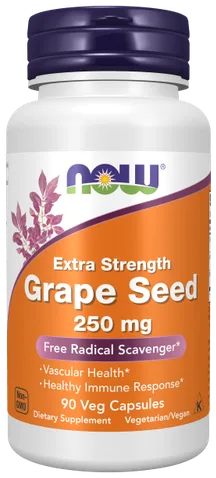
NOW Grape Seed Extract 100mg - Veg Capsules Review
NOW Grape Seed Extract 100mg is a dietary supplement in vegetarian capsule form. One capsule is a serving, and each container holds 200 servings. The label prints these amounts per serving: Vitamin C 320 mg, Calcium 36 mg, and Grape Seed Extract (Vitis vinifera) at 100 mg, with a minimum of 90% total polyphenols. The other ingredients listed are cellulose for the capsule, cellulose powder, and magnesium stearate from a vegetable source. The suggested usage printed on the label is to take 1 capsule twice daily with food. Buyers most often say they are pleased with the quality and trust the brand. Many also call the price good compared with other grape seed products.
We don’t sell supplements. We help you make decisions and get the best price.
Lowest prices
We hold no current store prices for it yet: check the store.
- AmazonPrice at AmazonCheck price at Amazon (opens in a new tab)
Some store links earn us a commission.
Products with nearly the same formula (Matched on the main ingredients)
Study, Trial or Testing Result Summary
Members Only98 human studies · 57 improved
42 of these 98 human studies gave the ingredient by drip, not by mouth.
This product is sold for its grape seed extract, but no study findings on grape seed extract were given, so its effect on blood flow cannot be judged here. The evidence comes from the added vitamin C, taken at 640 milligrams a day, above the 500 milligrams that worked in studies. In 46 people with heart artery disease, 500 milligrams daily for 30 days improved artery widening compared with placebo [1]. A single 2 gram dose improved vessel widening within two hours in people with poor vessel function [2]. Vitamin C given by vein during heart procedures lowered heart injury and stress markers [3]. Long-term results are weaker. A large review found mixed results and no overall effect on artery stiffness [4]. Vitamin C with vitamin E for 12 months [5] or up to 34 months [6] did not improve vessel function. The small amount of calcium has no studies showing it helps blood flow, and infused calcium reduced forearm blood flow in healthy adults [7]. Animal and cell studies are never counted.
See all 98 studies →Hide the studies
- In seven controlled trials with 872 patients having heart artery procedures or bypass surgery, vitamin C given by vein lowered peak troponin by about 43% and peak CK-MB by about 14% and reduced oxidative stress markers.Vitamin C may reduce troponin and CKMB levels after PCI and CABG: a meta-analysis.
- In six studies of 160 people with sleep apnea, antioxidant treatments including vitamin C improved blood vessel dilation by about 2.16 percentage points and reduced oxidative stress, but vitamin C was not analyzed separately.Antioxidant therapies for obstructive sleep apnea: A systematic review and meta-analysis.
- A review of 10 systematic reviews covering 6409 people found contrasting results for vitamin C on blood vessel function, with no overall effect on arterial stiffness and only limited benefit in some subgroups.Limited evidence for a beneficial effect of vitamin C supplementation on biomarkers of cardiovascular diseases: an umbre…
- In eight trials with 1185 patients, vitamin C given by vein before a heart artery procedure reduced heart injury markers, oxidative stress and inflammation, while improvements in heart pumping function were inconclusive.Vitamin C for Cardiac Protection during Percutaneous Coronary Intervention: A Systematic Review of Randomized Controlled…
- A review of randomized trials in people with diabetes or metabolic syndrome found vitamin C, mostly 1,000 mg daily for 4 weeks to 12 months, lowered cholesterol and inflammation and was consistent with better endothelial function and blood flow.Vitamin C intake potentially lowers total cholesterol to improve endothelial function in diabetic patients at increased …
- In 391 adults having a cardiac arrest outside hospital, up to two doses of calcium chloride (5 mmol each) given into a vein or bone did not significantly improve return of a sustained heartbeat compared with saline (19% vs 27%), and the trial was stopped early over concerns about harm.Effect of Intravenous or Intraosseous Calcium vs Saline on Return of Spontaneous Circulation in Adults With Out-of-Hospi…
- In 138 Black adults with or at high risk of heart disease, 12 months of vitamin C plus E did not significantly change blood vessel function compared with placebo (the herbal formula improved smooth muscle response instead).A Randomized, Double-Blind, Placebo-Controlled Trial of an Ayurvedic Herbal Formulation and Vitamin C/E on Vascular Func…
- In 87 healthy adults, a single dose of vitamin C, E and lipoic acid improved blood vessel widening in older adults (5.2% to 8.2%) but reduced it in young adults (7.4% to 5.8%).Acute reversal of endothelial dysfunction in the elderly after antioxidant consumption.
- In 46 people with high cholesterol, a single 2 g dose of ascorbic acid lengthened the duration of forearm reactive blood flow after two hours versus placebo but did not raise peak flow.Effect of ascorbic acid on forearm reactive hyperaemia in patients with hypercholesterolaemia.
- In 70 healthy young adults exposed to simulated night train noise, vitamin C improved blood vessel dilation in women but not in men.Acute Exposure to Simulated Nocturnal Train Noise Leads to Impaired Sleep Quality and Endothelial Dysfunction in Young H…
- In 61 postmenopausal women with coronary artery disease, vitamin C (1000 mg daily) plus vitamin E for up to 34 months did not improve blood vessel widening compared with placebo.Hormone therapy and antioxidant vitamins do not improve endothelial vasodilator function in postmenopausal women with es…
- In 30 people with lung disease and 30 controls, a single antioxidant dose including vitamin C improved blood vessel widening (3.1% to 4.7%) and lowered artery stiffness in patients but not controls.Vascular dysfunction and chronic obstructive pulmonary disease: the role of redox balance.
- In 46 people with coronary artery disease, 500 mg of vitamin C daily for 30 days improved blood vessel widening in the arm artery (about 8.6% to 9.0% vs unchanged with placebo), and a single 2 g dose also helped.Long-term ascorbic acid administration reverses endothelial vasomotor dysfunction in patients with coronary artery disea…
- In 46 adults with long COVID, 28 days of l-arginine plus 1 g daily liposomal vitamin C improved blood vessel dilation (14.3% vs 9.4% with placebo), walking distance, grip strength and fatigue.Effects of l-Arginine Plus Vitamin C Supplementation on Physical Performance, Endothelial Function, and Persistent Fatig…
- In 43 postmenopausal women with elevated blood pressure, 12 weeks of daily blueberry powder improved blood vessel dilation compared with placebo; the study tested blueberries, not vitamin C alone.Daily blueberry consumption for 12 weeks improves endothelial function in postmenopausal women with above-normal blood p…
- In 42 people with kidney disease, a one-time vitamin C infusion produced only a non-significant trend toward better artery dilation in the placebo group; the trial's main test was a different drug (rilonacept), not vitamin C.IL-1 Inhibition and Vascular Function in CKD.
- In 39 people with high blood pressure, 500 mg of vitamin C daily for one month did not improve blood vessel widening compared with placebo.Effect of ascorbic acid treatment on conduit vessel endothelial dysfunction in patients with hypertension.
- In 39 people with heart failure, 4 grams of vitamin C daily for 4 weeks improved a blood vessel measure but worsened muscle energy handling during exercise.Chronic oral ascorbic acid therapy worsens skeletal muscle metabolism in patients with chronic heart failure.
- A single intravenous vitamin C infusion lowered elevated blood flow in the brain in people with Fabry disease and in healthy controls, though the placebo group responded more slowly.Ascorbate decreases Fabry cerebral hyperperfusion suggesting a reactive oxygen species abnormality: an arterial spin tag…
- In 26 healthy men and 8 men with peripheral artery disease, vitamin C infused into the arm during reperfusion after ischemia prevented the loss of blood vessel widening seen with placebo.Intra-arterial vitamin C prevents endothelial dysfunction caused by ischemia-reperfusion.
- In 31 people with leg artery disease, vitamin C given before maximal walking prevented the drop in artery widening and the rise in oxidative stress seen after exercise in those given saline.Vitamin C prevents endothelial dysfunction induced by acute exercise in patients with intermittent claudication.
- In 30 adults with type 2 diabetes, 500 mg of vitamin C daily for 4 weeks lowered blood pressure and reduced arterial stiffness, while placebo had no effect.Ascorbic acid reduces blood pressure and arterial stiffness in type 2 diabetes.
- A single 2 g oral dose of vitamin C widened the radial artery in people awaiting bypass surgery, and the widening was larger than with the drug diltiazem 180 mg.Is vitamin C superior to diltiazem for radial artery vasodilation in patients awaiting coronary artery bypass grafting?
- In 30 overweight adults with high cholesterol, 500 mg of vitamin C taken daily with vitamin E for 6 weeks did not significantly improve blood vessel widening compared with placebo.Oats, antioxidants and endothelial function in overweight, dyslipidemic adults.
- In 30 heart surgery patients on heart-lung bypass, one intravenous vitamin C dose given during rewarming reduced a rise in reactive oxygen molecules and improved red blood cell flexibility compared with placebo.Vitamin C supplementation attenuates oxidative stress and improves erythrocyte deformability in cardiac surgery with car…
- In 29 salt-resistant adults on a high-salt diet for 7 days, local infusion of ascorbic acid restored skin blood vessel dilation that the high-salt diet had reduced.Apocynin and Tempol ameliorate dietary sodium-induced declines in cutaneous microvascular function in salt-resistant hum…
- A single intravenous 1,000 mg dose of vitamin C improved arm blood vessel widening in people with type 1 diabetes and in regular smokers, compared with saline, in a study of 24 people where uric acid was the main test.Uric acid restores endothelial function in patients with type 1 diabetes and regular smokers.
- In 24 adults with poorly controlled type 2 diabetes, 6 weeks of 1000 mg daily vitamin C lowered blood pressure and oxidative stress markers after exercise compared with placebo.Vitamin C supplementation improves blood pressure and oxidative stress after acute exercise in patients with poorly cont…
- In a double-blind trial of 21 obese children aged 8 to 12, 500 mg of vitamin C daily for 45 days lowered mean blood pressure and restored forearm blood vessel dilation during mental stress, while placebo did not.Vitamin C restores blood pressure and vasodilator response during mental stress in obese children.
- In 19 healthy adults, a single 2 g oral dose of vitamin C shortened the blood vessel dysfunction caused by smoking one cigarette, recovering to baseline levels faster than placebo.Oral administration of ascorbic acid attenuates endothelial dysfunction after short-term cigarette smoking.
- In 18 people with metabolic syndrome, a single 1 g intravenous vitamin C infusion improved artery widening compared with placebo and counteracted the rise in an oxidative stress marker.Oxidative stress-mediated arterial dysfunction in patients with metabolic syndrome: Effect of ascorbic acid.
- In 17 people with resistant high blood pressure and high cholesterol, 500 mg of vitamin C daily for 8 weeks did not change blood pressure, cholesterol or artery widening compared with placebo, while a med did.Read the study on PubMed (15609886) →
- In 16 healthy women, taking a lutein complex containing 500 mg of vitamin C daily for three weeks increased blood flow in the retina of the eye and lowered diastolic blood pressure compared with placebo, though the effects cannot be attributed to vitamin C alone because it was combined with other ingredients.Lutein Complex Supplementation Increases Ocular Blood Flow Biomarkers in Healthy Subjects.
- In 15 young men, a single 1000 mg dose of vitamin C did not change how well blood vessels widened after mental stress compared with placebo, although it altered the link between stress hormone response and vessel changes.The influence of vitamin C on the interaction between acute mental stress and endothelial function.
- In 14 overweight men, a single 3 g intravenous ascorbic acid infusion reduced oxidative damage and vascular remodeling markers during mental stress compared with placebo.Ascorbic acid inhibits vascular remodeling induced by mental stress in overweight/obese men.
- In 14 hemodialysis patients, a high-calcium dialysis bath raised blood calcium and increased arterial stiffness during treatment, while a low-calcium bath did not.Arterial stiffness alterations during hemodialysis: the role of dialysate calcium.
- In 13 kidney transplant recipients, a single 2,000 mg oral dose of vitamin C improved the widening of blood vessels in the arm after blood flow was increased, compared with placebo, measured 2 hours after dosing.Vitamin C improves endothelial dysfunction in renal allograft recipients.
- In 12 men, a single 1 g dose of vitamin C taken before exercise prevented the drop in blood vessel dilation that followed exercise with added arm cuff pressure seen on placebo.Brachial artery flow-mediated dilation following exercise with augmented oscillatory and retrograde shear rate.
- In 12 healthy young adults, intra-arterial vitamin C during a single session of forearm exercise in high oxygen blocked the drop in forearm blood flow only in the subgroup most affected by high oxygen, and had no effect in the other subgroups.Effect of vitamin C on hyperoxia-induced vasoconstriction in exercising skeletal muscle.
- In 11 women with Raynaud's phenomenon linked to systemic sclerosis, a single 2 g dose of ascorbic acid did not improve blood vessel dilation compared with placebo.Ascorbic acid does not improve endothelium-dependent flow-mediated dilatation of the brachial artery in patients with Ra…
- In 11 men sitting for 3 hours, taking 1 g plus 500 mg of vitamin C prevented the usual decline in artery flow-mediated dilation seen when sitting without it.Antioxidant vitamin C prevents decline in endothelial function during sitting.
- In a crossover study of 10 healthy adults, 2 g of oral vitamin C did not prevent the drop in endothelial-dependent blood vessel dilation caused by methionine-induced raised homocysteine.The effect on endothelial function of vitamin C during methionine induced hyperhomocysteinaemia.
- In 10 healthy men with raised free fatty acids, vitamin C restored blood vessel dilation response to acetylcholine compared with placebo but did not change malondialdehyde levels.Effect of systemic vitamin C on free fatty acid-induced lipid peroxidation.
- In 9 healthy men, a single 2 g intravenous vitamin C dose before high blood sugar prevented the drop in blood vessel function seen with placebo.Pretreatment with intravenous ascorbic acid preserves endothelial function during acute hyperglycaemia (R1).
- In 8 healthy men, a single 2 g vitamin C dose taken with methionine reduced arterial stiffness (augmentation index) by about 10.5 percent, while methionine alone did not change it.Acute methionine loading does not alter arterial stiffness in humans.
- In 8 people with high blood pressure, vitamin C infused directly into an artery improved blood vessel widening, and 2 months of a med also improved it.Read the study on PubMed (12164090) →
- In 8 male smokers, 1 g of vitamin C daily for about 5 weeks did not improve blood vessel widening or clot-dissolving activity compared with placebo.Vitamin C has no effect on endothelium-dependent vasomotion and acute endogenous fibrinolysis in healthy smokers.
- Vitamin C applied to the skin after UV exposure, alone or combined with vitamin E and melatonin, did not significantly reduce sunburn redness or change skin blood flow.Effect of topical antioxidants on UV-induced erythema formation when administered after exposure.
- In healthy men, a single 2 g oral dose of vitamin C reduced arterial stiffness and clotting-cell aggregation compared with placebo, which showed no change.Oral vitamin C reduces arterial stiffness and platelet aggregation in humans.
- In a double-blind trial in people with heart failure, vitamin C lowered circulating apoptotic microparticles (signs of blood vessel cell death) compared with placebo, which had no effect.Vitamin C inhibits endothelial cell apoptosis in congestive heart failure.
- In people with heart failure from blocked heart arteries, infused vitamin C was tested alone and with L-arginine on nervous system control of blood vessels, but the abstract does not clearly report the effect of vitamin C alone.Influence of L-arginine and vitamin C on the autonomic nervous system in chronic heart failure secondary to ischemic car…
- In a randomized, double-blind crossover study of healthy men, a single 2 g intravenous dose of vitamin C given before a two-hour high-blood-sugar challenge prevented the rise in arterial stiffness and pulse wave reflection seen with placebo.Protective effects of ascorbic acid on arterial hemodynamics during acute hyperglycemia.
- A single 2 gram oral dose of vitamin C made skin blood vessels constrict more strongly to cold, which reduced skin blood flow.Oral vitamin C enhances the adrenergic vasoconstrictor response to local cooling in human skin.
- In 138 people (diabetes, impaired glucose tolerance, and healthy), 15 days of an antioxidant combination including 250 mg vitamin C reversed the meal-related rise in oxidative stress and worsening of vessel-lining markers.Effects of antioxidant supplementation on postprandial oxidative stress and endothelial dysfunction: a single-blind, 15-…
- In 64 people with kidney disease and 17 healthy controls, a single vitamin C infusion improved blood vessel widening in healthy people (5.5% to 6.8%) but not in those with kidney disease (3.5% to 3.6%).Vascular Dysfunction, Oxidative Stress, and Inflammation in Chronic Kidney Disease.
- In 61 people with polycystic kidney disease and 19 healthy controls, one vitamin C infusion improved blood vessel widening in the kidney disease group (7.7% to 9.4%) but not in healthy controls.Vascular Dysfunction, Oxidative Stress, and Inflammation in Autosomal Dominant Polycystic Kidney Disease.
- In 75 men with coronary artery disease, vitamin C infused into the forearm artery raised baseline forearm blood flow and acetylcholine-stimulated flow in those with high inflammation (CRP) but not those with low CRP.C-reactive protein levels determine systemic nitric oxide bioavailability in patients with coronary artery disease.
- In 31 adults with type 2 diabetes and 21 healthy adults, a single 7.5 g vitamin C infusion improved heart relaxation but did not change forearm blood flow response or peak exercise capacity compared with saline.Acute vitamin C improves cardiac function, not exercise capacity, in adults with type 2 diabetes.
- In 50 people with severe kidney failure, a single vitamin C infusion improved small blood vessel widening but did not change widening of large arteries in response to blood flow.Vitamin C improves resistance but not conduit artery endothelial function in patients with chronic renal failure.
- In 30 people with chronic kidney disease and 20 with high blood pressure, intravenous ascorbic acid lowered central blood pressure and arterial stiffness but did not change flow-mediated artery dilation.Ascorbic acid lowers central blood pressure and asymmetric dimethylarginine in chronic kidney disease.
- In 46 young men, an intravenous infusion of 3 g vitamin C given with L-arginine increased kidney plasma flow more than L-arginine alone, and this response was stronger in men at high cardiovascular risk than in healthy controls.Effects of nitric oxide synthase inhibition and L-arginine on renal haemodynamics in young patients at high cardiovascul…
- In 46 people with coronary artery disease, a single 2 g dose of vitamin C improved blood vessel dilation within 2 hours in those with poor baseline function (2.0% to 9.7%), while placebo had no effect.Ascorbic acid reverses endothelial vasomotor dysfunction in patients with coronary artery disease.
- In 39 lean, obese, and metabolic syndrome adults, an acute infusion of ascorbic acid did not change how quickly or how much blood vessels widened during arm exercise.Exercise-mediated vasodilation in human obesity and metabolic syndrome: effect of acute ascorbic acid infusion.
- In 23 postmenopausal women, a single intravenous vitamin C infusion improved artery dilation and a measure of heart relaxation compared with saline, while premenopausal women showed no artery dilation change.Acute ascorbic acid infusion increases left ventricular diastolic function in postmenopausal women.
- In 16 children with Kawasaki disease and 19 healthy children, 250 mg of vitamin C daily for one month reduced artery wall thickness in both groups, but artery dilation improved only in the healthy children.Does Vitamin C improve endothelial function in patients with Kawasaki disease?
- In 30 people (15 healthy, 15 with high blood pressure), a vitamin C infusion into the arm increased blood vessel widening in response to bradykinin in people with high blood pressure, but this was a single infusion study, not a long-term supplement trial.Calcium antagonist treatment by lercanidipine prevents hyperpolarization in essential hypertension.
- Intra-arterial vitamin C improved blood vessel dilation in hypercholesterolemic women but had no effect in healthy young women.Effect of oral contraceptives on endothelial function in the peripheral microcirculation of healthy women.
- In 19 middle-aged and older adults, a single intravenous vitamin C infusion improved blood vessel dilation and blood flow regulation in the brain compared with saline, while younger adults showed no change.Supraphysiological ascorbic acid infusion attenuates cerebrovascular dysfunction in middle-aged and older adults.
- In 23 healthy young men, intra-arterial vitamin C reversed the angiotensin II-related weakening of endothelium-dependent forearm blood vessel dilation, while vitamin C alone did not change it.Vitamin C improves attenuated angiotensin II-induced endothelium-dependent vasodilation in human forearm vessels.
- In 11 people with high cholesterol and 12 healthy controls, vitamin C infused directly into the arm improved blood vessel widening in response to methacholine in the people with high cholesterol, with no change in controls.Vitamin C improves endothelium-dependent vasodilation in forearm resistance vessels of humans with hypercholesterolemia.
- In 10 people with type 2 diabetes, vitamin C infused into the arm artery improved the widening of forearm blood vessels in response to methacholine, while it had no effect in 10 non-diabetic controls.Vitamin C improves endothelium-dependent vasodilation in patients with non-insulin-dependent diabetes mellitus.
- In 10 chronic smokers, vitamin C infused into the arm artery markedly improved the widening of forearm blood vessels in response to acetylcholine, while it had no effect in 10 non-smoking controls.Antioxidant vitamin C improves endothelial dysfunction in chronic smokers.
- In 11 smokers, vitamin C restored heart muscle blood flow reserve that was reduced compared with 8 non-smokers, while it had no effect in the non-smokers.Coronary heart disease in smokers: vitamin C restores coronary microcirculatory function.
- In 11 people with postural tachycardia syndrome and 8 healthy controls, ascorbate given through the skin and through a vein increased blood flow in the skin and limbs and raised cardiac output by about 40% after infusion.Ascorbate improves circulation in postural tachycardia syndrome.
- In 18 people with cystic fibrosis aged 8 to 39, a single dose of an antioxidant cocktail containing 1,000 mg vitamin C improved the widening of the brachial artery compared with placebo, measured two hours after taking it.Endothelial Dysfunction in Cystic Fibrosis: Role of Oxidative Stress.
- In 8 adults with Down's syndrome, who had weaker blood vessel function than 9 controls of similar age, vitamin C gave only a slight improvement in endothelium-dependent blood vessel widening that was not statistically significant; the dose and duration are not stated in the abstract.Endothelial cell function in patients with Down's syndrome.
- In 15 overweight or obese men, a 3 gram intravenous vitamin C infusion increased blood vessel dilation 60 minutes after a mental stress task, although it did not change the response at 30 minutes.Mental stress induces endothelial dysfunction by AT1R-mediated redox imbalance in overweight/obese men.
- In 14 patients with essential hypertension, an infusion of vitamin C into the arm improved blood vessel widening in response to acetylcholine, while healthy controls showed no change.Vitamin C improves endothelium-dependent vasodilation by restoring nitric oxide activity in essential hypertension.
- In 12 healthy men, a single 1000 mg vitamin C dose taken with other antioxidants prevented the rise in lipid peroxides and the fall in nitrite seen with breathing pure oxygen, compared with placebo.Acute application of antioxidants protects against hyperoxia-induced reduction of plasma nitrite concentration.
- In 8 postmenopausal women, a single 3500 mg intravenous vitamin C infusion reduced the blood pressure rise during breath holding and limited arm blood vessel narrowing compared with saline.Ascorbic acid attenuates the pressor response to voluntary apnea in postmenopausal women.
- In 8 healthy adults, a small rise in local blood calcium reduced resting forearm blood flow and blunted the blood-vessel dilation caused by verapamil, which recovered after the infusion stopped.Effect of small increments in plasma calcium concentration on the responsiveness of forearm resistance vessels to verapa…
- In healthy people, an infused antioxidant (vitamin C) fully restored the artery widening that high insulin had impaired over a 4-hour clamp, while vitamin C alone did not change artery widening in saline controls.Insulin causes endothelial dysfunction in humans: sites and mechanisms.
- In healthy people made temporarily hyperglycemic, vitamin C infused into the arm artery restored the blood vessel widening response to methacholine that hyperglycemia had reduced.Ascorbate restores endothelium-dependent vasodilation impaired by acute hyperglycemia in humans.
- In healthy men, infusing vitamin C into the forearm prevented angiotensin II from weakening the blood vessel dilation caused by a nitrate drug.Angiotensin II attenuates the vasodilating effect of a nitric oxide donor, glyceryl trinitrate: roles of superoxide and …
- In people with metabolic syndrome during high insulin levels, vitamin C improved the blood vessel dilation response to acetylcholine, though adding the drug infliximab did not further improve it.Tumor necrosis factor-alpha antagonism improves vasodilation during hyperinsulinemia in metabolic syndrome.
- In 20 young healthy volunteers, 1000 mg of vitamin C daily for 3 weeks improved blood flow properties, including thickness and flow of the blood and red blood cell function, with no placebo group.Promotion of whole blood rheology after vitamin C supplementation: focus on red blood cells 1.
- In an open-label study of 9 adolescents with type 1 diabetes, six weeks of combined vitamin C and vitamin E did not change endothelial function or related blood markers.Effect of Vitamins C and E on Endothelial Function in Type 1 Diabetes Mellitus.
- In a large Korean cohort of adults aged 40 and older, dietary calcium intake was not significantly linked to arterial stiffness overall, though it appeared to matter in people with certain genetic variants, where low calcium intake was tied to higher stiffness.Gene and dietary calcium interaction effects on brachial-ankle pulse wave velocity.
- In 281 people with coronary artery disease followed for about 4.5 years, poor blood vessel widening predicted later heart events, and vitamin C raised widening more in those who had events.Endothelial dysfunction, oxidative stress, and risk of cardiovascular events in patients with coronary artery disease.
- In 58 healthy men, a single vitamin C infusion improved artery widening only in middle-aged and older men with low testosterone, and had no effect in young men or older men with higher testosterone.Oxidative Stress and Inflammation Are Associated With Age-Related Endothelial Dysfunction in Men With Low Testosterone.
- In 289 patients with mild heart weakness, vitamin C given with the tests had similar effects on forearm blood flow in those who later had bad outcomes and those who did not; poor vessel function predicted worse outcomes.Systemic endothelial dysfunction as an early predictor of adverse outcome in heart failure.
- In 45 young adults (lean, obese, or with metabolic syndrome), vitamin C infused into the forearm artery increased blood flow responses to vessel-dilating drugs across all groups, with no control group on placebo.Microvascular function in younger adults with obesity and metabolic syndrome: role of oxidative stress.
- In 14 young and 14 older adults, a short vitamin C infusion raised forearm blood flow about 34% during continuous exercise in older adults only, and did not change the quick blood flow response to single muscle contractions in either group.Endothelium-dependent vasodilatation and exercise hyperaemia in ageing humans: impact of acute ascorbic acid administrat…
- In 11 young habitual hookah smokers, a single vitamin C infusion raised blood vessel dilation at baseline and prevented the drop in dilation caused by 30 minutes of e-hookah vaping.Ascorbic Acid Prevents Vascular Endothelial Dysfunction Induced by Electronic Hookah (Waterpipe) Vaping.
- In 15 adults having heart surgery, intravenous vitamin C (1500 mg every 6 hours) did not produce meaningful differences in complications or hospital stay compared with matched historical controls.Ascorbic acid and microcirculation in cardiothoracic surgery: a pilot feasibility trial and matched cohort study.
- In 10 healthy young adults, adding vitamin C to acetylcholine during 4-6 days at 4300 meters altitude raised the blood flow response in the forearm by about 20%, partly restoring the response that altitude had reduced by about 30%.GLOBAL REACH 2018: intra-arterial vitamin C improves endothelial-dependent vasodilatory function in humans at high altit…
- A review of epidemiologic and trial research found that vitamin C may slightly improve blood vessel function and blood fats in some groups, especially those with low vitamin C levels, but there is little support for supplementing to reduce heart disease risk.Vitamin C and Heart Health: A Review Based on Findings from Epidemiologic Studies.
- In healthy volunteers, infusing calcium into the arm blunted the blood-vessel dilation caused by magnesium, while dilation caused by potassium was not affected.Attenuated vasodilator responses to Mg2+ in young patients with borderline hypertension.
Review Totals and Summary
Members Only1,227 reviews · 94% positive
Buyers are very positive about this one. It carries about 1227 ratings across the stores, and every rated review below gives 4 or 5 stars. Many describe a product from a brand they already know and trust. **What buyers say it did for them:** Several say they noticed a difference. One reports "Cuts down on swelling and seems to improve venous health." Another says "I can feel my metabolism kick in" after taking it. A third writes "My legs feel best and so does my skin." One buyer says their eye pressure was lower at a recent eye doctor visit while using it with another ingredient. Another says they take two capsules a day for blood pressure. Others keep it general, saying "good results" and that they are very pleased. **What they complain about:** The reviews raise no complaints about the product itself. One buyer says they are still looking forward to results, and another wished a different store brand made its own version, but both still call this a good product. **Taste, smell, pill size or form:** Buyers say little about taste, smell or pill size. One comments on the capsule count, saying "So this package is very convenient." The same buyer says a container lasts well over a month at two capsules a day. **Value for money:** Buyers who mention price are happy with it. One says "Great product from a reputable company at a good price." Another says "The price is reasonable and NOW's quality is well known." A third compares it with grape seed products from other good brands, saying they "generally cost more and are less potent." **Who it seems to suit and who it did not:** It seems to suit people who already like the brand, such as the buyer who has been "a satisfied fan of NOW brand for years." Buyers who like clean ingredients and a family owned company also speak well of it. Some say they use it for circulation, skin, eye or blood pressure reasons of their own. No one in the reviews says it did not suit them. Repeat buyers say they will keep buying it.
Biohacker Summary
Members Only8 of 10 recommend it
Most of the panel recommends or uses vitamin C, and the main reasons are immune support, collagen and skin health, and tissue repair. Several pair it with collagen, one taking it about an hour before a workout, and doses mentioned include an extra gram a day, 250 milligrams a day, and 500 milligrams to 1 gram for recovery after injury. Some favor food sources such as kiwi, citrus and bell peppers, while one warns against generic multivitamins full of fillers and synthetics. One panelist says the best dose is unclear and that high doses might blunt the benefits of exercise, and one stopped using a vitamin C skin product because of its smell. Calcium is a smaller ingredient in this product, and the panel is split, with some backing it for bones and one warning against calcium supplements and favoring dairy instead.
See all 10 biohackers →Hide the biohackers
Dr. Eric Berg · Vitamin C · recommends
- Says vitamin C and zinc are the two things a person needs most while sick with an infection, so what they reach for matters.
- Says vitamin C is one of the two nutrients you need most during an illness, and that it is depleted by sugar and refined carbs.
- States that one can of sardines contains 382 mg of calcium.
- Warns against generic multivitamins, stating they are often full of fillers and synthetics.
- Warns against calcium supplements, citing studies that link them to a higher risk of heart attack, especially in postmenopausal women, and suggests getting calcium from dairy instead.
- Mentions that bleeding or swollen gums point to vitamin C deficiency, and sugar competes with it directly, reducing absorption.
- Recommends focusing on calcium to support stronger bones if a neck hump is associated with osteoporosis.
- Notes that one cup of raw organic sauerkraut contains 700 mg of vitamin C, which is 10 times the RDA and good for collagen.
- Mentions calcium as not being the most important mineral.
- Recommends Vitamin C for shingles pain relief.
- Warns against calcium carbonate, calling it limestone and the worst source of calcium, stating it takes 12 steps to be converted in the body and is like eating rocks.
- Mentions that lemon is loaded with vitamin C, and when combined with coffee, vitamin C significantly increases the bioavailability of antioxidants in the coffee.
- Dr. Berg states that Vitamin C helps fight biofilms and is essential for making collagen in gums, teeth, and capillaries.
- Warns that bone loss cannot be fixed with just calcium, as bone is primarily collagen with other essential minerals.
Thomas DeLauer · Vitamin C · recommends
- Recommends considering vitamin C as a mast cell stabilizer.
- Recommends whole food vitamin C, found in kiwi fruit, citrus, and bell peppers, to help clear uric acid by competing at kidney transporters, preventing reabsorption.
- Recommends taking vitamin C along with collagen about an hour before a workout for connective tissue benefits.
- Uses vitamin C as part of their immunity duo, stating it is important for boosting the immune system, especially during cold and flu season.
- Recommends consuming vitamin C to aid in NADPH recycling, which is necessary for glutathione to be reused after neutralizing oxidative stress.
- Takes Purity's liquid liposomal vitamin C for immune support and overall wellness, finding it easy to add to water, juice, or take straight up due to its good taste.
- Compares the Vitamin C content of oranges (53mg) to guava (228mg), noting guava has 4x more.
- Notes that milk contains 120mg of calcium, while sardines contain 351mg, highlighting a 3x difference.
- States that collagen synthesis is vitamin C dependent, in the context of glowing skin.
- Recommends Vitamin C for sleep, noting that intake in the range of 125 to 200 mg per day is associated with a lower risk of sleep disorders and sleep apnea, with the benefit plateauing beyond this range.
- Recommends consuming a little bit of vitamin C, such as a couple of berries or kiwi, along with flavanol-rich cocoa to help the delicate flavanols hold up and prevent oxidation in the gut.
- Recommends getting calcium, along with vitamin D, zinc, and magnesium, from foods like sardines, as they are important for inflammatory pathways in the gut.
- Explains that eating sardines with their soft bones provides a serious hit of calcium, which is a perfect combination for bones and may contribute to satiety.
- Mentions that magnesium and calcium should not be taken together as they cancel each other out.
Dr. Rhonda Patrick · Vitamin C · neutral
- Notes that scientists discovered vitamin C as the nutrient for scurvy.
- Lutein and zeaxanthin can also be obtained from certain multivitamins.
- Mentions that kale delivers calcium, a micronutrient many diets fall short on.
- Recommends nutrients like vitamin C for men to prioritize sperm mitochondrial health.
- Dr. Rhonda Patrick's daughter chugs an Emergency fizzy drink in the morning to ensure she gets some vitamin C and micronutrients before school.
- Choosing a multivitamin that includes lutein and zeaxanthin ensures you get meaningful amounts every day.
- Notes that ~35% of Americans are low in vitamin C.
- Notes additional gaps in calcium.
- Recommends increasing vitamin C intake if concerned about skin aging, noting it is an essential cofactor for collagen synthesis.
- Suggests avoiding a multivitamin if it contains biotin before a testosterone blood test to prevent confounding results.
- Multiple randomized controlled trials show older adults taking a standard multivitamin (like Centrum Silver) had measurable improvements in processing speed, cognition, and episodic memory.
- Currently takes the Pure Encapsulations O.N.E Multivitamin.
- Reports that alcohol use disorder is associated with a 20-50% greater prevalence of Calcium deficiency.
- Around 38% doesn't meet the requirement for calcium.
Siim Land · Vitamin C · neutral
- Discusses Vitamin C as one of the most important vitamins for staying healthy and aging well, supporting collagen synthesis, skin health, immunity, antioxidant defense, and tissue repair. They also mention that a deficiency could contribute to atherosclerosis and scarring of blood vessels.
- Recommends taking vitamin C with collagen to support joint collagen synthesis.
- States that vitamin C is needed for initiating collagen synthesis and that higher vitamin C intake appears to increase vitamin C content in the skin.
- Lists sauerkraut and fruit as sources of Vitamin C.
- Lists dairy and sardines as sources of Calcium.
- Notes that Vitamin C is one of several supplements with human evidence.
- Notes that Boron reduces calcium/magnesium loss.
- Notes that researchers found vitamin C alleviates ferro-aging, a process of iron overload and lipid peroxidation that drives aging, and that it directly inhibited ACSL4, a protein driving ferro-aging.
- States that Vitamin C has a central role in aging and longevity, and that in monkeys, oral vitamin C slowed ovarian aging during a 3.3-year study.
- States that vitamin C is one of the most important vitamins for staying healthy and aging well, and that intakes of 200 to 400 mg a day from food or supplements largely saturates plasma and neutrophils in most healthy adults. He also recommends spreading out the vitamin C across the day to avoid oversaturation.
- Mentions vitamin C in comparison to topical melatonin for oxidative defense, stating that melatonin would compete but is not as broadly validated clinically.
- Was found to be vitamin C deficient by True Health and Mayo Clinic tests, and now addresses this by eating one extra kiwi fruit daily.
- Recommends a high calcium intake for bone health.
- Places calcium supplementation in the 'bad tier' due to its association with increased cardiovascular events, recommending dairy or bones as easier ways to get calcium, though it can be useful for postmenopausal women with low bone density.
Dave Asprey · Vitamin C · neutral
- Recounts a doctor telling him in his 20s that vitamin C would kill him.
- Recommends taking vitamin C for better skin health.
- States that currently, he is only taking vitamin C and vitamin D.
- Dave Asprey reflects on how new research clarifies the mechanism behind IV vitamin C's anti-cancer effect, vindicating a decades-old idea that was dismissed for the wrong reasons.
- Notes that plain Vitamin C isn't enough and that most people never think to check for a specific ingredient that makes it work.
- Dave Asprey recommends taking maybe a gram of vitamin C a day in divided doses, noting that plasma levels peak around 250 milligrams twice a day.
- Recommends Qualia Vitamin C Plus, highlighting its combination of seven forms of vitamin C with 250 mg of citrus bioflavonoids, which helps with absorption and use for building collagen and a strong immune system.
- Warns that taking too much vitamin C can raise oxalate levels, emphasizing that everything has risk and reward.
- Notes that when energy intake is too low for training demand, nutrient intake often falls short, especially for calcium, which is associated with reduced bone health.
- Recommends Vitamin C as the real biological fix for deep focus issues, explaining how the brain hoards it at levels 100 times higher than blood and how to bypass the blood-brain barrier.
- Explains that calcium provides the raw material for bones, but it isn't a standalone input and needs a whole system to be effective.
- Notes that people take calcium for their bones.
- States that Ensure is like SlimFast but worse, and that its ingredients, including synthetic vitamins, guar gum, maltodextrin, high fructose corn syrup, and seed oils, are disgusting and should not be given to sick or well people.
- Warns that taking calcium without vitamin D, A, and K2 can lead to calcium going into tissues, causing bone spurs and other issues, and recommends a two-to-one ratio of calcium to magnesium.
Ben Greenfield · Vitamin C · recommends
- States that vitamin C is extremely important for collagen turnover and cites orthopedic data showing that 500 mg to 1 g of vitamin C can reduce the rate of complex regional pain in total knee replacements and wrist fractures.
- Mentions vitamin C as part of a bare-minimum protocol.
- Notes that while vitamin C has significant value, the optimal dose is a vexed question, and high doses might not always be beneficial, potentially blunting the hormetic effects of exercise.
- Notes that IV vitamin C has been used for decades for cancer patients with almost no standardization and that he receives many questions about its effectiveness and combination with chemo.
- Recommends Vitamin C for skin repair post-tattoo.
- Is considering whether he needs a calcium supplement because lead can displace calcium in bones, affecting bone strength.
- Mentions calcium as a common deficiency.
- Recommends adequate intake of calcium for bone strength.
- Does not agree that ascorbic acid is vitamin C, comparing it to calling chaff wheat, and notes that it is made from genetically modified cornstarch or corn syrup byproducts using solvents.
- Is using calcium chloride mixed with PRP before injecting for the P-shot.
- Warns against ascorbic acid, stating that it does not cure scurvy and that the world has been led astray by the deception around it versus the whole food vitamin C complex.
- Advises people to stop taking calcium supplements as part of the Root Cause Protocol.
- Warns against taking 1,000 mg of vitamin C immediately after a workout for individuals under 50, as it can dull the body's natural adaptation signal.
- Warns that using high-dose antioxidants like vitamin C directly before or after a hyperbaric session is not a great idea, as it could impair some of the effects by reducing reactive oxygen species.
Dr. Mark Hyman · Vitamin C · recommends
- Recommends vitamin C as a basic supplement during detoxification to help with inflammation and detoxification.
- Dr. Hyman mentions vitamin C as an advanced therapy for skin repair.
- Mentions topical vitamin C as an antioxidant that can help skin with aging.
- Mentions that what they do when a cold comes on is not just vitamin C.
- Recommends ensuring adequate vitamin C intake on a regular basis for immune support, stating it's important for healthy immune function despite mixed data on its effectiveness for colds.
- Mentions that vitamin C was the very first vitamin discovered, isolated, and synthesized in 1932, and its deficiency caused scurvy.
- Recommends nutrient-dense foods rich in vitamin C, such as guavas and parsley, to reduce inflammation.
- Used intravenous vitamin C cocktails to help him detoxify and recover from chronic fatigue.
- Notes that calcium is in bones but is also essential for nerves, muscles, and the heart, and low levels can affect muscle function and heart rhythm.
- Recommends vitamin C for immune system support and modulation.
- Relies on Big Bold Health's HTB Immune Energy Chews, which deliver 1000mg of sprouted Himalayan tardy buckwheat, along with vitamin C, D, magnesium, and zinc, to support immune balance, resilience, energy, and focus.
- States that green leafy vegetables are great sources of calcium.
- Notes that calcium needs are lower than advertised and that stress, soda, and excess sugar can drive calcium loss.
- Does not prescribe calcium supplements at all, teaching people to get it from whole foods instead, because calcium supplements don't work for building bones or preventing fractures, and it's bone quality, not density, that matters.
Andrew Huberman · Vitamin C · uses
- Takes a multivitamin every day for longevity.
- Recommends AG1, a vitamin, mineral, and probiotic drink, and notes that for a limited time, a subscription comes with additional supplements.
- Takes an extra gram of vitamin C a day for its effects on immunity and potential synergy with collagen.
- Found the Met RX Big 100 Bar to be 'magic' on the trail because it's a hunk of calories with protein and fortified with vitamins and minerals, despite being something they would never eat in normal life.
- Started taking AG1 in 2012 and still takes it every single day to ensure he meets his quota for daily vitamins and minerals and to support gut health, which is critical for proper brain function, immune system, and neurotransmitter production.
- Has been taking AG1 daily since 2012 because it is the highest quality and most complete foundational nutritional supplement, ensuring he gets all necessary vitamins, minerals, and micronutrients for daily health.
- Has been drinking AG1 since 2012, finding it difficult to get enough vitamins, minerals, micronutrients, and adaptogens from diet alone. He finds that taking AG1 daily improves all aspects of his health, including physical and mental health, performance, recovery from exercise, and immune system strength, and also notices more mental clarity and energy.
- Recommends AG1 as the highest quality and most complete foundational nutritional supplement, containing vitamins, minerals, probiotics, prebiotics, and adaptogens to cover dietary gaps and support a demanding life.
- States that AG1 is the highest quality and most complete foundational nutritional supplement available, containing vitamins, minerals, probiotics, prebiotics, and adaptogens, and that he has been taking it daily since 2012, often twice a day, to bolster his energy, immune system, and gut microbiome.
- Huberman mentions that vitamin C seems to help with the absorption or utilization of collagen protein.
- Discusses "hard water" and the role of magnesium and calcium in cardiovascular health.
- Adequate intake of calcium is vital for bone health.
Peter Attia · Vitamin C · stopped
- Recommends vitamin C as an important molecule for skin, noting its role as a precursor for collagen synthesis, a powerful antioxidant, and a regulator of complexion for even skin tone.
- Recommends calcium as one of the 'big three' micronutrients for bone health, suggesting a daily intake of 1,000 to 1,200 milligrams, which can be supplemented with calcium carbonate or calcium citrate.
- Explains that bone is 50 to 70% mineral, predominantly calcium, and that virtually all of the body's calcium is contained within bone, making bone important for calcium homeostasis.
- Tried a vitamin C serum mixed with ferulic acid but stopped using it because she hated the smell. She notes that topical application of vitamin C far exceeds the levels achievable by ingestion for skin benefits.
- Recommends calcium for bone health, stating that teenagers probably need about 1000 milligrams a day.
- Discusses bone acting as a reservoir for calcium and how resorption and formation release calcium into the blood when needed.
- States that vitamin C deficiency is associated with an elevated risk of cataract, but supplementation to supranormal levels has not been shown to protect against cataract formation.
- Mentions the elimination of scurvy through the work of James Lind and the eventual understanding that it was due to vitamin C, initially thought to be just citrus.
- Notes that bone is 50 to 70 percent mineral, with calcium being the predominant mineral, and virtually all of the body's calcium is contained within bone.
- Notes that while vitamin C deficiency is associated with an elevated risk of cataract, supplementation to supranormal levels has been conclusively shown not to protect against cataract formation.
- Mentions that a survey of doctors showed they recommend Vitamin C for COVID-19, but notes there is no real evidence behind it.
- Recommends getting about a gram of calcium a day from organic bone meal, which provides calcium hydroxyapatite, the form humans are meant to consume.
- Expresses skepticism about 'panacea treatments' for cancer, specifically mentioning a 'twenty thousand dollars of vitamin C' treatment, implying it's an example of something he's 'squirrely' about due to cost and unproven claims.
- Asks if vitamin C matters for immune function, suggesting a need for a definitive study.
Bryan Johnson · Vitamin C · neutral
- Uses Vitamin C as an example of how it would be great if people knew that when they took it, it had a measurable amount and wasn't polluted, which is what Brian ensures with his products.
- Recommends calcium as a mineral that, along with phosphorus, magnesium, and boron, is deposited to fortify the bone structure after the collagen scaffold is in place.
- Agrees that a little extra calcium is probably okay, especially for women, to really hit home for bone mineral density.
- Applies vitamin C after showering.
- Takes 250 milligrams of Vitamin C.
- Bryan Johnson uses Vitamin C (Ascorbic Acid), an antioxidant-rich essential vitamin that supports immune function, and metabolic energy.
- Recommends Vitamin C for skin health, noting it's good to pair with collagen peptides and is included in the Blueprint stack.
- He uses Vitamin C, typically in a serum, in the morning for skin health.
- Calcium is described as a mineral that deposits into the collagen scaffolding to harden and strengthen bone. Food sources and supplementation are recommended.
- Bryan Johnson uses Calcium, an essential mineral that supports healthy bones and teeth.
- Recommends calcium at 1,200 mg daily for women during the follicular phase, depending on dietary intake.
- Recommends prioritizing calcium intake for postmenopausal women to help maintain bone density and reduce the risk of osteoporosis.
RAL Summary
Members OnlyTier 3 for Circulation
The tier 2 grade rests on vitamin C rather than grape seed extract, the main ingredient, for which no studies were given, and it cites four meta-analyses with up to 1,185 people that are not in the vitamin C findings, whose long-term results are mixed. So it is graded Tier 3, lower than the rules alone gave.
Where the evidence disagrees: 23 of the 98 human studies found no effect.
More Details
Members OnlyBody systems · Combine with · Possible side effects
Body systems: Cardiovascular system
Combine with: For Heart and Blood Flow, grape seed extract is often paired with L-citrulline, because both are linked to the nitric oxide pathway that helps blood vessels widen. It is also often paired with omega 3 fatty acids, which work on blood vessel function by a separate route alongside it. Coenzyme Q10 is often paired with those omega 3 oils, since dietary fat helps its absorption.
Possible side effects: No major side effects reported.
Supplement Facts
Vitamin C 320 mg · Calcium 36 mg · Grape Seed Extract 100 mg
| Vitamin C | 320 mg | |
| Calcium | 36 mg | |
| Grape Seed Extract (Vitis vinifera) (min. 90% Total Polyphenols) | 100 mg | † |
Other ingredients: Cellulose (capsule), cellulose powder and magnesium stearate (vegetable source).
Directions: Suggested Usage: Take 1 capsule twice daily with food.
Label source: Reverseagelab · Report a label change
Show entire label

More circulation products
Members OnlyThe highest ranked for the same goal
Read more
Our articles on this subject
- What Supplements and Vitamins Should Not Be Taken TogetherArticle · Sep 7, 2026
- Supplements for Focus and Mental ClarityArticle · Jun 16, 2026
Graded November 25, 2026 by the Reverse Age Lab evidence engine, from human studies, real reviews and our biohacker panel. How we grade. Is this medical advice? No. Rala organizes the published evidence; go over any change with your doctor, especially if you take meds.
Privacy policyConsumer health dataAffiliate disclosureTermsBrand and legal noticesDo Not Sell or Share My Personal InformationCookie settings