
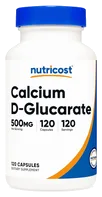
Nutricost Calcium D-Glucarate Review
Nutricost Calcium D-Glucarate is a dietary supplement featuring calcium D-glucarate, a compound derived from D-glucaric acid. D-glucaric acid is a natural substance found in various fruits and vegetables such as oranges, apples, broccoli, and cabbage, and is also produced in small amounts within the human body. This supplement is designed to support the body's natural detoxification processes and promote healthy hormone balance. Each serving of Nutricost Calcium D-Glucarate provides 500mg of calcium D-glucarate and 60mg of calcium, delivered in an easy-to-take "Veggie" capsule. The product is Non-GMO, Gluten-Free, Vegetarian Friendly, and manufactured in a GMP Compliant, FDA Registered Facility. The primary mechanism of action for calcium D-glucarate revolves around its role in enhancing the body's glucuronidation pathway, a crucial component of Phase II liver detoxification. During glucuronidation, the liver conjugates (binds) various endogenous and exogenous substances, including a med hormones like estrogen, environmental toxins, carcinogens, and metabolic waste products, to glucuronic acid. This conjugation process renders these compounds water-soluble, allowing them to be safely excreted from the body via bile and urine. However, an enzyme called beta-glucuronidase, produced by gut bacteria and found in various tissues, can deconjugate these glucuronide-bound substances in the intestines. This deconjugation effectively "un-binds" the toxins and hormones, allowing them to be reabsorbed back into the bloodstream, thereby increasing the body's toxic load and potentially leading to hormonal imbalances. Calcium D-glucarate, upon ingestion, is metabolized into D-glucaro-1,4-lactone, its most active metabolite. This metabolite acts as a potent inhibitor of the beta-glucuronidase enzyme. By inhibiting beta-glucuronidase, calcium D-glucarate ensures that the compounds conjugated during Phase II detoxification remain bound to glucuronic acid, preventing their reabsorption and facilitating their efficient elimination from the body. This action is particularly beneficial for managing estrogen levels, as it helps the body safely remove excess estrogen and its metabolites, contributing to hormonal equilibrium. Beyond hormone regulation, calcium D-glucarate also supports overall detoxification, reduces the burden of environmental toxins, and has been suggested to support healthy lipid metabolism and cholesterol levels.
We don’t sell supplements. We help you make decisions and get the best price.
Lowest prices
We may earn a commission from some store links. How we choose.
Lowest cost per month first, in stock, at 1 capsule a day. Checked Nov 14.
- iHerbLowest$9.34 a bottle$2.34/moBuy at iHerb (opens in a new tab)
- Vitacost$9.44 a bottle$2.36/moBuy at Vitacost (opens in a new tab)
- Target$18.99 a bottle$4.75/moBuy at Target (opens in a new tab)
- AmazonPrice at AmazonCheck price at Amazon (opens in a new tab)
Also at: Nutricost · Walmart. Some links earn us a commission; price comes first, and a commission only decides the order of prices within 2%. As an Amazon Associate we earn from qualifying purchases.
Products with nearly the same formula (Matched on the main ingredients)
Study, Trial or Testing Result Summary
Members OnlyHuman studies
No human study in this set measured liver health with calcium glucarate, so all the evidence comes from rats, and it is unclear whether the 500 milligram daily dose in this product matches anything that was studied. In rats, a diet with 4 percent calcium glucarate lowered the activity of beta-glucuronidase, an enzyme in the liver and gut. This is an enzyme measure, not a direct health result [1]. In a 36-week rat study, calcium glucarate reduced chemically caused precancerous liver changes, but only when it was given through both the early and later phases [2]. Another rat study found fewer precancerous liver changes when it was given early, especially before the damaging chemical [3]. A further rat study found it delayed early liver changes for up to six months, but by month seven the treated animals looked the same as untreated ones [4]. These animal findings may not apply to people, and no human dose has been shown to help the liver. Animal and cell studies are never counted.
See the study links →Hide the links
Review Totals and Summary
Members Only14,150 reviews · 100% positive
Nutricost Calcium D-Glucarate has garnered significant positive attention, with over 13504 ratings across various stores. All customer reviews that include a star rating are either 4 or 5 stars, indicating a very high level of satisfaction. **What it did for them** Customers frequently report positive effects, particularly for hormonal balance and detoxification. Many women in their late 40s experiencing perimenopause or "classic symptoms of estrogen dominance" found "symptoms significantly improved." Users noted "subtle but meaningful improvements in how 'balanced' and clear I feel," attributing this to detoxification and hormone support. It helps "the liver detoxify and flush out excess dirty estrogens" and assists with "estrogen clearing to assist healthy hormonal cycles." Some also found it "helpful for reducing gas for me" and reducing "hormone-related irritability," with "marital disputes significantly decreased." Those with "problems with detox pathways" found it "helps with eliminating extra things from body," and for some, it helped "regulate my cycle." **Complaints** While overall satisfaction is high, a notable concern raised by one customer is the inclusion of corn starch as a filler ingredient. This reviewer stated, "The photo does not show corn starch as an ingredient," and expressed a wish for the brand to "stop using cheap starch fillers" due to individuals who need to avoid starch. Another customer reported "unpleasant symptoms at 2-3 per day," suggesting that adjusting the dosage to a single pill daily resolved this issue. **Form and Features** The supplement is generally well-received for its ease of use. Many customers describe the capsules as "a comfortable size and easy to swallow" and "gentle on the stomach," with no reported unpleasant aftertaste or discomfort. It is also appreciated for being "gluten-free, non-GMO, and suitable for vegetarians." One review mentioned an "easy to use powder type," though most feedback refers to capsules. It is also noted as a "non Citrate product as it can upset the stomach." **Value for Money** Nutricost Calcium D-Glucarate is consistently highlighted for its excellent value. Customers frequently describe it as "good value compared to similar supplements" and "reasonably priced." Many appreciate the "generous 120-count supply," finding it "economically priced" and "very competitively priced compared to other manufacturers." The consensus is that "The cost is right, for what you are getting." **Who it suits** This supplement appears particularly beneficial for women in their late 40s experiencing "classic symptoms of estrogen dominance" or "perimenopause related hormone fluctuations." It is also favored by individuals seeking "detoxification and hormone support," those with "problems with detox pathways," or a "sluggish liver." Some found it helpful for specific digestive issues, like reducing gas from certain foods. It is often used in tandem with DIM supplements for enhanced cycle regulation and hormone clearing. However, those needing to avoid starch should be aware of the corn starch filler. Individuals might also need to adjust their dosage, as some found "unpleasant symptoms at 2-3 per day" but tolerated a single dose well.
Biohacker Summary
Members Only8 of 10 recommend it
The panel is split on calcium, the main ingredient, and only a few spoke about the D-glucarate part of this product. Four of the ten recommend calcium, mostly for bone strength, and several others stay neutral, pointing to food sources like sardines, dairy, kale and leafy greens; one panelist takes a calcium and magnesium pill and another takes calcium daily in a mix, with one panelist giving a daily goal of 1,000 to 1,200 milligrams from carbonate or citrate. Four panelists raise cautions, citing kidney stones, artery buildup and heart risk, with some preferring food over supplements and one saying calcium needs vitamin D, vitamin A and vitamin K2 or it can end up in tissues. On the D-glucarate form, three panelists recommend calcium D-glucarate, one for detox, one for clearing estrogen and one for estrogen control at 500 to 1,000 milligrams a day, noting it is too mild to push normal estrogen too low, and no one said they stopped taking it.
See all 10 biohackers →Hide the biohackers
Dr. Eric Berg · Calcium · neutral
- States that one can of sardines contains 382 mg of calcium.
- Warns against calcium supplements, citing studies that link them to a higher risk of heart attack, especially in postmenopausal women, and suggests getting calcium from dairy instead.
- Recommends focusing on calcium to support stronger bones if a neck hump is associated with osteoporosis.
- Warns against calcium carbonate, calling it limestone and the worst source of calcium, stating it takes 12 steps to be converted in the body and is like eating rocks.
- Warns that bone loss cannot be fixed with just calcium, as bone is primarily collagen with other essential minerals.
- Dr. Berg includes calcium carbonate among the synthetic supplements to avoid.
- Warns against calcium carbonate, also known as limestone, stating that while it lowered hip fractures in a study, it also increased kidney stones and is not good for arteries, requiring the body to work hard to use it.
- Notes that tannins in tea bind calcium, blocking its absorption.
- Indicates that horizontal thin white lines near the base of the nails are indicative of low calcium.
- Warns that calcium carbonate can build up in the arteries and kidneys and increase the risk of a heart attack.
- Recommends taking calcium D-glucarate to help detoxify plastics from the body, as it supports detoxification pathways.
- Mentions that calcium D-glucarate can also help with hot flashes.
- Recommends Calcium D-glucarate as a good remedy to help balance estrogen.
- Recommends Calcium D-Glucarate as a good remedy for estrogen dominance and hot flashes, explaining that it helps detoxify the liver and aids enzymes in getting rid of excess estrogen.
Siim Land · Calcium · neutral
- Lists dairy and sardines as sources of Calcium.
- Notes that Boron reduces calcium/magnesium loss.
- Recommends a high calcium intake for bone health.
- Places calcium supplementation in the 'bad tier' due to its association with increased cardiovascular events, recommending dairy or bones as easier ways to get calcium, though it can be useful for postmenopausal women with low bone density.
- Mentions that eating enough calcium matters for bone density, but states that it alone won't transform bone density.
- Warns that calcium is linked to a higher risk of heart disease, though people with low calcium status and intake can take it safely.
- Warns that calcium supplements increase the risk of heart disease by raising blood calcium levels too high, leading to hypercalcemia and more calcium being stored in the arteries, and also increase the risk of arrhythmias.
- Warns against calcium supplementation for most people due to its association with increased cardiovascular events, but notes it can be useful for postmenopausal women with low bone density who don't consume dairy.
- Discusses Calcium as a supplement.
- Recommends consuming calcium from dairy, tofu, leafy greens, and bones, as it is a key nutrient required for ATP synthase in mitochondrial energy production.
- Notes that Calcium D-Glucarate, found in many fruits and vegetables, supports natural detoxification.
Thomas DeLauer · Calcium · neutral
- Notes that milk contains 120mg of calcium, while sardines contain 351mg, highlighting a 3x difference.
- Recommends getting calcium, along with vitamin D, zinc, and magnesium, from foods like sardines, as they are important for inflammatory pathways in the gut.
- Explains that eating sardines with their soft bones provides a serious hit of calcium, which is a perfect combination for bones and may contribute to satiety.
- Mentions that magnesium and calcium should not be taken together as they cancel each other out.
- Tries to get multivitamins without calcium or with a low amount, as he believes supplemental calcium impacts the absorption of other vitamins and minerals and is not as beneficial as hyped. He cautions against it for most people due to the risk of coronary artery calcification.
- Recommends getting calcium from dairy sources like milk, yogurt, kefir, and cheese in the morning to support neurotransmitter synchronization crucial for deep and REM sleep, noting that low dietary calcium is linked to insomnia.
- Warns that calcium competes with magnesium for the same absorption channels, advising to separate magnesium intake from calcium supplements or dairy by at least an hour or two.
- Recommends providing the body with adequate dietary calcium, not a calcium supplement, to ensure a clean, strong spark for efficient insulin release.
- Warns that calcium and magnesium should not be taken together as they cancel each other out, though some products use delayed absorption to mitigate this.
- Warns that most people consume too much calcium relative to magnesium, which can disrupt the balance needed for proper bodily function, comparing it to an electrical circuit.
Dave Asprey · D-Glucarate · recommends
- Recommends calcium D-glucarate to raise glucuronidation for detoxification.
- Notes that when energy intake is too low for training demand, nutrient intake often falls short, especially for calcium, which is associated with reduced bone health.
- Explains that calcium provides the raw material for bones, but it isn't a standalone input and needs a whole system to be effective.
- Notes that people take calcium for their bones.
- Warns that taking calcium without vitamin D, A, and K2 can lead to calcium going into tissues, causing bone spurs and other issues, and recommends a two-to-one ratio of calcium to magnesium.
- States that calcium D-glucarate can be magical for men and women.
- States he takes calcium d-glucarate, which helps the body get rid of excess estrogen, as part of his stack.
- Recommends taking calcium citrate during a high oxalate meal to bind the oxalate in the gut.
- Notes that people often take calcium for bone health.
- Mentions calcium d-glucarate as one of the supplements he has talked about for many years for detoxification.
- Takes calcium d-glucarate if he notices man boobs, as it increases estrogen excretion and helps with detox pathways.
- Uses calcium D-glucarate, not every day but enough, to manage excess estrogen and prevent 'man boobs', noting that too much can lower libido.
- Believes calcium supplements are overrated, as most people need more vitamin K2 and vitamin D instead.
- Recommends calcium D-glucarate as one of the "3Gs" that provide extra support for all phases of liver detox.
Dr. Mark Hyman · Calcium · recommends
- Notes that calcium is in bones but is also essential for nerves, muscles, and the heart, and low levels can affect muscle function and heart rhythm.
- States that green leafy vegetables are great sources of calcium.
- Notes that calcium needs are lower than advertised and that stress, soda, and excess sugar can drive calcium loss.
- Does not prescribe calcium supplements at all, teaching people to get it from whole foods instead, because calcium supplements don't work for building bones or preventing fractures, and it's bone quality, not density, that matters.
- Warns that acid blockers inhibit calcium absorption.
- Lists calcium as another important nutrient that people can be tested for and measured.
- States that high doses of calcium supplementation in the elderly were not really impacting bone density, as osteopenic patients still became osteoporotic.
- Warns that meds (meds) impair the absorption of calcium, which increases the risk of hip fractures and osteoporosis.
- Recommends calcium citrate, about 600 milligrams a day, for bone health, noting that much can also be obtained from diet through leafy greens, sesame seeds, tahini, and chia seeds.
- Dr. Hyman notes that while calcium deficiency is not common in terms of blood levels, insufficient intake can lead to osteoporosis as the body pulls calcium from bones. He advises caution with calcium supplementation due to potential heart issues.
- Recommends calcium D-glucarate to bind estrogen and help lower estrogen levels or get it out of the body, especially when there's high beta glucuronidase.
- Recommends Calcium D-glucarate for women to help with estrogen removal.
- Commonly uses calcium D-glucarate in both men and women because it increases the metabolism of estrogen.
- Mentions using calcium D-glucarate to bind and help detoxify estrogen.
Dr. Rhonda Patrick · Calcium · neutral
- Mentions that kale delivers calcium, a micronutrient many diets fall short on.
- Notes additional gaps in calcium.
- Reports that alcohol use disorder is associated with a 20-50% greater prevalence of Calcium deficiency.
- Around 38% doesn't meet the requirement for calcium.
- Takes a calcium-magnesium pill because he believes people tend to be short of both and that the body cares about the ratio of these similar molecules.
- States that 1,000 milligrams of calcium per day is the recommended intake for bone density, and supplementation is an option if this requirement is not met.
- Takes a calcium, vitamin K2, and vitamin D combination supplement in the morning, providing about 600 mg of calcium and another 1,000 IUs of vitamin D.
- Dr. Rhonda Patrick discusses calcium needs.
Ben Greenfield · Calcium · neutral
- Is considering whether he needs a calcium supplement because lead can displace calcium in bones, affecting bone strength.
- Mentions calcium as a common deficiency.
- Recommends adequate intake of calcium for bone strength.
- Is using calcium chloride mixed with PRP before injecting for the P-shot.
- Recommends Calcium D-Glucarate as a fantastic binder for clearing out estrogen.
- Advises people to stop taking calcium supplements as part of the Root Cause Protocol.
- Warns that in high doses, calcium without the right cofactors can raise cardiovascular risk by contributing to arterial calcification instead of bone strength, and may increase the risk of osteoporosis.
- Explains that 10X separates calcium and zinc into different micro beads, releasing them at different rates and locations in the digestive tract to prevent competition and optimize absorption.
- Covers calcium as a key supplement for kids.
- Warns of calcium deficiency on a carnivore diet, as there is not an appreciable amount in meat, and recommends eating fish with bones or taking a calcium supplement or bone mineral matrix.
- Notes that excess calcium intake can contribute to calcium buildup in the arteries.
- Mentions calcium d-glucarate for estrogen excess.
- Recommends having adequate levels of calcium D-glucarate for liver support and detoxification, noting it's found in fruits and vegetables.
Peter Attia · Calcium · recommends
- Recommends calcium as one of the 'big three' micronutrients for bone health, suggesting a daily intake of 1,000 to 1,200 milligrams, which can be supplemented with calcium carbonate or calcium citrate.
- Explains that bone is 50 to 70% mineral, predominantly calcium, and that virtually all of the body's calcium is contained within bone, making bone important for calcium homeostasis.
- Recommends calcium for bone health, stating that teenagers probably need about 1000 milligrams a day.
- Discusses bone acting as a reservoir for calcium and how resorption and formation release calcium into the blood when needed.
- Notes that bone is 50 to 70 percent mineral, with calcium being the predominant mineral, and virtually all of the body's calcium is contained within bone.
- Recommends getting about a gram of calcium a day from organic bone meal, which provides calcium hydroxyapatite, the form humans are meant to consume.
- Suggests that calcium is one of the other signals involved in regulating mitochondrial number, beyond AMPK activation.
- States that in postmenopausal women not on estrogen, calcium and vitamin D have no protective effect against hip fracture because the problem is not the shell of the bone, which is fed by calcium and vitamin D, but the internal girder network.
- Notes that compelling evidence links calcium to reduced risk of osteoporosis, which can impact mortality from specific causes.
Bryan Johnson · Calcium · recommends
- Recommends calcium as a mineral that, along with phosphorus, magnesium, and boron, is deposited to fortify the bone structure after the collagen scaffold is in place.
- Agrees that a little extra calcium is probably okay, especially for women, to really hit home for bone mineral density.
- Recommends calcium at 1,200 mg daily for women during the follicular phase, depending on dietary intake.
- Recommends prioritizing calcium intake for postmenopausal women to help maintain bone density and reduce the risk of osteoporosis.
- Bryan Johnson takes Calcium daily as part of his Longevity Mix, which supports healthy bones and teeth.
Andrew Huberman · Calcium · neutral
- Discusses "hard water" and the role of magnesium and calcium in cardiovascular health.
- Recommends calcium D-glucarate as a supplement that can help with estrogen control, noting a typical dosage of 500 to 1,000 milligrams, and that it's not potent enough to lower estrogen too much if levels are normal.
- Adequate intake of calcium is vital for bone health.
RAL Summary
Members OnlyTier 3 for Liver Health
More Details
Members OnlyBody systems · Combine with · Possible side effects
Body systems: Liver, Digestive system, Endocrine system
Combine with: To enhance detoxification and hormone balance, consider combining Calcium D-Glucarate with supplements that support other phases of liver detoxification and elimination. Milk Thistle can protect and regenerate liver cells, while N-Acetyl Cysteine (NAC) provides precursors for glutathione, a master antioxidant and detoxifier. B vitamins are crucial cofactors for various detoxification enzymes. Additionally, DIM (Diindolylmethane) can support healthy estrogen metabolism in Phase I, complementing Calcium D-Glucarate's role in Phase II and preventing reabsorption. Incorporating a good source of dietary fiber can also aid in the elimination of conjugated compounds from the digestive tract.
Possible side effects: One reviewer reported unpleasant symptoms at two to three capsules a day that went away at one capsule a day. Most reviewers found it gentle on the stomach.
Supplement Facts
Calcium 60 mg · Calcium D-glucarate 500 mg
| Calcium (From Calcium D-glucarate) | 60 mg | 5% |
| Calcium D-glucarate | 500 mg | † |
Directions: As a dietary supplement, take 1 capsule daily with 8-12 oz of water or as directed by your healthcare professional.
Barcode (UPC) 810014673806 · Label source: the brand's label · Report a label change
Show entire label

More liver health products
Members OnlyThe highest ranked for the same goal
Read more
Our articles on this subject
- What Supplements and Vitamins Should Not Be Taken TogetherArticle · Sep 7, 2026
- When Is the Best Time to Take Vitamins and Supplements?Article · Jun 15, 2026
Graded October 24, 2026 by the Reverse Age Lab evidence engine, from human studies, real reviews and our biohacker panel. How we grade. Is this medical advice? No. Rala organizes the published evidence; go over any change with your doctor, especially if you take meds.
Privacy policyConsumer health dataAffiliate disclosureTermsDo Not Sell or Share My Personal InformationCookie settings