
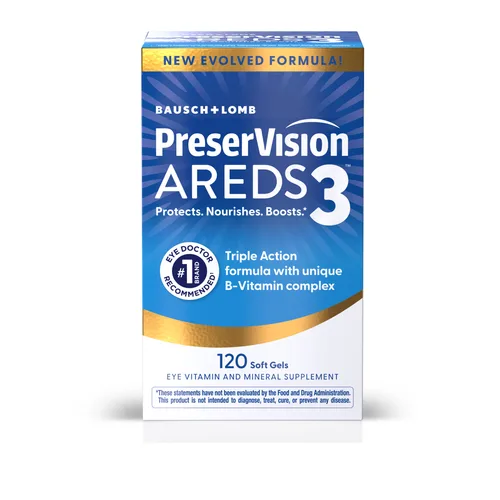
PreserVision ® AREDS3 Vitamin & Mineral Supplement Soft Gels Review
PreserVision AREDS3 Formula Soft Gels is presented as a new, evolved PreserVision formula that combines a unique B-vitamin complex with the clinically proven AREDS2 nutrients recommended by the NEI to help reduce the risk of moderate-to-advanced AMD progression. The page promotes the formula for triple action support. The directions say to take 1 soft gel with a meal 2 times per day. The page lists warnings to keep out of reach of children, not to use if the seal under the closure is broken, and to store at room temperature. The product is noted as beta-carotene free, which the page specifically calls out for current or former smokers. The Triple Action Formula section describes three benefits. Protects: AREDS2 nutrients help protect macular health by neutralizing free radicals and replenishing the eyes' natural filter. Nourishes: a unique B-vitamin complex promotes healthy cellular eye function. Boosts: the formula is said to provide 2x better absorption of key nutrients, based on AUC of lutein and zeaxanthin compared to the original PreserVision AREDS 2 Soft Gel. The Q&A section explains that AREDS3 contains the same key nutrients as AREDS2 plus a B-vitamin complex of eight B vitamins, including B6, B9, and B12, which the page says research suggests further supports macular health. The product is described as free from artificial dyes and flavors. The page says the zinc content is 25 mg per day (2 soft gels with 12.5 mg each), compared with 80 mg in AREDS 2 formulations, based on AREDS2 findings. Each daily dose of 2 soft gels provides 10 mg lutein and 2 mg zeaxanthin. The page states the product was first available February 2026 and is sold on the PreserVision website and select retailers. Other PreserVision formats listed on the page include AREDS 2 Formula Mini Gels, AREDS 2 Formula Chewables, and AREDS 2 Formula plus CoQ10 Soft Gels, each a separate product.
We don’t sell supplements. We help you make decisions and get the best price.
Lowest prices
Finding the lowest prices at the stores now. This takes a few seconds.
Products with nearly the same formula (Matched on the main ingredients)
Study, Trial or Testing Result Summary
Members Only95 human studies · 35 improved
6 of these 95 human studies gave the ingredient by drip or injection, not by mouth.
The strongest support for this product comes from studies of combined eye formulas, not single nutrients. In 3,640 people aged 55 to 80 followed for about 6.3 years, a formula of vitamin C, vitamin E, zinc and copper cut the odds of advanced macular degeneration by 28% and moderate vision loss by 27% [1]. Reviews of 13 and 26 trials agreed such combined formulas probably slow progression to late disease and reduce vision loss in people who already have macular degeneration [2][3]. A later trial found the formula slowed atrophy spreading toward the center of the eye but did not change the total atrophy area [4]. Zinc and copper here are at or near studied doses. On their own, the nutrients did not prevent eye disease in healthy people: vitamin C alone did not prevent macular degeneration [5], and vitamin E alone did not prevent macular degeneration or cataract in large long trials [6][7]. Vitamin A clearly helps night blindness in people who are low in it [8], but this dose is above the daily recommended limit, so members may wish to take less. The combined formula showed no benefit for cataract [9]. Animal and cell studies are never counted.
See all 95 studies →Hide the studies
- In 47 trials of about 1.2 million children aged 6 months to 5 years, vitamin A supplements lowered the risk of night blindness by about 68% and Bitot's spots by about 58% compared with control.Vitamin A supplementation for preventing morbidity and mortality in children from six months to five years of age.
- Across 43 trials of about 215,633 children aged 6 months to 5 years, vitamin A supplements cut night blindness by 68% and xerophthalmia (a serious dry-eye disease) by 69% compared with controls.Vitamin A supplements for preventing mortality, illness, and blindness in children aged under 5: systematic review and m…
- Across 13 trials with 85,321 people, vitamin E was linked to lower risk of late macular degeneration than multivitamins, but zinc and lutein/zeaxanthin ranked best for improving vision, not vitamin E.Efficacy of different nutrients in age-related macular degeneration: A systematic review and network meta-analysis.
- In five trials of 76,756 adults, antioxidant supplements including beta-carotene (a vitamin A precursor) did not prevent age-related macular degeneration over 4 to 12 years.Antioxidant vitamin and mineral supplements for preventing age-related macular degeneration.
- In four trials with 62,520 people, vitamin E or beta-carotene supplements did not lower or raise the risk of developing age-related macular degeneration.Antioxidant vitamin and mineral supplements for preventing age-related macular degeneration.
- In three trials with 23,099 people, vitamin E and beta-carotene supplements did not prevent or delay macular degeneration.Antioxidant vitamin and mineral supplements for preventing age-related macular degeneration.
- In 26 trials of 11,952 people with macular degeneration, antioxidant vitamin and mineral formulas including beta-carotene probably slowed progression to late disease and reduced the risk of losing 3 or more lines of vision.Antioxidant vitamin and mineral supplements for slowing the progression of age-related macular degeneration.
- In 13 trials with 6,150 people with macular degeneration, the large AREDS trial found antioxidants plus zinc slowed progression to advanced disease over 6.3 years and reduced vision loss, while smaller short trials showed no effect.Antioxidant vitamin and mineral supplements for slowing the progression of age-related macular degeneration.
- In eight trials of 1101 preterm infants, vitamin A did not reduce severe retinopathy of prematurity compared with placebo.Efficacy and Safety of Prophylactic Agents in Prevention of Retinopathy of Prematurity: A Systematic Review and Meta-ana…
- In a pooled analysis of five studies in optic neuritis, vitamin A with biotin did not significantly change visual acuity, though one individual study found better retinal nerve thickness with vitamin A.Vitamin supplementation in the treatment of optic neuritis: A systematic review and meta-analysis.
- In eight trials, mostly the large AREDS trial, antioxidants plus zinc reduced progression to advanced macular degeneration, while the other small trials gave inconsistent results.Antioxidant vitamin and mineral supplements for slowing the progression of age-related macular degeneration.
- In four trials of 944 people with retinitis pigmentosa, no clear benefit of vitamin A or fish oil on visual field or visual acuity was found over 4 to 6 years.Vitamin A and fish oils for preventing the progression of retinitis pigmentosa.
- A review of few studies in Stargardt disease found inconclusive evidence on vitamin A and vision, with one prospective study finding no link between supplementation and visual acuity.Vitamin A in Stargardt disease-an evidence-based update.
- This review of observational studies found suggestive evidence that dietary vitamin C intake is linked to cataract risk, but it did not test supplements in trials.Smoking, dietary factors and major age-related eye disorders: an umbrella review of systematic reviews and meta-analyses…
- One trial in Finnish male smokers found no link between vitamin E (alpha-tocopherol) and macular degeneration.Antioxidant vitamin and mineral supplementation for preventing age-related macular degeneration.
- This review reports that diet studies link vitamins E and C, minerals and carotenoids to lower macular degeneration, but gives no trial results for vitamin E alone.[NUTRITIONAL COMPONENTS AND MACULAR DEGENERATION AGE-RELATED].
- A review found that the large AREDS trial of vitamins C, E, beta-carotene and zinc with copper reduced progression to advanced macular degeneration in people with intermediate disease or advanced disease in one eye.Lifestyle modification, nutritional and vitamins supplements for age-related macular degeneration.
- A review of 7 reviews, 7 trials and 13 other studies found that high dietary intake of nutrients including copper was linked to a lower risk of early macular degeneration progressing to late disease.What did we learn in 35 years of research on nutrition and supplements for age-related macular degeneration: a systemati…
- In 39,876 healthy women given 600 IU natural vitamin E every other day for about 9.7 years, cataract rates were no different from placebo (1159 vs 1217 cases).Vitamin E and age-related cataract in a randomized trial of women.
- In nearly 40,000 healthy women aged 45 or older, 600 IU of natural vitamin E every other day for 10 years did not change the risk of age-related macular degeneration compared with placebo (117 cases versus 128).Vitamin E and age-related macular degeneration in a randomized trial of women.
- In 22,071 male US physicians, beta carotene (50 mg on alternate days) for 12 years did not change overall cataract risk compared with placebo, though current smokers had fewer cataracts.A randomized trial of beta carotene and age-related cataract in US physicians.
- In 22,071 healthy male US doctors given beta carotene 50 mg every other day for 12 years, there was no change in the risk of age-related macular disease with vision loss compared with placebo (162 vs 170 cases).Beta carotene supplementation and age-related maculopathy in a randomized trial of US physicians.
- In 11,545 male physicians aged 50 or older, 400 IU of vitamin E every other day for 8 years did not change the risk of cataract compared with placebo (579 versus 595 cases).Age-related cataract in a randomized trial of vitamins E and C in men.
- In about 9,900 first pregnancies among rural Nepali women, weekly vitamin A (7000 mcg retinol equivalents) cut night blindness during pregnancy from 10.7% to 6.7% versus placebo, but did not eliminate it.Vitamin A or beta-carotene supplementation reduces but does not eliminate maternal night blindness in Nepal.
- In two trials of adults aged 45 to 74 in rural China over 5 to 6 years, multivitamin/mineral supplements and riboflavin/niacin lowered nuclear cataract, but the retinol/zinc combination was not reported to have a benefit.The Linxian cataract studies. Two nutrition intervention trials.
- In about 4,800 Nepali preschool children, vitamin A given every 4 months for 16 months cut the prevalence of xerophthalmia (a vitamin A deficiency eye disease) by 63% and new cases by 62% compared with placebo.Impact of vitamin A supplementation on prevalence and incidence of xerophthalmia in Nepal.
- In 4629 older adults followed about 6.3 years, vitamin C, vitamin E and beta carotene had no effect on cataract or visual acuity loss; zinc with copper was a separate randomization.A randomized, placebo-controlled, clinical trial of high-dose supplementation with vitamins C and E and beta carotene fo…
- In 4,203 older adults at risk of advanced macular degeneration followed for a median of 5 years, adding lutein, zeaxanthin or omega-3 fats to the standard eye vitamin formula did not significantly reduce progression, and removing beta carotene made no difference to eye outcomes.Lutein + zeaxanthin and omega-3 fatty acids for age-related macular degeneration: the Age-Related Eye Disease Study 2 (A…
- In 3,640 people aged 55 to 80 followed 6.3 years, antioxidants including 500 mg vitamin C plus zinc cut the odds of advanced macular degeneration and vision loss, while antioxidants alone did not reach statistical significance.A randomized, placebo-controlled, clinical trial of high-dose supplementation with vitamins C and E, beta carotene, and …
- In people with geographic atrophy, antioxidants including 500 mg vitamin C slowed the spread toward the center of the macula (50.7 vs 72.9 micrometres per year) but did not change the overall area of atrophy.Oral Antioxidant and Lutein/Zeaxanthin Supplements Slow Geographic Atrophy Progression to the Fovea in Age-Related Macul…
- In 1193 healthy adults aged 55 to 80, 500 IU of vitamin E daily for four years did not prevent or slow early or late age-related macular degeneration compared with placebo.Vitamin E supplementation and macular degeneration: randomised controlled trial.
- Taking 500 IU of vitamin E daily for 4 years did not reduce the development or progression of age-related cataracts compared with placebo in people aged 55 to 80.Vitamin E supplementation and cataract: randomized controlled trial.
- In 1,072 male smokers aged 50 to 69, 20 mg daily beta-carotene for a median of 6.6 years did not change the prevalence of retinal blood vessel changes compared with placebo.Retinal vascular changes following supplementation with alpha-tocopherol or beta-carotene.
- In a randomized trial of 601 adults with retinitis pigmentosa followed for 4 to 6 years, taking 15,000 IU per day of vitamin A slowed the average decline in retinal electrical response compared with groups not taking that dose.A randomized trial of vitamin A and vitamin E supplementation for retinitis pigmentosa.
- In 545 premature infants under 1501 grams, high vitamin E serum levels given to prevent eye damage did not reduce the rate of severe retinal scarring or other vision problems at one to two years compared with placebo.Vitamin E and retinopathy of prematurity. Follow-up at one year.
- In 433 adults with early macular degeneration, a supplement containing copper with lutein, zeaxanthin, vitamins and zinc gave about 4.8 letters better visual acuity than placebo after 36 months.Secondary outcomes in a clinical trial of carotenoids with coantioxidants versus placebo in early age-related macular de…
- In a placebo-controlled trial of 287 premature infants, IV then oral tocopherol did not prevent retinopathy of prematurity, increased retinal hemorrhage, and in infants under 1 kg increased severe brain bleeding.Tocopherol efficacy and safety for preventing retinopathy of prematurity: a randomized, controlled, double-masked trial.
- Premature infants given early injected vitamin E (tocopherol) had more retinal bleeding (14.4%) than placebo controls (6.6%), and the bleeding was linked to higher blood tocopherol levels.Retinal hemorrhage in retinopathy of prematurity associated with tocopherol treatment.
- In adults with retinitis pigmentosa who all took 15,000 international units of vitamin A palmitate daily, adding 12 milligrams of lutein daily slowed visual field loss on average over 4 years, while the main field test showed no significant difference; vitamin A itself was not compared against placebo.Clinical trial of lutein in patients with retinitis pigmentosa receiving vitamin A.
- In 221 adults with retinitis pigmentosa who all took 15,000 IU of vitamin A daily, adding 1,200 mg of docosahexaenoic acid for 4 years did not slow vision loss compared with control capsules.Clinical trial of docosahexaenoic acid in patients with retinitis pigmentosa receiving vitamin A treatment.
- In 203 preterm infants fed carotenoids (lutein, lycopene and beta-carotene) added to their feeds, eye responses to light were greater in rod cells of the retina than in infants without the added carotenoids, and inflammation markers were lower. The study did not report the dose or duration.Effect of carotenoid supplementation on plasma carotenoids, inflammation and visual development in preterm infants.
- In very low-birth-weight premature babies, all of whom got 100 mg/kg of vitamin E by mouth daily, extra vitamin E injections did not reduce severe retrolental fibroplasia (an eye disease of prematurity) compared with placebo injections.Retrolental fibroplasia and vitamin E in the preterm infant--comparison of oral versus intramuscular:oral administration…
- In 133 children in Northeast Thailand with low vitamin A and zinc, 6 months of 1500 retinol equivalents per day of vitamin A normalized the conjunctival surface of the eye, while zinc, not vitamin A, improved dim-light vision recovery time.Effect of vitamin A and zinc supplementation on the nutriture of children in Northeast Thailand.
- In 120 patients having head and neck surgery under general anesthesia, vitamin A eye gel with clear tape protected the eye surface better than erythromycin eye ointment with clear tape, with fewer eye discomfort symptoms and less surface damage.[Effects of different eye protection methods during head and neck surgery under general anesthesia].
- In a randomized trial of 89 preterm infants at risk of retinopathy of prematurity, early high-dose intramuscular vitamin A improved retinal sensitivity at 36 weeks after conception compared with controls.Vitamin A supplementation improves retinal function in infants at risk of retinopathy of prematurity.
- In a 10-year randomized trial of 88 people with retinitis pigmentosa, the group taking vitamin A (the control group) kept 80% of their starting visual acuity in 40% of cases at 10 years, versus 63% in the group given hyperbaric oxygen therapy; vitamin A did not improve vision.Slowing the degenerative process, long lasting effect of hyperbaric oxygen therapy in retinitis pigmentosa.
- In a small trial of people with macular degeneration, the medication group given oral vitamin C and vitamin E plus an injection had a 60% effective rate, lower than the 88.3% seen with acupuncture; vitamin E was not tested alone.[Observation on therapeutic effect of age-related macular degeneration treated with acupuncture].
- In 80 people with thyroid eye disease and dry eye, vitamin A palmitate eye gel three times a day for one month improved tear film stability and corneal staining, with a 91.2 percent effective rate.A clinical study of topical treatment for thyroid-associated ophthalmopathy with dry eye syndrome.
- Over 1.5 years, twice-daily antioxidant capsules containing vitamin E helped keep distance vision stable in people with dry macular degeneration but did not improve the disease and increased cortical lens clouding in one eye.Multicenter ophthalmic and nutritional age-related macular degeneration study--part 2: antioxidant intervention and conc…
- In 61 people with eye floaters, a daily formula containing 40 mg vitamin C plus other nutrients taken for 6 months reduced visual discomfort and floater size compared with placebo, which showed no significant change.Dietary Intervention With a Targeted Micronutrient Formulation Reduces the Visual Discomfort Associated With Vitreous De…
- In 50 people with senile cataracts given vitamin E or placebo for 30 days, vitamin E lowered lens oxidative damage markers and reduced the size of cortical cataract opacities compared with placebo.Protective function of alpha-tocopherol against the process of cataractogenesis in humans.
- In 45 people, 36 with type 1 diabetes, 1,800 IU of vitamin E a day for 4 months raised retinal blood flow in the diabetic group to the level of non-diabetic people, without changing blood sugar control.High-dose vitamin E supplementation normalizes retinal blood flow and creatinine clearance in patients with type 1 diabe…
- In 35 people with wet macular degeneration, vitamin E (200 mg a day) with omega-3 fats shortened vision recovery time after photodynamic therapy at 20 days but not at 40 or 60 days, and visual acuity did not differ between groups.[Photodynamic therapy for age related macular degeneration with and without antioxidants].
- In 32 cataract surgery patients, adding coenzyme Q10 and vitamin E drops to the front of the eye improved vision on days 1 and 7 after surgery and reduced corneal swelling compared with standard surgery.Application of Vitamin E + Coenzyme Q Therapy During FAKO + IOL Implantation.
- In a small trial of 30 glaucoma patients using long-term eye drops, twice-daily vitamin A palmitate eye gel for 6 months improved dry eye symptoms and increased protective goblet cell density on the eye surface.Vitamin A Palmitate and Carbomer Gel Protects the Conjunctiva of Patients With Long-term Prostaglandin Analogs Applicati…
- In 27 people with early age-related macular degeneration, a daily antioxidant formula with 180 mg vitamin C taken for 12 months improved central retinal function, while untreated patients showed no change.Carotenoids and antioxidants in age-related maculopathy italian study: multifocal electroretinogram modifications after …
- In 20 healthy men taken to 4300 m altitude, a combination of vitamin C (500 mg four times daily), phosphate and bicarbonate improved dark adaptation and symptoms versus placebo, but other visual and thinking tests were the same.Beneficial effect of rightward hemoglobin-oxygen dissociation curve shift for short-term high-altitude adaptation.
- In 16 healthy women, three weeks of a lutein complex that included 2 mg of copper raised blood flow in the eye's retinal vessels and lowered diastolic blood pressure compared with placebo, but the copper effect alone could not be separated and the abstract reports no change in vision measures such as visual acuity.Lutein Complex Supplementation Increases Ocular Blood Flow Biomarkers in Healthy Subjects.
- Over an average of 6.3 years, high-dose antioxidant vitamins with beta-carotene and minerals did not change cataract risk compared with placebo, but people at high risk of advanced macular degeneration lowered their risk by about 25%.The age-related eye disease study: the results of the clinical trial.
- A single oral dose of vitamin A raised tear fluid retinol in marginally nourished Thai preschool children at two months, but the difference had disappeared by four months.The effect of vitamin A supplementation on tear fluid retinol levels of marginally nourished preschool children.
- In a long-running trial of people with retinitis pigmentosa, vitamin A did not measurably slow disease progression across the whole group, while vitamin E appeared to make it worse.Natural history of retinitis pigmentosa based on genotype, vitamin A/E supplementation, and an electroretinogram biomark…
- In a small randomized study, taking 1600 IU of vitamin E daily for 4 months did not improve vision or reduce retinal swelling in people with uveitis-related macular edema.Vitamin E in the treatment of uveitis-associated macular edema.
- In people with senile cataracts, systemic vitamin E slowed some lens opacity changes in treated eyes, but overall it did no better than the control group for cataract progression or vision.Read the study on PubMed (2632449) →
- After 12 weeks, a supplement containing vitamin E, astaxanthin and grape juice extract did not produce group differences in self-reported eye health compared with placebo in adults with memory complaints.An Examination into the Effects of a Nutraceutical Supplement on Cognition, Stress, Eye Health, and Skin Satisfaction in…
- In a small non-placebo comparison of people with dry macular degeneration, a polyvitamin containing vitamin E improved central vision in 43 of 75 people after 6 months but did not improve peripheral vision; vitamin E was not tested alone.Long term results of age-related macular degeneration therapy with prednisolone acetate--special refer to peripheral vis…
- Giving vitamin E to very premature infants from birth until their retinas matured raised blood levels and suppressed severe retrolental fibroplasia (abnormal retinal blood vessel growth).Vitamin E and retrolental fibroplasia: ultrastructural mechanism of clinical efficacy.
- Over five years, people with type 2 diabetes taking B vitamins, vitamin C and vitamin E alongside meds developed diabetic retinopathy more slowly and had lower oxidative stress markers than those on meds alone.The Amelioration of Detrimental Biochemical Anomalies by Supplementing B, C, and E Vitamins in Subjects with Type 2 Diab…
- In 38 intensive care patients, vitamin A eye ointment applied every 6 hours for 5 days prevented eye surface damage better than a moist chamber, and Schirmer's tear test rose by 2.06 mm with the ointment.Comparing Vitamin A and Moist Chamber in Preventing Ocular Surface Disorders.
- In 30 people with glaucoma, taking 300 or 600 mg a day of vitamin E for 12 months was linked to slower changes in eye blood flow and visual field loss than in people not taking it.Clinical evaluation of the neuroprotective effect of alpha-tocopherol against glaucomatous damage.
- In a small group of 24 premature infants with advanced eye disease, high-dose vitamin E was followed by fewer infants with legal blindness at one to two years (40% versus 71%) than in those not given it.Vitamin E supplementation and the retinopathy of prematurity.
- In 30 people with chronic simple glaucoma taking a combined DHA, vitamin E and B vitamin product for 90 days, visual field and retinal contrast sensitivity measures improved significantly.Fatty acid use in glaucomatous optic neuropathy treatment.
- In 26 retinitis pigmentosa patients with low zinc levels, zinc ion iontophoresis over 20 to 30 sessions improved vision in some eyes, with about 15% gaining more than three lines and some dark adaptation gains, while the remaining eyes changed little.[Primary study of iontophoresis of zinc ion in treatment of retinitis pigmentosa].
- In 19 adults, 12 with age-related macular degeneration and 7 controls, a 5-day course of AREDS-style supplements containing 400 IU vitamin E lowered one plasma oxidative stress marker (cystine), while other markers did not change and no vision outcome was measured.The short-term effects of antioxidant and zinc supplements on oxidative stress biomarker levels in plasma: a pilot inves…
- In 19 people with keratoconus, a riboflavin eye drop containing vitamin E plus brief UV-A treatment stopped the disease from progressing over 24 months, and vision improved.Transepithelial Corneal Cross-Linking With Vitamin E-Enhanced Riboflavin Solution and Abbreviated, Low-Dose UV-A: 24-Mon…
- In 16 healthy Japanese adults, a supplement with 20 mg lutein, 4 mg zeaxanthin and other antioxidants for 16 weeks increased macular pigment and skin carotenoid levels, with no serious side effects; the vitamin E dose was not stated.Effect of an antioxidant supplement containing high dose lutein and zeaxanthin on macular pigment and skin carotenoid le…
- In a small uncontrolled study of 7 people with fundus albipunctatus, a 90-day course of high-dose 9-cis-beta-carotene improved peripheral visual field and night-time light recovery in the eye, with no side effects reported.Treatment of a retinal dystrophy, fundus albipunctatus, with oral 9-cis-{beta}-carotene.
- In people with dry eye that did not respond to standard treatment, 4 weeks of retinol palmitate eye solution increased protective goblet cells and reduced surface cells on the eye, suggesting benefit.Effect of retinol palmitate as a treatment for dry eye: a cytological evaluation.
- In over 116,000 US nurses and health professionals followed for years, higher dietary vitamin E intake was not clearly linked to risk of primary open-angle glaucoma.Antioxidant intake and primary open-angle glaucoma: a prospective study.
- Among about 8,200 adults in the AREDS and AREDS2 eye studies followed for a median of 10.2 years, higher dietary vitamin A intake was linked to a lower risk of progressing to late age-related macular degeneration, an eye disease that damages central vision.Dietary Nutrient Intake and Progression to Late Age-Related Macular Degeneration in the Age-Related Eye Disease Studies …
- In a 10-year follow-up of 3,882 older adults with macular degeneration, beta carotene nearly doubled lung cancer odds, and eye progression was 15% lower with lutein/zeaxanthin than with beta carotene, while beta carotene removal made no difference to late macular degeneration.Long-term Outcomes of Adding Lutein/Zeaxanthin and ω-3 Fatty Acids to the AREDS Supplements on Age-Related Macular Degen…
- In a cross-sectional study of 848 adults aged 30 to 60, daily copper intake was estimated from a food questionnaire, but the abstract reports no copper-specific result; the only reported link was higher vitamin A intake with more early macular drusen, a risk marker for age-related macular degeneration.Precursors of age-related macular degeneration: associations with vitamin A and interaction with CFHY402H in the Inter99…
- In 828 healthy Irish adults aged 20 to 60, smokers had a relatively low dietary intake of vitamin C, but the study did not measure vision or test vitamin C supplementation.Diet and risk factors for age-related maculopathy.
- In 400 adults aged 50 to 84, higher blood levels of carotenoids and vitamin E were not consistently linked to less severe cloudiness of the eye lens (cataracts), with some links only in certain subgroups.Serum carotenoids and tocopherols and severity of nuclear and cortical opacities.
- In adults with retinitis pigmentosa taking 15,000 IU of vitamin A daily for 4 to 6 years, those who ate more omega-3 fats had slower loss of eyesight than those who ate less.ω-3 intake and visual acuity in patients with retinitis pigmentosa receiving vitamin A.
- In HIV-infected African children, dry eye from conjunctival xerosis responded to vitamin A treatment in two patients, though the study was a descriptive case series without a control group.Ocular manifestations of infection with the human immunodeficiency virus in an African pediatric population.
- In 98 healthy young adults tracked for 15 days with food logs, men who ate more zinc and performed better on a visual thinking test than women, but zinc was not separately linked to better vision performance, and the study does not isolate its effect.The impact of nutrition on visual cognitive performance in the nutrition, vision, and cognition in sport study.
- In 88 extremely low birthweight premature babies who each received 25 mg of vitamin E by mouth, 53% developed retinopathy of prematurity and 19% went on to retrolental fibroplasia, and the authors judged that vitamin E's protective benefit is not proven.Retinopathy of prematurity in extremely low birthweight infants.
- Children with beta-thalassemia had lower blood vitamin A levels than healthy controls, and 6 of 8 tested had abnormal night-vision (dark adaptation) testing, with the low vitamin A linked to low retinol-binding protein.Serum levels of retinol, retinol-binding protein, carotenoids and triglycerides in children with beta-thalassemia major.
- Vitamin C was found in fresh tears from 42 people, but the study did not test any vitamin C supplement or measure vision outcomes.Is ascorbate in human tears from corneal leakage or from lacrimal secretion?
- In a survey of outdoor workers in Argentina, a corneal disease appeared only in the group with partly low blood vitamin C and no eye protection, though the study did not test vitamin C supplements.Climatic Droplet Keratopathy in Argentina: Involvement of Environmental Agents in Its Genesis Which Would Open the Prosp…
- Vitamin C levels in the eye's fluid were measured in glaucoma patients during surgery, and no race differences remained after adjustment, with no vitamin C supplement given.Tissue-Specific Antioxidant Capacity in Primary Open-Angle Glaucoma Patients.
- In patients with a detached retina, the fluid under the retina contained far more vitamin C than blood did, which suggests eye fluid moves into that space; no vision outcome or vitamin C intake was tested.Source of subretinal fluid on the basis of ascorbate analyses.
- In 20 people with progressive keratoconus, a corneal treatment using riboflavin with vitamin E TPGS kept best-corrected vision stable over one year, with no cases of progression, though this retrospective single-center study had no comparison group.Epi-off riboflavin with vitamin E TPGS (Ribocross®) cross-linking: one-year outcome.
- The authors report that six clinical trials showed vitamin E supplementation suppresses severe retinopathy of prematurity in premature infants, and they propose a mechanism involving spindle cells, though overall incidence was not changed.Vitamin E protects against retinopathy of prematurity through action on spindle cells.
- A review of the Age-related Eye Disease Study reported that high-dose zinc with vitamins C and E and beta-carotene helped some age-related macular damage but had virtually no effect on cataract progression.The age-related eye disease study (AREDS).
Review Totals and Summary
Members Only125 reviews · 100% positive
The store shows a single rating in total (5.0 out of 5, from the Dry Eye Rescue page), and the themes below come from the one written review that could be read on its page, so no broad pattern can be drawn. What buyers praise: the only reviewer, listed as Elise, gave five stars and marked that they recommend the product. Their comment praises the shipping experience, saying the order arrived on time and was what they ordered. The rating histogram shows one five-star review and zero for four, three, two and one star, and the page reports that 100 percent of reviewers would recommend the product. The review is dated yesterday and carries a Read More link, though the visible text is short. The on-time delivery comment may relate to the page's note of fast fulfillment from the company's own warehouse, but that is the store's claim, not something the reviewer confirmed in detail. What buyers complain about: nothing. The page includes no negative or neutral ratings, so there are no complaints recorded to compare against. Performance and results: none can be reported. The reviewer said they had just received the product and would see how it works, so the review reflects delivery and first impressions rather than any long-term result with the supplement. There are no comments on effects on eye health or on side effects. Taste, form and value: the review says nothing about taste, the size of the mini soft gels, ease of swallowing, or value for money. No information about the 60, 90 or 120 count sizes is attached to the review, so nothing can be said about which pack size suits whom. Who it seems to suit: the review does not say. It only shows that one buyer was satisfied with the order and intended to try the product for its intended purpose. Reviews of other forms: the page did not present reviews of other forms such as gummies, capsules or powder in the summary, so nothing had to be left out beyond that note, and everything here concerns the softgels. How much weight to give it: the overall 5.0 rating rests on a single submission and carries little statistical weight. With only one written review readable, this should be treated as an early signal about ordering and delivery, not as evidence of how well the softgels work, how they feel to take, or how they compare with other products. Anyone deciding on the product would need to look for more reviews that describe actual use over time.
Biohacker Summary
Members Only10 of 10 recommend it
Every ingredient in this product is a smaller ingredient, and the panel spoke most about vitamin C and zinc. Vitamin C drew the most support: six of ten recommend or use it, mainly for collagen, skin, joints and connective tissue, and some pair it with collagen, with one taking it about an hour before a workout and another using it with zinc for immunity. Zinc was recommended or used by most of the panel for testosterone, gut lining, mood, immunity and wound healing, with doses of 15 mg a day from one person and 30 mg from two others, though one warned that too much zinc can lead to low copper. Copper, vitamin A and vitamin E drew only neutral comments or a single user, such as one person taking 2 mg of copper a day and one giving a little vitamin E to kids, and one panelist stopped using a vitamin C serum because of its smell.
See all 10 biohackers →Hide the biohackers
Dr. Eric Berg · Zinc · recommends
- Recommends ensuring sufficient zinc intake because the prostate needs enough zinc for the conversion from testosterone to DHT to be smooth and optimized.
- Mentions that lemon is loaded with vitamin C, and when combined with coffee, vitamin C significantly increases the bioavailability of antioxidants in the coffee.
- Dr. Berg states that Vitamin C helps fight biofilms and is essential for making collagen in gums, teeth, and capillaries.
- Recommends taking zinc carnosine for an ulcer or some type of gastric problem.
- Recommends Vitamin C as a cofactor, especially for collagen.
- Notes that low vitamin A can lead to dry eyes, dry mouth, and night vision issues.
- Emphasizes the importance of zinc for decreasing viral replication and recommends taking 40 to 60 mg every single day.
- States that high doses of vitamin C, like 2 to 4 grams, can greatly reduce inflammation and support the immune system.
- Notes that birth control pills deplete the body of zinc, which is needed for the brain to make serotonin.
- Added zinc to his creatine product because a deficiency in zinc might make creatine not work as well.
- Mentions that grass-fed liver is loaded with zinc.
- Recommends zinc to enhance testosterone.
- Mentions that grass-fed liver has the active form of vitamin A, called retinol, which is important for eyes, thyroid, immune system, and skin.
- Added copper to his creatine product because a deficiency in copper might make creatine not work as well.
Andrew Huberman · Zinc · uses
- Zinc carnosine to support and improve the lining of your gut.
- Notes that AG1 Pro contains zinc carnosine to support and improve the lining of the gut.
- States that AG1 Pro contains zinc carnosine to support and improve the lining of the gut.
- Uses AG1 Pro, which contains zinc carnosine to support and improve the lining of the gut.
- States that AG1 Pro contains zinc carnosine to support and improve the lining of the gut, and he was already taking some of these ingredients separately.
- States that AG1 Pro includes zinc carnosine, which he was already taking separately, to support and improve the lining of the gut.
- Personally takes zinc carnosine, which is included in AG1 Pro to support and improve the lining of the gut.
- AG1 Pro has zinc carnosine to support and improve the lining of your gut. Some of these ingredients I personally was already taking separate from the AG1 formula.
- States that AG1 Pro contains zinc carnosine to support and improve the lining of your gut.
- Uses AG1 Pro, which contains zinc carnosine to support and improve the lining of the gut.
- Takes a multivitamin every day for longevity.
- Takes a multivitamin every day for longevity.
- Takes a multivitamin every day for longevity.
- Recommends AG1, a vitamin, mineral, and probiotic drink, and notes that for a limited time, a subscription comes with additional supplements.
Ben Greenfield · Copper · neutral
- Mentions that overshooting zinc can lead to a copper deficiency, highlighting the interplay between these elements.
- Ben Greenfield's formulation includes 30 grams of zinc a day, taken for one week before surgery and two weeks after, as it is an important cofactor for wound healing.
- Mentions a recent study showing no significant increase in bleeding for patients on Vitamin E supplementation during open heart surgery, which was interesting for him to learn.
- States that vitamin C is extremely important for collagen turnover and cites orthopedic data showing that 500 mg to 1 g of vitamin C can reduce the rate of complex regional pain in total knee replacements and wrist fractures.
- Notes that Vitamin A is a fat-soluble vitamin that supports healthy skin cell turnover.
- Mentions vitamin C as part of a bare-minimum protocol.
- Emphasizes that zinc sufficiency is crucial for immunity because the thymus-derived peptide thymulin, which trains lymphocytes, requires zinc to be active.
- Notes that while vitamin C has significant value, the optimal dose is a vexed question, and high doses might not always be beneficial, potentially blunting the hormetic effects of exercise.
- Recommends adding zinc into one's stack because it is a co-factor for enzymes involved in testosterone synthesis and sperm maturation, and zinc deficiency is a reproducible cause of low sperm count.
- He mentions zinc as a supplement with real human data behind it for male fertility.
- Zinc may support both testosterone and sperm count.
- Says Formula IQ CopperIQ Serum has stayed in their routine to close out summer strong.
- Notes that IV vitamin C has been used for decades for cancer patients with almost no standardization and that he receives many questions about its effectiveness and combination with chemo.
- Warns that he was taking so much zinc without realizing it because it was in five different things he was taking, and he couldn't pinpoint the problem.
Siim Land · Vitamin C · recommends
- Recommends taking vitamin C with collagen to support joint collagen synthesis.
- States that vitamin C is needed for initiating collagen synthesis and that higher vitamin C intake appears to increase vitamin C content in the skin.
- Mentions that copper is a mineral necessary for making collagen.
- Lists sauerkraut and fruit as sources of Vitamin C.
- Lists liver and carrots as sources of Vitamin A.
- Notes that Vitamin C is one of several supplements with human evidence.
- States that deficiencies in nutrients such as zinc can impair normal immune regulation.
- Notes that researchers found vitamin C alleviates ferro-aging, a process of iron overload and lipid peroxidation that drives aging, and that it directly inhibited ACSL4, a protein driving ferro-aging.
- States that Vitamin C has a central role in aging and longevity, and that in monkeys, oral vitamin C slowed ovarian aging during a 3.3-year study.
- States that vitamin C is one of the most important vitamins for staying healthy and aging well, and that intakes of 200 to 400 mg a day from food or supplements largely saturates plasma and neutrophils in most healthy adults. He also recommends spreading out the vitamin C across the day to avoid oversaturation.
- Notes that oral vitamin E and C supplementation has been noted to increase the dose of UVB radiation from the sun needed to cause redness of the skin, suggesting increased resilience against sun damage. He also mentions a trial where a combination of slow-release vitamin C and vitamin E decreased the progression of carotid atherosclerosis in men.
- Mentions vitamin C in comparison to topical melatonin for oxidative defense, stating that melatonin would compete but is not as broadly validated clinically.
- Mentions vitamin E in comparison to topical melatonin for oxidative defense, stating that melatonin would compete but is not as broadly validated clinically.
- Was found to be vitamin C deficient by True Health and Mayo Clinic tests, and now addresses this by eating one extra kiwi fruit daily.
Thomas DeLauer · Vitamin C · recommends
- Recommends taking vitamin C along with collagen about an hour before a workout for connective tissue benefits.
- Uses vitamin C as part of their immunity duo, stating it is important for boosting the immune system, especially during cold and flu season.
- Adds zinc to their immunity duo because it helps them absorb vitamin C, considering the two together a fantastic combination for fall and winter.
- Recommends zinc, noting it is a cofactor for enzymes that build neurotransmitters, and deficiency can affect mood, happiness, and motivation.
- Recommends consuming vitamin C to aid in NADPH recycling, which is necessary for glutathione to be reused after neutralizing oxidative stress.
- Mentions that more zinc could be beneficial for testosterone, but it's not working on the axis that most people need help with.
- Takes Purity's liquid liposomal vitamin C for immune support and overall wellness, finding it easy to add to water, juice, or take straight up due to its good taste.
- Compares the Vitamin C content of oranges (53mg) to guava (228mg), noting guava has 4x more.
- Compares zinc content, noting salmon has under 1mg while oysters have 74mg per 100g, a 70x difference.
- Recommends keeping zinc levels topped off because it is a critical cofactor for over 300 enzymes and is important for immune cells, testosterone, and wound healing.
- Recommends 15 mg of supplemental zinc if oysters are not realistic, but emphasizes that food source zinc is better as it comes with natural cofactors like copper and selenium.
- States that collagen synthesis is vitamin C dependent, in the context of glowing skin.
- Recommends Vitamin C for sleep, noting that intake in the range of 125 to 200 mg per day is associated with a lower risk of sleep disorders and sleep apnea, with the benefit plateauing beyond this range.
- Mentions a causal link found between vitamin E and waking up in the middle of the night.
Dave Asprey · Vitamin C · recommends
- Recommends taking vitamin C for better skin health.
- States that currently, he is only taking vitamin C and vitamin D.
- Dave Asprey's kids get a little bit of vitamin E every day, which helps to stabilize the bad oils they get when eating at restaurants.
- Developed a nonnano zinc sunscreen over five years, stating her skin is probably better now than it's ever been.
- Emphasizes the importance of having enough zinc before trying advanced longevity strategies like peptides.
- Emphasizes the importance of having enough copper before trying advanced longevity strategies like peptides.
- Recommends real vitamin A for people on the spectrum, noting that many cannot convert plant vitamin A and need the good stuff he includes in his Vitam DAKNE product.
- Suggests that zinc has better safety and protective data than meds for reducing cardio respiratory risk.
- Recommends Vitamin E as one of the most important supplements for overall health.
- Dave Asprey reflects on how new research clarifies the mechanism behind IV vitamin C's anti-cancer effect, vindicating a decades-old idea that was dismissed for the wrong reasons.
- Takes Vitamin DAKE from Suppgrade Labs because D3, A, K2, and E work together.
- Takes Vitamin DAKE from Suppgrade Labs because D3, A, K2, and E work together.
- Notes that plain Vitamin C isn't enough and that most people never think to check for a specific ingredient that makes it work.
- Includes vitamin K2 as a critical ingredient in Vitamin DAKE, stating that the body needs the right fat soluble vitamins for thousands of reactions.
Dr. Mark Hyman · Vitamin A · neutral
- Mentions that vitamin A levels can be looked at to get a deep sense of what's happening with nutrient levels.
- Recommends vitamin C as a basic supplement during detoxification to help with inflammation and detoxification.
- Dr. Hyman mentions vitamin C as an advanced therapy for skin repair.
- Mentions topical vitamin C as an antioxidant that can help skin with aging.
- Gave a patient with psoriatic arthritis a little zinc, which contributed to significant improvement in her condition.
- Mentions that what they do when a cold comes on is not just vitamin C.
- Recommends taking 50,000 units of vitamin A for three to five days right at the onset of symptoms if one feels they might be getting sick.
- Recommends ensuring adequate vitamin C intake on a regular basis for immune support, stating it's important for healthy immune function despite mixed data on its effectiveness for colds.
- Recommends ensuring adequate zinc intake on a regular basis for immune support, noting some data on zinc lozenges for early cold.
- Notes that night blindness is caused by vitamin A deficiency.
- Mentions that vitamin C was the very first vitamin discovered, isolated, and synthesized in 1932, and its deficiency caused scurvy.
- Recommends correcting nutrient deficiencies with zinc.
- Recommends nutrient-dense foods rich in vitamin C, such as guavas and parsley, to reduce inflammation.
- Recommends nutrient-dense foods rich in zinc, such as pumpkin seeds and oysters, to reduce inflammation.
Dr. Rhonda Patrick · Zinc · recommends
- Notes that not getting enough zinc can affect testosterone, as zinc is very important for testosterone synthesis.
- Recommends men take a 30 milligram zinc supplement for sperm health when preparing for IVF.
- Lutein and zeaxanthin can also be obtained from certain multivitamins.
- Lutein and zeaxanthin can also be obtained from certain multivitamins.
- Lutein and zeaxanthin can also be obtained from certain multivitamins.
- Discusses findings from a meta-analysis on zinc supplementation, noting it improved insulin resistance, inflammation, and oxidative stress in people with diabetes or prediabetes, and explains its biological role in the pancreas.
- Recommends nutrients like zinc for men to prioritize sperm mitochondrial health.
- Recommends nutrients like vitamin C for men to prioritize sperm mitochondrial health.
- Dr. Rhonda Patrick's daughter chugs an Emergency fizzy drink in the morning to ensure she gets some vitamin C and micronutrients before school.
- Choosing a multivitamin that includes lutein and zeaxanthin ensures you get meaningful amounts every day.
- Choosing a multivitamin that includes lutein and zeaxanthin ensures you get meaningful amounts every day.
- Choosing a multivitamin that includes lutein and zeaxanthin ensures you get meaningful amounts every day.
- Notes that ~60% of Americans are low in vitamin E.
- Notes that ~35% of Americans are low in vitamin C.
Bryan Johnson · Zinc · uses
- Takes 15 mg of Zinc in the morning for longevity.
- Takes 15 mg of Zinc in the morning.
- Takes 15 mg of Zinc in the morning for longevity.
- Takes 2 mg of Copper in the morning for longevity.
- Uses Vitamin C as an example of how it would be great if people knew that when they took it, it had a measurable amount and wasn't polluted, which is what Brian ensures with his products.
- Applies vitamin C after showering.
- Bryan Johnson's baseline measurements showed low zinc, which was easy to fix by adjusting her protocol and supplements.
- Takes 250 milligrams of Vitamin C.
- Recommends adequate Zinc for hair health, noting it is in the Blueprint stack.
- Bryan uses a copper pillowcase as part of his curated sleep environment.
- Recommends Vitamin C for skin health, noting it's good to pair with collagen peptides and is included in the Blueprint stack.
- Bryan Johnson takes Vitamin C daily as part of his Longevity Mix, which is an antioxidant-rich essential vitamin that supports immune function and metabolic energy.
- He uses Vitamin C, typically in a serum, in the morning for skin health.
- Recommends adequate Vitamin E for hair health, noting it is in the Blueprint stack.
Peter Attia · Zinc · recommends
- Suggests that zinc and magnesium could potentially help with vasodilation and sleep, particularly for women experiencing severe symptoms in the luteal phase.
- Notes that in mouse studies, there was a combined effect of alpha ketoglutarate with vitamin A for male mice.
- In mouse studies, Peter Attia's team found a combined effect of AKG with Vitamin A for male mice.
- Recommends vitamin C as an important molecule for skin, noting its role as a precursor for collagen synthesis, a powerful antioxidant, and a regulator of complexion for even skin tone.
- Tried a vitamin C serum mixed with ferulic acid but stopped using it because she hated the smell. She notes that topical application of vitamin C far exceeds the levels achievable by ingestion for skin benefits.
- Mentions that a lot of the profound transformation of a cell into a sperm, specifically the making of a tail, is vitamin A driven.
- Discusses the AREDS formula, which initially included C and beta-carotene with zinc and copper, and later replaced beta-carotene with lutein and zeaxanthin, showing it could delay or reduce the conversion of mild to severe macular degeneration.
- Notes that antioxidants like vitamins A, C, and E have been looked at for cataract formation but have shown no effect.
- States that vitamin C deficiency is associated with an elevated risk of cataract, but supplementation to supranormal levels has not been shown to protect against cataract formation.
- Discusses the AREDS formula, which initially included C and beta-carotene with zinc and copper, and later replaced beta-carotene with lutein and zeaxanthin, showing it could delay or reduce the conversion of mild to severe macular degeneration.
- Mentions the elimination of scurvy through the work of James Lind and the eventual understanding that it was due to vitamin C, initially thought to be just citrus.
- Notes that there are some downsides to Vitamin E, including cardiovascular longitudinal risk and prostate cancer, and that discussions are needed with patients, especially those with diabetes or cirrhosis, due to studies indicating increased all-cause mortality depending on the dose.
- Explains that for Wilson's syndrome, which can lead to liver failure, the treatment given to children is zinc, which is inexpensive and effective in outcompeting copper to prevent overload.
- Peter Attia, involved in the American Urological Association Peyronie's guidelines, stated that vitamin E is not indicated for Peyronie's disease and should not be given.
RAL Summary
Members OnlyTier 4 for Eye Health
The 125 counted reviews do not match the review page read, which shows a single rating on a retailer page (Dry Eye Rescue) and only comments on shipping, so it is seller feedback rather than a review of how this product works. Its reviews are set aside, so it is graded on its studies alone. Human studies support Vitamin C (5 of 16 human studies showed an improvement), but there are not yet enough reviews to confirm it (0).
- Emerging: not enough evidence to rank higher yet.
Where the evidence disagrees: 38 of the 95 human studies found no effect.
More Details
Members OnlyBody systems · Combine with · Possible side effects
Body systems: Eyes and vision
Combine with: For its intended vision purpose, this formula pairs well with a diet rich in leafy greens and with regular eye exams. Additional omega-3 is usually unnecessary if the soft gel already supplies DHA and EPA. If the person's real interest is thyroid health, they should look at a separate, thyroid-focused regimen after checking TSH, free T4 and thyroid antibodies with a clinician. Such a regimen could include selenium (about 100-200 mcg), iodine only if a deficiency is confirmed, vitamin D, and iron or B12 if levels are low. Avoid high-dose iodine or biotin without medical advice, since biotin can interfere with thyroid lab tests. Those on a med should take it apart from zinc, copper and other minerals, ideally by 4 hours, because minerals can reduce absorption.
Possible side effects: No major side effects reported in the reviews; vitamin E at 400 units daily was linked to faster decline in one inherited retinal disease, and the vitamin A dose is above the daily recommended limit.
Supplement Facts
Vitamin A 4296 mcg · Vitamin C 226 mg · Vitamin E 90 mg
| Vitamin A | 4,296 mcg | |
| Vitamin C | 226 mg | |
| Vitamin E | 90 mg | |
| Zinc | 34.8 mg | |
| Copper | 0.8 mg |
Other ingredients: Ingredients: Ascorbic acid, dl-alpha tocopheryl acetate, gelatin, glycerin, soybean oil, zinc oxide, beta-carotene, soy lecithin, yellow beeswax, silicon dioxide, titanium dioxide, cupric oxide, FD&C yellow 6, FD&C red 40, FD&C blue 1.
Directions: Take 2 soft gels daily; 1 in the morning, 1 in the evening with a full glass of water and during meals.
Barcode (UPC) 324208743621 · Label source: Reverseagelab · Report a label change
Show entire label

More eye health products
Members OnlyThe highest ranked for the same goal
Read more
Our articles on this subject
- What Supplements and Vitamins Should Not Be Taken TogetherArticle · Sep 7, 2026
- When Is the Best Time to Take Vitamins and Supplements?Article · Jun 15, 2026
Graded November 4, 2026 by the Reverse Age Lab evidence engine, from human studies, real reviews and our biohacker panel. How we grade. Is this medical advice? No. Rala organizes the published evidence; go over any change with your doctor, especially if you take meds.
Privacy policyConsumer health dataTermsDo Not Sell or Share My Personal InformationCookie settings