S.S.S Tonic Review
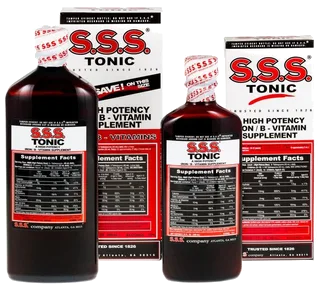
S.S.S. Tonic, made by the S.S.S. Company, is a liquid iron and B-vitamin supplement. The brand dates to 1826 and began in Atlanta, Georgia. Retailer pages describe it as a high-potency tonic for adults and for children aged 12 and older. It is sold as an over-the-counter product in 10 oz and 20 oz bottles. The company markets it for people who feel tired or run down because of simple iron-deficiency anemia, meaning low iron and low B vitamins. Retailer labels list these active ingredients per 3-tablespoon (45 mL) serving: - Iron: 100 mg, as ammonium citrate. Amazon's listing names it as ferric ammonium citrate. - Thiamine (B1): about 5 mg. Amazon's listing says 10 mg, so the listings disagree on this figure. - Riboflavin (B2): about 2.4 mg. Amazon's listing says 2 mg. - Niacinamide: 20 mg. Smithsonian records of an older formulation also list B12 and botanical extracts. The current Walmart label lists these inactive ingredients: - citric acid - ethyl alcohol, 12% - gentian root extract - natural and artificial flavors The H-E-B nutrition panel shows 40 calories, 3 g of carbohydrate and 110 mg of sodium per serving. Check the bottle you buy, because formulations and listings differ. How it works: - **Iron:** Iron is the central atom of hemoglobin, the protein in red blood cells that carries oxygen. When iron stores run low, the body makes fewer or smaller red cells. This causes fatigue, weakness, pallor and poor concentration. Ferric ammonium citrate is a soluble iron salt. In a liquid it is already dissolved, so it can be taken up in the small intestine. It is absorbed mainly in the duodenum and upper jejunum. The body then binds it to transferrin and carries it to the bone marrow, where it goes into new hemoglobin. Citrate and the acidic liquid base may help keep the iron soluble. - **B vitamins:** Thiamine and riboflavin are coenzymes in energy metabolism. They help turn carbohydrate and fat into usable cellular energy. Niacinamide is the precursor of NAD and NADP, which are also central to energy metabolism. These vitamins support energy production, but they do not treat anemia themselves. - **Gentian root:** Gentian is a traditional bitter. It is included as a flavoring and traditionally as an appetite stimulant. I did not find clinical evidence of its effect at this dose. Practical points: - The product contains alcohol, so people avoiding alcohol should take note. - A 100 mg dose of elemental-type iron is high. Iron can cause stomach upset, dark stools and constipation. Excess iron is dangerous to children, and accidental iron overdose is a leading cause of poisoning in young children. - Anyone with hemochromatosis should not take it. - Iron should be taken only when low iron is confirmed. A clinician should check ferritin and hemoglobin to find the cause of any deficiency. - Like all supplements, it is not FDA-approved to treat disease.
We don’t sell supplements. We help you make decisions and get the best price.
Lowest prices
We may earn a commission from some store links. How we choose.
Finding the lowest prices at the stores now. This takes a few seconds.
Study, Trial or Testing Result Summary
Members Only38 human studies · 11 improved
5 of these 38 human studies gave the ingredient by drip, not by mouth.
Iron is the main ingredient here, at 300 milligrams a day, which is above the recommended daily limit, so members may want to take less. Large, well-run trials found that iron does not support the immune system. Iron with folic acid in 4436 pregnant women did not change their children's fever, diarrhea or lung infections [1]. High-dose iron did not change infection rates in 2141 dialysis patients [2]. Some studies found harm. Fortified rice with iron raised new hookworm infections in schoolchildren [3], and iron-deficient nomads given iron had far more infections than those given placebo [4]. Thiamine is at a full dose, but its support comes from probiotic tablets and nutrient mixes, not thiamine alone [5][6]. A multivitamin did not change immune signals in older adults [7]. No good study has tested riboflavin alone for immunity, and mixed products gave mixed results [6][8]. Niacin is well below the studied dose, and its two small studies disagree [9][10]. Animal and cell studies are never counted.
See all 38 studies →Hide the studies
- In 35 trials of 3494 critically ill patients, intravenous thiamine made little to no difference to death rates and slightly lengthened intensive care stay, but may have shortened shock and lowered lactate and organ failure scores.Effect of intravenous thiamine administration on critically ill patients: A systematic review and meta-analysis of rando…
- A review of 49 studies on vitamins and minerals in atopic dermatitis found the evidence on iron too limited to say whether it affects the condition.Micronutrients in Atopic Dermatitis: A Systematic Review.
- In 4436 pregnant women in rural Bangladesh given iron and folic acid or multiple micronutrients, their children's rates of fever, diarrhoea and lung infections up to 24 months did not differ.Prenatal early food and multiple micronutrient supplementation trial reduced infant mortality in Bangladesh, but did not…
- In 2141 adults on hemodialysis followed for about 2 years, high-dose intravenous iron did not change infection rates compared with low-dose iron.Intravenous Iron in Patients Undergoing Maintenance Hemodialysis.
- In about 1977 Cambodian schoolchildren eating micronutrient-fortified rice for seven months, the risk of new hookworm infection increased compared with placebo rice, especially where infection was common.Micronutrient-Fortified Rice Can Increase Hookworm Infection Risk: A Cluster Randomized Trial.
- In 1815 malnourished African adults with HIV starting antiretroviral therapy, an iron-fortified supplement for about 6 weeks did not change blood iron markers or inflammation (CRP) compared with the control.Minimal impact of an iron-fortified lipid-based nutrient supplement on Hb and iron status: a randomised controlled trial…
- In Ghanaian mothers and their children, supplements including 6 mg iron daily for the children did not increase illness rates compared with the other groups.Supplementation with Small-Quantity Lipid-Based Nutrient Supplements Does Not Increase Child Morbidity in a Semiurban Se…
- In 796 children aged 0-6 with food allergies, a probiotic, zinc and B vitamin product plus hydrolyzed formula for 6 months lowered allergy skin-test size, total IgE and food allergy prevalence compared with formula alone, with benefits lasting 6 months after.Products of compound probiotics combined with zinc and vitamin B ameliorate the risk of food allergy.
- In 740 pregnant women in rural Nepal, a multiple micronutrient supplement reduced vitamin deficiencies including riboflavin but had no effect on subclinical infection.Antenatal supplementation with micronutrients and biochemical indicators of status and subclinical infection in rural Ne…
- In 633 Gambian children aged 7-37 months given iron supplements, children who stayed infection-free had more of a gut bacterium called Prevotella stercorea; the iron form IHAT led to fewer moderate-to-severe diarrhoea episodes than ferrous sulphate, but the analysis mainly linked gut bacteria rather than iron to infection.Gut Prevotella stercorea associates with protection against infection in rural African children.
- In 399 preschoolers in India, adding 25 g of guava to a daily meal for 140 days improved iron status and lowered acute respiratory infection compared with banana or cucumber, though this was a food-based approach rather than an iron supplement.Guava with an institutional supplementary meal improves iron status of preschoolers: a cluster-randomized controlled tri…
- In 328 anemic Kenyan children given iron or placebo, the study looked at how malaria affects red blood cell production and found it adequate for the degree of anemia, without testing an immune benefit of iron.Malarial anemia leads to adequately increased erythropoiesis in asymptomatic Kenyan children.
- In 226 preschool children, 6 months of a seasoning powder with thiamine and other micronutrients was linked to fewer respiratory and diarrhea illnesses than vitamin A alone or vitamin A plus iron.Effect of vitamin A, vitamin A plus iron and multiple micronutrient-fortified seasoning powder on infectious morbidity o…
- In 202 dialysis patients, a 12-week multinutrient supplement containing thiamine did not change fatigue or quality of life but lowered herpesvirus 7 DNA copies and improved heart rate variability versus placebo.Effects of nutritional supplementation on fatigue, and autonomic and immune dysfunction in patients with end-stage renal…
- In 92 children with recurrent respiratory infections, 21 days of a probiotic tablet containing thiamine raised IgA, lowered IgE and IL-17, and cut respiratory infections about threefold over 6 months versus no treatment.[The effectiveness of BIFIFORM KIDS in the prevention of the incidence of acute respiratory infections in children].
- In 80 healthy older adults, 8 weeks of a multivitamin raised several vitamin levels but not thiamin, and did not change immune signaling molecules interleukin-2, -6 or -10.The effects of a multivitamin/mineral supplement on micronutrient status, antioxidant capacity and cytokine production i…
- In 56 children with shigellosis, 2 weeks of zinc added to a thiamine-containing multivitamin increased lymphocyte growth response and one antibody response versus multivitamin alone; thiamine itself was not tested separately.Effect of zinc supplementation on immune and inflammatory responses in pediatric patients with shigellosis.
- In 56 children with shigellosis, 2 weeks of zinc added to a thiamine-containing multivitamin improved antibody response and raised B cell counts versus multivitamin alone; thiamine itself was not tested separately.Effects of zinc supplementation as adjunct therapy on the systemic immune responses in shigellosis.
- In 28 hemodialysis patients given intravenous iron plus erythropoietin for 12 weeks, the inflammatory marker TNF-alpha fell and the anti-inflammatory IL-4 rose versus erythropoietin alone, which the authors considered detrimental to host defense against pathogens.Effect of iron treatment on circulating cytokine levels in ESRD patients receiving recombinant human erythropoietin.
- In 20 runners, a single dose of chews containing 40 mg niacinamide plus quercetin, vitamin C and fish oils taken 15 minutes before a 2-hour run did not change exercise-related inflammation or immune changes compared with placebo.The acute effect of ingesting a quercetin-based supplement on exercise-induced inflammation and immune changes in runner…
- In people with mild-to-moderate psoriasis, 500 mg of nicotinamide riboside twice daily for 4 weeks reduced Th17 immune responsiveness and raised circulating SLIT2 compared with placebo.NAD+ augmentation by nicotinamide riboside engages SLIT2/ROBO1 signaling to attenuate Th17 inflammation in psoriasis.
- In heart failure patients with iron deficiency, intravenous iron did not increase hospitalization or death from infection and was linked to fewer infection hospitalizations, mainly when transferrin saturation was below 20%, though the composite result was not statistically significant.Effect of correcting iron deficiency on the risk of serious infection in heart failure: Insights from the IRONMAN trial.
- In 137 iron-deficient Somali nomads, those given iron had 36 infection episodes versus 7 in the placebo group, including flare-ups of malaria, brucellosis and tuberculosis.The adverse effect of iron repletion on the course of certain infections.
- In 70 children with cancer or blood diseases, transfusions of red cells treated with riboflavin and UV light worked as well as standard cells and did not cause an excessive immune response.The pathogen-reduced red blood cell suspension: single centre study of clinical safety and efficacy in children with onc…
- In 5 growth-delayed children with sickle-cell disease, a supplement of zinc, iron, folate and vitamin E did not change growth or clinical course, while tube feeding did speed growth.Growth retardation in sickle-cell disease treated by nutritional support.
- Applying riboflavin solution to the skin before ultraviolet light exposure reduced the immune suppression caused by UVA and UVB in healthy volunteers.Topical riboflavin attenuates ultraviolet B- and ultraviolet A-induced immunosuppression in humans.
- Among Maasai pastoralists, giving iron to correct iron deficiency sharply increased their susceptibility to amoebic infection.The salutary effect of milk on amoebiasis and its reversal by iron.
- In 198 older adults after hip fracture surgery, intravenous iron did not change the rate of infection within 30 days compared with patients who did not receive it.Impact of postoperative intravenous iron therapy on postoperative infections in older patients with severe anaemia after…
- In a post-hoc analysis of 95 patients with septic shock given a vitamin C, hydrocortisone, and thiamine protocol, patients with a particular early immune pattern had lower ICU deaths and larger drops in vasopressor dose and organ failure score by day 4, but there was no untreated comparison group.Patterns of inflammatory immune responses in patients with septic shock receiving vitamin C, hydrocortisone, and thiamin…
- In a cross-sectional study of 82 Brazilian schoolchildren, those who ate the most ultra-processed foods had higher thiamine intake, but the study did not test thiamine's effect on immune function.The influence of ultra-processed foods on gut microbiome and inflammatory markers in schoolchildren from Northeastern Br…
- People with normal cellular immunity had higher thiamine levels in blood serum and lymphocytes than people with weak cellular immunity, but this was a measurement comparison and no supplement was given.[Effect of some vitamins on activity of immunocompetent cells].
- In a retrospective before-and-after study of patients with septic shock from a belly infection, a combination of intravenous hydrocortisone, vitamin C, and thiamine was linked to faster recovery of organ function by day 7 than the earlier control period, though thiamine was not tested alone.Combined hydrocortisone, ascorbic acid, and thiamine therapy for septic shock with complicated intraabdominal infection:…
- Giving iron to nursing mothers did not change the level or saturation of lactoferrin, an antibacterial protein, in their breast milk, and milk antibacterial factors did not differ by maternal nutrition status.Antimicrobial factors in human milk.
- In 10 iron-deficient toddlers, iron replacement raised the share of T-cells and improved their immune response to Candida and tetanus antigens, though the study had no control group.Immune function in pure iron deficiency.
- In mice and in a small clinical sample, thiamine improved the energy function and killing activity of immune T cells, but the abstract does not give the human sample size, dose, or a placebo comparison.Post-traumatic stress disorder impairs CD8+ T cell-dependent anti-tumor immune responses by downregulating thiamine.
- After oral ferrous sulfate, or after chemotherapy in leukemia patients, raised iron saturation in the blood was linked to faster growth of E. coli and S. aureus in lab samples, and to infection-prone periods with low white cells in leukemia patients.Hyperferremia in immunosuppressed patients with acute nonlymphocytic leukemia and the risk of infection.
- In a mouse study of cerebral malaria, iron dextran given to mice lowered the rate of cerebral malaria, but it also reduced immune T cell activity and migration to the brain, so the effect was immune-dampening rather than immune-boosting.Iron prevents the development of experimental cerebral malaria by attenuating CXCR3-mediated T cell chemotaxis.
- In a mouse study of lung infection with Staphylococcus aureus bacteria, giving mice iron beforehand did not change how long the bacteria survived or how well they multiplied in the lungs.Pulmonary infection of mice with Staphylococcus aureus.
Review Totals and Summary
Members Only713 reviews · 80% positive
Customers most often praise how quickly they feel more energy. Many reviewers say their energy returned within days or about a week. Several people with chronic anemia or low iron say it is their reliable fallback when levels drop. One reviewer said it works "just like Geritol." Some say their doctors later confirmed that their iron levels, such as ferritin or hemoglobin, rose after they started taking it. Others describe improvements in mental clarity, mood, stamina and daily task performance. Caregivers report that older relatives who were weak and not eating regained appetite and activity. One reviewer's father's daily calorie intake rose from about 500 to over 1,600 in a short time. Some long-time users say they bought it years ago for feeling rundown and returned to it as adults. The liquid format is a recurring theme. Buyers say it is easier to swallow than iron tablets, and they believe it works faster. Several say it is gentler than other iron products and causes less constipation. Some also like the price compared with similar products. A few users say they take it every other day to improve absorption, and a bottle then lasts about a month. Negative feedback is less common. The star distributions on Walmart show a small share of 1–3 star reviews. This suggests that the product doesn't suit everyone. Typical complaints about liquid iron products are a strong metallic or bitter taste, stomach upset, nausea, constipation and dark stools. The alcohol content and the possibility of staining teeth are also concerns. I did not read the individual one-star reviews in full, so the specific complaints behind them are not confirmed here. Some reviewers also raise issues with third-party sellers, such as packaging and delivery. Overall, the feedback is that people use it for fast, noticeable energy support when they are low in iron. The main trade-offs are taste, possible digestive effects and the need to dose carefully.
Biohacker Summary
Members Only8 of 10 recommend it
Both ingredients in this tonic are smaller ingredients, and the panel spoke about iron far more than niacin. On iron, opinion is mixed: a few recommend it for people who are low, such as women of reproductive age, during pregnancy, or for hair, brain and muscle recovery, while several others only note it as a common deficiency and one panelist takes 10 milligrams of heme iron, the meat-based form, which the panel says absorbs better than iron from plants. Cautions are frequent, with about half the panel warning that too much iron can be harmful and that it should be tested for first and taken from food where possible, and one panelist stopped after years of supplements failed to raise his levels. Niacin, a smaller ingredient in this product, is recommended by three of the panel as a building block for the body's NAD, with one taking enough to flush before a sauna and another using niacinamide on skin.
See all 10 biohackers →Hide the biohackers
Dr. Eric Berg · Iron · neutral
- Identifies iron as the Achilles' heel of cancer, as it is needed for its DNA to replicate.
- States that expensive NAD+ supplements only turn into $5 niacin in the body and that research has shown niacin can actually raise NAD levels in the blood 5 to 8 times their baseline levels.
- Mentions that grass-fed liver has heme iron, the most bioavailable form of iron that prevents anemia.
- Recommends cheap flush niacin, stating that it outperforms expensive NAD supplements and even IV drips in raising NAD levels in the blood.
- Dr. Berg warns that too much iron can be damaging to the body and advises focusing on food sources to avoid overconsumption.
- Warns that too much iron, especially the ferrous sulfate or fumarate type found in many supplements, is corrosive and oxidizing, can mess with the liver, and create inflammation, noting that males have no natural way to excrete excess iron.
- States that cheap niacin, which creates a flush, ends up more in the blood than expensive NAD versions, suggesting it is more effective for unhealthy individuals.
- Notes that tannins in tea bind iron, blocking its absorption.
- Niacin is linked to several areas of physical and mental health. Studies have looked at its effects on cholesterol, the heart, liver health, schizophrenia, depression, and bipolar disorder.
- Mentions that vertical ridges on nails could indicate an iron deficiency.
- Mentions that thicker white lines in a different location on nails are usually because of a vitamin B3 (niacin) deficiency.
- Discusses iron deficiency and the concern of excess iron accumulation in the body, noting that iron comes from naturally iron-rich foods and can be added to processed foods and supplements.
- Niacin has been studied for its connection to cholesterol, heart health, mood disorders, and liver function.
- Flushing niacin is the form used to support balanced cholesterol levels, while no-flush versions do not provide the same benefits.
Dr. Mark Hyman · Iron · neutral
- Mentions iron as an existing biomarker that plays a role in mental health, which Function Health includes in their measurements.
- Explains that pellagra, which killed 100,000 Americans, was a niacin deficiency, a B vitamin.
- Notes that a woman patient had very low iron.
- States that they get the whole picture when it comes to iron, looking at ferritin, iron reserves, iron in the blood, iron saturation, and iron binding capacity to spot problems before full-blown anemia.
- Mentions iron as an example of a common nutritional deficiency.
- Notes that many Americans are deficient in iron, which affects mood and brain function.
- Recommends testing Iron as a biomarker before training for fitness.
- States that low iron, specifically a ferritin level less than 45, is a big hidden cause of insomnia, affecting up to half the population.
- Lists niacin as a B vitamin cofactor that helps mitochondrial function.
- Mentions that they check iron levels as part of evaluating mental illness biomarkers.
- Recommends carefully looking at iron, thyroid, and cortisol levels as they all play a role in affecting cognitive function and mental health.
- Mentions that low iron can lead to sleep disruption, even if blood count is normal, and that this is common in physically active people but often unchecked by doctors.
- Uses niacinamide as part of a compounded acne cream.
- Notes that 55-year-olds stacking psilocybin with niacin and lion's mane showed faster reaction times in a study.
Siim Land · Iron · neutral
- Mentions that iron is a mineral necessary for making collagen.
- States that excess iron promotes oxidative stress and inflammation, which increases heart disease risk.
- Notes that iron deficiency is found in children with premature graying of hair and that some people get gray hair due to iron deficiency.
- Suggests that in the mornings, NAD supplements like niacinamide can help kickstart the circadian rhythm.
- Recommends Niacinamide for skin protection, explaining it works partly through NAD metabolism that the body uses against DNA damage and is found in protein sources.
- Recommends ensuring sufficient iron intake, especially during pregnancy and early life, to prevent mental developmental and cognitive issues.
- Mentions that only specific therapies like niacin can meaningfully reduce Lp(a).
- States his iron level is 103 micrograms per deciliter, which he considers a good result, and advises that men should aim for lower iron levels to reduce the risk of heart disease and aging.
- Places iron in the 'junk tier', warning that high iron levels are associated with heart disease, mortality, and liver disease, and advises caution with supplementation, especially for men with high iron.
- Notes that Niacin notoriously raises HDL cholesterol, but this increase does not lower the risk of heart disease events, and while it can be good in many cases, very high doses can affect liver function.
- Recommends niacin as a much cheaper and equally effective NAD booster compared to NMN and NR.
- Warns that high iron levels are associated with increased risk of mortality and reduced lifespan, and that iron in excess is bad for maximum longevity. He states that iron levels slightly on the lower end, around 60 to 90 micrograms per deciliter, are associated with the lowest mortality risk, and that iron below 45 and above 145 micrograms per deciliter is associated with increased risk of mortality.
- Warns that niacin, an NAD precursor, can shorten sleep.
- Recommends taking 100-300 milligrams of niacin before a sauna session, as part of the Hubert protocol, to enhance sweating, vasodilation, and potentially detoxification and cardiovascular benefits.
Thomas DeLauer · Iron · neutral
- Compares iron content in spinach (2.7mg) and beef (2.6mg), but emphasizes that beef's heme iron absorbs at about 25%, while spinach's non-heme iron absorbs at 2-8%.
- Uses niacin as part of their detoxification protocol, taking enough to flush about half an hour before a sauna session.
- Recommends iron from meat, specifically red meat and beef liver, stating that it is a crucial part of the mechanistic triad for thyroid hormone function and is iron-dependent for iodine incorporation into thyroid hormone.
- Discusses niacin as an essential vitamin involved in NAD production and known for its flushing effect as a vasodilator. He also mentions its role as an agonist for GPR109A receptors, which could potentially block fat mobilization.
- Notes that iron is essential for delivering oxygen to muscles and the brain, making it an important cofactor for signals to reach their targets.
- Recommends assessing iron along with selenium and iodine for optimal thyroid function, suggesting red meat as a source of iron.
- Recommends getting heme iron from real food sources like organ meats, red meats, or pumpkin seeds, and warns against iron supplements due to potential oxidation and issues with copper levels.
- Warns against overdoing iron supplementation unless truly needed, especially if ferritin levels are high, as ferroptosis is iron-dependent and excess iron can increase ferroptotic risk.
- Notes that Niacin or Vitamin B3 can be good, but taking a lot can increase methylation, so it needs to be balanced.
- Recommends good quality heme iron from food sources like liver and beef for preventing insulin resistance and type 2 diabetes, supporting glucose control, and energy regulation, but warns against iron supplements.
- States that iron status is critical for white matter development and maintenance, noting that anemic individuals tend to have a loss of white matter structure, which is common in women during perimenopausal transition.
- Warns that taking high doses of Niacin can put a lot of burden on the methylation system.
- Warns that polyphenols in coffee can bind to iron, making it useless. He recommends taking iron supplements upon waking on an empty stomach, potentially with vitamin C, and waiting 30-60 minutes before consuming coffee or tea.
- Notes that steak provides heme iron, which is very good for oxygenation of the blood, hemoglobin, and red blood cells.
Ben Greenfield · Niacin · neutral
- States that Nrf2 activators, when combined with something like niacin, may have a good effect on plaque progression.
- Recommends testing for and replenishing iron if levels are low, as it can affect the ability to maintain or preserve muscle, especially for those on GLP-1s.
- Notes that one can eat iron-rich foods or supplement with iron, but still feel exhausted if iron is not the missing piece, emphasizing that focusing on a single mineral in isolation can support a number on a lab test rather than the system itself.
- Mentions iron as a common deficiency.
- Mentions nicotinamide as an ingredient found in many NAD products and notes that niacinamide and nicotinamide are structurally the same.
- Believes the niacinamide approach, along with the NAMPT/salvage pathway angle, is underrated and deserves more attention.
- Recommends a nutritious diet including iron, as it is critical for brain development.
- Mentions niacin as a natural approach that might be good for plaque regression.
- Notes that the guidelines mention iron supplementation for infancy and early childhood.
- Started thinking about getting more heme-based iron in his diet after a podcast about reasons people feel fatigue.
- Warns that modern society has flipped the narrative on iron intake, leading people to consume excessive amounts (20-50 mg) through an iron-fortified diet, which the body cannot assimilate, leading to storage in tissues and disrupting iron physiology, contributing to aging.
- Notes that 10X Health System's methylene blue tablets plus light stack supports energy and recovery at the cellular level by promoting healthy metabolism through niacinamide.
- Uses Niacinamide as a clean building block for NAD+ as part of NAD Regen.
- Recommends priming the skin with niacinamide to reduce hyperpigmentation, noting its effectiveness in reducing hyperpigmentation by 50% in an ex-girlfriend's laser burn.
Dave Asprey · Niacin · recommends
- Recommends niacin, a form of vitamin B3, as one of the two most important raw materials for NAD+ production, found in foods like beef liver, chicken, turkey, and fish, or from supplements.
- Warns that if a doctor diagnoses anemia, one should not assume they just need more iron, as low hemoglobin doesn't always mean low iron and the issue can sometimes be how well the body is using iron.
- Notes that when energy intake is too low for training demand, nutrient intake often falls short, especially for iron, which is associated with impaired recovery.
- Dave Asprey recommends niacin, a form of vitamin B3, as one of the two most important raw materials for NAD+ production, found in foods like beef liver, chicken, turkey, and fish.
- Notes that niacin has been a standard longevity ingredient since the 1990s.
- Recommends ensuring iron levels are good as it is a cofactor that can help thyroid function, especially with conversion issues.
- Dave discusses how niacinamide compares as an NAD precursor.
- Dave explains that niacinamide is an old-school way to mildly elevate NAD levels, and it was the only way to raise NAD in the very early days.
- Used niacin for a while to address plaque in his arteries and high LP(a), but stopped because it caused high liver values and made him feel unwell, despite dropping his LP(a).
- Egg yolks, particularly raw egg yolks, fatty cuts of meat, choline sources like that, making sure there's enough iron and a lot of the micro minerals, trace minerals, things like that. Those would be really important for bone marrow because mineral deficiencies are going to block that at the start.
- Warns that both too much and not enough iron can trash the body, highlighting the complex interactions between iron and copper.
- States that iron really helps in maintaining hair growth.
- States that many vegans don't get enough iron, which slows metabolism and makes it harder to build muscle.
- States that he has been using niacinamide for up to 20 years for longevity.
Andrew Huberman · Iron · recommends
- States that Iron is one of the critical nutrients with the best evidence for cognitive function and reducing the risk of dementia.
- Warns that excess iron will increase the number of senescent cells in the body, which accumulate as people get older and cause inflammation and cancer. He notes that people who are healthy and have a fairly vegetarian diet often have slightly low iron levels but super amounts of energy.
- Notes that about 50% of the population is iron deficient.
- Mentions that the podcast will review the role of iron in treating depression.
- States that B12, folate, and iron are essential to mitochondrial function and if deficient, mitochondria will not function properly, which is consistent with the mitochondrial theory of neuropsychiatric disorders.
- Advises women concerned with low ferritin to take an iron supplement every other day for 10 days, starting on the first day of their bleed, to maximize absorption.
- Reviews data on ingesting or topically applying niacinamide to improve skin's youthfulness and appearance, including reducing wrinkles, sagging, and pore size.
- Recommends niacinamide supplementation, a form of Vitamin B3, at 500 milligrams twice per day for a total of 1 gram daily, to increase ceramide production, improve skin moisture, reduce inflammation, balance oil production, and reduce the appearance of clogged pores and hyperpigmented spots.
- Discusses the role of iron in hair growth.
- Warns that excess iron, especially as a supplement, can accelerate the aging process by increasing senescent cells in the body.
- Agrees with Mark Hyman that iron is a basic supplement, but warns older men against taking too much due to iron toxicity, while menstruating women need more.
- Recommends that women concerned with low ferritin take an iron supplement every other day, starting at the first day of their bleed, for ten days, to allow for better absorption.
Bryan Johnson · Iron · stopped
- Has had low iron for 11 years and despite eating meat and trying all forms of iron supplementation at different times and sequences, none of it worked to raise his iron or ferritin levels.
- Had low iron for 11 years, with ferritin averaging 38 ng/mL, and has finally boosted it back to healthy levels.
- Takes 10 milligrams of heme iron to get his iron levels up, as they are borderline.
- Recommends adequate Iron for hair health, noting it is in the Blueprint stack.
- Recommends supplementing with iron for brain health for both the mother and the baby during pregnancy.
- Recommends Niacinamide as a supplement for skin health, noting it is in the Blueprint stack.
- He uses Niacinamide, found in serums or moisturizers, morning and night, and takes 15 mg in Blueprint Essential Capsules.
Dr. Rhonda Patrick · Iron · uses
- Recently found out he needed to get on an iron supplement and noticed he gets less sore in his training after taking it.
- Advises that menstruating women should ensure they are getting enough iron.
- Warns that iron is not an innocuous supplement and should not be taken aggressively without proper testing, as it can be complicated and has significant downsides if levels are not understood.
- Dr. Patrick explains that breast milk is incredibly low in iron, and by six months, infants can develop iron deficiency anemia, so pediatricians recommend introducing iron-rich complementary foods at that time.
- States that NAD can be synthesized from the three forms of niacin, also known as vitamin B3, found in foods like lean meats, legumes, and veggies.
- Rhonda discusses Dr. Lithgow's work on how excess dietary iron affects protein homeostasis in worms, noting that increased iron levels in the diet accelerated aging and the accumulation of insoluble proteins.
- Dr. Patrick takes some iron during menstruation.
- Increased iron levels in the brain worsen cognitive test performance by as much as 10% in older adults, a phenomenon linked to brain atrophy and decline in memory and attention.
- Iron plays a central role in health across the lifespan. It forms the core of hemoglobin, the molecule in red blood cells...
- The requirement for iron is 1.8 times higher for vegetarians.
- The findings highlight the importance of proper nutrition during development and suggest that iron supplementation may be beneficial, especially during adolescence.
Peter Attia · Niacin · uses
- Peter Attia's AVIA Skincare vitamin C serum also contains niacinamide, which is useful to apply to the skin right after washing.
- Recommends iron supplements for women of reproductive age who are iron deficient.
- Notes that deficiencies in certain vitamins and minerals, such as iron, can be a cause of hair loss in women.
- Delves into the crucial yet often overlooked topic of iron and iron deficiency.
- Explains that humans consume about 10 to 20 milligrams of iron per day, absorbing roughly 10% of that, which is 1 to 2 milligrams per day, perfectly offsetting the 1 to 2 milligrams lost daily.
- Peter emphasizes the importance of consuming an adequate amount of iron daily to prevent deficiency.
- Used to prescribe niacin to many patients, primarily to raise HDL, lower APO B, triglycerides, LDL, and LP(a), but stopped after clinical trials showed minimal or disappointing effects on reducing cardiovascular events.
- Notes that niacin lowers LP little a but was not shown to have clinical benefit in outcome studies, and they are not currently using it.
- Recalls that a flush from niacin typically occurred with doses of a few grams.
- Explains that niacin does reduce Lp(a) levels, increase HDL, and lower triglycerides, but two large cardiovascular outcome trials have shown no cardiovascular benefits and many side effects, such as flushing. He concludes that the cost-to-benefit ratio does not support its use.
- He dives into data on the possible treatments for lowering Lp(a) such niacin, meds, and PCSK9 inhibitors.
- States that niacin is a dead drug and is not recommended by any guidelines, though some still selectively use it for Lp(a).
- Speculates that lower iron levels in women due to their menstrual cycle may offer a protective benefit against heart disease, citing data that metabolically deranged men benefit from therapeutic phlebotomy.
- Warns against taking high doses of nicotinamide (a form of niacin/vitamin B3) because it is an effective inhibitor of sirtuins, which are enzymes one wants to keep active for the purpose of raising NAD.
RAL Summary
Members OnlyTier 5 for Immune Health
The tier rests on thiamine studies that tested probiotic tablets, fortified seasonings and nutrient mixes rather than thiamine alone, while the product's main ingredient, iron, shows no immune benefit in large trials. So it is graded Tier 5, lower than the rules alone gave.
- Not endorsed.
Where the evidence disagrees: 19 of the 38 human studies found no effect.
More Details
Members OnlyBody systems · Combine with · Possible side effects
Body systems: Immune system, Blood, Digestive system
Combine with: For fast heartburn relief, pair this tonic with an actual acid-neutralizing product rather than relying on it. Options include calcium carbonate or magnesium hydroxide chewables, or an alginate such as sodium alginate with bicarbonate, which forms a raft over stomach contents to block reflux. Deglycyrrhizinated licorice (DGL) chewed before meals can support the stomach lining, and zinc-carnosine can help protect mucosal tissue. Slippery elm or marshmallow root can soothe irritated tissue. Because sarsaparilla and stillingia are traditional alterative herbs, they can be stacked with vitamin C, zinc, and other immune-supporting nutrients for general wellness. Check with a healthcare provider if heartburn happens more than twice a week, since persistent symptoms need medical evaluation.
Possible side effects: Iron at 300 milligrams a day is above the recommended limit, and in studies iron was linked to more infections, including hookworm. Liquid iron products commonly cause a metallic taste, stomach upset, constipation and dark stools.
Supplement Facts
Thiamine 5 mg · Riboflavin 2.4 mg · Niacin 20 mg
| Thiamine | 5 mg | |
| Riboflavin | 2.4 mg | |
| Niacin | 20 mg | |
| Iron | 100 mg |
Other ingredients: Purified Water, Ethyl Alcohol, Sorbitol, Sodium Citrate, Citric Acid, Natural and Artificial flavors, Gentian root extract, Sodium Benzoate, Saccharin Sodium.
Directions: Directions: Shake well Adults (High-potency dose) 3 tablespoonfuls at any one mealtime or as directed by a doctor for a therapeutic dosage of iron, plus more than the minimum daily requirements of Vitamin B-1, B-2, and Niacinamide. Children (6 to 12 years) - 1/2 tablespoonful three times daily, at mealtime or as directed by a doctor. For best results, take S.S.S. Tonic regularly according to the above directions to provide more than adequate intake of Iron, Vitamins B-1, B-2 and Niacinamide, or as directed by a doctor.
Barcode (UPC) 012258111100 · Label source: NIH label database · Report a label change
Show entire label

More immune health products
Members OnlyThe highest ranked for the same goal
Read more
Our articles on this subject
- How to Improve Gut Health Naturally: Fiber, Foods and the Probiotic Strains With Human TrialsArticle · Sep 15, 2026
- How to Build a Longevity Supplement Stack: An Evidence-First ReviewArticle · Sep 7, 2026
Graded November 7, 2026 by the Reverse Age Lab evidence engine, from human studies, real reviews and our biohacker panel. How we grade. Is this medical advice? No. Rala organizes the published evidence; go over any change with your doctor, especially if you take meds.
Privacy policyConsumer health dataAffiliate disclosureTermsDo Not Sell or Share My Personal InformationCookie settings