
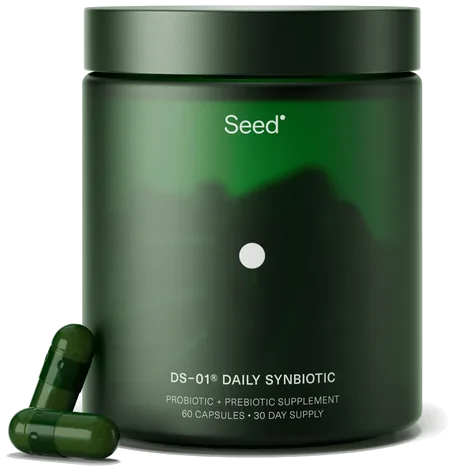
Seed DS-01 Daily Synbiotic Review
Daily Synbiotic from Seed, sold under the DS-01 brand, is presented as a daily probiotic plus prebiotic designed to relieve bloating, gas, and irregularity. The page states it is clinically validated and formulated with 24 strains to promote whole body health. The product is listed at $49.99 and is offered as a 30-day supply delivered monthly, with the option to pause or cancel anytime. The page notes a 30-day risk-free guarantee and free US shipping. Listed benefits include reducing bloating and gas, improving regularity and digestive discomfort, and supporting whole body health. The page says the formula was tested in multiple full formulation randomized, placebo-controlled clinical trials, with a link to view clinical trials. The page describes a ViaCap delivery system intended to safeguard probiotics all the way to the colon, and says the probiotic inner capsule delivers live bacteria to the colon where it is needed most. A prebiotic outer capsule is described as a no-bloat prebiotic that feeds beneficial gut microbes. The page lists four probiotic blends: Digestive Health at 224 mg / 38.7 Billion AFU, Dermatological Health at 36 mg / 3.34 Billion AFU, Cardiovascular Health at 13 mg / 4.21 Billion AFU, and Micronutrient Synthesis at 36 mg / 7.32 Billion AFU. The timeline on the page lists effects in stages: reduced bloating and gas within 7 days, supports healthy regularity within 2 weeks, smooths skin aging within 4 weeks, and whole body health at 6 weeks to 3 months. The page says the product is screened as a full formula for allergens, contaminants, and pesticides, is formulated without gluten, soy, and dairy, is tested for heavy metals, glyphosate, and AMPA, and is formulated to comply with Prop. 65. Listed certifications include gluten-tested, dairy-tested, nut-tested, soy-tested, shellfish-tested, sesame-tested, no binders, and no preservatives. The usage directions say to take 2 capsules daily, with or without food, day or night. The page shows a 30-day supply of 60 capsules and subscription options of 1, 3, or 6 months. The page also indicates results may be felt in as little as 7 days, and that digestive effects may be felt in as little as 24 to 48 hours.
We don’t sell supplements. We help you make decisions and get the best price.
Lowest prices
Finding the lowest prices at the stores now. This takes a few seconds.
Study, Trial or Testing Result Summary
Members Only103 human studies · 60 improved
Seed Daily Synbiotic contains four probiotic blends, each at an estimated amount above the doses used in studies. The label does not list each strain's amount inside the blends, and the studies below tested various probiotics, not necessarily these exact strains. A 2023 pooled analysis of 81 trials in 9,253 adults with irritable bowel syndrome found several strains and mixtures beat placebo, and some eased bloating [1]. A 2022 pooled analysis of 43 trials in 5,531 people found probiotics improved symptoms including bloating [2]. A 2021 analysis of 42 trials found several strains and mixtures helped at least one symptom, with no more side effects than controls [3]. In a 2026 placebo-controlled trial of 350 healthy adults with bloating, a daily multi-species synbiotic with pomegranate extract for 6 weeks reduced bloating and gas, and 72.3 percent reported rarely or never bloating versus 55.9 percent on placebo [4]. For bacterial overgrowth in the small intestine, a pooled analysis of 18 studies found probiotics cleared it more often and eased abdominal pain, but did not prevent it [5]. A 2025 analysis linked probiotics to about a quarter lower risk of bloating, though study quality was mixed [6]. Results depend on the strain and mixture used. Animal and cell studies are never counted.
See all 103 studies →Hide the studies
- Across 81 trials with 9,253 adults with irritable bowel syndrome, several probiotic strains and mixtures beat placebo for symptom severity, and three strains and two mixtures eased bloating.Outcome-Specific Efficacy of Different Probiotic Strains and Mixtures in Irritable Bowel Syndrome: A Systematic Review a…
- In 33 trials with 6,352 children taking meds, diarrhea occurred in 8% of those given probiotics versus 19% of controls, with the benefit clearest at 5 billion or more live bacteria daily.Read the study on PubMed (31039287) →
- Across 43 trials with 5,531 people with irritable bowel syndrome, probiotics improved symptoms including bloating, with Bacillus coagulans ranking best.Efficacy of Probiotics for Irritable Bowel Syndrome: A Systematic Review and Network Meta-Analysis.
- In 23 trials with 3938 children taking meds, probiotics lowered diarrhea from 19% to 8% compared with control.Read the study on PubMed (26695080) →
- Across 42 trials with 3,856 people with irritable bowel syndrome, six single-strain probiotics and three mixtures significantly helped at least one symptom measure, with no extra side effects versus controls.Strain-specific and outcome-specific efficacy of probiotics for the treatment of irritable bowel syndrome: A systematic …
- In 15 placebo-controlled trials with 1,793 people with irritable bowel syndrome, probiotics reduced pain and symptom severity and eased distension, bloating and gas scores.Effectiveness of probiotics in irritable bowel syndrome: Updated systematic review with meta-analysis.
- In six placebo-controlled trials with 970 adults with irritable bowel syndrome, probiotics reduced abdominal pain and bloating but did not significantly improve overall symptom severity or quality of life.Efficacy and safety of probiotics in the treatment of irritable bowel syndrome: A systematic review and meta-analysis of…
- In 10 trials with 757 people with constipation-predominant irritable bowel syndrome, probiotics improved stool consistency and raised gut Bifidobacteria and Lactobacilli but did not significantly change bloating or pain scores.Effectiveness and Safety of Probiotics for Patients with Constipation-Predominant Irritable Bowel Syndrome: A Systematic…
- In nine trials with 663 people with Parkinson's disease, probiotics improved motor symptoms, constipation, mood and blood glutathione, though two trials reported mild abdominal bloating.Meta-analysis of randomized controlled trials of the effects of probiotics in Parkinson's disease.
- In five placebo-controlled trials with 243 people with irritable bowel syndrome, the VSL#3 probiotic did not significantly reduce bloating or abdominal pain, though overall response showed a near-significant trend.Systematic review and meta-analysis: Efficacy of patented probiotic, VSL#3, in irritable bowel syndrome.
- Across five placebo-controlled trials in people with irritable bowel syndrome, single-strain B. infantis did not reduce bloating, but probiotic blends containing it significantly reduced bloating and abdominal pain.Efficacy of Bifidobacterium infantis 35624 in patients with irritable bowel syndrome: a meta-analysis.
- In a pooled analysis of 18 studies, probiotics cleared small intestinal bacterial overgrowth more often than no probiotics, lowered breath hydrogen and eased abdominal pain, but did not reliably prevent overgrowth or reduce stool frequency.Probiotics for Preventing and Treating Small Intestinal Bacterial Overgrowth: A Meta-Analysis and Systematic Review of C…
- Across 32 trials in adults with irritable bowel syndrome, probiotics reduced persistent symptoms and abdominal pain scores, though results varied widely by probiotic type and dose.Comparing probiotic and drug interventions in irritable bowel syndrome: a meta-analysis of randomised controlled trials.
- In a pooled analysis of 14 studies in cancer patients on chemotherapy, probiotics significantly lowered the risk of diarrhea, nausea and vomiting, and bloating compared with controls.Oral probiotic supplementation to alleviate diarrhea induced by fluoropyrimidines or irinotecan-based chemotherapy: A sy…
- In a pooled analysis of 15 trials in constipated patients having a colonoscopy, a 14-day probiotic plus sodium phosphate regimen ranked best for bowel cleanliness and for less bloating.Comparing various bowel preparation regimens in constipated patients undergoing colonoscopy: A systematic review and net…
- Across 15 randomized trials in adults with functional constipation, multispecies probiotics significantly reduced bloating, while single-species probiotics did not.Meta-analysis of randomized controlled trials of the effects of probiotics on functional constipation in adults.
- In a meta-analysis of ten studies, probiotics taken before or after colonoscopy did not significantly reduce bloating compared with control.Utilization of Probiotics in Relieving Post-Colonoscopy Gastrointestinal Symptoms: A Systematic Review and Meta-Analysis…
- An umbrella meta-analysis found probiotics were associated with lower risks of diarrhea and bloating, with stronger effects in shorter studies and multi-strain products, though the included reviews were often of low quality.Probiotics and gastrointestinal disorders: an umbrella meta-analysis of therapeutic efficacy.
- In four trials with 190 people with scleroderma, probiotics did not clearly change gut symptoms or small intestinal bacterial overgrowth eradication, though social functioning improved slightly, and the evidence was low certainty.The efficacy of probiotics, prebiotics or synbiotics in scleroderma: A systematic review.
- A review of 8 studies of alternative treatments for bacterial overgrowth in the small intestine (probiotics, diet, herbs) found preliminary evidence of benefit, but the trials were small and robust placebo-controlled trials are lacking.Alternative Treatment Approaches to Small Intestinal Bacterial Overgrowth: A Systematic Review.
- In 650 people analyzed, adding a probiotic to standard triple therapy for H. pylori for 14 days raised cure rates to 87.4% versus 72.6% with placebo and reduced bloating, flatulence and other side effects.Probiotics for standard triple Helicobacter pylori eradication: a randomized, double-blind, placebo-controlled trial.
- In 385 adults having screening colonoscopy, a probiotic solution with bisacodyl cleaned the bowel about as well as standard solution and caused less nausea, vomiting and bloating.Efficacy and Patient Tolerability Profiles of Probiotic Solution with Bisacodyl Versus Conventional Cleansing Solution f…
- In 362 women with irritable bowel syndrome over 4 weeks, 100 million CFU of encapsulated Bifidobacterium infantis 35624 daily significantly reduced bloating and other symptoms compared with placebo.Efficacy of an encapsulated probiotic Bifidobacterium infantis 35624 in women with irritable bowel syndrome.
- In 350 generally healthy adults with bloating, taking a daily multi-species synbiotic with pomegranate extract for 6 weeks reduced bloating, gas, and abdominal discomfort more than placebo, and 72.3% of the synbiotic group reported never or rarely bloating.A Randomized, Placebo-Controlled Trial Evaluating Multi-Species Synbiotic Supplementation for Bloating, Gas, and Abdomin…
- In 320 patients after colonoscopy, a probiotic capsule for 2 weeks shortened the number of days with abdominal pain compared with placebo, but did not change bloating or return to normal bowel habits.Randomized controlled trial of probiotics after colonoscopy.
- In 295 people starting iron tablets for iron deficiency anemia, adding Lactobacillus plantarum 299v during the first 30 days cut stomach and bowel side effects, such as abdominal pain and bloating, and led to fewer people stopping treatment, with better iron levels by month 3.Improved gastrointestinal tolerance and iron status via probiotic use in iron deficiency anaemia patients initiating ora…
- In 275 non-patients with abdominal discomfort and bloating, 4 weeks of Bifidobacterium infantis 35624 did not improve symptom severity more than placebo, but the group had more symptom-free days from bloating.Multi-Center, Double-Blind, Randomized, Placebo-Controlled, Parallel-Group Study to Evaluate the Benefit of the Probioti…
- In a randomized trial of 274 adults with constipation-predominant irritable bowel syndrome, 6 weeks of fermented milk with Bifidobacterium animalis DN-173 010 reduced bloating more than a control yoghurt at week 3 and improved quality of life, with more frequent stools in those with fewer than 3 per week.Effect of a fermented milk containing Bifidobacterium animalis DN-173 010 on the health-related quality of life and symp…
- In 259 children with irritable bowel syndrome, 8 weeks of Bacillus clausii added to usual care produced symptom improvement in 73.6% of children, the same as placebo (78.5%), with no significant difference in bloating or stool outcomes.Efficacy and Safety of the Adjuvant Use of Probiotic Bacillus clausii Strains in Pediatric Irritable Bowel Syndrome: A R…
- In 257 women taking meds for H. pylori, adding L. plantarum MH-301 for 14 days led to less bloating, constipation and side effects than placebo, though cure rates did not differ.Lactiplantibacillus plantarum MH-301 reduces Helicobacter pylori treatment-related adverse events via gut-vaginal axis: …
- In 250 adults with functional constipation, a 4-week probiotic blend of two strains did not change bowel movement frequency more than placebo, though stool firmness improved in the treatment groups; the abstract does not state the probiotic dose.Effects of dietary fibers or probiotics on functional constipation symptoms and roles of gut microbiota: a double-blinde…
- In 240 patients after colonoscopy, probiotic capsules for 2 weeks did not reduce overall bloating, discomfort, or time to normal bowel function compared with placebo, though a subgroup with pre-existing symptoms had less bloating.Randomized controlled trial of probiotic use for post-colonoscopy symptoms.
- In 229 adults with functional constipation, 8 weeks of daily Bifidobacterium lactis HN019 (4.69 billion CFU at the end of the study, 7 billion CFU at the start) did not increase complete spontaneous bowel movements more than placebo.Eight-Week Supplementation With Bifidobacterium lactis HN019 and Functional Constipation: A Randomized Clinical Trial.
- In 228 adults with functional constipation, 28 days of 1 billion or 10 billion CFU daily showed no overall difference from placebo, but in a post hoc group with 3 or fewer bowel movements weekly, bowel movements increased more than placebo.Effects of 28-day Bifidobacterium animalis subsp. lactis HN019 supplementation on colonic transit time and gastrointesti…
- In 200 adults with diarrhea-predominant irritable bowel syndrome, taking live Bifidobacterium longum CECT 7347 once daily for 12 weeks reduced symptom severity more than placebo; the abstract does not state the CFU dose.A randomized double-blind, placebo-controlled trial to evaluate the safety and efficacy of live Bifidobacterium longum C…
- In 200 adults with non-constipated irritable bowel syndrome, a two-strain probiotic for 84 days improved overall symptoms, pain, distension and quality of life more than placebo (19.3% vs 8.9% responders at day 28).Probiotic Blend of Lactobacillus acidophilus LA-5 and Bifidobacterium animalis ssp. Lactis BB-12 in Non-constipated Irri…
- In 196 patients on intravenous meds, a double dose of probiotic (1680 mg) lowered gut imbalance incidence to about 5-6% vs 22-25% without probiotics and kept gut bacteria stable.Read the study on PubMed (32944084) →
- In 179 people with irritable bowel syndrome, a probiotic yoghurt did not outperform a non-probiotic yoghurt at 4 weeks, and at 8 weeks adequate relief was actually higher with placebo (68%) than with probiotic (46%).A randomised controlled trial of a probiotic 'functional food' in the management of irritable bowel syndrome.
- In 179 adults with irritable bowel syndrome, 500 mg of Saccharomyces cerevisiae daily for 8 weeks significantly improved abdominal pain compared with placebo, while the trend for bloating was not statistically significant.A randomized clinical trial of Saccharomyces cerevisiae versus placebo in the irritable bowel syndrome.
- In 160 people with cirrhosis, a probiotic taken three times daily (1 x 10^8 CFU per dose) over about 38 weeks reduced small intestine bacterial overgrowth and prevented overt hepatic encephalopathy, with 7 of 86 probiotic users developing it versus 14 of 74 controls.Probiotics prevent hepatic encephalopathy in patients with cirrhosis: a randomized controlled trial.
- In 156 constipated adults with bloating, a five-strain probiotic for two weeks did not reduce bloating more than placebo, though a post-hoc look found less flatulence.The effect of a probiotic blend on gastrointestinal symptoms in constipated patients: a double blind, randomised, placeb…
- In 156 adults with newly diagnosed type 2 diabetes or prediabetes, adding BB-12 probiotic to a med improved HbA1c reduction, treatment adherence and lowered bloating and abdominal pain from a med compared with a med alone.Read the study on PubMed (36098362) →
- In 143 adults with symptomatic diverticular disease, a liquid probiotic for 3 months did not reduce abdominal pain more than placebo or change bloating, but reduced constipation, diarrhea, mucus discharge and back pain.A randomized double-blind placebo-controlled trial of a multi-strain probiotic in treatment of symptomatic uncomplicated…
- In a placebo-controlled trial of 141 children aged 4 to 12 with irritable bowel syndrome, daily Bacillus coagulans Unique IS2 for 8 weeks reduced abdominal pain more than placebo and also improved bloating, straining, urgency and stool consistency.Efficacy of Bacillus coagulans Unique IS2 in treatment of irritable bowel syndrome in children: a double blind, randomis…
- In 134 people with reflux esophagitis on esomeprazole, 8 weeks of added Bacillus subtilis and Enterococcus faecium improved diarrhea scores and bacterial overgrowth clearance versus placebo, with no difference in healing; this retracted paper's findings should be treated with caution.Beneficial effect of probiotics supplements in reflux esophagitis treated with esomeprazole: A randomized controlled tri…
- In a 28-day double-blind placebo-controlled trial of 132 middle-aged and older adults with chronic constipation, a multi-strain probiotic markedly reduced bloating compared with placebo and increased bowel movement frequency.A multi-strain probiotic formulation alleviates chronic constipation in middle-aged and older adults: A randomized, doub…
- In 120 adults with irritable bowel syndrome, a 12-week probiotic raised short-chain fatty acid levels, improved gut barrier measures, lowered inflammation, and reduced symptom scores more than placebo; the abstract does not state the dose.Effects of short-chain fatty acid-producing probiotic metabolites on symptom relief and intestinal barrier function in p…
- In 117 people after acute diverticulitis, adding Bifidobacterium infantis 35624 to mesalamine for 12 weeks gave no extra reduction in gastrointestinal symptoms compared with mesalamine alone.A randomized controlled study of mesalamine after acute diverticulitis: results of the DIVA trial.
- In 112 adults with lower bowel symptoms, a three-strain probiotic blend taken for 8 weeks gave more overall symptom relief than placebo, with greater reductions in abdominal pain and bloating.Validity and safety of ID-JPL934 in lower gastrointestinal symptom improvement.
- In 110 people with fibromyalgia, VSL#3 for 12 weeks did not improve abdominal pain, bloating or gas more than placebo.The Probiotic VSL#3® Does Not Seem to Be Efficacious for the Treatment of Gastrointestinal Symptomatology of Patients wi…
- In 108 Iranian adults with irritable bowel syndrome and bloating, a multi-strain probiotic twice daily for 4 weeks gave satisfactory relief in 85% vs 47% with placebo and reduced bloating and pain more.Therapeutic effects, tolerability and safety of a multi-strain probiotic in Iranian adults with irritable bowel syndrome…
- In 108 people with bacterial overgrowth from long-term acid-reducing drugs, 7 days of rifaximin plus Saccharomyces boulardii (500 mg twice daily) cleared overgrowth in 78% versus 58% with rifaximin alone, and reduced diarrhea more.Read the study on PubMed (40884341) →
- In 105 patients after heart valve surgery, 14 days of Bifidobacterium animalis lactis LPL-RH reduced total gastrointestinal symptoms, abdominal pain, bloating, and constipation compared with placebo and shortened time to bowel function recovery.Bifidobacterium animalis subsp. lactis LPL-RH improves postoperative gastrointestinal symptoms and nutrition indexes by …
- In 100 healthy adults, Bacillus subtilis MB40 at 5 billion CFU daily for 4 weeks did not significantly reduce bloating, gas, or abdominal discomfort compared with placebo overall, though a male subgroup showed larger reductions.A Randomized, Double-blind, Placebo-controlled, Parallel Study Evaluating the Efficacy of Bacillus subtilis MB40 to Redu…
- In 81 adults with irritable bowel syndrome, 4 weeks of a multi-species probiotic raised probiotic levels in stool and improved diarrhea scores, but total symptom scores did not differ from placebo; 74.4% of the probiotic group reported adequate relief versus 61.9% on placebo, not a significant difference.Effect of administering a multi-species probiotic mixture on the changes in fecal microbiota and symptoms of irritable b…
- In a randomized trial of 81 hospitalized children with acute diarrhea, taking Lactobacillus casei rhamnosus twice daily for 7 days lowered fecal inflammation markers compared with no probiotic, and bloating, abdominal pain and bowel symptoms were better than in the control group.Probiotic Lactobacillus casei: Effective for Managing Childhood Diarrhea by Altering Gut Microbiota and Attenuating Feca…
- In 77 people with irritable bowel syndrome, 8 weeks of 10 billion live Bifidobacterium infantis 35624 daily lowered bloating and abdominal pain more than placebo and normalized an inflammation-linked cytokine ratio.Lactobacillus and bifidobacterium in irritable bowel syndrome: symptom responses and relationship to cytokine profiles.
- In 76 healthy adults, 2 billion CFU of Bacillus subtilis BS50 daily for 6 weeks led to more people with less bloating, burping, and gas than placebo (47.4% vs 22.2% improved).The probiotic Bacillus subtilis BS50 decreases gastrointestinal symptoms in healthy adults: a randomized, double-blind, …
- In 73 people after gastric bypass surgery, taking two probiotic strains for about 90 days reduced bloating compared with starch placebo, but overall symptom scores did not differ and bacterial overgrowth was not prevented.Effects of Probiotics Supplementation on Gastrointestinal Symptoms and SIBO after Roux-en-Y Gastric Bypass: a Prospectiv…
- In 71 children with irritable bowel syndrome, 4 weeks of Bifidobacterium lactis B94 (5 billion CFU twice daily) improved belching, bloating after meals and constipation compared with the prebiotic-only group.Efficacy of synbiotic, probiotic, and prebiotic treatments for irritable bowel syndrome in children: A randomized contro…
- In 71 adults with HIV whose immune counts stayed low despite treatment, 6 months of a probiotic with or without fiber was safe, the combined synbiotic gave small immune gains over placebo, and CRP fell in people where the probiotic was detected in stool.Probiotic effects on immunity and microbiome in HIV-1 discordant patients.
- In a 4-week randomized trial of 60 adults with irritable bowel syndrome, 400 ml daily of a drink with Lactobacillus plantarum DSM 9843 reduced flatulence and abdominal pain compared with placebo drink, but did not change bloating.Alteration of intestinal microflora is associated with reduction in abdominal bloating and pain in patients with irritab…
- In 60 adults with unexplained digestive discomfort, a three-strain Bacillus probiotic improved total dyspepsia scores and bloating (at day 30) compared with placebo over about 37 days, with no adverse events reported.A prospective, randomized, double-blind, placebo-controlled, parallel-group study to evaluate the efficacy and safety of…
- In 60 adults with mild to moderate stomach and bowel symptoms, a probiotic-amylase blend taken for 6 weeks reduced overall symptom scores, bloating, and abdominal discomfort more than placebo.A probiotic amylase blend reduces gastrointestinal symptoms in a randomised clinical study.
- In a 29-day placebo-controlled trial of 60 adults with chronic constipation, GutBio Plus improved bowel movements, abdominal pain, bloating, and stool consistency more than placebo.Probiotics for chronic constipation: A randomized, prospective, placebo-controlled study.
- In a placebo-controlled trial of 59 adults taking meds for Helicobacter pylori, Lactobacillus rhamnosus GG for 7 days did not significantly reduce side effects such as bloating, diarrhea or stomach discomfort compared with placebo.[Lactobacillus rhamnosus GG supplementation to reduce side-effects of anti-Helicobacter pylori treatment].
- In 56 healthy adults, 3 weeks of a kefir-derived probiotic sachet reduced abdominal pain and bloating in men compared with control, and increased gut bifidobacteria in men.Putative Probiotic Strains Isolated from Kefir Improve Gastrointestinal Health Parameters in Adults: a Randomized, Singl…
- In a crossover placebo-controlled trial of 56 adults one year after gastric bypass surgery, 8 weeks of a 50 billion unit multi-strain probiotic did not improve gastrointestinal symptoms or bacterial overgrowth compared with placebo.Effects of Probiotic Use on Gastrointestinal Symptoms in the Late Postoperative Period of Bariatric Surgery: A Cross-Ove…
- In 56 people with functional constipation, 105 days of Lactobacillus reuteri DSM 17938 (200 million CFU daily after a higher starting dose) improved bloating, abdominal discomfort and incomplete emptying more than placebo.Randomised double blind placebo controlled trial on Lactobacillus reuteri DSM 17938: improvement in symptoms and bowel h…
- In 55 people with small intestinal bacterial overgrowth, weekly fecal microbiota transplant capsules for 4 weeks improved gastrointestinal symptoms more than placebo capsules and increased gut microbiota diversity.Clinical efficacy of fecal microbiota transplantation for patients with small intestinal bacterial overgrowth: a randomi…
- In 53 people with chronic liver disease, a 4-week multispecies probiotic cleared small intestinal bacterial overgrowth in 24% of users versus none on placebo and improved general gastrointestinal symptoms more, but did not significantly improve intestinal permeability.Short-term probiotic therapy alleviates small intestinal bacterial overgrowth, but does not improve intestinal permeabil…
- In 49 adults with irritable bowel syndrome, a multispecies probiotic taken twice daily for 4 weeks relieved symptoms in 68% of users versus 37.5% on placebo, with better abdominal discomfort and bloating.Effect of multispecies probiotics on irritable bowel syndrome: a randomized, double-blind, placebo-controlled trial.
- In 48 people with irritable bowel syndrome and bloating, VSL#3 twice daily for 4 or 8 weeks reduced flatulence compared with placebo and slowed colon transit, but did not change bloating relief rates.A randomized controlled trial of a probiotic combination VSL# 3 and placebo in irritable bowel syndrome with bloating.
- In 45 adults with irritable bowel syndrome, 65 mL per day of a probiotic fermented milk for 6 weeks did not change symptoms compared with placebo.Poor predictive value of breath hydrogen response for probiotic effects in IBS.
- In 44 people with irritable bowel syndrome, 8 weeks of Bacillus coagulans GBI-30 significantly improved abdominal pain and bloating scores from baseline, though the placebo comparison was limited by baseline differences.Bacillus coagulans significantly improved abdominal pain and bloating in patients with IBS.
- In 40 adults with irritable bowel syndrome, Bacillus coagulans LBSC at 6 billion daily for 80 days improved bloating, cramping, pain, stool consistency, and quality of life compared with placebo.Efficacy and safety of Bacillus coagulans LBSC in irritable bowel syndrome: A prospective, interventional, randomized, d…
- In 39 healthy men, 1 billion colony-forming units of Lactobacillus acidophilus twice daily for 4 weeks did not reduce symptoms after a controlled infection challenge compared with placebo.Lactobacillus acidophilus supplementation in human subjects and their resistance to enterotoxigenic Escherichia coli inf…
- In 38 adults with functional constipation or functional diarrhea, an 8-week multi-strain probiotic reduced abdominal bloating and its impact on quality of life more than placebo did.Therapeutic Modulation of the Gut Microbiome by Supplementation with Probiotics (SCI Microbiome Mix) in Adults with Func…
- In 37 people with type 2 diabetes who could not tolerate a med, 12 weeks of a multi-strain probiotic in a crossover trial reduced nausea and the frequency and severity of abdominal bloating and pain compared with placebo.Read the study on PubMed (37812890) →
- In 34 people with constipation-predominant irritable bowel syndrome, a fermented milk with Bifidobacterium lactis for 4 weeks reduced abdominal distension and sped gut transit compared with a control product.Clinical trial: the effects of a fermented milk product containing Bifidobacterium lactis DN-173 010 on abdominal disten…
- In 30 people with bacterial overgrowth in the small intestine, adding a lactobacilli probiotic to a med maintenance turned the breath test negative in 93.3% of those given it, versus 66.7% of controls, and abdominal pain fully resolved in all treated cases after six months.Evaluating the efficacy of probiotic on treatment in patients with small intestinal bacterial overgrowth (SIBO)--a pilot…
- In 30 adults with irritable bowel syndrome with constipation, 8 weeks of Lacticaseibacillus rhamnosus IDCC 3201 improved bowel movements, bloating severity, and bowel habit satisfaction compared with placebo.Effect of Lacticaseibacillus rhamnosus IDCC 3201 on irritable bowel syndrome with constipation: a randomized, double-bli…
- In 25 adults with irritable bowel syndrome, a crossover trial found this probiotic blend reduced abdominal pain, bloating and overall disease severity more than placebo over one-month periods, and improved colon permeability.Effects of Bifidobacterium longum BB536 and Lactobacillus rhamnosus HN001 in IBS patients.
- In 25 people with diarrhea-predominant irritable bowel syndrome, 8 weeks of VSL#3 (450 billion bacteria daily) did not beat placebo overall, though bloating fell within the VSL#3 group with a borderline group difference.A randomized controlled trial of a probiotic, VSL#3, on gut transit and symptoms in diarrhoea-predominant irritable bowe…
- In 23 lactose intolerant people with ongoing symptoms, 30 days of a probiotic plus vitamin B6 reduced bloating more than placebo in a crossover trial.Effects of Bifidobacterium longum and Lactobacillus rhamnosus on Gut Microbiota in Patients with Lactose Intolerance and…
- In 17 people with long-standing bacterial overgrowth of the small intestine, Lactobacillus fermentum KLD taken twice daily for 4 weeks did not improve breath test results, stool frequency, or symptom scores compared with placebo.Probiotic treatment of small intestinal bacterial overgrowth by Lactobacillus fermentum KLD.
- In 10 people with systemic sclerosis, a transplanted gut microbiota preparation reduced bloating, diarrhea or incontinence in 4 of 5 treated patients versus 2 of 4 on placebo, with procedure-related serious adverse events in the placebo group.Fecal microbiota transplantation in systemic sclerosis: A double-blind, placebo-controlled randomized pilot trial.
- In a 4-week placebo-controlled trial in adults with irritable bowel syndrome, Lactobacillus reuteri (Biogaia) increased bowel movement frequency but did not significantly improve bloating or abdominal pain compared with placebo.Probiotic vs. Placebo in Irritable Bowel Syndrome:A Randomized Controlled Trial.
- In adults taking bismuth quadruple therapy for Helicobacter pylori, 10 billion CFU per day of Lacticaseibacillus rhamnosus LRa05 for 4 weeks reduced bloating, abdominal pain, and diarrhea and lowered inflammatory markers IL-6 and TNF-alpha, though it did not significantly raise eradication rates.Evaluation of efficacy and safety of Lacticaseibacillus rhamnosus LRa05 in the eradication of Helicobacter pylori: a ran…
- In adults with functional constipation, 8 weeks of Bifidobacterium lactis HN019 did not increase complete bowel movements compared with placebo.Effect of an 8-Week Bifidobacterium lactis HN019 Supplementation on Functional Constipation: A Multi-Center, Triple-Blin…
- In healthy adults over 21 days, the probiotic Bifidobacterium animalis lactis Bi-07, alone or with xylo-oligosaccharides, did not change reported bloating compared with the control.Xylo-oligosaccharides alone or in synbiotic combination with Bifidobacterium animalis subsp. lactis induce bifidogenesis…
- In 1,098 adults with irritable bowel syndrome, 8 weeks of a 5-strain probiotic mixture led to lower bloating severity in 81.9% of participants at the end of treatment, though there was no placebo group.A multicenter real-world, open-label study assessing the impact of a probiotic mixture on symptoms of irritable bowel sy…
- In 188 adults with functional gut symptoms, a once-daily 5-strain probiotic capsule for 30 days improved overall gut well-being in 85.1% of participants, with no safety signals, though there was no control group.An Open-label, Multicenter Study to Assess the Efficacy and Safety of a Novel Probiotic Blend in Patients With Functiona…
- In a single-arm safety study of 54 critically ill adults, kefir was safe and feasible, and gut microbiome wellness index scores improved, but there was no increase in microbial diversity and no control group.Safety, feasibility, and impact on the gut microbiome of kefir administration in critically ill adults.
- In 45 adults with inflammatory bowel disease, 400 mL of kefir daily for 4 weeks raised stool lactobacillus levels and lowered inflammation markers in Crohn's patients, with bloating reduced in the last 2 weeks.Effect of administering kefir on the changes in fecal microbiota and symptoms of inflammatory bowel disease: A randomize…
- In 30 people with dyspepsia from gut dysbiosis, one daily capsule of Lactobacillus acidophilus (2 billion live bacteria) reduced bloating and other symptoms within one to three weeks, with no side effects reported.[Lactobacilli in the treatment of dyspepsia due to dysmicrobia of various causes].
- In 15 older adults with diverticular disease, taking E. coli strain Nissle capsules (2.5 x 10^10 bacteria each) for about 5 weeks lengthened symptom-free periods from about 2.4 to 14.1 months and reduced abdominal symptoms, in an open trial without a placebo group.The effect of non-pathogenic Escherichia coli in symptomatic uncomplicated diverticular disease of the colon.
- In 14 people with irritable bowel syndrome and early breath hydrogen rise, 65 mL per day of Yakult for 6 weeks changed breath test patterns in 9 patients but did not significantly improve overall symptoms except wind.Probiotic effects on intestinal fermentation patterns in patients with irritable bowel syndrome.
- In 10 people with scleroderma and moderate-to-severe bloating, taking one billion live bacteria daily for about two months significantly reduced bloating and overall gut symptom scores, though the study had no control group.Probiotics for the treatment of systemic sclerosis-associated gastrointestinal bloating/ distention.
- In a retrospective study of 56 people with diverticular disease over 12 months, a probiotic gave more adequate symptom relief than rifaximin, though flare rates did not differ and bloating improvement was not statistically significant.Management of symptomatic uncomplicated diverticular disease (SUDD) of the colon with Clostridium butyricum CBM588 versu…
- In an open-label study of 37 adults with irritable bowel syndrome taking Bifidobacterium longum 35624 for 8 weeks, total symptom scores fell by 43 percent, and bloating and gas became much milder.An 8-Week Course of Bifidobacterium longum 35624® Is Associated with a Reduction in the Symptoms of Irritable Bowel Synd…
- In 538 women and adults with minor digestive symptoms, a fermented milk product with a bifidobacterium strain reduced bloating, pain, gas and rumbling within 2 weeks, and this effect did not depend on fibre intake or physical activity.Consumption of a Fermented Milk Product Containing Bifidobacterium lactis CNCM I-2494 in Women Complaining of Minor Dige…
- In a 28-day single-arm pilot of 50 elderly adults with chronic constipation, a probiotic-prebiotic mix improved bowel movement frequency and quality of life related to bloating and abdominal pain, with no adverse events reported.Efficacy of a probiotic-prebiotic mix on chronic constipation symptoms in the elderly: results of a pilot study.
Review Totals and Summary
Members Only39,879 reviews · 84% positive
Customer and professional feedback on Seed DS-01 Daily Synbiotic reveals several recurring qualitative themes, highlighting both its perceived benefits and some initial challenges. A predominant positive theme is the product's effectiveness in alleviating common digestive discomforts. Many users consistently report a significant reduction in bloating and gas, often within the first week of use. This relief frequently extends to improved bowel regularity, with customers noting more comfortable and predictable bowel movements. Some individuals with long-standing issues, such as lactose intolerance, have even expressed that the synbiotic "reset" their digestive system, allowing them to consume previously problematic foods without adverse reactions. Beyond immediate digestive relief, a notable theme in positive feedback is the experience of broader, systemic health improvements. Users frequently mention an increase in overall energy levels and, anecdotally, a reduction in allergy symptoms. Several reviews highlight improvements in skin health and enhanced immune function, suggesting that the benefits extend beyond the gut to other interconnected bodily systems. Many describe the effects as "subtle yet potent," contributing to an overall feeling of health and happiness that becomes more apparent with consistent, long-term use. The convenience of the product, including its non-refrigeration requirement and the inclusion of a travel vial, is also frequently praised, making it easy to maintain a consistent routine. Furthermore, the company's commitment to providing detailed scientific information is appreciated by users who seek to understand the mechanisms behind the supplement. However, the feedback also surfaces some common initial challenges and considerations. A frequently mentioned point is the cost, with many acknowledging that Seed DS-01 is a premium-priced supplement compared to other probiotics on the market. Another recurring theme revolves around an "acclimation period" during which some users experience temporary side effects. These can include mild abdominal discomfort, slight bloating, cramping, fatigue, queasiness, burning nausea, trapped gas, or even diarrhea. While Seed advises starting with a lower dose to mitigate these effects, some individuals report that these symptoms persist or worsen even at the recommended full dose, leading them to either stick to the starter dose or discontinue use entirely. The capsule size, described as average, is also a minor point of contention for some who prefer smaller pills. Finally, a few customers have noted slow shipping times, which can be a point of frustration when eagerly awaiting a new supplement.
Biohacker Summary
Members Only4 of 10 recommend it
The only ingredient the panel spoke about here is the probiotic blend, which is a smaller ingredient in this product, and three of the ten panelists commented on it. Two of the three recommend or use the product, mainly for gut health, with one citing less bloating, less gas and better regularity, and the other calling it the only probiotic he takes and praising the brand for publishing its trial results. They like that it combines a prebiotic and a probiotic in one capsule, and one suggests it when changing diet or alongside honey to shift the microbiome. One advises taking it a couple of hours apart from fermented foods. The third panelist is neutral now, though he recommended it earlier, and no one gave a dose or reported stopping or a caution about it.
See all 3 biohackers →Hide the biohackers
Thomas DeLauer · Probiotic Blend · recommends
- Recommends Seed probiotic, stating it's the only probiotic he would ever recommend due to its scientific approach and multi-stage delivery system.
- Highly recommends Seed Daily Synbiotic, a prebiotic and probiotic, to capitalize on the beneficial effects of fermented foods and improve gut health, suggesting it be taken a couple of hours apart from fermented foods.
- Recommends Seed Daily Synbiotic, a prebiotic and probiotic in one, especially when changing diet or acclimating to a new diet style, and offers a discount code.
- Recommends Seed's daily symbiotic, which is a prebiotic and probiotic in one capsule, as a great tool to use in conjunction with honey to shift and alter the microbiome rapidly.
- Is a huge fan of Seed Daily Symbiotic and states it's the only probiotic he personally uses, appreciating their transparency in publishing clinical trials, even when results aren't in their favor.
- Recommends Seed's daily symbiotic, which contains a prebiotic and probiotic in one capsule, for good digestive health and notes the brand's commitment to microbiome research.
- Recommends Seed Daily Synbiotic, stating it's the only probiotic he would ever recommend, especially when in a caloric deficit or changing one's diet, due to its unique capsule-in-capsule technology for better colonization of bacteria in the gut.
- Recommends Seed's daily symbiotic, which contains a prebiotic and probiotic in one capsule, for those looking to improve their gut microbiome, noting its unique technology and the company's funding of microbiome research.
- Recommends Seed, a synbiotic that combines a probiotic and prebiotic, for people who are intermittent fasting and may not be getting a wide variety of food, to help support their gut biome.
- Likes that Ample includes a probiotic blend, specifically mentioning L-rhamnosus as a highly researched strain.
Dr. Mark Hyman · Probiotic Blend · uses
- Continues to recommend and take Seed's DS-01 Daily Synbiotic, highlighting its 24 unique probiotic strains, capsule-in-capsule technology, and clinical evidence for reducing bloating, alleviating gas, and improving regularity.
- Gave a good general probiotic blend to a patient to improve gut health.
Ben Greenfield · Probiotic Blend · neutral
- Notes that IM8health includes a full probiotic blend for the gut.
- Recommends Seed's Daily Synbiotic for those who want to add a probiotic + prebiotic to their daily routine, noting that gut health affects whole-body health.
- Uses probiotic blends APO-808™ and APO-19™ as part of Dr. John Lieurance's Travel Hacking Kit, which are designed to assist in gut health by placing probiotics in the lower intestine.
RAL Summary
Members OnlyTier 4 for Gut Bacteria Balance
Human studies, including large pooled analyses and a 2026 placebo-controlled trial, show probiotics can ease bloating [1][4], but no reviews were counted, so the product cannot rank above emerging.
- Emerging: not enough evidence to rank higher yet.
Where the evidence disagrees: 21 of the 103 human studies found no effect.
More Details
Members OnlyBody systems · Combine with · Possible side effects
Body systems: Digestive system, Immune system
Combine with: To further support small-intestine bacterial balance and alleviate occasional bloating and irregularity, consider combining this synbiotic with digestive enzymes to aid in efficient food breakdown, reducing fermentation and gas. L-Glutamine can be beneficial for maintaining the integrity of the gut lining, which is crucial for overall digestive health. Additionally, incorporating a diverse range of prebiotic fibers (if not already sufficiently covered by the synbiotic's formulation) can further nourish beneficial gut bacteria. Omega-3 fatty acids may also offer anti-inflammatory support to the gut environment.
Possible side effects: Studies found no more side effects than controls. Feedback mentions a temporary adjustment period with mild bloating, gas, cramping, nausea or diarrhea for some users.
Supplement Facts
Digestive Health Probiotic Blend° 224 mg · Dermatological Health Probiotic Blend° 36 mg · Cardiovascular Health Probiotic Blend° 13 mg
| Digestive Health Probiotic Blend° | 224 mg | † |
| Dermatological Health Probiotic Blend° | 36 mg | † |
| Cardiovascular Health Probiotic Blend° | 13 mg | † |
| Micronutrient Synthesis Probiotic Blend° | 36 mg | † |
Directions: Take 2 capsules daily, with or without food, day or night.
Label source: Seed · Report a label change
Show entire label
More gut bacteria balance products
Members OnlyThe highest ranked for the same goal
Read more
Our articles on this subject
- How to Improve Gut Health Naturally: Fiber, Foods and the Probiotic Strains With Human TrialsArticle · Sep 15, 2026
- Probiotics for Gut Health: The Complete GuideArticle · Mar 17, 2026
Graded October 26, 2026 by the Reverse Age Lab evidence engine, from human studies, real reviews and our biohacker panel. How we grade. Is this medical advice? No. Rala organizes the published evidence; go over any change with your doctor, especially if you take meds.
Privacy policyConsumer health dataTermsDo Not Sell or Share My Personal InformationCookie settings