
Synchro Joint Rejuvenation + Sleep Set Review
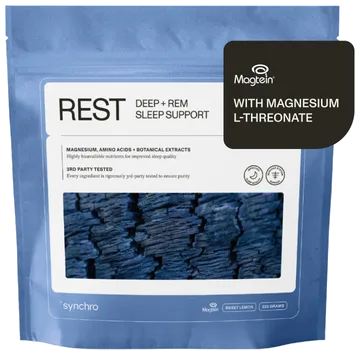
Synchro sells the Joint Rejuvenation + Sleep Set as a bundle of three products: GOLD, a medical grade liposomal turmeric; RE JUVE, a connective tissue regeneration product; and REST, a deep and REM sleep support product. The page is listed under the Bundles category and shows a price of $84.00, down from $120.00, a 30 percent saving, with a subscription option for a 30 day supply delivered monthly and a one-time purchase option. GOLD is described as using a proprietary liposomal nutrient delivery technology that the brand says improves bioavailability six-fold while protecting the turmeric extract from degradation in the gut. The page says that unlike powdered turmeric extracts, GOLD uses an ultra-concentrated CO2 oil extraction that delivers all of turmeric's bioactive compounds. RE JUVE is presented under the heading rebuilding joint smoothness and comfort at the cellular level. The page says it uses BioHyaluronic, a proprietary complex of hyaluronan and phospholipids, which the brand says supports the regeneration of synovial fluid, the material responsible for lubricating joints and maintaining healthy cartilage. The brand claims that by rebuilding synovial fluid and reducing stress on cartilage, RE JUVE allows damaged tissues to rebuild and heal. REST is presented under the heading no melatonin, no sedatives, just better sleep quality. The page explains that the body and brain do most of their repair in deep and REM sleep stages, and says REST uses highly bioavailable forms of magnesium, amino acids and botanical extracts that the brand says are supported by sleep research to relax the nervous system and increase time in deep and REM sleep. The page says this should help people fall asleep more quickly, recover faster and wake up more refreshed. The page also lists HSA and FSA eligibility and offers an installment payment option. Add-on products shown include Hydros, a trace mineral and electrolyte drink, priced at $32.99 for an 8 ounce bottle. The overall listing presents the set as a combined joint and sleep routine for recovery and comfort.[]
We don’t sell supplements. We help you make decisions and get the best price.
Lowest prices
We may earn a commission from some store links. How we choose.
Finding the lowest prices at the stores now. This takes a few seconds.
Products with nearly the same formula (Matched on the main ingredients)
Study, Trial or Testing Result Summary
Members Only21 human studies · 18 improved
6 of these 21 human studies gave the ingredient by injection, not by mouth.
Most of the evidence for magnesium and joints comes from injections into the joint, not pills. Injected magnesium lowered pain after keyhole knee surgery in pooled trials [1] and in single trials [2][3], and knee injections that included magnesium eased arthritis pain more than a med shots [4]. Those results may not apply to magnesium swallowed as a supplement. For pills, an open study found a mineral tablet with 80 milligrams of magnesium a day eased back and joint pain over 12 months [5], and a small trial found a seawater magnesium blend with algae and pine bark improved knee pain and walking [6]. This product gives far more magnesium than those studies, above the daily recommended limit, so members can take less. Magnesium threonate and lemon balm have no joint studies. L-theanine has been tested for joints only in rats [7]. The one human glycine study used collagen-like peptides, not plain glycine, and did not work against placebo [8]. Apigenin has only been tested in laboratory cells [9]. Animal and cell studies are never counted.
See all 21 studies →Hide the studies
- In 6 observational studies of 15,715 people, higher blood magnesium was linked to lower knee osteoarthritis risk, but higher dietary magnesium intake was not, though it was linked to fewer fractures in people with knee osteoarthritis.The relationship between magnesium and osteoarthritis of knee: A MOOSE guided systematic review and meta-analysis.
- In a pooled analysis of 8 randomized trials and 8 experimental studies, a single magnesium injection into the joint after keyhole surgery lowered pain scores compared with placebo and boosted the pain relief of bupivacaine without more side effects.Analgesic effect and safety of single-dose intra-articular magnesium after arthroscopic surgery: a systematic review and…
- A review of 36 articles on hip or knee replacement found that pre-surgery meds, including magnesium among many others, reduced short-term pain after surgery without severe side effects, but magnesium was not assessed separately.Preventive analgesia in hip or knee arthroplasty: a systematic review.
- In 180 people with moderate-to-severe knee osteoarthritis, three knee injections of dextrose, ozone and magnesium given 3 weeks apart reduced pain more than a med injections at 24 weeks.Prolozone M Therapy's Analgesic Efficacy for Managing Moderate-to-Severe Knee Osteoarthritis: A Randomized, Double-Blind…
- In 134 people with rheumatoid arthritis, choline magnesium trisalicylate for 7 weeks reduced symptoms about as well as a med, with a greater reduction in swollen joints.Read the study on PubMed (7361026) →
- In 80 people having knee replacement, a magnesium and ropivacaine injection into the joint during surgery lowered morphine use and pain in the first 24 hours and sped early recovery compared with saline (this paper was retracted).Efficacy and safety of an intra-operative intra-articular magnesium/ropivacaine injection for pain control following tot…
- In 80 people having knee replacement, a magnesium and ropivacaine injection into the joint during surgery lowered morphine use and pain in the first 24 hours and sped early recovery compared with saline.Efficacy and safety of an intra-operative intra-articular magnesium/ropivacaine injection for pain control following tot…
- In 75 adults having knee arthroscopy, adding 1.5 g magnesium sulfate to a bupivacaine joint injection reduced morphine use and pain at 24 hours compared with bupivacaine alone.Intra-articular infiltration of bupivacaine in arthroscopic knee surgery: Dexamethasone versus magnesium sulfate as adju…
- In 61 people after partial knee replacement, a cocktail containing magnesium sulphate and sodium bicarbonate gave longer pain relief, less meds and better early knee recovery than the conventional cocktail.Magnesium sulphate and sodium bicarbonate as additives for periarticular local infiltration analgesia improve pain manag…
- In 60 people having knee replacement, adding 250 mg magnesium sulfate to a levobupivacaine injection around the knee prolonged pain relief and reduced painkiller use in the early days after surgery.Magnesium Sulfate Combined with a Levobupivacaine Periarticular Cocktail for Analgesia in the Early Postoperative Period…
- In 40 people with active rheumatoid arthritis, 3 g daily of magnesium dithiosalicylate for 3 months eased stiffness, tender joints and pain about like a med, but 8 people dropped out from serious side effects.Read the study on PubMed (6996929) →
- In 40 adults with active rheumatoid arthritis (36 finished), taking glycine-containing repeat peptides for 3 months in a crossover trial improved some joint scores, but against placebo and strict response criteria the benefit was not clinically significant, so the authors concluded it was not effective.Gly-X-Y repeat sequences in the treatment of active rheumatoid arthritis.
- In 30 adults with mild knee osteoarthritis, a 12-week daily algae, seawater magnesium and pine bark supplement improved pain, walking function and cut meds use by about 72% compared with glucosamine.Mineral rich algae with pine bark improved pain, physical function and analgesic use in mild-knee joint osteoarthritis, …
- Across three randomized trials in rheumatoid arthritis, choline magnesium trisalicylate improved joint pain, swelling and morning stiffness similarly or better than a med, with fewer stomach side effects.Efficacy and safety of a non-acetylated salicylate, choline magnesium trisalicylate, in the treatment of rheumatoid arth…
- In 8 adults with hemophilia-related joint damage, choline magnesium trisalicylate gave greater relief of joint pain and stiffness than placebo in 3 of the 8 patients, with no consistent effect on bleeding.Read the study on PubMed (7072708) →
- In people with rheumatoid arthritis, seven weeks of choline magnesium trisalicylate reduced joint symptoms as well as a med, cut swollen joints more, and caused fewer side effects.Clinical comparative evaluation of choline magnesium trisalicylate and acetylsalicylic acid in rheumatoid arthritis.
- In 334 postmenopausal women with low bone density, two tablets a day of a calcium, vitamin D and mineral product containing 40 mg magnesium per tablet for 12 months relieved back and joint pain, compared with calcium alone or no treatment.[Vitrum osteomag in prevention of osteoporosis in postmenopausal women: results of the comparative open multicenter tria…
- In an uncontrolled treatment series of 80 people with soft tissue calcifications, about 75 percent were cured after local magnesium sulfate injections for 2 to 20 weeks followed by oral magnesium lactate for 4 to 6 months, with calcifications disappearing or greatly reduced and no side effects reported.Treatment of soft tissue calcifications with magnesium.
- In 392 people with knee osteoarthritis followed for two years, higher dietary magnesium intake was linked to fewer joint symptoms, better quality of life, and fewer depressive symptoms.Associations of Dietary Macroelements with Knee Joint Structures, Symptoms, Quality of Life, and Comorbid Conditions in …
- In laboratory cells treated with a harmful chemical, apigenin at 20 micromolar reversed signs of aging and increased a protective protein, but this was not tested in people.Mechanistic insights into EIF6 as a target of Apigenin in alleviating chondrocyte senescence.
- In laboratory and mouse experiments on rheumatoid arthritis, glycine raised levels of a chemical that adds methyl groups, which switched off a protective gene in joint lining cells and pushed those cells toward a form of iron-driven cell death; no human participants were studied and the abstract does not give the mouse outcomes numerically.Glycine increased ferroptosis via SAM-mediated GPX4 promoter methylation in rheumatoid arthritis.
Review Totals and Summary
Members Only58,237 reviews · 90% positive
Buyers are overwhelmingly positive about Synchro Joint Rejuvenation + Sleep Set, mostly describing easier movement and less joint discomfort, with cost the one real complaint. It carries about 52,748 ratings across the stores that sell it. **What buyers say it did for them:** Many describe better mobility and comfort. One long-term user with osteoarthritis says, "I can walk again. I can hike again," and reports being almost pain-free after nearly a year. Another noticed flexibility returning: "I can sit cross-legged on the floor," along with some improved balance, though they note it did not reduce their arthritis pain. A rheumatoid arthritis user cut back on a med, taking Synchro in the morning and a med only at night. Others call it a "game changer" for joints. A user with hip replacements and spinal fusion says it "takes the edge off" everyday arthritis aches, but is clear it does not touch severe pain. One diabetic reviewer credits the Gold product with lowering their blood sugar readings within a day. That is one person's report, not something the other reviews back up. Store summaries mention reduced morning stiffness, and some buyers feeling effects in weeks three to four. **What they complain about:** Price is the main complaint. One 80-year-old on a fixed income says the price has "doubled since I started" and fears they will soon be unable to afford it. Another says they will keep taking it "as long as I can afford it." The brand has acknowledged the pricing concern in its replies. Beyond cost, no negatives appear. **Taste, smell, pill size or form:** The reviews say nothing about these. The store summary notes only that the written feedback centers on the liposomal turmeric Gold product and the Re Juve joint product rather than the bundle as a whole. One reviewer takes two in the morning and one before bed, another two in the morning. **Value for money:** Buyers seem to feel it works well enough to keep buying, but rising cost worries long-term and fixed-income users. Nobody calls it cheap. **Who it seems to suit and who it did not:** It seems to suit people with arthritis, osteoarthritis or RA, and those with lingering injuries, such as a sore thumb or hip flexor, who want better daily comfort and flexibility. Some users have taken it for years, one for about ten. Results vary in speed: one reviewer noticed "subtle changes" after about a week, another saw flexibility return within weeks. It was not described as a fix for severe pain, and one buyer says only surgery solved theirs. Another found it improved flexibility without lessening arthritis pain. Some reviews note the reviewers use Re Juve alongside Synchro, so results may not come from Synchro alone. Anyone on a tight budget should weigh the reported price increases.
Biohacker Summary
Members Only10 of 10 recommend it
Magnesium is the main ingredient, and the panel leans favorable: four of the ten use it themselves, and several more recommend it, mostly for sleep, but also for muscle recovery, stress, blood pressure, bone support, and as an electrolyte. Forms vary: glycinate before bed, threonate for the brain (two take 400 mg of threonate before bed), and one suggests 300 mg before bed. One panelist uses a 30 mg electrolyte drink in the morning for workouts. Doses and forms differ widely, and one panelist cautions that labels can overstate the real magnesium amount when they list the whole compound's weight, and that evidence for sleep is mixed, with some studies finding no real effect. One panelist says magnesium does not fix waking in the night, and several others stay neutral, with no one saying they stopped. Glycine is a smaller ingredient in this product, and the few panelists who spoke on it recommend it for sleep, with two taking 2 grams before bed.
See all 10 biohackers →Hide the biohackers
Dr. Mark Hyman · Magnesium · uses
- Recommends considering magnesium glycinate before bed for nervous system support, deeper sleep quality, and to help the body transition into rest, and states that they take it every night.
- Recommends Magnesium Breakthrough Advanced 10 from Bioptimizers for restful sleep, muscle recovery, stress resilience, and metabolic health, especially during stressful times of the year.
- Recommends magnesium because it is involved in over 600 reactions in the body and up to 80% of people may have low levels that never get flagged on a standard blood test.
- Recommends magnesium as a basic supplement during detoxification to support pathways, help with constipation, and provide electrolytes.
- Recommends Magnesium Breakthrough Advanced 10 from Biooptimizers, which contains 10 bioavailable forms and 550 mg of elemental magnesium, to support restful sleep, restorative sleep, muscle recovery, stress resilience, and metabolic health.
- Has recommended magnesium breakthrough from bioptimizers for years and now uses Magnesium Breakthrough Advanced 10 as part of his evening routine, especially during periods of travel, training, and higher stress, to support sleep, muscle recovery, and metabolic health.
- Recommends correcting nutrient deficiencies with magnesium.
- Recommends Magnesium Breakthrough Advance 10 from BiOptimizers, which has 10 bioavailable forms of magnesium and more elemental magnesium, as part of his evening routine for sleep, muscle recovery, and metabolic health.
- Has recommended Magnesium Breakthrough from Bio Optimizers for years and now uses Magnesium Breakthrough Advanced 10 as part of his evening routine, especially during periods of travel, training, and higher stress, to support sleep, muscle recovery, and metabolic health.
- Recommends Magnesium Breakthrough Advance 10 from Bio Optimizers, which contains 10 bioavailable forms of magnesium, as it plays a critical role in sleep recovery, stress regulation, and muscle function, and has become part of his evening routine, especially during periods of travel, training, and higher stress.
- Takes 2 grams of Glycine before bed for sleep.
- Takes 50 mg of Double Wood Apigenin before bed for sleep.
- Takes 2 grams of Glycine before bed for sleep.
- Takes 50 mg of Apigenin before bed for sleep.
Dave Asprey · Magnesium · neutral
- Mentions magnesium in the context of sleep but states that it doesn't address the core issue of waking up during the night.
- Suggests that magnesium may help slow aging, support cellular repair, and improve sleep.
- States that magnesium can affect how the body responds to a supplement.
- Recommends fixing sleep with 300mg of Magnesium 101 before bed if diet and exercise aren't melting stubborn belly fat.
- Dave Asprey says his daily routine includes magnesium as part of a carefully developed combination for longevity.
- Recommends magnesium glycinate for sleep, stating that trials show it helps people fall asleep about 17 minutes faster and that he finds it incredibly effective.
- Recommends GlyNAC (glycine and NAC together) as very affordable amino acids that he would bet his coffee on if he had to choose just one thing for longevity, as they help the body make glutathione, the master antioxidant.
- Mentions magnesium glycinate as one of the five gut-friendly, extensively researched ingredients in Kill Switch that helps with natural sleep.
- Dave Asprey recommends Magnesium Glycinate for sleep, noting human studies show it helps people fall asleep faster, is safe, and works on a fundamental aspect of health, unlike magnesium oxide which acts as a laxative.
- Dave Asprey takes 400 mg of apigenin every night for sleep quality, noting it binds to the same receptor as a med and has 12 randomized trials supporting its effect on sleep quality, despite most products being underdosed.
- Recommends taking 400 mg of apigenin about 45 minutes before bed, away from the evening meal, to help with sleep by gently turning down the brain's GABA system.
- Dave Asprey recommends adding 300 or 400 mg of magnesium glycinate before bed to improve deep sleep quality, support growth hormone release, and burn visceral fat while asleep.
- Mentions magnesium glycinate as one of the extensively researched ingredients in Kill Switch that helps with natural sleep.
- Recommends apigenin, highly concentrated in chamomile tea, as a plant compound that directly slows down the demolition crew inside cells, which destroys NAD+.
Dr. Eric Berg · Magnesium · neutral
- Dr. Eric Berg states that magnesium supports energy, muscle function, and sleep, and that most of it is stored inside cells, making deficiencies harder to detect with a standard blood test.
- Notes that magnesium could also be a factor in preventing muscle cramps.
- Recommends magnesium, specifically magnesium glycinate, stating it is key for D3 and K2 to work and is probably more important than calcium for building bone.
- Recommends increasing magnesium to restore balance and support healthy blood pressure.
- Dr. Eric Berg suggests that magnesium could help support deeper, more restful sleep.
- Recommends Magnesium Glycinate, noting that the combination of magnesium and glycine is helpful for connective tissue, sleep, and reducing stress.
- Recommends Glycine as a cofactor, especially for collagen.
- Recommends taking magnesium 90 minutes to 2 hours before bedtime to support better sleep.
- Suggests that magnesium glycinate can help support the missing 'break pads' on the nervous system, which contribute to constant pain.
- Taking 400 mg of magnesium glycinate daily may also help support brain health during menopause.
- Warns against magnesium oxide because it is poorly absorbed, with only about 4% absorption, and can cause diarrhea, despite being commonly used in research and supplements due to its low cost.
- Glycine is classified as a non-essential amino acid because the body can make it, but many people are still deficient. It plays a critical role in red blood cell health, DNA and RNA production, bile salts, and glutathione, and is vital for the immune system and quality sleep.
- States that glycine is a powerful anti-aging secret that most people don't know about, and that many people are deficient despite it being a non-essential amino acid.
- Explains that glycine is essential for bile production, glutathione production, and immune function, and that consuming high-quality collagen can help increase glycine intake rather than taking a separate supplement.
Ben Greenfield · Magnesium · uses
- Uses magnesium during surgery because it is neuroprotective.
- Says he is drinking LMNT, which contains sodium, potassium, and magnesium, and states that he actually drinks this stuff.
- Mentions magnesium as part of a bare-minimum protocol.
- Advises getting red blood cell magnesium levels to the high end of the range as a minimum step for overall health and to slow down heart disease.
- Recommends supplementing with magnesium threonate if one is low in magnesium, as it crosses the blood-brain barrier and is demonstrated to increase hippocampus plasticity, theoretically making one smarter and improving memories.
- Uses Magnesium Breakthrough from BIOptimizers as part of their daily stack, taking four capsules in the evening to support relaxation, recovery, and a good night of sleep.
- Recommends Celtic Sea Salt's new electrolyte drink "Hydrate" for replacing electrolytes and trace minerals lost through sweat, noting it contains 70 naturally occurring trace minerals, plus magnesium, taurine, and potassium.
- Had heart palpitations when he was really overdoing magnesium, not knowing what he was taking.
- Recommends taking magnesium as a co-factor to increase vitamin D absorption.
- Notes a new study indicating that magnesium is a core dietary antioxidant closely associated with a reduced risk of accelerated biological aging.
- Notes a new study indicating that apigenin is a core dietary antioxidant closely associated with a reduced risk of accelerated biological aging, and mentions it is found in parsley.
- Mentions Dr. James Di Nicolantonio's claim that glycine, at 5 to 6 grams, can help protect cell membranes against damage from oxidized oils, citing rodent studies.
- States that Nuchido Time Plus includes apigenin from parsley extract, which is a good inhibitor of CD38, an enzyme that wastes NAD+ and drives inflammation.
- Takes 50 mg of Apigenin before bed for sleep.
Dr. Rhonda Patrick · Magnesium · neutral
- Magnesium supplementation has lowered blood pressure in randomized controlled trials. An analysis of 34 trials involving over 2,000 participants found modest reductions in both systolic and diastolic pressure, with a median dose of 368 mg/day.
- Warns that some magnesium supplements make the dose look much larger than it really is and that labels can fool people.
- Mentions magnesium as an important nutrient component for testosterone.
- Warns that some supplement companies mislead consumers by listing the total compound weight of magnesium citrate as the elemental magnesium dose, when the actual elemental magnesium content is much lower, potentially around 44-66 milligrams.
- States there is not yet strong, consistent evidence that magnesium supplementation reliably improves sleep, noting that while some meta-analyses suggest it can improve sleep quality scores, sleep efficiency, and sleep duration, individual studies are inconsistent and several have found no meaningful effect.
- States that magnesium may help modestly lower blood pressure by playing an important role in regulating vascular tone and influencing calcium signaling, with studies showing a reduction in systolic and diastolic blood pressure by 2 mmHg at a dose of around 370 mg/day for about 3 months.
- Recommends considering magnesium to improve mood.
- Recommends Magnesium, stating that roughly half of Americans don’t get enough and it is a cofactor for over 300 biological processes, including DNA repair and energy production.
- Mentions that kale delivers magnesium, a micronutrient many diets fall short on.
- Recommends Magnesium, stating it is a cofactor for over 300 biological processes, including DNA repair, energy production, and sleep regulation.
- Rhonda takes 2 grams of Glycine before bed for sleep.
- Rhonda takes 50 mg of Apigenin before bed for sleep.
- Recommends glycine as a better option for a sleep-promoting supplement.
- Recommends Glycine as a sleep supplement that promotes relaxation and reduces nighttime awakenings, offering meaningful improvements to sleep quality.
Thomas DeLauer · Magnesium · uses
- Uses Element's cans which contain 30 milligram magnesium, finding that electrolytes help his workout performance.
- Explains that glycine is critical for collagen synthesis, which supports the intestinal wall, and deficiency can slow down the repair process.
- Explains that the body needs roughly 10g more of glycine per day than a typical modern diet provides, and that this deficit can lead to issues with creatine production, connective tissue repair, and sleep. He recommends increasing glycine intake.
- Uses Element's 30 mg magnesium cans first thing in the morning to prime his day and help with workout performance.
- Recommends magnesium around the time one would normally break a fast to calm the brain and dull feelings of conditioned hunger.
- Shifts towards glycine when cutting to keep their nervous system calm through the deficit.
- Explains that glycine is a critical amino acid for glutathione production, and the body often has a significant shortage of it, with creatine synthesis consuming a large amount of available glycine.
- Recommends magnesium, noting it is a cofactor for enzymes that build neurotransmitters, and deficiency can affect mood, happiness, and motivation.
- Notes that modern agricultural practices have led to soils depleted of trace minerals like magnesium, resulting in widespread magnesium deficiency.
- Recommends glycine, either from supplements or food sources like bone broth, collagen peptides, and chicken skin, to help build up glutathione.
- Recommends taking some magnesium glycinate tonight to help calm down and sleep.
- Recommends taking 2 to 3 grams of glycine tonight to help fall asleep.
- Mentions that magnesium in pumpkin seeds relaxes bronchial smooth muscle.
- Compares magnesium content, stating bananas have 32mg and pumpkin seeds have 156mg per ounce, a 5x difference.
Siim Land · Magnesium · recommends
- States that Magnesium can be a useful addition for some people for sleep.
- Suggests that a higher glycine to methionine ratio appears to preferentially target visceral fat and improve insulin sensitivity.
- Recommends pairing NAC with glycine to support antioxidant activity in your sleep.
- Believes glycine is the best longevity supplement and encourages viewers to learn more about its longevity benefits.
- States that Glycine can be a useful addition for some people for sleep.
- Increased his glycine supplementation to 10g a day, noting that it balances methionine and improves blood sugar and glycation.
- Personally uses glycine for its health benefits, including glutathione, blood sugar glycation, and potentially sleep, and notes that it appears to have some autophagy benefits by increasing autophagy through its role in methionine metabolism.
- Notes that glycine is one of the most important building blocks for collagen synthesis, making up 30% of collagen, and that 12g of glycine a day is needed for collagen turnover.
- Increased his glycine intake as part of an experimental amino acid strategy.
- Retweeted a study stating that 3 g of glycine before bed helped people fall asleep faster and reach deep sleep sooner.
- Recommends magnesium for sleep, especially deep sleep, and suggests trying better types like Threonate, Biscinate, or Torate, referencing a study where magnesium supplementation improved deep sleep.
- Takes around 3 to 5 grams of glycine before bed, often mixed with chamomile tea, as human trials have found it can improve subjective sleep quality and shorten the time to fall asleep and enter deep sleep.
- Recommends Magnesium for blood pressure, migraines and deficiency, based primarily on human research, especially randomized controlled trials showing measurable benefits.
- Lists Magnesium as one of 15 supplements backed by human studies.
Andrew Huberman · Magnesium · neutral
- Discusses Magnesium Threonate as a tool for falling asleep.
- Discusses Apigenin as a tool for falling asleep.
- Takes 400 mg of Magnesium Threonate before bed for sleep.
- Takes 50 mg of Apigenin before bed for sleep.
- Takes 2 grams of Glycine before bed for sleep.
- Uses Element, an electrolyte drink with sodium, magnesium, and potassium in correct ratios and no sugar, to ensure adequate hydration and electrolytes, especially when starting days fast or during physical exercise.
- Takes 400 mg of Magnesium L-Threonate before bed for sleep.
- Confirms that magnesium is absolutely important for cognitive function, noting studies show those with lower magnesium intakes tend to perform less well on cognitive function tests, and it's related to brain changes over time and dementia risk.
- Takes 50 mg of Apigenin before bed for sleep.
- Takes 2 grams of Glycine before bed for sleep.
- Takes 400 mg of Double Wood Magnesium L-Threonate before bed for sleep.
- Takes 50 mg of Double Wood Apigenin before bed for sleep.
- Takes 2 grams of Double Wood Glycine before bed for sleep.
- He takes 400 mg of Magnesium L-Threonate from Double Wood before bed for sleep.
Bryan Johnson · Magnesium · uses
- Takes 400 mg of Magnesium Threonate before bed for sleep.
- Takes 2 grams of Glycine before bed for sleep.
- Takes 50 mg of Apigenin before bed for sleep.
- Takes 400 mg of Magnesium L-Threonate before bed for sleep.
- Takes 2 grams of Glycine before bed for sleep.
- Takes 50 mg of Apigenin before bed for sleep.
- Takes 400 mg of Magnesium Threonate before bed for sleep.
- Takes 2 grams of Glycine before bed for sleep.
- Takes 50 mg of Apigenin before bed for sleep.
- He takes 400 mg of Double Wood Magnesium L-Threonate before bed for sleep.
- He takes 2 g of Glycine before bed for sleep.
- He takes 50 mg of Apigenin before bed for sleep.
- Takes 400 mg of Magnesium L-Threonate before bed for sleep.
- Takes 2 grams of Glycine before bed for sleep.
Peter Attia · Magnesium · neutral
- Peter reviews the evidence for select off-label medications and supplements commonly used for sleep, including glycine, magnesium, ashwagandha, and phosphatidylserine.
- Peter reviews the evidence for select off-label medications and supplements commonly used for sleep, including glycine, magnesium, ashwagandha, and phosphatidylserine.
- Suggests that zinc and magnesium could potentially help with vasodilation and sleep, particularly for women experiencing severe symptoms in the luteal phase.
- Peter discusses electrolytes and fiber and the ketogenic diet, specifically preventing magnesium loss.
- Mentions that they also see positive effects of glycine, among other things.
- Takes apigenin, which is a CD38 inhibitor, to effectively increase NAD levels by blocking the enzyme that consumes NAD.
- Recommends magnesium as one of the 'big three' micronutrients for bone health, suggesting a daily intake of 300 to 500 milligrams as a minimum, and personally aims for about a gram of supplemental magnesium.
- Recommends magnesium for optimizing bone mineral density, suggesting a daily intake of 300 to 500 milligrams as a minimum, but personally aims for about a gram.
- Takes a hardline view that most people do not have adequate or optimal levels of magnesium, and suboptimal levels will impede the metabolism of vitamin D because magnesium is a cofactor in its enzymatic conversion.
- Takes a hardline view that most people do not have adequate or optimal levels of magnesium, and suboptimal levels will impede vitamin D metabolism because magnesium is a co-factor in the enzymatic conversion of vitamin D.
- Mentions that collagen tends to be rich in glycine, among other amino acids.
- Takes magnesium as a straightforward supplement.
- Mentions that magnesium intake is often super low and impactful on testosterone levels.
- Discusses the important roles of magnesium in the body, how to determine if one might be deficient, the prevalence of magnesium deficiency, and its potential cognitive benefits.
RAL Summary
Members OnlyTier 4 for Joints and Mobility
The tier rests on magnesium injected into the knee during or after surgery, not magnesium taken by mouth as in this product, and the few oral studies are small, open or mixed blends, so the evidence for this goal is thin. So it is graded Tier 4, lower than the rules alone gave.
- Emerging: not enough evidence to rank higher yet.
Where the evidence disagrees: 1 of the 21 human studies found no effect.
More Details
Members OnlyBody systems · Combine with · Possible side effects
Body systems: Musculoskeletal system, Nervous system
Combine with: For joint support, pair it with omega-3 fish oil (EPA/DHA) for inflammation balance, vitamin D3 with K2 for bone and cartilage health, and collagen peptides with vitamin C for connective tissue. For sleep, magnesium glycinate and glycine can enhance sleep quality. If the user's real goal is better blood flow, add separate circulation-focused supplements such as L-citrulline or L-arginine for nitric oxide production, beetroot extract, nattokinase, or grape seed extract. Consult a healthcare provider first, especially when taking meds or meds.
Possible side effects: No major side effects reported; the injection studies found no added side effects, and high magnesium doses above the daily limit may loosen stools for some people.
Supplement Facts
Magnesium 415 mg · Magnesium L-Threonate 1000 mg · Magnesium Citrate 2180 mg
| Magnesium | 415 mg | |
| Magnesium L-Threonate (Magtein®) | 1,000 mg | † |
| Magnesium Citrate | 2,180 mg | † |
| L-Theanine | 1,000 mg | † |
| Glycine | 2,500 mg | † |
| Lemon Balm Extract (4:1) | 300 mg | † |
| Apigenin | 50 mg | † |
Other ingredients: Citric Acid, Organic Lemon Flavor, Monk Fruit Extract.
Directions: Add 2 rounded Tsp of Rest to warm water and drink around 45 minutes before bedtime. Botanical extracts can settle, we recommend to stir while drinking.
Label source: Reverseagelab · Report a label change
Show entire label

More joint health products
Members OnlyThe highest ranked for the same goal
Read more
Our articles on this subject
Graded November 8, 2026 by the Reverse Age Lab evidence engine, from human studies, real reviews and our biohacker panel. How we grade. Is this medical advice? No. Rala organizes the published evidence; go over any change with your doctor, especially if you take meds.
Privacy policyConsumer health dataAffiliate disclosureTermsDo Not Sell or Share My Personal InformationCookie settings