
Thorne Ashwagandha Review
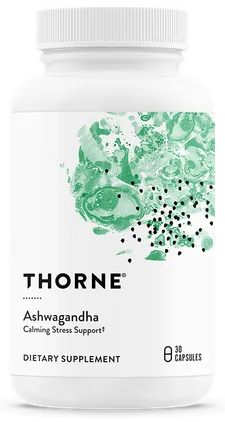
Thorne's Ashwagandha is a single-ingredient adaptogenic capsule that the brand says provides adaptogenic benefits to help maintain mental, emotional, and physical health and homeostasis in as little as one capsule per day. The formula uses Shoden ashwagandha, a clinically studied, highly concentrated extract standardized to an industry-leading 35% withanolide glycosides, which the page describes as the bioactive components of the ashwagandha plant that deliver calming and restorative effects. Each capsule contains 120 mg of Ashwagandha extract from root and leaf, and the serving size is one capsule with 30 servings per container. The label lists microcrystalline cellulose, hypromellose capsule and ascorbyl palmitate as other ingredients. The Summary section says the product helps the body adapt to and manage daily stressors, supports mental, emotional and physical balance, promotes overall emotional well-being, and supports daytime energy, mental clarity and a restful sleep foundation. The benefits list includes support for healthy stress management efforts, benefits for those with occasional anxious feelings, modulation of the adrenal hormones cortisol and DHEA during times of stress, enhanced cognitive function, resistance to stress-related fatigue and support for optimal immune function. The page states that the extract is clinically validated at smaller servings than other standardized extracts and uses both leaves and roots for full spectrum bioactivity. It is positioned for anyone seeking a natural way to support daytime energy and lay a foundation for restful sleep, busy professionals, parents and college students facing daily stressors, and people wanting a simple one-a-day adaptogen. The page includes an explanation of adaptogens as substances that improve the body's ability to cope with and recover from stress, and notes that botanical adaptogens are the most common type. The product is third-party tested to verify that contents match the label and to confirm there are no unsafe levels of heavy metals, pesticides or microorganisms. The warnings section states that the product is contraindicated for individuals with a history of hypersensitivity to any ingredient, that pregnant, nursing or women trying to conceive should not use it, and that there are no known adverse interactions or contraindications at publication date. The page also suggests a subscription option with savings of 10 percent per delivery and additional savings when subscribing to three or more products, and it lists related Thorne products including CoQ10, Theanine, Berberine and Omega-3 with CoQ10.
We don’t sell supplements. We help you make decisions and get the best price.
Lowest prices
We may earn a commission from some store links. How we choose.
Finding the lowest prices at the stores now. This takes a few seconds.
Study, Trial or Testing Result Summary
Members Only28 human studies · 25 improved
This product gives 120 milligrams of ashwagandha extract a day, close to the 125 milligrams that reduced stress in 8 to 12 week trials. A 2026 review pooling 23 placebo-controlled trials with 1706 adults found ashwagandha lowered the stress hormone cortisol, which the adrenal glands make, compared with placebo [1]. A 2024 review of nine trials with 558 people found lower cortisol, stress and anxiety, with mild to moderate side effects in four trials [2]. A 2025 review of 488 people taking at least 250 milligrams a day found cortisol fell, but stress scores did not change significantly [3]. In a 2026 trial, 141 stressed adults taking 600 milligrams a day for 8 weeks had lower cortisol, stress and anxiety than those on placebo [4]. In a 2021 trial, 130 stressed adults taking 300 milligrams a day for 90 days had lower stress and cortisol and better sleep [5]. In a 2026 study of 191 adults taking it for 12 months, cortisol fell, no serious safety problems appeared, and 68.7% were rated as improved [6]. Note that most of these studies used higher doses than this product, and one review noted that no trial directly tested adrenal gland function. Animal and cell studies are never counted.
See all 28 studies →Hide the studies
- Across 23 placebo-controlled trials with 1706 adults, ashwagandha lowered cortisol compared with placebo, raised serotonin and thyroxine modestly, and raised testosterone in men but not women.Hormonal Modulation with Withania somnifera: Systematic Review and Meta-Analysis of Randomized-controlled Trials.
- Across nine randomized trials with 558 people, ashwagandha lowered blood cortisol, perceived stress and anxiety scores compared with placebo, with mild to moderate side effects in four trials.Effects of Ashwagandha (Withania Somnifera) on stress and anxiety: A systematic review and meta-analysis.
- Across seven to eight randomized trials with 488 people taking at least 250 mg daily, ashwagandha lowered cortisol by about 1.16 micrograms per deciliter but did not significantly change perceived stress.Dual impact of Ashwagandha: Significant cortisol reduction but no effects on perceived stress - A systematic review and …
- In a review of 52 trials of plant products, the most consistent finding was that ashwagandha lowered morning cortisol, while effects of most other plants were unclear.Modulation of the hypothalamic-pituitary-adrenal (HPA) axis by plants and phytonutrients: a systematic review of human t…
- In nine trials of stressed people lasting 30 to 112 days, ashwagandha lowered cortisol without significant side effects, but no trial checked effects on adrenal function or long-term outcomes.Effects of Withania somnifera on Cortisol Levels in Stressed Human Subjects: A Systematic Review.
- A review of 19 ashwagandha trials using 120 to 1000 mg daily for 3 to 16 weeks reported less stress and anxiety, better sleep and favourable hormonal changes, though the trials were small and varied.Clinical evidence for the adaptogenic effects of Withania somnifera and Rhodiola rosea - A systematic review with molecu…
- A review of 14 ashwagandha studies using 30 to 600 mg daily found benefits for anxiety, stress and sleep with a pooled cortisol reduction of 3.27 micrograms per deciliter, and noted liver safety concerns.Efficacy and Safety of Saffron and Ashwagandha for Stress-Related Mental Health Outcomes: A Systematic Review of Randomi…
- In 186 stressed adults over 60 days, full-spectrum ashwagandha root reduced perceived stress, anxiety and improved sleep quality more than placebo, with no change in mental alertness.Effects of multi-herb and ashwagandha root formulas on stress modulation: a randomized, double-blind, placebo-controlled…
- In 141 stressed adults, 600 mg a day of a proprietary ashwagandha root extract for 8 weeks lowered cortisol, stress and anxiety scores, and it beat both standard ashwagandha extract and placebo on stress, anxiety and mood scores.A proprietary herbal extract of ashwagandha root for stress and anxiety in healthy adults: a randomized, double-blind, t…
- In 135 adults with functional constipation, a blend of ashwagandha root and okra fruit extract (300 or 500 mg a day) for 60 days eased constipation, lowered cortisol and the inflammation marker IL-6, and improved sleep, anxiety and depression symptoms.A Novel Herbal Composition Alleviates Functional Constipation, Reduces Gastrointestinal Transit Time, and Improves Bowel…
- In 135 stressed healthy adults, 150 or 300 mg a day of sustained-release ashwagandha for 60 days reduced perceived stress and improved sleep, eating behavior and well-being versus placebo, and the 300 mg dose also lowered cortisol.Efficacy and safety of Ashwagandha root extract sustained-release (AshwaSR) capsules in healthy adult, stressed subjects…
- In 130 stressed healthy adults, 300 mg a day of sustained-release ashwagandha for 90 days lowered stress scores and cortisol and improved memory, sleep quality and well-being compared with placebo.Efficacy and Safety of Ashwagandha Root Extract on Cognitive Functions in Healthy, Stressed Adults: A Randomized, Double…
- In 98 chronically stressed adults, a water-extracted ashwagandha root and leaf extract at 125 mg daily for 8 weeks reduced perceived stress compared with placebo, with effects that increased at higher doses of 250 and 500 mg.Effects of Withania somnifera Extract in Chronically Stressed Adults: A Randomized Controlled Trial.
- In 91 adults analyzed from 100 randomized, 600 mg daily of ashwagandha root extract for 24 weeks reduced body weight and stress scores more than placebo, with only mild side effects reported.Efficacy and safety of Ashwagandha (Withania somnifera) root extract on stress and weight management in adults: a prospe…
- In 90 adults with mild to moderate stress, 125 mg daily of the Zenroot ashwagandha formulation for 84 days improved stress scores, anxiety, mood and sleep quality compared with placebo, and was well tolerated.A New Ashwagandha Formulation (Zenroot™) Alleviates Stress and Anxiety Symptoms While Improving Mood and Sleep Quality: …
- In a 60-day placebo-controlled trial of 64 stressed adults, 300 mg of ashwagandha root extract twice daily lowered stress scores and serum cortisol compared with placebo, with mild side effects similar to placebo.A prospective, randomized double-blind, placebo-controlled study of safety and efficacy of a high-concentration full-spe…
- In a 60-day placebo-controlled trial of 60 stressed adults, 240 mg of Shoden ashwagandha extract once daily produced greater reductions in morning cortisol and the adrenal hormone DHEA sulfate than placebo and lowered anxiety scores.An investigation into the stress-relieving and pharmacological actions of an ashwagandha (Withania somnifera) extract: A…
- In an 8-week placebo-controlled trial of 60 stressed adults, ashwagandha root extract at 250 mg/day and 600 mg/day reduced perceived stress and serum cortisol, and the groups taking it reported better sleep quality than placebo.Adaptogenic and Anxiolytic Effects of Ashwagandha Root Extract in Healthy Adults: A Double-blind, Randomized, Placebo-co…
- In a 30-day placebo-controlled trial of 60 stressed adults, ashwagandha root and leaf extract at 400 mg or 225 mg daily lowered cortisol over time and improved some thinking skills compared with placebo, but mood and stress questionnaire results did not differ by group.Efficacy of Withania somnifera supplementation on adult's cognition and mood.
- In 60 women aged 45 to 55, ashwagandha root extract for 56 days reduced menopausal symptoms and stress scores more than placebo, and improved some hormone levels.A prospective, randomized, double-blind, placebo-controlled study on efficacy and safety of Ashwagandha root extract (Wi…
- In a 60-day placebo-controlled trial of 60 adults with stress, anxiety and high blood pressure, 300 mg of Ashwagen twice daily cut serum cortisol by 28.99% along with reducing anxiety and stress scores.Safety and efficacy of ashwagen (a standardized withania somnifera extract) in stress and anxiety with hypertension and …
- In a 16-week crossover trial of 57 overweight men aged 40 to 70, 21 mg a day of Shoden ashwagandha extract over 8 weeks raised the hormone DHEA sulfate and testosterone more than placebo, but cortisol and estradiol did not differ and feelings of fatigue and vigor did not improve more than placebo.A Randomized, Double-Blind, Placebo-Controlled, Crossover Study Examining the Hormonal and Vitality Effects of Ashwagand…
- In 56 team sports athletes, 600 mg daily of ashwagandha root extract for 42 days stopped the rise in stress hormone cortisol seen with placebo, improved recovery feelings in female athletes, and increased jump performance in male athletes.Ashwagandha Root Extract Stabilises Physiological Stress Responses in Male and Female Team Sports Athletes During Pre-Se…
- In a 60-day placebo-controlled trial of 54 healthy adults taking 500 mg of standardized ashwagandha root extract nightly, morning salivary cortisol fell more than with placebo, alongside better stress and anxiety scores.A standardized Ashwagandha root extract alleviates stress, anxiety, and improves quality of life in healthy adults by mo…
- In an 8-week placebo-controlled trial of 52 adults under chronic stress, 300 mg of ashwagandha root extract twice daily improved stress, food cravings, happiness and body weight measures, with serum cortisol among the secondary measures that improved.Body Weight Management in Adults Under Chronic Stress Through Treatment With Ashwagandha Root Extract: A Double-Blind, R…
- In 50 healthy athletic adults, ashwagandha root extract at 300 mg twice daily for 8 weeks improved maximum aerobic capacity and recovery scores more than placebo, with no adverse events reported.A double-blind, randomized, placebo-controlled trial on the effect of Ashwagandha (Withania somnifera dunal.) root extra…
- In a 14-day placebo-controlled trial of 48 adults with functional constipation, 500 mg a day of a blend of ashwagandha root and okra fruit extract lowered cortisol and IL-6 and reduced stress, with no adverse events reported.A blend of Withania somnifera (L.) Dunal root and Abelmoschus esculentus (L.) Moench fruit extracts relieves constipatio…
- In 191 healthy adults taking ashwagandha root extract for 12 months, no clinically significant safety problems appeared, serum cortisol fell, quality of life improved, and 68.7% of patients were rated as improved overall.Safety of 12-Months Administration of Ashwagandha ( Withania somnifera ) Standardized Root Extract in Healthy Adults: A …
Review Totals and Summary
Members Only978 reviews · 91% positive
Thorne Ashwagandha capsules get mostly favourable feedback, with praise centred on calm, sleep and quality. The ratings total about 815 across the stores, and the written comments are few and short. **What buyers say it did for them:** Calm and better sleep are the main themes. One buyer who stopped a med says it helped them "better handle anxiety throughout the day." Another, taking it with magnesium glycinate, reports it "noticeably improved my sleep quality" and left them feeling rested. A reviewer on Vitacost says they feel more balanced on stressful days and can unwind in the evening without feeling groggy. Another says it helps them sleep after hard training. One man in his forties, on his second bottle, reports feeling calmer and less stressed, falling asleep more easily, and having more energy. Another describes it as relaxing with a little energy. Some buyers notice the difference when they run out. Several say it "works perfectly" for them. **What buyers complain about:** There is little criticism. One reviewer calls it "not a miracle supplement," though a nice addition to their routine. One page's AI summary mentions that some customers had mixed experiences after a month of use, but no written review explains this. Lower star ratings exist (a handful of one- and two-star ratings on the Thorne page, and one 1-star on Vitacost), but their reasons are not given. **Taste, smell, pill size or form:** Capsules are described as easy to swallow, and one reviewer reports no stomach issues. Packaging is praised as excellent and securely packed. One reviewer wishes for a 60 or 90 capsule count. Other forms of this product (gummies, powder) were left out of this summary. **Value for money:** Reviews do not discuss price. Quality is the nearest theme: buyers call it "Incredibly high-quality" and "the best quality most potent Ashwagandha I have ever tried." Several say they chose Thorne because they trust its quality standards, and some keep rebuying, including for a spouse. One reviewer says they would buy again, and another says their boyfriend now takes hers. **Who it seems to suit and who it did not:** It seems to suit people who want a trusted, high-quality brand and are looking for daytime calm, evening wind-down or sleep support. Some use it alongside other supplements such as magnesium glycinate or glycine. It is also described as easy for people who want a simple daily routine. The reviews do not name a group it clearly failed, but anyone expecting dramatic results may be let down. The written comments do not cover dosage, duration or side effects in detail, so the picture is limited to outcomes and satisfaction.
Biohacker Summary
Members Only9 of 10 recommend it
Most of the panel recommends or uses ashwagandha, with five recommending it, three staying neutral, and one saying he uses it. They mainly take it to lower cortisol, ease stress and anxiety, and improve sleep, and several favor taking it at night or late in the day. Doses named were 250 mg a day, 400 to 600 mg, and a range of 120 to 1,000 mg for at least six weeks, and two prefer standardized extracts that state their withanolide content. Cautions were common: several advise cycling it, one suggests two weeks on and two weeks off, and others mention emotional numbing, feeling weird, irritability in women, or avoiding it with low cortisol, while one called the data weak. One panelist stopped taking it because it caused a mouth sore, and a few mention it as part of blends with other adaptogens.
See all 10 biohackers →Hide the biohackers
Dr. Mark Hyman · Ashwagandha · recommends
- Lists ashwagandha as an herb that can help lower anxiety or depression symptoms.
- Notes that there was a recent study on ashwagandha for sperm health, indicating it's an evolving area of research.
- Suggests trying ashwagandha, noting that some people respond to it, and recommends a dose of 400 to 600 mg.
- Recommends adaptogenic herbs like ashwagandha, particularly at night, rhodiola, lemon balm, and catclaw for stress relief.
- Recommends ashwagandha at night as an adaptogen to help with high cortisol and promote sleep for those who are tired and wired.
- Recommends ashwagandha, stating it can help convert T4 to T3, but advises ensuring a clear source and monitoring liver enzymes.
- Suggests adaptogens like rhodiola, ashwagandha, ginseng, and Siberian ginseng can be helpful for actively managing stress.
- States that Mosh protein bars contain ashwagandha to support a healthy brain.
- Recommends adaptogens like Ashwagandha if one has a lot of stress.
- States that ashwagandha can stimulate osteoblasts, which helps with bone building, especially for those with a genetic predisposition to low bone density.
Dr. Eric Berg · Ashwagandha · recommends
- Recommends ashwagandha, suggesting 250 milligrams per day over time to increase stress tolerance and help the cortisol receptor.
- Rates Ashwagandha on a scale from 1 to 10.
- Lists ashwagandha as one of the best ways to lower luteinizing hormone, which goes too high as people age and is related to dementia.
- Notes that some people take ashwagandha or other adaptogens to help calm them down when they assume their problem is cortisol, and sometimes it works.
- States that taking ashwagandha on a regular basis can greatly help the adrenals.
- Recommends Ashwagandha to help make the process of quitting coffee smoother.
- Recommends taking adaptogens like ashwagandha for super powerful and real energy inputs without artificial side effects.
- Recommends Ashwagandha to help sleep through the night.
- Recommends taking Ashwagandha in the evening before bed as a remedy for problems with elevated cortisol around 2 AM, when cortisol should be at its lowest point.
- Recommends trying ashwagandha to lower stress levels.
Siim Land · Ashwagandha · recommends
- Recommends Ashwagandha for stress, sleep and performance, based primarily on human research, especially randomized controlled trials showing measurable benefits.
- Lists Ashwagandha as one of 15 supplements backed by human studies.
- Notes that Ashwagandha is one of several supplements with human evidence.
- States that ashwagandha, unless contaminated, is not going to raise liver enzymes.
- Stopped taking ashwagandha because it immediately caused a mouth sore.
- States that ashwagandha consistently reduces stress and anxiety in randomized controlled trials.
- States that Ashwagandha helps with testosterone primarily in stressed out or poor sleeping people.
- States that ashwagandha has strong evidence for increasing testosterone, mostly in stressed or infertile men.
- Mentions ashwagandha as an example of a testosterone-boosting supplement he has no interest in taking.
- Places Ashwagandha, specifically the KSM66 form, in the 'god tier' due to extensive research supporting its benefits for stress, sleep, testosterone production, estrogen, and even V2 max, while personally not experiencing any negative side effects some people report.
Thomas DeLauer · Ashwagandha · recommends
- Recommends ashwagandha extract, noting a study where 57 overweight men over 40 saw a 14.7% increase in testosterone and an 18% increase in DHEA over 16 weeks, suggesting it removes the cortisol block suppressing the entire hormonal cascade.
- Mentions ashwagandha as part of a full testosterone protocol, supporting production through different pathways.
- Recommends ashwagandha, noting it modulates the HPA axis and dropped cortisol by approximately 23% in 60 days, but advises cycling it, especially if feeling emotionally numb.
- Cautions against Ashwagandha due to its potential for emotional numbing effects.
- Suggests ashwagandha at night to help regulate cortisol, but advises playing around with it as some people find it makes them feel weird.
- Recommends Ashwagandha, Rhodiola, and Ginseng as adaptogens to help the body adapt to stress, bring cortisol levels back to homeostasis, and support heat shock proteins and stress chaperoning pathways, especially when in a caloric deficit.
- Recommends Ashwagandha in the evening time for its anti-cortisol effect, helping to regulate cortisol for better balance in the morning.
- Recommends ashwagandha as an adaptogen with a profound effect on cortisol, acknowledging that it can make some people feel numb but may still be helpful.
- Discusses Ashwagandha as an adaptogen with quite a bit of evidence for various benefits like cognitive ability, stress, stamina, cardiovascular benefits, and lipid panels. He notes that long-term use might lead to a level of tolerance or an apathetic sense, suggesting it should be used when sincerely needed.
- Recommends Ashwagandha to help regulate oxidative stress.
Ben Greenfield · Ashwagandha · neutral
- Ashwagandha, taken as 120–1,000 mg for at least 6 weeks, with most studies providing a dose of 400–600 mg/d, can lower cortisol levels, improve sleep quality, and enhance cognitive resilience for athletes during challenging phases consisting of high-volume resistance training.
- Notes that ashwagandha is an ingredient in MTE.
- Mentions Ashwagandha as a supplement people cycle through when still sleeping poorly, suggesting it might not be addressing the true sleep problem.
- Notes that ashwagandha is a nightshade herb, but it is taken as a supplement and not used for cooking.
- States that Ashwagandha helps regulate stress response and steady the nervous system, influencing biological systems tied to sleep quality.
- Has found that adaptogens like ashwagandha, taken about half an hour before using the Shift Wave, seem to enhance its effects on tuning up the nervous system. He also found it helped him and his co-founder achieve slower respiratory heart rate coherence.
- Uses Ashwagandha, as part of IM8 Health, to quiet the stress response for sleep.
- Mentions ashwagandha as an herb that has more data than fruit tree leaves.
- Ben Greenfield notes that IM8 contains ashwagandha, an adaptogen, to help manage stress and support the immune system.
- Sometimes takes ashwagandha to help get back to sleep if he wakes up in the middle of the night.
Dave Asprey · Ashwagandha · neutral
- Dave Asprey notes that ashwagandha, when taken as a real standardized extract at a real dose, genuinely lowers cortisol and shows effects on stress and sleep quality in randomized trials, but lacks polysomnography data.
- Dave Asprey discusses ashwagandha as part of an adaptogen trio that works together for stress response and human performance.
- Mentions ashwagandha as an adaptogen in MTE that helps blunt the cortisol spike.
- Advises against ashwagandha for low cortisol, stating that salt and water are needed instead.
- Warns that ashwagandha can raise testosterone in women, causing irritability, and therefore needs to be cycled.
- Dave Asprey mentions ashwagandha as a supplement and cofactor that supports thyroid activation.
- Recommends ashwagandha as a cofactor that can help thyroid function, especially with conversion issues.
- Dave Asprey lists ashwagandha as part of a supplement stack that supports healthy hormone levels.
- Discusses ashwagandha as a common adaptogenic herb used by biohackers to deal with stress, noting it was banned in Denmark and can cause anhidonia and reduced ability to reach orgasm at higher doses.
- The episode discusses the dangers of chronic ashwagandha use.
Peter Attia · Ashwagandha · neutral
- Peter reviews the evidence for select off-label medications and supplements commonly used for sleep, including glycine, magnesium, ashwagandha, and phosphatidylserine.
- Finds ashwagandha a little bit helpful for sleep, though notes it may not be for everyone.
- Finds ashwagandha "a little bit helpful" for sleep, but notes that it may not be for everyone.
- Finds ashwagandha a little bit helpful for sleep, but notes it may not be for everyone.
- States that the data for ashwagandha are weak.
- Discusses the current evidence for ashwagandha's effects on sleep, stress, and anxiety.
- Mentions ashwagandha as an evergreen shrub historically used in traditional Indian medicine for indications such as sleep, stress, and immune health.
- Mentions ashwagandha as something that can help with sleep in the setting of chronic stress and hypercortisolemia.
- Takes 600 mg of Solgar ashwagandha at night, having recently switched to this brand and returned to taking it after a previous hiatus.
- Takes 600 milligrams of ashwagandha at night, having recently switched to the Solgar brand and having returned to taking it after a long break.
Andrew Huberman · Ashwagandha · recommends
- He shares science-based tools for modulating aggression, including supplementation with ashwagandha.
- Warns that while ashwagandha is a potent inhibitor of cortisol, chronic supplementation for longer than two weeks can disrupt other hormone and neurotransmitter pathways, so it should be used with a two-week break after two weeks of use.
- Recommends Ashwagandha as a supplement to reduce cortisol.
- Explains how to optimize hormone levels through supplements such as ashwagandha.
- Mentions ashwagandha as a potent commercial compound in supplement form that can be used to reduce chronic stress, especially late in the day, by significantly decreasing cortisol.
- Discusses Ashwagandha as a supplement to better manage stress.
- Uses ashwagandha when feeling particularly stressful to lower anxiety and cortisol, but does not take it year-round or on a regular basis.
- Takes ashwagandha for sleep.
- Recommends Ashwagandha as a good adaptogen, but advises cycling it if taking high doses due to potential issues with liver and thyroid.
- Warns that taking ashwagandha as a prophylactic or before training is counterproductive because it blunts cortisol, which can cause immunosuppression and suppress adaptation.
Dr. Rhonda Patrick · Ashwagandha · recommends
- Recommends Ashwagandha supplementation, specifically standardized for withanolides (KSM-66 at 5% or Sensoril at 10%), to indirectly boost testosterone by reducing cortisol levels, and also to improve anxiety, stress resilience, and sleep quality.
- Recommends ashwagandha, specifically patented extracts like Sensoril or KSM66 standardized to sufficient quantities of withanolides, for its indirect effect on testosterone by suppressing cortisol and stress response, which can be beneficial for anxious individuals and improve sleep.
- Is very bullish on Ashwagandha, citing meta-analyses showing improved lean mass, strength, sleep, and stress management. He notes it also raises testosterone but not enough to explain the lean mass changes.
- Discusses ashwagandha.
- Uses ashwagandha as a supplement to help with sleep.
- Dr. Rhonda Patrick discusses curcumin & ashwagandha safety.
- His regular sleep supplements are glycine, ashwagandha, magnesium L-threonate, and magnesium oxide.
- She mentions that Peter Attia takes 600 milligrams of ashwagandha from Solgar.
Bryan Johnson · Ashwagandha · uses
- Drinks his Blueprint longevity mix with additional morning supplements, including ashwagandha.
- States that Blueprint Ashwagandha can be used to stabilize mood.
- Mentions that Ashwagandha is included in the LA Longevity Mix, which condenses his 100 daily pills into a drink.
- Mentions ashwagandha as a potential therapy that could positively influence sperm health.
- Mentions ashwagandha as an ingredient in his 'bag of goodies', indicating he uses it.
- Takes ashwagandha for anti-anxiety, improved cortisol management, improved sleep, and increased testosterone.
- Uses Ashwagandha + Rhodiola for energy and stress support.
- Recommends Ashwagandha during the luteal phase to help reduce stress, balance hormones, reduce PMS related fatigue, and combat water retention and bloating, and also for stress and mood management in perimenopausal and menopausal women.
- Lists "Ashwagandha + Rhodiola" with "120mg" as part of his supplements, implying its use.
- During menopause, Bryan Johnson recommends adding ashwagandha based on individual needs.
RAL Summary
Members OnlyTier 2 for Adrenal Support
More Details
Members OnlyBody systems · Combine with · Possible side effects
Body systems: Endocrine system, Nervous system
Combine with: Ashwagandha is an adaptogen that has been shown in clinical trials to modulate the HPA axis and lower serum cortisol, so it fits adrenal support well. To strengthen that effect, pair it with vitamin C and B-complex vitamins (especially B5 and B6), which the adrenal glands use in cortisol production and stress response. Magnesium glycinate helps with nervous system relaxation and sleep quality. Rhodiola rosea or Holy Basil (Tulsi) can add complementary adaptogenic support for fatigue and stress resilience. L-theanine can promote calm without sedation, and phosphatidylserine may help blunt elevated evening cortisol. If you take meds, sedatives, or immunosuppressants, check with your healthcare provider first, because ashwagandha can influence thyroid hormone levels and may interact with them.
Possible side effects: Mild to moderate side effects were reported in four of nine trials in one review, and a 12 month study found no clinically significant safety problems. Reviewers mention no stomach issues.
Supplement Facts
Ashwagandha extract 120 mg
| Ashwagandha extract | 120 mg | † |
Other ingredients: Microcrystalline Cellulose, Hypromellose (derived from cellulose) capsule, Ascorbyl Palmitate.
Directions: Take 1 capsule daily or as recommended by your health-care practitioner.
Label source: Reverseagelab · Report a label change
Show entire label

More adrenal support products
Members OnlyThe highest ranked for the same goal
Read more
Our articles on this subject
- Supplements for Stress and Anxiety Relief: What the Evidence SupportsArticle · Oct 26, 2026
- When Is the Best Time to Take Vitamins and Supplements?Article · Jun 15, 2026
Graded November 6, 2026 by the Reverse Age Lab evidence engine, from human studies, real reviews and our biohacker panel. How we grade. Is this medical advice? No. Rala organizes the published evidence; go over any change with your doctor, especially if you take meds.
Privacy policyConsumer health dataAffiliate disclosureTermsDo Not Sell or Share My Personal InformationCookie settings