
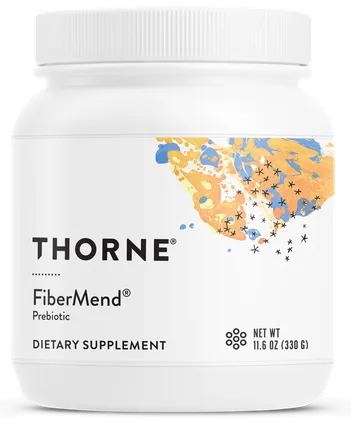
Thorne FiberMend Review
FiberMend is presented by Thorne as a prebiotic fiber for gut wellness, designed to help grow beneficial bacteria in the gut while supporting healthy blood sugar levels, regularity, and optimal digestive function. The page describes it as a soluble prebiotic fiber in a powder form, sold as a container of 30 scoops, with one scoop as the serving size. The one-time purchase price shown is $45, or $40.50 with a subscription at 10% off, and the page lists subscription frequencies from every 2 weeks up to every 4 months, with monthly marked as most common. Free shipping is noted on subscriptions, limited to the contiguous United States, and the page notes the product is HSA/FSA eligible. The formula combines Sunfiber, a partially hydrolyzed guar gum fiber, with rice bran, larch arabinogalactan, apple pectin, and green tea phytosome in a water-soluble blend. Per scoop, the page lists 8 grams of partially hydrolyzed guar gum, 2.5 grams of rice bran, 300 milligrams of larch extract, 150 milligrams of apple pectin, and 50 milligrams of green tea phytosome, the last being decaffeinated and a phospholipid complex from sunflower. According to the page, the formula is well tolerated and is intended to produce little to no bloating, cramping, or gas. Thorne says the hydrolyzed guar gum dissolves more readily and improves digestibility without sacrificing fiber content. Larch arabinogalactan is described as a fiber with properties that benefit immune function, and green tea phytosome is described as a highly absorbable complex of green tea polyphenols and phospholipids that support healthy prebiotic activity. The listed features include mixing easily in water or a preferred beverage, enhancing satiety, helping maintain healthy blood sugar levels, promoting regularity, containing no sweeteners, and being flavorless and odorless so it can be added to foods and beverages. The page states it can be used daily. Thorne also notes that the product has been third-party tested and certified to verify that what is in the package matches the label and that it contains no unsafe levels of contaminants such as heavy metals, pesticides, and microorganisms. Warnings on the page state that the product is contraindicated in anyone with a history of hypersensitivity to its ingredients, that pregnant users should consult a health-care practitioner before use, and that there are no known adverse interactions or contraindications at publication date. The page also includes a set of related Thorne products, including Collagen Plus, FloraMend Prime Probiotic, ResveraCel, and Collagen Fit, as recommendations.
We don’t sell supplements. We help you make decisions and get the best price.
Lowest prices
We may earn a commission from some store links. How we choose.
Finding the lowest prices at the stores now. This takes a few seconds.
Study, Trial or Testing Result Summary
Members Only24 human studies · 11 improved
The main ingredient, Sunfiber AG, is a partially hydrolyzed guar gum fiber at 8 grams a day, above the 5 to 6 grams that worked in studies. In adults with irritable bowel syndrome, 6 grams a day for 12 weeks reduced bloating and gas more than placebo, though other symptoms and quality of life did not change [1]. In children with belly pain or irritable bowel, 5 grams a day for 4 weeks improved symptoms in 43 percent versus 5 percent on placebo [2]. In healthy adults with loose stools, three months normalized stool form [3]. In an open study of adults with irritable bowel, it helped 60 percent versus 40 percent with wheat bran and was better tolerated [4]. In adults with chronic constipation, it sped up colon transit, increased bowel movements and reduced straining and belly pain [5]. In constipated children, it worked about as well as a laxative [6]. The larch fiber, ResistAid, at 300 milligrams, has no studies that tested it for digestion; the fiber studies found used other fibers [7]. The green tea extract, GreenSelect, at 50 milligrams, has no human studies for this goal. Animal and cell studies are never counted.
See all 24 studies →Hide the studies
- A review of ten short trials (1 to 8 weeks) of different fibre supplements in adults with functional bowel disorders found mostly improved symptoms, though agave fructans worsened gas and results varied too much to pool; it did not test ResistAid itself.Fibre manipulation to manage symptom severity and quality of life in patients with functional bowel disorders: A systema…
- In 108 adults with irritable bowel syndrome, 6 g a day of partially hydrolyzed guar gum for 12 weeks reduced bloating and gas scores more than placebo, but did not change other symptoms, severity or quality of life scores.Randomized clinical study: Partially hydrolyzed guar gum (PHGG) versus placebo in the treatment of patients with irritab…
- In 70 healthy adults given 3.5 g or 7 g of resistant potato starch or placebo for 4 weeks, neither the starch nor placebo significantly changed bowel symptoms such as bloating, gas or constipation.Consumption of resistant potato starch produces changes in gut microbiota that correlate with improvements in abnormal b…
- In 70 people with irritable bowel syndrome given resistant starch, pea fibre, chondroitin sulfate, protein hydrolysate or placebo for 4 weeks, symptom improvements were not significantly different from placebo.Randomised controlled trial: nutritional supplements to relieve irritable bowel syndrome symptoms by targeting the gut m…
- In 61 constipated children, four weeks of partially hydrolyzed guar gum raised weekly bowel movements from 4 to 5 and improved stool consistency and abdominal pain, similar to lactulose, with no placebo group.Can partially hydrolyzed guar gum be an alternative to lactulose in treatment of childhood constipation?
- In 60 constipated women, 15 g a day of an inulin and partially hydrolyzed guar gum mix for 3 weeks improved bowel movements about the same as placebo, though it lowered Clostridium bacteria.Microbiota benefits after inulin and partially hydrolized guar gum supplementation: a randomized clinical trial in const…
- In 60 children with functional abdominal pain or irritable bowel syndrome, 5 g a day of partially hydrolyzed guar gum for 4 weeks improved symptoms in 43% versus 5% with placebo, and normalized bowel habit in 40% versus 13%.Partially hydrolyzed guar gum in pediatric functional abdominal pain.
- In 54 adults with constipation, a fibre blend containing resistant dextrin taken for 28 days increased bowel movements and reduced bloating, distension and flatulence compared with placebo, while abdominal pain did not differ.Combination of Dietary Fibers From Different Food Origins as a Treatment for Adults With Functional Constipation: A Rand…
- In 47 people with irritable bowel syndrome, a blend of partially hydrolyzed guar gum, probiotics and berry extracts for 2 months improved quality of life more than placebo, but the effect of the fiber alone cannot be separated.Effects of a polyphenol-rich extract blend, probiotics, and hydrolyzed fiber on quality of life and gut health markers i…
- In 44 healthy adults with loose stools, three months of partially hydrolyzed guar gum normalized stool form compared with placebo, did not change stool frequency, and increased Bifidobacterium.Effect of Repeated Consumption of Partially Hydrolyzed Guar Gum on Fecal Characteristics and Gut Microbiota: A Randomize…
- In 41 healthy young adults, up to 60 g of resistant maltodextrin was well tolerated with no significant change in stool frequency or symptoms, though gradually rising doses over 21 days increased flatulence and bowel movements.Gastrointestinal responses following acute and medium term intake of retrograded resistant maltodextrins, classified as …
- In 26 people with irritable bowel syndrome on a low FODMAP diet, adding fibre including resistant starch for 14 days did not change symptom response compared with control (48% responded with the combination versus 57% control), though it increased stool bulk.Supplementing Dietary Fibers With a Low FODMAP Diet in Irritable Bowel Syndrome: A Randomized Controlled Crossover Trial…
- In 26 adults with irritable bowel syndrome on a low FODMAP diet, a fibre blend for 3 weeks kept gut symptoms stable like placebo, but improved gut-related anxiety and gut bacteria composition.Dietary fibre blend improves gut health in patients with irritable bowel syndrome following a low FODMAP diet: a randomi…
- In 20 people with irritable bowel syndrome on low FODMAP diets, added fibres for 2 weeks raised blood short-chain fatty acids and gut fermentation in the distal colon but had minor effects on stool measures; symptoms were not reported.Detection of changes in regional colonic fermentation in response to supplementing a low FODMAP diet with dietary fibres…
- In a small pilot of 6 adults with irritable bowel syndrome and 5 controls, resistant starch 2 at 10 to 20 grams a day, given for 3 days per dose, caused increased bloating in all patients who took it.Evaluating tolerability of resistant starch 2, alone and in combination with minimally fermented fibre for patients with…
- In 8 volunteers, eating about 10 grams of resistant starch a day from cornflakes for one week did not change stool mass, consistency, transit time, or flatulence compared with a lower-starch cereal, although it produced more breath hydrogen.The effect of resistant starch on colon function in humans.
- In Alaska Native adults taking a fibre supplement with 23.7 g a day of resistant starch for 4 weeks, people reported more gas than usual, but other digestive symptoms were not consistently worse than with the digestible starch control.Tolerance of high fibre supplementation among participants in a randomised trial to reduce cancer risk among Alaska Nati…
- In 49 adults with chronic constipation, 4 weeks of partially hydrolyzed guar gum shortened colon transit time, increased spontaneous bowel movements, improved stool form, and reduced straining and abdominal pain days.Partially hydrolyzed guar gum accelerates colonic transit time and improves symptoms in adults with chronic constipation…
- In 11 people who ate a high resistant starch diet (about 39 g a day) for 3 weeks compared with a low one (5 g a day), stool output rose and stools became more acidic with more beneficial fermentation products, and people reported easier bowel movements but also more gas.Effect of resistant starch on fecal bulk and fermentation-dependent events in humans.
- In 188 adults with irritable bowel syndrome, 5 g per day of partially hydrolyzed guar gum for 12 weeks gave a 60 percent success rate on an intention-to-treat analysis, versus 40 percent with 30 g per day of wheat bran, and it was better tolerated.High-fiber diet supplementation in patients with irritable bowel syndrome (IBS): a multicenter, randomized, open trial c…
- In an uncontrolled clinical experience, 134 adults with irritable bowel syndrome took 5 grams a day of partially hydrolyzed guar gum for 24 weeks alongside a calorie-controlled diet. Bowel movement frequency improved, and flatulence fell by about 56 percent after 3 weeks.[Partially hydrolyzed guar gum: a fiber as coadjuvant in the irritable colon syndrome].
- In 86 adults with irritable bowel syndrome, partially hydrolyzed guar gum at 10 or 5 g per day for 12 weeks improved gut symptoms and quality of life, though the gains shrank after stopping, in an open trial without a placebo group.Treatment effects of partially hydrolyzed guar gum on symptoms and quality of life of patients with irritable bowel synd…
- Over 6 months, partially hydrolyzed guar gum added to usual drug therapy in adults with irritable bowel syndrome increased short-chain fatty acid-producing gut bacteria and normalized stool consistency. The number of participants and the dose were not stated.Changes in intestinal microbiota and biochemical parameters in patients with inflammatory bowel disease and irritable bo…
- In 68 adults with constipation-predominant irritable bowel syndrome, 4 weeks of partially hydrolyzed guar gum improved symptom scores, stool form and transit time, and reduced laxative use. The size of the benefit depended on sex, age and body weight.Partially hydrolyzed guar gum in the treatment of irritable bowel syndrome with constipation: effects of gender, age, an…
Review Totals and Summary
Members Only2,816 reviews · 92% positive
Buyers rate Thorne FiberMend highly, with about 1,740 ratings across the stores that sell it. Most describe a gentle fiber powder that helps with regularity and digestive comfort. Taste, texture and price are where opinions split. This summary covers the powder only, and any reviews of other forms were left out. **What buyers say it did for them:** The most common praise is steadier, more comfortable digestion. One person says "I go to the bathroom every morning since starting." Another says it fixed "my bloaty, painful, full belly" after months of constipation and bloating. Others say it soothes the gut during travel and after surgery, and one reports regularity through pregnancy. One reviewer even credits it with helping clear a gut problem after other cleanses failed. Store pages describe it as something people build into a daily routine rather than a short-term fix. One reviewer says things were moving more naturally after a few days. **What they complain about:** The main complaint is taste and texture for some people. One 2-star reviewer says it works but "I cannot get the taste out of my mouth." Another calls it "definitely NOT flavorless or textureless." A reviewer found a small smoothie turned "more like a gel," which could be off-putting in plain water. One store summary mentions that the powder can stay clumpy when stirred, and another that mixing could be smoother. A small number of users on one store reported stomach upset or more bloating. Store summaries also note that some reviews are short and offer little detail. **Taste, smell and form:** This is the most divided theme. Many call it mild or neutral: "The taste and smell are neutral." One compares it to wheat or rice cereal and enjoys it. Others say it "Tastes better than most" fibers, and one finds it better than plain psyllium husk. Several say it dissolves and mixes easily. People commonly stir it into smoothies, oatmeal, yogurt, coffee, protein shakes, or water. Coffee helped mask the flavor for two unhappy reviewers, though they said it changed the coffee. **Value for money:** Views are mixed but lean positive. One buyer says "Works great. Worth the price." Others call it "Little bit pricy" or say buying it felt "pretty risky at the price" before it paid off. One store summary says a container lasts a long time, which a reviewer saw as good value. **Who it seems to suit and who it did not:** It seems to suit people who want a gentle fiber that doesn't cause bloating "like some fibers can," including those with sensitive digestion, and people who add it to smoothies, oatmeal or protein drinks. A clinician reviewer calls it well tolerated, even for clients with IBS. It suited less well those who are sensitive to flavor and texture, especially anyone planning to drink it in plain water. The few who reported stomach upset or more bloating did not find it a good fit.
Biohacker Summary
Members Only9 of 10 recommend it
The only ingredient the panel spoke about is green tea, which is a smaller ingredient in this product, and no one discussed the main ingredient. Four of the ten drink it or take it in capsules, mainly for focus, calm energy, fat loss and gut health, and some pair it with lemon for better absorption, sip it fasted in the morning, or swap it in for coffee. One panelist warned that very high doses of green tea extract could harm the liver and that green tea may not suit pregnancy or people low on folic acid, and he also raised its oxalate content as a concern for kidneys. Others stayed neutral, with one noting that green tea extract did not extend lifespan in animal studies, and none gave a specific dose beyond about two cups a day or a couple of capsules.
See all 10 biohackers →Hide the biohackers
Siim Land · Green Tea · recommends
- States that green tea is very effective for visceral fat loss due to its polyphenol content.
- Personally drinks 2 cups of green tea a day and made it one of the small changes while reducing his visceral fat.
- Mentions that green tea's EGCG has stimulated autophagy in cultured liver cells and mouse experiments by increasing AMPK.
- Consumed more polyphenol-rich foods, including green tea, to reduce visceral fat.
- Mentions that he drank green tea, which targets visceral fat, as one of the things he did to reduce visceral fat.
- Drinks 1-3 cups of green tea a day, noting that there are multiple lines of evidence suggesting it improves various health markers and may have longevity benefits.
- States that green tea is one of the healthiest beverages in the world, improving cardiovascular disease risk factors, heart health, metabolic health markers, targeting all hallmarks of aging, reducing visceral fat, and being associated with lower mortality.
- When dropping his visceral fat, Siim Land drank around one to three cups of green tea per day, usually in the morning and before exercise, and believes it contributed to visceral fat loss.
- Drank 2–3 cups of green tea per day to reduce visceral fat.
- Reduced visceral fat by adding 2 cups of green tea per day.
Thomas DeLauer · Green Tea · uses
- Now rotates green tea with coffee, having green tea for two days, then coffee for two days, to maintain energy and benefit from different antioxidant profiles. He previously focused too much on green tea and neglected coffee.
- Combines MCT oil with matcha green tea in a cognitive cocktail, finding that green tea provides more mental benefits than coffee for focus and calm energy.
- Explains that green tea's catechin benefits often diminish in the intestines, with less than 20% surviving digestion, but adding citrus can reclaim these benefits by about 5x.
- Recommends adding citrus, specifically lemon, to green tea to reclaim the benefits of catechins, as it can leave 80% of them intact.
- Recommends sipping green tea while walking fasted in the morning to help extend the fat oxidation window.
- Recommends one to three small cups of green tea, ideally in the morning, as consistent consumption over two to three weeks increases BDNF due to EGCG.
- Recommends switching to a good quality green tea first thing in the morning because it is lower in caffeine and contains theanine, which has a cortisol-blunting effect, balancing out the stimulation.
- Recommends green tea, mentioning its EGCG content.
- Would want green tea for its EGCG, which is a good antioxidant, especially for managing stress.
- Recommends green tea as an alternative to pre-workouts, highlighting caffeine as the key ingredient.
Dr. Eric Berg · Green Tea · neutral
- Suggests pairing green tea with lemon for better absorption.
- Suggests incorporating anti-cancer foods like green tea to help prevent pancreatic cancer.
- Recommends replacing coffee with green tea.
- Mentions green tea as an ingredient that can bring something different to the table for liver health.
- Recommends replacing coffee with green tea as a step towards improving energy levels and brain functioning.
- Recommends drinking green tea for EGCG, which benefits many things, from weight loss to cancer prevention.
- Dr. Eric Berg recommends green tea as a home remedy to help prevent hair loss and regrow hair.
- L-theanine is an amino acid that occurs naturally in green and black tea leaves. Dr. Eric Berg encourages viewers to find out more about the benefits of L-theanine and green tea.
- Suggests that green tea can be beneficial to counter some of the effects of a hypoxic state in cancer and inflammation.
- Recommends focusing on consuming green tea for cancer prevention.
Dr. Mark Hyman · Green Tea · neutral
- Mentions that EGCG from green tea activates thermogenesis, contributing to calorie burning.
- States he was using green tea to stimulate the NRF2 pathway and open up detox.
- Mentions that green tea has super beneficial effects on Akkermansia muciniphila, a keystone species that protects the gut lining, prevents leaky gut, reduces inflammation, and helps metabolic health.
- Lists green tea extract as a phytochemical that helps mitochondrial function.
- Was given green tea as part of a program to rehab his gut and rebuild bacteria.
- Mentions green tea extract as another NRF2 activator.
- Recommends green tea as a source of catechins, which have been shown to reduce the incidence of influenza and common cold symptoms.
- Mentions that green tea can modify the expression of genes, which in turn affects stress response and mental health.
- Recommends green tea to help lower high uric acid levels.
- Takes Green tea as part of his supplement regimen.
Andrew Huberman · Green Tea · uses
- Drinks green tea and believes it has very positive cognitive benefits in terms of focus.
- Uses Athletic Greens AG1 in the morning for gut health.
- Takes a couple of green tea capsules in the morning.
- Includes green tea in his diet because its EGCG compound has been shown to stimulate GLP-1.
- Says he takes Athletic Greens AG1 every morning to cover his foundational nutritional needs.
- Has been taking Athletic Greens, now called AG1, since 2012, once or twice a day, for the probiotics it provides for gut health.
- Mentions green tea extract as one of many herbal compounds that people claim can increase hair growth, but notes a lack of robust clinical studies.
- Has been taking Athletic Greens since 2012 and still takes it once or twice a day for probiotics and gut health.
- Thanks Athletic Greens AG1 for sponsoring the episode.
- Huberman has been taking Athletic Greens AG1 once or twice a day since 2012 because it covers all his nutritional bases, including probiotics important for the gut-brain axis.
Dave Asprey · Green Tea · warns
- Warns that very high doses of EGCG or green tea extract could cause harm to the liver.
- Mentions green tea as a source of EGCG but notes it also contains oxalates.
- Warns that green tea depletes folic acid and may not be advisable during pregnancy, or at least should be taken with folic acid.
- Mentions that green tea contains oxalate, though it is lower than black tea and matcha.
- Warns that green tea is full of oxalate, which clogs kidneys and is a major cause of kidney stones, and also blocks the ability to use folic acid or folate.
- Notes that green tea contains L-Theanine, but a standard cup only has 20 to 30 mg, which is not enough to feel its true effects.
- Warns that drinking green tea will not lower SHBG, only a pill of EGCG, a rare extract of green tea, will.
- Combines green tea with puer tea and blends it with Kerrygold and a small amount of coconut oil or caprylic acid to magnify the effects of the tea, especially when traveling.
- Mentions that green tea extract EGCG will lower SHBG to a certain extent.
- Mentions a polyphenol product from Pendulum, specifically designed as a booster for the Akkermansia strain, containing extracts from pomegranates, green tea, and grape seeds.
Ben Greenfield · Green Tea · uses
- Drinks green tea in the morning as part of her quiet time.
- States that Nuchido Time Plus includes green tea extract for its high level of EGCG, which inhibits the methylating enzyme NNMT, ensuring nicotinamide is recycled rather than excreted.
- Suggests that one could do a carnivore diet and still have a cup of green tea in the morning to introduce hormetic stressors.
- Recommends green tea as part of a morning fat loss strategy to increase fatty acid oxidation when consumed in a fasted state.
- States that healing leaves taste like black tea or green tea.
- Includes green tea extract in their Lumat blue product along with methylene blue, phycocyanin, riboflavin, lutein, and quercetin.
- Julie Gibson Clark drinks green tea in the morning as part of her quiet time.
- Ben Greenfield uses Pique tea, a powdered tea that is very useful when traveling, noting its cold extraction technology preserves phytonutrients and makes them more bioavailable, and it is triple toxin screened for purity.
- Ben Greenfield recommends green tea or green tea extract as an easier-to-find supplement that can act like a med and also as an exercise mimetic.
- States that when he does cold therapy, he likes to take something that will increase brown fat activation, like green tea.
Bryan Johnson · Green Tea · uses
- Takes Athletic Greens AG1 in the morning for gut health.
Peter Attia · Green Tea · neutral
- Explains that green tea extract was tested due to popular reputation and traditional medicine claims, but it did not extend the lifespan of animals in their studies.
Dr. Rhonda Patrick · Green Tea · neutral
- Dr. Patrick mentions that catechins and polyphenols are found in things like green tea, dark chocolate, turmeric, blueberries, and other purple pigmented fruits and vegetables, as well as red wine.
- Notes that catechins in green tea have antioxidant, anti-inflammatory, and anticarcinogenic properties, and their bioavailability can be increased by adding vitamin C.
- Notes that a "green" calorie-restricted Mediterranean diet was enriched with polyphenols from green tea and mankai, and greater intake of polyphenol-rich foods like mankai and green tea further enhanced benefits for brain health.
- Mentions plant polyphenols found in green tea as beneficial hormetic stressors that activate the body's stress response mechanisms.
- Notes that green tea, containing EGCG, activates FOXO3, which combats cellular aging.
RAL Summary
Members OnlyTier 3 for Digestion and Bloating
More Details
Members OnlyBody systems · Combine with · Possible side effects
Body systems: Digestive system
Combine with: For digestive support, pair FiberMend with a multi-strain probiotic (Lactobacillus and Bifidobacterium strains) to complement the prebiotic effect, plus magnesium glycinate or citrate for regularity. Digestive enzymes or L-glutamine may help with gut lining comfort. If your secondary interest is blood sugar, take it before meals alongside berberine, chromium picolinate, alpha-lipoic acid, or cinnamon extract, and keep up with water intake and a balanced diet. Separate fiber from medications by 2 hours, and consult a clinician if you take meds, since combined effects may lower glucose.
Possible side effects: Studies found the guar gum fiber well tolerated, better than wheat bran. A small number of buyers reported stomach upset or more bloating, and some disliked the taste and gel-like texture.
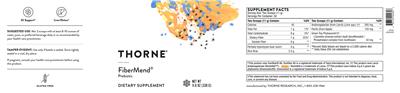
Supplement Facts
Total Carbohydrates 9 g · Sunfiber AG 8 g · Rice Bran 2.5 g
| Calories | 45 | |
| Total Fat | 1 g | |
| Total Carbohydrates | 9 g | |
| Sunfiber AG | 8 g | † |
| Rice Bran | 2.5 g | † |
| ResistAid | 300 mg | † |
| Pectin | 150 mg | † |
| GreenSelect | 50 mg | † |
Directions: Suggested use: Mix 1 scoop with at least 8-10 ounces of water, juice, or preferred beverage daily or as recommended by your health-care practitioner.
Barcode (UPC) 693749002826 · Label source: NIH label database · Report a label change
Show entire label


More digestion and bloating products
Members OnlyThe highest ranked for the same goal
Read more
Our articles on this subject
- How to Improve Gut Health Naturally: Fiber, Foods and the Probiotic Strains With Human TrialsArticle · Sep 15, 2026
- Best Probiotic for Bloating: The Strains With Human Trials, and How to Choose OneArticle · Oct 27, 2026
Graded November 5, 2026 by the Reverse Age Lab evidence engine, from human studies, real reviews and our biohacker panel. How we grade. Is this medical advice? No. Rala organizes the published evidence; go over any change with your doctor, especially if you take meds.
Privacy policyConsumer health dataAffiliate disclosureTermsDo Not Sell or Share My Personal InformationCookie settings