
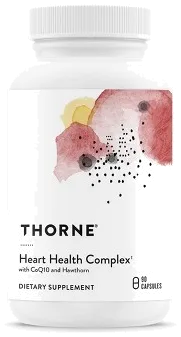
Thorne Heart Health Complex Review
Thorne's Heart Health Complex is a capsule supplement that combines coenzyme Q10 (CoQ10), hawthorn (Crataegus oxycantha), potassium, taurine, and magnesium. The product is described as a combination of coenzyme Q10, minerals, amino acids, and botanicals intended to benefit the heart, providing the heart muscle and blood vessels with nutrients for healthy functioning. The product is sold as 90 capsules, with a serving size of 3 capsules and 30 servings per container. The cells that make up the heart muscle have a very high metabolism and need CoQ10 as an energy-producing cofactor. The page states that numerous studies on CoQ10 have shown its benefit in cardiovascular function, and that CoQ10 also serves as an antioxidant. Thorne's formula combines CoQ10 with taurine, an amino acid that research indicates can support already normal levels of cholesterol. Taurine aids in the regulation of intracellular calcium levels, which helps protect the heart muscle and support cardiac rhythm. The flavonoid compounds in hawthorn appear to strengthen blood vessels and support cardiac function. Hawthorn has also been shown to help maintain already normal blood pressure, heart rate, and exercise capacity. The minerals magnesium and potassium are described as necessary for optimal cardiovascular function. The page notes that in a 73-subject study supplementing CoQ10 at 120 mg daily, improvements in cardiovascular function were observed after 28 days. The flavonoids in hawthorn also act as antioxidants and support artery function. Taurine is described as an essential nutrient cofactor for cardiac function and rhythm, and as the most abundant amino acid in the heart. Its support for already normal cholesterol levels is probably due to its ability to facilitate the conversion of cholesterol to bile acids. Thorne states that Heart Health Complex is formulated with the scientific rigor the brand is known for, with each ingredient carefully selected, clinically studied, and tested through multiple rounds of quality control for purity, potency, and consistency. The product is described as trusted by health-care practitioners. The page says the product has been third-party tested and certified to verify that what is in the package matches the label and contains no unsafe levels of contaminants such as heavy metals, pesticides, and microorganisms. The warnings section states the product is contraindicated in individuals with a history of hypersensitivity to any of its ingredients. Pregnant people are advised to consult a health-care practitioner before use. The page reports no known adverse interactions or contraindications at publication date. It also notes that gas, bloating, or diarrhea may occur in some individuals taking magnesium supplements, which can happen at varying amounts and resolves when the amount is reduced. The subscription option offers 10% off, with additional discounts for subscribing to multiple products, and the product is listed as HSA/FSA eligible.
We don’t sell supplements. We help you make decisions and get the best price.
Lowest prices
We may earn a commission from some store links. How we choose.
Finding the lowest prices at the stores now. This takes a few seconds.
Products with nearly the same formula (Matched on the main ingredients)
Study, Trial or Testing Result Summary
Members Only213 human studies · 111 improved
13 of these 213 human studies gave the ingredient by drip or inhaler, not by mouth.
Three of the main ingredients come at or near the doses that worked in studies. Taurine, at 1800 mg a day, lowered the top blood pressure number by about 4 points and the bottom number by about 1.5 to 2.5 points in several pooled analyses of randomized trials [1][2][3]. In people with borderline high blood pressure, 1.6 grams a day for 12 weeks lowered the top number more than placebo [4]. Magnesium, at 400 mg a day, modestly lowered blood pressure by about 2 to 3 points in large pooled analyses [5][6]. The benefit showed up mainly in people with uncontrolled high blood pressure, not in people with normal pressure [7]. This dose is above the daily recommended limit, so members can take less. Coenzyme Q10, at 90 mg a day, lowered the top number by about 4.8 points across 26 trials [8], although studies in people with diabetes found no change [9]. Hawthorn, at 700 mg a day, gave mixed results: it lowered blood pressure in some trials [10] but not in others [11]. Potassium is present at only 190 mg, far below the studied dose of 30 millimoles a day. Most of its evidence comes from potassium-enriched salt [12]. Animal and cell studies are never counted.
See all 213 studies →Hide the studies
- In 26 trials with about 35,000 adults, replacing regular salt with low-sodium, potassium-enriched salt lowered systolic blood pressure by about 4.8 mmHg and diastolic by about 2.4 mmHg, with little change in high blood potassium.Replacing salt with low-sodium salt substitutes (LSSS) for cardiovascular health in adults, children and pregnant women.
- In a pooled analysis of 120 trials with about 14,900 adults with raised blood pressure, low-sodium high-potassium salt lowered blood pressure compared with usual care, though the DASH diet worked best.Nonpharmacologic Interventions for Reducing Blood Pressure in Adults With Prehypertension to Established Hypertension.
- In 38 randomized trials of 2709 people taking a median 365 mg of elemental magnesium daily for a median 12 weeks, systolic blood pressure fell 2.81 mm Hg and diastolic 2.05 mm Hg versus placebo, with larger drops in people on meds or with low magnesium and no significant change in people with normal blood pressure.Magnesium Supplementation and Blood Pressure: A Systematic Review and Meta-Analysis of Randomized Controlled Trials.
- In 34 placebo-controlled trials of 2028 adults taking a median 368 mg of magnesium daily for about 3 months, systolic blood pressure fell 2.00 mm Hg and diastolic 1.78 mm Hg versus placebo.Effects of Magnesium Supplementation on Blood Pressure: A Meta-Analysis of Randomized Double-Blind Placebo-Controlled Tr…
- Across 26 randomized trials of 1,831 people with heart and metabolic conditions, coenzyme Q10 lowered the top blood pressure number by about 4.8 mmHg, with the biggest benefit at roughly 100-200 mg a day.Dose-Response Effect of Coenzyme Q10 Supplementation on Blood Pressure among Patients with Cardiometabolic Disorders: A …
- In 22 trials with 1,606 adults, higher potassium intake lowered systolic blood pressure by about 3.5 mmHg and diastolic by about 2 mmHg, an effect seen in people with hypertension but not those without.Effect of increased potassium intake on cardiovascular risk factors and disease: systematic review and meta-analyses.
- In 16 trials of 1,364 people with acute viral heart inflammation, adding trimetazidine to coenzyme Q10 improved treatment success more than coenzyme Q10 alone over 2-12 weeks; blood pressure was not measured.Combination of trimetazidine and coenzyme Q10 for the treatment of acute viral myocarditis: a systematic review and meta…
- In 23 randomized trials of 1345 people with type 2 diabetes, magnesium supplements were linked to lower diastolic blood pressure, but the abstract gives no figures for blood pressure, dose or duration.Effect of Magnesium Supplements on Improving Glucose Control, Blood Pressure and Lipid Profile in Patients With Type 2 D…
- In four studies of 1334 children with infantile epileptic spasms, adding magnesium sulfate to hormone therapy (ACTH) cut the rate of high blood pressure as a side effect compared with the hormone alone, though the studies were not about blood pressure in healthy people or treating it.Efficacy and tolerability of magnesium sulfate in children with infantile epileptic spasms syndrome: A systematic review…
- In a pooled analysis of 14 trials of supplements in 1,259 people with dilated cardiomyopathy, taurine ranked second for improving heart pumping function, but blood pressure was not reported and the evidence was low to very low certainty.Comparative effectiveness of dietary supplements in dilated cardiomyopathy: a systematic review and network meta-analysi…
- Pooling 27 trials with 1,030 people, taurine supplementation improved blood pressure along with blood sugar, cholesterol, inflammation and oxidative stress markers, with about 3,000 mg a day suggested as the best balance.Taurine supplementation as a therapeutic strategy for cellular senescence and chronic inflammation in long COVID: a syst…
- Across 25 randomized trials with 1,024 people taking 0.5 to 6 grams a day for 5 to 365 days, taurine lowered systolic blood pressure by about 4 mmHg and diastolic by about 1.5 mmHg compared with controls.Taurine reduces the risk for metabolic syndrome: a systematic review and meta-analysis of randomized controlled trials.
- Pooling 20 randomized trials with 808 people, taurine lowered systolic blood pressure by about 4 mmHg, diastolic by about 1.4 mmHg and heart rate, and raised heart pumping function.Insights into the cardiovascular benefits of taurine: a systematic review and meta-analysis.
- Across 17 randomized trials of 684 people with metabolic diseases, coenzyme Q10 significantly lowered the top blood pressure number but did not significantly change the bottom number.The Effects of Coenzyme Q10 Supplementation on Blood Pressures Among Patients with Metabolic Diseases: A Systematic Revi…
- Across 12 trials of 362 people with high blood pressure, coenzyme Q10 lowered the top number by up to about 17 mmHg and the bottom number by up to about 10 mmHg, with no significant side effects.Coenzyme Q10 in the treatment of hypertension: a meta-analysis of the clinical trials.
- In seven placebo-controlled trials of 356 people with diabetes lasting at least 12 weeks, coenzyme Q10 did not change blood pressure, though it lowered triglycerides.Effects of coenzyme Q10 supplementation on metabolic profile in diabetes: a systematic review and meta-analysis.
- In trials of people with chronic heart failure taking 60-200 mg a day for 1-6 months, coenzyme Q10 improved the heart's pumping fraction by 3.7%; blood pressure was not reported.The impact of coenzyme Q10 on systolic function in patients with chronic heart failure.
- Pooling four placebo-controlled trials of 221 adults with low blood pressure, a hawthorn and camphor combination raised both top and bottom blood pressure numbers compared with placebo, which is the intended effect for low blood pressure.The combination of hawthorn extract and camphor significantly increases blood pressure: A meta-analysis and systematic r…
- In 5 randomized trials of 209 people with diabetes, taurine lowered blood sugar markers but had no significant effect on blood pressure.The effects of taurine supplementation on diabetes mellitus in humans: A systematic review and meta-analysis.
- Across 7 studies with 103 people taking 1 to 6 grams a day for up to 12 weeks, taurine lowered systolic and diastolic blood pressure by about 3 mmHg with no adverse events reported.The Effects of Oral Taurine on Resting Blood Pressure in Humans: a Meta-Analysis.
- In three placebo-controlled trials of 96 people with high blood pressure, coenzyme Q10 lowered the top number by 11 mmHg and the bottom by 7 mmHg, though the authors said the studies may be unreliable.Blood pressure lowering efficacy of coenzyme Q10 for primary hypertension.
- In two placebo-controlled trials of 50 people with high blood pressure, coenzyme Q10 did not significantly change the top or bottom blood pressure numbers.Blood pressure lowering efficacy of coenzyme Q10 for primary hypertension.
- In 32 trials lasting at least 4 weeks, potassium lowered blood pressure most in people with hypertension and high salt intake, but the benefit weakened at higher doses and blood pressure rose at very high intakes.Potassium Intake and Blood Pressure: A Dose-Response Meta-Analysis of Randomized Controlled Trials.
- Pooling 12 randomized trials using 0.5 to 6 grams a day for 15 days to 6 months, taurine lowered systolic blood pressure by about 4.7 mmHg and diastolic by about 2.9 mmHg, mostly in people with liver or metabolic problems.The effects of taurine supplementation on obesity, blood pressure and lipid profile: A meta-analysis of randomized contr…
- Pooling 34 randomized trials in adults, taurine lowered systolic blood pressure by about 4.4 mmHg and diastolic by about 2.5 mmHg, with 1.5 to 3 grams a day working best and shorter courses under 8 weeks best for blood pressure.Effects of Oral Taurine Supplementation on Cardiometabolic Risk Factors: A Meta-analysis and Systematic Review of Random…
- Pooling eight placebo-controlled trials in people with congestive heart failure, coenzyme Q10 improved how much blood the heart pumps (stroke volume, cardiac output, ejection fraction), though not exercise work capacity; this is not a blood pressure outcome.Treatment of congestive heart failure with coenzyme Q10 illuminated by meta-analyses of clinical trials.
- Across 14 trials of 1067 mostly older men with heart disease or high blood pressure, coenzyme Q10 improved heart failure outcomes and inflammation markers, but its effects on high blood pressure were inconclusive.Coenzyme Q10 as Adjunctive Therapy for Cardiovascular Disease and Hypertension: A Systematic Review.
- This broad review of pre-eclampsia and high blood pressure in pregnancy lists magnesium supplementation among many treatments, but the abstract gives no results for magnesium.Pre-eclampsia, eclampsia, and hypertension.
- A review of double-blind trials lasting at least four weeks found magnesium supplements can help treat metabolic syndrome in people with low magnesium, with no specific blood pressure numbers given.Magnesium in metabolic syndrome: a review based on randomized, double-blind clinical trials.
- Across 49 trials, oral magnesium of at least 240 mg daily lowered blood pressure in people with uncontrolled hypertension on medication and over 600 mg daily was needed in untreated hypertension, while people with controlled blood pressure or normal blood pressure saw no change.Effectively Prescribing Oral Magnesium Therapy for Hypertension: A Categorized Systematic Review of 49 Clinical Trials.
- In 11 studies of people with heart failure given 500 mg to 6 g of taurine daily for 2 to 48 weeks, improvements in heart function and exercise were described but the pooled effect on ejection fraction and stroke volume was not significant.Effect of taurine administration on symptoms, severity, or clinical outcome of dilated cardiomyopathy and heart failure …
- A broad review of herbal remedies for heart disease listed hawthorn among herbs with promising benefits but gave no hawthorn-specific blood pressure results and called for larger trials.A Systematic Review of Herbal Interventions for the Management of Cardiovascular Diseases.
- Across eight published trials in high blood pressure, coenzyme Q10 lowered average systolic pressure by 16 mm Hg and diastolic pressure by 10 mm Hg, though the trials were small and varied.Systematic review of effect of coenzyme Q10 in physical exercise, hypertension and heart failure.
- This review of recent trials in coronary heart disease found coenzyme Q10 had only less impressive effects on risk factors such as blood pressure, and did not support routine use.Recent Developments in the Role of Coenzyme Q10 for Coronary Heart Disease: a Systematic Review.
- In 10141 women with pre-eclampsia, magnesium sulphate cut the risk of eclampsia seizures by 58% versus placebo (0.8% vs 1.9%), though 24% reported side effects versus 5% on placebo; blood pressure itself was not reported as an outcome.Do women with pre-eclampsia, and their babies, benefit from magnesium sulphate? The Magpie Trial: a randomised placebo-c…
- In 2,376 villagers in Peru, a salt substitute with 25% potassium chloride lowered systolic blood pressure by 1.3 mmHg and cut the risk of new hypertension by 51% in those without it.Effect of salt substitution on community-wide blood pressure and hypertension incidence.
- In a randomized trial of 892 adults with hypertension, 100 mg a day of coenzyme Q10 added to standard care for 12 months was followed by fewer non-fatal heart attacks (5.4% vs 8.4%) and fewer fatal heart attacks (1.5% vs 3.1%) than standard care alone.Role of Coenzyme Q10 in Prophylaxis of Myocardial Infarction.
- In 816 children with severe asthma in the emergency department, nebulized magnesium sulfate added to albuterol did not change systolic blood pressure or reduce hospitalization compared with placebo.Effect of Nebulized Magnesium vs Placebo Added to Albuterol on Hospitalization Among Children With Refractory Acute Asth…
- In 608 people, potassium-enriched salt lowered systolic blood pressure by 2.2 to 7.2 mmHg over 12 months versus regular salt, and those who responded early did not differ from others in later response.Consistency of Blood Pressure Response to Potassium-Enriched Salt in the China Salt Substitute Study.
- In 443 healthy elderly people given selenium plus coenzyme Q10 for four years, heart-related deaths over 12 years were lower than with placebo (28.1% vs 38.7%), including in those with high blood pressure.Still reduced cardiovascular mortality 12 years after supplementation with selenium and coenzyme Q10 for four years: A v…
- In a single-blinded controlled study of 430 adults, a magnesium-rich diet averaging about 1,142 mg a day for 12 weeks lowered total cholesterol, bad cholesterol and triglycerides by about 10% each, compared with a usual diet; blood pressure was not reported.Can dietary magnesium modulate lipoprotein metabolism?
- Over 10 years, 400 high-risk adults assigned to a magnesium-rich diet (about 1142 mg daily) had fewer heart complications and lower total and sudden death rates than those on their usual diet (about 418 mg daily).Effect of dietary magnesium supplementation in the prevention of coronary heart disease and sudden cardiac death.
- In 252 hypertensive patients with low potassium from a water pill, adding potassium (20 or 40 mmol a day) restored potassium levels and blood pressure stayed controlled, but there was no placebo group to show a blood pressure benefit.Potassium restoration in hypertensive patients made hypokalemic by hydrochlorothiazide.
- In 231 people with raised blood pressure, 5 weeks of 300 mg daily potassium nitrate raised blood nitrate but left blood pressure unchanged.Renal handling of nitrate in women and men with elevated blood pressure.
- In 216 older adults with heart failure with preserved ejection fraction, 12 weeks of ubiquinol (600 mg a day) and/or d-ribose improved symptom scores, heart pumping and a heart strain blood marker, but not walking distance; blood pressure was not reported.Effects of Ubiquinol and/or D-ribose in Patients With Heart Failure With Preserved Ejection Fraction.
- In 200 healthy first-time pregnant women, daily magnesium did not change the rise in blood pressure compared with placebo.Magnesium Supplementation and Blood Pressure in Pregnancy: A Double-Blind Randomized Multicenter Study.
- In 194 pregnant women with preeclampsia treated for two weeks, adding a multivitamin to magnesium sulfate lowered blood pressure no more than magnesium sulfate alone.Effects of multivitamin combined with magnesium sulfate versus magnesium sulfate alone on hemodynamics, coagulation, and…
- In 182 women with severe preeclampsia, giving magnesium sulfate for 12 hours after delivery was as effective as 24 hours, with blood pressure similar in both groups.A comparison between the two methods of magnesium sulfate administration for duration of 12 versus 24 h after delivery i…
- In 165 adults with type 2 diabetes, 2.4 g of taurine daily for 12 weeks lowered systolic blood pressure and improved blood vessel function and arterial stiffness compared with placebo.Taurine ameliorates blood pressure and vascular function in patients with type 2 diabetes: Randomized, double-blind, pla…
- In 164 overweight or slightly obese adults, 450 mg of magnesium daily as citrate, oxide or sulfate for 24 weeks did not change blood pressure or artery stiffness compared with placebo.Effects of Magnesium Citrate, Magnesium Oxide, and Magnesium Sulfate Supplementation on Arterial Stiffness: A Randomized…
- In 150 pregnant women with chronic hypertension, a treatment plan that included magnesium orotate, along with other measures, reduced hypertension symptoms and supported a favorable pregnancy course.[Magnesium orotate in treatment of chronic hypertension in pregnant women].
- In 143 people with mild heart failure taking hawthorn berry extract for 8 weeks, exercise capacity was higher than with placebo, but changes in the blood pressure-heart rate product favored hawthorn without reaching statistical significance.A randomised double blind placebo controlled clinical trial of a standardised extract of fresh Crataegus berries (Cratae…
- In 136 people with mild heart failure, 8 weeks of hawthorn extract improved the pressure-heart rate product during exercise compared with placebo, whose group worsened.[Crataegus Special Extract WS 1442. Assessment of objective effectiveness in patients with heart failure (NYHA II)].
- In 125 people with mild or borderline hypertension, 6 months of 60 mmol daily potassium combined with calcium or magnesium did not lower blood pressure versus placebo.Combinations of potassium, calcium, and magnesium supplements in hypertension.
- In 124 patients with acute viral heart inflammation, coenzyme Q10 lowered inflammation and oxidative stress markers, and combining it with trimetazidine worked better; blood pressure was not reported.Combination Therapy With Coenzyme Q10 and Trimetazidine in Patients With Acute Viral Myocarditis.
- In 120 people with prehypertension, 1.6 g of taurine daily for 12 weeks lowered clinic blood pressure (systolic by 7.2 vs 2.6 mm Hg with placebo) and 24-hour blood pressure, and improved blood vessel function.Taurine Supplementation Lowers Blood Pressure and Improves Vascular Function in Prehypertension: Randomized, Double-Blin…
- In 110 overweight pregnant women, a resveratrol and magnesium hydroxide complex with inositols for up to 60 days did not change systolic or diastolic blood pressure across groups, though lipid and glucose levels improved.Can trans resveratrol plus d-chiro-inositol and myo-inositol improve maternal metabolic profile in overweight pregnant p…
- In 105 people with mixed high blood fats on a med, adding 200 mg a day of coenzyme Q10 to omega-3 for 3 months lowered systolic blood pressure, cholesterol and inflammation markers more than a med plus omega-3 alone.Read the study on PubMed (28541926) →
- In 101 people with abnormal blood fats, 120 mg a day of coenzyme Q10 for 24 weeks lowered systolic and diastolic blood pressure more than placebo, and also improved cholesterol and insulin resistance.Treatment of coenzyme Q10 for 24 weeks improves lipid and glycemic profile in dyslipidemic individuals.
- In 97 patients having bypass surgery, adding magnesium sulfate to heart-protecting cardioplegia fluid every 25 minutes protected the heart about as well as the standard every-15-minute method, with no difference in heart damage markers.The efficacy and safety of extending the ischemic time with a modified cardioplegic technique for coronary artery surger…
- In 95 overweight adults, 360 mg of magnesium glycinate three times daily with vitamin D for 12 weeks raised vitamin D levels more than vitamin D alone, and lowered systolic blood pressure only in those whose baseline systolic pressure was above 132 mmHg.The effect of combined magnesium and vitamin D supplementation on vitamin D status, systemic inflammation, and blood pre…
- In 92 adults with mild high blood pressure, hawthorn extract three times daily for over 4 months lowered both systolic and diastolic blood pressure after 3 months compared with placebo.Antihypertensive effect of Iranian Crataegus curvisepala Lind.: a randomized, double-blind study.
- In 88 patients having adrenal tumor surgery, magnesium sulfate infusion given before surgery cut the time blood pressure and heart rate stayed outside target ranges from 8.3% to 4.3% compared with placebo, with a lower peak systolic pressure.Efficacy and Safety of Preemptive Magnesium Sulfate Infusion during Pheochromocytoma and Paraganglioma Resection: A Rand…
- In two trials of 40 and 48 women with chronic low blood pressure, a camphor-hawthorn combination raised blood pressure and improved attention and thinking tasks within minutes compared with placebo.The effect of Camphor-Crataegus berry extract combination on blood pressure and mental functions in chronic hypotension-…
- In 88 adults with metabolic syndrome, taking coenzyme Q10 for 12 weeks did not change systolic or diastolic blood pressure compared with placebo.Effects of curcumin and/or coenzyme Q10 supplementation on metabolic control in subjects with metabolic syndrome: a rand…
- In 86 women with polycystic ovary syndrome, 8 weeks of coenzyme Q10 or vitamin E, alone or together, lowered systolic blood pressure compared with placebo, and diastolic pressure fell only with the combination.Independent and Additive Effects of Coenzyme Q10 and Vitamin E on Cardiometabolic Outcomes and Visceral Adiposity in Wom…
- In 85 mostly young healthy adults with normal blood pressure, 6 weeks of 30 mmol a day of potassium citrate or potassium chloride lowered average blood pressure by about 5 mmHg compared with placebo.The effect of a dietary supplement of potassium chloride or potassium citrate on blood pressure in predominantly normote…
- In 85 people with moderate-to-severe chronic kidney disease, 200 mg of coenzyme Q10 daily for 8 weeks had no independent effect on blood pressure and increased heart rate, while omega-3 lowered blood pressure.The effects of [omega]3 fatty acids and coenzyme Q10 on blood pressure and heart rate in chronic kidney disease: a rando…
- In 84 Kenyan adults with mild to moderate high blood pressure, 64 mmol a day of potassium for 28 weeks lowered diastolic pressure from 108 to 88 mmHg, similar to the water pill bendrofluazide, with no placebo group.Potassium supplementation versus bendrofluazide in mildly to moderately hypertensive Kenyans.
- In 83 men and women with isolated systolic hypertension, 60 mg of coenzyme Q10 twice daily for 12 weeks lowered systolic blood pressure by an average of 17.8 mm Hg.Randomized, double-blind, placebo-controlled trial of coenzyme Q10 in isolated systolic hypertension.
- In 80 patients with organophosphorus poisoning, adding intravenous magnesium sulfate lowered diastolic blood pressure at 0 and 2 hours and lowered heart rate for up to 24 hours compared with saline, but systolic blood pressure did not differ.Therapeutic Effect of Adding Magnesium Sulfate in Treatment of Organophosphorus Poisoning.
- In 80 women aged 50 to 80, a camphor-hawthorn combination gave a short-term rise in blood pressure and better thinking performance than placebo.D-camphor-crataegus berry extract combination increases blood pressure and cognitive functioning in the elderly - a rand…
- In 80 people with type 2 diabetes and high cholesterol, 200 mg of coenzyme Q10 daily for 12 weeks lowered systolic blood pressure, but did not significantly improve blood flow in the forearm when taken alone.Combined effect of coenzyme Q10 and fenofibrate on forearm microcirculatory function in type 2 diabetes.
- In 79 people with type 2 diabetes mostly on medication, 1200 mg daily hawthorn extract for 16 weeks lowered diastolic blood pressure more than placebo, but there was no significant difference in systolic pressure.Read the study on PubMed (16762125) →
- In 78 adults with mild chronic heart failure, 600 mg a day of hawthorn extract for 8 weeks lowered systolic blood pressure and heart rate more than placebo and increased exercise capacity.Efficacy of the Hawthorn (Crataegus) preparation LI 132 in 78 patients with chronic congestive heart failure defined as …
- In 75 pregnant women with pregnancy-related hypertension, magnesium sulfate (20-25 g daily) served as the comparison group, and ligustrazine lowered mean arterial pressure more than magnesium sulfate did.[Treatment of hypertension syndrome of pregnancy with ligustrazine].
- In 74 adults with type 2 diabetes and dyslipidaemia, 200 mg per day of coenzyme Q10 for 12 weeks lowered systolic blood pressure by about 6 mmHg and diastolic by about 3 mmHg compared with placebo.Coenzyme Q10 improves blood pressure and glycaemic control: a controlled trial in subjects with type 2 diabetes.
- In 74 people with type 2 diabetes and diastolic heart dysfunction taking 200 mg of coenzyme Q10 daily for 6 months, 24-hour diastolic blood pressure fell compared with placebo, though heart filling did not improve.Hemodynamic effects of fenofibrate and coenzyme Q10 in type 2 diabetic subjects with left ventricular diastolic dysfunct…
- In 74 adults with chronic kidney disease taking 200 mg of coenzyme Q10 daily for 8 weeks, blood pressure did not fall more than with placebo, while omega-3 fatty acids did lower it.n-3 fatty acids reduce plasma 20-hydroxyeicosatetraenoic acid and blood pressure in patients with chronic kidney disease…
- In 68 patients preparing for colonoscopy, a magnesium citrate drink taken before a lavage solution did not produce significant changes in heart rate or blood pressure compared with lavage alone or with bisacodyl.The effect of stimulant laxatives and polyethylene glycol-electrolyte lavage solution for colonoscopy preparation on ser…
- In 67 adults with chronic heart failure, a daily 320 mg coenzyme Q10 terclatrate plus creatine combination for 8 weeks raised peak oxygen uptake during exercise more than placebo.Coenzyme Q10 terclatrate and creatine in chronic heart failure: a randomized, placebo-controlled, double-blind study.
- In 65 hemodialysis patients taking 1,200 mg of coenzyme Q10 daily for 4 months, oxidative stress markers fell compared with placebo, but predialysis blood pressure did not change.Effect of Coenzyme Q10 on Biomarkers of Oxidative Stress and Cardiac Function in Hemodialysis Patients: The CoQ10 Biomar…
- In 64 hypertensive adults taking compound fish oil capsules for 3 weeks, blood pressure did not change compared with corn oil, though blood flow in one heart artery improved.Effect of compound fish oil capsules on microvascular function in hypertensive individuals: a triple-blind, randomized, …
- In 61 adults with type 2 diabetes and high blood pressure, a low-sodium diet based on the DASH diet lowered blood pressure about as much as a regular-salt diet over 8 weeks, with no significant difference between the groups; potassium intake rose in the low-sodium group.Effect of sodium reduction based on the DASH diet on blood pressure in hypertensive patients with type 2 diabetes.
- In 61 Chinese adults with mild high blood pressure or high blood fats, a hawthorn fruit drink for 8 weeks did not change blood pressure significantly compared with placebo; systolic pressure rose with both drinks.Effects of Hawthorn Fruit Extract Drink in Chinese Patients With Mild Hypertension and/or Hyperlipidaemia: A Randomized,…
- In 60 adults with high-normal or stage I high blood pressure, a combination supplement containing hawthorn taken for 8 weeks lowered systolic, diastolic and aortic blood pressure and an inflammation marker more than placebo.Effect of dietary supplementation with Diuripres® on blood pressure, vascular health, and metabolic parameters in indivi…
- In 60 mildly hypertensive adults, 100 mg daily of coenzyme Q10 for 12 weeks lowered inflammatory markers IL-6 and hs-CRP compared with placebo; the abstract does not report a blood pressure outcome.The Effect of Coenzyme Q10 Supplementation on Pro-Inflammatory Factors and Adiponectin in Mildly Hypertensive Patients: …
- In 60 burn patients, 300 mg a day of coenzyme Q10 for 10 days did not change blood pressure or inflammation compared with placebo, though albumin rose.Coenzyme Q10 supplementation in burn patients: a double-blind placebo-controlled randomized clinical trial.
- In 59 women treated for premature labor, bolus fenoterol caused fewer side effects, including blood pressure and heart rate effects, than continuous fenoterol, while the magnesium sulfate given in each arm was not the variable being tested.[Comparative study of maternal side effects of various forms of intravenous therapy with fenoterol in premature labor].
- In 59 hypertensive adults with coronary artery disease taking 60 mg of coenzyme Q10 twice daily for 8 weeks, systolic and diastolic blood pressure fell more than with a B vitamin control, along with lower lipid peroxides.Effect of hydrosoluble coenzyme Q10 on blood pressures and insulin resistance in hypertensive patients with coronary art…
- In 58 black teenagers with normal blood pressure, 3 weeks of a high potassium diet (80 mmol a day) left daytime blood pressure unchanged but lowered nighttime diastolic pressure in the salt-sensitive teens, so all of them regained the normal nighttime dip.Effects of potassium on blood pressure in salt-sensitive and salt-resistant black adolescents.
- In 56 patients with weak heart pumping from coronary disease, 300 mg daily of coenzyme Q10 for 8 weeks improved mitochondrial function and blood vessel dilation but did not change blood pressure compared with placebo.Reversal of mitochondrial dysfunction by coenzyme Q10 supplement improves endothelial function in patients with ischaemi…
- In 54 people with irregular heartbeats, a micronutrient combination for 6 weeks lowered fasting insulin and reduced heart muscle mass, with some signs of better heart filling, compared with placebo; blood pressure was not reported.Dietary intervention with a specific micronutrient combination for the treatment of patients with cardiac arrhythmias: t…
- In 27 adults with metabolic syndrome, 400 mg of oral magnesium daily for 12 weeks significantly lowered systolic blood pressure from about 135 to 126 mmHg and diastolic from about 84 to 79 mmHg, and also lowered interleukin-6, compared with a control group that took no magnesium.Positive effects of magnesium supplementation in metabolic syndrome.
- In 54 young adults with normal blood pressure, four doses of 20 drops of a camphor and hawthorn berry combination raised blood pressure more than placebo within a single session.The effects of repeated administration of camphor-crataegus berry extract combination on blood pressure and on attention…
- In 50 newborns with birth asphyxia, magnesium sulfate infusion did not change blood pressure compared with saline placebo over the first 48 hours, although neurological outcomes at discharge were better.Short-term outcome of magnesium sulfate infusion in perinatal asphyxia.
- In a randomized, double-blind trial of 50 heart bypass patients, magnesium sulfate given for 5 days after surgery reduced atrial fibrillation (irregular heartbeat) to 4% of patients compared with 20% on placebo.Atrial fibrillation after coronary artery bypass surgery: predictors and the role of MgSO4 replacement.
- In 50 patients with diastolic heart failure, 8 weeks of enalapril plus coenzyme Q10 and vitamin E lowered several hormone levels linked to heart failure, while the abstract does not report a separate effect of coenzyme Q10 alone.[The changes of PRA, ATII, ald, ET and ANP in patients with left ventricular diastolic heart failure and intervention wi…
- In a randomized, placebo-controlled trial of 48 women with mild preeclampsia after 34 weeks, magnesium sulfate lowered blood flow resistance in the baby's umbilical artery but did not change it in the baby's middle cerebral artery.Randomized controlled study comparing effect of magnesium sulfate with placebo on fetal umbilical artery and middle cere…
- In 48 people with orthostatic hypotension, a single dose of a camphor and hawthorn berry drop combination reduced the blood pressure fall on standing versus placebo, with the largest dose giving significant effects.Camphor-Crataegus berry extract combination dose-dependently reduces tilt induced fall in blood pressure in orthostatic …
- In 45 patients with brain bleeding from a ruptured aneurysm, two weeks of intravenous magnesium sulfate shortened vasospasm but did not significantly improve outcomes or reduce cardiac and lung complications compared with saline.Intravenous magnesium sulfate to improve outcome after aneurysmal subarachnoid hemorrhage: interim report from a pilot s…
- In 41 heart surgery patients with weak heart pumping, a carnitine, coenzyme Q10 and taurine combination raised heart tissue levels of these nutrients and reduced left ventricle volume versus placebo, but blood pressure was not reported.Nutritional supplementation with MyoVive repletes essential cardiac myocyte nutrients and reduces left ventricular size …
- In 40 women with polycystic ovary syndrome, 250 mg of magnesium oxide daily for 2 months did not change blood pressure compared with placebo, although insulin resistance and some cholesterol measures improved.The Effect of Magnesium Supplementation on Insulin Resistance and Metabolic Profiles in Women with Polycystic Ovary Synd…
- In 40 adults with acute asthma, inhaled magnesium sulfate was compared with inhaled salbutamol; blood pressure was recorded, but the abstract reports no blood pressure result, and salbutamol worked better for asthma.Inhalation therapy with magnesium sulfate and salbutamol sulfate in bronchial asthma.
- In 40 adults with mild heart failure, 12 weeks of hawthorn extract WS 1442 gave a larger drop in heart workload than placebo and a borderline gain in exercise tolerance, with no safety concerns.Clinical efficacy of crataegus extract WS 1442 in congestive heart failure NYHA class II.
- In 39 children aged 7 to 15, one week of potassium citrate supplementation did not reduce blood pressure reactivity to stress compared with placebo.Potassium intake and cardiovascular reactivity in children with risk factors for essential hypertension.
- In 39 older adults with heart failure and preserved pumping function, 4 months of coenzyme Q10 did not significantly improve heart filling measures or NT-proBNP compared with placebo.Coenzyme Q10 in the Treatment of Heart Failure with Preserved Ejection Fraction: A Prospective, Randomized, Double-Blind…
- In 38 healthy adults over 40, drinking potassium-enriched high-calcium skim milk twice daily for 4 weeks lowered systolic blood pressure more than plain skim milk, with a small effect on daytime blood pressure.Blood pressure responses to high-calcium skim milk and potassium-enriched high-calcium skim milk.
- In a crossover trial of 38 young adults, a single large drink with taurine added did not raise blood pressure, unlike caffeine, which did raise it.Energy Drinks Induce Acute Cardiovascular and Metabolic Changes Pointing to Potential Risks for Young Adults: A Randomiz…
- In 38 adults over 50 with low blood pressure on standing, one week of a camphor and hawthorn berry drop combination taken three times daily reduced the blood pressure drop more than placebo, though a single dose did not reach significance.A randomized trial of Korodin Herz-Kreislauf-Tropfen as add-on treatment in older patients with orthostatic hypotension.
- In 38 children with idiopathic dilated cardiomyopathy, coenzyme Q10 for 6 months improved diastolic heart function more than placebo, with 10 of 17 treated children improving; the dose was not stated.Coenzyme Q10 improves diastolic function in children with idiopathic dilated cardiomyopathy.
- In 36 adults with mild high blood pressure, 500 mg of hawthorn extract daily for 10 weeks did not differ significantly from placebo, though diastolic pressure showed a non-significant trend downward.Promising hypotensive effect of hawthorn extract: a randomized double-blind pilot study of mild, essential hypertension.
- In 32 young kendo athletes, 600 mg of ubiquinol daily for about 11 days during a training camp lowered diastolic blood pressure compared with placebo, but did not reduce exercise-related muscle damage.Effect of reduced coenzyme Q10 (ubiquinol) supplementation on blood pressure and muscle damage during kendo training cam…
- In 30 people with mild heart failure, taking one hawthorn extract capsule twice daily for 8 weeks improved exercise heart workload and symptom scores more than placebo, and blood pressure fell mildly in both groups.[Crataegus Special Extract WS 1442 in NYHA II heart failure. A placebo controlled randomized double-blind study].
- In 30 elderly people with heart failure, a high-dose multi-vitamin and mineral capsule that also contained coenzyme Q10 for 9 months improved heart chamber size, pumping strength and quality of life compared with placebo; the effect of coenzyme Q10 alone cannot be separated out.The effect of micronutrient supplementation on quality-of-life and left ventricular function in elderly patients with ch…
- In 30 people with metabolic syndrome and uncontrolled blood pressure on medication, 100 mg of coenzyme Q10 twice daily for 12 weeks did not significantly lower 24-hour blood pressure compared with placebo.A randomized, double-blind, placebo-controlled crossover study of coenzyme Q10 therapy in hypertensive patients with the…
- In 30 adults with heart failure with preserved ejection fraction, 100 mg of coenzyme Q10 three times daily for 30 days gave no added benefit to heart filling function compared with usual care alone.Effects of coenzyme Q10 supplementation on diastolic function in patients with heart failure with preserved ejection fra…
- In a pilot trial of 28 newborns with severe lung blood vessel constriction, nebulized magnesium sulfate over 24 hours gave a larger fall in the oxygenation index and a slightly higher average blood pressure than intravenous magnesium.Nebulized Magnesium Sulfate for Treatment of Persistent Pulmonary Hypertension of Newborn: A Pilot Randomized Controlled…
- In 28 hemodialysis patients randomized to 200 mg per day of coenzyme Q10 for 8 weeks versus placebo in a crossover design, diastolic heart function did not improve significantly compared with placebo.Coenzyme Q10 supplementation and diastolic heart functions in hemodialysis patients: a randomized double-blind placebo-c…
- In 26 healthy young adults, a single 50 mg dose of coenzyme Q10 caused a small, short-lived rise in systolic blood pressure compared with placebo, and had no effect on heart rhythm readings.Electrocardiographic and hemodynamic effects of coenzyme Q10 in healthy individuals: a double-blind, randomized controll…
- In 25 newborns with persistent pulmonary hypertension, intravenous magnesium sulfate did not produce a different response rate than inhaled nitric oxide, though infants who switched to nitric oxide after magnesium failed did better.Inhaled nitric oxide and intravenous magnesium sulphate for the treatment of persistent pulmonary hypertension of the ne…
- In 25 people with a weakened, enlarged heart, about 100 mg of coenzyme Q10 daily for 4 months did not improve heart pumping, heart size, exercise tolerance, or heart rhythm compared with placebo.Ubiquinone (coenzyme Q10) in the long-term treatment of idiopathic dilated cardiomyopathy.
- In 24 adults with metabolic syndrome and normal magnesium levels, 400 mg of magnesium citrate daily for 12 weeks lowered systolic and diastolic blood pressure and HbA1c compared with placebo.Magnesium citrate supplementation decreased blood pressure and HbA1c in normomagnesemic subjects with metabolic syndrome…
- In 24 normotensive men given 75 mmol per day of potassium chloride (about 2933 mg) or potassium citrate, neither salt changed blood pressure compared with placebo, even though urine tests confirmed the potassium was taken.Potassium effects on blood pressure: is the conjugate anion important?
- In 24 hypertensive adults with low blood potassium from a water pill, amiloride with hydrochlorothiazide and hydrochlorothiazide alone controlled blood pressure about equally over 14 weeks, while potassium chloride was given first to restore potassium levels.Potassium conservation with amiloride/hydrochlorothiazide ("Moduret') in thiazide-induced hypokalaemia in hypertension.
- In a randomized crossover trial of 24 young adults with a familial heart rhythm disorder, an energy drink raised systolic and diastolic blood pressure compared with a control drink, alongside rises in blood caffeine and taurine levels.Cardiovascular Effects of Energy Drinks in Familial Long QT Syndrome: A Randomized Cross-Over Study.
- In 23 adults with mild to moderate high blood pressure, 4 weeks of slow release potassium tablets (about 2502 mg per day) lowered supine blood pressure by about 4% compared with placebo, without changing diet.Does increasing potassium intake lower blood pressure in essential hypertension?
- In 23 adults with heart failure, 300 mg of coenzyme Q10 daily for 4 weeks improved peak oxygen use during exercise and blood vessel function compared with placebo, without side effects.Coenzyme Q10 and exercise training in chronic heart failure.
- In 23 volunteers on a 17-day trek to Everest Base Camp, 300 mg per day of coenzyme Q10 did not prevent the loss of heart muscle mass or the change in diastolic function seen in people without it.Oral Coenzyme Q10 supplementation does not prevent cardiac alterations during a high altitude trek to everest base cAMP.
- In 22 hemodialysis patients, using a low-magnesium dialysis bath did not significantly change QT dispersion, a measure of heart rhythm risk, compared with a normal-magnesium bath.The effect of different dialysate magnesium concentrations on QTc dispersion in hemodialysis patients.
- In a placebo-controlled trial of 22 cirrhosis patients with varices, 6 g of taurine daily for 4 weeks lowered pressure in the portal vein by about 12 percent, while placebo did not.Randomised clinical study: the effects of oral taurine 6g/day vs placebo on portal hypertension.
- In 22 healthy young men eating a high-fat, high-cholesterol diet, 6 g of taurine daily for 3 weeks did not change blood pressure compared with placebo.Effects of oral taurine supplementation on lipids and sympathetic nerve tone.
- In 21 prehypertensive or mildly hypertensive adults, hawthorn extract at three doses taken twice daily for 3.5 days showed no dose-related change in artery dilation or blood pressure compared with placebo.Effect of hawthorn standardized extract on flow mediated dilation in prehypertensive and mildly hypertensive adults: a r…
- In 21 people with heart failure, 100 mg of coenzyme Q10 three times daily for 4 weeks improved heart pumping and muscle contraction compared with placebo, and increased peak oxygen use during exercise.Coenzyme Q10 improves contractility of dysfunctional myocardium in chronic heart failure.
- In 20 dialysis patients, a higher magnesium dialysate concentration did not change intradialytic blood pressure or heart stunning compared with a lower concentration over 2-week periods.High magnesium dialysate does not improve intradialytic hemodynamics or abrogate myocardial stunning.
- In 18 adults with chronic kidney disease, 20 mg daily of a mitochondria-targeted ubiquinol for 4 weeks improved blood vessel flexibility compared with placebo, but did not lower central aortic blood pressure.Effects of a mitochondrial-targeted ubiquinol on vascular function and exercise capacity in chronic kidney disease: a ra…
- In 18 male endurance athletes, 28 days of coenzyme Q10 raised blood levels of the nutrient but did not consistently change oxygen uptake, lactate, heart rate or blood pressure during cycling tests compared with placebo.Does exogenous coenzyme Q10 affect aerobic capacity in endurance athletes?
- In 16 hypertensive patients with low potassium from meds, taking 60 mmol of potassium chloride daily for six weeks lowered mean blood pressure by about 5.5 mm Hg compared with placebo.Read the study on PubMed (3883170) →
- In 14 people after a brain bleed, a 5 gram intravenous magnesium bolus slightly lowered average blood pressure compared with saline but did not change blood flow speed in the brain.Cerebral blood flow velocity response to magnesium sulfate in patients after subarachnoid hemorrhage.
- In 13 endurance-trained athletes given a taurine and caffeine drink before exhaustive exercise, stroke volume rose only with the full Red Bull drink, while blood pressure was not measured.The influence of a taurine containing drink on cardiac parameters before and after exercise measured by echocardiography…
- In 12 adults with high blood pressure, 120 mmol of potassium citrate and bicarbonate daily for 8 weeks did not lower blood pressure compared with placebo.The influence of oral potassium citrate/bicarbonate on blood pressure in essential hypertension during unrestricted salt…
- In 10 healthy normotensive men, a nine-day low-potassium diet raised mean arterial blood pressure from 90.9 to 95.0 mm Hg, while a normal-potassium diet did not change it significantly.Increased blood pressure during potassium depletion in normotensive men.
- In children with critical hand, foot and mouth disease, magnesium sulfate added to routine treatment lowered systolic blood pressure and heart rate more than routine treatment alone.The clinical value of aquaporin-4 in children with hand, foot, and mouth disease and the effect of magnesium sulfate on …
- In a placebo-controlled crossover study of prehypertensive and hypertensive adults, 4 weeks of potassium chloride lowered night-time systolic blood pressure, while potassium magnesium citrate lowered a urine marker of oxidative stress but did not lower blood pressure.Effects of Potassium Magnesium Citrate Supplementation on 24-Hour Ambulatory Blood Pressure and Oxidative Stress Marker …
- In hypertensive African patients already taking furosemide, potassium chloride tablets (600 mg three times daily) raised plasma potassium slightly but did not lower blood pressure more than a med alone.Plasma potassium in hypertensive Africans on frusemide.
- In people with mild hypertension, bendrofluazide with potassium chloride lowered blood pressure over eight weeks, but the study did not isolate the effect of potassium chloride alone.Mild hypertension: a clinical trial conducted in hospital general practice.
- In a double-blind placebo-controlled study of college students, a caffeine and taurine combination did not affect short-term memory but raised mean arterial blood pressure and slowed heart rate.A combination of caffeine and taurine has no effect on short term memory but induces changes in heart rate and mean arte…
- In healthy men taking 3 g of taurine daily with magnesium for 2 weeks, circulating cells that repair blood vessels increased and markers of oxidative stress fell; blood pressure was not reported.Taurine and magnesium supplementation enhances the function of endothelial progenitor cells through antioxidation in hea…
- A beetroot and hawthorn supplement taken twice daily for 30 days raised blood nitrite and nitrate and lowered high triglycerides in 72 percent of people with elevated levels, compared with their own starting levels; blood pressure was not reported.All-natural nitrite and nitrate containing dietary supplement promotes nitric oxide production and reduces triglycerides…
- In adolescents with low blood pressure, a single 20-drop dose of a camphor and hawthorn berry combination raised blood pressure significantly more than placebo, with no serious side effects.Blood Pressure and Cognitive Performance After a Single Administration of a Camphor-Crataegus Combination in Adolescents…
- In heat-exposed factory workers over 40 days, a daily hawthorn beverage with vitamin C lowered blood pressure more than a salted water control and reduced a urinary marker of oxidative stress.Effect of vitamin C and hawthorn beverage formula on blood pressure and oxidative stress in heat-exposed workers: a clus…
- In patients with heart failure taking 100 mg of ubiquinone daily for 7 months, heart pump measures and symptoms improved.Role of metabolic therapy in cardiovascular disease.
- In 131 people with borderline high blood pressure, a multi-ingredient supplement including coenzyme Q10 for 3 months improved cholesterol and glucose but left blood pressure unchanged.The Effects of a New Generation of Nutraceutical Compounds on Lipid Profile and Glycaemia in Subjects with Pre-hypertens…
- In 104 people with metabolic syndrome, red yeast rice with coenzyme Q10 for 2 months lowered systolic blood pressure by 5.2 and diastolic by 4.9 mmHg versus 3.0 and 2.9 with diet alone.Effect of Monacolin K and COQ10 supplementation in hypertensive and hypercholesterolemic subjects with metabolic syndrom…
- In 69 pregnant women with high blood pressure, pretreatment with magnesium sulphate before tracheal intubation prevented the rise in blood pressure seen with lignocaine, and only 1 of 24 magnesium-treated women had a systolic pressure above 180 mm Hg afterward, compared with 6 of 24 given alfentanil and 6 of 21 given lignocaine.Attenuation of the pressor response to tracheal intubation in hypertensive proteinuric pregnant patients by lignocaine, …
- In 66 people with mild high blood pressure and high cholesterol, a daily multi-ingredient tablet containing coenzyme Q10 for 6 months lowered 24-hour systolic blood pressure compared with diet alone; the effect of coenzyme Q10 alone could not be separated out.Nutraceuticals for Serum Lipid and Blood Pressure Control in Hypertensive and Hypercholesterolemic Subjects at Low Cardi…
- In an open, non-randomized study of 62 pregnant women with high blood pressure, a combined regimen that included magnesium orotate along with meds delayed pregnancy complications compared with a control group, but the magnesium effect cannot be separated from the other treatments and blood pressure itself was not reported as a separate result.[Basic and metabolic therapy of hypertensive disease in pregnant women].
- In 55 people with congestive heart failure given coenzyme Q in 1976 doses of 30 to 100 mg per day, a mild but stable benefit was seen alongside digitalis, with no significant change in heart rate or blood pressure.A clinical study of the effect of coenzyme Q on congestive heart failure.
- In heart failure patients taking standard medicines, a Pycnogenol and coenzyme Q10 combination for 12 weeks lowered systolic and diastolic blood pressure and increased treadmill walking distance more than in the control group.Investigation of Pycnogenol® in combination with coenzymeQ10 in heart failure patients (NYHA II/III).
- In 32 Black women with mild to moderate high blood pressure, 65 mmol of potassium chloride daily for 6 weeks lowered blood pressure more than placebo, from 153/104 to 146/101 mmHg.Potassium supplementation in blacks with mild to moderate essential hypertension.
- In 32 healthy volunteers, one caffeine and taurine energy drink did not significantly change blood pressure or heart rate one hour after drinking, although heart muscle contraction increased.Caffeine and taurine containing energy drink increases left ventricular contractility in healthy volunteers.
- In children with load-induced heart dysfunction, coenzyme Q10 at 3.0 to 3.4 mg per kg daily for 7 days restored normal diastolic (heart relaxation) patterns under stress.Recovery of load-induced left ventricular diastolic dysfunction by coenzyme Q10: echocardiographic study.
- In 30 children with load-induced heart contractility depression, coenzyme Q10 therapy restored a normal heart pumping response to stress (Frank-Starling mechanism).Recovery of the Frank-Starling mechanism by coenzyme Q10 in patients with load-induced contractility depression.
- In 19 hypertensive postmenopausal women, a single 35 mmol potassium chloride dose increased sodium loss only when salt intake was high, and blood pressure effects were not reported.Characterization of Potassium-Induced Natriuresis in Hypertensive Postmenopausal Women During Both Low and High Sodium I…
- In a double-blind placebo-controlled trial of 19 young people with borderline high blood pressure, 6 g of taurine daily for 7 days lowered systolic pressure by about 9 mm Hg, while placebo lowered it by about 3 mm Hg.Effects of increased adrenomedullary activity and taurine in young patients with borderline hypertension.
- In a double-blind crossover study of 19 adults with chronic heart muscle disease, 18 reported better activity tolerance with coenzyme Q10 replacement, alongside significant gains in stroke volume and ejection fraction; the dose and duration were not stated.Effective treatment with coenzyme Q10 of patients with chronic myocardial disease.
- In a double-blind comparison of 17 people with heart failure from dilated cardiomyopathy, 3 grams of taurine a day for 6 weeks significantly improved left ventricular pumping function, while coenzyme Q10 did not.Usefulness of taurine in chronic congestive heart failure and its prospective application.
- In 11 hypertensive patients, 10 days on a low-potassium diet raised systolic blood pressure by about 5 mm Hg and lowered serum potassium, compared with a higher-potassium diet.Potassium depletion and salt sensitivity in essential hypertension.
- In nine young healthy people, magnesium infused into the arm improved blood vessel widening in response to methacholine, but overall blood pressure was not significantly changed.Magnesium infusion improves endothelium-dependent vasodilation in the human forearm.
- In 424 adults with various heart diseases followed for about 18 months on average, coenzyme Q10 at an average of 242 mg daily was linked to heart function gains, with most patients improving by at least one heart failure class, and no placebo group.Usefulness of coenzyme Q10 in clinical cardiology: a long-term study.
- In 115 people with fatigue, chest pain, or irregular heartbeat and stiff heart muscle, coenzyme Q10 replacement was followed by lower blood pressure in 80% of those with high readings and better heart filling in all patients with follow-up scans, though the study had no placebo group and did not state dose or duration.Isolated diastolic dysfunction of the myocardium and its response to CoQ10 treatment.
- In 30 people with very high triglycerides, 150 mg daily of coenzyme Q10 for 6 weeks lowered blood pressure during fenofibrate treatment in one group and during fish-oil treatment in the other group, with no change in the control group on the other treatments.Possible role of ubiquinone in the treatment of massive hypertriglyceridemia resistant to PUFA and fibrates.
- In 26 adults with high blood pressure, 50 mg of coenzyme Q10 taken twice daily for 10 weeks lowered average systolic blood pressure from about 164 to about 147 mmHg and diastolic from about 98 to about 86 mmHg, with no control group.Coenzyme Q10 in essential hypertension.
- In an open-label study of 17 adults with congestive cardiomyopathy, coenzyme Q10 for 4 months improved functional class by about 20% and heart failure score by 27%, with no placebo group; the dose was not stated.The clinical and hemodynamic effects of coenzyme Q10 in congestive cardiomyopathy.
- In 15 children with dilated cardiomyopathy, 9 months of coenzyme Q10 at about 3.1 mg per kg per day added to usual heart drugs was followed by better heart failure class, but the improvement was not significant after multiple-comparison adjustment and there was no placebo group.The effect of coenzyme Q10 on idiopathic chronic dilated cardiomyopathy in children.
- In 9 healthy adults, a single day of an energy drink containing 1000 mg taurine raised 24-hour blood pressure compared with caffeine alone, though the effect cannot be attributed to taurine alone.Comparison of the effects of energy drink versus caffeine supplementation on indices of 24-hour ambulatory blood pressur…
- A genetic study of 36,490 European adults found that genetically higher circulating taurine shows evidence consistent with a possible causal link to hypertension, but this was not tested with taurine supplementation.Genome-wide meta-analysis dissects the genetic basis and health implications of circulating taurine.
- In 9,501 Chinese adults with hypertension, a higher sodium to potassium ratio in urine went with higher blood pressure.Survey on sodium and potassium intake in patients with hypertension in China.
- In 4,716 US adolescents, potassium intake below 700 mg a day was linked to higher odds of high systolic blood pressure.Dietary sodium, dietary potassium, and systolic blood pressure in US adolescents.
- In 2740 Scunthorpe adolescents, urinary potassium showed no meaningful link to blood pressure, and blood pressure did not differ by drinking water sodium content.Water sodium, urinary electrolytes, and blood pressure of adolescents.
- In 2,653 Korean adults eating a high-salt diet, a higher sodium-to-potassium ratio in urine was linked to higher blood pressure, though the abstract reports the sodium measure rather than potassium alone.Urinary Sodium and Potassium Levels and Blood Pressure in Population with High Sodium Intake.
- In 1,513 Chinese adults, a higher urinary potassium-to-creatinine ratio was linked to lower blood pressure, and men with lower potassium excretion had higher pressure.Blood pressure and urinary cations in a Chinese population.
- In 1,191 people with ischemic heart failure, blood coenzyme Q10 levels were not an independent predictor of outcomes, and a med did not worsen outcomes in those with low levels.Read the study on PubMed (20883926) →
- In an observational study of 1,160 patients with heart rhythm disorders, at least 300 mg of oral magnesium per day for at least 6 weeks gave good to very good results in 82% of patients, and high blood pressure also improved.[High-dosage oral magnesium therapy in arrhythmias. Results of an observational study in 1.160 patients with arrhythmia]…
- In a large observational study of 1,011 adults with mild heart failure, a hawthorn extract taken for 24 weeks was followed by better exercise tolerance, lower blood pressure, fewer ankle swellings, and good tolerability, though there was no control group.[High-dose Crataegus extract WS 1442 in the treatment of NYHA stage II heart failure].
- In a 1986 survey of 976 coloured adults in Cape Town, hypertensive people had lower dietary magnesium intake than normotensive people, but this survey did not test magnesium supplements.Hypertension in the coloured population of the Cape Peninsula.
- In a sample of 666 urban adults and youths in Zaire, higher 24-hour urinary potassium was linked to lower systolic blood pressure, after adjusting for age, sex, and body weight.Blood pressure and urinary cations in urban Bantu of Zaire.
- In 662 children with high cholesterol followed for three years, higher dietary potassium was linked to lower systolic and diastolic blood pressure when each nutrient was analyzed alone, but this link disappeared when all nutrients were analyzed together.Nutrient intake and blood pressure in the Dietary Intervention Study in Children.
- In a German retrospective review of 490 patients with low blood pressure on standing, a hawthorn and camphor drop product was linked to more symptom improvement and a larger rise in systolic blood pressure than control drugs, with few side effects.[Efficacy and safety of a herbal drug containing hawthorn berries and D-camphor in hypotension and orthostatic circulato…
- In a survey of school children, those with high blood pressure had lower potassium inside their red blood cells and lower night-time urinary potassium than children with normal blood pressure, and higher red-cell potassium went with lower diastolic pressure.Sodium and potassium levels in hypertensive children.
- Over about seven years in 233 Dutch children, those with higher potassium intake had a slower rise in systolic blood pressure, about 1 mm Hg lower across the intake range.Sodium and potassium intake and blood pressure change in childhood.
- In 212 people with mild heart failure followed in a non-randomized cohort over 8 weeks, the homeopathic hawthorn preparation was as good as standard meds treatment on most measures but did not reduce blood pressure as much.Efficacy of a homeopathic Crataegus preparation compared with usual therapy for mild (NYHA II) cardiac insufficiency: re…
- In 199 adults, hypertensive patients had a higher urinary sodium-to-potassium ratio than people with normal pressure, but the study's main focus was salt taste and potassium alone was not reported as a separate result.The salt-taste threshold in untreated hypertensive patients.
- In 167 elderly people in Anogia, Crete, potassium intake was above recommended levels in men and below in women, and the study did not link this to blood pressure.Nutrition status of the elderly in Anogia, Crete, Greece.
- In 121 low-risk adults with elevated blood pressure, magnesium taurate-potassium citrate (180 mg elemental potassium daily) plus lifestyle advice lowered blood pressure over three months in a single-arm study without a control group.Effects of magnesium taurate-potassium citrate on blood pressure and vascular stiffness in low-risk adults with elevated…
- In 109 adults with high blood pressure, an average of 225 mg of coenzyme Q10 daily added to their usual medicines was followed by significantly lower blood pressure and some patients were able to reduce their meds, though there was no control group.Treatment of essential hypertension with coenzyme Q10.
- In 100 women with severe preeclampsia, a 6 g intravenous dose of magnesium sulfate lowered maternal systolic blood pressure from about 173 to 157 and diastolic from about 110 to 102 within 20 minutes, and also lowered heart rate.The effect of loading dose of magnesium sulfate on uterine, umbilical, and fetal middle cerebral arteries Doppler in wom…
- In 44 youths referred for high blood pressure, higher aldosterone was linked to lower urinary sodium and sodium-to-potassium ratios, but the study did not measure blood pressure changes from potassium intake.Correlation between kidney sodium and potassium handling and the renin-angiotensin-aldosterone system in children with h…
- In 20 children with a genetic coenzyme Q10 deficiency kidney disease, coenzyme Q10 plus a med lowered protein in the urine in five patients, and blood pressure fell over 6 to 12 months after kidney transplant.COQ8B nephropathy: Early detection and optimal treatment.
- In 10 hypertensive late-pregnancy women, a 4 g intravenous infusion of magnesium sulfate mildly lowered blood pressure and reduced peripheral resistance while increasing stroke volume and cardiac output.[The value of magnesium sulfate in intensive care of severe toxemias of pregnancy (author's transl)].
- In 8 women with severe gestational proteinuric hypertension, a magnesium sulphate infusion significantly lowered blood pressure, with the largest drop in diastolic pressure in those whose serum magnesium rose most.The effect of magnesium sulphate infusion on circulating catecholamine levels in severe gestational proteinuric hyperten…
- In a Belgian village sample, men who excreted more potassium in their 24-hour urine had lower systolic blood pressure after accounting for age, body weight and pulse rate.Salt and blood pressure in Belgium.
- In a survey of 10 areas in China, people who excreted more taurine in their urine had lower systolic and diastolic blood pressure, though this is a survey association and not a trial.Relationship between dietary factors and blood pressure in China. The Sino-Japan CARDIAC Cooperative Research Group.
- A multi-country population survey found that higher taurine excretion was associated with lower death rates from heart disease and stroke, though this association does not prove taurine causes the benefit.Taurine as the nutritional factor for the longevity of the Japanese revealed by a world-wide epidemiological survey.
- In Japanese adults, the abstract reports no stated blood pressure difference linked to urinary taurine levels; its main blood pressure finding concerns magnesium and seafood-rich diets.Taurine Intake with Magnesium Reduces Cardiometabolic Risks.
- In Korean adults over 75, higher taurine intake was linked to higher diastolic blood pressure in women, while in men it was linked to a lower atherogenic index.Relationship Between Taurine Intake and Cardiometabolic Risk Markers in Korean Elderly.
- In a multi-country population study, higher 24-hour urine taurine, a marker of seafood intake, was linked to lower death rates from ischemic heart disease, though this was an association and blood pressure was not linked to taurine.Nutritional factors for stroke and major cardiovascular diseases: international epidemiological comparison of dietary pr…
- In 666 adults from two studies, a potassium-rich diet alone did not change short-term blood pressure variability, while a higher sodium-to-potassium ratio in urine was linked to greater diastolic variability.Impact of dietary intake of sodium and potassium on short-term blood pressure variability.
- In 22 patients on long-term meds for high blood pressure or heart failure, 10 mmol of magnesium chloride per day for four months lowered systolic and diastolic pressure by about 13 mm Hg on average.Role of magnesium in the management of hypertension.
- In 11 people with moderate to severe heart failure taking standard drugs, 60 mg a day of coenzyme Q10 for about 8 months was followed by better symptoms, better quality of life, and smaller heart chamber measurements.[Efficacy of ubidecarenone in the treatment of patients with cardiac insufficiency].
- In a nonrandomized study of 7 premature newborns with persistent pulmonary hypertension, intravenous magnesium sulfate led to clinical improvement in 6 infants, with no significant side effects, though blood pressure results were not separately reported.Persistent pulmonary hypertension of the newborn treated with magnesium sulfate in premature neonates.
- In 5 adults with essential hypertension given coenzyme Q10 for 3 to 5 months, blood pressure fell, with the largest drop in one 74-year-old man.Bioenergetics in clinical medicine. VIII. Adminstration of coenzyme Q10 to patients with essential hypertension.
- In patients whose heart filling worsened on a med, coenzyme Q10 supplementation improved diastolic heart function measured by echocardiography.Read the study on PubMed (15541254) →
Review Totals and Summary
Members Only1,165 reviews · 93% positive
Thorne Heart Health Complex has about 1,165 ratings across the stores that sell it, and most buyers are happy with it. They praise the quality and the brand, and several report real changes, though a few complain about price, the subscription and the taste. This summary covers the capsules only. Reviews of other forms were left out. **What buyers say it did for them:** Some describe clear benefits. One wrote, "I have had difficulties with a racing heart, and leg cramps," and recommends it after four months. Another reported being in afib for 24 hours or more once or twice a week, then "ZERO Afib" after six weeks. Others mention more energy ("I definitely feel my energy levels up") and a smaller waistline, though that buyer was also eating well and exercising. A Vitacost reviewer says palpitations stopped. Another buyer says only "I feel like it's helping." These are individual experiences. **What they complain about:** One buyer who is 78 noticed no difference after 30 days. They concluded that ubiquinol, not the ubiquinone form of CoQ10 used here, would suit their age better. Another found the capsule taste poor. One complained of "Too much packaging". A long-time customer called the subscription program "terrible and hard to modify" but still trusts the products. Another buyer found they were doubling up because their multivitamin already covered the same ground. **Taste, smell, pill size and form:** The one comment on size is positive: "Capsules aren't huge." One reviewer found the taste of the capsule "not too great" and wondered whether a gummy version might exist. Beyond that, reviewers say little about taste, smell or swallowing. **Value for money:** Price is the main sore point, and it comes from a single reviewer. Their 500mg taurine capsules were discontinued in favor of this formula, which they call "3x as expensive" and full of ingredients they don't want. Others don't comment on price, though one likes that they "can use one product." A buyer on NHC.com liked that it combined ingredients they had been buying separately, which simplified their routine. Subscription handling is a separate cost concern raised by one reviewer. **Who it seems to suit and who it did not:** It seems to suit people who already trust Thorne and want several heart-related ingredients in one capsule, including hawthorn and CoQ10. Some long-term users say they have been satisfied for years. It suited less well: - people who only wanted a single ingredient like taurine - people who already take a multivitamin and find the overlap unnecessary - an older buyer who wanted the ubiquinol form of CoQ10 and saw no benefit in a month - people who dislike subscription programs Written feedback is thin on several pages, and some store pages show only a handful of reviews. The star ratings still lean strongly positive.
Biohacker Summary
Members Only10 of 10 recommend it
Magnesium is the main ingredient, and most of the panel recommends or uses it, with the rest staying neutral and one panelist noting it does not fix waking in the night. Sleep is the top reason, with several taking it before bed, and others cite muscle function, blood pressure, constipation relief, bone health and hydration during exercise or fasting. Forms named include glycinate and threonate, with 400 mg of threonate before bed the most common dose, while others mention 300 mg before bed, 300 to 500 mg a day as a minimum, and an electrolyte drink with sodium and potassium. Two panelists warn that labels can overstate the real magnesium dose, since the listed compound weight is not the same as the elemental amount. Potassium is a smaller ingredient in this product, and the panel mostly talks about it as an electrolyte or a mineral many people do not get enough of.
See all 10 biohackers →Hide the biohackers
Dr. Mark Hyman · Magnesium · uses
- Recommends considering magnesium glycinate before bed for nervous system support, deeper sleep quality, and to help the body transition into rest, and states that they take it every night.
- Recommends Magnesium Breakthrough Advanced 10 from Bioptimizers for restful sleep, muscle recovery, stress resilience, and metabolic health, especially during stressful times of the year.
- Warns that potassium bromate, a dough conditioner banned in the EU, UK, and Canada, is still allowed in U.S. bread.
- Recommends magnesium because it is involved in over 600 reactions in the body and up to 80% of people may have low levels that never get flagged on a standard blood test.
- Recommends magnesium as a basic supplement during detoxification to support pathways, help with constipation, and provide electrolytes.
- Recommends Magnesium Breakthrough Advanced 10 from Biooptimizers, which contains 10 bioavailable forms and 550 mg of elemental magnesium, to support restful sleep, restorative sleep, muscle recovery, stress resilience, and metabolic health.
- Has recommended magnesium breakthrough from bioptimizers for years and now uses Magnesium Breakthrough Advanced 10 as part of his evening routine, especially during periods of travel, training, and higher stress, to support sleep, muscle recovery, and metabolic health.
- Recommends correcting nutrient deficiencies with magnesium.
- Recommends Magnesium Breakthrough Advance 10 from BiOptimizers, which has 10 bioavailable forms of magnesium and more elemental magnesium, as part of his evening routine for sleep, muscle recovery, and metabolic health.
- Has recommended Magnesium Breakthrough from Bio Optimizers for years and now uses Magnesium Breakthrough Advanced 10 as part of his evening routine, especially during periods of travel, training, and higher stress, to support sleep, muscle recovery, and metabolic health.
- Recommends Magnesium Breakthrough Advance 10 from Bio Optimizers, which contains 10 bioavailable forms of magnesium, as it plays a critical role in sleep recovery, stress regulation, and muscle function, and has become part of his evening routine, especially during periods of travel, training, and higher stress.
- States that potassium plays a critical role in nerve signaling and muscle contraction, especially in the heart, and low levels can lead to dangerous irregular heart rhythms.
- Notes that meds flush out potassium.
- States that with potassium, water can fully cross the cell membrane and get inside where it's needed for intracellular hydration.
Dave Asprey · Magnesium · neutral
- Mentions magnesium in the context of sleep but states that it doesn't address the core issue of waking up during the night.
- Suggests that magnesium may help slow aging, support cellular repair, and improve sleep.
- States that magnesium can affect how the body responds to a supplement.
- Recommends fixing sleep with 300mg of Magnesium 101 before bed if diet and exercise aren't melting stubborn belly fat.
- Dave Asprey explains that a 2017 study in rats found taurine pretreatment reduced several behavioral and biochemical effects of chronic unpredictable stress, but notes this does not show that taurine treats depression in humans.
- Mentions that taurine, a common longevity molecule, affects the sense of smell, but they do not know why it works.
- Dave Asprey says his daily routine includes magnesium as part of a carefully developed combination for longevity.
- Recommends magnesium glycinate for sleep, stating that trials show it helps people fall asleep about 17 minutes faster and that he finds it incredibly effective.
- Mentions magnesium glycinate as one of the five gut-friendly, extensively researched ingredients in Kill Switch that helps with natural sleep.
- States he takes 300 mg of Coenzyme Q10 every day for 20 years because it is necessary for mitochondria to function and is important for longevity, noting that meds lower it.
- Dave Asprey recommends Magnesium Glycinate for sleep, noting human studies show it helps people fall asleep faster, is safe, and works on a fundamental aspect of health, unlike magnesium oxide which acts as a laxative.
- Dave Asprey takes taurine, acknowledging it's cheap and safe, but notes that while mouse studies show spectacular longevity benefits, human data is currently only observational and lacks randomized longevity trials.
- Dave Asprey recommends adding 300 or 400 mg of magnesium glycinate before bed to improve deep sleep quality, support growth hormone release, and burn visceral fat while asleep.
- Mentions magnesium glycinate as one of the extensively researched ingredients in Kill Switch that helps with natural sleep.
Dr. Eric Berg · Magnesium · neutral
- Dr. Eric Berg states that magnesium supports energy, muscle function, and sleep, and that most of it is stored inside cells, making deficiencies harder to detect with a standard blood test.
- States that people need more potassium than any other mineral, yet most people aren’t getting enough.
- Notes that magnesium could also be a factor in preventing muscle cramps.
- Explains that potassium is essential for peristalsis, the pumping action through the colon, and without it, things can sit there, leading to constipation.
- Recommends magnesium, specifically magnesium glycinate, stating it is key for D3 and K2 to work and is probably more important than calcium for building bone.
- Recommends increasing magnesium to restore balance and support healthy blood pressure.
- Explains that the normal requirements for potassium are 4,700 mg every single day, and that very few people get half of that amount. They describe potassium's role in the sodium potassium pump, which is essential for cellular electricity, muscle contraction, and heart function. Deficiency can lead to tiredness, muscle cramps, heart palpitations, or rising blood pressure.
- Recommends increasing potassium to restore balance and support healthy blood pressure.
- Dr. Eric Berg suggests that magnesium could help support deeper, more restful sleep.
- Recommends Magnesium Glycinate, noting that the combination of magnesium and glycine is helpful for connective tissue, sleep, and reducing stress.
- Recommends taking magnesium 90 minutes to 2 hours before bedtime to support better sleep.
- Suggests that magnesium glycinate can help support the missing 'break pads' on the nervous system, which contribute to constant pain.
- States that potassium is the most important electrolyte and that most people are not getting enough of it, needing around 4,700 mg daily, or even more, to avoid issues like fatigue, muscle cramps, heart palpitations, high blood pressure, and fluid retention.
- Dr. Eric Berg states that potassium is essential for health, supporting healthy muscles, nerves, and heart function, but warns that getting too much, especially from supplements, can be dangerous.
Ben Greenfield · Magnesium · uses
- Uses magnesium during surgery because it is neuroprotective.
- Says he is drinking LMNT, which contains sodium, potassium, and magnesium, and states that he actually drinks this stuff.
- Says he is drinking LMNT, which contains sodium, potassium, and magnesium, and states that he actually drinks this stuff.
- Mentions magnesium as part of a bare-minimum protocol.
- Advises getting red blood cell magnesium levels to the high end of the range as a minimum step for overall health and to slow down heart disease.
- Taurine on its own isn’t particularly impressive as an ergogenic aid, but when combined with caffeine, there are significant increases in power production.
- Recommends supplementing with magnesium threonate if one is low in magnesium, as it crosses the blood-brain barrier and is demonstrated to increase hippocampus plasticity, theoretically making one smarter and improving memories.
- Uses Magnesium Breakthrough from BIOptimizers as part of their daily stack, taking four capsules in the evening to support relaxation, recovery, and a good night of sleep.
- Recommends Celtic Sea Salt's new electrolyte drink "Hydrate" for replacing electrolytes and trace minerals lost through sweat, noting it contains 70 naturally occurring trace minerals, plus magnesium, taurine, and potassium.
- Recommends Celtic Sea Salt's new electrolyte drink 'Hydrate' for replenishing electrolytes and trace minerals lost through sweat, noting it contains 70 naturally occurring trace minerals, magnesium, taurine, and potassium, with no added sugar, artificial colors, or synthetic ingredients.
- Had heart palpitations when he was really overdoing magnesium, not knowing what he was taking.
- Recommends taking magnesium as a co-factor to increase vitamin D absorption.
- Notes a new study indicating that magnesium is a core dietary antioxidant closely associated with a reduced risk of accelerated biological aging.
- Recommends taurine supplementation, especially for plant-based dieters, citing a 2023 study showing its decline with age and its potential to extend health span and restore markers of brain aging in mice, with anecdotal evidence for human brain function.
Dr. Rhonda Patrick · Magnesium · neutral
- Magnesium supplementation has lowered blood pressure in randomized controlled trials. An analysis of 34 trials involving over 2,000 participants found modest reductions in both systolic and diastolic pressure, with a median dose of 368 mg/day.
- Warns that some magnesium supplements make the dose look much larger than it really is and that labels can fool people.
- Mentions that taurine depletion is a concern raised in long-term animal studies regarding Beta Alanine, though not observed in human trials, and notes that one can supplement with taurine, which is a beneficial compound.
- Mentions magnesium as an important nutrient component for testosterone.
- Warns that some supplement companies mislead consumers by listing the total compound weight of magnesium citrate as the elemental magnesium dose, when the actual elemental magnesium content is much lower, potentially around 44-66 milligrams.
- States there is not yet strong, consistent evidence that magnesium supplementation reliably improves sleep, noting that while some meta-analyses suggest it can improve sleep quality scores, sleep efficiency, and sleep duration, individual studies are inconsistent and several have found no meaningful effect.
- States that magnesium may help modestly lower blood pressure by playing an important role in regulating vascular tone and influencing calcium signaling, with studies showing a reduction in systolic and diastolic blood pressure by 2 mmHg at a dose of around 370 mg/day for about 3 months.
- Recommends considering magnesium to improve mood.
- Recommends Magnesium, stating that roughly half of Americans don’t get enough and it is a cofactor for over 300 biological processes, including DNA repair and energy production.
- Mentions that kale delivers magnesium, a micronutrient many diets fall short on.
- Recommends Magnesium, stating it is a cofactor for over 300 biological processes, including DNA repair, energy production, and sleep regulation.
- Recommends getting enough potassium, noting that most people get too much sodium and not enough potassium.
- States that they do not use taurine for performance, acknowledging its benefits for mitochondrial health and longevity, as suggested by Bruce Ames, but finding performance literature mixed.
- States that maintaining a high potassium intake is important for hypertension.
Thomas DeLauer · Magnesium · uses
- Uses Element's cans which contain 30 milligram magnesium, finding that electrolytes help his workout performance.
- Uses Element's cans which contain 100 milligram potassium, finding that electrolytes help his workout performance.
- Uses Element's 30 mg magnesium cans first thing in the morning to prime his day and help with workout performance.
- Uses Element's 100 mg potassium cans first thing in the morning to prime his day and help with workout performance.
- Recommends magnesium around the time one would normally break a fast to calm the brain and dull feelings of conditioned hunger.
- Recommends taurine, stating it raises the stress threshold, acts as a GABA and glycine receptor modulator, and protects neurons from stress, ultimately lowering cortisol release.
- Recommends magnesium, noting it is a cofactor for enzymes that build neurotransmitters, and deficiency can affect mood, happiness, and motivation.
- Notes that modern agricultural practices have led to soils depleted of trace minerals like magnesium, resulting in widespread magnesium deficiency.
- Recommends taking some magnesium glycinate tonight to help calm down and sleep.
- Mentions that magnesium in pumpkin seeds relaxes bronchial smooth muscle.
- Compares magnesium content, stating bananas have 32mg and pumpkin seeds have 156mg per ounce, a 5x difference.
- Recommends Magnesium glycinate, stating that 200-400mg elemental helps with sleep as glycine cools the body and magnesium calms.
- Notes that magnesium sits on the NMDA receptor and regulates excitatory transmission, in the context of feeling stressed.
- Recommends Element's ready-to-drink sparkling electrolyte drinks as a low or zero-calorie soda replacement that provides 1,000 milligrams of sodium, 200 milligrams of potassium, and 60 milligrams of magnesium.
Siim Land · Magnesium · recommends
- States that Magnesium can be a useful addition for some people for sleep.
- Recommends magnesium for sleep, especially deep sleep, and suggests trying better types like Threonate, Biscinate, or Torate, referencing a study where magnesium supplementation improved deep sleep.
- States that taurine supports normal muscle, nerve, and heart function, and supplement trials suggest benefits for some metabolic markers, exercise performance and blood pressure.
- Recommends Magnesium for blood pressure, migraines and deficiency, based primarily on human research, especially randomized controlled trials showing measurable benefits.
- Recommends Taurine for blood pressure and metabolic health, based primarily on human research, especially randomized controlled trials showing measurable benefits.
- Lists Magnesium as one of 15 supplements backed by human studies.
- Lists Taurine as one of 15 supplements backed by human studies.
- States that magnesium is a fundamental mineral governing over 600 enzymes and metabolic reactions, and recommends that most people need at least 400-500 mg/d for health, with some needing up to 600 mg/d.
- Lists seafood and pumpkin seeds as sources of Magnesium.
- Lists potatoes and fruit as sources of Potassium.
- Thinks magnesium has some of the strongest evidence and is worth considering.
- Thinks taurine has some of the strongest evidence and is worth considering.
- Recommends taurine for older people to support mitochondrial function and metabolic health.
- Recommends taking magnesium, specifically glycinate and threonate forms, 1 to 2 hours before bed for sleep benefits, noting that glycinate promotes relaxation and threonate crosses the blood-brain barrier for sleep quality and cognitive function.
Andrew Huberman · Magnesium · neutral
- Discusses Magnesium Threonate as a tool for falling asleep.
- Takes 400 mg of Magnesium Threonate before bed for sleep.
- Uses Element, an electrolyte drink with sodium, magnesium, and potassium in correct ratios and no sugar, to ensure adequate hydration and electrolytes, especially when starting days fast or during physical exercise.
- Uses Element, an electrolyte drink with sodium, magnesium, and potassium in correct ratios and no sugar, to ensure adequate hydration and electrolytes, especially when starting days fast or during physical exercise.
- Takes 400 mg of Magnesium L-Threonate before bed for sleep.
- Confirms that magnesium is absolutely important for cognitive function, noting studies show those with lower magnesium intakes tend to perform less well on cognitive function tests, and it's related to brain changes over time and dementia risk.
- Takes 400 mg of Double Wood Magnesium L-Threonate before bed for sleep.
- He takes 400 mg of Magnesium L-Threonate from Double Wood before bed for sleep.
- Takes 400 mg of Double Wood Magnesium L-Threonate before bed for sleep.
- Personally takes Omega-3 and Coenzyme Q10 every day, noting they are known to support cardiovascular health, cellular health and energy, and brain health.
- Takes 400 mg of magnesium L-threonate before bed for sleep.
- Takes 400 mg of Magnesium Threonate before bed for sleep.
- Personally takes coenzyme Q10 every day, noting it supports cardiovascular health, cellular health, energy, and brain health.
- Uses Element, which contains potassium in the correct ratios, to ensure proper hydration and electrolyte intake for brain and body function.
Bryan Johnson · Magnesium · uses
- Takes 400 mg of Magnesium Threonate before bed for sleep.
- Takes 400 mg of Magnesium L-Threonate before bed for sleep.
- Takes 400 mg of Magnesium Threonate before bed for sleep.
- He takes 400 mg of Double Wood Magnesium L-Threonate before bed for sleep.
- Takes 400 mg of Magnesium L-Threonate before bed for sleep.
- Takes 400 mg of Magnesium Threonate before bed for sleep.
- Takes 400 mg of Magnesium L-Threonate before bed for sleep.
- Takes 400 mg of magnesium L-threonate before bed for sleep.
- He takes 400 mg of Magnesium L-Threonate before bed for sleep.
- Takes 400 mg of magnesium threonate before bed for sleep.
Peter Attia · Magnesium · neutral
- Peter reviews the evidence for select off-label medications and supplements commonly used for sleep, including glycine, magnesium, ashwagandha, and phosphatidylserine.
- States there is some evidence that increasing dietary potassium through potassium-rich foods like bananas and potatoes, rather than supplements, can lower blood pressure.
- Suggests that zinc and magnesium could potentially help with vasodilation and sleep, particularly for women experiencing severe symptoms in the luteal phase.
- Peter discusses electrolytes and fiber and the ketogenic diet, specifically preventing magnesium loss.
- Recommends magnesium as one of the 'big three' micronutrients for bone health, suggesting a daily intake of 300 to 500 milligrams as a minimum, and personally aims for about a gram of supplemental magnesium.
- Recommends magnesium for optimizing bone mineral density, suggesting a daily intake of 300 to 500 milligrams as a minimum, but personally aims for about a gram.
- Mentions that taurine supplementation in mice and other species appears to prolong life, referencing V.J. Adav's work, but notes that it is unclear if the same applies to humans.
- Mentions that taurine supplementation in mice and some other species appears to prolong life in VJ Addev's work, but it's unclear if the same applies to humans.
- Takes a hardline view that most people do not have adequate or optimal levels of magnesium, and suboptimal levels will impede the metabolism of vitamin D because magnesium is a cofactor in its enzymatic conversion.
- Takes a hardline view that most people do not have adequate or optimal levels of magnesium, and suboptimal levels will impede vitamin D metabolism because magnesium is a co-factor in the enzymatic conversion of vitamin D.
- Takes magnesium as a straightforward supplement.
- Mentions that magnesium intake is often super low and impactful on testosterone levels.
- Discusses the important roles of magnesium in the body, how to determine if one might be deficient, the prevalence of magnesium deficiency, and its potential cognitive benefits.
- A new study set off a media storm over taurine’s potential in delaying aging and extending lifespan, which is great news if you’re a mouse.
RAL Summary
Members OnlyTier 2 for Blood Pressure
Taurine, magnesium and coenzyme Q10 are at studied doses, and pooled analyses of randomized trials show modest drops in blood pressure for each. With 93% of 1175 reviews positive, this supports tier 2. The potassium cited by the rules is far below its studied dose, so it adds little.
Where the evidence disagrees: 68 of the 213 human studies found no effect.
More Details
Members OnlyBody systems · Combine with · Possible side effects
Body systems: Cardiovascular system
Combine with: Omega-3 (EPA/DHA) and CoQ10 have modest, supportive evidence for healthy blood pressure, with CoQ10 showing small systolic and diastolic reductions in some meta-analyses and omega-3s showing modest effects at higher doses. To strengthen blood pressure support, consider pairing with magnesium (glycinate or taurate, 200-400 mg), which helps relax vascular smooth muscle, and potassium-rich foods or a modest potassium supplement if approved by a clinician, since potassium counterbalances sodium. Aged garlic extract, beetroot or nitrate-based nitric oxide support, and hibiscus extract have clinical data for vasodilation and blood pressure. Taurine and L-citrulline or L-arginine may further support nitric oxide production. Vitamin K2 and vitamin D3 support vascular and arterial health. Pair with a low-sodium, DASH-style diet, regular exercise, and consult a doctor first if you take meds, meds, or meds, as omega-3s, CoQ10, garlic, and hibiscus can add to their effects or interact.
Possible side effects: No major side effects reported. One reviewer disliked the taste of the capsule.
Supplement Facts
Magnesium 200 mg · Potassium 95 mg · Taurine 900 mg
| Magnesium | 200 mg | |
| Potassium | 95 mg | |
| Taurine | 900 mg | † |
| Hawthorn Flowering Tops Extract | 350 mg | † |
| Coenzyme Q-10 | 45 mg | † |
Other ingredients: Hypromellose, Calcium Laurate.
Directions: Suggested Use: Take 3 capsules one to two times daily or as recommended by your health-care practitioner.
Barcode (UPC) 693749713029 · Label source: NIH label database · Report a label change
Show entire label
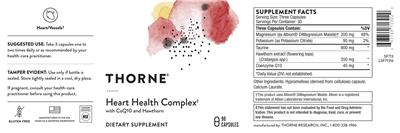
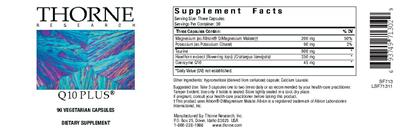
More blood pressure products
Members OnlyThe highest ranked for the same goal
Read more
Our articles on this subject
- How to Lower Diastolic Blood Pressure for LongevityArticle · Sep 17, 2026
- DASH Diet for High Blood Pressure: What It Lowers, What to Eat, and How to StartArticle · Sep 19, 2026
Graded November 5, 2026 by the Reverse Age Lab evidence engine, from human studies, real reviews and our biohacker panel. How we grade. Is this medical advice? No. Rala organizes the published evidence; go over any change with your doctor, especially if you take meds.
Privacy policyConsumer health dataAffiliate disclosureTermsDo Not Sell or Share My Personal InformationCookie settings