
Thorne Liver Cleanse Review
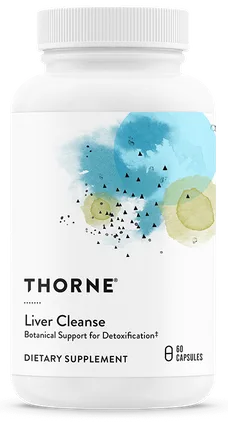
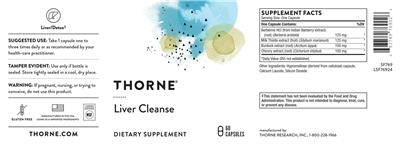
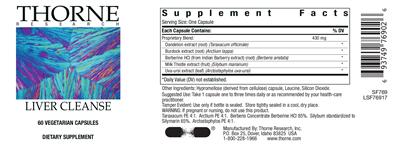
Thorne Liver Cleanse is a capsule supplement built around a blend of clinically studied botanicals, including berberine and milk thistle alongside other traditional herbs. The product is positioned to promote the liver's natural detoxification function and to optimize the metabolism and excretion of substances the liver processes. The page explains that for proper digestion and detoxification, adequate liver function is essential, and that the botanicals in this formula have demonstrated their ability to support the liver's detoxification pathways and bile flow for digesting fats. Key ingredients listed are Chicory Extract (100mg), Burdock Extract (100mg), Berberine HCl from Indian Barberry extract (root) (125mg), and Milk Thistle Extract from Silybum marianum (125mg). The serving size is one capsule, with 60 servings per container. Other ingredients are Silicon Dioxide, Calcium Laurate, and a Hypromellose (derived from cellulose) capsule. The listed benefits are promoting the liver's natural detoxification functions, enhancing the liver's production and flow of bile for fat digestion, and optimizing the metabolism and excretion of substances detoxified by the liver. The page suggests the product is for individuals engaged in a detoxification protocol, people seeking daily support for optimal liver function, those who want to enhance bile production to support fat digestion and absorption, and anyone who has had their gallbladder removed. The features section highlights burdock root and chicory root, which have a long history of traditional medicinal use, and two extensively studied botanicals, berberine and milk thistle. The suggested starting dose is one capsule in the evening. If additional liver support is desired, the page says supplementation can be gradually increased to one capsule three times daily. The page also notes that a comprehensive detoxification program includes an effective fiber formula, and points to Thorne's FiberMend as a companion for eliminating toxins through healthy bowel movements and preventing their reabsorption. Thorne states the product has been third-party tested and certified to verify that what is in the package matches the label and to confirm it contains no unsafe levels of contaminants such as heavy metals, pesticides, and microorganisms. The warnings section states that the product is contraindicated in individuals with a history of hypersensitivity to any of its ingredients. It should not be used if pregnant, nursing, or trying to conceive. The page reports no known adverse interactions or contraindications at publication date. It also warns that, as with all detoxification regimens, proper intestinal elimination is essential, and that a person should have at least one healthy bowel movement daily. Individuals who are constipated should not supplement with Liver Cleanse because the toxins released into the bile may be reabsorbed.
We don’t sell supplements. We help you make decisions and get the best price.
Lowest prices
We may earn a commission from some store links. How we choose.
Finding the lowest prices at the stores now. This takes a few seconds.
Study, Trial or Testing Result Summary
Members Only92 human studies · 53 improved
1 of these 92 human studies gave the ingredient by drip, not by mouth.
Milk thistle is at a full dose here, and its studies are the strongest support for liver health. A pooled analysis of 55 trials with 3545 people with liver injury found its active extract, silymarin, lowered two main liver enzymes, with less benefit in drug or alcohol related liver disease [1]. A review of 26 trials in fatty liver found lower liver enzymes and blood fats and less liver fat on biopsy [2], and another pooled analysis linked it to better liver scarring scores [3]. In people with cirrhosis, it raised four year survival compared with placebo [4]. Berberine gives mixed results. A pooled analysis of 10 trials found lower liver enzymes and blood fats [5], but the largest trial, using 1 gram a day for 6 months, found no drop in liver fat [6]. A second pooled analysis found no clear change in liver enzymes [7]. The trials that worked used 1500 milligrams a day, more than this product provides [8]. Chicory is present at only a trace amount compared with the studied 10 grams [9]. Burdock has only animal studies [10]. Animal and cell studies are never counted.
See all 92 studies →Hide the studies
- Across 55 randomized trials with 3545 people with liver injury, silymarin lowered the liver enzymes AST and ALT but not ALP, with less benefit in people with drug-induced or alcohol-related liver disease.Are alterations needed in Silybum marianum (Silymarin) administration practices? A novel outlook and meta-analysis on ra…
- A pooled analysis of 37 randomized trials with 2509 people with fatty liver compared seven natural products; artichoke leaf extract and naringenin ranked best for liver enzymes and blood fats, while berberine was not reported to stand out.Effects of different natural products in patients with non-alcoholic fatty liver disease-A network meta-analysis of rand…
- Across 26 randomized trials with 2375 people with fatty liver disease, silymarin lowered liver enzymes, cholesterol and fat markers and improved fat build-up in the liver on biopsy.Administration of silymarin in NAFLD/NASH: A systematic review and meta-analysis.
- In a review of trials of eight plant polyphenols in 2173 people with fatty liver disease, silymarin lowered liver enzymes, liver fat and liver stiffness.Efficacy and safety of dietary polyphenol supplementation in the treatment of non-alcoholic fatty liver disease: A syste…
- Across 11 trials of 1386 people with high blood fats, berberine improved cholesterol and had fewer liver enzyme (transaminase) elevations than the comparison groups, but more constipation, and the studies were of low quality.Read the study on PubMed (31094214) →
- Across 10 trials of 811 people with fatty liver disease, berberine lowered liver enzymes (ALT, AST, GGT), blood fats, insulin resistance and body mass index, with only mild digestive side effects.The clinical efficacy and safety of berberine in the treatment of non-alcoholic fatty liver disease: a meta-analysis and…
- Across 5 trials of 549 adults, a berberine and milk thistle combination did not significantly change the liver enzymes ALT or AST.Effects berberine-silymarin on liver enzymes: A systematic review and meta-analysis of randomized controlled trials.
- In 4 placebo-controlled trials of 491 people with abnormal blood fats, a berberine and milk thistle combination taken for about 3 months did not raise liver enzymes (ALT, AST) and appeared safe.The Effects of a Fixed Combination of Berberis aristata and Silybum marianum on Dyslipidaemia - A Meta-analysis and Syst…
- Pooling five trials of 197 people with fatty liver disease, chicory lowered two liver enzymes (aspartate transaminase and alanine transaminase) but did not change two other liver markers or blood fats.The effects of chicory supplementation on liver enzymes and lipid profiles in patients with non-alcoholic fatty liver di…
- In a pooled analysis of 12 trials, berberine lowered body weight and C-reactive protein (an inflammation marker) but did not significantly change the liver enzymes ALT or AST.The effect of berberine supplementation on obesity parameters, inflammation and liver function enzymes: A systematic rev…
- In a pooled analysis of placebo-controlled trials in adults with fatty liver disease, silymarin was linked to higher odds of improved liver scarring stage compared with placebo.Comparative Efficacy of Drug Interventions on NAFLD Over 24 Weeks: A Traditional and Network Meta-Analysis of Randomized…
- In a review of 29 trials with 1840 people with fatty liver disease, most silymarin studies showed lower liver enzymes and blood fats, but no change in inflammation markers.Polyphenol Intervention Ameliorates Non-Alcoholic Fatty Liver Disease: An Updated Comprehensive Systematic Review.
- A review of 13 trials with 829 fatty liver patients found food-based herbs, including one trial with chicory seed, improved liver enzymes and blood fats to some extent, though turmeric results on liver enzymes were disputed; chicory was not assessed separately.The effects of medicinal and food homologous substances on blood lipid and blood glucose levels and liver function in pa…
- A review of 10 studies with 816 people with type 2 diabetes found gut-health supplements, including chicory inulin, generally improved liver markers, though some studies showed no significant change; chicory was not assessed separately.Can probiotic, prebiotic, and synbiotic supplementation modulate the gut-liver axis in type 2 diabetes? A narrative and …
- A review of supplements for fatty liver disease concluded berberine, if well dosed and taken for medium to long periods with lifestyle changes, could have positive effects.Nutraceutical Approach to Non-Alcoholic Fatty Liver Disease (NAFLD): The Available Clinical Evidence.
- A review of nine human studies and 64 lab and animal studies found berberine reduced liver fat and improved blood fats and liver enzymes in people with fatty liver disease.Berberine Effects in Pre-Fibrotic Stages of Non-Alcoholic Fatty Liver Disease-Clinical and Pre-Clinical Overview and Sys…
- A review of herbal treatments for fatty liver inflammation (NASH) reported berberine reduced liver inflammation and oxidative damage, though study designs and doses varied widely.The Green Path to Liver Health: Herbal Solutions for Non-alcoholic Steatohepatitis.
- An overview of 54 systematic reviews found berberine improved 13 of 15 fatty liver disease outcomes, but most of the reviews were rated low or very low quality.Berberine and health outcomes: an overview of systematic reviews.
- A review of trials in people with chronic viral hepatitis found silymarin likely lowered liver enzymes but did not change viral load or liver tissue damage.Silymarin treatment of viral hepatitis: a systematic review.
- A review of 40 meta-analyses in adults found silymarin had positive effects on certain liver enzymes, though evidence quality was generally weak.Natural products and dietary interventions on liver enzymes: an umbrella review and evidence map.
- In 370 tuberculosis patients, milk thistle capsules did not prevent anti-tuberculosis drug liver injury compared with vitamin C, and a stricter definition of liver injury was more common in the milk thistle group.Preventive use of a hepatoprotectant against anti-tuberculosis drug-induced liver injury: A randomized controlled trial.
- In 337 diabetes-free adults with obesity and fatty liver, 1 g of berberine daily for 6 months did not reduce liver fat or visceral fat compared with placebo, though it modestly lowered LDL cholesterol and a blood marker of inflammation.Berberine and Adiposity in Diabetes-Free Individuals With Obesity and MASLD: A Randomized Clinical Trial.
- In 222 people with Alzheimer's disease taking tacrine, 420 mg a day of silymarin for 12 weeks did not prevent the rise in the liver enzyme ALAT compared with placebo, though it reduced stomach and cholinergic side effects.Aminotransferase levels and silymarin in de novo tacrine-treated patients with Alzheimer's disease.
- In a post hoc analysis of 185 Chinese adults with fatty liver disease and abnormal blood sugar, berberine at 0.5 g three times daily for 16 weeks was compared with lifestyle advice and pioglitazone, but the abstract does not report separate berberine liver fat results and the pioglitazone benefit differed by sex.Gender differences in the efficacy of pioglitazone treatment in nonalcoholic fatty liver disease patients with abnormal …
- In 170 people with cirrhosis of the liver, 420 mg a day of silymarin for about 41 months on average raised 4-year survival to 58% compared with 39% on placebo, with no side effects seen.Randomized controlled trial of silymarin treatment in patients with cirrhosis of the liver.
- In 150 people with fatty liver disease split across five groups, 140 mg a day of silymarin for 3 months significantly lowered liver enzymes (ALT and AST), while the lifestyle-plus-placebo group did not see a significant drop.Treatment options for nonalcoholic fatty liver disease: a double-blinded randomized placebo-controlled trial.
- In 150 people with type 2 diabetes, a seven-herb combination including milk thistle taken for 3 months improved blood sugar, and no notable liver side effects were seen, but liver benefit was not shown.Efficacy and Safety of a Traditional Herbal Combination in Patients with Type II Diabetes Mellitus: A Randomized Control…
- In 146 people at risk of fatty liver disease, Heptex capsules containing 100 mg milk thistle extract for 36 weeks lowered liver enzymes within groups but did not beat placebo, and were safe and well tolerated.The activity of a herbal medicinal product of Phyllanthus niruri and Silybum marianum powdered extracts (Heptex®) in pat…
- In 116 people with alcoholic hepatitis, 420 mg of silymarin daily for three months did not beat placebo; both groups improved similarly.[Treatment of alcoholic hepatitis with silymarin. A double-blind comparative study in 116 patients].
- In 113 adults with type 2 diabetes, berberine ursodeoxycholate for 12 weeks lowered blood sugar more than placebo, and the higher dose also reduced lipids and markers of liver injury.Berberine Ursodeoxycholate for the Treatment of Type 2 Diabetes: A Randomized Clinical Trial.
- In 113 people with fatty liver disease taking a mixture of natural ingredients including silymarin for 3 months, liver enzymes and other markers did not improve more than in the control group, though the mixture was well tolerated.Randomised trial of chronic supplementation with a nutraceutical mixture in subjects with non-alcoholic fatty liver dise…
- In 110 people with transfusion-dependent thalassemia taking chicory syrup or placebo for 8 weeks, the chicory group had a larger drop in the liver enzyme alanine transaminase than the placebo group.Evaluating the effect of chicory on serum ferritin levels in transfusion-dependent Β-thalassemia patients: a randomized …
- In 106 people with liver disease mostly caused by alcohol, silymarin for 4 weeks lowered liver enzymes more than placebo, normalized liver function tests more often, and normalized liver tissue changes more often.Effect of silymarin on chemical, functional, and morphological alterations of the liver. A double-blind controlled study…
- In 105 adults with acute hepatitis in Egypt, 140 mg of silymarin three times daily for four weeks led to faster resolution of dark urine, jaundice and yellowing of the eyes than placebo, with no side effects, though liver enzymes did not differ significantly.A randomized controlled trial to assess the safety and efficacy of silymarin on symptoms, signs and biomarkers of acute …
- In 100 adults with fatty liver disease and diabetes, 1000 mg of berberine ursodeoxycholate twice daily for 18 weeks reduced liver fat more than placebo and also lowered liver enzymes.A phase 2, proof of concept, randomised controlled trial of berberine ursodeoxycholate in patients with presumed non-alc…
- In a secondary analysis of 100 patients with presumed fatty liver inflammation over 18 weeks, 52% of those taking berberine ursodeoxycholate met MRI liver fat response criteria versus 24% on placebo.HTD1801 demonstrates promising potential for histologic improvements in metabolic dysfunction-associated steatohepatitis…
- In 99 adults with fatty liver inflammation (NASH), silymarin at 700 mg three times daily for 48 weeks did not significantly improve the overall disease activity score compared with placebo, but it led to more people with reduced liver scarring and lower liver stiffness than placebo.A Randomized Trial of Silymarin for the Treatment of Nonalcoholic Steatohepatitis.
- In 97 people with thalassemia major taking desferrioxamine, adding silymarin from milk thistle for 9 months improved liver function tests more than placebo did, and also lowered iron overload markers.A randomized double-blind, placebo-controlled study of therapeutic effects of silymarin in β-thalassemia major patients …
- In 92 people with fatty liver disease, 12 weeks of chicory seed (9 grams a day) lowered body mass index and waist size versus placebo, and chicory with turmeric lowered alkaline phosphatase, but chicory alone did not change it.Turmeric and chicory seed have beneficial effects on obesity markers and lipid profile in non-alcoholic fatty liver dise…
- In 83 adults with fatty liver disease, 103.2 mg of silymarin daily for 24 weeks significantly reduced liver stiffness compared with placebo, with no significant change in fat content on scan.Silymarin decreases liver stiffness associated with gut microbiota in patients with metabolic dysfunction-associated ste…
- In a crossover placebo-controlled trial of 82 people with beta-thalassemia major, 140 mg of silymarin three times daily for 12 weeks reduced liver iron, but changes in liver function were not statistically significant.Iron-chelating effect of silymarin in patients with β-thalassemia major: A crossover randomised control trial.
- In 82 children with leukemia receiving chemotherapy, silymarin for eight weeks lowered liver enzymes ALT and AST, though a Persian fruit infusion lowered ALT more; there was no placebo group.Efficacy of a traditional persian fruit infusion (Naqu Fawakeh) versus silymarin in reducing chemotherapy-induced hepato…
- In 80 people with fatty liver disease and type 2 diabetes, 16 weeks of berberine lowered serum ceramides more than lifestyle advice alone, which may underlie the improvement in liver fat seen in this group.Lipid profiling of the therapeutic effects of berberine in patients with nonalcoholic fatty liver disease.
- In 78 adults with fatty liver inflammation (NASH), silymarin at 700 mg three times daily for 48 weeks did not improve the disease activity score more than placebo, with 4 of 27 people on this dose reaching the primary target versus 3 of 25 on placebo.Silymarin in non-cirrhotics with non-alcoholic steatohepatitis: A randomized, double-blind, placebo controlled trial.
- In a placebo-controlled trial of 74 acne patients taking a med, 140 mg of silymarin daily for 30 days kept liver enzymes (AST and ALT) from rising compared with placebo.Read the study on PubMed (31997509) →
- In 72 people with alcoholic liver disease followed for about 15 months, 280 mg daily of silymarin did not change how the disease progressed or the risk of death compared with placebo.[Controlled study of the effect of silymarin on alcoholic liver disease].
- In 70 adults with fatty liver disease, 1500 mg of berberine daily for 12 weeks lowered ALT and the de Ritis ratio more than placebo.Does berberine impact anthropometric, hepatic, and metabolic parameters in patients with metabolic dysfunction-associate…
- In 68 overweight adults with fatty liver disease, a supplement containing silymarin plus a Mediterranean diet for three months improved liver steatosis more than the diet alone, with a 9-point drop in the liver steatosis index versus 6 points in the diet-only group.The Synergic Effect of a Nutraceutical Supplementation Associated to a Mediterranean Hypocaloric Diet in a Population of…
- In 63 people with high cholesterol, berberine combined with a med lowered LDL cholesterol by 31.8 percent, more than either drug alone; the abstract reports no liver outcomes in people, and the liver fat improvement was seen only in rats.Read the study on PubMed (18640378) →
- In 62 people with decompensated hepatitis C cirrhosis, a high dose of 1,050 mg silymarin daily for 12 weeks improved liver enzymes, albumin, bilirubin and clotting ratio, while the 420 mg dose did not.High Dose of Silymarin in Patients with Decompensated Liver Disease: A Randomized Controlled Trial.
- In 60 adults with type 2 diabetes and fatty liver, 12 weeks of berberine improved liver ultrasound appearance in 70% of patients and lowered ALT and AST, with results similar to Xuezhikang.[Research on therapeutic effect and hemorrheology change of berberine in new diagnosed patients with type 2 diabetes com…
- In 60 people with compensated alcoholic cirrhosis, one month of silymarin (dose not stated) normalized elevated liver enzymes and bilirubin and reduced gamma-glutamyl transferase, while the placebo group showed no such changes.Immunomodulatory and hepatoprotective effects of in vivo treatment with free radical scavengers.
- In 60 burn patients, 4 weeks of chicory seed syrup (30 ml a day) gave liver enzyme levels no different from a silymarin comparison group at the end, though enzymes fell in both groups.Evaluation of the Effect of Cichorium intybus L. on the Liver Enzymes in Burn Patients: A Randomized Double-Blind Clinic…
- In 55 people with primary sclerosing cholangitis, berberine ursodeoxycholate taken twice daily lowered alkaline phosphatase, a liver blood marker, by 37 to 53 units per liter at week six compared with placebo, and the reduction was sustained through week 18 in those who stayed on treatment.A Randomized, Dose-Finding, Proof-of-Concept Study of Berberine Ursodeoxycholate in Patients With Primary Sclerosing Cho…
- In 55 tuberculosis patients, silymarin taken for four weeks reduced the risk of antituberculosis drug-induced liver injury (1 of 27 vs 9 of 28 on placebo), and the silymarin group kept more of its antioxidant enzyme superoxide dismutase.A double-blinded randomized controlled trial of silymarin for the prevention of antituberculosis drug-induced liver inju…
- In 50 children with leukemia and liver toxicity, milk thistle for 28 days did not change liver tests at day 28 versus placebo, though AST was significantly lower by day 56.A randomized, controlled, double-blind, pilot study of milk thistle for the treatment of hepatotoxicity in childhood acu…
- In 50 people with type 2 diabetes and high cholesterol, a polyherbal powder containing 500 mg milk thistle seed twice daily for 12 weeks did not change liver enzymes ALT or AST, with no harm to the liver.A Randomized Controlled Trial of a Herbal Compound for Improving Metabolic Parameters in Diabetic Patients with Uncontro…
- In 50 hospitalized people with COVID-19 taking nano-silymarin three times daily for 2 weeks, alanine aminotransferase fell more than with placebo, but symptoms and hospital stay did not differ.Evaluation of the efficacy of oral nano-silymarin formulation in hospitalized patients with COVID-19: A double-blind pla…
- In a trial of 260 people with fatty liver disease testing a traditional Chinese herbal granule, a silibinin arm of 50 people significantly lowered ALT only, while the herbal granule had broader effects; the study did not compare silibinin with placebo.Danshao Shugan Granule therapy for non-alcoholic fatty liver disease.
- In a six-month placebo-controlled pilot trial of 49 people with fatty liver disease, a plant extract blend containing barberry extract reduced liver fat scan values, blood sugar and insulin compared with placebo; the barberry dose was not stated.Berberis aristata, Elaeis guineensis and Coffea canephora Extracts Modulate the Insulin Receptor Expression and Improve …
- In 48 people with multiple sclerosis taking fingolimod, silymarin for six months lowered liver enzymes ALT and AST and a marker of oxidative stress (malondialdehyde) and raised antioxidant capacity compared with placebo.Antioxidative effects of silymarin on the reduction of liver complications of fingolimod in patients with relapsing-remi…
- In 46 women with type 2 diabetes, 10 grams a day of enriched chicory inulin for two months lowered the liver enzymes aspartate aminotransferase and alkaline phosphatase, but not alanine aminotransferase.The effect of enriched chicory inulin on liver enzymes, calcium homeostasis and hematological parameters in patients wit…
- In a double-blind crossover trial of 40 overweight adults, eight weeks of a berberine, chlorogenic acid and tocotrienol combination lowered liver enzyme GOT and a fatty liver index more than placebo.Short-term effects of a combined nutraceutical of insulin-sensitivity, lipid level and indexes of liver steatosis: a dou…
- In 40 adults with impaired fasting glucose, eight weeks of a multi-herb nutraceutical improved triglycerides, good cholesterol and insulin measures versus placebo, but the abstract reports no clear liver benefit.Nutraceutical Effects on Glucose and Lipid Metabolism in Patients with Impaired Fasting Glucose: A Pilot, Double-Blind, …
- In 36 people with liver cirrhosis, 6 months of a seven-herb blend including chicory improved disease score, ascites and liver enzymes versus placebo; chicory's own effect cannot be separated.The efficacy of Liv-52 on liver cirrhotic patients: a randomized, double-blind, placebo-controlled first approach.
- In 34 people with chronic hepatitis C, 160 mg of milk thistle extract three times a week for 4 weeks lowered liver enzyme levels compared with no treatment, with no side effects reported, but did not reduce the virus level.Does Silybum marianum play a role in the treatment of chronic hepatitis C?
- In 32 people with chronic hepatitis C, silymarin up to 2.1 grams a day for seven days was safe and well tolerated, but it did not meaningfully lower liver enzymes or hepatitis C virus levels compared with placebo.Silymarin ascending multiple oral dosing phase I study in noncirrhotic patients with chronic hepatitis C.
- In 30 breast cancer patients given chemotherapy, 140 mg of silymarin three times daily for one month reduced liver involvement on ultrasound within the group, but the difference from placebo was not significant and FibroScan and liver tests did not differ.Oral silymarin formulation efficacy in management of AC-T protocol induced hepatotoxicity in breast cancer patients: A r…
- In 20 people with chronic active hepatitis, 240 mg of milk thistle silybin taken twice daily for 7 days significantly lowered liver enzymes and bilirubin in the treated group, though the placebo comparison is not reported as significant.A pilot study on the liver protective effect of silybin-phosphatidylcholine complex (IdB1016) in chronic active hepatiti…
- In people with type 2 diabetes and chronic hepatitis B or C, berberine lowered liver enzymes and improved liver function, though the abstract does not report group sizes or doses.Berberine lowers blood glucose in type 2 diabetes mellitus patients through increasing insulin receptor expression.
- In a small mouse-and-patient study, berberine taken by mouth eased bile-flow liver injury in mice, and in a clinical trial in people with bile-flow liver disease it improved blood liver tests and lowered serum serotonin; the number of patients and dose were not stated in the abstract.Gut microbiota-mediated berberine metabolism ameliorates cholestatic liver disease by suppressing 5-hydroxytryptamine pr…
- In a placebo-controlled trial of people with multiple sclerosis taking interferon beta, adding silymarin lowered liver enzyme levels and reduced inflammatory signals compared with placebo.Significant immunomodulatory and hepatoprotective impacts of Silymarin in MS patients: A double-blind placebo-controlled…
- In a randomized double-blind study of liver cirrhosis, people with alcoholic cirrhosis given silymarin had a significantly higher survival rate than those given placebo.[The influence of therapy with silymarin on the survival rate of patients with liver cirrhosis (author's transl)].
- In 60 people with alcohol-related liver disease, adding 400 mg of silymarin daily to ursodeoxycholic acid lowered liver enzymes further than ursodeoxycholic acid alone over about six months.[Use of ursodeoxycholic acid combined with silymarin in the treatment of chronic ethyl-toxic hepatopathy].
- In 60 people with alcoholic or nonalcoholic steatohepatitis, a combination of essential phospholipids and silymarin shortened symptom duration and lowered transaminases more than the comparison products Essentiale and Carsil.[Study of clinical efficiency of essential phospholipids and silymarin combination in nonalcoholic and alcoholic steatoh…
- In 60 insulin-treated diabetic people with alcohol-related cirrhosis, taking 600 mg of silymarin daily for 12 months along with standard therapy lowered blood sugar, insulin needs and a marker of cell membrane damage compared with standard therapy alone.Long-term (12 months) treatment with an anti-oxidant drug (silymarin) is effective on hyperinsulinemia, exogenous insuli…
- In 55 people with occupational toxic liver disease, 420 mg of silymarin daily produced slight changes in some liver function tests, while the placebo group showed no significant change; the effect seemed greater when exposure was shorter.[Toxic occupational liver diseases. Therapeutic effects of silymarin].
- In 40 people with alcoholic cirrhosis, one month of silymarin (dose not stated) normalized elevated liver enzymes and bilirubin and reduced gamma-glutamyl transferase, while the placebo group showed no such changes.Hepatoprotective and immunological effects of antioxidant drugs.
- In 40 people with alcoholic cirrhosis, one month of silymarin (dose not stated) normalized elevated liver enzymes and bilirubin and reduced gamma-glutamyl transferase, while the placebo group showed no such changes.Hepatoprotective and immunomodulatory effects of antioxidant therapy.
- In 30 people with hepatitis C, 400 mg of silymarin daily added to sofosbuvir and ribavirin for eight weeks was reported to lower liver enzymes and improve antioxidant markers, though the liver enzyme changes were not statistically significant.Effect of Silymarin as an Adjunct Therapy in Combination with Sofosbuvir and Ribavirin in Hepatitis C Patients: A Miniat…
- In a small controlled study of gallstone and gallbladder-removed patients, 420 mg of silymarin daily for 30 days reduced cholesterol concentration in bile.Effect of Silibinin on biliary lipid composition. Experimental and clinical study.
- In a six-month double-blind placebo-controlled trial in people with chronic alcohol-related liver disease, 420 mg of silymarin daily raised antioxidant defenses and lowered a marker of fat damage compared with placebo.[Effect of silimarin (Legalon) therapy on the antioxidant defense mechanism and lipid peroxidation in alcoholic liver di…
- In 190 people with fatty liver disease, a combination of silymarin, vitamin E and essential phospholipids for six months was followed by lower liver enzymes, blood fats, blood sugar and liver fibrosis scores, with no side effects, though there was no placebo group.Therapeutic Efficacy of Silymarin, Vitamin E, and Essential Phospholipid Combination Therapy on Hepatic Steatosis, Fibro…
- In 184 adults with fatty liver disease, 1500 mg of berberine daily for 16 weeks plus lifestyle changes reduced liver fat more than lifestyle changes alone.Efficacy of Berberine in Patients with Non-Alcoholic Fatty Liver Disease.
- In 30 people with advanced type 2 diabetes taking a six-herb formula that includes milk thistle twice daily for 40 days, liver and kidney blood tests did not change significantly, though blood sugar, HbA1c and some blood fats improved.Safety and efficacy of a polyherbal formulation for the management of dyslipidemia and hyperglycemia in patients with ad…
- In a dose-finding study of 3 people with advanced liver cancer and poor liver function, taking 2 grams a day of milk thistle extract was followed by worsening liver tests in all 3, and all 3 died within 23 to 69 days, possibly from liver failure.A phase I dose-finding study of silybin phosphatidylcholine (milk thistle) in patients with advanced hepatocellular carc…
- In people with fatty liver inflammation (NASH) given a silybin supplement for 12 months without a control group, liver scores improved significantly only in the milder group, and blood fat damage markers fell in that group.Serum oxidative stress markers and lipidomic profile to detect NASH patients responsive to an antioxidant treatment: a p…
- In 1145 people with chronic hepatitis C, silymarin users had similar liver enzyme and virus levels to non-users but reported fewer symptoms and somewhat better quality of life, though the use was self-chosen and not controlled.Herbal product use by persons enrolled in the hepatitis C Antiviral Long-Term Treatment Against Cirrhosis (HALT-C) Trial…
- In a retrospective review of 602 people across India, about 11 months of Liverubin silymarin (140 mg three times daily) was followed by large average drops in bilirubin and liver enzymes, with no significant treatment-related side effects.Effect of Liverubin™ on hepatic biochemical profile in patients of alcoholic liver disease: a retrospective study.
- In 13 prostate cancer patients taking high-dose silybin-phytosome (2.5 to 20 g daily, with 13 g daily recommended), the most common side effect was raised bilirubin, found in 9 of 13 patients, and asymptomatic liver toxicity was the most common adverse event.A phase I and pharmacokinetic study of silybin-phytosome in prostate cancer patients.
- This paper describes a statistical method for comparing liver biopsy results from a controlled trial of silymarin in chronic hepatitis, but the abstract does not report the outcome of that trial.Analysis of a certain type of 2 x 3 tables, exemplified by biopsy findings in a controlled clinical trial.
- In rats, silymarin reduced liver fat through gut bacteria that produce vitamin B12, and in people, changes in blood vitamin B12 tracked inversely with blood triglycerides.Microbially produced vitamin B12 contributes to the lipid-lowering effect of silymarin.
Review Totals and Summary
Members Only5,265 reviews · 91% positive
Thorne Liver Cleanse has about 2,644 ratings across the stores that sell it, and the feedback is mostly positive. Buyers tend to like the brand and report feeling better over time, though a few saw no change. This summary covers the capsules only; no other forms of the product are covered. **What buyers say it did for them:** Several describe more energy or a lighter feeling. One wrote, "I feel lighter and healthier just taking these." Another said, "Can tell that I'm not sluggish anymore." One reviewer pairing it with another supplement reported a drop in LDL: "reduced my LDL levels by almost a 100 points." Timing varies. One buyer said they began to feel a difference "after about eight weeks," while another had "just started" and expected results in time. The store summaries add that some buyers noticed less bloating, better digestion, and deeper sleep, and that one used it for a family member's fatty liver. Several buyers are still waiting on bloodwork before judging results. Some were also changing their diet, which makes it hard to credit the capsules alone. **What buyers complain about:** Complaints are rare. The clearest is from a two-star reviewer: "saw no changes overall- mood, health, skin or energy." The store summaries say the few lower ratings come without written explanations, and that no written reviews mention side effects. **Taste, smell, pill size, form:** Little is said. One buyer called it "EASY TO TAKE," and the store summaries say no reviewer raised taste, aftertaste, or pill size as a problem. **Value for money:** Price is not discussed in any of the reviews or store summaries. One buyer said they had "ordered several bottles," and another plans to order more, which suggests repeat purchases. That is not a statement about cost. **Who it seems to suit and who it did not:** It seems to suit people who come to it on a doctor's, nurse practitioner's, or naturopath's recommendation and who want ongoing liver support. One reviewer said, "My ARNP advised me to continue taking this supplement." Another said, "I am so glad my doctor recommended this product." It also suits people who already trust the Thorne brand, and the store summaries mention some who use it seasonally as an occasional cleanse. One reviewer who had taken a different liver product for decades found this one simpler and quite effective. It did not suit the buyer who finished a full bottle and felt no difference, so people expecting quick, noticeable changes may be disappointed. The written feedback is a small sample compared with the total number of ratings, so treat it as an indication rather than a full picture.
Biohacker Summary
Members Only8 of 10 recommend it
Milk thistle, the main ingredient, drew comments from six of the ten panelists, and most of them recommend it. Three recommend it for liver and detox support, including taking it before and after drinking, and one suggests a form standardized to 70 to 140 mg of silymarin taken 30 to 60 minutes before hot-cold contrast therapy. One panelist noted the research behind its liver benefits without taking a side, one mentioned it for allergy symptoms, and one tried it for liver health but stopped because it did nothing for him. Berberine is a smaller ingredient in this product, and panelists mostly take it for blood sugar, with one caution that taking it on an empty stomach caused headaches and low blood sugar.
See all 9 biohackers →Hide the biohackers
Thomas DeLauer · Milk Thistle · neutral
- Notes that Dose Daily contains organic milk thistle, highlighting its significant data supporting liver health benefits.
- Mentions dihydroberberine as a component that can be used to optimize and support the AMPK pathway, helping to tune it up and have a higher baseline.
- Has found berberine to be very helpful for some of his patients who are night snackers, especially those with a sweet tooth.
- Recommends berberine if one is going to have fruit later in the day, as it specifically restores the AMPK-driven fat suppression.
- Recommends Dihydroberberine to improve mitochondrial performance and turn up the AMPK dial.
- Recommends using chicory root along with avocado in the same meal to feed the same microbes and compound the positive effects on gut health.
- Says he feels really good when he takes milk thistle, usually for about a week, and notes it is effective.
- Recommends Milk thistle, specifically 200-400mg of silymarin at 80%, for decent reductions in ALT and AST and higher antioxidant enzyme activity.
- Recommends Berberine, stating that 500mg taken three times with meals has shown comparable results to a med in dropping HbA1c and fasting glucose.
- Recommends milk thistle for liver health, explaining that silymarin lowers MDA and raises antioxidant enzymes.
- Mentions Milk Thistle as an ingredient in DOSE that has proven literature behind it for liver health.
- Recommends chicory as an unusual but nutrient-dense vegetable.
- Would start taking berberine because it helps with high glucose.
- Recommends milk thistle for the liver, citing a study where it reduced a marker of liver stress and increased antioxidant defense enzymes.
Dr. Eric Berg · Milk Thistle · recommends
- Recommends taking milk thistle for alcohol and for certain medications.
- Recommends adding berberine as another natural remedy to the combination for cancer.
- Dr. Eric Berg states that Berberine combined with a lower-carb diet may help support healthy blood sugar levels and reduce cravings over time.
- Notes that some people add berberine, which supports healthy blood glucose and makes one insulin resistant.
- Recommends taking berberine to block the effects of grains.
- Suggests incorporating anti-cancer foods like berberine to help prevent pancreatic cancer.
- Suggests that small changes like milk thistle can help with deep rest.
- Recommends taking berberine, stating it is very beneficial for type 2 diabetes.
- Dr. Eric Berg states that berberine may support blood sugar, but it should not be treated as an equivalent substitute for other treatments.
- Lists berberine as an epigenetic factor that may help with cancer prevention.
- Dr. Eric Berg recommends taking milk thistle to support the liver and help improve skin problems.
- Recommends berberine as a natural version of a med, citing powerful research that shows it makes the body more sensitive to insulin and has fewer side effects than a med.
- Berberine is often compared to a med because of its potential effects on blood sugar and insulin resistance. More than 50 clinical trials have investigated berberine, with studies reporting improvements in A1C, fasting blood sugar, triglycerides, and LDL cholesterol comparable to those seen with a med.
- Describes milk thistle as an antidote for liver protection against poisons and a powerful antioxidant for nerves and the brain, helping to decrease toxic plaque associated with dementia.
Dr. Mark Hyman · Milk Thistle · recommends
- Recommends milk thistle for detoxification support.
- Takes 500 mg of Berberine with meals for blood sugar control.
- Recommends taking the herb milk thistle before and after drinking, as it is great for helping liver detoxification.
- Recommends milk thistle for detoxification, lowering iron, and reducing liver inflammation.
- Recommends berberine to help with insulin resistance.
- Mentions that berberine may be helpful for people with insulin resistance and that he uses it in his practice.
- Dr. Hyman recommends Milk Thistle.
- States that milk thistle is great for detoxing.
- Recommends taking berberine as a natural way to increase GLP-1.
- Used an herbal regimen that included berberine as part of a combination product to treat a patient's dysbiosis and yeast overgrowth.
- Mentions that berberine can affect certain genes.
- States that berberine helps with blood sugar regulation, insulin resistance, and cardiac health.
- Mentions berberine as one of many phytochemicals that influence the AMPK pathway and have similar benefits to a med.
- Recommends milk thistle as an incredible herb that helps with liver disease and boosting glutathione.
Ben Greenfield · Milk Thistle · recommends
- Recommends taking a milk thistle supplement standardized to 70-140mg silymarin 30-60 minutes before hot-cold contrast therapy.
- States that berberine is great for sleep, upregulating serotonin and dopamine, and that their bioavailable berberine product is taken by 75% of users for sleep, even though it was created for blood glucose management.
- Now uses berberine as a natural strategy instead of a med and as a natural insulin-sensitizer.
- Offers berberine as a natural alternative for better blood sugar control.
- Recommends berberine or dihydroberberine as a powerful insulin sensitizing agent and a good alternative to a med, noting its comparable hemoglobin A1c reductions in some type 2 diabetes trials.
- Berberine was mentioned in a study as a biofilm disruptor that can improve microbial access and affect outcomes in SIBO and methane-dominant cases.
- Uses Dihydroberberine as part of the Neuro Regenerate product to protect mitochondria, stabilize energy, and sustain cognitive output.
- Recommends Dihydroberberine as a powerful antioxidant in Neuro Regenerate to support mitochondria and fuel clean, crash-free mental energy.
- Mentions the report recommends taking 500 mg of berberine to address ETBF activity.
- Mentions berberine as something that can enhance fatty acid oxidation and white adipose to brown fat tissue conversion.
- Recommends the regular use of berberine to help nuke bacterial overgrowth in the gut for those with FODMAP sensitivity.
- Mentions milk thistle extract as something that can help accelerate the liver's detox pathways to get rid of acetaldehyde more quickly.
- Ben Greenfield recommends burdock as a medicinal plant with anti-carcinogenic, anti-aging, longevity, and overall health-promoting effects, to be mixed with bone broth daily.
- Includes milk thistle in the senolytic formula because it mechanistically works on a subfamily of tyrosine kinases, which are important in shifting the balance towards apoptosis, similar to how a med works, and it is also a healthy liver tonic herb.
Siim Land · Milk Thistle · stopped
- Tried milk thistle for improving liver health based on research, but it didn't do anything for him.
- Recommends berberine as a herbal supplement that increases fat metabolism, lowers mTor and blood sugar, making it a good combination for increased autophagy, and notes that meta-analyses show it reduces blood sugar, promotes weight loss, and decreases cholesterol.
- Recommends Berberine for blood sugar and cholesterol, based primarily on human research, especially randomized controlled trials showing measurable benefits.
- Lists Berberine as one of 15 supplements backed by human studies.
- Advises caution when using berberine with glycine, as it is a glucose-lowering medication.
- Is skeptical about most supplements, including berberine, because he doesn't see any evidence to back up their claims, which are often based on personal testimonials.
- Mentions berberine as a compound that can increase autophagy, but notes it doesn't come close to exercise in effectiveness.
- He takes 500 mg of berberine with meals for blood sugar control.
- Would take berberine for pre-diabetes.
- Advises caution with berberine due to its antibacterial effects and potential to change the microbiome, especially if one doesn't have gut problems.
- States that berberine also showed a lifespan extension in their hands.
- Used to take milk thistle in the past but no longer does, as he has already tested most supplements.
- Mentions milk thistle as something that helps support detox.
- Mentions chicory as very important for stimulating phase one detox.
Dave Asprey · Milk Thistle · neutral
- Dave Asprey mentions Milk thistle as a natural remedy for allergy symptoms.
- Recommends berberine as a good alternative to a med for longevity, citing its similar pathway effects without the downsides and its positive impact on the microbiome.
- Dave Asprey discusses berberine as a plant compound that genuinely lowers blood glucose, comparable to a med in some trials, but notes its poor absorption and lack of lifespan data, classifying it as a glucose drug, not a longevity drug.
- Notes that berberine supports sleep optimization, ketosis, and blocks a cancer growth pathway most drugs cannot touch.
- Prefers a med over berberine, stating there is more data for a med, though berberine might be useful for diabetics.
- Dave Asprey and his guests reveal how berberine can improve metabolism, regulate dopamine, and protect the brain, and can rival meds.
- Mentions that GL Perfect contains bioavailable berberine, which is 250 times more bioavailable than normal.
- Takes berberine when he eats carbs to help manage blood sugar levels.
- Includes chicory root in his formula to amplify the prebiotic effect of amaranth on gut bacteria.
- Mentions chicory as a real food source of soluble fiber.
- Notes that Intellx DNA provides information on what doses of berberine, such as two grams, were used in studies to improve blood sugars, emphasizing that a small amount won't have the same effect as a larger dose.
- Mentions needing 72 milligrams of Berberine as part of personalized supplements.
- States that berberine has anti-parasite qualities and he takes it nearly constantly, but warns that it is not without risk, as he experienced abnormally low heart rate and blood pressure on two occasions, which he attributes to berberine.
- Suggests trying milk thistle seed for allergy symptoms, highlighting its anti-inflammatory properties that can block histamine release and support liver detoxing abilities. They recommend starting with 200 mg per day when experiencing symptoms.
Dr. Rhonda Patrick · Berberine · neutral
- Notes that berberine is a promising compound for cardiovascular health, with potential benefits spanning lipid metabolism, artery health, and the gut microbiome.
- Notes that berberine lowers LDL cholesterol in randomized trials and is interested in its connection to ApoB, artery plaque, and the gut microbiome.
- Notes that berberine has been on their radar for glucose control for years, and a new study on a biooptimized form of berberine showed reductions in fasting glucose, improved glucose tolerance, and an increase in fasting.
- Recommends berberine for atherosclerosis, noting it has a more compelling evidence base, showing reduction in plaque formation and improvement in LDL, HbA1c, and glucose regulation.
- Recommends Berberine for optimizing blood glucose, noting that meta-analyses show it reduces fasting glucose and HbA1c in people with type 2 diabetes.
- Notes that Berberine may not have the same inhibitory effect on muscular hypertrophy and strength gains as a med, but there are currently no studies to support or refute this.
- Discusses ideal dosing for berberine.
- Notes that berberine is also effective for blood glucose regulation, similar to apple cider vinegar.
- States that berberine is undoubtedly effective for improving insulin sensitivity.
- Discusses berberine, noting it is a mitochondrial toxin and an analog of a med, and mentions a systematic review suggesting it was beneficial in lowering LDL cholesterol and reducing a med myopathy.
Andrew Huberman · Berberine · uses
- Takes 500 mg of berberine with meals to help with blood glucose.
- Dr. Huberman states he will skip berberine because it gives him brutal headaches, makes him crave carbohydrates, and drops his blood sugar.
- Discusses berberine and other potent molecules for regulating blood glucose.
- Warns that berberine is a serious step and one should talk to their doctor about it, as taking it on an empty stomach can cause hypoglycemia, brutal headaches, dizziness, and impaired vision; however, when taken with a large, carbohydrate-rich meal, he felt fine on up to 750 mg or a gram.
- Mentions the use of fasting-related supplements, including berberine.
- Huberman warns that if you take berberine without ingesting carbohydrates, many people, including himself, experience a splitting headache due to becoming hypoglycemic, as it is a glucose clearing agent.
- States that berberine can further support fat loss and discusses its impact on insulin.
- Mentions berberine as a compound, derived from a plant, that is in growing use for reducing blood glucose and is very potent at doing so.
- Warns that berberine can decrease testosterone levels, and that people often take it for blood sugar or longevity without considering this side effect.
- Huberman does not take berberine because it gives him brutal headaches, which he attributes to its effect of lowering blood glucose.
Peter Attia · Berberine · stopped
- Used to take berberine, which he called "poor man's a med," to buffer blood glucose and feel less sick after ingesting large amounts of calories on a cheat day, but stopped when he no longer followed the Slow Carb Diet.
- Uses berberine in clinical practice as a weak inhibitor of the enzyme PCSK9, which can help a subset of patients who overexpress PCSK9 and have high LDL cholesterol.
- Suggests Thorne as the brand for berberine when recommending it to patients.
- Uses berberine in clinical practice as a weak inhibitor of the enzyme PCSK9, which can help lower LDL cholesterol in a subset of people who overexpress PCSK9.
- Uses berberine in clinical practice because it is a weak inhibitor of the enzyme PCSK9, which degrades LDL receptors. He finds it effective for a subset of patients who overexpress PCSK9 and have high LDL, and he will prescribe it to see if it helps without prior testing.
- Shares insights about berberine.
- Used to take Berberine for longevity but stopped because he didn't see enough evidence.
RAL Summary
Members OnlyTier 2 for Liver Health
More Details
Members OnlyBody systems · Combine with · Possible side effects
Body systems: Digestive system, Liver, Metabolic system
Combine with: For liver support, milk thistle and dandelion pair well with N-acetylcysteine (NAC) or glutathione to support detoxification, alpha-lipoic acid for antioxidant support, and choline or phosphatidylcholine for fat metabolism in the liver. Artichoke leaf extract or TUDCA can add bile flow support. If the actual goal is blood sugar balance, consider adding berberine, chromium picolinate, magnesium, or cinnamon extract, since a healthy liver contributes to glucose regulation. Anyone taking meds should consult a healthcare provider first, as milk thistle and berberine may enhance glucose-lowering effects and cause hypoglycemia. Dandelion may also have a mild a med effect and may interact with certain medications, so professional guidance is advised.
Possible side effects: Berberine caused mild stomach and digestive side effects in studies. No side effects were seen with milk thistle in the cirrhosis trial.
Supplement Facts
Berberine HCl 125 mg · Milk Thistle extract 125 mg · Burdock extract 100 mg
| Berberine HCl | 125 mg | † |
| Milk Thistle extract | 125 mg | † |
| Burdock extract | 100 mg | † |
| Chicory extract | 100 mg | † |
Other ingredients: Hypromellose, Calcium Laurate, Silicon Dioxide.
Directions: Suggested Use: Take 1 capsule one to three times daily or as recommended by your health-care practitioner.
Barcode (UPC) 693749769026 · Label source: NIH label database · Report a label change
Show entire label
More liver health products
Members OnlyThe highest ranked for the same goal
Read more
Our articles on this subject
- Supplements for Stress and Anxiety Relief: What the Evidence SupportsArticle · Oct 26, 2026
- Supplement and Medication Interactions You Should KnowArticle · Oct 20, 2026
Graded November 6, 2026 by the Reverse Age Lab evidence engine, from human studies, real reviews and our biohacker panel. How we grade. Is this medical advice? No. Rala organizes the published evidence; go over any change with your doctor, especially if you take meds.
Privacy policyConsumer health dataAffiliate disclosureTermsDo Not Sell or Share My Personal InformationCookie settings