
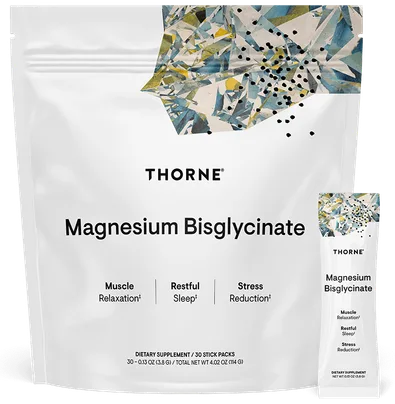
Thorne Magnesium Bisglycinate - Travel Packs Review
Thorne Magnesium Bisglycinate - Travel Packs is a powdered formula that promotes restful sleep and muscle relaxation. The page describes it as an ideal formula for active individuals who want to unwind. Magnesium Bisglycinate is presented as a lightly sweetened powder that is well-tolerated and well-absorbed, and it is NSF Certified for Sport. The product provides an optimally absorbed form of magnesium. The page says the bisglycinate form is bound to glycine, a calming neurotransmitter, which makes it especially well-suited for pre-bedtime use to help unwind and support healthy sleep patterns. The powdered formula is also described as supporting the health of the heart, blood vessels, brain, bones, muscles, and lungs, and as helping to maintain healthy sugar metabolism, normal blood pressure, and energy production. The directions say to mix one stick pack with at least 8 ounces of water daily. Each container holds 30 packets, and the serving size is one packet. Each serving provides 200 mg of magnesium as magnesium bisglycinate. The other ingredients listed are citric acid and monk fruit extract. The page says the powder is free from gluten, dairy, and soy. The page describes the powder as gentle and great-tasting, and says it is less likely to cause laxative effects than other magnesium types. The convenient travel packs are presented as a way to support muscle comfort and relaxation on the go. The product can be mixed with water, juice, or another powdered supplement. It is also available as a bulk powder. The details section explains that magnesium is involved in more than 600 of the body's enzymatic reactions. It lists benefits including support for heart and blood vessel health, bronchial relaxation, normal heart rhythm, muscle relaxation, vasodilation that supports normal blood pressure, insulin sensitivity, and cellular energy production. The page notes that the bisglycinate form is a good choice for pre-bedtime use because glycine is a calming neurotransmitter. The page notes that magnesium bisglycinate is also called magnesium glycinate, and that the two terms are used for the same compound. It also explains that every batch of an NSF Certified for Sport product is tested for label claims and for the absence of nearly 300 banned substances. The warnings state that the product is contraindicated for anyone with a history of hypersensitivity to its ingredients, and that pregnant people should consult a health-care practitioner first. Gas, bloating, or diarrhea may occur in some individuals and usually resolves when the amount is reduced. The page advises taking the product 30 to 60 minutes before bedtime to support sleep.
Study, Trial or Testing Result Summary
Members Only49 human studies · 22 improved
13 of these 49 human studies gave magnesium by drip or inhaler, not by mouth.
Each serving gives 200 mg of magnesium, well below the roughly 365 mg a day that lowered blood pressure in the studies. Large pooled analyses of placebo-controlled trials found that magnesium modestly lowers blood pressure. One analysis of 38 trials with 2709 people taking about 365 mg a day for about 12 weeks found the top number fell by about 2.8 points and the bottom number by about 2.1 points. The biggest drops were in people already on meds or low in magnesium, with no clear change in people with normal blood pressure [1]. An earlier analysis of 34 trials with 2028 adults taking about 368 mg daily for 3 months found drops of about 2 points in both numbers [2]. A review of 49 trials found benefit at 240 mg or more in people whose high blood pressure was not controlled despite medicine, and over 600 mg in untreated high blood pressure, but no change in people with controlled or normal pressure [3]. Small 12 week trials in adults with metabolic syndrome taking 400 mg daily lowered blood pressure [4][5]. However, a 24 week trial of 164 overweight adults taking 450 mg daily found no change [6]. Animal and cell studies are never counted.
See all 49 studies →Hide the studies
- In 38 randomized trials of 2709 people taking a median 365 mg of elemental magnesium daily for a median 12 weeks, systolic blood pressure fell 2.81 mm Hg and diastolic 2.05 mm Hg versus placebo, with larger drops in people on meds or with low magnesium and no significant change in people with normal blood pressure.Magnesium Supplementation and Blood Pressure: A Systematic Review and Meta-Analysis of Randomized Controlled Trials.
- In 34 placebo-controlled trials of 2028 adults taking a median 368 mg of magnesium daily for about 3 months, systolic blood pressure fell 2.00 mm Hg and diastolic 1.78 mm Hg versus placebo.Effects of Magnesium Supplementation on Blood Pressure: A Meta-Analysis of Randomized Double-Blind Placebo-Controlled Tr…
- In 23 randomized trials of 1345 people with type 2 diabetes, magnesium supplements were linked to lower diastolic blood pressure, but the abstract gives no figures for blood pressure, dose or duration.Effect of Magnesium Supplements on Improving Glucose Control, Blood Pressure and Lipid Profile in Patients With Type 2 D…
- In four studies of 1334 children with infantile epileptic spasms, adding magnesium sulfate to hormone therapy (ACTH) cut the rate of high blood pressure as a side effect compared with the hormone alone, though the studies were not about blood pressure in healthy people or treating it.Efficacy and tolerability of magnesium sulfate in children with infantile epileptic spasms syndrome: A systematic review…
- This broad review of pre-eclampsia and high blood pressure in pregnancy lists magnesium supplementation among many treatments, but the abstract gives no results for magnesium.Pre-eclampsia, eclampsia, and hypertension.
- A review of double-blind trials lasting at least four weeks found magnesium supplements can help treat metabolic syndrome in people with low magnesium, with no specific blood pressure numbers given.Magnesium in metabolic syndrome: a review based on randomized, double-blind clinical trials.
- Across 49 trials, oral magnesium of at least 240 mg daily lowered blood pressure in people with uncontrolled hypertension on medication and over 600 mg daily was needed in untreated hypertension, while people with controlled blood pressure or normal blood pressure saw no change.Effectively Prescribing Oral Magnesium Therapy for Hypertension: A Categorized Systematic Review of 49 Clinical Trials.
- In 10141 women with pre-eclampsia, magnesium sulphate cut the risk of eclampsia seizures by 58% versus placebo (0.8% vs 1.9%), though 24% reported side effects versus 5% on placebo; blood pressure itself was not reported as an outcome.Do women with pre-eclampsia, and their babies, benefit from magnesium sulphate? The Magpie Trial: a randomised placebo-c…
- In 816 children with severe asthma in the emergency department, nebulized magnesium sulfate added to albuterol did not change systolic blood pressure or reduce hospitalization compared with placebo.Effect of Nebulized Magnesium vs Placebo Added to Albuterol on Hospitalization Among Children With Refractory Acute Asth…
- In a single-blinded controlled study of 430 adults, a magnesium-rich diet averaging about 1,142 mg a day for 12 weeks lowered total cholesterol, bad cholesterol and triglycerides by about 10% each, compared with a usual diet; blood pressure was not reported.Can dietary magnesium modulate lipoprotein metabolism?
- Over 10 years, 400 high-risk adults assigned to a magnesium-rich diet (about 1142 mg daily) had fewer heart complications and lower total and sudden death rates than those on their usual diet (about 418 mg daily).Effect of dietary magnesium supplementation in the prevention of coronary heart disease and sudden cardiac death.
- In 200 healthy first-time pregnant women, daily magnesium did not change the rise in blood pressure compared with placebo.Magnesium Supplementation and Blood Pressure in Pregnancy: A Double-Blind Randomized Multicenter Study.
- In 194 pregnant women with preeclampsia treated for two weeks, adding a multivitamin to magnesium sulfate lowered blood pressure no more than magnesium sulfate alone.Effects of multivitamin combined with magnesium sulfate versus magnesium sulfate alone on hemodynamics, coagulation, and…
- In 182 women with severe preeclampsia, giving magnesium sulfate for 12 hours after delivery was as effective as 24 hours, with blood pressure similar in both groups.A comparison between the two methods of magnesium sulfate administration for duration of 12 versus 24 h after delivery i…
- In 164 overweight or slightly obese adults, 450 mg of magnesium daily as citrate, oxide or sulfate for 24 weeks did not change blood pressure or artery stiffness compared with placebo.Effects of Magnesium Citrate, Magnesium Oxide, and Magnesium Sulfate Supplementation on Arterial Stiffness: A Randomized…
- In 150 pregnant women with chronic hypertension, a treatment plan that included magnesium orotate, along with other measures, reduced hypertension symptoms and supported a favorable pregnancy course.[Magnesium orotate in treatment of chronic hypertension in pregnant women].
- In 110 overweight pregnant women, a resveratrol and magnesium hydroxide complex with inositols for up to 60 days did not change systolic or diastolic blood pressure across groups, though lipid and glucose levels improved.Can trans resveratrol plus d-chiro-inositol and myo-inositol improve maternal metabolic profile in overweight pregnant p…
- In 97 patients having bypass surgery, adding magnesium sulfate to heart-protecting cardioplegia fluid every 25 minutes protected the heart about as well as the standard every-15-minute method, with no difference in heart damage markers.The efficacy and safety of extending the ischemic time with a modified cardioplegic technique for coronary artery surger…
- In 95 overweight adults, 360 mg of magnesium glycinate three times daily with vitamin D for 12 weeks raised vitamin D levels more than vitamin D alone, and lowered systolic blood pressure only in those whose baseline systolic pressure was above 132 mmHg.The effect of combined magnesium and vitamin D supplementation on vitamin D status, systemic inflammation, and blood pre…
- In 88 patients having adrenal tumor surgery, magnesium sulfate infusion given before surgery cut the time blood pressure and heart rate stayed outside target ranges from 8.3% to 4.3% compared with placebo, with a lower peak systolic pressure.Efficacy and Safety of Preemptive Magnesium Sulfate Infusion during Pheochromocytoma and Paraganglioma Resection: A Rand…
- In 80 patients with organophosphorus poisoning, adding intravenous magnesium sulfate lowered diastolic blood pressure at 0 and 2 hours and lowered heart rate for up to 24 hours compared with saline, but systolic blood pressure did not differ.Therapeutic Effect of Adding Magnesium Sulfate in Treatment of Organophosphorus Poisoning.
- In 75 pregnant women with pregnancy-related hypertension, magnesium sulfate (20-25 g daily) served as the comparison group, and ligustrazine lowered mean arterial pressure more than magnesium sulfate did.[Treatment of hypertension syndrome of pregnancy with ligustrazine].
- In 68 patients preparing for colonoscopy, a magnesium citrate drink taken before a lavage solution did not produce significant changes in heart rate or blood pressure compared with lavage alone or with bisacodyl.The effect of stimulant laxatives and polyethylene glycol-electrolyte lavage solution for colonoscopy preparation on ser…
- In 59 women treated for premature labor, bolus fenoterol caused fewer side effects, including blood pressure and heart rate effects, than continuous fenoterol, while the magnesium sulfate given in each arm was not the variable being tested.[Comparative study of maternal side effects of various forms of intravenous therapy with fenoterol in premature labor].
- In 54 people with irregular heartbeats, a micronutrient combination for 6 weeks lowered fasting insulin and reduced heart muscle mass, with some signs of better heart filling, compared with placebo; blood pressure was not reported.Dietary intervention with a specific micronutrient combination for the treatment of patients with cardiac arrhythmias: t…
- In 27 adults with metabolic syndrome, 400 mg of oral magnesium daily for 12 weeks significantly lowered systolic blood pressure from about 135 to 126 mmHg and diastolic from about 84 to 79 mmHg, and also lowered interleukin-6, compared with a control group that took no magnesium.Positive effects of magnesium supplementation in metabolic syndrome.
- In 50 newborns with birth asphyxia, magnesium sulfate infusion did not change blood pressure compared with saline placebo over the first 48 hours, although neurological outcomes at discharge were better.Short-term outcome of magnesium sulfate infusion in perinatal asphyxia.
- In a randomized, double-blind trial of 50 heart bypass patients, magnesium sulfate given for 5 days after surgery reduced atrial fibrillation (irregular heartbeat) to 4% of patients compared with 20% on placebo.Atrial fibrillation after coronary artery bypass surgery: predictors and the role of MgSO4 replacement.
- In a randomized, placebo-controlled trial of 48 women with mild preeclampsia after 34 weeks, magnesium sulfate lowered blood flow resistance in the baby's umbilical artery but did not change it in the baby's middle cerebral artery.Randomized controlled study comparing effect of magnesium sulfate with placebo on fetal umbilical artery and middle cere…
- In 45 patients with brain bleeding from a ruptured aneurysm, two weeks of intravenous magnesium sulfate shortened vasospasm but did not significantly improve outcomes or reduce cardiac and lung complications compared with saline.Intravenous magnesium sulfate to improve outcome after aneurysmal subarachnoid hemorrhage: interim report from a pilot s…
- In 40 women with polycystic ovary syndrome, 250 mg of magnesium oxide daily for 2 months did not change blood pressure compared with placebo, although insulin resistance and some cholesterol measures improved.The Effect of Magnesium Supplementation on Insulin Resistance and Metabolic Profiles in Women with Polycystic Ovary Synd…
- In 40 adults with acute asthma, inhaled magnesium sulfate was compared with inhaled salbutamol; blood pressure was recorded, but the abstract reports no blood pressure result, and salbutamol worked better for asthma.Inhalation therapy with magnesium sulfate and salbutamol sulfate in bronchial asthma.
- In a pilot trial of 28 newborns with severe lung blood vessel constriction, nebulized magnesium sulfate over 24 hours gave a larger fall in the oxygenation index and a slightly higher average blood pressure than intravenous magnesium.Nebulized Magnesium Sulfate for Treatment of Persistent Pulmonary Hypertension of Newborn: A Pilot Randomized Controlled…
- In 25 newborns with persistent pulmonary hypertension, intravenous magnesium sulfate did not produce a different response rate than inhaled nitric oxide, though infants who switched to nitric oxide after magnesium failed did better.Inhaled nitric oxide and intravenous magnesium sulphate for the treatment of persistent pulmonary hypertension of the ne…
- In 24 adults with metabolic syndrome and normal magnesium levels, 400 mg of magnesium citrate daily for 12 weeks lowered systolic and diastolic blood pressure and HbA1c compared with placebo.Magnesium citrate supplementation decreased blood pressure and HbA1c in normomagnesemic subjects with metabolic syndrome…
- In 22 hemodialysis patients, using a low-magnesium dialysis bath did not significantly change QT dispersion, a measure of heart rhythm risk, compared with a normal-magnesium bath.The effect of different dialysate magnesium concentrations on QTc dispersion in hemodialysis patients.
- In 20 dialysis patients, a higher magnesium dialysate concentration did not change intradialytic blood pressure or heart stunning compared with a lower concentration over 2-week periods.High magnesium dialysate does not improve intradialytic hemodynamics or abrogate myocardial stunning.
- In 14 people after a brain bleed, a 5 gram intravenous magnesium bolus slightly lowered average blood pressure compared with saline but did not change blood flow speed in the brain.Cerebral blood flow velocity response to magnesium sulfate in patients after subarachnoid hemorrhage.
- In children with critical hand, foot and mouth disease, magnesium sulfate added to routine treatment lowered systolic blood pressure and heart rate more than routine treatment alone.The clinical value of aquaporin-4 in children with hand, foot, and mouth disease and the effect of magnesium sulfate on …
- In 69 pregnant women with high blood pressure, pretreatment with magnesium sulphate before tracheal intubation prevented the rise in blood pressure seen with lignocaine, and only 1 of 24 magnesium-treated women had a systolic pressure above 180 mm Hg afterward, compared with 6 of 24 given alfentanil and 6 of 21 given lignocaine.Attenuation of the pressor response to tracheal intubation in hypertensive proteinuric pregnant patients by lignocaine, …
- In an open, non-randomized study of 62 pregnant women with high blood pressure, a combined regimen that included magnesium orotate along with meds delayed pregnancy complications compared with a control group, but the magnesium effect cannot be separated from the other treatments and blood pressure itself was not reported as a separate result.[Basic and metabolic therapy of hypertensive disease in pregnant women].
- In nine young healthy people, magnesium infused into the arm improved blood vessel widening in response to methacholine, but overall blood pressure was not significantly changed.Magnesium infusion improves endothelium-dependent vasodilation in the human forearm.
- In an observational study of 1,160 patients with heart rhythm disorders, at least 300 mg of oral magnesium per day for at least 6 weeks gave good to very good results in 82% of patients, and high blood pressure also improved.[High-dosage oral magnesium therapy in arrhythmias. Results of an observational study in 1.160 patients with arrhythmia]…
- In a 1986 survey of 976 coloured adults in Cape Town, hypertensive people had lower dietary magnesium intake than normotensive people, but this survey did not test magnesium supplements.Hypertension in the coloured population of the Cape Peninsula.
- In 100 women with severe preeclampsia, a 6 g intravenous dose of magnesium sulfate lowered maternal systolic blood pressure from about 173 to 157 and diastolic from about 110 to 102 within 20 minutes, and also lowered heart rate.The effect of loading dose of magnesium sulfate on uterine, umbilical, and fetal middle cerebral arteries Doppler in wom…
- In 10 hypertensive late-pregnancy women, a 4 g intravenous infusion of magnesium sulfate mildly lowered blood pressure and reduced peripheral resistance while increasing stroke volume and cardiac output.[The value of magnesium sulfate in intensive care of severe toxemias of pregnancy (author's transl)].
- In 8 women with severe gestational proteinuric hypertension, a magnesium sulphate infusion significantly lowered blood pressure, with the largest drop in diastolic pressure in those whose serum magnesium rose most.The effect of magnesium sulphate infusion on circulating catecholamine levels in severe gestational proteinuric hyperten…
- In 22 patients on long-term meds for high blood pressure or heart failure, 10 mmol of magnesium chloride per day for four months lowered systolic and diastolic pressure by about 13 mm Hg on average.Role of magnesium in the management of hypertension.
- In a nonrandomized study of 7 premature newborns with persistent pulmonary hypertension, intravenous magnesium sulfate led to clinical improvement in 6 infants, with no significant side effects, though blood pressure results were not separately reported.Persistent pulmonary hypertension of the newborn treated with magnesium sulfate in premature neonates.
Review Totals and Summary
Members Only66 reviews · 89% positive
This Thorne Magnesium Bisglycinate in travel packs generally receives positive feedback, with customers appreciating its convenience and reported benefits. Across various stores, it holds approximately 66 ratings. **Benefits Reported:** Customers frequently report improved sleep quality and feeling more rested. One user noted, "sleeping better and waking up more rested and refreshed." Beyond sleep, several users experienced relief from physical discomfort. The product "helped with my sciatic nerve issue" for one individual, and another found it "Helped with my leg cramps!!" One review also mentioned it as a helpful addition to a weight-loss routine, alongside staying consistent with their program. **Complaints:** The written feedback available does not include any specific complaints about the product. No reviewers mentioned issues such as a bad taste, clumping, gas, bloating, diarrhea, or problems with the travel packets themselves. There were also no reports that the product failed to work for its intended purpose. **Form and Convenience:** The travel packs are a significant selling point, consistently praised for their portability and ease of use. Customers find them "very convenient and easy to pack!" and appreciate them for maintaining routines while away from home. One reviewer highlighted them as a "Great way to keep up with my bedtime routine while traveling." The product is a powder, and while individual reviews do not describe its taste, an AI-generated summary on one store page noted "excellent taste." **Perceived Value:** While direct comments on the financial cost are not present, customers clearly value the convenience and effectiveness offered by the travel packs. The consistent praise for their portability and ability to help maintain routines, particularly while traveling, indicates that buyers find this format to be a beneficial and worthwhile investment for their specific needs. **Who It Suits:** This product appears to be well-suited for individuals who travel frequently or need a portable solution to maintain their magnesium supplement regimen. It is also recommended for those seeking improved sleep, relief from leg cramps or sciatic discomfort, and potentially as a supportive element in a weight-loss journey. An AI-generated summary also suggests it "suits active individuals seeking relaxation."
Biohacker Summary
Members Only10 of 10 recommend it
Most of the panel recommends or uses magnesium, and four of the ten take it themselves in some form, mainly for sleep. Sleep is the top reason, followed by muscle function, blood pressure, bone health, stress, and the point that low levels are hard to catch on a standard blood test. For forms, three of them favor magnesium threonate, with 400 mg before bed named by several, while others mention glycinate, bisglycinate, and electrolyte drinks that contain a small amount of magnesium. Other doses given include 300 mg before bed, 300 to 500 mg a day as a minimum for bone health, and 400 to 600 mg a day, and some pair it with vitamin D3 and K2 or with sodium and potassium. Two panelists cautioned that labels can make the dose look larger than the actual magnesium content, and two said the evidence that it reliably improves sleep is not strong or does not fix waking at night.
See all 10 biohackers →Hide the biohackers
Dr. Mark Hyman · Magnesium · uses
- Recommends considering magnesium glycinate before bed for nervous system support, deeper sleep quality, and to help the body transition into rest, and states that they take it every night.
- Recommends Magnesium Breakthrough Advanced 10 from Bioptimizers for restful sleep, muscle recovery, stress resilience, and metabolic health, especially during stressful times of the year.
- Recommends magnesium because it is involved in over 600 reactions in the body and up to 80% of people may have low levels that never get flagged on a standard blood test.
- Recommends magnesium as a basic supplement during detoxification to support pathways, help with constipation, and provide electrolytes.
- Recommends Magnesium Breakthrough Advanced 10 from Biooptimizers, which contains 10 bioavailable forms and 550 mg of elemental magnesium, to support restful sleep, restorative sleep, muscle recovery, stress resilience, and metabolic health.
- Has recommended magnesium breakthrough from bioptimizers for years and now uses Magnesium Breakthrough Advanced 10 as part of his evening routine, especially during periods of travel, training, and higher stress, to support sleep, muscle recovery, and metabolic health.
- Recommends correcting nutrient deficiencies with magnesium.
- Recommends Magnesium Breakthrough Advance 10 from BiOptimizers, which has 10 bioavailable forms of magnesium and more elemental magnesium, as part of his evening routine for sleep, muscle recovery, and metabolic health.
- Has recommended Magnesium Breakthrough from Bio Optimizers for years and now uses Magnesium Breakthrough Advanced 10 as part of his evening routine, especially during periods of travel, training, and higher stress, to support sleep, muscle recovery, and metabolic health.
- Recommends Magnesium Breakthrough Advance 10 from Bio Optimizers, which contains 10 bioavailable forms of magnesium, as it plays a critical role in sleep recovery, stress regulation, and muscle function, and has become part of his evening routine, especially during periods of travel, training, and higher stress.
Dave Asprey · Magnesium · neutral
- Mentions magnesium in the context of sleep but states that it doesn't address the core issue of waking up during the night.
- Suggests that magnesium may help slow aging, support cellular repair, and improve sleep.
- States that magnesium can affect how the body responds to a supplement.
- Recommends fixing sleep with 300mg of Magnesium 101 before bed if diet and exercise aren't melting stubborn belly fat.
- Dave Asprey says his daily routine includes magnesium as part of a carefully developed combination for longevity.
- Recommends magnesium glycinate for sleep, stating that trials show it helps people fall asleep about 17 minutes faster and that he finds it incredibly effective.
- Mentions magnesium glycinate as one of the five gut-friendly, extensively researched ingredients in Kill Switch that helps with natural sleep.
- Dave Asprey recommends Magnesium Glycinate for sleep, noting human studies show it helps people fall asleep faster, is safe, and works on a fundamental aspect of health, unlike magnesium oxide which acts as a laxative.
- Dave Asprey recommends adding 300 or 400 mg of magnesium glycinate before bed to improve deep sleep quality, support growth hormone release, and burn visceral fat while asleep.
- Mentions magnesium glycinate as one of the extensively researched ingredients in Kill Switch that helps with natural sleep.
Dr. Eric Berg · Magnesium · neutral
- Dr. Eric Berg states that magnesium supports energy, muscle function, and sleep, and that most of it is stored inside cells, making deficiencies harder to detect with a standard blood test.
- Notes that magnesium could also be a factor in preventing muscle cramps.
- Recommends magnesium, specifically magnesium glycinate, stating it is key for D3 and K2 to work and is probably more important than calcium for building bone.
- Recommends increasing magnesium to restore balance and support healthy blood pressure.
- Dr. Eric Berg suggests that magnesium could help support deeper, more restful sleep.
- Recommends Magnesium Glycinate, noting that the combination of magnesium and glycine is helpful for connective tissue, sleep, and reducing stress.
- Recommends taking magnesium 90 minutes to 2 hours before bedtime to support better sleep.
- Suggests that magnesium glycinate can help support the missing 'break pads' on the nervous system, which contribute to constant pain.
- Taking 400 mg of magnesium glycinate daily may also help support brain health during menopause.
- Warns against magnesium oxide because it is poorly absorbed, with only about 4% absorption, and can cause diarrhea, despite being commonly used in research and supplements due to its low cost.
Ben Greenfield · Magnesium · uses
- Uses magnesium during surgery because it is neuroprotective.
- Says he is drinking LMNT, which contains sodium, potassium, and magnesium, and states that he actually drinks this stuff.
- Mentions magnesium as part of a bare-minimum protocol.
- Advises getting red blood cell magnesium levels to the high end of the range as a minimum step for overall health and to slow down heart disease.
- Recommends supplementing with magnesium threonate if one is low in magnesium, as it crosses the blood-brain barrier and is demonstrated to increase hippocampus plasticity, theoretically making one smarter and improving memories.
- Uses Magnesium Breakthrough from BIOptimizers as part of their daily stack, taking four capsules in the evening to support relaxation, recovery, and a good night of sleep.
- Recommends Celtic Sea Salt's new electrolyte drink "Hydrate" for replacing electrolytes and trace minerals lost through sweat, noting it contains 70 naturally occurring trace minerals, plus magnesium, taurine, and potassium.
- Had heart palpitations when he was really overdoing magnesium, not knowing what he was taking.
- Recommends taking magnesium as a co-factor to increase vitamin D absorption.
- Notes a new study indicating that magnesium is a core dietary antioxidant closely associated with a reduced risk of accelerated biological aging.
Dr. Rhonda Patrick · Magnesium · neutral
- Magnesium supplementation has lowered blood pressure in randomized controlled trials. An analysis of 34 trials involving over 2,000 participants found modest reductions in both systolic and diastolic pressure, with a median dose of 368 mg/day.
- Warns that some magnesium supplements make the dose look much larger than it really is and that labels can fool people.
- Mentions magnesium as an important nutrient component for testosterone.
- Warns that some supplement companies mislead consumers by listing the total compound weight of magnesium citrate as the elemental magnesium dose, when the actual elemental magnesium content is much lower, potentially around 44-66 milligrams.
- States there is not yet strong, consistent evidence that magnesium supplementation reliably improves sleep, noting that while some meta-analyses suggest it can improve sleep quality scores, sleep efficiency, and sleep duration, individual studies are inconsistent and several have found no meaningful effect.
- States that magnesium may help modestly lower blood pressure by playing an important role in regulating vascular tone and influencing calcium signaling, with studies showing a reduction in systolic and diastolic blood pressure by 2 mmHg at a dose of around 370 mg/day for about 3 months.
- Recommends considering magnesium to improve mood.
- Recommends Magnesium, stating that roughly half of Americans don’t get enough and it is a cofactor for over 300 biological processes, including DNA repair and energy production.
- Mentions that kale delivers magnesium, a micronutrient many diets fall short on.
- Recommends Magnesium, stating it is a cofactor for over 300 biological processes, including DNA repair, energy production, and sleep regulation.
Thomas DeLauer · Magnesium · uses
- Uses Element's cans which contain 30 milligram magnesium, finding that electrolytes help his workout performance.
- Uses Element's 30 mg magnesium cans first thing in the morning to prime his day and help with workout performance.
- Recommends magnesium around the time one would normally break a fast to calm the brain and dull feelings of conditioned hunger.
- Recommends magnesium, noting it is a cofactor for enzymes that build neurotransmitters, and deficiency can affect mood, happiness, and motivation.
- Notes that modern agricultural practices have led to soils depleted of trace minerals like magnesium, resulting in widespread magnesium deficiency.
- Recommends taking some magnesium glycinate tonight to help calm down and sleep.
- Mentions that magnesium in pumpkin seeds relaxes bronchial smooth muscle.
- Compares magnesium content, stating bananas have 32mg and pumpkin seeds have 156mg per ounce, a 5x difference.
- Recommends Magnesium glycinate, stating that 200-400mg elemental helps with sleep as glycine cools the body and magnesium calms.
- Notes that magnesium sits on the NMDA receptor and regulates excitatory transmission, in the context of feeling stressed.
Siim Land · Magnesium · recommends
- States that Magnesium can be a useful addition for some people for sleep.
- Recommends magnesium for sleep, especially deep sleep, and suggests trying better types like Threonate, Biscinate, or Torate, referencing a study where magnesium supplementation improved deep sleep.
- Recommends Magnesium for blood pressure, migraines and deficiency, based primarily on human research, especially randomized controlled trials showing measurable benefits.
- Lists Magnesium as one of 15 supplements backed by human studies.
- States that magnesium is a fundamental mineral governing over 600 enzymes and metabolic reactions, and recommends that most people need at least 400-500 mg/d for health, with some needing up to 600 mg/d.
- Lists seafood and pumpkin seeds as sources of Magnesium.
- Thinks magnesium has some of the strongest evidence and is worth considering.
- Recommends taking magnesium, specifically glycinate and threonate forms, 1 to 2 hours before bed for sleep benefits, noting that glycinate promotes relaxation and threonate crosses the blood-brain barrier for sleep quality and cognitive function.
- Notes that Boron reduces calcium/magnesium loss.
- Notes that magnesium is important for activating thiamine into its more biologically active form, and a magnesium deficiency can impair blood sugar regulation even with adequate thiamine intake.
Andrew Huberman · Magnesium · neutral
- Discusses Magnesium Threonate as a tool for falling asleep.
- Takes 400 mg of Magnesium Threonate before bed for sleep.
- Uses Element, an electrolyte drink with sodium, magnesium, and potassium in correct ratios and no sugar, to ensure adequate hydration and electrolytes, especially when starting days fast or during physical exercise.
- Takes 400 mg of Magnesium L-Threonate before bed for sleep.
- Confirms that magnesium is absolutely important for cognitive function, noting studies show those with lower magnesium intakes tend to perform less well on cognitive function tests, and it's related to brain changes over time and dementia risk.
- Takes 400 mg of Double Wood Magnesium L-Threonate before bed for sleep.
- He takes 400 mg of Magnesium L-Threonate from Double Wood before bed for sleep.
- Takes 400 mg of Double Wood Magnesium L-Threonate before bed for sleep.
- Takes 400 mg of magnesium L-threonate before bed for sleep.
- Takes 400 mg of Magnesium Threonate before bed for sleep.
Bryan Johnson · Magnesium · uses
- Takes 400 mg of Magnesium Threonate before bed for sleep.
- Takes 400 mg of Magnesium L-Threonate before bed for sleep.
- Takes 400 mg of Magnesium Threonate before bed for sleep.
- He takes 400 mg of Double Wood Magnesium L-Threonate before bed for sleep.
- Takes 400 mg of Magnesium L-Threonate before bed for sleep.
- Takes 400 mg of Magnesium Threonate before bed for sleep.
- Takes 400 mg of Magnesium L-Threonate before bed for sleep.
- Takes 400 mg of magnesium L-threonate before bed for sleep.
- He takes 400 mg of Magnesium L-Threonate before bed for sleep.
- Takes 400 mg of magnesium threonate before bed for sleep.
Peter Attia · Magnesium · neutral
- Peter reviews the evidence for select off-label medications and supplements commonly used for sleep, including glycine, magnesium, ashwagandha, and phosphatidylserine.
- Suggests that zinc and magnesium could potentially help with vasodilation and sleep, particularly for women experiencing severe symptoms in the luteal phase.
- Peter discusses electrolytes and fiber and the ketogenic diet, specifically preventing magnesium loss.
- Recommends magnesium as one of the 'big three' micronutrients for bone health, suggesting a daily intake of 300 to 500 milligrams as a minimum, and personally aims for about a gram of supplemental magnesium.
- Recommends magnesium for optimizing bone mineral density, suggesting a daily intake of 300 to 500 milligrams as a minimum, but personally aims for about a gram.
- Takes a hardline view that most people do not have adequate or optimal levels of magnesium, and suboptimal levels will impede the metabolism of vitamin D because magnesium is a cofactor in its enzymatic conversion.
- Takes a hardline view that most people do not have adequate or optimal levels of magnesium, and suboptimal levels will impede vitamin D metabolism because magnesium is a co-factor in the enzymatic conversion of vitamin D.
- Takes magnesium as a straightforward supplement.
- Mentions that magnesium intake is often super low and impactful on testosterone levels.
- Discusses the important roles of magnesium in the body, how to determine if one might be deficient, the prevalence of magnesium deficiency, and its potential cognitive benefits.
RAL Summary
Members OnlyTier 3 for Blood Pressure
Tier 3 rests on 66 reviews with 89% positive, plus study support showing magnesium modestly lowers blood pressure at about 365 mg a day [1][2]; this product's 200 mg dose is below what worked in studies.
- Magnesium: below the dose that worked in studies
Where the evidence disagrees: 18 of the 49 human studies found no effect.
More Details
Members OnlyBody systems · Combine with · Possible side effects
Body systems: Cardiovascular system
Combine with: To enhance the benefits of Magnesium Bisglycinate for blood pressure support, consider combining it with Potassium, which works synergistically with magnesium to maintain fluid balance and healthy blood pressure. Omega-3 fatty acids (EPA/DHA) are also excellent additions for overall cardiovascular health and their anti-inflammatory effects. CoQ10 can further support heart health and cellular energy production, while Hawthorn extract is a traditional herb often used to promote healthy blood pressure and circulation.
Possible side effects: No major side effects reported.
Supplement Facts
Magnesium 200 mg
| Magnesium | 200 mg |
Other ingredients: Citric Acid, Monk Fruit extract.
Directions: Mix 1 stick pack with at least 8 ounces of water daily or as recommended by your health-care practitioner.
Label source: Reverseagelab · Report a label change
Where to Buy
Thorne · Mayo Clinic Store
More blood pressure products
Members OnlyThe highest ranked for the same goal
Read more
Our articles on this subject
- How to Lower Diastolic Blood Pressure for LongevityArticle · Sep 17, 2026
- DASH Diet for High Blood Pressure: What It Lowers, What to Eat, and How to StartArticle · Sep 19, 2026
Graded November 3, 2026 by the Reverse Age Lab evidence engine, from human studies, real reviews and our biohacker panel. How we grade. Is this medical advice? No. Rala organizes the published evidence; go over any change with your doctor, especially if you take meds.
Privacy policyConsumer health dataTermsDo Not Sell or Share My Personal InformationCookie settings