
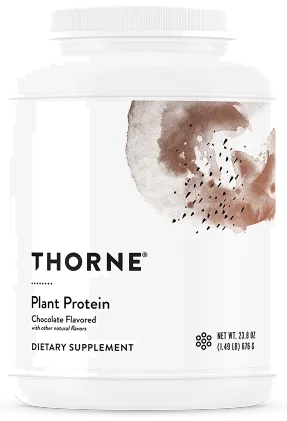
Thorne Plant Protein - Chocolate Review
Thorne Plant Protein - Chocolate is a vegan protein powder that provides all nine essential amino acids for muscle maintenance and repair, designed to help people keep up with an active lifestyle. The product is presented as a plant-based protein blend made from pea, brown rice, and chia. Each serving of two scoops provides 22 grams of protein in a dairy-free, gluten-free, and soy-free formula. The page lists 140 calories, 4 grams of fat, and 0 grams of added sugars per serving. The product is NSF Certified for Sport, and the page states that every batch of an NSF Certified for Sport product is tested for compliance with label claims and for the absence of nearly 300 substances banned by many major athletic organizations. The page describes the formula as Thorne Verified Vegan. The product is listed with a total of 20 servings per container, and the page directs users to mix two scoops with at least 12 ounces of water, juice, or another preferred beverage daily. The stated benefits include helping to maintain lean muscle mass and strength, supporting muscle repair after exercise, supporting healthy body composition, and benefiting a healthy weight. The page says the product provides a complete amino acid profile, including branched-chain amino acids, and offers a good source of plant-based, non-heme iron. The flavor is described as derived from cocoa and other natural flavors, and the sweeteners are described as derived from natural sources. The product is marketed to vegans, people seeking an alternative protein option, aging individuals who need added protein support, athletes, and anyone supporting healthy weight management. The page notes that Thorne is trusted by health-care practitioners and that the product is tested through multiple rounds of quality control for purity, potency, and consistency. The page also includes a California warning about lead exposure, an allergy warning about hypersensitivity to any ingredient, and a pregnancy note advising consultation with a health-care practitioner. The page states there are no known adverse interactions or contraindications at publication date. Frequently asked questions explain that digestion varies by individual, that the product is often gentler for people with lactose intolerance or dairy sensitivity than milk-based powders, and that plant proteins combining pea, brown rice, and chia can support muscle recovery similarly to whey when consumed in adequate amounts.
We don’t sell supplements. We help you make decisions and get the best price.
Lowest prices
We may earn a commission from some store links. How we choose.
Finding the lowest prices at the stores now. This takes a few seconds.
Study, Trial or Testing Result Summary
Members Only90 human studies · 30 improved
4 of these 90 human studies gave the ingredient by drip, not by mouth.
The main ingredient, a plant protein blend at about 27.5 grams per serving, is well above the amount that worked in studies. A review of 31 trials found plant protein improved strength and athletic ability compared with little or no protein, though it worked less well than whey, beef or milk [1]. In adults over 50, plant and animal protein gave similar lean mass and grip strength [2], and over at least six months they did not differ in lean mass, strength or performance [3]. A soy-containing supplement added about 1 kilogram of lean mass in adults with HIV [4], and a plant protein supplement improved muscle mass and grip strength in older adults with muscle loss [5]. Not every study agrees: in adults over 60, soy protein gave results similar to controls [6]. The iron in this product is a trace amount, far below the dose studied for strength [7], and iron trials mostly showed no muscle benefit [8]. The potassium dose is small, and potassium trials found no muscle gain [9][10]. Animal and cell studies are never counted.
See all 90 studies →Hide the studies
- In 29 trials of 2363 adults aged 50 and older, plant protein (mostly soy) and animal protein (mostly dairy) gave similar lean mass and handgrip strength results.Plant-versus animal-derived protein and nutritional, cardiometabolic, and inflammatory outcomes in middle-aged and older…
- In 18 trials of 1893 adults supplemented for at least 6 months, plant protein (largely soy) and animal protein did not differ in lean mass, muscle strength or physical performance.Long-term effects of plant vs. animal protein supplementation on body composition, muscle strength, physical performance…
- In 9 trials of 266 people doing resistance training for at least 6 weeks, soy protein and animal protein produced similar gains in strength and lean mass.No Difference Between the Effects of Supplementing With Soy Protein Versus Animal Protein on Gains in Muscle Mass and St…
- In 12 studies of 261 young adults doing resistance training, neither whey nor soy protein significantly changed lean mass; whey improved bench press and squat, with no such strength gain reported for soy.The Impact of Whey and Soy Protein Supplementation on Resistance Training in Young Adults: A Systematic Review and Meta-…
- In 16 trials, protein source did not change absolute lean mass or muscle strength, but animal protein gave slightly more percent lean mass, especially in adults under 50.Animal Protein versus Plant Protein in Supporting Lean Mass and Muscle Strength: A Systematic Review and Meta-Analysis o…
- In 13 trials in adults 60 and older using soy protein for 12 weeks to 1 year, muscle mass rose over time but results were comparable to controls, with limited effect on strength and function.Effects of Plant-Based Protein Interventions, with and without an Exercise Component, on Body Composition, Strength and …
- In 31 trials in healthy people, plant protein improved athletic ability and muscle strength compared with little or no protein, but was less effective than other proteins like whey, beef or milk.The Effect of Plant-Based Protein Ingestion on Athletic Ability in Healthy People-A Bayesian Meta-Analysis with Systemat…
- In 30 trials, plant protein led to slightly lower muscle mass than animal protein, mainly in adults under 60 and with non-soy plant proteins, while soy matched milk protein and strength did not differ.Effect of Plant Versus Animal Protein on Muscle Mass, Strength, Physical Performance, and Sarcopenia: A Systematic Revie…
- Across 51 trials of a single protein dose after resistance exercise, pea protein ranked second highest for short-term muscle protein building but its effect was not statistically significant, while only whey protein was significant.Impact of different protein sources on acute muscle protein synthesis following resistance training: a systematic review…
- In 15 trials of 1161 pre- and postmenopausal women, soy protein gave mixed body composition results, with more benefit when combined with exercise and less consistent effects than animal protein.Dietary Intake of Animal and Plant-Based Protein on Adiposity Measurements and Body Composition in Pre- and Postmenopaus…
- A review of 10 mostly observational studies in older adults found one study linking higher iron intake with better physical performance, with no trial evidence for iron on muscle.Minerals and Sarcopenia; The Role of Calcium, Iron, Magnesium, Phosphorus, Potassium, Selenium, Sodium, and Zinc on Musc…
- A review of 45 mostly observational studies in older adults found the link between iron and muscle mass, strength or sarcopenia unclear because there were too few studies or results were inconclusive.Minerals and Sarcopenia in Older Adults: An Updated Systematic Review.
- In 19 randomized trials of active people and athletes, soy protein gave lean mass gains similar to whey in some studies and may have improved antioxidant status, though hormone effects were inconsistent.Effect of Soy Protein Supplementation on Muscle Adaptations, Metabolic and Antioxidant Status, Hormonal Response, and Ex…
- In 318 adults with HIV starting treatment in Ethiopia, 200 g daily of a soy-containing supplement for three months increased lean body mass by 0.97 kg and grip strength by 0.93 kg more than controls.Effects of nutritional supplementation for HIV patients starting antiretroviral treatment: randomised controlled trial i…
- In 244 men and women aged 50 and older, 3 months of potassium bicarbonate lowered bone turnover and calcium loss in urine but had no significant effect on muscle strength or function compared with placebo.Potassium Bicarbonate Supplementation Lowers Bone Turnover and Calcium Excretion in Older Men and Women: A Randomized Do…
- In 179 older adults doing resistance training for 12 weeks, about 27 g a day of soy protein produced smaller strength gains (63%) than dairy protein (92%) or usual protein intake (92%).Muscle strength gains during resistance exercise training are attenuated with soy compared with dairy or usual protein i…
- In 171 healthy adults over 50, about 23 g a day of plant protein for 12 weeks did not change the blood metabolite profile differently from dairy protein or low protein, and the metabolite profile was not linked to protein type.Association of handgrip strength with the plasma metabolomic profile: secondary analysis of a protein intervention study…
- In 158 people with fibromyalgia and chronic fatigue, a diet and lifestyle program raised dietary iron and protein intake and improved muscle mass index, but iron was not given on its own.Effectiveness of the SYNCHRONIZE + Brief Intervention in Improving Mediterranean Diet Adherence, Nutritional Quality and…
- In 148 iron-deficient kidney transplant recipients, four intravenous doses of 500 mg ferric carboxymaltose over 24 weeks did not improve walking distance, muscle mass or strength compared with placebo.Intravenous ferric carboxymaltose and exercise capacity in iron-deficient kidney transplant recipients: a randomised, pl…
- In 128 healthy adults aged 65 and older, 24 weeks of potassium bicarbonate did not improve muscle power, physical performance or muscle mass compared with placebo, though blood levels of a growth hormone marker (IGF-1) were higher.Independent effects of whey protein and alkali supplementation on muscle health in healthy older adults: factorial rando…
- In 124 older adults with knee osteoarthritis and muscle loss, taking a high plant protein and peptide supplement twice daily for 12 weeks improved physical performance, grip strength, and muscle mass compared with placebo.Effect of high plant protein/peptide nutrition supplementation on knee osteoarthritis in older adults with sarcopenia: A…
- In 123 older adults with low muscle mass, about 16 g a day of soy protein for 6 months kept lean mass and physical performance from declining, while the control group without the supplement declined.Daily Supplementation With Whey, Soy, or Whey-Soy Blended Protein for 6 Months Maintained Lean Muscle Mass and Physical …
- In 92 iron-deficient surgery patients who all received intravenous iron, adding oral phosphate for 30 days made no difference to core muscle strength.Ferric carboxymaltose with or without phosphate substitution in iron deficiency or iron deficiency anemia before electiv…
- In 90 overweight adults, about 56 g a day of soy protein for 23 weeks did not change body weight or lean body mass compared with an equal-calorie carbohydrate drink, while whey protein did reduce weight and fat.Whey protein but not soy protein supplementation alters body weight and composition in free-living overweight and obese …
- In 85 patients with advanced kidney disease over 12 months, replacing part of the animal protein in a low-protein diet with soy slowed the loss of lean body mass compared with the standard diet.[Soy protein as part of a low-protein diet is a new direction in cardio- and nephroprotection in patients with 3B-4 stag…
- Patients with chronic kidney disease who replaced part of their animal protein with soy protein over 12 months lost less lean body mass than those on a conventional low-protein diet.Soy Protein as a Part of a Low-protein Diet is a New Direction in Cardio- and Nephroprotection in Patients With 3b-4 Sta…
- In a 3-month trial of 77 analyzed community older adults, exercise alone and exercise plus soy protein both reduced physical frailty and increased limb muscle mass, and only the combined group showed a walking speed gain beyond exercise alone.The effect of exercise and soy protein intake on physical frailty score improvement in community-dwelling elderly: a ran…
- In a 12-week trial of 84 older adults in a care facility, three daily meals with 10 g of soy protein each (30 g a day) preserved calf size, while the usual-diet control group lost calf size.The Effects of Soy Protein-Rich Meals on Muscle Health of Older Adults Are Linked to Gut Microbiome Modifications.
- In 83 overweight adults who completed 6 months, a high-soy-protein low-fat diet produced greater weight and fat loss than lifestyle education alone, with no significant loss of fat-free (muscle) mass.Weight loss without losing muscle mass in pre-obese and obese subjects induced by a high-soy-protein diet.
- In 80 older women at risk of sarcopenia doing 32 weeks of training, lower dietary iron was linked with poorer sit-to-stand performance in the high-speed resistance group only, but iron was not given as a supplement.Nutritional intake as a determinant of high-speed resistance and multicomponent training efficacy on strength in older w…
- Adults with obesity who followed a high-protein diet with mostly vegetable protein for one month increased their skeletal muscle mass and improved insulin sensitivity.Effect of the intake of dietary protein on insulin resistance in subjects with obesity: a randomized controlled clinical…
- In 75 untrained college-aged men doing resistance training for 12 weeks, soy protein concentrate gave no added gain in muscle mass or strength compared with a maltodextrin placebo.Effects of Whey, Soy or Leucine Supplementation with 12 Weeks of Resistance Training on Strength, Body Composition, and …
- Pre-frail and frail older adults who took 40 g of rice protein daily with a six-month exercise program did not differ in muscle mass or physical performance from those taking whey protein.A Randomized Controlled Pilot Exercise and Protein Effectiveness Supplementation Study (EXPRESS) on Reducing Frailty Ris…
- In 70 Japanese pre-frail and frail elderly people, 12 weeks of high-soy soymilk did not change walking speed for the whole group, but it improved walking speed in those who already walked fast and took many steps.Continuous high-soy protein soymilk intake affects ordinary walking speed in the Japanese pre-frail and frail elderly: a…
- Perimenopausal women taking 40 g daily of isoflavone-rich soy protein for 24 weeks gained more hip lean mass than other groups, but their overall lean mass and fat distribution did not improve.Isoflavone-rich soy protein prevents loss of hip lean mass but does not prevent the shift in regional fat distribution i…
- Young men doing resistance training for 12 weeks who took 22 g daily of a soy-dairy protein blend gained no more strength or muscle than those taking a carbohydrate placebo, though lean mass showed a non-significant trend upward.Protein Supplementation Has Minimal Effects on Muscle Adaptations during Resistance Exercise Training in Young Men: A Do…
- Older adults who drank high-soy soymilk for 12 weeks showed no overall muscle index gain versus control, but pre-frail participants with high activity or energy intake showed a small benefit in an exploratory analysis.The Effect of Routine High-Soy-Protein Soymilk Intake on the Skeletal Muscle Index (SMI) in Japanese Pre-Frail Elderly I…
- Over about 9 months of whole-body resistance training, soy protein supplements did not produce more lean mass gain than a carbohydrate control, while whey protein produced the largest gain.Whey protein supplementation during resistance training augments lean body mass.
- In 61 healthy adults over about 9 months of whole-body resistance training, soy protein, whey protein, or carbohydrate supplements all produced a similar rise in resting energy burn, with no difference between the groups.Effect of resistance training on resting metabolic rate and its estimation by a dual-energy X-ray absorptiometry metabol…
- In 60 osteoporotic postmenopausal women, soy isolate protein alone, and soy protein combined with resistance exercise, both produced significant muscle strength gains over 12 weeks, with larger gains when combined with exercise.Effect of soy isolate protein and resistance exercises on muscle performance and bone health of osteopenic/osteoporotic …
- In 60 casual golfers taking a mixed casein, whey and pea protein supplement daily for 8 weeks, grip strength, push-ups and driver distance improved more than with placebo.Effect of mixed protein supplementation on golf performance and muscle function: a randomized, double-blind, placebo-con…
- In 12 weeks of resistance training in 56 young men, a soy protein drink after exercise gave no more muscle fiber growth or lean mass gain than a carbohydrate drink, while milk gave greater gains.Consumption of fat-free fluid milk after resistance exercise promotes greater lean mass accretion than does consumption …
- Over 45 days on a very-low-calorie ketogenic diet, people with obesity lost weight whether their protein was whey, vegetable, or animal, but only the whey group showed a clearer gain in muscle strength.Very-Low-Calorie Ketogenic Diets With Whey, Vegetable, or Animal Protein in Patients With Obesity: A Randomized Pilot St…
- In 48 untrained young adults doing supervised strength training three times a week for 12 weeks, 26 grams of soy protein isolate daily (leucine matched to whey) increased lean mass and leg strength, with no difference from whey protein.No Significant Differences in Muscle Growth and Strength Development When Consuming Soy and Whey Protein Supplements Mat…
- In 47 active adults over 60, 25 grams of pea protein daily for 13 days did not reduce muscle damage after a long walk, while whey protein did reduce it.Supplementation with Whey Protein, but Not Pea Protein, Reduces Muscle Damage Following Long-Distance Walking in Older A…
- Postmenopausal women taking 25 g of soy protein daily for 16 weeks showed no change in body composition compared with placebo, though soy alone lowered total and LDL cholesterol.Effects of soy protein and resistance exercise on body composition and blood lipids in postmenopausal women.
- In 45 healthy older men, a single 20-gram dose of a soy and pea protein blend, with or without added leucine, did not raise muscle protein synthesis above resting levels, and it did not differ from whey.Ingestion of 20 g of a Plant-derived Protein Blend With and Without Added Leucine or Whey Protein Does not Increase Musc…
- In 40 middle-aged men doing resistance training for 12 weeks, those taking a soy protein based supplement gained more strength and lean body mass than those who trained without it.Soy protein based supplementation supports metabolic effects of resistance training in previously untrained middle aged …
- In 36 elderly people with type 2 diabetes taking 7.5 g of soy protein daily for 24 weeks, knee extension strength increased, while muscle mass did not change.Effects of Branched-Chain Amino Acids on Skeletal Muscle, Glycemic Control, and Neuropsychological Performance in Elderl…
- In 32 postmenopausal women doing resistance training for 16 weeks, adding 25 g of soy protein to milk daily produced larger strength gains than milk with a placebo powder, though muscle mass gains did not differ.Adding Soy Protein to Milk Enhances the Effect of Resistance Training on Muscle Strength in Postmenopausal Women.
- Older women doing interval walking for five months who ate dried tofu daily (9.6 g protein) gained no more thigh muscle strength or muscle size than those taking a placebo.Effects of dried tofu supplementation during interval walking training on the methylation of the NFKB2 gene in the whole…
- Young untrained adults who took soy or whey protein powder with resistance training for 6 weeks gained more lean tissue and strength than those who took a placebo powder with training.Effect of whey and soy protein supplementation combined with resistance training in young adults.
- Over 10 days in 27 middle-aged and older adults doing resistance training, pea protein and whey protein diets produced the same muscle protein building rates, so protein source did not matter.Resistance training increases myofibrillar protein synthesis in middle-to-older aged adults consuming a typical diet wit…
- In a 12-week pilot weight-loss study of 24 older adults, soy-based and non-soy meal replacements produced similar weight and body composition changes, and physical performance did not change in either group.Effect of protein source during weight loss on body composition, cardiometabolic risk and physical performance in abdomi…
- In 24 leukemia patients before stem cell transplant, a soy and whey protein blend added to their diet was linked to better grip strength and arm muscle area than diet alone, and faster stem cell engraftment.Protein blend ingestion before allogeneic stem cell transplantation improves protein-energy malnutrition in patients wit…
- In 22 elite female volleyball players, 325 mg of ferrous sulphate daily for 11 weeks prevented a drop in iron levels and gave greater strength gains than no iron (total mean strength +26.2% vs +10.9%).Iron supplementation prevents a decline in iron stores and enhances strength performance in elite female volleyball play…
- In 21 children with kidney disease and mild anemia, 12 weeks of iron sulfate made no significant difference in muscle mass or grip strength compared with no iron.Pilot pragmatic clinical trial of iron therapy in children with anemia of chronic kidney disease (FeTCh-CKD).
- Older men doing resistance training for 12 weeks gained similar muscle strength and muscle size whether their protein came mainly from soy or from beef.Effect of protein source on resistive-training-induced changes in body composition and muscle size in older men.
- In a small pilot of 16 women doing aerobic exercise for 8 weeks, taking 40 g of isolated soy protein daily led to greater fat loss and lean mass gain than exercise alone.Effects of Isolated Soy Protein Supplementation Combined with Aerobic Exercise Training on Improving Body Composition, A…
- Postmenopausal women taking a daily soy protein supplement for three months gained no more lean mass than those taking a casein placebo, though their abdominal fat rose less.Effect of a daily supplement of soy protein on body composition and insulin secretion in postmenopausal women.
- In 12 male weight trainers, a single dose of potassium-magnesium aspartate taken before a resistance workout did not lower blood ammonia or improve bench press performance to failure compared with vitamin C.Effect of acute potassium-magnesium aspartate supplementation on ammonia concentrations during and after resistance trai…
- In people with sarcopenia given iron (sodium ferrous citrate, 29 or 57 mg) plus 5-aminolevulinic acid for 12 weeks, muscle mass index did not differ from placebo, but hand grip strength increased or tended to increase, with no consistent changes in other measures.Efficacy and Safety of 5-Aminolevulinic Acid Combined with Iron on Skeletal Muscle Mass Index and Physical Performance o…
- In a randomized trial lasting 8 weeks, whey protein and rice protein isolate were each taken after exercise in large, equal-calorie doses to compare recovery, body composition, and exercise performance, but the abstract does not report the results.The effects of 8 weeks of whey or rice protein supplementation on body composition and exercise performance.
- In sedentary adults doing resistance training for 84 days, pea protein produced strength and muscle gains similar to whey protein.Efficacy of Pea Protein Supplementation in Combination with a Resistance Training Program on Muscle Performance in a Sed…
- In 38 young men over 12 weeks of resistance training, a plant-based diet with soy protein isolate built muscle and strength about as well as a mixed diet with whey protein.High-Protein Plant-Based Diet Versus a Protein-Matched Omnivorous Diet to Support Resistance Training Adaptations: A Com…
- In a placebo-controlled study of 14 elite female gymnasts over 4 months of heavy training, those taking isolated soy protein twice daily gained lean body mass, while the placebo group showed no such gain reported.Hormonal and metabolic response in elite female gymnasts undergoing strenuous training and supplementation with SUPRO Br…
- In a small crossover study of young men after resistance exercise, an 18 g soy protein drink produced a smaller overall muscle protein balance and lower muscle protein synthesis than an equal-protein milk drink.Consumption of fluid skim milk promotes greater muscle protein accretion after resistance exercise than does consumption…
- Older adults in long-term care who ate meals providing 30 g of soy protein per day for 12 weeks gained muscle mass, while the control group did not.Effects of soy protein-rich meals on muscle health of older adults in long-term care: A randomized clinical trial.
- In 30 people with rheumatoid arthritis and anemia, treatment with erythropoietin plus intravenous iron sucrose (given weekly when iron was low) raised hemoglobin and muscle strength and lowered fatigue, though there was no control group.Effect of recombinant human erythropoietin and intravenous iron on anemia and disease activity in rheumatoid arthritis.
- In 23 young women with iron deficiency anemia, 8 weeks of 160 mg daily iron as ferrous sulfate improved muscle endurance but not muscle strength or aerobic fitness, in an uncontrolled study without a placebo group.Efficacy of 8-week oral iron supplementation on fatigue and physical capacity in young women with iron deficiency anemia…
- In a large UK Biobank cross-sectional study of about 68,000 adults averaging 64 years old, higher dietary iron intake was linked to stronger handgrip in women, though this study cannot show that iron causes the difference.Associations between diet and handgrip strength: a cross-sectional study from UK Biobank.
- In 37,870 UK adults, the highest quartile of plant protein intake had about a 25% lower risk of developing sarcopenia than the lowest quartile, while total and animal protein showed no such link; inflammatory markers partly explained this association.Dietary protein intake, inflammatory biomarkers, genetic susceptibility, and the incidence of sarcopenia: a prospective …
- In nearly 30,000 Chinese adults, eating soy foods at least four times a week was linked to higher handgrip strength and about 36% lower odds of low handgrip strength compared with eating them less than once a week.Soy Food Consumption Is Inversely Associated with Handgrip Strength: Results from the TCLSIH Cohort Study.
- In 8,301 Koreans aged 50 and older, higher total plant protein intake was linked to a lower chance of low grip strength, especially from legumes, nuts, and seeds.Association between plant protein intake and grip strength in Koreans aged 50 years or older: Korea National Health and …
- In 4,826 Chinese adults aged 60 and older, the highest vegetable protein intake group had about 0.76 kg more muscle mass in men and 0.35 kg more in women than the lowest group.Association of Dietary Protein Intake with Muscle Mass in Elderly Chinese: A Cross-Sectional Study.
- In a population study of 4576 adults followed for years, higher total protein intake was linked to lower sarcopenia risk but also to higher body fat and sarcopenic obesity risk, mainly from animal protein.Dietary protein intake and body composition, sarcopenia and sarcopenic obesity: A prospective population-based study.
- In 2,965 Spanish older adults followed for about 2.6 years, higher vegetable protein intake was linked to better nutritional status, and replacing animal protein with vegetable protein was also linked to improvement.Animal and vegetable protein intake and malnutrition in older adults: a multicohort study.
- In adults aged 70 to 79 followed for five years, the amount of total, animal, or vegetable protein eaten was not linked to changes in thigh muscle size.Dietary protein intake is not associated with 5-y change in mid-thigh muscle cross-sectional area by computed tomography…
- In a cross-sectional study of 425 adults eating omnivore, lacto-ovo vegetarian or vegan diets, those taking iron supplements had a lower percentage of muscle mass and higher C-reactive protein, an inflammation marker. This is an association and does not prove iron caused the difference.The Relevance of Plant-Based Diets and Micronutrient Supplementation for Body Composition: Data from the VeggieNutri Cro…
- In 392 adults with knee osteoarthritis, higher dietary potassium intake was linked to greater lower limb muscle strength over 24 months.Associations of Dietary Macroelements with Knee Joint Structures, Symptoms, Quality of Life, and Comorbid Conditions in …
- In 377 adults with chronic kidney disease, eating more plant protein was not associated with lean mass or handgrip strength, though it was linked to less body fat.Associations of Increased Plant Protein Intake Ratio with Adherence of Low-Protein Diet, Acid-Base Status, and Body Comp…
- In 349 Japanese municipal workers, total and plant protein intake were not associated with grip strength in men or women, while animal protein was linked to higher grip strength in women only.Dietary protein intake and grip strength in Japanese municipal workers.
- In a cross-sectional study of 275 Polish women aged 32 to 60, a dietary pattern high in fibre and plant protein was not linked to skeletal muscle mass, while a pattern rich in animal protein was linked to higher muscle mass.Nutrient patterns and the skeletal muscle mass index among Polish women: a cross-sectional study.
- In a cross-sectional study of 257 older adults, plant protein intake was not linked to sarcopenia risk, while higher animal protein intake was linked to lower risk.Association between dietary intake of protein and amino acids and sarcopenia: a cross-sectional study.
- In 233 Vietnamese women who had immigrated to South Korea, iron intake and skeletal muscle mass both decreased between baseline and follow-up. The study did not isolate iron's effect on muscle.Dietary changes in Vietnamese marriage immigrant women: The KoGES follow-up study.
- In 100 healthy adults aged 75 to 85, daily animal and plant protein intake did not differ between those with normal and low muscle mass, though women with low muscle mass ate less animal protein at breakfast.Daily and per-meal animal and plant protein intake in relation to muscle mass in healthy older adults without functional…
- In a survey of Korean myopathy patients, higher plant protein intake was linked to better quality of life, but muscle mass gain was not measured.Nutritional Status and Body Composition in Korean Myopathy Patients.
- In the Framingham cohort over 9 years, animal protein foods were linked to more muscle mass in all adults, while plant protein foods helped only in physically active adults.High-Protein Foods and Physical Activity Protect Against Age-Related Muscle Loss and Functional Decline.
- In patients with cirrhosis, those with the highest vegetable protein intake had greater muscle strength than those with the lowest intake.Dietary protein sources and disease severity, malnutrition and anthropometric measurements in cirrhotic patients.
- Six volunteers training intensely in a hot climate on a daily potassium intake of 100 mEq ended up with a mean potassium deficit of 517 mEq, mostly from sweating, while lean body mass rose.Pathophysiology of intense physical conditioning in a hot climate. I. Mechanisms of potassium depletion.
Review Totals and Summary
Members Only588 reviews · 87% positive
Thorne Plant Protein in chocolate is well liked, mostly for its taste, and carries about 444 ratings across the stores that sell it. Written feedback is overwhelmingly positive, with only a few complaints. **What buyers say it did for them:** Buyers use it to get protein without animal products, and some say the protein and calorie numbers fit their diet. One says it "allows me to get my protein in throughout the day." Another says it is "Good on digestion." One reviewer cites the third-party testing and NSF Certified for Sport status as a reason for trust. **What they complain about:** Complaints are few. The most concrete is sediment: "Does sediment a little," and another buyer says it "will sediment a bit if it sits." One buyer disliked the taste compared with chocolate whey, but said they bought it by accident thinking it was the whey version. A Vitacost reviewer found it "a bit sweet" for their taste. Some one- and two-star ratings appear on the store pages, but no written comments explain them. **Taste, mixing and form:** Taste is the main theme. Reviewers call it "the best-tasting plant-based protein I've tried," and another says "Out of the cleaner products we've used this by far has the best flavor!" Mixing gets praise too: it "blends smoothly with no issues," "mixes well with fluids and friuts," and one reviewer says it dissolves very easily in water. One reviewer calls the consistency "decent for non dairy protein powder," which is a more measured verdict. Some comments on the Walmart page were tagged to the vanilla flavor, so a little of the praise there may not be about chocolate. Pill size does not apply, as this is a powder, and reviews of other forms were left out. **Value for money:** Reviewers do not comment on price. The only hint is repeat buying: one says they have "purchased this multiple times" and calls it a solid product. **Who it seems to suit and who it did not:** It seems to suit people who avoid dairy or animal protein, those who want a cleaner, third-party-tested powder, and those who dislike chalky plant proteins. It was less suited to the buyer who expected the taste of chocolate whey, and possibly to anyone who dislikes sweet powders or wants a drink that stays fully mixed while it sits. Because the written feedback is limited and mostly positive, it gives little detail on how the product performs over long-term use.
Biohacker Summary
Members Only9 of 10 recommend it
The panel is split on plant protein, the main ingredient: one recommends it, one uses it, four are neutral, and three warn against it. The one who recommends it suggests vegans supplement with an isolated plant protein, and another aims for 7 to 12 percent of calories from plant protein. The neutral voices say animal protein is higher quality or builds muscle better, though one notes that high protein diets of either kind gave similar muscle gains, and another saw no difference in body composition on pea protein. The warnings focus on heavy metals like lead and cadmium and pesticides in non-organic powders, plus a belief that animal protein feels better. Iron and potassium are smaller ingredients in this product, and the panel mostly backs both, with cautions to test iron levels before supplementing and one panelist who stopped iron after it failed to raise his levels.
See all 10 biohackers →Hide the biohackers
Andrew Huberman · Plant protein · uses
- Has tried Earthbar's new Matina smoothie called The protocol and finds it absolutely delicious, noting it contains Matina, fruits, vegetables, pineapple, collagen, and whey protein.
- Uses Element, an electrolyte drink with sodium, magnesium, and potassium in correct ratios and no sugar, to ensure adequate hydration and electrolytes, especially when starting days fast or during physical exercise.
- States that Iron is one of the critical nutrients with the best evidence for cognitive function and reducing the risk of dementia.
- Suggests that vegans are almost always better off supplementing with an isolated form of plant protein to get enough protein without exceeding total calories.
- Uses Element, which contains potassium in the correct ratios, to ensure proper hydration and electrolyte intake for brain and body function.
- Suggests that most people could benefit from increased plant protein due to its higher fiber content compared to the standard American diet.
- Mentions potassium as an electrolyte.
- Uses Element, an electrolyte drink with sodium, magnesium, and potassium in correct ratios and no sugar, to ensure adequate hydration and electrolytes, drinking it first thing in the morning and during physical exercise.
- Uses Element, an electrolyte drink with sodium, magnesium, and potassium in correct ratios and no sugar, to ensure he is hydrated and has sufficient electrolytes. He drinks it first thing in the morning and during physical exercise, especially on hot days.
- Uses Element, an electrolyte drink with sodium, magnesium, and potassium but no sugar, to ensure adequate hydration and electrolytes, especially when waking up and during exercise.
- Warns that excess iron will increase the number of senescent cells in the body, which accumulate as people get older and cause inflammation and cancer. He notes that people who are healthy and have a fairly vegetarian diet often have slightly low iron levels but super amounts of energy.
- Uses LMNT, an electrolyte drink with sodium, magnesium, and potassium in correct ratios and no sugar, to ensure adequate hydration and electrolytes for brain and body function, especially when starting his day fast or during physical exercise.
- Uses Element, which contains potassium, for proper hydration and electrolyte balance.
- Ensures adequate intake of sodium, magnesium, and potassium, which are vital electrolytes for the functioning of all body cells, especially neurons, by drinking Element.
Thomas DeLauer · Plant protein · warns
- Warns that plant proteins tend to be higher in lead and cadmium, and if not organic, they would likely contain pesticides. He advises paying attention to protein powders, especially if on a plant-based diet, due to the potential for heavy metals.
- Uses Element's cans which contain 100 milligram potassium, finding that electrolytes help his workout performance.
- Uses Element's 100 mg potassium cans first thing in the morning to prime his day and help with workout performance.
- Compares iron content in spinach (2.7mg) and beef (2.6mg), but emphasizes that beef's heme iron absorbs at about 25%, while spinach's non-heme iron absorbs at 2-8%.
- Recommends Element's ready-to-drink sparkling electrolyte drinks as a low or zero-calorie soda replacement that provides 1,000 milligrams of sodium, 200 milligrams of potassium, and 60 milligrams of magnesium.
- Uses Element Electrolytes for about eight years, noting they contain 1000 mg sodium, 200 mg potassium, and 60 mg magnesium, and help curb appetite without adding many calories.
- Recommends iron from meat, specifically red meat and beef liver, stating that it is a crucial part of the mechanistic triad for thyroid hormone function and is iron-dependent for iodine incorporation into thyroid hormone.
- Personally drinks Element's pink lemonade or sparkling drinks, which contain 1,000 mg sodium, 200 potassium, and 60 magnesium, to hydrate and feel satiated, curbing hunger without stopping the ghrelin response.
- Sometimes pivots to straight potassium supplementation when generally depleted.
- Uses Element ready-to-drinks as a perfect electrolyte blend to start his day, noting that they contain 500 mg of sodium, 100 mg of potassium, and 30 mg of magnesium, and are slightly carbonated.
- Mentions potassium as an important electrolyte but suggests there's another layer to performance beyond just focusing on it.
- States that potassium is important for hydration, skin repair, and fluid balance in the skin, and recommends countering sodium intake with potassium.
- Sips on LMNT Recharge cans throughout the day, especially when fasting, noting they are a new smaller can with 500 mg sodium, 100 mg potassium, and 30 mg magnesium.
- Notes that iron is essential for delivering oxygen to muscles and the brain, making it an important cofactor for signals to reach their targets.
Dr. Eric Berg · Plant protein · warns
- Disagrees with groups advocating for less animal protein and more plant protein, suggesting that individuals will feel better with animal protein.
- Identifies iron as the Achilles' heel of cancer, as it is needed for its DNA to replicate.
- States that people need more potassium than any other mineral, yet most people aren’t getting enough.
- Explains that potassium is essential for peristalsis, the pumping action through the colon, and without it, things can sit there, leading to constipation.
- Explains that the normal requirements for potassium are 4,700 mg every single day, and that very few people get half of that amount. They describe potassium's role in the sodium potassium pump, which is essential for cellular electricity, muscle contraction, and heart function. Deficiency can lead to tiredness, muscle cramps, heart palpitations, or rising blood pressure.
- Recommends increasing potassium to restore balance and support healthy blood pressure.
- States that potassium is the most important electrolyte and that most people are not getting enough of it, needing around 4,700 mg daily, or even more, to avoid issues like fatigue, muscle cramps, heart palpitations, high blood pressure, and fluid retention.
- Dr. Eric Berg states that potassium is essential for health, supporting healthy muscles, nerves, and heart function, but warns that getting too much, especially from supplements, can be dangerous.
- Dr. Eric Berg states that most people are getting nowhere near enough potassium to balance the amount of sodium they’re already eating, implying a recommendation for increased potassium intake.
- Explains that potassium relaxes blood vessels, keeps elasticity in arteries, lowers adrenaline, supports the sympathetic nervous system, protects the endothelial layer of arteries, increases nitric oxide, and keeps insulin receptors sensitive.
- Was very successful in practice using potassium for hypertension, noting that bodies need 4700 mg of potassium every single day.
- States that low potassium can lead to constipation because potassium controls the smooth muscles of the body, affecting the contraction and relaxation of muscles in the colon.
- Mentions that grass-fed liver has heme iron, the most bioavailable form of iron that prevents anemia.
- Dr. Berg warns that too much iron can be damaging to the body and advises focusing on food sources to avoid overconsumption.
Peter Attia · Plant protein · neutral
- Considers plant proteins to be lower quality compared to animal sources and prefers to focus on plant foods for fiber and phytonutrients rather than as primary protein sources.
- States there is some evidence that increasing dietary potassium through potassium-rich foods like bananas and potatoes, rather than supplements, can lower blood pressure.
- States that while plant proteins do have amino acids, they are considered lower quality and are primarily focused on for fiber and phytonutrients.
- Recommends iron supplements for women of reproductive age who are iron deficient.
- Notes that deficiencies in certain vitamins and minerals, such as iron, can be a cause of hair loss in women.
- Notes that if one wants to get the majority of protein from plants, they will need to accommodate for lower digestibility by cooking it or eating sources with higher amounts of certain amino acids.
- Acknowledges that one can build muscle with plant protein, but it likely requires more planning and attention to detail due to factors like limiting amino acids and lower leucine content compared to animal protein.
- Notes that plant protein is specifically low in lysine and methionine, and supplementation may be needed to maximize muscle protein synthesis.
- Delves into the crucial yet often overlooked topic of iron and iron deficiency.
- Explains that humans consume about 10 to 20 milligrams of iron per day, absorbing roughly 10% of that, which is 1 to 2 milligrams per day, perfectly offsetting the 1 to 2 milligrams lost daily.
- Peter emphasizes the importance of consuming an adequate amount of iron daily to prevent deficiency.
- Explains that plant proteins can have lower bioavailability because they are often attached to fibers and structures, making them only 60-70% available in raw form.
- Believes that building as much muscle with plant protein as with animal protein would require more planning and attention to detail due to factors like limiting amino acids and lower leucine content.
- Notes that evolutionary ancestors consumed much more potassium than modern humans and suggests adding it back to the diet, ideally through whole foods.
Siim Land · Plant protein · recommends
- Thinks it makes sense to get more plant protein, aiming for 7 to 12% of total calories from plant protein, as it was associated with lower mortality risk in a meta-analysis.
- Mentions that iron is a mineral necessary for making collagen.
- Lists potatoes and fruit as sources of Potassium.
- States that excess iron promotes oxidative stress and inflammation, which increases heart disease risk.
- Notes that bananas have potassium but there are at least 8 other foods with more potassium than bananas.
- States that potassium is the most abundant intracellular cation that helps to maintain intracellular fluid volume and that without it, one greatly increases the risk of hypertension, cardiovascular disease, diabetes, and stroke.
- Notes that iron deficiency is found in children with premature graying of hair and that some people get gray hair due to iron deficiency.
- Recommends ensuring sufficient iron intake, especially during pregnancy and early life, to prevent mental developmental and cognitive issues.
- States his iron level is 103 micrograms per deciliter, which he considers a good result, and advises that men should aim for lower iron levels to reduce the risk of heart disease and aging.
- Places iron in the 'junk tier', warning that high iron levels are associated with heart disease, mortality, and liver disease, and advises caution with supplementation, especially for men with high iron.
- Warns that high iron levels are associated with increased risk of mortality and reduced lifespan, and that iron in excess is bad for maximum longevity. He states that iron levels slightly on the lower end, around 60 to 90 micrograms per deciliter, are associated with the lowest mortality risk, and that iron below 45 and above 145 micrograms per deciliter is associated with increased risk of mortality.
- Warns that very high iron levels can cause damage to the endothelium and increase the risk of heart disease, especially in men who accumulate iron more easily.
- Warns that too much iron can damage blood vessels, though people with low iron status are safe.
- Thinks it's better to lean more towards plant proteins from a purely longevity health perspective, as they are associated with lower mortality and less methionine.
Dr. Mark Hyman · Plant protein · neutral
- Dr. Mark Hyman's views have changed, noting that recent clinical trials comparing omnivorous and vegan diets at high protein intakes (1.6 to 2 g per kilo) show no difference in muscle size or strength gains, regardless of whether the protein is animal or plant-based.
- Mentions iron as an existing biomarker that plays a role in mental health, which Function Health includes in their measurements.
- Warns that potassium bromate, a dough conditioner banned in the EU, UK, and Canada, is still allowed in U.S. bread.
- Notes that a woman patient had very low iron.
- States that they get the whole picture when it comes to iron, looking at ferritin, iron reserves, iron in the blood, iron saturation, and iron binding capacity to spot problems before full-blown anemia.
- States that potassium plays a critical role in nerve signaling and muscle contraction, especially in the heart, and low levels can lead to dangerous irregular heart rhythms.
- Notes that meds flush out potassium.
- States that with potassium, water can fully cross the cell membrane and get inside where it's needed for intracellular hydration.
- Mentions iron as an example of a common nutritional deficiency.
- Notes that many Americans are deficient in iron, which affects mood and brain function.
- Recommends testing Iron as a biomarker before training for fitness.
- Recommends using targeted electrolyte support, advising to look for products with meaningful amounts of sodium, potassium, and magnesium, low sugar content, and avoidance of artificial colors, flavors, and sweeteners.
- Warns that potassium bromate, a chemical dough conditioner, has been linked to cancer, oxidative stress, DNA damage, and reproductive harm in animal studies.
- States that low iron, specifically a ferritin level less than 45, is a big hidden cause of insomnia, affecting up to half the population.
Dave Asprey · Plant protein · warns
- States that most plant protein is trying to kill him, not help him.
- Warns that if a doctor diagnoses anemia, one should not assume they just need more iron, as low hemoglobin doesn't always mean low iron and the issue can sometimes be how well the body is using iron.
- Notes that when energy intake is too low for training demand, nutrient intake often falls short, especially for iron, which is associated with impaired recovery.
- Recommends ensuring iron levels are good as it is a cofactor that can help thyroid function, especially with conversion issues.
- Recommends having more potassium during a fast to increase mineral intake.
- States that people who are salt-sensitive hypertensives usually need more potassium.
- Explains why electrolytes, especially sodium, potassium, and magnesium, are foundational for recovery.
- States that potassium is a really important electrolyte for everyone, but the demand is significantly higher for people with nervous system, immune system, and endocrine system dysregulation.
- Recommends using potassium citrate, if tolerated, to raise urinary citrate and block crystal formation.
- Notes that the potassium in the Vineia blood flow hydration product is from coconut water.
- Mentions that atrial fibrillation has to do with mineral status, including potassium.
- Egg yolks, particularly raw egg yolks, fatty cuts of meat, choline sources like that, making sure there's enough iron and a lot of the micro minerals, trace minerals, things like that. Those would be really important for bone marrow because mineral deficiencies are going to block that at the start.
- Takes a lot of potassium.
- Recommends lots of potassium citrate to help remove oxalates from the body.
Dr. Rhonda Patrick · Plant protein · neutral
- States that animal proteins outperform plant proteins for muscle protein synthesis, though plant-based diets can still be effective with careful planning.
- Recommends getting enough potassium, noting that most people get too much sodium and not enough potassium.
- Recently found out he needed to get on an iron supplement and noticed he gets less sore in his training after taking it.
- Advises that menstruating women should ensure they are getting enough iron.
- Warns that iron is not an innocuous supplement and should not be taken aggressively without proper testing, as it can be complicated and has significant downsides if levels are not understood.
- Notes that because plant protein is lower in quality, one will have to consume more food overall to reach daily protein intake for muscle protein synthesis and gains in muscle size and strength.
- Notes that both plant protein and animal protein were associated with a lower mortality risk.
- States that maintaining a high potassium intake is important for hypertension.
- Dr. Patrick explains that breast milk is incredibly low in iron, and by six months, infants can develop iron deficiency anemia, so pediatricians recommend introducing iron-rich complementary foods at that time.
- Rhonda discusses Dr. Lithgow's work on how excess dietary iron affects protein homeostasis in worms, noting that increased iron levels in the diet accelerated aging and the accumulation of insoluble proteins.
- Recommends getting enough potassium from veggies, bananas, and fruit because the body cares about the sodium-potassium ratio.
- Dr. Patrick states that her smoothie, containing avocado and banana, has around 5,800 milligrams of potassium, which meets the adequate intake requirement for maintaining normal blood pressure and decreasing the risk of kidney stones.
- Dr. Rhonda Patrick discusses if one can build muscle with plant protein.
- Dr. Rhonda Patrick states that eating more potassium, not less sodium, is the key to healthy blood pressure.
Ben Greenfield · Plant protein · neutral
- Ross Turner, who was on a plant-based shake, felt better on pea protein than animal protein, and their experiment showed no tangible difference in bodyweight, fat, or muscle mass compared to animal protein.
- Says he is drinking LMNT, which contains sodium, potassium, and magnesium, and states that he actually drinks this stuff.
- Recommends Celtic Sea Salt's new electrolyte drink 'Hydrate' for replenishing electrolytes and trace minerals lost through sweat, noting it contains 70 naturally occurring trace minerals, magnesium, taurine, and potassium, with no added sugar, artificial colors, or synthetic ingredients.
- Recommends testing for and replenishing iron if levels are low, as it can affect the ability to maintain or preserve muscle, especially for those on GLP-1s.
- Notes that one can eat iron-rich foods or supplement with iron, but still feel exhausted if iron is not the missing piece, emphasizing that focusing on a single mineral in isolation can support a number on a lab test rather than the system itself.
- Mentions iron as a common deficiency.
- Recommends a nutritious diet including iron, as it is critical for brain development.
- Notes that the guidelines mention iron supplementation for infancy and early childhood.
- Started thinking about getting more heme-based iron in his diet after a podcast about reasons people feel fatigue.
- Warns that modern society has flipped the narrative on iron intake, leading people to consume excessive amounts (20-50 mg) through an iron-fortified diet, which the body cannot assimilate, leading to storage in tissues and disrupting iron physiology, contributing to aging.
- Recommends adding potassium sulfate to a Morasco cold plunge.
- Notes that some people need to supplement with iron, recommending iron biscinate as a form that doesn't irritate the gut.
- Mentions that potassium can be helpful for blood pressure but also risky for people with kidney disease or other conditions prone to elevated potassium levels, advising consultation with a physician.
- Explains that 10X can pinpoint genetic variations that predispose some people to absorbing too much iron and will adjust the iron content in their supplement, potentially reducing or removing it entirely.
Bryan Johnson · Iron · stopped
- Has had low iron for 11 years and despite eating meat and trying all forms of iron supplementation at different times and sequences, none of it worked to raise his iron or ferritin levels.
- Had low iron for 11 years, with ferritin averaging 38 ng/mL, and has finally boosted it back to healthy levels.
- Takes 10 milligrams of heme iron to get his iron levels up, as they are borderline.
- Recommends adequate Iron for hair health, noting it is in the Blueprint stack.
- Recommends supplementing with iron for brain health for both the mother and the baby during pregnancy.
- Recommends potassium during the luteal phase to help reduce water retention and bloating.
RAL Summary
Members OnlyTier 4 for Muscle and Strength
The ineffective grade misreads the plant protein evidence: trials and a 31-trial review show plant protein builds strength and muscle compared with little or no protein, and most null results compare it with animal protein, where it works about as well, so they do not show that it fails. So it is graded Tier 4, as the studies disagree.
- Emerging: not enough evidence to rank higher yet.
Where the evidence disagrees: 44 of the 90 human studies found no effect.
More Details
Members OnlyBody systems · Combine with · Possible side effects
Body systems: Muscular system
Combine with: To support muscle building, pair this with creatine monohydrate (3-5 g daily) for strength and lean mass, and leucine or EAAs to boost muscle protein synthesis, which helps because pea and rice proteins are lower in leucine and methionine than whey. Vitamin D3 with K2 and magnesium support muscle function and recovery, and omega-3 fish oil aids recovery and cardiovascular health. For the blood sugar and heart goal, consider berberine, chromium picolinate, or alpha-lipoic acid, and discuss any glucose-lowering supplements with a doctor, especially if taking meds.
Possible side effects: No major side effects reported.
Supplement Facts
Iron 4 mg · Potassium 180 mg · Plant Protein Blend 27.52 g
| Calories | 140 | |
| Total Fat | 4 g | |
| Saturated Fat | 2 g | |
| Total Carbohydrate | 5 g | |
| Dietary Fiber | 2 g | |
| Protein | 22 g | |
| Iron | 4 mg | |
| Sodium | 640 mg | |
| Potassium | 180 mg | |
| Plant Protein Blend | 27.52 g | † |
Other ingredients: Cocoa Processed with Alkali, Natural Flavors, Medium Chain Triglycerides, Sea Salt, Rebaudioside M, Monk Fruit extract.
Directions: Mix 2 scoops with at least 12 ounces of water, juice, or preferred beverage daily or as recommended by your health-care practitioner.
Label source: Reverseagelab · Report a label change
Show entire label
More muscle and strength products
Members OnlyThe highest ranked for the same goal
Read more
Our articles on this subject
Graded November 6, 2026 by the Reverse Age Lab evidence engine, from human studies, real reviews and our biohacker panel. How we grade. Is this medical advice? No. Rala organizes the published evidence; go over any change with your doctor, especially if you take meds.
Privacy policyConsumer health dataAffiliate disclosureTermsDo Not Sell or Share My Personal InformationCookie settings