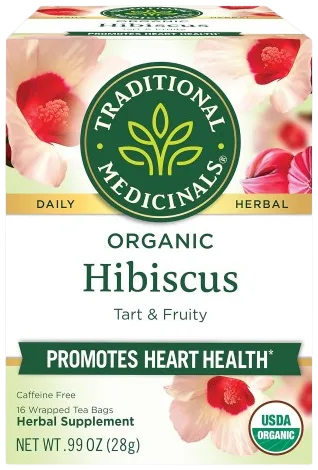
Traditional Medicinals Organic Hibiscus Tea Review
A certified organic, caffeine-free herbal tea made from hibiscus flowers, known for its distinctly tart and fruity flavor.
We don’t sell supplements. We help you make decisions and get the best price.
Lowest prices
We may earn a commission from some store links. How we choose.
Lowest cost per month first, in stock, at 1 serving a day. Checked Nov 8.
- iHerbLowest$5.91 a bottle$11.08/moBuy at iHerb (opens in a new tab)
- Traditional Medicinals$7.49 a bottle$14.04/moBuy at Traditional Medicinals (opens in a new tab)
- AmazonPrice at AmazonCheck price at Amazon (opens in a new tab)
Also at: Walmart · Kroger. Some links earn us a commission; price comes first, and a commission only decides the order of prices within 2%. As an Amazon Associate we earn from qualifying purchases.
Study, Trial or Testing Result Summary
Members Only45 human studies · 32 improved
3 of these 45 human studies gave the ingredient by drip or inhaler, not by mouth.
This tea gives 1260 milligrams of hibiscus flower per serving, which counts as a full dose against the studies. Hibiscus has strong human evidence for lowering blood pressure. A 2025 review pooling 26 trials with 1797 people found it lowered both upper and lower blood pressure more than placebo or other teas, with bigger effects in people over 50 and in trials longer than four weeks [1]. A 2022 review of 13 trials found drops of about 6.7 and 4.4 points in people with mild to moderate high blood pressure, but no help for people with metabolic syndrome [2]. Other reviews found similar drops, largest in people with higher starting pressure [3][4][5]. In a trial of 193 adults, a hibiscus extract lowered pressure by about 17 over 12 points in four weeks, though less than a standard drug [6]. A 2025 trial in 108 adults with belly fat found no change. Blackberry leaf and lemongrass are hidden in a blend without separate amounts. The blend studies tested unrelated products and mostly found no blood pressure change [7][8]; one small study found that breathing lemongrass scent lowered blood pressure during dental treatment, which is not the same as drinking it [9]. Animal and cell studies are never counted.
See all 45 studies →Hide the studies
- Across 26 randomized trials with 1797 people, hibiscus lowered systolic and diastolic blood pressure more than placebo or other teas, and the effect was similar to meds, with larger effects in people over 50 and in trials lasting over four weeks.Efficacy and safety of Hibiscus sabdariffa in cardiometabolic health: An overview of reviews and updated dose-response m…
- In 13 randomized trials with 1205 people with mild-to-moderate high blood pressure, hibiscus lowered systolic pressure by 6.67 and diastolic by 4.35 mmHg versus placebo, but did not work in those with metabolic syndrome and was not better than meds.Efficacy of Hibiscus sabdariffa on Reducing Blood Pressure in Patients With Mild-to-Moderate Hypertension: A Systematic …
- In 11 randomized trials with 503 people lasting 3 to 12 weeks, lemon verbena extract (alone or with hibiscus) lowered systolic blood pressure by 8.59 mmHg and diastolic by 3.73 mmHg, but this was mostly not a hibiscus-only test.The effect of Lippia Citriodora (LC) extract on cardiometabolic risk factors: a systematic review and meta-analysis.
- In five randomized trials with 390 people, hibiscus lowered systolic blood pressure by 7.58 mmHg and diastolic by 3.53 mmHg compared with controls, with larger effects in those with higher starting pressure.Effect of sour tea (Hibiscus sabdariffa L.) on arterial hypertension: a systematic review and meta-analysis of randomize…
- In seven randomized trials with 362 adults, sour tea lowered systolic blood pressure by 4.71 mmHg and diastolic by 4.08 mmHg, and also modestly lowered fasting blood sugar.The efficacy of sour tea (Hibiscus sabdariffa L.) on selected cardiovascular disease risk factors: A systematic review a…
- Across 17 randomized trials, hibiscus lowered systolic blood pressure by 7.10 mmHg versus placebo, most in people with high starting pressure, with reductions similar to medication.A systematic review and meta-analysis of the effects of Hibiscus sabdariffa on blood pressure and cardiometabolic marker…
- Four trials with 390 adults with high blood pressure found hibiscus lowered pressure more than black tea but less than meds, though most trials were short and poor quality so the evidence was not reliable.The effectiveness of Hibiscus sabdariffa in the treatment of hypertension: a systematic review.
- A Cochrane review found only one small trial of 60 adults with type 2 diabetes given Roselle extract for 8 weeks, and it showed no clear blood pressure change versus placebo, with very low certainty evidence.Roselle for hypertension in adults.
- This review of earlier meta-analyses found hibiscus was linked to a 7.58 mmHg lower systolic blood pressure, though results varied a lot between trials.Phytonutrient supplements and metabolic biomarkers of cardiovascular disease: An umbrella review of meta-analyses of cli…
- In adults with stage I or II hypertension, 250 mg of anthocyanins from hibiscus extract daily for 4 weeks lowered blood pressure by about 17/12 mmHg and was effective in 65% of people, though less than a med.Read the study on PubMed (17315307) →
- In 134 Egyptian adults with grade 1 hypertension, a hibiscus and olive leaf product taken twice daily for 8 weeks lowered blood pressure by about 15/9.6 mmHg, similar to captopril.Antihypertensive efficacy and safety of a standardized herbal medicinal product of Hibiscus sabdariffa and Olea europaea…
- In 125 adults with hypertension, bissap calyx capsules (320 mg twice daily) lowered systolic blood pressure by about 11 mmHg over 4 weeks, less than ramipril, and 21% of those taking bissap normalized their blood pressure.Clinical efficacy of African traditional medicines in hypertension: A randomized controlled trial with Combretum micrant…
- In 108 adults with abdominal obesity and mild metabolic syndrome, 1000 mg of hibiscus extract daily for 12 weeks did not change blood pressure compared with placebo.Efficacy of Hibiscus sabdariffa L. extract on metabolic parameters in participants with abdominal obesity and mild metab…
- In a randomized trial of 90 hypertensive patients drinking hibiscus tea or black tea twice daily for 15 days, blood lipid levels and kidney and electrolyte measures did not change meaningfully; the study did not report blood pressure results.The effect of hibiscus sabdariffa on lipid profile, creatinine, and serum electrolytes: a randomized clinical trial.
- In 80 newly diagnosed Nigerians with mild to moderate hypertension, hibiscus drink for 4 weeks lowered blood pressure compared with placebo, with effects similar to or greater than hydrochlorothiazide.Effect of Hibiscus sabdariffaon blood pressure and electrolyte profile of mild to moderate hypertensive Nigerians: A com…
- In 80 adults with type 1 hypertension, a hibiscus and lemon verbena extract taken daily for 84 days reduced daytime blood pressure, especially systolic, compared with placebo.A Randomized, Double-Blind, Placebo-Controlled Trial to Determine the Effectiveness of a Polyphenolic Extract (Hibiscus …
- In 78 Nigerians with mild to moderate hypertension, 4 weeks of hibiscus extract reduced the stress hormone aldosterone by about 32% compared with placebo, similar to a med, but did not significantly change renin or the enzyme ACE.Read the study on PubMed (26600645) →
- In 75 adults with mild to moderate hypertension, a daily hibiscus calyx infusion for 4 weeks lowered systolic blood pressure from about 139 to 124 mmHg, with blood pressure lowering similar to captopril, and about 79% of patients reached the target drop in blood pressure.Effectiveness and tolerability of a standardized extract from Hibiscus sabdariffa in patients with mild to moderate hype…
- In 72 adults with mild kidney disease and high blood pressure, 350 mg of roselle extract twice daily for 90 days added to valsartan lowered blood pressure in both groups, and only the roselle group showed a significant drop in cholesterol.Roselle (Hibiscus sabdariffa L.) extract as an adjunct to valsartan in patients with mild chronic kidney disease: A doub…
- In 65 pre-hypertensive and mildly hypertensive adults, drinking three cups of hibiscus tea daily for 6 weeks lowered systolic blood pressure more than placebo tea.Hibiscus sabdariffa L. tea (tisane) lowers blood pressure in prehypertensive and mildly hypertensive adults.
- In 60 adults with type 2 diabetes and mild hypertension, drinking hibiscus sour tea twice daily for one month lowered systolic blood pressure, while black tea raised it.The effects of sour tea (Hibiscus sabdariffa) on hypertension in patients with type II diabetes.
- In 60 adults with high-normal blood pressure or stage I hypertension, 8 weeks of a supplement containing hibiscus, magnesium, orthosiphon and hawthorn lowered systolic blood pressure by about 3 mmHg and diastolic by about 3 mmHg more than placebo, and reduced the inflammation marker hs-CRP.Effect of dietary supplementation with Diuripres® on blood pressure, vascular health, and metabolic parameters in indivi…
- In 59 adults with knee osteoarthritis, taking 500 mg a day of flavocoxid for 12 weeks caused no significant difference in blood pressure compared with placebo.The safety of flavocoxid, a medical food, in the dietary management of knee osteoarthritis.
- In 56 overweight or obese adults taking 500 mg daily of a hibiscus and lemon verbena polyphenol extract for two months, systolic blood pressure improved in the overweight group but changes were more modest in the obese group.Differential effects of a combination of Hibiscus sabdariffa and Lippia citriodora polyphenols in overweight/obese subje…
- In a randomized trial of 54 adults with moderate hypertension, sour tea lowered systolic blood pressure by 11.2% and diastolic blood pressure by 10.7% after about 2 weeks, and blood pressure rose again within 3 days of stopping.The effect of sour tea (Hibiscus sabdariffa) on essential hypertension.
- In 54 overweight adults, a hibiscus and lemon verbena polyphenol supplement over about 60 days was associated with lower blood pressure and heart rate compared with placebo.Hibiscus and lemon verbena polyphenols modulate appetite-related biomarkers in overweight subjects: a randomized control…
- In 40 adults with metabolic syndrome, 500 mg of hibiscus calyx powder daily for 4 weeks lowered systolic blood pressure more than placebo.Evaluation of the effects of roselle (Hibiscus sabdariffa L.) on oxidative stress and serum levels of lipids, insulin an…
- In a placebo-controlled crossover trial, 39 healthy adults who drank 200 ml of roselle drink daily for 6 months had lower blood pressure, higher antioxidant levels, and improved skin moisture, though skin redness also increased.Improvement on blood pressure and skin using roselle drink: A clinical trial.
- In 39 healthy women on a calorie-restricted diet, a thermogenic blend taken for about 3 weeks caused no significant changes in blood pressure or resting heart rate compared with the other groups.A Randomized, Double-Blind, Placebo-Controlled Trial to Determine the Effectiveness and Safety of a Thermogenic Suppleme…
- In 38 dental patients, breathing lemongrass aroma during gum treatment significantly lowered systolic and diastolic blood pressure, heart rate and anxiety compared with the control group.Effect of aromatherapy with lemongrass (Cymbopogon citratus) on the anxiety of patients undergoing scaling and root plan…
- In 25 men at low cardiovascular risk, one 250 mL hibiscus drink with breakfast did not significantly lower systolic or diastolic blood pressure over 4 hours compared with water, although it improved artery widening after a meal.Acute Effects of Hibiscus Sabdariffa Calyces on Postprandial Blood Pressure, Vascular Function, Blood Lipids, Biomarkers…
- In a small placebo-controlled crossover study of 20 overweight adults, a single hibiscus drink taken with a high-carbohydrate breakfast did not change blood pressure, though it improved memory recall and blunted the rise in blood sugar after meals.Acute effects of Hibiscus sabdariffa on blood pressure and cognitive function.
- In 12 young habitual caffeine users, a single dose of a thermogenic blend with 340 mg caffeine caused no significant differences in blood pressure, heart rate or heart tracings over four hours compared with placebo.Effects of ingestion of a commercially available thermogenic dietary supplement on resting energy expenditure, mood stat…
- In adults with metabolic syndrome, 100 mg of hibiscus extract powder daily for one month lowered blood glucose, total cholesterol and triglycerides, but this study did not report blood pressure results.Effects of Hibiscus sabdariffa extract powder and preventive treatment (diet) on the lipid profiles of patients with met…
- In a pilot study of 121 adults with high blood pressure, starting at 10 g of hibiscus decoction daily for 6 weeks, 61.8% of the treated group reached blood pressure under 140/90, compared with 6.7% of controls.Hibiscus sabdariffa, a Treatment for Uncontrolled Hypertension. Pilot Comparative Intervention.
- In 46 adults with stage 1 hypertension, two cups of hibiscus sour tea daily for one month, alongside lifestyle advice, produced a larger drop in systolic and diastolic blood pressure than lifestyle advice alone.Effect of hibiscus sabdariffa on blood pressure in patients with stage 1 hypertension.
- In 34 active women, taking 1 or 2 servings a day of a pre-workout blend for 28 days did not cause abnormal changes in resting blood pressure or heart rate.Safety of a dose-escalated pre-workout supplement in recreationally active females.
- In 18 elderly women with metabolic syndrome, 2 grams of rosella tea twice daily for 21 days significantly lowered systolic and diastolic blood pressure compared with the pre-treatment baseline, alongside changes in weight, blood sugar and cholesterol.Action Mechanism of Rosella (Hibiscus sabdariffa L.) Used to Treat Metabolic Syndrome in Elderly Women.
- In 20 healthy adults given a single oral dose of hibiscus calyx extract, mean blood pressure, heart rate and cardiac workload were lower than without it, in lying, sitting and standing positions.The Effect of Acute Administration of the Aqueous Calyx Extract of Hibiscus sabdariffa on Blood pressure, Heart rate and…
- In a non-randomized study of 100 adults, 50 with moderate high blood pressure, regular roselle drinking for 4 weeks lowered systolic and diastolic blood pressure, pulse pressure and heart rate, and reduced heart enlargement in some hypertensive patients; the effects returned to baseline within 4 weeks after stopping.Effects of Roselle on arterial pulse pressure and left ventricular hypertrophy in hypertensive patients.
- In a pilot study of 38 adults with uncontrolled high blood pressure drinking hibiscus tea (10 g daily, raised to 20 g if needed), 38% reached the target blood pressure and 65% had a systolic drop of at least 10 mmHg, with no control group.Treating Uncontrolled Hypertension with Hibiscus sabdariffa When Standard Treatment Is Insufficient: Pilot Intervention.
- In 31 adults with metabolic syndrome taking hibiscus calyx polyphenols at 125 mg per kg of body weight daily for 4 weeks, blood pressure was significantly reduced; the abstract does not describe a placebo group.Hibiscus sabdariffa extract lowers blood pressure and improves endothelial function.
- In a before-and-after study of 30 healthy adults drinking 200 ml of roselle calyx beverage morning and evening for 30 days, systolic and diastolic blood pressure both decreased significantly, with no serious side effects.Effect of the roselle (Hibiscus sabdariffa L.) calyces drink on the physiological parameters of healthy adult subjects.
- In 14 healthy adults, a single dose of hibiscus calyx extract (15 mg per kg of body weight) dampened the rise in blood pressure, heart rate and heart workload caused by a step test, compared with the same test without the extract.The hypotensive effect of the aqueous calyx extract of Hibiscus sabdariffa may occur through the attenuation of Autonomi…
- In healthy men, a single dose of aqueous hibiscus extract for 3 hours changed metabolism and gene activity in ways linked to blood vessel protection and blood pressure control, including lower cortisol and higher levels of a vasodilator, though blood pressure itself was not reported as a measured outcome.The acute impact of polyphenols from Hibiscus sabdariffa in metabolic homeostasis: an approach combining metabolomics an…
Review Totals and Summary
Members Only651 reviews · 90% positive
Traditional Medicinals Organic Hibiscus Tea receives generally enthusiastic feedback from users across various retail platforms. Most reviewers describe the tea as pleasantly tart and refreshing, often noting its vibrant crimson color and inviting aroma. Many turn to this tea for its bold flavor, with a considerable number mentioning that it stands out compared to similar herbal teas. The overall consensus is that it provides a satisfying experience either hot or iced, and some users highlight that its naturally tangy taste lends itself well to being sweetened with honey or sugar, depending on personal preference. A recurring theme in positive reviews revolves around the tea’s perceived quality. Multiple users express trust in the brand, stating that the tea bags deliver a consistent strength and flavor brew after brew. Shoppers frequently appreciate its organic certification and enjoy the sense of reassurance that comes with choosing a product without artificial additives. There are numerous comments about the packaging being well-designed and the tea bags holding up without tearing during steeping. Some users purchase Traditional Medicinals Organic Hibiscus Tea as part of their daily routine, citing it as an enjoyable, caffeine-free alternative to other beverages. A few mention incorporating it for hydration or as a relaxing evening drink. Several customers mention that they like to experiment by mixing it with other teas or juices to enhance the flavor profile, which speaks to its versatility. However, the reviews are not without their drawbacks. A smaller segment of users remarks that the tartness can be overpowering if steeped too long, making it less appealing for those who prefer milder herbal teas. There are also occasional mentions of the tea being somewhat one-dimensional or lacking complexity, particularly for those accustomed to more nuanced blends. Neutral and negative feedback sometimes centers around personal taste, with a few customers finding the flavor too strong, too sour, or simply not to their preference. Despite the minority of criticisms, the prevailing sentiment remains very positive, with most users expressing high satisfaction and often recommending the tea to friends and family. It is commonly praised for being refreshing, easy to prepare, and consistent in quality. Some reviews even note that it has become a staple in their pantry, reflecting a sense of loyalty to the product. Overall, while not every reviewer is enamored with the bold, tangy profile of Traditional Medicinals Organic Hibiscus Tea, the overwhelming majority find it to be a reliable and enjoyable choice. The blend of favorable taste, consistent quality, and organic sourcing seems to resonate strongly, making this tea a well-loved option for a wide range of consumers.
Biohacker Summary
Members Only3 of 10 recommend it
Four of the ten panelists spoke about hibiscus, the main ingredient, so this is a small slice of the panel. Two of them recommend it, mostly for lowering high blood pressure, and one of those also likes it because it has almost no sugar and no caffeine, which makes it fine at night or while fasting, and he also suggests it for water retention. A third panelist uses hibiscus flowers in a workout drink and once drank the tea six times a day, citing its antioxidants and minerals, and the fourth simply mentions it for high blood pressure. The one caution came from a panelist who said people have had luck with the tea for blood pressure but that meds should be used if high blood pressure is severe, and no one said they stopped using it.
See all 4 biohackers →Hide the biohackers
Dr. Eric Berg · Hibiscus · recommends
- Mentions hibiscus tea as a research-backed natural remedy for high blood pressure.
- States that hibiscus tea brings down high blood pressure.
- Drinking hibiscus tea may help relax your blood vessels and support your cardiovascular health, making it an excellent choice for those with high blood pressure.
- States that hibiscus tea can bring blood pressure down by five to seven points.
- Recommends hibiscus tea as a natural remedy for lowering blood pressure, noting its effectiveness is comparable to some meds and it has virtually no side effects.
- Warns that in excess, hibiscus tea can potentially lead to delayed puberty, cause a miscarriage, and stimulate menstruation, making it not good for early pregnancy.
- Dr. Berg notes that hibiscus tea provides beneficial antioxidants, which have been linked to healthy blood pressure responses and may help support the body's natural defenses.
Thomas DeLauer · Hibiscus · recommends
- Recommends hibiscus for its anthocyanins, near zero sugar, and no caffeine, making it suitable for drinking at night.
- Recommends hibiscus or Roselle tea for water retention, stating it has powerful effects on ADH, promoting vascular relaxation and increasing urine production.
- Recommends hibiscus tea for women who are fasting because it has no caffeine and can be a tasty tea throughout the day.
Ben Greenfield · Hibiscus · neutral
- Notes that people have had luck with hibiscus tea as a natural option for blood pressure, but emphasizes that pharmaceuticals should be used if hypertension is severe.
- Uses hibiscus flowers in his workout drink, noting they are loaded with polyphenols and flavonoids, have antioxidant effects, and contribute to endothelium-dependent relaxation through nitric oxide production and decreased blood viscosity.
- Drank hibiscus tea six times a day and felt her cells' electrical charge returning, realizing the importance of minerals in these nutritive herbs.
Siim Land · Hibiscus · neutral
- Mentions hibiscus as a recommendation for high blood pressure.
RAL Summary
Members OnlyTier 3 for Blood Pressure
Placed in tier 3 because 90 percent of its 656 reviews are positive and human studies support hibiscus at the dose in this tea, including a 2025 review of 26 trials showing lower blood pressure [1].
Where the evidence disagrees: 9 of the 45 human studies found no effect.
More Details
Members OnlyBody systems · Combine with · Possible side effects
Body systems: Cardiovascular system
Combine with: Not compulsory.
Possible side effects: No major side effects reported.
Supplement Facts
All Herbal Ingredients: 0 · Organic hibiscus flower 1260 mg · Proprietary Blend: Organic blackberry leaf, Organic West Indian lemongrass leaf 490 mg
| Calories | 0 | |
| All Herbal Ingredients: | 0 | † |
| Organic hibiscus flower | 1,260 mg | † |
| Proprietary Blend: Organic blackberry leaf, Organic West Indian lemongrass leaf | 490 mg | † |
Directions: Pour 8 oz. freshly boiled water over 1 tea bag. Cover & Steep for 5-10 min. Squeeze tea bag to ensure maximum goodness. Enjoy 3-4 cups per day. To enjoy iced, brew hot as indicated above, replace cover, and place in the fridge to chill before adding ice. Keep chilled and consume within 24 hours.
Barcode (UPC) 032917002310 · Label source: the brand's label · Report a label change
Show entire label
More blood pressure products
Members OnlyThe highest ranked for the same goal
Read more
Our articles on this subject
- How to Lower Diastolic Blood Pressure for LongevityArticle · Sep 17, 2026
- DASH Diet for High Blood Pressure: What It Lowers, What to Eat, and How to StartArticle · Sep 19, 2026
Graded October 23, 2026 by the Reverse Age Lab evidence engine, from human studies, real reviews and our biohacker panel. How we grade. Is this medical advice? No. Rala organizes the published evidence; go over any change with your doctor, especially if you take meds.
Privacy policyConsumer health dataAffiliate disclosureTermsDo Not Sell or Share My Personal InformationCookie settings